
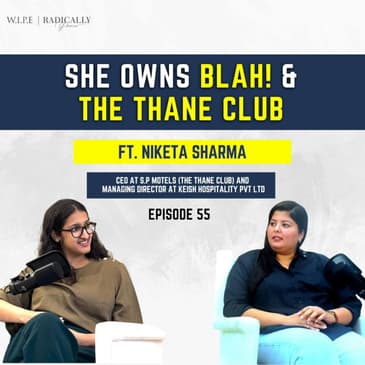

Meet Niketa Sharma, CEO of S.P Motels (The Thane Club) and MD at Keish Hospitality Pvt Ltd, making waves in the hospitality realm!
Dive into our latest episode of Wiping out the Norm, where we delve into Blah! Restaurant and The Thane Club.
Speaking on Blah!, Niketa shares, "𝑰 𝒂𝒍𝒘𝒂𝒚𝒔 𝒅𝒓𝒆𝒂𝒎𝒆𝒅 𝒐𝒇 𝒂 𝒘𝒐𝒎𝒆𝒏-𝒄𝒆𝒏𝒕𝒓𝒊𝒄 𝒓𝒆𝒔𝒕𝒂𝒖𝒓𝒂𝒏𝒕," leading to the vibrant Blah! Brunch Cafe & Bar at BKC, Mumbai. Joined by her brother Dilip Rawat, her sibling partner at Keish Hospitality and Blah!, they launched during lockdown—learn more in the full video!
A firm believer in ambience's magic, Niketa pairs it with exquisite cuisine for a memorable dining experience. Discover her insights on building a loyal customer base through quality food and service.
How did she build a loyal customer base?
Niketa shared: “𝑾𝒆 𝒉𝒂𝒗𝒆 𝒓𝒆𝒕𝒂𝒊𝒏𝒆𝒅 𝒐𝒖𝒓 𝒄𝒐𝒏𝒔𝒖𝒎𝒆𝒓𝒔 𝒂𝒏𝒅 𝒕𝒉𝒆𝒓𝒆 𝒊𝒔 𝒂 𝒍𝒐𝒚𝒂𝒍 𝒄𝒐𝒏𝒔𝒖𝒎𝒆𝒓 𝒃𝒂𝒔𝒆 𝒃𝒆𝒄𝒂𝒖𝒔𝒆 𝒐𝒇 𝒕𝒘𝒐 𝒕𝒉𝒊𝒏𝒈𝒔: 𝑮𝒐𝒐𝒅 𝒒𝒖𝒂𝒍𝒊𝒕𝒚 𝒇𝒐𝒐𝒅 𝒂𝒏𝒅 𝒈𝒐𝒐𝒅 𝒔𝒆𝒓𝒗𝒊𝒄𝒆”.
We sat down with Niketa to find out more about her new culinary ventures and her vision of providing a premium and affordable experience for everyone.
Watch the full video to learn the secrets behind a restaurant's 50-year success and Niketa's recipe for a restaurant’s success!
Link- https://youtu.be/wyFs75fUrkE
#HospitalityInnovation #WomenInBusiness #BlahRestaurant #TheThaneClub #CustomerServiceExcellence #wipingoutthenorm #RadhikaBajoria
[00:00:01] Thanks Nikita for coming to our show, it's all about women who have done the norm in their respective fields.
[00:00:12] You know you have started restaurant of your own which is went on to become a good name at least in VKT and Bombay.
[00:00:19] So we want to know your journey of starting up as a restaurant here and like what really inspired you to get into this field?
[00:00:27] So I studied hospitality, I've done my master's from La Roche International School in Switzerland
[00:00:33] and I always wanted to do something in hospitality as a hotelier or a boutique hotel person.
[00:00:40] But I think the stepping stone to gradually progress over there is restaurants and actually BLA if you see is a covid baby.
[00:00:49] So honestly after handling hospitality and the club that I have in Thane for almost 7 years is where I realized and I spoke to my brother who's my partner in BLA
[00:01:03] and we were brainstorming and we were thinking what new should we do in covid and how should we progress into different arenas
[00:01:11] and I pitched him the idea that let's do a restaurant together and I think that is that.
[00:01:16] And we just came back when you know what was that called?
[00:01:24] The restrictions were lifted a little so we could travel in Mumbai so we came back, we were actually in Lona BLA for almost 8 months
[00:01:31] and we came back and we thought that let's do this what we thought let's put it to action.
[00:01:36] Literally we saw the place, we saw BLA it had just emptied I mean you know the previous tenants had left 5 days ago
[00:01:44] and we came we saw and in a week we signed it.
[00:01:48] Oh it was that quick, it was that quick and then when because again covid struck again
[00:01:54] we got time to prepare and we had already hired the head chef and the other management team
[00:01:59] so then we got 3 months to prepare ourselves, we did research all of us were crazy and frenzied
[00:02:05] and whatsapping and instagraming each other different ideas and philosophies
[00:02:11] and I always wanted a women centric restaurant.
[00:02:15] Is it? Yes, yes all the time all my restaurants have swings
[00:02:19] all my restaurants have some feminine color or touch
[00:02:23] and there's always that one bold factor which I love in all of my restaurants
[00:02:27] so these 3 aspects are compulsory in any restaurant you'll go to that one these 3 touches will be there
[00:02:32] and so that is how BLA came into the picture and then it followed with other restaurants
[00:02:39] and I think it's been a fabulous journey.
[00:02:42] And how did you actually you said that you got the land in a weeks time
[00:02:47] and after that you started hiring what else did you do to make it come into real life?
[00:02:54] Actually it's a complete team effort I can say you can never run a restaurant alone
[00:03:00] so having the right people on board was the first aspect
[00:03:03] we got our managing partner, our marketing person, the chef that we had
[00:03:08] we also even hired our restaurant manager in advance then I was there
[00:03:13] and for legalities and licenses my brother was there
[00:03:16] so first I made the team then the team was briefed and the interior designer
[00:03:22] now the thing is we all sat together we all used to sit at socials or at Soda Botanical Bala
[00:03:27] and used to brainstorm that what do we actually want
[00:03:30] and I already had a clear vision that I want a female centric restaurant in the business
[00:03:36] corporate concrete sector of BKC
[00:03:39] and I do not want to be fine-nine I do not want to restrict myself into the regular plating
[00:03:46] or the regular nuances that are served in Soda and Beverage of Yo
[00:03:50] so we got that first move as advantage of Yo
[00:03:53] then the feminine aspect is what came
[00:03:56] I said that obviously we do not want to be pink pink like a babi or anything like that
[00:04:00] more offense I love babi but the idea was that you have to forget
[00:04:05] that you are in the middle of your work zone
[00:04:08] or you are in the middle of you know you are wearing a suit and a tie
[00:04:12] and all of that and you are coming it is a conversation place
[00:04:15] where you can chat it is a place where the ambiance is tropical and feminine
[00:04:20] wherein you can unwind yourself even if it is for that 35 minutes of lunch break
[00:04:26] that you have you know like 35-45 minutes is usually the lunch break that corporates have
[00:04:30] so we wanted I wanted to give that break
[00:04:33] and that is how we started brainstorming
[00:04:36] we got into multi-cuisine aspect we never wanted to seclude ourselves with one cuisine only
[00:04:42] we wanted to be multi-cuisine so fusion Indian continental European
[00:04:47] Asian are these aspects that we got
[00:04:51] and we got that feminine crockery
[00:04:54] we made sure that you know the golden colour
[00:04:57] butlery is there then we made sure that there was those frames
[00:05:01] and the greenery there is hydrophonics
[00:05:03] so we grew a lot of our herbs and spices
[00:05:06] and we used them in the bar or you know the microgreens were grown
[00:05:09] and they were used for garnishes all of these aspects is how we came together brainstorm
[00:05:14] helped each other but had the same vision
[00:05:18] again your vision has to match with your team that matches
[00:05:21] you can achieve whatever you want
[00:05:23] that's right so how many team members do you have now
[00:05:26] so in all my restaurants and the Thani Club that I have
[00:05:31] which is a sports facility I have currently 300 plus employees
[00:05:35] wow that's very nice and you being a woman is leading at the top
[00:05:39] yeah we are very female centric I can say I am biased towards them
[00:05:44] a lot of my top management are females
[00:05:48] a lot of them and I am pretty proud of that
[00:05:51] and I think it's women who can accomplish anything that they set their mind to
[00:05:58] any human can but I feel the multitasking ability that a woman has
[00:06:03] I feel that's in born or in our DNA or in our culture
[00:06:07] I can say and because of that all the women most of the women I know who are working for me
[00:06:12] are either married or have children and still they are able to work and excel
[00:06:18] in their respective departments so well
[00:06:21] yeah that's lovely and tell us about the name how did you come up with the name Bluff
[00:06:26] I'll be very honest with you I was not in favour of the name Bluff
[00:06:31] so the first name that we had actually thought was Bed and Brunch
[00:06:34] Bread
[00:06:35] Bed and Brunch
[00:06:36] Bed and Brunch
[00:06:37] So that means it means from brunch to the bed you can come and chill over
[00:06:41] So Bibi, Aibi mere naam mein bhodsare employees se jinn ka naam hai ne bibi rakha hoi
[00:06:45] like you know the restaurant name was Bed and Brunch so Bibi main aisa kar diya tha
[00:06:49] So Bluff came into our conversations and the voting went against me
[00:06:55] and that's how Bluff came because Bluff negatively or positively is about talking
[00:07:01] it's about communicating it is about chatting with each other
[00:07:04] it is about conversing right and that is what was the main focus of the restaurant as well through its interiors
[00:07:12] or its food we are talking to you through all of these aspects
[00:07:16] so that is why Bluff came into the kitchen it was a risk that a lot of people
[00:07:19] and the PR agency told us that we are taking
[00:07:22] why didn't they like the name?
[00:07:24] No because Bluff can also be our aisa very blah place
[00:07:28] oh my god blah blah what is going on you know I mean it both again it's the tone that matters
[00:07:34] but we took the risk and I think we
[00:07:36] But when you choose unconventional names like these that's when it becomes the talk of the town
[00:07:40] like did you hear of this name even if good or bad it becomes a very good branding exercise
[00:07:46] and it has to be easy so Bluff is very easy to talk about
[00:07:49] yeah exactly yeah that's true and then tell me how you chose the name Kish Hospitality for your group
[00:07:57] so Kish Hospitality name has come I'm a big Krishna fan
[00:08:02] okay so the origin came from that
[00:08:05] yeah and that is how Kish Hospitality came into picture because we are Mathura people
[00:08:10] Mathura Brahmin and I wanted the company to have some aspect of Krishna Bhagawan
[00:08:17] and the Sunrise aspect of his to be a part of the company and that is why I gave the name Kish Hospitality to it
[00:08:24] well that's quite interesting yes and you spoke about your Thani Club as well so tell us more about that
[00:08:30] how did you get to be a part of it and then own it
[00:08:34] okay so Thani Club is my first project I started that project literally a decade ago
[00:08:40] in December I'll complete a decade over there
[00:08:42] are we having a ten year anniversary there?
[00:08:45] I hope I hope I'm not so it's on my dad's birthday actually
[00:08:48] oh lovely yes 13 December
[00:08:51] okay so I had just finished my college my course grad
[00:08:55] I first did my M.Com then for my master's and then again I went to Laurosh and came back
[00:09:00] and I joined the Thani Club which was taken over by my family six months ago and we were under construction
[00:09:05] okay so we started that job I started a job over there with two people one project head and me
[00:09:12] and only labourers and 100 pigeons, 500 rats and 2000 mosquitoes and what not
[00:09:20] that is how we started the project with two people Bricks and Motar
[00:09:25] and it's a 60-65 thousand square feet place which is a sports club like a private sports club
[00:09:32] sports and recreation to be honest wherein we have four swimming pools
[00:09:36] okay two gymnasiums three banquets four restaurants eleven rooms two badminton
[00:09:43] courts one sports court and changing room and all of that
[00:09:47] yeah so we started with the club for one and a half year I was under construction
[00:09:52] we built a team of ten in the first one and a half year then after that we
[00:09:57] gradually grew and today in Thani Club itself we are 200 people
[00:10:01] wow that's amazing but have you ever thought of launching a club in Bombay
[00:10:07] there's no space I have searched on space tell me how did you find a space for blah
[00:10:13] because I spoke to so many restaurant years who are wanting to do something in
[00:10:17] Bombay and they have the same answer
[00:10:21] I am very lucky I am telling you it's a COVID baby and that is how I got lucky
[00:10:26] I am telling you I got the opportunity and within a week I signed it
[00:10:29] so obviously yes Mumbai has space constraint here
[00:10:34] and currently even when we are in that expansion mode we have these issues
[00:10:39] and we are facing problems in that aspect but it's a part and parcel
[00:10:45] the industry is booming in itself and I feel if we keep the patience
[00:10:49] the pockets will arise
[00:10:51] but tell me on the coming back to the restaurant business
[00:10:56] how did you think of marketing it initially because all of these
[00:11:00] consumer facing businesses are all about getting people and getting to
[00:11:05] let them know that okay you exist and there's a reason why they should visit you
[00:11:09] not once or twice but every time they think of going out
[00:11:12] like for example if someone wants to have Pan Asian
[00:11:15] Yaucha is the first place that they would want to go and they don't even get
[00:11:19] tired of going there again and again so what was the brand narrative
[00:11:23] that you wanted to create for yourself and how did you get that executed
[00:11:26] so the brand narrative that we get like I already said is about the family
[00:11:30] and centric so any restaurant you can pull people for the first 3 to
[00:11:35] 6 months okay we had a great PR strategy our PR agency was
[00:11:39] Mint and May I love them I'm still working with them
[00:11:43] then we had a great social media team and our interiors are fabulous
[00:11:48] these are the first catchments because of which and influence of marketing that we did
[00:11:53] these were the first basic broad guidelines that we followed
[00:11:57] in getting people to blah but if I have to get somebody repetitively
[00:12:02] like you said if it's vanishing you will think of Yaucha
[00:12:05] if somebody thinks of pancakes and French toast or big burgers
[00:12:08] people think of blah you know the food is very continental
[00:12:11] very brunchy yeah you're right actually one of my friends
[00:12:15] just recently told me that I'm craving for pancakes and I said okay
[00:12:19] where will you go and have it she's like blah is the place
[00:12:23] exactly so what happens is for the first 3 to 6 months our idea
[00:12:27] was to get as many people as possible through the media
[00:12:31] through influencer marketing as well as through
[00:12:35] you know the social media social media has become a really big factor
[00:12:39] but after that that today also people are talking about blah
[00:12:43] or we have you know retained a lot of our consumers
[00:12:48] and there's a loyal base and we have created is because of two things
[00:12:52] good quality food and good service
[00:12:55] ambience will change your menus will change
[00:12:59] but your service and the food quality that you give
[00:13:03] is what makes a restaurant even for 50 years work
[00:13:07] there are those old school restaurants as well that are still there
[00:13:11] 50 years old 20 years old or 12 years old
[00:13:14] you and I might be having some nostalgic restaurants
[00:13:17] which we go to in childhood and even today we can go there to eat
[00:13:20] it is only because of the warmth and the friendliness of the staff
[00:13:24] and because of good food yeah so food is emotion
[00:13:28] and if your restaurant is resonating that
[00:13:31] just because of Instagram you need the vibe also to be there
[00:13:36] obviously but if I want to come back
[00:13:39] it is because you connected our love in my mind or my heart
[00:13:43] yeah and how is it in the case of a business like a club
[00:13:47] I know Thane Club was already there it was famous people knew about it
[00:13:51] but nobody knew it was a litigated property
[00:13:54] okay tell me more then
[00:13:56] so Thane Club is something which we took over
[00:13:59] after 8 years of it being under construction
[00:14:02] and it was only under construction
[00:14:05] so we took over and it was a litigated property
[00:14:09] which we took on lease then eventually from the government
[00:14:12] the TMC and there were 20 partners
[00:14:17] or I don't know 10-15 partners
[00:14:19] and then eventually we as single owners came over
[00:14:24] took over the lease and we have built it from scratch
[00:14:28] the name was also not there the club didn't have a name
[00:14:31] okay there's nothing what is the name now
[00:14:34] Thane Club
[00:14:36] so we wanted it to be resonating with the people
[00:14:41] the local people
[00:14:43] and we got a trade mark from the difficulty
[00:14:45] I know
[00:14:47] and there was nothing over there
[00:14:51] I'm telling you it was filled with rats and pigeons
[00:14:53] and all of these things
[00:14:54] so how did you build it up in marketing sense
[00:14:57] how did people come to know about it
[00:14:59] how did this start coming
[00:15:01] so in the club we have membership in the sports section
[00:15:05] you have to create loyalty in the club
[00:15:07] people need to win trust
[00:15:11] so the first thing that we did through our print ads
[00:15:13] through the traditional form of marketing in Thane
[00:15:16] about 10 years ago
[00:15:18] which was print ads and hoardings and bus bags
[00:15:21] and bus shelters and all of these things that we did
[00:15:24] and we did a lot of recreation activities
[00:15:26] for new people to come and
[00:15:28] see the facility and experience the facility
[00:15:30] if I am telling someone to put lakhs of rupees
[00:15:33] from their account to my account
[00:15:35] I need to give them experience of a lifetime
[00:15:38] and I need to make sure that they have so much fun
[00:15:42] or they are liking the facility so much
[00:15:44] that eventually they want to become my loyal members
[00:15:47] and that is why they will pay the money
[00:15:49] so everything boiled down in Thane Club
[00:15:52] to memberships
[00:15:54] we started giving out these things called as member for a day vouchers
[00:15:57] which day?
[00:15:59] member for a day
[00:16:01] member for a day vouchers is what we started distributing to people
[00:16:04] and through that we wanted people to experience
[00:16:08] what it is to be a part as a member of TTC
[00:16:12] so people loved that
[00:16:14] because we had a new place
[00:16:16] we were well maintained
[00:16:20] we were one of the only clubs in Thane
[00:16:22] giving so many facilities under one roof
[00:16:25] and because of the experience that they had
[00:16:27] and then board of mouth
[00:16:29] we have grown
[00:16:31] and giving good experience we have grown
[00:16:33] and I feel marketing and all of these are supporting things for you
[00:16:38] eventually it all boils down to your experience
[00:16:40] how many members are we now?
[00:16:42] so we are around 3200 members
[00:16:44] that's a lot
[00:16:46] and what's the membership fee?
[00:16:48] membership fee starts from 275,000
[00:16:52] which is for an individual for 10 years
[00:16:54] and it goes up to a family membership of 975,000
[00:16:58] for a family of 4 for 20 years
[00:17:00] okay it's not bad
[00:17:02] but tell me in this kind of a business how do you achieve a break even
[00:17:06] because the capital cost is very high
[00:17:08] yes so the capital cost is high
[00:17:10] so the break even comes only after minimum 3-4 years
[00:17:13] and then everything is through your pockets
[00:17:16] okay yes such large businesses because the capital investment is high
[00:17:20] 3-4 years or max 5 years is what you have to invest
[00:17:24] you have to make sure that the great experience is given to them
[00:17:27] obviously your operating cost is covered
[00:17:30] because membership amounts are also big
[00:17:32] so all the operating costs are removed
[00:17:34] but the real ROI starts coming after that
[00:17:37] yeah that's true
[00:17:38] but how did you get the capital arrangements per bank loan?
[00:17:43] is it?
[00:17:44] yes so we took a bank loan
[00:17:46] and then there was some capital investment done by my parents
[00:17:50] okay in the first year
[00:17:52] so the first phase of the place that we made a gym
[00:17:56] one banquet and badminton court
[00:18:00] and a restaurant
[00:18:02] this was in the first phase
[00:18:04] so this we did it through a bank loan
[00:18:06] and I got a little bit of loan
[00:18:09] as capital investment not loan
[00:18:11] capital investment was given by my parents
[00:18:13] after that whatever that we have done
[00:18:15] where we've grown to 11 rooms
[00:18:17] 4 restaurants
[00:18:18] 2 gyms and all of these things
[00:18:20] in phases is what I have done
[00:18:22] every 2-3 years we've done a phase
[00:18:24] we've gone through the phase of Covid
[00:18:26] which is why we couldn't do much
[00:18:28] otherwise till now
[00:18:30] this third phase which I completed
[00:18:32] it would have been completed 2 years ago
[00:18:34] so I took out my operating cost
[00:18:38] saved it
[00:18:40] took all the difficult financial decisions
[00:18:42] and then came here
[00:18:44] how did you survive during Covid
[00:18:47] in terms of the rental costs
[00:18:49] and the salaries of the people
[00:18:51] in lease period the rentals
[00:18:53] whenever you take a lease property
[00:18:55] the rentals are a little lower
[00:18:57] but obviously there are other humongous costs
[00:19:00] which is like electricity
[00:19:02] and salaries and all of these things
[00:19:04] and we did not
[00:19:06] cut down on it
[00:19:08] at least for the first year
[00:19:10] from the second year we gave certain percentages
[00:19:13] and we did not fire anybody
[00:19:15] and I feel the team was very supportive
[00:19:17] but wasn't it too heavy on your books
[00:19:20] it was, it was
[00:19:22] 2 years again
[00:19:24] this kind of a business where the capital investment is so high
[00:19:27] you're not here for the short game
[00:19:29] you're here for the longer run
[00:19:31] even the membership fee like it's not a restaurant
[00:19:33] people will stop coming and it'll affect your business
[00:19:36] membership fee so there's anyway it's paid for
[00:19:39] so the plan is long term actually
[00:19:42] because of the long term plan
[00:19:44] Covid was a big jhatka
[00:19:47] I can literally say to everybody
[00:19:49] and especially the real estate
[00:19:51] and two places like the club
[00:19:53] which have big properties
[00:19:55] 60,000, 70,000 square feet is not small
[00:19:57] but if you have a great team
[00:19:59] and great infrastructure
[00:20:01] and if you have the ability to bounce back
[00:20:04] from that I feel
[00:20:06] that's what we did, we bounced back
[00:20:08] and you know
[00:20:10] the lower we went, the higher we'll be
[00:20:12] coming because the industry is booming
[00:20:14] in itself
[00:20:16] and because of that we'll be
[00:20:18] survived and eventually we'll be
[00:20:20] a better team
[00:20:22] that's very important
[00:20:24] but is this the only club in thane?
[00:20:26] do you think is that the reason
[00:20:28] why it's working so well
[00:20:30] because in competitive
[00:20:32] competition is with those bigger societies
[00:20:34] because thane is very planned
[00:20:36] being planned and it's becoming
[00:20:38] the next smart city
[00:20:40] of the state
[00:20:42] of rastra
[00:20:44] so because of that
[00:20:46] competition is usually with other
[00:20:48] societies
[00:20:50] because they're creating gyms
[00:20:52] everything is available
[00:20:54] our advantage is
[00:20:56] because of the magnanimity
[00:20:58] of our place
[00:21:00] with four different types of restaurants
[00:21:02] four pools
[00:21:04] one toddler pool
[00:21:06] one diving pool
[00:21:08] one indoor pool
[00:21:10] you have a crossfit gym
[00:21:12] you have a regular gym
[00:21:14] you have table tennis, you have squash
[00:21:16] because of that and plus the networking
[00:21:18] that you get to do
[00:21:20] people still want to come over
[00:21:22] or unwind
[00:21:24] they want to get out of the house
[00:21:26] they want to have a lifestyle
[00:21:28] or they want to have some time
[00:21:30] wherein they forget their phones
[00:21:32] and that is what club is about
[00:21:34] club culture is only about socializing networking
[00:21:36] and doing things
[00:21:38] beyond your mundane activities
[00:21:40] that you do in work and in family
[00:21:42] yeah that's right
[00:21:44] but how do you think club like this
[00:21:46] would work in a city like
[00:21:48] bombay for example which already has soho house
[00:21:50] or other small clubs like the quorum
[00:21:52] so Mumbai
[00:21:54] in itself i feel the club culture
[00:21:56] is still there
[00:21:58] like harjim khan and otters club
[00:22:00] have waiting list now
[00:22:02] they are not selling
[00:22:04] even if they are selling
[00:22:06] google if you read it is around 25 lakhs
[00:22:08] 50 lakhs
[00:22:10] so club culture is there
[00:22:12] because it's an escape
[00:22:14] and soho house
[00:22:16] is an international chain
[00:22:18] they started clubs
[00:22:20] but over there clubs is more about
[00:22:22] socializing
[00:22:24] the kind of events that they do are fantastic
[00:22:26] it's about networking
[00:22:28] it is more about socializing
[00:22:30] but if you see a club like NSCI
[00:22:32] or CCI
[00:22:34] or MCA
[00:22:36] or otters or harjim khan
[00:22:38] they have a different mindset altogether
[00:22:40] jujim khan
[00:22:42] all these clubs have a different mindset
[00:22:44] they are working on the longer run
[00:22:46] they are working on your generations
[00:22:48] generation membership is there
[00:22:50] in nca and all i have a few friends
[00:22:52] that my grandpa has given me 11 rupees
[00:22:54] so both the concepts are very different
[00:22:56] soho house
[00:22:58] membership is only 1 year and 3 years
[00:23:00] and the other club
[00:23:02] is 25 years
[00:23:04] in the next generation
[00:23:06] 25 years
[00:23:08] we are 25 years
[00:23:10] we are also our kids
[00:23:12] our kids will also come
[00:23:14] they go to house
[00:23:16] then they go to brand children
[00:23:18] so there are these two segments
[00:23:20] there is dolly's club
[00:23:22] soho house
[00:23:24] these are only into networking and socializing
[00:23:26] and that is why the tenure is also less
[00:23:28] yeah but what kind of
[00:23:30] trends do you observe now
[00:23:32] which will make a club successful
[00:23:34] in a city like bombay with so many options
[00:23:36] with so many options
[00:23:38] i feel a club is a place
[00:23:40] where the location will matter
[00:23:42] first is
[00:23:44] a club is a place which should be in your radius
[00:23:46] 3 km
[00:23:48] where i can walk
[00:23:50] or i can take a bike
[00:23:52] or a car and reach in 5-10 minutes
[00:23:54] the biggest vicinity
[00:23:56] for club is the location
[00:23:58] and it has to be at a residential area
[00:24:00] because that 5-6 km
[00:24:02] are the only people who are going to come to you
[00:24:04] and take the membership
[00:24:06] so scope is there
[00:24:08] but yes
[00:24:10] now how it is
[00:24:12] the tharnik club if you see is a long structure
[00:24:14] it is spread in 1.25 week
[00:24:16] right now the clubs that you see
[00:24:18] are in a building structure
[00:24:20] correct
[00:24:22] now it is at our height
[00:24:24] it is becoming vertical
[00:24:26] so that is why
[00:24:28] i feel there is scope in the club market
[00:24:30] but yes now the focus
[00:24:32] is more on the younger generation
[00:24:34] because of the age category
[00:24:36] that is there of the current population
[00:24:38] of india and mumbai also i will say being cosmopolitan
[00:24:40] i feel soho house
[00:24:42] and jolly's clubs are places
[00:24:44] which will do better than the rest
[00:24:46] the places
[00:24:48] and that is because we are heading towards
[00:24:50] something called as a gig economy
[00:24:52] where in everything is project based
[00:24:54] everything is short term
[00:24:56] covid has made us realise that there is no point
[00:24:58] in working 24-7
[00:25:00] and being available all the time in your professional life
[00:25:02] you need to have personal time
[00:25:04] you need to have me time
[00:25:06] you need to have self love
[00:25:08] you need to have family time
[00:25:10] and i am okay to earn x amount of money
[00:25:12] doing a project for 6 months
[00:25:14] and then going back again to work
[00:25:16] this trend is coming
[00:25:18] which was in the western world
[00:25:20] and now it is catching up in india
[00:25:22] and we are growing at such super
[00:25:24] super fast speed
[00:25:26] as a country
[00:25:28] i feel there is place for everyone
[00:25:30] so because you support women
[00:25:32] so much
[00:25:34] and i have this idea i want to bounce this off
[00:25:36] you that how about
[00:25:38] making a women only club
[00:25:40] what are your thoughts on that
[00:25:42] we have a membership
[00:25:44] unfortunately i tried that
[00:25:46] but we were not very successful
[00:25:48] why is that
[00:25:50] because in thane
[00:25:52] the crowd is a mix of
[00:25:54] cosmopolitan and traditional thane
[00:25:56] people staying over there
[00:25:58] i mean we are
[00:26:00] of this generation
[00:26:02] we see a lot of working women
[00:26:04] but actually reality is not like that
[00:26:06] seeing the population grid
[00:26:08] i am telling you there are many women
[00:26:10] who are still dependent on men
[00:26:12] or their house wives or home makers
[00:26:14] or they are doing something from the house
[00:26:16] so even if we want
[00:26:18] and all women kind of a club
[00:26:20] to be created
[00:26:22] it can be done
[00:26:24] but it has to be formed
[00:26:26] in a very particular
[00:26:28] format or manner
[00:26:30] because women when they come together
[00:26:32] its madness
[00:26:34] we do women's day
[00:26:36] events and that is why i can say
[00:26:38] its madness and its insane fun
[00:26:40] its super
[00:26:42] but only a women's club
[00:26:44] right now we are not
[00:26:46] at that stage or at least thane club is not
[00:26:48] so in thane club we have a special
[00:26:50] discount and we have a lower
[00:26:52] category lower number
[00:26:54] of yours although our minimum number
[00:26:56] of yours that we have is 10 years
[00:26:58] but if you are a woman whether married or single
[00:27:00] you will get a 5 year membership
[00:27:02] at an x amount of rupees
[00:27:04] so like that the membership starts from
[00:27:06] 1000 but because you are a female
[00:27:08] whether a married woman or an unmarried
[00:27:10] woman that doesnt matter to us
[00:27:12] age category doesnt matter to us
[00:27:14] we give you a special membership at 1 lakh
[00:27:16] 50,000 rupees okay thats good
[00:27:18] yes so we have it for athletes
[00:27:20] so we have a lot of state level
[00:27:22] district level badminton
[00:27:24] and swimming champions
[00:27:26] practising with us
[00:27:28] we have a special category for women
[00:27:30] for athletes and for senior citizens
[00:27:32] understood for athletes its
[00:27:34] much lesser is it
[00:27:36] no same 5 years
[00:27:38] the number of yours is set
[00:27:40] and the discounts that we offer
[00:27:42] is separate for them
[00:27:44] because they are under the athletes category
[00:27:46] and they do a lot of training
[00:27:48] and its sports club
[00:27:50] thats why
[00:27:52] and all women's club is a great idea
[00:27:54] I think it should be a niche that can be created
[00:27:56] but at the right location
[00:27:58] where I have a rapid fire for you
[00:28:00] where I talk to you a little bit
[00:28:02] coffee with Karan
[00:28:04] coffee with Radhika
[00:28:06] can you give me a cup of iced
[00:28:08] iced latte
[00:28:10] so starting off
[00:28:12] who has been one of the most influential
[00:28:14] figures for you in your life
[00:28:16] personally or professionally
[00:28:18] both
[00:28:20] so personally has been
[00:28:22] my father
[00:28:24] he has been a huge influence
[00:28:26] on me
[00:28:28] and there are these principles
[00:28:30] that he has taught me
[00:28:32] I have this radio interview
[00:28:34] few ground principles
[00:28:36] and ethics have been
[00:28:38] passed on from him to me
[00:28:40] and I look up to him
[00:28:42] to the highest level
[00:28:44] so in my personal life its my dad
[00:28:46] but yeah on the professional side
[00:28:48] who has been the inspiration to you
[00:28:50] so on the professional side
[00:28:52] Ratan Tata and Shah Rukh Khan
[00:28:54] like very weird nature
[00:28:56] but
[00:28:58] humbleness
[00:29:00] and again the principles
[00:29:02] and ethics that they have followed
[00:29:04] or at least what I have read in the Ratan Tata
[00:29:06] book or its in the interviews
[00:29:08] that I have seen of these people
[00:29:10] I feel Shah Rukh Khan
[00:29:12] from being an actor to being a businessman
[00:29:14] and now again at this age
[00:29:16] becoming an actor again
[00:29:18] that full circle in life
[00:29:20] Ratan Tata
[00:29:22] from Air India going
[00:29:24] to Air India coming back
[00:29:26] to the company
[00:29:28] to his you know
[00:29:30] not his logo
[00:29:32] the proverb that he says very frequently
[00:29:34] in a lot of interviews is
[00:29:36] I first take the decision and then I make it right
[00:29:38] you know you need to have guts
[00:29:40] to say that
[00:29:42] and to do it
[00:29:44] and only a great visionary
[00:29:46] businessman can think and talk like that
[00:29:48] because you are not scared of failure
[00:29:50] and the success also doesn't affect you
[00:29:52] that's the main part
[00:29:54] you are only
[00:29:56] constant working for excellence
[00:29:58] success and failure
[00:30:00] is you know
[00:30:02] a byproduct
[00:30:04] of course you need to take the risk
[00:30:06] that's a very important learning
[00:30:08] but talking about that can you tell us
[00:30:10] some
[00:30:12] learnings that you have had from your mistakes
[00:30:14] and incidents where
[00:30:16] you failed and things didn't go the way
[00:30:18] you planned
[00:30:20] oh yes so many
[00:30:22] examples
[00:30:24] top 3
[00:30:26] there was this salon that I had opened many years ago
[00:30:28] 7 years ago in the club
[00:30:30] I had a salon
[00:30:32] it was a thousand square feet
[00:30:34] salon I had taken franchise
[00:30:36] I want to name brands it's not right
[00:30:38] maybe off record
[00:30:40] off record we will talk about it
[00:30:42] what happened in that
[00:30:44] because it was on the first floor and I thought
[00:30:46] it would be a great thing for members
[00:30:48] because our member discount was giving
[00:30:50] one thing that I realized in the salon industry
[00:30:52] was
[00:30:54] location was wrong
[00:30:56] because it was the first floor and it was inside a club
[00:30:58] first that was wrong
[00:31:00] is what I realized
[00:31:02] location is so important in hospitality
[00:31:04] especially if you are in a service industry
[00:31:06] you have to be on the face
[00:31:08] so I learned about location
[00:31:10] from the salon
[00:31:12] second training to your staff
[00:31:14] management of staff is what I learned from that
[00:31:16] failure
[00:31:18] because in the salon industry
[00:31:20] you are literally dealing with somebody's hair
[00:31:22] dealing with somebody's face
[00:31:24] even if it is an eyebrow
[00:31:26] it doesn't matter
[00:31:28] even it is a nail polish or nail filing
[00:31:30] it doesn't matter
[00:31:32] you are dealing with the physical appearance of that person
[00:31:34] that person is going to carry after going away from the salon
[00:31:36] so you really need to be good
[00:31:38] experts about it first
[00:31:40] otherwise don't advise it
[00:31:42] so for that you have to groom and train your staff
[00:31:44] a lot
[00:31:46] if you see any successful salon
[00:31:48] their training is so hard
[00:31:50] so strong
[00:31:52] that
[00:31:54] it's a part of the DNA
[00:31:56] in a few months or a few training sessions
[00:31:58] time
[00:32:00] dealing with irate customers
[00:32:02] or how to deal with them
[00:32:04] obviously you are going to a salon to unwind
[00:32:06] I don't want to be uptight like this
[00:32:08] so
[00:32:10] because of that I feel I learned a lot
[00:32:12] that people management
[00:32:14] of your employees
[00:32:16] training them regularly
[00:32:18] product knowledge has to be great
[00:32:20] in that industry
[00:32:22] that even applied to restaurants
[00:32:24] even in spite of not being a chef
[00:32:26] I try and learn about ingredients
[00:32:28] taste
[00:32:30] the plating techniques that chef does
[00:32:32] how much ever I can
[00:32:34] brainstorming with him
[00:32:36] or reading about it
[00:32:38] I feel this is what
[00:32:40] the salon taught me
[00:32:42] then
[00:32:44] what had happened is I had a failed restaurant as well
[00:32:46] what was that about
[00:32:48] it was again a franchisee
[00:32:50] many years ago around 7 years ago
[00:32:52] I had one in Lokhandwala
[00:32:54] not naming
[00:32:56] and it didn't do well
[00:32:58] because at that time
[00:33:00] the rental I was giving was not good
[00:33:02] the rental calculation
[00:33:04] is what I made a mistake
[00:33:06] in and we signed the deal
[00:33:08] it was in partnership with
[00:33:10] another family
[00:33:12] friend of ours
[00:33:14] there I realised
[00:33:16] that your financial
[00:33:18] knowledge of running
[00:33:20] the show or doing the business
[00:33:22] the right percentage
[00:33:24] of the ROI
[00:33:26] the right numbers is very important
[00:33:28] whenever you are getting into hospitality
[00:33:30] or the restaurant business at least
[00:33:32] if you don't have a numbers right
[00:33:34] even though the location is great
[00:33:36] your team is great
[00:33:38] it was a stain on me
[00:33:40] don't go on passion
[00:33:42] only passion is very important
[00:33:44] it will take two places
[00:33:46] but you need to be
[00:33:48] grounded and you need to
[00:33:50] have your reality check on the numbers
[00:33:52] business
[00:33:54] if you are running from passion
[00:33:56] then there are many businessmen
[00:33:58] there is a thin line
[00:34:00] between genius and madness
[00:34:02] and this is that line
[00:34:04] that's nice
[00:34:06] and what would have been an alternative
[00:34:08] career for you?
[00:34:10] I wanted to become a journalist
[00:34:12] did you try it?
[00:34:14] yeah
[00:34:16] my dad didn't allow
[00:34:18] I don't know
[00:34:20] he was not meant for you
[00:34:22] he was in the police background
[00:34:24] so he knows how to
[00:34:26] so he was like no
[00:34:28] then I wanted to go lawyer
[00:34:30] then I did studies for CS
[00:34:32] then I did a course
[00:34:34] in diamond assorting
[00:34:36] and grading and event management
[00:34:38] and eventually I landed
[00:34:40] up doing M.Com in financial accounting
[00:34:42] and then masters
[00:34:44] MBA again in hospitality
[00:34:46] so many career prospects
[00:34:48] oh my god
[00:34:50] thank god I asked you this question
[00:34:52] otherwise I wouldn't know
[00:34:54] that you have studied so many things
[00:34:56] yeah I think I've been
[00:34:58] but lastly what's the last thing
[00:35:00] that you did for the first time?
[00:35:02] the last thing that I did
[00:35:04] for the first time is come and speak in a podcast
[00:35:06] oh correct yeah
[00:35:08] that's what we started with
[00:35:10] it's come a full circle
[00:35:12] and it's been a lovely conversation
[00:35:14] with you Neketa thanks for your time
[00:35:16] thank you so much
[00:35:18] thank you
[00:35:36] thank you for listening why?
[00:35:38] we hope this conversation was helpful
[00:35:40] and allowed you to deep dive into the mind
[00:35:42] of a senior women investor
[00:35:44] we're certain that we will soon see
[00:35:46] more women wiping out the norm
[00:35:48] and becoming more successful
[00:35:50] and we hope that you will be able to
[00:35:52] see more women
[00:35:54] and become more successful
[00:36:05] and we hope that you will be able to
[00:36:07] see more women
[00:36:09] and become more successful
[00:36:11] and we hope that you will be able
[00:36:13] to see more women wiping out the norm
[00:36:15] and becoming senior leaders in investing
[00:36:17] if you think you derived great learnings
[00:36:19] from us in this podcast
[00:36:21] please share it with your friends who might be fundraising
[00:36:23] or are just wanting to get that push
[00:36:25] to get started also tell us
[00:36:27] if there's any questions you would want us
[00:36:29] to ask our transnational
[00:36:31] women leaders in our next interviews
[00:36:33] till then stay tuned for our other episodes
[00:36:35] where we speak with women
[00:36:37] investors from places like Palestine
[00:36:39] Brazil
[00:36:41] Mexico and others