
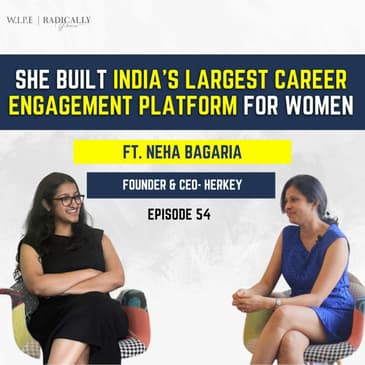

Neha Bagaria, CEO and founder of HerKey, India's leading platform for women's careers, highlights a critical issue: "Women who possess exceptional qualifications, ambition, ability, and experience often leave their careers abruptly and never return."
In a recent interview on 'Wiping out the Norm', with the host Radhika Bajoria, Neha shared her journey from resuming her career post-Wharton graduation to founding JobsForHer, now HerKey. Her dedication stems from her personal experience of a 3.6-year break after her children, she realized the challenges women face in reentering the workforce.
"Only 10% of educated and qualified women are pursuing long-term careers," Neha explained, based on her research. This scarcity of women in the workforce, due to reasons like marriage or motherhood, creates barriers to re-employment.
An alarming disparity also exists, as Neha noted: "A diverse consumer base should reflect diversity in your workforce as well. That is untrue, though, as 80% of employees in FMCG companies are men and 80% of their consumer base consists of women.” To address these gaps, HerKey pioneers scalable solutions. With 3.5 million female job seekers, 10,000+ employers, and 800+ learning partners, HerKey offers job matches, skill-building, and professional networks.
The platform links women at all levels with suitable jobs, offers learning opportunities to help them re-skill and upskill, and creates communities where women can network professionally. The company's goal is to empower women to realize their full economic potential by providing them with communities, learning opportunities, and support throughout all stages of their lives and professional journeys.
Their vision extends to supporting Women Starters and Entrepreneurs, alongside Women Returnees, Women In Tech, and Women In Leadership. This inclusive approach empowers women at all career stages.
HerKey, a career engagement platform for women in India, raised $4 million in a pre-Series A round from Kalaari, 360 ONE Asset, and angel investors including Zia Mody, Puneet Dalmia, Pramit Jhaveri, Aditi and Shuchi Kothari, KP Balaraj, Ranjan Pai, Neeraj Bajaj, Akash Bhansali and others.
Watch the full video to learn more about the problems and obstacles that women face, who told Neha to put her product first, and her experience obtaining funding from Kalaari Capital.
Link- https://youtu.be/hCeodKAAOT8
#HerKey #EmpoweringWomen #CareerEmpowerment #DiversityAndInclusion #financialInclusion
[00:00:00] Thanks, Meha for being a part of our show Wiping Out The Norm. It's about women who have
[00:00:11] done something different and wiped out the norm in their own fields. You've created
[00:00:16] India's first platform for women who want to restart their careers and get into something
[00:00:22] and I know that how much confidence comes when you are working for yourself independently,
[00:00:27] so you've given confidence to many women through your platform, Hopey. So I want to know your
[00:00:33] journey as to what triggered you to start a platform like this in the first place. Radhika,
[00:00:39] thank you for having me. It's always a pleasure to really share this journey and this story
[00:00:45] because there are so many women out there who are in the scene here that I was in when I took
[00:00:50] a break in my own career for three and a half years when my kids were born. And it was a completely
[00:00:56] unplanned break. I like to see a baby gave birth to another and when I became a mom, I suddenly
[00:01:03] was like, oh my God, I don't think I can get back to work and I didn't even know if I would.
[00:01:09] Luckily for me, my second son when he came into my life, I was forced to shift my attention
[00:01:15] from my first one. Radhika, nothing else could have done that. And I realize that the heavens didn't fall
[00:01:20] down and he's fine. In fact, it might be better for him that he doesn't have this helicopter
[00:01:26] move on his own side all the time. And that's a prompted me to get back to work. And when I
[00:01:32] started my career, it was just such a positive experience that I was like questioning all the women
[00:01:37] around me. Okay. But why aren't you getting back to work? Why aren't you getting back to work? And
[00:01:40] I'm sure you know so many women who are extremely qualified, ambitious, capable, experienced,
[00:01:46] and they drop the ball of their careers and they just don't get back. So when I started figuring out
[00:01:52] all the challenges that they were going through to get back to work, that's what prompted me to start.
[00:01:56] It was called jobs for her and now her key. What do you think are the challenges with
[00:02:01] stop women from getting back to work? So many, right? And I like to say that you know so I did a
[00:02:07] business degree from Wharton but I feel like it's a whole different business degree to be able to
[00:02:13] manage these four things. Right? It's time management. Okay, so you just don't know how to
[00:02:21] you know make sure that you're balancing your time between your work and your family.
[00:02:24] When you've taken that break in your full time, second is a lot of fear management.
[00:02:30] You know so you actually are worried about will you be judged? And will you be able to manage?
[00:02:36] Will you become a bad mother or bad wife? I thought I know. Third is a lot of guilt management
[00:02:44] you know and that's something that always stays right at the back of your head. That
[00:02:48] you know either when you're at work, you feel guilty or not at home. When you're at home,
[00:02:52] you feel guilty or not at work. Yeah and then there's biases management and there are lots of
[00:02:56] biases all around us. You know it could be amongst people we know well, they could be the
[00:03:00] largest society but could be at the workplace. Yeah so these are four big things that really
[00:03:06] stop women to be able to get back to work and do well at work. Yeah. But the biggest biggest
[00:03:11] challenge that all women in a break go through is a loss of confidence. You know it's because of all
[00:03:17] of this. Yeah but did you think that you had faced some of these issues when you were on a break?
[00:03:25] Of course all of them. Yeah. How did you overcome them? And not just when I was on a break even
[00:03:30] when I got back to work, I think took a couple of years. Yeah and luckily I found it something like
[00:03:35] job service. I was always meeting very inspirational women. Yeah and that helped me so much in
[00:03:40] overcoming my own fears and you know guilt and all of that. And you learn there lots of tips and
[00:03:47] tricks that you know get you by but one thing very very important is to have really positive people
[00:03:53] around you. Yeah yeah and it's kind of that support system that you start building and of people
[00:04:00] who will start pushing you up and then pulling you down. Right but tell me that when you started
[00:04:05] jobs for her did you like any start of founder to really looks at the time, so many what not so
[00:04:10] many terms are there. Did you think of all of those or was it just a purpose that got you started?
[00:04:17] No sir it was definitely a purpose but frankly before I read lean in by Cheryl Samberg I thought
[00:04:23] that this problem was just mine or my friends. When I read lean in I was like oh my god one second
[00:04:29] if the CEO of Facebook feels like this then I'm sure there lots of women out there. Yeah
[00:04:34] you know who are not being able to succeed in their careers because of all these problems.
[00:04:38] And that's what I did do the research. Yeah and when I did the research I was shocked.
[00:04:42] I found out there are a hundred college grants in India today. Yeah 40 of them are women
[00:04:46] and that's incredible. Yeah that's the work our mother's generation has done. Yeah but those 40
[00:04:51] women only eight even start their careers. Okay and then out of those eight four of them drop out
[00:04:57] within three years which means only 10% of our qualified educated women base are pursuing long-term
[00:05:04] careers in India. So for me that was a time because it was so obvious that if we can fix that ratio
[00:05:11] I mean it would be so good for that woman there would be so good for companies and it would be so
[00:05:16] good for all society and an economy. Yeah but why do you think like after graduation itself people
[00:05:23] don't pursue their work again it's a lot of biases right so if you really think about it now
[00:05:29] you know fathers are educating the daughters to find themselves a good husband and let's say
[00:05:34] a good job. Yeah many girls are brought up thinking that the beyond an end all of life is to find
[00:05:40] that good husband and once we found that good husband that's it right and they don't need to work.
[00:05:44] So many people think they don't need to work. Second there's still a lot of girls who are not
[00:05:50] allowed to work. Yeah they're not allowed to especially go to another office and work from somewhere
[00:05:56] and third it's almost like after you get married it's like a status symbol yeah where
[00:06:01] if your wife is working are you not earning enough? So it's actually it is absolutely not a
[00:06:07] skewed problem. It's a cultural problem that we face but I think you'll take time to break this
[00:06:13] culture. Yeah but it's already changing you know and I mean the even in the last eight years
[00:06:21] of Jopsoh's journey and now her keys the kind of change that we have seen is amazing you know
[00:06:27] like when I started so many companies told me that we don't want to hire women attorneys we don't
[00:06:33] want to hire women we don't want to hire mothers and it was because they used to keep looking at
[00:06:39] this break as a big handicap and the biggest thing that this change in mindset we've been able to
[00:06:44] do is starting to make companies realize that you know what this is a talent pool a very valuable
[00:06:50] talent pool because it's a talent pool of experience qualified capable women who have a fire in the
[00:06:56] bellies to prove themselves and the journey and all those are spirit. So I think changing the mindset
[00:07:03] okay changing the narrative it can do wonders in terms of changing the status quo right but tell me how
[00:07:10] did you you know start by yourself I'm sure you must have had some co-team members initially to get
[00:07:18] you know Jopsoh her started so tell me about that first few people that you hired so that you could
[00:07:24] bring your ideas into reality yeah sure in fact I'm very happy to tell you that I didn't just have
[00:07:30] co-team members and I just started our employees number one two and three are still with us wow
[00:07:34] we're into half years yeah and five are employing number one guy three she always completes her
[00:07:39] milestone before even Jopsoh completes it's milestone because she joined even before the company launched
[00:07:45] oh how you tell me that story well I mean she joined so that we could launch the company right
[00:07:50] yeah and no I met a guy three through an online platform with that more I think it was no
[00:07:57] pre-emonstration because of it wasn't launched but yeah and you met a good copy shop because I
[00:08:04] didn't have an office I'm I told her about the whole thing she was in a break too she had to
[00:08:09] get a break because of my motherhood and her if at her son was around the same age as mine and
[00:08:15] we met and I told her what I want to do and she said you know what sure let me think about it
[00:08:20] let me talk to my family get back to you and later found out that it's her husband who really pushed
[00:08:27] I don't take this chance yeah take a shot because I mean imagine it was a completely random person who's
[00:08:33] on a break telling her I want to solve this problem for other women on a break yeah she took it she
[00:08:37] took that shot and then she helped me employ my next set of people okay so guy three today by the way
[00:08:45] heads are entire delivery team yeah okay right after that we hired punkager okay who was there to
[00:08:53] handle the admin okay of jobs for even today or even address is still admin at jobs for a dot wow
[00:09:00] and the third person we hired us Pritha okay and we got Pritha on board again all by the way women
[00:09:05] returning yeah punkager had taken a break right after getting married Pritha taken a break because
[00:09:12] of medical reasons and relocating to Bangalore yeah from Delhi so I met Pritha that time we were
[00:09:18] by then Ghatri and I had found a great place to work from okay which was social at church street
[00:09:27] okay social the upstairs part of social have converted into co-working stays during the day yeah
[00:09:33] and the deal was just too good to say no to okay so we said okay fine let's do it more from here
[00:09:38] so we when I interviewed Pritha at social she just walked into social and she was like if this is
[00:09:43] where I'm going to work I'm on and Pritha who now by the way today heads are entire sales team
[00:09:51] the first whole year of jobs her her definition of sales was calling up companies and convincing them
[00:09:58] that please come on the platform list your job openings for free of course but hire these women
[00:10:03] who are on a break and not because you should because it's good for society you should because it's
[00:10:09] good for your bottom line yeah so yeah these were some of the very key people when we started
[00:10:15] another two other people joined us as well Shunali who came in as a returning intern she was an
[00:10:21] impression of what to do when I found out that she had majored in women's studies and creative
[00:10:27] writing from the Knox College USA I was like do you want to try out writing I wasn't looking for
[00:10:32] writer yeah and then Shunali went on to build out our entire creative content team in the company
[00:10:38] and Somia who came in to handle our marketing okay how did you find her so by the time I had
[00:10:45] so Shunali I found by then jobs her social media had gone wild and she saw one of her social media
[00:10:52] posts and reached out to me and Somia by the time she joined jobs herself was launched yeah
[00:10:58] and in fact Somia's application had come in for another company okay and you know this is the
[00:11:02] early days of jobs alright every application that came to the platform hit mine and Gaitri's
[00:11:08] inbox first we went through the application yeah and then forwarded it on to the company when I
[00:11:14] saw Somia's application at her Gaitri doon send us out yeah wow that's quite interesting so how long
[00:11:24] was this process until the jobs for her was launched so Gaitri joined in I think December of Jan
[00:11:32] of 2015 and that International Women's Day March 8th we were like no we literally gave
[00:11:39] ourselves like a month and a half a couple of months to put together a basic MVP and that's
[00:11:44] all we needed because again the whole idea was you put together very low frills low functionality
[00:11:52] platform okay doesn't have to be a platform but some sort of an MVP that will actually test the
[00:11:59] market yeah it will test all the hypothesis and the theories that we had in our own heads to see
[00:12:04] well it actually works yeah so when I launched this in March 2015 we had 20 companies on the platform
[00:12:12] we were only providing job listings okay for women on a break and our website said this is only
[00:12:18] for women returning in Bangalore oh that is literally how we started okay by the time my year was over
[00:12:25] those we had about 1000 companies wow those come new those companies were paying us to put
[00:12:31] us in touch with these women and the number of women that are coming to our website our website
[00:12:37] was crashing every week but how did you get the virality for the first time through your platform tell
[00:12:46] me about that so we used social media marketing and content marketing really well okay yeah and we
[00:12:52] knew that look finally first we'll be tried a lot of different things yeah and we knew that we finally
[00:12:59] have to go to weather women up okay that's the one-on-one marketing and we knew that women were
[00:13:06] heavy social media users so we used all the social media platforms you know but we really owned it
[00:13:14] on Facebook at that time yeah because at that time Facebook was really good and we did a lot of
[00:13:21] viral campaigns on Facebook you know so which again had to do with a lot of the emotion yeah that
[00:13:27] you struggle with when you're on a break or you want to get back and it and it had a lot to do
[00:13:33] with changing mindsets okay we also had a very strong ambassador community okay these ambassadors
[00:13:40] were basically our extended family days to work with their local communities you know and help
[00:13:44] them through the process get them close to platform you know evangelize yeah the whole concept
[00:13:49] of getting back to work and what would they get in return they would get a great network of other
[00:13:54] ambassadors okay these two are not so that was in fact the first community that we started yeah which
[00:14:00] was an ambassador's network so we had a lot of ambassador specific events that we carried out
[00:14:05] we had a lot of learning events for them a lot of networking events for them and of course the
[00:14:10] ambassador badge yeah so they worked like as a world interior with you absolutely wow I mean I'm
[00:14:17] just thinking that how much your purpose can bind together people yeah and they don't even need
[00:14:23] money to get started you know some people just work for money but it's so interesting to see how
[00:14:28] women especially work for an impact given purpose because there's also things that when you know
[00:14:34] especially when you've been through it yourself you know that were the leaders yeah
[00:14:41] and all of our ambassadors or other women on a break too yeah all the women who had actually
[00:14:46] recently gotten back to work yeah all taken a break at some point in the life they want to help
[00:14:51] yeah but how many women were there in India such who were on a career break and who wanted
[00:14:56] to give that no absolutely official statistics on it but one of the studies that were conducted
[00:15:03] said that there were 20 million women in India who were looking to restart the careers
[00:15:07] and about 80 percent of them felt that they wouldn't be able to okay yeah that's that those are
[00:15:15] the kind of numbers that are flying around when I started jobs and how is it now well today if
[00:15:20] you look at it right I mean the number of attorney programs that we've been able to get companies
[00:15:26] to launch yeah especially for women returning to is it returning to work in tech it's the opposite
[00:15:34] problem okay these women returning are sitting at four five job offers yeah and we're being
[00:15:41] moved by the companies yeah so yeah the the the the plane has shifted quite a lot but there's still
[00:15:49] a long way to go right but tell me how was it to convince companies initially because you said
[00:15:56] right that many companies wouldn't even see why is it needed for women who are on a career break
[00:16:02] break to come back to work yeah so tell me some stories where you had a tough time dealing with
[00:16:08] companies you know because I mean success is everybody talks about and of course when they see
[00:16:13] a problem they will of course get to it but when they didn't see a problem how did you make them see
[00:16:17] it yeah no I mean the lots of anecdotes for example I personally met with the head of
[00:16:26] HR of a large pharmaceutical company in India and when I told her about the fact that you know she'll
[00:16:32] be able to access the school of women returning on the platform she said no no I don't want to be part
[00:16:37] even I was like they're not to be part even yeah they are all women who've taken a break because
[00:16:44] of family reasons yeah so it's not like they were not even working yeah we're just doing other work
[00:16:49] right yeah and they all have a fire to prove themselves and they wouldn't get back to work
[00:16:53] but at this moment these women who are not working and they obviously don't care about the money
[00:16:57] and I want to hire women who care about the money so it took a while to convince her about the
[00:17:05] pro and again these women was another woman yeah she was like I never took a break in my career
[00:17:11] she that was another woman actually another company that this was a MMC company I want to
[00:17:17] told her to the concert and she she told me you know what I've never taken a break in my career
[00:17:22] and there were two other women in the room she said they haven't taken a break in their careers
[00:17:26] so if these women decided to take a break in their careers what should we give them a second chance
[00:17:30] oh shit okay another male head of HR on one conversation that I was having a conversation with
[00:17:37] this large company so there were multiple people on the call and there was somebody from TAA
[00:17:43] and somebody from ploy branding you know and somebody from HR on the call and when I gave
[00:17:48] them my entire pitch they said why have you reached out to us you should be talking to the CSR
[00:17:53] department of our company and I was like why should I talk to CSR because this can come out
[00:17:59] of a CSR budget because this is for social good what other reason could there be two hire a woman
[00:18:05] on a break oh good yeah so I've gone through lots of conversations and I'm sure I still will
[00:18:13] yeah yeah I just think I think it was change now people are a little bit more careful about
[00:18:18] both things you get accurate I mean at the beginning remember somebody told me at that point
[00:18:23] of course there was no holes bar right people were very comfortable saying that they don't want
[00:18:27] a hire mother is it been saying that they don't want a hire mother one person told me you know what I
[00:18:31] have figured out the right age to hire a woman you know because if you hire her right after she's
[00:18:37] graduated she'll get married and she'll leave you if you hire her just when she's got married then
[00:18:43] she'll have a kid if you have to force it she'll have a second kid then she'll have very little kids
[00:18:48] yeah now if you hire a little bit too late then her kids will be going through their ICC exams
[00:18:55] it's a bold exam so then she'll take a break and then she's much older than her in laws
[00:18:59] why it won't be well so she'll take a break so there's this particular window during which
[00:19:04] you should hire women I said please you don't hire women yeah so many marries oh god so
[00:19:12] so I said there's been a lot of sensitization that has been required yeah of hugely from the
[00:19:17] company's point of view but also from the women point of view yeah but which sector in particular
[00:19:23] did you see was more welcoming in terms of appreciating or totally tech yeah okay okay so actually
[00:19:31] it's whichever sector has a very high demand for talent it's really simple yeah because at
[00:19:37] the end of the day it's all economics you know if you have a very high demand for talent yeah
[00:19:42] you will need to widen your access to talent you will need to consider every pool of talent that
[00:19:49] is available out there yeah if you want to win the war for talent and at that time tech was huge
[00:19:55] yeah it was growing huge right and also tech skills or something that you can very easily update
[00:20:01] yourself you know if you have your foundations anyway technology is changing so rapidly yeah
[00:20:06] you just leapfrog into the latest technology yeah that's true and tell me that you know how
[00:20:12] what do you on which we like initially when you started and how has it changed over the course
[00:20:18] because you also learn while practicing it you know when you're the other parties perception
[00:20:23] you're like okay this is what I should be speaking now from the next meeting to get more conviction
[00:20:28] on my point so how was it when you just started out like what would you say to those people no you
[00:20:34] know frankly Radhika this is something that we really got right yeah which is that like I remember
[00:20:41] the first slide that I had even back then was a report by McKinsey that showed there are a
[00:20:48] eye of hiring more women okay yeah and it talked about how having more women at executive levels in
[00:20:57] your company yeah increase your bottom line it increases your performance it increases employee
[00:21:02] satisfaction yeah okay what has changed over time is not what we spoke about for women attorneys
[00:21:10] yeah that is very much clear in fact today the beauty is that you don't need to do that
[00:21:15] explanation that convincing and yeah usually a story sold when we knock on the door yeah because
[00:21:21] people like the kind of inbound interest that we get of companies that get us more women attorneys
[00:21:27] you want to have them attorneys it's incredible yeah and that's where me much changes happen yeah
[00:21:32] now what we've also realized is that it can't be just for getting women into the workplace
[00:21:37] we also need to talk to them about how are they working and getting women to stay in the workplace
[00:21:41] yeah and rise in their careers yeah and that was a big shift that we did in 2019 now we will change
[00:21:47] our tagline from ready set restart to start restart rise okay because if we really want to shift
[00:21:55] the diversity need you need to do everything they have on all those three facets yeah absolutely
[00:22:00] that's true you said that very important and nice point that you know women contribute much more
[00:22:06] to the bottom line of companies so if you could no if the companies with more women had a
[00:22:14] better bottom line overall right yeah standard subset yeah or or
[00:22:20] or ubiquitous companies they saw that yeah how is that because again and that's that's what we
[00:22:25] hopped on yeah hopped on actually the benefits of diversity correct because when you have more diversity
[00:22:29] in your organization you have more diverse capability yeah you have more diverse perspectives
[00:22:34] and when your consumer basis diverse yeah your employee base should also mirror that you know it's
[00:22:39] like saying like for example FMCG companies 85% of their consumer base are women yeah and 85%
[00:22:48] of the employee base for men okay it doesn't make sense exactly doesn't make sense you should have
[00:22:54] more women would be able to figure out what kind of products you should come up with yeah you know
[00:22:58] what kind of marketing should you do to those women what kind of sales channels should you be using yeah
[00:23:04] it's it's a no pre norm yeah yeah that is how diversity impacts the bottom line
[00:23:09] not because it makes you look good in public yeah exactly but also tell me that you know
[00:23:16] when you started of course lot of people get carried away by the greed and the demand pull factor
[00:23:22] that they're getting so how did you cut the noise and you know tell your team as well then let's
[00:23:27] just focus on the women return ease because that's the niche we've chosen and not focus on going
[00:23:33] everywhere like to you know make every women of every nature get a job yeah well today I mean
[00:23:40] so I think at different phases of scaling we've had these conversations and yeah and again I think
[00:23:46] the answer lies in first of all the alignment of that expansion that you want to do with the
[00:23:52] current base yeah and second whether it aligns with a north star or not okay that's very important
[00:23:59] so for example in 2019 by 2019 we realized that the women who were getting back to work through
[00:24:05] the platform they were still using up that one okay and even though our platform set very clearly
[00:24:11] this is for women returning only women who are currently working also using up that one okay
[00:24:17] so at that point we said okay if this is what the market is saying yeah let's go and understand why
[00:24:23] yeah so it became a very organic expansion yeah at that point of view and we did a lot of focus
[00:24:28] groups and a lot of surveys and sorry understanding one of the challenges that women are facing when
[00:24:32] they're currently working yeah now for example we've realized that you know it's not just about
[00:24:40] getting women a job right it is also about attention advancement yeah now with their what women
[00:24:46] in leadership require is very different from what a woman in a junior management level might require
[00:24:52] yeah so we'll also have unique solutions for women in leadership so for example we have a
[00:24:57] separate hockey gold club which is a networking club for women leaders okay because at that level
[00:25:02] what's very important and what is lacking is that women just don't professionally network enough
[00:25:06] right and that's the only way to really advance in your career yeah so as we scale and grow
[00:25:12] yeah I think it's very important to figure out what are other adjacencies but also adjacent problems
[00:25:18] yeah it's important to crack correct along with your core one but of course the women returning
[00:25:24] problem will always take part once yeah but like today for example a lot of people ask us why
[00:25:29] don't we get into other areas of diversity yeah which could be LGBT yeah seniors or handicapped
[00:25:35] or you know racial all of that but for us our core is changing and again our why was very clear
[00:25:45] right it was that India's labor force women labor force participation rate is 20% yeah in urban
[00:25:51] India it's 15% China is at 60% and the USA is at 55% well that is our north-stop yeah how do we
[00:26:02] increase the female labor force participation rates in India for that expanding into women
[00:26:08] who are currently working women in leadership women in tech need all sense yeah but expanding
[00:26:14] into other forms of diversity today doesn't yeah well I'm sure you recently raised a good round
[00:26:21] of funding about four million dollars but did you ever get questioned by investors
[00:26:27] and that you know if you don't expand into different categories you might shut down your revenue
[00:26:32] streams and as a company you might grow 10x but you will only grow 5x if you focus only on women
[00:26:39] so how do you really tackle with those things I mean for all those investors who feel like the women
[00:26:44] space and there's so many women now in tech running fempty companies and they face the same problem
[00:26:50] where investors feel this is a niche space we're about 50% of the global population yeah
[00:26:57] something that serves 50% of the global population is not niche yeah okay so yes and that too when
[00:27:04] it's untapped and it's underserved okay the amount of potential that is in femptyk is huge
[00:27:11] because it's so untapped and underserved and it serves 50% of the population so there is more
[00:27:17] than enough growth but yeah just from the women space in fact tomorrow like growth income
[00:27:22] geographically too yeah because the same problem is faced by women yeah so many different jobs
[00:27:27] that's true so I think it's very important to understand what is the core problem that you're trying
[00:27:30] to sell and sometimes saying no is more important than seniors yeah yeah so tell me about how did you
[00:27:37] bag your investment from Calary and the formerly IISL group yeah absolutely well so
[00:27:44] I first of all I realized that I have to go to all the female leases for sure yeah
[00:27:51] and we see the top of the nurtures money correct you know and luckily for me
[00:27:57] money has actually been my mentor as well okay over many years so she really understood how did
[00:28:02] you mean you're part of the first time well this is a very less known story but so I had founded
[00:28:09] the company 2015 and in 2016 I found out about a startup girls challenge that Calary was hosting
[00:28:16] okay and you know I signed up for it because I thought it was a challenge and you would think
[00:28:20] I think 80 thousand dollars in Facebook credits okay and 100 thousand dollars in cash and I was like
[00:28:26] oh my god you know I went all in yeah went through multiple rounds of the pictures and you know
[00:28:32] worked really hard very very small team then very small company and we won it oh and I was delighted
[00:28:39] and what was the competition about it was basically this right if I was startup girls like
[00:28:44] you know they would choose like they had lots of women entrepreneurs only for women entrepreneurs
[00:28:48] okay to pitch and get selected so I thought one the competition and I thought it's a cash prize
[00:28:56] and then a turp sheet game oh is it yes wow and I wasn't expecting it because I wasn't fundraising
[00:29:03] huh point um and so I had to turn it down okay and of course a lot of people thought I was crazy
[00:29:10] why did you do that because I I wasn't ready and my company wasn't ready okay yeah and as a
[00:29:16] finance student I knew that you shouldn't sell yourself too or leave because the new sell yourself too
[00:29:21] cheap yeah so I turned it down but because of that I thought to meet Vani yeah and I got to really
[00:29:32] I requested them to be able to like explain to her why I said no and when I met her for that coffee
[00:29:38] you know she asked me to make sure that I never let the fear of failure come in my way
[00:29:44] now and I looked at her and I told her Vani right now it's the fear of success
[00:29:48] okay because at that time my kids were really really little yeah and that is why I wasn't
[00:29:52] these money yeah because I wasn't sure I like I told you took me a couple of years yeah
[00:29:56] for the time I could get through my own guilt telling my my fear management and all of that um
[00:30:01] and I think something like conversation just got her to decide to mentor me through this process oh
[00:30:06] yeah and she did so through this entire journey of scaling up becoming profitable finally deciding
[00:30:13] so when I finally decided to go out there and raise money obviously she was the first door and
[00:30:17] all wow that's such a lovely story yeah I get goosebumps fell hearing it yeah and by then Vani
[00:30:25] and Vani has always been a big believer in women right actually started the CXO community specifically
[00:30:30] for that like put together you know a panel of investors put together you know all these LPs
[00:30:38] and all of that specifically to meet you know women entrepreneurs are getting funded correct
[00:30:42] so it was just the like a perfect match yeah yeah but when you say that you know she became a mentor
[00:30:48] to you lot of people look for mentors but still do not understand who can be the right mentor for them
[00:30:55] so what is mentorship really for you and how is Vani's mentorship you know helpful for you personally
[00:31:02] sure absolutely well I don't I believe very very strongly mentorship yeah so when I decided to start
[00:31:09] jobs to her I pretty much he shot everybody I knew for like 20 minutes of the time you know okay
[00:31:15] I had a little black book in which I took the super snow I did take that with me everywhere yeah
[00:31:21] I should go and that and there's no online meetings yeah so I just go from like office to office
[00:31:25] and I should go to their office and ask them just for 20 30 minutes of the time and I used to just
[00:31:30] ask them how do you start and you know what works what doesn't work about how did they do it
[00:31:36] and as I said reaching out to these people there's certain people for who literally clicked right
[00:31:43] like that relationship really click yeah love what I wanted to do I loved the kind of inside they were
[00:31:48] giving me so I asked for another meeting and then another meeting and you build that relationship
[00:31:53] with them yeah so like for example my two advisors I met like that right in the beginning before
[00:31:58] jobs are named jobs of her okay their Drupshino and Shobhakar Karne and Krivan today in the
[00:32:04] half years later there's still my advisors okay and they were out here on my board another on my
[00:32:09] board wow so Drupshino used to run monster in the Gulf area oh so he really understood what it
[00:32:16] would be like to build a marketplace for women attorneys right and Shobhakar used to be the HR
[00:32:22] head of HP and AXA so she really understood what HR folks are looking for yeah and over time she
[00:32:29] helps me hugely with my internal HR yeah as we scaled up our team correct so these are two great
[00:32:35] examples you know and over time I've developed and mentorship is something that has to be developed
[00:32:40] you know it's a very important give and take relationship between a mentor and a mentee yeah for
[00:32:45] the mentors it's important for them to see that the mentees actually following up and doing what
[00:32:51] they discussed you know and I've noticed that there are a lot of people out there who are willing to
[00:32:55] help yeah especially if they feel very aligned to the vision yeah and you know they they vibe well
[00:33:03] with the mentee they're more than willing to take the time and help and with Vani that was a case
[00:33:10] yeah I really felt like she was very aligned with what we were trying to do and she must have
[00:33:15] seen some spark but yeah this girl will be able to get over all her fears and be able to achieve and
[00:33:23] I'll make sure that she does yeah so once and again it's not like Vani I was very
[00:33:29] free for me to meet her on a daily basis or weekly basis or monthly basis even right yeah once a quarter
[00:33:34] once in six months I made sure I reached out to her and checked whether she was available for
[00:33:39] about 20 minutes yeah to give her a quick update wow and how did I feel coming as well
[00:33:44] I've had of course came in I will I so when you're pitching for your first time you pitch with
[00:33:50] every part yeah and like I fell was actually usually invested larger checks in larger startups
[00:33:58] yeah but you know from multiple rounds of discussion the manager convinced him that he
[00:34:04] the best time to get in is getting early yeah yeah and then watch us grow so it was great to have
[00:34:09] them on board also in fact again over there coincidentally and this time it was coincident okay
[00:34:14] the woman needing the there was a woman who was eating the conversation
[00:34:17] and okay no Nadi Kumar okay yeah and now she's on our board so now board right now by the way the man
[00:34:24] there's only one man okay and roof and we are four women so he's the diversity yeah
[00:34:33] for a board and then once I had the deal locked in with so Kallari led it yeah and then I also
[00:34:40] pull it then I've managed to convince him to keep a million dollars aside to open it up to other
[00:34:46] engines okay and the kind of engines that we got were really incredible right like we had Zia Modi
[00:34:53] we had Vellabansali we had Promew Zaveiri Puneetal Mia Ranjan Pai you know other Tien Shachikotari so
[00:35:01] all these people were getting passionate about what feelings and how did you reach out to them
[00:35:08] through every possible like give me one example any possible network right like I mean
[00:35:14] people who was you know how second connections and third connections and all of them like
[00:35:19] you know my pen and alumni network my family network my advisors networks my investors networks
[00:35:26] you know my company's networks like all how long did you take to fundraise well we had the
[00:35:33] fortune of fundraising during funding winter oh my god yeah so that was quite a quite fun time
[00:35:41] I think from when I started pitching to when finding money hit the bank it took a whole year
[00:35:48] I was a year of complete roller coaster ride ups and downs you know so many times thinking that
[00:35:56] you know just forget all of it because as a founder you're running two jobs right when you're
[00:36:00] fundraising okay you can't take your pedal off with what you're doing yeah yeah and then you
[00:36:06] gonna make sure that this is happening but yeah and then finally despite it's just nevertheless
[00:36:14] she persisted yeah yeah yeah I'm finally managed to close it yeah when you know after it started well
[00:36:21] now and this was the first time so due diligence also took like three months because he did
[00:36:26] due diligence of the entire seven year history yeah you know I turned she negotiation took two months
[00:36:31] or like SHA and SSA the first time I was seeing an SHA and SSA that took so long so and it was a
[00:36:37] rookie team yeah entire team was a rookie team right you know the person who handles my accounts
[00:36:43] hmm and by the way she's been at the company for seven years okay so she knew everything
[00:36:48] well about our accounts but she was an accounts profession yeah she handled the entire due diligence
[00:36:54] okay yeah so you're rookies try to figure it out and manage to do it yeah that's what entrepreneurship
[00:37:00] is all about as well just figure it out on the go yeah I know but why didn't you raise any time before
[00:37:06] in these seven years because one I also I really always wanted to make sure that I raised money
[00:37:12] once I've got my ureteconomic right yeah you could either raise for the growth stage or the
[00:37:18] discovery stage and I had enough fortune to be able to fund the discovery stage myself yeah it was
[00:37:27] during the pandemic that we became profitable it was during the pandemic with suddenly the market
[00:37:31] opened up like crazy yeah because the demand for talent soared and the biggest barrier for women's
[00:37:37] careers which is flexibility wasn't a barrier anymore correct yeah because until then that's always
[00:37:42] been the biggest barrier right so suddenly with the pandemic I saw that the tide has turned you know
[00:37:47] and we were on top of the wave and that's when I was like this is now I think the company's ready
[00:37:53] for us to raise money and move from a discovery phase to the growth phase nice yeah that's a very
[00:37:59] conscious call that you've taken because in that funding frenzy people just ride on to any way
[00:38:06] then yeah no that can't be good for the company yeah the company's not ready for it it can actually
[00:38:12] be the worst thing that happens if you flush it with money yeah and grow it when you haven't figured out
[00:38:17] the unit economics yeah so how was the revenue model like when you started and what is it like now
[00:38:23] so our revenue model has always been B2B yeah which is a company's pay us to list the job
[00:38:30] to list their jobs or to brand themselves or to engage with our women okay yeah um and
[00:38:36] the other thing who are recruited do you all also take cut out of that so we never actually we never
[00:38:41] operate it like a placement agency okay it was again it was very clear that that model wasn't
[00:38:45] a product led model it was a people led model yeah and we were definitely in the business of creating
[00:38:51] us strong scalable product to service this need um over time we've actually built a very
[00:38:58] scalable subscription model yeah it's called our bay packages our bay plans yeah which is
[00:39:03] branding engagement and recruitment well and the company's opt for different bay plans by which
[00:39:09] we brand themselves so that you know they put put out there to our women yeah talent pool they engage
[00:39:17] with the women through a lot of different webinars mask class etc okay and finally the recruitment
[00:39:22] happens to a lot of hiring dries and job listings on your platform so again on our channels also we use
[00:39:29] our platform so we today we get about eight lakh MAU on the platform we have about four million
[00:39:36] registered on the platform we use our email database of these four million women we use social
[00:39:42] media on social media we have a 15 million monthly social media range and we use a lot of our offline
[00:39:48] events the small scale medium scale all large scale as well okay so it's it's actually on me channel
[00:39:55] that's nice so it started as B2B and it still is that it's very much B2B and you also talked about
[00:40:00] the gold membership that you all have recently launched so I'm telling you more about that
[00:40:05] absolutely so that was actually a first foray in terms of charging women for subscription models as
[00:40:11] well and that's very well so again it's a very very niche play yeah because this is specifically
[00:40:15] for women leaders women leaders there's niche correct because we are very very very
[00:40:20] fortunate actually going up the ladder I'm hoping one day it won't be niche yeah that's our aim but
[00:40:26] with the gold club women are actually it's biological only so only a woman who is at a
[00:40:33] senior management aspiring leadership level she's eligible for the gold club and then the payers
[00:40:39] or annual subscription fee to be part of the club okay which is how much which is about 15,000
[00:40:44] rupees for a year oh that's it exactly and with that we become part of our lens program okay so
[00:40:53] we have also the program for our women is called the lens program what is it and that's learning
[00:40:58] engagement networking and showcasing her content team was really done
[00:41:04] naming these programs
[00:41:10] so learning piece of it again very tailored to what is holding women back you know so these are all
[00:41:15] career builder themes yeah it could be about owning a vision it could be about managing time it
[00:41:21] could be about financial investments engagement piece is making sure that women are engaging with one
[00:41:28] another true a lot of different discussions that constantly are being hosted by by themselves yeah
[00:41:35] and it could be across any topic it could be about how to handle menstrual health yeah during
[00:41:41] crazy office timings yeah the networking is to ensure that we have a lot of offline and online
[00:41:46] networking that's happening which is you know so that they can build that professional network and
[00:41:51] the showcasing it's something that women just don't do enough of you know to be sure that we actually
[00:41:56] show getting these women to showcase their skills brag about them and share their achievements through
[00:42:02] our social media platforms okay you should be part of it as well yeah how many members do we have
[00:42:10] so at any given point of time we make sure that we limited to about 200 members okay yeah
[00:42:16] and we keep it extremely exclusive you know so that it can be a very deeply engaging yeah okay
[00:42:24] that's that's quite a nice idea why did you think of starting this was it to build the professional
[00:42:30] networks of women on the top you know we thought of starting this because one we mainly because
[00:42:37] we realized that till we don't get more women at leadership levels of companies we can't have
[00:42:43] the sweeping change that is required within companies to be able to get more women yeah let me say
[00:42:49] it's seen this trend right the more whenever we spoke to a company where there were a lot of women at
[00:42:54] the top that the way the company was structured in terms of its policies in terms of its culture
[00:43:01] in terms of its the programs and initiatives they were running for women who's completely different
[00:43:06] yeah and so in order to get more women at the top we started figuring out what is it what will help
[00:43:13] I realized that can't be jobs first of course yeah that has to be networking first correct
[00:43:18] understood and how did this whole piece of rebranding come into picture tell us that story well
[00:43:23] so jobs are actually outdone its name for a while you know we started off with the most key problem
[00:43:31] which was the job and once we have cracked that one's there enough companies coming and posting
[00:43:36] their jobs you know by the hundreds every week we realize that okay we also need to figure out how do
[00:43:43] we get women to restill themselves you know and that's when we had launched learning and mentorship
[00:43:48] on the platform okay and then over time we realized that we also need to make sure that women are
[00:43:54] we're not just connecting women with employers and experts but we're also connecting women
[00:43:58] with each other yeah and that's where the community space came out yeah so at this we had
[00:44:04] reached a stage now where we realized that actually the community space of it is the most important
[00:44:10] yeah because no matter what stage of your career you're at that community will be able to help you
[00:44:17] tie that path yeah yeah um and that is when we moved from jobs out to herky so that women don't
[00:44:24] think that the only 10 they should come to us as well for a job yeah or for a job because that's
[00:44:28] just that's a transaction to think about yeah and that's just if you're a restarter getting the job
[00:44:34] is a start of the journey yeah there's a much more that is going to come yeah and that's two of
[00:44:39] every stage got it also from a company point of view we didn't want to work with company only for
[00:44:44] recruitment yeah we wanted to work with them for recruitment retention and advancement and that's
[00:44:49] why we took that tough call that we're going to change the name of an 80-year-old brand yeah
[00:44:54] and we timed it we actually delayed a funding announcement okay so there'll be a time it with
[00:44:59] the name change from jobs out of herky yeah herky is like the key to her success absolutely that can
[00:45:07] be a tagline thank you for that I will have my content you know right but you know tell me one
[00:45:16] you said that you also help companies engage and retain the employees so do you all have certain
[00:45:21] programs for them in place or how does that yes absolutely so again we use a lens program for that
[00:45:26] yeah okay everything that we learned when it came to working with the herky gold club we're actually
[00:45:31] taking it to companies so there are a lot of companies networks and resources groups ERGs
[00:45:37] also there will be nettles that we are running now for them okay um and ensuring that their women
[00:45:43] you know stay with them as well as go in the careers understood but when somebody asked
[00:45:49] have somebody asked you that why should be I should be be a part of your platform and not some other
[00:45:55] job listing platform or other competitors uh you know player in the industry now that we have
[00:46:01] so many of them so how do you really tell them what's your unique proposition like well it's very
[00:46:06] simple right if you look at any it's like going to our um dentist was a video not a don't test yeah
[00:46:12] when you need braces or dentist is not going to be able to help you yeah yeah sure that is my
[00:46:18] no about it but they're not built for it yeah yeah um if you need women talent you need to go to the
[00:46:25] experts of women talent yeah because we will know how what kind of job descriptions you should
[00:46:31] be writing yeah we will know what kind of outreach you should be doing you know how to really engage
[00:46:35] with the women talent and we will know finally what and sensitization recruiters need so that they
[00:46:40] will actually recruit more women yeah yeah yeah um even with the women yeah if you go to a platform
[00:46:46] like LinkedIn you know you'll see and it has a reason why you know LinkedIn will has such no participation
[00:46:52] of women in the user base you know it's big to be about 15 to 20 percent yeah it's because as a
[00:46:58] woman you go to LinkedIn and we know we've got so many surveys and focus groups about it you feel
[00:47:03] overwhelmed you feel it's rated yeah and especially if you're on a break then it's the most
[00:47:09] the coldest place in the universe for you uh so if we want to solve their problems and their
[00:47:16] challenges it has to be in a unique way yeah yeah um and that is why this exists yeah that's true
[00:47:24] so what are your future plans now let's go tell me did you always have this vision of going
[00:47:29] product first and not people first when you started always from the beginning and why to achieve
[00:47:34] the scale well again because of another mentor of mine okay my younger brother okay so he was
[00:47:41] running a tech startup as well when I started my journey he's a founder of dream 11 yes
[00:47:47] your real brother is he my younger brother is it okay I know of him okay yeah now everybody knows of
[00:47:55] him when I was starting out so much he had a you were also a struggling tech founder at the time
[00:48:01] your son names are different no because I'm married oh yes okay yeah this is the beauty of being a
[00:48:08] woman right wow okay so you were in Bombay yeah yeah yeah yeah that's like I visit Bombay
[00:48:17] operator where you never came in my life I'm not my kids are in Bombay right now
[00:48:22] it's really like a parents and so yeah oh god yeah yeah you should have also come
[00:48:28] is just too much work happened so that is why I said I told my parents I said my kids at least
[00:48:32] I can't come by myself my kids at least yeah that's nice yeah so he's one actually and I was
[00:48:39] a complete non-techy yeah I'm a finance grad from morning you know that's what I get I did
[00:48:46] finance and marketing yeah and when I decided to start this season one was happy then it said you
[00:48:52] have to build a tech startup to solve this problem and I'm crazy and it's like look you're gonna
[00:49:00] I know you're gonna work really really hard either you can work really really hard and impact the
[00:49:05] lives of thousands or you can impact the lives of millions yeah which one do you want to do
[00:49:10] yeah and that is why from the beginning you were product first okay like last many times in the
[00:49:17] journey yeah right now I'm thanking you no but that's where having the right person by your side
[00:49:25] helps so much because you might not have all the answers and the insight you will never have
[00:49:30] all the answer the insights yeah at least standing on the shoulders of giants right and why wouldn't
[00:49:35] you you know I mean it's frankly life is too short to be able to make all your mistakes yourself
[00:49:43] I know the goal is learning from other people's mistakes yeah yeah that's right but you
[00:49:48] spoke about your childhood of being a bombé girl so tell me how has your childhood influenced
[00:49:54] you as a person that you are today well hugely I think you know because growing up first of all my
[00:50:00] parents never made a distinction between my brother yeah and like frankly if anything they expected
[00:50:05] me to achieve and do even better in studies than my brother did you know because I was the
[00:50:10] nerd of the family and even like I was the first girl in fact in my family who went to
[00:50:16] brought to study you know my cousin my cousin sister wasn't allowed to that time my older
[00:50:22] cousin sister and that time my dad made it very clear that he was gonna send his son and his daughter
[00:50:27] brought to study yeah so I think that gender equal upbringing definitely played a very important part
[00:50:36] yeah because my expectations for myself were always high then you know I didn't curtail my own
[00:50:42] self-expectations I didn't think that oh you know the golden life is just to find a good husband
[00:50:49] also so growing up you know I always saw all these successful people around me because I'm
[00:50:54] you know it's a typical Marvari family business kind of an idea so anytime somebody asks you what
[00:51:01] do you want to do when you grow up I always said to run my own business it was just an obvious thing
[00:51:07] yeah and that's how when I got back to work you know I constantly kept thinking about what is it
[00:51:13] that I want to run you know what is it that I want to found and third thing also was just I think
[00:51:21] the whole concept of impact and social entrepreneurship is something that really drew to me
[00:51:26] you know reading a lot of different autobiographies like which was Malalas, Nilsim Mantellas, Steve Jobs,
[00:51:36] now Jeff Bezos, Mati Makali yeah okay but a lot of the impact of an autobiography is really
[00:51:42] like called out to me I just I always felt that you know if you've been put in this world you might
[00:51:48] as a leave it a better place than you found it in whatever way and capacity you can right and especially
[00:51:53] if you're an India if like that was the reason why when I graduated and moved right back yeah because
[00:51:59] I felt like there is so much need and demand in India that is untapped yeah that you might as well
[00:52:07] come back here and do something yeah that is offered and it's so much easier to do something
[00:52:12] like that is a double bottom line in India yeah because so easy to create impact and
[00:52:17] yeah so much impact waiting to be happened yes yes that's right but like you said you always
[00:52:22] wanted to have a business of your own and this only came to you after your marriage and your kids
[00:52:27] well I did have my own venture right after I graduated oh yeah tell me about it
[00:52:33] yeah in fact during my last semester at college itself I started my first company
[00:52:37] was called Paragon okay and again it was to bring the advanced placement program back to India
[00:52:42] so the whole idea was so the APs are your American version of the IBs or A levels
[00:52:47] and when we had go on about a study we never got any credit for our HSC exams yeah
[00:52:52] we did the HSC correct so I decided I became the college board representative of India
[00:52:59] before I graduated yeah I'm brought it back to India right an educational center for two years
[00:53:05] and all the kids who are going to my training center yeah we were all you know getting incredible
[00:53:11] placements in American universities and getting credits by which they were saving six months to one
[00:53:16] year of undergraduate college experiences you know so I had that I had tasted the blood of social
[00:53:23] entrepreneurship before I got married oh so after I got married I joined my husband's family
[00:53:28] business which was in pharmaceutical manufacturing okay and that just it was a great experience from
[00:53:34] an M&E standpoint and from just understanding systems and processes in a large multinational
[00:53:42] but I can do that for the rest of my life okay and that is where the break helps also right
[00:53:46] when I took it break I got a chance to again reset and rethink you know what is it that I want
[00:53:51] to do when I get back yeah like when I got back it was very easy a jump back to Kimber yeah which
[00:53:57] was the family business but because I come back to work suddenly the opportunity cost of working
[00:54:02] was so high yeah you know when you have kids that you start wondering but is this really what I
[00:54:07] want to do for the rest of my life right and that's when you know I finally thought that you know
[00:54:11] I always wanted to get into social entrepreneurship why not now wow that's quite a story
[00:54:17] what happened to Paragon well that was in fact it was easy for me to like you know leave my
[00:54:23] family leave my city leave my friends I had to shut down my company why because it was the
[00:54:29] fleet offline center yeah that those people based full and that was completely people based exactly
[00:54:36] I mean I moved to Bangalore I tried to keep it all in Bombay yeah it was just very difficult because
[00:54:42] again I was the whole and soul of that company and when I moved out and that's the other thing I learned
[00:54:47] also right you learn so much from my way of entrepreneurship that I hadn't built a strong enough team
[00:54:52] under me so that's the first thing I had done when I said jobs I was to build that strong yeah
[00:54:56] I know I know but also tell me that you know when you said this up but did you know that it would
[00:55:04] grow to this level it has to be not at all absolutely not if I had known I might have been too
[00:55:09] scared to start it yeah when I started this I'm told me that you know think about where you'd
[00:55:14] be five years later and you know put down those numbers and I remember standing in front of a white
[00:55:20] board putting some numbers down so it'll give me seeing if he can get them five years yeah and we
[00:55:25] crossed that in one year surely yeah and I think that's important you know especially like for women
[00:55:34] we definitely don't think big enough yeah I remember when I went to Varney with my first plan
[00:55:43] she the only question to me was how far are you willing to throw the jargon okay because
[00:55:49] Nina Chopra had just one the gold okay and she was like are you really going for gold with this
[00:55:55] yeah and I think that's a big problem you know we actually don't dream big enough yeah because
[00:56:00] you think about what is achievable and you know and not what is dreamable yeah and I think
[00:56:07] we have to change that mindset yeah that's a common answer that I hear from a lot of women investors as
[00:56:14] who evaluate women founders that the field other pitch is quite conservative even though there's
[00:56:19] your sets aren't and that's a problem right because again another thing is that women would like to
[00:56:25] promise something they think they can achieve yeah but investors are used to hearing something which
[00:56:30] is way above what they're gonna achieve so they're gonna mark down mark their down by good like 40%
[00:56:36] yeah but women have come on the table with what we can achieve yeah as in with investors for the
[00:56:42] mark that down because that's what they're used to yeah so that's a different language yeah
[00:56:48] the women are seeking and the investors are hearing right right but this is such a good example of
[00:56:53] the javelin throw yeah yeah you said yeah it's really gonna be there by my mind yeah for you
[00:57:00] willing to throw the jargon yeah yeah it's quite a deep statement yeah it really provokes your thoughts
[00:57:07] and Mira Chokandir right who could have thought yeah and a little bit gold
[00:57:14] so you know we could constantly think about are we willing to go for gold yeah that's right but
[00:57:19] will come to the rapid fire out yeah tell me what would have been an alternative career for you
[00:57:25] yeah so suppose we rapid right yeah I think I would have been an education as a teacher no no no
[00:57:37] no it has to be in business okay oh that's like I said yeah I'm already blood yeah where would I
[00:57:46] have been in education like I mean it would have been in you know making sure that it's in ensuring
[00:57:53] that our next generation is ready for the future and not for the current yeah got it and who are
[00:57:58] some of the visionaries apart from one that you mentioned that you've met along your way
[00:58:03] of your professional career that have shaped the way you think well I mean Zia Mudi who I'm very
[00:58:08] proud to have on our board now how did you get to her she just again two different networks yeah
[00:58:16] and she's just but when I actually reached out to her I was just starting off jobs of her as well
[00:58:21] okay and I ran her through the idea and she called me she asked me to meet me at like 11 p.m.
[00:58:28] one of week because that's when she got done with her work yeah she's not too work-wise later
[00:58:34] and but she heard this she said this is fantastic and I must do it oh and you know and just shared
[00:58:42] with me and journeys of the women that she had seen you know at her law firm and the challenges
[00:58:47] that she had to go through yeah and that is where when I decided to raise money reached out to Zia
[00:58:52] well that's quite interesting how just you know reaching out to people without any hesitation
[00:58:59] to ask gives you so many things that's one thing that women still are coping up with yeah but tell
[00:59:07] me what is that one learning that you've had over these years by observing your customer base
[00:59:12] or women who are restarting their careers what one common pattern have you observed in them
[00:59:17] the biggest common pattern is lack of confidence yeah and that comes in a lot from our upbringing
[00:59:23] you know where boys are always forced to be risk-takers and girls are always forced to be careful
[00:59:31] you know or I mean boys are always encouraged to get out there and do stuff and girls are
[00:59:37] always encouraged to take care of the woman family yeah and I think that then that leads to a lot
[00:59:44] of under-confidence in the workplace because they don't feel like this is they don't feel like
[00:59:49] they're naturally belong there yeah and that's the one very complete common thing I've seen
[00:59:54] across women who have interacted with and stood and have you ever been questioned for being a
[01:00:00] solo female founder of the company or have you been given an advice to drop in a full founder
[01:00:07] of course how do you say it came nice to tell people when I you know when I graduated from Penn
[01:00:12] and came back and people used to ask me when are you going to get married when I go to get married
[01:00:16] it's always tell them when I found the right guy I mean yeah it's the same thing right like
[01:00:22] I will you know have a co-founder when I find the right person
[01:00:27] when are you looking for a founder well again I know I'm not out there
[01:00:36] there is a right person for the right rule yeah we will take it then like I don't believe in
[01:00:42] just having labels for the heck of her yeah it's very important that the need is there and the
[01:00:50] person is right for the job but I am always very very happy to have somebody to share the load
[01:01:00] because it's quite lonely journey so my next question is around this that in moments of stress
[01:01:08] and you know loneliness how do you cope up with that feeling and yet get back to work excitedly I
[01:01:15] know your team of course help you know about over here I have to say this is where being a mourner
[01:01:20] can be a really big strength okay because the amount of motherhood helps when it comes to something
[01:01:29] like this it's incredible yeah you know because one it makes you realize that there's no point of
[01:01:35] sweating the small stuff yeah like when you go back home and you have say your kids to get back
[01:01:42] to and you see that you're you know like that's the biggest stress master for the planet yeah
[01:01:48] then we can be stressed yeah give it as well but when things are really stressful at work it's
[01:01:55] like it's balance of that stress yeah second you realize that you know it gives a different
[01:02:00] perspective to life right you know I mean nothing no problem can ever seem bigger than the you
[01:02:06] know happiness and health of your children yeah you also realize that life you've got to see life
[01:02:11] on a longer continuum then just seeing that one problem today we need to think a little bit more
[01:02:17] from a future point of view and how small that problem will look like in the future so yeah I
[01:02:23] think it's it's actually it's a huge strength to be a mom for now because a lot of learnings
[01:02:30] you get from motherhood can I reply to entrepreneurship so since our show is based on people who have
[01:02:36] wiped out the norm I want to ask you one instance where you think you have wiped out the norm apart
[01:02:41] from of course creating a platform which is helping women what is one other incident that you
[01:02:47] remember where you actually thought you have broken the rules of the game I think getting
[01:02:57] VCs to very strongly evaluate our social entrepreneurship and impact first company was a big
[01:03:07] wiping out the norm yeah for VCs to to to for to realize also for investors to start realizing
[01:03:15] yeah that look just because we impact first doesn't mean that we will not give the kind of returns
[01:03:21] yeah the other companies would and that was a big change yeah yeah and that is why it also it
[01:03:27] was very important and I was very clear that when we raise money we will raise money from mainstream
[01:03:32] VCs yeah and not just from impact funds yeah because that message I think has to be sent
[01:03:38] a very loud and clear yeah I think about the biggest impact company in the world is actually Google
[01:03:44] yes correct and both are possible yeah yeah yeah of course no that's quite a mix that you've
[01:03:51] hosted because a lot of people are afraid of creating platforms like these given that they don't
[01:03:57] think there is enough support yeah but when they say people actually feel the need to downplay the
[01:04:01] impact yeah because otherwise they won't be taken seriously yeah but I truly believe both are
[01:04:07] possible you know and frankly this is the the the biggest best scalable most impactful profitable
[01:04:15] you know businesses that are possible yeah that's right and lastly what's the last thing that
[01:04:19] you did for the first time the last thing that I did for the first time wow that's really interesting
[01:04:31] and I'm going to be doing something for the first time okay which is going to be
[01:04:38] it's called swing bungee jumping what is that yeah so I've been tandem bungee jumping
[01:04:43] swing bungee jumping is literally when you know you're standing there and the floor comes out
[01:04:49] from underneath you and then you fall and then you swing okay so I'm going to be doing that for
[01:04:57] the first time and then just have a new seal it yeah okay I'm going to just pause wow
[01:05:03] I'm going to try diving again this happens how much above the I'm going to find out it's usually
[01:05:09] like off 100 feet yeah easily yeah I know for very high pressure yeah I'm going skydiving and oh
[01:05:14] and I will be going to skydiving for the first time with my kids I've been skydiving twice before
[01:05:19] without them yeah and I'll be the first time with them wow you're quite an adventurous person I
[01:05:27] I mean thinking about that swing only gives me adrenaline rush that how do you even do that
[01:05:33] yeah with nice but good speaking with you Neya thanks for sharing all those insights and giving
[01:05:39] your time thank you so much Radhika lovely talking to you too thank you
[01:05:49] thank you for listening to this conversation I hope it allowed you to dive deep into the
[01:05:53] mind of a senior woman leader we are hopeful to see more such women leaders in the future who have
[01:05:59] piped out the norm if you love this episode please share it with your friends who might be
[01:06:03] fundraising or building a business also tell us if you have any questions that you would like us
[01:06:08] to ask our women leaders till then stay tuned for our episodes where we speak with global women
[01:06:13] leaders from countries like Palestine, Argentina, Mexico, America, India and others