
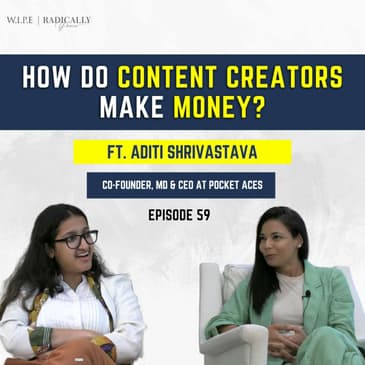
"She wasn't the first one to start, but she was the fastest one to grow'
In the latest episode of ‘Wiping out the Norm’, Radhika Bajoria delved into the inspiring journey of Aditi Shrivastava, the Co-founder, MD & CEO of Pocket Aces! Alongside Ashwin Suresh and Anirudh Pandita, Aditi embarked on this adventure in their 30s, now soaring into their 40s, with roots in the Middle East, engineering degrees, and a shared passion for mainstream finance.
Aditi leads Pocket Aces, a trailblazing digital entertainment company crafting engaging content tailored for the millennial audience! Pocket Aces is India's leading digital entertainment company.
"We own 5 Instagram channels but we manage 130 influencers with 130 separate Instagram channels". This is what Aditi shared about sharing the reach and impact of Pocket Aces. Their reach is astronomical, touching the lives of 50 million people weekly across their stellar channels: FilterCopy, Dice Media, Gobble, and Loco! As social media wields increasing influence on thoughts and actions, companies like Pocket Aces stand at the forefront of shaping tomorrow's world. Before Pocket Aces, Aditi carved a path of impact, founding the Intellecap Impact Investment Network, a beacon for angel investors driving positive social change across India and East Africa! Her tenure at Goldman Sachs in New York, specializing in quantitative equity research, trading, and portfolio management, honed her financial prowess.
A Magna Cum Laude alumna of Princeton University in Electrical Engineering and Computer Science, Aditi holds a CFA (USA) charter, served as the Curator of the World Economic Forum Global Shaper Mumbai Hub, and proudly bears a TiE Mumbai Charter Membership! Sensing the boom in internet usage and the insatiable hunger for content among India's youth, Pocket Aces emerged in 2013, crafting short-form content to test the waters and spark organic virality!
As the platforms expanded, especially with the meteoric rise of OTT platforms and the digital migration of viewers, Pocket Aces became a beacon of innovative storytelling. Fast forward to today, they have more than 10 years of experience in the industry! Their content resonates worldwide, amassing a staggering 16M subscribers on YouTube, 15M Facebook followers, and 8.6M Instagram enthusiasts! Their mission is to be a Global Culture Creator, positively influencing people through an ecosystem of innovative media professionals, content, and products! Key Numbers: 50M People Reach Per Week 700M Video Views Per Month 200+ Brand Partners.
The excitement peaked when music label Saregama acquired a 52% stake in Pocket Aces at a $41-million valuation! Confirming the deal on Thursday, September 28, Saregama's investment of Rs 174 crore in cash, along with an additional Rs 15 crore, now values Pocket Aces at an impressive Rs 335 crore, or approximately $41 million! Watch the full video to learn about the business strategy of Pocket Aces. Watch the full episode NOW.
Link- https://youtu.be/oNLPR_oxG-M
#PocketAces #DigitalEntertainment #ContentCreators #InnovationUnleashed #YouthEmpowerment #MediaRevolution #Saregamapa
[00:00:00] Thanks Aditi for being on our show Wiping Out The Norm. Really excited to chat with you
[00:00:10] today because just before the show we were speaking on how you have grown from one company
[00:00:15] to a conglomerate now which has been acquired by Saragama recently. So really excited to
[00:00:21] know your journey specifically as to how you have wiped out the norm in the media
[00:00:25] industry and grown the company from like you said even of the first one to start but you
[00:00:31] were the fastest one to grow. So I would really like to know as to what got your interest into
[00:00:37] the media industry to begin with.
[00:00:38] Hey Radhika, thank you so much for having me it's lovely to be here. So I'll start
[00:00:46] from the beginning. I grew up in the Middle East actually they didn't grow up in India
[00:00:51] but when you grow up in the Middle East you're very much into all Indian things. Right and so
[00:00:57] right we were very much into Bollywood movies and plays and things like that musical shows and
[00:01:03] used to when growing up so I think that has just been an inherent interest of me my family etc.
[00:01:10] I moved to the US to do my undergrad in engineering at Princeton. I studied electrical
[00:01:16] and computer science and when I was graduating which was 2006 the financial markets were booming
[00:01:25] and I started my career on Wall Street very much like many other people at that time.
[00:01:31] So again very different I went into Goldman Sachs's asset management group which is called G
[00:01:38] Sam in New York and actually I was in that quant group so we were making like algorithms
[00:01:44] for trading and portfolio management etc. It was super fun. I thought you would say super boring
[00:01:52] but no honestly I love the fact that I started my career at a place where training and just
[00:02:02] you know the forward thinking thought process was ingrained in us basically as you know in
[00:02:11] Goldman and in such a large place also I was very lucky to have like a very amazing team.
[00:02:18] I'm still in touch with them so every time in New York every time I'm in New York we grab lunch or
[00:02:23] dinner together and I think it taught me a lot about how I work. So for me I think that was
[00:02:31] a very fun place to be and I got to marry you know what I had studied in college with the
[00:02:37] dynamism of financial markets and actually it's a very very interesting mix and so I honestly loved
[00:02:46] it. While I was in New York I also got involved in a bunch of whatever extracurricular activities
[00:02:53] things on the side so I was part of this group called the American India Foundation.
[00:03:00] What that group did was basically get high net with individuals in the US to
[00:03:05] basically send money to or partner with not-for-profits in India across sectors like you know sometimes
[00:03:14] it was about education or it was healthcare or it was waste management across sectors
[00:03:20] and our job I was on their young professionals board was to basically research and find the
[00:03:26] best organizations to take to the high net worth individuals and present them about why
[00:03:33] you know you should put money or money here what impact it will create etc and I really started
[00:03:38] loving that work so that's where my interest in developmental work started and I'm mentioning
[00:03:45] that because on the side Ashwin who's my co-founder and also my I was dating him then and then
[00:03:52] we got married while he was still in New York. He on the side while he was at city
[00:03:58] also in banking he got involved in film festivals in New York so the Rebecca film
[00:04:05] festival South Asian film festival all of that just out of passion. So these were the
[00:04:10] things we were doing on the side with the community right in New York and that's where
[00:04:15] the media bug came in from and Anirudhu is my third co-founder he was at he went to
[00:04:23] Wharton during this time he was also engineer turned banker right so basically we have very similar
[00:04:31] upbringings we have very similar degrees and we have very similar first you know work experiences
[00:04:39] but all three of us have very different thought processes as well and I think that's why we
[00:04:42] make a very good yeah so long story short when Ashwin and I decided we love these other
[00:04:50] things more than our day jobs that was when we were like okay can we pursue this kind of stuff
[00:04:56] full time and where would we do this right so both if you think of development and you think of media
[00:05:04] and you're Indian you do think of coming to India to do this right because development work
[00:05:10] also there's so much here that is going on media of course Bollywood is a completely
[00:05:14] different industry than say a Hollywood and so we decided in 2011 that we will quit our jobs
[00:05:23] move to India and do these different crazy things this was just you and Ashwin just me and Ashwin
[00:05:29] Anirudhu was at Wharton at this time okay and so we moved much to the dismay and horror of
[00:05:36] her parents who are like you know middle class parents they had worked their entire lives to
[00:05:41] get us to the US to these amazing you're working in Manhattan I mean it doesn't get better than that
[00:05:46] right when you're coming from like a middle class upbringing but I think they gave us those strong
[00:05:51] foundations which we could then take risks yeah you know because we had that backing right so
[00:05:58] we moved to India and I started working in Aavishkar in telecap it's a impact investment group
[00:06:04] how did you start there so I while I was still in New York when we had quit I was applying I was
[00:06:11] looking for what jobs in this sector I could get everything from this organization Aavishkar in
[00:06:17] telecap to a acumen fund to a will grow which is a Chennai based kind of not-for-profit to
[00:06:26] Dasra which is another not-for-profit um this attracted me the most because this was
[00:06:31] marrying capital markets which is investing with development and impact investing was not a very
[00:06:36] well-known word then even now even though the movement is huge lots of random people don't
[00:06:43] know what is impact investment so I applied and interviewed and basically got an offer
[00:06:52] to start an angel network which will invest into early stage
[00:06:58] for profit companies that were looking at low-cost education healthcare clean energy etc so again very
[00:07:06] interesting because I was working in capital markets in Goldman yeah I was doing this not-for-profit
[00:07:12] kind of angel work angel investing work at the foundation I was part of here I was getting
[00:07:18] to marry the two right and so I moved to India to do this and Ashwin moved and started with
[00:07:25] reliance entertainment okay so um you know they have he was involved in some of the movies like
[00:07:32] at that time commando and like some of those kind of movies supers they were doing
[00:07:37] and then he along with his reliance uh entertainment you know man boss at that
[00:07:43] time this very nice woman who gave him a break called Priti Shani they moved to
[00:07:49] times of India to set up Jami pictures which will which is now times of India studio
[00:07:54] which has done some amazing movies like talwar and dildhar kendo etc so his journey and film
[00:08:00] and mainstream studios started when we moved to India and I was setting up this angel network
[00:08:06] and having a great time it was a lovely introduction to Bharat because I was literally traveling all
[00:08:14] over the country trying to find the businesses on the ground that were doing this work
[00:08:19] and then taking those businesses to buildings like these where you know kind of the angel
[00:08:25] investors are and get and matching them so that's what I was doing um then again after a few years
[00:08:33] of doing that I set up a team that was very independent we had made about 21 investments
[00:08:38] okay um in four years then basically pocket aces were set up during this time anirudh
[00:08:45] had moved from cotton to india how did pocket aces get set up so basically um after working for a
[00:08:52] couple of years with reliance and with times of india ashwin felt that he was ready to
[00:08:58] basically go out on his own and um he felt that the kind of stuff he wanted to make he
[00:09:05] knew now enough writers and people who would work with us independently to make that stuff
[00:09:12] so it was a plunge we incorporated pocket aces in december 2013 okay so it's going to be 10 years
[00:09:19] of from our incorporation next month and um initially it was actually very few people know
[00:09:24] this set up as a film studio um making feature films and what we realized then is although
[00:09:33] he had a good network of people when you're trying to make a feature film you need somebody to
[00:09:37] finance you need it for that you need an actor to say yes for that you need a director to say
[00:09:43] yes for that you need it so it was lots of things that needed to happen in sequence every project
[00:09:49] took could take any amount of time to set up like there was no it depended on when people said
[00:09:56] yes or no yeah and one thing we learned in the in that time was that in this industry a lot
[00:10:02] of people don't say yes but they also don't say no so you're constantly hopeful yeah you know and
[00:10:11] so the first year i think of setting up pocket pocket aces was a little frustrating because
[00:10:16] while we felt that we were making progress like you would not we never got to making a film at
[00:10:22] that time yeah uh because we never got to a place where all the ducks were got in line yeah and so
[00:10:29] then we decided that okay we need to think of doing something differently where there's more control
[00:10:35] in our own hands and that's when we brainstormed and this whole let's do digital first yeah kind
[00:10:44] of idea came especially starting with short form content because for that you can just put
[00:10:50] your own money because it's very cheap to create how short is it so this is the first few
[00:10:56] filter copy videos if some of you guys have watched then it's like three minute content four
[00:11:01] minute content and at that time we were it was completely bootstrapped like even though actually
[00:11:07] we had managed to raise our first round of angel investment okay again giving our backgrounds
[00:11:13] you know all that and we were connected in the yeah you already invested ecosystem
[00:11:18] so a very nice man by the name of mohan mulani who is obviously our first ever backer
[00:11:26] you know he uh he's the guy who founded harry's which is the bar chain and then sold it to a
[00:11:33] private equity and that's how he made his you know kind of capital so he you know had given us
[00:11:39] this first half a million dollar check um but these were 10 000 rupee shoots that we were
[00:11:44] doing initially okay and we started releasing that content out on facebook because again having
[00:11:51] grown up in college years in the us we were very we were like one of the first users of facebook in
[00:11:56] the world uh prince didn't was the second school facebook had launched in ever right like it was
[00:12:03] harvard and then prince didn't and so we were very familiar with the platform and what we hoped is
[00:12:09] that if nobody else shares it at least our friends will share it right and that's how it'll start
[00:12:15] circulating because basically what you need for content is you put it out but you need people
[00:12:20] to watch it yeah so you need distribution and organic distribution if your friends are sharing it
[00:12:27] then their friends are sharing it then their friends are sharing it that's the easiest way to get
[00:12:30] distribution that much we understood right and so basically that's how we started our journey
[00:12:36] of short form content and within the first couple of months it just blew up when you say
[00:12:42] we meaning you also joined darshan then so when we pivoted to digital then i joined pocket
[00:12:48] this is because then we figured that we needed volume of content see in feature film you make
[00:12:54] you can make one or two a year so you don't need volume you don't need many people yeah it's a
[00:13:00] very boutique kind of thing you maybe have five full-time people and then you just work with
[00:13:05] freelancers on projects but it's when you pivot to now building a business that will create
[00:13:11] volume content yeah you need people you need structures you need processes etc and so by that
[00:13:18] time i had already set up my whole angel network we had also expanded to east africa and stuff
[00:13:23] and so i was also thinking okay i can help these guys like now i have time and obviously ashrin
[00:13:29] and i did have that discussion that do we want to work together you know it can get complicated
[00:13:34] but i think because we had a third partner in anirut i ended anirut doing
[00:13:40] he joined right in the beginning he came from whaton and we were like hi oh you're doing this with us
[00:13:44] basically yeah and why did you think that he'll be a good fit for the business so it's a good
[00:13:51] question see i think uh when he competed whaton he was looking for a hedge fund or private equity
[00:13:59] jobs because again he had been in banking and private equity before whaton but at that time
[00:14:05] jobs were not so easy to find and for people who needed a visa in the us so he was looking but then
[00:14:13] he was not able to you know get something that he really liked so he moved to india to look for
[00:14:19] jobs in finance okay in that time i think we kind of were like yeah you can do this with us
[00:14:28] because it would be like exciting and he is also a big content buff okay and so the idea was that
[00:14:35] you want somebody that you can brainstorm with at that time it's more that and and that who has a
[00:14:43] different kind of maybe skill set yeah uh than you do and although on paper we sound very similar
[00:14:53] we are all very different people in like one is very big picture thinker one is like very good
[00:15:00] at predicting power and strategy and stuff and one is great at execution yeah and so together we felt
[00:15:07] that we could make a good team and ashram and ani have been college roommates they have started a few
[00:15:13] things including a cricket team in college together okay so they have worked together in in a sense
[00:15:21] and i know anirudh from school so we so this is all like a beautiful coincidence right these
[00:15:27] relationships so even though ashram and i are married we are the youngest relationship between
[00:15:32] the three of us i know anirudh since seventh standard anirudh and ashram have been roommates in
[00:15:38] scottage okay and then ashram and i only met me when we were working in new york yeah how did you
[00:15:43] all meet common friends including anirudh okay yeah exactly and so the thing is that somehow it
[00:15:50] just felt right and i think one advice that i always give people who want to start their
[00:15:57] businesses is that please don't be a single founder i think it's a very lonely journey yeah so if you
[00:16:03] don't have somebody else who's also losing sleep on the same thing that you are losing sleep on
[00:16:11] i think it's tough and if you you know however you how much ever you brainstorm with
[00:16:16] a mentor or friends or family it's just not the same so having somebody together with
[00:16:23] the ride is amazing and so i think yeah i just fit i don't think that ashram and anirudh thought
[00:16:31] about it so much that we want to work together it was very natural yeah let's try it yeah yeah
[00:16:36] you know um yeah that's what happens and then you started with the short form content
[00:16:42] when the feature films were in so we started with short form content and this whole journey
[00:16:49] has been that now we're actually working on our first feature film is it yeah so wow yeah and of
[00:16:54] course in the middle we've built a lot of different types of formats right so now we do everything from
[00:17:00] short form which is like 30 second to one minute content which is like instagram content
[00:17:05] okay tiktok content to what is the content usually about uh so we have multiple channels
[00:17:11] right we have uh short form fiction is filter copy which is mainly entertainment funny
[00:17:18] entertainment content like light watches okay then we have in short form we have a food channel called
[00:17:24] gobble which does food content we have a channel called nutshell which does info entertainment so
[00:17:29] these two are nonfiction okay and then we have long-form fiction in dice media which does content
[00:17:35] for its own youtube channel but also for your streaming otd platforms okay like your
[00:17:41] netflix amazon hotstar etc okay and we also have a talent management arm yeah and then of course
[00:17:48] we also build a gaming yeah business which is now spun off loco into a separate entity
[00:17:54] wow so many different businesses like you started with which one see i'll tell you
[00:18:00] we don't think about it in terms of so many different business i'll tell you how we think about
[00:18:05] it at the end of the day the idea why we started pocket aces was as young people we felt that there
[00:18:13] was not enough content that was being made for young people to watch because tv caters mostly
[00:18:19] to the older women demographic with their fiction programming uh for men even on tv it's
[00:18:25] basically like sports and news for youth there's like the mtvs of the world just that right there's not
[00:18:33] much else so we felt that everyone has a smartphone right and of course with the onset of geo telecom
[00:18:41] as a coming in as a telecom this became hundred x the story but even before geo it was like at
[00:18:47] least in urban centers everybody had a smartphone everybody can afford data wi-fi is
[00:18:54] there in like all offices and so the idea was that as a young person you have the ability to watch
[00:19:00] but you don't have programming for yourself so can be the people who make content for young
[00:19:06] Indians by young Indian yeah that was the initial thought process we wanted to see good content right
[00:19:11] and that's how we started and then when you start with a complete audience focus
[00:19:19] then you think yeah the same guy like se radhika radhika also likes fiction she also she wakes up
[00:19:26] in the morning she scrolls on instagram so i want to be there also then when she's commuting maybe
[00:19:31] she is listening to a podcast so i want to be in audio also then maybe when she is uh basically
[00:19:38] in the office when she takes a break maybe she watches something on youtube or she's scrolling
[00:19:42] again on instagram yeah then when she goes home she's probably sitting and like what she wants to
[00:19:47] watch a web series so the same audience set okay they all you're also listening to music you maybe
[00:19:54] also follow a sport you also probably you know read articles so if i want to cater to you yeah
[00:20:01] as an as a persona and then many people like you right but somebody else sitting right next
[00:20:07] you could have a completely different persona they might spend a lot more time say e-commerce shopping
[00:20:13] even though the demographic and etc might be the same yeah so we don't think anymore in gender age
[00:20:18] and this geography we think in persona right which is basically interests so then why should
[00:20:25] i only give you one thing then i'm going to give you everything you probably also follow a bunch
[00:20:29] of influencers so i also want to get you influencers right right so that's how we think
[00:20:35] about what and if you're a guy like more often than girls and you know just that's just the data we see
[00:20:42] 100% you're into some kind of gaming right today gaming is huge yeah and so the idea was if i'm
[00:20:49] anyway reaching you why should i only command 15 minutes of your time a day i'm anyway reaching
[00:20:55] you i can cater to your interests all day long today content consumption is like
[00:21:03] so best a rat talk it's a continuous day and that's that's the idea yeah and so everything is
[00:21:10] from the lens of what does our audience wants and obviously our audience is broadly i would say
[00:21:17] 18 to 40 okay the focus is 25 to 35 um and because of who we are like we started metro first
[00:21:28] because we are we grew up in urban centers we understand that audience more and then basically
[00:21:34] expanded around the metro centers okay two tier one and tier two as well so if you look our content
[00:21:41] will reflect those kind of families those kind of thought process like there's a lot about mental
[00:21:46] health there's a lot like little things which became a huge series is about live in relationship
[00:21:51] right now obviously live in relationship in india is not very common but the idea was
[00:21:59] that two people who are very comfortable with each other these are the things they talk about
[00:22:04] yeah all about the little things of on a daily basis normal couple's life is not a big thing
[00:22:10] on a daily basis right so that was the idea okay which people really related to and the
[00:22:15] live in part became aspiration so everything is very much driven by audience insights and that is
[00:22:22] i believe like one of the biggest right to wins we have given our backgrounds where it comes from
[00:22:29] engineering or finance etc that's the thing we have gotten to media right uh the culture of
[00:22:37] our company which is very different from other media companies even media startup yeah the data
[00:22:43] thought process and of course everything is within timeline vision budget completely
[00:22:48] cashless company this is our right to win right it's not like we were the best creative minds
[00:22:54] but now the best creative minds work with us absolutely but tell me one thing that after
[00:22:57] long form content how did you suddenly jump into food like gobble how did that happen
[00:23:04] as you know again the thought process is that if your consumer if your audience member
[00:23:10] which is like a young person youth of india yeah if youth of india is consuming different types of
[00:23:16] things in parallel you better make different things okay yeah you just wanted to command that time
[00:23:20] or exactly so it's not that one day we're making websites and the other day we're making food
[00:23:25] and all this is going on in parallel yeah yeah yeah right so the different content teams that are
[00:23:30] working on different channels and you're buying loyalty also from your consumers saying that
[00:23:34] okay we give you everything you need exactly and when people are becoming super popular from our
[00:23:41] content we're also managing them helping them grow those talent yeah grow their own instagram
[00:23:47] channels right so technically like pocket races owns uh say five instagram channels okay but we
[00:23:57] also manage 130 influencers with 130 separate instagram channels many of them are on youtube
[00:24:04] many of them are on snapchat yeah so just imagine technically our distribution footprint includes
[00:24:10] those as well and a huge part of why they come to us is because we know how to grow these
[00:24:16] distribution yeah and today as you also know for any influencer what is your followership what
[00:24:21] is your reach is the main way you are measured yeah how much somebody wants to pay you correct right
[00:24:28] so say if a brand wants to associate with you and say you are big on linkedin yeah how big you
[00:24:34] are on linkedin will command how much followership they can pay you yeah right it for that engagement
[00:24:42] correct similarly that's for you know influencers whatever platform they are on and we know how
[00:24:48] to grow those and so that's the biggest reason why they would come to somebody like us versus going
[00:24:54] to a traditional talent management you know who manage like A-listers and all yeah but they don't
[00:25:01] have a crack record process is very different because alia bhart people are not coming to alia
[00:25:06] bhart because of her instagram followers yeah people are coming to alia bhart because she's
[00:25:10] anyway an icon yeah right and they want to associate her brand with their brand with her
[00:25:16] of course that instagram following to grow karegi he you know vote on given hey right but here it's
[00:25:22] like your followership first and then of course so you're a content creator so you content strategy
[00:25:28] ka uni chee yeah yeah wo bhi hum karte with the talent that we manage tell me about your
[00:25:33] investor joining us there one of them was the an angel investor yeah and then how did you
[00:25:38] raise your first institutional round um well i think sequoia 314 capital these guys have been
[00:25:46] very early partners they came into our series uh a very small series a that we raised um and
[00:25:54] in 2016 oh right in the beginning only yeah and the idea was i think the good thing we did is
[00:26:01] we went to these people early okay so they started tracking us early yeah i think of the day we had
[00:26:05] our first viral video we like you know wrote to a few funds being like oh look right and the good
[00:26:11] thing is you get on their radar yeah and then they track progress right um sequoia did something very
[00:26:17] interesting where they were having a hackathon yeah and they said okay fine we want to test
[00:26:22] whether this actually works uh to convert from viewership to roi for a brand right so we they
[00:26:30] said okay make a video for our hackathon k registrations because last year we had x we want to
[00:26:37] have 2x registration um we made a photocopy video called every software engineer ever and the hackathon
[00:26:45] was integrated okay in the messaging of that video yeah and i think they got 5x the number of
[00:26:50] registrations if i don't uh if i recall correctly what a way to test by getting free leads
[00:26:56] and no and they paid us for it oh they did yeah they were very professional about it they said you're
[00:27:01] making a video you're listening whether we invest or not is a separate thing yeah yeah yeah we'll pay
[00:27:04] you for it okay uh like a brand thing it was a paid trial absolutely it was a paid video we were
[00:27:10] very happy to do it and so yeah i think that's a fun that's one of the fun stories i think
[00:27:15] you know the challenge we've had with raising capital has been that media is not very well
[00:27:23] understood by the VC community yeah and media media tech all of this is just built in the
[00:27:29] VC community in the last 10 years yeah and uh you know i do feel that the platform business
[00:27:37] makes it at least justifiable because the VC model works when you want to keep raising capital
[00:27:42] again and again and again yeah because that's how the valuations will increase if you don't
[00:27:47] need that much capital then the VC model is you know it doesn't play out in the normal way that
[00:27:53] it's supposed to right so i think uh we were very lucky that we got investors who trusted us in that
[00:28:00] model but then they were also patient yeah uh right in that okay you know this is a different kind of
[00:28:05] a VC business and of course those same investors have invested in very uh you know kind of
[00:28:11] exponentially growth type of businesses they have also invested in more offline type of
[00:28:16] businesses as well right so we are somewhere in the middle because the consumer journey for us was
[00:28:21] exponentially growing yeah yeah right uh and revenue was also exponentially going yeah but
[00:28:27] that's why you don't need capital so capital need was not exponentially growing so it's a very
[00:28:32] interesting uh uh setup but when of course then when we uh launched loco which was in early 2018
[00:28:40] then of course it became that itself is a very easy to understand but what was the need to raise
[00:28:45] capital back then when you already had high growth you were shared because you wanted that you
[00:28:50] you're still investing in creating content now okay imagine you're on your short form channel
[00:28:54] 70 80 percent of your content is editorial yeah which is what we call a piece which is just
[00:28:59] created by ourselves for not for a brand etc so because that the key to good distribution
[00:29:08] is that and if you follow any influencer you'll see the same thing you have to keep your audience
[00:29:13] engaged yeah every day you have to release something yeah so that you need people okay
[00:29:20] people's salary you know so basically it's content production uh people and growth we've never put
[00:29:29] money into buying views we've never put money into like buying followership and all you create
[00:29:34] content the views will come and the followership will come got it so the investment has been
[00:29:38] into people and communication understood right and of course some bit of marketing PR all of that
[00:29:44] kind of stuff how did you do that initially initially so it's all content only which is your
[00:29:50] marketing also your PR also but then men are like our series started blowing up we did do billboards
[00:29:55] we did radio campaigns we did college campaigns we did corporate park campaigns where we took our
[00:30:04] talent you know and people would go crazy in colleges and that's when you know that you're
[00:30:10] really touching the right chord you know like we would take some of our actors and people
[00:30:16] would go nuts forget about that you know we do a lot of first-hand audience insights we even call
[00:30:23] people i have also done calls by myself ashrin and we all have you say i'm filter copy i'm somebody
[00:30:30] from filter copy people go crazy on the other side really yeah because it's like a loved brand
[00:30:38] has called them like who would have thought yeah right and so i think that's how we did a lot of your
[00:30:44] PR and marketing and of course partnering with events yeah um you know sponsoring some events
[00:30:50] you know you know all of that kind of stuff is well on ground stuff you know we've put up
[00:30:56] gobble trucks in bkc flea that kind of stuff is what it good yeah yeah nice interesting and like you
[00:31:04] said that most of your revenue comes from the brands okay just for the benefit of audience give us
[00:31:11] a rough figure of how much brands pay for first the otts like when they buy your content to
[00:31:18] influence or promote their campaign and to you also like when you integrate their brand on your
[00:31:25] youtube channel so basically it depends on the kind of content as well so say instagram reels content right
[00:31:33] uh say uh uh nutshell reel will self-assay two lakhs right so most brands will buy in bulk
[00:31:41] right okay a filter copy music reel right where we create like a rap music reel type of a thing
[00:31:48] will self-assay like 10 lakhs a filter copy video on youtube which is a three to five minute will be
[00:31:54] about 18 to 20 lakhs how many subscribers do we have on filter copy youtube filter copy youtube 10
[00:31:59] million okay wow that's the level but you know the thing is it's not just about the subscribers
[00:32:05] it's about the viewership that you promise yeah right and uh that's how so when a brand invests right
[00:32:13] they do something called a media evaluation okay which is basically whatever are the deliverables
[00:32:19] they put certain cost per view cost per impression cost per reach and that's how they justify it
[00:32:25] internally there is a cost per engagement kind of model that we try to sell because you know
[00:32:31] the kind of content we do is highly engaged and a view which is engaged versus a view which is not
[00:32:37] engaged is very different um right how do you measure engagement comments comments shares
[00:32:45] retention as well yeah so see say youtube counts a view as 30 seconds view so say in my video people
[00:32:54] dropped off after 45 seconds in your video they stayed till three minutes you can't say that
[00:32:59] the views are equally valuable yeah correct your views will be much more valuable so filter copy
[00:33:05] all our channels are retention is like 95 percent wow right and so the key is that how do you factor
[00:33:12] that into the price yeah that's why basically we say our engagement is high so the cost per view
[00:33:19] should be high okay that's one way to that's one way to factor it in but how do you
[00:33:25] like you said 10 lakh for one say music real yeah but you have such high engagement why not more
[00:33:33] like how did you come to the number 10 lakh see again it's like a triangulation yeah of
[00:33:40] a what a brand is willing to what a what a brand is willing to pay for that kind of content
[00:33:46] uh be the media value that it can give you um see what it takes to pick you know um
[00:33:56] i think it's a triangulation of these things we are premium priced in every format that we do
[00:34:02] okay so if somebody else has their music real we are we are all priced higher than them if somebody
[00:34:08] else has a three to five music uh filter like a youtube video we are priced higher than them
[00:34:12] mostly we are priced premium also because we are catering to urban centers which are premium yeah
[00:34:18] compared to you know say tier two tier three centers got it so all of this stuff is baked in
[00:34:25] and you also don't want to be changing pricing in every conversation yeah because then that really
[00:34:32] slows down your sale right you have to be sure that this is the short form content is a volume
[00:34:37] business and so the menu card approach works very well right he literally yet
[00:34:43] Nikai yet Nikai that's why i'm even comfortable to say it on camera because none of these numbers
[00:34:46] are private numbers right and if somebody wants to watch your podcast and then call us we'll
[00:34:52] give them these rates only right so the the menu card approach works very well for ot and for
[00:34:59] safe for web series even in a brand we usually have three tiers there's a uh basically
[00:35:07] brought to you by presented by tier then there's a powered by tier and there's an associate tier
[00:35:13] the deliverables are different for these and hence the costs are different okay uh what are the
[00:35:18] costs like it depends on the series because some series are cheaper to make say it's a couple series
[00:35:25] where mostly you are you know showing home and fewer spaces that's cheaper to make than say
[00:35:31] we made a series for example Brave hearts where it was an army series right or clutch which was
[00:35:40] sports drama or operation mbbs which was completely shot in a in a hospital yeah and things like that
[00:35:48] right so depends on the series as well okay but it's usually like what does it swing from the
[00:35:54] least to the most associate can be anything from 20 to 50 lakhs powered by can be anywhere from 70
[00:36:05] lakhs to one and a half crores and then presented can be anywhere from one and a half crores to three
[00:36:10] crores and then soul if the brand wants to come for the exclusively for the entire series then
[00:36:16] it's more than that more than three crores more than three crores yeah it's not una we don't
[00:36:23] want to make it unaffordable yeah again everything should be justified by ROI right uh and when we do
[00:36:31] similar size series on otd platforms it's a little bit more because again we are not distributing
[00:36:37] air etc uh when we do large series it's obviously a lot more and that is totally a
[00:36:45] cost plus plus so it's going to cost 15 crores to make this show yeah and then this is our
[00:36:51] margin and so hence that's the budget okay these shows these shows are not like that these shows
[00:36:57] are based on media value those shows are based on the cost of production and what are the margin rates
[00:37:05] usually can be anywhere from 10 15 20 percent okay yeah understood the short the short the
[00:37:12] short of the content the higher the budget okay yeah because again they are paying you a lot for
[00:37:17] the media value yeah but not for the production yeah yeah yeah but for ott there's no media value
[00:37:23] no because they are only going to do it correct correct correct so they put the marketing base
[00:37:27] that from their end they're just paying you for the content understood so the the biggest
[00:37:32] reason like for short form some of our margins are like 80 plus is because we offer that
[00:37:38] distribution but that distribution is just sitting on our platform yeah for us it's free
[00:37:42] yeah free which we built by investing into the editorial content yeah yeah so that's the
[00:37:49] map okay got it my next question in rapid fire we totally lost it oh I forgot it's rapid fire
[00:37:56] and started like answering like sorry we go to rapid fire more yeah yes what would have been an
[00:38:01] alternative career for you I think uh I think the development work that I was doing was super
[00:38:11] fulfilling uh and perhaps that and you know I've gotten that whole development thing to the mission
[00:38:16] of pocket races oh yeah which is to you know influence people positively so yeah I think
[00:38:22] I would have loved to do more development work and yeah okay and who's been your mentor in
[00:38:29] your professional journey so far a few mentors including my first bosses to the founder of
[00:38:38] Aarishkar who was my second boss vini okay uh very very uh like very much in touch even now okay and um
[00:38:49] I would say there's a few other like the women also that I'm inspired by like I wouldn't call it
[00:38:55] a mentorship relationship uh there's a coach I have a leadership coach uh called uh Vigeshri
[00:39:02] Purnishwans she's uh runs her own consulting firm I think she has been amazing so I think
[00:39:07] mentor is a very like is a one word but there are many of these like it takes a village I feel to
[00:39:13] raise an entrepreneur as well yeah and so it's been my ex bosses my coach my and few lots of people
[00:39:20] I'm inspired by yeah that have all contributed to the journey okay parents spouse yeah like yeah
[00:39:28] understood and what's been one decision that you are most proud of I think just getting on this
[00:39:34] journey along with these two co-founders of mine who were friends and um you know spouse and I think
[00:39:42] it was just it's been a really fun and fulfilling ride uh yeah just proud of taking the taking the
[00:39:49] ride with them together yeah and building something of value understood and what is that one thing that
[00:39:57] you think that could have been done a little differently I wouldn't say what you regret
[00:40:02] because that's again a very heavy word and looking at what you said in your last answer
[00:40:07] that you enjoyed your ride I don't regretted anything else that yeah but if you had to go back
[00:40:12] in time what's that one thing you would change slightly like for in the pocket aces uh
[00:40:19] and yeah I know you're doing uh there have been many hard times right and all of those hard
[00:40:27] times have been big lessons I think um last year we had you know we hired too many people
[00:40:37] and then we thought that the market was all going to come back and then it came back slower than it
[00:40:42] did so we had to do a restructuring uh this feb which was the hardest thing I've ever had to
[00:40:50] do in my life which is like asking a bunch of people on the same day to leave I think that
[00:40:56] I would never wish upon anyone and so I wish we had done that differently I think we
[00:41:01] hired too quickly in the hopes of uh you know the market coming back etc I think we should have
[00:41:08] caught ourselves earlier and not done that got it yeah and like you said that you know
[00:41:14] there have been hardships and we learn more from our failures than successes so what's that one
[00:41:20] lesson apart from the one you mentioned along your professional journey that you've learned
[00:41:25] and you've been thankful for you know that experience that okay good that it happened so
[00:41:31] that you could have been saved from it in future well I wouldn't say saved from it but I you know
[00:41:37] you do realize that when the momentum is with you that's when other people will also want to
[00:41:47] back you versus in the hardest times it's actually the hardest to get when you really need people
[00:41:54] then it's actually much harder when you don't need them is when they will come yeah so
[00:42:00] it's a counterintuitive thing that I think we have realized in our journey right so whether
[00:42:05] it's an investor they'll only come when you're already doing well and you don't need money yeah
[00:42:09] right whether it's a person you're trying to hire whether it's so I think that learning
[00:42:16] was very much there and you know initially it would feel you would feel
[00:42:20] very bad about the fact that oh I'm in a hard space right now if you don't back me then who will
[00:42:27] back me but I realize that maybe it's too much to expect and there's nothing personal
[00:42:35] and no hard feelings and we have had investors who have had really had our backs in the hard times
[00:42:43] like the 314 team has just been excellent right and constantly always you know brainstorm with us
[00:42:50] led to new introductions led to our further capital raises etc etc and I feel I have very few people
[00:42:56] who are like that you cannot expect you know most of you most people to ride with you when the
[00:43:04] ride is very tough now I won't expect that anymore so I think that's and I think that's
[00:43:12] what you need to do for your own peace of mind as well and you better get all everything when you
[00:43:16] don't need it yeah so I think that's the learning yeah you know um that's the learning basically
[00:43:24] understood yeah got it and you know if I had to ask you that who's been one of the most influential
[00:43:31] people in your life that you have learned the most from I think influential is in two ways
[00:43:38] one is who has been the most influential almost that you do things for also which is like my parents
[00:43:46] especially my dad I think half my ambition is just in inheritance from he's crazy ambitious
[00:43:53] um and constantly pushing us to do better and so I think a lot comes from there
[00:43:59] and so very influential in my whole path right as a human being um I think I learned to do business
[00:44:08] in India from Vinit okay so I think he has been like a very strong influence what's the one lesson
[00:44:15] you've learned from him to do business in India so many are so many when I came from
[00:44:20] Goldman to here like I didn't know anything um everything from how to approach people to
[00:44:28] how not to lose patience to how to be unreasonable and persistent
[00:44:36] to how to let hardships just smile through it yeah so I think this has been a huge learning
[00:44:42] so I worked with him very closely for like many years okay and he's like a master at structuring
[00:44:47] and things like that as well uh so yeah I think and the work ethic and culture upholding etc
[00:44:56] is from my Goldman bosses they were my first trainers and I think a lot from
[00:45:01] Ashwin Anirudh my co-founders as well yeah and in every day basis I learned from the young
[00:45:05] people in my team because I'm too old now for our own content so I think what young people want
[00:45:11] only young people can tell you in their most authentic fashion so I think our innovation
[00:45:16] comes from bottom up yeah which I think is very key for any company to survive
[00:45:21] um in the coming few years got it girl and what's the definition of success and power for you
[00:45:31] legacy okay this answer I can give you a shot yeah very short people should remember what I did
[00:45:38] and what I built yeah after I am gone okay so I think for me that is it it's not really money
[00:45:45] it's nothing else it's basically like the respect for what you built and it lasts longer than you
[00:45:51] and lastly what's the one last thing that you did for the first time
[00:45:57] oh something recently that I did for the first time yeah well we uh after we announced our deal
[00:46:04] and we took a little 10-day trip we had to go for a friend's wedding to the US
[00:46:09] so after the wedding we went for three days of just hiking just me and Ashwin uh to Utah
[00:46:18] so we did like a three-day just hiking trip wow which was amazing and while we have been hiking
[00:46:24] several times you have never done it like this yeah it was amazing to be like in nature
[00:46:32] you know I've not posted anything from that so I should you should I post very less
[00:46:38] it's enough for I post about work I mean like personal so there's no time now it's the time to
[00:46:44] do it after the acquisition now yeah I don't know absolutely so I think no I'm working equally hard
[00:46:50] or even more yeah it's just on different things so it's great because now I don't have to spend
[00:46:55] time on that I get to spend more time on business right but yes that is it was a really I
[00:47:00] recommend it to everybody yeah yeah okay I love to try to go but and because our show is named
[00:47:08] wiping out the norm just one instance where you think you have wiped out a norm in certain way
[00:47:15] yeah I think at pocket races we have totally wiped out the hierarchy that has is very inherent
[00:47:23] to the media ecosystem the actor is more important than writer is a director is more
[00:47:29] important than writer is more important than producer is more important and blah blah blah
[00:47:34] like we have totally wiped out this norm and it's a very very meritocratic and
[00:47:44] even a spot by boy is given the same respect that like your main actor is given right and so
[00:47:50] we have totally wiped out that norm and I'm very very proud of it because yeah it's that
[00:47:55] caste system of media is something that we just value wise just did not agree with
[00:48:01] that's amazing actually because that's prevalent across your big production houses or studios
[00:48:07] absolutely so it's good to see that you wiped out the norm in a way that I'm sure you might be
[00:48:12] having a lot of women members also in your team yeah like I would say we need more but they have
[00:48:17] a pretty I think we have a 38 percent women across the org need more yeah but again you know it is
[00:48:25] again very meritocratic hiring the you require diverse opinion in every team so I'm not even
[00:48:33] very fond of like all women teams and all because at the end of the day you need an all round
[00:48:38] also you need an all rounded process and I do think you need young old you know male female
[00:48:46] small town metro everything yeah so yeah but I'm very much like it's very very much equal opportunity
[00:48:56] like hiring in the true sense of it yeah on that great note I thank you Aditi for joining us today
[00:49:03] and had a great time discussing all the aspects of your big conglomerate now
[00:49:09] on how do you all function and thanks for explaining to us in detail
[00:49:13] on every count so yeah I enjoyed it and I hope you enjoyed your time with us I did this was it
[00:49:19] was lovely and we went into quite a few details so it was it was quite fun
[00:49:31] thank you for listening to this conversation I hope it allowed you to dive deep into the
[00:49:36] mind of a senior women leader we are hopeful to see more such women leaders in the future who
[00:49:41] have piped up the norm if you love this episode please share it with your friends who might be
[00:49:45] fundraising or building a business also tell us if you have any questions that you would like us
[00:49:50] to ask our women leaders till then stay tuned for our episodes where we speak with global
[00:49:55] women leaders from countries like Palestine Argentina Mexico America India and others
[00:50:07] thank you for listening why we hope this conversation was helpful and allowed you to
[00:50:15] deep dive into the mind of a senior women investor we're certain that we will soon see
[00:50:19] more women wiping out the norm and becoming senior leaders in investing if you think you
[00:50:25] derived great learnings from us in this podcast please share it with your friends who might
[00:50:29] be fundraising or are just wanting to get that push to get started also tell us if there's
[00:50:34] any questions you would want us to ask our transnational women leaders in our next interviews
[00:50:40] till then stay tuned for our other episodes where we speak with women investors from places like
[00:50:45] Palestine Brazil Argentina Mexico and others