
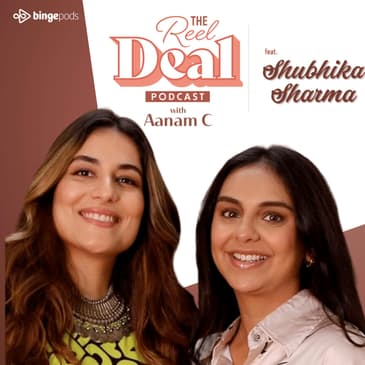

How do you turn your passion for fashion in profession?
Tune to get your fashion game on point, as Anaam C gets into a conversation with Shubhika Sharma, entrepreneur and founder of the popular brand Papa Don’t’ Preach
Like what you hear? Don't forget to rate and review us ★★★★★ :)
New episodes every Wednesday!
Hang with Aanam in-between uploads:
Instagram: https://www.instagram.com/aanamc/?hl=en
Podcast Instagram: https://www.instagram.com/thereeldealwithaanamc/?hl=en
To listen, download Bingepods on iOS or Android. Or subscribe or follow wherever you get your podcasts.
Learn more about your ad choices. Visit megaphone.fm/adchoices
[00:00:00] Ladies, gentlemen and others, welcome to today's part episode. Today's part episode, yes, is someone I think if I had to give a very simple introduction, I would say Shubika Sharma, founder of Papadorn Fridge. But Shubika, you are so much more than that. I think that
[00:00:16] you are resilient. I think that you're ambitious. I think that you are talented. I do think that you are beautiful, but women get called beautiful. Like, I would rather focus on the inner qualities right now. I think that you are very strategic and smart with your business
[00:00:30] and lots of great things that I think we have to unpack today. So welcome to the pod. Very, very happy to be here, Aanam. And I think I've watched you. We probably started our
[00:00:39] journey together. So all the adjectives that you have so kindly listed for me, I would actually attribute all of them to you. I've seen your journey and I don't think that any of these adjectives don't fit you and more. Thank you. You're very,
[00:00:52] very, very kind. We met like you said, we started our journeys together. How many years ago? I've lost track 2012, 30. 2012. Yeah. One of the times after you showed at Fashion Week. Yeah. And you know, I think one of the things I need to stop doing is having conversation with
[00:01:08] guests before we start recording because I feel like so much of my memory has been jogged and I want to ask those questions all over again. Let's blame that on Bombay traffic. Let's. But I feel like you are someone who does clothes, you do accessories,
[00:01:24] you do bags, shoes, jewelry. But you know what my favorite thing about your brand is and this is going to sound very content creator-ish of me to say, but it's that you are one of those brands that does the product, but also has created this
[00:01:39] magnificent brand presence online where the personality of Shubhika Sharma has transcended from the person that you are to the way people perceive your brand and kudos to of course you and your content team to be able to really have
[00:01:55] that translated with almost, I would say zero dilution. What would you credit to that? What is your secret sauce? I think that the best part about us starting when we did was Instagram was just launching. Right? And as I was sharing earlier, I got rejected by
[00:02:16] Lakme Fashion Week like twice thrice. Every weather I was applying, be it like old fashion fund, I was not making the cut, right? And then there was this thing on my phone where I could just say what I wanted to say in the
[00:02:32] language that I wanted to speak in and put my work out there. And it felt like I was taking the power back to my story, for my product. And I think that that for me was just so exciting because you said that Shubhika's personality
[00:02:50] kind of morphed into Paparoon Preach. But I think that I also fed off on the brand's personalities for the longest time until two years ago. I didn't have a content team. I was managing Instagram and building all of that
[00:03:02] on my own. No way. And that is when I also started my personal Instagram page because I was like, I need to understand who I am outside of this brand. Right? So we reached a point where it started off with me kind of
[00:03:16] taking the power back because I believe I'm a storyteller and I love to kind of for me, even products feel alive for me. A bag looks like a face to me. So even the way we name our products, they all have like, there's
[00:03:32] a Mr. Who and there is a Mrs. OMG. You know, these are all that product names. So for me, that world is very real. I used it. I've grown up as a girl who kind of like to escape into different worlds that I created
[00:03:45] and Paparoon Preach just managed to morph into a world that allowed me to do that on a daily basis. I had to be all prim and proper at home and like be a good girl. But when I would enter my office and it would
[00:03:58] just be me and my world and I could dictate the rules. I could speak the language that I wanted to speak. I could personify all my products. And I think in doing that, people kind of just got really excited to
[00:04:16] connect to like what was the story behind the brand, the person, the product and then they reached a point where if I had clients coming in, they would be like, and I'd be like, okay, so why don't you do
[00:04:30] this? Wear this with this? And they'd be like, oh, but that's not Paparoon Preach. Okay. And that's when I realized that, okay, so now the brand has kind of become an identity of its own. It's no longer me.
[00:04:43] I'm not as important as it is now. And then there was somebody who told me that, you know, when I see your products hanging on the rack, they just feel alive. So for me, it was actually everything that I
[00:04:55] wanted my brand to be. It had a personality. It definitely had a lot of mood swings because as you're correctly saying today, I wanted to make lengas tomorrow, I wanted to make bags on a dosha, we were just doing everything. There was this beautiful chaos,
[00:05:10] which is very, very similar to my personality. I'm Ken Serian, I'm extremely moody. And that's how the brand was. But when I started sensing that it had now taken it had grown up to become its own person is when I handed over the reins to somebody else
[00:05:28] and I trained them to be in my content team now is phenomenal. And I'm glad that we haven't diluted even in this era where you have to produce like 10 reels a week. And I mean, you know the drill. How long ago did you found the brand exactly speaking
[00:05:45] 2010 is when I launched it as a high streetwear label. I was I think 22. I think we were one of the first independent brands in India to launch as a high streetwear label as an e-commerce website, which was JIT, which is just in time inventory
[00:06:02] or like made to measure. And I launched it with fashion flash moms inspired from like gossip girl. I remember that. Yeah, yeah. And we did it in like three night clubs. And it was just about girls having fun. I don't know if
[00:06:20] you witness any of the flash mobs, but at that time it was Sherisha, Fisha, Dalwa and Nidhi Sunil who are all legends now in what they do. But at that time we were just girls just so excited to like build something together and the spirit was so much
[00:06:35] more collaborative then than it was than it is now. So I was very lucky that I got to start my brand at that time with the people that I did because I always like to say that I
[00:06:46] didn't go to fashion school not in India. I did go to London. But it was a very short course was like a seven course. So you know what really happens in such courses? I don't think something as technical as fashion and I very specifically
[00:07:01] want to say it's very, very technical. It has so much math. I tried to run away from it, but it just ended up being all of our math cannot be learned in seven months. You need the four
[00:07:12] years if you're lucky do a masters after that. So I did not have a network of fashion friends. I studied journalism. I worked in DNA newspaper for some time while I was studying. And
[00:07:30] then I came back and I was very silly, I would say to not do an internship in any of the fashion houses. So I actually learned everything on the job. I had to build my own network. And by
[00:07:46] that I mean, and I also went to a school in New Bombay where they weren't the people who are in the industry right now. So I credit Instagram a lot for any community, any network that I have managed to build today is only and only because of
[00:08:03] Instagram and only because of how I've been able to put my brand out there and how my probably journalism helped me probably just growing up and like reading books, I devouring books, all my childhood helped me. So 2021 you did 11
[00:08:17] years of the content on your own. Yeah. And did you feel the loss of control or withdrawal symptoms when you gave the reins to somebody else to take care of content then? I still am very involved in it. It is very hard because the
[00:08:32] language that the brand was speaking for like over a decade was my own, like all the captions, all the campaign press notes, collection notes, all the stories, all the engagement, all the responses to DMs, all the responses to the
[00:08:48] comments were me. So there was a loss of control, but I'm a person that if I bring somebody in, then I'm I'm pretty hands off. But I think that there is still a lot of dependency on me to kind of like the bigger campaigns or
[00:09:04] just the tonality of how we want to like deal with things it's still very much there. And I think that it helps me to still be on the page in my DMs because I get to hear so much
[00:09:17] from the people who are writing to us to read the comments, to respond and engage with the comments also. It actually keeps me very much like tightly woven in with the fabric of the world that I'm kind of creating in, you know, and I
[00:09:33] think that's so important to not get cut off of that. So there is a sense of loss of control. But I think as you age, you just want to do more things. We have a podcast now
[00:09:44] we want to ideally have our own magazine soon. So I think if you find the right people and it takes time, it will only help you grow to let go of control to trust more people to bring in fresh ideas, bring a fresh perspective, let them make their
[00:10:00] mistakes. I learned so much like I'm 36 today. I started when I was like 21 22. I now work with largely Gen Z's. I'm learning so much stuff that I don't think if I was controlling it, my brand would have been so relevant if I were to do it.
[00:10:19] Also, I get tired now of social media. So I guess it's a good thing. Everything happens at the right time. But when I'm taking away from everything you're telling me is that even though product is what kicked off your brand,
[00:10:31] the fact of the matter is that you've almost led it in the zone of creating this online personality and almost media platform ish because if you're heading in the direction of a magazine where you already have a podcast and like I said,
[00:10:45] your social media presence is very visible. And I mean very visible in a sense not that it's just about the numbers of the engagement. I just mean when you go through the feed, you can tell what this brand is about. And I think that
[00:10:57] that's something that's not very common. There's a lot of brands out there that hit the half a million and one million and more. But there's a very small percentage in that that you have a takeaway value off for this brand stands for
[00:11:11] this, right? And I feel like the zone you're heading into, it sounds very globally directional when it comes to the way fashion and maybe even some Couture houses work internationally. While you have early mover advantage from the product design space, which is a given, do you feel
[00:11:30] like if you started your social media journey from the brand side, would you have had the same trajectory? Like do you feel like if you started social media for your brand now? I don't think so. Do you think that other brands can do it now? Do
[00:11:44] you feel or do you feel I'm asking you this because I get asked a lot of times, I want to be a creator, do you think it's too cluttered and my repeated responses, you know what, everyone else is taken if you can be you then there
[00:11:55] is room for everybody. So I think that that is a very tough advice to give to somebody who's starting new because I don't know who I am, right? Like when I'm starting off, when I was starting my brand, did I know this is who I
[00:12:08] was? This is what I my brand would stand for. This is what my community would be like. These are the causes I would, I would, you know, get behind these are I didn't know that and I think the reason why I enjoy my work as much as
[00:12:20] I do is because it keeps teaching me and kind of shining this really, really uncomfortable spotlight on who I am all the time. Like it's always questioning me the decisions that we need to make on an everyday basis with so
[00:12:35] much happening in the world, who we're aligning with what we are speaking about, what messaging are we putting out there? If I was starting today and somebody told me and I think that that's a that's great advice for people like you
[00:12:48] and me who kind of now know who we are and we know that that is the answer. Right? Like I I tell people like there's so many young people who come to me and they're like, I want to
[00:12:57] stand up, start a brand, but I just don't know how to or worse is that I want to do something on my own, but I don't know what it is. All I know is I want to do something on my
[00:13:07] own. It's a little scary. But it is the reality right now because we they are faced with so much competition in today. It's like the young ones now. When I was starting off my competition was probably my close friends, the
[00:13:21] 10 other designers that I knew or my parents, friends and their kids or friends of friends and stuff like that. Probably 50 hundred people, right? And then okay, if you are applying for fashion week, then you're competing with say like 200 more
[00:13:38] people. It was just a known number. Today, if I asked my creative team to come up with ideas, the young ones, anything that they come up with you can just go on Pinterest and be like, Oh, somebody else did it 20 years ago. Today my
[00:13:55] competition can be somebody sitting in Germany can be somebody is already done somebody's done it at this time for somebody to really say this is who I am. It's really scary. So for me, the silver advice that I give
[00:14:11] people and I think Nike just nailed it when they did it is just do it. I still now at 36 just like to go around in circles but why but why can't I but but you know, if only I
[00:14:25] could but when I just call on my own bullshit, I know that I just have to do it will do it you'll know you you know, you fail you fail again and you just but you just learn to
[00:14:38] fail better so you know the next thing to do right and that's how you find out who you are. That is why I work as hard as I do. It's because it's helping me in my own personal spiritual journey of understanding who the hell I am
[00:14:52] minus all the bullshit. That is the advice I would give the young ones is that it is very important to be you but who the you is will only come out when you are absolutely comfortable with being uncomfortable. Like get bloody
[00:15:13] uncomfortable. You will not know there is so much resistance to like in my team also if you if you give an extra task to a person who's care or KPI kind of on paper says they do this, this, this, this, this you give them an extra task from
[00:15:32] another team. There are very few people who will be able to take it up as a challenge and do it. There are many who will fall sick the next day, who will just get stressed or will I be
[00:15:43] able to do it or not? Because there is a fear of being uncomfortable being out of your comfort zone. But people like you and me when we were starting off, we didn't know any better. I think we got lucky like that. We just did
[00:15:56] it. We just put it up there. And okay, this is working. This isn't working. This is shit. I'm not saying that rejection didn't feel bad at that age when I got rejected from all these fashion weeks and all that. It crushed me, right? But
[00:16:12] it also helped me figure out that okay, I need to then probably do something else like I started as an e-commerce brand as a high seatwear label. When I finally got selected by Lackmay Fashion Week, they said we can only let you apply
[00:16:29] as an accessory designer because we have space for that. So I said okay, I pivoted and I said okay, I'll apply as an accessory designer but I'll put my clothes shoes on it. I mean you can't stop me from doing that. So I got three seasons in,
[00:16:40] I got my foot in the door but I called myself an accessory designer for those three seasons but I was okay with that. It was uncomfortable. I wanted to establish myself as a clothing designer as an e-commerce, you know, just
[00:16:52] in time, inventory and like a bespoke, made to measure kind of a high seatwear label. But here I was doing embroidered outfits and embroidered accessories and shoes and figuring the hell out. My team was literally me and just my
[00:17:09] Masterji and five Kari girls. There was no team, there was no design team. My team has grown on has, my team is actually just two years old technically. It was because we did not know any other way but to just do it and to just be
[00:17:27] okay with being uncomfortable. And that would be my message to anybody who's listening till now. Be uncomfortable. Yeah. Your team is only about two years old now. She's really commendable because tell me a little bit about how big your team is and I definitely want to, for
[00:17:43] those of you who don't know, I love the fact that your labels have your Masterji's, your Kari girls, everyone's names on them. I know people have mixed opinions on that on social media. Personally, I'm a fan because I feel like
[00:17:58] you truly credit where the execution level of things comes into. But tell us a little bit about your team, how big it is and how you kind of manage that because that is a very big part of business that not enough people talk about. Yeah, I feel
[00:18:13] like I'm only managing people. I don't know when I design, I don't know when I do anything else. I'm lucky I won this podcast right now on managing someone. They say the biggest part of being a founder is putting on fires, no? So yeah.
[00:18:27] And if you're lucky, your team will help you put them out. But I mean, there is always the other side also where you're putting out fires. I think you're just trying to manage expectations more than people but you're just managing your expectations with your team, your team's
[00:18:44] expectations of you. But to begin with, I'm very lucky, I think when I meet so many more fashion entrepreneurs internationally or even people in beauty, you don't really get to work with the team that actually creates, say my cardigans. You know, you'll have to probably outsource
[00:19:05] the labor when you are working in London, when you're creating a brand in the US, you don't have access to cardigans and artisans. I feel extremely lucky that I can go into my office every single day and sit next to them
[00:19:21] and work with them. And I don't know if you know but they say in carpet weaving, they actually make it a point in every carpet to do five, six stitches wrong so that doesn't get stuck. They don't want to make a perfect design.
[00:19:39] And because I get to work with cardigans, it is collaborative in a way that of course I have a design in mind but it changes from person to person, cardigan to cardigan, master to master. They will, their own little flaws come in, their own tweaks
[00:19:56] come in. The way they see a color green is very different from how I see a color green, you know. So in that sense to answer your question because I have digressed, I feel lucky that I get to work with my team of cardigans which
[00:20:11] is over 150 now. This growth also has happened in the last year or so. Before that we had about 60 cardigans and there was, I was outsourcing a lot of work as well. With that now we have a core team of about 75 and 80 of us
[00:20:34] that oversee production, dispatch, courier, sales. Now we have a separate flagship store until two years ago, my store, my studio, my production area all in one place in lower parallel but now it's all separate. So separate, separate
[00:20:52] teams all of that. Social team has grown to a really large team. There's PR, there's marketing, we handle everything internally. We don't work with any agencies. No comment on agencies. That comment is enough for comment. Yeah.
[00:21:09] So yeah that is the team now and now I was, it was just me plus one in my garment design team until two years ago and then there was somebody in shoes and jewelry and stuff like that. Now I'm building a design team because we want
[00:21:28] to enter the US market. We want to also launch a pretline for Indian wear. As you said we want to do our podcasts. We want to do our magazines. So the team is growing. I'm lucky to be able to build it with a very few
[00:21:44] people who are there with me right at the beginning. Not too many have left now. The old guard has left of natural progression in their careers but it isn't easy and I think that one lesson that a very good friend of mine taught
[00:22:01] me was that when you are building a business, one of the first few people you need to hire is a good HR. I don't like to call it HR because that's literally calling humans as resources which is a very industrial revolution hangover.
[00:22:18] So I call Nidhi Ammas call out her name, my chief people officer because I think it is not managing people as resources but as I said expectation management and there's a lot of that because we are working hard towards building what an Indian company culture looks like.
[00:22:41] I was telling my team recently that we had an office by night where I gave like because everybody was kind of new so I want to talk about my origin story, what a mission is, what a mission is, where we're going, what
[00:22:55] a ethos are. So it's like I am a journalism student, I studied fashion very briefly everything else I've learned I've learned on the job because I've not worked with anybody else. So a lot of my learning all of my
[00:23:08] learning when it comes to business of course it comes from watching people and my family has like my dad my aunt my sister were all entrepreneurial like that so I've learned by watching them but largely I would attribute it to my reading. I think that in just 300 rupees
[00:23:27] a person is giving you their entire lives and that to me is priceless 300 is now of course must be more now but just consuming that has taught me so much but then I understood now that I have started managing such a wonderful
[00:23:42] team and such a challenging team also they challenge me, I challenge them back but it is challenging nonetheless all that I learned about company cultures came from books like Netflix or Pixar but they were talking about a company culture in a very different country
[00:23:58] the culture here inherently which is very innate to being Indian is very very different and it also translates into companies where say if somebody's sick and I see this in my team it's beautiful we
[00:24:10] have a really nice cafeteria where we sit and have lunch together it goes on for hours but if somebody's sick if somebody's mom is sick somebody else has got to defend from home for them you know if somebody is feeling really low or things like that they invite
[00:24:25] people to come stay over with me you can't travel that far come and stay with me if these are things that you will not really see happening in American companies you know it's so beautiful about being Indian but there is no book that I
[00:24:38] can pick up and read on what an Indian company culture really looks like so that is the challenge that I've given myself and my CPO that is what we want to get right and understand and it's going to
[00:24:51] be a process because the team is fairly new there are challenges but my long-term goal is that I will be able to write on what Indian company culture looks like I'm looking forward to that I do
[00:25:02] feel like Indian culture in general and it large is so different I was in I was in California recently and I met with a few beauty brands that I work with a lot and I had the opportunity to go into one of their
[00:25:12] offices and really like get the tour and I had the best time and I remember when I was leaving I should call the bout benefit cosmetics I said to them while leaving I said I had so many meetings with brands while I
[00:25:23] was there but I thought they were the warmest nicest people ever and very unlike the typical American work culture that I was otherwise experiencing through my five-week long work trip and I remember saying this to them and just you know complimenting them on
[00:25:39] the fact that it almost felt like the little bit desi culture because they were so warm and nice and how we love to feed people yeah you know it was that and I had the best day with them so I look forward to you shining light on that
[00:25:54] drumrolls please it's time for our next segment associate this a fast-paced word association game where my guests get no more than 10 seconds to respond so get ready get set associate success team resilience me I agree good you Sabya Sachi oh I love that hard work lifeline New York
[00:26:25] land of opportunities fashion week a bit stale preach uplifting I love that and girl boss you I was hoping you would say me as in you me and you thank you so much for coming on the pod sharing your story
[00:26:46] um I love the direction you've taken your brand and I remember meeting you over a decade ago at some cafe discussing business at Pali and um and I'm very very happy for how far the brand has come and I'm
[00:27:00] even like looking forward even more to the direction you're headed in because to me it sounds like a powerhouse and I can't wait to see it just multiply and grow and grow thank you Anna my wish you the same it's exciting for us to be at this like
[00:27:14] precipice of the whole world shifting and changing and we get to restart again so I think that's exciting I love that thank you okay bye