
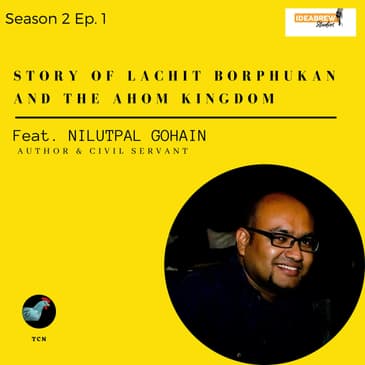
In the first episode of Season 2, we are joined by Mr. Nilutpal Gohain, an author by passion and a Civil Servant by profession. Mr. Gohain's debut historical fiction "The Legend of Lachit Borphukan" covers intriguing stories surrounding the legendary hero and the Ahom Kingdom. In this episode, we look into the life and the role played by Lachit Borphukan in not only saving Assam from the clutches of the Mughals but also about his war tactics in the battlefield, the characters surrounding him, and the legendary 'Battle of Saraighat' among many others.
Disclaimer: The views and opinions expressed in the podcast are those of the individual podcasters. Listener Discretion is advised.
Link to his Book - https://www.goodreads.com/en/book/show/58447207-the-legend-of-lachit-borphukan
Learn more about your ad choices. Visit megaphone.fm/adchoices
00:00:00
Speaker 1: Hello and welcome to the chicken leg podcast supported by
00:00:03
Speaker 1: the idea of Zeus network. We are a bunch of
00:00:05
Speaker 1: curious individuals based out of the Northeast and we strive
00:00:08
Speaker 1: to bring you the best of policy discussions through the
00:00:11
Speaker 1: intersection things that affect your and our daily lives if
00:00:15
Speaker 1: you like. What we do show your support by sharing
00:00:18
Speaker 1: our work.
00:00:18
Speaker 1: Don't forget to leave your comments on this episode in
00:00:21
Speaker 1: our social media hands
00:00:23
Speaker 2: To our listeners tuning in. Welcome to the 2nd season
00:00:26
Speaker 2: of the chicken neck podcast.
00:00:28
Speaker 2: In our first episode. Today we have with us Mr
00:00:31
Speaker 2: Nyland paul go hye, who is the author of the book,
00:00:33
Speaker 2: The Legend of login, Perfect
00:00:35
Speaker 2: and who is also serving as the assistant register of
00:00:38
Speaker 2: cooperative societies with the government of Islam.
00:00:41
Speaker 2: We'll be discussing his book and also the life and
00:00:43
Speaker 2: stories of Latinos with
00:00:46
Speaker 2: Welcome to the show.
00:00:47
Speaker 3: Thank you. Thank you for having me neal
00:00:50
Speaker 3: and it's my privilege to be in the soft. Thank you.
00:00:53
Speaker 2: So, first of all, you know, as we discuss a
00:00:56
Speaker 2: lot of things about Las Con who's an icon for
00:01:00
Speaker 2: the Northeastern states. What was your inspiration behind writing such
00:01:03
Speaker 2: a book and you know, are there any special anecdotes
00:01:06
Speaker 2: that you would like to share with us that you
00:01:09
Speaker 2: experienced while writing the book?
00:01:11
Speaker 3: Well, this book happened by chance. I'm basically someone who
00:01:16
Speaker 3: writes dark fiction, queller, horror, all those kind of stuff.
00:01:20
Speaker 3: So once what happened, I was on a field trip
00:01:23
Speaker 3: to utter Guwahati, what is the the other side of
00:01:29
Speaker 3: the brahmaputra from Guwahati.
00:01:31
Speaker 3: So while going there on the way I saw school
00:01:37
Speaker 3: where it was written as legit gore
00:01:41
Speaker 3: english medium school.
00:01:44
Speaker 3: However, as we know gore in as means means a rampart,
00:01:49
Speaker 3: there was no proper rampart or anything in that place.
00:01:52
Speaker 3: So basically there was a rampart in olden days but
00:01:56
Speaker 3: that has been you know, destroyed or demolished. And the
00:02:00
Speaker 3: school has come up.
00:02:01
Speaker 3: So it got me thinking that you know, the assam
00:02:05
Speaker 3: history is so rich but it has not been properly documented.
00:02:09
Speaker 3: So I came back home and I started researching on
00:02:12
Speaker 3: it and when I got some solid material on on
00:02:17
Speaker 3: Logic Barbeque and I thought no, I have to write
00:02:19
Speaker 3: this book.
00:02:20
Speaker 3: I got in touch with my literary agent Suhel Matter
00:02:22
Speaker 3: and I pitched him the idea,
00:02:24
Speaker 3: he said yes, go ahead, let's let's do this. And
00:02:27
Speaker 3: he pitched it to a few publishers and even movie producers.
00:02:33
Speaker 3: So after about a week he called me back and
00:02:37
Speaker 3: he said
00:02:40
Speaker 3: one movie deal and one publishing deal. I was I
00:02:43
Speaker 3: was very happy at that point of time.
00:02:45
Speaker 3: So they gave me six months to complete the book
00:02:48
Speaker 3: for the in those six months, I did the research
00:02:50
Speaker 3: and and the book as well. It went on in
00:02:54
Speaker 3: a simultaneous way. And after six months I completed and
00:02:57
Speaker 3: submitted the book. So the that's the basic journey of
00:03:01
Speaker 3: the book.
00:03:04
Speaker 1: It's interesting you speak about your journey by, you know,
00:03:08
Speaker 1: starting the book just while you were traveling to the
00:03:10
Speaker 1: other part of So, it's a lot of people traveled
00:03:14
Speaker 1: to that part. Not everybody, you know, start with the
00:03:16
Speaker 1: idea of writing a book.
00:03:18
Speaker 1: Uh But as you said that you took six months
00:03:21
Speaker 1: towards writing the book. And one question that we were
00:03:25
Speaker 1: very interested in asking you was how difficult was it
00:03:28
Speaker 1: for you to find resources to write the book? Because
00:03:32
Speaker 1: even though your book, when we went through it, we
00:03:34
Speaker 1: realized that even though it is specifically, you know,
00:03:38
Speaker 1: and of course talks about in a lot of places,
00:03:42
Speaker 1: but it also gives a very good historical account of
00:03:44
Speaker 1: the times during that, you know, period during wars, during
00:03:48
Speaker 1: discussions between them how assam was divided into different sections,
00:03:52
Speaker 1: which we will of course discuss throughout the episode today.
00:03:55
Speaker 1: But tell us about your process of writing the book.
00:03:59
Speaker 1: Was it easy for you to get the resources? Did
00:04:01
Speaker 1: you have to translate a lot of stuff? So, how
00:04:04
Speaker 1: was that
00:04:04
Speaker 3: about? That's a very good question actually. What happened? I
00:04:10
Speaker 3: was lucky, so to say,
00:04:12
Speaker 3: because I met right people at the right time,
00:04:15
Speaker 3: one of a very eminent historian of assam dr rajan Sekiya.
00:04:21
Speaker 3: I approached him and I said, sir, I'm writing a
00:04:23
Speaker 3: book on, do you have any material?
00:04:27
Speaker 3: He's told me that to write a book on legit.
00:04:30
Speaker 3: You have to read a few other books as well.
00:04:32
Speaker 3: For example, the life history of Aton borrego's High,
00:04:35
Speaker 3: he was the bull ago in those times. Then he
00:04:39
Speaker 3: gave me 23 books of assam history. He gave me
00:04:42
Speaker 3: a book which had you know, all the dialogues between
00:04:46
Speaker 3: the kings and and the centuries and and the envoys.
00:04:51
Speaker 3: All the dialogues were written in those in that book.
00:04:54
Speaker 3: Even the what to say the treaties have been written
00:04:58
Speaker 3: in those books.
00:05:00
Speaker 3: And then he gave me one important book which had,
00:05:03
Speaker 3: it's the original is the Chronicle, Home Chronicle.
00:05:08
Speaker 3: So all these books I took about two months to
00:05:11
Speaker 3: read and formulate a proper story.
00:05:13
Speaker 3: You know, I took a few things from one book,
00:05:16
Speaker 3: few things from the other book and the basic story
00:05:18
Speaker 3: was structured from the book called La khan and His
00:05:22
Speaker 3: times by Sujatha Kumar bologna. It is the, it is
00:05:26
Speaker 3: one of the oldest and the best documented life history of.
00:05:30
Speaker 3: But again it's a history book, so it's not that
00:05:32
Speaker 3: entertaining and you know, it reads like a history book.
00:05:36
Speaker 3: So I wanted to make it entertaining as well as
00:05:39
Speaker 3: you know, interesting. So uh I did fictionalize a few
00:05:43
Speaker 3: things but the facts are saying the facts remain the
00:05:46
Speaker 3: same
00:05:47
Speaker 3: but you know you have to visualize and and write
00:05:50
Speaker 3: this story. So the only visualization part I did
00:05:54
Speaker 3: but the device, it's all fact
00:05:56
Speaker 3: and secondly one thing I struggled a lot is about
00:05:59
Speaker 3: the social history of those times.
00:06:01
Speaker 3: We have the political history documented in in the chronicles
00:06:06
Speaker 3: but the social fabric, the people, the demography, the architecture.
00:06:10
Speaker 3: It's not it has not been properly documented. So I
00:06:13
Speaker 3: struggled with that part of it.
00:06:16
Speaker 3: But then with Mir Jumla one traveler came called, he
00:06:23
Speaker 3: documented a proper you know, social history of those times.
00:06:28
Speaker 3: So from that part I took the social history and
00:06:32
Speaker 3: some of the help I got from
00:06:34
Speaker 3: a few history professors
00:06:37
Speaker 3: who gave me some insight.
00:06:39
Speaker 3: So that that was the whole process. And yes, I
00:06:42
Speaker 3: had to translate the dialogues.
00:06:45
Speaker 3: I I said that that there was a book on dialogues.
00:06:47
Speaker 3: I had to translate those dialogues and it took me
00:06:51
Speaker 3: some effort because you know those days there's mrs quite tough.
00:06:57
Speaker 3: Mm hmm.
00:06:58
Speaker 3: Not translating that Asthma is into english. First of all
00:07:02
Speaker 3: I had to learn what that? S means word meant.
00:07:07
Speaker 3: I'll just give you an example there there was a
00:07:10
Speaker 3: word called
00:07:14
Speaker 3: so I had to search for what is most you
00:07:16
Speaker 3: and then I asked a few people, I went through
00:07:19
Speaker 3: a few dictionaries and then finally I finally found the
00:07:22
Speaker 3: world messiah is like the plot we put at the
00:07:26
Speaker 3: bottom while sitting So that is most. So I had
00:07:29
Speaker 3: to struggle in only that part. Otherwise
00:07:32
Speaker 3: every information was rebuilt in the books and
00:07:35
Speaker 3: that helped me a lot in writing the history
00:07:38
Speaker 3: and I visited the places as well. Most of the
00:07:42
Speaker 3: places are in utter Guwahati and in nearby area. So
00:07:48
Speaker 3: all these places I visited that gave me a good insight.
00:07:53
Speaker 2: You know it's really interesting that you covered so many
00:07:56
Speaker 2: things in your book and you traced all of these
00:07:58
Speaker 2: things from so many sources especially that you know the
00:08:01
Speaker 2: fact that you took into account these chronicles and these
00:08:05
Speaker 2: historic literature that perfectly grasped the interactions that happened during
00:08:10
Speaker 2: those times.
00:08:11
Speaker 2: And as you pointed out that you know you've fictionalized
00:08:15
Speaker 2: it a bit as well but there are the facts
00:08:17
Speaker 2: that are still there that are constant in your book
00:08:20
Speaker 2: as well. So you know when you were going through
00:08:23
Speaker 2: this literature what were the kind of stories surrounding the
00:08:28
Speaker 2: and the dynasty because you as you pointed out you
00:08:30
Speaker 2: did not only read up on but you read up
00:08:32
Speaker 2: on characters who were there with him during that time
00:08:36
Speaker 2: and the interactions that other people are having. So what
00:08:40
Speaker 2: was certain characteristics or traits that you remember or you
00:08:44
Speaker 2: admired when you were going through the literature?
00:08:48
Speaker 3: Yeah the first and foremost characteristic or or the quality
00:08:52
Speaker 3: of legit Barbican which I admire a lot is the
00:08:55
Speaker 3: leadership quality. He was a true leader.
00:08:58
Speaker 3: Ah
00:08:59
Speaker 3: He was if you you've read the book I'm sure
00:09:03
Speaker 3: you've got the point where the battle of Saratoga what
00:09:06
Speaker 3: happens
00:09:08
Speaker 3: at that point of time? If you have read it,
00:09:10
Speaker 3: you have seen that he was very ill,
00:09:13
Speaker 3: he was extremely ill
00:09:14
Speaker 3: but even then just to lead the army he got
00:09:17
Speaker 3: up and he led the army in the battle and
00:09:21
Speaker 3: he won the battle.
00:09:22
Speaker 3: If he would not have appeared himself, he would not
00:09:26
Speaker 3: have appeared himself in the battlefield. There were, there were
00:09:30
Speaker 3: high chances that
00:09:32
Speaker 3: the homes would have lost the battle.
00:09:34
Speaker 3: So that was one quality which I really appreciate. And
00:09:39
Speaker 3: then secondly
00:09:42
Speaker 3: that character is very important in the, in home history
00:09:46
Speaker 3: because his strategy of, you know, uh his war strategy
00:09:52
Speaker 3: was very unique,
00:09:55
Speaker 3: so to say,
00:09:56
Speaker 3: because he, what he did, he is that he
00:10:00
Speaker 3: utilize the geography of the region
00:10:03
Speaker 3: to defeat the Mongols in the, in their own territory.
00:10:06
Speaker 3: And secondly, he he was the driving force behind slash it's,
00:10:12
Speaker 3: you know, at that point, at some point of time lock,
00:10:15
Speaker 3: it would lose his morale and he would be the
00:10:18
Speaker 3: one who would drive him to or motivate him to
00:10:22
Speaker 3: get up again.
00:10:23
Speaker 3: So
00:10:24
Speaker 3: I admire that character also a lot of
00:10:28
Speaker 3: and secondly, um hmm,
00:10:31
Speaker 3: during those days the, the,
00:10:34
Speaker 3: the feeling of patriotism was very high,
00:10:37
Speaker 3: People didn't think much to, you know, sacrifice their lives
00:10:43
Speaker 3: for for the motherland. And in fact
00:10:47
Speaker 3: there is one very beautiful line which we all asked
00:10:50
Speaker 3: me to admire is that the my uncle is not
00:10:55
Speaker 3: bigger than my country. So that is that is that
00:10:59
Speaker 3: one single line only signifies the kind of passion,
00:11:04
Speaker 3: the homes and the asthma's head for their motherland
00:11:09
Speaker 2: and you know, that that is one of the main
00:11:13
Speaker 2: essence of your book, like when we were going through
00:11:15
Speaker 2: your book, what was really interesting is the fact that
00:11:18
Speaker 2: you not only managed to capture legit because over the
00:11:21
Speaker 2: years we've seen attempts to capture legit
00:11:25
Speaker 2: in the, in books, but you have also managed to
00:11:28
Speaker 2: capture the interactions that he had the characters that molded
00:11:32
Speaker 2: his entire life right from his entry into the army,
00:11:36
Speaker 2: to the people he confided in, other people who he,
00:11:40
Speaker 2: you know, he worked with.
00:11:42
Speaker 2: So this gave us a sense of his character and
00:11:44
Speaker 2: also of the social structure and the way people
00:11:48
Speaker 2: lived during those times. So, you know, how did his
00:11:52
Speaker 2: interactions as you already pointed out that it was very important?
00:11:55
Speaker 2: Autumn borrego's role was very important in Lockett's life and
00:11:58
Speaker 2: his life as a warrior. So how did these interactions
00:12:02
Speaker 2: influence the entire battle of Saratoga?
00:12:04
Speaker 2: You know, people who were in and around how did
00:12:06
Speaker 2: they help or you know, they contribute to the build
00:12:09
Speaker 2: up of the battle of Saratoga.
00:12:11
Speaker 3: Uh huh.
00:12:12
Speaker 3: Well, each and every character has an important role to
00:12:15
Speaker 3: play in some places. You'll see even the insignificant character has,
00:12:22
Speaker 3: you know, um
00:12:24
Speaker 3: created a lot of impact in the battle. For example.
00:12:28
Speaker 3: There is one character called Pelon Falcon, he aspired to
00:12:34
Speaker 3: be the border con but he couldn't because logic got
00:12:37
Speaker 3: the post. So somehow he was, you know, having a
00:12:41
Speaker 3: Cold war with Russia during the whole war, but
00:12:45
Speaker 3: when the final moment came and when he had to
00:12:48
Speaker 3: you know perform for the country, he he gave up
00:12:51
Speaker 3: all those aspirations. He and he went behind uh and
00:12:55
Speaker 3: he fought for the country
00:12:57
Speaker 3: secondly there is another character I've mentioned it in a
00:13:01
Speaker 3: small bit called the Bag Hazarika, if you have read
00:13:04
Speaker 3: it back to America's character is a disputed character but
00:13:08
Speaker 3: you know people have not denied his presence. But there
00:13:13
Speaker 3: have been instances where
00:13:15
Speaker 3: they have said that there there was no character, some
00:13:18
Speaker 3: of the people, some of the you know factions of
00:13:20
Speaker 3: the people they say there is no character called but
00:13:24
Speaker 3: historians, they don't outrightly deny that there was no character
00:13:28
Speaker 3: but his role was very significant. They don't agree to them.
00:13:33
Speaker 3: So even even if Baghdad Orica character is there, if
00:13:37
Speaker 3: he agreed to that
00:13:40
Speaker 3: his title, Hajj America is not a very high up title.
00:13:44
Speaker 3: It's it's like uh you know leader of 1000 centuries
00:13:50
Speaker 3: or thousands soldiers.
00:13:53
Speaker 3: So uh Hazarika title is 4000 soldiers. So if we
00:13:58
Speaker 3: consider that, then we can say that even even if
00:14:02
Speaker 3: there is one small instance where he you know fills
00:14:05
Speaker 3: up the cannonballs cannons off of the moguls with water.
00:14:11
Speaker 3: That small instance has helped a lot in, you know
00:14:14
Speaker 3: um in in in the first assault which the moguls
00:14:19
Speaker 3: tried to do with with the moguls um try to
00:14:25
Speaker 3: attack the homes and gain gain the territories. So America's
00:14:29
Speaker 3: character is also important
00:14:31
Speaker 3: then, uh
00:14:32
Speaker 3: obviously single. And in fact, while shaping his life, I'd
00:14:40
Speaker 3: say his father, my family, Barber was role was very
00:14:44
Speaker 3: important because he had seen his father how he manages
00:14:51
Speaker 3: the affairs of the state and how he,
00:14:54
Speaker 3: how he, you know, performed as Barbara because Barbara and
00:15:00
Speaker 3: the whole, this thing,
00:15:03
Speaker 3: the title were the same during the 1st 1st half
00:15:07
Speaker 3: of the book. Later the Barbacoa title came. So Barbara
00:15:12
Speaker 3: was titled, It was very important, bobo's role was important.
00:15:15
Speaker 3: And he had seen while growing up how his father
00:15:18
Speaker 3: performed in the court and in the affairs of the state.
00:15:20
Speaker 3: So that shaped his life a lot.
00:15:23
Speaker 3: So his father's role and those are the main characters
00:15:27
Speaker 3: which have shaped the whole history
00:15:30
Speaker 3: during those things.
00:15:32
Speaker 2: And and for all of us, I think that was
00:15:34
Speaker 2: the most interesting, one of the most interesting angles of
00:15:37
Speaker 2: the book, where we got to know about characters which
00:15:39
Speaker 2: we wouldn't have come across quite easily in other parts
00:15:43
Speaker 2: of literature. And you also pointed out that there were
00:15:46
Speaker 2: others other contemporaries during the era who were also interested
00:15:51
Speaker 2: in getting this same
00:15:53
Speaker 2: position that he was. But you know, so could you
00:15:57
Speaker 2: take us through the rise of in the Home Army,
00:16:01
Speaker 2: his journey from his entry to the army to how
00:16:04
Speaker 2: he eventually became the leader. He's known.
00:16:07
Speaker 3: Okay, well, let's get started office Dora.
00:16:14
Speaker 3: Uh yeah,
00:16:18
Speaker 3: I'm sorry,
00:16:19
Speaker 3: I probably missed it. Just yeah, he, it was like uh,
00:16:24
Speaker 3: the personal secretary.
00:16:26
Speaker 3: Okay, the post was like personal secretary. He was the
00:16:29
Speaker 3: personal secretary of the, of his father and he used
00:16:31
Speaker 3: to attend all those special meetings and all which his
00:16:35
Speaker 3: father attended as, as his father's personal secretary. Then he was,
00:16:40
Speaker 3: he was given various other posts. Also. Later he was
00:16:44
Speaker 3: given the post of Surabaya,
00:16:46
Speaker 3: the custodian of Royals stable.
00:16:50
Speaker 3: And there is one instance in the book where um,
00:16:54
Speaker 3: disorganized appreciates his um
00:16:58
Speaker 3: ability as the, because uh, so what they'll say is that,
00:17:03
Speaker 3: you know, if Laci to steam the horse then
00:17:08
Speaker 3: the while riding the horse, it feels like I'm riding
00:17:11
Speaker 3: on an appellant queen.
00:17:13
Speaker 3: So that is one instance where his capability or the
00:17:17
Speaker 3: ability as a leader. It comes out then later he
00:17:22
Speaker 3: was given the post of uh, african
00:17:27
Speaker 3: stimulatory. African is a, you know, frontier officer. Simon Luger
00:17:32
Speaker 3: was one of the frontier of the album kingdom. He
00:17:35
Speaker 3: was the custodian of the fourth
00:17:38
Speaker 3: and then later he was given the post of, was
00:17:43
Speaker 3: the post off from
00:17:45
Speaker 3: the uh
00:17:47
Speaker 3: chief
00:17:48
Speaker 3: uh security officer
00:17:51
Speaker 3: of, of taking.
00:17:54
Speaker 3: So while he was the, he was promoted to,
00:18:00
Speaker 3: so later he was, he came to be known as
00:18:02
Speaker 3: la
00:18:06
Speaker 2: uh, and that that really presents an interesting way in
00:18:10
Speaker 2: which he progressed through the ranks and I think that
00:18:12
Speaker 2: was we, I think that was one of the reasons
00:18:14
Speaker 2: where he, why he was such a well
00:18:17
Speaker 2: aware journal because he had seen it all right from
00:18:21
Speaker 2: having dealt with horses to being in charge of a fort.
00:18:26
Speaker 2: You know one thing that you have pointed out a
00:18:30
Speaker 2: while back was that when you visited the places, most
00:18:33
Speaker 2: of these places were in and around or which are
00:18:38
Speaker 2: places that are still there in Guwahati. So, and you've
00:18:42
Speaker 2: also dedicated a very specific chapter chapter to the importance
00:18:46
Speaker 2: of Guwahati in the battle of where the album generals
00:18:50
Speaker 2: are seen having a strategic meeting as for the course
00:18:54
Speaker 2: of action. So tell us a bit about the importance
00:18:57
Speaker 2: of Guwahati for homes in there and you know in
00:19:00
Speaker 2: their attempts to protect their kingdom and how they used
00:19:03
Speaker 2: since the homes were also known for using the geographical
00:19:06
Speaker 2: situations to their advantage. How did they use the geographical
00:19:10
Speaker 2: situations back then to their advantage against the mighty moguls?
00:19:13
Speaker 3: Uh huh.
00:19:14
Speaker 3: Well the geography of Guwahati is very unique.
00:19:18
Speaker 3: The Guwahati the the north bank of the south bank
00:19:23
Speaker 3: of Guwahati of the river brahmaputra is uh
00:19:27
Speaker 3: hills in both the sides, right from in the north bank,
00:19:31
Speaker 3: right from Kurosawa to accurately migratory.
00:19:35
Speaker 3: Uh sorry all the whole stretch of that bank is
00:19:41
Speaker 3: filled is completely uh straight line of hills I would say.
00:19:47
Speaker 3: And in the south bank it would be from casual
00:19:51
Speaker 3: gun or casually in those days to hills. It's all hills.
00:19:57
Speaker 3: So
00:19:58
Speaker 3: if somebody comes through the river
00:20:03
Speaker 3: and he plans to attack on both the banks.
00:20:07
Speaker 3: The people who are sitting at the bank would have
00:20:10
Speaker 3: a upper edge because they would be sitting at a
00:20:12
Speaker 3: heightened attacking the army
00:20:14
Speaker 3: attacking the enemy. So ah it would be like you
00:20:20
Speaker 3: know fighting a war sitting in your own home
00:20:23
Speaker 3: and and the one who is coming through the river
00:20:27
Speaker 3: would have limited supply of emanation, limited supply of men
00:20:32
Speaker 3: because he'll be carrying all these things on the boat.
00:20:35
Speaker 3: So that was the main idea behind you know um
00:20:40
Speaker 3: behind you know fighting the war on the river brahmaputra,
00:20:44
Speaker 3: they didn't allow the buggles to enter the lands. It
00:20:47
Speaker 3: was always a war war on the water at a
00:20:51
Speaker 3: few strategic places they tried to enter through through some
00:20:55
Speaker 3: opening or some you know, breaches on on the ramparts
00:20:58
Speaker 3: that were built during those days
00:21:01
Speaker 3: but they were unsuccessful.
00:21:03
Speaker 3: So basically they were not allowed inside. They had to
00:21:07
Speaker 3: use the river route only to fight the arms. So
00:21:13
Speaker 3: and the main strategy of you know, uh fighting the
00:21:20
Speaker 3: moguls was too, you know,
00:21:23
Speaker 3: guard this whole these two impregnable walls of hills
00:21:27
Speaker 3: by keeping equal amounts of soldiers and leaders at regular
00:21:33
Speaker 3: intervals so that
00:21:34
Speaker 3: even if they plan to, you know, attack some point
00:21:38
Speaker 3: some
00:21:40
Speaker 3: at a particular place there will be enough soldiers and
00:21:43
Speaker 3: a leader, do you know what that
00:21:46
Speaker 3: attack. So they tried at various places to enter. They
00:21:50
Speaker 3: utilized various strategies to enter but they couldn't
00:21:54
Speaker 3: and that was all because of the strategy used by
00:21:56
Speaker 3: A I. And
00:22:02
Speaker 1: is interesting because I was going through this chapter on
00:22:06
Speaker 1: Guwahati and you you Titley there's the impregnable, impregnable Guwahati.
00:22:11
Speaker 1: So is it because it was never captured? I'm assuming
00:22:14
Speaker 1: it was because it was never captured.
00:22:17
Speaker 1: But also what I found very interesting about your description
00:22:21
Speaker 1: of Guwahati and the historical accounts was the fact that
00:22:24
Speaker 1: in Guwahati the albums followed a very mobile structure. You
00:22:28
Speaker 1: for instance, you say that they had this entire the
00:22:32
Speaker 1: system like the mogul structure. Then you talk about the
00:22:36
Speaker 1: appointment of various people in a in a like
00:22:39
Speaker 1: similar to what let's say in today's government would have
00:22:42
Speaker 1: in a very strategic location. For instance, you talk about
00:22:47
Speaker 1: in detail. So he was somebody who was there. You
00:22:49
Speaker 1: talked about the whole busses the soldiers, specially trained soldiers
00:22:53
Speaker 1: who were there. So while I think I just wanted
00:22:57
Speaker 1: and I say this in detail because while we look
00:22:59
Speaker 1: into upper assam for instance, if we look into, we
00:23:03
Speaker 1: see a lot of
00:23:04
Speaker 1: monuments that were built by their homes. Whereas Guwahati looked
00:23:07
Speaker 1: like a more strategic
00:23:09
Speaker 1: import of more strategic importance to the home. So so
00:23:12
Speaker 1: tell me a bit about that. Is it, is it
00:23:14
Speaker 1: I mean what I said, does it make sense? And
00:23:17
Speaker 1: have I got been able to get a jest of
00:23:19
Speaker 1: your arguments in the book on that chapter.
00:23:21
Speaker 3: Yeah, definitely. Well, you have rightly pointed out that in
00:23:27
Speaker 3: upper assam, there are still monuments of our homes, 13
00:23:30
Speaker 3: in Guwahati or lower assam,
00:23:33
Speaker 3: there are very few.
00:23:34
Speaker 3: Well, some of the monuments are still there, some of
00:23:37
Speaker 3: the temples are there, but you know, the kind of
00:23:42
Speaker 3: preservation that could have been done, it was not done properly.
00:23:45
Speaker 3: For example, recently there has been a bungalow inaugurated at
00:23:50
Speaker 3: that particular place where legit fought the war of the
00:23:55
Speaker 3: battle of Saratoga.
00:23:56
Speaker 3: So that that is a very, that is actually ejaculate
00:24:00
Speaker 3: that places ejaculate.
00:24:02
Speaker 3: So
00:24:03
Speaker 3: that could have been preserved. Well,
00:24:05
Speaker 3: right, this government has thought about it and they have
00:24:08
Speaker 3: preserved preserved that bungalow, but if somebody would have thought
00:24:14
Speaker 3: before and they would have thought of, you know, preserving
00:24:17
Speaker 3: that particular vote which was built in those times, it
00:24:21
Speaker 3: would have been a much better thing
00:24:23
Speaker 3: similarly. Um
00:24:25
Speaker 3: And yeah, the difference of governance, I would say because
00:24:29
Speaker 3: uh
00:24:31
Speaker 3: Guwahati had been, you know, transferred to moguls a few times.
00:24:37
Speaker 3: So
00:24:38
Speaker 3: the kind of governance which was happening in Guwahati was
00:24:42
Speaker 3: different from the kind of governance that was happening happening
00:24:44
Speaker 3: in upper assam
00:24:46
Speaker 3: and and the proper fabric or the proper, you know,
00:24:50
Speaker 3: strategy that was, that was used while governing this lower
00:24:56
Speaker 3: assam was taken from the moguls.
00:24:59
Speaker 3: So they didn't want to disturb that, you know, that
00:25:03
Speaker 3: setting that was during those times and this, they thought
00:25:07
Speaker 3: of taking over that
00:25:09
Speaker 3: particular system of governance.
00:25:13
Speaker 3: So it was in fact a better move than you know,
00:25:17
Speaker 3: changing the whole system.
00:25:21
Speaker 3: So that's that's what I think
00:25:24
Speaker 1: I think for our listeners because you mentioned about the
00:25:27
Speaker 1: bungalow that was recently inaugurated. So could you tell us
00:25:30
Speaker 1: the name of the bungalow?
00:25:31
Speaker 3: So it's it's uh um Mohammed Patrol River Heritage Center.
00:25:38
Speaker 3: It was the old dc bungalow and now they have
00:25:42
Speaker 3: converted into a heritage center because
00:25:44
Speaker 3: it's a very old structure. It's from the british era.
00:25:48
Speaker 3: So they have thought of preserving it and keeping it
00:25:50
Speaker 3: in a form that people would love to visit and
00:25:53
Speaker 3: see that area.
00:25:55
Speaker 3: That's a beautiful.
00:25:56
Speaker 1: I wanted you to mention this because you know, while
00:25:58
Speaker 1: we are seriously talking about last night very, I think
00:26:02
Speaker 1: something very memorable for you I assume was the fact
00:26:05
Speaker 1: that you had recently, you know, put up this your book,
00:26:09
Speaker 1: you had had a book signing session on that particular.
00:26:12
Speaker 1: You know, so I think it's it's like a full circle,
00:26:15
Speaker 3: it was a book reading and book signing session and
00:26:18
Speaker 3: it was only a syllabus
00:26:23
Speaker 1: Yeah, so you know, therefore I wanted you to mention
00:26:25
Speaker 1: that specifically but you know, coming back to our discussion
00:26:28
Speaker 1: while we discuss lasted and we discussed the glory of
00:26:32
Speaker 1: the home. You know kingdom. We see a lot of
00:26:36
Speaker 1: times that the reach of the kingdom has not been
00:26:40
Speaker 1: on the glorifying identification of the kingdom has not been
00:26:44
Speaker 1: at par with let's say what the large puts
00:26:46
Speaker 1: or any other kingdom in India or in pan India
00:26:49
Speaker 1: population they know of the home does not really count
00:26:52
Speaker 1: in the top five, top six dynasties that are popular
00:26:56
Speaker 1: in spite of the continued resistance to the mughal rule
00:26:59
Speaker 1: or to some extent even the britishers at a later stage.
00:27:02
Speaker 1: So do you think that for for at least for
00:27:05
Speaker 1: Northeast because
00:27:06
Speaker 1: other than homes, there were a lot of other dynasties
00:27:08
Speaker 1: which people don't even know of whereas they had their
00:27:11
Speaker 1: own moments of glory. So do you think that there
00:27:13
Speaker 1: is a need for the historians, specifically from this region
00:27:17
Speaker 1: too
00:27:18
Speaker 1: right, more extensively and vigorously about the iconic characters like
00:27:23
Speaker 1: you mentioned, it does not have to be historical uh
00:27:26
Speaker 1: you know, portrayal of a scenario itself. Sometimes it can
00:27:30
Speaker 1: take the form of history plus storytelling so that it
00:27:33
Speaker 1: reaches out to more and more audience around the
00:27:36
Speaker 1: country and beyond. So do you think there's a need
00:27:38
Speaker 1: for that
00:27:39
Speaker 1: and a serious rather and a great time because now
00:27:42
Speaker 1: that there's this, you know, whether we believe it or not,
00:27:45
Speaker 1: whether we agree or not, there's this serious, I think
00:27:47
Speaker 1: rethinking of indian history. So do you think this is
00:27:50
Speaker 1: the correct time for us to posture that storytelling of
00:27:53
Speaker 1: Northeastern
00:27:55
Speaker 1: history? Obviously
00:27:56
Speaker 3: obviously I truly believe that, you know,
00:27:59
Speaker 3: the naughtiest reason has been neglected until now and
00:28:04
Speaker 3: by the historians for the reasons best known to them.
00:28:08
Speaker 3: they could have easily inducted the history of the notice
00:28:11
Speaker 3: because notice has been an integral part of India.
00:28:14
Speaker 3: However, yes, I truly believe that this is the correct time.
00:28:19
Speaker 3: In fact, let me tell you, there have been, you know,
00:28:22
Speaker 3: developments in this scenario, very big publishing house has approached
00:28:28
Speaker 3: me to write a comprehensive history on the noticed. Well,
00:28:30
Speaker 3: it's a very big project. I'm thinking about it if
00:28:34
Speaker 3: I'd like to take it or not.
00:28:36
Speaker 3: But and being being, I'm I'm not a history of
00:28:39
Speaker 3: right to to do justice to this book would need
00:28:43
Speaker 3: a huge amount of research
00:28:46
Speaker 3: and and the mindset to be a history. And so
00:28:51
Speaker 3: I'm really thinking about it if I like I like
00:28:53
Speaker 3: to take the project or not. However, there have been, yes,
00:28:57
Speaker 3: there are many other characters about whom we can write.
00:29:01
Speaker 3: There are many other characters in the whole of noticed
00:29:04
Speaker 3: who deserve attention.
00:29:05
Speaker 3: For example,
00:29:07
Speaker 3: if we
00:29:08
Speaker 3: talk about t the name of monogrammed Taiwan is synonymous.
00:29:12
Speaker 3: 50 he's the, he was the first person to bring
00:29:15
Speaker 3: tea to India. Similarly, if we mentioned about Bhagat Singh,
00:29:22
Speaker 3: if he mentioned about Cody Rambos and all the freedom fighters,
00:29:28
Speaker 3: I truly believe that the name of and uh and
00:29:34
Speaker 3: uh all these names also deserve a place among those.
00:29:39
Speaker 3: Similarly, we talked about Julia Vala back,
00:29:42
Speaker 3: but we don't talk about, we don't talk about all
00:29:47
Speaker 3: those places events.
00:29:49
Speaker 3: So
00:29:50
Speaker 3: this history, the history of the naughtiest Should have been
00:29:55
Speaker 3: you know in in an integral part of the study
00:29:58
Speaker 3: curriculum as well. And I truly believe that in the
00:30:02
Speaker 3: days to come there will be more people who would
00:30:05
Speaker 3: write about the history of the Notice in the story
00:30:09
Speaker 3: from in a fiction, fictional or fictionalized way so that
00:30:13
Speaker 3: people take it up and read it.
00:30:15
Speaker 3: And I truly believe good days are coming.
00:30:20
Speaker 3: You
00:30:20
Speaker 1: know, I think you in a way also answer something
00:30:22
Speaker 1: that I had a follow up as uh as a
00:30:25
Speaker 1: follow up to the question that I asked as to
00:30:27
Speaker 1: what you know because there's a lot of discussion recently
00:30:30
Speaker 1: as to the chapters that should be added to N. C. R. D.
00:30:33
Speaker 1: And other coast curriculum from Northeastern needs to be more
00:30:36
Speaker 1: representation of the region. And I think the the areas
00:30:39
Speaker 1: and the issues that you pointed out are certainly something
00:30:41
Speaker 1: that
00:30:42
Speaker 1: the N. C. R. T. Can look into in the
00:30:44
Speaker 1: curriculum so that students have a fair idea of the
00:30:48
Speaker 1: of the region. In addition to, you know, reading books
00:30:51
Speaker 1: about the region at the latest stage in their lives.
00:30:53
Speaker 3: Obviously obviously because you know if we can write about
00:30:57
Speaker 3: the large ports, the moguls, the rulers of Bengal, we
00:31:02
Speaker 3: can write about the cola charlotte Kia's pandas pandas, every
00:31:07
Speaker 3: state or every part is you know covered in those
00:31:10
Speaker 3: curriculums but not noticed. Why why is that discrepancy. It
00:31:14
Speaker 3: should not happen
00:31:16
Speaker 3: at least the chapter in the on the history of
00:31:19
Speaker 3: the notice should have been inducted, if they have not
00:31:22
Speaker 3: inducted until now, they should have, should do it. And
00:31:26
Speaker 3: and uh I've mentioned it in them in my book
00:31:29
Speaker 3: as well. There are strategic places where the mention of
00:31:33
Speaker 3: Logic Barbican has been there,
00:31:36
Speaker 3: you know, the
00:31:38
Speaker 3: the best cadets medal for I think I N A.
00:31:43
Speaker 3: Is given in the name of so uh
00:31:47
Speaker 3: a few places where he deserves attention. They have given
00:31:51
Speaker 3: him the attention and the respect
00:31:53
Speaker 3: however, in in the mass form or in the, you know,
00:31:58
Speaker 3: in the eyes of the public
00:32:01
Speaker 3: dimension is not proper
00:32:03
Speaker 3: and what I feel because a lot of, you know,
00:32:08
Speaker 3: comments or reviews which I have received after writing this
00:32:11
Speaker 3: book is that people have said thank you for introducing
00:32:14
Speaker 3: us to lock it before
00:32:16
Speaker 3: it should not have happened.
00:32:18
Speaker 3: They would not say thank you for introducing us to
00:32:20
Speaker 3: Mahatma Gandhi, your magazine,
00:32:23
Speaker 3: right, so that it paints. But you know, we have
00:32:27
Speaker 3: to uh there's still time we can, you know, put
00:32:31
Speaker 3: all our glory forward and I request other authors to
00:32:35
Speaker 3: come up with good stories on the history of the
00:32:38
Speaker 3: noticed
00:32:42
Speaker 1: No, I think you're absolutely right and even for our
00:32:44
Speaker 1: modern indian history, you know, when we let's say and
00:32:47
Speaker 1: let's say when we talk about Patel and his role
00:32:51
Speaker 1: in integration and unification of India, I think equally important
00:32:54
Speaker 1: is the role of
00:32:56
Speaker 1: you know, if somebody like
00:32:58
Speaker 1: our first chief minister or other prime minister. So go
00:33:01
Speaker 1: peanut brittle is rolling unification of this region. So I
00:33:03
Speaker 1: think the stories need to be told and I think
00:33:06
Speaker 1: one another issue is and obviously you know when Lassiter
00:33:09
Speaker 1: is referred to as of the east or something, it's
00:33:12
Speaker 1: not as if you know the comparison is good. I
00:33:16
Speaker 1: think they're both
00:33:17
Speaker 1: iconic characters and their own stand and needs to be
00:33:20
Speaker 1: left alone. So I think that will only happen if
00:33:22
Speaker 1: the stories are
00:33:23
Speaker 1: likely put to the audience and
00:33:26
Speaker 3: this is one of
00:33:27
Speaker 1: the this is
00:33:28
Speaker 3: one of the reasons why I wrote this book. One
00:33:31
Speaker 3: of the book that is available in the market on
00:33:34
Speaker 3: legit the title itself says the contemporary of Sivaji in assam.
00:33:41
Speaker 3: So that should not have been there. The compassion should
00:33:43
Speaker 3: not have been there Shivaji shivaji. Yes, we really appreciate
00:33:47
Speaker 3: his you know, failure and sacrifice and the things he
00:33:50
Speaker 3: had done for Maharashtra.
00:33:52
Speaker 3: We also deserve that same attention. We do not need
00:33:56
Speaker 3: that compassion. Right?
00:34:00
Speaker 1: I mean they're they're their own self made heroes in
00:34:04
Speaker 1: their own rights. I think we should just leave them
00:34:06
Speaker 1: there where they are. But you know, coming to a
00:34:08
Speaker 1: more lighter note, your book has been very successful. A
00:34:10
Speaker 1: lot of people including us appreciate the fact that you
00:34:12
Speaker 1: wrote on but I think it is also equally as
00:34:15
Speaker 1: you mentioned at the beginning of the podcast is that
00:34:17
Speaker 1: it has been now in the process of adoption into
00:34:20
Speaker 1: a movie,
00:34:21
Speaker 1: it's going to be valued movie, we assume. So tell
00:34:25
Speaker 1: us a bit about that.
00:34:26
Speaker 3: Well it has been acquired for adaptation on screen. So
00:34:31
Speaker 3: uh we assume it to be a movie and uh
00:34:35
Speaker 3: till now I've spoken to the previously has said I'll
00:34:38
Speaker 3: try to make it in a movie,
00:34:39
Speaker 3: but there is every possibility that it can be made
00:34:43
Speaker 3: into a web series. Also the movie is there, then
00:34:47
Speaker 3: they might make it into a web series also because
00:34:50
Speaker 3: they have taken the exclusive rights of the book. The
00:34:53
Speaker 3: producers are the producers of gangs of possible.
00:35:00
Speaker 3: Um they are known as the Almighty Motion Picture. Uh
00:35:03
Speaker 3: it's a wing of the bora brothers bora brothers have
00:35:06
Speaker 3: been in this business for a long, long time.
00:35:08
Speaker 3: And Sunil bora, one of the, he has uh you know,
00:35:13
Speaker 3: established a company called the Almighty Motion Picture Production House
00:35:17
Speaker 3: and they have acquired the book
00:35:19
Speaker 3: and uh probably in about 23 years we'll see in
00:35:26
Speaker 3: the big screen
00:35:28
Speaker 3: with a few big names as actors
00:35:32
Speaker 3: and fingers crossed. Let's see
00:35:34
Speaker 3: what comes up.
00:35:37
Speaker 1: I think we really look forward to this. And on
00:35:40
Speaker 1: that note, we also thank you for you know, joining
00:35:42
Speaker 1: our podcast and speaking to us about this very significant
00:35:45
Speaker 1: iconic character of not only a samba India, I think
00:35:48
Speaker 1: it's not everyday that you see that bureaucrat gets time to,
00:35:53
Speaker 1: you know, to write a book and that to such
00:35:56
Speaker 1: a successful book. That helps not only the audience who
00:35:59
Speaker 1: read the book,
00:36:00
Speaker 1: but everyone I think to know about the character has
00:36:03
Speaker 1: been so iconic to to the entire nation. So thank
00:36:06
Speaker 1: you all for joining us. We wish you luck and
00:36:08
Speaker 1: we hope that you write more history and more such
00:36:11
Speaker 1: books which give us the knowledge of our past.
00:36:14
Speaker 3: Thank you. Thanks a lot. And I have been listening
00:36:17
Speaker 3: to chicken neck podcast. I've listened to a few episodes
00:36:20
Speaker 3: in your
00:36:21
Speaker 3: first season. Um you've you've been doing a great work
00:36:25
Speaker 3: for the region for notice and I wish you all
00:36:28
Speaker 3: the best for your future endeavors as well. And thank
00:36:31
Speaker 3: you for having me here today. Thank you. Thanks a lot.