
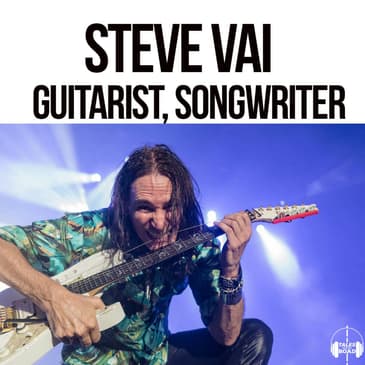

Steve Vai’s contribution to the world of rock music and to the electric guitar is profound. Starting out under the tutelage of Joe Satriani, Steve is a three-time Grammy Award winner,fifteen-time nominee and a legendary performer across the world.
He started out as a transcriptionist and guitar player with Frank Zappa in 1978, replaced Yngwie Mlalmsteen in Alcatrazz in 1984 and then went on to work with David Lee Roth playing guitar on his most seminal albums. Since parting ways with David Lee Roth in 1989, he has significantly expanded his horizons across a prolific solo career spanning 10 albums, countless live albums, soundtracks and media appearances including playing the role of Jack Butler in the Walter hill film Crossroads.
Despite being hailed as a trailblazer and a genius Steve continues to hone his chops and explore new techniques.
The electric guitar has no boundaries for Steve Vai, as far back as 1985 he designed the Ibanez JEM guitar, a unique instrument that incorporated a series of groundbreaking designs that have since become staple features throughout the guitar industry. In 1989 he designed the Ibanez Universe, the first production seven-string guitar.
Steve blew everyone away with his latest creation dubbed The Hydra an instrument that was aplty described as the intersection of modern technology collides with hammered brass. Inspired by a mad max film and his love for steampunk design the hydra is a triple-necked guitar and bass with sympathetic harp strings and a and dizzying array of in-built technology, all wrapped up in a gloriously steampunk finish.
His latest release, inviolate is an ambitious, fabulously produced album that combines his guitar approach, exploring new techniques with inspiration drawn from a wide array of genres and influences, including the worlds of Celtic and Indian music.
On stage Steve is a commanding and show stealing presence. I had the good fortune to work with him for a couple of his shows in India and Singapore. I caught up with Steve early in the morning to talk about his latest release Inviolate, his role in the new Foo Figthers film Studio 666, his inspiration to create the hydra, working with David Lee Roth.Frank Zappa and all things creativity and technology.
---------------------------------------------------------------------------------------------------------------
For more tour dates, to check out Steve's latest work with the Hydra, and for tickets go this his website https://www.vai.com
-----------------------------------------------------------------------------------------------------------------
Follow Tales from the Road
Facebook
https://www.facebook.com/talesfromtheroadofficial
Instagram
https://www.instagram.com/talesfromtheroad/
-----------------------------------------------------------------------------------------------------------------
Subscribe on Spotify | Apple Podcasts | Google | Gaana |Audible
You can also read, watch, listen via our website https://www.tftrmedia.com
Hosted & Produced by Vikram Chandrasekar and Moving Pictures Media
[00:00:00] Steve Vai's contribution to the world of rock music and to the electric guitar is profound. Starting out under the tutelage of Joe Satriani, Steve is a three-time Grammy Award winner, 15-time nominee and legendary performer across the world.
[00:00:15] He started out as a transcriptionist and a guitar player with Frank Zappa in 1978, replaced Ingway Marmstein and Alcatraz in 1984 and then went on to work with David Leroth playing guitar on his most seminal albums. As parting ways with David Leroth in 1989, he has significantly expanded his horizons across
[00:00:33] a prolific solo career spanning 10 albums, countless live albums, soundtracks and media appearances including playing the role of Jack Butler in the Walter Hill film Crossroads. Despite being hailed as a trailblazer and a genius, Steve continues to hone his chops and explore new techniques.
[00:00:51] The electric guitar has no boundaries for Steve Vai and as far back as 1985, he designed the Ibanez Gem Guitar, a unique instrument that incorporated a series of groundbreaking designs that have since become stable features throughout the guitar industry.
[00:01:06] In 1989, he designed the Ibanez Universe, the first production 7 string guitar. Steve blew everyone away with his latest creation dubbed the Hydra, an instrument that was aptly described as the intersection of modern technology with hammered brass.
[00:01:23] Inspired by a Mad Max film and his love for steampunk design, the Hydra is a triple necked guitar and bass with sympathetic harp strings and a dizzying array of inbuilt technology all wrapped in a glorious steampunk finish.
[00:01:36] His latest release, In Violet, is an ambitious fabulously produced album that combines his guitar approach exploring new techniques with inspiration drawn from a wide array of genres and influences including the worlds of Celtic and Indian music. On stage, Steve is a commanding and show stealing presence.
[00:01:54] I had the good fortune to work with him for a couple of his shows in India and Singapore. I caught up with Steve early in the morning to talk about his latest release in Violet,
[00:02:03] his role in the new Foo Fighters film Studio 666, his inspiration to create the Hydra, working with David Lee Roth, Frank Zappa and all things creativity and technology. You were also more recently you were also I saw on your Instagram that you were
[00:02:19] some part of the new Foo Fighters triple six studio the film 666. Yeah, yeah, that was film very close to where you live right in Encino. My shade wasn't closed. I could show you. Well, that that was kind of funny.
[00:02:37] You know, I had met Dave several times through the years and he was always just so I love them. You know, he's just a great guy. He's like a teenager, you know? And when I was hosting the pretel of the Grammys, I just have to
[00:02:52] had to keep giving them Grammys. You know, it was great. And he lives in Encino right right near me. You know, interesting. A lot of a lot of musicians on my street alone, you know, my my neighbor for 15 years was Graham Nash.
[00:03:10] You know, Tom Petty used to live in Encino as well. I'm petty is right right up there. You know, he was on that one street was Ronnie James, Dio, Tom Petty, Dave Grohl slashes over there and you go around the corner and you come down my street.
[00:03:25] And it's that I think the singer for Little Feet Graham Nash myself and, you know, all these other celebrities, a lot of them don't live there anymore. So they were so I would run into Dave occasionally in Encino.
[00:03:39] And one day I was out jogging and he stopped right. I stopped in front of my house and he stopped. He was driving by and so, you know, invited a man we hung out for a little while
[00:03:50] and he was telling me what they would do on up the street. And he said, I want to get you in the movie somehow. And I said, sure, you know, maybe to be a ghoul or a ghost or something like that.
[00:04:03] And I said, yeah, man, I'm right here. So let me know. And then they came up with this one scene where it's a great movie. I saw it. I mean, it's crazy. You know, it's like really gory and really funny and it's so foo fighters.
[00:04:16] It's it's it's great. And there was this one scene where Dave is starting to become possessed and he's trying to show the band something, but he's half out of his mind and he's he's got to play Shreddy, but he doesn't really, you know,
[00:04:32] Dave Grohl is in a shred or he doesn't need to do any of that. So he called me and I walked over and it was great. You know, I had to play his guitar, which was quite a challenge.
[00:04:45] And it was tuned weird and but I just did it and it was great. And it's so funny. It's so funny because, you know, when you do movies, they're very specific and they had to paint my hands like his tattoos, you know,
[00:05:01] so we had for hours together while they painted our hands and stuff. And when the part came up in the movie, man, I just lost it. I almost peed my pants. It was so funny because I'm going, you know, and Dave's just going. It's just so great. Fantastic.
[00:05:18] I can't wait to watch it. Yeah. You know, congratulations on the new album. I saw that it was number one on the charts. Right. Well, it was number one on the Billboard Hard Rock charts. Yeah, it was a surprise and quite a delight. Yeah, yeah.
[00:05:37] And so, you know, I was just looking it up. I think the name of the album in Violet means sort of free and safe from injury. Right. And you've had your fair share of sort of the saps of the last couple of years.
[00:05:52] How are you now? Are you all right? How are things? How's your arm? Well, I'm back in my knapsack. I have to put it in a nutshell, the whole story, because I see stuff in the press and it's, you know, it's quite odd.
[00:06:07] So it took many years to my shoulder to get as damaged as it was. And through that, I know I very holistic approach to things, usually. And I did all sorts of things.
[00:06:19] And it just got to the point where it was so torn up, they had to do the surgery. So last year ago, December, I went in and it was perfect timing for me, you know, and they fixed it and it was great.
[00:06:30] And when I got out, I was like this. And the first thing I did was I picked up a guitar and I just started playing with one hand and that inspired me to record knapsack. And this is a knapsack. So I healed very quickly.
[00:06:49] But those surgeries and I could play within like a week or so. But those surgeries take like a full year to really heal, you know. And once you start feeling real better, you kind of forget that you got to be real careful.
[00:07:02] And over the summer, I had a bit of an accident. I was actually making pizza, if you can believe it. And I had to pull the spatula out of the oven. Pizza goes in the oven and I gave it three really good
[00:07:16] jerks in the worst position over here. No. And it tore the tendon again. So it wasn't that bad, you know. And I thought that I could and the doctor thought that I could get through the tour
[00:07:31] and I could kind of like do some approaches to help heal it. And so, you know, we had the whole tour book. But then the last song that I recorded for the record was Teeth of the Hydra.
[00:07:46] Yeah. And I think that working on the Hydra definitely aggravated it to the point where it was torn to the point where it had to get fixed. So these are not complicated surgeries. They're cuff surgeries that I had it fixed just a couple of days ago.
[00:08:03] I'm not going to be writing knapsack part two. But really, that's the story. And you know, we're prepping to get on tour. We're looking at perhaps maybe the summer in Europe and then America. And the tour is like 250 shows around the world.
[00:08:22] And I certainly hope to be getting to India on it. Oh, that'll be fantastic to see you in these parts again. India and Asia. I want to talk a little bit, Steve, about how sort of the album came together.
[00:08:35] I've read that, you know, you originally wanted to finish up 2005 project. I think it was called Real Illusions. Yeah, I have this trilogy of records. It's sort of like a big concept record and it consists of this real illusions trilogy.
[00:08:52] And I was planning on doing the third installment, but it was a very big project, you know, a lot of vocals, a lot of musicians. And I started to, you know, sketch it all out. I had got the music together. I got everything ready.
[00:09:06] And then, you know, you wake up one day and you're in lockdown. Yeah, you know. So I had to switch gears like many musicians, but it was it was fine. You know, it was great actually because. You know, artists started to reach out to their fans online.
[00:09:23] All zoom thing emerged and I started. To work on some. Techniques and stuff that I hadn't really had time to do before. And one of them was the joint shifting thing I did in Campbell Power. So I recorded candle power and uploaded that with a little video.
[00:09:42] And that was, you know, that was nice for the fans. They they liked it and for the most part. And then. I did a solo acoustic vocal version of a song called the moon and I
[00:09:54] that I just did in my studio, which is something I never do, you know, sing and play. But the response was really good. And it inspired me to work on a project that I always wanted to do, but just never had the time.
[00:10:09] And that is a solo acoustic vocal. Yeah, you know, Steve High, the singer, songwriter and the music doesn't sound anything like that. You know, it's very. Kind of like my DNA. But and I started to work on that and I got very far.
[00:10:26] I got to probably 14 songs and then I got the vocals for about three of them. And then my shoulder went out and by the time all that was done and I was back in the studio, I really wanted to get on tour.
[00:10:38] And I wasn't going to go on tour on an acoustic vocal record. That is not going to happen. So that's when I said, all right, I'm going to finish this record and I'm going to make it the best record I could make.
[00:10:51] I'm going to just be as honest as I can. And, you know, as you evolve in your craft, if you stick with it, you'll you will evolve. And and with Enviolet, I didn't want to have any quirky interludes and I didn't want to have very big,
[00:11:15] densely produced songs that have concepts and all this. I just wanted songs that I could play that have great melody and I can get on tour and play. And that's in Violet. Yeah, you know, so one of the things about Enviolet for me,
[00:11:31] the album itself, it has like all of your other work, it has a lot of feeling in it, right? So how do you sort of manage that in the sense there's a I think is it right to say that there is a tendency to get too close
[00:11:45] to a song or a set of songs, given that, like you said, in the pandemic, the amount of time you had. So how do you sort of distance yourself from the song and not make it sound too technically perfect and yet have that feeling in it?
[00:11:59] Well, I don't distance myself and I don't put up any limitations as to whether it's too technical or anything like that because sometimes something that's very effective is not technical at all. And sometimes something that's very technical is very effective and vice versa, you know.
[00:12:17] So I try not there. There is a sensibility, you know, I am not going to make a song entirely too technical because then I don't like it, you know. So that's how you that's how I. Well, I'm trying to I'm trying to figure out
[00:12:39] what you mean by distancing myself from a song because it's a complete embracing of the song. OK. No, so so let me rephrase this a little bit. So when you record a song, do you sort of do it all in one take
[00:12:53] or do you sort of play it and then sort of come back to it? You know, a few days later is that how it's done? So there's, you know, there's the sort of a distance from you and the song so you don't get too close to the song.
[00:13:06] And it is if there's a risk of it losing sort of feeling and emotion in that song. Oh, I see what you're saying. Yes, it's a popular belief that you got to get something and you got to get one take.
[00:13:21] And even if it has mistakes, it's got the energy. And that's what's that's a very popular belief. I don't go by I want it all. I want it to be technically precise. I want if it if it requires sloppiness
[00:13:36] and a visceral kind of overload, then that's what I shoot for. And I wanted I don't want to miss any marks based on the way I would approach something. Everybody approaches their music or their whatever creativity in the world uniquely. Some some people base their creativity
[00:14:02] on wanting to fit in, wanting wanting to be successful in the world with it, you know. And but people who are slaves to their creative impulses, not there is there is no thought of any of that. There's only the idea,
[00:14:23] the compelling idea and then the doing of it. You know, so my process varies greatly. But but conventionally what I do is I look for little inspired ideas. Hang on one second. So what I what I look for when I'm when I'm writing something is just something
[00:14:52] that has a little energy in it, something that's got a feeling that has an atmosphere. Yeah, you know, and you can you can find that just by hitting a couple of chords, you know. And you and I give it my attention and
[00:15:07] I don't have that I try not to have any there's no mental activity about what it means. It's just where does it want to go? Where does it want to go? And sometimes that comes to me. Various ways.
[00:15:25] Usually before I go to bed, I have a guitar by my bed and I'll pick it up and I'll noodle and I'll capture something on my iPhone. And that's how I have thousands and thousands of snippets of songs like this.
[00:15:38] And sometimes they're just like the first few chords, you know what I mean? Oh, shoot, I forgot I can't play. OK, I'll try. So like something like Greg Strumm, this chord. You hear that? Yeah, minor seven five and then it goes.
[00:15:58] So when I hurt when I started playing that there's an atmosphere in that right? Do it again. So so I said, well, that's kind of nice. I said, oh, that's kind of cool. So so what I did is to chair. So I just had that much.
[00:16:19] But there was an energy in it. So that will live on the shelf for years and years sometimes. And then when I'm looking for. The right song for the right record, I just need that little bit. And the whole song is in it. So then I start down.
[00:16:37] I start to unpack it, you know? So in the unpacking process, I'm a little unconventional in that I usually don't get the band together and rehearse them and then record them. I do that occasionally, sure. And I'm not usually the guy that does everything in one take,
[00:16:54] like Edward or something. I build my stuff. I work on it forensically because I'm not I'm not happy when I start repeating myself. And I definitely don't want to play. What other people are playing, you know? So I have to just keep kind of working on it
[00:17:15] until something unique comes out. You take a song like OK, well, you take a song like the Sandman Cloud Mist. There was no real work on that. That was all improvised. OK, it was just me sitting and playing 20 minutes
[00:17:33] and then I edited down to six minutes or whatever. So that's kind of a unique listening experience for a Vy fan. Absolutely, yeah. Just Vy. But then you take something like all right, Greenish Blues. Yeah. And in that that was a sound check recording
[00:17:53] that I discovered after the last tour. And it was all there that virtually every riff, the melody and it was an improvisation. I couldn't believe it. It was so nice. But the recording was shitty, you know? So I actually re-recorded it,
[00:18:11] copying basically what I did because I really liked it. So then you take a song like OK, so Zeus and Chains. Yeah. That solo section in there, there's nothing improvised about it. That was a conceptual approach. And I'm talking about the first part of the solo
[00:18:32] and that approach was. I want to do something with the bar that I never did. So I can't just I can't just jam that out, you know? I'm not capable of that because it requires doing something, imagining something and then having to work on it.
[00:18:50] Because the stuff that I visualize is very difficult like candle power, you know, the joint shifting stuff. You can't improve. Maybe some guys can. I can't. That whole that whole. Technique took me weeks just to get those eight bars, you know?
[00:19:09] And, you know, at the end of the day, I was really happy with it and I can perform it as if I'm improvising because right, you know, because then it's part of my vocabulary. Yeah, yeah, song on.
[00:19:25] And you're my last interview for the day, so I go as long as you want. Sure. There's a song on modern primitive, which is the seventh song and it's called And We Are One. That for me, that song has more.
[00:19:42] Unique guitar techniques in it than anything I've done. And that required me to sit and do it piece by piece and just loop and loop and loop until I found a thread of a unique idea. You know what I'm saying?
[00:19:59] And then I would work on it and I exaggerated. I would exaggerate it and I'm not happy until my visualization of what I believe it should be is complete. And that's like with with Zeus and Chains, that solo, the way it starts out,
[00:20:18] I said, I'm going to do something with it and I visualize it. I'm going to play, pull the bar, play, let go of the bar, bend down. So it would create. I knew that it would create a sound that I had never done and I'd never heard.
[00:20:32] And I was right, but it required a lot of work before I recorded it. Yeah, yeah. And the song And We Are One, it's my greatest piece of guitar playing as far as the thing I do, I believe, because everything is unique in it.
[00:20:51] Yeah. And that to me is like heaven in a cup. Nothing throws me more than to listen to that and realize. The fantasy. Yeah, yeah. That's fascinating because, you know, I was going to ask you, I remember reading a Frank Zappa interview where he said,
[00:21:15] you know, sometimes you can't write a chord ugly enough to sort of say what you want to say. Right. So I was going to ask you, how do you translate what's in your head? Into a piece of music.
[00:21:28] So I guess this sort of, you know, explains that right? Well, musicians. Unlike non musicians have a relationship with music and they have an opening for that kind of thing, you know, and it's something that you gradually acquire as you progress through the field.
[00:21:50] You know, I would assume that there was a time when John Lennon said, so this is an E chord, you know, in his life. And eventually started to say, OK, that's an E chord. OK, that's that chord. OK, so this chord sounds like that.
[00:22:07] So now he has a little vocabulary and then when it comes time to take his what would Lucy in the sky sound like? You know, so he has he has the connection. Does he need need technique like Steve Vai on the guitar? No, he doesn't want it.
[00:22:25] If he did, he would have it, but he would have to work his ass off like Steve Vai. But. I, you know, when I go to realize an imagined song, you have to have a relationship with the instrument. Yeah. And know that
[00:22:47] at least what you're working on is filling in the musical emotional balance of your the intention of your idea. And that's not so difficult, you know, what if you're a musician? OK, so what do you do? Do you are you a writer or guitar player?
[00:23:07] Yeah, I play very amateur guitar. OK, well, what do you do that in life that you really enjoy doing? And when you're doing it, you don't feel any pressure. You don't feel any music, photography and video. Yeah, that's what I do. OK. So music, photography and video.
[00:23:25] So music, photography, one of the things that I discovered because I've done multiple photo shoots with some of the best photographers in the world for 40 years, you know, I've been doing photo shoots. And what I discovered about it is it's an art.
[00:23:39] And a photographer's eye is unique to that photographer because I would take pictures and I said, well, I'm not going to pay ten thousand dollars to have a photographer do a photo shoot. I don't want to do that. But it's a photo. Yeah.
[00:23:53] You know, so I say, can you you can push the button? Let's let's do a photo shoot. It'll cost me nothing and you'll take the photos and I'll pose because that's what it's about, right? Uh, they or every picture sucks.
[00:24:09] Oh, how do you translate if somebody said you're going to do a photo shoot with with someone like myself or the kinds of subjects that you shoot? Immediately when somebody says that to you, you're already figuring out how you're going to manifest it with a photographer's sensibility.
[00:24:34] So that's the answer to your question. I do the same thing. You realize you start to realize that all the things that you worried about and tried to control in the past that just did not end up the way you believe they should be.
[00:24:52] Can turn out better than the way you think they should be. And also, you don't need to worry about those things that you can't change. Yeah. So if a person was to look into their own mind and recognize the kinds of thoughts that represent things that
[00:25:12] they don't have any control over and if they were to eliminate those thoughts, I would assume that the amount of stress in their life could be reduced significantly. So that I think is a natural thing that can happen to people when they get older, conversely, they can become
[00:25:33] more rigid, more fear, more closed off, you know, but mostly people get a little wiser. And the thing that I discovered, and I'll be honest with you, throughout my whole career as a musician, you feel certain ways about yourself, about where you stand as a player.
[00:26:04] Now, this isn't something that's completely always at the forefront of my thinking, but it's in the background. How do you stack up? Yeah. You know, how do you stack up in the world? You know, and this is a very egoic kind of a perspective.
[00:26:22] And how can you fit in? You know, you got to make sure you this is the voice will say you got to make sure you fit in. And are you sure that what you're doing is going to make you rich and famous and successful?
[00:26:34] Because if it's not, you're making mistakes. OK, this is insane. It's a form of insanity. And then this constricts you from being your authentic self. Yeah, your authentic self is free. It's it doesn't mind what people think about what you're doing. You don't mind what they're doing.
[00:26:58] It's all fine. Everything is fine. And your authentic personality is very open and it allows your unique creativity to come through. And your everybody is unique and their ability to be creative is unique, but but it's they can block it by thoughts of insecurity and inferiority.
[00:27:24] And and it's very difficult to recognize that voice and to correct rise above it. You know, because your authentic personality is what wants to come through you because it's your natural state of being. Yeah, that every person there's something in them that is joyful.
[00:27:48] They may not be experiencing it all the time, but it's joyful. It's uplifting. There's clarity in it. There's there's appreciation for everybody and what they're doing. There's appreciation for what you're doing. There's absolute joy in the creative process
[00:28:02] and nothing that you can possibly do when you're expressing your authentic personality could hurt anybody or yourself. It does the exact opposite. It you feel free with the things that are important to your sexuality. You have no hang ups about what it is.
[00:28:22] You have no hang ups about the color of the clothes or your hair or your size or your shape or your color. There's no there's no thought of any of that. There's only the beautiful diversity of everything in the world
[00:28:33] for you to use with other people to be creative. That's your authentic person. That's your natural state. OK, but unfortunately, well, I don't know about it before I. For reasons I can't explain, we have this screen that can be called the ego.
[00:28:55] And what it is is conditioned thoughts that we've learned along the way. And these thoughts have their foundation and fear, you know, whenever when you were growing up and anybody ever said to you, don't do that, you know what's going to happen to you. That that's fear.
[00:29:12] And if you would recognize fear in the way it was teaching you through your life, you would be shocked. Yeah, you would be stunned. It just what turn on the TV. It's all fear. You're being taught fear. How do you escape this shit? You can't.
[00:29:33] You have to have a very strong mind. But what people can do, they have that they have to do if they want any peace and real creativity in their life is they have to recognize in themselves the kinds of thoughts that they believe are true
[00:29:53] that are actually conditioned thoughts that they picked up along the way and they believe are true. That aren't. Yeah. Yeah, but creates psychological suffering. But Steve, having said that, how do you get feedback on your music? How does Steve Vai get feedback on his music?
[00:30:14] No, I'm saying even at. Yeah, I'm saying even at a concept before an album comes out, for example, right? Given that you have produced, self-produced a lot of your work. How do you get feedback on it? At what point? Maybe before you go. Yeah, before. Yeah. I don't.
[00:30:38] I don't ask anybody anything. What I do is. I come up with an idea. And then if I've. If I have some creative questions, there's a couple of people I go to. Yeah, OK. And I talk to like my wife. She's extremely critical, which is good.
[00:31:00] It's been really good for me. I have a friend, Mike Mascar, who's my art designer and he's very intuitive. He knows my music. He knows my potential. He knows what I can do and kind of knows when I'm hitting the mark and missing the mark.
[00:31:13] And I might explain a creative idea to him in order to get feedback. But really. The feedback comes when it's finished. Yeah, then I might play it for somebody. Yeah, yeah. But tell me, Steve, so how do you, you know?
[00:31:33] You know, you're widely known as a genius and a trailblazer and all of those things. So how do you handle sort of criticism? Self criticism or criticism? Criticism in general. Yeah, in general, it could be a bad review. It could be just, you know, criticism.
[00:31:51] So how do you handle that? Well, the way that I've handled criticism has changed through the years. In the beginning, it was great because there wasn't really any bad criticism. There wasn't much bad criticism. I was young. I was doing cool things with with cool people.
[00:32:08] Even when I joined Dave Roth, well, then, you know, when I was with Alcatraz and replacing Ingve, it wasn't like we had an Internet, so I couldn't really see what people were saying or anything. There was only waiting for a magazine and we weren't really in the magazines
[00:32:26] very much. So there wasn't a lot of criticism. But with Dave Roth, everything exploded for Steve by, you know, and and crossroads. And and oddly enough, I don't recall receiving. I don't recall seeing a lot of criticism that I thought might be there.
[00:32:47] You know, he's not Edward, you know? Which would be fine because I would say the same thing, you know? But the criticism, the intense criticism came. OK, so then I did passion and warfare. And that really I didn't I didn't see any real bad criticism.
[00:33:10] You know, it's when there is this much of it and there is this much good stuff. There's always no matter what you do, yeah, you know, there's people that don't like the Beatles, you know? So you got to just get over it and realize that
[00:33:22] because you're not going to please everybody. You can go and you can do the best thing you've ever done. That's a hit single or whatever it is. And when you're reading the thread, your eye is going to find
[00:33:36] that bad criticism because the ego, that's what it does, you know? And then that's going to bug you every now when nine out of the 10 statements are amazing, you know? Yeah. So it it it it it it wasn't until I did passion and warfare
[00:33:55] and that my cache really exploded because that that's when people are like, you know, who's this guy? It's whatever. And I was winning all the awards. I was on the cover of all the magazines and the ego came right in the back door.
[00:34:11] Because at first with all in the beginning, you know, we're off and all that stuff. I was like, what are these people talking about? I'm not that good. You know, this is just me, you know? And and then finally when passion and warfare came out,
[00:34:24] the you know, the ego started telling me, you see, you're all that by, you know, you're the chosen one, you know, this stupid shit. And then you start believing it. And and there's always the ego has a built in self destruct mechanism. And it's called suffering.
[00:34:42] And there was a period when the whole music scene changed. And grunge came along. Exactly. And I released Sex and Religion. I would bet anybody a dollar that they cannot find more negative, vicious criticism written about a guitar player in a three year period than me.
[00:35:16] Because the fashionable thing at the time was to attack anybody that knew how to play an instrument. Yeah, you know, and I was that flashy guy. So I was a great object of attack. And boy was I attacked, especially with Sex and Religion,
[00:35:35] because it was a totally different kind of a record. So how did I deal with that criticism is your question? Yep. It was the best thing that ever happened to me because it was so hurtful to my ego, which was good because it was like being crucified.
[00:35:55] And after being crucified, there was a rebirth. There's a crucifixion and the resurrection, as they say, you know. So this I didn't deal with it well. Yeah, OK, so that's the answer. There was a lot of mental suffering on my part.
[00:36:16] Because remember, my ego told me I was great. And now everybody is telling me I suck, you know? Yeah. So an interesting thing happened, though, that I didn't realize till later. It didn't stop me from making the music that was important to me. Did you understand? Yeah.
[00:36:38] My inner musical instincts were not concerned with my ego. They just wanted to make me feel excited and happy and like I'm doing my job. Yeah, so I just kept doing my job. And then I released Alien Love Secrets,
[00:37:01] which is a great record, is a great guitar record. Fire Garden. And, you know, so I just thought I'm just going to march ahead. I don't care. I don't care if I have a career. I got to the point where it's where I was
[00:37:15] at various times before, which is I don't care about my career. I just want to make this music. Yeah. And lucky for me, there was enough in that music that it attracted an audience that has been enabling me to do it on a professional level for since then.
[00:37:34] And then a funny thing happens that I recognize is if you just stick with what is important to you, you just stick with it, regardless of what's happening in the outside world, you have to completely allow yourself
[00:37:49] to either see the value in it or to just put it aside and make and prioritize, prioritize your priority. Is your creative, unique musical expression? You should tattoo of that in the inside of your eyeballs because that's the only thing that matters.
[00:38:09] So when you have that, you have your joy. Yeah, because then your definition of success changes then, right? It's not about getting on a Spotify playlist or it's not about awards or, you know, the charts. Yes. And I didn't realize that until then.
[00:38:27] The awards, they're nice. They are. They're nice, but they come with a there's there's always a price to pay, in a sense, you know? Yeah. Yeah. You start believing, you know, all this stuff. So so my message to those that suffer from the feeling of criticism
[00:38:43] from others is first, first thing to recognize and this is tough to recognize is when somebody is criticizing, they're not talking about you. They're talking about themselves. Yeah. That's a hard thing to recognize, but it is true.
[00:39:01] Because you have to attack somebody and critique is different than criticism. Your your tasteful opinion is different than attack. OK, yeah. So when you attack somebody, what you're doing is actually attacking yourself and you're trying to get rid of a guilt that you have
[00:39:21] Yeah, yeah, by projecting it onto somebody else. I know that it sounds like I don't need Steve by to be a shrink. Now, I know what you're saying. I know what you're saying because it's it's it's just fascinating to
[00:39:35] to to get your perspective on it because, you know, when you're hailed as the as the absolute everything about the guitar and it's hard to not let that get to you in a sense. You know, but what happens and as you mentioned age to
[00:39:50] and having gone through it and recognizing the non significance in allowing myself to to allow suffering in me because of the way other people have an opinion. Yeah, that it's so nice. It's so nice when you discover the freedom
[00:40:10] in allowing others to have their opinion and being OK with it. Like, what is fine? It's it's fine. You know, sometimes it's even helpful to me. But if you're suffering from being attacked, recognize that it's you that are allowing yourself to feel that way.
[00:40:31] It's not the other person. They're only talking about themselves. You're allowing stress. It's not that they're stressing you out. That bad review is stressing me out. Well, replace those words with I'm allowing somebody else's opinion of me to stress me out. Yeah, yeah.
[00:40:48] So once you recognize that you're doing it, you can start to it can start to dissolve because then opinions are not cherished. And what becomes most important and this is what I recommend you focus on when you feel criticism. Forgive it.
[00:41:08] Let it let allow them to have their opinion. Don't take it personally and focus on your creative instincts, your unique creative instincts. Throw yourself into them with no excuses whatsoever and you will find joy. Yeah, fantastic. But Steve, this creative instinct that you speak about has also
[00:41:29] extended now to to guitar design. Right. Earlier it was, you know, the sort of the seven string and you bringing it to the mainstream. And now with the Hydra. I saw you. I saw you on another podcast. You were you were playing the Hydra.
[00:41:46] Did it surprise you as to how sort of playable the instrument is from the time you kind of got it to, you know, now? Yeah, actually, because the way that they built it, it is playable. I don't necessarily think it's something that
[00:42:06] you might want to stand and walk around and play. Some people can that you got it if you're strong. And I can do that. But it's risky because so heavy, you know, every time I try to swoon. Yeah, throw, you know, throws your equilibrium off.
[00:42:22] But that was the Hydra was just another it would you said. Your creative instincts, you have a creative instinct and instinct and then it shows itself in different ways. Absolutely. So the impulse is there to be creative with something and for a guy like me, it's about
[00:42:46] for a song like that. It was basically about I want to create a multi-neck guitar where I perform a piece of music that sounds like an enjoyable piece of music with a nice melody on an instrument that is the only instrument in the track.
[00:43:02] Yeah, besides the some keyboards in the drums. So and I knew that it would require me to have to develop a sort of multi-limb independent that I knew I didn't have. But the idea was compelling and a compelling idea that you receive from the universe.
[00:43:24] It comes to you completely packed is one. There it is. And then it takes time to even explain it. And the egoic fantasy requires mental. Intellectualization with yourself. It's true. You sit there and you go, I have to do this.
[00:43:45] And then I got, you know, and then you well, if I do this, then it is. And if I OK, well, wait a minute, let me try. But usually in a creative input, a true unique creative imposter. Yeah. And that's what happened with the Hydra.
[00:43:58] And it was if I had to explain it, it's that I want to create a song that's visually stimulating for people because I'm an entertainer and I love entertaining and is musically adept and effective musically where it's got a nice melody.
[00:44:14] And I wanted it to have tea. Yeah. You know, I wanted it to kick ass. And I also want I didn't want the song to be to sound like a novelty for the guitar. You know what I mean? Mm hmm. So then we went about building the guitar.
[00:44:29] And when I finally got it and I stood behind it, I almost had a heart attack. Yeah. Yeah. But oh, my God, what am I going to do here? You know, yeah. But you know, you start slow and once you start doing something that seems impossible,
[00:44:41] it doesn't seem impossible anymore. But here's how I knew I could do it. I knew when the idea came, there's a knowing. I know I can do it if I put the time in. If you said to me, I want you to do it with no hands.
[00:44:56] I'd say, well, I know I can't do that. You know what I mean? And I'm not going to try. So there's a governor in my mind that says, yes, that's above your ability, but you can do it. You can. And it's knowing.
[00:45:12] And then there's those ideas that are like, no, that's a fantasy. No. So I don't. Yeah. Did you what did you see of the hydro performance? I saw I saw the reveal video of the hydro. And obviously I've listened to this song
[00:45:31] and then I saw you playing it on another podcast. So that's what I've seen of the podcast. You mean my my it was on some it was on it was a no, it was on an interview that you were doing. I think a couple of weeks ago.
[00:45:47] Yeah. Well, I asked them not to show it. Oh, you did? OK. OK. No, so you want to see it? Oh, I'd love to see it. I don't show. Yeah. So, you know, the only time I've seen. I've seen some not something like the Hydra,
[00:46:03] but I remember years ago I saw Linda Mansor. A luthier had designed something. I think it was a 42 string guitar for Pat Mathini. Yeah, that's the Picasso guitar. Picasso. And then I saw Rick Nielsen of Cheap Trick. I think he had a five neck.
[00:46:22] Yeah, yeah. Guitar back back in the 80s. I think both those guitars were available commercially with some modifications. Do you think the Hydra will ever be available, Steve, commercially? That's really hard to say because it's a it's a it's a one off
[00:46:39] right now and it's highly technical instrument. Yeah. Yeah. Yeah. A lot. It's it's well engineered and to. I think that. It will help inspire people to build similar type of crazy instruments and I've seen a lot of great. Yeah. Multi-neck guitars and and people playing them great.
[00:47:03] You know, these days in the Internet, people send me things and I've seen this one player. That was playing like a three neck, but it was acoustic and he was doing all that kind of stuff and it was beautiful.
[00:47:16] You know, and Pat Matheny uses that Picasso guitar great. So what I'm doing isn't unique in that way, not at all. But I don't think I've seen a multi-neck instrument playing a song with that much teeth. Yeah. Yeah. I think.
[00:47:37] Yeah. What also blew me away about the Hydra was, you know, it's a sort of there's so much modern technology in it. It has an Ethernet port that kind of, you know, sort of fell out of my chair reading that.
[00:47:48] So people don't quite understand what that port is. I can explain it to you. The Ethernet port, it's a cat six and when you have that many necks and that many outputs, because it's got four outputs and MIDI and all this stuff,
[00:48:07] you don't want to have inputs, five inputs in the guitar. OK, yeah. So all of the audio for the instrument goes through the cat five, cat six, which is the Ethernet. People think it's like you can hook up to the Internet.
[00:48:22] And you know what? That's a good idea. I think I'll steal it. Anyway, so that then goes to a brain Hydra that was built and this is another. Highly technical piece of gear and that takes the inputs from the Hydra.
[00:48:42] And then spits them out to these inputs into. Well, OK, yeah. So. The fractal three. That's what I use and that has four inputs. So I put each neck into one of those inputs, the three necks and the harp strings make sense.
[00:49:05] OK. And then each one of those can now be stereo. That's how powerful that device is. It's the only one I know that can really do it effectively. Yeah, yeah. So then I have two of the. I have a stereo output for the seven string
[00:49:20] that actually goes to my rig. So the seven string that goes through my whole way. But all the other acts come out and they go to the front of house and monitor system. So that's how I monitor everything. Fantastic. I think that's, you know, from all whatever
[00:49:36] I've been reading about the Hydra, I think that's sort of something that people miss, that it's almost that perfect blend of art meets technology. Right? Like like you said, inspired by Mad Max meets Leo Fender sort of thing. Yeah, yeah, right. But the thing is the thing is
[00:49:58] it's got to be a good song, though. Yeah, yeah. You know, it's got to you can build all the technology, but it's not. You know, you want it to sound good. So, yeah, it's I only did that one song so far,
[00:50:15] but I'm already I've got a lot of ideas. Ideas for more songs. Yeah, yeah. I don't know if I'll get to them, but maybe somebody else will. And to answer your question, you know, it's maybe it's too early to tell if it's the kind of thing
[00:50:28] where I've been as may make some more for some other people. But boy, you'll have to be rich. Yeah. But I'm sure there's lots of people out there that would, you know, gladly, you know, this looks like it could be in a museum.
[00:50:41] So I'm sure there's lots of people out there, lots of fans of yours that would happily, you know, buy one of these. Well, maybe if they're nice enough, I'm thinking come over to my house. Yeah. But but Steve, what what is your view? We spoke about technology.
[00:50:57] What is your view on modern technology and guitar playing has sort of has digital technology made everyone an artist at some level in your opinion. I was talking to Jordan Rudess and he's got this app called GeoShred.
[00:51:13] What is your view on technology and amp simulators and all of that stuff? I always look to technology and ask myself, how can this serve me? Because technology is going to continue to evolve. And there's things evolving right now that I'm unaware of
[00:51:33] that I'm very eager to to see when they when they happen. So I embrace the technological revolution. There's things about it that I think can be cleaned up, and I believe people will clean them up. But the the perspective and the attitude about technology amongst the musician community
[00:51:56] and perhaps everybody varies is usually I kind of categorize it in three different categories. The first category is like a gloom and doom. Yeah, where somebody's perspective is fear. It's like, well, technology has made it so that everything is fucked right now. You know, everything is everything.
[00:52:22] Everything in technology is holding me back from making any money or having a career or any of these kinds of things. So there's just there's a negative perspective that a person can harbor. And if that's the case, then what they will find is that. Yeah, yeah. Yeah.
[00:52:39] Now, then there's those like myself that look at the technology and ask themselves the question, how can this serve me? Yeah, this is great stuff. I'm a creative person. I like being creative with all sorts of odd things. And I like exploring new things.
[00:52:57] How can it serve me? And another perspective, a third perspective, which is perhaps that of people that breathe thin air, you know, is OK, well, this is what's going on in technology. What's missing and how can I make it? Yeah, how can I create it?
[00:53:16] Yeah. And those are interviews, you know, and we need them. And so my perspective is sometimes I'm looking ahead of the curve and sometimes I'm just embracing the curve. Yeah, yeah. It's fascinating because, you know, I love the way of embraced
[00:53:34] technology, even with the marketing of the video. I think there was an NFT auction for the Hydra reveal video. So I thought it was a great idea. And I think you're one of the earliest people to have sort of, you know, gone that route. Oh, well, thanks.
[00:53:49] I'm the NFT route was a confusing one for me. I started following it in the beginning and I didn't understand it at all. I just was like, why? You know, why would anybody want to pay that much for something that they look at, you know, and, you know,
[00:54:08] that anybody can have, you know? Yeah. So I didn't understand it, you know, and then more and more people started doing it. And then I started getting approached and I was getting approached like probably once a month by a firm or somebody that wanted to make
[00:54:23] wanted to mint EFTs, NFTs for me. And, you know, the pitch was always you can do this and you can do that. You can do all these things and then you can have this NFT. And I was just like, I don't know. It is something really I'm not.
[00:54:40] It's not adding up in my head. You know, what it is and what it does. But then. And I didn't think I had anything really worthy to offer, you know, but then when we did this video for the Hydra,
[00:54:56] the reveal, I decided that I didn't want to mess around. You know, I was what I was going to do was, you know, Meg shifted, set it up in my studio and take a camera and then reveal it. And I'm like, this instrument, there's way too much.
[00:55:08] Yeah. I'm into it. I got to do this right. So me and Mikey Mascar decided that he found this company. We got three different bids for people to make that 90 second video. And this one company, you and Co is like the number one
[00:55:25] company in Hollywood that makes incredible trailers for. I mean, this guy is inspired and it was 80. It was $90,000 for 90 seconds or $1,000 a second to make that video. And then I thought we might have something worthy of an NFT that could be coveted as something unique
[00:55:53] because that video is very well done. And it's the unrevealed video of the Hydra that we're doing. And it's not impossible to assume that that will become kind of a famous guitar just because of its weirdness, you know? So then I started to research the metaverse,
[00:56:15] which was something I didn't understand. And then it all started coming together, what's happening. And what that is in my mind is if you look around you, you'll notice that people are giving their attention to technology. They're putting their brain, their mind, their attention, their world is in.
[00:56:41] Tiktok, this YouTube, Instagram, these kinds of things. So there is a universe out there that and it could be qualified as a different dimension. And it's the metaverse. And what it is, is the digital realm. So what's happening is people are starting to actually stop
[00:57:05] the metaverse as if it was being constructed as another planet of sorts. So there's things in the metaverse that people harbor as they do in the physical world that they believe will be valuable in this metaverse. And one of those is an NFT. That's where you live.
[00:57:29] That's when you have an NFT in the metaverse, there's value. There's people spending millions and millions of dollars buying real estate in the metaverse. OK, so something is happening, whether it falls on its face or not. I don't know.
[00:57:44] But at one point, I felt that it was worthy to experiment with offering the the hydro video as an NFT. Plus, it was there's some potential there to get some of my investment back. You know what I mean? Absolutely.
[00:58:03] Yeah, as a musician, as a musician, you have to think economically and all those people that really feel bad that one of their favorite artists is dabbling in something that they hate like NFTs, be a musician and have to make your economics balance.
[00:58:22] And you might discover that you'll be looking for any means in this sector. Yeah, yeah, I totally understand. But it's fantastic to see you sort of embrace that. I want to talk a little bit about another aspect. How important is teaching to you?
[00:58:38] Do you still do a lot of teaching? Yeah, I love teaching. I always have. And there's two kinds of. Well, what I did was I launched two live streams in the beginning of the pandemic. And one of them is called Alien Guitar Secrets.
[00:58:56] And in it, I just love discussing. I have a lot of experience. I've been touring for 42 years and making records. And I've I've gone through a lot of the ropes and I understand them and I see what works, what didn't work for me. And I know things.
[00:59:18] I see people that have particular perspectives of what the industry, what their career, all these things, they have these perspectives. And some of them are like they don't really understand what's going on. And I almost feel like it's a responsibility.
[00:59:34] It's a lovely responsibility to take what I know, what I've learned and offer it as food for thought. You know, I like that. And I feel like it's just it's something that's how I learned. Yeah, yeah. From people who are doing that.
[00:59:50] And then there's the under it all live streams where I talk. But it's more on discoveries I've made in my spiritual studies and journey. But I love teaching. Yeah, you learn when you teach. Yeah, no, it's amazing if if you're able to, you know, sort of teach people
[01:00:10] how there's a spiritual side to your music and how spirituality has sort of impacted your music and sort of helped it along. I think those things are as valuable as teaching guitar technique, I think. Yeah, yeah, I agree. See, and that's why I do the under it all.
[01:00:29] And and some people who visit the under it all, you know, are just guitar heads and they don't get it. That's not for them. That's fine. And then there's some people that are just guitar heads and they get it.
[01:00:45] And it's very helpful because the study of spirituality is the study of the self. That's that's it. And when you start to study yourself, then you can start seeing those things within yourself that are that are causing you mental anguish or or quality of life.
[01:01:08] It's all it's all you. That's what you discover. It's all you. Yeah. So when I started to sort of understand this and experiment with with recognizing the quality of the thoughts I was thinking and then changing them, this this this dissolves stress in your life.
[01:01:32] When you dissolve stress, you you're more yourself, your authentic personality and your creativity can blossom and flower in ways that it just cannot when you're when when you're mentally suffering. Yeah, yeah, yeah. So that's why it's so helpful in ways that musicians may not understand.
[01:01:56] Not when I say musician means some many do. Yeah, yeah. Steve, last. Yeah, sorry. Sorry. Last question before I let you go. You know, two big parts of your musical life have been David Lee Roth and Frank Zappa, both very different people. Right?
[01:02:12] David Lee Roth was all about performance and Frank Zappa was very composition oriented and technical and all of that. What are the what are the biggest lessons from Zappa and David Lee Roth that you sort of draw inspiration from today?
[01:02:28] Well, probably a day doesn't pass that I don't somehow incorporate things I've learned from those guys. You know, when I was with Frank, Frank was a very free thinker and the music was. Organized and arranged and I had to play it a particular way and it was difficult.
[01:02:45] So my whole focus with Frank was watching him. I didn't even know there was an audience. Well, yeah, I knew I paid a little attention. But so many things I learned from Frank, I learned that most probably the most important thing is.
[01:03:00] You're free to do whatever you want. You just have to do it, you know, and that that's big because to understand that statement is very different than the then. Mental lip service of what that statement means. Yeah, I'm free. I do what I want.
[01:03:19] Yeah, be surprised how you restrict how we restrict ourselves. So Frank didn't have any of that. And he was always fair, always honest. Always funny. And he was just Frank and there's no way to kind of quantify what I learned from him. Yeah, yeah, yeah.
[01:03:41] And with Dave Roth it was very different, but I still felt like I fit in well because I was rocking roll my blood from when I was a kid and all. But Dave, I learned Dave was an incredible performer. He had charisma.
[01:03:57] He worked hard with me and I learned how to project to a large audience. Yeah, yeah. It wasn't about just one guy and playing all the right notes, you know, it was now you're an entertainer and I loved it and he taught me a lot.
[01:04:13] And also Dave, Dave's intense, you know, people don't really know that, you know, he he goes to the wall with whatever it is he wants to do when you see him doing a jump and stretching his leg like that.
[01:04:31] That was because he spent years and years in pain. Yeah, straight. Even when we were recording skyscraper, you know, or anything he would be sitting in the corner stretching or doing something, you know, and yeah, what I learned from those guys that
[01:04:51] has stayed with me and there's so much more. You know, yeah. But Steve, thank you so much. Thank you for your time. You're out on tour. You start in Europe in the summer. Well, we're hoping so, you know, we got to see how things end up
[01:05:05] turning turning out. That's it for this week's episode of Tales from the Road. Tales from the Road is brought to you by the concert photographer and Moving Pictures Media. Don't forget to join us next week for another episode.
[01:05:17] If you like what you heard, subscribe to our podcast on iTunes, Spotify or Google Play. Thank you for listening.