
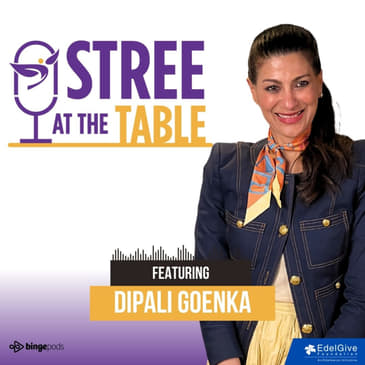

In this episode of Stree at the Table, we are joined by Dipali Goenka, a visionary leader in the textile industry and a strong advocate for women's empowerment. As the Managing Director and CEO of Welspun Living Limited, Dipali has not only transformed her company into a global leader in home textiles but has also championed initiatives that emphasize sustainability and innovation.
Discover how she increased female representation in her company from 7% to over 30% and spearheaded projects like Spun, which empower women through financial independence. Join us as we explore Dipali's inspiring journey, her challenges, and her vision for a more inclusive and equitable future.
[00:00:00] When my girls were 10 and 7 is when I started working.
[00:00:02] Yes, again, it was my husband's company.
[00:00:04] My husband clearly said, if you come in, you come in as an employee of Wellspun.
[00:00:08] Till today, I know I get evaluated like a CEO of the company by the board.
[00:00:13] So I really love that.
[00:00:15] 2010, when I took on the reins of Wellspun Living,
[00:00:18] the key thing that I actually was told that, was she capable enough?
[00:00:23] Yes.
[00:00:24] When I came on board, there were 7% women at Wellspun Living.
[00:00:27] And today, we have over 30% women.
[00:00:31] I've always believed in one thing, that if you're going to be focused on
[00:00:34] what you really want to make an impact and focus on the strengths that you have,
[00:00:38] is where your journey begins to where you want it to be.
[00:00:43] Diversity just doesn't happen like that.
[00:00:46] A simple example, women wake up at 5am in the morning.
[00:00:50] They handle the household chores.
[00:00:53] They take care of the children, family, come to work,
[00:00:56] and then go back and again do the same.
[00:00:58] The man doesn't do anything.
[00:01:00] How can the family share the workload as well?
[00:01:03] So I think it's the entire ecosystem, whether it's at home,
[00:01:06] whether it's at work, needs to really support.
[00:01:10] So yes, that support is needed.
[00:01:13] But I think women are changing.
[00:01:15] And if you can give them a little support,
[00:01:17] they are just going to really leap forward.
[00:01:19] In this episode of 3 at the Table, we are joined by Dipali Goenga,
[00:01:35] a real maverick in the textile industry
[00:01:38] and one of the most powerful advocates for women empowerment.
[00:01:41] As the managing director and CEO of Wellspun Living Limited,
[00:01:45] Dipali has not only transformed the company into a global leader in home textiles,
[00:01:49] but has also spearheaded initiatives that emphasize sustainability and innovation.
[00:01:54] Dipali's journey as a leader of Wellspun has revolutionized not only her company,
[00:01:59] but also the textile industry.
[00:02:02] She has been instrumental in driving Wellspun's global expansion,
[00:02:06] all the while ensuring the company grows on the principles
[00:02:10] of equal participation and inclusive leadership.
[00:02:14] So join us as we go deep into the experiences and insights of a leader
[00:02:19] who lives what she believes.
[00:02:22] Welcome, Dipali.
[00:02:24] Welcome to our show.
[00:02:25] We are very, very excited to have you.
[00:02:27] It's indeed a pleasure to be here.
[00:02:28] Thank you.
[00:02:29] Dipali, personally as well as professionally,
[00:02:32] I have been really fascinated with your journey.
[00:02:36] When I started learning more about it, I follow you a lot.
[00:02:40] And that's why I'm going to start from the start.
[00:02:43] According to my research, you were born, brought up in Jaipur,
[00:02:47] married at 18.
[00:02:48] And the next thing that I read about you was almost 15 years later,
[00:02:53] you made an appearance in Wellspun as I think the head of design studio.
[00:02:58] More education after that.
[00:03:00] And I think it took you by 2010 to be the CEO of Wellspun India.
[00:03:04] Like this, I mean, it's like a whole universe of things happening in a microcosm of 15 years.
[00:03:10] How was it being Dipali at that time?
[00:03:14] That time, Dipali was wanting to find her feet.
[00:03:20] Wanting to, you know, having two daughters,
[00:03:24] having that determination to open that door for my daughters,
[00:03:29] create a legacy.
[00:03:31] Because I always believe that it's the mother who inculcates not only just the value,
[00:03:37] but also the path for her daughters.
[00:03:42] And that's where it began.
[00:03:44] Having two daughters, coming in from a conservative Maywari community,
[00:03:47] getting married at the age of 18.
[00:03:50] When my girls were 10 and 7 is when I started working.
[00:03:54] And yes, again, it was my husband's company.
[00:03:57] And yes, there's one thing that I really want to just put it here and mention.
[00:04:02] Is, you know, my husband clearly said,
[00:04:05] if you come in, you come in as an employee of Wellspun.
[00:04:07] And that's where it will be.
[00:04:09] And that's the way you'll be, you know, taken on.
[00:04:11] Until today, I know I get evaluated like a CEO of the company by the board.
[00:04:16] So I really love that.
[00:04:18] So when I began, I launched my brand spaces in 2003.
[00:04:23] Not knowing anything about business.
[00:04:27] And then I said, when I launched my brand, I wanted to get some education.
[00:04:31] So I went and took a just giant leap and went to Harvard to do the owner's president management course.
[00:04:39] Learning about the consumer was such an interesting thing in India at that time.
[00:04:42] India was just evolving, opening up to the entire consumer demands.
[00:04:45] And the kind of aspirations that you see today have just skyrocketed.
[00:04:51] 2010, when I took on the reins of Wellspun Living, which was Wellspun India at that time,
[00:04:57] I got on board as a director.
[00:05:02] And the key thing that I actually was told that,
[00:05:07] and I think this is what I think most women get looked at for or they're judged.
[00:05:14] Was she capable enough?
[00:05:16] Yes.
[00:05:16] You know, and that is something that you saw happening.
[00:05:20] When I came on board, there were 7% women at Wellspun Living.
[00:05:24] And today we have over 30% women.
[00:05:27] The idea was that, you know, why isn't this possible?
[00:05:32] Why can't there be some kind of diversity and equality in the thinking,
[00:05:36] in the way that an organization can think and believe in what the ethos of that company should be?
[00:05:43] And I think it just makes a difference so vastly, you know.
[00:05:49] Judgments, because I was judged.
[00:05:51] I was basically, people were talking about that,
[00:05:54] is she going to be capable of running this company?
[00:05:56] What is she going to be doing here?
[00:05:58] I've always believed in one thing,
[00:06:01] that if you're going to be focused on what you really want to make an impact
[00:06:05] and focus on the strengths that you have,
[00:06:07] is where your journey begins to where you want it to be.
[00:06:12] That's fascinating.
[00:06:13] But for one moment, I'm going to go back to those 15 years
[00:06:18] because I think a lot of women are stuck in those 15 years.
[00:06:22] It's very productive years.
[00:06:26] There's a lot that women are doing at home.
[00:06:28] Homemaking is not an easy task.
[00:06:31] However, personal ambition somewhere gets swept under the carpet.
[00:06:34] A lot of times, personal ambition becomes invisibilized.
[00:06:37] And by the time women kind of come into their own,
[00:06:39] too much time has passed.
[00:06:41] In that whole journey,
[00:06:42] and of course, there's an ecosystem in our own heads,
[00:06:45] as well as in our families,
[00:06:46] that makes it more and more comfortable to not do anything.
[00:06:49] How did you navigate that space?
[00:06:51] And what would you like to share about that time?
[00:06:54] You know, there were a lot of things
[00:06:55] because I think a lot of women will resonate with this.
[00:07:00] The responsibility of running a household,
[00:07:03] taking care of the family,
[00:07:04] the extended family as well.
[00:07:06] And then your children is all on you.
[00:07:09] Their education.
[00:07:10] So for me, that was an interesting one.
[00:07:13] My office was at Andheri that time.
[00:07:15] And my girls used to have their carpool in the morning at around 6.30.
[00:07:20] So I would leave them at the carpool
[00:07:21] and come back again at 5 o'clock,
[00:07:24] take their work and their homework,
[00:07:26] and put them to sleep and again get back to work.
[00:07:29] For that, you know, my social life got impacted.
[00:07:32] But I think for me, I think for every woman,
[00:07:34] I think it's very important to see what their priorities are.
[00:07:38] Yeah.
[00:07:38] You know, let's focus on that.
[00:07:40] And I think that's going to be a very important aspect
[00:07:42] if women really want to take this forward.
[00:07:44] Yes.
[00:07:44] I really focused on what my priorities were.
[00:07:47] It was my home.
[00:07:48] It was my girls and my family.
[00:07:50] And of course, then work.
[00:07:52] Yes.
[00:07:52] And I think that's where it is till today.
[00:07:56] And yes, and yourself.
[00:07:58] Because about your health,
[00:08:00] about how you take care of yourself,
[00:08:02] your mental health, your physical health,
[00:08:05] your entire, you know,
[00:08:08] your entire, I mean, your food, your health, everything.
[00:08:12] Prioritizing you.
[00:08:13] Yeah, that's you.
[00:08:14] And it needs to be there.
[00:08:15] Because I always believe.
[00:08:16] You know, I believe in one thing.
[00:08:18] And I had this prayer while growing up.
[00:08:26] Absolutely brilliant.
[00:08:27] And that is, that is very important.
[00:08:29] With that thought, when you came into the workforce,
[00:08:31] see, again, I speak because some things need to be unpacked
[00:08:34] for women who are listening.
[00:08:36] One is getting into workforce and feeling very excited
[00:08:39] that here I am.
[00:08:40] I'm going to run the design studio for Wellspun.
[00:08:43] Or I'm going to,
[00:08:45] this move from here to director.
[00:08:47] So, it does ambition grow on you?
[00:08:50] Or do you have to negotiate with it?
[00:08:53] Or is it something that,
[00:08:54] like, is it that, yes, I'm going to join here today
[00:08:56] so that I become CEO one day?
[00:08:58] Or does this kind of grow on you over time?
[00:09:01] Because a lot of women do struggle even with that.
[00:09:04] Again and again,
[00:09:05] as we speak to more corporate women,
[00:09:07] we see a bit of an apology about ambition.
[00:09:11] Hesitation to say that I want to be the CEO.
[00:09:14] Or I'm capable enough to make it,
[00:09:17] eliminating two other of my contenders.
[00:09:19] There is a hesitation there.
[00:09:20] So, someone who's done it herself,
[00:09:23] how did you,
[00:09:23] was it a doubt ever time?
[00:09:26] Any time?
[00:09:26] Or you just knew that you were going to make it to the top?
[00:09:30] You know, there are doubts.
[00:09:32] And I'll not,
[00:09:33] let me be very honest about it
[00:09:34] and say that and own it.
[00:09:37] There are doubts.
[00:09:38] And it begins with,
[00:09:40] you know,
[00:09:41] not,
[00:09:41] and that self-doubt is not only your own doubt.
[00:09:43] It is also about what people think around you.
[00:09:46] Because when you walk in anywhere,
[00:09:48] they judge you.
[00:09:49] Yeah.
[00:09:50] Whether she'll be able to do it,
[00:09:51] whether she'll be capable of doing it.
[00:09:53] And most of the times,
[00:09:55] let me also say,
[00:09:56] I've worked harder
[00:09:57] than the other male counterparts.
[00:09:59] Yeah.
[00:10:00] I would,
[00:10:00] who would have done this actually.
[00:10:02] So, for me,
[00:10:03] when I began
[00:10:03] and when I launched my brand spaces also
[00:10:06] and went to meet all the distributors,
[00:10:09] there were not women
[00:10:10] who were running businesses that time,
[00:10:11] even for, you know,
[00:10:13] domestic, you know,
[00:10:13] retail brands as well.
[00:10:16] So, there was this thing,
[00:10:17] okay,
[00:10:17] what will she be doing?
[00:10:20] I think people just forget.
[00:10:21] And for me,
[00:10:22] it was easy.
[00:10:23] And I always believe
[00:10:24] when people underestimate you,
[00:10:26] it's better.
[00:10:27] Yeah.
[00:10:28] Because that's where you start cracking.
[00:10:30] Right?
[00:10:30] You just surprise them.
[00:10:31] Yeah, you surprise them.
[00:10:32] And that's what it was actually.
[00:10:34] And when,
[00:10:34] and that's what happened.
[00:10:35] Because see,
[00:10:36] you know,
[00:10:36] for me,
[00:10:37] in my business,
[00:10:38] the other side,
[00:10:39] the consumer is a woman.
[00:10:40] Yeah.
[00:10:40] Even when I talk about
[00:10:42] my exports business,
[00:10:43] the other side,
[00:10:45] you know,
[00:10:45] the customer is a woman
[00:10:46] who's a merchandiser
[00:10:48] or a buyer.
[00:10:49] So,
[00:10:50] for me,
[00:10:50] the resonation
[00:10:51] becomes better.
[00:10:52] And who knows better
[00:10:54] about the home,
[00:10:55] the business that I lead,
[00:10:57] more than a woman would.
[00:10:58] Absolutely.
[00:10:59] But that's another interesting thing
[00:11:01] about the way
[00:11:01] you have approached this.
[00:11:03] You entered into
[00:11:04] a highly male-dominated industry.
[00:11:06] Yeah.
[00:11:07] Most colleagues were men.
[00:11:08] Most distributors were men.
[00:11:10] The whole value chain was men.
[00:11:12] But you spotted
[00:11:13] the most important stakeholder
[00:11:15] and found her
[00:11:16] to be predominantly women.
[00:11:18] You also vocally said
[00:11:20] that you want your own teams
[00:11:22] to be at least 50% women.
[00:11:23] Yeah.
[00:11:24] And you,
[00:11:25] as a leader,
[00:11:25] do have the power.
[00:11:27] But to move a whole structure
[00:11:28] is another thing.
[00:11:30] What are some of the things
[00:11:31] you ensure happen
[00:11:33] so that your ambitions
[00:11:34] are met here?
[00:11:35] You know,
[00:11:36] the thing that I want
[00:11:38] to just put on the table here,
[00:11:41] we might,
[00:11:42] a lot of corporates
[00:11:43] pledge to have
[00:11:44] more diversity.
[00:11:46] Diversity just doesn't
[00:11:48] happen like that.
[00:11:49] It is,
[00:11:50] like now let me tell you,
[00:11:51] if I'm working
[00:11:52] in the environment here
[00:11:54] and,
[00:11:54] you know,
[00:11:55] I have more women,
[00:11:56] you know,
[00:11:56] in the leadership,
[00:11:57] they need their peers
[00:11:59] to respect them.
[00:12:00] They need,
[00:12:01] you know,
[00:12:02] you know,
[00:12:03] they need the leadership
[00:12:04] to,
[00:12:05] you know,
[00:12:05] think about them
[00:12:06] as a career path,
[00:12:08] right?
[00:12:09] Even at the factory floor,
[00:12:11] if the blue collar associate,
[00:12:13] my girls who are there
[00:12:14] on the floor,
[00:12:15] how does a supervisor
[00:12:16] behave with her?
[00:12:18] How far is the toilet
[00:12:20] for her?
[00:12:21] I mean,
[00:12:22] there's so many other
[00:12:23] things that you really
[00:12:23] need to really look at.
[00:12:25] A simple example
[00:12:27] that,
[00:12:28] you know,
[00:12:28] when women started
[00:12:29] coming to work
[00:12:30] at our factories,
[00:12:32] women wake up
[00:12:33] at 5 a.m.
[00:12:33] in the morning,
[00:12:34] they handle
[00:12:36] the household chores,
[00:12:37] they take care of
[00:12:38] the children,
[00:12:39] family,
[00:12:40] come to work
[00:12:41] and then go back
[00:12:41] and again do the same.
[00:12:43] The man doesn't
[00:12:44] do anything.
[00:12:44] How can the family
[00:12:46] share the workload
[00:12:47] as well?
[00:12:48] So I think it's
[00:12:48] the entire ecosystem,
[00:12:50] whether it's at home,
[00:12:51] whether it's at work,
[00:12:53] needs to really support
[00:12:54] and who's,
[00:12:55] who's the cheerleader
[00:12:56] for them?
[00:12:57] And I think for me,
[00:12:58] that was very,
[00:12:59] very important.
[00:13:00] For me,
[00:13:00] I think at Wellspun,
[00:13:02] I can say I could be
[00:13:03] the cheerleader
[00:13:04] for the women
[00:13:05] and then that
[00:13:07] becomes infectious.
[00:13:08] Yeah.
[00:13:08] And there are more
[00:13:09] and more people
[00:13:09] than taking it
[00:13:11] and taking the diversity
[00:13:12] forward.
[00:13:12] Yeah.
[00:13:13] But when,
[00:13:14] does it also,
[00:13:15] do you also have to
[00:13:16] deal with resentment
[00:13:18] in your workforce
[00:13:20] when you reiterate
[00:13:21] that there must be
[00:13:22] more fairness
[00:13:23] or there must be
[00:13:24] more inclusion
[00:13:25] of women
[00:13:25] or more,
[00:13:27] it's maybe wrong
[00:13:28] to say it,
[00:13:28] but for want
[00:13:30] of a better word,
[00:13:30] a positive bias
[00:13:32] for ensuring women
[00:13:33] are placed
[00:13:34] in certain positions.
[00:13:35] Does that also,
[00:13:37] and if yes,
[00:13:38] then how do you
[00:13:38] navigate those situations?
[00:13:39] So I'll give you
[00:13:40] a very simple example.
[00:13:41] We run,
[00:13:42] you know,
[00:13:43] shifts throughout
[00:13:43] the day.
[00:13:44] Yeah.
[00:13:46] So earlier,
[00:13:46] it was like,
[00:13:47] okay,
[00:13:47] the girls will come
[00:13:48] in the morning
[00:13:49] and the evening.
[00:13:49] We didn't get
[00:13:50] the approval
[00:13:51] for the night shift.
[00:13:53] So it was like,
[00:13:54] there was that resentment
[00:13:56] because she's a woman.
[00:13:57] She gets to come
[00:13:58] in the morning
[00:13:59] and the evening,
[00:13:59] afternoon shift
[00:14:01] and not in the night shift.
[00:14:04] But we changed that also
[00:14:05] that we gave more security
[00:14:06] to the girls
[00:14:07] so that they could work
[00:14:08] at the night shift as well
[00:14:09] when we got the approval
[00:14:10] in Gujarat
[00:14:11] for that,
[00:14:11] you know,
[00:14:12] approval,
[00:14:13] you know,
[00:14:13] for the women
[00:14:13] to work in the night shift
[00:14:14] as well.
[00:14:14] So yes,
[00:14:16] that support is needed.
[00:14:19] But I think
[00:14:21] women are changing
[00:14:22] and if you can give them
[00:14:23] a little support,
[00:14:24] they are just going to
[00:14:26] really leap forward.
[00:14:27] Absolutely.
[00:14:28] And that is everything
[00:14:29] because we keep demanding
[00:14:30] women to show up,
[00:14:31] but we also
[00:14:32] are a little blinded
[00:14:34] to what it takes
[00:14:35] for her to show up.
[00:14:36] Whether like you said,
[00:14:38] simply having toilets
[00:14:39] in the right place
[00:14:40] in the right floors
[00:14:42] or ensuring
[00:14:43] that there is security
[00:14:44] when they work some hours
[00:14:45] or having conversations
[00:14:47] within,
[00:14:47] you know,
[00:14:48] your offices.
[00:14:49] Has there been
[00:14:50] or would you like to share
[00:14:51] any such conversation
[00:14:53] or episode
[00:14:55] where it could have become
[00:14:56] a point of crisis?
[00:14:57] But because institutionally
[00:14:59] and as a leader,
[00:15:00] you were able to,
[00:15:01] you know,
[00:15:01] calm the conversation down
[00:15:03] and it turned
[00:15:04] the culture around.
[00:15:06] Is there something
[00:15:07] you would like to share
[00:15:07] or anything from your side
[00:15:10] on how to do it?
[00:15:10] No, I think
[00:15:12] I think for me,
[00:15:13] I've always had
[00:15:14] the years to the ground.
[00:15:15] So for me,
[00:15:16] that has been
[00:15:16] a very important aspect
[00:15:17] to what was,
[00:15:20] you know,
[00:15:21] what could happen
[00:15:22] or anything that could happen.
[00:15:24] But the important thing,
[00:15:25] like, you know,
[00:15:25] right in summers,
[00:15:26] we are in Anjar
[00:15:27] where the temperature
[00:15:28] is around,
[00:15:29] you know,
[00:15:29] 45, 50 degrees.
[00:15:31] So taking care of,
[00:15:33] you know,
[00:15:34] water being closer
[00:15:35] to people
[00:15:36] for the drinking,
[00:15:37] you know,
[00:15:38] taking care of,
[00:15:39] you know,
[00:15:39] what,
[00:15:39] you know,
[00:15:40] what could be
[00:15:41] kind of,
[00:15:41] you know,
[00:15:42] where people will,
[00:15:42] you know,
[00:15:43] get dehydrated.
[00:15:45] To,
[00:15:46] you know,
[00:15:46] you know,
[00:15:47] our girls coming in
[00:15:48] from the hinterland
[00:15:50] where they're anorexic.
[00:15:52] There's a problem
[00:15:53] in the terms
[00:15:53] of mental health.
[00:15:55] And how do you,
[00:15:56] so we have psychologists
[00:15:58] and also a lot of girls
[00:15:59] and also a lot of girls,
[00:16:00] how, you know,
[00:16:00] when they come in,
[00:16:02] how we can,
[00:16:03] you know,
[00:16:03] have an opportunity
[00:16:04] for them to graduate
[00:16:05] and take on the leadership
[00:16:06] roles as the white collar
[00:16:07] and create more examples
[00:16:09] there is what we have done
[00:16:11] actually.
[00:16:12] Yeah.
[00:16:13] I think that's very important
[00:16:14] and understanding
[00:16:15] the pulse.
[00:16:16] So for me,
[00:16:17] it's very important
[00:16:18] that when I go
[00:16:18] to the factory,
[00:16:19] I definitely will use
[00:16:21] the woman's toilet
[00:16:21] on the factory floor
[00:16:23] because I really want to see,
[00:16:25] you know,
[00:16:25] if everything is good.
[00:16:26] What is her experience?
[00:16:27] What's her experience?
[00:16:29] Even in the girls' hostel
[00:16:30] or even in my workers' colony.
[00:16:32] So example,
[00:16:33] for the workers' colony,
[00:16:34] we have a program
[00:16:34] called Spun
[00:16:36] where, you know,
[00:16:37] these are the women
[00:16:38] who, you know,
[00:16:39] use the upcycle,
[00:16:40] you know,
[00:16:41] the rags
[00:16:41] and make cushions
[00:16:43] and rugs out of it
[00:16:44] and they earn
[00:16:45] around 20,000 rupees
[00:16:46] per month.
[00:16:48] Wow.
[00:16:48] So I think for me,
[00:16:49] this is such an important aspect
[00:16:51] and the thrill
[00:16:53] of having financial independence
[00:16:55] and, you know,
[00:16:56] operating your own bank account
[00:16:59] and I always believe
[00:17:00] that if a woman is empowered,
[00:17:03] the child is definitely
[00:17:05] going to go to school.
[00:17:06] Will you, you know,
[00:17:08] spend some time
[00:17:09] talking about Spun?
[00:17:10] I found it
[00:17:11] very, very progressive.
[00:17:13] It handled sustainability.
[00:17:15] It handled, you know,
[00:17:17] progressive gender norms.
[00:17:18] It gave financial independence.
[00:17:19] So a little, you know,
[00:17:21] from your,
[00:17:21] it's a beautiful idea.
[00:17:23] So if you could just elaborate
[00:17:24] a little bit on Spun.
[00:17:25] So, you know,
[00:17:26] we, when we generate rags,
[00:17:28] we actually upcycle
[00:17:29] around two tons of rags,
[00:17:31] which actually is used,
[00:17:34] you know,
[00:17:35] by the women
[00:17:36] to make cushions
[00:17:37] and rugs out of it
[00:17:38] on the pit looms.
[00:17:39] Yeah.
[00:17:40] And, you know,
[00:17:41] that area, Gujarat,
[00:17:42] is very craft centric.
[00:17:44] So we translate
[00:17:46] the whole sensibility
[00:17:47] of craft
[00:17:48] in the way
[00:17:49] the global audience
[00:17:50] would like to see it.
[00:17:52] And it is done
[00:17:53] by these women.
[00:17:55] So it's a very beautiful thing
[00:17:57] when you come to,
[00:17:57] you know,
[00:17:58] we have 20 work centers
[00:17:59] and two are in a workers'
[00:18:01] colony itself.
[00:18:02] So when,
[00:18:02] and they can come
[00:18:03] when they want to.
[00:18:04] And the others are in the community centers
[00:18:06] where there's a PPP
[00:18:07] with the government as well.
[00:18:09] So here,
[00:18:10] when the women come in,
[00:18:11] they can,
[00:18:12] you know,
[00:18:13] work.
[00:18:14] The children are,
[00:18:15] you know,
[00:18:15] studying at the Aganwadi next doors.
[00:18:17] So, you know,
[00:18:18] and they can go and cook
[00:18:19] when they want to.
[00:18:20] They can take the child to,
[00:18:21] you know,
[00:18:22] and tend for them.
[00:18:24] So, you know,
[00:18:24] that's the way it is.
[00:18:25] So there is that independence
[00:18:27] in the sense of,
[00:18:28] you know,
[00:18:28] kind of opportunity
[00:18:30] for them to earn their living
[00:18:32] as well as take care
[00:18:33] of their household
[00:18:34] and their children.
[00:18:35] It's a very creative idea.
[00:18:36] It's,
[00:18:37] it's,
[00:18:37] it's very feminist
[00:18:39] in,
[00:18:39] in how it's been crafted
[00:18:41] where you're taking
[00:18:41] the best of all worlds,
[00:18:42] something that people
[00:18:43] would have ignored
[00:18:44] but made such beautiful use of it.
[00:18:47] Dipali,
[00:18:47] you have clearly arrived
[00:18:48] at a spot that
[00:18:49] most women
[00:18:50] don't even dream of.
[00:18:52] But I'm sure
[00:18:52] this is not even
[00:18:53] half,
[00:18:54] half,
[00:18:55] you know,
[00:18:56] a must for you.
[00:18:59] At this point,
[00:19:01] even with all the power,
[00:19:03] we now keep hearing
[00:19:04] of the struggles
[00:19:05] of women in power,
[00:19:07] navigating different decisions,
[00:19:10] navigating boardrooms,
[00:19:12] also fatigue
[00:19:13] that is stepping in.
[00:19:14] The more and more
[00:19:14] that we research,
[00:19:15] the more and more
[00:19:16] we see fatigue seeping in,
[00:19:18] you know,
[00:19:19] women at senior leadership
[00:19:20] because of a lifetime
[00:19:21] of navigation
[00:19:22] and management
[00:19:23] and simply
[00:19:24] then menopause
[00:19:26] and all of that.
[00:19:26] The fact is,
[00:19:27] we do have a body
[00:19:28] that is also keeping up
[00:19:29] with the stress
[00:19:30] that we are.
[00:19:31] How would you suggest
[00:19:33] women navigate
[00:19:34] something like this?
[00:19:36] So, you know,
[00:19:38] let me just give you
[00:19:39] a few examples
[00:19:40] at Wellspun.
[00:19:44] And this is something
[00:19:45] which is,
[00:19:46] you know,
[00:19:47] we started at Wellspun.
[00:19:48] It's called
[00:19:48] the Women of Wellspun.
[00:19:50] So, here
[00:19:51] you have women
[00:19:54] from all,
[00:19:55] you know,
[00:19:56] all levels,
[00:19:57] whether it's
[00:19:58] the blue collar,
[00:19:59] the white collar,
[00:20:00] the leadership,
[00:20:01] you know,
[00:20:01] the middle level leadership
[00:20:02] to the CEOs,
[00:20:04] you know,
[00:20:04] and they come together.
[00:20:06] So,
[00:20:07] whether it's about
[00:20:08] financial literacy,
[00:20:09] whether it's sharing
[00:20:10] and learning
[00:20:11] from each other's
[00:20:11] experiences,
[00:20:13] you know,
[00:20:13] they can reach out
[00:20:14] to one another as well.
[00:20:15] So, this is something
[00:20:16] that we feel
[00:20:17] because I think
[00:20:18] it's also about
[00:20:19] women supporting women.
[00:20:20] That is very,
[00:20:21] very important.
[00:20:21] The other important
[00:20:23] program that we have
[00:20:24] is the allyship program.
[00:20:26] So, we always heard
[00:20:27] about a broken midrung,
[00:20:28] right?
[00:20:29] Yes.
[00:20:29] Where, you know,
[00:20:30] always there's,
[00:20:31] you know,
[00:20:32] the kind of judgment,
[00:20:33] you know,
[00:20:33] the biasness
[00:20:35] that comes into
[00:20:36] the, you know,
[00:20:37] decisions that we make.
[00:20:38] Imagine if you have
[00:20:40] your leadership
[00:20:42] who supports you,
[00:20:43] who understands you,
[00:20:45] there could be
[00:20:46] a lot of decisions
[00:20:46] that could be done
[00:20:48] through certain programs
[00:20:49] like a We Listen
[00:20:50] and you can have
[00:20:51] unbiased kind of decisions
[00:20:52] that you can take.
[00:20:53] So, that I think
[00:20:54] is a very important thing
[00:20:55] that we have
[00:20:55] is the allyship program.
[00:20:56] Lovely.
[00:20:58] The other interesting thing
[00:21:00] that we do
[00:21:01] is the Wellesman Sportswomen
[00:21:03] where we have
[00:21:04] the para-Olympic athletes
[00:21:06] and, you know,
[00:21:07] and the women's
[00:21:07] and the sportswomen.
[00:21:09] We have around,
[00:21:09] say, 17 sportswomen
[00:21:11] and they,
[00:21:13] we really support
[00:21:14] the nutrition
[00:21:15] and their, you know,
[00:21:16] training
[00:21:17] and the others as well.
[00:21:18] So, I think
[00:21:20] at all levels,
[00:21:21] I think there's a way
[00:21:22] that we look at
[00:21:23] what it really takes.
[00:21:26] As I told you
[00:21:27] about the Girls Hostel
[00:21:28] and we have this program
[00:21:30] of, you know,
[00:21:30] where women can graduate
[00:21:32] under the IGNU,
[00:21:34] the whole,
[00:21:35] the graduation program
[00:21:36] that you have
[00:21:37] and they can have
[00:21:38] a path there.
[00:21:39] So, I always believe
[00:21:42] with leadership
[00:21:43] comes a responsibility
[00:21:45] and how,
[00:21:46] how you can take
[00:21:48] and touch many lives
[00:21:50] is what really
[00:21:52] makes an impact.
[00:21:53] Yeah.
[00:21:53] See, I can't stop grinning
[00:21:54] because of everything
[00:21:55] that you're saying
[00:21:55] because when we,
[00:21:56] when we again research,
[00:21:57] we spoke to 65
[00:21:58] senior women
[00:21:59] and everything
[00:22:01] that they said
[00:22:02] they wish they wanted
[00:22:03] is what you're saying
[00:22:04] you're already doing
[00:22:04] at Wellespan
[00:22:05] which is beautiful
[00:22:06] because they feel
[00:22:08] isolated.
[00:22:09] They feel allyship
[00:22:10] is important
[00:22:11] but they don't get it.
[00:22:12] They feel, you know,
[00:22:13] infrastructure is not
[00:22:14] supporting them.
[00:22:15] Boardrooms are not
[00:22:16] supporting them.
[00:22:17] Mentorship is not there
[00:22:17] and everything
[00:22:18] as it comes with
[00:22:20] I really feel
[00:22:21] this makes a very strong
[00:22:22] case for why women
[00:22:24] must be in positions
[00:22:25] of power
[00:22:26] because then they can
[00:22:27] unleash that power.
[00:22:28] As a leader
[00:22:29] when you are trying
[00:22:30] to institutionalize
[00:22:32] different facets of it
[00:22:33] do you also face
[00:22:35] a pushback?
[00:22:36] For example,
[00:22:36] in some offices
[00:22:37] I've heard that
[00:22:38] diversity is costly.
[00:22:40] You know,
[00:22:42] what is the cost
[00:22:43] of everything?
[00:22:43] So everything is
[00:22:44] broken down into
[00:22:45] the cost of this activity,
[00:22:47] this transaction,
[00:22:48] this infra.
[00:22:49] Do you get
[00:22:50] those kind of questions?
[00:22:51] And how do you
[00:22:53] ensure that
[00:22:54] whatever you have
[00:22:54] in your vision
[00:22:56] seeps down
[00:22:57] right to the
[00:22:59] women's hostel level?
[00:23:01] First of all,
[00:23:02] I don't know,
[00:23:03] I know why people
[00:23:05] call diversity
[00:23:05] as expensive
[00:23:07] because I think
[00:23:09] it's that whole
[00:23:10] balance
[00:23:11] that comes together
[00:23:12] that can make
[00:23:14] a kind of
[00:23:14] a society
[00:23:15] which can grow.
[00:23:17] When I talk
[00:23:18] about India
[00:23:19] and we talk about
[00:23:20] the 50%
[00:23:21] population
[00:23:21] and if it doesn't
[00:23:23] participate
[00:23:23] in the growth
[00:23:24] of our country,
[00:23:25] how are we going
[00:23:26] to reach that
[00:23:27] journey of
[00:23:27] 5 trillion GDP?
[00:23:28] It's such an
[00:23:29] integral part
[00:23:31] to take our
[00:23:32] country
[00:23:32] towards that
[00:23:33] journey.
[00:23:34] So diversity
[00:23:35] cannot be
[00:23:36] expensive.
[00:23:37] Imagine in the
[00:23:38] world that we
[00:23:39] are living in
[00:23:39] today,
[00:23:41] you know,
[00:23:42] what is the
[00:23:43] most important
[00:23:43] thing that we
[00:23:44] feel is again
[00:23:46] about,
[00:23:46] you know,
[00:23:47] it's the
[00:23:48] emotions.
[00:23:50] IQ is a very
[00:23:51] interesting thing
[00:23:51] which can be
[00:23:52] really acquired
[00:23:53] through computers,
[00:23:54] technology,
[00:23:55] but it's that
[00:23:56] EQ that doesn't.
[00:23:58] What does a
[00:23:59] human being
[00:23:59] have?
[00:24:00] It has the
[00:24:01] courage,
[00:24:02] it has the
[00:24:02] connection and
[00:24:04] the communication
[00:24:05] and that is
[00:24:06] what is so,
[00:24:07] so important.
[00:24:08] And I think
[00:24:09] diversity is
[00:24:10] such an integral
[00:24:11] thread of
[00:24:12] making a
[00:24:13] difference to
[00:24:14] the organization's
[00:24:15] character and I
[00:24:17] think it's so
[00:24:17] important to have
[00:24:18] that.
[00:24:19] That's how you've
[00:24:20] been able to
[00:24:20] also turn the
[00:24:22] well-spun story
[00:24:22] around, right?
[00:24:23] When you focused
[00:24:24] on the final
[00:24:25] stakeholder and
[00:24:26] your product
[00:24:26] then metamorphosized
[00:24:29] really catering to
[00:24:30] her requirements.
[00:24:31] Totally.
[00:24:32] But is it that
[00:24:33] simple to
[00:24:34] institutionalize
[00:24:35] your vision?
[00:24:36] Like when you
[00:24:37] first came up
[00:24:37] with it, for
[00:24:38] example, and
[00:24:38] when you said,
[00:24:39] okay, look,
[00:24:39] was it an easy
[00:24:41] sell?
[00:24:43] It isn't.
[00:24:44] But I always
[00:24:45] believe that you
[00:24:46] believe in one
[00:24:46] cause, you go
[00:24:48] after it and
[00:24:49] make it happen.
[00:24:50] And so how do
[00:24:51] you negotiate?
[00:24:51] Like what is it
[00:24:52] to be negotiating
[00:24:53] with you?
[00:24:55] No, I think
[00:24:56] when you negotiate
[00:24:57] with me, I
[00:24:58] should know what
[00:25:00] that cause is and
[00:25:01] which I have to
[00:25:02] believe in, is
[00:25:03] where I'll agree
[00:25:04] to it.
[00:25:05] Then you'll go
[00:25:05] after it.
[00:25:06] I'll go after
[00:25:07] it.
[00:25:08] From the, from
[00:25:09] like early 2000s
[00:25:11] or late 90s,
[00:25:12] when you enter
[00:25:13] to now, how
[00:25:14] much has changed
[00:25:15] for the better?
[00:25:16] And how much
[00:25:17] do you think
[00:25:19] has regressed?
[00:25:21] The two things
[00:25:22] that I have
[00:25:23] seen for the
[00:25:24] better right now,
[00:25:25] first let me
[00:25:25] talk about what's
[00:25:26] been better,
[00:25:27] is I see more
[00:25:29] and more women
[00:25:29] aspiring to
[00:25:30] work and
[00:25:33] having a
[00:25:34] dream to make
[00:25:35] something of
[00:25:36] their own.
[00:25:37] And I really
[00:25:38] like that.
[00:25:39] And whether,
[00:25:40] you know, and
[00:25:41] they're wanting
[00:25:42] to do something,
[00:25:43] whether it's
[00:25:44] the millennials
[00:25:44] or the Gen Z,
[00:25:46] and that is
[00:25:47] something that's
[00:25:47] very, very
[00:25:50] the thing that
[00:25:50] I feel has
[00:25:51] regressed right
[00:25:52] now is because
[00:25:53] of technology,
[00:25:54] it is
[00:25:55] communication.
[00:25:57] I mean, it's
[00:25:58] the flip side
[00:25:58] where you say
[00:25:59] that okay, with
[00:26:00] technology comes
[00:26:01] communication, but
[00:26:02] at the same time,
[00:26:04] you're not
[00:26:05] communicating with
[00:26:06] people around
[00:26:07] you and also
[00:26:08] not communicating
[00:26:09] with yourself.
[00:26:10] Yeah.
[00:26:10] How you feel
[00:26:12] is that the
[00:26:12] question we've
[00:26:13] all asked
[00:26:14] ourselves about.
[00:26:15] And I think
[00:26:15] that's such a
[00:26:16] big miss.
[00:26:17] Has it truly
[00:26:18] become easier for
[00:26:19] women in
[00:26:19] workforce?
[00:26:22] Tell me, is it
[00:26:23] the same with
[00:26:24] the men we'll
[00:26:24] ask?
[00:26:27] Men have
[00:26:28] honestly their
[00:26:29] own big
[00:26:29] struggles.
[00:26:30] So I think
[00:26:31] it's both
[00:26:32] ways.
[00:26:32] Yes.
[00:26:33] And I think
[00:26:34] let's give it
[00:26:34] to them as
[00:26:35] well.
[00:26:35] And I think
[00:26:36] it's, I
[00:26:37] will say
[00:26:37] let's look
[00:26:38] at it and
[00:26:39] at least
[00:26:39] believe that
[00:26:40] it's an
[00:26:40] equal society
[00:26:41] where I
[00:26:42] think both
[00:26:43] can coexist
[00:26:44] and collaborate
[00:26:44] together to
[00:26:45] make a better
[00:26:46] world.
[00:26:47] Beautiful.
[00:26:47] That is a
[00:26:48] beautiful
[00:26:48] thought because
[00:26:49] then we're
[00:26:49] also making
[00:26:51] allies out of
[00:26:51] the men who
[00:26:52] are going
[00:26:53] through their
[00:26:53] own struggles
[00:26:54] during the
[00:26:55] whole journey.
[00:26:56] Totally.
[00:26:56] That is a
[00:26:56] beautiful thought.
[00:26:57] And as you
[00:26:58] have two
[00:26:59] wonderful
[00:26:59] daughters, they
[00:27:01] are also
[00:27:01] working, you
[00:27:02] said a lot
[00:27:04] of your
[00:27:04] motivations came
[00:27:05] from being a
[00:27:05] good role
[00:27:06] model to
[00:27:07] your daughters.
[00:27:08] Again, what
[00:27:09] for you would
[00:27:10] be some of the
[00:27:11] things the
[00:27:11] listeners should
[00:27:13] be mindful of
[00:27:14] in their own
[00:27:15] journeys?
[00:27:15] There are
[00:27:16] young mothers
[00:27:16] now who
[00:27:17] are again
[00:27:18] making choices
[00:27:19] that are going
[00:27:20] to impact
[00:27:20] their families
[00:27:21] and their
[00:27:21] children.
[00:27:22] Some things
[00:27:23] that women
[00:27:24] should remember
[00:27:24] whichever choice
[00:27:25] they make.
[00:27:27] No, I think
[00:27:28] I can just tell
[00:27:28] everybody that
[00:27:29] first of all
[00:27:30] for themselves
[00:27:31] to believe in
[00:27:31] themselves.
[00:27:32] If you believe
[00:27:33] in something,
[00:27:34] don't let
[00:27:35] anybody else
[00:27:36] influence you.
[00:27:37] I think that's
[00:27:38] where it is
[00:27:38] very important.
[00:27:39] And remember,
[00:27:40] the journey is
[00:27:41] not going to be
[00:27:41] easy.
[00:27:42] But the whole
[00:27:44] thing is people
[00:27:46] leave it midway,
[00:27:47] don't.
[00:27:48] Correct.
[00:27:49] So I would
[00:27:49] say never
[00:27:50] give up.
[00:27:50] I think that's
[00:27:51] going to be a
[00:27:52] very important
[00:27:52] aspect to
[00:27:54] what it is.
[00:27:56] And very
[00:27:57] importantly now,
[00:27:58] when we live
[00:27:59] in an equal
[00:27:59] world, it
[00:28:01] should not be
[00:28:01] about what a
[00:28:03] boy should be
[00:28:04] doing and what
[00:28:04] a girl should
[00:28:05] be doing.
[00:28:06] It is where
[00:28:07] it was about
[00:28:08] when we talk
[00:28:08] about it, it
[00:28:09] is the world
[00:28:10] of equality.
[00:28:12] It is the
[00:28:13] world where
[00:28:15] both of them
[00:28:16] can really make
[00:28:16] an impact.
[00:28:17] It's as
[00:28:18] when a couple
[00:28:19] gets married,
[00:28:21] you're not
[00:28:22] talking about
[00:28:22] who's cooking
[00:28:23] or who's
[00:28:24] making home.
[00:28:25] We're doing
[00:28:25] it together.
[00:28:26] It is where
[00:28:27] you both
[00:28:28] create and
[00:28:28] you both are
[00:28:29] in equity
[00:28:30] together.
[00:28:30] You both
[00:28:31] create a value
[00:28:32] together.
[00:28:33] And I think
[00:28:34] that's a very
[00:28:34] important way
[00:28:35] of looking at
[00:28:35] things rather
[00:28:36] than looking
[00:28:37] at you or
[00:28:38] me.
[00:28:39] It is you
[00:28:40] as a team
[00:28:40] who makes
[00:28:41] that and
[00:28:42] creates that
[00:28:42] equity.
[00:28:43] And while
[00:28:44] these choices
[00:28:45] are being
[00:28:45] made and
[00:28:46] things are
[00:28:46] remembered,
[00:28:47] how much
[00:28:47] should a
[00:28:48] woman remember
[00:28:49] is the
[00:28:50] importance of
[00:28:50] her financial
[00:28:51] independence
[00:28:52] or her
[00:28:53] ability to
[00:28:53] earn?
[00:28:56] Atma Samman,
[00:28:57] self-respect,
[00:29:00] I think is
[00:29:01] for me so,
[00:29:01] so important.
[00:29:03] not just
[00:29:05] being in a
[00:29:06] role in
[00:29:06] kind of a
[00:29:07] corporate world,
[00:29:09] but doing
[00:29:10] something that
[00:29:11] makes you
[00:29:12] financially
[00:29:13] independent.
[00:29:14] It is just
[00:29:15] so powerful.
[00:29:16] Yeah.
[00:29:17] I feel that's
[00:29:18] something a
[00:29:20] woman needs
[00:29:20] to do.
[00:29:21] I really
[00:29:23] feel very
[00:29:24] strongly about
[00:29:25] it.
[00:29:26] Yeah.
[00:29:26] We spoke
[00:29:28] to
[00:29:28] Samirajan,
[00:29:29] we spoke
[00:29:29] to
[00:29:29] Radhika
[00:29:30] Gupta,
[00:29:30] and both
[00:29:31] of them
[00:29:31] in different
[00:29:32] contexts of
[00:29:34] their world
[00:29:34] were appalled
[00:29:36] and very
[00:29:37] sad about
[00:29:38] the fact that
[00:29:38] many women
[00:29:39] undermine
[00:29:40] their own
[00:29:40] need to be
[00:29:41] earning members
[00:29:43] and the
[00:29:43] need to invest
[00:29:44] their earnings
[00:29:45] and have
[00:29:45] control over
[00:29:46] their investment.
[00:29:47] You see that
[00:29:48] in your line
[00:29:49] of business
[00:29:50] as well.
[00:29:50] I do.
[00:29:51] Totally.
[00:29:52] Exactly.
[00:29:53] And today
[00:29:54] also a lot
[00:29:55] of women's
[00:29:56] financials and
[00:29:57] finances are
[00:29:58] handled by
[00:29:58] the men.
[00:29:59] Yeah.
[00:29:59] And they
[00:30:00] don't handle
[00:30:00] it themselves.
[00:30:01] Why do you
[00:30:01] think that
[00:30:02] happens,
[00:30:02] according to
[00:30:02] you?
[00:30:03] I think
[00:30:03] it's something
[00:30:04] they easily,
[00:30:05] they comfortably
[00:30:06] just let the
[00:30:07] men do it.
[00:30:08] I know that's
[00:30:09] some kind of
[00:30:09] a mental
[00:30:11] setup that
[00:30:12] they have.
[00:30:13] And I think
[00:30:13] we all need
[00:30:15] to be
[00:30:17] accountable
[00:30:19] about what
[00:30:20] you earn
[00:30:20] and how you
[00:30:21] invest it.
[00:30:22] Yeah.
[00:30:24] You are,
[00:30:25] you know,
[00:30:26] it's almost
[00:30:26] like looking
[00:30:27] at the
[00:30:27] ideal story
[00:30:28] because I'm
[00:30:29] sure,
[00:30:29] I'm sure,
[00:30:30] my question
[00:30:31] was that
[00:30:31] what we're
[00:30:32] seeing in
[00:30:33] someone like
[00:30:33] you is you've
[00:30:34] navigated a
[00:30:34] successful
[00:30:35] journey,
[00:30:35] you're at
[00:30:36] the top
[00:30:36] of your
[00:30:36] game,
[00:30:37] there are
[00:30:37] a lot
[00:30:38] of battle
[00:30:38] scars.
[00:30:39] If,
[00:30:40] what,
[00:30:41] if you may
[00:30:42] want to
[00:30:42] share with
[00:30:42] us,
[00:30:43] are the
[00:30:43] top
[00:30:44] three,
[00:30:45] maybe,
[00:30:46] things you
[00:30:46] had to do
[00:30:47] to get here
[00:30:48] which were
[00:30:48] not easy
[00:30:49] for you.
[00:30:50] Even one
[00:30:50] is okay.
[00:30:52] And if you
[00:30:52] would like to
[00:30:53] share that
[00:30:53] is because
[00:30:54] it's also
[00:30:54] important.
[00:30:55] See,
[00:30:55] what you are
[00:30:57] today is not
[00:30:58] a matter of
[00:30:58] this moment.
[00:30:59] It's decades
[00:31:00] of hard work
[00:31:01] and decades
[00:31:01] of a certain
[00:31:03] kind of set
[00:31:04] of choices.
[00:31:05] And it's
[00:31:05] important for
[00:31:06] people to
[00:31:06] see you
[00:31:07] also to
[00:31:08] recognize
[00:31:09] that you
[00:31:10] don't simply
[00:31:11] show up
[00:31:11] because you
[00:31:12] are you
[00:31:12] today.
[00:31:13] There is an
[00:31:13] investment.
[00:31:15] Would you
[00:31:15] like to share
[00:31:16] something that
[00:31:17] you had to
[00:31:18] do to
[00:31:18] ensure that
[00:31:19] you stuck
[00:31:20] around?
[00:31:22] First of
[00:31:23] all,
[00:31:23] when I even
[00:31:24] started working,
[00:31:25] the important
[00:31:27] thing was to
[00:31:27] believe in
[00:31:28] yourself,
[00:31:29] play on your
[00:31:29] strengths,
[00:31:30] that were very,
[00:31:31] very important.
[00:31:31] But at the
[00:31:33] same time,
[00:31:34] learn on
[00:31:35] the job.
[00:31:36] Roll up
[00:31:37] your sleeves
[00:31:40] and learn
[00:31:41] on the
[00:31:41] job.
[00:31:42] I don't
[00:31:42] know anything
[00:31:43] about textiles.
[00:31:44] Learning on
[00:31:44] the job is
[00:31:45] very, very
[00:31:45] important.
[00:31:46] And then
[00:31:47] leading from
[00:31:48] the front.
[00:31:49] Yes.
[00:31:49] And in that
[00:31:49] phase of
[00:31:50] learning,
[00:31:51] the ecosystem
[00:31:52] is not always
[00:31:53] kind.
[00:31:53] No.
[00:31:54] And you
[00:31:54] hear a lot
[00:31:55] of things
[00:31:55] that are very
[00:31:56] and at that
[00:31:57] time to
[00:31:57] remember that
[00:31:59] you are
[00:32:01] is not
[00:32:02] what everyone
[00:32:02] is capable
[00:32:02] of.
[00:32:03] You know,
[00:32:04] you have
[00:32:05] your moments
[00:32:05] and you're
[00:32:06] vulnerable.
[00:32:07] But I think
[00:32:08] at the same
[00:32:08] time,
[00:32:09] I think you
[00:32:09] should just
[00:32:09] think about
[00:32:10] looking at
[00:32:10] the bigger
[00:32:10] picture and
[00:32:12] looking at
[00:32:12] that whole
[00:32:14] way forward
[00:32:15] is what
[00:32:16] it's going
[00:32:16] to be.
[00:32:17] And for
[00:32:18] me,
[00:32:18] it was also
[00:32:19] about I
[00:32:21] have to do
[00:32:21] it.
[00:32:22] Not only
[00:32:23] because of
[00:32:23] my daughters,
[00:32:24] but also
[00:32:25] about setting
[00:32:25] an example
[00:32:26] for the
[00:32:26] women who
[00:32:28] could be
[00:32:28] looking at
[00:32:29] me as
[00:32:29] well.
[00:32:30] Did you
[00:32:30] have pillars
[00:32:31] of strength?
[00:32:32] Did you
[00:32:32] have people
[00:32:33] you leaned
[00:32:33] on or
[00:32:34] role models?
[00:32:35] Would you
[00:32:36] like to
[00:32:36] share their
[00:32:37] names with
[00:32:37] us?
[00:32:38] So,
[00:32:39] you know,
[00:32:39] I had a
[00:32:40] mentor,
[00:32:41] RRM,
[00:32:41] Rajesh Mandavewala,
[00:32:43] who is now
[00:32:44] the vice
[00:32:44] chairman of
[00:32:45] the group.
[00:32:46] He really
[00:32:47] mentored me,
[00:32:47] guided me.
[00:32:49] And a
[00:32:49] very important
[00:32:50] person in
[00:32:51] my life
[00:32:51] who really
[00:32:53] I could
[00:32:53] really go
[00:32:54] to was
[00:32:55] my daughter,
[00:32:57] one Shikha,
[00:32:57] my younger
[00:32:58] daughter.
[00:32:59] And
[00:33:00] it was
[00:33:01] so important
[00:33:02] to have
[00:33:02] that buffer
[00:33:03] where she
[00:33:04] would say,
[00:33:04] yes,
[00:33:04] mom,
[00:33:05] we can
[00:33:05] do it.
[00:33:06] I think
[00:33:07] it was
[00:33:07] such an
[00:33:07] important
[00:33:07] aspect to
[00:33:08] just hear
[00:33:08] that.
[00:33:09] Yeah,
[00:33:09] sometimes
[00:33:10] all you
[00:33:10] need is
[00:33:10] to hear
[00:33:11] that on
[00:33:11] the weakest
[00:33:12] moments.
[00:33:13] No,
[00:33:14] thank you.
[00:33:14] Thank you.
[00:33:15] This has
[00:33:16] been the
[00:33:17] most exemplary
[00:33:18] conversation
[00:33:20] from the
[00:33:20] perspective
[00:33:21] of everyone
[00:33:21] who's listening
[00:33:22] who would
[00:33:22] want to
[00:33:23] know,
[00:33:23] learn from
[00:33:24] your
[00:33:24] examples.
[00:33:25] But for
[00:33:25] me
[00:33:25] personally,
[00:33:26] it's
[00:33:26] really if
[00:33:27] the world
[00:33:27] became a
[00:33:28] better place
[00:33:28] and things
[00:33:29] went right,
[00:33:30] this is what
[00:33:30] the world
[00:33:31] would look
[00:33:31] like because
[00:33:32] it would
[00:33:32] mean positive
[00:33:34] feminist
[00:33:34] leadership that
[00:33:35] is focused
[00:33:36] on equity,
[00:33:38] equal
[00:33:38] participation,
[00:33:39] that is not
[00:33:40] looking to
[00:33:41] bash one
[00:33:42] gender to
[00:33:42] promote another,
[00:33:44] that is
[00:33:44] looking at
[00:33:45] sensitive
[00:33:45] participation.
[00:33:46] And it all
[00:33:47] really makes
[00:33:48] the person
[00:33:49] who makes it
[00:33:49] happen is the
[00:33:50] leader.
[00:33:50] So you
[00:33:51] embody these
[00:33:52] beautiful virtues
[00:33:53] and I'm so
[00:33:54] glad that
[00:33:54] you've shared
[00:33:56] parts of your
[00:33:56] journey with
[00:33:57] us today.
[00:33:58] It's been an
[00:33:58] absolute,
[00:33:59] absolute delight
[00:34:00] to have you
[00:34:00] here.
[00:34:01] It's been my
[00:34:02] pleasure.
[00:34:03] Thank you.
[00:34:04] Thank you so
[00:34:04] much.
[00:34:05] Thank you.