
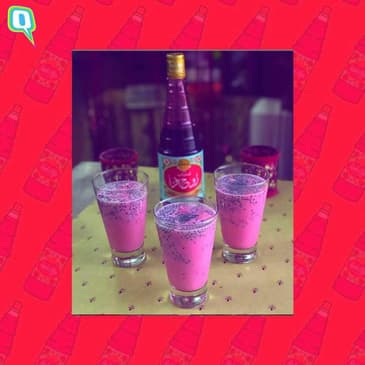

The Rooh Afza we know is all thanks to one Unani herb doctor, Hakim Abdul Majeed, who started the company “Hamdard’’ in Delhi in the year 1906, and went on to create a medicinal drink which became the much-loved summer Sharbat. From that moment on, the sticky red drink stuck close to the subcontinent’s history. With India’s partition in 1947, the company also split – one brother stayed on in India while another left to form Hamdard Laboratories, Pakistan, in Karachi. Later, with the formation of Bangladesh, the Dhaka branch became Hamdard Laboratories Bangladesh in 1971.
Learn more about your ad choices. Visit megaphone.fm/adchoices
[00:00:00] How the Taste of Rooh Afza Circa 1907 Still Lingers I had Rooh Afza for Iftar last night and it remains as sticky and sweet as 30 years ago. No Ramadan Iftar would be complete without the flowery labelled Rooh Afza bottle. Grandmother would testify to the perfection of her recipe
[00:00:21] and a voluptuous jug would arrive with authority on the table. Maheen Fepher, 38, grew up in Islamabad and now lives in the UAE. If her childhood drink from carefree summers in Islamabad from the 1980s is being served at Posh Dubai gatherings in 2019,
[00:00:41] it shows us that the ruby red Rooh Afza that is said to have first arrived to the Indian subcontinent with the Mughals has a lingering appeal that is not going away in a hurry. No matter how many colas, pepsis and fruities are served at the party.
[00:00:58] The Rooh Afza we know is all thanks to one Yunani herb doctor, Hakim Abdul Majeed who started the company Hamdard in Delhi in the year 1906 and then went on to create a medicinal drink which became the much loved sherbet.
[00:01:14] From that moment on the sticky red drink stuck close to the subcontinent's history. With India's partition in 1947, the company also split. One brother stayed on in India while another left to form Hamdard Laboratories Pakistan in Karachi. Later with the formation of Bangladesh,
[00:01:32] the Dhaka branch became Hamdard Laboratories Bangladesh in 1971. In 1947 most of the family travelled to Pakistan. My only grandfather Hakim Abdul Hamid and his two sons stayed. Even as his younger brother Hakim Mohammad Saeed went to Pakistan, my grandfather said,
[00:01:51] I will not be able to leave India because it is my motherland. Abdul Majeed the grandson of Hakim Abdul Hamid told Gulf News in 2016. Hamdard Karachi exposed to the UAE which is why Maheen was served Rooh Afza at this Ramzan.
[00:02:07] But here in India there have been some rumours of a Rooh Afza shortage. Some said it was because of a shortage of key ingredients. Others say it was a family feud. But what are these key ingredients? Lily, Lotus, Blue Star Water Lily, vegetables like mint, carrot and spinach,
[00:02:26] fruits like watermelon, citron, strawberries, oranges, raspberries, black currants, cherries and grapes, flowers of the rose, orange and vetiver plant. All these make us wonder which of these wonderful ingredients is in short supply. Nargis Abedi from Delhi had to send her driver to look for some Rooh Afza.
[00:02:46] Nargis 37 hails from the erstwhile Rampur Prinsley family known for their rich culinary heritage. Despite her family's famous Nawabi dessert recipes, she fondly remembers the simple pleasures of her childhood Rooh Afza. It was a young drink to have as kids we found it fascinating because of its colour
[00:03:04] and it had a very comforting taste. The ultimate summer thirst quencher whose memories as sweet as the drink itself served to counter heat strokes and palpitations in the blistering summers of Delhi and soon became a staple during the holy month of Ramzan.
[00:03:19] But its stickiness of its lingering relevance is something that has to do with the founder's insistence that once the perfect flavour had been settled upon, there was no need to tinker with it to keep up with the times. As told to the Gulf news, Majib's grandson said,
[00:03:36] When I started working and looked at Rooh Afza, I would come up with suggestions on what we could add to make it better. For six months I went on harping about all these changes.
[00:03:46] My grandfather then called me and explained that a lot of time had been invested in the product and after many years it had now stabilised. We now had a product that best suited people's needs. If its working, why do you need to fix it?