
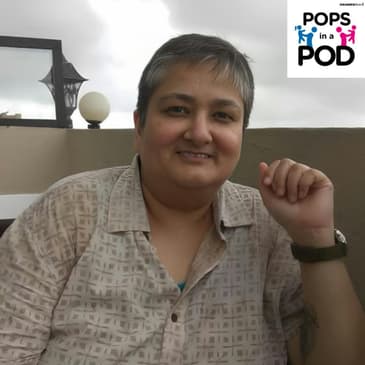
Nadir Pop are Peter Pop are joined by Shals Mahajan, author of Reva and Prisha. The book tells the stories of two children sharing a home with two mothers, Runu and Pritam. Reva and Prisha was a part of Parag Honour List 2023 under Young Reader Fiction.
Shals Mahajan is a writer and genderqueer fellow based in Mumbai. They have worked on issues of gender, sexuality, caste and communalism as trainer, teacher and activist. Their other books include Timmi in Tangles, Timmi and Rizu and No Outlaws in the Gender Galaxy.
Buy Reva and Prisha - https://www.amazon.in/Reva-Prisha-Shals-Mahajan/dp/9354710565
Get in touch with the Pop duo on popsinapod@gmail.com
Follow Pops In A Pod Instagram - https://www.instagram.com/popsinapod/
Facebook - https://www.facebook.com/popsinapod
Youtube - https://www.youtube.com/c/PopsinaPod
Nadir is a media and advertising professional with 17 years of experience, out of this Nadir spent a decade in TV and digital video production – producing, directing, developing content, and writing. www.linkedin.com/in/nadir-kanthawala-47249814/
Peter is a marketing guy. He has a decade of experience working with companies ranging from startups to public listed companies. https://www.linkedin.com/in/peterkotikalapudi/
[00:00:00] Pops in a Pod, Pops in a Pod. Nadir and I spoke to Shals Mahajan, who is a writer. Their book Reva and Prisha was part of the Paragonist list 2023 under the young reader fiction.
[00:00:49] Nadir and I really enjoyed reading Reva and Prisha so we definitely wanted to talk to Shals more about the book and also their process, also just generally about the book. I'd highly recommend everyone listening to this to pick up a copy of Reva and Prisha
[00:01:06] because as a children's literature book it's very different and we're going to leave links to that in the show notes. But before we dive into our chat with Shals Mahajan, a huge shout out to the team at Paragonist for what they're doing and also promoting children's literature.
[00:01:24] Thanks for setting up this interview and here's our chat with Shals. So I'd like to welcome to the podcast Shals is another author, another you and I cannot get enough of books right? Books has always been our life and it's great.
[00:01:40] Obviously there's also an irony attached to it considering my wife and I are voracious readers but my daughter is like, I love maths, I love numbers. She just doesn't take to reading but she is now so yeah we absolutely love books
[00:01:54] and Shals it's great to have you here. Thank you another, thank you Peter. It's a pleasure to be here. I look forward to the conversation. Yeah and the reason we've got you on the podcast is like we've done in past episodes
[00:02:12] your book was part of the Paragonist list this year and your book Reva and Prisha which was under the young reader fiction. Tell us what a reaction to that how did it feel to be part of the entire list?
[00:02:28] You know it was actually a really warm and lovely feeling when the Paragonist came out and some of my friends posted it and to see Reva and Prisha on that because you know Paragonist trust does some lovely work and I think that
[00:02:47] anybody who's working with children's writing, literature is doing great work because we really need it in this country especially and Paragonist provide a lot of access to really good books in various languages all over the country.
[00:03:03] So and the Paragonist is a list they put together of some of the good books which they think are good books which more people should have access to. So it is fabulous to be on it, there have been wonderful writers on it
[00:03:17] and you know on this list too there are some other wonderful writers. So yeah it was nice, it was yeah as I said it felt nice, it felt warm, it felt like love you know. What you said about children's literature is so important
[00:03:36] considering the age that we are living in right now the access to content, to information is so blatant right? Especially when it comes to kids they are so nifty with gadgets and everything and then with our rich history and literature that we have
[00:03:58] and the kind of stories also such beautiful inclusive stories that we have right? So I just wanted to go back to the origins of the book. Why did you decide to write a queer affirmative children's book? Did you have any references, people around you either Indian or international
[00:04:18] what was the genesis of this? Okay so you know a little bit about me I am queer myself and I'm also a gender queer person and so therefore you know for me actually queerness, being trans all this is just part of life right?
[00:04:39] And also I'm in my early 50s now and a lot of my life I've been sort of for the last almost 30 years I've been part of queer and feminist activism and so actually I mean I know a lot of people
[00:04:54] so it's part of you know being talking about politics being queer is part of my life, it's my friend circle, it's people around me and at the same time I have always been writing right?
[00:05:09] So there is a point when your different parts of your life sort of come together and to me Reva and Prisha was that lovely moment when these two beautiful characters sort of popped in into my head and normally I don't plan my books
[00:05:28] because I'm generally the kind of writer who sort of lies around and says I'm thinking that extremely lazy writer but who keeps on reading other stuff so in my head these two young kids popped up Reva and Prisha
[00:05:46] and they were these fascinating, very playful, very alive, very curious young kids and so we started having conversations in my head and therefore you know I came to know and then I realized as I started writing that they had two moms so in that sense it was nice
[00:06:09] and the kind of way the family functions just sort of came very easy I think because I kind of came to know the characters and so while I was writing I came to know each person very well and how they interact with each other
[00:06:27] so that was around the beginning and then of course one worked once we through it Yeah, so there are some very specific stories firstly obviously the characters, the two moms and what I really loved about how the kids have very specific tonalities
[00:06:51] for both the moms, right, mama and amma which is nice, which is very sweet because when you have two moms so I was reading and my daughter came and said what are you doing like I'm just reading a book and I've just bought it on the e-book app
[00:07:10] so I'm just going to say like oh what is this book it's very interesting you know these two moms were raising twins and I was waiting for a reaction because I said two moms raising twins and I said okay so what's the story about, they're short stories
[00:07:26] I just saw what are they talking about so what is the book all about so I said oh there's this chapter on coffee like how we keep telling you not to have coffee then there's this chapter on walking and food
[00:07:40] and she kept asking questions but I was probing her because I kept highlighting yeah you know two moms raising twins not even once did she come back saying oh two moms really wow that's nothing like no reaction, no two moms
[00:07:55] so I think this generation and I love that about these kids they're curious for all the fascinating things but not something as glaring as okay two moms raising children and I loved it, I was like okay so she's clearly not investigating that
[00:08:10] which is in her mind it's pretty normal but there are these very interesting questions that they are very interesting incidents and the imagination is just wonderful so where did these very specific pointers sort of come to you when you were writing these stories
[00:08:28] because I just feel that there has to be some experience that's really attached to these incidents that you're talking about specifically in these stories so what about that? okay that's funny because I think I mean I actually totally understand you know when you're saying that your daughter didn't
[00:08:46] ask you about the two moms because I think most children and you know when I go and talk about this book with children they are like okay this is a family this is what they're doing so they're very interested in the stories
[00:09:01] but the fact that there's two mothers they're like ha fine you know it's a family, they are different people but they're also very alive to the differences so it doesn't matter if they're two moms you know they're two different people right
[00:09:15] like so if you have a dad and a mom also they're very different people so children are very alive to those kinds of details and in fact I had in one discussion with children I tried to probe more and say okay what is a family look like
[00:09:32] and they generally said okay there's parents and children and generally so you know we had a further discussion and then I said okay how do your families look like and then you realize there are many more adults there are friends of the families who are very close
[00:09:47] and so therefore part of the family so there is all of that right so at one level you know the newt spaces have many more people than just say a dad and a mom and the children very often there are more people some people live with animals
[00:10:05] for some people it's plants, for some people it's books so you don't want to try to expand that but I think when you ask me about the specific questions and of course when you talk to children I mean the most crucial question for example one of this was
[00:10:20] can you drink tata pina susu I mean the number of conversations one has had on that you know are much much more than anything else about this book or whether books can be eaten and you know I've had a whole discussion
[00:10:34] with young kids on whether anybody has wanted to eat books before this or not and if we've eaten what our experiences have been like so I don't know I have to say this that it is not so much from
[00:10:50] a real interaction with a lot of children in my daily life that this comes from but I think it's just sort of in my head I think all that I read and I live when I start writing I have very alive characters
[00:11:08] so it's almost like you know when I'm living with them in my head they're very real people so much so that the people I live with sort of know that they should just leave me alone because I'm living you know with other people right now
[00:11:25] so in that sense Rewa and Prisha themselves you know that okay here's this kid going on a walk but her agenda is completely different from her mother's agenda of a walk right and I really like that story a lot because I remember she you know she says that
[00:11:47] this is where the whole imagination thing comes in right that oh so if we are on a walk that doesn't that means we can't look at anything else and you know it certainly hits Amma and she's like no that's not what happened
[00:11:59] because that's what kids do they're very direct right they're extremely direct with their questioning because in their mind they're not playing this out saying oh you know what if I say this then they'll think that and then they'll probably feel bad
[00:12:11] and then maybe I should just check my toe you know kids are so unfiltered and I like that about the fact that you managed to capture it that was very interesting that's why I was so like keen to understand
[00:12:23] that you genuinely speak to certain kids or families because it's exactly how kids react yeah so no I didn't but I think that's very much part of you know the way I think
[00:12:33] and but what you know I would think of is so the kid wants to do all these things and really concerned about one of the things when I'm writing is concerned about the interaction between adults and children
[00:12:47] you know and so for me the mother is a mother who sort of stops to listen instead of saying no we have come for a walk and I'm going to drag you so this mother won't do that you know she's going to say okay
[00:13:00] and if this mother tries to drag the child to try it it'll be like why are you forcing yourself on me because you know kids are very capable of turning around and doing that that you say you must observe the world
[00:13:11] and now you know you were saying that I must not look at things around so how do you as how do we all as adults interact with children and what do our conversations look like to me I think that's a very crucial thing
[00:13:27] because at one level the power imbalance is so huge right as adults we have all the power we have all the knowledge we have all the capacity to do anything to very young people
[00:13:44] I mean as is when people are children of born you know they're born into a very adult construction of a world right everything is how adults have made it there are hierarchies their rules and they're all sort of bent on
[00:13:59] trying to create children to become images of us in some way right to learn what it is to be a good son or a daughter a good child a good student a good citizen to learn the rules about everything
[00:14:17] and in that sense you become very dictatorial it's a very dictatorial sort of system and within that within this kind of setup how do we try to democratize the relationship more so for me as a writer as somebody who works in children's literature
[00:14:38] but also in other places the question is always about how do we make an unequal situation more equal more equitable what does it mean to be at very different places locations but to be able to give each other the respect and dignity every person
[00:14:59] you know deserves whether they're two years old or 82 years old how does this work and how can one imagine those interactions so that's I think one of the places where a lot of my writing and these stories come
[00:15:14] and of course you know but they come out in very tiny things I don't want to preach about it I just want to sort of see how this works then timing interactions you know in day-to-day interactions
[00:15:26] you kind of already answered my question but my observation from the book was exactly that right when you look at most children's literature it's always you know the parents are the authority the parents are the ones who kids go for the answers and they have all the answers
[00:15:45] or they're kind of telling the kids what to do right and kids are just kind of following and what I really enjoyed and I think was refreshing was the dynamic between the parent and the children at this right it was almost like counter to everything that
[00:16:02] I had honestly read before and I think that's one of the things when you keep reading a lot of these books especially the older ones right which are like I don't know even 30 40 years old
[00:16:14] they kind of when you read them now you go and you're like wait this didn't really age well or kind of make sense in say a 2023 where we are right now right
[00:16:26] so from what I'm gathering that was a conscious choice that you made to kind of have that narrative very differently yeah not definitely because I think as I said you know I know that the world is not always like this
[00:16:42] I know that families are not always like this I know there's violence but sometimes you want to look at what a good interaction would be like right so somewhere I also want to so in another book
[00:16:58] Timmy Tangels there's this young child who lives with her mother and the caretaker in the home and it was important for me that the relationship between all three of them be very you know equal
[00:17:13] but at the same time Timmy is a kid who lives in her head what all of us will call imaginary friends but here's a child who doesn't see them as imaginary or not they are real friends and real people to her
[00:17:27] and so how do you even without sort of being part of that world how do you have that conversation with that child right as a mother if the child is saying okay today I'm not going to school because I'm busy with my friends
[00:17:44] and how do you then as a mother sit and talk about it and say okay you know your reality is different mine is different but I'm not going to negate that so I think those are the conscious kind of choices I make while writing
[00:17:57] that you know the kids are talking about makeup and the mothers are suddenly seriously worried because they're like oh you know the beauty industry has got to our children so early but the kids are talking about something else altogether
[00:18:15] you know so that happens in one of the stories in Raven and Peaches so yeah it's that sort of kind of working because your book is modern in its writing sense it's direct the characters feel very natural in the way they speak right
[00:18:37] what has been the initial reaction to the book have you received any kind of feedback how have they reacted to these stories your readers anything at all that you can share with us
[00:18:48] I think or any of the children who have read and the teachers I've had a very good response but I think a lot of you know schools and a lot of other places or you know I mean I don't know any direct bias
[00:19:05] because I haven't interacted you know what have with people in bookstores to see what kind of thing they're doing but I think with other writers with publishers I've had a good interaction with children and schools I met
[00:19:21] but I do also notice that there are fewer people who want to talk about because the seat has a queer book right I actually see this as a book about families and how parents and children are interacting on a day to day you know regular sort of basis
[00:19:37] what happens in people's daily lives yes there are issues there are two moms but there's also a thing where one of the moms is Hindu
[00:19:45] and one of the moms is Muslim and which is something again that their people from different religions castes you know locations who form families together right this is something we all live with and what impact does it have on that family so those are crucial questions
[00:20:04] because many people around us are living with these very concerns all the time so I feel that sometimes adults are much more sort of worry of having these discussions
[00:20:19] so I've had some people tell me that oh if it's a queer adult book it's much easier to deal with but this is a queer book for children
[00:20:26] and I feel like it's actually a family you know yes there are two moms and so there is queerness but that does not stop the children from understanding
[00:20:39] in fact it makes them see that how normal and how you know accepted it can be it makes you feel that it is something that is easy
[00:20:51] you know it's not something very far out there it can be amongst where we live amongst our friends so I find the adults sort of very careful and but not the children
[00:21:06] I think that's pretty obvious at this point because the kids are not exposed to the traditional guardrails that eventually are going to be placed around them when they grow older
[00:21:21] so that's the beauty and I think that's the sad part even today where I think adults are already forming certain I mean they have these biases obviously
[00:21:35] but they want to transfer it to the next generation without even giving them an opportunity that okay you know what figured out yourself that whole you know these simple words where we say figured out yourself it's such a scary moment for any adult who's raising kids
[00:21:49] that I think that really does interfere in the normal course of modernizing our way of thinking and our approach to life so is this something that you get on a regular basis as a writer or otherwise
[00:22:04] actually I've had a couple of sort of run-ins with people not quite understanding and sort of the problem is though you know now there that a lot of adults would
[00:22:20] they don't talk about it directly right they say okay nobody's gonna say that I don't I think being queer is wrong or you know that this is going to harm the children because clearly you look at the book what's harmful about it nothing
[00:22:36] right so the thing is that it is couched in the language or children won't understand right or saying that we'll wait for them to be older before we raise such things
[00:22:51] now the question is that to me this is exactly what we are fighting against right that children do understand let's give children more credit for being very intelligent very young people yes they are their knowledge of the world is limited
[00:23:09] but look at their learning curve it's so much steeper than adults look at how much they understand from everything around them so quickly they have strong emotional knowledge and understanding as well they're able to sense what's happening right
[00:23:29] so this whole thing of let's protect the children is a very sort of insidious tool used by adults you know which is also I think all of us while growing up have heard this is being done for your own good instead of letting you choose what you want to do
[00:23:49] you know you're told to do X, Y and Z and so I really feel that I think the thing is to be able to create more conversation and that's crucial that if a kid doesn't understand something they should feel the freedom to be able to come and talk and ask
[00:24:09] any adult around them whether it's a parent whether it's somebody else around them or it's in school that they should be that confident that if I ask a question it will be answered with honesty and do we as adults do that
[00:24:28] I think that instead of doing that we sort of like oh we won't talk about this right now we'll wait till you're older or we are going to you know this is not good for you so you know why don't you just not talk about X, Y, Z but just talk about this you know
[00:24:49] so that's the kind of interaction I have had with adults a few times
[00:24:54] but well thanks so much for sharing that right I mean like it is tough and I keep going back to this statement I think listeners of the podcast would probably be tired of me saying this at some point right but like even with parenting a lot of times people look at another
[00:25:11] and me and say but y'all are so this y'all are so that and we realize that are we really we're just like dads doing our own thing right but a lot of times we kind of take certain stands and honestly when Nathir and I sometimes think back it's lessons we learn from our kids that we talk about
[00:25:32] it's not stuff that you learn from other parents because it's the kids who are teaching us because and going back to Nathir's example of his daughter what he was talking she has no reference other than what Nathir gives her of what a family is right so a lot of times I think parents are kind of imposing their vision or their thing on the kid
[00:25:53] not realizing what the kind of future impact is so yeah it's not even like I wish you could say it's like a chicken and egg situation but here it's clear and pretty obvious at this point that the adults know what they're doing so
[00:26:11] but having said that right I mean like just to kind of understand one of the things and we want to tap in I think all parents are going to really have the years perked up and ask you this question as a children's writer right I mean a common problem everyone faces now they're kind of addressed it at the start where
[00:26:31] reading is not cool anymore right reading is not fun if I look at my childhood we used to have those kind of challenges in class who can finish the most amount of books who can finish that card and get the most number of books taken out at the end of the semester or year and stuff like that how as a child
[00:26:53] children's writer how do you kind of deal with because it's not screen versus book right it's about how do you kind of make that book attractive enough for the children to read so is that something that you think about is that something you worry about
[00:27:09] what do you say to parents who are just like looking for answers
[00:27:15] right it is I think one of the complicated questions and you're right it's not about screen versus book right it is I think there's also such a tactile sort of connect with all these touch gadgets you know there is that as well because it's engaging so many of your senses
[00:27:38] your touch your eyesight your ears you know there is it is that and I think in that scenario to say okay here's a book how do you make a book interesting I think the really there is the very short answers to just sort of create an atmosphere where books are interesting
[00:27:59] you know that and it sounds fascinating but it is what it is right if everybody in the household is on their phone why would a kid pick up a book right they won their own phone through and young kids at two year olds you know want to see that YouTube video again and again and again
[00:28:22] and the thing is that but if everybody has books around maybe you'll be more interested in books the other thing is I think what in schools a lot of people are doing is having libraries and you know creating space around that
[00:28:40] and I think libraries having good librarians having activities in libraries and I think more and more schools want to get writers so to make it a little more attractive to do exercises but finally I think there is something about
[00:28:58] I think which a lot of people like me have you know before you even thought of being a writer your thing was you just fell in love with books because they had so many worlds in them so I think today I'm thinking that a child has many more avenues of exploring different worlds
[00:29:17] and some may act still fall in love with the written word some may just fall in love with images with sound what you have but at least they should be an environment where books are as crucial as other things I think that would help
[00:29:36] maybe not all children will love books the way they did but even when we were growing up in a class of 50 there were very few of us who kept on running back to the library outside of library hours so I was one of those kids
[00:29:53] and so I always say that for me I'm a writer much lower in my sort of being I'm actually a reader you know so there is that love of the word I think sometimes it takes a little spark and some children will get into it
[00:30:12] but maybe there are more avenues for them maybe for them to be lyric maybe to be songs maybe to be something else I mean you know there are multiple ways of exploring that love so it will keep them connected to books but maybe not exactly how I grew up or even you grew up connected to books
[00:30:33] so I'm still hopeful for that we were recently having a conversation with someone and she also brought up the fact that there is so much there's so many interesting books today on children
[00:30:52] whether it's storytelling narrative illustration whatever it is yet new parents will go back to the international books you know whether it's your the hungry caterpillar or the your Donaldson books
[00:31:11] because of its rhythmic it's set in a certain meter whatever right why is it that today's parents and of course that's why we're having this conversation and through our medium hopefully we can spread the word that's why we love books so much
[00:31:28] and we really like associating with Parag simply for this reason that because we want to push the whole aspect just look at the number of books that we produce and the lovely stories what is you know where do you stand on that
[00:31:44] because clearly in your childhood you would have also had access to a lot of these international books that are being you know republished over and over again because people so many people are buying it
[00:31:54] when do you think that India will take off and it becomes a hub for good literature for kids both on my writing and illustration standpoint
[00:32:03] okay this is a complicated question because it is not just about the writing right and the production it's also a lot about the market
[00:32:14] so I think in that sense one has to but I will say this that for me when I was a kid I mean reading children's literature was not very I mean I was just reading books whatever I could get my hands on
[00:32:29] I came from a middle class family so it wasn't like there were many books but what my parents did was give me access to light and that's and very interestingly nobody monitored what I read
[00:32:43] they were like okay if you're uncomfortable you can come and talk to us so I was at 15 trying to read my way through war and peace and you know when I couldn't understand myths I would just like decide to skip whole chunks of the war and just continue reading
[00:32:58] and so it was you know and I think what's happened today that everything is so age specific so actually when I decided to publish one of the things which I was very surprised was that like what age group are you targeting your book at
[00:33:16] I was like I don't know you tell me I said that to my editors and my editor said yes we understand they were very lovely people so I think there is a way in which we take it too far to say that people should be reading on the age specific book
[00:33:34] yes we want to be careful so that more than anything else that children read something which doesn't sort of affect them so adversely that they're not able to deal with it right but or at least if they read something which they don't know what to do
[00:33:52] they can come and ask questions so in the absence of that atmosphere we're trying to make everything you know very specific a five year old could read this book as could a ten year old read this book right now I find that as an adult I'm reading so many more children's books because finally I have access to so many children's books
[00:34:11] so that's one thing the other thing is that I think when you look at any bookstore you see what do you see on the shelves you see the foreign books you see so many shelves devoted to that so much to my pony unicorn goose bumps and so on so forth and then where do you see Indian literature
[00:34:36] you see it in one sort of cupboard where you have all the sort of folk tales from different parts you have the mythology you have a few well known authors but there's a huge you know group of people writing and producing beautiful books they're all squished into one shell
[00:35:00] and so if there was not a paraag list or if they were not curated lists or if they were not smaller bookstores which actually keep curated collections of children's books we wouldn't know the number of wonderful children's books being published in India
[00:35:16] so I think that's why actually small bookstore which actually care about children's books a lot more than just chain bookstores or at least chain bookstores having people who really care about literature there selling the books and libraries community library school libraries
[00:35:39] I think this is where you can really find the books that we are seeking for so I don't think that the books are not there they're there but the shelf space they occupy is very little and it's a very exciting time a lot of wonderful books are being written so in the next 10 years I'm sure there will be many more so you know there is that
[00:36:03] yeah I mean like I'm gonna use a music analogy right I mean years ago you only knew so many Indian artists you knew more of the foreign artists and stuff like that now you have Spotify and I have like literally recommended so I'm guessing we need like a Spotify for books or something like that that would be there
[00:36:27] that would be amazing whoever is listening and steals this idea just give me credit at least I don't want to take it away that's a great idea
[00:36:39] you know Shals Nathir and I can keep going on and I think we love talking about books so I think we should definitely do something a lot more and far larger than this
[00:36:51] but before we let you go I have more important question and I know because I read a bit about your process and stuff so forgive me for asking this and no pressure but what are you currently working on what can you tell us about some of your current work or upcoming work maybe you've already written something else
[00:37:12] okay so you know very frankly I'd sort of at this point of time I'm in the middle of projects which means I'm not writing anything very new also because as I've said and you probably read that I'm a kind of a slow writer
[00:37:31] I take time over each book and so I have two or three things which I have written first drafts off and I am reworking them to figure out different forms they could take
[00:37:44] so I'm trying to play with forms so there is one book which I have a way fond of but which is the story of a dog who was lost in you know who got scared with the firecrackers and ran away from home
[00:38:01] and the whole story of searching for that dog it's a very bombay story you know so how we actually in this happened that we went about searching in planes so I'm trying to figure out a form for the story
[00:38:15] so I have the first draft written so I'm reworking that and then trying to see what to do with it so that's something I'm working and the other thing which I feel which we need to push more for is poetry in children's writing
[00:38:31] so I'm trying to figure out a way for making some of the poetry I have for young teens you know find out if some publishers would be interested in it but I do think that poetry is a place where a lot of the emotional
[00:38:47] what can I say if I mean being kids is tough being a kid is hard there's so much and as you grow into a teenager I mean as you as dads should be able to tell me stories you know more than I can ever imagine that you know that kids go through so much
[00:39:08] so I joke that I'm still a kid at heart so I don't know like when you said being a kid is tough I'm like tell me about it
[00:39:18] yeah I feel that and you know how do you kind of connect to your emotions how do you give voice to them sometimes poetry is what you know or music is where you can do it I don't have don't can't reduce music but you know sometimes poetry is where you can talk about some of the very complicated
[00:39:40] emotions you go through and as you don't find the words for it you know I think that's what happens very often but I would like to hear from you as dads what kind of things do you enjoy reading what kind of books do you enjoy reading with your children
[00:39:58] and for yourself as adults as well
[00:40:01] currently I'm reading short stories by Siddha Moorthy and this is so sweet and it's the perfect book at least now in the Karinskia of things for my daughter to read along so she's turning seven and she's now getting used to reading so she reads like she really has to break it down and read
[00:40:27] but she takes about five to seven minutes to read one page which is great right because nobody's in any hurry to read and we are also very aligned as parents that she is going to learn how to read whether at seven or whether at seventeen it doesn't really matter
[00:40:47] right she doesn't have to go and run a big corporate or anything during that period of time that wasn't the thinking when we were kids so we've learnt that okay that's something that we will not do as parents
[00:41:01] and it's fine our kids doing really well she can't read
[00:41:06] so that's one book the other book that we very fondly read is the Rebel Girls series I think that's really nice and they have I think about five or six parts such beautiful one pages on women who've achieved in all domains right from sports to science it's fantastic
[00:41:31] and I think that's the kind of book that really encourages young children both boys and girls alike to dream different to think big perhaps or just to think in different lines of thoughts
[00:41:51] and these are the kind of books we really cherish and we really enjoy reading along and reading to her so yeah
[00:41:56] all of the times so wait I have to kind of get this because my my table is full of books so the one I've been reading lately and I think another notice I don't know if you can see is Masala lab
[00:42:10] I love that and it's so yeah it I mean so the thing is I can totally relate to what he talks about and here's one thing that I think caught my eye about what he was talking about because I felt exactly that is you can never replicate your
[00:42:30] your grandmom or your mom's food even if you're doing the exact same steps those exact same elements ingredients everything because one of the things about food is the visual element and the fact that you know that they gave it to you so
[00:42:46] I was like yeah that's why like I can never replicate my mom or grandmom's food even though they used to give me the exact recipe and everything so yeah and it's also just like how he breaks it down into a lot of like just chemicals right because I think with food and especially like growing up in India right you're always told another and I will talk about this is you're always told that it is growing up that the kitchen is not for boys
[00:43:16] or men to enter but I grew up with my grandmom and one of the favorite things for her to do is and that's how she should torture me I joke is cut the onions and all of that for her yeah I learned that why later but yeah so it's interesting just to see how like different food is the different
[00:43:37] things as an entire chapter dedicated to biryani so if you love biryani then it's really nice but yeah and strangely enough I mean this book I re-bought and I think if anyone who's listening hasn't already this is why I said about I'm still is
[00:43:55] captured in the right JD salinger like I bought a new edition of it I remember reading it as a 15 16 year old and then reading it 20 years later I still feel that so some point in time I'm like wow so I mean like as a teenager I could totally relate to the journey and that's where I said earlier right like some times I feel I haven't really grown up or become an adult but yeah that's the couple
[00:44:25] of books I've been reading lately but yeah I think we're gonna call it a wrap on this one but before we go shalds how can those listening get in touch with you if they want pick up copies of your books this is your space to do that okay copies of the books are available on
[00:44:50] bookstores then bookstores around you as well as online so any of the online people have it as well I'm not naming the big few but you know I think all of us are inevitably getting into the habit of buying our books online so they're very much available three of the children's books and one book fed-outs as well which is not fixed
[00:45:20] but I think that's the connection which is on understanding gender more than you know a binary gender but otherwise you can you know I have an email ID which people can reach me at all people can actually find me on Instagram and there as shalds mahajan so you know and on Twitter as well so I'm on social media as myself so that's not difficult to find right
[00:45:50] really wonderful talking to you I hope to listen to some of more of your podcast I heard a little bit of one today and I will listen to some more thank you awesome thanks so much thank you so much and we really had a great great chat thank you thank you
[00:46:11] and that was shalds mahajan I hope you enjoyed nathir and my chat with them highly recommend again that you pick up reva and prisha check out your local bookstore if the book is available there or maybe we leave a couple of links in the show notes before I sign off as always if you're still listening to this episode hit subscribe on the podcast platform that you're listening to
[00:46:39] why don't you tell a friend or family member about pops and a pod we'd highly appreciate it also you can reach out to us at pops and a pod at gmail.com maybe with your guest recommendations maybe you're doing something interesting let us know you can also reach out to us on social media just search for pops and a pod where on all social media platforms but that's all for me for this episode I'll see you very soon cheers