
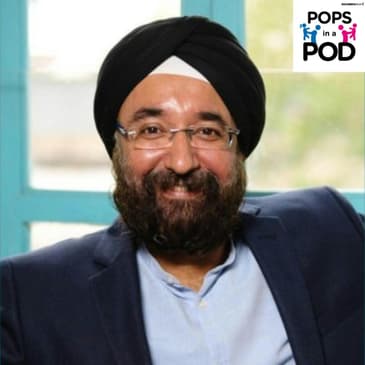

Nadir Pop and Peter Pop are joined by entrepreneur parent, Amarpreet Singh Anand, Founder & CEO, Superfoods Valley. The Pop duo discussed with him the origins of the brand, the importance of nutrition for kids and also the problem of Hidden Hunger.
An IIM Calcutta alumnus Amarpreet Singh Anand has been associated with brands such as Cadbury, Diageo and Royal Challengers Bangalore. In 2021, he began his journey to build Superfoods Valley, a food and nutri-tech platform to make nutrition easy for modern consumers who wish to be in charge of nourishing their lives.
Superfoods Valley is his humble attempt to create a social impact and be beneficial to his immediate and extended world.
Get in touch with the Pop duo on popsinapod@gmail.com
Follow Pops In A Pod Instagram - https://www.instagram.com/popsinapod/
Facebook - https://www.facebook.com/popsinapod
Youtube - https://www.youtube.com/c/PopsinaPod
Nadir is a media and advertising professional with 17 years of experience, out of this Nadir spent a decade in TV and digital video production – producing, directing, developing content, and writing. www.linkedin.com/in/nadir-kanthawala-47249814/
Peter is a marketing guy. He has a decade of experience working with companies ranging from startups to public listed companies. https://www.linkedin.com/in/peterkotikalapudi/
[00:00:00] Welcome back to Pops in a Pod. I am Peter Pop. This week we have another entrepreneur parent episode and I'm very glad to have Amarpreet Singh Anand who's the founder and CEO of Superfoods Valley. Now what's very special about Amarpreet is that he
[00:00:19] spent over two decades in the field of marketing and innovation and recently turned entrepreneur in a field that both Nadir and I are very passionate about which is nutrition. So I don't think we should have a much longer introduction. Let's cut straight to our chat with
[00:00:38] Amarpreet. Hi Amarpreet, welcome to Pops in a Pod. Hi Peter, hi Nadir, thanks for having me here. You know I'm so glad we've got you on the podcast because when I first heard about you
[00:00:51] and the business that you started, I was so curious that like I remember messaging Nadir saying we have to get them on the podcast and just kind of talk because I think if there's one thing other
[00:01:04] than finance Nadir and I keep talking the most about is nutrition and just health and fitness right because it's such an important aspect in today's life. So thank you so much for agreeing to be on the podcast. Pleasure is mine. You know Amarpreet as Peter has already
[00:01:22] prefaced this conversation that for us two very important Fs in our lives, finance and fitness of course but the beauty is that the finance or the fitness aspect is less for us and
[00:01:37] more for the family especially for the kids right because we sort of know what it was like to grow up in a certain household whether it was privileged, slightly privileged whatever it is right but then
[00:01:53] we also did a lot of wrongs and we realized that okay you know when we become there and we fix this but before we kind of jump into that Amarpreet we just wanted to get
[00:02:03] an understanding from you and your professional journey to then becoming an entrepreneur in the nutrition space. So why don't you tell us a little bit about yourself? Sure thanks Nadir for that question. So you know before I jump into my professional journey I love to talk about
[00:02:23] my roots right because you know you touched about family and you know and really from a middle class in there so it was born and brought up in Rishikesh. It's you know now become
[00:02:36] one of those cool places to talk about but I can tell you when I was growing up you know it was like one of those undiscovered beauties you know right on the foothills of Himalaya. So beautiful place grew up there fantastic memories from there and then I went
[00:02:55] on to do my engineering and MBA and picked up a career in FMCG you know sales and marketing. So one of the things which you know I have to tell you about myself is that I seem to have some
[00:03:10] kind of a spiritual connection with River Ganges right because I was born in Rishikesh I went to do my engineering in Banaras and I did my MBA from Calcutta right it's literally from the Himalayas to the sea I mean there's some deep connection there.
[00:03:31] Yeah so from a professional perspective my first job was with Cadbury's right so I was selling chocolates and candies as which was as they say right eternal favorite of kids and now adults too. Spent a lot of time there across multiple roles fantastic
[00:03:53] era in Cadbury's you know Cadbury's became a household name during that phase you know I was there for almost 15 years so a longest stint across multiple functions. See saw a lot of ups and downs
[00:04:08] you know had a good fortune of working very closely with consumers kids moms you know great business leaders saw how the brand Cadbury became such ubiquitous across the country right and then you know decided to move on and join Diageo so really moved up the you know the
[00:04:31] indulgence ladder and you can see there is no word of fitness or nutrition or wellness was around me till that period and yeah Diageo was again a fun experience very different category so spent a few years there and you know this whole entrepreneurship was something
[00:04:54] which I'm sure a lot of people would have you know told you when you would have spoken to them is something you never plan for right with people are far background it's something which happens to you right and that's the same thing which happened to me right
[00:05:13] you know there were some circumstances which I faced personally me and my wife during COVID which almost forced us to decide relook at the priorities of our life right and what we
[00:05:24] wanted to do and how we wanted to use the gifts which we had right and the experience which we had yeah and that really triggered off very very different phase of our life it's almost like
[00:05:36] 180 degrees from selling indulgences to actually going back and serving the society in a very very meaningful way well thanks for like kind of briefly putting together that really extensive experience that you have now like I mentioned at the start right one of the things when I read
[00:05:56] up about you two words kind of stood out for me hidden hunger and that's something I'd not heard of before so I can read up more about it so before you jump into you know your entrepreneur
[00:06:09] journey entrepreneurship journey with the superfoods valley tell us when did you come across this hidden hunger was it at the time that you're referring to around the COVID period I'd love to know and first of all let's define hidden hunger for those who have no idea right yeah
[00:06:27] yeah so Peter actually that's one of our missions to build awareness and solution around hidden hunger right that's if you want to define the purpose of this company that's what we are really really obsessed about hidden hunger is actually a simple problem where you get
[00:06:48] enough calories in your diet but you do not get enough nutrition especially of micronutrients in your diet and unfortunately in India you know 75 to 80 percent of Indians are lacking essential micronutrients yeah and the reason it is called hidden hunger you know because the name sounds
[00:07:12] quite interesting and intriguing why is it called hidden hunger who is because some of the symptoms of this deficiency are not easily visible right so you do not connect the dots as a
[00:07:28] person right that if you let's say you're having body aches or if you have low energy or if you have poor gut maybe one of the reasons could be because of lack of micronutrients
[00:07:40] or deficiency of that so that's why it's called hidden hunger when you have any calorie deficient we know where to run right we learn into our kitchens and we'll have food but unfortunately when you are lacking micronutrients you really don't know right and we discovered
[00:07:55] it in a very tough circumstances you know during COVID itself as I mentioned earlier um yeah I mean we have two sons and we realized that the elder one was not growing as per his age
[00:08:10] and we spoke to a lot of people you know doctors nutritionists and we were struggling to find the right uh you know solution or the right diagnosis of the issue so to speak and that's when we you know happened to understand about this hidden hunger
[00:08:27] and its implication uh and you know it would be very surprising as we talk you know I'll mention to you about the kind of implications of that right some things which we kind of overlook
[00:08:39] so many things we overlook are actually attached to you know lack of the micronutrients in your body on today there are certain decisions that we make um as individuals as parents adults right because there's so much information out there
[00:09:03] so because of certain um health restrictions like there's a certain truth that you can't have but the more you read because you have so much access to information the more you read the more you realize oh so this is what happened oh so you should
[00:09:19] not start your day with uh you know white bread drink some water first you know hydrate your organs then move to you know food that is probably that someone's micro sugar or whatever it is right
[00:09:34] and you learn this you learn this systematically your journey that because you had so much experience working in the FMCG sector um was was there a moment did you come across certain things you spoke about your son your your oldest and of course they're like that
[00:09:52] that's it you know that's it I want to get into this I want to help people this is what's kind of not working out in the current food chain in India or system in India and I wanted to fix that
[00:10:05] no so Narita that's a great question I think one of the things um and again uh through your experience I mean through my experience and through what I observed very closely in uh at my home
[00:10:19] I think one of the things which I just realized is that there was a significant lack of transparency in the food ecosystem right um and that's something which really started to bother me off late right of really saying that how do we build a degree of transparency
[00:10:39] because the change which I was trying which I was seeing around me is you know uh when we spoke a lot of consumers right because once you're interested in an area you really go deeper
[00:10:50] and speak to a lot of friends family real consumers we realize that there is a very high degree of awareness which is you know sweeping the country when it comes to nutrition but unfortunately right the more the information the greater the confusion right because now there are
[00:11:09] you know every second person seems to be an expert in that space right so really the you know and you know a normal mom or normal dad right they are flooded with information so they really don't
[00:11:26] know what's right and what's wrong and in that spirit I personally felt that brands have a very important role and a very different role to play right as we move forward so brands
[00:11:38] have to become more honest brands have to become more transparent in terms of what they are building right because here is a consumer who's ready to pay a premium if you genuinely offer them
[00:11:48] you know something better so we should take a stance and actually offer them things uh you know which uh which are much better I don't know whether I've spoken to you guys about this earlier I mean
[00:12:01] we've launched a couple of brands and I'm sure we'll talk about you know them at some stage but I do want to I haven't covered this piece earlier we launched an interesting app right that's called what's your niq right and this app actually can tell you the real
[00:12:22] truth of any packaged food in the country right where if you enter the name of that packaged food it can tell you what is the nutritive grade of that food what's the you know what are the good
[00:12:35] ingredients what are the bad ingredients right it can do a full full analysis of that right so you know we don't know how to read the back label right or how to assess those 30 rows but this
[00:12:48] app is able to synthesize everything right and give you a simple score like a report card right a b c d e right and it's fascinating where the idea came from it really came from the struggle we as parents
[00:13:01] were having like trying to get our kids to understand that what they're consuming is not healthy and they would say where is it written it's not healthy right so you know some of this was those
[00:13:12] trigger points um where you started to feel that yeah but it should be written it's not healthy right um but it wasn't there it's not happened in india yet uh there is a lot of
[00:13:23] conversation of that change which needs to happen and i'm sure it will come through very soon and that's where you know some of the actions we have taken in that space you know it's very
[00:13:34] interesting that you you brought that up uh amirpreet um recently i was i was traveling abroad and in the supermarkets and i was in in france and in one of the supermarkets well actually most of the supermarkets when you when you pick up any packaged food any
[00:13:52] processed food right there's a very clear indicator the the star system or the number system right and it goes from green to red and it tells you exactly that okay um you're having this
[00:14:06] but treat it as a snack and not as a meal like like the numbers indicate so i i i i checked i was and i picked up the what in my head i thought was probably the most unhealthy thing
[00:14:17] and the number drops immediately to like one or two so you know very clearly and it's it's it's very nice that you you've built an app like this because this is something that i think a lot
[00:14:27] of people can use and um and build on so congratulations to you and your team on that i think we need more more such applications for sure yeah yeah and there is an amazing
[00:14:40] change which is happening now that even fssi is trying to work out a front of act labeling system so i'm sure it will come uh sometime soon right but in the interim you know
[00:14:53] you know people like uh or parents like us who are really fed up uh you know trying to explain this to you know people around us should take some action right and that's a small gesture
[00:15:06] it's not a monetizing tool for us it's a way for us to kind of serve the society in whatever way we can do right so it's a free app uh we're just doing it uh to spread a little bit of goodness
[00:15:17] and help consumers make some smarter choices yeah i mean i at the risk of repeating myself but we did an episode on this in uh may when there was a huge controversy around you know packaged goods
[00:15:33] and the labeling right and like it was strange because i saw natural but you have to be honest it's not really natural right a lot of things uh similar to nadir i remember the first time i had
[00:15:48] followed someone and they said that you know the next time you go buy any of these health drinks or energy drinks just flip the side and kind of see the amount of added sugar
[00:15:59] and i remember telling nadir this soon after it's because this was after the workout or a gym honestly it's sometimes those things we had as a kid but we thought was unhealthy which is healthier
[00:16:11] than some of this stuff because the amount of sugar that's in a lot of food is unbelievable added sugar right so kudos to you like nadir said for doing this because i think it's a lot of just like
[00:16:26] that basic understanding uh i really love the example nadir gave of the star system because kids will understand that right like they know stars they know those things uh but okay we
[00:16:38] we kind of like went a little bit off track so let's come back uh on to the entire journey of what's your niq and also good monk uh tell me about that i mean i know you said uh at the start
[00:16:52] about you know not having the aspiration of being an entrepreneur but was there like a certain moment or a series of moments because uh i think after the steve jobs talk everyone talks about the dots
[00:17:07] so what did the dots did do you could kind of go through yeah that's what's interesting peter you asked me this question obviously you know in in in life uh everything happens for a reason
[00:17:19] right and you you can look back uh and connect those dots so i think couple of things which happened couple of very key conversations so i remember i was speaking to one of my
[00:17:33] ex bosses his name was chandra molly he's unfortunately no more but what a legend he was and i remember having met him in in uh uh mumbai over a coffee and i was asking him about
[00:17:49] this you know in terms of what uh my future you know purpose and what i wanted to achieve and and he was asking some you know deep questions to me uh in that space and i remember that i
[00:18:02] came out of that conversation very clear that i wanted to do something which is at a cross-section of uh consumer because i was a consumer person right so really can do do good and technology
[00:18:15] so i felt that if i can do something in that particular space i would end up you know being able to give back to society and also create something meaningful so uh that was one thing
[00:18:31] uh which i always remember a very cherishing way of that uh short chat which i had with him which you know kind of didn't make sense at that point of time right but obviously you know when i look back
[00:18:45] i do recall that as one of the pivotal moments and the other was i was speaking to one of my you know um uh very close friends uh his name is uh kaval shu and uh i was telling him about my
[00:19:01] aspirations to get into entrepreneurship once i made my mind and he asked me a very simple question he asked me about why are you doing it you know are you doing it for power are you doing it
[00:19:14] for fame are you doing it for money or are you doing it for freedom right and uh when i reflected on it uh the answer was very clear to me i was actually doing it for nothing else but just freedom
[00:19:30] to be able to build something to be able to contribute back uh you know to the lives of people around me right and whether it could be you know my own family my friends or the society
[00:19:44] all around right so i think the freedom uh was a big motivation for me right to become an entrepreneur and i think people who um are excited about that uh tend to at some point of time uh look
[00:19:59] at entrepreneurship as as a career i'm i'm sure it wasn't a very easy journey for you especially when it comes to food right especially in a in a very specific niche like uh micro nutrients
[00:20:16] what did you have in mind as an idea because as an entrepreneur you you have to sell the idea first of whoever it is right what what was that thought what was the entire formulation
[00:20:28] in your mind to be able to then translate it manifested into this product right which which i have used because i wanted to i wanted to try it out it's a very different unique approach
[00:20:39] to consuming nutrients where you you have these sashes um and you you take you open the session you put it in your cooked food already and uh very clear instructions that you're not supposed
[00:20:49] to put it while it's being cooked once it's cooked once it's served in your plate yeah and i and i and i did that it doesn't alter the taste at all it's it's just uh you know
[00:20:58] but the process like i was thinking i said how how did somebody actually come up with something like this it's very intriguing we'd love to know that yeah well thanks for asking that peter and you
[00:21:09] know um very honestly uh there was a kind of a vague idea of wanting to build something like this but i'll i'll tell you but i mean i'll give you a small story of how it really became clear
[00:21:23] right sometimes you have a vague idea which is behind the clouds right it just emerges after some conversation so i remember we were doing some consumer work and we were speaking to a lot of women about nutrition and you know how life has changed
[00:21:39] you know because of co-ed etc and i remember meeting a couple of uh homemakers in bangalore and it was a very emotional conversation you know while we were in a very professional setting
[00:21:53] it just turned out to be a very emotional conversation because one of the ladies who was there she started crying during the conversation because she was reflecting on how she was
[00:22:06] failing as a mother and as a wife in terms of being able to take care of her family's nutrition in spite of all the effort she was putting in and she said, she said, sir do you know that i will be in the kitchen for 13 years
[00:22:27] or for my children and for my husband. And she said for a moment i don't feel upset about the effort i am putting but the reason i feel upset is because most of the days in spite of that effort i tend to lose
[00:22:45] the right because they will not have the right healthy food which i will prepare for them yeah so some you know my daughter is 15 she'll order from outside my son will be turning from tuition he'll have something on the way and the husband will come and say,
[00:23:01] I asked what tiring day it was let's have something out or something in right and she says that you know i have clocked the whole day trying to think about how to get them to eat healthy
[00:23:10] and this is what happens and this happens on most of the days right so i think and then in zest right she told me that sir you make something like this right that i live everyday right and i should
[00:23:26] win every day and i don't have to do so much of effort because i also want to live i also have aspirations i also want to go out i also want to enjoy my life right i am a new age mom i am you know
[00:23:42] i have you know i'm well qualified i've done my college this and that but i've just become a homemaker only worried getting worried about my family's you know nutrition and health and that was also the covid time right just the clouds of code were still around so there's
[00:23:56] lot more this thing worry about all of that stuff so and she had you know tears in her eyes it was not a funny conversation while it might emerge like that when we talk about it but it
[00:24:08] was a really emotional conversation and that kind of you know genjudo you know me and and that was similar it was not very different from a conversation which both me and my wife
[00:24:18] were having because we were also struggling for this on you know around the same thing our elders are not eating healthy and the more we kind of pushed them to eat healthy
[00:24:28] we found that we were facing a wall right and the more it became a big frustrating topic between parents and kids right um and we felt that that's not and that's not the right thing
[00:24:41] to do so we you know that from there it emerged that you got to make nutrition easy it cannot be this complicated right so you know that's where the idea of you know how can
[00:24:53] we make it easy and then we started thinking about it and then we realized but you know you give it to them or dry fruits into custards and all of that stuff used to happen
[00:25:18] right so is there something which we can borrow from that you know universal hack of smuggling nutrition and just present it in the modern way right and equip parents to this you know come on you can win and you can win on most days
[00:25:40] and you know that's where the idea came from and one thing led to the other I remember the first time when we had a prototype product I can't forget that day my son came from his school
[00:25:53] and um and he was hungry and he said okay I want Maggie noodles something etc etc you know just make it quick quick I'm hungry I'm hungry and you know parents only are in that pressure mode and we slipped in Goodwank into his food and he didn't know
[00:26:16] and me and my wife are my gosh we've given him you know great nutrition he doesn't know right so that feeling of satisfaction which you have right that you can't fundamentally change their habits
[00:26:32] and look I mean I'm not saying that we should not encourage our kids to eat healthy or you know our family to eat healthy absolutely we should do we should do our damnest to ensure that you
[00:26:42] know everybody eats healthy but you know the reality of modern lifestyle is is that it's different it's difficult right um you know so this is this is just a very convenient way of supporting your
[00:26:56] you know diet every day and that's where the Genesis and the inside came through another wow thanks for sharing those beautiful stories I mean like I could totally understand where that
[00:27:09] mom is coming from because it is tough right I mean when you were talking about that I still remember and it was bringing to memory like the times my wife and I would like cook the
[00:27:22] tiffin for our son before going to school and then he'd not eat it and you don't know like what to do right and that's where I want to lead with the next question is it's so hard right because
[00:27:34] I think popular culture is so prevalent and so influential on kids I mean my son is six but he still knows that there are certain foods if he sees someone eating or someone from
[00:27:48] his class that is more of an influence on him than what his parents tell him right but there's also this thing with parents how do you know what's right and wrong I mean
[00:28:01] I this is my easy punching bag which is social media right I mean the joke I make another and I keep joking about this is every other day you either say that coffee first thing in
[00:28:15] the morning is the best or it can be poison so in this entire mess of just information overload and social media how do you kind of like keep it consistent what's your experience been maybe first
[00:28:30] you can share as a parent and also then as an entrepreneur just dealing with the same thing right no so either absolutely you know it's I can tell you as a parent it was quite
[00:28:42] frustrating to be honest right and quite overwhelming because when we were facing this problem with our elder son you know we would have spoken to a lot of people so-called experts and honestly speaking
[00:28:58] we couldn't get clarity on what to do right and and we were struggling right and they were it really took you know all our might to just go back to basics and actually say okay
[00:29:12] you know what is his BMI right and we just realized that oh gosh his BMI is amongst the bottom 5 percent tile okay what is the food he's eating let's just do a simple analysis of that we realized
[00:29:26] that he was only having 50% of his daily nutrition right so things like that which you know are very basic in nature but sometimes because of the so much of knowledge overload around you you tend to miss the basics in this particular thing
[00:29:47] and yeah so it was quite confusing to be honest and that's where the whole reflection of how do we make it easy yeah so really one of the key purposes of our company is about that
[00:30:00] that's where even when we have designed the product Goodmunk right honestly a typical D2C brand starts with 10 brands 10 variant 15 variants to begin with right we just have two variants
[00:30:16] yeah we have one for family and one for 50 plus to begin with at the moment and a lot of people told us are hey but why are you doing this you know you can segment it you can do this and that
[00:30:27] you'll get more business etc but we said look our whole purpose was to simplify life for the parent right I don't want five different products to be kept on the table because the poor mom or
[00:30:39] the father will again be confused about what to give to whom right and you know as a parent we just wanted to simplify their life and we don't want them to you know again look at buying
[00:30:51] five different things for the kid or for themselves so it really holds the genesis of the product right is about simplifying nutrition it's not just about in the application so while another we spoke about the application of how to mix in food but even from a composition perspective
[00:31:10] it has been made in such a way that it is really you know it takes away the need for multiple things to be given to your family yeah so that's that and and to be honest and in
[00:31:23] full transparency I was not from a nutrition background right so I was from a business background you know having sold chocolates and alcohol for a long time so one of the big things which we did
[00:31:37] right at the start of the company is that we got in some of India's best minds to work with us from a science and nutrition perspective right so we were very lucky and you know we're proud to say
[00:31:51] that some of these people have been working with us right from the word go right and and they've worked in you know very senior positions advising government advising large corporations in in the space of nutrition so help from them guidance from them so we
[00:32:10] know what is the real science right and being able to combine with consumer centricity which was my forte helped us to you know kind of make products and solutions which would solve these problems
[00:32:24] what I'm so glad you you brought up the fact that you have these highly highly experienced men and women in your team to help you build this product in fact when we were going through
[00:32:39] a website after obviously the product that the next thing that we noticed was these very very elderly gentlemen and women on the website and I'm like that is perhaps at least for me I mean call me
[00:32:55] old school but when I see somebody with with that kind of experience I know that the journey to build a good product is there right there might be a lot of people who'll probably differ
[00:33:05] from my my thought which is perfectly fine it's their opinion but what I'm about to ask you now is kind of a two-parter so speaking about people first and we've we've already spoken
[00:33:19] about this earlier is the fact that there are so many people out there on social media who claim to be you know nutritionists or experts or whatever whatever it is how does a common consumer
[00:33:33] like myself Peter or anybody you know who's probably the customer to differentiate between right and wrong right and the second part what I wanted to add was it's because why these people are there on
[00:33:50] social media today Indian food Indian meals are considered to be the most well-balanced meals right from whatever information that that I have consumed so far and yet we don't we are not the
[00:34:07] fittest people and that's where your product kind of fits in and so why is that so it's a little bit convoluted I understand but it's all connected right Indian well-balanced meal yet you have some people talking about various aspects of nutrition nutrition
[00:34:23] right it's all this the strange black hole that we find ourselves in when it comes to food and nutrition what's your take on it yeah so I'll I'll first try and respond to the first part of the question
[00:34:36] it's very interesting now that you asked that look I mean we wanted to keep the moral compass of the company in the right space and there are many examples which hopefully I'll be able to
[00:34:48] share during our chat today which will also help a shed a few myths which is out there right and one of the big reasons why we were able to hold this moral compass around science was because
[00:35:03] of our scientific counsel right and the kind of people who are there on that right people like Dr. Bisha Shikaran who's been the head of NIN for a long time Dr. P. R. Krishna Swami who's been the
[00:35:19] founding director of PFNDI in India Mr. Sheila Krishna Swami who's been the ex-president of IDA Mrs. Malika Janaki Raman who's been you know the head of nutrition and regulatory for Nestle
[00:35:36] Pepsi and Kellogg's and Dr. Shovan Ganguly who's been you know one of the main guys who was instrumental in bringing Ayurveda and tea together right in India for the first time so people with great
[00:35:48] pedigree they've helped us in terms of keeping the science compass right at the heart of whatever and one of the things right from day one they held a mirror to us was is that when
[00:36:02] you're talking about science only engage with people who know science right so therefore every piece of influence influence sir work which we have done we have done with only people who have a
[00:36:16] credible degree in nutrition right and you know who know their science well so we've never followed numbers of Acha Kiska kya reach hai you know how many followers etc but we have really followed
[00:36:29] about saying okay you know what's the pedigree of that person from our science perspective right and is this person you know genuine enough for us to be able to associate right and that's why we are partnering with organizations like IDA right which is Indian Dietetic Association different
[00:36:45] chapters um and and honestly we love nutritionists right I think um somewhere it's a little bit of a unfortunate thing that it's not a very organized well organized ecosystem unfortunately but people who have you know great educational background and we've been practicing I mean some
[00:37:08] of them are fantastic yeah we've learned a lot from that ecosystem it's really about being able to partner with the right people yeah and that's something which we are doing very very consciously
[00:37:19] um and we you know kind of have a great symbiotic relationship of you know supporting each other so using the help of our scientific council we are driving a greater degree of awareness and education around complex topics with that community and we are seeking that their support
[00:37:36] in terms of helping us spread awareness about it in anger right so that's a kind of partnership we've uh you know striking with that group of people you know when you talk about the
[00:37:47] second part of the question was about Indian meals are most balanced and that's a fabulous question they are most very well balanced on paper yeah they are brilliantly balanced all nice photographs of how balanced an Indian Thali is right but the reality is here that um you know
[00:38:09] we don't eat balanced meals right if you look at government data and that's not you know again something which i am saying of this yes we've analyzed a lot of data from the government
[00:38:19] and it clearly indicates that Indians are eating a lot more carbs than you know uh than greens or meat or dairy so it's it's it's quite imbalanced right per se and that leads to
[00:38:36] the challenge of deficiency right so we are eating a lot more of what we know very loose creative term say atta chawal aloo right we're eating a lot more of that and we're eating much
[00:38:47] less of greens dairy you know uh envies per se so that's why the imbalance is and i mean on this particular point i'll also share a way beautiful insight which we picked up let me ask this question
[00:39:02] back to you guys right which is to say do you know which according to you which part of the country would be the healthiest in terms of their diet amalpreet you're gonna get us in trouble
[00:39:20] i i would like to vote for the northern states um panjab hariyana because that's where most of the athletes come so i'm just using my deductive powers i mean like i was going to say south but
[00:39:38] but yeah it's a tough one right because like again if this was done like years ago i would have said like depending on the food we eat but today like north indians are eating dosa south indians are
[00:39:53] eating parathas right so it doesn't really make much of a difference which part of but uh i i'm okay i'm not i'm not gonna i'm gonna give a diplomatic answer i'm guessing it's not
[00:40:07] one of those metro cities it's somewhere in the interior parts primarily so please please shed some light yeah so you know one of the things which we realized uh similar to what nadir said earlier
[00:40:22] right is that some of the more prosperous parts of the country would be the most healthiest right because you know affordability more milk everything is there etc but it was really surprising what the government data indicates right third of top five uh healthiest
[00:40:42] states in the country um yeah and this is a little bit dated but i don't think so the fundamentally the data would have changed significantly is mesuram kerala goa ngnk well i i mean they would have been second third guesses perhaps yeah but uh interesting
[00:41:03] why is that yeah and we did a little bit of digging in during that time so i think one of the things is that uh a lot of these places right if you think about their dietary pattern right um there's a
[00:41:14] lot more of meat and you know fish as a part of that right the second is there is a lot of herbs as a part of their diet right spices and herbs are a big part of their diet right more fundamental
[00:41:30] to how they cook uh across uh you know these four five states and i'm sure there are many many more reasons i'm not qualified enough to get more deeper into it uh to be honest but those are the couple
[00:41:42] of ones which we kind of figured out uh per se and one of the key insights and the reason why i shared that uh you know factoid with you guys is one of the things we realized is that typically
[00:41:55] there is a feeling that this micronutrient deficiency or hidden hunger is actually a poor man's problem right people who won't eat you know who don't have enough money to get a proper food proper diet
[00:42:08] etc but actually it's not yeah it's not while obviously there is a you know huge problem there and um you know that needs to be addressed too but if you look at hidden hunger micronutrient
[00:42:20] deficiency the problem is almost 70 to 80 percent more intense in urban middle class and richer folks yeah because they can afford literally everything you know that household in north india or south india can afford everything on the table right but unfortunately the way our lifestyles have
[00:42:39] emerged you know these are the places where vitamin D deficiency is twice as more extreme deficiency is twice as more extreme so yeah it's a real problem it's a real problem where affordability is not an issue but lifestyle and the dietary patterns really you know kind of creating
[00:43:03] an epidemic to be honest if you look at some of the data it's very stunning 15 percent of the urban kids are going to likely to be obese right 20 percent of 10 to 19 year old kids 20 percent of 10
[00:43:18] to 19 year old kids are at the risk of having a heart disease or you know or diabetes so the numbers we're talking about are not just a few percentages here and there these are really big numbers and therefore and and the really good and heartening part is the
[00:43:41] government is aware of some of this stuff right so therefore there are a lot of action about food fortification which is happening right across the country the whole campaign on some poor portions was the jeevan so there are multiple actions which the government is also taking
[00:43:57] but i think it's not something which only government can do i think a lot of private organizations and you know it needs to it needs to be like you know maybe many years back there was a milk revolution in the country right i think i personally feel
[00:44:14] the time is right to have a big micronutrient revolution in the country right just lift that overall piece in a big way to ensure that the next generation is you know really
[00:44:26] lives up to their potential yeah i mean well said and i just want to quickly add a personal anecdote here right i mean i was aware about the vitamin D deficiency when i was living in the
[00:44:39] middle east and my dad had a vitamin D deficiency and it was very strange because the middle east is quite sunny and the sun is the best source but the problem is my dad was always
[00:44:52] in the shade not always indoors right so he wasn't getting the sun and it was so strange that you kind of relate the exact same thing where you think that you know in houses where you have
[00:45:08] high income levels and things like that nutrition is there but it's kind of the opposite in a certain way so glad you kind of echoed or reconfirmed what i kind of knew
[00:45:20] but i want to switch tracks a bit right and this we want to kind of focus also on the parenting aspect because you talked about being a parent of two nathar and i have full-time jobs and we
[00:45:34] know how hectic that is and how tough that is but from our experience talking to entrepreneurs in past episodes we realized that entrepreneurship is a totally different game so since you've started being an entrepreneur in the last few years how do you kind of manage that
[00:45:53] work-life balance or is work-life balance a myth oh gosh that's a tough one peter because so i have to tell you this right my favorite joke goes is that when i was in a job you know
[00:46:10] not surprisingly like most of us monday was the worst day right because you're like oh monday when you're in a job when you're an entrepreneur monday is the most looked forward day right because you know that's the day when the whole agenda starts to roll right okay you
[00:46:30] know we will do this and this and that yeah so you know entrepreneurship is very different from being in the job but i think when it comes to family and when it comes to you know
[00:46:43] the work-life balance aspect of it you know i personally feel it's a choice yeah i think entrepreneurship people are mistaken if they feel it's a sprint i think a little bit of gray hair you know over the years has taught us that you know nothing
[00:47:01] happens overnight right so i do feel that at least in the way we are building superfoods in the way we are building goodmunk right we are not looking for overnight success right we are not looking for
[00:47:15] short shortcuts so therefore we're building stuff fundamentally correctly we know that we are in this game for long term you want to create a more positive and sustainable change which
[00:47:26] essentially means that you go to balance stuff out right so you know yeah i mean we have our own ways of balancing this out i mean we recently took a break when we kids holiday was there right
[00:47:41] yeah we've taken that break after many years but i think it's also about after certain this thing you also realize as your kids are into teenage right you realize that
[00:47:55] they have lesser time for you than the more of time you have for themselves for them right so it's now more about you know the quality of the experiences rather than the time so it so they gotta make it work
[00:48:09] right so they will ration the time to you you got to make it count so it's that way how life is changing and i can tell you that you know different stages of parenthood again teaches you different ways of coping and you know continue to build this bond
[00:48:27] you know it's interesting that you've told us that because both peter and i have kids in the age range of six and seven and your boys clearly are much much older so
[00:48:38] we take that with a very heavy pinch of salt and i know salt is not good for you but but yeah we have those many years to look forward to amar bhi before we let you go there's one thing that we asked all our entrepreneur guests is
[00:48:57] if you had to say one thing maybe two to other budding entrepreneurs what would that be i think the first thing i would always say is that you know if you won't you know entrepreneurship
[00:49:12] not easy right it is not easy at all yeah so don't look at so if you want to jump into entrepreneurship have a very clear why right because you know when things are not going right
[00:49:27] where will you get the energy from yeah where will you get the fuel from so having a very clear why purpose or why you wanted to do it right so for example in my case it was about
[00:49:37] wanting to build something purposeful freedom whatever it is right for everybody it will be different but having a clear why is your source of energy so don't do it because it's fancy don't
[00:49:49] do it because you you know you can get out yeah do it for the right reasons right which are which are sustainable so that's point number one and point number two i think um uh don't aspire for overnight success right because you'll be disappointed
[00:50:10] you know 99.5 percent or 99.9 percent of the chances overnight success doesn't happen right especially in entrepreneurship you have to build it you have to sustain it right so therefore it's a marathon right it's not a sprint and the more you prepare for that right you might get
[00:50:27] lucky right you might get lucky you know i'm sure there are people who have got lucky but most of the successful entrepreneurs have seen it as a life mission right not as a quick way to
[00:50:42] you know on something so it's a marathon i mean these are the two things i would say you know have a clear why and see there's a marathons because you know if you see there's a marathon
[00:50:52] you're also able to balance out many things right the way you build the company the way you build the ecosystem you know the way you you know have your relationship with your friends and
[00:51:04] family you know you're not putting everything aside to burn right because you are an entrepreneur now right because it won't have an overnight it will take some time so uh and it's all about
[00:51:17] enjoying the journey here at the end of the day wow i think that's a great note to wrap up this chat and i think from what you've told us there's so much more we can talk to you about so we're definitely
[00:51:30] going to leave some for another episode somewhere down the line but thank you so much amarpreet for joining us on the podcast we really appreciate it thanks peter thanks mader thank you really
[00:51:42] enjoyed talking to you guys it was likewise and you've given us so much to think about you've you've dropped some lovely lovely information and hopefully our listeners and your potential future customers can take something meaningful out of this and that was amarpreet singh anand
[00:52:00] such a great chat where he kind of broke down the entire purpose of his company superfoods valley and just kind of beautifully explained to us both from an entrepreneur side as well as a parent
[00:52:14] i certainly enjoyed this chat and i hope you did too so before we let you go as always why don't you hit subscribe or leave us a rating on the platform that you're listening to if it's
[00:52:26] Spotify apple podcast go ahead but at the same time if you want to get in touch with us just email us at popsinapod at gmail.com or just search for popsinapod on any of your social
[00:52:40] media profiles and we'll be right there but that's all from me see you guys very soon