
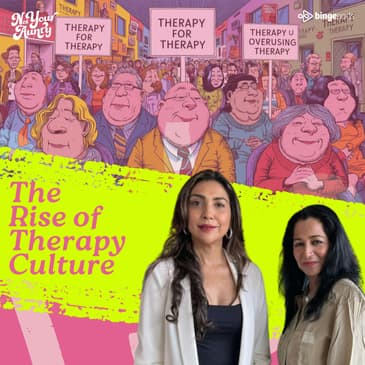

In this thought-provoking discussion, Kiran and Shunali explore the increasing trend of therapy in India and how it relates to societal changes. They delve into the impact of weather on mental states, the prevalence of therapy among their acquaintances, and share insights from a neuroscientist on neuro biofeedback. The conversation covers the de-stigmatization of minor mental health issues, the commercial aspects of therapy, and concerns about over-reliance on therapeutic sessions. They debate the importance of resilience, threat of over-medication, and the rise of therapy jargon in everyday life. The episode challenges viewers to reconsider the balance between seeking professional help and nurturing self-resilience.
[00:00:08] Kirtan, I am seeing you after nearly two weeks. What have you been up to? I have been up to getting exhausted, feeling exhausted, feeling uninspired. This weather is happening me of all energy. I really don't know. It's not been a very lively or happy time.
[00:00:24] Have you considered therapy? What's happening? Every second person we know is going into therapy. Is there an epidemic or some sorts that we don't know about? I don't know. We are at peak therapy as a country right now. Are we so depressed as a people?
[00:00:40] I mean, I just think that the other day I was talking to someone very interesting. There's this neuroscientist, his name is Kumar Bagrodia, and he runs a brain enhancement center where they do something called neurobiophetback. It goes by the name of NeuroLeap.
[00:00:57] So I was speaking to him about my ADHD and we were laughing about this. He said, you know, I am just exhausted with the number of people who are complaining about therapy.
[00:01:08] And I try and talk to them and say then don't go in for therapy because it serves its purpose when you're going through a crisis and you have no one to talk to. But he said he noticed that it's alienating and isolating people more and more.
[00:01:21] That's so true actually because you're going to a therapist and you're talking about stuff that you could easily talk to someone close to you. But what if you don't have someone close to you? Then you need it. Then you need it definitely.
[00:01:34] But given our Indian situations and extended families, I'm sure there is some person you can pull out from somewhere whom you can talk to about stuff. This is exactly so we went on to have a whole conversation about this
[00:01:46] because this is what he does day in and day out. He looks at people's brains and how to enhance them and how to de-traumatize them by reprogramming your neuroplasticity. So he said in Indian society, actually other except when you had an extreme mental health disorder
[00:02:07] which was then other extreme because people from not talking about mental illness and being in denial about it have gone straight to treating every life experience as something that needs to be discussed with the professional therapist.
[00:02:24] But interestingly, Shanali, I think it has been de-stigmatized only for the minor issues. I say minor in quote unquote of course those who are going through it. No, there's bipolar disorder, there's schizophrenia. But those are not yet de-stigmatized.
[00:02:39] People will not talk openly about going to a therapist for all that. They will talk about going to a therapist because they have anxiety issues because childhood trauma or childhood wounds to be healed and work anxiety. All these kind of things. Yes, I'm going to therapist.
[00:02:56] The therapist is as important to me as my personal trainer. Everybody has a trainer. Every other trainer and therapist these days. And it's always become fashionable. There was a time when you would hear a Hollywood star in an interview say that my therapist also says, right?
[00:03:11] It had slipped into everyday conversations the word therapy because that's a very isolated individualistic culture, the western world. But all of us in this country, we have parents and aunts and uncles to talk about everyday matters.
[00:03:27] So we are saying let's leave out extreme mental disorders from this conversation. Absolutely. Or even if you've gone through an extreme episode of bullying at school or some traumatic incident, you need to go to a professional because your parents or your uncles and aunts and friends
[00:03:41] may not know how to approach it with the right objective gaze. Objective gaze, right? But therapists are encouraging children to have boundaries with their parents in a culture where parents are deeply involved with their children from a very young age.
[00:03:56] And then instead of talking to their aunts, uncles, mothers because they have to have boundaries, they go to therapist for minor issues. I personally know someone very dear to me and there was some minor ongoing issue between us and this person was talking about me to her therapist.
[00:04:16] So this happened between friends also now or relatives so she just brought me up with the therapist and I noticed that over a period of 3-4 months whenever we met or interacted her relationship with me was under a lot of strain
[00:04:32] without any apparent reason the way she spoke to me. It was mean and she would snap at me and there was a lot of sarcasm in her conversations directed at me. So then at some stage we drew from this relationship
[00:04:50] and I was like, you know what? I don't need this in my life. A few months later she got in touch with me and said we need to talk. She was nearly in tears. She said, you know, you are so dear to me
[00:05:00] I really missed you and then I brought it up and I said, you know, well, you've been very weird around me. She said my therapist was making me hate you. Oh my God. She said my therapist pet project was
[00:05:15] to magnify relationships which are going through a little rough phase and then go on talking about them even when they had, you know, sort of moved beyond my conscious realm of the stressor. So they wouldn't let it die. Oh, they would keep picking it up.
[00:05:35] Picking it up and how is that? How is it doing? And the other thing is another friend of mine was in this relationship she stopped going to a therapist she told the therapist off. Okay, that's interesting. She said that, you know, so imagine you go to a clinic
[00:05:47] a therapist, a counsellor's clinic there are two types of therapists one is clinical that sends you to a psychiatrist after doing some sort of psychometric test and the other is just a counsellor. And you know, in India this has become like a fly by night thing.
[00:06:04] People are prescribing also so people are prescribing stuff also. Yeah, but you have to like day one some course in psychology day two and very scarily, Shunali what I see is people are not even going and meeting these therapists physically in person.
[00:06:24] They're doing it online over zoom calls or whatever. But why is that? I don't know if it is not right or not good but what I see is when you have a personal interaction with somebody across the table there's so much more nuance you can pick up
[00:06:41] and there's so much interpersonal interplay in terms of emotions, reactions the subtleties that you can pick up when you're doing something by the clock if you have 15 minutes or 30 minutes to give somebody over a zoom call you're distracted this stuff happening in the background
[00:06:56] the stuff happening at the therapist and at the background how is that working out even? You're just listening and very often I know somebody who is getting this done virtually she said I was going on talking and the therapist was distracted there was noises in the background
[00:07:14] kitchen noises I was getting distracted she spilled something But that didn't always happen I've done a few sessions of online therapy and they normally sit in a very quiet room so this is a very unprofessional place it doesn't work like that I'm glad to hear that
[00:07:29] No, no, no It's exactly like in an official meeting how you would talk to a therapist it's really like that My friends who are overseas sometimes when they're travelling they connect with the therapist online on Zoom and to that end
[00:07:44] I think Zoom has made a few things easier but here's what you're saying that if you want to ride over a bump in your life where you're uncomfortable discussing with your parents or close friends therapy does serve its purpose
[00:07:57] but to get a person attached to you for life so that every week they come into naval gazing and it becomes so self-obsessed and self-absorbed culture where everything is about boundaries everything is about telling your mother where are your boundaries everything is about not making yourself available
[00:08:16] for people because you're constantly being taught words like what are the psycho-bubble words we read all the time online other than gaslighting narcissistic, trauma bonding yeah, narcissistic, trauma response, trauma bonding and what happens is anyone of us were to look at our childhood
[00:08:35] I was telling a friend of mine the other day that we are discussing this most likely today and he was saying that I've stopped therapy now because it served its purpose for a few weeks or months but he said every time a therapist was trying to
[00:08:48] take me back to my childhood and making me talk about my parents and you know reconditioning my mind to believe that I had a traumatic childhood whereas he said I might have gone through see all our parents in those days boomer parents were different from how we are
[00:09:04] and they were stricter for one and they were less you know involved in a day-to-day actually my mother was over involved but most of those parents had a sort of laser fair attitude mine was called me when there's blood so that's a good approach
[00:09:23] I wish I had learned that approach I carried it on well done I don't know well done no, no, no well done it's easier on me no, I can see it I can see how it's played out in your life I think it's worked in your favor
[00:09:36] it's worked well for Kirish for Krish too yeah, that's your next child Kirit and Kiri yes, yes last call you yeah so as I was saying that you were talking about our parents being not-to-hands on no, yes, I was saying that correct, so he was saying that
[00:09:52] you know okay, I got punished a lot by my dad and my mother whacked me a few times we've all been whacked and then he said but my therapist led me to believe that I had a terribly traumatic childhood right it was a perfectly normal childhood by most
[00:10:07] by the sounds of it that's what I'm saying yeah so he said so I stopped because I didn't want to I didn't want to start living with so much self-pity and such a victim mentality and this is what a lot of therapists do I'm not saying all
[00:10:22] but a lot of therapists by making you navel gaze so much in every event in your life you are over-analysing over-analysing over-analysing it to the point of it becoming a you know a very big thing a minor thing becomes a larger than life thing
[00:10:38] it's like you take a wound it's healed over even a scab has fallen off but if you're going to be picking at it over and over again what is going to happen the wound is going to open up again it'll get bigger it'll get septic it'll get greangerous
[00:10:53] of course you just leave it shut let it heal on its own I think the healing thing has happened for most people for the minor things that some of course people have deeply traumatic events loss of parents sexual dreams all that that may need a lot more unpacking
[00:11:10] definitely we're not getting into that space at all heartbreak, breakups, divorces yeah and you can't really speak to people within your family about certain things then you might want to have a dispassionate third party advising you about it but what my only concern is this assumption
[00:11:27] that therapy should be lifelong and it should be maintained and it has to happen every week and that every small incident in your life that is giving you something to worry about you know because it's become a trend you start thinking should I be seeing a therapist
[00:11:43] so where is your own resilience where is your own ability to tackle minor situations in life and to accept that not sadness is as important to life which is not clinical level of sadness, worry, sadness anxiety are all survival tactics the brains way of surviving in the wild
[00:12:05] jungles where in the cave the days of the cave the Neanderthal how human being survived now if it is out of control it's a different matter but Kiran I'm sure when you were a teenager and I was the teenager of course
[00:12:17] there were things that everything every day wasn't you know a magical day where everything fell into place for us I worried I was a warrior by the way I worried a lot but through my own devices I learned how to tackle it because I didn't label it as
[00:12:31] a mental health condition we didn't have those labels and we didn't have parents who indulged us in those labels because A there was lack of awareness about it and there was that stigma attached to it secondly we were just expected to pull ourselves up
[00:12:45] by the bootstraps and get on with it there was no time and space given to sit in the feelings to heal but also the stressors were different you see the world today that our children are growing up in and even us the world we live in today
[00:12:59] firstly it's hyper connected and yet hyper isolated it's hyper isolated hyper connected hyper isolated very interesting human connection seems to be missing because what happened back then was we had communities some sort of community even as teenagers and it wasn't an online community it wasn't a reddit account
[00:13:17] and you would go there physically sit and chat with friends you would hang out by the compound wall or the park, the football field whatever you would go to call now what is happening is all the communication is happening virtually if it is happening at all
[00:13:33] I think people are no longer I noticed teenagers today they are no longer openly talking with their feelings to each other, they just distance and they ghost you or they freeze you out of their lives or they leave you out and then they play songs on instagram
[00:13:49] reels to shade you okay so literally I am talking about very young kids who start doing this between just even girlfriends having a falling out really so I am saying that what happens if you miss the reels you don't realize you have been cheated
[00:14:05] these kids they never miss anything they are looking at each other stories all the time, not real stories here is the thing there is an article in the Time magazine which talks about over medicated and overtherapized nation and America has also had peak therapy
[00:14:21] and as this graph will show you that the more America becoming aware of mental health and going in for therapy and psychiatry the more depressed America has become and which is what that day Kumar pointed out to me he said that why is it that India
[00:14:37] has imported all these mental health healing techniques under the guise of therapy and psychiatry from the west when the west is the living example of how it's called the prosaic nation why it's a living example of how if these things are working then they would have been far
[00:14:55] better off and this is where therapy and psychiatry is a different ball game so let's not go there but you'll be surprised to know that in the last two decades there has not been much R&D in psychiatry and the same medications
[00:15:11] that were prescribed in the early 2000s more or less exist under different brand names today and it's almost like a dark board they keep throwing stuff and seeing what label sticks so whatever sticks prescribe something also like every thing is not say a serotonin deficiency
[00:15:27] and where psychiatry goes wrong is that they don't evaluate the other thing that the root this is the bandaid solution so it doesn't look at the root cause of why you are where you are as in what has made you so anxious that you need to be medicated
[00:15:43] for it okay again we're not talking about extreme disorders we're not talking about bipolar disorder schizophrenia all those things or clinical depression we are saying that you know anxiety is supposedly the most treated cannot treated prescription non-spribe medication for anxiety so anxiety is
[00:16:05] today the most common reason for which people are going to psychiatrists okay and so without figuring out environmental factors the atmosphere at home the peer group expectations no it's straight away okay this is the illness and let's put a bandaid on it
[00:16:19] and that bandaid may not work because till you take away those factors and address those this isn't going to go now for those factors you go to a therapist but in a country like India I can't speak for the US in a country like India
[00:16:33] therapy is such a nascent industry and licenses are so easily available and they aren't revoked easily if you know you mess up as a therapist my friend's daughter did her masters in psychology and she came to India and became a counsellor she
[00:16:49] was telling me that so many therapists in India do not respect the confidentiality clause with their patient and they literally sit and discuss their patients with each other along with the names think about it if the patient is somewhat you know well known that's really scary they take
[00:17:09] names and they talk about it and they laugh and they make jokes about it and she was horrified when she was herself exposed to one such therapist because you know they all have their meetups or whatever another scary thing I don't know whether it's similar I mean
[00:17:25] they may not take the name of the patient but I see sometimes on Instagram reels you have therapists and counsellors coming up with case studies okay and they're talking about whatever happened this person has come for whatever whatever at the end of the day the patient
[00:17:41] has a patient confidentiality clause if the patient recognizes themselves being discussed or people close to them recognize it isn't that a breach of confidentiality even if you don't take the name even if you don't say anything but you know what the case is right
[00:17:55] and that is grossly unfair but the thing is I don't know what will be the outcome if you were to take someone like that to court so what I worry about is the therapists talking about their case studies on Instagram reels which are very 30 second reels
[00:18:07] and if the patient or somebody close to the patient recognizes the case and knows even if the name is not taken that this is about this person where his patient confidentiality stand with us and also is it enough to dole out advice on such brief reels
[00:18:21] because people watching them are just going to pick out stuff which is too generalized yeah it's not adequate you know Kiran this account that I follow it's an American account of a therapist and I realize that a lot of everything in my life has been a trauma
[00:18:35] response according to according to this person according to therapy, psychology whatever all our lives and at one level you know it's very insidious I began to really look at my mother as some sort of a perpetrator of all these you know psychological
[00:18:53] crimes against me and then I started to laugh and I said this is exactly how our children must be feeling because kids today are exposed to so many of these accounts and this is the kind of talk therapist must be having with them having said that
[00:19:07] for example there's another friend of mine and she's devoted the last 5 years of her life to studying therapy and she got about it very ethically but then in India people like that are very few and far between as my own experience and through my friends
[00:19:19] has taught me and I'm going to read out this quote so this is again from Kumar Bagrodia he says that see there is ongoing research on how mental health awareness programs increase the rise in mental health problems and therapy economy which is a wonderful phrase therapy economy
[00:19:41] it's a very large economy therapy economy over interprets every life situation to be a mental health problem to be therapist and medicated society at large uses therapy lingo to describe well what is just life that's very and you know one expects to be mentally healthy
[00:20:01] in this therapy economy without putting in the effort around in terms of lifestyle choices substances and more if you're not exercising keeping the circadian rhythm drinking is working a lot and then you say that I'll talk to my therapist and that will sort everything out for me
[00:20:19] it doesn't work that way so this is the point I wanted to make and in that article I had taken a speech about there's another very interesting quote from Dr. Richard Friedman who runs this the psychopharm what psychopharmacology clinic at the University of Kaunan
[00:20:41] or the pharmaceutical clinic at the University of Kaunan one of the two I mean the order of the words changed but what he says is that earlier there was this idea that you would go to therapy because there's something wrong
[00:20:56] and now there's the idea that you go to therapy there's something wrong if you don't go to therapy oh really there you go and this is a psychiatrist who's been practicing for 35 years saying this this is the time magazine article no this is not the time magazine
[00:21:12] this is an interview a podcast with Dr. Richard Friedman oh okay you go to Richard Friedman Friedman I like Friedman okay Friedman Dr. Richard Friedman so Dr. Richard let me just get his designation okay Dr. Richard Friedman who runs the psychopharmacology clinic at Kaunan
[00:21:34] has said earlier there was you went for counseling for therapy if there was something wrong now the idea is that if you don't go for therapy there is something wrong therapy has become such an integral part of American lives and I see it happening more
[00:21:50] in seducely here as well he also goes on to say that there has to be an end to therapy you need to be able to quit therapy and you're doing life long if you get emotionally attached to the therapist transference is happening emotional attachment is happening
[00:22:06] and when that happens the therapist needs to be ethical enough and strong enough to say okay I'm not going to look at my billings and I'm going to tell this person it's time for you to stop but does that happen very often you know very interestingly Kiran
[00:22:22] there's this woman who used to conduct these Gita classes like you and me I started attending classes in November and then I think she studied psychology also but her main thing has been a more spiritual approach to things I was going through a little bit
[00:22:42] of something for which I thought that again I thought that I need a therapist and I did a few sessions with her they were so nice we did it on zoom they were so wholesome I thought I would do a wiser older friend or
[00:22:58] somebody who's had life experience who's been through motherhood who lives in the environment we live in today and who understands you and it was really ultimately about somebody with patience somebody with a lot of acceptance and empathy who didn't judge you because I know
[00:23:14] of a friend who stopped therapy because she felt very judged by her therapist so that's when I realized that ultimately when we lived in larger families in India we had grandparents to talk to our kids do not have that and environmental stressors like one is geopolitics
[00:23:32] the other is what is actually happening to the physical environment of the planet third is all the disturbing news that's constantly coming at us from all directions because of hyper-connectivity and you know suicide rates in the US have gone up
[00:23:46] rates of depression have gone up so there's so much unhappy talk there's such chaos and there's such a you know basically trauma, tragedy and scandal is constantly being headlined and highlighted so surely that will have an impact on our psyches but that does not mean that if
[00:24:06] you're feeling sad because of certain news that you witnessed on TV that you have anxiety issues like Jindu Krishnamurti says that it is no measure of health to be well adjusted to profoundly sick society lovely which means that if on any given day you are feeling a little
[00:24:26] low it does not mean that you have a mental health problem it just means society is like that we're living in those kind of times another thing you know society is this way for sure we are part of society for sure where is our own
[00:24:42] inner filter now because all this news is going to be coming at us all the time right and if you're going to be consuming this news if you're empathetic people if you're people with a certain form of if you're already a little
[00:25:00] soft and anxious to begin with it's going to impact us yeah it's going to impact us we need to know how to draw on boundaries and we don't need to go to therapy I'm not an expert just because this is
[00:25:14] impacting us we need to say okay I need to stop consuming this content I need to stop looking at the news I need to turn off I need to watch a rom-com I need to watch something funny or read something funny I need to self-regulate yeah and
[00:25:28] that ability earlier we had I think whenever we felt a little sad okay let's go let's watch something funny now we don't do that anymore we want to go to therapy you and I still do that yeah but that's true that is a normal response now
[00:25:44] yeah right get to therapy see the other thing is this is an echo chamber okay so you're lying there and you're saying you know my husband talks to me like this and my mother-in-law talks to me like this or my friend did this to me and the therapist
[00:25:56] saying oh I understand that's not right that's not how your mother should be talking to that's not how your husband should be talking to so it's an echo chamber and then you come back and you sort of use the same terms on them that's what's happening
[00:26:08] in every other household where somebody or the other is in therapy you're not respecting my boundaries you're anxiously attached to me yeah there was an article you know they do a satirical peace and shouts and murmurs in New Yorker so this article said
[00:26:26] an intervention for my friend who's done too much therapy and it says dear friend we are staging this intervention to inform you that your work in therapy and your subsequently updated communication skills have made you a worse person to be around this is a formal
[00:26:42] request for you to halt your healing journey exactly because you're going into therapy there's so much of naval gazing everybody around you is the criminal and you are the victim but you could be the damn criminal for those people as well
[00:26:58] and they have to pay the therapist to tell them that and you know there's a word I mean I'm sure you'll get deep doubt called unfuck yourself okay I think that it's all right for all of us to become a little self aware
[00:27:10] and sort of untangle the crazy mesh of life experiences and emotions you know that defines our personalities today to a certain degree but to make it to be preoccupied with this this is the problem this culture is preoccupied with un hashtag, hashtag star themselves
[00:27:32] like don't it preoccupy with detangling your entire personality in fact you are what you are because of your experiences I don't think we'll ever reach a stage where we'll become a perfect perfect human being just perfect perfectly psychologically balanced without our quirks our quirks make us
[00:27:50] and the one thing therapy is really not teaching you they're teaching you self absorption which is not the same as self love and self acceptance because I'm looking for acceptance from my therapist now I'm looking from validation I'm not of approval from my therapist now
[00:28:06] so what happens to me reaching a point where I say it's fine I embrace myself what's in all but the therapist will not want you to reach that point most of them because if you reach that point you will say okay thank you
[00:28:18] it has been a lovely journey and I'm moving on I think I need to quit therapy you know Zanna Garag Zanna entire podcast is she hates therapy and there's this therapy session that she's giving to Karan Johar she says that you'll feel completely sorted 10 years from now
[00:28:36] because that's how billing works absolutely that's how billing works having said that I must add and I think the only experience personally I've had with therapy was with my son when he was having some behavioral issues when he was in the 8th or the 9th grade
[00:28:52] I took him to two sessions couple of sessions with a friend who is a therapist and she told me very clearly I don't think we'll need more on two or three sessions and he was sorted after that actually my friend Kanchan also
[00:29:04] the one who I said has dedicated devoted the last 5 years of her life she says her main goal when someone comes into her room for therapy her clinic is to not get them so hooked on to therapy that they can never become independent
[00:29:18] so she already has a goal that lets focus on getting you from here to here so therapy is not just nodding and saying I see and how do you feel about it and I see you need to have clear goals
[00:29:28] and a good therapist will be mindful of that there has to be an end date definitely because therapy is also expensive Shanali I think it has become a kind of status symbol to say as we discussed earlier like a personal trainer
[00:29:46] this is my therapist and my therapist says this and my trainer says this not everyone can afford it and those who really might be needing it definitely can't afford it some of them so I was reading the Times UK and in this article this person had said that
[00:30:02] their anxiety has gone away in many ways but they worry more while anxiety has gone away they worry more because therapy has taught them to analyze their life so much and while they are working on their relationship with themselves through therapy they realize that the relationship
[00:30:20] with everybody else has become worse have gotten worse so Kiran the thing is that in India this whole therapy economy this industry is very unregulated and while there is some sort of an act that has been proposed called the National Commission for Allied and Healthcare Professions Act
[00:30:38] to regulate the sector it hasn't yet been implemented and until that happens every other person how many Instagram influences offering therapy? yes, in fact I was reading an article just about that about how some people are charging 1500 for Talk To Me
[00:30:57] Talk To Me and they are completely unprepared to deal with what might actually come up in the conversations and somebody was saying that she was talking to one of these so called Instagram Talk To Me therapists who are just an influencer offering the service with no training absolutely
[00:31:13] and that influencer began crying when she began about whatever experience was and she felt gaslit lovely words so everybody is being gaslit everybody is toxic everybody is narcissistic they are labeled for everything we don't experience anymore we label what we experience like we have said this before
[00:31:37] we don't worry anymore we have anxiety we don't have life experiences anymore those are all trauma trauma responses trauma bonding attachment anymore it's all an attachment style that we need to analyze and we are gaslit all the time our friends and our spouses are narcissists or avoidance
[00:32:01] or avoidance and we are victims we are always victims that's what therapy is teaching us at the end of the day there should be a glossary of words Therapy speak which is clinical talk that has made its way into every real language toxic trauma gaslighting then there is
[00:32:21] triggered now everything comes with a trigger warning oh yes please like I love the word triggered because basically if you get triggered so easily you need to work on your levels of patience and not react so much you need to have rain in your impulses a bit
[00:32:39] and you need to have some resilience that's what I am saying therapy is teaching people to have zero resilience always turn to somebody for advice and to help you walk it's a crutch Matt Smith spoke about this recent trend of trigger warnings before some very disturbing plays
[00:32:57] so I think Maggie Smith or somebody who is a doin of theatre in the UK she came up with why do you go to a play you go to watch a play to feel intense emotions if you are going to have a trigger warning in front of it
[00:33:13] then don't come then detracts from the entire experience what are you going to do with Shakespeare the whole play is a trigger warning in Shakespeare Kiran the word triggered triggers me we are triggered I am triggered by the word triggered
[00:33:27] I am fed up by the word trigger warning some chopper crash trigger warning naturally I know that there I mean this is it how fragile are we mentally and you are encouraging us to become more fragile by saying it's okay to be fragile you are an empath
[00:33:41] okay to be fragile I am very sensitive actually heavens you will never survive this world if you are going to go around wearing your frigility on your shoulder yeah it's like a bib I am fragile you need a carrot paste you need to be a turtle
[00:33:55] you cannot be an ex-shell and we are becoming ex-shells very good very well said the other thing is when people say I am an empath or you know I feel too much and then make such a virtue of it the fact is that if you are an empath
[00:34:09] sorry for what's happening in the world you will actually get up if you can't address what's happening severely say in one part of the world say what's happening to the poor Palestinians you will try and better somebody's life here devote some of your time
[00:34:21] to making the world a better place however if you are going to take away if you are going to make everybody's troubles about yourself if you are going to take every problem in the world and make it about yourself
[00:34:35] and draw attention to how sorry inside you are feeling then you are not an empath you are a self-absorbed prat you are a narcissist so this is the generation of naval gazers, narcissists and ex-shells