
SIGN UP FOR REGAL UNLIMITED W/ PROMO CODE - REGALNBP24 - https://regmovies.onelink.me/4207629222/q4j9urzs
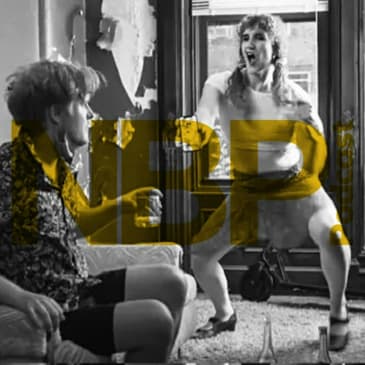
"Stress Positions" had its world premiere at the 2024 Sundance Film Festival, where it received solid reviews for its capturing of the chaotic, messy, and stressful COVID-19 pandemic lifestyle in Brooklyn, NY, during lockdown from a queer perspective. Producer and star John Early, as well as director, writer, and star Theda Hammel, were both kind enough to spend some time talking with us about their experiences in making the film. Please be sure to check out the film, which is now playing in select theaters from NEON. Thank you, and enjoy!
Check out more on NextBestPicture.com
Please subscribe on...
SoundCloud - https://soundcloud.com/nextbestpicturepodcast
Apple Podcasts - https://itunes.apple.com/us/podcast/negs-best-film-podcast/id1087678387?mt=2
Spotify - https://open.spotify.com/show/7IMIzpYehTqeUa1d9EC4jT
YouTube - https://www.youtube.com/channel/UCWA7KiotcWmHiYYy6wJqwOw
And be sure to help support us on Patreon for as little as $1 a month at https://www.patreon.com/NextBestPicture
Learn more about your ad choices. Visit megaphone.fm/adchoices
[00:00:00] This episode is brought to you by FX's The Vale, starring Elizabeth Moss.
[00:00:05] FX's The Vale is an international spy thriller that follows two women as they play a deadly game of truth and lies on the road from Istanbul to Paris and London.
[00:00:15] One woman has a secret and the other has a mission to reveal it before thousands of lives are lost.
[00:00:21] FX's The Vale premieres April 30th only on Hulu.
[00:00:30] FX's Best Picture Podcast and V's are Dan Baer's interviews with the director, writer and star for the film's stress positions,
[00:00:38] Data Hamel and the film's star and producer, John Early.
[00:00:42] I can't find my phone.
[00:00:47] Hi Leo. When do I get to meet him? Who? The model.
[00:00:51] He's my nephew and he's very badly injured.
[00:00:53] Well what do you look like? Do you have a nice bag?
[00:00:57] Terry wouldn't let us meet that little 19 year old male model from Morocco with the badly broken leg.
[00:01:06] Who was he? That poor boy in the basement.
[00:01:09] What in the name of God?
[00:01:11] Hi Uncle Terry.
[00:01:12] Hello, should you put on a shirt?
[00:01:13] Why? Aren't you cold?
[00:01:15] No.
[00:01:16] Strong chi.
[00:01:20] What is so exciting about models?
[00:01:22] First of all they're very attractive.
[00:01:24] You know I read that in Morocco people eat with their hands.
[00:01:28] We're eating with our hands.
[00:01:30] Not hamburgers.
[00:01:34] Tajim, sure.
[00:01:35] Welcome everyone to the Next Best Picture Podcast where we are talking with John Early,
[00:01:41] the star and producer of the new film's stress positions.
[00:01:45] John thank you so much for joining us today.
[00:01:48] Thank you for having me.
[00:01:50] Of course. I wanted to start by asking what kind of an obvious question but I feel like
[00:01:55] it gives important context which is how did you get involved in this project?
[00:02:01] Well Theda Hamel the writer, director, editor, composer and star of this movie
[00:02:09] is an old friend of mine.
[00:02:11] We met at Atlantic Acting School where I was working the front desk after completing my training there
[00:02:17] and Theda was beginning hers.
[00:02:19] And we just immediately were very drawn to each other.
[00:02:24] I think we immediately recognized a kind of you know probably like pretentious self seriousness
[00:02:30] but also a kind of irreverent subversiveness too in each other.
[00:02:35] And we worked on this Brecht play together.
[00:02:38] She was the assistant director and I was playing the snare drum in a Henley.
[00:02:42] Very nice.
[00:02:43] Yes and I think it was really that process where we I think we really kind of merged
[00:02:48] and understood how funny the other person was you know because we were in a very kind of serious like
[00:02:55] Miliya you know at that time.
[00:02:57] Brecht.
[00:02:58] Brecht.
[00:02:59] Brecht.
[00:03:00] You were on Atlantic with David Mamet it was you know.
[00:03:04] And then we just became very very good friends and I think kind of shared,
[00:03:10] somewhat shared a worldview or even kind of developed one together as friends do.
[00:03:16] And then I hosted this variety show called Showgasm.
[00:03:20] I didn't come up with the name at Ars Nova for five years in midtown.
[00:03:25] These are really like the happiest years of my life and Theda was my DJ sidekick co-host
[00:03:31] and we would just talk endlessly on stage together pretty drunk.
[00:03:36] And it's like the most fun I've ever had as a performer.
[00:03:40] But it was kind of in that that I learned that Theda had this like really unique ability
[00:03:46] as far as like my experience industry goes like to take my silliness and to locate the kind of deeper critique inside of it
[00:03:58] like underneath it and kind of tease that out and help people see it.
[00:04:01] And I think that's precisely what she did with this movie.
[00:04:05] She we also worked on a Wala Shahn play together in 2018.
[00:04:09] You know and I think that's also where we got a little more serious as collaborators.
[00:04:12] We were like from being like kind of on stage, a little on stage duo to like
[00:04:17] we're like kind of getting back to our roots theatrically.
[00:04:20] And anyway but she wrote me this movie that I thought it took this like kind of comedy thing that I already did
[00:04:26] and found like a sadness in it.
[00:04:30] It located it in a very specific moment in time and gave this character very specific history.
[00:04:36] And it was a dream. It was a dream.
[00:04:39] I love that you know you sort of found each other not even as classmates
[00:04:44] but at the theatre school, old theatre kid like I love this so much.
[00:04:49] And those connections really do like when you find someone who speaks to your artistic self
[00:04:54] they really just they bond you for life.
[00:04:58] It's incredible.
[00:05:00] You know you mentioned that this is you know sort of this comedy thing that you kind of already did
[00:05:05] but there's a lot of layers to it and this sadness.
[00:05:09] One of the things that really struck me about Poetry is that you know
[00:05:14] he's obviously dealing with a lot of history with not feeling wanted by his sister
[00:05:21] by his soon to be ex husband and yet you know we're in this moment where
[00:05:29] he's thrust together with this nephew.
[00:05:35] And do you think that he and that we like particularly as gay people often conflate
[00:05:41] being wanted and being needed because I feel like that was this tension between him
[00:05:47] taking care of but will you okay you've gone there.
[00:05:52] I have gone there look we're both gay men of a certain age these are the sorts of things that are on the mind.
[00:05:59] Yes, the needed part of it is very interesting to me because that's something that I as a kind of
[00:06:07] recovering Presbyterian from the south.
[00:06:11] That's a world where you establish your value in the eyes of others is like your kind of
[00:06:17] your ability to answer other people's needs you know and that can come from a really earnest place
[00:06:22] in Christianity like you know helping the poor but then it can also be it can be exploited
[00:06:28] or it can be like it can become kind of pathological and not helpful.
[00:06:35] I think that Terry really over identifies with this sense of like charity and like kind of suffering
[00:06:44] from like on behalf of others and he's always just he's always something very put upon.
[00:06:49] I think if you were to remove that feeling he would not have anything especially because
[00:06:56] I think as you're kind of also saying especially as his like kind of gay identity is like even
[00:07:02] more our twink identity which is maybe not clear in the movie but it's certainly in like me and
[00:07:07] Theta's kind of history of Terry thing we were like he was a twin you know who was kind of
[00:07:13] kept by this like depraved older man because he was a twink and then he aged out of that
[00:07:20] archetype and then was like dropped on his ass.
[00:07:24] Yeah so I don't know he's certainly not wanted and he's not needed I'm not sure how those
[00:07:29] people did but like he's lost both but I think he's trying to do in the movie is like proof
[00:07:36] like even if he fails miserably at this but he's like trying to show how kind of like invaluable
[00:07:41] he is as a caretaker you know to Belul and into his friends and stuff and I don't know it doesn't work.
[00:07:48] One of my favorite little design choices in the movie is that whiteboard that at one point
[00:07:54] says learn to cook and cook is in all caps and underlined.
[00:08:00] Yes.
[00:08:01] And some names of like cookbooks or cooks.
[00:08:07] No because I think it says I think the question work is actually after Allison Rosen.
[00:08:11] Yeah Allison Roman yes which is it's the most New York thing.
[00:08:17] Yes.
[00:08:18] I love it because it instantly took me like a lot of the movie does but it took me right back to 2020 and like oh my God we have to bend for ourselves with the food here so I'm wondering what was your favorite recipe that you learn to cook during the lockdown period.
[00:08:38] Oh my God.
[00:08:40] I actually think I know because there was a lot to be clear like they wrote this for me like she was very much she was using a lot of my kind of particular quirks and perverting them and deepening them and one of them is my like kind of tortured
[00:08:58] relationship to cooking I don't know but at that time the one I made it there was a crispy.
[00:09:05] It's always crispy in the title.
[00:09:07] I'm glad on a on a I'm glad it's crispy textually.
[00:09:13] Sure yes.
[00:09:15] Right.
[00:09:17] There's a Molly Baz Bon Appetit recipe.
[00:09:21] These crispy smashed potatoes that are like with a like walnut anchovy like a lepo chili pepper sauce and like dill and labna or sour cream underneath.
[00:09:35] Wow.
[00:09:36] Are sensational.
[00:09:41] Okay I'm going to have to find that recipe because that sounds delicious.
[00:09:46] Crispy smashed potatoes Molly Baz.
[00:09:49] Look at them.
[00:09:50] I will.
[00:09:52] But honey.
[00:09:54] Do not do not go blindly into the salt.
[00:10:00] Oh no you have to.
[00:10:02] I'm sure and there's more.
[00:10:04] Okay they were actually required vastly different measurements and you will ruin your potatoes if they're under or overseas and so really do your research thank you.
[00:10:13] Always.
[00:10:14] Oh my gosh my own torture relationship to cooking.
[00:10:17] We're not here to talk about that.
[00:10:21] We are here to talk about this movie.
[00:10:24] There's so much chaos happening everywhere at all times and did that vibe carry over to the set to like from the characters to the real people living it.
[00:10:37] Oh yeah I mean there's a weird well first of all I've never had a non chaotic like film experience.
[00:10:45] We used on a scheduling level everyone's always totally exhausted it's like you get on a train on day one and you do not get off for like three or four weeks and it's terrifying you know and every and you have you lose all semblance of like control over yourself.
[00:11:02] You know like it's really it's it's crazy like I it was crazy.
[00:11:08] But I also think one of my favorite things about like making art even though it's also one of the most terrifying things about making art is there's always this weird conversation between the real life your real life and what the art you're making and like the art absorb stuff in the real life
[00:11:26] and your real life absorb stuff in the art and like you know there were some of that was conscious like theta using my own like kind of relationship to my back like I've had like several back surgeries and like shoot and one of my back surgeries delayed this movie.
[00:11:41] Oh yeah yes so like you know there was like a lot of there was that you know but but then on the kind of more deeper mysterious level there is just like car is an actual model.
[00:11:54] And it's just like bright angel everyone on set was like totally enamored with this like sweet kind of just angel you know and then I'm over here being like guys we gotta go like it was like I was like is this happening.
[00:12:10] I mean am I jealous you know like it was it was so it's so funny but yeah there was there was like a I think a kind of natural kind of chaos but then there was also like this was a really ambitious movie formally and theta was coming to this with she's a real
[00:12:29] cinephile she had a lot of very big kind of theoretical ideas about like that camera and like how we're going to shoot this and like when you're dealing with like a kind of really fast kind of low budget shoot it's really really easy to fall back on kind of convention.
[00:12:46] And a kind of like Brooklyn indy kind of mumble core like straightforward kind of shoot and I think they don't want to do something more elevated and experimental and so I think a lot of the a lot of what made this a challenging shoot but in the best way was like.
[00:13:02] With the time we had which was very little trying to let theta this first time filmmaker like really like go there and like she really did I'm really really proud of her like she really she's doing some like audacious things in this movie and it's I think it has a real it has a real style and panache.
[00:13:23] Absolutely coming up on the end of our time together unfortunately but I they know to but schedules I did want to ask because you are such a iconic New York Manhattan Brooklynite character now twice over that I have to ask if Elliot from search party ever ended up at the time.
[00:13:53] The party house and positions but what do you think he would say to Terry.
[00:13:59] I think Elliot like for all of his laws is actually more integrated than Terry.
[00:14:07] You know he's he's in acceptance of his he's long long ago embraced the fact that he's like a pathological liar you know that he's like a grifter he's like a he's open about those things he knows those things about himself which it you know as despicable as he was he could at least relax a little bit because he knew that about himself and I think Terry is so profoundly in denial.
[00:14:32] And it leads to a lot of back pain and I think that I think I think Elliot probably wouldn't even waste any time talking to Terry but if he was forced to I think he would probably just kind of tell him to relax.
[00:14:48] He needs to relax really needs to relax not just for himself or everyone around him.
[00:14:54] Yeah.
[00:14:56] Yeah well John thank you so much it's been a delight.
[00:14:59] Thank you I love the star background.
[00:15:02] Thank you.
[00:15:04] Have a great one thanks to all of our listeners of the next best picture podcast we know you love movies we do too.
[00:15:13] Do you like going to the theater well Regal unlimited just makes sense.
[00:15:17] Regal unlimited is the all you can watch movie subscription pass that pays for itself in just two visits see any standard 2D movie anytime with no blackout dates or restrictions when you want to watch a movie in a premium format like 40x I max rpx or screen x your Regal unlimited membership gets you into his premium experiences at reduced cost and with Regal unlimited you want to save money on tickets.
[00:15:47] You want to save on snacks members get 10% off on all non alcoholic concession items so if you're planning to see two movies this month just to you need to join Regal unlimited sign up now in the Regal app or on reg movies dot com slash unlimited that's R.
[00:16:05] Welcome everyone to the next best picture podcast where we are talking with data hammer the writer director and costar of stress positions they thank you so much for joining us today.
[00:16:18] Thank you Dan it's my pleasure.
[00:16:20] Great to talk to you.
[00:16:21] Very excited to talk to you about this movie because it opens with a think an all timer of a first line which is I want to talk which is how which is how all the best conversations always start right like it always feels like that's the best thing to do.
[00:16:36] You want to talk to me.
[00:16:38] I want to talk to you about this movie because it opens with a think an all timer of a first line which is I want to talk which is how which is how all the best conversations always start right like it always feels like that's like you find out you're getting fired or that.
[00:16:55] Our wants to break up with you.
[00:16:57] Yeah yeah.
[00:16:59] It's just it's bad news.
[00:17:00] It's always bad news and someone wants to say that.
[00:17:04] So I was just like when you were sitting down to write this what did you most want to talk about.
[00:17:12] That's a really good question.
[00:17:14] I guess I guess that I just wanted to speak to a weird very difficult to reconcile experience of living through that that moment in time or being at a certain age like but more than that I just wanted.
[00:17:27] I wanted to see this.
[00:17:28] I wanted to see John play this character basically I wanted to see him play this poor guy Terry goon and in all his splendor and objection and that was my main intention.
[00:17:42] It is very fun to watch John early take a pratfall.
[00:17:47] Oh yeah.
[00:17:48] I mean it's the best.
[00:17:51] It's so funny because like this poor guy is kind of like the Sisyphean task of trying to clean up this house and take care of all these people who could not care less about any of that.
[00:18:05] It felt very it felt very Buñuel like this speech from of the bourgeoisie endlessly preparing for you know a general party that just doesn't happen sort of thing like it also reminded me of mother the Darren Aronofsky film was the sink
[00:18:21] right.
[00:18:23] It's just constantly the worst party and the worst people keep coming in and destroying this poor girls house.
[00:18:31] Yeah it was a lot like directing a movie.
[00:18:33] It is a lot like it's a movie and it was just when you're you're thinking about what where did these characters and this this location come from because obviously like you know like we've all lived through the pandemic.
[00:18:48] It's I think it's something that we it's quite easily understandable someone wanting to tell a story about that but where did with these characters in this this incredible party house come from.
[00:19:00] Well that party house came late the first idea was the character and then the idea was that the character would be surrounded by his opposites.
[00:19:09] So just like you say like the character he's like a Sisyphus like pushing the smallest rock up the smallest hill and failing like you can't cook you know it's not about like I can't your cancer.
[00:19:22] He can't cook a meal.
[00:19:24] He can't throw a dinner party.
[00:19:26] He can't make a speech.
[00:19:28] He can't take care of his nephew like he can't do anything and rather than going I don't care you know to hell with it.
[00:19:35] That's just not my thing the character instead is like going I'm going to go crazy.
[00:19:40] Why can't I do any of this.
[00:19:42] It's the most serious thing for him that he can't make any of this work.
[00:19:45] And like so that character was just going to be surrounded by the people who were antithetical to that like you know but a little being the big one has met you.
[00:19:56] But Karla the character I play also being one and that all had to happen somewhere originally it was like a big house was like an Airbnb house almost like a very tacky millennial Airbnb house.
[00:20:09] That house fell through this was before we even got financing.
[00:20:14] So then I thought well just find a dump like just find some dump like undecorated unrenovated and we'll just call it a party house and the idea is that this ex husband rather than renting it out as an Airbnb he would throw orgy there basically.
[00:20:30] As you do for parties we've all been there and the and that this would be the ruin where this guy would be trapped in and it kind of is nice for a covid set movie to have somebody actually drowning in space like a very spacious ruin this house rather than cramped in a stupid apartment which is more of a
[00:21:00] The Karla character is doing something more like what I experienced you know being issues in Green Point and in a railroad so just so much how I got to the party house and we got we found it very much at the last minute it was like maybe two three weeks before shooting started.
[00:21:18] And that was going to be my next question is if you had shot everything on location or if any of it was a set.
[00:21:24] None of it was a set I would have loved to experiment a little bit with the sets but the house really was like our soundstage basically and I love to that because it's very I like the idea like from the theater of just like showing up to the theater every day for work.
[00:21:40] It's a very comforting feeling yeah but I think the crew maybe it drove them a little crazy to keep lighting these same rooms and do the same halls running cables through the same halls.
[00:21:50] But no that was our home base and the production office was on the top floor perfect top floor production next floor Coco next for Terry next floor by who I love that the production design how much fun did you have like just getting all this stuff to fit in this house because like the giant disco ball whiteboard that says learn to look on it.
[00:22:18] I.
[00:22:21] That's a little Easter egg there learn to cook it says learn to cook Alison Roman question mark.
[00:22:29] All of this Bon Appetit Alison Roman stuff whiteboard.
[00:22:33] So how much fun did you have like coming up with stuff to put into this space how did you determine the personality of it.
[00:22:40] I had no fun.
[00:22:41] I hated.
[00:22:42] I thought it was terrible.
[00:22:43] I had no fun and I think like that our production designer Gordon Landerberger who also appears like we had a.
[00:22:52] I can't I won't speak too much about it but like there was a sort of art crisis really early on before we started shooting where we're like oh my God we have nothing we have none of what we need so our production designer Gordon Landerberger came in at the last minute blew in from LA.
[00:23:10] And basically was pulling everything together like through just sheer force of will.
[00:23:17] The whole month that we were there and he actually plays the characters sort of down on his luck character out on the street this sort of.
[00:23:26] Oh yeah.
[00:23:27] eccentric man on the street that is our production designer at the very last day of shooting so it's very unexaggerated like that is the state that I think he felt he was in by the end of it and but he did an amazing job with very little preparation and very very few resources so I'm more grateful to him for going through all of that than than anything.
[00:23:53] Yeah that's I wonder if somehow like you know you think about like you know cosmic things that are happening and I wonder if that was like how it was supposed to happen because this is such a chaotic movie and the space is you know also chaotic with not just in the history of it was used for but with people constantly coming and going and all the action.
[00:24:19] Yeah there's something very I guess like that it's a truism but like the circumstances of the movie propagate themselves into the circumstances of the production and vice versa.
[00:24:30] And the fact that we were always at the end of our rope that we were patching things together in a very threadbare way you know the reason that Terry sink doesn't ever turn on in the kitchen is because it's not plugged into the wall there is no pipe in that room.
[00:24:45] We cut the sink out of the basement and moved it up the stairs and put it there and it defaulters doesn't work. So in a weird way the fact that we don't have a working sink and the fact that Terry doesn't have a working sink is the same thing and the camera is just capturing the literal fact of this of the stress that we were all under.
[00:25:05] So I think that the I actually think that it does imprint on the movie in a way that I like. There's a sort of nice threadbare desperate quality to the to the world of the movie that enhances the fiction of it for me.
[00:25:20] Absolutely. You know like all this you know talking about the chaos and the energy of this movie of everything that's happening then thinking back to the covid lockdown times. Do you think that that pandemic induced isolation is still screwing around with our heads and how we interact with people.
[00:25:45] Yes. Because I actually think that what the pandemic did was it ushered in an era of virtuality and confusion that was already nascent that was like all of the technologies were already in place and covid allowed them to really take over and dominate and then like you know I've never had no that's not exactly true.
[00:26:07] I've had very few in person meetings with anyone like relating to the movie or the business or anything like that even press that weren't on zoom like zoom really took over all of life. It almost feels like covid was just an accelerant of those tendencies that were it's not like we're living in the trauma of covid.
[00:26:27] We're living in the world that was being designed for us in advance of covid this weird world of virtuality and and and liquid persona and social media confusion all that kind of stuff. We're just like drowning a little bit more in it now.
[00:26:46] No absolutely. And there is there's another line that that struck me in the movie wherein it's near the end and it's you know why should I be this person why can't I be someone else.
[00:27:00] Yeah I mean why can't we all be someone else but then thinking about that time and specifically this movie. I sometimes wonder if we we trap ourselves into who we are just as much if not more so than like societal expectations and pressures do.
[00:27:19] Yeah there I think that there's a tension that I feel very cute Lee and I think it's in the movie of just like two contradictory things one is that we're very aware of the difference between ourselves and others and we're actually encouraged to really draw that line in a very bold way.
[00:27:35] Say this is what I am and this is what I'm not and there is there's no crossing that has them where there's on the other hand we're really encouraged to believe in our own transformation.
[00:27:47] And even transition like gender transition of the kind that I've gone through in my life is a testament to the fact that you can change in a pretty serious way you can something pretty serious can happen.
[00:27:59] And that maybe we're all we should aspire to that kind of transformation. But I do think that like in the online something happens it's very complicated where you have the freedom to pick who you're going to be like am I going to be an anonymous troll today am I going to put
[00:28:15] my social security number and my address like on my LinkedIn profile and be a professional. You can be all of these things but only at the expense of first of all being surveilled in every aspect of your life leaving a data trail you know filling silos of information about yourself
[00:28:32] and also just at the expense of feeling like very empty and very superficial in all of those identities so I don't know I think that whether we can transform or not is an open question.
[00:28:47] The movie is not conclusive on that point. But I do think that I do think that these are this contradiction is running through almost every arena of life right now.
[00:29:00] Be who you are and also be better than who you are staying in your lane and also see the world. There's this thing in the movie that people are going see the world we're going to see the world at the same time they're going the world is full of freaks.
[00:29:13] We have to we have to shelter in place we have to stay away from the world. We have to avoid people. Those two tendencies I think at all times being felt by everyone that's what I think is going on.
[00:29:25] Absolutely I think we're all feeling that and I think like what you said like I think the virtual as moving increasingly online has in some ways pushed us toward that because the internet does give us this anonymity and an ability to be whatever we want and I think people are trying to find the ability to do that.
[00:29:42] In real life and it's a lot harder in a real space than a virtual space.
[00:29:48] A lot more friction. A lot more friction.
[00:29:51] Yeah, I know we're coming up on the end of our time together but I did want to ask you because I think you do something very capital I important in this film which is you reclaim the ability of LGBTQ plus characters to be awful on screen.
[00:30:12] Sure.
[00:30:14] It feels like for so long they you know we had to deal with these sort of assimilationist politics and everything you know gay characters on screen to combat the previous years of decades of us only being evil characters it must be good and
[00:30:32] Paragons of society.
[00:30:35] So I do also feel that way.
[00:30:38] I guess like what do you feel it's important to take that back and reclaim that there are a few things one is that I think a lot of the groundwork has already been laid by some very from from by some very long suffering people who are her or asserting like basically like no we're not all deviance we're not all wicked villains like
[00:30:58] And that work I think was done in the 2010s and basically like there were big strides made for invisibility that then that I don't think I would have been able to make it's not in my nature it's not something that I can dramatize as funny.
[00:31:14] The world of this movie which is entirely I don't think there's a straight person I don't think there's a normal person in the movie.
[00:31:24] And so all of the tension actually just has to come from the fact that not only that these people are imperfect highly flawed, but that they're not living lives of so to speak queer joy like this is not a movie queer joy.
[00:31:41] It's not and it gets better movie.
[00:31:46] No, no, no.
[00:31:48] And because basically what I feel is this like well I think we're in a position where we can actually take a look at what that looks like and try and get catharsis rather than just dramatize and represent a happy outcome.
[00:32:00] And that's actually experiencing catharsis about the aspects of queerness that are maybe not redeemable or like maybe not so joyous.
[00:32:10] But I don't know that's too grand of a point the real point is just that it's funnier this way makes me laugh more.
[00:32:16] Well it certainly made me laugh and I hope it makes even more people laugh when they get to see it in theaters.
[00:32:24] Oh thank you, Dan.
[00:32:26] It's a great pleasure talking to you today.
[00:32:28] It was wonderful talking with you, Theta.
[00:32:30] Thank you so much for listening to Dan Baer's interviews with the star and producer of the film Stress Positions John Early and the film's director, writer and star, Theta Hamel here on the Next Best Picture podcast.
[00:32:43] Stress Positions is now playing select-gators from Neon.
[00:32:48] You have been listening to the Next Best Picture podcast.
[00:32:51] We are proud to be part of the Evergreen podcast network and you can subscribe to us anywhere where you subscribe to podcasts.
[00:32:57] Be sure to leave us a review on Apple Podcasts and let us know what you think of the show.
[00:33:02] We really appreciate your feedback and your support which you can also lend on over at Patreon for $1 minimum a month you'll get some exclusive podcast content from us.
[00:33:12] Thank you all so much for listening as always and we will see you all next time.
[00:33:58] I'm Bruce Martin, host of Pit Pass Indie.
[00:34:06] Each week I go behind the scenes of the NTT IndieCar series and introduce our listeners to the biggest stars of IndieCar which features the Indianapolis 500 as its cornerstone event.
[00:34:18] The men and women that compete in IndieCar may be the bravest athletes in all of sport as danger lurks around every corner.
[00:34:25] They are able to look danger in the eye without flinching.
[00:34:29] That is why the NTT IndieCar series features the best racing on the planet.
[00:34:34] Join me every week as we talk to the stars of IndieCar including the legends of the Indianapolis 500 on Pit Pass Indie from Evergreen Podcast.