
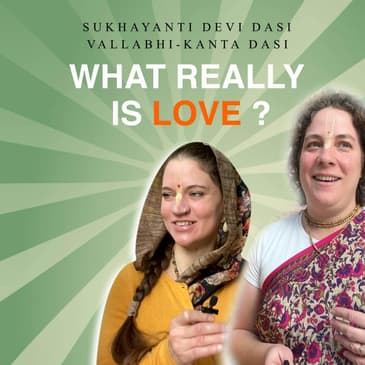

On this Valentine’s Day, I want to ask—what really is love?
It’s always amazed me that some of the most enduring stories of love are tales of unrequited love. Heer-Ranjha, Laila-Majnu, Shirin-Farhad, Tristan and Isolde—no matter which part of the world you look at, the theme is the same: love that remains incomplete yet eternal.
Standing in the divine Krishna Valley in Somogyvámos, Hungary, I found myself wondering the same thing.
I stood before the Radha Krishna murti in the temple—a symbol of love so deep that Radha is believed to be the path to Krishna. And yet, in life, they were never together in the worldly sense. Both were married to others, but their devotion to each other never wavered. It was something far beyond possession or expectation.
Sometimes, listening to my teenage children, I wonder if we’re even speaking the same language. It’s not just English that has changed—it’s the very language of relationships and love. Words like situationship, breadcrumbing, ghosting, and love bombing have replaced the older ideas of love and courtship. I wonder what love means to them.
In this divine temple, under a grace I cannot fully describe, I felt a strong urge to explore love in a new way.
I spoke to two women who have dedicated their lives to the service of Krishna. They are married, living the grahastha life (the life of a householder), with their children studying in the gurukul here. They don’t even want to be called gopis, just humble servants of Krishna.
What moved me most? They were not even born in India, nor raised in Hindu culture. Yet their devotion is absolute.
I’m still trying to make sense of it all.
What is love, really?
Please leave your answers too below ☺
FULL VIDEO
https://www.youtube.com/@loveenatandonproductions
PODCAST SMART LINK
https://bingepods.com/podcast/podcast-rn7moe
Loveena Tandon: HOST: SOCIAL MEDIA HANDLES
https://www.linkedin.com/in/loveenatandon/
Twitter/X
https://twitter.com/loveenatandon
https://www.instagram.com/loveenatandonofficial/?igshid=OGQ5ZDc2ODk2ZA%3D%3D
https://www.instagram.com/tandonloveena/?igsh=MW5tOHdlc3cyMGJrOA%3D%3D&utm_source=qr
Tik Tok
https://www.tiktok.com/@loveenatandon
Learn more about your ad choices. Visit megaphone.fm/adchoices
[00:00:00] What about me, me, me? If that is the center of the relationship, then there is no question of a relationship. When I was nine years old, I saw something like a picture and when I met my husband, I just realized that he is that person. No one else can be my husband. If your karma still goes through something, you have to go with this person or that person. It doesn't matter. It will find you.
[00:00:24] Hello and welcome to India, a story in the making. I am at the beautiful Krishna Valley near Budapest. A 315-acre eco-friendly farm. At the heart of it all stands a vibrant and colorful Krishna temple. The focal point of this temple is this Radha Krishnamurti. Here they are together, yet in life they never truly could be.
[00:00:51] They were married to different people, yet their devotion to each other remained so profound that Radha's name is always taken before Krishna's. Some even say Radha is the way to Krishna. On this Valentine's Day, I want to reflect on their love. What is love in this context and how do we understand it in today's world?
[00:01:16] And who else to ask this but to the two people who serve here? Are you gopis? No, we are not gopis. So Sukhyanti and Vallapi. And before I ask you both anything about what is love is what I want to explore today, I want to ask you a little bit about your journey.
[00:01:43] And I ask you Sukhyanti, let's begin from you. Who were you before you became Sukhyanti and where are you from? So I was born in Canada, but when I was two years old, we moved to Israel. My father is Israeli and then he's Canadian.
[00:02:00] And my family is the smallest, so the whole concept of is there God, is there no God, spirituality, it was foreign to me. It was always a question. And I was in a point of my life where I was like, there could be God, but there could also not be and I'm open for whatever, I can't decide.
[00:02:28] And I always really respected religious people when I saw like Buddhists, monks, Buddhist monks. I was like really, really felt deep respect that they were able to dedicate themselves to such a religious path. But I didn't feel like I could as well, because I didn't find it. I had lots of questions, no satisfying answers. I even went to India when I was 20 or by myself, which was a bit crazy.
[00:02:55] And not in spiritual search, just everybody in Israel went to India after the army and I wanted to explore it as well. And I had amazing experiences. I volunteered at the Mother Teresa in Kolkata, for example, for three months. I was all over, but didn't find anything particular. I even went to Mata Amrita Nandamai's ashram and lived there for a month, but nothing clicked, nothing clicked. And I wasn't necessarily looking for any spirituality.
[00:03:26] And then when I was 22, two years later, I was traveling in Europe with a friend and ended up in this Rainbow Festival, which is kind of a Ritby festival in nature in Germany, in East Germany. And that is where I met the devotees. They're just German Eskand Barmacharius came to the festival, like a group of them all wearing their dhoti and sikas.
[00:03:55] And I was like, when I saw them, I was awestruck. It was like, I didn't know I was looking for God. I felt like I was looking for something. But when I met them and I started hearing the philosophy and reading Bhagavad Gita, it finally felt that this is what I was looking for and I had no idea.
[00:04:16] And Krishna was actually the God I was looking for and I realized that this philosophy is so real and so true and so authentic. And Srila Paupad, Arfandar Acharya was so real, so dedicated. I've never met somebody like that before. Even though I never met Srila Paupad in person, I met him through his books.
[00:04:41] And every word he said was like nectar to me. It was like everything I could ever desire in my life. What did you find that you were not looking for? What gave you that sense of peace or, yes, this is for me? What was that one, two or three or any number of things? It was so clear that there is a God. There's no question about it. It was so clear who is God, how he looks like, what he does, what his activities.
[00:05:11] And the philosophical point about karma, about reincarnation, which is not clear. Like in Western cultures, reincarnation is not something which is accepted or acknowledged. But that when I heard about reincarnation, it made sense. Yes, yes, you get to try over and over and over again. There's no hell or heaven. There is no one chance. And you're either promoted or for eternity, you're gonna have to suffer.
[00:05:41] Hell and there's heaven. But that day of the night, not forever. Not for eternity. It's just a stage. So that was, it made sense. It was like, it just like, I actually, it was kind of like, I always knew it somehow. And, but I didn't. And I just needed the reincarnation. And I needed the words to be clear.
[00:06:07] The philosophy is very, very clear. And it's very ancient. It's authentic. It's not something somebody made up, just came up in the morning, decided, here. I have a whole philosophy. I have a whole religion. It's, it's, it's eternal knowledge. It's the most ancient knowledge. It's the most authentic one. Brilliant. So from Canada, you moved to Israel and now you are in Hungary.
[00:06:33] Yeah. So, um, tell me, what was your actual name and how did your family deal with it? How did you break this whole thing to them that I'm now going to be living in an ashram of sorts? My name was Tali. Tali. Tali. Okay. Which can also be me. It was difficult on my mom when I moved into the temple in Germany, uh, 20 years ago.
[00:07:03] She was, she didn't take it well. It was a big, big issue for her because even though she wasn't practicing Judaism as a religious person, for her, Judaism is a whole identity. It's a whole culture. It's everything she wanted me to ever be. So me turning away from Judaism and choosing a different practice, especially since in Judaism, it's not allowed to say the name of God. It's not allowed to worship any images of God.
[00:07:31] It's not allowed to have pictures of God. Um, I basically did the most unspokeable thing and she couldn't accept it. It was very difficult for her to come many years until today. She's not happy with my decisions, but she's now learned to accept them and respect them. And my dad, you know, he was always an atheist. He just thinks that something's strange with me that I'm a bit of a, a stranger. Strange woman. Yes. Who wears a sari.
[00:08:01] Who wears a sari. So when did you start wearing this? When did you start wearing a sari and, and how do, who made you learn it? I started wearing more or less from day one. I love the colors. I love the way it looks. So I, I really wanted to try it. Uh, there was a lady in the ashram that showed me how to put it on. Then 12 years I got some more tips on how to make it even more nice looking. And so we wear it every day. So it's like second nature for us.
[00:08:27] It's, uh, like putting any other garment on is very easy and natural. Hmm. So before a Tali who became a Sikhyanti, I come to now Wallaby. Uh, I don't know where, uh, what was your name and what did you become? And then I come to the real question of Radha Krishna as well. Go on. My name was, or my name is, uh, Virag originally. He is flower. It's an ancient Hungarian name because Wallaby means kind of, so it's a very kind name.
[00:08:55] But you became Virag to Wallaby. How, what was your journey? I got the mining from a spiritual master, His Holiness Indra Jumnaswami, 20 years ago. And my mother came to my initiation ceremony and she was very proud of me. She met first devotees and then me because she's a photographer. And she was very, very fond of here with Hare Krishna's and she became a Jokharyan at that time.
[00:09:24] And so she was very happy when I came to my initiation. So she, you were, you followed the path of your mother in a way. She's not a practicing Hare Krishna, but, um, but she's familiar. She loves Krishna's devotees and sometimes she's chanting Krishna's name. Um, so she had no, any problem. My, my father had problem because, uh, after my parents' divorce, uh, my, before that, my parents were just so-called Christians but not practitioners.
[00:09:54] Uh, they are more like intellectual people, artists, and they love to read different books and they didn't practice. So, uh, it's, uh, seriously anything. And then my father's second wife, she's a really practicing Christian. And because of that, my, my father also began to take it more seriously.
[00:10:18] And, uh, when I went to the, um, Vaishnav theology, uh, school, my father learned, uh, Christian theology. So, he was a little bit angry with me, but this was okay then. It's okay. Because, uh, he could understand that, uh, it's not just something which comes and goes. And, uh, I take it seriously.
[00:10:47] So, now he was so- He is accepting of it now. He is accepted and- So, both of you are married, aren't you? Yes. Yes. So, you found your love. How did you find your love? Uh, I was living in the temple in Toronto. And, uh, my husband, uh, was coming to the temple. At that time, he started coming to the temple. And so, we met at the temple. How? Uh, Canadian? Yes, Canadian.
[00:11:16] And you have two children, twins. We have twins. Ah. What about you, Wallaby? Oh. Um, actually when I was nine years old, I asked God in my prayer, who will be my- my- my partner, my- how to say- my- my husband. And, uh, I saw something. Like a picture. Well, you remember a picture that you saw very long time ago.
[00:11:41] But it was a picture from- from the- from the future. So, it's very interesting. And when I met my husband, he looked like that? A little bit later, I just realized that he is that person. No one else can be my husband. When I was 16 and was 22, Wow. I- I went to the Govinda's restaurant. Uh, I just felt he's- To love at first sight or recognition at first sight?
[00:12:11] Step by step. Uh, I- I- I watched him and I- I just understood- understood how serious he is in his spiritual life. And I- I- I trusted more and more, step by step in him. But I was need to wait many years, because he was Bhamachari at that time. And I was too young. I went- he- he moved to the temple at Kishigan and- book distribution service.
[00:12:38] And I followed him and I- and I was so rather similar service. After those five years, the temple president arranged the marriage. So you turned from a Bhamachari- a Bhamachari into a grahast man, huh? He was not in that- no, no, no, he was- he never read, uh, that's a Saffron. But he was like Bhamachari- Bhamachari. Today, actually, I want to ask what is love?
[00:13:05] You study Krishna, Radha, you pray to them, worship them. They are here together, but they never were together. Radha was elder to Krishna. He promised he'll come back, but he left. And so, what really is love in your mind here? Before we discuss love, I would like to kind of correct those things because there are a lot of misunderstandings about Radha and Krishna, which need to be addressed.
[00:13:34] So the- the relationship between Radha and Krishna is the most elevated relationship that exists in the entire creation. And for us to understand that relationship with our material minds is practically impossible. Radha and Krishna are never separated. They are always together. Even though it may seem as though Krishna has left Radha and went to Mathura and then Varaka, actually, Krishna was always with Radha.
[00:14:00] Even when, for us, it seems that he wasn't there, he was always with her. There is no separation between Radha and Krishna, and if there is separation, it's only temporary. The separation increases their love for each other. So, this is a very, very deep topic which you want to discuss, and we have to thread very carefully with this thing because it's so elevated. It's difficult to really comprehend it.
[00:14:30] And regarding what the question, what is love? Again, love is something which we have not experienced. It's impossible to experience true love in the material world because true love means service. It means complete surrender. It means only caring for the other person's needs and having complete disregard of your needs,
[00:14:53] but not from a, you know, putting yourself down or kind of a, I don't know how to use the words properly, but it's not from a negative place. It's a place of, you just don't desire anything else but the well-being of the other person, and that's practically impossible in the material world.
[00:15:19] So, here, mostly relationships are about, and even loving, I mean, there are to a certain degree loving relationships. Of course, people love each other. They're meaningful relationships, but there will always be that little tinge of what do I get out of it, and how is it serving my needs and my desires. So, it is said that love in the material world is a perverted reflection of love in the spiritual world.
[00:15:48] So, actually, love in the material world is only lust. Because lust, and we're not talking only about sexual intercourse or erotic things, lust is the desire to gain something from myself, from any situation. Also, from a relationship between men and women even, between, you know, brother and sister, sister and sister, mother and child. There was always a little bit of that desire of, what about me?
[00:16:17] In the spiritual world, where true love exists, there is no such question. It just doesn't exist. The minute such a thought exists, you can't stay there anymore, because it doesn't belong there. And that is what we don't understand. When we think about Radha and Krishna, or we discuss Radha and Krishna, we don't understand that it's a completely selfless relationship, and Radha is the topmost devotee of Krishna. And we're actually talking about God here.
[00:16:44] So, Krishna is God, and Radharani is his first expansion. Nobody else can be Krishna. Nobody else can be Radha. Nobody else can be the Astasakis. Nobody can be Vishako, Lalita, Champakalata, Induleka. Nobody can be them. The post is already taken. We can only become their servants. Aww. Cute. Love means the whole dedication to someone else, but who's that person who deserves this?
[00:17:14] So, you can't give yourself to anyone else instead of God. So, that's why we say that real love doesn't exist here in the material world. But I think if you find someone who is a representative of God, who's a saintly person, maybe you can feel something similar.
[00:17:38] Like, if you find a husband like my husband, who is a very, very good huti of Krishna. Maybe this service is close to the real love, but it's not the same. It's not the same, but you are on the right direction for achieving the real love. How do you bring in these values into your relationship, and are you able to?
[00:18:09] I think the real love in the material world between a husband and wife means that you consider the real needs of that person, and not only the material needs, and if you are conscious about his real identity like his soul, you will protect him from the material energy.
[00:18:39] This is a very important role of a woman, because a woman is also a representative of Maya. Yeah, women is like, they are like little Maya babies. So, it's like, you know, like a knife. There's a two side of the knife. And you can be the worst enemy of your husband, or you can be a protector of him.
[00:19:07] And I think this is our big, big responsibility. Married life is actually a service to Krishna. To be in a relationship means that we're actually going to help each other, be better devotees, and approach Krishna better. So, if we see the relationship in that way, that what can I do to assist, support my husband in his own spiritual path?
[00:19:37] How can I make, for example, his home comfortable for them? So, when he comes home, he doesn't have to worry about all those small things, and he can maybe sit down and read a book and read about Krishna. Or, in the morning, if he needs to go and do his own meditation, how can he do that? And the husband does the same for the wife. The husband is also supposed to be protector of the wife and provide her whatever she needs,
[00:20:03] so her mind is peaceful and she can also pursue her spiritual path. So, in that way, you're actually partners in the service of Krishna. And so, what are the different stages of being in a relationship? So, there is a situation-ship, there's benching, there is... Then you come to a talking stage, then you come to an exclusive stage, and then some such stages, and then you end up in a relationship.
[00:20:28] What is the relevance, do you think, of all that you have said in the world today? What would you say to your nine-year-old girls, maybe? I think this kind of relationship is the only safe relationship. These days, we see so many couples, they separate, so much divorce, so many broken families. Because the principle of me and what do I get, and what they did to me,
[00:20:56] and how I suffered, and what about me, me, me... If that is the center of the relationship, then there is no question of a relationship. There is only a question of me and my needs. But when the relationship is not... It goes beyond this selfish way of thinking, and we start sacrificing ourselves in the service of God, then there is no question of separation.
[00:21:24] And I can say it from my own personal experience, that we had times for me and my husband that were very difficult. And if I wasn't in Krishna consciousness, I think I would have walked out a long time ago. Give me an example of that... Give me an example. That's very interesting. So give me an example of how difficult it was, and how did this Krishna consciousness help you? Out of respect for my husband, I don't want to go into two personal examples,
[00:21:52] but it was very difficult. There were times in which we basically lived next to each other as roommates, and avoided speaking, not to go into conflicts and difficulties. And at those times, every day I would come to the temple, and I would pray to Krishna to please help me. Give me the strength. Give me the tolerance. Give me the understanding. So I will be able to surpass this time.
[00:22:21] And when I felt it's too much, I remembered that this is the relationship Krishna gave me. This is my karna. This is where I am in my life, and I have to accept it, and just have faith in Krishna, that with time, when he sees fit, whatever impurities we had to work on, whatever difficulties we had to work on, will clear, and it will be what it's meant to be.
[00:22:50] And it took a few years, and with a lot of prayer and a lot of faith, our relationship has actually healed. So where, if I wasn't a devotee, I might have already exited this relationship, and left two girls without a functioning family. With tolerance, and from his side and my side, and from personal work out of devotional mode to God,
[00:23:19] we were able to overcome our differences, grow as persons, and become actually closer and come to a relationship that is much deeper, and it's much stronger. And you need that, and you don't see it in today's society. You know, something is wrong, you leave. You know, like, you just, okay, pack your bags, look for somebody else, something better. But people don't understand that karma doesn't leave you alone. If your karma is to go through something,
[00:23:49] you'll have to go with this person or that person, it doesn't matter, it will find you. So you have to go through life, and if God is in the picture, and you do it in a devotional mood, you won't only overcome your karma. You will grow, and you will come closer to God, and you'll come closer to your partner as well. Oh, wow. How amazing. I like the bit on, you have to live your karma, whether it's with this person or with any other person.
[00:24:17] How did you come to that understanding? That, and when you prayed to God, what would you pray? Show me the path, or show me the path? Because sometimes we don't know what we want. So first of all, everything is in the Vedic scriptures. You know, Shura Popat's books, his pop-ups, they just tell us the truth, and give us the guidance how to deal with day-to-day life.
[00:24:42] So by reading, studying these books, that's how I understood what I had to do, and I understood everything in my life is based on that knowledge now, thank God. And when I prayed to Krishna, I try to make it from a devotional mood, not from like, I need this, give me this, give me that. But from a place of Krishna, I really want to be a better devotee. I really want to serve you better.
[00:25:11] Please give me the understanding, give me the tolerance, give me the patience, give me whatever I need, so I may be able to serve you better. Have complete faith, have complete trust in Krishna, that no matter what happens, because I am dedicating my life to Krishna, to this practice, Krishna will protect me. And whatever comes, whatever difficulties, it is for the best.
[00:25:37] Like Vallabhi said yesterday about her husband living, and it was a very painful period in her life, but because she trusts Krishna, she knows that pain is also for her own good, for her own spiritual growth. I want to come to you, Vallabhi. I know that you lost your husband, and it's been very, very hard for you. In such a, when you find your soul mate, and you lose that person,
[00:26:05] and you're given that pain, how do you then sustain that love, and that to the faith in God? What sustains you when he gives you that level of pain? So when we got the diagnosis of brain tumor, we were full. It was hard to understand this, but it was interesting because many years before that,
[00:26:34] Krishna sent different marks for me. Oh, for instance. Little, little, little stories, then I understood that this is just something that like now I'm trying to communicate to me. Like what? Like, for example, my husband was a pujari, and one time he was cleaning the shringas,
[00:27:00] and he was up there on the shringas, and he almost fell down. And then when he told me that, he almost fell down. I ran to the temple and I said to Krishna, you can take him away from me when I have no child. First, you give me even a boy. At least you should give me a boy, and then you can do what you want.
[00:27:29] And then I ran away, and I didn't understand what happened when I said to Krishna. Oh, and I said that at least my son has to be five years old, and after that if you want, I will go up with him without father, if this is your plan. And then I realized, what is sad? What's that? And after that I became pregnant, and when my son was five years old, the diagnosis came up. Again.
[00:27:59] Wow. It came about my husband that he has an issue. So I just understood it. So it was like a movie. And in the movie, I'm only an actor, and I'm not the big actor. Do you find it hard that you said that and that it happened that way? Or do you talk to yourself like that?
[00:28:29] I just try to, how to say, throw away everything like this. I understood these marks, but I try to just forget everything. Oh, it's not true. It's just a play of my mind. It's not true. It's not true. But then we went closer and closer and closer. At the end of the story, I just understood.
[00:28:57] I can't just forget these things. And to have different things happen like that. Oh, wow. It was just one. How do you deal with it now and keep your love for Krishna alive, when he gave you so much pain taking your family again and again? So Krishna consciousness is not a religion only. This is a practice. This is a lifestyle. That's why I'm here. There are so many other religions.
[00:29:28] But the spiritual life is not only like your clothes or you. Religion. Like, things on the surface. But it's deep in your heart. And I'm practicing Krishna consciousness over 20 years. So it's like if you want to win the marathon, you are practicing every day. It's not enough to wear, you know, a slug.
[00:29:57] I understand. Because again, you have to practice. And if you are reading every day, if we are chanting every day, if you are talking with devotees, if you are listening to lectures from your spiritual master, you will be prepared for the hardest time in your life. And it's just not a question. But did you get angry with your Krishna? No. No. Why? Only one time I was angry with Krishna.
[00:30:25] When my son came too early. He was a premature child. And the doctors just showed me, this is your child. And they took him to another hospital. And I almost lost my consciousness. And I was very angry with Krishna. I was just sad. I'm sad always. But I know that my husband is in a very, very good place.
[00:30:55] When did you get over your anger? At that time, when my little son went to another hospital. I don't know. Those days are like a nightmare for me. I can't remember all the days at that time. It was just too much for me. At that time. That I was chanting every day, 16 rounds. Oh. So that's how you went. Because I went to my spiritual master.
[00:31:24] I was just chanting every day. In Krishna consciousness, in spiritual life, I think the... How to say? Very important to practice not bases on emotions. But just you have to know what's your duty. You kept on doing your duties. It's your duty.
[00:31:50] It doesn't matter if you feel happy, if you feel sad, if this day is like that, another day is like... It doesn't matter if you are a mother, if you are a wife, if you are a student of your spiritual master. It doesn't matter how you feel. You do your duty. Just do your duty. Oh. And then Krishna will give emotions or realization or anything. It's Krishna's responsibility.
[00:32:18] I do my responsibility, my duty. Krishna has his duty. Lovely. Beautiful. It's called High Five India. Five questions. Very simple. And in the end we do Tali, which is High Five. You both have been to India? Yes, yes. So what is India for you in one word? Spirituality.
[00:32:48] Home. Oh, India is home for you, is it? Yeah. Yeah, but I'm also a little bit sad when I see India because India is a little bit more like, you know, Western. But under the surface I know there's the highest value. What is love for you? Surrender. Faithfulness. Faithfulness.
[00:33:16] In my life that means anything happens, I stand by you. Always. Very lucky husband, I'd say. If Krishna would be in front of you, what is the one thing you'll ask him? Take me with you. Don't ever leave me. Let me stay with you. Just please. I know I'm not qualified. Just let me be with you. Give me more power to preach, spread Krishna consciousness, share, share.
[00:33:47] Give me real love toward Krishna and the ability to share this with others. Okay. How has Krishna consciousness changed your life? You can't really say it. It's upside down, completely changed. Can't say it in one word. Are you happy? Yes.
[00:34:30] I know you're sad, but happy. I'm happily sad. Is there any difference between the Western and the Indian woman if there is? Tell me, what is the woman power, if not? I find that the woman's power is not. The Vedic way of being a woman, much more natural, much more beautiful, much more strong.
[00:34:56] So nowadays in society it's all about, you know, I can do whatever I want, I can walk naked in the street, but it's just like exposing yourself to be, you know, exploitive. Whereas the Vedic culture is a very protective one for the women, which is very missing in the Western culture. So I have lots of respect, right? I have difficulties finding myself completely in it. I am not completely there.
[00:35:25] I'm walking towards it. So I look like Janis Joplin before Krishna consciousness. I was very, very hippie style. Now I don't have this big hair like a lion. So I love to be a woman in Krishna consciousness. It's very special. But at the same time, I'm the same personality, but I can engage my nature in Krishna consciousness.
[00:35:52] Now I'm talking, I'm singing, I'm like this. But at the same time, I try to find the balance. That's Karinas. Hi-fi. There you are. Thank you ever, ever so much. You both are beautiful. Just beautiful. Just beautiful. The calm that you carry in your eyes and your being. I think having born in India, grown in India, I'll find years to get to that. So thank you so very much. Thank you for watching India, a story in the making.
[00:36:22] Thank you. Take care and God bless.