

A few decades ago, and even now to a great extent, telling your parents you want to be a writer was often met with a cautious, if not outright disapproving, “What’s your backup plan?”
According to Deloitte, only 13% of people globally are passionate about their jobs.
That quiet disconnect—the tension between what pays the bills and what feeds the soul—is something many of us experience.
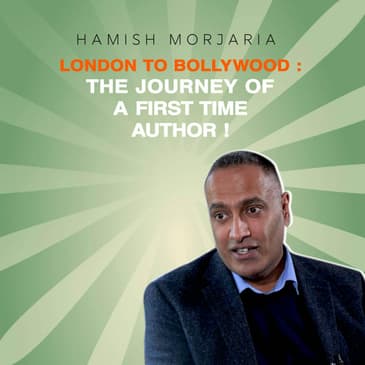
It’s also at the heart of Hamish Morjaria’s incredible journey. Hamish excelled in the world of business, but he never let go of his passion for history. Slowly, he nurtured it, transforming that love into an ambitious historical fiction trilogy.
His debut novel, The Curse of Mujiris, (first book of the trilogy) published by Pan Macmillan India, has drawn comparisons to The Da Vinci Code and Indiana Jones—a gripping blend of mystery, adventure, and ancient secrets.
With roots in Africa and a life shaped in Britain, what led Hamish to India—and specifically, ancient India—as the focus of his first book?
In this episode of India: A Story in the Making, he shares his journey of identity, belonging, and perseverance, along with invaluable tips for aspiring authors.
And with Bollywood already showing interest in adapting it for the big screen, this is a story that’s only beginning.
If you love historical thrillers or dream of writing your own story, get tips on how to deal with rejections, this episode is for you. Tune in to discover how a business leader turned author brought his creative vision to life.
FULL VIDEO
You Tube:
https://www.youtube.com/@loveenatandonofficial
PODCAST SMART LINK
https://bingepods.com/podcast/podcast-rn7moe
Loveena Tandon: HOST: SOCIAL MEDIA HANDLES
https://www.linkedin.com/in/loveenatandon/
Twitter/X
https://twitter.com/loveenatandon
https://www.instagram.com/loveenatandonofficial/?igshid=OGQ5ZDc2ODk2ZA%3D%3D
https://www.instagram.com/tandonloveena/?igsh=MW5tOHdlc3cyMGJrOA%3D%3D&utm_source=qr
Learn more about your ad choices. Visit megaphone.fm/adchoices
[00:00:00] from making waves in the world of business to now being an author.
[00:00:04] Bollywood is looking for these kind of stories and waiting for Tom Hanks or whatever it might be.
[00:00:09] So we came at a timely moment where India is starting to rediscover its history.
[00:00:14] Indians don't understand their Indian history.
[00:00:16] The first literate society was actually Indian.
[00:00:20] What I think the fiction writer is doing is looking at the absolute hard evidence and saying,
[00:00:24] what's the most interesting route that doesn't change the history but actually could have happened?
[00:00:28] The British particularly wanted to open that because there's some difficult history there.
[00:00:33] The modern day Kerala is mozerous.
[00:00:35] This is India, a story in the making and I'm your host Loveena Tandon.
[00:00:40] Can I take this opportunity to thank Pan Macmillan India for their invaluable support in bringing this episode of India, a story in the making to life.
[00:00:50] Their dedication to sharing compelling stories aligns with our mission to explore India's evolving narrative
[00:00:57] and its global impact.
[00:00:59] Pan Macmillan India has earned a stellar reputation for publishing bestsellers and works by celebrated authors
[00:01:05] like B.S. Maipol, Ramachandra Guha and Jeffrey Archers and the one I'm about to interview now.
[00:01:12] Hello and welcome to India, a story in the making.
[00:01:15] My guest today is a man who proves that one can pursue their passion anytime and it's never too late.
[00:01:25] Also showing that you can be master of multiple traits which does come as a real relief to me.
[00:01:35] From making waves in the world of business to now being an author, Hamish Morjaria.
[00:01:42] I am in his house and I reached the day when his book first arrived from India, which is on ancient India.
[00:01:51] And he is an inspiring, his life is an inspiring blend of resilience and reinvention.
[00:02:00] So thank you so very much Hamish for being on the show.
[00:02:05] No, you're welcome.
[00:02:06] And giving me your first book.
[00:02:07] I was so excited. So I'm not normally like a puppy, but the book had just arrived as you walked in the door.
[00:02:12] So I was jumping up and down and screaming, which is, I assure you, not normally what I'm doing when someone comes to the house.
[00:02:18] I love that Hamish. And it was, I have to say, also share this, that I always meet people before the interview for an hour or so to know them better.
[00:02:31] And I went as customary to meet Hamish and we thought we're going to have chai or coffee.
[00:02:37] And we ended up having chai and coffee and lunch and then another tea.
[00:02:42] That's how interesting he is and his book.
[00:02:45] So it went so quickly, looking at the time saying, how has it gone so much time?
[00:02:49] I know. And before we start, Kenna please.
[00:02:52] This is the book.
[00:02:56] But before we go into this book, which is quite unique.
[00:02:59] And that's how we ended up talking so much.
[00:03:03] It's the heroine is an Indian.
[00:03:07] Punjabi.
[00:03:08] And you are a Gujarati.
[00:03:09] I'm a Gujarati, yeah.
[00:03:10] Oh, wow. There you are.
[00:03:12] That's the impact of living in London.
[00:03:15] You met too many Punjabis and Gujaratis.
[00:03:19] But Hamish, begin from the beginning, like you have done with ancient India.
[00:03:24] I want to know your story.
[00:03:26] You are a man who actually had never written.
[00:03:31] Tell me about you, where you come from, so that everyone has a lens to look at you.
[00:03:36] So at school, going back all those years, I was really interested in history.
[00:03:43] I loved reading.
[00:03:45] And this was my interest.
[00:03:47] But of course, when you grow up in the first generation to land here, you know our Indian culture,
[00:03:51] you have to become a doctor or a lawyer or a business professional.
[00:03:56] So there's not much encouragement to go to university to study ancient history.
[00:04:00] It would be laughable in some respects.
[00:04:02] So I paused that and I went off to university and I did something business related.
[00:04:06] And I went in and started working and doing these jobs and actually forgot that dream completely.
[00:04:12] And then lockdown happened.
[00:04:15] And so I'm almost 50, hate to say it.
[00:04:18] And for the first time, my inbox isn't full of emails.
[00:04:22] I don't have meetings to go to.
[00:04:24] I'm at home, which was an amazing relief and joyous for about three hours.
[00:04:29] And then I'm marching around looking for something to do.
[00:04:32] My wife is saying, you have to get out from under my feet.
[00:04:34] You have to do something because you're going to go mad.
[00:04:37] So the next morning, I came down at breakfast with my children and my wife and we're having breakfast.
[00:04:42] And I said, I'm going to write a book.
[00:04:45] I think I said bestselling actually as well.
[00:04:47] And they laughed at me, obviously.
[00:04:49] No, I said, no, no, really, I'm going to write a book.
[00:04:51] And my daughter said, well, it must be like a business book because this is your world.
[00:04:54] And I said, no, no, I think I'll do historical fiction.
[00:04:56] They laughed at me again.
[00:04:57] And so this is how it started as a harebrained idea three years ago with no experience other than that.
[00:05:05] You know, many, many years ago, that interest in history and Indian history.
[00:05:10] And it came at a time where India is really rediscovering its identity.
[00:05:14] It's coming under because there was a period of amnesia, right?
[00:05:17] Post independence, where it was still very much, you know, an English curriculum.
[00:05:21] And that was the history that was taught.
[00:05:23] And under Modi now, they're finding their feet and finding their own history.
[00:05:26] And you see with the works of Amish Trapati and Ashwin Sanghi, that interest in mythology and Indian history.
[00:05:34] You see with the works of people like William Dalrymple and Peter Frankopan.
[00:05:38] There's a real interest in the origin story of India and that history.
[00:05:42] So that was my interest. That's what got me started.
[00:05:45] And then so what I'm doing then is I'm researching history, looking for something that sparks the fiction story.
[00:05:52] So it's a second world war and all of the people from Empire that fought in that.
[00:05:57] But it's so close to independence, you probably have to have an opinion on Empire, which is not what I wanted to do.
[00:06:03] So I get in my time machine and I go back a few years.
[00:06:07] And then I came across this place, Mazeris, this real place, Mazeris, which is the biggest trading port in the world in the first century.
[00:06:15] So three to four hundred ships, according to Strabo, go to this port and have to wait 20 or 30 days to come back because of the favorable winds.
[00:06:24] So there has to be a port where you've got three or four of these ships docked at the same time.
[00:06:29] Four hundred tonne ships.
[00:06:31] And we've got actual receipts from merchants.
[00:06:33] So these things are taking hundreds of tonnes, three, four hundred tonnes at a time of goods from India.
[00:06:38] And we know because there's things like Nard, it's goods coming all the way from the Himalayas down.
[00:06:43] We know there's goods coming from China.
[00:06:45] So this is huge mercantile port.
[00:06:48] And then we find out that this port's got links to some of the most important events that happened in first century history,
[00:06:53] which I won't reveal because some of them come in the book.
[00:06:56] So it was a gift to me as a writer.
[00:06:59] So then from there, I'm thinking of this dual timeline thing where we've got people in the present day
[00:07:05] finding clues that were happening in the first century, but also seeing the first century narrative.
[00:07:11] So that was the origin of how I started writing.
[00:07:16] Lockdown.
[00:07:17] Like for many people, I think lockdown turned around lives in so many ways, in good and bad.
[00:07:23] Both.
[00:07:24] And I will go back to Muzaris and where it is and all of that.
[00:07:29] But before that, I just want to know two things.
[00:07:32] One, who laughed out loudest?
[00:07:34] My wife laughed loudest and continued to laugh for quite a long time.
[00:07:38] I wanted to know that you have two children and a wife, of course, and she laughed out loudest.
[00:07:45] Yeah.
[00:07:45] I said, what the hell are you going to do and write a book?
[00:07:47] Yeah.
[00:07:47] My son had the most faith.
[00:07:49] Oh, really?
[00:07:50] Yeah.
[00:07:51] He said, yeah, I'm sure you can do that.
[00:07:53] Growing up, you had interest in history.
[00:07:55] Yes.
[00:07:56] But you gravitated towards business thanks to the Indian family.
[00:08:00] Yeah.
[00:08:01] I think there's a cultural thing, isn't there, that says...
[00:08:04] And we've all had those conversations with our parents and say, so, ancient history.
[00:08:09] Did you say that to your parents?
[00:08:11] Yeah.
[00:08:12] Where does that lead?
[00:08:13] Oh.
[00:08:13] Yeah.
[00:08:13] So, that leads nowhere, does it?
[00:08:15] So, that leads nowhere.
[00:08:16] But, you know, I want to rest this faith, like we were talking and while having chai, beautiful
[00:08:20] Gujarati chai, that had you not done business and not, you know, had this beautiful house
[00:08:28] and sanctuary where you wrote the place, the book, and the freedom to write because you
[00:08:35] had earned enough, you wouldn't be actually at leisure enough to think, isn't it?
[00:08:41] So, in a way, it was good that the Indian parents pushed it.
[00:08:43] No, absolutely.
[00:08:44] And you said that earlier and it made me think because possibly I start off as a penniless
[00:08:49] writer going around trying to start something.
[00:08:51] And actually, there's plenty of logic in that thing of have a profession.
[00:08:55] And in actual fact, as a 16, 17-year-old, I would have said that's a really, really terrible
[00:09:01] way to parent your children.
[00:09:02] I now have two children.
[00:09:03] Yeah.
[00:09:04] And they say these things and I say, no, no, no, that's not going to lead to anything.
[00:09:07] So, I'm becoming my parent.
[00:09:08] We always do.
[00:09:10] Yes.
[00:09:10] So, a balance can be struck and I think you finally have arrived to your passion.
[00:09:16] Yes.
[00:09:16] This is great.
[00:09:18] And again, I do want to know more about your parents and your origins because in some way,
[00:09:25] this book is a lot about identity, migration, belonging, isn't it?
[00:09:35] It is.
[00:09:35] All of this.
[00:09:36] Yes.
[00:09:36] That must have somehow been in your world and why so.
[00:09:42] So, I want to understand your world where you came from, your parents.
[00:09:45] No, I think that's a very important point.
[00:09:47] So, my parents came from Kenya in 1971 when Kenya gained independence.
[00:09:52] So, you had the choice of taking your Kenyan passport or taking a new British one and lots
[00:09:56] of people came in the 70s.
[00:09:58] Also, it was the same period that Idi Amin was doing waste things.
[00:10:00] So, a lot of East African Asians came to the UK in the early 70s.
[00:10:06] But I think there's a couple of things and it happens with generations that go through that.
[00:10:11] So, that whole Indian generation, and we all used to go to each other's families, didn't
[00:10:17] we?
[00:10:17] But I can never remember that conversation coming up of people having to pack overnight,
[00:10:23] you know, in Uganda and come or people being forcibly taken to East Africa and then migrating
[00:10:28] again here.
[00:10:29] So, there's that complete silence and there's nothing in there that tells you about your origin
[00:10:33] stories.
[00:10:33] And then, of course, we go to school and we learn history.
[00:10:36] And we learn about the Romans.
[00:10:38] We learn about the Tudors.
[00:10:39] We learn about the First World War and the Second World War.
[00:10:42] But in none of these stories is anyone that looked like me.
[00:10:46] Hmm.
[00:10:46] But, of course, we find out later that, of course, there were people that looked at it.
[00:10:50] And we think in the Second World War and then the First World War, but also even in Roman
[00:10:54] times there were.
[00:10:56] So, we learn about this history and I think it would be much easier for people to find their
[00:11:00] place in the world if they knew their history.
[00:11:03] But history can be quite boring.
[00:11:04] So, actually, what we've got to do is wrap it up in a really interesting story and a
[00:11:09] fiction story that people want to read and then they learn their background story, you
[00:11:13] know, through that story.
[00:11:14] So, you came from Kenya, living here.
[00:11:17] Yeah.
[00:11:17] Very British.
[00:11:19] Second generation.
[00:11:20] Yes.
[00:11:21] Correct?
[00:11:21] Yes.
[00:11:21] And you still felt growing up that where do I really belong?
[00:11:28] Yes.
[00:11:30] Did that search lead you to dig more and more and more into the Indian history?
[00:11:37] It did.
[00:11:37] Yeah.
[00:11:38] We came in 1971.
[00:11:39] So, this is only two years after the Rivers of Blood, the Enoch Powell speech.
[00:11:44] This is a time where there's lots of controversy.
[00:11:47] There's lots of, you know, and there were still, you know, fights and violence and things
[00:11:52] breaking out in the 70s, even into the 80s.
[00:11:54] So, and that sort of collective amnesia means you don't understand your place.
[00:11:59] So, you're reaching for why are our people here now?
[00:12:04] How did that happen?
[00:12:05] And we didn't, or I certainly didn't get it from my parents or my grandparents who were
[00:12:09] alive at that time.
[00:12:10] And so, you have to reach into that story and understand.
[00:12:13] And actually, I don't think even the British particularly wanted to open that because there's
[00:12:19] some difficult history there and there's some other history.
[00:12:22] And I think it's only recently that people have opened up that story of East India Company
[00:12:27] and what happened and then why people then went to East Africa and why they came here.
[00:12:30] And I think there's now much more interest in that.
[00:12:33] It doesn't, it hasn't found its way to the history books that children are being taught.
[00:12:39] My son's been taught the same history I was taught.
[00:12:42] So, we still are missing that because the interesting part is when I came from India,
[00:12:48] well, I knew India, Indians and Indians have migrated elsewhere.
[00:12:52] And I was so amazed to find Indians who are from Africa, from East Africa, from West Africa, who
[00:13:04] actually look like us and nearly cook like us, feel Indian but have never been to India.
[00:13:10] Absolutely.
[00:13:10] And I thought, wow! Where were these people and why didn't I know so much about them?
[00:13:16] You actually, did you go to India before 1971? As in, did you have roots in India as well?
[00:13:23] Yes, our family's origin is India but obviously there was a generation.
[00:13:27] Yes, so when you, what my question is, when you were looking into where do I belong or come from,
[00:13:32] were you looking through Kenya at India or straight away at India?
[00:13:37] No, through Kenya first because I didn't have any of the history.
[00:13:41] Correct.
[00:13:42] So, were our family six to ten generations in Kenya and it's only then you realise for lots of reasons
[00:13:47] like the indentured labour, the continuation of the slave trade that lots of Indians ended up in Africa
[00:13:53] because that was seen as the next one. Yes.
[00:13:55] Didn't quite work out because of independence and other things.
[00:13:57] So, you very quickly realise that was a short window, actually the origin story is India.
[00:14:03] And actually India's got such a fascinating and deep history that goes back much further than people probably know.
[00:14:10] What I found more interesting because I get that second generation don't understand their history
[00:14:14] is Indians don't understand their Indian history.
[00:14:17] Yeah.
[00:14:18] Because they have been taught the kind of English curriculum since, you know, the 17th, 18th century.
[00:14:25] So actually they're only just now seeing these.
[00:14:27] So when we're telling the story of Maziris, which is this huge important place,
[00:14:32] apart from maybe right in the south in Kerou and that area, a lot of Indians don't know this history.
[00:14:36] So at what point in your time were you looking at this Britain to Kenya to India?
[00:14:46] When were you doing this digging up in your business life?
[00:14:49] No, I read a lot.
[00:14:51] So I started to get in there and we mentioned people like William Dalrymple and his book The Anarchy,
[00:14:57] which tells the story of the East India Company.
[00:14:59] So I'm starting to get some background and be interested in these things.
[00:15:03] But this is just because in my business life I'm travelling.
[00:15:06] And travelling is extremely boring unless you're reading.
[00:15:08] And this is pre, because I'm quite old, pre being able to play on your phone or whatever.
[00:15:12] So you just have a physical book.
[00:15:14] And so you should just go through books and books and I'd read everything from trashy popular fiction to history,
[00:15:21] to academic books, so just reading voraciously.
[00:15:24] And so when I came to write my book, it was always going to have some sort of Indian setting into it
[00:15:30] because I was really interested in that.
[00:15:31] But actually, and funny enough, my editor early on said, who's your audience?
[00:15:39] And it was very clear to me that my audience was, you know, a paperback half open on a sun lounger
[00:15:44] rather than an academic book in a library where people say this is really good information.
[00:15:48] I got it. So what I was getting was that while you were going about your life as choosing business, doing business,
[00:15:55] in your other time, whatever you had, you were still pursuing your love of knowing more about where you come from,
[00:16:04] reading books like that.
[00:16:05] And that's why when you walk down on that morning to have breakfast the next day of COVID,
[00:16:13] you said it's going to be a book. Yes, that's right. But I was not reading that with any particular destination.
[00:16:19] I know, I know. So what was that moment when you said, it's going to be Mazaris? Tell me that thing.
[00:16:25] No, so that was a few months down the line. So history.
[00:16:29] And actually my first iteration, my first outline of a book was a Second World War story featuring Indians who are fighting in that.
[00:16:37] But it seemed a bit controversial because it's only a year before independence.
[00:16:40] Yes. So those guys have to have a view on empire and they have to have a view on what's about to happen because already all that conflict going on.
[00:16:50] And I didn't want to write that story because in a way that takes your head out of the story.
[00:16:54] And then you have to think, what do I think about this?
[00:16:57] So then I went a little bit further back and I'm looking for this place.
[00:17:01] And then so it's probably three months later. Right. So from the morning, that breakfast morning, when you decide to write a book, three months hence.
[00:17:10] Yes. Later, actually, you decide it's going to be Mazaris. Yes.
[00:17:14] Now tell me about Mazaris. How did you arrive in those three months? What happened?
[00:17:19] So I'm researching important places because one of the things that I think is important is to show how connected and how similar people are.
[00:17:28] So what I'm looking for is moments in time when India is important to lots of different places.
[00:17:35] And we find this place called Mazaris, which is referenced in lots and lots of documents.
[00:17:41] Pliny saying, you know, we need to stop sending all this money to this place called Mazaris.
[00:17:46] Rome is going broke because they loved pepper.
[00:17:49] They love the spices, big wild animals.
[00:17:51] Timeline. Please give the timeline.
[00:17:52] First century. So, yeah, 0 to 100.
[00:17:57] And they're shipping what would be billions and billions of dollars of gold coins to this one town and bring these goods.
[00:18:05] And actually some really important people land in Mazaris at this time.
[00:18:10] So it becomes this great melting pot of cultures, different people around.
[00:18:14] Because what we know throughout the course of history is if there's lots of money swishing around, people turn up.
[00:18:19] And so Rome is interested in protecting their assets.
[00:18:23] So they build a great fort there. There's a Roman temple there.
[00:18:26] There's lots of things going on.
[00:18:27] And we won't see this kind of population in India again for fifteen, sixteen hundred years until Vasco da Gama turns up fifteen hundred years later.
[00:18:36] So in a way it's a gift for a writer because lots of things are happening.
[00:18:39] So it allows me to. So what I think a historian is doing, a historian is there looking at all the evidence and saying this is the most likely thing that happened.
[00:18:51] What I think a fiction writer is doing is looking at the absolute hard evidence and saying what's the most interesting route that doesn't change the history, but actually could have happened.
[00:19:01] Here's an alternative history. And here's a first person witness.
[00:19:04] Here's an Indian trader looking at Rome, looking at Alexandria, looking at Jerusalem through the eyes of an Indian trader.
[00:19:12] So we get this story. And now we have a present day Indian female, Indiana Jones, Lara Croft kind of character who's digging up these artifacts that have, you know, complicated histories.
[00:19:24] We have the Vatican secret agents chasing her and saying, no, you can't dig this stuff up because we thought we buried that two, three thousand years ago.
[00:19:31] And so it leads itself to a very interesting story.
[00:19:34] Great. So where is Mozeris now?
[00:19:37] Modern day Kerala.
[00:19:38] So modern day Kerala is Mozeris.
[00:19:40] And the plot is that Dr. Harveen Gill, who is the protagonist, the heroine of the film, is digging into her to find where this Mozeris is, which was the most important port.
[00:19:53] Yes.
[00:19:54] In 1 AD.
[00:19:55] Yes. And interestingly, in the real world, the biggest heritage project in India at the moment is Mozeris.
[00:20:03] They're starting to find these artifacts.
[00:20:05] In fact, the biggest concentration of Roman coins found anywhere outside of Rome is in this part of India.
[00:20:10] So they keep digging up coins and pots and things.
[00:20:13] So, and there's talk of making it, you know, the Pompeii of India to recreate that first century market.
[00:20:19] So serendipity that we're writing about this, it's becoming interesting.
[00:20:23] William Dalrymple's new book covers part of this history.
[00:20:27] So yes, our heroine is there trying to find where it was.
[00:20:31] She starts to find some artifacts, starts to find a first century house where there's some clues.
[00:20:36] And then actually it leads her to find some more interesting thing, which sends off an alert in the Vatican.
[00:20:42] And then the secret police of the Vatican say, we really probably need to get to India and stop this happening.
[00:20:47] Hmm. And why do they want to stop this happening? That's the book.
[00:20:50] That's the book.
[00:20:51] And also, we're getting the first century story in real time of what's actually happening.
[00:20:56] And is it there? Is it not there? Or what's happening? Why is it there?
[00:21:00] So it is a historic setting, which is true.
[00:21:04] Yes.
[00:21:05] To 1 AD and today.
[00:21:07] Yes.
[00:21:08] But you have planted our dear Harveen Gill in it.
[00:21:12] Yes.
[00:21:13] And, you know, there's some fiction elements in there, but there's lots of real history.
[00:21:18] And so we've been kindly compared to things like Da Vinci Code, which had that kind of conspiracy.
[00:21:23] So it's this kind of fast action conspiracy dual timeline set up.
[00:21:28] So obviously, when you decided, okay, right, I'm going to write now, did you also have in your mind, what genre should I pick that this book is going to, who's going to be my publisher?
[00:21:43] Or did you just pursue your passion? Or did you have all these commercial concerns in your head?
[00:21:48] No. So no commercial concerns. I knew that history was going to be a key part of it.
[00:21:53] So this was always going to be the setup. And in actual fact, so people say writing, you know, historical fiction is really more difficult.
[00:22:03] Because if you don't, you can just start on page one and write whatever comes into your mind.
[00:22:07] And I find it a little bit easier because the real historical events are real.
[00:22:12] So in actual way you can plan that. People often talk about the writing process and are you a panster or a plotter?
[00:22:20] So I'm a plotter. So I use the software package to plan out the chapters.
[00:22:23] The first chapter I wrote in this book was the last chapter.
[00:22:26] Hmm. Really?
[00:22:28] It was the last chapter and it didn't change much, actually.
[00:22:31] My question would be, having been in the world of business, and this is coming from people who want to be authors, but are doing something else in life.
[00:22:40] Yeah.
[00:22:41] Were you also preparing or did you in that three months also find out how do I write, take some art writing, creative writing courses? Or what was your process like?
[00:22:54] No, I just started writing. I started putting the framework together. So what was quite interesting.
[00:23:00] So in the business world, I have a framework. I understand how certain things work.
[00:23:06] And I thought being quite a bright guy, I understand this. So what I'll do is I'll write this book and then I'll work out who JK Rowling's publisher is.
[00:23:15] I'll send them the manuscript.
[00:23:16] Great.
[00:23:17] They'll send me five or six billion pounds and do some films.
[00:23:20] And it was only I was a third or so way into the book. And then I started saying, well, OK, let me look at some publishers.
[00:23:27] And you look on the website and it says we don't accept unagented submissions.
[00:23:32] Oh.
[00:23:33] And then I realised that my logic would be like sending an email to Manchester United and saying I scored a good goal in the garden on Saturday.
[00:23:41] Can I come on Saturday and play for you?
[00:23:44] And this is how I thought publishing worked. You just sent it in.
[00:23:47] And then I realised you can't get an agent. It's very difficult because they get thousands of.
[00:23:52] So I'm now trying to work out how the publishing world works whilst trying to finish the book.
[00:23:57] So no, I had no idea.
[00:23:58] I was completely naive and I only realised afterwards that.
[00:24:01] And also I didn't have any coaching or anything.
[00:24:04] It was only after I wrote the first draft, which was a bit flabby.
[00:24:08] It was about 140,000 words.
[00:24:10] The published books about 99,000.
[00:24:13] But then I worked with an editor who said.
[00:24:16] So this is me again. I love the history.
[00:24:19] Oh.
[00:24:20] So, and this was this conversation I mentioned earlier.
[00:24:22] What kind of book do you want to write?
[00:24:23] So I had quite a long chapter.
[00:24:26] My protagonist, my first century protagonist ends up in Alexandria for the first time.
[00:24:31] Wow.
[00:24:32] And there's the great lighthouse of Alexandria.
[00:24:34] There's the great library.
[00:24:35] There's the Roman quarter.
[00:24:36] There's the great.
[00:24:37] And I'm interested in all these things.
[00:24:39] So my character's walking around.
[00:24:41] So it's like a tourist visit.
[00:24:42] And my editor said, so this chapter.
[00:24:45] I said, yeah, it's great, isn't it?
[00:24:46] It's brilliant.
[00:24:47] She said, nothing's happened.
[00:24:49] I said, no, because he's visited the library and he's gone to the lighthouse.
[00:24:52] And it's really fascinating.
[00:24:53] And nothing's happened.
[00:24:56] So delete.
[00:24:58] They call it killing your babies, right?
[00:24:59] Because I spent weeks writing this beautiful.
[00:25:02] But yeah, no, it's an action story.
[00:25:04] No one's going to care about, you know, what flavour the food was in.
[00:25:08] So you learn then, don't you?
[00:25:10] So if you want the right action, you have the right action.
[00:25:11] Were you living your life through Harveen?
[00:25:14] I think it was Harveen.
[00:25:16] Harveen was an exterior of you.
[00:25:20] I'm coming to that.
[00:25:21] But before I come to Harveen Gill, I want to quickly establish.
[00:25:26] So you have these three months, you decide what your thing is.
[00:25:30] How many months down the line you realise that actually, or have the confidence to say that, no, this is something I want to publish and let me find out how to do that?
[00:25:44] So three, four months in there, then I'm starting to try to work out the process.
[00:25:49] And it takes another year or longer than a year to find an agent to take the project on because getting an agent's hard.
[00:25:57] I also, I submitted to some smaller presses who offered publishing deals.
[00:26:02] And I thought really the story needs to actually have a breath and be published in the right way, possibly in India as well.
[00:26:08] So it took moments to get the right publisher to back it for the right audience.
[00:26:13] So quickly for everyone else, what is the, for a novice who's starting to write, what are the steps?
[00:26:20] So I think that there's different things. I think you have to write what's in your heart.
[00:26:23] I don't think you can write something that's going to be commercial and say, look, YA is really popular at the moment.
[00:26:28] Let me write that. Because if it's not authentic, it won't come across.
[00:26:33] Then I think you have to have a good outline of the story.
[00:26:37] There's things, you know, a synopsis, which is an art in itself to write a short summary to send to an agent or publisher to get them hooked.
[00:26:44] One of the other things that happened for me and it's already published now, so I can say I wouldn't have said it a few months ago.
[00:26:51] So I was on holiday with my family in Malta and we had a day where we were not visiting or doing anything.
[00:26:59] And they said, oh, let's watch a film. And my kids are saying, we want to watch this Maverick Top Gun film.
[00:27:05] So we're sitting down to watch it. I've got our snacks and our drinks and a cup of tea.
[00:27:09] And I said, oh, yes, it'd be good to see how the stories develop from the original.
[00:27:14] And they're looking at me confused saying, what do you mean original?
[00:27:16] They didn't know there was...
[00:27:18] It struck me then that franchise is important because if you're a publisher or a filmmaker, actually, if you can make two, three, four, five, six.
[00:27:27] So I changed the pitch of my book instead of being one book.
[00:27:31] And I hadn't even written one. I was about 80% through one.
[00:27:34] I said, it's a three book series. And I pitched it as a franchise.
[00:27:37] And then the offer started to come in.
[00:27:40] But I didn't have three books.
[00:27:42] So now it's OK because, you know, we've already got a deal and we've already got a book.
[00:27:47] So Pam McMillan bought a three book deal. It wasn't three books.
[00:27:50] That's our secret.
[00:27:52] It's not going to be out. No, but it's going to be our secret.
[00:27:55] But I can definitely say the Gujarati there.
[00:27:59] Yes, absolutely.
[00:28:00] I'm the businessman there. Your parents did well.
[00:28:04] They did.
[00:28:04] Sending Gujarati to a businessman, becoming an author, writing, thinking of one book, but doing deal for three.
[00:28:10] Doing deal for three.
[00:28:11] Fabulous. I love it.
[00:28:12] Two is looking good now, but for a while it was a bit shaky, but two is looking good.
[00:28:16] And then you got and went and got yourself a film deal as well.
[00:28:20] Yeah. So we were very kindly, as I said, people said, oh, it's like the Da Vinci Code of India.
[00:28:26] Oh, it's like, you know, a female, you know, Punjabi Indiana Jones.
[00:28:31] And what I didn't know is there's a group of people who are like film agents and they're looking for these projects to snap up quickly and then sort of be the middleman and then go to the big film studio.
[00:28:41] So we started getting inquiries from these guys saying, oh, you know, we can do something.
[00:28:45] And there was a lot of interest.
[00:28:46] And I think, as I said, we were talking at the beginning, India starting to rediscover its history.
[00:28:52] And we've seen the popularity of things like RRR.
[00:28:54] We're seeing these historical films come out.
[00:28:57] There was a Shoka as well, wasn't there, the film?
[00:29:00] And so I think we came at a timely moment where Bollywood is looking for these kind of stories.
[00:29:07] This story has not been told yet.
[00:29:08] So it was a good moment for us.
[00:29:11] So I won't push you to tell me more.
[00:29:14] But all we can say is this book, part one, is out and you could see this in the form of a film.
[00:29:22] I would love to see it in the form of a film.
[00:29:24] It's there somewhere.
[00:29:26] Yeah.
[00:29:26] And the other two are there as well in his mind.
[00:29:30] The second one's nearly done.
[00:29:32] But I think, you know, that process is interesting because, you know, the film gets optioned and then the director and the money and the talent all have to come.
[00:29:41] The planets have to align.
[00:29:42] And then you have those moments.
[00:29:44] I was told a story, you know, when we're doing this process of, and Steven Spielberg should be able to get done what he wants to get done from the moment he acquired Forrest Gump.
[00:29:54] I think it was nine years before it got made.
[00:29:56] And he wanted to do the project.
[00:29:58] But, you know, right director, right talent, right moment.
[00:30:01] I'm waiting for Tom Hanks or whatever it might be.
[00:30:03] So.
[00:30:04] Oh, great.
[00:30:05] The word is out there.
[00:30:06] We've done the affirmation.
[00:30:07] We see.
[00:30:08] Hopefully.
[00:30:09] And these are not hints, I hope.
[00:30:11] No.
[00:30:11] Well, I hope it's hint actually.
[00:30:13] Absolutely.
[00:30:14] Look, today is a day of enormous joy and excitement because we held this book in our hands for the first time.
[00:30:20] Yes.
[00:30:20] So let's take the win of today.
[00:30:21] Yes.
[00:30:22] Great place, great time for me as well.
[00:30:24] Isn't it?
[00:30:25] So very quickly to write it from the heart.
[00:30:29] Yes.
[00:30:29] Be authentic to what your world and style, which you will get to.
[00:30:33] Yes.
[00:30:34] Find an agent.
[00:30:35] Yes.
[00:30:35] And?
[00:30:36] I would say attend literary events, speak to authors, speak to agents, network.
[00:30:41] It's such a supportive community.
[00:30:43] I was adopted kindly by lots of the UK Asian writers, lots of UK writers who helped me network and get out there.
[00:30:51] Don't lose heart.
[00:30:52] You know, people say, oh, it's so bad.
[00:30:54] I see these on social media.
[00:30:55] I've had four rejections from my manuscript.
[00:30:57] Every published author I know is deep into the hundreds of rejections because agents get so many.
[00:31:03] They're looking for different things at different times.
[00:31:05] So you have to be a bit thick skinned and just keep going with it and keep revising your submission package, your synopsis.
[00:31:13] You know, take the feedback.
[00:31:15] So mine was 140,000 words published is 99.
[00:31:17] And that comes from people helping me and saying, actually, it's a bit flabby there.
[00:31:22] We just need to go on.
[00:31:24] You know, it's a hard, hard, hard road.
[00:31:27] But and through the process.
[00:31:29] It works.
[00:31:30] This is what I was going to say.
[00:31:31] If you'd have asked me, today's a day of just euphoria.
[00:31:34] At different times, I'd have said, do you know what?
[00:31:36] It's difficult.
[00:31:37] It's hard.
[00:31:37] Maybe you shouldn't do it.
[00:31:38] But that moment is worth the two or three years it took me to get there.
[00:31:43] Wonderful.
[00:31:44] How many did you have rejections?
[00:31:47] Well over 100, probably closer to 200 than 100.
[00:31:50] So 200 rejections till you reached an agent.
[00:31:54] Both.
[00:31:55] I'm counting both the agent submissions and then the agent submitting to publishers.
[00:31:59] And also, as I said early on, I submitted to some smaller presses.
[00:32:02] So all of those rejections together, probably close to 200.
[00:32:05] Wow.
[00:32:06] First of all, congratulations.
[00:32:09] Thank you.
[00:32:09] Actually not congratulations.
[00:32:11] Thank you for bringing in Indian woman, Indiana Jones kind of a thing.
[00:32:17] Yeah.
[00:32:17] We need.
[00:32:18] We have no one.
[00:32:20] While we have had such a history, we have no one.
[00:32:23] So thank you for that.
[00:32:24] But why?
[00:32:25] Thank you for recognizing that.
[00:32:27] So as well as I see India starting to look at its own history, starting to lose those curtains that are needed.
[00:32:36] And I think it's easier about what they did in the past.
[00:32:39] I also see the country changing and you see, you know, women becoming more important, empowered.
[00:32:45] Look, I watch a lot of cricket.
[00:32:47] And you say, who were the big heroes?
[00:32:49] And as I was growing up, it was Sachin and Sunny.
[00:32:53] And then as this generation is, you know, Coley and MS Dhoni.
[00:32:57] But actually now you see the women's cricketers are getting some prominence and equal pay, which is a great thing.
[00:33:02] So it was always going to be important to me to represent that.
[00:33:05] So I was looking for, you know, a strong female heroine because there aren't any.
[00:33:10] And then, you know, the easiest thing to do is to pick someone from Mumbai or one of these big metropolises.
[00:33:16] But actually our history is complicated and there's some important history that happens, you know, to do with independence that I wanted to put in there.
[00:33:29] So Pajami became important in the story in a different way, which when you read it, you'll see it.
[00:33:34] So and also I wanted my heroine to be an outsider and alone in southern India.
[00:33:39] So she had to come from a different part of India.
[00:33:41] So actually the geography dictated it, the history dictated it.
[00:33:45] But always female, imperfect hero, but, you know, knowledgeable, powerful, passionate, but with flaws as well.
[00:33:54] So they were the component parts of how we got there.
[00:33:56] But did you have questions raised on the commercial aspect of it because of the heroine, all of those things that you mentioned?
[00:34:06] Yes.
[00:34:07] So the book is only released in India at the moment and Pam McMillan in the UK.
[00:34:12] These are some complicated names.
[00:34:14] These are, you know, the temples are real temples.
[00:34:16] The places are real.
[00:34:17] And so I still think for South Asian authors to publish in the UK is a difficult process.
[00:34:23] I think until we have a big breakout book.
[00:34:27] So what we see in publishing on the like, you know, numbers work for me.
[00:34:32] So after certain books came out, all agents and publishers wanted stories about boy wizards going to wizarding school because they say,
[00:34:42] look how many millions of books we sold a minute ago.
[00:34:45] And then Fifty Shades of Grey comes out.
[00:34:47] Oh, we don't we don't we don't want boy wizards.
[00:34:49] What we want is this kind of kinky, weird stuff that's coming up on those books.
[00:34:52] And then Twilight.
[00:34:53] Oh, we want young adult with vampires and we want these sorts of things going on.
[00:34:56] So publishing kind of follows a little bit because they're driven by data.
[00:35:01] And so in the US and the UK books that are announced deals by South Asian authors is about one point nine percent historical fictions about two point two, two point three percent.
[00:35:13] So it's a small target.
[00:35:15] And so the publishers know this is my budget because that's how.
[00:35:19] But then if some South Asian authors just blew up and sold a huge amount of books, I think that opens the door.
[00:35:25] So I think we just need to support each other, tell more of these stories and then someone will break through and then it'll open the door for more people.
[00:35:33] Hmm.
[00:35:34] Where do you think?
[00:35:35] So we are not, we live here.
[00:35:38] We are citizens here, people who look like this and look like this.
[00:35:42] We are not represented in the history books that are being taught.
[00:35:46] No.
[00:35:47] We are not represented in a very big way on the bookshelves either.
[00:35:55] South Asian origin writers writing here in Britain are also far few in between.
[00:36:01] And now you're saying your book, Bang Macmillan, is more keen to do it in India before they bring it here.
[00:36:09] Yeah.
[00:36:09] How do we make the headway there?
[00:36:11] But I think we just need some commercial breakthroughs and we've got some fabulous authors, you know, Abir Mukherjee, Vassim Khan, all these guys are writing great books.
[00:36:19] I think we need a few big commercial wins and that will open doors for others.
[00:36:24] And I don't see it as anything other than the publisher following data.
[00:36:29] And even when they go to Waterstones or WH Smith, they'll say, well, we understand the profile of our buyers.
[00:36:34] And this is the profile.
[00:36:35] And they're filling those things.
[00:36:37] And they're saying these big landmark books skew it a little bit.
[00:36:40] And when Grisham becomes popular, legal thrillers are a bigger percentage.
[00:36:44] So they feel that way.
[00:36:46] So I don't see any hidden agenda there.
[00:36:49] I just see that we need to encourage.
[00:36:51] And there is a thing that says South Asians don't read fiction as much, which is true in the UK.
[00:36:57] They might read different types of things.
[00:36:59] So we need to encourage our kids and our friends to read more as well, which will help.
[00:37:05] But there's nothing that says that, you know, books written by South Asians should appeal to that audience.
[00:37:10] They should be more broad reaching.
[00:37:12] Exactly.
[00:37:13] Exactly.
[00:37:13] I totally agree with you.
[00:37:15] I must say, best of luck.
[00:37:16] This book I want to see not only on the shelves, but also on the screen.
[00:37:21] Me too.
[00:37:22] But moving on to India today.
[00:37:25] Now, your search for belonging took you to Kenya and then to India and then to first century AD.
[00:37:32] Yeah.
[00:37:33] All the way back.
[00:37:34] But do you go to India now more often?
[00:37:37] And what do you feel?
[00:37:39] Do you feel found that belonging there?
[00:37:41] I don't think any of us go as often as we'd want to go with other life pressures and whatever.
[00:37:46] I'm going in a couple of weeks with the book launch.
[00:37:49] And I don't think anyone that's family has moved from different countries ever is going to find 100% belonging in one place or the other.
[00:37:56] Because our identity is driven by all of the things that we've become.
[00:38:00] And my identity will always inevitably be British, mainly because I've lived my whole life here.
[00:38:07] But I think understanding those origin stories actually gives you a much better grounding and a much better sense of place.
[00:38:13] So, no, I wouldn't say going to India makes me think, look, I'm from here and this is my home.
[00:38:17] I think it just gives me a better view of how the whole thing came together and the sense of belonging where I am now.
[00:38:25] Hmm.
[00:38:26] It's a strange world we have created for ourselves or our destiny has brought us into.
[00:38:32] We do feel a part of here, but a lot of our part is from there as well.
[00:38:36] How would you put that in words?
[00:38:39] You or your children?
[00:38:41] Yeah, I think for all of us, understanding that whole lineage actually gives you a grounding, doesn't it?
[00:38:48] When we came and our parents didn't talk about that and people say some nasty things to you, actually you feel not grounded.
[00:38:55] You feel, do I belong here? Should I be there? But actually I was born here and I don't.
[00:38:59] You know, Sathnam Sanghera talks about this a lot and he gets some, you know, incredible abuse for the research and the work he's done of people saying, go home.
[00:39:08] And home for him is Wolverhampton, not, you know, somewhere else.
[00:39:11] Exactly.
[00:39:11] So, but I think understanding that story helps you understand that a little bit.
[00:39:16] And I think that void where our parents really didn't want to talk about that and it wasn't taught in schools made it a very difficult upbringing for a whole generation.
[00:39:23] Though it's still not taught in the history books in Britain, but knowing about India and where India is today, does it fill it for you?
[00:39:33] No, not until it's more broadly known. So, yeah, I think around the world, my theory on this, I'll tell you my theory on this, is because India has always been a generation or a culture of traders rather than warmongers.
[00:39:54] It's not as spectacular, is it? When you think about the great empire, I think Alexander the Great went around just destroying and looting and growing his empire.
[00:40:03] And he comes to the top of India and Ashoka the Great is there.
[00:40:07] And apart from, you know, his origin story was a little bit more bloody, but then he discovers Buddhism and actually he travels with that.
[00:40:14] And so when you see the great empire, so Rome, again, warmongers, but you've got Muzuris.
[00:40:19] Muzuris in some ways is less interesting because they were just great traders. There's no war or battle to do as such.
[00:40:26] So I think when India rediscovers its history and it's a little bit more well known, then I'll feel a little bit more.
[00:40:33] And maybe this is a small step along that journey.
[00:40:36] What is India for you?
[00:40:37] The identity of India is becoming better known. We talked about this before we started today is, you know, does the East India Company have the success it has
[00:40:46] as if India actually recognised itself as India at that time.
[00:40:50] And it's questionable, right? Because, you know, that when East India Company takes over, it's financed by Indians.
[00:40:58] The soldiers are Indian sepoys.
[00:41:01] And that can only happen if there's no true sense of India, because actually you're saying, you know, I will use these sepoys and I'll fund it because then you can beat those guys up because they're not.
[00:41:13] I'm Gujarati and they're Punjabis or they're Sikhs and they're Muslims or whatever it might be.
[00:41:19] So we fought amongst ourselves because I don't feel there was a true identity.
[00:41:22] So but I think now under Modi, you're seeing a little bit more nationalism.
[00:41:27] You're seeing a little bit more pride and identity.
[00:41:29] So maybe this is the first generation that actually will see itself as a united, you know, combined India that understands its history.
[00:41:37] Because some of those kingdoms were huge and powerful and interesting.
[00:41:41] The first literate society was actually Indian.
[00:41:46] And we've got the excavations there.
[00:41:47] They haven't even uncoded what some of those words mean.
[00:41:50] And that's 3000 years BC, the Harupan and the building that they were doing then.
[00:41:56] And I think we should need more of these stories.
[00:41:59] Did you fill in your son about these things of what?
[00:42:02] He's interested. He loves the history.
[00:42:04] And so, yes, he does. But, you know, any 16 year old boy, they're more interested in football and cricket and girls and parties than they are in ancient first century history, unfortunately.
[00:42:13] Maybe later, he'll be more interested.
[00:42:16] Hopefully we won't have another lockdown for him to understand.
[00:42:19] We're going to write the fourth and the fifth and the sixth sequels.
[00:42:22] Absolutely.
[00:42:22] I'll take my father's thing ahead.
[00:42:24] Absolutely. Absolutely.
[00:42:26] We'll just pass that franchise down to 25, 26 books, maybe.
[00:42:30] Oh, brilliant.
[00:42:31] Can I please congratulate you?
[00:42:34] Thank you so much.
[00:42:35] Thank you for writing and representing us in the historical fiction, but also planting Dr. Harveen Gill on the way.
[00:42:49] And in the history of this book and this series, you always hear the first day the books arrive.
[00:42:55] So you're part of this history and this story now.
[00:42:57] Yes.
[00:42:57] Will you promise me to give some role as well, even if it's a rock?
[00:43:01] 100%.
[00:43:02] Smiling.
[00:43:02] No, no, of course.
[00:43:03] Of course.
[00:43:04] She has promised it, okay?
[00:43:06] It's on camera.
[00:43:07] And it's public.
[00:43:07] Absolutely.
[00:43:08] It's public.
[00:43:10] Thank you.
[00:43:11] But we don't let anyone go without doing a high five section.
[00:43:15] Okay.
[00:43:15] It's a rapid high five section in which I ask you five rapid questions and your reward is a high five from me.
[00:43:25] Okay.
[00:43:25] For each one or at the end?
[00:43:26] No, at the end.
[00:43:33] What is India for you in one word?
[00:43:36] Origin.
[00:43:37] Okay.
[00:43:38] What is the one thing about India that the world does not understand?
[00:43:43] It's history.
[00:43:43] Okay.
[00:43:44] If you could go back in time and be one character of your book, who would you be?
[00:43:51] Jayesh.
[00:43:52] Tell us about Jayesh a bit more.
[00:43:54] So Jayesh is our first century trader.
[00:43:58] And it's a gift that you'll rarely get.
[00:44:01] I get to tell his whole life story.
[00:44:03] So he's the guy who starts this big trading empire.
[00:44:06] He's the guy that builds the relationships with Rome.
[00:44:08] He's our first century traveler who goes to Alexandria and sees, who goes to Rome,
[00:44:15] who builds these things, who understands what happens in Jerusalem at the fall of Jerusalem at the temple.
[00:44:20] So he's our character.
[00:44:21] He's that guy.
[00:44:22] He's the Forrest Gump who witnesses history, but he doesn't know he's witnessing all these great things.
[00:44:27] And so he's the first of his generation, his family, his people to travel the world.
[00:44:31] Is Jayesh you?
[00:44:33] No.
[00:44:33] In real?
[00:44:34] No.
[00:44:35] You had to have made Jayesh a Gujarati trader.
[00:44:38] He had to be a trader.
[00:44:39] So he got those traits, but his sense of adventure is, and his ambition is more broad than, you know,
[00:44:46] I could possibly imagine anyone being.
[00:44:48] But, you know, these were, this was actually happening.
[00:44:50] This kind of level of trade was happening.
[00:44:51] So there were these, you know, I would say Gujarati type of traders there in the first century who were saying,
[00:44:58] Hey, look, these Romans, they've got a lot of cash.
[00:45:00] Let me sell them something.
[00:45:02] And also what was interesting, just going back to that, I know this is a quick, quick round, but yeah,
[00:45:07] they sold pepper as the cure for everything.
[00:45:10] So it was medicine.
[00:45:11] It was spices.
[00:45:12] So whatever they had, they were telling these guys, no, no, no, this is what you use this and it will work.
[00:45:17] And they sold them the dream.
[00:45:18] It was good.
[00:45:20] This was not the question in my mind, but I'll ask you, what does, what makes Gujarati a good tradesman?
[00:45:27] I think it's culture, isn't it?
[00:45:29] Because we have that caste system where they actually, and it's like when I wanted to be a historian,
[00:45:33] my family said, no, you're going to be a businessman.
[00:45:35] I think in that caste system, they said, right, you're this caste, you're a kachi, so you're going to be a builder.
[00:45:41] You're a Gujarati, so you're going to open a shop.
[00:45:43] I think it was our culture, wasn't it? And it drives the children to do what they're told they're going to do.
[00:45:48] So it becomes self-fulfilling in that way.
[00:45:52] Really? Because I had someone, I did the interview on India Story, it was Tim Fisher, and he's an Englishman.
[00:45:59] He was former chairman of Coventry Football Club, and he owns a house in Andabar, in Gujarat.
[00:46:07] And I said, of all the places, why did you want to go to Gujarat? Because he's a private equity guy, investment banker.
[00:46:14] He said, well, best tradesman, that's where I learned my trade.
[00:46:18] So I thought, I won't ask a Gujarati who's been a businessman, what is it?
[00:46:21] But it's self-fulfilling, isn't it? If you want to open a tech company, you go to Silicon Valley.
[00:46:26] There's no geography that says Silicon Valley, but all the good tech guys are there, because all the good tech companies are there.
[00:46:30] So I think it works in that way.
[00:46:32] Oh, brilliant. If you could go back in history, because you love history, who and which historical figure would you like to meet, and what would you ask?
[00:46:40] I think Ashoka has a lot of pull for me, because as far as we can see from the history, he transformed from being a warmonger and staging these bloody battles where thousands and thousands of people died,
[00:46:56] to actually discovering religion and expanding his empire in a peaceful way.
[00:47:01] And I think that transition, and then having an empire which was broader than currently the whole of India in a peaceful way, that's very rarely been done by anyone.
[00:47:12] So I think that will be a very interesting story.
[00:47:14] Brilliant. Could you give me one more question?
[00:47:17] Of course.
[00:47:18] Who has and what has been your inspiration all this while?
[00:47:23] My wife is my inspiration. And we went through some, you know, health difficulties in that period of time, which some people see on my socials.
[00:47:31] And it says at the beginning in my book is that that showed me what courage was.
[00:47:37] And I have to read, you know, right, I haven't read the book, which I will.
[00:47:42] He's written a beautiful message and I want to, so I'll read this.
[00:47:46] I will read this for Kalpa, who has shown me what true courage is.
[00:47:49] That's Kalpa as his wife. Very, very, I'm holding my tears.
[00:47:54] But I also want to read, as the next page says, a small body of determined spirits fired by an quenchable faith in their mission can alter the course of history.
[00:48:07] Mahatma Gandhi. It requires that courage and that thirst, I think, to do what you've done.
[00:48:12] Thank you. Thank you.
[00:48:13] That's wonderful. Really wonderful.
[00:48:16] I will give you a high five first.
[00:48:17] Thank you so much. We got it.
[00:48:18] We got it.
[00:48:19] We got it.
[00:48:19] And now for everyone else, Hamish, do tell them about the book and what will they get from this.
[00:48:26] Can I hold it? Because it's only just arrived.
[00:48:30] So what I would say for this book, and there's been some very kind reviews already, is it's going to be all action.
[00:48:36] Don't be deceived by us talking about history because we love history.
[00:48:39] This should be fast action.
[00:48:41] It's been kindly compared to things like Da Vinci Code and a female, Indiana Jones.
[00:48:46] If you love these historical conspiracy, fast action, this should be right up your street.
[00:48:52] And I hope people read it.
[00:48:53] I hope people enjoy it.
[00:48:55] And I hope people learn a few things as they go along the journey.
[00:48:58] How wonderful. What is adventure?
[00:49:00] I mean, I don't see you.
[00:49:02] You've written so much adventure in it.
[00:49:04] What adventure do you do in your life?
[00:49:06] No, I live my adventure through this.
[00:49:09] I sit quietly and drink a cup of tea.
[00:49:11] That's as big as it gets.
[00:49:12] This is the adventure.
[00:49:13] And trade.
[00:49:14] Absolutely.
[00:49:15] Brilliant.
[00:49:16] Thank you so, so very much.
[00:49:18] Thank you so much.
[00:49:18] And thank you for welcoming us in your home.
[00:49:20] This is where you wrote and we wanted to be here.
[00:49:23] This is how adventurous I am.
[00:49:24] I said, yes, we can do it, but we have to have chai at my house.
[00:49:26] Which we did.
[00:49:27] Which we did.
[00:49:28] Thank you, Hamish.
[00:49:29] Thank you.
[00:49:30] Hamish, Marjoria and please, the curse of Muziris.
[00:49:35] Please do read.
[00:49:36] I am going to do that too.
[00:49:38] And probably down the line, I might drop in my view on the book.
[00:49:43] And yours is very welcome on the book and the episode, of course.
[00:49:47] Keep writing in to India, a story in the making.
[00:49:50] We are on all podcast platforms and on my YouTube channel, Levina Tanton.
[00:49:55] Official.
[00:49:56] So keep writing and do subscribe if you love us and keep us going.
[00:50:01] Thank you.
[00:50:02] Take care and God bless.
[00:50:03] Bye.
[00:50:03] Bye.
[00:50:03] Bye.
[00:50:04] Bye.
[00:50:04] Thank you.