
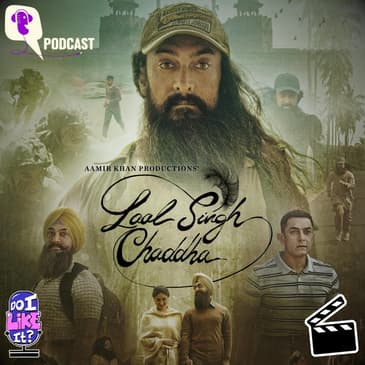

In this episode of Do I Like It, we dive deep into the world of film adaptations, focusing on the Bollywood film Laal Singh Chaddha and how it reimagines the Hollywood classic Forrest Gump for an Indian audience. From cultural nuances to character transformations, we explore what it takes to Indianize a beloved story like Forrest Gump. Join me as I break down the elements that worked, the ones that didn’t, and why I believe Laal Singh Chaddha is a commendable adaptation despite its flaws. Let’s discuss the challenges of remaking a culturally rooted film and how Laal Singh Chaddha navigates these complexities. What are your thoughts on Forrest Gump and its Indian counterpart? Share your views in the comments below!
Learn more about your ad choices. Visit megaphone.fm/adchoices
[00:00:00] You will find where the action is.
[00:00:02] In gaming anyway.
[00:00:04] Now dive deep into your gameplay.
[00:00:06] On the big main display of the new foldable Samsung Galaxy Z Fold 6
[00:00:10] with adaptive 120Hz image recovery device.
[00:00:13] Your skills will make the opponent look blabber.
[00:00:15] While the strong Snapdragon HN3 for Galaxy processor
[00:00:19] keeps your back free with a smooth gaming experience.
[00:00:22] That's how you are in the middle and in the front.
[00:00:24] Now learn more about the new Galaxy Z Fold 6 on Samsung D.
[00:00:30] Hello and welcome to Do I Like It, a show where we talk about everything.
[00:00:34] In this episode, we will talk about how to adapt
[00:00:36] a classic film of a different culture.
[00:00:40] What to do and what not to do while taking a source material
[00:00:44] and tweaking it in a different cultural context.
[00:00:46] And to understand this, we are going to take the example of a film
[00:00:49] which upon its release was really panned by people
[00:00:52] but it later got some love when it released on Netflix.
[00:00:56] Yes, I am going to work on the most risky thing in my online life.
[00:00:59] At the risk of getting trolled for the rest of my life
[00:01:02] I am going to defend LAL SING CHATTA
[00:01:04] and why I think it's the best possible adaptation
[00:01:07] of a classic like Forest Gump.
[00:01:09] Please note, I am not saying that LAL SING CHATTA
[00:01:11] is the best film far from that
[00:01:13] but I think it did a great job of Indianizing
[00:01:15] such a loved Hollywood classic.
[00:01:17] See, in addition to being a great film and screenplay
[00:01:20] Forest Gump was a film that really represented
[00:01:23] the post-Vietnam War America.
[00:01:26] Its aspirations and fears very poignantly.
[00:01:29] So, setting such a rooted picture in India
[00:01:31] is a bit tricky.
[00:01:33] It would be like an American remake of a film like Omshanti Oum.
[00:01:37] It's not just a rebirth story, right?
[00:01:39] And just like that, LAL SING CHATTA
[00:01:41] wasn't just a film about a man and his journey.
[00:01:44] If it wants to do justice to the original
[00:01:46] it must embody the soul of the original
[00:01:49] and find that soul within India.
[00:01:51] Now, look, Forest Gump is a metaphor for America.
[00:01:55] Forest's journey draws parallels with the journey of America as a country.
[00:01:59] It was named after Nathan Bedford Forest,
[00:02:01] the founder of the Ku Klux Klan
[00:02:02] and that speaks volumes of America
[00:02:04] trying to deal with its racist past
[00:02:06] and trying to accept it and tread a path of healing.
[00:02:10] Forest said that his mother named him so
[00:02:12] to remind him that sometimes we all just do things
[00:02:15] that don't make sense.
[00:02:16] Also, the way Forest started the Babagump Shrimp Company
[00:02:20] shows the American entrepreneurial spirit
[00:02:22] or the deeply Christian undertones of some of the
[00:02:25] philosophical ideas his mother talks about.
[00:02:27] All of this is telling us a great deal about
[00:02:29] USA as a culture
[00:02:31] and it's tough to Indianize this thing
[00:02:34] because how do you take something so rooted in a particular culture
[00:02:37] and set it somewhere else without losing the soul of it?
[00:02:42] Everything from the character's name to the accent
[00:02:44] is telling you about the past, present and future of these people.
[00:02:48] So let's see how Lal Singh Chanda does it.
[00:02:52] In India, the first step is the main character
[00:02:57] and what will be the name of this character?
[00:02:59] Lal Singh Chanda would be a very different film from a
[00:03:02] Saurav Chandra and that would be a very different film from a
[00:03:04] Najaf Ali Khan.
[00:03:06] The three people have different lives,
[00:03:08] they have different struggles, everything is different.
[00:03:09] Their life is like a chocolate dialogue.
[00:03:13] So this choice becomes very important.
[00:03:17] Lal is from a Fawzi family whose grandfather
[00:03:19] was martyred in World War I and in World War II.
[00:03:23] And his mother is a boss lady who does kheti as well as
[00:03:26] raised Lal. And this talks about her rural wisdom.
[00:03:30] She has seen life, she has seen her father
[00:03:34] go for war and never return. She has seen the struggles
[00:03:36] of living as a single mother. So when she says
[00:03:39] that she is not different from anyone else, she has lived that reality.
[00:03:42] She was someone who was different in this masculine
[00:03:45] and patriarchal world. But she still thrived.
[00:03:48] So Lal is completely different from anyone else.
[00:03:50] She can do everything. Also making him a Sikh really
[00:03:54] drives home the point of spirituality.
[00:03:57] Being a fairly recent religion in our subcontinent,
[00:04:00] Sikh teaching is like a distillation of many other religions
[00:04:04] which makes it very easy to talk about concepts
[00:04:07] like destiny and free will. Also being a Sikh
[00:04:11] living close to the Indo park border, Lal's army
[00:04:13] lineage is also quite believable. Or the scene where he starts
[00:04:17] a charitable hospital. It really hits home when you think
[00:04:20] about it in the tradition of Dasvahista Rabada.
[00:04:23] Not saying that the rest of the religions
[00:04:25] don't charity but you get what I am saying.
[00:04:27] It's more than just a plot point for Lal Singh Chanda.
[00:04:29] But now in that aspect, I do have a point of
[00:04:32] criticism for the film. Where I praise Lal's character
[00:04:35] I didn't quite like how Bala was conceiving.
[00:04:39] See, Baba in the original film is a black man from
[00:04:42] Alabama who wants to start a shrimp company.
[00:04:46] Now that makes sense if you think about the geography
[00:04:48] of Alabama. It's like someone from Kashmir saying
[00:04:51] I know everything there is to know about apples.
[00:04:54] It's a stereotype but it works.
[00:04:56] Baba had a capitalistic entrepreneurial spirit
[00:04:58] because he truly believed just like many Americans
[00:05:01] that making money would take his family out of
[00:05:04] generations of poverty. But in his case,
[00:05:08] why was Bala Telugu and why did he want to make
[00:05:11] Chadi Banyan? I don't know if there's a big
[00:05:14] undergarment industry in Bodhipalam please let me
[00:05:16] know in the comments. But this connection
[00:05:19] was a little forced. Also in the USA
[00:05:21] there was a mandatory draft during the
[00:05:24] Vietnam War but the Indian army is a
[00:05:27] voluntary service. So here we have
[00:05:28] the people of the army who are so fit and fit
[00:05:31] they have to compulsorily enrol to fight that
[00:05:36] war. Baba is not able to start his company
[00:05:40] because he has to serve in the military for
[00:05:42] a few years. It would have been more
[00:05:44] Indian had they been in a boring
[00:05:46] government job or even a desk job at the
[00:05:49] airport. But other than that one thing
[00:05:51] I really like how Lalsing Chadda dealt
[00:05:53] with Indianizing their American counterparts.
[00:05:56] Turning Jenny into a Don's mistress,
[00:05:57] referencing the underworld era of Bollywood.
[00:06:00] Or Muhammad's character, dude I love what they
[00:06:02] did with him but I'm going to talk about it
[00:06:04] in the next section. The Vietnam War is
[00:06:10] considered to be a very pointless war that
[00:06:13] America got itself into. Which is why
[00:06:16] the film really treated that sequence
[00:06:18] with satire. You can see this in the
[00:06:20] kind of music and edit choices they make.
[00:06:22] They want you to sort of laugh at the
[00:06:24] American government and the American
[00:06:25] military. If you listen to Forrest's voice
[00:06:27] over, he says there was always something to
[00:06:30] do and we went for long walks and that
[00:06:32] gets intercut with visuals that
[00:06:34] flipped the tension. And all of this is
[00:06:36] happening while Jimmy Hendrix's All Along
[00:06:38] the Watchtower is playing. You know, there
[00:06:40] must be some kind of way out here said
[00:06:42] the Joker to the thief. You're supposed
[00:06:44] to laugh at all of this. But bro, in
[00:06:46] India's case you can't say this. The
[00:06:48] Kargil war wasn't something to be
[00:06:50] satirized. We were on the defensive,
[00:06:52] Pakistan had an altitude advantage and
[00:06:54] the fact that we came out on top to
[00:06:56] defend our land is something to be
[00:06:57] celebrated. If you compare Forrest Gump
[00:07:00] and Lal Singh Chadda's war voice over,
[00:07:02] Lal is very serious. Captain Saab
[00:07:05] made 6-6 teams. We went
[00:07:06] for a cover fire. Dude, he's talking
[00:07:09] about proper war strategy. Compare
[00:07:11] that with Forrest Gump's long walks.
[00:07:13] Even the music and short
[00:07:15] selection made it look like a typical
[00:07:16] war drama. But then there's one more
[00:07:18] problem. Dan Taylor was a lieutenant
[00:07:21] who believed that it was his destiny
[00:07:23] to die in war for his country. And
[00:07:25] that destiny is contrasted with what
[00:07:27] happened in the war. You feel like
[00:07:29] bro, you were talking about this destiny
[00:07:30] and when he gets saved by Forrest
[00:07:33] and has to live the rest of his life
[00:07:35] with disability, this destiny
[00:07:37] gets questioned. There's a sense of
[00:07:39] bitterness in him towards life, towards
[00:07:41] God because he thought he'll
[00:07:44] attain glory by dying for his country
[00:07:46] like his forefathers. But he's
[00:07:48] living a deprived life on a wheelchair
[00:07:49] probably still recovering from the
[00:07:51] PTSD of a war that half the country
[00:07:53] thinks is useless. What kind of destiny is this?
[00:07:55] And to say this thing in India, to
[00:07:57] say this bitterness in India, one
[00:07:59] thing is sorted out that bro, Dan
[00:08:01] cannot be a forgy of the Indian
[00:08:03] era. Kargil war was not pointless.
[00:08:05] We didn't lose that war and
[00:08:07] any Kargil war veteran would live
[00:08:09] the rest of his life in honour.
[00:08:11] There's no question about bitterness.
[00:08:13] So what should we do now? Just like
[00:08:14] Vietnam, you can say that Kargil
[00:08:16] war was a war that Pakistan
[00:08:18] unnecessarily got itself into. And
[00:08:21] a soldier who was given the promise to
[00:08:23] die for his religion would
[00:08:25] understandably be bitter if he gets
[00:08:27] saved. And that touch absolutely
[00:08:29] shines in Laal Singh Chadda.
[00:08:33] I also like the way Laal Singh
[00:08:35] Chadda deals with the character of
[00:08:36] Jenny. Forest Gump almost made
[00:08:39] it look like Jenny deserves her fate
[00:08:41] for being a hippie. It looks at her
[00:08:43] from a very old conservative lens.
[00:08:45] She had a troubled past, sure,
[00:08:47] but it's almost like the film is
[00:08:48] punishing her for being with the Black
[00:08:50] Panthers, for chasing money. And at
[00:08:52] the end, her illness is a sure shot
[00:08:54] reference to America's hysteria about
[00:08:56] HIV. But here, Rupa has more
[00:08:58] agency. Yes, she got into trouble,
[00:09:00] but she's not a
[00:09:02] bichari. Okay, bro, she's
[00:09:05] regretful because of the wrong
[00:09:06] man. But her story also talks about
[00:09:08] the whole modesty culture we have. So I
[00:09:09] really preferred Rupa over Jenny.
[00:09:14] And now I want to talk about the best
[00:09:16] aspect of Laal Singh Chadda, which
[00:09:18] in my eyes made it the best possible
[00:09:20] way forest gump could have been
[00:09:22] interpreted. Even though the original
[00:09:23] makers don't outwardly say so, forest
[00:09:25] gump is a deeply religious thing. It
[00:09:28] tries to ponder over questions of
[00:09:29] destiny and our place in the world.
[00:09:32] Just like the feather, we also
[00:09:33] always fly from one place to another.
[00:09:35] What if the feather stops and asks
[00:09:37] that I am wearing a forest gump's shoes
[00:09:39] and what am I doing? But if you
[00:09:40] want to bring it to India, then you
[00:09:42] have both a great problem and a
[00:09:44] great opportunity. Being set in India,
[00:09:46] you have the luxury of
[00:09:48] talking about the vast civilization
[00:09:50] of religious and spiritual thought
[00:09:52] that we've had. But again
[00:09:54] you can't see the copy-paste
[00:09:56] the Jesus' story to Laal Singh Chadda.
[00:09:58] But I really like the way they approach it
[00:10:00] in this film. Just look at Laal when
[00:10:02] he sees a man wear a turban at the
[00:10:04] army hospital. And her mother, when
[00:10:06] she has to cut Laal's hair. Or when
[00:10:07] Muhammad Paji asks her, I've never seen
[00:10:09] you do not respect me. Laal doesn't
[00:10:12] get what he means. Because all his
[00:10:14] life, Laal has lived
[00:10:16] as if the whole world is
[00:10:18] godly. And he can connect to the
[00:10:20] God within himself by being nice
[00:10:22] to people. When he says,
[00:10:24] I don't like to kill anyone. Just see
[00:10:26] the childlike innocence in his eyes.
[00:10:28] He's living a godly life without even
[00:10:30] knowing it. But then when Rupa leaves
[00:10:32] him and after he has lost his mother,
[00:10:34] Bala and Muhammad Paji, there's
[00:10:36] a void in his life. Every thing
[00:10:38] in which he could see a God, he left.
[00:10:40] So what does Laal do? He starts running.
[00:10:42] Not to reach anywhere,
[00:10:44] not for world peace or the environment,
[00:10:46] he runs to find out the answer
[00:10:48] that why is he trying to run away?
[00:10:50] And what's the background music? You are
[00:10:51] the one who's asking, you are the prophet.
[00:10:53] The friend you're looking for is within you.
[00:10:56] Turkalia. And by the end of this
[00:10:58] pilgrimage, when he sees
[00:11:00] his long hair and grown beard
[00:11:01] in the mirror, he understands what it
[00:11:03] means to be a Sikh. He sees his
[00:11:05] ancestors image in himself. The very
[00:11:07] act of growing your hair in itself
[00:11:10] is like a quest for him.
[00:11:12] He had to cut his hair to save his life
[00:11:13] and he grew them back when he found
[00:11:15] out what he was alive for.
[00:11:17] And with that, his turban comes back.
[00:11:20] Because his religion is
[00:11:21] no longer just a bunch of rituals.
[00:11:24] He has finally understood what it means
[00:11:26] to be one with God. And what's the background music?
[00:11:28] The A.R. Rahman's icon card.
[00:11:29] Dude I'm just getting goosebumps
[00:11:31] just thinking about that scene. It's so good.
[00:11:33] It was such a beautiful way in which
[00:11:35] director Advay Chandon and writer Atul Kulkarni
[00:11:38] brought Indian
[00:11:39] spiritualism through this story
[00:11:41] about a Christian character.
[00:11:42] And yes, these were some of my thoughts
[00:11:45] about how Lal Singh Chadda adapted a Hollywood
[00:11:47] classic like Forest Gump. It would
[00:11:49] have been a tremendously huge task
[00:11:51] but I think the makers did
[00:11:53] justice to the original material. And this
[00:11:55] is not me saying that the film didn't have its flaws.
[00:11:57] For one, Amir Khan's acting.
[00:12:00] Also, I wanted
[00:12:01] more interesting historical moments
[00:12:03] in which Lal could have been added
[00:12:05] considering what all we can do with CGI.
[00:12:07] Like, in Forest Gump
[00:12:08] he actually did change
[00:12:11] history. There was nothing like that here.
[00:12:13] Imagine Vikram Bhakra
[00:12:14] is giving an interview on Kargil's time
[00:12:15] and Lal is sitting on the side and drinking Pepsi.
[00:12:18] And after seeing him, he gets the idea of Dil Mangamore.
[00:12:21] There were some surface
[00:12:23] level talks going on here except
[00:12:24] the shark Khan dance. That was genius.
[00:12:28] I absolutely love Forest Gump.
[00:12:30] I think it's one of the best screenplays ever
[00:12:31] and so impactful for cinema.
[00:12:34] Films like My Name is Khan and Ode to My Father
[00:12:36] wouldn't exist without Forest Gump.
[00:12:37] Hell, Om Shanti Om Sajna se kaise hai
[00:12:40] laad sajni wala video wouldn't exist
[00:12:42] without Forest Gump. And I think
[00:12:44] Lal Singh Chadda was a valiant effort
[00:12:45] to recontextualize such a sacred film.
[00:12:48] But yaar tum log batao, tumhe
[00:12:49] Forest Gump kaisi lagti hai?
[00:12:51] And tumhe Lal Singh Chadda kaisi lagi?
[00:12:53] And do you think a classic like Forest Gump
[00:12:55] can even be adapted for another culture?
[00:12:57] Let me know your thoughts. The conversation continues
[00:12:59] in the comments below. This was Pratik
[00:13:01] and I will see you in the next one.