
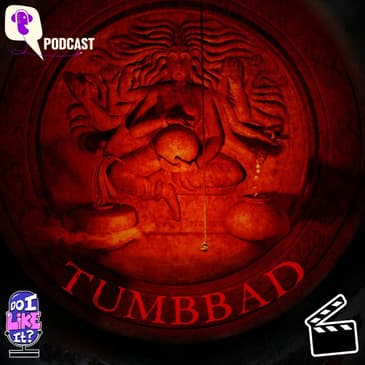

In this episode of Do I Like It, we dive into the incredible journey behind the making of 'Tumbbad', a 2018 mystical horror masterpiece, which was re-released last week. Created by Rahi Anil Barve, Adesh Prasad, Sohum Shah, and Anand Gandhi, this film took years of perseverance, struggle, and a 'no compromises' attitude to come to life. From dealing with constant rain to building a breathing womb, the making of 'Tumbbad' is as legendary as the film itself. Join me as I explore why 'Tumbbad' is a cinematic miracle that continues to captivate audiences—even years after its release.
Learn more about your ad choices. Visit megaphone.fm/adchoices
[00:00:00] Hello and welcome to Do I Like It, a show where I dig through the content rabbit hole and help you make sense of culture
[00:00:05] In this episode, I'll talk about a mad person
[00:00:08] No, I'm not talking about a person who spent a major chunk of his life creating one R 45 minutes of cinema
[00:00:17] I'm talking about a film which was impossible to make but a few people made it come true
[00:00:21] Actually now that I think about it, the film was conceived years before even I was born
[00:00:27] So I was a little bit disappointed in you
[00:00:29] I'm talking about the incredible story behind making Tumbbad, The 2018 Mystical Horror Film created by Rahian Elbarbe
[00:00:37] A dish per se, so we're going to get an Anand Gaddip
[00:00:40] The film's idea first came to Berbe when he heard some folk tales from a friend
[00:00:45] And up say the story of this film's making has been a stuff of legend
[00:00:48] Tumblr was just really, really, a bro, it still holds up
[00:00:53] And that got me thinking, Kivai, I think a film was made by a friend
[00:00:57] I think one Grover had said it and I totally agree with it
[00:01:01] The fact that a film exists is the result of years of hard work, perseverance, luck and just failure
[00:01:08] And Tumbbad is the perfect example of this, so let's talk about it
[00:01:12] Also by the way, I just realized after uploading my alternate endings while I video
[00:01:16] That Tumbbad also had an alternate ending to add that to the list as well
[00:01:21] Shuduze Shrukar, in 1993, 14 year old Rahian Elbarbe got fascinated by Marathi
[00:01:27] Focales of Writer Narayan Dharp and over the next four years he wrote a story
[00:01:32] And some characters Over the years this idea stayed with Barbe as a
[00:01:36] Dulting happened, he worked for some years as an animator and according to a story on Thrive Global
[00:01:41] This was the time when he started struggling with alcoholism and drug abuse
[00:01:45] Now in 2005 he quit his job as an animator, went to a coastal town in Maharashtra
[00:01:50] And wrote his first short film Manja which was shot with the crew of just 10 people
[00:01:54] The film was very well appreciated and it even got featured on Slumdog Milena's Blu-ray as a bonus short film
[00:02:00] The producer of Manja agreed to produce his next film Tumbbad
[00:02:04] In 2008 the film went into production with an actor from the National School of Drama
[00:02:09] Who by that time had done some small roles in some films
[00:02:12] You might know him as Navasun Thin Thin Thickey
[00:02:14] But 24 hours before the shoot the producer backed out
[00:02:18] And Barbe was stuck with a good script that no one wanted to make
[00:02:21] Remember the year was 2008, 11 years after he conceived the first draft
[00:02:26] But still 10 years before we would get to see the final product
[00:02:29] But by 2011 something happened that would change the course of things
[00:02:33] After losing his mother to brain tumor Rahian was at his lowest
[00:02:36] And that's when he met some people who were instrumental in the making of his dream project
[00:02:41] He met writer, Natasha, filmmaker Anand Gandhi
[00:02:44] And actor producer Sohumsha who had just finished their contemplative masterpiece of the series
[00:02:49] By this film you're making it a nice day and a day as a lot of people to get a great career
[00:02:54] But yeah, when Sohumsha and Anand Gandhi came on board
[00:02:58] The tumbard that we see today started getting made
[00:03:01] Shah was going to play the lead and produce the film Gandhi would be the creative director
[00:03:05] And Adesh Prasad who was an AD on trip of thesis came on board as a co-director
[00:03:10] Sohumsha, Adesh Anand and Rahi had one thing in mind
[00:03:13] No compromises
[00:03:14] Soumard is a moody mythological story about greed
[00:03:18] Set in a marash trend village which revolves around the legend of the poor TV
[00:03:23] And her favorite child has turned
[00:03:24] Now film like this demands a specific visual language
[00:03:28] If you remember the intro animated scene, she said that she was going to be a hero
[00:03:33] Soumard was going to be a barrage band
[00:03:35] Now this one line is the axis around which the mood of the film revolves
[00:03:39] It is always raining in the bar
[00:03:41] Because of that it's always overcast and shady
[00:03:44] And that goes very well with the e-re-tone
[00:03:46] I don't even think that the poor will be a bit hot here
[00:03:51] So, bye, good bye, Bapuri
[00:03:52] But let's just say, India we don't really make moody films
[00:03:57] And we want to make a film with a big picture
[00:04:00] We want to make a film with a big picture
[00:04:01] So we don't make a film with a big picture
[00:04:04] It's always a play, right?
[00:04:06] And in such a film making cultures, sticking to a vibe is very difficult
[00:04:10] You've got to fight the system with just wants you to do things in a chalthe heavy
[00:04:14] For example, take husters room
[00:04:16] A normal film would be like, yes we have to explain it
[00:04:19] But again, no compromises
[00:04:21] So they actually built a 7,000 square feet chamber with p-o-fone
[00:04:25] And then made it breathe with pumps and hydraulics and whatnot
[00:04:29] If you're a spudest at a copain, a caro, a nerves, a dalo, a slimes as a copa caro
[00:04:34] And after every shot it would get spoiled
[00:04:36] So redoing all of that take after take after take
[00:04:38] And just see how cool the final thing looks in the film
[00:04:43] Or the monsoon, if you've shot anything professionally or even semi-professionally
[00:04:48] You know that dealing with the elements can be a huge hurdle
[00:04:51] And if you're not even a part of the whole time, you're getting a lot of light
[00:04:55] Sound, continuity, it's a production nightmare
[00:04:58] But again, no compromises
[00:05:00] The film had to be shot exclusively in the monsoon of a village in Maharashtra
[00:05:04] Where apparently buswaewari was not there
[00:05:06] So they couldn't really shoot all year round
[00:05:08] And then you wonder that Chhehal, you look guys, we'll go in there
[00:05:11] It's pure dedication and perseverance
[00:05:13] After the so-hom Shah version had started
[00:05:15] The film went back and forth with reshoots and re-rights to accommodate new ideas
[00:05:20] These guys were coming up with
[00:05:22] Like for example, Huster used to live in a black cave in an earlier draft
[00:05:26] But later the womb was added, Huster was changed from black to red
[00:05:30] So it's a very organic process
[00:05:31] So we've started to have to sell his house and car as the film kept going over budget
[00:05:37] But again, no compromises
[00:05:38] Reshoot, because of that, you're going to do it
[00:05:40] But if you're doing something, then you'll have to shoot
[00:05:43] So now you're going to edit your picture
[00:05:48] But no
[00:05:49] There's no one in the world, this film was shot
[00:05:51] But the post-production of the bar was another story itself
[00:05:55] In a Q&A session at the film's first anniversary
[00:05:58] Co-director Adesh Prasad said
[00:06:00] The first assembly cut of the film was about four hours long
[00:06:03] So it took a lot of time to just truncate it down
[00:06:06] Huster, who was originally an actor in prosthetic makeup
[00:06:09] He was CGI later, so he was met in time
[00:06:12] But that I think is one decision I wasn't into big fan of
[00:06:15] I don't know if there was some technical problems with original Huster
[00:06:18] I could see the lack of finesse in this CG
[00:06:21] And while all of this kichidi was going on, there was another issue
[00:06:25] The sound
[00:06:26] A very nice sound design masterclass met her
[00:06:28] And the person who was taking the class
[00:06:30] He was teaching us the importance of good sound in cinema
[00:06:33] He first made us listen to a horror movie scene with our eyes closed
[00:06:36] Just the audio
[00:06:37] And then we saw just the visuals with the audio minted
[00:06:41] And then he was able to watch it
[00:06:42] Which one is more impactful
[00:06:44] Without good sound, even the greatest visuals field mind
[00:06:48] And in the same case, the audio can be done
[00:06:51] If you want to do something, then you can do something
[00:06:55] So sound designer will create the entire sound scape from scratch
[00:07:00] Which let me tell you is a hell of a job
[00:07:02] Also, in fact, some parts of the Dadi's character were voiced by Raghuvi Rya
[00:07:06] Everything from the detailing of the grass to getting Danish composer
[00:07:09] Just for kids to do the score, one thing stayed constant
[00:07:12] No compromises
[00:07:14] And what do you get into turn?
[00:07:16] A film that had everything going wrong for it
[00:07:18] But just by the impact of filmmaking and writing
[00:07:22] And a little magnet also I think
[00:07:23] So Marlowent from an impossibility to a film that we all have in geritional
[00:07:29] Now, I don't honestly care if Tom Marlowent for an Oscar
[00:07:34] Or it opened at the film festival
[00:07:36] Which by the way was the first Indian film to be screen
[00:07:38] All of that is good, but I have to film something like this
[00:07:42] Rank 1 rank 2 is not enough
[00:07:44] The fact that a film like Tom Marlowent exist
[00:07:46] That only is the greatest award
[00:07:48] Now, is Tom Marlowent a perfect film
[00:07:51] Not at all
[00:07:52] I don't think any film is
[00:07:53] But as I said before, the CGI was shorty then and now
[00:07:57] Some of the character motivations felt little loose
[00:08:00] Like the money lender
[00:08:01] His reasons for following me and my writing his life was a bit rushed
[00:08:05] That was a great idea
[00:08:07] I think the 4th and 2nd and 9th of the time
[00:08:10] He explored the angle of the story
[00:08:12] Also, that Mahatma Gandhi quote
[00:08:14] Age like a 2012 motivational short film quote
[00:08:18] Guys please stop putting quotes at the start and end of your film
[00:08:22] It's not cool anymore
[00:08:24] It's cool to have a project
[00:08:25] But dude, you know what?
[00:08:27] The film is perfect for me
[00:08:29] Because the film like Tom Marlowent and the story behind it's making
[00:08:33] Give me and many others like me the courage to go on for one day longer
[00:08:38] Because he has a budding artist, writer, director, musician, cove
[00:08:43] But what do you think?
[00:08:45] A chord is not like that
[00:08:46] And I think Tom Marlowent gives that hope to me
[00:08:50] That the one who has a random tune in the Mahatma Gandhi
[00:08:52] Or the Metro, which is the story of the story
[00:08:55] It's not far-fetched to imagine that one day
[00:08:58] That tune or that story would become a beautiful piece of art
[00:09:02] But yes, this was another episode of Do I Like It
[00:09:05] It's a bit emotional or philosophical
[00:09:06] But yeah, I just love this film story and the guys who made it possible
[00:09:11] I think it's the only time I'd be okay with them
[00:09:14] Exploiting Tom Marlowent to make this Hustars in a Matiguniver
[00:09:17] For something, Jitane is a cool man
[00:09:18] I'm not a fan of it
[00:09:19] It's a time or passion, I'm a milkcoer
[00:09:21] You deserve it
[00:09:23] But you know what?
[00:09:24] You're a Tom Marlowent, did you watch it in theaters?
[00:09:26] And are you excited for Tom Marlowent to me?
[00:09:28] I'm always excited
[00:09:29] As always, the conversation continues in the comments below
[00:09:32] This was Pratik and I'll see you in the next one
[00:09:34] So, job at Mahatma's Taradayana