

“𝐈𝐧 𝐨𝐮𝐫 𝐕𝐂 𝐟𝐮𝐧𝐝, 𝐰𝐞 𝐡𝐚𝐯𝐞 𝐝𝐨𝐧𝐞 𝐥𝐨𝐭𝐬 𝐨𝐟 𝐭𝐡𝐢𝐧𝐠𝐬 𝐭𝐨 𝐥𝐞𝐯𝐞𝐥 𝐭𝐡𝐞 𝐩𝐥𝐚𝐲𝐢𝐧𝐠 𝐟𝐢𝐞𝐥𝐝, 𝐭𝐨 𝐨𝐩𝐞𝐧 𝐭𝐡𝐞 𝐝𝐨𝐨𝐫 𝐰𝐢𝐝𝐞𝐫 𝐚𝐧𝐝 𝐜𝐫𝐞𝐚𝐭𝐞 𝐚𝐧 𝐞𝐧𝐯𝐢𝐫𝐨𝐧𝐦𝐞𝐧𝐭 𝐰𝐡𝐞𝐫𝐞 𝐞𝐯𝐞𝐫𝐲𝐨𝐧𝐞 𝐢𝐬 𝐰𝐞𝐥𝐜𝐨𝐦𝐞”.
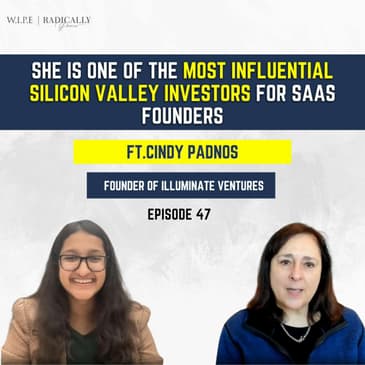
Meet Cindy Padnos, founder of Illuminate Ventures, a seed and early-stage venture capital firm based out of Oakland that invests exclusively in enterprise/B2B software companies.
In this interview episode of ‘Wiping Out the Norm,’ Cindy shares her journey in Venture Capital with our founder Radhika Bajoria.
Cindy started her career by working with a large corporation, then did management consulting within the tech sector and soon founded her own startup in B2B software which she eventually exited and built a VC fund to invest in B2B SaaS sector.
After working in the VC world, she conducted many researches to understand what helps startups and founders to become successful. She shared many of her valuable insights in the conversation like,
“𝐌𝐚𝐥𝐞 𝐚𝐧𝐝 𝐟𝐞𝐦𝐚𝐥𝐞 𝐞𝐧𝐭𝐫𝐞𝐩𝐫𝐞𝐧𝐞𝐮𝐫𝐬 𝐩𝐢𝐭𝐜𝐡 𝐝𝐢𝐟𝐟𝐞𝐫𝐞𝐧𝐭𝐥𝐲. 𝐌𝐞𝐧 𝐛𝐞𝐥𝐢𝐞𝐯𝐞 𝐢𝐧 ‘𝐟𝐚𝐤𝐞 𝐢𝐭 𝐭𝐢𝐥𝐥 𝐲𝐨𝐮 𝐦𝐚𝐤𝐞 𝐢𝐭’ 𝐜𝐨𝐧𝐜𝐞𝐩𝐭, 𝐰𝐡𝐞𝐫𝐞𝐚𝐬 𝐰𝐨𝐦𝐞𝐧 𝐚𝐫𝐞 𝐠𝐞𝐧𝐞𝐫𝐚𝐥𝐥𝐲 𝐫𝐞𝐚𝐥𝐢𝐬𝐭𝐢𝐜 𝐚𝐧𝐝 𝐟𝐚𝐜𝐭𝐮𝐚𝐥, 𝐚𝐧𝐝 𝐝𝐨 𝐧𝐨𝐭 𝐜𝐨𝐦𝐦𝐢𝐭 𝐭𝐨 𝐚𝐧𝐲𝐭𝐡𝐢𝐧𝐠 𝐭𝐡𝐚𝐭 𝐭𝐡𝐞𝐲 𝐡𝐚𝐯𝐞𝐧’𝐭 𝐚𝐜𝐡𝐢𝐞𝐯𝐞𝐝”.
In the conversation, Cindy revealed many other observations from her interesting research like,
“𝐈𝐧 𝐦𝐲 𝐫𝐞𝐬𝐞𝐚𝐫𝐜𝐡 𝐰𝐡𝐢𝐜𝐡 𝐬𝐮𝐫𝐯𝐞𝐲𝐞𝐝 𝐡𝐮𝐧𝐝𝐫𝐞𝐝𝐬 𝐨𝐟 𝐄𝐧𝐭𝐫𝐞𝐩𝐫𝐞𝐧𝐞𝐮𝐫𝐬 𝐚𝐧𝐝 𝐕𝐂𝐬, 𝐕𝐂𝐬 𝐬𝐡𝐨𝐜𝐤𝐢𝐧𝐠𝐥𝐲 𝐫𝐞𝐯𝐞𝐚𝐥𝐞𝐝 𝐭𝐡𝐚𝐭 𝐭𝐡𝐞𝐲 𝐛𝐞𝐥𝐢𝐞𝐯𝐞 𝐦𝐞𝐧 𝐝𝐢𝐬𝐩𝐥𝐚𝐲𝐞𝐝 𝐦𝐨𝐫𝐞 𝐛𝐮𝐬𝐢𝐧𝐞𝐬𝐬 𝐚𝐭𝐭𝐫𝐢𝐛𝐮𝐭𝐞𝐬 𝐭𝐡𝐚𝐧 𝐰𝐨𝐦𝐞𝐧.” She highlighted the subtle but unintentional biases that women face.
“VCs do not want to invest in companies where husband and wife are running the company together, but we invested in such a company, and made massive returns”.
There are many such preconceived notions in the mind of VCs and avoid investing in companies that are different from the ‘norm’.
In addition to women, she found that people of color, LGBTQ+ individuals, those from other nationalities, and even those with different accents were frequently impacted by prejudices and biases.
In her VC fund, they have focused on inclusion, and also shared that half of the companies in their portfolio have at least one female co-founder. Along with conducting researches, she has been involved in a number of nonprofits supporting women entrepreneurship for 20 years.
Watch our full conversation with Cindy as she shared with us many more learnings from her researches and experiences in the VC world.
Watch the full video- https://lnkd.in/dK-kzJ2U
#VentureCapital #WomenInTech #VCJourney #WipingOutTheNorm #IlluminateVentures #TechSector #B2B
[00:00:00] Thanks, Cindy, for joining in today with us.
[00:00:08] I'm very excited to have you on the show because you have done so much of research on how different
[00:00:16] entrepreneurs succeed in their life, what kind of barriers do they face, how a woman
[00:00:23] might think versus how a man might think when they're pursuing their businesses. Another one looked at how MBA candidates think about their futures and the first one actually focused on The amazing pool of women entrepreneurs that's kind of hidden that a lot of VCs don't see and and the really high Performance that they've been delivering So if I step back and answer your question, I think which was about how do they pitch differently?
[00:01:42] Does a man versus a woman pitch differently? I would say that frequently a male entrepreneur
[00:02:48] see that the sales forecast, for example, of a pitch deck from a firm that's led only by men, might be a little bit more inflated than one that's led primarily by women. And those are just,
[00:02:57] they're a little bit general terms, but they're realistic. I've seen it many times. I've been a
[00:03:02] founder and CEO of Adventure Back to start up myself. And I know it took me a long time to an investor believes is true is true enough in their mind and it's how they make decisions and I it was really quite fascinating because male and female entrepreneurs Set exactly the same thing. I'm almost identical views of what they thought were the most important attributes and it was things
[00:04:27] like resilience and things like you know a vision of where you're going after a specific you know vertical category, let's say it's healthcare or CPG products or something else it really is valuable to have a You know a co-founder or a senior person on your team with that domain knowledge and it will be valued by the people who are
[00:05:41] Considering an investment in your company, but I but I do think what's interesting is that
[00:06:47] I'm here in North America, I will say that. Their answer was almost universally
[00:06:52] that the men were more likely to display those attributes than the women.
[00:06:59] Oh how is this that the investors think are different than the entrepreneurs themselves?
[00:07:02] It's a great question, I don more than the women. Okay. Yeah, yeah. Isn't that interesting?
[00:08:21] I mean, the only thing that women face issues with family support, but never heard this friend or whatever it might be. One guy actually said to me, my mother's afraid I'll never find a girlfriend. I work too hard. That's the reality. That was the funniest one. That was the funniest one. But it was interesting that there was a significant difference there between that. But I have to say this.
[00:09:41] I think there's bias built into a survey that's
[00:09:44] only talking to people who are actual entrepreneurs. the VCs, not just the men, said the women were more likely to face those barriers. Okay, barriers to success. So why is that important? There were 13 of them. It's a long list. And if you like, you should go read and they're identical in every other way. Yeah. Who am I going to write the check to? I'm going to write the check to the one that I see is lower risk. And the lower risk one is the one that faces fewer barriers and has founders that have all the attributes of success. And even if they're different that and and that's why we wrote the white paper was to share This so people would at least step back and think about it. Am I making inappropriate assumptions? Am I you know pigeonholing a woman someplace that that she doesn't belong
[00:13:42] Unsurely and and it's by the way
[00:15:04] Not just women that face this bias if you are bringing something to market that I have a passion for, an idea that I believe in they would have the resilience and the passion to stick with it when times get tough. That would be my biggest concern. Because again, if you look at the attributes of success, if you look at that list in the white paper, the top of the list is resilience, right?
[00:16:21] At top of the list.
[00:16:22] And having been through it myself, and for any founder knows this, there are peaks and
[00:16:27] valleys and they are continuous. begin with. Well it's really been my entire career. It started right out of graduate school. I had done my master's at Carnegie Mellon and my first, even my summer, well not my internship, but even during the class year I was working with AT&T with I ended up doing venture and but it was entirely natural The only thing I knew was b2b software that had been my whole career It wouldn't make a lot of sense for me suddenly to go do consumer internet or health care investing or biotech or something else Yeah, but it wasn't difficult for you to convince your lps to put money into your
[00:20:02] for about, oh, I don't know, 12, 18 months, then joined a firm, invested out of their existing fund.
[00:20:07] And then as AWS was expanding
[00:20:11] and a startup no longer needed $5 million to get started,
[00:20:15] I said, okay, this is the right opportunity
[00:20:17] to go build what then was called a micro VC fund,
[00:20:21] focused exclusively on enterprise software.
[00:20:25] Because there wasn't one, there weren't people doing that, for companies and then invited LPs limited partner investors to join me as investors in that fund and Because I could already show them the high quality of the investments We were getting into and they all had markups already I was able to show them that what I was building was
[00:21:44] substantial and numbers and that can be evidenced by our own portfolio where half of our portfolio companies Include at least one woman co-founder and we we don't ever use Gender or ethnicity or diversity as an investing criteria But we've done a lot of things to level the playing field to open the door wider
[00:23:02] And to create an environment where everyone is welcome. So yes
[00:24:06] at first at the business. We look fundamentally what they're building. Is it in our sweet spot? Is there a white space? Have they shown that they can be really scrappy and capital efficient
[00:24:11] already? We invest as a firm on what we call further along seed stage companies. And that can
[00:24:19] mean a lot of things. It doesn't always mean they have revenue, although they frequently do,
[00:24:24] which would mean, okay, they've already built a product. Sometimes there are spin out from a called Content Stack. Content Stack has a husband and wife team among the co-founders. They are both Indian by background. The woman is the CEO, her husband is the CTO, and the third co-founder was the VP. And they are just a phenomenal business. But when I, when we wrote the first term sheet and went to syndicate that, meaning share it with other co-investors to join us in that finance,
[00:28:07] whoop. And now I would say they regret it because that company, you know, just as the revenue has grown, the valuation of that company has grown and it's an amazing, amazing business.
[00:28:14] Wow. I mean, some we see is just don't look at businesses because of this reason it's like,
[00:28:20] I mean, yeah, well, it's, it all it takes is a credit card and some nighttime work or weekend work to build something. So, you know, that's just lazy, that's a red flag. I would say a founder who, excuse me,
[00:29:42] hasn't done their homework around understanding
[00:29:45] what the real customer need is, really like and talk to for the second round, third round and then ultimately invest into them? Well I don't think there's one type again we look for these further along companies that are already relatively established one way or another if they've managed to do something that's a team that worked together before or something that causes them to. So if you think about it, who's done that? You know, the best example of course is Salesforce. Salesforce came into a very crowded market. There were lots of sales automation tools, but no one was delivering that as a SaaS solution. They were the first or amongst the first. And so because of that,
[00:32:20] and because they had tremendous sales and marketing skills, not because they simply is that if you're going to enter a crowded market, you better have something really distinctively different. It should be either your go-to-market strategy is advantaged in some way, you have a channel partner that's gonna embed you in everything they do, or your market is much different
[00:33:43] from what everyone else is targeting, like Salesforce,
[00:33:45] it was entirely different.
[00:33:46] They could go after go-to-market strategy. It can be your business partnerships. It can be the unique market that you choose to serve. It can be a variety of different things.
[00:35:00] Yes, it can be the technology as well, but most of the time in the industry, technology
[00:35:06] doesn't win. software for HR software for manufacturing software for Accounting software for every business function in the enterprise. Yeah, and so That is really where we focus and and they can be also Embedded infrastructure it can be developer tools to explore Right and you've invested in many gems any anti-portfolios that you have anti portfolios companies we missed Oh, there are plenty of those we missed out on gone for example
[00:37:44] Able to get into that one. Yeah, there are a few like that Over a hundred public company boards. They've sat on 250 private company boards they're really an amazing group of people all in the B2B category and We can't leverage those skills and resources when we own you know, one percent of a company we can't afford to do that
[00:39:01] so Yeah, those those are two examples of companies that it you know now you look and say wow
[00:39:05] That would have been cool to be a part of those. Yeah
[00:40:01] there on their website. I'll send it to you.
[00:40:02] Yeah, I'm not aware of that.
[00:40:04] That's really interesting.
[00:40:05] Yeah.
[00:40:06] Put me there.
[00:40:07] Ha ha ha.
[00:40:08] If you're looking at your stature,
[00:40:10] they must have put you there.
[00:40:13] In some way or the other, you must have supported them
[00:40:15] in the initial stage.
[00:40:18] Yeah, I have to look at that.
[00:40:20] I've been involved in a number of nonprofits
[00:40:24] supporting women's entrepreneurship for 20 years.
[00:40:28] And I care sure people who are listening to this would love to apply to your programs and be under good company so that they can also breed and nurture the next set of generation. But with that, I really thank you, Cindy, for being on the show with us and giving your time.
[00:41:40] Thank you. It's a pleasure. Take care.