
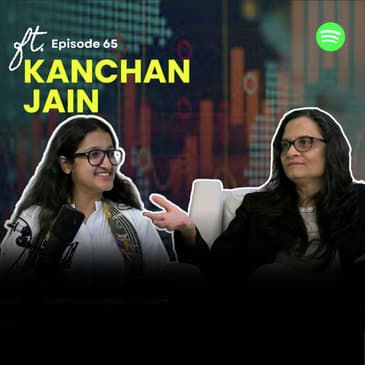

In this conversation, Radhika and Kanchan explore what it's like to work as a woman in a male-dominated industry.
Today, Kanchan is respected and openly recognized for her hard work and efforts, but this wasn't always the case. While she was initially forced to restart her career various times, she learned how to stand her ground and get the role and respect she deserves. From being less present in senior job positions to juggling a career and a family, women worldwide face various unseen challenges and biases in a corporate setting. Kanchan explains how she tackled these biases when joining the workforce to become the person she is today.
[00:00:00] We were in the midst of the Asian financial crisis which happened in 1997 and 1998. I was doing $1 billion transaction with NANDID. And here I was making the same credit decisions but for maybe $2 million,
[00:00:11] 5 million I came back to India with a chance to take risks for an S&E business. Why should an AP invest into private credit and not private equity? And you were talking to him about you know, like he wanted... And he basically said no.
[00:00:28] So are there any specific sectors where credit works the best? What is the most challenging time that you have faced so far? Thanks Kanchan for joining us today at our show Wiping Up the Norm.
[00:00:51] You've clearly been one of the few women in the credit space who have done wonders during her career journey and it's rather unfortunate that we see lesser women like you in this space.
[00:01:04] So I'm happy by asking you this first question that what do you think is the primary reason for seeing lesser women in this credit finance space? Thank you. Happy to be here. Lovely to meet you.
[00:01:16] I think it sort of just goes down to at a broader level, you know, the intake in corporates and financial markets is very balanced. But progressively as you go through years and you know, you go through having a family and raising a family,
[00:01:30] that's usually at the 5 to 7 years is the biggest drop of women from that sort of workplace. And I think more than just banking and credit per se, it's investment banking in global markets, which is generally very, very demanding in terms of the kind of lives you lead.
[00:01:49] And I think it's the work-life balance that usually is the big reason that you see that drop off. Pretty much like every other sector, you know, as you get senior, you see less and less women in this space.
[00:02:03] But why is that? I think, you know, it's, and I thought about this question sometimes when people have asked me, is there discrimination, you know, is there, and I feel it's not so much overt discrimination.
[00:02:15] I don't think a lot of us would have felt that, but just the way workplaces are set up, right? They're not set up to address a certain biological journey that a woman has. Yeah.
[00:02:25] Right? Nothing in here, if you look at corporates and how they HR and work policies, and there's nothing specifically that actually deals with the fact that when you start a family, your needs are very different, you want to continue to work.
[00:02:37] And I don't see any organizations do that. I think that probably remains one of the biggest reasons. And then it's a self-perpetuating thing. You don't have senior women, you don't have those role models. I've seen sometimes, you know, when women and girls come in, they're already thinking that,
[00:02:55] oh, maybe, you know, in about two to three years' time I'll start a family. I don't know if you can do with that. And I remember reading, you would have read Sheryl Sandberg's, I read it much later, I think, after it had become a rage.
[00:03:07] And one of the things she commented, and I think she got a bit slammed for that also, but she sort of said, I sometimes feel that I want to tell young girls, make sure that you are at the table. Yeah.
[00:03:18] And don't start off with thinking that you're not there, that you're not going to have a long career because, oh, you know, the needs are such that. And I think that also plays an important role.
[00:03:28] You know, just I think even women sort of expecting a little bit more from themselves. Right. Then just it doesn't have to be a foregone conclusion. So you were saying that some women unfortunately drop out when it comes to the senior leadership level,
[00:03:41] but talking about your journey, I mean, you've clearly made it to the ranks and I want to focus on the positive side of things as well for our audience to know about the journeys or women who have actually reached there.
[00:03:54] So for you, how was it when you were transitioning into a leadership role and how did you manage these things which most women usually cannot? I think, you know, when put into the situation,
[00:04:04] there is no reason why a woman will not be able to manage it compared to a man. I think everybody's a professional, we've all worked hard. As your roles evolve, you need to evolve. So that journey is no different for men and women.
[00:04:16] There is in fact, I think at some level you could say that in some ways women are more open to, you know, they evolve in their personal roles as well, right? Like on the personal front.
[00:04:26] I think it's about, you know, to sort of have a very meaningful journey and I've been fortunate to have that sometimes it's about taking chances. And I think I have taken a lot of chances and not all of them work. Right.
[00:04:40] When you look back after 30 years, it all looks really good. Right. And it feels great. But during that journey, there were times when a particular chance didn't work. Like can you mention a few instances of these chances?
[00:04:51] So, you know, we were talking earlier, I took up this position which required me to work out of Korea when I was based in London, right? And my daughter was about 15 months old. Yeah.
[00:05:01] And it meant that I had to travel to Korea for two weeks and then come back two weeks and I would have had to do that for about six to nine months before the role transition full time into London. Massive doubts. Yeah.
[00:05:12] But my husband was, you know, he's always been the biggest supporter in increasing, no, country, you can do it. Like we can do it, you know, just go, it's fine. And I did that, right?
[00:05:21] With the idea that after six to nine months we'll be all in London and it will be fine. And it was hard. You know, there were times when I would feel what am I doing? You know, you go through that.
[00:05:29] It so happened that that job didn't turn out the way I thought it will. Like I came back and it didn't, it sort of coincided with the dot-com boom because it was like an online investment buying. And then I ended up, you know, joining Backlays in London.
[00:05:42] But at that time, you know, I could have looked back and said, you know, see, I've done this for about a year and it didn't work out and it was pointless. Right? So that happened. Some chances will work and some won't.
[00:05:55] But I don't think a lot of women would have taken that call in the position that I was in. Correct. I took it partly because I've always wanted to work like I never wanted to give up.
[00:06:06] And obviously my husband's played a really big role in pushing me saying, no, you can do it. Like at that time had he been even a little bit saying, yeah, I think it's going to be tough. I don't know how we'll manage. I wouldn't have done that. Right.
[00:06:17] Right? So I think given that you have a certain amount of familial responsibilities, especially towards your young kids, it becomes harder to take those chances. Yeah. Right? At the end of the day, I think if you talk to people in the leadership positions today,
[00:06:30] men or women, I think one common thing would be that people have taken those chances, those opportunities when they came. Yeah. And maybe women believe and it may be true that we don't have the same degrees of freedom to take those chances. Correct. It's possible.
[00:06:45] And then how does your life as a leader changes when you have the responsibility of so many people in your form and also responsibility at your home? And many people might think that it's the same for men and women, but the reality is starkly different. Yeah.
[00:07:03] So, you know, children are more attached to their mother for biological reasons and when you are a younger leader, more so managing both the things, it can sometimes take a toll. Yeah. How did you do that?
[00:07:15] I think it was, you know, it needed a lot of hard work in the sense that it needed long hours, it needed me to say that okay, I'm going to go home now,
[00:07:22] be there for the next two hours and wake up at 4 in the morning and do work. You know, we've all done that. Yeah. But I think there is also, you know, this sort of other side of the story which I felt was very interesting.
[00:07:32] Somebody asked me, my God, how do you do a global market's role with like two young kids? And I said, you know what, it's intense at work. It's comparative, like, you know. But I come back home and I walk through the door and I see two little kids
[00:07:45] and I really sort of just brings me back to say what's important, what matters. You could be fighting with a colleague at work saying, no, it's not a bill in trade, but it's, you know, you go through that
[00:07:54] and sometimes I feel this work we do in Muslim banking is Excel based work. The numbers can really inflate people's egos, but I think it's great to come back. Yeah. You know, to a family, to kids and just put everything back in perspective. Right.
[00:08:08] For me that was a big thing like that helped. But you know, Radhika, the truth is for the first 10-12 years I could never get rid of the guilt in my mind. Like it was always there. It was a constant fight between am I doing the right thing?
[00:08:22] Yeah. You know. But you sort of just deal with it. You know what I like to tell younger girls or things like, don't make it like even if sometimes you feel that you're not at 100% but you're able to do 80%, that's good. Like everybody is doing that. Yeah.
[00:08:37] Everybody is juggling. It's not as if, you know, men are not juggling multiple responsibilities. So yeah, I think it also helps to have kids and family and things outside of work. Yeah. You balance that out. Right. But I'm sure that you've done it very well
[00:08:51] and that's where you are, where you are today. And living a very happy life both personally and professionally. But let me take a step back and, you know, rewind your life into the time when you got into the credit space and you've been there ever since.
[00:09:05] You know, a lot of people find it challenging to stick to one focused area and then grow in it only. But you've done it quite well. Like you picked up your niche and you knew that you want to grow as a leader in this.
[00:09:17] So tell me how did you pick up your interest into the credit space? Is there a story behind this at one of your earlier jobs when you started out? So I think what I picked up as a conscious choice was being in finance.
[00:09:32] There was always a bit of a maths, analytical person. I was good at it. I enjoyed it. So in some ways when I did my engineering, you know, and when I was thinking do I want to continue in engineering or this thing.
[00:09:43] I literally at that time, this is like 30 years ago, you know, Radhika, we didn't have that much exposure to the world to decide that. And it was really through conversations with seniors in college. And I felt, oh, this is more appealing.
[00:09:53] And I ended up doing an MBA and IM Calcutta. But once I was there, I could just naturally gravitate to finance as compared to marketing. I joined ICICI and that's how the sort of grounding started, you know, in the credit world as opposed to doing equities.
[00:10:08] And I just kept building on that. It just became, I think as you get better and better. And sometimes I think this thing about finding your passion and doing it, you know, it's a little bit tough in practice.
[00:10:20] You know, when you're young, you don't necessarily know what your passions are and what other things you know you can actually build into meaningful careers. Sometimes you have to spend as they say, you know, like 10,000 days on it or whatever that thing is
[00:10:32] to become really good for them to become your passion. I think that's an important step that needs to happen, which happened for me. And while the overall area has been credit, I think the reality of our lives is you have to constantly reinvent yourself.
[00:10:46] So going from ICICI to Hong Kong was a different kind of work, more markets oriented, this was sort of more loans oriented. Going to London was a completely different experience. It was structured finance. It was working with a whole lot of European jurisdictions.
[00:11:01] It was complex credit derivatives, but we learned a lot. Super exciting, right? And in fact, when I moved back to India, it was a little bit like India didn't at that time have anything that would match with what I used to do in London.
[00:11:14] In terms of the work. Which year was this? Which is 2008, 2009, right? And I was doing credit derivatives in London and didn't have that. And I had to sort of go deep into saying, really what's the DNA of my skill set? Which was really understanding credit,
[00:11:27] understanding businesses, you know, analyzing them, pricing them right, analyzing risks. And that's how, you know, the journey evolved. So there's been reinvention. There hasn't been a, I'm doing credit. Let me do fashion now. Yeah, kind of stuff. Because I think I've enjoyed what I was doing,
[00:11:44] but it's always a built up, you know, on top of that. Right. And like you said that, you know, after ICICI, you have mostly moved out of India to explore other roles. Lot of people in companies like this do not get exposure directly to international markets.
[00:11:59] So how did these opportunities come to you of working outside India in reputed companies? So I mean, when we were at ICICI, somebody just mentioned saying, oh, you know, there's this company in Hong Kong and they're looking, you know, to hire people.
[00:12:14] And there were like five, six of us who joined that batch in Delhi. And I was probably the only one who was like super excited. Like I must go and meet and find out like what. You were the only ones? I went first.
[00:12:24] And then there were a couple of people who were also friends. I said, you know, I had a really good interview. It looks very exciting. But even at the time, what they were hiring were people at the sort of starting level. They're also hiring management trainees.
[00:12:37] I had already worked in ICICI for three years. So at some stage, I could have sort of said, no, I really don't want to go and start at the beginning again. But I went because I think the promise of a larger market, an advanced market, you know,
[00:12:51] chance to meet people and learn a lot was really exciting. And I took that. And when I reached there, I sort of felt that, you know, I didn't sell myself short. Like they were hired about 25. And some were young trainees,
[00:13:05] but I think it was such a meritocratic system that instantly realized people who had worked were working hard. And within sort of one year or so, you know, I was picked out as one of the best hires they made.
[00:13:17] Oh, it helped me that I was a bit more experienced, but I was also working very hard there. So that's what I mean. Like like you take chances and you can look at that and say, you know, you made a big compromise.
[00:13:29] Was there any specific project that made you, you know, on the top amongst others? So there was, we were working on some project which was in some ways that data was going straight to the CEO. And I remember this was like last week of December,
[00:13:42] it was Christmas Eve and there was some deliverable and I said, no, I need to do this. So I was sitting in the office, literally by myself, it must have been like 12, 31 in the night working on something. And the CEO happened to sort of walk in
[00:13:55] because in Hong Kong, you know, the office area and the places where you party and go out, they're all in one, you know, this week. Yeah, like we kiss each other. Yeah, and then he says, what are you doing here?
[00:14:05] It's Christmas Eve as in when I'm working on this and we had like 15 minute discussion on something that I was trying to solve. And I think he remembered that, you know, just ended up giving me a little bit of visibility directly with the CEO.
[00:14:17] And then that, you know, work got recognized, you know. So yeah, it's all about taking those chances. It is about, you know, taking the chances. And again, as I said, as I look back, not all of them work out. But I think everything you go through
[00:14:31] when you take those chances, you still learn. You get to a better place personally. Correct, correct. Yeah. That's there. And then how did your transition from Hong Kong to London take place because your story is very interesting from how you move to one place to the other.
[00:14:45] So I'm sure that this will also have some story attached to it. So tell us about that. So Hong Kong actually, you know, we were in the midst of the Asian financial crisis, which happened in 97-98. You know, the worst crisis in the markets.
[00:14:57] Our firm was a Pan-Asian firm. So we were massively exposed to that. Yeah. I was pregnant with my, you know, with my first child. And literally, I think this is December Jan. It was like three in the night and my husband said, what are you doing?
[00:15:11] You need to be back home. And I said, listen, it's really bad right now. Either we survive or then I'm going to get some time and, you know, put my feet up. And that's what happens. The firm, in fact, you know, didn't survive.
[00:15:23] I said, let me take some time off, you know, have a baby. And my husband sort of, you know, found an opportunity in London. I said, yeah, let's go. But it also meant I went to London with him and finding a job wasn't easy.
[00:15:37] London is a far bigger market. Correct. Right? And again, it was the same thing. Like people were saying, okay, you worked for four or five years and you had to experience. So it just starts from scratch? But this time, I didn't take that as like no.
[00:15:53] I can't do this again and again. So it took me longer, you know, to find something. But I think eventually, you know, I joined Barclays. How did you get to Barclays? So, you know, one thing I learned
[00:16:05] is this is somebody who I had worked with in the past and I feel pretty much like most of my things I can trace back to people I've worked with in the past. You know, you leave an impression
[00:16:15] and sort of remember, you as, okay, this was a good person. They worked hard. They were capable. And then that sort of contact and discussion helped in terms of finding a lead for a new job. And that's how I got called. I had an interview with his boss
[00:16:29] and like, okay, this works. And I remember negotiating very hard for my title at the time. Like they said, yeah, you join as an associate. I'm like, no. I said, that's just, this is no you join and in six months we'll promote you.
[00:16:43] I just come out of one phone that had not survived. I said, no, that doesn't happen. I really like you to, you know, make this work. And he relented. You know, he's like, okay, fine. We, you know, we take you on whatever I can.
[00:16:55] It's all about asking openly without being hesitant. Yeah. Had you not asked and openly accepted thinking that you're anyway not getting anywhere else, I don't think so. You would have grown up the ladder so quickly. Yeah, yeah. It helps.
[00:17:09] I think it maybe also shows your conviction in yourself. Yeah. That, you know, it's okay to insist and ask on something as for something that you think you deserve. Yeah, that is interesting. And how you asked for your title there.
[00:17:21] A lot of discussion at home with my husband. Should I push for it? No. When you're younger, you're unsure how much you can push. Correct. But I'm glad I did. Yeah, yeah, yeah. So what did you join there?
[00:17:33] I joined as a, I think it was an associate director or AVP. Essentially like an experienced, you know, kind of role. Right. Which was more in line with what my experience was. And in all these years until, you know, London, did you face any kind of
[00:17:49] gender biases in these other jurisdictions? I think not overtly. I didn't face a lot, you know, in investment banking or in global markets. Not in the way. In a very subtle way, I felt after Barclays, I joined at this BC for a while and I think
[00:18:05] there I remember on the desk sometimes I used to feel, you know, like people used to go out big nights, Thursday nights to be like team going out, you know, getting late. And I used to feel it's okay to not land up
[00:18:15] Friday morning on time for the morning meeting if you've been out with the team for a long this thing. Somebody would just joke about it. But if I say that I need to go to my daughter's school because there's a coffee morning or something like that,
[00:18:27] it's always a little bit like, yeah, what? So in the, you know, these are sort of people don't even realize these biases. Yeah. I think the biases people have, sometimes I think even women have it. Yeah. I don't think it's just, you know, guys,
[00:18:41] that some level we all have maybe those biases. Yeah. All of that is unconscious, of course. Yeah. I think what I, my realization I think has over the years has been it's more just how workplaces are set up. It's more how careers are expected to progress
[00:18:59] which doesn't take into account. Yeah. You know, that women have a slightly different journey. It doesn't mean they're less committed to their careers. They're equally committed, equally excited, equally want to make the progress. That for me is, you know, like the one thing which I think
[00:19:13] is a that's that becomes a bias against women. Yeah. Because they have to adjust far more and I think the second thing which is again something I've realized over the years, you know, when we read people based on their personality by and large it's based on men's personalities.
[00:19:29] You know, a way of dealing with your colleagues, a way of dealing with an uncertainty, you know, a certain level of call it aggression or assertiveness. Those, those sort of standards and benchmarks we have all of us maybe not you know, I mean, understandably
[00:19:47] because 80-90% of the population you know, professional working population is men. But that sort of sometimes works against women. That you can have a woman who's not very aggressive who may not be hugely assertive or something but that doesn't mean she doesn't have
[00:20:01] confidence in herself, she doesn't have an opinion. And these are biases I think which even women may have like we may be reading other women wrong, you know. Right, but I've seen a lot of women also try to mask themselves to adjust to that room environment
[00:20:19] where everybody is assertive and stubborn and then that's not their natural self and sometimes when they try to put that mask up for a longer time they get frustrated with themselves because that's not who they are and maybe that's also reason of the dropout. Could be, I think
[00:20:35] it's not easy to network. Guys will just go slap each other on the back let's go get a drink, go have a smoke together whatever. There is a little bit more of an effort that possibly women have to make. I sometimes just make a point to some of
[00:20:51] the guys in the room saying if day after day, year after year you're working with organizations and teams where there were eight women and two guys every meeting, every this for 20 years that's the kind of backdrop most women are facing unless you get sort of conscious
[00:21:09] of that you're not going to be able to do the right things. Correct. And then you were I'm sure having a good time at Buckley's, why did you move to HSBC? So it was a responsibility yes it was a very interesting opportunity
[00:21:25] Buckley's already had a very good structure at the department and you know you were doing great work. HSBC was looking to set up a part of the business so they wanted to hire somebody with experience who would come and set up that business. For me again that was
[00:21:39] you know very exciting to try and set it up and build it from there This also you got it through a reference who worked with you earlier? This again somebody I worked with extensively at Buckley's moved to HSBC and then you know he was in sales side
[00:21:53] and he said you know they are looking for somebody to build out the product business you know would you like to try like yeah sure it wasn't easy because there was a big change of guard at Buckley's that had happened in terms of a big shuffle
[00:22:07] at the senior level. In fact the new boss who had come in I really liked him because I just had my second kid and as I said to you they were throughout that journey they came to his state saying it was harder
[00:22:21] with one child now I have two and maybe need to take a step back and I think I am going to so he called me my annula presul was on the phone and I was already with my speed saying I think I need to do three days
[00:22:33] against my and he started off saying I just had some good news for you we decided to promote you you've done a great work and I said put my speech on the side I forget it let me take this opportunity now and figure it out okay understood
[00:22:53] so you were the managing director there for what kind of business so again this is structured credit credit derivatives as they call it so I became an MD in HSBC after I joined I joined as a director and then a couple of years I came an MD
[00:23:07] as a head of the part of the business this was the promotion that you were talking about which your boss called it? no so this is the associate director to director which was at Barclays and then I moved to join HSBC and then at HSBC
[00:23:21] you know I became an MD which I think in my mind was a milestone like I always thought of wow will I be able to make it to becoming an MD when it happened it sort of felt like yes of course it actually happened
[00:23:35] but in my younger years I remember it was an important one for me but how do have you asked these questions to your bosses and you promoted that what did they see in you when they were always promoting you at such senior leadership levels
[00:23:51] I mean especially when you became the MD because I don't think so you might have many women as MDs I never asked that question because I think when you are in it for you it is a logical next step in fact it's a little bit like
[00:24:07] I've done good work and it's not happening it would have been like why haven't you promoted me I've done good work so no I sort of didn't ask the question but I think if I look back it just goes back to achieving certain outcomes and results
[00:24:23] maybe also just showing the ability to grow into roles you asked earlier about leadership I think and I talk to my one downs now I think one of the things that I've realized that leadership is actually completely about just your team, your entire thing
[00:24:39] you're there because you're good at what you do but sometimes I feel and I think this is Jack Welch who said that think of yourself as somebody with a broom like all you're doing is just removing the the other teams whatever
[00:24:53] you've tasked them with can do their job keeping the floor clean clean for the team to dance to dance, yeah just enabling people to get their work done in some ways setting the right strategy and goals but the biggest learning has been I think about authenticity
[00:25:11] like you can't be a special team you can't do that I mean of course it's also it's about communication in a way that if you're true to the role what you're communicating is true to the role that you have you can't always share everything with everyone
[00:25:31] but at least it's authentic which I think is important I keep telling people that if you come to me and say so and say your team is not performing I'm first going to ask you because you hired them
[00:25:43] what happened in the six months that they are not performing so first always just try and see how best can you support them are you giving them what they need to perform and then yes maybe there's a capability barrier
[00:25:53] because of it somebody can't go beyond a certain level but it is really about grooming and developing your team so that you can it's not less work it's more work yeah to get the best version of others after your own self like a lot of work
[00:26:13] because you're dealing with emotions and it's not excel sheets so it's always much more difficult since it's uncontrollable at all levels and your team members are going to be different different team members are going to have different needs there's somebody who is very work
[00:26:29] focused and he needs a different kind of motivation and messaging and there's somebody else who is a little bit different in their mental makeup you've got to align everyone to the company's goal and then you've got to get everybody energized to say this is your growth
[00:26:43] in achieving these numbers which is interesting I mean I just to share with you when I moved from London to here and I headed risk for in fact that was probably one of the most interesting moves I came back to India and I had the chance
[00:26:59] to take risk for an SME business which was which was an NBFC in my mind the two changes I needed to make one I was doing like a billion dollar transactions in London and here I was making the same credit decisions but for maybe 2 million dollars
[00:27:15] 5 million or 20 crores, 30 crores, 40 crores and I had to say to myself it doesn't matter what the size is it's still equally important credit decision so I need to just deal link myself from the size and if that was doing anything
[00:27:27] to my ego I need to just move out of that like you said numbers inflate ego sometimes and I think that happens especially in financial markets and banking the second thing was I used to head maybe a team of 8-10 people in London
[00:27:43] when I came here I was heading a team of 125 people across 10-11 zones that we had in a business which was new for me so it was as much as I had to say to a lot of these and I'm sure some of them here felt
[00:27:59] who's this person who comes from London she doesn't know anything about the SME business how is she going to run this but I think it helped me to be open to them saying I have a lot to learn from you but I want to share a lot
[00:28:11] of my perspective in terms of how can we look at risk and how we can become better and I think it was one of the most fascinating experiences for me running risk for this organization and in fact what we do today so much of that has come from
[00:28:27] that work which is travelling really the length and breadth of India and seeing businesses town south in Coimbatore textile business there a trucking company in Mohali businesses in Surat and Calcutta in Pune and I think just really getting excited with the kind of businesses people had built
[00:28:47] not just the large-cap businesses we see on stock markets so it was actually getting so closer to your customers and businesses and just to see the enterprises in India right like all the excitement that is there which doesn't make it always what was the name of this organization
[00:29:03] it starts with Relliger Relliger F-Invest which is an NBFC and they used to do a SME business and joined to head risk for them which was really really really interesting experience but how did you like come to India to head this after doing that
[00:29:21] we moved to India first and I moved partly driven by personal reason my dad wasn't keeping well he wasn't going to be able to travel to London and then it just felt like you know we wanted to see that's how we moved back
[00:29:35] and I met a lot of people in the industries I was like you know I've done very complex structured credit in London I really want to do something interesting in India but there wasn't an equivalent job that's when I said it was about what's my DNA
[00:29:49] and then you know the sort of group CEO there felt that do you want to come and head risk for us like you've done risk you understand risk pricing and I said yeah and I remember saying to my husband
[00:30:01] at the time I said you know I don't know if a guy wouldn't have taken come back and become a head of risk of a very small SME business but in it I think was the opportunity to really see a different work when you work with large banks
[00:30:15] in the financial markets you work with the large conglomerates and golf clubs but really so much of what you see on the ground in India comes from 1000 to 1000 crore businesses which are not small, which are very exciting give me one example of an incident where you were
[00:30:33] mind blown when you were evaluating the business for the credit many many many examples we went and met so this was an exportery unit in Gujarat in west India firstly I just love we entered the factory the person this thing everything was pick and span
[00:30:53] I was so impressed as like everything was in it's place there's one little lamp in the thing we went in and you know I said my business is doing well he was generating profit you could see it was a small business he was building a hotel
[00:31:09] and we were talking to him about loan for the hotel and he basically said no I can build this out of my own accruals so the kind of wealth creation that I have seen these businesses have done through just taking the business from wherever it was
[00:31:27] it may have been like 100 crore business and grown to 1000 to 1000 crore business accruals got pumped into either real estate or into this thing was like oh wow you wouldn't have met this person if you would not have thought that he
[00:31:43] runs a good business has the ability to go and build a hotel and spend 25-30 crores out of accruals without taking you know a loan and there were several such businesses and this was when you had approached these businesses
[00:31:57] as a head of risk I used to go with the business guys when they were doing loans I would go with them because 25 or 30 crore loan for an SME business is a larger loan it's not a small loan because it gets done by a framework
[00:32:09] so I would spend the time trying to understand the business and I think the most interesting part of my work has always been meeting businesses because I always find it really energizing and motivating to see an enterprise that either provides a service
[00:32:25] or takes X and makes it into a Y and generates, creates employment generates profit for me that visiting factories visiting plants maybe it's the engineer in me that's always energizing very exciting so it's great to meet people and what was the interest rate at which you all were
[00:32:43] giving loans at that time so it depends great, so if you're doing a secured loan that would be like 12-13% 14% if you're doing an unsecured small loan completely unsecured that may be a 17-18% incidentally the unsecured loan portfolio is one of the best performing
[00:32:59] for us because it was I think always the better quality borrowers it was always stronger financials you could take that unsecured loan call and the margins were high because they were unsecured so it was well performed and then at what rate would you borrow from the bank
[00:33:15] so the bank rates were maybe 9-10% 11-10% like a classic NBFC model to generate a name for me I think what was interesting was just seeing a very different part of India and corporate market and seeing that they all had access to bank lines and everything but
[00:33:37] there were needs of these businesses that could not be met through bank lending because bank lending is subject to set of regulations rightfully so because those regulations need to address the sort of stability of the banking sector but in that was an opportunity
[00:33:53] to say can you provide more customized solutions to deserving companies deserving corporates and generate a better return but like how would you all be different at Ralligar in terms of giving the loans as opposed to other NBFCs if you look at all NBFCs
[00:34:09] pretty much NBFCs have their own model there are a lot of NBFCs who are in the business of what's called as asset financing you're giving financing against an earning asset maybe a commercial vehicle construction equipment that's one underwriting framework
[00:34:21] what we used to do was we had the lens of the customer so it was an SME customer but then we could do a secured loan against property we could do unsecured work in capital we could do an equipment loan so you know there were various
[00:34:33] sort of frameworks and in fact one of the things when I joined was I said can we revamp our underwriting framework and we actually did that we went on to win an award but that process was really amazing because a lot of people said
[00:34:47] we've tried to do this, nothing changes and I said we've done this three times and I said good if you've done this three times we have three ways in which this is not going to work both one, but it's essentially the team that came up with
[00:35:01] a new framework which maybe wanted to bring in certain kind of hygiene in terms of not just go by framework but also keep your end goal in mind in terms of what we are trying to assess and then how did you make a shift from relegated
[00:35:17] to PPEA facilities so as a part of that with the presence we had on the ground in the relegated and the kind of businesses we've figured that there is actually a great opportunity to access mid India which is where there is in some ways
[00:35:31] a big shortage of capital and we wanted to raise the fund to invest in these companies. Mid India meaning? As in mid corporates, mid size corporates anything sort of thousand to two thousand crores or so and that's how we sort of came out of that
[00:35:47] and raised the fund really came in as a partner in the fund so we spun ourselves out and that's how I sort of founded the business with the rest of the team with the team that came along and then we set up this
[00:35:59] kind of a you know what is called performing mid market credit and that's how we raised our first fund which again at that time there are a lot of doubts it's hardest to raise your first fund but we said okay nothing to lose let's go ahead
[00:36:15] give it a shot and we raised our first fund and then from then then in fact India was going through its own sort of restructuring we felt that we were on to a really good thing we completely believed in the business we were building
[00:36:29] and we were looking for a credible partner and that's how we came in touch with Bearing Private Equity Asia and then we took our entire business and became a part of BPA that's how BPA credit was born so we became the credit business
[00:36:43] and how did they decide that India could be a good market for credit opportunities I mean it's a it shows great confidence in our market you know when a foreign fund is entering into India for this so they were already present in India, they are familiar with India
[00:36:57] yeah in the credit space in the private equity space so I think it was that's the discussion I had when I remember when to meet the CEO I said these are the loans or debt or investments, debt investments we've made these are the returns
[00:37:13] there was a very good track record that we'd already established by then and they said yeah this looks really interesting, this is very different in some ways you know we feel that the whole performing private credit space in India especially in the mid market
[00:37:27] we were really one of the earliest players and I think it really came out of a combination of the team having worked together on this mid market credit and recognizing this opportunity my work abroad when I was familiar with how private credit as an asset class
[00:37:43] has grown, I mean it's grown from zero to like one and a half trillion in like 22 years that's been the growth of this asset class but the nuance of how you would do it in India was important we could bring that because we had a big team here
[00:37:59] we had seen the business we had seen these businesses first hand and that's how we sort of set it up and you know we became a part of but the key thing I mean I always tell this my sort of I expect this thing to international investors is
[00:38:13] when you think of a 250 million dollar company you know for you in the US it's a small company in fact they call it a lower middle market company and I said you peg a certain investment profile to it, a small, low, middle market company
[00:38:29] I said in India if you're looking at a company that generates 30-40 million dollars of EBITDA it's like 250-300 crores it absolutely by no means is a small company it's a business that's been created over 20-25 years it will have some kind of market leadership in its product
[00:38:45] geography so I kept saying I said you know maybe you need to apply, use the PPP multiplier like you do to our GDP because you're not benchmarking these right these are actually much stronger credits, much better investment profile and in some ways they're exciting businesses
[00:39:03] to fund, to support and that's been the sort of mainstay of how we built our business over the years and then when you were fundraising for BPEA in the credit line what kind of investors did you approach and is there some story there on how your pitch went
[00:39:21] very right and very wrong in both these instances and how did you feel after that I think we reached you know reached out to all all kinds of investors you know in your starting off there is a lot of education
[00:39:33] you have to do when you're trying to get people invested in Indian business and India credit was again newer right India private equity people knew so there is a lot of education exactly there is showcasing these businesses talking about each one of these businesses
[00:39:47] and saying look this looks like a $150 million business but it has a major market share it has this kind of order book you know it has 20 year track record just showing the actual profile we reached out to really all the global credit investors which is pension funds, endowments
[00:40:05] insurance companies, sovereign funds family offices to some extent but we also believed in developing our on-show market we spent a lot of time working with our Indian institutions and family offices because we feel that you've got to be able to convince your investor that's closest to the opportunity
[00:40:25] if we are able to do that then we will be able to also you know convince so I think we raised money both from on-shore investors, RLPs are here as well as offshore you get interesting responses you know in an institutional setup people are polite
[00:40:43] even if they feel that what you're saying doesn't make sense or something yeah sometimes you meet very cynical people and be like what are you saying in India the courts don't work and be like no they work things have changed the strength of institutions is very good
[00:40:59] now the banking sector is strong, you have the new insolvency courts, you bring out all of that but yeah sometimes you do get you do get your share of cynics to raise capital it's hard but I think when something comes through
[00:41:17] how long did it take to raise the first one the first one was about it's typically 1.5 to 2 years the third one for us was the largest one how much was it about 600 million dollars of capital okay total discretionary capital fund and sidecar we closed it finally in 22
[00:41:37] so over covid yeah but it was interesting and the first one was how big so the first one was 500 crores that's it and now 600 million 600 million dollars the last one wow it's come a really long way it's come a long way yeah
[00:41:55] so much of interest for people in the credit line there is there is a lot of interest there is a lot of interest now in India I mean India, Asia I think there's just reading a really nice mckinsey report look at the last 20 years and look at now
[00:42:13] in some ways you enter a new era where Asia, India are no longer just taking rules from the world they're sort of playing an active role we're playing a polar role we're part of most major trade routes most major trade corridors more than half of the TPP
[00:42:33] half of middle class households I mean all those great numbers but we are the other side of 50% now right we were large but we were still short of 50 and I think there is a decisive shift and one of the few economies that now has
[00:42:49] world over including advanced Asia there is aging population and shrinking working population one of the few where we have a young population and a growing sort of working population yeah the largest in the world so in some ways all of the the whole tech
[00:43:07] you know enablement and innovation energy transitions we can really write that and I think investors recognize and how do you think the shutdown on China from most countries has gotten the capital to be reallocated in India in terms of credit more so so I think there are
[00:43:27] multiple advantages through this right it's not just allocation of capital allocation of capital sometimes is the slowest to happen you know it's not oh I was doing this that doesn't happen and I don't think that has happened but you see that in your businesses
[00:43:41] so in a lot of our businesses we have seen exports coming their way because their products don't have China content for instance they are able to certify and show that the exports have risen we've seen that a number of them seeing just
[00:43:57] bigger revenues you know setting up new facilities because their business is to be done very interesting we've historically always heard that India sort of lost out on the textile side right like on the garment exports because Bangladesh is done well
[00:44:11] I think what covid has shown and we've seen a few companies is that a lot of the Indian firms which are more end to end have good design capability and good raw material sourcing capability have actually done well have actually fed you know a lot better
[00:44:25] and have seen you know good sort of growth prospects and so I think the benefits of you know China sort of closing down in people looking both the geopolitics as well as the sort of disruption you had are definitely there for India and the rest of Southeast
[00:44:41] Asia to take in different ways right and like you said that you know there are certain outcomes basis you're judged on your fund performance and individual performance also so what are those kinds of outcomes and goals in your kind of business that substantiates your work
[00:44:59] so I think for us at some level and we say this internally in our mission statement everything starts and ends with fund performance you know you have a fiduciary to responsibility to invest some of these capital and generate a return for them to your stated philosophy
[00:45:13] and you absolutely have to do that so that is the most important one you know finally for us but I think especially for a market like India which is not mature where there are so many access in which you can grow your business
[00:45:27] there is a potential to create really deeper meaningful relationships with investors for instance our presence on the ground for about 10-11 years has meant that we've created a huge amount of infrastructure for sourcing investments pan India we've got some 300 or intermediate relationship
[00:45:43] which is very unique to our business model we've built that we thought that's important let's build it the expertise within the team is not just the flagstick fund we manage but across sectors you know whether it's real estate whether it's short term corporates
[00:45:57] so I think some of the larger LPs look at us and sort of there is an opportunity to say okay we can do actually a lot more with the idea and not just one fund investment but a lot of potential you know for us to grow beyond
[00:46:13] just one fund for each one of the funds fund performance is going to be important but it's about creating access or providing access to the growth that India offers so once one of the things we always say about private credit yes the returns need to be attractive
[00:46:29] but you need to recognize the biggest excitement about private credit in India is that you're accessing the market that are not accessible through public equities these are not listed companies that are regularly issuing bonds in the market so there's no way to access this
[00:46:45] growth but you can access it to private credit and that is a very interesting proposition for a lot of investors and for the benefit of audience why should an LPE invest into private credit and not private equity funds like what's the difference mainly in different risk return profiles
[00:47:05] so in private equity you're typically looking at much higher returns but you're also equity which means in some ways you are taking all the risk whereas in private credit you are a debt investor in the company so you have the ability to just
[00:47:21] weather a lot more downside if you've structured it and the returns in India are interesting because the underlying growth of companies is very high I should tell people if you're looking at an economy that grows at 7% real that's 11% nominal that's across all sectors
[00:47:41] by the time you drill this down into the faster growing sector and the market leaders within that you're comfortably in high double digit growth to support that kind of growth the capital needs are also like that and that's what if you're able to meet those capital needs
[00:47:57] in a more bespoke way then value for the business and the business is not getting diluted so in return for that they are willing to pay you a little bit more so for an investor it's like yeah I can do private equity
[00:48:11] and maybe private equity I do in these kinds of sectors but I can do private debt in these kind of sectors so it's not one versus the other but there is certainly a place for both in a larger LCC so are there any plastic sectors
[00:48:25] where credit works the best actually we run a sector agnostic strategy so we completely look across sectors we do a whole lot of infrastructure related work we've done a lot of services that's the big thing also right all our GDPs now growing economies are 55-60% services
[00:48:43] by definition a lot of these businesses don't have hard assets, don't have plant and machinery, don't have necessarily a big piece of land so there are limitations to how much funding they can get from banks because they need a lot of capital to grow
[00:48:57] so we are able to go in and provide that so range of service sectors light industrial sectors and infrastructure so really across the board that you can access as well for businesses which do not have collateral assets like plants or machinery for new age
[00:49:19] businesses like tech businesses how do you structure debt for them at the first start of we are saying that there is a lot of venture debt that has got done in the new tech businesses and that's a very different product whereas what we do
[00:49:33] private credit or performing credit is very much based on cash flows like cash flows in earnings whereas start up venture debt is a different ball game but within our businesses when we are doing service businesses that don't have capital assets we actually look very closely
[00:49:47] at the underlying contracts in cash flows a number of these companies would actually have very sticky customers you know there are 3-4 year contracts with customers the switching cost to customers is very high so there is a lot of conviction behind
[00:50:01] the cash flows in the earnings the company is going to generate so that is the first sort of put of call for us in saying do we want to make this investment you can create a general charge on the cash flows of the company
[00:50:13] sometimes we would take a specific contract and say we want these cash flows to come into our escrow so that we have a line of sight on the escrow so there are multiple and you can always do a pledge of shares but for us
[00:50:23] fundamentally we look at the operating companies cash flows, the strength of the business to make that investment because that's always held us in good stead through market cycle has there been any time where you judged a company's fundamentals a little wrongly
[00:50:41] and then not able to generate the kind of returns that were expected so I think more than right or wrong the fact that business conditions change so for us we in fact say that monitoring the company and the cash flows is very important
[00:50:55] the more proactive you can be the earlier you can anticipate what's happening the better you are going to be at managing it so yes that happens there is absolutely it's not a case that you made an investment and that's it five years later you have a return
[00:51:09] but we manage that that's the process we've evolved over the years there is a sort of institutionalized process to it it's not left to the two deal members who have done the deal you've done the deal now you better generate the return
[00:51:23] so you bring in our legal resources we bring in our collection resources and monitoring resources and it's collectively we monitor and we take them through the process sometimes you have to initiate legal action sometimes you are able to resolve it through dialogue other times the business
[00:51:37] may have a short term liquidity tightness so you can help them find some funding in the market and we look at it in the business I think one of the things we notice which is a great sort of upshot from our business is that as we build that
[00:51:51] relationship we sort of become a go to solution provider for some of these businesses every time they need a little bit more best work we come to us and say we are looking for this there is a new order are you able to support it
[00:52:03] we look at it on an independent basis we may do a additional investment in the company which is we look at our businesses and they have grown they have grown so well in the typically 3 to 5 years of our investment that is where I think it just
[00:52:19] feels great to be doing the business that we feel we are true partners for the borrowers companies and in terms of the growth like you said is there a cap on the returns that you make as a private credit fund or how do you measure
[00:52:35] returns when the business grows exponentially higher because in equity of course we get really upside returns how do you measure that typically our returns are contractual returns right the fixed returns on the debt that we charge we can structure it to say this coupon you pay quarterly
[00:52:53] this amount you pay back and this amount you pay up etc most of our returns are contractual fixed returns the business does very well we still make our return therefore it is a different profile to private equity there are some businesses
[00:53:09] where we are able to generate an upside return how is that? you pay us 14-15% whatever debt coupon but fundamentally our capital is allowing you to go from X to 3 so we would like to pay a certain percentage link to the actual upside you generate
[00:53:23] and businesses are happier to do that because they are not taking on high cost debt they are only paying us to the extent from the reduction investment decision we have made that we feel we have that confidence to do that kind of investment in that company and typically
[00:53:39] what is this percentage range? 80 odd percent of our returns are still contractual because it is a debt return or you mean the range of the return we have gone past 20% we have generated 21-22% oh is it? and this is from the net profit revenue from the net profit
[00:53:59] it is usually a percentage of EBITDA the extra return and y'all only support profit making companies yes that is our key investment philosophy we think we should be doing debt if you generate profit if you don't do debt yeah a lot of companies are sometimes
[00:54:17] cash flow heavy but the profitability comes at a later stage maybe y'all come after the profitability I think that's part of the analysis there is an accounting profit to be looked at there is a cash free cash flow generation both we look at when we figure out
[00:54:31] the service thing sometimes companies generate decent amount of profitability but the business keeps needing cash maybe because of working capital so all that is part of the analysis we would do to finally decide on the investment also just a very basic question
[00:54:47] because venture debt is a very well known term now like it is start ups are using it so people get confused between private credit funds and venture debt funds so if you can just draw a line of differentiation for us so venture debt funds are essentially
[00:55:01] people investing in debt form in startup companies they generally not profit making companies they are start ups instead of raising the next round of equity funding they are raising debt because they don't want to dilute they are going through a key stage in their concept things like that
[00:55:21] private credit on the other hand is non-bank credit it's in the form of bonds it's always in securities you are not making loans and then these are not public market bonds these are private placements of bonds between the investor and the issuer of the company
[00:55:41] now within that you can do distress debt that's a valid investment philosophy where the underlying issuer company is in distress they may not be cash flows but you have your philosophy that's going to tell you what generates the returns you could do what's called a special situations debt
[00:55:55] which is money related or something and then what we tend to do mostly is performing private credit which is also called as direct lending which is really lending into operating businesses and providing them then there are some leveraged buyouts there are leveraged buyouts which is again
[00:56:13] giving money at the holding company level for companies to buy out some shareholders so the end users can be various the sectors can be multiple there are so many different ways you can cut it permutation and combinations you can do it by sector
[00:56:29] like in real estate and corporate you can do it by type of company and the same you can do it by end use but ballpark I think it falls into people that do profitable company growth capital direct lending which is again mostly corporate venture debt
[00:56:51] which is again non-bank but it goes into startups but the fundamentals are the same the key difference is in a venture debt in some ways you are really relying on the next round of capital days to happen for your debt to get repaid correct
[00:57:07] whereas in what we do you are relying on operating cash flows and profits to service the debt that's the key difference and in terms of the cushioning mechanisms like you said that even if there is a downside you still get the percentage that you agreed with the company
[00:57:21] so how do you like any other debt like any other bond product if there is a 13% interest you have to pay on your mortgage you have to pay that and that's our assessment our ability to say that the company
[00:57:37] is always going to generate enough profits to pay that interest I am just thinking of a situation where nothing is worked out and I mean COVID was very unpredictable what if something like that happens in any business and then how do you get the money out
[00:57:55] when the company doesn't have any money at all do you like get the company into insolvency or what you can if you have collateral you can enforce against the collateral you know liquidate the collateral generate cash there if you have you know if you want to sell
[00:58:09] the company if you want to take the company through insolvency and then you know some other resolution some other party comes in and buys the company so there are various ways really a good debt manager needs to be in there
[00:58:21] very early before you sort of get into those but that happens it's not to say it will never happen but that's why when we do the investment we make a downside analysis what if the business doesn't go as per plan you know what is our plan B
[00:58:33] plan C and then we work with that yeah right and how would you say how is the regulatory framework in India for foreign investors investing in private credit because recently I was saying that when it comes to the liquidation preference the Indian shareholders
[00:58:49] might get the first preference and then the foreign debt holders so what is it exactly no so I think you know one of the things that we've had is the sort of new insolvency and bankruptcy code that came whatever 6-7 years ago has been a big game changer
[00:59:03] right and I always feel that and I say this to our investors I said you will see how the article saying how great work has been done how cases have been resolved and how it's been again till you see 50% of the article saying
[00:59:15] this is not working this is getting delayed and I said both are true I said that's the truth about India a lot has got done there's a lot of progress a lot of work good work has got done and things are very good
[00:59:27] but a lot still has to get done you can always find areas where you wish that the growth was faster change was faster etc so I think on the IBC code also and all of that yes by and large the credits are very clear in terms of how
[00:59:41] creditors are paid out there isn't a differentiation between foreign creditors and Indian creditors it's the same kind of whatever your ranking is within the debt there are certain areas of the code that need a little bit more work that will evolve so there's for instance if you have
[00:59:57] typically in the debt you'll have a senior debt holder and a junior debt holder typically the senior debt holder should have a say or a bigger say in terms of what's happening with but in our IBC code when we form the committee of creditors it's formed across
[01:00:13] on the ranks like senior or even an unsecured senior one and then it's a certain majority of that creditors that decides on how to progress on plans and things like that and you know some people have a view that no if I'm senior and if I'm senior
[01:00:29] then I should have the ability to direct it so there are things like that you know on a code of this size that has come in and fundamentally you know really change in some ways you know how we look at corporate bankruptcies and this thing it will
[01:00:45] always take time you will never have a day one and you say boom this is the code that works perfectly well right like it can go through its evolution and I think that's a constant process I don't see that I remember once
[01:00:59] I spoke to a I was talking to a US LP and we were talking about that and he says oh I heard that it's just this you can get nothing through the codes and it's just like no like who did he speak to kind of stuff and
[01:01:13] he's thinking so and so we've made an investment in a private equity firm I said you know maybe debt firms we are yeah in equity that's the case not just that I said we are set up to manage debt because we have invested in the form of debt
[01:01:29] so I have a legal team we have a litigation we have people who will take after this process codes and you know maybe a private equity firm will not have that equal amount of resources because thesis is a little bit different and maybe
[01:01:43] that's why you got that kind of answer but it's not as if nothing exists like you know there are codes and there are systems and there are good outcomes that people have from their NPAs whatever issues they have yeah I think there's a lot of clarifying
[01:02:01] demystifying that you have to do because sometimes people come with their own yeah exactly like I had this notion because I've heard it somewhere I'm sure the investors are also hearing it out nobody's sitting with the Indian regulations in hand and reading what's there
[01:02:15] so sometimes it's also an experience people have had for many years back things have changed things have evolved you know a lot it's a good it's a good opportunity but is there any framework which you think should be changed in the world in time in India
[01:02:32] no I wouldn't say there's any one particular framework which just needs to be changed I've always felt regulations evolve and I think you know we were just talking about just the commercial banking sector and some issues US has for instance right now
[01:02:46] right in some of their regional banks and there is sort of DSVB debacle that happened last year and all of that and I remember there was a general sort of concern around that and we talked in the discussancy actually in India I think the banks have been
[01:03:00] you know managed very well the regulators done a good job you know SEBI is now you know also managing the funds industry and all of that you know it's a process things don't change overnight lot of good changes have happened around the anvil it will continue to happen
[01:03:20] there's no specific thing that I mean I really feel that it's a little bit it sometimes becomes a bit too simplistic to say because this is not right because I know if something's not happened there are implications there are other things to think about
[01:03:34] before you can just make one change the interconnectedness of issues is significant and I may be looking at a particular issue from the fact that we are a manager of EIS but there are other you know parts to that which also need to be so
[01:03:50] when a regulator has to make a decision they need to think of you know the overall picture when they agree on a certain you know agree let's say on a certain framework it takes time to get that yeah but how is the regulatory
[01:04:02] framework outside in other global jurisdictions where you work for specifically this industry it's evolving like Singapore's done you know monitor your product Singapore EIS has done a good job they've been inundated by the number of new funds and the influence that have happened
[01:04:16] but they have started working many years ago just to share with you when I was working in London yeah there should be the FSA then it's now called I think it's CA but I remember all the conversations with them were always about substance over form
[01:04:32] like they would say very clearly here is the regulation and we need you guys as industry professionals to understand the substance behind this regulation yeah don't come to me and say this is how you've written this this is how you've written this
[01:04:46] when you know that in substance it's not they're saying the substance over form responsibility is with the finance industry professionals yeah you know it's not possible for the regulator to define the regulation that's going to think about all the different ways you can
[01:05:00] use the regulation and address that so the onus of that was always on the finance industry professionals and it was very important because you were doing a lot of structured work so I think that was that's a good responsible way
[01:05:16] it's putting the responsibility back on the industry professionals yeah and I remember sometimes you would sit across the regulator and you'd be like if you're really arguing and you don't know the substance in this particular regulation then you shouldn't be doing this work you know they were pretty
[01:05:30] clear about it that was their format and how they used to regulate finance and this thing I think that's happening here also we'll move to the rapid fire round starting with the thing that you mentioned in our conversation that India is a market
[01:05:46] which yet needs to be matured as opposed to the global markets so in specific line of your business and credit how do you think is the opportunity lying ahead for Indian credit market I think the size of the opportunity is tremendous and there is benefit for both sides
[01:06:04] I think for India it's a way of bringing in a very different source of capital our needs for capital are massive one of the sort of key development indicators is what's called as capital deepening or capital per person we used to be at like $10,000 per worker
[01:06:22] this was whatever 20 years back and I think we are now at 30 or 40,000 the developed world is at 300,000 so we have a good savings rate I think our markets are in a good way that those savings can get channeled but we need outside capital I think
[01:06:36] allowing the private credit industry to develop in the right way is going to bring in a completely new source of capital where the return need for return is not huge need for consistency of returns is important and that opens up a
[01:06:48] sort of big growth capital and it reduces the pressure on a banking system other parts of our system it can be a complete game changer you know for India and I think it's an interesting way for outside investors to access the growth in India
[01:07:02] what's the most challenging time that you face so far in your professional career I think it would have to be one particular space in London when we were setting up a part of the business and I was always in the front of doing transactions
[01:07:18] but when you are doing that your surrounding ecosystem needs to develop so you need your risk professionals all of them also sort of in line with what you are doing otherwise you are proposing complex transactions but if they are not geared up
[01:07:32] like if they don't have a resource you can understand complex transactions then you are not going to get your approval at the time and it was extremely frustrating because you couldn't get anything through and I remember then going saying the risk guys need to hire some people
[01:07:46] who can then come up and ask their relevant questions but today we are just facing a wall because they don't have the right kind of resource and I think there was a long period of not being able to get through and get things done
[01:08:00] because the resources I remember felt very frustrating but I can think of that right now through discussions going to everyone and saying we are not going to get anything done it's all just going to time you are going to sit in December and say
[01:08:16] nothing is going to be done in the year but here is why it is not getting done then patience is the virtue you built patience yeah and I think you just need to maybe that also came in handy when we were raising our funds
[01:08:28] raising the first fund is always tough it's at a level where you feel if you can't raise it beyond a certain amount I think it was also an eye-opener it was a good exercise to meet investors also about your current fund at BPEA equity
[01:08:42] what's the ticket size of the loans that you give and what kind of returns have you all made so far in the first 2-3 funds yeah so we are BPEA credit we are not PQT that's the private equity business we are actually the credit business
[01:08:58] we are not a part of the EQT this thing our loan ticket sizes would typically go from like 100 crores to 5300 crores we can go as much as 500 crores plus in terms of transaction size because we have a lot of investors that come and co-invest alongside us
[01:09:14] so it's a pretty big range from 100 to 700 crores and how many investments do you make in a year in a year we would look to make 12-13 investments or more 12-15 investments typically 30-35 investments in a fund and what kind of returns do you project from your investments
[01:09:36] so our returns have historically always been in the sort of high teens okay so that's what we target always we target typically 16-17% dollar or 18-19% INR that's good enough that's very good and touch would be managed to generate those so far
[01:09:58] what has been one of your proudest moments so far in life I think bringing the business to our current level which is raising third fund at the size we raised it is certainly one of the largest single country funds raised also because most of the investors are from
[01:10:14] the west they look at Asia as one thing they want to see a pan-age because they want to see diversified they don't realize that Asia is five different Asia Southeast Asia then there is frontier Asia but they want to see a diversified so raising a single country fund
[01:10:34] is always a little bit tougher so I think raising that fund was probably a very important milestone for us in the business so investors have committed 600 million dollars just for India it's India fund so they've committed 475 in the fund and 125 of a Co-Invest sidecar which we have discussed
[01:10:54] wow it's a massive opportunity that India holds wow and are there any other funds in this space in India that are doing equally well to support businesses here I think there are people have differences in strategy marginal differences in strategy people have some are more intra-focused
[01:11:14] some are more state focused a lot of them are part of larger like financial services house or financial institutions I think there are limited of a certain size which ones are those in India the standalone ones I mean standalone is us there is True North a new entrant
[01:11:36] but again a good team and I think there will be a few more then you have some funds that are based out of Singapore or Hong Kong which do fan Asia and include India as one of their like Alia House and also the real country focused
[01:11:52] True North is an India part interesting how this market is growing I think it's growing in some ways you can say it's where private equity was 10 years back now you can count within private equity you've got some very successful independent funds that have done well
[01:12:08] that are new for their track record should see the same in private credit I'm sure we will soon I always feel that the market to develop there has to be multiple managers right? we can't have a market with just one manager to that extent we meet at conferences
[01:12:24] we talk at panels and I think there is enough opportunity here it's good to have a few managers doing well growing responsibly within the market and that's happening and what's that one thing when you think about it you feel like you could have done this a little differently
[01:12:42] I don't think about it like that because I think at any point in time you take a decision based on the set of parameters in the markets that you know what the market condition is actually this is too also for personal life
[01:12:56] you take a decision based on the set of things that you have and then later things might change I think I've just learned that this is about the same point about taking chances you can look back and say oh you could have done this
[01:13:08] I should have done that and there is some learnings but I think it's also about that was the decision I took in that situation now if you don't have any regret so to speak so what excites you then for the future like you said what from here
[01:13:22] what is next for you on your vision board the next for us is really broadening our business so one of the like I said for us you know as we deliver performance size will come to us naturally there are more investors that get convinced
[01:13:36] with what you have to offer in the size grows and I think we are in a market which is growing right so that's what's great about India building a business here what we have what is exciting for us now is to broaden this beyond
[01:13:48] the one fund strategy that we have today so we are looking at a shorter tenor fund which we think is a big opportunity in the Indian markets there's a lot of institutions and family offices that look for three-year product different return profile good companies and
[01:14:04] something that we can naturally originate and we do right it's just about tapping into that other asset classes where again we can build because we've got the we've got an understanding of the market we've got a team with a very deep expertise, credit expertise
[01:14:20] we've got the ability to source investments so the real exciting thing for us is how do we broaden our business to grow but also broaden at the same time this is also making me excited to know which more new investments will you make but speaking of your past
[01:14:34] investments if you can name a few which y'all recently made I think there are some investments that have been in the press so for instance we provided a sort of growth and debt facility for WeWork which is a large flexible co-working space so there's one I think
[01:14:54] we closed recently which is a fintech lending platform that provides financing to underserved youth and students in working places we've given them a sort of a growth facility what's their name it's called M Pocket I think it's probably just in the press like a couple of years ago
[01:15:14] yeah we've you know we've provided multiple growth facilities to a solar renewable company called Vari Energy so yeah there are quite a few some we can talk about because they're already in the public space and how long does this take there's a deal closing typically like 3-4 months
[01:15:40] okay not too much 3-4 months I think maybe it's closer to 4 months and we would like to get better and better at it productivity let me not call it productivity that's not the right word I think one of the things we always say is we want to get
[01:15:56] better at execution, sharper at execution and what's your leadership style like and how do you hire people in your team I think leadership style for me is and I think maybe it comes from some of the values we have so like you know the biggest value we have
[01:16:10] is that you know we're very ambitious in terms of the work we want to do the kind of work we want to do the quality of work we want to do and we are constantly holding ourselves to a very high standard so there is a lot of ambition
[01:16:22] but it's always with the right values so that for us is number one number two when I use I've played a lot of sports in my life sports is a great example any team sports I feel for every individual you can have your individual excellence goals
[01:16:38] you can decide you want to be a Virat Kohli you can want to be a Ronaldo but everything you do is in the context of the team victory and I love that analogy when it comes to how we run our businesses people are playing their roles
[01:16:50] they have their own goals and ambitions of taking their work first and work to a certain level but it's always in the context of what the business needs and what the business goal is so I think my leadership style
[01:17:04] at one level I like to be very hands on in terms of knowing what people are doing but I've also evolved and learned that you need to delegate and you know that's how you grow I firmly believe that if the person is happy
[01:17:18] doing what he's doing and he's seeing growth at the bigger alignment we can create between the individual's growth and desires and the company's goals that's a winning combination so one of the things I feel when I look at my one downs or even the team
[01:17:34] is how can I create that alignment constantly through communication through being open, through saying actually you want to do this and the company really needs you to do this right now and how can we align it I'm just actually right now reading a book
[01:17:50] which is fabulous I've literally just started it it's called Boys in a Boat it's a real story this is about a batch of freshmen in 1933 Washington University who joined the rowing team a bunch of rookies and how they trained and went on to win the 1936 Olympics in Berlin
[01:18:14] and it's incredible for two or three reasons they were actually competing with very elitist teams in UK and these came from actually very modest backgrounds this was also the time they had come out of the Great Depression in the US the general mood was down
[01:18:34] and this victory was a tremendous victory what's really interesting this sport if you think of the shelf it's like two feet I think width and it's this long thing the interesting thing about rowing is that you're in a line and even a second here and there
[01:18:56] in terms of your coordination and that's going to eat into your performance so you have to be perfectly coordinated and what I like one of the things that I read about part of it and I'm reading this there's a movie coming on it
[01:19:10] is that not only do you have to row for yourself you have to row for your team somebody somewhere is weak I find that it's one of the most grueling sports can be tremendous combination of cardio and strength but it's all about coordination being perfectly in sync trusting
[01:19:32] your leader and the rest of the team mates for me that's a beautiful example of how collective things can get done that's so interesting I could just imagine all of this kind of play up in my mind to what you were saying how it happens
[01:19:50] because our show is title wiping out the norm last week I would like to ask you of one instance where you think you've wiped out the norm and tell us about it you can talk about any of your portfolio companies also that you transformed with your capital
[01:20:06] I think the portfolio companies for us one of the things I feel is that these are really enterprising and hardworking and I think a lot of their success they owe to their work and energy and we are really partnering in providing them capital
[01:20:22] so I wouldn't be able to take an example from there interesting I remember somebody once said to me you've had an amazing journey you came from a small town and you've done this but honestly I never felt I came from a small town that's really a good time
[01:20:38] it's a big enough time but I remember when I reached I'm Calcutta for a bit I felt because you had people from the IITs and I get my engineering I didn't even appear for GE and I used to feel like everybody knows everybody
[01:20:54] how's that possible we are registering today and I remember feeling a little bit on the back foot there but I sort of persisted in that hard work and it well at the end of the two years maybe that's what it is
[01:21:10] but I think at every step you feel when you reach the certain thing you don't sort of look back and say oh look how far I've come that's the constant line you've been saying about because I think something was sort of a big ambition as you approached it
[01:21:28] it's moved right so it's like you are still wiping out the normal in the process of it I think what is important is creating something have you made a difference we are seen as a pioneer in this space I absolutely don't think we're the only ones doing it
[01:21:50] there are a lot of good firms doing good work we were certainly amongst the earlier ones feels good too and this is absolutely completely the whole team together without a doubt everybody coming together believing in the future and what you're looking to build
[01:22:08] maybe it's wiping out the norm for the team as a whole absolutely and for India as well you've raised so much from outside investors who are committing to give their capital in a new strategy so I think that is in a way could be wiping out the norm
[01:22:26] but on that note exciting note because I'm very excited to see what future has what future does private credit markets have in India and wanting to see your work now more and more but thank you so much for giving your time and all the insights
[01:22:42] from your journey, from your profession to us really enjoyed speaking to you thank you Sincar will what you created and I thoroughly enjoyed having this chat with you good luck to you as well Thank you for listening why we hope this conversation was
[01:23:08] helpful and allowed you to deep dive into the mind of a senior women investor we're certain that we will soon see more women wiping out the norm and becoming senior leaders in investing if you think you derived great learnings from us in this
[01:23:22] podcast please share it with your friends who might be fundraising or are just wanting to get that push to get started also tell us if there's any questions you would want us to ask our transnational women leaders in our next interviews
[01:23:36] till then stay tuned for our other episodes where we speak with women investors from places like Palestine Brazil, Argentina, Mexico and others