
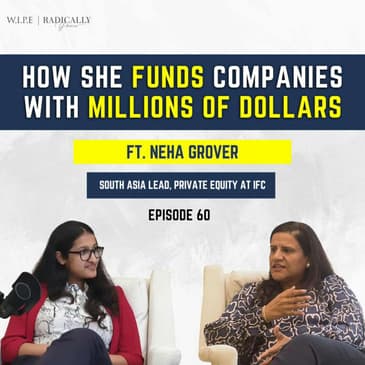

𝐌𝐞𝐞𝐭 𝐭𝐡𝐞 𝐀𝐥𝐥-𝐈𝐧𝐝𝐢𝐚 𝐑𝐚𝐧𝐤-𝐇𝐨𝐥𝐝𝐢𝐧𝐠 𝐂𝐡𝐚𝐫𝐭𝐞𝐫𝐞𝐝 𝐀𝐜𝐜𝐨𝐮𝐧𝐭𝐚𝐧𝐭, 𝐂𝐨𝐦𝐩𝐚𝐧𝐲 𝐒𝐞𝐜𝐫𝐞𝐭𝐚𝐫𝐲, 𝐚𝐧𝐝 𝐓𝐨𝐩 𝟓 𝐌𝐁𝐀 𝐟𝐫𝐨𝐦 𝐈𝐈𝐌 𝐋𝐮𝐜𝐤𝐧𝐨𝐰
Dive into Neha Grover's journey on 'Wiping out the Norm' with Radhika Bajoria!
➡ As South Asia Lead, Private Equity at IFC Asia Pacific, Neha drives investment strategies, manages portfolios, and fosters co-investments, sitting on Advisory Boards of 6 PE Funds. #Leadership #PrivateEquity
➡ In her current role as Regional Lead of IFC’s South Asia Funds group, Neha identifies and invests in PE Funds, with a rich array of experience across private and public markets, focusing on Consumer, Healthcare, Financial Services, Manufacturing, and Education. #FinanceExpert #IndustryInsights
➡ Previously at Baring Private Equity Partners India, Neha, as Principal and India CFO, managed over USD 14 billion in assets, contributing significantly to navigating through two complete fund cycles. #BaringIndia #InvestmentLeadership
➡ Neha's expertise extends beyond her core responsibilities, directing numerous company boards and driving strategic investments in education, textiles, logistics, and chemicals. #StrategicInvestments #SectorExpertise
➡ A pioneer in innovation, Neha led initiatives to reduce the gross-net IRR spread of funds, setting new benchmarks and demonstrating strategic risk management in complex deals. #Innovation #RiskManagement
➡ Recognized among the top 100 women in finance in India, Neha's academic excellence includes being an all-India rank-holding Chartered Accountant, a Company Secretary, and an MBA from the Indian Institute of Management, Lucknow (IIM Lucknow) (Ranked top 5). #Trailblazer #ContinuousLearning
Join Neha Grover as she shares her journey, insights, and vision for the future of private equity! #FinanceLeadership #visionarythinking Watch the full episode NOW. Link-https://youtu.be/gxR_uGhPLVM
#WIPE #WipingOutTheNorm #RadhikaBajoria #IFC #BaringIndia #NehaGrover #PrivateEquity #Investment #investor
[00:00:01] Thanks Neha for doing this show with us. Wiping Out The Norm is all about covering stories
[00:00:11] of women who have really struggled through and yet come up so gracefully in their own
[00:00:17] career paths and you are one such women in private equity where anyways we see less
[00:00:22] representation unfortunately but you have come up and you are still on your way to
[00:00:27] you know making it bigger every single day so why don't you tell me as to what
[00:00:32] got your interest into finance initially you know a lot of people think or see
[00:00:38] only the top position where you at now but I'd like to know how did it all
[00:00:42] begin for you in the first place what got you started.
[00:00:45] Shanno thank you thank you so much for having me here it's an honor, it's a privilege
[00:00:49] I mean what you have accomplished is new there so it's amazing.
[00:00:52] So I think a lot of it what happened to me was I must say by happenstance.
[00:01:00] I'm from a very small town, Orangabad and my parents are a conservative
[00:01:05] middle-class family, two elder brothers when they went off to do this to do their
[00:01:11] engineering college when I was in my 12th standard, 10th standard spoke to my parents
[00:01:17] they said you know what you can go you can go wherever you want to you can study
[00:01:23] whatever you want to but you have to stay in Orangabad I said why no no no you
[00:01:26] know the tradition mindset of sending a girl out for studies was completely
[00:01:30] out of the picture so it's okay there's no engineering no doctor I don't want to
[00:01:34] be a doctor third choice at that time was CA so I said okay I'll do my CA
[00:01:38] but you're not sending me out so I can say here I didn't do my CA that's how I did my CA and that was my first sort of
[00:01:45] entry into the finance world. How did you end up getting a rank also in that what was it the first second third?
[00:01:52] I'd like to say well I didn't work hard it was all okay but I think I did work hard
[00:01:58] I the middle-class values were instilled very very very strongly in me
[00:02:03] since the beginning I've always been good at academics parents are very
[00:02:08] clear that we need to make our own path we need to sort of make our own
[00:02:11] journey get good marks get into good colleges and get a job on our own merit
[00:02:18] because we don't have either connections or a legacy to rely on for a future so
[00:02:25] always used to work hard and I think academically thankfully I was I was okay
[00:02:29] I did well so I had to I was lucky as well so that was on so CA once I did
[00:02:38] my CA then I think my elder brother had did his MBA so I followed his sort of
[00:02:44] footsteps I said okay let me let me go let me do an MBA myself I realized one
[00:02:50] thing after three years of auditing I don't want to be in auditing all my life
[00:02:54] this is not something that I can do so that was very clear that okay this is
[00:02:58] something that I can't do I need to do something else MBA sounded pretty
[00:03:00] glamorous I would get to go two years and stay in a hostel I get a big thing
[00:03:06] for me as a youngster I said okay let's go that was something my parents were
[00:03:11] okay with because I would have finished my graduation I would be older and
[00:03:15] therefore they said okay after graduation you can go wherever you want to your
[00:03:18] job for your studies so I went into I'm luck now got admitted to I'm not did my
[00:03:23] MBA there happens and was day zero placement a private equity firm came
[00:03:31] I had no idea I called up my brother asked him okay do you know what is
[00:03:34] equity I'm ready about it but I don't understand do you think it's a good
[00:03:37] career he was in London at that time a trader he said yes it's a great career
[00:03:42] choice of your getting into private equity you should go and go for it which
[00:03:45] company this is very private okay that was my first job from campus so went
[00:03:51] in for my interview I think interviews went well got selected and got a job
[00:03:56] offer so they didn't ask for your prior experience in any of this sort yeah no
[00:04:02] I think for them it was and that's my understanding is for them they felt if a
[00:04:08] person has walked somewhere else and they come into private equity it's more
[00:04:12] difficult for the person to unlearn what they've learned before and therefore
[00:04:15] it's easier to train a fresher right you know train in the way of thinking and
[00:04:20] the attitude and everything else rather than getting somebody who's who's
[00:04:23] already worked for 10 years has a mindset which you can't change correct
[00:04:27] so therefore maybe that was an experiment I don't think they had
[00:04:31] too many freshers at that point in time I think they did have a few more freshers after me so I don't think I was a total failure
[00:04:37] but your experiment must have turned out to be good enough you spent more than a
[00:04:42] decade at bearing I did I spent about 12 years there yeah fabulous journey so I
[00:04:47] think that my entry into private equity was happenstance I was not hung up
[00:04:53] on doing only one thing so the good part is the organization gave me an
[00:04:58] opportunity to do multiple roles and I was also pretty happy doing multiple roles
[00:05:03] a lot of youngsters when I talk to them they say we want to do investing
[00:05:08] investing is not the be all and end all in a private equity firm there are five
[00:05:12] other functions that are very critical right like first you have to raise your
[00:05:15] money then you have to look for those deals so deal sourcing then investing
[00:05:19] then working with those companies to actually create value and then exit it
[00:05:24] so it's a full life cycle for both the fund as well as the company and you need to
[00:05:29] know all of it if at all you want to sort of do well you can't just do one thing
[00:05:32] you can specialize that's great some people love to specialize I was always a
[00:05:36] generalist at heart okay so for me every two three years I used to get a new
[00:05:40] opportunity to reinvent myself do something additional take on additional
[00:05:43] responsibility which I love okay and that's how I think I look back and
[00:05:49] know about 12 years already yeah so you remember the first deal you sourced at
[00:05:54] bearing and how did you turn it around because bees usually do that my first
[00:06:00] roll over there was actually my CEO called us called me in and said listen
[00:06:06] why don't you work on we've just grown from a from a small organization to a
[00:06:11] large organization you're a CA and an MBA so you know something about
[00:06:16] accounting policies and my ass etc why do we help us build our systems and
[00:06:20] processes so my first sort of project if I may call it was actually to build an
[00:06:26] internal MIS system put in systems put in processes to ensure that as we are
[00:06:32] growing as we are growing larger yeah like a private equity firm wants the
[00:06:36] underlying portfolio companies to have systems and processes we wanted to do
[00:06:41] that internally for us okay so building a portfolio my is building an investor
[00:06:45] reporting sort of report making sure that all of these systems are in place
[00:06:51] that is what I think I focused on for the first couple of years okay I had a
[00:06:56] couple of people under me when it got automated when I think you pretty much
[00:06:58] everything was set then I moved on to other things but I think I focus a lot
[00:07:02] on the education sector lot on the textile sector we did something in
[00:07:07] textiles chemicals agri inputs yeah but tell me a lot of people speak about
[00:07:15] the successful deals they have done but not so many people speak of the failures
[00:07:19] that they've encountered and how did they toss it over those so what were the
[00:07:23] most challenging times for you at bearing I think what and for me I
[00:07:31] think the most I've been fortunate enough to not have any big insurmountable
[00:07:38] challenge in life there have been these small pitfalls small sort of stumbling
[00:07:45] blogs that I've always had but I've always maneuvered my way I've been fortunate
[00:07:50] that I can't say that I had this big mountain fall on my head and I was
[00:07:54] crushed under it the ones are of incident which I remember still very
[00:08:03] clearly in my mind is and as a young sort of person in the firm with
[00:08:09] experience I was deputed to become a CFO in one of the portfolio companies
[00:08:15] that the CFO was was leaving and they didn't have a new candidate so they
[00:08:19] said we need somebody who can come in and handle the ship for a couple of
[00:08:23] months right till we get a new person take the handover from the old CFO
[00:08:27] and then hand it over to the new person whoever comes in and I went to
[00:08:32] this company I stayed in a new city for about for two months or so
[00:08:38] this young didn't have family didn't matter so I went and I settled in over
[00:08:41] there for a couple of months yeah I think that was one of my most
[00:08:44] challenging assignments because it was a new city a new company I knew it
[00:08:48] was a temporary role I had never done this before right I mean being a CFO I
[00:08:53] didn't know what's being a CFO what do you have to do it was budgeting
[00:08:57] time for them so budgeting I realized later on is is one getting all the
[00:09:01] information but also extracting all the information from the right people
[00:09:05] so first understanding who those like people are building a rapport with them
[00:09:09] is very critical getting all that information and then putting it in a
[00:09:13] form which is useful for management and then giving it to handle it over to
[00:09:18] your management yeah that was one of the most difficult sort of situations I
[00:09:23] face in life because it was hard I was getting the handover from the
[00:09:28] outgoing CFO but getting information making that rapport there's a language
[00:09:32] barrier I didn't know anyone I didn't know the CEO very well I was getting some
[00:09:39] guidance from my sort of private equity firm partners here but for the CEO as
[00:09:47] well I was supposed to be a resource for them for the company who was working
[00:09:53] for them for me my bosses were still sitting way back in the private
[00:10:00] equity firm so there was always a tussle who am I reporting to what should I do so
[00:10:06] that I think was one of the most challenging situations that I face where
[00:10:09] I remember speaking to the CEO CEO said listen you're my employee work for me
[00:10:13] you're not here deputed by them in your mind if you think you are a CEO from
[00:10:18] the private equity firm no that's not the case you're working for me
[00:10:21] you're reporting to me yeah your first responsibility is towards me not
[00:10:26] towards your all your bosses and you go back that's alright but now or
[00:10:29] right now your job so I think all that was something new for me as a young
[00:10:34] so I didn't know how to navigate it today maybe I would have handled the situation
[00:10:37] differently how do you do a different tree today I think I would first of all
[00:10:42] have this chat right anticipate some of this initially I never
[00:10:46] realized this could be a problem because for me we were majority shareholders
[00:10:50] in the company and therefore well if I'm working for the PE firm or I'm
[00:10:55] talking to them or I'm talking to the CEO why should it matter yeah
[00:10:58] today I understand people dynamics a little bit right because the CEO has a
[00:11:01] certain responsibility versus as you know as for towards the private equity firm
[00:11:08] and therefore there are certain things that the CEO would want a certain
[00:11:13] hierarchy a certain protocol to be followed and I was in a very different
[00:11:18] form I used to work in a private equity firm it was a very flat structure
[00:11:21] we're not used to hierarchies so much but in a typical operational
[00:11:25] company where you're a CFO your acting is a CFO you have a very different role to
[00:11:30] play yeah today I think armed with that knowledge I would probably do a better
[00:11:34] job of it yeah I think work was it was alright it was just the human
[00:11:38] dynamics of it which was which was a challenge and this went on for how long
[00:11:43] your role as a CEO? This was a couple of months and then I came back and then I
[00:11:46] managed it online for some time yeah and then yeah then I think the new CEO
[00:11:51] got hired and I CFO got hired and I hand it over everything to the CFO and I moved on
[00:11:57] yeah you remember any interesting story of convincing an LP to put money in
[00:12:02] your fund or a difficult one where you cracked the code by really following up
[00:12:09] well you have all sorts of experiences with LP yeah there are LPs who will you
[00:12:18] will come you will sit down you will introduce yourself and they will say you
[00:12:22] know what thanks for coming but I don't think we're going to look at this one but
[00:12:25] we happy to hear your story and you're like okay well I didn't have to travel all the way to
[00:12:30] hear that you're not going to mess in the fund see you have those kind of
[00:12:34] experiences you have some experiences where people are very warm very sort of
[00:12:39] nice and they listen to your story they'll ask a lot of questions but I
[00:12:45] think that is where the skill is to understand okay were they asking questions
[00:12:49] to understand this better or were they genuinely interested that I think was a
[00:12:54] skill that I learned over over over a period of time over about three to five
[00:12:58] years and now as an LP because I moved to the other side of the table where
[00:13:02] instead of now going fundraising there are people who come and we are now sort
[00:13:07] of allocating capital so as a capital allocator I understand and I I think one
[00:13:12] of the main takeaways for me for being a GP and now moving on to LP side
[00:13:16] was whatever it is I'm going to be frank and I'm going to be transparent I'm not
[00:13:22] going to be keeping people sort of hanging without knowing what the outcome
[00:13:28] is likely to be a lot of time we also don't know the outcome and that's why
[00:13:31] we tell people listen we don't know what the outcome is going to be yeah it might
[00:13:35] take us some time to come there this is what the timeline looks like so we
[00:13:40] will chat when we when we come to that it's still point yeah but you've seen
[00:13:44] LPs who make you just stick to your request and not come back with an answer
[00:13:53] yeah yeah a lot of time there are all kinds of people names are all right so there will be
[00:13:58] LPs who will never who will never give a straight answer the LPs who will know
[00:14:03] they're never investing in the fund but they will keep asking for information
[00:14:06] but never do anything about it there are LPs who will say who will keep
[00:14:10] postponing the decision as well that I'll please who will also be very straight
[00:14:16] who will say no to your face which is probably the best correct you're one of
[00:14:21] them I am hoping to be and yeah okay and you because this is also about
[00:14:29] storytelling you know people love listening to stories so do you remember
[00:14:33] any exciting deal that you worked on which really took longer that that is
[00:14:38] also what makes it exciting you know because you're working on it for a
[00:14:41] longer term and when it's finally done like wow good deal I think recently I
[00:14:48] think more recently we did a core investment with one of our fund managers
[00:14:52] it took us almost a year to close that core investment okay core investments
[00:14:56] are typically investments that you want to do in four to six weeks or eight
[00:15:00] and this one we started work and it took us almost maybe yeah 11 months to
[00:15:09] close the deal from start to finish I think commercially we were all on the
[00:15:14] page same page we wanted to do the deal but there was so many small small
[00:15:18] stumbling blocks some of those were you know the deal construct that they
[00:15:24] the way it was evolving some of the some were to do with the deal the way the
[00:15:30] commercial sort of the commercial sort of deal was moving yeah a lot of it was
[00:15:37] it was every few months you should think okay the deal is dead and then a
[00:15:43] couple of weeks later used to come alive again so it was super interesting
[00:15:46] I can't go into the details of the deal of course but what do you think
[00:15:50] makes a deal dead for any investor at any point in time where there's a
[00:15:55] non-negotiable ask from either side either from the capital allocator or
[00:16:02] from the seller or the buyer so there were certain non-negotiables that both
[00:16:08] sides had and there was no meeting on values and I think the clear case
[00:16:16] was everybody wanted to get the deal done and those who were involved in
[00:16:20] the deal wanted to get the deal because commercially it looked like a good deal
[00:16:22] one of the most interesting the most difficult deals that we've done and
[00:16:27] that's more recently in ISEs been a co-investment that we did it took us not
[00:16:32] because it was a very complex deal it was a complex deal there were a lot of
[00:16:35] parties involved there's a big check involved but I think the more
[00:16:41] important piece was it took a long time for us to complete that deal and
[00:16:47] every few weeks or months either the deal construct or something would evolve
[00:16:53] and therefore we would feel okay now maybe we can't take this forward or this deal
[00:16:57] might sort of fall away and then everybody would put their heads together
[00:17:03] think of a solution and find a way out and therefore every few weeks the
[00:17:07] deal would come back to life again and at the end of the day the good
[00:17:12] part is we ended up doing the deal so
[00:17:16] any such challenging deal at Behring which took very long
[00:17:19] what I've realized over the last 15-20 years is that the constraint is
[00:17:27] more often than not the willingness to do a deal or the willingness for parties
[00:17:32] who are involved to come together to resolve the issue lot of times sometimes it's
[00:17:37] larger than that and there is a genuine issue when you have to and deals take
[00:17:41] though but a lot of times it is more to do with whether the people involved are willing
[00:17:47] to go that extra mile too close to deal and whether you're willing to sort of sit on the table
[00:17:53] discuss, sash out the issues find a resolution and move on
[00:18:00] and typically that will be both at the time of investment in a private equity deal
[00:18:05] and at the time of exit right where there is a negotiation which is involved
[00:18:09] in the middle I think when you're invested and you're harvesting the portfolio
[00:18:14] or you're creating value there is less of a challenge the challenge typically is either at
[00:18:18] the start of the deal or at the end of the deal because of this reason but again it comes down
[00:18:24] to attitude it comes down to your ability and willingness the relationship that you have
[00:18:30] with the other party and therefore at least for me the most critical piece in this business
[00:18:38] is relationship, trust, transparency because at the end of the day as an LP when we are allocating
[00:18:45] capital or as a GP when somebody is putting out capital you are investing for the long term
[00:18:51] or is investing for the long term it is a partnership it is a marriage of sorts
[00:18:57] and therefore if you don't have the trust the transparency the relationship
[00:19:02] there are bound to be issues. Yeah you spoke of very important values of transparency and trust
[00:19:10] which I'm sure you had at Bearing so just taking a step back as to what made you switch from Bearing
[00:19:16] to moving you know on your journey ahead and joining IFC what was a triggering point for you
[00:19:24] so I had a fabulous journey at Bearing I was there for 12 years I did so many different roles
[00:19:32] I think the Bearing team was a very close knit small team so I'm still great friends with most of
[00:19:41] them the biggest trigger point for me was in my own professional journey and personal journey
[00:19:49] I wanted to do something different I had been in a private equity firm and I had literally done
[00:19:54] every possible function in the PE firm so I knew how it all worked I was not specialized
[00:20:00] in one particular thing I was a generalist doing literally everything from fundraising
[00:20:04] I had touched upon fundraising investing portfolio value creation exits everything for me
[00:20:13] the biggest attraction when I when the IFC opportunity came about was the fact that I had
[00:20:19] worked I never worked in a large organization never worked in a large team never worked in a
[00:20:24] multicultural international organization and therefore for me that was the most interesting
[00:20:31] piece of the world the second part was of course that I was moving to the other side of the
[00:20:35] table and therefore you know as a as an as one person in one organization you you have a the world
[00:20:43] view is prog in the park so I knew how a private equity firm works I didn't have a view on how the
[00:20:49] private equity industry overall is evolving what is happening not just in India but in South Asia
[00:20:54] I'm a global IC member for IFC so for me I have the today I'm able to see
[00:21:01] how private equity is evolving across emerging markets not just in South Asia or India
[00:21:06] so these I think two three reasons were the most and how did this opportunity come up
[00:21:12] did they approach you somebody mentioned to me about this opportunity okay and then I
[00:21:20] there's a very standard procedure of how you apply to IFC etc to the website so
[00:21:25] and that's how I sort of applied for the role and then things work out yeah you mentioned an
[00:21:31] interesting point of being the global IC member at IFC so what kind of different companies fund
[00:21:37] man or fund managers do you look at while investing into their funds at different continents what
[00:21:44] difference do you observe and what is one thing in common that you see in all the fund managers
[00:21:49] so I think IFC is a private investor into emerging markets so our role is our focus is on all emerging
[00:22:00] markets the IC that I'm part of is for private equity funds and the difference is the
[00:22:12] nascency of the market right like for example even within South Asia the business that I lead
[00:22:19] if you look at India versus you look at the rest of South Asia the business the industry
[00:22:24] the development of the industry is very different India 25 years ago was at a very nascency
[00:22:29] for private equity for VC today we have a very mature ecosystem within South Asia if you look
[00:22:35] at the other markets they're probably at the nascency where the private equity industry is
[00:22:41] developing and that is one big difference that you see across markets some markets have developed
[00:22:46] more developed less developed therefore the kind of managers you see the kind of opportunities that
[00:22:51] they can invest into are all very different some are more tech focused some countries some
[00:22:58] markets are more traditional they are more controlled versus more growth minority investment
[00:23:06] so these are sort of very different for each market and every market is very different
[00:23:11] the common thread that I see across markets is the ability of gps good managers to find
[00:23:23] opportunities and sort of take those companies through the life cycle and returns may differ
[00:23:33] right depending on the market depending on the opportunity depending on the timing the vintage
[00:23:38] but the ability of good managers to find opportunities to find the right LPs get
[00:23:44] them together the patience that they show a lot of times fundraising takes a long time
[00:23:49] so the patient that you have to raise capital and then invest capital and then finally exit
[00:23:55] is something that you sort of see that's a common thread across all markets yeah yeah
[00:24:01] and what qualities of fund manager do you look at before putting the weight of IFC behind them as
[00:24:08] an LP right so see I as an LP let's talk about generally as an LP right rather than IFC
[00:24:19] specifically because IFC will have certain other nuances that we look at but generally as an LP
[00:24:24] what are you looking for the LP is looking to deploy capital for about 10 to 12 years
[00:24:30] in a fund manager in the hope there are two two aspects that we're looking for one is the
[00:24:36] objective is one to earn returns second to to develop the ecosystem through this capital
[00:24:46] the impact that you create through this capital so one is a commercial return second is the impact
[00:24:51] that you create and impact could be in different forms depending on the market depending on the
[00:24:57] country in some places the focus is more on ESG in some places the focus is more on job creation
[00:25:04] gender the quality of job creation climate sustainability so impact could be different
[00:25:13] time yeah sort of so objective is these two and therefore when you're looking at a manager
[00:25:19] you're seeing the manager from these two lenses will the manager be able to create
[00:25:25] commercial returns will they be able to create impact for us within that I think there are four
[00:25:31] or five different parameters right one whether the strategy makes sense for that market so that's
[00:25:36] the first and foremost because if somebody is trying to do growth minority investing in
[00:25:41] a market where control investing has always worked then that's a little bit of a red flag
[00:25:46] maybe the market is changing but that's what we need to verify yeah the second is the team
[00:25:52] has the team been stable are there how many senior people are leading the team
[00:25:59] has there been what is the track record of that team what is the experience of that team
[00:26:04] have they been doing let's say let's say hedge fund management and now they are starting a
[00:26:09] private equity fund and therefore do they have experience to do that the third is honestly
[00:26:17] how is the market per se right whether the market is ready for a fund manager like this
[00:26:23] or an investment strategy like this and you're looking at basically all of these parameters
[00:26:29] to arrive at the conclusion whether the fund manager through all of these things be able to
[00:26:35] achieve the main objectives that we talked about which is either commercial returns or impact
[00:26:41] right if I it's a difficult ask but you said that IFC is both towards impact and returns
[00:26:48] and you said sometimes if to put one above the other you can't say that you are putting it on
[00:26:54] the same platform so how is it for IFC more returns or more so I think so IFC is a developmental
[00:27:01] institution you're a multilateral organization and for us impact is very important supercritical
[00:27:10] we are here to create markets we're here to develop ecosystems develop the markets
[00:27:14] and that's what our role is returns are important because at the end of the day and this is my
[00:27:20] person you know at the end of the day if if the money that you invest is not generating
[00:27:29] returns at all then if let's say we invest in a company the company not making money at all
[00:27:35] the company is going to go die right because you can't keep burning cash and expect somebody to fund
[00:27:40] it and therefore there has to be a self-sustaining business model for the company for the underlying
[00:27:46] investment to to work but in that business model there should be an impact yeah so it's both
[00:27:55] it's both but it should be outcome impact driven I mean impact driven outcome
[00:28:01] that's what it should outcome is a good way how is your leadership style personally being changed
[00:28:07] you know I'm sure you were handling a team at bearing and now you're handling the southeast
[00:28:12] asia market for IFC so how has it changed what change have you seen in yourself and what is
[00:28:18] that one or two things that has remained constant in you as a leader so I think the one big change is
[00:28:27] I've become more patient maybe as you grow professionally personally as you become older
[00:28:33] you become a little bit more patient you so therefore that's one big change I think
[00:28:41] I don't look at myself as a leader for my team I look at myself as a facilitator
[00:28:47] so when somebody new joins in I'm only facilitating their learning we work as a team
[00:28:54] we if you have to if you have a deadline we are all working through the night to
[00:28:59] to sort of meet that deadline it's not like I've allocated the work and I've gone up to sleep
[00:29:03] yeah so so me the most critical part is working together as a team there's full
[00:29:11] transparency there's full communication of course sometimes in organizations that
[00:29:15] protocols we need to follow where we need to you know keep something confidential etc but apart
[00:29:21] from that in general we're always working together as a team yeah I think in private equity over time
[00:29:31] when I've interacted with different people I realize there are a lot of alpha people right who want to
[00:29:36] do everything go get us we want to do this we want to accomplish everything and the the way
[00:29:44] you do that is not important where people will wrap people the wrong way not maintain
[00:29:51] relationship not care about how it is done but just want to get it done that is something that I
[00:29:57] dislike and I stay away from so I consciously make a choice that my team is always on the same
[00:30:03] page as me they know what our objective is how are we working we're allocating work we discuss
[00:30:09] everything whether it is right from which fund we should commit to to any other activity that we're
[00:30:15] running together as a team what is the one concern I think for me this has always been the one
[00:30:23] constant where whoever is working with me it is not important whether you're coming to coming in at
[00:30:30] nine are you sitting till six like I remember I'd heard gory stories with my friends and
[00:30:37] classmates used to say boss we can't eat before our boss calls or we have to be in before the
[00:30:42] boss comes in or we have to be in office you know nine to six or nine to eight or nine to nine
[00:30:50] but that I will also sort of give credit to the organization both IFC as well as my previous
[00:30:57] organization where that was not a culture the culture was you get your work done
[00:31:03] you you sort of manage your responsibilities you get your work done yeah it's not important
[00:31:08] that you're sitting in front of the boss and doing your work right and I think that's something
[00:31:13] that has shaped my working style as well that we all have to work together let's
[00:31:19] let's make sure that the work is done yeah it's not about who's doing work work I mean over
[00:31:24] the last we were two people in the team so we've literally done everything right work work
[00:31:30] that you do as a entry-level analyst versus work that you do as as a boss yeah and yeah so it's not
[00:31:40] what work the important piece is getting a work done but keeping in mind the the human aspects
[00:31:48] of right when you spoke of you know the concept of being the alpha personality and I've heard
[00:31:55] this in common from so many of my guests that there are alpha bosses that really don't have that
[00:32:02] empathy factor which is needed to build a team for a longer run so do you think that characteristic
[00:32:08] is very evident in male rather than female leaders I think there are alpha males and females
[00:32:19] probably because of the percentage of more male seniors or superiors or bosses yeah
[00:32:26] you'll probably see that more and therefore it is more commonly known as alpha males rather than
[00:32:30] alpha females but then alpha females as well yeah okay yeah you will know better yeah I think I've seen
[00:32:37] some yeah that's a conversation for a separate day absolutely yeah but coming to that question of
[00:32:45] you know representation of women in private equity you said that it's not very evident because we
[00:32:50] see so fewer women managers so why do you think is that the reason and did you ever face any
[00:32:56] challenge while climbing up the ladder or thought of giving up because you had you know a family to
[00:33:02] take care of or the children because that's one of the main reasons why women just step aside
[00:33:07] so I think you see women in professional roles are very few private equity anyways grew only
[00:33:15] in the last 20 years I remember when I started my career I was the first investment associate or
[00:33:22] analyst to join the firm there were nine six or seven or eight people I was the first woman
[00:33:30] most women were either in the support functions or in the admin role or the finance role etc
[00:33:37] um less than I think seven percent we will come back with specific numbers seven percent of women in
[00:33:45] uh seven percent of the private equity we see sort of professionals are women yeah in and I think
[00:33:51] the global average is a little bit higher in India it's even lower and I remember reading
[00:33:58] we are actually worse off than Afghanistan oh my god the numbers for gender representation
[00:34:05] so I think generally in women participation in the labor force etc so the reason has been
[00:34:15] the role the societal role that women have played as homemakers versus men who've been
[00:34:22] bread owners dilute owners I think that's changing right over the last 20 years now when I look
[00:34:29] around I see so many more of them in every organization yeah not just private equity
[00:34:34] but otherwise as well right not not just alternative pvc but otherwise as well we see so many more
[00:34:40] women founded companies as well uh so I think that's changing for sure we are doing a little bit
[00:34:49] when we work with our fund managers we invest with our fund managers with every fund manager
[00:34:54] that we've invested with in the last four or five years we've had this conversation yeah uh for
[00:35:01] in the last three years 100 percent of the fund managers that we've invested with have committed
[00:35:06] to doing something on the gender side where they've said some have agreed to proper key
[00:35:16] metrics goals for their fund for uh their portfolio companies some have you know the the problem is
[00:35:26] a lot of times pvc firms or organizations don't even track this data so a lot of times when we're
[00:35:33] talking to some of the fund managers they don't even know how many of their portfolio companies
[00:35:38] have women employees how many of them have more than 20 percent 30 percent women yes and 30
[00:35:43] percent if you don't track if you don't measure you can't have a goal right so each of our
[00:35:49] fund manager in the last three years and i'm proud to say this 100 of them have agreed to set targets
[00:35:58] track measure and and improve from where they are and everybody's on a different journey
[00:36:04] some people have done a lot of work on this and uh they already miles ahead of the others
[00:36:09] but they're saying okay we're miles ahead but we can do more and this is what we can do
[00:36:14] so we recently held a workshop for some of our fund managers on gender diversity gender
[00:36:20] lens investing how you can incorporate it in your investing process yeah uh you know when
[00:36:26] you're evaluating companies when you're working investing in companies after you've invested
[00:36:30] what do you do and there are some very basic things that you can do with your with your
[00:36:35] companies as a fund manager most people are aware of it of they're aware of the problem
[00:36:44] most fund managers we talk to want to do something about it it is the the the gap is in what should
[00:36:53] we do about it rather than we want to do something about it so it's not the willingness or the
[00:36:58] intent that is there it's the knowledge yeah and they don't realize that okay it's sometimes very
[00:37:05] simple basic steps like just tracking how many employees our women employees in your portfolio
[00:37:10] companies can help give you a direction right when you know that okay if if you're over the last
[00:37:15] three years women employees have been falling there's a problem so let's do something around it
[00:37:20] right and then at the board level you can have the right discussion with the right people understood
[00:37:25] yeah i think the change is happening but it'll take time it'll take time and i think each of
[00:37:31] us if we try to do something incrementally yeah it'll be a compounded effect there'll be a
[00:37:38] big cascading yeah right but we entered the last segment of the interview uh the rapid fire round
[00:37:44] which is starting off what does power mean to you i mean what did it mean growing up and what does it
[00:37:50] mean now power growing up to me meant it is quite literal it was power over others authority to get
[00:38:01] things done today power means more about the ability to make a change the ability to create impact
[00:38:12] and make sure that my career my profession life my personal life i've impacted enough people around me
[00:38:20] positively and that's also the definition for your success i'm guessing yes yes it's it's not
[00:38:28] just about i think growing up it was more about fame money everything else today's less about that and
[00:38:36] more about wanting to make a difference and wanting to be known as a good person who's who's done some good
[00:38:43] work yeah and as a 25 year old when you started your career after your MBA how are you as a person
[00:38:52] and how are you now as the leader you know at the top of a dfi as a 25 year old uh i look back
[00:39:06] and i realized there were a lot of things i shouldn't have done in life the risk that i had taken right
[00:39:10] where your your more foolhardy i must say when you don't think about the repercussions today
[00:39:17] i'm more guarded uh more responsible uh being a parent changes a lot of that as well right
[00:39:25] where you're now suddenly responsible not just to yourself but somebody else as well right so yeah
[00:39:30] yeah more responsible a lot of women also say that they carry one baggage with themselves wherever
[00:39:36] they go which is the mom's guilt where sometimes they can't manage the kid and the work also when
[00:39:45] both of them are growing so have you ever encountered any situation like that if so how did you overcome it
[00:39:52] so mom's guilt happens regularly i've realized now there's no concept of work life balance
[00:39:59] personal life and work life balance there's never going to be a balance it'll always be one
[00:40:04] one side will always overweight the other one depending on what day it is and it is the
[00:40:10] most important piece is to have a good support system a good family support system my husband's
[00:40:15] super supportive um i know i can rely on him when whenever there is a there is a conflict or i'm feeling
[00:40:22] that guilt so and and not just him but the extended family the support system that we built
[00:40:28] around that yeah even after redundancies to make sure that things don't crumble just because
[00:40:33] one person is missing yeah so i think it's there it's routinely there but the support system makes
[00:40:42] it feel like makes a big difference yeah what would have been an alternative career option for you um
[00:40:48] i would have loved to be a lawyer oh lawyer that's one thing my my husband says i argue a lot
[00:40:54] yeah that's where it stems from
[00:41:02] but and what's your most tough on childhood memory i think going to restaurants is a family and trying
[00:41:08] new stuff trying new food going out together as a family yeah don't get to do that now we do that
[00:41:16] very occasionally yeah occasionally and then yeah with your parents with your siblings it's a
[00:41:23] different right right today when i go out with my daughter i'm responsible for her yeah it's changed
[00:41:32] now and what's the last thing that you did for the first time last thing that i did for the first
[00:41:38] time i went for a safari i've never been on a animal safari oh which place was this we went to
[00:41:46] i was about to guess that beautiful very nice yeah you're giving some travel goals to us now
[00:41:55] if you haven't gone there you should definitely make it up for sure yeah but after that i don't know
[00:42:00] i've heard the indian safaris look very uh oh yeah it has because you don't see so many animals
[00:42:05] it's all covered it's dense forest so and lastly because our show is all about wiping up the norm
[00:42:11] i'd like to ask you if there's any incident where you have wiped up the norm or where people say that
[00:42:17] you have worked up the norm i think for me being in a small town yeah when i was looking to go out of
[00:42:24] arunabad you know for my education for my c article shift that i think was a big thing 20 years ago
[00:42:32] i came to bombay for my article shift and i remember the advice i was getting my parents
[00:42:38] was getting uh was very you know no no you can't send your daughter out it's a big word out there
[00:42:46] with some small town bombay how much he managed what did she do uh you know parents are worried at
[00:42:52] that age about you in terms of getting into the wrong the trenches doing the wrong things trying
[00:42:57] out wrong things so that i think was a big thing when i came out when i left arunabad and honestly
[00:43:05] after that bombay poone then i went to laknow then i was in gook now bombay i never went back home
[00:43:10] yeah so that was i think something that was very uh different and from what we have seen we had seen
[00:43:17] in arunabad yeah the norm says that uh stay with your parents until you get married you know only
[00:43:24] go out with your husband don't go independently so i think that's a challenge for a lot of women
[00:43:28] and i think stories like you if they come out a lot of people will get inspired even the parents
[00:43:33] that okay if uh you know her parents could send her out and make her career successful why can't
[00:43:39] we do it for our younger girls and even making a professional change change in the job changing
[00:43:45] your job very expected is not very common yeah uh and i think it worked out beautifully uh for me
[00:43:53] yeah so that again was something that i remember when i was speaking to my friends and family as well
[00:43:59] to discuss this i was the advice i was getting was are you sure there's a right time you want to
[00:44:04] wait for a few years and then make the change but i think it's worked out very well so sometimes
[00:44:09] i think as women we also tend to overthink a lot uh i think for me what has worked the most
[00:44:15] or the best in my life is going with the flow yeah i mean as an mba as a ca i would have been
[00:44:21] any other typical career path would have been just going to investments be a specialist i was a
[00:44:27] journalist always yeah that's what helped me come into this room uh we built our business from uh
[00:44:34] over the last three or four years we've increased the amounts of commitments we're doing the kind
[00:44:38] of managers we're backing uh so i think all of that comes with also going with the flow
[00:44:44] right and overthinking about everything and saying okay this is what i want to do this is
[00:44:47] the only thing yeah it's good to have goals but it's good to be flexible as well yeah correct
[00:44:52] the goal shouldn't be yourself crushing you yeah but yeah that's good to know very exciting times ahead
[00:44:59] for iFC i can feel it thank you so much and i'll keep checking on the news to see your latest deals
[00:45:07] absolutely the coming times but lovely time speaking with you thanks a lot for your uh
[00:45:11] insights and experiences yeah thank you so much for this opportunity thanks a lot yeah thank you
[00:45:22] for listening to this conversation i hope it allowed you to dive deep into the mind of a
[00:45:27] senior women leader we are hopeful to see more such women leaders in the future who have piped up the
[00:45:32] norm if you love this episode please share it with your friends who might be fundraising or building a
[00:45:37] business also tell us if you have any questions that you would like us to ask our women leaders
[00:45:42] till then stay tuned for our episodes where we speak with global women leaders from countries
[00:45:47] like palestine argentina mexico america india and others thank you for listening why we hope
[00:46:02] this conversation was helpful and allowed you to deep dive into the mind of a senior women investor
[00:46:08] we're certain that we will soon see more women wiping up the norm and becoming senior leaders
[00:46:13] in investing if you think you derived great learnings from us in this podcast please share it
[00:46:18] with your friends who might be fundraising or i just wanted to get that push to get started
[00:46:23] also tell us if there's any questions you would want us to ask our transnational women
[00:46:28] leaders in our next interviews till then stay tuned for our other episodes where we speak with
[00:46:34] women investors from places like palestine brazil argentina mexico and others