
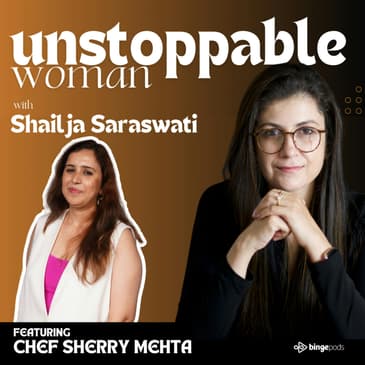
Welcome back to Unstoppable Women! In this inspiring episode, we sit down with Chef Sherry Mehta, an extraordinary culinary artist and trailblazer from Shimla. Sherry shares her rich heritage and vibrant childhood, her passion for authentic Himachali cuisine, and her journey to becoming a renowned chef. Learn about her heartfelt mission to bring genuine regional dishes to the forefront and her efforts to support single mothers through her initiative, 'Stree by Kanak.' Chef Sherry's story is one of tradition, innovation, and relentless passion. Don't miss this deep dive into her world of flavors and community service. 00:00 Introduction and Welcoming Sherry Mehta 00:39 Sherry's Childhood in Shimla 04:17 Family Influence and Early Cooking Experiences 08:23 Journey to Becoming a Chef 11:08 Pop-Ups and Culinary Success 15:17 Supporting Single Mothers through Kanak 27:59 Vegetarian and Non-Vegetarian Traditions 29:45 Community and Neighborhood Bonds 33:45 Cultural Heritage and Dham 43:05 Personal Growth and Purpose 49:31 Culinary Ventures and Future Plans
[00:00:00] How many brands do you have?
[00:00:02] A girl from the hills which is the first brand
[00:00:04] And how did you think of such a lovely name?
[00:00:07] I thought that people used to say that it's from the mountains
[00:00:10] Simple?
[00:00:11] So I called her from the mountains?
[00:00:13] Yes, from the mountains
[00:00:14] Oh, now I can't take that name
[00:00:18] It's your insta handle also
[00:00:21] People call me Pop-Up Queen of India today
[00:00:25] Almost like 3-4 pop-ups in a month
[00:00:28] One time travelling every month
[00:00:30] And then I did a TV show called Grilled on Fox Life
[00:00:34] I was the first runner up in that show
[00:00:36] Now, 2024
[00:00:38] You have acted in one of the reality shows
[00:00:40] Yes, I was actually glad that I could do a small role with Rishika Purjee in Sharma Ji Dhamkeen
[00:00:47] I was his teacher
[00:00:49] I was his cooking teacher in the cinema
[00:00:55] Yeah, lovely
[00:00:56] And I think I've almost done like 4-5 TV shows
[00:01:00] And I became Miss Shimla
[00:01:02] And I was scared to be one
[00:01:05] I think we really had that purpose
[00:01:07] So I think I thought that I saw my mom struggling a lot
[00:01:11] Because Shimla is such a small city
[00:01:14] My mother got a lot of love and support
[00:01:17] Hi everyone, welcome back to Unstoppable Women
[00:01:19] Today we have Sherry Mehta with us
[00:01:21] Welcome Sherry
[00:01:22] Thank you so much, Shelja for having me over
[00:01:25] And you are breaking boundaries with every bite
[00:01:29] Thank you so much, just trying my bit
[00:01:32] Yeah, and I've waited for you for a very long time
[00:01:35] And you know the reason why?
[00:01:37] Absolutely, it was actually the same here
[00:01:40] And I was somehow just waiting
[00:01:43] So that we can meet today and we are here
[00:01:46] So there is so much to talk
[00:01:48] Yes, same hometown, same school, same college
[00:01:52] A lot, a lot, a lot in common
[00:01:54] Yes, yes
[00:01:55] Okay, let's start with your childhood
[00:01:57] Yeah
[00:01:59] So I, as you said, same town
[00:02:03] So of course you are the better person who can connect
[00:02:05] I come from a small town from Shimla
[00:02:08] Where my grandparents migrated from
[00:02:12] The other side of Punjab which is in Pakistan now
[00:02:16] And they moved to this small town called Batala
[00:02:18] Which is in Amritsar
[00:02:19] But because of the tea business
[00:02:21] My grandfather was travelling to Chamba
[00:02:24] And then he thought why not having a home in the hills
[00:02:27] And that's when he settled down in Shimla
[00:02:29] So the third generation which was me
[00:02:32] It started from me, I was born in Shimla
[00:02:34] And I have the best childhood
[00:02:38] Because I was living with different cultures and communities
[00:02:42] For us it was not the neighbourhood but extended family
[00:02:46] I come from a place where
[00:02:49] You know, if you want to have a meal
[00:02:52] You can easily walk into a house
[00:02:54] And they are like extended families
[00:02:56] You can ask them please give me
[00:02:58] And they'll happily offer you food
[00:03:00] No, there was no boundary line
[00:03:00] No, there was no boundary line
[00:03:02] And I think there wasn't a single problem
[00:03:05] If there was a single problem
[00:03:06] It had been everyone's problem
[00:03:09] I still remember if anyone was hospitalised
[00:03:12] So it was a shift of everyone in the neighbourhood
[00:03:15] To go and give them meals
[00:03:16] So I think I've seen that connect
[00:03:20] In our neighbourhood, in our community
[00:03:22] In people of Himachal
[00:03:24] That they give so much love within the community
[00:03:28] And somewhere I think I carried that from there
[00:03:31] And took it forward
[00:03:33] You know what you just said
[00:03:34] That Himachalis have that love
[00:03:38] Boolapan, authenticity
[00:03:40] Abhi, you know and I try to explain this in Bombay
[00:03:42] It's so difficult because
[00:03:44] Only a fellow Himachali like yourself
[00:03:46] Can understand what I'm saying
[00:03:48] The moment you enter Himachal
[00:03:50] That's different
[00:03:51] Yes, it's very different
[00:03:53] So there is so much love and it is very basic
[00:03:56] It's not just that they'll go out of their way
[00:03:58] It is just their way of living
[00:04:00] If someone will even like
[00:04:03] If someone comes to someone's daughter's house
[00:04:05] They think that our daughter has come
[00:04:06] So the entire neighbourhood will go
[00:04:08] They'll give things
[00:04:10] They'll cook things for her
[00:04:11] And they'll remember what she ate in childhood
[00:04:13] I still remember my neighbourhood people so well
[00:04:17] Like my mom always said
[00:04:19] That you are not my daughter
[00:04:20] You were the daughter of the entire neighbourhood
[00:04:23] So it is still true because
[00:04:25] Sadly many people passed away
[00:04:28] Those who are left, they moved to their villages
[00:04:30] And I was very fond of people
[00:04:33] They were very fond of me
[00:04:34] Even today I get a call from Kothkahi
[00:04:35] From Monday
[00:04:38] That if something happens to us
[00:04:39] We won't be able to see you
[00:04:41] You come and meet
[00:04:42] So I feel that
[00:04:44] I will not get this love anywhere
[00:04:46] It's very different
[00:04:48] You can't experience it in cities
[00:04:52] So I really feel blessed
[00:04:55] That I was born in Himachal
[00:04:58] And I was able to be around
[00:05:00] That community
[00:05:02] And that's where I felt
[00:05:04] When I moved out
[00:05:05] That when people started connecting
[00:05:08] Our cuisine with Maggie and Momos
[00:05:10] I took it personally
[00:05:11] And that's where game changed for me
[00:05:14] And I thought, no, I need to make them aware
[00:05:17] And Maggie and Momos are in ads too
[00:05:19] Exactly
[00:05:21] I was like, no, that's not our food
[00:05:24] Let me talk about it
[00:05:25] And I think from there
[00:05:28] The journey started of food
[00:05:30] But in childhood
[00:05:31] When did you realise
[00:05:32] That this is my space
[00:05:35] So I come from a family
[00:05:37] If my grandmom would have been
[00:05:39] In this kind of world today
[00:05:41] She would have been a Michelin star chef
[00:05:43] She was very famous in her community
[00:05:45] She was designing wedding menus
[00:05:47] She was...
[00:05:49] If someone's house is being delivered
[00:05:50] Then you know that I don't have to make a panjeer
[00:05:52] If there are pickle at home
[00:05:54] Then they are made for the whole neighborhood
[00:05:56] I come from a home
[00:05:58] Where every Sunday
[00:05:59] I would get a tandoor on the back yard
[00:06:01] And my grandmom would get a tandoor
[00:06:05] For the whole neighborhood
[00:06:05] So everyone would bring their own plants
[00:06:08] And I tell everyone
[00:06:09] Not only cooking
[00:06:11] The nuances of the kitchen
[00:06:13] How to preserve the ingredients
[00:06:15] The science of food
[00:06:17] I have learnt from her
[00:06:19] The entire grooming
[00:06:20] Of a chef I have learnt from her
[00:06:24] Like the small things that are used to be used
[00:06:26] Were you helping her in the kitchen
[00:06:28] So what happened is
[00:06:30] That you know if
[00:06:31] I was spending maximum time with my grandmom
[00:06:34] Because my mom was helping
[00:06:35] My dad with her
[00:06:36] With the business
[00:06:37] And of course I was her favorite child
[00:06:42] After many years
[00:06:43] A child came to her house
[00:06:44] So I was very spoiled
[00:06:47] And I had a feeling
[00:06:49] That food has been very important
[00:06:51] My father would have been a food blogger
[00:06:53] Because everyone was brought to new restaurants
[00:06:55] In those times
[00:06:56] We were actually introduced to
[00:06:59] Continental food
[00:07:01] In Baljees
[00:07:02] Dine in Elfa
[00:07:04] Then Sita Ram's Chhole Bhatul Re
[00:07:06] We were going to Delhi and we were going to the iconic
[00:07:10] Restaurants during our
[00:07:11] Winter breaks
[00:07:12] So food was very very integral
[00:07:15] Yes, yes
[00:07:16] I come from a family
[00:07:17] That on breakfast time
[00:07:20] Dinner is discussed
[00:07:21] And on dinner time
[00:07:23] The next day's food is discussed
[00:07:25] And if someone made
[00:07:27] Khichdi or yellow dal
[00:07:29] So my family used to get upset
[00:07:32] My grandfather used to get upset
[00:07:33] That there is no disease
[00:07:34] They were saying that there is no disease at home
[00:07:36] Because they were in a habit of eating good food
[00:07:39] And till date
[00:07:41] When I go to Shimla
[00:07:42] They always talk about my grandmom and my father
[00:07:45] That they taught us
[00:07:47] This is what they taught
[00:07:49] So I think I learned from them
[00:07:51] From Varyan, Papad
[00:07:52] Everything, the depth of food
[00:07:54] And I remember
[00:07:57] One day my grandmom was not there
[00:07:59] So I had to cook for my grandfather
[00:08:00] How old were you then? I was 13 years old
[00:08:02] That was your first experience of going solo
[00:08:05] Solo in the kitchen
[00:08:06] And I was confused but I did
[00:08:08] I performed and
[00:08:10] My grandfather just looked at the food
[00:08:13] And I still remember
[00:08:15] I tell everyone it was like a jewel for him
[00:08:17] He said, I will cook for him today
[00:08:19] Oh wonderful
[00:08:21] So I tell everyone that during those days
[00:08:23] When there was only one focus
[00:08:26] That child will become a doctor or engineer
[00:08:28] My grandparents
[00:08:30] They focused on my skill
[00:08:32] And they were very clear
[00:08:34] That if she is enjoying cooking
[00:08:36] Let her do
[00:08:37] I remember in school
[00:08:40] In Loretto school
[00:08:42] Ritu ma'am
[00:08:43] I was very weak in maths
[00:08:45] Maths was something I couldn't do
[00:08:47] So she could also understand
[00:08:48] I don't want to say same pinch but yeah
[00:08:50] Now let it be
[00:08:51] No, no you can't say
[00:08:53] There's too many things in common now
[00:08:55] But Ritu ma'am understood that
[00:08:58] I have a lot of interesting food
[00:09:00] Because I used to wait for lunch break
[00:09:02] And I had to see on everyone's tables
[00:09:04] What came
[00:09:06] I was so curious to know
[00:09:07] So one time she gave up on me
[00:09:10] That she understood that
[00:09:12] Ritu ma'am's younger sister was in my class
[00:09:14] Okay ma'am
[00:09:16] Me too
[00:09:18] Small world
[00:09:19] Very small world
[00:09:21] And then I think the teachers
[00:09:23] Also started understanding
[00:09:25] And the next day
[00:09:28] They used to ask me what have you cooked
[00:09:29] Because I got so interested
[00:09:31] That I told my grandmom
[00:09:32] Let me do something
[00:09:33] Give me that free hand
[00:09:37] And I gave my IHM
[00:09:39] Okay
[00:09:40] When I passed out and I got selected
[00:09:43] I still remember the central school
[00:09:45] In Jakku where my entrance exam was
[00:09:47] And I was very clear that I have to go to Delhi
[00:09:49] Okay
[00:09:50] And I got selected for IHM Delhi Pusa
[00:09:53] But then my family said
[00:09:55] The girl will come alone at night
[00:09:56] The girl from Shimla
[00:09:58] People sleep at 9 o'clock at night
[00:10:00] It won't happen
[00:10:01] Then I started travelling
[00:10:03] And then I think I started
[00:10:07] Calling friends
[00:10:07] I think it was a muscle memory
[00:10:12] So I started
[00:10:13] Feasting my friends
[00:10:14] And I was like come home
[00:10:15] I have cooked Dimachali food for all of you
[00:10:19] And that's where one of my
[00:10:21] Chef friends was working with Raj Willas
[00:10:23] At that time
[00:10:23] He said that sherry or food is not meant for home
[00:10:27] It's that good that it needs to
[00:10:29] Come out and
[00:10:30] Go to a good 5 star hotel
[00:10:32] I said chef I don't even know how to cut
[00:10:34] Onions
[00:10:35] You are asking me to come in a 5 star hotel kitchen
[00:10:38] I can't do that
[00:10:39] How old were you then?
[00:10:42] I was 23
[00:10:44] And he said you need to do that
[00:10:46] I said I can't do that
[00:10:47] This is right after college
[00:10:49] Not really
[00:10:50] Many years after that
[00:10:54] You skipped the entire phase
[00:10:56] Of not only making the food look pretty
[00:10:58] For your prettiness
[00:11:00] Also you got some awards on stage
[00:11:02] Yes
[00:11:02] My mom wanted
[00:11:06] To be a part of a beauty pageant
[00:11:09] Because during those days
[00:11:10] It was a huge thing in Shimla
[00:11:12] Summer festival was a big thing
[00:11:14] I remember a lot of people from Delhi
[00:11:16] Punjab, Haryana were travelling
[00:11:17] To experience this summer festival
[00:11:21] And
[00:11:22] I became Miss Shimla
[00:11:24] And I was scared to be one
[00:11:26] And in those days
[00:11:29] Yeah it was
[00:11:30] It was a big thing
[00:11:32] And after that there was a lot of opportunity
[00:11:34] From the Bollywood side
[00:11:36] Of the industry
[00:11:38] And my mom wanted me to
[00:11:40] Be a part of this world
[00:11:41] For many years I was approached
[00:11:44] To be a part of movies
[00:11:45] For TV ads
[00:11:47] For TV serials
[00:11:49] But I realised that's not my cup of tea
[00:11:53] But I kept cooking
[00:11:55] That was something
[00:11:56] So that was not
[00:11:58] Effortless
[00:11:59] It was effortless
[00:12:00] I was reading a lot of books
[00:12:03] I was going to any Oxford
[00:12:05] Or any bookstore and buying these cookbooks
[00:12:08] So I realised
[00:12:08] That I was very clear
[00:12:11] That I am a chef already
[00:12:13] Life was around it
[00:12:16] Concentric circles were being built
[00:12:18] Research
[00:12:18] You're cooking for them
[00:12:21] You're reading more about it
[00:12:23] Yes, so everything was around that
[00:12:25] But then that one day
[00:12:27] I was called to
[00:12:29] Hyderabad for
[00:12:30] Marriott Hotel
[00:12:31] And I did my first Himachalipop
[00:12:34] It was not only a first Himachalipop
[00:12:36] By me but the first Himachalipop
[00:12:38] In India
[00:12:41] Amazing
[00:12:42] Mani, Madra, Paldha
[00:12:44] Everything we bought on the table
[00:12:46] Awesome
[00:12:47] It was very emotional because I could at least
[00:12:50] Contribute a little bit to my state
[00:12:52] And make people aware
[00:12:53] That turned out to be a big success
[00:12:56] Till date people write about it
[00:12:58] Those who had
[00:13:00] That day that we remember your Himachali dishes
[00:13:02] Sheri
[00:13:03] That's all about my state
[00:13:05] That's about my place
[00:13:08] And from there my journey started
[00:13:10] As a chef
[00:13:12] And then I did a TV show
[00:13:14] Called Grilled on Fox Life
[00:13:16] I was the first Shranerap in that show
[00:13:18] So reality show
[00:13:20] It was a reality show
[00:13:22] So I would say
[00:13:24] Initially I used to think it's all about food
[00:13:27] But when I was in that show
[00:13:30] I would say
[00:13:31] Thanks to Riaz Amlani
[00:13:33] I learnt a lot
[00:13:34] A lot about the industry
[00:13:36] It groomed me because it was also
[00:13:39] About maths
[00:13:39] It was also about numbers
[00:13:41] And that place groomed me
[00:13:44] So it helped me a lot
[00:13:46] To what I am today
[00:13:48] And then I realised that
[00:13:49] That's how a restaurant needs to be run
[00:13:52] So I think
[00:13:54] I did a lot of pop-ups
[00:13:56] People call me
[00:13:58] Pop-up Queen of India today
[00:14:00] Almost like 3-4
[00:14:02] Pop-ups in a month
[00:14:03] I'm travelling every month
[00:14:04] And this is Punjabi and Himachali food
[00:14:07] Both right? Yes because these were
[00:14:09] I think somewhere in my blood
[00:14:11] And I realised people
[00:14:13] Don't know about it
[00:14:14] So I just started that exercise
[00:14:16] Of making people aware
[00:14:18] But Punjabi is still known food right?
[00:14:20] Not really because
[00:14:23] People connect only
[00:14:25] With dal makhani, patta chicken, chhole bhature
[00:14:28] And I am like that's not the food we eat
[00:14:30] So
[00:14:31] We do have clean food
[00:14:32] Our food is cooked in mustard oil
[00:14:34] So people were in shock
[00:14:36] That there is oil in your house
[00:14:37] And food is being cooked
[00:14:39] And I said yes of course
[00:14:40] There is no masala in it
[00:14:42] You think we only eat tomato gravies
[00:14:44] Rich curries, no that's a myth
[00:14:45] So I started actually making the real food
[00:14:48] And which is the lighter version
[00:14:51] Which we eat at home
[00:14:52] The lost recipes
[00:14:53] I started doing research
[00:14:54] And then when we talk about other side of Punjab
[00:14:57] I got connected and in touch with bloggers
[00:15:00] Which are there in Lahore
[00:15:01] In Karachi
[00:15:03] They have become my friends now
[00:15:05] I wanted to know more about the streets
[00:15:07] The culture, the food
[00:15:09] And that's where my research started
[00:15:10] About the food and that's what I started
[00:15:12] Bringing on the table for everyone
[00:15:15] So when you say you bring it on the table
[00:15:16] I am also aware now it's all about
[00:15:18] Sensorial experience
[00:15:19] Food is not just that you have something
[00:15:23] On your plate
[00:15:24] It's about the decor, it's about the smell
[00:15:26] It's about the ambience everything
[00:15:28] So that's what you are talking about
[00:15:30] Also then I move
[00:15:32] Into more
[00:15:34] Depth
[00:15:35] Where I started talking about the communities
[00:15:37] Like
[00:15:38] I wanted to talk about the Hindu Punjabis
[00:15:41] I wanted to talk about the Punjabi
[00:15:44] Six
[00:15:45] I wanted to talk about the Muslim six
[00:15:47] Muslim Punjabi
[00:15:48] So the community food is also very different
[00:15:51] And that's what I started
[00:15:53] Doing through my pop ups
[00:15:55] Then during Covid times
[00:15:59] My new baby
[00:16:00] Kanaq by Sherri came live
[00:16:02] Where I started this
[00:16:04] Cloud kitchen
[00:16:05] And I started supplying
[00:16:07] Food from my cloud kitchen
[00:16:10] It was in Bandra, Chowin village
[00:16:11] And I never realized
[00:16:14] That within one year
[00:16:15] It became a huge success
[00:16:18] We started doing movie launches
[00:16:20] We were
[00:16:22] Doing big catering
[00:16:24] So I got lot of love
[00:16:26] And I am really grateful for that
[00:16:27] Now there is good news
[00:16:30] We are coming up
[00:16:32] With a new brand
[00:16:33] This Durga Pooja
[00:16:34] It is called History by Kanaq
[00:16:36] Where I am going to support the single mothers
[00:16:39] Because this is one area
[00:16:41] Where nobody has ever thought about
[00:16:43] And I want to give them opportunities in Kanaq
[00:16:45] So anything whatever
[00:16:47] They could do, whether pickling
[00:16:49] Making papar, varyaan
[00:16:51] Mithais, pinnees
[00:16:53] So Kanaq is a platform of
[00:16:55] Enablement
[00:16:55] Where you are getting women to
[00:16:57] Come and get some livelihood
[00:16:59] That was the intent to start it
[00:17:02] It was also enablement platform
[00:17:04] No, it is just a delivery kitchen
[00:17:07] Which we expanded and made it a full
[00:17:09] Fledged catering business
[00:17:10] But I think
[00:17:12] There is a purpose of doing something
[00:17:14] And with time I realized
[00:17:16] I have done my part
[00:17:18] I have already done my part
[00:17:20] Now what next?
[00:17:21] Because in life there has to be a purpose
[00:17:23] And then I realized that
[00:17:26] This is one area
[00:17:27] Where nobody thinks about
[00:17:30] What if some
[00:17:31] Accidents happen
[00:17:32] My mom was a single mother
[00:17:34] My dad passed away when I was 13 years old
[00:17:37] So my mom had to
[00:17:39] Handle the business
[00:17:40] We are grateful she had a house
[00:17:42] But there are many women who have
[00:17:44] Lot of challenges
[00:17:45] They don't have anything
[00:17:47] Where will they go? I have seen
[00:17:49] Women who don't even have a house
[00:17:51] So I really want to do something for them
[00:17:53] And that's where I thought
[00:17:55] Of doing is 3 by Kanaq
[00:17:57] And I want to support these single mothers
[00:17:59] So how do you identify them
[00:18:01] Or if there are women out there right now
[00:18:03] Who want to come to you
[00:18:04] So we have just started this exercise recently
[00:18:06] And it started organically
[00:18:08] Like I told you earlier
[00:18:10] If you want then the universe starts supporting
[00:18:12] That energy is attracted
[00:18:13] Yes so it started happening
[00:18:15] So one day
[00:18:17] Like my house helps
[00:18:19] And they all are suffering
[00:18:21] In some or the other way
[00:18:23] So one day I saw bruises on her
[00:18:25] And I asked her what happened
[00:18:26] So then she told me this is happening
[00:18:28] So then I said would you like to be
[00:18:31] Trained in my kitchen
[00:18:33] I mean I want to call you a chef
[00:18:35] Would you like to be called as a chef
[00:18:37] You want to get promoted from a wife
[00:18:39] To a chef, she said
[00:18:40] Yes I will learn
[00:18:41] 3 years
[00:18:43] She is a part of Kanaq now
[00:18:45] Wow incredible
[00:18:46] So if I tell her to make a chapli kabab
[00:18:49] She knows the recipe like this
[00:18:51] She will correct the professional chef
[00:18:54] She knows the recipe
[00:18:55] That gave me a thought
[00:18:56] Okay I have to do
[00:18:57] Now I have
[00:18:59] 4 women coming on board
[00:19:01] Now we have started putting the word on the platform
[00:19:04] And I am okay to take as many
[00:19:06] As I can
[00:19:07] So I have already started putting things
[00:19:09] That these are the departments
[00:19:11] Which they will be taking care of
[00:19:13] And we will handle
[00:19:14] So this is for a start up
[00:19:18] Of the society right
[00:19:19] Obviously you want to do the enablement
[00:19:20] For them where it really matters
[00:19:22] So I went deep and I was
[00:19:24] Doing a lot of research
[00:19:25] The challenges of these women
[00:19:27] So the main challenges that they have children
[00:19:31] And then they can't work for long hours
[00:19:33] And they are restricted to time
[00:19:36] Because they have to go and feed their children
[00:19:38] So I was thinking
[00:19:39] Later on once
[00:19:41] I established this brand
[00:19:43] I will open a small school
[00:19:45] For these children
[00:19:46] And these single mothers will only be a teacher
[00:19:49] For them
[00:19:49] I will give them employment
[00:19:51] But that's in my second phase
[00:19:53] First is this phase
[00:19:55] The second phase is that
[00:19:56] Amazing Shari
[00:19:58] Like
[00:19:59] School, college, Himachal
[00:20:02] Visuals are coming to my mind
[00:20:04] And now
[00:20:04] See where your journey is taking you head
[00:20:07] I think really amazing
[00:20:09] So I think
[00:20:10] I saw my mom struggling a lot
[00:20:14] Because
[00:20:15] Shimla is such a small city
[00:20:17] She got a lot of love and support
[00:20:19] But still I saw her struggling
[00:20:22] Single handedly
[00:20:24] And you three of you
[00:20:25] So my grandmother was that time
[00:20:27] My grandmother supported my mother
[00:20:29] And she said
[00:20:30] I am her mother
[00:20:31] So you handle the business
[00:20:34] So you are the provider
[00:20:34] And I will support
[00:20:36] So I said that no one will get that support
[00:20:38] Like extended family
[00:20:40] Like one evening the other
[00:20:42] House help is coming crying
[00:20:44] I had a domestic violence
[00:20:47] Then I am like
[00:20:49] And then I know
[00:20:50] My people very close to me
[00:20:52] Where they are telling the families
[00:20:53] That we are suffering but they are saying
[00:20:55] No, we cannot come back
[00:20:56] So I think when they will earn
[00:20:59] They will have that confidence
[00:21:00] That they can look after themselves
[00:21:02] So maybe I can support in whatever
[00:21:05] Little way through this platform
[00:21:06] Yes, so financial literacy is literally
[00:21:09] Yes, we have already started looking
[00:21:11] For a space now where I want to train
[00:21:13] These women
[00:21:14] And it's not that I want to tell them
[00:21:16] That you only work for me
[00:21:18] You want to train, go out and open your business
[00:21:20] So are you doing this all by yourself
[00:21:21] But you are looking at hopefully
[00:21:24] There is something people will join
[00:21:26] Yes, I will be happy if people come forward
[00:21:29] If any kind of support comes forward
[00:21:32] Later on I want to convert it
[00:21:33] Convert this into an NGO
[00:21:36] And I want to go deep
[00:21:37] Like I said I want to
[00:21:39] Support the children also
[00:21:40] So that mothers are not stressed
[00:21:43] And later on whatever
[00:21:45] Programs we can do
[00:21:46] I want these maids to have Zumba classes
[00:21:48] I want them to enjoy life
[00:21:51] I want them to have a normal life
[00:21:53] Lovely
[00:21:54] And we've been just working around it
[00:21:57] Now and let's see how far
[00:21:59] We can go into it
[00:22:00] And Kanak basically is wheat
[00:22:03] Yes, so Kanak by Sherry
[00:22:04] Is my brand
[00:22:05] So you also do something like
[00:22:07] From farm to table
[00:22:09] No, that is my other brand
[00:22:11] Which is Van Harve's Kitchen
[00:22:14] How many brands do you have
[00:22:16] A girl from the hills
[00:22:17] Which is the first brand
[00:22:19] And how did you think of such a lovely name
[00:22:21] I thought that
[00:22:22] People used to say where are we from
[00:22:24] From mountains
[00:22:25] From mountains
[00:22:29] Now I can't take that name
[00:22:33] It's your insta handle also
[00:22:37] So now I have
[00:22:38] So everyone gave me that name
[00:22:39] I came across a girl from the hills
[00:22:41] I said, yeah, girl from the hills
[00:22:43] Simple, my book name is also that
[00:22:46] Because I want people to connect easily
[00:22:48] So I thought let's not do it
[00:22:50] Complicated and
[00:22:52] Let me do my book name
[00:22:54] A girl from the hills
[00:22:55] And it's memoirs so I'm going to do
[00:22:58] The cover of page also like that
[00:23:00] I want to wear my grand mom's saree
[00:23:02] I want to wear her jewellery
[00:23:04] And I want to show the nostalgia
[00:23:06] Your book is coming out this year
[00:23:08] Yes, in the next 2-3 months
[00:23:09] I've just completed my manuscript
[00:23:11] Lovely
[00:23:12] And this is your entire
[00:23:14] Childhood growing up
[00:23:16] So tell us about your family
[00:23:23] So like I said
[00:23:24] Earlier I come from a
[00:23:26] Puri family
[00:23:28] Now I'm married to a Bengali
[00:23:32] But he's also half Punjabi
[00:23:34] Half Bengali
[00:23:36] Because the parents were
[00:23:38] Childhood friends in the neighborhood
[00:23:39] And then they got married
[00:23:41] So he is also
[00:23:43] A very good chef
[00:23:45] He cooks American food
[00:23:47] Because he stayed in America for years
[00:23:50] And of course I have my 3 children
[00:23:52] And the elder one
[00:23:54] Is 16 years old
[00:23:56] And then I have twins and a girl and a boy
[00:23:58] So I see
[00:23:59] My son becoming a budding
[00:24:02] Chef because he's spending maximum
[00:24:04] Time with the kitchen
[00:24:05] But I told him you better cut your fingers
[00:24:07] And I want you to learn from there
[00:24:10] Please go into the core
[00:24:11] Because this is not easy
[00:24:13] It's like taking science
[00:24:15] So you have to experiment a lot
[00:24:17] Yes, you have to create a lot
[00:24:19] So don't take this easy
[00:24:21] So he's going for professional education
[00:24:24] In
[00:24:25] No, he's just 10 years old
[00:24:27] But he would be
[00:24:29] Whether he would be
[00:24:31] Or not, but I see that thing
[00:24:32] In him coming up
[00:24:33] Because whatever he's putting on the table
[00:24:35] Is actually coming out very well
[00:24:37] Whether he's baking cakes
[00:24:39] He's doing Korean food
[00:24:40] He's doing continental food
[00:24:43] It's coming out amazing
[00:24:44] Sometimes he really surprises all of us
[00:24:47] So I'm really happy
[00:24:49] To see that this comes in your genes also
[00:24:52] Maybe I took it from my grandparents
[00:24:54] And then my father
[00:24:55] And then now he took it from me
[00:24:57] Both the girls are not interested in the kitchen
[00:24:59] And I'm perfectly fine with it
[00:25:01] But my son is definitely
[00:25:04] A kitchen person
[00:25:06] So what is the tip you want to give to someone
[00:25:07] Who wants to get into this field
[00:25:09] For you, what I see is
[00:25:11] You were self-initiated
[00:25:13] And motivated
[00:25:14] Not everyone might be like that
[00:25:17] They might need still professional
[00:25:19] Education supporting this
[00:25:21] So I feel first of all
[00:25:23] You need to get answers within yourself
[00:25:26] That is very, very important
[00:25:28] It's just not the word
[00:25:29] Chef, you need to feel it
[00:25:31] First of all
[00:25:33] And it's not about
[00:25:35] Picking the tweezers and plating the food
[00:25:37] You need to understand
[00:25:39] The science of food
[00:25:41] And your emotions should be right
[00:25:43] Like at a very tender age I was told
[00:25:45] And molded by my grandmom
[00:25:47] That if you are angry don't enter the kitchen
[00:25:49] Because the food will be a disaster
[00:25:51] I've got to come to that
[00:25:52] So I think once you are clear in your head
[00:25:55] That
[00:25:57] You are having that interest
[00:25:59] In the kitchen
[00:25:59] Only then pursue or think about it
[00:26:02] And take help from people around you
[00:26:05] And it's not going to be easy
[00:26:07] So be prepared
[00:26:08] Anything what you do it's not going to be easy
[00:26:10] If you're passionate about it
[00:26:11] You need to nurture, you need to give time
[00:26:13] It's your baby
[00:26:14] So you have to have sleepless nights
[00:26:16] It's that simple
[00:26:18] And be ready for it
[00:26:19] So once you are enjoying nurturing your baby
[00:26:22] The baby is going to grow out
[00:26:24] Very nicely
[00:26:26] When you just said
[00:26:27] When you're angry don't enter the kitchen
[00:26:29] You want to elaborate on that
[00:26:31] So I remember
[00:26:34] My grandmom
[00:26:35] She always used to tell me that
[00:26:38] Emotions play a very important role
[00:26:40] So today when people ask me
[00:26:42] How did you make such a simple thing
[00:26:44] How did you make it so delicious
[00:26:45] It's very delicious
[00:26:47] We want to eat one more bowl of it
[00:26:49] So I tell them that
[00:26:49] I do prayers when I'm cooking
[00:26:52] My energies have to be right
[00:26:55] Even if some chef is angry in the kitchen
[00:26:57] I take him and put him
[00:27:00] I say, son, calm down
[00:27:01] And if you don't feel like coming right now
[00:27:04] Don't do, I'll handle the kitchen
[00:27:05] So I feel emotions should be
[00:27:07] At the right place
[00:27:09] When you're cooking
[00:27:10] Because that is going to be
[00:27:13] On your table
[00:27:14] And
[00:27:15] It's said that the path of heart is from the stomach
[00:27:18] So it's important to write the emotions
[00:27:20] To go to the stomach
[00:27:21] For a person
[00:27:22] And serve food happily
[00:27:25] It will make a lot of difference
[00:27:27] I realize it's not only about the cooking
[00:27:29] It's also the serving
[00:27:31] And how people are enjoying it
[00:27:33] Yes and how you feed them with love
[00:27:35] Why does our mind have a memory
[00:27:37] It's the food of our mother
[00:27:39] I always tell people
[00:27:40] It's not like she was a Michelin star
[00:27:43] But my mother's love was in it
[00:27:45] So she put extra ghee
[00:27:47] Without telling
[00:27:48] And she won't have to eat it with love
[00:27:50] And the food in mother's plate
[00:27:52] It tastes like that
[00:27:54] Yes, so that's why
[00:27:56] That food of mother's hand
[00:27:57] When the chef gets this compliment
[00:28:01] That we remember mother's food
[00:28:03] You are successful
[00:28:05] Wow
[00:28:07] But this
[00:28:07] The technique
[00:28:09] That you are calm and you check your emotions
[00:28:12] Did you see your grandmother?
[00:28:15] Yes
[00:28:16] She was a perfectionist
[00:28:19] She was a perfectionist
[00:28:21] And my grandfather
[00:28:22] Had a backyard
[00:28:24] So my memories are that
[00:28:26] I have never been to the vegetable house
[00:28:28] At home
[00:28:31] Apricot trees
[00:28:32] I had
[00:28:33] I had cashew nut trees
[00:28:35] Onion, tomatoes
[00:28:37] All seasonal produce
[00:28:39] Mint, coriander, chili
[00:28:41] If you want to eat mint chutney
[00:28:42] Then break it in front of you
[00:28:44] So that was Sunday's ritual
[00:28:47] That my grandfather was making a chutney
[00:28:49] Himself going in the morning
[00:28:51] And the barter system
[00:28:53] Means someone is coming to someone's farm
[00:28:56] Someone is coming to your house
[00:28:56] I am giving more to them
[00:28:59] So I tell everyone
[00:29:00] My childhood which was
[00:29:02] So good
[00:29:04] I think Himachali
[00:29:06] Bringing itself is like a great foundation
[00:29:09] Yes
[00:29:10] You have said that
[00:29:12] Punjabi food is not necessary
[00:29:14] In non-veg
[00:29:16] So I make people aware
[00:29:19] Correctly
[00:29:20] That 70% of the community
[00:29:23] Whether it is Himachal or Punjab
[00:29:25] They are vegetarians
[00:29:26] And we eat vegetables
[00:29:28] We eat our greens
[00:29:29] And that too we cook in mustard oil
[00:29:31] It is very light
[00:29:33] It is very healthy
[00:29:34] Very heartwarming
[00:29:35] And our food is vegetarian
[00:29:38] And non-veg is very less
[00:29:42] It is hardly 30% community
[00:29:44] The ones who are cooking non-veg
[00:29:46] On the weekend
[00:29:46] So I come from a vegetarian family
[00:29:48] And my grandmom never allowed
[00:29:51] Any kind of non-veg food in the kitchen
[00:29:52] My grandfather and my father
[00:29:55] It was a Sunday ritual
[00:29:56] Cooking the mutton
[00:29:57] Like a barbecue
[00:29:58] And even the pressure cooker
[00:30:00] And the stove and everything in the backyard
[00:30:03] Did you cook on the E.T?
[00:30:05] Yes I remember my dad
[00:30:07] He did the same
[00:30:08] But it has a lot of taste
[00:30:11] Yes it is very tasty
[00:30:13] It is very slow cooking
[00:30:15] And
[00:30:18] Like I said
[00:30:19] My book is coming
[00:30:20] That everyone in the neighborhood
[00:30:23] Like this Sidhu
[00:30:24] So they made it on Saturday
[00:30:27] So it is hot in my house
[00:30:29] Sidhu is done
[00:30:29] It is a bao
[00:30:32] Made in the upper part of Himachal Pradesh
[00:30:35] So there is post-Titana
[00:30:37] Gourd and khas khas
[00:30:39] There are many
[00:30:40] One sweet and one salt
[00:30:42] And one savoury with dal and mint
[00:30:45] So
[00:30:46] Oh my God
[00:30:49] Childhood memories
[00:30:50] So yummy guys
[00:30:52] I will send for all of you
[00:30:54] I will send
[00:30:57] Sidhu or Dham
[00:30:58] Sidhu or Dham
[00:30:59] So
[00:31:00] I think the neighborhood was a family
[00:31:03] The food they were cooking
[00:31:06] We were all eating it as a community
[00:31:08] So
[00:31:10] That's where I learned that
[00:31:12] Emotions play a role
[00:31:14] There was no habit of being alone
[00:31:16] The neighborhood was big
[00:31:18] The neighborhood had children
[00:31:20] The neighborhood grew up
[00:31:21] Mom made a plate
[00:31:22] So I knew that I would cook food for the other auntie
[00:31:25] I still remember
[00:31:27] The way you are telling
[00:31:30] Like in my neighborhood
[00:31:32] In the summer
[00:31:32] I used to go to any house and drink milk
[00:31:35] To drink milk
[00:31:37] Go and eat some chapati
[00:31:39] Because it is like one big house
[00:31:42] One big family
[00:31:43] But those values are not there
[00:31:45] And there is no one in the city
[00:31:47] So I was talking to my mom
[00:31:49] She was on the call
[00:31:51] And then one auntie came
[00:31:53] And she asked if you had tea in the morning
[00:31:55] And they were talking that
[00:31:57] I didn't have milk today
[00:31:58] Mom gave the bottle from the fridge
[00:32:01] I was laughing out loud
[00:32:02] I was like, mom nothing has changed
[00:32:05] So mom said I don't want it to change
[00:32:07] We are all there looking after each other
[00:32:10] We are all old now
[00:32:11] We take care of each other
[00:32:13] I feel so happy
[00:32:15] This is back in Shimla
[00:32:17] Mom, wow very nice
[00:32:20] Nothing has changed
[00:32:21] Those values are still there
[00:32:22] I had an experience last month
[00:32:25] So we had to leave for the emergency
[00:32:28] So we had to leave the house
[00:32:31] It was such an emergency
[00:32:32] So our neighbors came
[00:32:34] They said we will stop
[00:32:36] Don't worry
[00:32:38] Take the stuff out of the fridge
[00:32:39] We will do it
[00:32:41] Just go
[00:32:43] And that is a trust you can also have
[00:32:46] We just gave the key and just left
[00:32:48] Like mom is not going to be there for one year now
[00:32:50] So my husband said
[00:32:52] No one will stay at home for a year
[00:32:55] Nothing will happen
[00:32:56] I said neighborhood is there
[00:32:57] They will keep checking the place
[00:33:00] Nothing will happen
[00:33:01] People will open the doors and see what will happen
[00:33:03] How easy life you guys have
[00:33:05] I was like yeah
[00:33:07] No sir
[00:33:08] I miss those days
[00:33:11] I just tried to put all that
[00:33:13] Together in my book
[00:33:14] Tell me you have romanticized
[00:33:17] Your entire experience of growing up
[00:33:19] In the hills
[00:33:21] But that place is also very
[00:33:23] Small for the dreams that you had
[00:33:26] For somebody like you
[00:33:27] You obviously had to
[00:33:30] Spread the wings and come out
[00:33:31] Yes
[00:33:33] So initially
[00:33:34] I used to think
[00:33:37] I will open a home
[00:33:39] in Shimla
[00:33:40] And open it at my house
[00:33:42] Because it's a huge house
[00:33:43] And there is a backyard
[00:33:44] So I thought it would be a farm to fork
[00:33:47] Simple rustic food
[00:33:49] I will keep it that way
[00:33:50] But I think maybe I was meant for bigger cities
[00:33:53] So the first day I remember
[00:33:54] I was staying in Colaba
[00:33:57] At 23rd floor
[00:33:58] Shimla's daughter
[00:34:00] And opened the window
[00:34:02] I called up my mom
[00:34:03] I was like mom I am so scared
[00:34:05] I am very tired now
[00:34:07] I can't help it now
[00:34:10] Sherry live with it
[00:34:11] It's your decision
[00:34:12] And so I remember that
[00:34:14] Shimla girls are so different
[00:34:16] Because they don't have any exposure to life
[00:34:19] But yeah life changed
[00:34:22] Traveled the world
[00:34:22] The good thing is you are keeping the Shimla girl alive
[00:34:25] Yes that is very important
[00:34:27] No I am a Pahadi soul
[00:34:29] That will never change
[00:34:30] It won't go from inside
[00:34:32] So Supriya also says
[00:34:34] Like in my community everyone says
[00:34:36] You have that motherly thing
[00:34:38] That she keeps feeding
[00:34:40] It's something which you find everywhere
[00:34:42] We go in Himachal
[00:34:43] So like Supriya went
[00:34:46] And their welcome is so good
[00:34:48] That our family is coming to the whole district
[00:34:50] They are coming to some place
[00:34:52] So I told him now you know why I say this
[00:34:54] Because our community
[00:34:56] Is like this they are all full of love
[00:34:58] Very warm
[00:34:58] Very warm
[00:35:00] Of course
[00:35:04] No no that has to be
[00:35:05] I write it
[00:35:08] So first for me
[00:35:09] When there is a festival
[00:35:12] In any temple
[00:35:13] We are going to eat Dham
[00:35:15] There is some event
[00:35:16] We are getting married
[00:35:19] But later when I really
[00:35:21] I felt that people don't know
[00:35:23] I started doing research
[00:35:24] Then I realized that
[00:35:26] The Dham which was traveled
[00:35:27] It was from Kashmir
[00:35:28] And Raja Meiru who was
[00:35:31] When he was doing Tapasya
[00:35:32] Sitting on the Dala Dhar Parvada
[00:35:34] Then he thought because
[00:35:36] He called Himachal Dev
[00:35:37] So he thought that
[00:35:40] I have to worship some God
[00:35:42] So if you go back
[00:35:43] If you have ever had
[00:35:45] Kashmiri food
[00:35:46] If you eat Rogan Josh
[00:35:49] Gujtabha
[00:35:51] Whatever you eat
[00:35:52] From there Vazwan was called
[00:35:55] Vazwan
[00:35:56] So as soon as Vazwan
[00:35:58] Was made
[00:36:02] So what happened now
[00:36:05] Because this Dham
[00:36:07] Was made in Chamba
[00:36:08] Then Channa Madra
[00:36:10] Everything was made
[00:36:12] Exactly the same
[00:36:13] If you see Dham is also made
[00:36:15] Like Vazwan
[00:36:16] I never noticed that
[00:36:18] Dad was posted in Kashmir
[00:36:19] So I ate a lot of Vazwan
[00:36:21] On the Bitha's carpets
[00:36:25] Utensils and cutlery
[00:36:26] They are very famous
[00:36:28] So that is a replica
[00:36:30] Vegetarian replica of Vazwan
[00:36:33] So when Vazha came
[00:36:36] He brought curd and spices
[00:36:38] He made Channa Madra in curd gravy
[00:36:41] Seppu Vadi
[00:36:41] Khattama
[00:36:44] Khattama
[00:36:44] So he replicated that recipe
[00:36:48] Channa Madra
[00:36:50] So
[00:36:50] The Royal families
[00:36:53] Kashmir's Brides
[00:36:55] They got married here
[00:36:56] They brought Rajma with them
[00:36:58] So if you see
[00:36:59] Chamba side
[00:37:02] Channa Madra is made there
[00:37:06] Because the Brides came
[00:37:07] And they brought Rajma with them
[00:37:08] Amazing history
[00:37:10] So then I came to know
[00:37:13] That the Dham
[00:37:14] Was made like this
[00:37:15] Amazing
[00:37:18] And this was only a temple food
[00:37:21] That was given to God
[00:37:22] History says that the first Madra
[00:37:25] Was made of Supari
[00:37:26] So Supari is made of Pank
[00:37:30] But it's not edible
[00:37:32] Like humans can't eat that
[00:37:34] Because it was to offer
[00:37:35] A Goddess
[00:37:37] So for them that was made Madra
[00:37:38] Channa Madra
[00:37:42] Now every region has its own Dham
[00:37:44] Mandiali Dham
[00:37:46] Kangri Dham
[00:37:47] So in Himachal the 12 districts
[00:37:49] All have their own Dham
[00:37:52] If we come to Mandi
[00:37:54] To talk about the Royalty
[00:37:55] So their wife
[00:37:58] Raja is Bengali
[00:38:00] Bengali rulers are in Himachal
[00:38:02] They have ruled us
[00:38:04] So if you see
[00:38:06] And you go to Mandi
[00:38:08] You will find Luchi on the streets
[00:38:10] With the mutton
[00:38:10] Because Kaushamankshwain Luchi is a part of
[00:38:14] Bengal
[00:38:14] So it has been blended
[00:38:16] So that's why Bengali culture
[00:38:20] Has a lot of impact
[00:38:21] People asked me
[00:38:22] How did the Nariyal come to Dham
[00:38:25] Because if you look at Madra
[00:38:27] Nariyal goes
[00:38:28] So then I told them again
[00:38:30] Bengali influence
[00:38:31] And our Kaleeris
[00:38:33] The girls of the food and Nariyal
[00:38:36] Then they asked me
[00:38:37] Why this
[00:38:38] So I told them that in the past
[00:38:40] There was a bull and a horse
[00:38:41] And there was so much of a girl
[00:38:44] So that was the way of the parents
[00:38:46] To feed their daughter
[00:38:47] They used to take out the Kaleeris
[00:38:51] Because they would travel for 5-6 days
[00:38:52] Oh my God
[00:38:55] Really?
[00:38:56] So I went to the villages
[00:38:58] And I asked old ladies
[00:39:00] Why do you make these Kaleeris
[00:39:02] Yes, it's still going on
[00:39:04] My sister I remember
[00:39:06] Like I love that culture
[00:39:08] It should not fade away
[00:39:09] So I was curious because people were asking me questions
[00:39:12] So I went to the villages
[00:39:13] And these old ladies told me
[00:39:15] How does a daughter live 5 days
[00:39:19] Even if she has to eat
[00:39:21] So they said
[00:39:24] So the history of food
[00:39:28] You see
[00:39:28] There are also buttermilks
[00:39:30] There is buttermilk and Nariyal
[00:39:33] So they said
[00:39:34] To fill her stomach
[00:39:35] We used to make Kaleeris
[00:39:38] I was like wow
[00:39:40] How big
[00:39:41] How deep they think
[00:39:43] And because
[00:39:45] They would go for 5-6 days
[00:39:48] In the car
[00:39:48] So she would eat in the corner
[00:39:51] That was her source of eating food
[00:39:54] So that she doesn't starve
[00:39:56] Oh my God
[00:39:57] And then
[00:39:59] From the Kaleeris
[00:40:00] From the buttermilk and Nariyal
[00:40:02] From there
[00:40:04] Her history
[00:40:06] Her history is there
[00:40:08] So, yeah
[00:40:09] Arheem Achal has so much of history
[00:40:12] But tell me
[00:40:12] Like Dham
[00:40:14] They sit down and eat
[00:40:17] They come
[00:40:18] And they are people who are serving
[00:40:19] Right now we have seen in movies
[00:40:22] So there is a lot of culture
[00:40:24] So it's not only in Himachal
[00:40:25] Dham is like everywhere
[00:40:27] Dham is
[00:40:29] Dham is only
[00:40:31] In Jammu and in Himachal
[00:40:33] Which means
[00:40:35] Which is the word Dham
[00:40:36] And the way it is made
[00:40:39] Recipes
[00:40:42] Sorry
[00:40:43] Everyone has their own way
[00:40:45] And different names
[00:40:46] But what you are getting to
[00:40:48] Different parts of India is Dham
[00:40:51] Is a Dham
[00:40:52] Is a proper Himachal
[00:40:54] No
[00:40:56] So I was coming to the part
[00:40:58] In Kodkar, Kodkairodo
[00:40:59] There is also meat
[00:41:00] And the Deftas
[00:41:04] Are made with mutton
[00:41:05] So the mutton cut
[00:41:07] Is given to the Deftas
[00:41:09] So that's why it is made with mutton
[00:41:11] Mutton is also made
[00:41:13] And there is also Suka meat
[00:41:15] Which is not a part of Dham
[00:41:17] But mutton is dried
[00:41:18] And Suka meat is used in dishes
[00:41:20] Just because of the climatic conditions
[00:41:22] Because all the time they can't get vegetables
[00:41:25] In hills
[00:41:25] But if you read it, no shops are open
[00:41:28] So that's why they eat dry meat
[00:41:31] And then dry meat is used
[00:41:33] In various kind of recipes and dishes
[00:41:36] But if we talk about upper hills
[00:41:38] I will divide Himachal into two parts
[00:41:41] To make it simple
[00:41:42] The upper part and the lower part
[00:41:43] In upper, there is road, Kodkai, Kodkar
[00:41:45] Below all your Mandi
[00:41:48] Bilaspur, all these regions
[00:41:49] Kangra, Chamba
[00:41:51] So in that Dham
[00:41:53] The lower region of the Dham
[00:41:55] Is made with all the vegetarians
[00:41:56] And the upper region
[00:41:58] Is also known as non-veg
[00:42:00] Because of the climatic conditions
[00:42:02] No because of their traditions
[00:42:05] They ask God
[00:42:06] And in God
[00:42:07] There is a sacrifice
[00:42:09] But it's not below
[00:42:11] In Mandi and Kangra
[00:42:13] No, no, no
[00:42:14] In upper hills
[00:42:17] In Kodkai
[00:42:20] I have seen that
[00:42:22] And Mandi's Tashera is something
[00:42:25] It's amazing
[00:42:25] Not to be missed
[00:42:28] It is one thing which has to be witnessed
[00:42:30] So that time many people
[00:42:32] All across Himachal come and display
[00:42:34] Their food there
[00:42:36] Sidhu is again something
[00:42:37] Which is a part of upper hills more
[00:42:40] So Sidhu came from there
[00:42:42] Then our breads are very unique
[00:42:44] Of Himachal's
[00:42:45] Because no one ever talked about them
[00:42:46] People today eat sardos
[00:42:48] They talk a lot
[00:42:50] I said see listen
[00:42:52] In Himachal, it's a long time
[00:42:55] And in Kashmir too
[00:42:57] So I said you eat Bhatturu
[00:42:59] Eat Babru
[00:43:00] Eat Kameer
[00:43:01] In our state, sardos are from
[00:43:05] Ages
[00:43:05] They break the seeds and make a almond
[00:43:09] Correct
[00:43:10] Chilgoza is different
[00:43:13] This is different
[00:43:14] Chilli is different
[00:43:15] So till today I have the same
[00:43:18] I have a ligament
[00:43:20] Chilli oil is fixed in my house
[00:43:21] Chilli oil can fix everything
[00:43:24] And this is like boating in my family
[00:43:26] They say we use chuli oil
[00:43:28] I still do that
[00:43:30] I am very old school that way
[00:43:31] So chuli oil
[00:43:34] Is a big thing
[00:43:35] Actually it is
[00:43:36] It is very strong
[00:43:39] Chuli oil
[00:43:40] But is it available?
[00:43:43] So Kinnori Essentials
[00:43:46] I am supporting a local brand
[00:43:47] From Himachal
[00:43:48] They have a page on Instagram
[00:43:50] I order from Kinnori Essentials
[00:43:53] Supporting this brand and good brand
[00:43:57] And my friend Tamanna
[00:43:59] She has come up with her own brand
[00:44:01] In Shimla
[00:44:02] I have been using
[00:44:04] I feel that is the best
[00:44:06] I will share the link with you
[00:44:07] Please order from her
[00:44:11] Chuli Kate
[00:44:12] She is doing a lot of organic stuff also
[00:44:14] But recently I started using
[00:44:17] So that is also a good brand
[00:44:19] You are such a
[00:44:21] How do I say
[00:44:24] Fresh
[00:44:26] Air and wind you are bringing into the studio
[00:44:28] Because you know of late
[00:44:30] We were also talking a lot about AI
[00:44:32] And technology and how the world is moving
[00:44:34] Into a very
[00:44:36] You know
[00:44:37] A very machine led
[00:44:39] Operated way
[00:44:41] But I think you are living in a world
[00:44:43] Which is very rooted and grounded
[00:44:45] And you are taking the past along with you
[00:44:47] And you have created a purpose
[00:44:49] And not only for yourself
[00:44:50] It is also for the people around
[00:44:52] And that purpose is evolving
[00:44:54] And that is why I feel the unstoppable spirit
[00:44:56] Is so alive in you right
[00:44:57] Because every junction
[00:44:59] You have figured out a way to evolve
[00:45:02] But also be beneficial
[00:45:04] For people around
[00:45:05] So how do you do that
[00:45:07] I think
[00:45:08] I have realized with time
[00:45:11] That you know
[00:45:15] I am not getting wasted
[00:45:16] I am blessed to be a woman
[00:45:18] And I want to be women in every birth
[00:45:20] And I feel grateful
[00:45:23] So what can I do for this society
[00:45:26] What areas are not touched
[00:45:28] And I think by end of
[00:45:31] The end days of my life
[00:45:33] I should be proud of what I have done
[00:45:35] I want to serve society
[00:45:36] My father also did that until date
[00:45:39] I think I have learned it from them
[00:45:41] I have learned from my grandmom
[00:45:42] They are remembered in their society
[00:45:44] They are edged in brains
[00:45:46] Of people
[00:45:47] I go to Shimla
[00:45:49] They all talk about them
[00:45:51] Because they serve society
[00:45:53] My father did so much for the society
[00:45:55] Any disease is taking him to the hospital
[00:45:58] Any animal on the road
[00:45:59] He is taking him to the hospital
[00:46:01] He is getting treatment
[00:46:02] My grandmom, she couldn't see poverty
[00:46:05] So she was just helping the society
[00:46:08] She has done so much for society
[00:46:10] So people still remember her
[00:46:12] For the contributions
[00:46:14] Somewhere I learnt in my family
[00:46:16] So, serving is integral
[00:46:17] You have been taught
[00:46:19] Think for yourself
[00:46:20] There is a lot happening around you
[00:46:23] If a crow falls in the house
[00:46:27] And it cannot walk
[00:46:28] My grandmom will serve it
[00:46:31] Until it learns to fly
[00:46:33] So I come from that kind of family
[00:46:35] Amazing
[00:46:36] If my dad is admitted in IGNC
[00:46:39] And he has a drip in his hand
[00:46:41] And they are seeing that
[00:46:43] If someone needs it
[00:46:44] He will be like, take my bed
[00:46:46] I have a drip for few hours
[00:46:47] I will discharge and go home
[00:46:50] So we ask dad, why have you come home
[00:46:52] He said, he needs someone more than me
[00:46:54] See that
[00:46:57] So it's in your genes
[00:46:58] It's in my genes
[00:47:00] Some is in your genes
[00:47:01] Some is your passion
[00:47:02] Some is what you are doing with
[00:47:03] What you have got in your life
[00:47:06] You should be purpose
[00:47:08] Purpose is clear
[00:47:09] Since childhood you were very clear
[00:47:12] I was very clear
[00:47:13] And you were gravitating towards it
[00:47:14] Yes, and I want to do more
[00:47:16] Like I said, this 3 bike is
[00:47:19] Definitely I have thought about single mothers
[00:47:21] But I thought that
[00:47:23] I will not be able to speak
[00:47:23] I will have to go into its depth
[00:47:26] Research is very important
[00:47:28] Where are the challenges?
[00:47:29] The biggest challenge is the child
[00:47:31] How to look after the child
[00:47:33] What to do
[00:47:34] I think that first of all
[00:47:36] I have to finish their stress
[00:47:38] That I am giving their children a safe space
[00:47:40] I am teaching them
[00:47:41] This is their zone
[00:47:43] There are outdoor activities for them
[00:47:46] Their mother is happy to see the child's growth
[00:47:49] And side by side
[00:47:51] I want to see the growth of these women
[00:47:52] And this is the vision which you have
[00:47:54] I have
[00:47:55] You have taken baby steps
[00:47:57] Yes, obviously
[00:47:57] I want anyone
[00:48:01] Who is keen to support me
[00:48:03] Would come forward
[00:48:04] Maybe we can curate one big NGO
[00:48:07] And do something bigger
[00:48:08] And better
[00:48:09] So let's see if we can
[00:48:11] We should
[00:48:14] Lovely
[00:48:15] And that came from that personal experience
[00:48:21] So I think
[00:48:22] That is an area
[00:48:23] That is important
[00:48:25] For now
[00:48:26] It is important to have a purpose
[00:48:28] Okay, so
[00:48:30] Now
[00:48:32] 2024
[00:48:34] You have acted in one of the reality shows
[00:48:37] You are getting offers
[00:48:39] Yes, I was actually
[00:48:41] Glad that I could do a small role
[00:48:44] With Rishi Kapoor and Sharma
[00:48:45] I was his teacher
[00:48:47] I was his teacher
[00:48:49] I was his cooking teacher
[00:48:51] In the movie
[00:48:54] Lovely
[00:48:55] And I think I have almost done
[00:48:57] Like 4-5 TV shows
[00:48:59] Which ones?
[00:49:00] Curry's of India with Kunal Kapoor
[00:49:03] Of course
[00:49:03] I was judging
[00:49:07] One of the shows where we were doing
[00:49:09] I think top 10 dishes
[00:49:11] Of India
[00:49:12] During the COVID only the shoots happened
[00:49:15] So I was one of the judges for that
[00:49:17] And then back in
[00:49:19] In the way I have contributed a lot
[00:49:20] With the recipes and scripts
[00:49:22] I have done
[00:49:24] One with
[00:49:26] History
[00:49:27] Where once I did the Shubra also
[00:49:31] On Epic Channel
[00:49:33] I don't remember the show name
[00:49:35] Yeah
[00:49:35] I did 5-6 shows
[00:49:38] So what is the kind of
[00:49:40] Movie on food you would like to watch?
[00:49:45] Inspirational journeys
[00:49:47] Where people push themselves
[00:49:48] To be where they are
[00:49:51] On food based
[00:49:53] And that is something
[00:49:54] I think that makes me happy
[00:49:58] Any inspirational journey
[00:50:00] And I feel
[00:50:01] In reality also
[00:50:03] Anybody who inspires you
[00:50:05] You should be around them
[00:50:07] Either support them or take their help
[00:50:10] And learn from them
[00:50:12] So you are surrounded by
[00:50:14] I am totally surrounded
[00:50:16] Universe has always been there
[00:50:18] Surrounded by inspirational people
[00:50:20] And
[00:50:22] My motive of life is
[00:50:24] Treat people with kindness
[00:50:25] Be kind and then kindness will come back
[00:50:28] To you in many ways
[00:50:29] And it does
[00:50:32] So that is the spirit
[00:50:34] Of being unstoppable
[00:50:35] To stay rooted
[00:50:38] I mean sorry I am talking on your behalf
[00:50:40] But the sense I am getting
[00:50:42] No no totally you are 100% right
[00:50:45] So people often ask me
[00:50:46] Why haven't you opened a restaurant yet?
[00:50:49] So I said
[00:50:51] Then I will lie to my guest
[00:50:53] I don't want to do a
[00:50:54] Bulk cooking and keep it in the freezers
[00:50:57] Oh
[00:50:57] I will open a restaurant
[00:50:59] But I will cook fresh food
[00:51:01] And bring it to the table
[00:51:03] I want that silver tata to be there
[00:51:05] I want that mortar pestle to be there
[00:51:07] I want to nourish them
[00:51:08] I want to nourish them with the right food
[00:51:11] I want to nourish them with the right emotions
[00:51:13] When they go back
[00:51:15] They should take back
[00:51:16] That right memory
[00:51:17] So the day I feel that I can do it
[00:51:21] I will definitely have a restaurant
[00:51:22] But is there no scope?
[00:51:24] Yes
[00:51:25] I did open a kitchen one
[00:51:27] A half-way kitchen in Lonavala
[00:51:29] And it's a sold out concept
[00:51:31] Every day we are getting reservations
[00:51:33] Every day
[00:51:35] But I feel
[00:51:36] That we have to do it bigger
[00:51:38] Or better
[00:51:38] Because these are tables where I give them 8 course meals
[00:51:41] I take them to my farm
[00:51:43] Where they are plucking vegetables with me
[00:51:46] Because that is my childhood
[00:51:47] So my restaurant has
[00:51:49] So that's also run by you
[00:51:50] It's another brand of yours
[00:51:51] So how much are you doing?
[00:51:55] But something which is like you said
[00:51:58] Because it's part of you
[00:52:00] You're not doing it
[00:52:01] It's just part of you
[00:52:03] So if everyone tells me
[00:52:05] How much effort would it take
[00:52:06] I said no, it's a plugin play
[00:52:09] My childhood was the same
[00:52:10] I used to go down and chop vegetables
[00:52:13] And we used to cook at home
[00:52:15] And I want my restaurant to be like that
[00:52:19] So
[00:52:19] My restaurant will also be like
[00:52:21] Today is the reservation of only 12 people
[00:52:23] Because I have made that much food
[00:52:25] I want to feed someone the next day
[00:52:27] And they can go and get their own vegetable
[00:52:29] Choose
[00:52:29] Bring it to the kitchen
[00:52:31] Maybe they can be part of the kitchen preparation also
[00:52:34] And we do prayers every day
[00:52:36] My team sits with me
[00:52:38] I will not eat until my team will not eat
[00:52:40] Do chanting?
[00:52:41] I do chanting, I do prayers
[00:52:42] I'm a strong believer of
[00:52:44] Babaji
[00:52:45] So I'm very connected to Sai Babaji
[00:52:47] And
[00:52:50] So yeah
[00:52:51] Like that
[00:52:52] Life is simple, I've kept it simple
[00:52:55] And
[00:52:56] So I believe there's a lot of power in prayers
[00:52:58] Okay
[00:52:59] Even with the food I believe that
[00:53:01] Everyone asks me how to eat
[00:53:03] I said prayers, intentions
[00:53:05] That all has to be right
[00:53:07] But like you are cooking in the kitchen for half an hour
[00:53:10] Do you do prayers throughout the day?
[00:53:11] So when I am cooking
[00:53:13] I'm just continuously doing prayers
[00:53:15] So you are chanting or you are putting music behind
[00:53:17] No, I speak by myself
[00:53:19] You speak by yourself?
[00:53:20] I speak in my mind
[00:53:22] And I talk to my grandma
[00:53:24] She's not there but I always talk to her
[00:53:27] I always talk to my father
[00:53:29] I always talk to them
[00:53:30] That you know your energies should always be
[00:53:33] Intacted me, keep me grounded
[00:53:34] Keep me humble
[00:53:36] And that should be shown in my food
[00:53:39] So that's all
[00:53:40] So there is obviously universal energy
[00:53:42] Guiding you and it's channeling through you
[00:53:45] Just try my best here
[00:53:46] Just try my best
[00:53:47] Pretty visible and no absolutely the glow on your face
[00:53:50] Is saying it all Sherry
[00:53:51] It's been seriously an honour to have you as part of the show
[00:53:54] It's likewise
[00:53:56] And your unstoppable spirit
[00:53:58] I'm sure will have different flavours
[00:54:01] In times to come
[00:54:02] And I'll
[00:54:04] Absolutely gonna stay in touch
[00:54:05] This Himachali connection is not going to go anywhere
[00:54:08] Absolutely, I would love to host you
[00:54:10] Come over, love to do for you
[00:54:12] I'm taking that offer right away
[00:54:14] Please, I'd be very happy
[00:54:16] And we must
[00:54:17] Meet again