
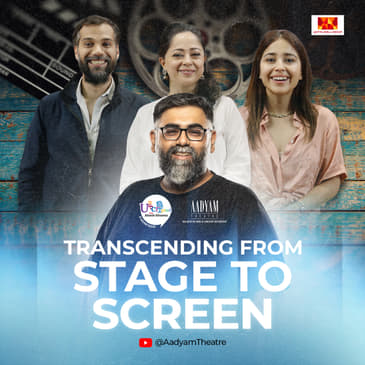

In this episode of Unscripted, we explore the art of storytelling and the creative journey behind the scenes with three dynamic voices from the world of Indian cinema and theatre — Sheebha Chadha, Neil Bopanna, and Shweta Tripathi.
From navigating the transition between stage and screen to crafting authentic performances, this episode dives into questions like: What does it take to truly embody a character? How do actors and storytellers find meaning in their roles? What are the highs and lows of life in the performing arts?
Our guests open up about their personal journeys, creative struggles, and the philosophies that shape their work across film and theatre.
Whether you're an aspiring actor, a theatre enthusiast, or just love compelling stories — this conversation is filled with inspiration, insight, and heart.
To know more, listen to the exclusive cut of the episode now!
[00:00:06] Applause and Mantra brings so much energy. Shiba, Shweta, Neil, thank you so much for being on this episode. We are talking about because all three of you have actually done a significant amount of work on stage as well as screen and we'll come to the fact that some of you all don't seem to come back to stage very often. So we'll come to that as well.
[00:00:29] Yeah, I want to bring that up certainly. But I want to actually get out the most boring question out of the way first which I am constantly asked when I'm interviewed and I'm going to ask it to you so that it's not just me suffering. What is the difference that you'll see in the mediums when you're acting for screen and when you're acting on stage whether it's about process, experience, craft, whatever. As actors and this is a question a lot of people do ask that you know, what is the difference in theatre or film?
[00:00:58] What is the difference when you're performing? I get asked it as a director a lot and it's taken years of bad answers to kind of come and filter down to one answer that I like. So I usually say that but as actors, how is the process and the experience and the craft different for them? What is the answer that you have filtered out?
[00:01:18] Well, actually no. So mine is not an acting based one but I kind of distilled it down to… So there was of course… See, I don't think anyone's really interested in the fact that technically they're two very different experiences in terms from a director's point of view. But I think that when you distill it down, I actually find the fact that what I enjoy the most about either process is actually being in a room with actors and kind of working with them to tell a story. Everything else is then science and extracurricular in terms of that.
[00:01:45] So but the thing is that at the core level which is why I enjoy both, it's actually you know, using their tools to kind of be able to tell your story and bring your vision to life. So actually being in a room with actors for me is the most favourite. So I say that everything else is then acquired. But for me, the core level experience is very similar because I'm actually at the heart of it trying to tell a story with talented actors. So now the ball's in your court.
[00:02:13] So I think that is not a boring question. I think that's the question at the heart of it all. Right. I feel that's like the question. What is the difference? Because we all dabble in both. But I'm sure we all, I probably, I don't know all, but most of us feel that it's not the same. Right.
[00:02:34] At all. At all. In every which way, in fact, I feel. For me primarily, it feels the way it's in the watching. It's in who's watching. What are you committing to as an actor whilst being watched?
[00:02:59] Like for me, for theatre, I feel that when an actor comes on stage, there is a tacit understanding between the audience and the actor. That whatever you do, your prep, your homework, your work. It's understood that there has a work has gone into it. Right. Because we all know you arrive at a performance after the series of rehearsals and the process of rehearsal in that sense.
[00:03:24] And one, there is an understanding between the audience and the actor that this is the work. And I'm not, I'm not hiding that thing. It's a reveal. At the same time, when as an actor, I come on stage, there's also an understanding that I am being watched by you right now in present time. I am performing for you, for me as well, but I'm performing for you.
[00:03:50] So I feel just this one thing is very dramatically different from cinema for me, where it is that everything for me that makes sense to me in cinema acting is about how I can hide that. In the sense to reveal a bigger truth, which is the truth of the moment. But I have to hide the fact that I'm being watched.
[00:04:18] You know, if an actor has a sense that he's being watched or she's being watched and that the camera will catch, then for me, that moment is gone. You know, it's false already. Because it's almost like found craft. Like you're being found in that moment.
[00:04:42] The performer finds herself in the moment of rage, anger, that moment, the truth of that moment. And the more I am able to convey that I am, it's as if there's nobody in the world but me. I feel that truth becomes that much more chiseled of that moment. When you're acting for camera. For camera.
[00:05:10] Because the idea for me in front of camera is to convey or be so much in there where the fact that I'm being watched, nobody must feel that. Right. And then it becomes real and it becomes alive. Other than that, it's a performance. So, there are two performances in which one, I feel that the tacit understanding that I am performing.
[00:05:37] It's however real, however present, however immediate, but that I'm performing. It's an understanding in theater, you know. But I feel the minute it's for cinema, that's the very thing that you have to completely, you are performing. But it's the biggest conceal for a reveal for me. Right. You know, you're concealing that the most. That I'm performing.
[00:06:03] Because there's nothing worse when we watch, you know, for actors who are performing in front of the camera. Because it's the immediacy of the truth right there and then. How it will come to me. And the minute I feel an actor is performing, we all know we are performing. And everybody knows we're watching.
[00:06:21] But how cleanly and purely can I perform in a way as if I'm not performing? Yeah, no, I get the thing that like perhaps the process is meant to be invisible. And whereas in the theater, I think people are very aware of the fact that there is a process that has kind of led to this point. So, but this mental switch obviously that you have to do or this prep that you have to do.
[00:06:51] Is it easy? Has it got easier over time? I have a feeling that cinema actors can't be made. Okay. You can't learn cinema acting. Is my feeling. Or my understanding. You either are cinema actor or you're not. Is my. That's why very often we feel that. Are we fine? That many theater actors who are just brilliant on stage. Are. Does not translate. Does not translate in cinema.
[00:07:20] So, if actor is a common thing in both. If you're fantastic on stage, then cinema. Camera on stage, something. Is strongly amiss. Or something is strongly. It's not landing. So, what is it? So, I feel it's a craft that can't. You can chisel some technicalities, I feel. You know.
[00:07:45] Some in cinema acting, I'm saying, can be chiseled with experience. I think that will come. Or if you do class. I don't know if you can even learn that in a class. Because it's really a practicing art. Yeah. And there's some instinct involved in that. Instinct is different. Instinct, I feel, is different. But I'm saying the learned part of it. Is, I feel, an experiential learning which can hold an actor in good stead. I'm not so sure.
[00:08:12] Even a learned learning for cinema acting will do anything. Because technically, you will learn something. But it will inform your craft. I don't think you can take that and run with it, really. So, yeah. I do feel that cinema actors are born. You can't become a cinema actor. And vice versa is true when you put a cinema actor on stage. Yeah, exactly. No, no. I would think so. No, no. Absolutely.
[00:08:40] A wonderful cinema actor can be pretty shit on stage. It can happen. Absolutely. So, I don't think it's reversible. Because, you know, I have heard there's one view from a very veteran actor. I've heard that it's the same thing. Because the actor is a common thing. So, the actor is common. Yes, it is. But what do you say? The propulsion is different. The two are different.
[00:09:12] Yeah. What do you all feel? Do you all agree with this? Or do you all have a different kind of approach to both the mediums? Please, go ahead. Okay, so… Who's your sexy post-Colpley voice? Yes, sir. You're really Chris Martin fist bumper. I did fist bump him. And here I am. Never wash his hand again. Should I jump in then? Okay. Okay, so…
[00:09:39] The primary difference is the paycheck. Okay. Nice. Okay. Harsh reality. Good. Let's get… You know, we're all grown-ups over here. Let's get the… You know, let's get the ka-ching out of the way. Adiam, are you listening? Yeah, Adiam, are you listening? I do believe in the poster that's right behind you, Akash. Which reads, movies will make you famous. TV will make you rich. And theater will make you good.
[00:10:09] And for me, it's really clear that there's a difference. There's a passion and there's a profession. My passion is the arts, the performing arts. And my profession to be able to let me do my passion is camera work. Not even so much just cinema because, you know, now it's cinema and it's camera, you know, series work. And what I like to do is break up my year. Yeah.
[00:10:39] We've chatted about this. You know, I'm a bit of a geek. Shibi, I don't know whether I've shared this with you, but like, it's all mathematics. Yeah. So, we have one… Our industry has an off-season, which is the monsoon. Right. Right. Unless you're shooting abroad or in a studio, you're not going to shoot over here. So, you're not signing anything and you're not working anything. But you can focus heavily on putting up a new production during that time because you need 40 days of rehearsals. Yes.
[00:11:07] So, my sweet spot is every year in the monsoon, we work on a play to then open in August or something. And by that time, the mass media cycle has also gotten into green lighting films and series work. So, if you can get maybe, I would like three projects a year. Now, whether that's in a combination of two series, one film, one ad, whatever combination, but sort of big ticket work.
[00:11:36] Three of them and one new play a year. And I still have ample time to sit at home and twiddle my thumbs. Wow. No, so actually… 365 days. We had this conversation. I was actually really happy that you were kind of, you know… I don't know about being that mathematical, but I was very happy that you were kind of, you know, keeping that kind of running. Like by the side that you were trying to do one new production a year. And I think maybe last year you did more than one. So, yes.
[00:12:06] On the stage? Yeah. Yes. Yes. So, I was really happy. And a lot of actors in the West do that, for example. That, I mean, not so much for the paycheck necessarily, but for… You know, like what you're saying in terms of like, you know, just to hone the art. I mean, I drive my family crazy if I'm not doing anything. They don't… They can't stand me and tell me to get out of the house. Where am I going to go? The gym you can only go to rehearsal. You go, I'll see you in six hours. You know, I'm taking my briefcase.
[00:12:33] Because we know how much constructive time to rehearsal is and how much the faffing is, right? Yes, of course. It's a balance. But, no, the need very clearly and the reasons, yes. But in terms of approaching the work when you're doing, like she was talking about. Yes, absolutely. Is that something you kind of… Does that resonate with you? Absolutely resonates with me. And also, we… Most of us are first generation, you know, into the mass media or maybe one generation prior. Yeah.
[00:13:04] So, you're sort of learning and getting vocabulary for yourself sitting together. I mean, we know each other, but we never get an opportunity to speak about this. You know, so you may know friends, but then you're like, oh, wow, that makes sense. You know, the way you say what you say. And the process is completely different. It's a slow marination for a theater work. It takes its pound of flesh from you. It's mentally…
[00:13:33] And your heart and your soul is sort of like, that's what you pay to do that. And for camera work and stuff, it's just exhausting because you're shooting for 12 to 15 hours and you're trying to be very present. And, you know, so it takes different parts of you. And at the same time, I like to have a deluxe thali of a bit of everything. And that gives me some sanity. Is either easier?
[00:14:03] It… My comfort is stage because I know that. I still need to hack performing for camera a little better because I think I'm far more boombastic on stage than I am on a camera munch. So, yeah, for camera, it's when I do… It's trying to be really present. Really present because you don't know.
[00:14:32] You know your lines, but then you don't know what the dynamics, how many cups are going to be on the table, how you're going to get up and all of that. So, that improv avatar of you needs to be really high for a shoot day. Or even like a day like today. Right. You know, because we know we are going to be… And an audience member is going to consume our conversation much later. So, you know, just try to be present over there.
[00:15:01] Shweda, what do you want to add to that? I think the fun, the challenges and the process is very different. As an audience and as an actor. So, for example, I remember when I had seen Neil the first time when I was at Prithvi had come for Hamlet. Now, the beauty is that you are the audience is the editor. When you are watching sitting, whether you are talking about the dialogue or the stage,
[00:15:31] wherever you are placed, you decide who you want to see. Correct. The film, on the other hand… That choice is not. That choice is not. The editor and director who wants to see, they are watching. So, even as an experience, as an actor, you perform on stage, that is what it is. When you perform on camera, then later when you see the scene or when you see the film or the series, then you are like, oh, because your co-actor's reaction also makes a difference to your performance.
[00:16:00] The music, the zoom in, the lens, the light, everything makes the performance. I think it's more helpful in that way, the end product. Because if it goes to the end product, then automatically you can get a different power. Because you can come on stage, but still… That's also the theme of Mirza Purt. Yes. So, and like Shiba Ma'am, Shiba Ji, Sebo Aibata. You should be a Shiba. Yeah.
[00:16:30] What? Okay, okay, okay. Keep the respect and the formality also creates this. Alright, Shibi, Shibi. Shibi, Shibi. Shibi is good. Shibi, what the… I just call you, your holiness. I'm sorry, pack up. What? Sorry, sorry. But what she said about the truth, I feel as an actor, I have literally teleported somewhere
[00:16:58] else when I've been in front of the camera, I have felt different. And somehow the characters that I've done on screen, they psychologically and physically they've had more of an impact to me than stage. Because what happens in stage? You come and rehearse. Also, it's both are very collaborative processes. But stage is very different from camera. Because there are people to help you on stage. There are people to help you. I mean, there are costumes changes. In and out are light or not.
[00:17:27] Co-actor's line is forgotten. Everything is forgotten in camera. If a co-actor's line is forgotten, it will be cut. Then you figure out if you're forgotten. Or you have to change something. In rehearsal, there are plays. And sometimes we don't get on screen rehearsal. Because you're on somebody else's economical time clock. So either the sun is going down or just the rest of the sun, or if the production is very careful that we don't go over time.
[00:17:55] So you only come and you don't get the time for one scene. You probably don't get the time. You don't get the prep. Then I think that is when instinct, craft and all, you have to be in your highest gear. You come and perform and the scene is over before you even realize it and know it at times. So it's a different kind of a challenge. What I love about theatre is that the passion. That love. It's not just the show. It's not just about you.
[00:18:25] And I think that's the wonderful thing that when I work with theatre actors on camera. Because all of us have that same emotion. That the scene is important. It's for someone to eat something. And I've been very fortunate to work with some wonderful directors and actors. So the kind of love and support that you get, that is beautiful. But as in my question would be again coming from an actor's process like in the rehearsal process. And you're getting 40 days to kind of build that character.
[00:18:55] Yes. In terms of purely character work. And film is such a, you know, that you cut a little bit, then you shoot a little bit. Then you're getting the continuity that you maintain. And some of you maintain that continuity. That you have to be a part of the character. That you have to be a part of the character. Is it really important to do character work on camera? Or because you said that psychologically perhaps the camera work has affected you more. In terms of the characters you have played.
[00:19:22] But isn't that tougher when you're kind of so in and out of it. And then you're like, You have to shoot it in 15 days after Jaipur. That's the close up. So how are you maintaining that? Because I see, see in theatre it's very clear. Start to finish you have to play. So you have to take the character on the journey. But how do you combat that? Like for, you know, like I've always thought it's very difficult. I mean, and you completely then trust other people. Okay, am I doing it right?
[00:19:50] Like, is it matching what I did last month? Yeah. You know, so does that, is that like an impediment? Or is that a fun challenge? It's a, I mean it is a, don't forget what you're saying please. It is, it is, the cliche is true where theatre is an actor's medium and film is a director's medium.
[00:20:14] They will be people who will make, a film unit will not let you go until they get the right take and the right surah. Right? Then they're going to keep you, a bunch of people will come and, boss sometimes your performance is being saved on the edit table. Right? Not even on that performance day. So you can feel whatever you want to feel. But then two months later, somebody is tweaking the thing with the amount of,
[00:20:38] I want to quickly give you one on one kisser of like when I did No One Kill Jessica. The, and I was fresh off only stage work, only stage work. Now there's a bit of a balance. I played the scene where I was the victim. I was the victim. And I committed to it completely. Right? When the film comes out, I'm getting messages from people saying, you know, I hated you so much and this thing. And of course I watch it.
[00:21:08] If there's going to be ominous background music, then who's the villain? Me. But when I played it, I swear, I played it to the utmost truth of being the victim. But the moment you put that sound and light together, boss, it's a whole different flavor, which is not in my control. You know? And it's that old, even in college, like national college,
[00:21:35] when we met and you were rehearsing, uh, C for Clowns at Blue Mug. And I was studying BMM over there. We had one sort of a thing where there was that man eating breakfast cereal. Have you heard of this experiment? No. They, there's, they show a clip to an audience, right? And a man's eating breakfast cereal. And then they show a clip of a baby and then they cut it. And then he's having breakfast cereal again, you know? And then they show the atom bomb explosion and they asking people to fill out the emotions this man was going through.
[00:22:04] And they put down about six to 12 emotions, but it was the same clip of him eating breakfast cereal. Oh. They just messed with the audio and the visuals after that. It's the same clip. And they thought the audience thought it was different takes. So that is the magic of cinema. And that is those puppeteers. I'm just a puppet man. I'm not bringing it in theater.
[00:22:30] It is your responsibility to come with those 40 days equipped and not just those 40 days, but your entire life to sort of like deliver that, you know? And do you prefer that or the lack of control? I don't have a preference. I love all. Okay. I can't, I can't seriously. I can't live with just one of those. Right. I like the no control or just somewhat less responsibility also. Sure. Oh, what is it?
[00:23:00] Then someone you give a great take and they're like, I was like, I was like, I was like, Dude, come on. This is a joke. So you're just, you know, one leaf on the tree. Do you want to add anything to that? Please, please. You were going to say, You, which he asked you not to forget. Yeah. You had asked because it's broken and fragmented. I was like, I don't think the process is much more difficult.
[00:23:28] I think once you commit to camera work, then that's a given. It's a given. And multiple projects are still there. Yes. It's a given. You know, there is this filmmaker, Tarkovsky. He would not give the script to actors. Like, If there is an actor and something is going to be very dramatic in his life at the end of the film, that actor will not be told.
[00:23:58] So that even in any frame, she or he... Is not preempting. Yeah. That color only must not come. So just the immediacy is so, so sharp. The immediacy of just that moment. I mean, we keep saying it, you know, as actors, immediacy, be present. But my God, it's so... That's the only thing. That is really it. So I... Even when it's fragmented, if you can play it...
[00:24:28] That moment. Yeah, that... Just the immediacy. Just the truth right there and then. Which is easier said than done. I think it's one of the most difficult things. Yeah. Yeah. I really think so. Because... Also, look, you know, you're on a set with 120 people. And... And in that, you have to create in that second, that bubble as if there's nobody. That's what I'm saying in theatre. It's like... It is an understanding. It's osmotic. It's osmotic. The audience knows they're watching us. We know we're watching the audience.
[00:24:57] Many times I'll even play to you whilst keeping the truth of the performance. Or I'll play to you. I'll take... How it is sometimes when the energy of the audience is a certain way. Yeah, absolutely. The show is a certain way. You know, it's very osmotic. But in... Camera work, the energy of this entire crew, I have to block out. Because... I have to completely block it out. You know, I might be having a... cathartic moment here. But somebody is over there and digging his nose.
[00:25:27] You know, right in front of me. Happens very often. Very often, yes. Often our sets are of course also not informed. I mean, they have no absolute... It's callousness towards actors. Truly, I mean, you know. I agree. Yeah. So... The immediacy is the thing to... in that. And... Of course, you can't do dramatically. Like Anand Tiwari. We were shooting Bandish Bandits season 1. First day of shoot. The scene that he has kept is the utter climax of the season.
[00:25:57] Wow. That's the first scene. We all said, we all said, we say, fuck off, we cannot do this. You cannot do this to us. This is like too much because... So he changed it actually. We did it on something else. It will be a little bit more. Because maybe a little bit of travel too. Yeah, absolutely. See, look, I'm personally a very reluctant actor. I don't do very much. And... Which you don't like exactly. No, no. Also, the thing is that fortunately for me, I only get cast in things
[00:26:27] in which I'm kind of playing myself. So then, you call me after three months, as long as my moustache continuity is the same, I'll be the guy. But you know, it's always... I've always felt like this, that you know, if there's a massive dramatic moment, like suddenly I'm shooting one romantic scene and then, we're shooting something which is... three days after your father expired. Like you know, it's supposed to be that. So that switch. And secondly, if you're playing another character. Like you're using a voice. Or you're using a kind of body language.
[00:26:55] And then you're going and shooting something else and then coming back or going for another rehearsal and coming back. So I've always found that very disconnecting. In that sense, you know, like I've always tried to shoot whatever I shoot in one schedule. Because it's also like... It's like that I'm going to see it again. So that's... For me, that's a very scary process. Which is why I was like, I don't know how you guys master that. Because it's true. Sometimes revisiting for certain things is tougher than some. Yes, because of the kind of part. Of the kind of part. Yeah, I find that true.
[00:27:25] Yeah, recently I... Yeah, it is true. Some revisiting is a bit difficult. Because you have to... Especially in series, I feel it's different. Yeah, because... Because you've already committed. Like for example, Mirzapur was season one, was nine years back. The thing is, it's been nine years. But character's life has been one year. Or a few months. So the unlearning is so much I feel. Yeah. Because... Again, and the thing is... In Mirzapur, you know that there are prosthetics. You know that people don't die in actuality.
[00:27:55] But somehow... I think because stage, when you rehearse scenes, you're rehearsing the whole play. Because we shoot a little bit, we shoot according to locations and dates availability. It's very different. So for example, when we had seen season two, when we had killed Munna, literally Ali and I felt that we were on set. We knew we are on set. But there was some truth in that. And we hugged and we were just crying. Because it felt... We felt lighter.
[00:28:24] So it's a different kind of emotion. So that is... But it's a fun challenge. Also then, I think you map it accordingly. Like you said, if you start from here, then something happens after this. Then it's like... No matter what you're feeling, in season three, I think I tested negative. But I'm pretty sure I had COVID. So you have a fever. You're all feeling nervous. And then... I tested negative.
[00:28:53] I was crying because I was waiting to be on set. Especially on this one. And then you just feel extremely unwell. It's not a good feeling at all. Then you do two tests. And then there is no reason. And even you don't want to have that as an excuse. That it's not okay. But the energy is very different. And I think... I don't know, stage... The character... I've not lived with the character. But for my other shows or films,
[00:29:21] I have spent more time alone just thinking. And somehow taking the soul which affects me then later. But it's a very different kind of challenge. And I love it. So, I mean we spoke a little bit about the difference. A question I wanted to ask is that... When you do both... Like... Do you take anything from one to the other? Has one ever helped the other?
[00:29:48] Are there any tools that you bring back? I mean I know... Like... They say that if you cast a theatre actor, you can learn lines. The actor made a career in that that you will take the audition outside of Prithvi. Because you can learn lines. You can learn 4 pages. You can learn. You know... So, that was one tool back in the day that they were using. But even vice versa... Do you feel like... Like for me personally... And just to kind of tell you what I'm talking about... Like I find... That my blocking for camera is really helped by the fact that I've blocked on stage.
[00:30:17] So, like for me I find that I can move actors easily. Yeah. Like you know I'm not stuck in that situation where I'm not so... My approach is always that I'm gonna show the DP that this is how I'm doing it. You can't do the same frame. You know... And it's not like... You know in that sense. So, like I know that that's one tool that I've been able to kind of take. But do you feel that as actors that are there any... Because of course the difference as you mentioned is quite large in its inherent form. But anything that you'll have managed to...
[00:30:46] You've seen improvements in either... I think everything informs everything. So, just the very fact that one's done you know lots and lots of theatre... I can't put my finger on what it is. But I'm sure... It is a learning of some kind. And I do not know what I zone into or hack into to bring to camera work.
[00:31:16] I have no idea. But I'm sure that there's something there. Just because... The director is looking at all the podcast. That they will say something that we'll become a good actor. I think this is the way to do theatre. That is what... That is what... That is what... That is what...
[00:31:33] That is what... I don't know internationally how it works. But we don't do that in the camera. We want... That effort is... As an actor I feel... It's not much to do that. In theatre I feel... That they all work in theatre.
[00:32:02] To get you to a particular stage. In the camera... Again from my personal experience... In a way or on your own. If you want to make a body... Then you want to make a body. If you want to make a body... If you want to make a body... Then you can... It's still acceptable. So, that difference... Like the prep... And the... The tools... The craft... That I feel... I am doing a lot of theatre. I wanna... It's... You know... There is a lot of...
[00:32:30] Your playing area is massive... On the stage. Right. Because of the kind of stories you get to present. With the camera work... It's all so much... And especially now... It's very like... Neo-realism... Everything is so real... And you have to pitch in... It needs to look believable... You know... It's all acting. Okay. So, I'm like... But... But the sort of like... The... The elbow room that you get on stage... The characters that you can play... Is fantastic.
[00:33:00] Like the... Whether it's set in a different time... If you're doing Shakespeare... It's a treat... To be able to play that... And mouth those lines... Take the trouble... Whether you understand it or not... You... You know... You deliver it... Complex characters... I'd seen you in... Hedda Gabla... A few years ago... And I was just like... Wow... What is this? Which you don't get the opportunity to play... For... Any camera work...
[00:33:30] And... There are many times... I have taken... What I've learnt... Or the character I've developed... And showcased... In front of a live audience... And it's worked... And then I'll put it... In some camera work... Like for me... Right... 24... Which is what really gave me... A big mass media boost... Because of his television... And everything... I was playing this young... Aditya Singhania... This thing... And I did a play... With... Kwasar QTP... Called Project Strip... Yes... And I had like... Really short entries...
[00:34:00] Like it was just... A real fun part... You know... Ram Ganesh Kamatham... Had written this thing... And I come on... To stage... Five times... And each time... Is a different avatar... And I get shot or killed... One of those avatars... Was an avatar... Called The Negotiator... Who comes on the stage... And threatens that he's got a bomb... In his briefcase... But he doesn't have a bomb... Yeah... But he plays the part... I play the part... Like as if I have this weapon... And there is power... I took that...
[00:34:30] And it showed up... Two seasons... Of 24... Because in front of me... I had very senior actors... There was one day... I was trembling... Like... He trying to get the dialogues right... And all of that... There was... So I had pretty senior actors... In front of me... And I had to trump them... In the story... In the scene... You have to trump their... Status... And... And at some point... You're... Like the Neil in me... Who is like... Oh...
[00:34:59] Looking up to someone... And... When you do have to... Step into that arena... Then there's a new status quo... So to convincingly hit that... I held on to... To the training of that scene... Big time... And two seasons came off of it... So that's what I do... When I borrow... Stuff... And sometimes... I also... What I learn on a... Series set or this thing... I can put in... On stage... Now I've noticed that happening as well... Was it similar character...
[00:35:28] Was it that? Showcasing power... Without being aggressive... You know... So how do you do that? Then I just pulled it out from the library... The one who knows... They know that... I keep on... I do tangent jumping... So that will happen... So what do you mean? Like just if you're... Talking about something... You'll be like... Oh you know... And... It'll be something... Not related to what you were saying... At all... It'll be something totally random... Which I remember now... So that... One thing... I hear this...
[00:35:58] One thing I realized... That... For example... When you come to do a scene... You're on stage... Unless... There's an entry... So... Whatever we're seeing... You've done the warm-up... You've done the first... But what we see... Is what's happening on stage... Now the thing is... On screen... If there are... Let's say... Three of us are there... In the scene... And something... Something... Something... Something... Something... They're the scene... I know... Scene wise... That... The camera will only come...
[00:36:27] For a reaction... Camera now... What it does... Is... Before action... I have that much... Prep time... That... I mean... If the water is boiling... Then... I can give... Just that shot... And... That's how it will be... I think... That way... That is easier... In the theater... It doesn't look like OS... It's a picture... That... You have to see... Boiling... You have to see... You have to see... The water is warm... Then... Boiling... Then... Steam... You can see...
[00:36:56] The steam... Correct... Technology... Dictates... The... On camera... Yeah... The cameras have gotten... So compact... They can go... They can like... They're just... You know... So then... You're not gonna push it... You just let them do the... Thingy... So those are the... And... As actors also... We've... From... Maybe 30 years ago... Things are so different... The pitch of how... Camera actor... Performs...
[00:37:25] So different now... Because technology has evolved... And it will keep changing... But there is some consistency... With... Theater... At the most... You go into a more intimate... Black box... Yeah... No... I think the struggle... That we also face... Is that a lot of times... When we are kind of... You know... Who are doing perhaps... More camera... It's also just about like... I don't mean just... Decibel level... It's also just volume of performance... Sometimes... Because like you're saying... Cameras here... You can get much more... With much less... Yes... But you know... Even in a stage...
[00:37:55] Like an intimate space... Like Prithvi... There is the last row... That you need to communicate it to... And they are kind of... You know... So it's just a little bit of that... Nip and tuck... That kind of needs to happen... And there is a... New generation of actors... That are very camera actors... Even in their training... They go for training... Which is... Film acting... Yeah... So I mean... It's all mumble core... And you can barely hear them... So it's a lot of... What... What... Say that again... What the audition... I don't even hear them... So I think that... For me... That's always been a little bit of a... Just understanding...
[00:38:24] When you're kind of... You know... Just to kind of... It's the volume of the tone... Of the performance... That you just got to kind of... You know... How you pitch it... Like you said... So... Yeah... But easier said than none... I would say... I mean... I'm saying somebody... Very tough... No... I'm saying you can do that... That's like a technical thing... You can do... But that need not mean... The performances... No... It's a thing... It's a thing... You know what I mean... That it will... It will do it... I'm saying... That it will do it... No... That's our fallback... That's what Dubeji said... You can hear it... Yes... That's it...
[00:38:54] So... After that... At least... The story... So... Particularly... Sheba and Shweta... Correct me if I'm wrong... But... You all are doing less theater... Yeah... And... And... It's our loss... I suppose... But... But... Why? It could be the paycheck answer... But... Definitely... A part of it... But I think more than that... It's the time commitment...
[00:39:24] Because obviously... As actors... We want to... Rightfully so... That's the time... The dates block... Because we respect... Everybody involved... And... The play... I think... That's what we should do... Because... The off-season... That's what we should do... I think that the monsoon season... It's been stretched out... Where our industry... Is only off-season... So... So... That... We should do it... Somehow... As actors... I think... Dependent on...
[00:39:53] So many factors... And people... That... We should do it... We should sacrifice our... Or... Cut-shot... I think... That... Personally... That... Commit... As an actor... Now... It's a bit difficult... Which is why... This year... Again... I'm getting back to... Producing... Because I know that... As an actor... If I can not... Producing theater... Producing theater... You have done that... Yes... I was gonna ask that next... Because I mean... That was one... Recently... You did produce a couple of... Yes...
[00:40:23] Yes... And in fact... Now... Richa Ali and I... We were... Three of us were sitting... And we were... This year... Again... We have to do something... Because we've got... So much... Including in my case... My husband... Thanks to you... And thanks to theater... So there is... What... What... Yeah... We met... On a play... That Akash was directing... Oh... You owe so much to theater... Exactly... You don't do it... So... You don't come back and act... At least he comes... No... We have to do it... 100%... So... We have to figure out...
[00:40:52] Because it's not so much... I mean... She is very busy... I am not that busy... So I want to definitely... Figure out a way... Where both are possible... But as you were saying... Primarily... Time commitment... Because you've got other... Commitments going on... Because I am... I am afraid... That will not go... Because I have committed... I have committed... And because there are... Forget the bills... That have to be paid... But also... I want to get into... Producing films this year... Right... And... I have spent... For many times... I have spent... Free... For many times... For many times...
[00:41:22] But now... I don't have to do it... I want to pay my writers... So... Then... I want to pay... Some... Shampoo... But... That money... Not from theatre... So... That money... Ads... Or friction... So I just want to... Channelize that energy... And that money... Into development... But... She made me question... 25 years of... My theatre company... Suddenly... Wow... Isn't the anniversary... Coming up... 25 years of... 25 years of... Underpaying people... Kissing...
[00:41:54] But then... May I just urge you... To at least... Be your own... Biennale... Where you at least... Do one play... Every two years... No I agree... 100% Be your own... Be your own... Biennale... You're an artist... Yeah... I'm a new... Nata... Every two years... No I totally agree... Because the thing is... I think especially... As people... We go so much... And say... Why did this... Why did this... Why did this... Which is why... That's the reason... I'm becoming a producer... That... Then I'll do it... Why are you blaming... Other people... What's the cost of... No see... For me... My question with her... Usually...
[00:42:23] Because I've known her... Since before she met her husband... And he shoot me away... By the way... First time I met him... At Prithvi... And I said... That I have to do... And thanks to Q... Who had said... He said... You know... There is Thespo... And there is a... Theatre director... That you should meet... Akarsh Khurana... So I went to meet... Akarsh Khurana... And he said... Under 25... Which was correct... Which advice was... Absolutely correct... But I just... I was smiling... At the beginning of the interview... Because I was like... How much of the show... I don't know... But...
[00:42:53] My question to her is... Because the thing is... I don't get to hang with her now... No... Because like... My life is that... I'm hanging with people... That I'm working with... So then I tell her that... I've got a cameo... And Rashmi Rocket... Can you come and do it... Actually... Yeah... So... She'll give one day... She doesn't seem to prep... So... What about you Shiba... Why are you doing less? That's only... We were Shwita saying... It's... It's once having committed... Then you can't go back... On that commitment... If she gave her 40 days... Then she gave her... Then she gave her... Then you can say... I'm going to shoot... And...
[00:43:24] So... That's a luxury... In a way... To do that... Because like she's saying... We don't... She's getting into... Creation... Which is great... Otherwise... Actors are just... We are dependent on... What work will come... And we never know... When that work will come... How it will come... We don't know that... So... Of course... One has also lived... Ab tak di... Asse hi... Asse hi... Theatr kiya hai... Wo aya kam... But I think in the last... Three... Four years...
[00:43:55] It's becoming more difficult... To take out that... To say... May wo... Yeah... It's just becoming... A little difficult presently... But having said that... It's always... How do you miss it? A little haven't... Do you miss it? I... It's interesting... I thought I would miss it... Like mad... Right... But I think... What has happened is... It's gotten... Like... Some trauma... It's gotten... Surprised... The thing ki... Because I think... I used to say... If a song is not a song...
[00:44:24] It will be like... A little bit like... Aise ho jayega... But interestingly... Nahi hua... Wo jam nahi kiya... Toh wo nahi hua... But I do know that... What theatre will give me... Only theatre will give me... And I want... That thing that it will give me... But right now... I... It's a luxury... But that... It will always be a part of my life... I think yes... Hundred percent... Toh abhi thoda lamba... Gap ho gaya hai... But... Yeah...
[00:44:53] And also then too... I'm also little... Just thinking... Kisike saath wain naa takar... I was... Kya naa takar... I'm a little... Crazy anal retentive about it... Thoda sa ye... I was like... I would want to be in... Every play of Rehan Engineers... Is what I would say... Yes... And then the last one... Where he asked for just... Four days... I could not do... Just those four days... I did not have... At that time... You know... Toh... Yeah... But it's agreed to work... With some people... But then... I can't say to them... Kye... Agar... You know...
[00:45:22] Once having... You know... There's such precious people... That... I mean... I can't commit to Rehan... And say... Kye ho... Toh nahi... You know... Toh hui nahi saka... Toh... Also... It is true... I don't know... Whom to work with... Right... So people who are listening... And watching who are theater makers... Please send your applications... To Jida... Yeah... To make a reality TV show... That... That... That... That... That... That... A wheel audition... Yes... So... You... I definitely miss it... I miss it because...
[00:45:53] Is... Ek wo jo energy hoti hai... Ek jo sab wo milte hai... Or wo jo... Aap jab saat mein kuch... Create karate ho... The discussions... Uh... Uh... Thespo mein... Again... Jab... Uh... I think we auditioned... Four times... Aur tien saal... Ham reject to it hai... But those feedback sessions... Were so good... I learned a lot... Jab tohra lund keu... And baakhi sab hote te... Jury mein jo... Bataate te ki... Aapka selection keu nahi hua hai... That was very important... And then finally...
[00:46:22] When you make it... Toh pher then... And again... Stage mein... Because... Lighting ki hai... Uh... And I still like... I love all the music that you do... Maitlab direction... Of course... She's actually... She's lit a couple of my shows... Wow... Yeah... So... So... Ek all over... Jo development hoata hai... Which I feel is so good... Ki... You're thinking about fabric... Bhe soch rao... Ki... Kaisa stage pe... Light pe... Kaisa react karayega... Feel kaisa karayega... Ya... Pher set... Kitna... Kya required hai... Or kya nahi chahi hai... Woh sari cheezai jo sikhata hai... I think...
[00:46:50] Woh it literally makes your core... And I think now I ghuso into every department... Because of theatre... So I feel that... Again... It's not like I... Yes I love... So theatre made you annoying basically... Sure... Creatively annoying... Tell us a little bit about this producing thing of yours for theatre... What have you done? So there's a... Play called Cock... Written by Mike Bartlett... Yes... Produced and did the lights for that... Auditioned that for Thespo... And then...
[00:47:20] It was a closing play for Prithvi... Theatre Festival as well... For one game... There was Under the Chestnut Tree... Written by Sid Kumar and Akash Mohimman... Great play... And in fact I really... Because... I think both these plays are so relevant... Because Cock was about... A man who was in a relationship with a man... And then he falls in love with a woman... And he doesn't know what to do... And Waiki... Why are you telling me that... What I am is more important than... And who I am... I think he brought... Important...
[00:47:49] Svalent discussions to be had now... Under the Chestnut Tree is about these two painters... Who live in a world... Where colour is not allowed... And it's a take... It's a satire on censorship... Right... So... And I think we are... We have done this... And great writing... And I mean... Sid Kumar is one of... And Mohi... And somehow you cast yourself in both... No... Cock I did not... I did not act in Cock... Under the Chestnut Tree... I acted in... In fact...
[00:48:19] I was already doing casting... In my mind... That what if he changed that... That what if it's not... Because I want to act in it... Because if I want her to play the... Mother's father... Part... In it... Then there was a... Something might come out of this episode... Yeah... So I can be your PA... Then there's a... The play... Which Vijay Tindalkar... Was written... Cycle Wala Michael... Which Amol had directed... Yes... So... That's it... Yeah... And recently something... Like some new kids...
[00:48:49] Have done a play that you... Yes... So that I collaborated with... Dhir Hira... I had a lovely boy... And Gitu... So they played... So I was involved... But because... Again I think I... Because I like to be more involved... In the process of it... And the making of it... Here... It was more of a producer... But I did not enjoy it that much... Because I feel... If you're just watching... Some rehearsals... Then why don't you listen to... Then you... You be there... And you see multiple rehearsals...
[00:49:17] And then you give feedback... So I think... For me... Working from outside... Does not work for me... I want to be like... I want to get my hands dirty... One other thing... That I wanted... She spoke about... Those two courses... That she did... That kind of helped her a lot... As an actor... I just want to segue a little bit... Because again... This is something that people... Could be helped by... Neil and Sheba... What do you feel about... The importance of getting... Some sort of training... Formal training... And did you all get any yourselves... No... So... I think one thing is...
[00:49:47] Always one felt... That one of those... That one of those... That one of those... That one of those... That one of those... That one of those... That one of those... That is fantastic... For on various levels... I think... For people who have done it... They'll know... It depends on March... When the episode is coming out... Their episode... They promoted it... Okay... So... So...
[00:50:16] You focus on the...
[00:50:17] That one of those...
[00:50:48] That one of those... But... Everything helps... So I've just done some workshops... And... But I've had no formal training... Yeah... Like... One month... I got a scholarship... In a scholarship... In RADA... In a summer course... Which means... Yeah... But it's just... It'll just open you out... Everything will open you out... Just a little bit more... But how you... Take it in... And you bring it in... And... What you have made... That's up to... All of us... You know... When we... We can have the best of training...
[00:51:17] But it may not again... Do it... Yeah... I think it's also about... How you respond to it... And what you take... How receiving... How your receiving is... To the... Like you know... We've... On the podcast... Had a lot of people... Who even went to... NSD... And like... They loved their time... Over there... But not necessarily... For any other reason... But what they were being... Exposed to... They were like... At least we got to see... Theatre from all over India... And that means... It's quite an eye-opening thing... Because we... We get a lot of urban... Where we don't see... Theatre...
[00:51:47] And like... For me also... Particularly like... When I went to Meta... And stuff... Or went to like... Festivals... Is when I was watching plays... That were coming from... Say Assam... Or they were coming from the South... And it's just... Like your world view expands... It's just really about... What you take home... From that... So... That was... Yeah... So... But Neel... What about you? Training? What's your take? I... Believe that... Actors should... Once you have done... A certain amount of... Work and you can... Showcase certain things... You should be able to get... A doctor's credit... What?
[00:52:18] I think you should be... Dr. Sheeba Chattu... You know... What's up doc? Yeah... Eventually... I still have to get there... You know... And... And little training... Is important... We are professional human beings... Did you do any? Yes... Yes... I mean not... Excuse me... I'm not a trained actor... So to speak... I learned on the job... But... I do believe... Every now and then... If there's an opportunity...
[00:52:48] To just touch up... The artistry... It would be great... The last one I did was a... This was during... During COVID... I took up a law course... Which I wanted to study... And I did a... Acting course... So the law course was three months... And the acting course was three months... Because you were expecting to be sued... Well... There is always a fear of that... Sir... One can never let your guard down... But... No... I just wanted to learn law... I think that was again...
[00:53:17] Shakespeare... This thing... Because... Law was a very heavy subject... And everything like... To be or not to be... To love or not to love... It was always a case... And I had done... For Adiham... I had done... A few good men... Which was... Aaron Sorkin's... Yes... Work... And in trying to play... That character... I learned quite a bit... Because you can never present... Your case straight away... You have to take the long path... To... You know... In the court of law... And then say... Well...
[00:53:46] If all those aspects are clear... This is why I feel this thing... So it's a lot of... Toying with human... Behavior... Which... Which... Like I said... We're professional human beings... And our job is to... Be... A human... You know... And... In that... Drama School... Mumbai... Online course... That it took... Where our teacher...
[00:54:16] It was an American teacher... Fairly senior... And... Each week... We had to do one play... Study a Neil Simon play... Study another one... And another one... Discuss it... Perform a few things... On... On the camera... On the... Like I use my iPod for it... Right... And one course... One subject was... Telephone acting... Which I thought was very interesting... Because now... You have scenes... Where you're on the phone... Right... And now... And telephone acting...
[00:54:45] Because... There's nobody there... But you're trying to make it seem... Like you're getting energy from there... And you are doing what you're doing... And I remember her saying... That you pick... You know... Three points... Yeah... And then when you're doing it... You hit... Hit those points... Just you can keep circling back... Or play in any order... But... Just get your eyes to hit... These points... And then you hit... You... You use whatever combination you want... Otherwise it's too... Vague... To try and hack a telephone scene... And now you also have...
[00:55:15] Now what I do is... I ask... If I do have a telephone scene... I ask for those... Pods... AirPods... Right... Where someone's feeding you the... Line? You know me well... Yeah... That's my dialogue... I didn't mean it like that... No... No... But I'm... Listen... I'm full on... I'm okay with getting a prompt... I went down south to shoot some time ago... And... You get prompted... You get prompted... You don't have to learn your line... You need to know what the scene's about... And they'll be like...
[00:55:44] But you're talking another language... No... We were talking English and Hindi... Oh okay... No... Okay... Why are you gonna learn it man... You're gonna forget it anyway... Wow... That's great... But... The workshop... I want to say that... When I was in NIFT... My last year... Fourth year... So I used to go to college in the morning... And Shamko... I used to do this... Workshop... Curated by... Dr. Amal Alana... Rashid... Ansari... Vivek Mansu Ghani... Workshop was there... Then I didn't get any idea...
[00:56:14] But... Something... So I think... Even later... The thing is... Now... If you thought... I've done a job... Now I'm done for life... No... It depends on what... Keep revisiting... Because you're in a different space... Exactly... Exactly... So I think that's also very important... That... It's literally like a touch-up... You've done something... And after the first acting gig... That I had... Was for this... Show called... What must have been life... Disney... This acting was very different... I mean... It was different... Energy... Colors... And...
[00:56:44] Colors... So... So... To unlearn... Literally... And I don't know... If someone else... I'm guessing it must be Q... Who told me about... Theatre professionals... And told me about... IDP... And I remember... Jahan asked me... Why do you want to do this workshop... And I was like... Oh my god... I have to give the correct answer... To be selected... And where I met... Late in the workshop... Sean Williams... And everybody... Rahul Bagga... Everybody who was a part of this... Where I was able to know... That's where I was about... So... It's very important...
[00:57:13] That you do... Don't think... That... What was going on... That was going on... Please keep doing that... And... In childhood... Again... I didn't know... Where is Prithvi Theatre... And what is... Thankfully... Because my parents... Were very culturally inclined... So... We used to see Prithvi Theatre... Festival... Which were in Kamani Auditorium... And... One beauty... About... Stage... Is that you... Bind to that world... On screen...
[00:57:43] You are looking... That this is a railway station... Here... Here... There is a car... Here... There is a beer... There is a beer... There is a beer... There is a beer... There is a table... So... That magic... Create... That is what... Really attracted me... To be an actor... Yes... I wanted to be on... Screen... And that... Ponds... Ad... I wanted to be a part of that... But I love... The magic... The control... The actors had... Over the audience... Quite a mission statement... Google you... Yeah...
[00:58:12] I wanted to be in those ads... It's true... What she is saying... It's really interesting... That... You are... Asking the audience... To imagine with you... Yeah... It's true... So... Actually... This podcast should have... The audience members... Because... One is active... And one is passive... An audience... That watches stage... Is... Active viewing... And... We have an audience... Yes... Very active... So happy to be here... I mean... We are going to chill together... In five minutes from now...
[00:58:42] And... And... And... Film audience is a passive... Because you are given everything... You are in Paris... You are in Paris... Right... You are not on Juhu Beach... Yeah... Covered in stage... You know... Yeah... And the stage may move... For giving the audience... It's not about... I think it's... It's like... I think this is something... That I learned... By doing children's theatre... Because we were doing... Like Ruskin Bond stories... Which is... I played Suraj... Yes... I played Sada... Sardar Boy... Yeah... People bought her... And people bought that... People bought her as a Sardar Boy... So... I think that was the thing...
[00:59:12] When we were first with it... And we were like... Okay... Budgets and all of that... I think your greatest friend... Is the audience's imagination... Because they will buy into it... If you believe it... They will believe it... So you know... There's just platforms... Turning into mountains... And pools... And you know... Her turning into a Sardar Boy... And I mean... It's like magic... Right... With no CGI... It's just a table tennis ball... So yeah... We have a... What is supposed to be like a rapid fire session... But I am not a rapid person... Bring it on...
[00:59:42] So we call it like the slow burn... It's just slightly shorter answers... Because I can't be fast... But... I have one last question... Before I get into that... And... Ashiba and Neil... Both of you are parents... Yes... Do your children show any inclination... To follow your footsteps... And if they know... How do you feel about that? No... Not my daughter... No... No... In fact... Sometimes I see her... Very getting caught in the whole vlog... And you know... She's 19... So I ask her...
[01:00:12] What do you want to do? She's... So... Till now... Nothing really... No... No... I don't think so... And if she did... You'd be okay with it? Of course... She did say once... I asked her... She says... If you guys were not performers... I might have... Oh... Very good... Yeah... She said that... Yeah... No one is speaking the truth... But yeah... I don't know... Until now... Something happened... Of course... How's your little fellow... No... He doesn't like watching... Any of my stuff...
[01:00:42] Yeah... Yeah... No... Very inclined to art... Like you know... Making... He hasn't seen like you on stage... Or he doesn't watch your stuff on stage... No... He knows that I do stuff... Yeah... So he's aware of what you do... He's aware of... He's almost seven... Yeah... He's seven... Yeah... And you know... He'll be like... If you're at the airport... He'll be like... Papa... That person recognized you... They kept looking at you... You know... So I'm like... Yeah... But he's got no real interest in... In wanting to step up... There...
[01:01:11] But he's training for like... Very much like... Cirque du Soleil stuff... He does a... Like... Rope Malgham silk... Which is... Right... Right... And he's really into that... So... So... Uskile... He does performances... But... Has... So far... No... Um... I guess I got into it... Because I was like... I really needed... Affirmation from other people... But this kid's pretty confident... So... Okay... We'll go into this...
[01:01:40] What we call our slow burn section... And these are questions... That all of you will have to answer... And you don't have to be rapid about them... There are no prizes... Thank you... Thanks so much... Already feeling comfortable... Yeah... Okay... So... We'll get into these... Which are like... Quicker answers... Yes... As such... And... And usually we kind of restrict it... To theatre... But with the all we won't... Because you can choose from... Your screen work... Or your... Your stage work... So the first one really is that... Looking back at all the stuff you've done... What has been your most challenging role?
[01:02:15] For me... Mirzapur... Golu... Because of... Who she becomes... And under the chestnut tree... Because I have to play this painter... And... And... Who is also... An apsara... Like... The rest of it... So that was very... Further away... Than who... I am... You're not an apsara? I mean Disney... You're not a painter?
[01:02:44] What is it? What is the challenge? No... Just the character... It seemed more mature... More... You know... That thing... Mature is a big one for you... Yeah... So under the chestnut tree... And... Mirzapur... Nice... Either of you? Most challenging... I... A film... Is going to come out in... Feb...
[01:03:14] Chava... And I had to train... Chava... Very... Very... Very much... I had to train a lot... Physical training... Of like... Talwar Bazi... In the morning... Come back... Have lunch... Nap... Go to the gym... I've never... Experienced that... But I needed to sort of... Build up a certain... Look... Which... Which took... A lot of hard work... And the delivery of that... As well... On the...
[01:03:44] On the shoot date... Was... Very demanding... I don't think I've ever worked so hard... It's an actual hard work... Yeah man... Thoda aassu... Okay man... In my... In my calves that are cramping... I say... Why... Pack up... How about you... Sheba? I think... Recently... Maybe... Badai Do... This film that I've done... Only because... I... It's a very fine... I knew... Yeah... Very fine line... Between... Her being... Oh no... Wrong...
[01:04:14] Galat... Galat... This is... Badai Ho... Badai Ho... Badai Ho... This is the second one... Badai... This was... Walk in the park... No... That's fantastic... But... Yes... There is one scene in a packed room... In Badai Do... Where everyone is over there... In a climactic point... Yeah... I remember this one... Where he comes out to the family... Yes... Yeah... Yeah... Yeah... No... But I felt that as a character... It was very... Edgy... In the sense of...
[01:04:43] It's very easy to... See her... She can be somebody... Who's just completely loony... But she's not... For me... What she was... Was just a reluctant mother... Reluctant person... So everything is reluctant... Like somebody else... Do this work... I don't have to do this... So it's a very fine line of... Little bit... Not... Somebody who's not really of this world... A little bit off... But... Just reluctant... You know... So it was a fine line to play... And it was very easily... Could have gone in the zone of... She's just a little...
[01:05:13] Yeah... So... But yeah... So it's fine... Sometimes when you read it... You think... But when you actually start doing it... You realize that... Oh man... You know... It's... It's something else... Yeah... And also because I saw... The thumbnail of Mehendi Circus... That's the Tamil film that I did... That was really difficult... Because on set... Only my co-actor... In English... I was talking about... Everybody... I was the only girl... On set... And nobody spoke... English or Hindi... Including my director... Which is why you were weeping... Yeah... Okay...
[01:05:42] Which is why I should... Don't listen... This is actually a funny... So yeah... You're saying... Prompting... This is what happened... I have done a German thing... Didn't realize... Got on the set... Realized... That German... Because the script... Had come in English... So my manager... Did not say... There are some... What did you do? They had to prompt... I could not... It's like learning... Jibresh... So... It's like... But he did it... Dohassmi... Yeah... But he can speak anything... He is a sense...
[01:06:11] I literally... They had to say the line... Before the take... In the take... And I had to repeat it... There's no... There's no way... He just landed up like... A lazy actor on set... I'm thinking... Very close to Hindi... 10 autos... Oh... 10... 10... Our next question is... Actually usually... It's a theater question... But I'll... I'll... I'll expand it again... Usually what... What we do ask is that... Like a play that you watch... That you...
[01:06:39] Wish you had been a part of... And... Sea for Clowns... Really? Oh lovely... Okay... Okay... And then you did all its... Sequels... Once that brand... He was doing Hamlet... Yeah... All the other ones... So that was the one you would have... I mean... It need not be play... For both of you... That was a nice quick answer... Great... Yeah... Theater... Wow... But... Yeah... That's my state of mind... Was it? Quite young though... You're so good... So good...
[01:07:09] But yeah... Projects... I won't say plays... But projects... And it can be plays... We'll be happier... I'll say play... It's a play called... Hunkaro by... Oh yes... I'm a big fan of that play... To see... What those actors are doing... Yeah... I'm like... Like... Wow... And... I'm like... I'm like... I'm like... I'm like... I'm like... I'm like... I'm like... You know... Just... Just such a holistic... Yeah... I would love to be a part of that play... And... That performance... Yeah... Yeah... That was quite a wonderful... Yeah... And again...
[01:07:38] Thematically also dealing with just language... Like... You know... So... Or the lack of it... But... Yeah... Next question is actually something that you may have answered... But you can add to it... Sea for Clown... Of course... Is not a play that runs anymore... It's... But... It's... Again... Epic... Because we are hoping that people get... More and more people get encouraged to go and watch theatre... Yes... So as a recommendation... A recent play that you watched... That you really loved... You did say Hunkaro... But if you want to add something to that... So... The Nether... Well... Neil Bupalam...
[01:08:07] Oh yay... Hey! And Neil... You look like... What? What play? What play? I wish I could watch it... And I think it's... And I did tell you that day... And I really think it's Neil's... From what I have... I have not seen so much... Apart from Hamlet... You know... Baba on stage... No... Not so much... Yeah... And of course one play we did together... But I think he is... Just you're fantastic... In the play... And... Because I am... I think... A Mohitakalkar fan... Normally... I thought the play was wonderful...
[01:08:36] Just so happy to... I really like the play... And yeah... I am very fortunate to... Catch that train... Yeah... And be in that play... Yeah... With its... With its journey... I am just happy... I am just... Really fortunate to be able to showcase... Thanks... I have seen a guy... That's AK Marius? Yes... Oh... Our director... Yeah... Our coach directed that... Ali Pazanani... Yes... Yes... Effort...
[01:09:05] Effort... Nice... I love it when... Mere play kan amata... Effort no... Because I remember the feeling... That I had... During and after watching the play... And everybody around me... Because everybody... I love making people emotional... But in this case... I was the one... And everybody was just crying... And it's a play that... Akash has directed... And obviously... You were enjoying it... That everyone was... Moved and... There is some... Sadism to be got out of that... Yeah... Yeah... But a beautiful... Rulad... Actually...
[01:09:35] It's a lot of fun... And then... It's a lot of fun... That they don't know... What's going on... So... Yeah... That's actually... Led by a very good performance... By my father... So I think that's what kind of... Does the... More than the writing... I think that's what kind of... Unleashes... Yeah... Emotions... But... Thank you... When is it happening next? Very soon... We're going to Bangalore and Jaipur... With it actually... It's also an Adiyam production... And it was... Adiyam... I think the last season...
[01:10:04] Did a couple of smaller plays... So it was one of the smaller... More intimate spaces... So now... But yeah... It's actually got a life of its own... It's doing Goa... Bangalore... Jaipur... It's done more than 30 shows already... We never thought it would... Because it's... You know... It's quite an intermittent... Eventually not easy play to watch... But... But neither is the nether... And that's... And when is that happening? We go to... I fly to Bangalore tomorrow... But I don't know when we... Come into Bombay... Okay...
[01:10:34] Next... And please let us know... And you? Apart from pimping... Dekh Ben a lot... I keep... The one you're nodding... Not the one I'm... Part one... Not part two... No part two also... I'm like listen... Just come and... You know... I'm on stage for a little while... But I... The most important five minutes of the play... Oh... Wait... Everyone is going to be watching this... But I also want to recommend a production I saw... In... In London... Which is...
[01:11:03] Standing at the Edge of the Sky... Okay... I hope I got the name right... It was really fantastic... This Gillian Lynn Theatre... While we were there... Someone... Who is a... Like a... Theatre friend... I think she had seen Hamlet... When we had brought it... There... And... She knows some of the same people we know... So... And then... I met her and she said... If you're planning to go watch a play... Watch this one... So... I went with that recommendation... Very fantastic...
[01:11:32] And... The last question... Which is actually the most easy... Is... A project that you regret doing... What? That can't be possible... No... You can say vaguely... That can't be possible... That's a lot of difficult... Because there are options... No... Because... Do you have to be bad... Or do you have to be good... I don't know... I don't want to go... No... You have to be good... A film...
[01:12:03] Where... For the first time... Gender inequality... I realized... That is true... Because... Before... Everything was very good... And... It was very good... As in... In terms of... How you were... In terms of... Just like... And the contacts were the same... Same... And I knew... That it's okay... It won't happen... But... I mean... That... If... Turn around... So...
[01:12:32] I mean... You have to... And... You come... Tell me... Tell me... Tell you... Tell me... Call out... we'll use it as a platform so that but that was a great wake up call and also to realize every time you take a stand because sometimes I feel like let's leave what to do with this but I think it's important because then you are setting a norm and then people get used to it and say this doesn't say anything
[01:13:01] then you give your example so now I think there is there is responsibility that all of us have was it gender or was it you know often how it is gender the hierarchy of gender yeah yeah gender gender gender wow yeah purely gender I actually am one of those N2 cutlets who try and look on the brighter side of so you regret nothing things yeah
[01:13:31] no I the only the closest thing that would come to answering your question is where you know some of my college friends and they want to do a short film and I'm like I don't really want to do this you know but then you and I were in a short film that are that's the one he's talking about yeah our college friends made a yeah are you talking about that no I didn't make it fortunately
[01:14:01] so I'm not taking the orders of that but we shot a bandstand together yeah yeah yeah I remember that a lot that's the one it's coming no no no that was way back that was all and everything is training and also at the end of it there was no training in that look the four of us over here on this show and of course we are now going to know each other for the rest of our lives okay we are married to the world boss right and if that's the case and you know we do what we do
[01:14:30] we like what we do it's kind of nice to just sort of stitch up time together go through these good bad ugly experiences because you know a few years later this is what we do and this is you know the more friends you can make the better I really like that you started off undiplomatic yeah but then yeah Neil, Shweta, Sheba thank you so much for being a part of this episode this was a wonderful conversation for me at least I hope
[01:15:00] and yeah see you all on the next episode when mankind is destroyed and only one podcast episode will survive it will be this one I don't know how I feel about the fate of mankind from that point on but okay sure alright thank you so much thank you thank you thank you everyone thank you