
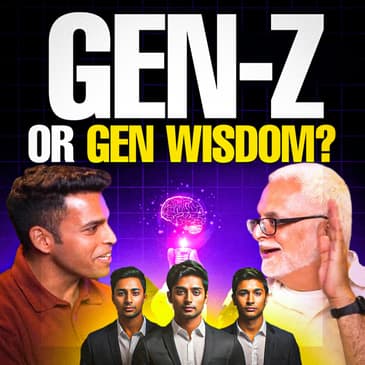
Neeraj Sagar is the founder and CEO of the Wisdom Circle, the startup helping people do meaningful work post-retirement. He started Wisdom circle to help retirees find meaningful things to do at their pace. He talks about how the wisdom generation, pensions, retirement and politics are all inter-related.
Topics:
00:00 Intro
02:33 His Journey
11:06 advice for entrepreneurs
16:55 picking the right market
22:28 the target audience
30:02 choosing the right job
41:18 growth of the employer and the employee
46:31 Important lessons from this initiative
54:21 must learn things
58:07 hiring the wisdom generation
1:03:45 book recommendation
-------------------------------------
Click here to get regular WhatsApp updates:
https://wa.me/message/ZUZQQGKCZTADL1
-------------------------------------
Connect with Us:
Linkedin: https://www.linkedin.com/company/startup-operator
Twitter: https://twitter.com/OperatorStartup
-------------------------------------
If you liked this episode, let us know by hitting the like button and share with your friends and family. Please also remember to subscribe to our channel and switch on the notifications to never miss an episode!
[00:00:00] It's a YvB 15, see you younger before it's not enough. I literally quit my job the same week that I got in 50. Oh wow, I said they are okay. What your relationship is with money?
[00:00:13] Just write the question to ask us what is my relationship with money? Is the question each person needs to answer? I went at that time there was a requirement of 30 lakhs in black. Oh wow, to get a patrol come.
[00:00:26] Again at that time I was thinking about it and someone told me that it's a mess. This is a mafia that runs it. So don't even try it because you may not exist. Hello and welcome to another episode of The Startup Operator podcast, I'm Rochen Carrepa.
[00:00:43] Over 10% of India is above the age of 60 years or past retirement. Now that number is going to grow over 2 times in the next 25 years or so.
[00:00:54] Well, what are these people going to do? Now with life spans increasing and jobs being so closely linked to not just identity your sense of community and whatnot.
[00:01:07] It's a very interesting and important problem to solve for these folks who are past retirement, specifically in terms of work and vocation. And that is the problem that wisdom circle is solving.
[00:01:22] Neeraj who is a co-founder of wisdom circle is perhaps the best person most ideally suited to solve this problem. We talk about founder market fit. Well, this is it. You know he spent his life in recruitment at Egonzander and elsewhere.
[00:01:39] And he has learned what it takes to match the right person for the right opportunity. In this conversation, Neeraj talks about what it takes to introduce a new product or service into the market. Really they have no precedent before.
[00:01:54] He also talks about growing word of mouth, enabling customers to say great things about you. And also building for more than just a specific problem and building for the person I itself.
[00:02:08] Really there's a lot of insights in here that each of us could apply in our own work and our own domains. And I'm excited for you folks to listening to this conversation.
[00:02:18] And again, as always, if this is the first time you're tuning into the podcast, don't forget to follow or subscribe to us. So you get updated on more of our content. Without further ado, here is Neeraj of wisdom circle.
[00:02:31] Hello and welcome to another episode of the startup operator podcast. I'm back with another very interesting entrepreneur. We have Neeraj from wisdom circle on the podcast today. Hey Neeraj. Hi, I have to go to the podcast. Thank you. Thank you.
[00:02:51] Thank you very much for making time and your busy schedule for us. Very nice to be talking to you. You run a very very interesting business and I'm very curious to understand the various facets of the business.
[00:03:03] But let's take a step back and try to understand your journey a little bit more. So you were a senior in exec, right? What prompted you to go from that sort of comfortable life into, you know, becoming an entrepreneur.
[00:03:18] What was that trigger and you're looking back at the last couple of years? What are those things you are completely unprepared for? It's one question I'm like, I think you know, as you get older, you can only answer one thing at a time.
[00:03:34] Okay, you can do so much more. So the first question was the trigger.
[00:03:39] Yeah. Yeah. So I think I've always wanted to do something on my own and so there let me give you three examples of what I've tried or what I wanted to do and where I ended up.
[00:03:51] The first one was I graduated as a chemical engineer. So after that I said 11 for it about I said I'll open a petrol pump. Okay. So people said, why do you want to open a petrol? I said, chemical, oil, looks similar.
[00:04:04] So I went and met there was an ad that came out for Indian oil saying, you know, we're giving out petrol pumps on Mathura Road. And you know, there's a one like deposit or something and I said, yeah, somehow I'll scrape one like and then make a deposit.
[00:04:20] And someone told me, go get talk to some other owners of petrol pumps and then I realized that at that time and now this is 1992.
[00:04:27] Okay. So some of you are not the listeners may not have been born then but I went at that time there was a requirement of 30 lakhs in black. Oh, I have to get a petrol pump. Okay. So there was the end of my answer.
[00:04:40] So then I started on a regular sort of job study some and then I think somewhere along the way, I had an other idea. I said, I'm going to do garbage collection from home.
[00:04:53] I will collect newspapers from home and I will I will formalize the garbage collection industry. And this is again all pre-intinent. And again at that time I was thinking about it and someone told me, they're like, this is a mafia that runs it.
[00:05:10] So don't even try it because you know, you may not exist. Right. So that was the end of the second journey.
[00:05:16] And then by that time I got married I had kids. I had got a regular job and then once you have kids you sort of get into the journey of taking care of them.
[00:05:27] And just having your normal typical middle class life of earning spending, educating, eating, sleeping, learning some more, you know, that whole circle. So that went on for a bit.
[00:05:42] And then of course my kids grew up and both went to college at which point I said, okay now is the time again.
[00:05:49] So that's in a way what triggered it. It was more my life journey to say, okay, now is the time that if not now than when. I think COVID also had a role to play in it because COVID was very introspective for all of us, right?
[00:06:04] And so I turned 50 in 2021. I'm 53 right now. I literally quit my job the same week that I turned 50. Oh, I said, yeah, I have to do something. So it was an impulse of this trip.
[00:06:21] No, so it was not an imp, I mean this has been playing on my mind as you know for like decades actually. But I think this is a time when I said, and there's a lot of my friends and if they're listening they know who they are.
[00:06:33] There are one who encouraged me saying, yeah, need a hotel man. You know, look at all of us. Look at you. You're the only one who has a job.
[00:06:41] The others, you know, they've all older than me and retired and the thing is, if you want to do something to it now.
[00:06:48] So I think I did get nudged a lot from my friends. But more importantly, I think I got, I was thinking about this particular problem for a long time. So I kind of knew I had to do something here.
[00:07:01] And it was just a decision I had to take. Right? And once you take the decision, then you realize, oh shit. Right? Now I got to do something about it. To be about seven months to actually leave and get started on something from my job.
[00:07:14] And they've called me, look, you can come back anytime and all that. In a way that gives you a safety net. But I think I pretty much had taken a decision that this is it. Right? I have to do something.
[00:07:25] So that's the trigger. And of course, there are many other triggers of why what I'm doing. And what does it trigger for that? But back to you because I can spend the whole 40 minutes. It's not saying this question.
[00:07:34] But these are all looking at the three ideas that you had. I mean, one, that you're, these are what you did in one. But these are all very unconventional choices. Like, I mean, I wouldn't imagine that someone who started chemical engineering would think of having a petrol pump.
[00:07:53] And then garbage disposal for God's sake. Right? And then now what you're doing. So it's a very interesting sort of choices on that front, right?
[00:08:02] But yeah, let me, let me go back to the question I asked you, which is that it's been about a couple of years or so. Correcting an entrepreneur. What are those, you know, one or two things that we're totally unprepared for?
[00:08:15] You know, you think that things will happen quickly. And I was like, okay, I'm, you know, I raised some capital from friends and family.
[00:08:23] Got started. I said, you know, within six months, I'm going to raise my next round, within two years I'll do this is it's a much harder journey than I thought it would be.
[00:08:36] But at the same time, I think it's also of course the world of, of capital has changed in a couple of years. But I think my biggest learning has been that look, it's all about the team.
[00:08:47] I think if you're able to pull a good team together, sometimes you may not even need money to raise, right? So I think we're in this journey of profitability. You know, lots of things, you know, you think I would know.
[00:09:00] I've been in an investor for a long time as well, but you know, product market failed. MVP, you know, dollars and there's, I mean, the kind of things that people throw at you and you're like,
[00:09:11] yeah, I'm just trying to run a business. You know, I want to make, in fact, nearer, and I'll tell you more about business circle in a bit, but essentially we are a far profit company that is trying to do good work.
[00:09:22] But, you know, all these metrics in MIS and everything that gets thrown around, saying, yeah, you're a broker, you're a one-day, you know,
[00:09:29] you want to see a sort of sometimes side track, so I think that was, if I'd tell people, I said, look, you know, there are some people who ask me, okay, tell me what progress.
[00:09:38] So I tell them, I said, look, or give me an update and I'll say, look, you can either get progress or you can get an update.
[00:09:45] Now, you tell me, what do you want? So I think we're in the, so in fact, now people tell me, what can you send me a deck? I'm like, I don't have a deck. I'm actually working on stuff.
[00:09:53] I will put a deck together when I raise, I'm not raising right now, right? So that's, that's not the sort of learning thing. You just have to have a deck all the time, right? Everybody asks you for a deck and I'm like, I don't have a deck.
[00:10:04] Anyway, lots of stories. Yeah. No, that's something that, you know, we have seen with other entrepreneurs and I've seen myself as well, right? Things take a long time, at least way longer than you expect because that whole cliché of, you know, what,
[00:10:19] focus on a garage, they come up with a product on the weekend and then it goes to number one on some product hunt and then you know, immediately they have funding and so on.
[00:10:29] And so forth soon they have 102 hundred people in the office and, you know, what do you know in couple of years or so. I mean, they have a billion dollar valuation. I think those are, you know, that's just myth making.
[00:10:40] This is, it happens but I'm just, it doesn't happen as often to all or to us. It happens to others. It doesn't happen in reality, right? I think they make movies out of those guys and for us, I think you're in a podcast. Just kidding. Yeah.
[00:10:59] One of what thank you for inviting. But you know, the, the reason why I asked you that question was that, you know, I mean if there are others, right, who are in your shoes, let's say,
[00:11:10] who are, you know, further out in their career have that age that you know, I want to do something. But, you know, it's sort of a golden handcuffs scenario where you know, you have a great life.
[00:11:22] Everything is going well, why do you want to kind of rock the board? You know what, maybe five ten years away from, you know, perhaps semi retiring, at least if not fully retiring and so on, right?
[00:11:34] You know, what is your advice to those folks, right? I mean if they want to consider entrepreneurship, what should they do? Yeah, your need has to be way more stronger than your financial needs and commitments.
[00:11:50] So, you know, because, you know, as a, as a founder, especially in the early stages, you will not make money. Even if your valuation goes up as a company, you will not get liquidity for a while. Right?
[00:12:06] So I think there is a very strong linkage to what your relationship is with money.
[00:12:13] The fact that the question to ask is what is my relationship with money is the question each person needs to answer and they have to be in a place where they say, you know what?
[00:12:24] I can survive without earning anything for X number of years. And if you work, and you know, as a spouse, you guys can sit down and talk and, you know, one takes the burden and such, but there is that equation that needs to in, at least in your head be sorted.
[00:12:41] And if that is sorted, then every, very slick, amazing, right? Of what you can do now again, then the question of course is, do you bootstrap it or do you raise funds on an idea and then go about it?
[00:12:53] If you bootstrap it, you have to have that much capital to work with and at least have that in that planning of that equation I was talking about.
[00:13:01] So to me, it's as simple as that. The H has to be way stronger and the desire to say, boss, I'm going to give it a shot and knowing that there is a very high chance that you will fail.
[00:13:14] Or at least you will not succeed in the way you think you would have succeeded. Right? You may have to pivot, you may have to. So you know, you need that, that that doesn't have to be there.
[00:13:26] You can't be afraid. And then you have to have people around you who inspire you.
[00:13:32] They don't worry man, you'll figure it out because if you're on it alone and that's why this whole notion of having co-founders, having a great team, having someone, having a spouse or your brothers or sisters or whoever,
[00:13:43] so you need that ecosystem around you, that sort of nudges you on, inspired to the bad times. So that's my, my sort of two cents from what I have learned.
[00:13:54] Right? I think having that support system around you is critical, right? Because otherwise it's a very lonely journey and for the most part you kind of live in your head, right?
[00:14:06] I mean, correct. What most part all the time? You get up in the morning and like shit man. Whatever.
[00:14:12] But there is, you get up and like what the hell am I doing? Right? Because you know, you have a good job, you have a good career, everything going well. You know, first week of the month, salary hits your bank account and suddenly everything stops.
[00:14:26] Right? And you're like, what the hell am I doing right? How am I going to pay the bills? And then of course you have savings or you sort of work towards it.
[00:14:33] I think an advantage of doing this later, like I have is, you know, you have, you kind of work through stuff and you understand financial commitment, what's required a little bit more than, you know, when you're younger.
[00:14:47] When I was younger, I don't think now in hindsight, I think it would have been much more difficult for the family than it is now.
[00:14:55] True. Because then you're all in right? And therefore I think my suggestion is, I mean again if I was to do it all over again, I would rather do it right about either before I got married or right after I got married.
[00:15:11] Oh, now, right? This whole middle part when you're bringing up your kids and the kids have needs and once you've gotten into that, the same red becomes very challenging if you're not financially stronger or independent based on what your needs are.
[00:15:25] Yeah, yeah, I think that makes sense right? Yeah, I mean, if you're just sort of college perhaps an early in your career. That's a tough one. Correct. I don't think I'm a little bit open up at home man.
[00:15:37] But by the way, I don't know, it's a total of stories. So I went and met one more guy, this is, again early 90s right?
[00:15:43] I met another chap who was running a total of 10. He's like, needless, you have to be ready to mix care, you have to be ready to make money in the repair shop by repairing things that don't need to be repaired.
[00:15:58] I was like, yeah, you know. So if you, you know, again, I'm sorry and I know things have changed now, but that's essentially the kind of it. So always ask someone else who has done it for advice before you jump in it.
[00:16:11] Yeah, I think that's, so that was my patrol from story. You say, you know, I do, I do like, okay, that's not me. I can't do that.
[00:16:17] No, I think that's a very important, you know, before you at the very least ask whoever you aspire to be for a couple of words of advice right?
[00:16:26] Hey, like, what should I look for to answer on? But yeah, for folks who are in this, you know, in this golden handcuff situation, right? I mean, we spoke about Thalib earlier, Thalib famously says that, you know, there are three greatest reductions in life.
[00:16:39] Heroine, carbohydrates and a monthly salary, correct? Right? So it is, it is kind of a, that, you know, decision of like quitting and starting up on your own, it has to be a very strong itch as you call it, right?
[00:16:54] Okay, let's talk about, let's talk about the market that you picked again, right? As I said, very unconventional choice, right? Employment opportunities for post-retirement folks. How did you sort of come up on this and could you describe this market? What is happening in this market right now?
[00:17:13] Okay, we have to question them. We'll take it one at a time. I don't even remember if I answered the second one, you did. You answered a bonus question after that, all right? So it should give you as a more credit.
[00:17:23] So I think on the first one, right? So, couple of things. So as all of you can see, I'm all white, right? I grade very early and I used to color my hair. I think about 12 years ago, 10 years ago, I stopped coloring.
[00:17:42] I just 43 then. And suddenly, I realized, I thought it would be peppery, it all went right. Because when you die out here, no matter what the ads of head, I say, other stuff also goes right. Now in that happened, the world started treating me differently. It's very interesting.
[00:18:00] You know, clients I would go to see earlier, I would be told to sit outside. Now I was suddenly invited to the bottom, right? I was going to tell you.
[00:18:10] A lot of positives. People who tell me, you know, sit here on the, it'll be like filter coffee and you know, in better cups, right? So suddenly they were looking at me as a little more wise, a little more experience than I think. Oh, this is interesting.
[00:18:26] Of course, other advantages, right? In Bangalore, I went to the RT Auto Get My Licensed Renewed and the police guy looked at me and he said, you go, right? So literally I was in an out of 10 minutes. I started getting discounts and pharmacies more than I wanted, right?
[00:18:41] So 20% normally they give you 10%, so I was getting 20% without showing an ID. Wow. So I thought, yeah, this is not bad. Indigo bus always get a seat. People older than me were getting up for me.
[00:18:52] And I'm thinking now I take the metro and I always get a seat. It's quite amazing, right? So lots of positives. But then the other side was that people started looking at me saying, I just can't bus coming here. This guy can't do it.
[00:19:04] So anyway, so that is one phase of my antennas going up on this segment. Let's start 10 years ago. Okay? The second thing was, I used to be a head hunter, right? In my head hunting role at Econzander, I, a lot of people who come to me and say,
[00:19:20] you know, I'm about to retire, what should I do? And I realized that you know, you've forced retirement if you're very senior. You can do. You can get onto a board. You can do advisory roles. But even that is limited.
[00:19:32] This is for the most senior and most experienced people. And then what about the people at the next level? The hard working middle class, if you will. Right? So I had a cousin, in fact I have a cousin and she was retiring from Brazil, Bank of India.
[00:19:47] She's a nearer than I am about to retire, what should I do? And she says, I said, D.D. what do you mean? He's like, oh, should I make a LinkedIn profile? And if I do that then what happens?
[00:19:58] And I slowly, I think, dot-fired connecting and I had hundreds of conversations with I realized that people in this segment were very going through sort of their own journeys of re-finding their purpose. So again, so that's the second thing that happened.
[00:20:19] The third thing that happened is that during COVID I saw a reading a lot. Probably read many books on longevity and aging. I attended a bunch of courses. Again, this is a curiosity part, right? What are I?
[00:20:31] And because I had gone through this sort of feeling of others looking at me as someone older, then I saw researching the space. And there's a lot of work going on in helping people live longer.
[00:20:48] So the gap that we identified was, okay, if people are going to live longer, what are we going to do if we live longer? Right? So that and that linked with my background in head hunting, if you will.
[00:21:02] So I came to, you know, came to the conclusion that now we have to solve for this particular segment, which is over the age of 50 or the other side. And what we say is we're solving two things. So we're solving for relevance and we're solving for respect.
[00:21:19] And getting paid is a form of respect. We are not solving for careers, we are not solving for full-time work. We are solving for people as we get older, having the ability to do things at the pace they want to.
[00:21:36] Someone says I want to work two hours a day, one day a week, two days a week. And very focused on this age segment. So it is in a way the gig economy as the younger folks call it.
[00:21:46] But rather this is a gig economy for older folks, but focus a lot more on purpose and relevance. And that's how we set up business circle. By the way, the name, Wisdom Circle. Very cool name. You know, one of our investors actually gave us the name.
[00:22:01] In fact, we call this group the Wisdom Generation because people say Gen X, Gen X, Gen X, Gen X, Gen X, Gen X. And by the way, all of us including all our listeners will pass through this phase. We're all getting get over it.
[00:22:13] So we are calling this the Wisdom Generation. So Wisdom is the word that we use. And we deliberately chose Wisdom as a word because in our research, we thought, you know, grace, silver, aging, old, just does not work.
[00:22:28] I mean, if someone tells me, oh, you old man. Like, you know, in fact, one guy in my office ready called me says uncle, I'm like, I'm like, I'm a little bit of a pop. I shouldn't have. So anyway. That was the first answer. Second, second question. What?
[00:22:48] Second question was what is the market right now? I mean, as in like how big is the market and who are the people solving this problem? Are there anyone focused at helping people pass through the tournament?
[00:23:01] So actually, it's a very good question. So I think the space is now called age tech. Oh, okay. It's a very interesting, where I also found out as a spelling and actually really.
[00:23:12] So there's lots of solutions that are being created being created for the segment that is aging. We like to look at it a little differently. So I tell you what our framework is. We say, look, there are three things you can do with the wisdom generation.
[00:23:31] Number one, you can sell to the wisdom generation. You can say, these guys have money. They have needs. Let's sell them services right? So and these are credible service. Right? You know, retirement homes, health home, healthcare, mobility services, financial services.
[00:23:46] It's a lot of things you can sell to this group because they need it. So that's one face, right? So number one is what can you sell to the wisdom generation? The second is, what can the wisdom generation do with each other?
[00:23:57] Right? So communities. How do you create interaction amongst each of them? How do you get them to travel together, play games together? And it's all linked by the way. This is in a vendor diagram. This is all overlaps.
[00:24:07] The third is, what can the wisdom generation do for the world? That's the space wisdom circle is it? We're saying you have still so much to give. The amount of time, as slow ends of good quality time is still available.
[00:24:24] How do we continue leveraging it? So that's the business we're in. Right? Right? Yeah. Your problem on the scale and size? I mean, all I can tell you is, look, at the moment, you know, we are 15% of our population is over 60, 20, 50 is going to be 30%.
[00:24:40] So the scale is enormous. Right? Now, of course, you can say the TG and, you know, this is the venture capital private equity Go into the TG size, but I say, oh, there goes sizes as because we wanted to be. But it is big.
[00:24:53] In fact, the retirement problem is a very global problem. Right? There are literally elections that are lost in one Because if you see the elections in France and what happened on retirement age, because the linkage between retirement age, pension funds, politics, health is all correlated. Right? Yeah.
[00:25:13] So we're sitting in the middle of and we are just solving one part of the problem, which is the relevance problem or the working problem.
[00:25:21] But there is a lot of other problems. Other problems are like I said on, you know, as we get older, we need a lot more support And the discussions around the care industry, you know, which is a huge global discussion.
[00:25:32] Right? Lowliness. So there are, again, there are many people solving many problems. In fact, we have a WhatsApp group in India where we collected all age-tech founders and we're all sort of trying to strengthen the aging and longevity ecosystem.
[00:25:49] There's biohacking as a subject. Right? How do you live healthier lives? So it's a lot of very interesting and cool stuff that's going on in this space.
[00:25:58] It's certainly interesting because, you know, touch should all of us are going to live longer. Right? I mean, it's standing towards 85 years at this point and, you know, average age of retirement in India as about 60 years, I think.
[00:26:10] Right? So that's what we used to be 58. It's a family. By the way, for those of you who want to check it out, we've actually launched something called 50-8-over 58.
[00:26:19] Because it's a fun again, 50-under 30 important in the 14. And if you get a chance, go look at it. It's 50-over 58.com. Our goal is that every year, we're going to talk about 58 stories of people who are doing interesting stuff after the age of 58.
[00:26:34] And you know, why we pick 58? See, you younger people folks may not know. 58 is the age at which you can withdraw your property.
[00:26:43] You're probably in front of your NPS. Correct? Yeah. I'm older now. I think you're right. In your late 20s, you kind of know this, but for the folks who are in, they may not know.
[00:26:55] But it's such a... This is a serious problem, right? I mean, I do feel like so much of our identity is linked to what we do at work, what we do in the office, right?
[00:27:05] And so much of our community are bonding, our friendships are to do with people we went to work with. And I have seen this first-hand, you know, with my family, with parents of my friends and so on and so forth.
[00:27:19] That there is a massive gap basically, right? I mean, after some of the times you're expected to, you know, basically sit at home, watch TV or maybe, you know, travel or meet friends and family and whatnot.
[00:27:35] And this doesn't pan out the way, you know, you kind of expect, right? I mean, it's done. How much of that can you really do?
[00:27:42] So I think it's a very interesting and very relevant problem. I mean, in fact, for those listeners, I guess a very nice book called Rethinking Identity by a London Business School professor, Rmina Ibarra,
[00:27:56] In fact, she just come up with a revised version and when we were on a call with her just last week. And I think you've sort of hit the, no, it's about identity.
[00:28:07] And it's about how our identity evolves as we get older. And it's about making sure we continue to have an identity as we get older and a kids leave home, they get married or, you know, have different homes, etc.
[00:28:20] But you still have to live your life and here, you know, like healthcare and medicines are going to make us live longer.
[00:28:25] Yeah, the question is how we're going to have a life? So the question is not about if you want to live longer, what are you going to do?
[00:28:30] Yeah. And the earlier we sorted out for our parents or our grandparents means you're sorting it out for yourselves because you kind of know what this is and which then links to this other broader question, which is what you're finding out is
[00:28:43] It's about having a portfolio life. Now let's look at you, right? You have a full time job. You're doing this. You're in a way you have a portfolio life, right? You're doing something you like doing while you're doing something that that makes you the money.
[00:28:56] Right? Or gives you food and the table. A lot of us have been conditioned to not think that way, right? So in fact, that's exactly the norm that has to be changed.
[00:29:06] And if you think of future work and if you think of this whole the gig economy broadly, a lot of it has to move towards all stages of life.
[00:29:17] Right? And the most successful people. So if you look at the 50508.com that I was telling you about and you look at the stories a lot of them are living portfolio lives, which is they do multiple things.
[00:29:29] You know, two days I will do, I will use my skills to make some money one day I'm going to teach you know one day I'm going to work in a non-profit
[00:29:38] And then the rest of the time I'm going to spend with my kids, grandkids etc. Or you know my child will pursue and the like. So I think the nudge is and a lot of them are not career oriented anymore.
[00:29:50] We're always thinking about career and as you said we have responsibilities and we have to make sure that we are on that track. But then how do you condition that to moving towards ok my responsibilities? Yes, they're there but they're kind of done, but now I have to think about myself.
[00:30:05] So what is my identity? So I think once you've defined the problem right, you still have that task of turning this problem into a product right building a solution around it.
[00:30:18] And this can't be as simple as ok you know what on the left hand side I have employers on the right hand side I have these candidates and I'm going to be the platform to sort of match them.
[00:30:27] It can't be as sort of simple straightforward as that. Can you talk about some other thought process in terms of how this matchmaking happens on vision circle? I know very good question thank you. I think the first fundamental differences you have to understand this segment.
[00:30:44] See unlike in a typical job hunting website and I'm the like, whereas you said, yes jobs, this is you match here are couple of our learnings number one.
[00:30:55] You cannot group this segment as a one segment. This segment changes every five years in how they think what they need, how they can contribute. Second simplicity is more important than complex I mean there are some apps that you look at.
[00:31:16] And I'm only 53 and high stronger man. I'm like shit there's like so many options. So once you understand your segment, so we are in the understanding of the psyche of the segments.
[00:31:29] So actually let me give you a side story and we can give a context of what we're talking about. Most of our listeners would have heard the hair in the total history when you growing up of course.
[00:31:41] So our mascot is a gender neutral turtle and we call this turtle with it's a he keeps in gender neutral. Because we say we are solving for the totalists, we're not solving for the hair.
[00:31:55] The totalists is hard shell has been knocked around lives longer but operates at his own pace. I'm not going to operate at the pace that the world expects of me. I want to operate at the pace I want to operate.
[00:32:09] Which is what makes it different. So our spotlight is on retirees. It just so happens at organizations also like the totalists which is what you're finding out and we have more than 150 organizations that are already hiring through us. Many, many more that want to. So
[00:32:29] I'll see you get this an easy problem. What was the question? Question was designing a solution for character. So therefore number one, I think our product team which is run by Joanna and her team.
[00:32:43] They have gotten into the minds of our other recruiters as well as the vicinity column to understand what that work.
[00:32:50] A lot of people, you know why I can't link in on no creatures we know put a tab saying for older people and I said they can try but what they'll realize is this segment has to be handled with care has to be handled with respect.
[00:33:05] The tone of communication with them has to be respectful. At every point, so our product design is suited for this segment. Both on simplicity and respect and care. Right that's our intent.
[00:33:21] Second of course, you know as the buzzword on AI etc but we actually are building we have our tech team run by breathe. It's really investing a lot in making. Let's see, we want to solve for scale.
[00:33:33] We don't want to solve for 100 people or 1000 people and when you want to solve for scale and you want to solve global. You have to make sure that tech is core and tech for us is core on just the matching algorithm right and we are actually doing them.
[00:33:46] In fact, I can tell you now that if our matching algorithm is better than linked in matching algorithm, doesn't have a matching algorithm. Sorry linked in user. I mean, the world guys are selling databases right and no disrespect.
[00:33:59] They can sell database. We are not in the database selling businesses. We're in the matching business. And so to your point, I think simplicity, good product tech backhand making sure you're solving for global and very, very focus on this segment.
[00:34:16] I think we will told us, you know, why don't why you not solve a solving for sports people. Sports people retired 25. That's also a retirement. I say, yes it is but we are solving for a phase of life.
[00:34:27] And the phase of life once because I've turned 50, I know once you're on the other side of 50, the mindset shift ask anybody who's turned 50. So that's the difference for how we solve it.
[00:34:42] I think, yeah, I mean, if you've picked a niche right and have understood every aspect of that user persona right. So to speak, I mean, it's hard to beat that, right?
[00:34:54] People often make this, you know, argument that, you know, company X or company Y in that particular category, which is a large behemoth can might as well build this as a use case or as a solution or whatever,
[00:35:06] but it often doesn't happen. Not just here, I mean, in multiple other categories, multiple other domains as well. So there's a lot of value in really investing on that one person that you're building for that user persona that you're building for. Really.
[00:35:22] If I would be started, you probably the first organization that we've done it that we not only did we hire people, but we hired their parents as well.
[00:35:33] So we actually had all our product users with a parent of all our employees. So it's quite amazing. So yes, and to your point right that's how we got to the user persona is that's how we got to exactly where you're solving for me to bunch of research on this before we got started.
[00:35:48] And I'm actually very, very confident I think we kind of know what we're doing, but at the same time we are learning also every day, right? This is so much going on, you know, with tech with the evolution and tech etc. And we have to keep pace and if you have to solve for it.
[00:36:00] Especially if you have a global intent, but you know the other learning that you've had.
[00:36:06] There are so many wisdom pools around the world. We are connecting wisdom pools. So I tell people, I say, look, we're in the business of expanding people's networks and transferring wisdom. That's the business we really are in.
[00:36:24] Right? Because when you talk to people, everybody wants to share with them. No. So in the research we did and you should ask a parent this, you know, this is everybody as we get older wants to give back.
[00:36:37] Right? So when we interview the bunch, people let's say, oh, I'd love to teach. But they don't know what to teach. They don't know who to teach or how to teach.
[00:36:46] But they want to teach. Essentially what they're saying is, I know so much. I want to share it with somebody.
[00:36:51] So we have an education vertical. So we're trying to convert, I mean, I'll tell you the kind of things we want to do, right? We want to be, I want to convert a million retirees into teachers.
[00:37:06] We want to be the largest platform for guest lecturers in the world. Right? How do you get, I mean, look at the amount of wisdom that's sitting there.
[00:37:15] Now, of course we have to figure out how to monetize it and there are avenues on monetizing it, but that's essentially where we're going. Right? Yeah, I think this is perhaps the tip of this fear for you. Correct. Correct.
[00:37:26] And we're going to crack it. I mean, I think this is and that you said right, it needs focus. It needs we can't get distracted because initially when we started you know they're like I was telling you right what can the world do for the vision generation or can they do with each other what can so many things you can do.
[00:37:40] Right? We have chosen the let's go deep.
[00:37:45] Yeah, no it's pretty evident that you're not thinking of it very transactional. Right? You know we have seen some solutions for that that age group per se right from you know health monitors to you know what is a homes and whatnot.
[00:38:03] Right? But it's very clear. I'm not looking at it very transactional. Let me also say I think all those solutions are needed and I think we're at a phase where
[00:38:13] Depth in each area has to be built before you start aggregating the segment. So if we start with like we also have that thought right we want to be the largest
[00:38:22] aggregator of retirees in the world look you can do that. But what services will you sell the we'll don't have to partner with so many people.
[00:38:30] Yeah, and that's a very you know good approach that lots of people can take we have chosen the path of we're going to go deeper. So therefore interestingly what's happening is anyone that is serving the segment is asking us to partner with them because we are building the depth in this matching of meaningful work.
[00:38:51] Right, so but the like I said you know age tech and as what we are calling it now the solutions and I can tell you by the time you guys get to my age or more.
[00:39:02] I think this world is already recognized that we have to do much more for this segment. But at the same time, I think you all will be fortunate you will actually have a lot of solutions because I can see.
[00:39:14] There's so many different solutions I have a friend who is building a lamp that will tell you whether you know which it does follow detection. There's a company that is building mobility solutions that helps you get in a car much easier.
[00:39:31] There are people you know building reskilling for this segment. There's a there's a company called human edge for those of you who want to try it is actually run by a friend of mine. Dr. Marcus. Oh yeah, I had Dr. Marcus on the market.
[00:39:44] So I think so you know and if you see what Marcus is doing I mean exactly he's solving the bio hacking problem. Yeah, right. So there's lots of problem in solutions that are in this space.
[00:39:54] Anyway, you have to read I mean for the listeners who haven't read Marcus's book. You should read the book so the human edge I think. Yeah, yeah, yeah. Yeah, yeah. That's a fantastic podcast as well that we did with him.
[00:40:06] In fact, I had a two part conversation because health and longevity and stuff is something where I'm interested in as well. You know we had a we had an entrepreneur on the podcast not too long ago. Ravi Thayja, he runs a business called I-mums.
[00:40:21] And they're focused at pregnancy basically right and I see a lot of similarities because They do have this ambition of building around this one target segment but they're very clear that you know they will go very organically from one to another to another.
[00:40:37] Right, so they try to solve for that entire two to three year period from when you know from in the woman sort of expecting to you know when
[00:40:48] The infant is born and so on and so forth right. So yeah, I think there's a lot of value in sort of going deep and understanding the the user persona because you will not run out of problems to solve then
[00:41:01] I mean you answer it. I think you sort of you know that first question you ask is from a listeners perspective who are trying to get into entrepreneurship. I think just be very clear with who you're solving it for and just go deeper understand it.
[00:41:14] Before we started we actually had back our first set of employees were right, but well interns from a Shoka University. And we sent them out literally around the country to interview people deep dive right to to interview people in the segment and really got to know
[00:41:33] The user persona as before we started building right which then feeds into product which then feeds into what are you solving for really But yeah, that's your answer awesome. Awesome now how do you think about growth you know both on the let's say
[00:41:50] For lack of a better word on the candidate side of things and how do you think about growth on the employers and the organizations side of things.
[00:41:58] You know that so both have their unique challenges right. So we call the candidate side the supply we call organizations or like the breadth of organizations that can leverage this wisdom as demand.
[00:42:14] Again, you know just like any other business so way we started was we of course when he started we first got a lot of our friends to say hey come list on our platform.
[00:42:23] Let kick this off and a lot of our friends are upset look this is a great idea why don't we give you a few roles to list. Now what we're seeing is a lot of stuff happening organically right people as they hear about us.
[00:42:35] They're signing up on our platform organizations are coming on their own supply is coming on their own and he's growing on their own right we're like a nice because I think but behind that is.
[00:42:47] Like initially people would be like oh there's this is a scam right literally but say are you another old people's camera. You know what to do and I think if you do things well and consistently and people find out from their friends about what we do organically.
[00:43:03] That's the best way of going and that's exactly how we've grown we've literally grown like 40 times since January in terms of the number of the supply side and we've grown significantly.
[00:43:15] We've grown significantly in terms of the the organizations that are signing up and but you know it does require education is a wrong word but it requires us putting ourselves out I think this is what we do.
[00:43:28] Yeah because I don't think it's it's one of those businesses where there is a recognizable demand right I mean I'm I'm not in the market for you know something like this so it will require a little bit of educating on both fronts that there is such a solution.
[00:43:44] And you don't interestingly there is nobody so one this is a very difficult problem to solve.
[00:43:50] So again this is the list right you can pick easy problems you can pick a different problem we picked a difficult problem but we picked a difficult problem because someone has to solve it. There are no organizations globally that focus on this segment at scale.
[00:44:03] I'd be of another very few literally two or three organizations globally that is thinking about this at scale there are organizations that are doing it in small bits and pieces but.
[00:44:14] Like I said our goal is to connect you know why can't Indian teachers you know be effective in Africa remotely I mean you've always had Indian teachers moving there Indian medical folks moving there so we actually have much more global ambitions on what.
[00:44:29] Indian talent can do for the globe and what global talent can do for India and vice versa right across. Yeah so I think that's sort of the. Yeah I do that. I lose my chain of thought this is an easy thing.
[00:44:42] Yeah no I think what I realized right with any new and novel service it's a lot to do with word of mouth and one thing that you guys have done fantastically well is your investing and content and communities right.
[00:44:57] Yeah because when I look at your website I then could ask to the marketing team on that front there are lots of stories because you know if it's a new service I'm always going to be skeptical of it and the way you build the trust is not by you're saying something but by your customers saying you know how they've used you and so on and so forth right.
[00:45:16] So there aren't like two or three stories I mean there are like literally 20 30 stories on your website how they got into you know what and what they've got into retirement and what they've done after.
[00:45:26] Along with 50 to 50 which is another thing that I just told you and I think to your point right we're leveraging folks on our platform.
[00:45:36] To tell us their stories right so literally you know like we published an article yesterday about from my friend professor Thomas Philip who's an NYU professor who's a PSD. He.
[00:45:50] Signed this if you will who then when it to the financial services world and then now it's become a teacher and so in fact I just asked professor.
[00:45:59] Philips and I said why don't you just write an article about your experience and and he obliged and in fact we're leveraging a lot of our. We're doing something very interesting we give course have an engaged group. At consistently things about.
[00:46:17] What this audience needs right in terms of retirement planning in terms of just you know thinking through purpose and the like we had we've in fact started something. Recently called curiosity talks because there's so much wealth of wisdom sitting on our platform.
[00:46:33] We ask our vision and to tell us about what they do and we invite others to you know for example if someone's been in the arm forces.
[00:46:40] He said tell us about what you learned about the Indian terrain by being in the arm forces for all your life right so there's a very interesting. Curiosity stories that are sitting with these folks which the world will never ever listen to.
[00:46:55] Yeah, no I think three important lessons from what you guys are doing that I can sort of lean is one stand for more than just the product in the service. Right which is that really stand stand for the person I'm listening because you're going my pitch deck.
[00:47:11] But this is this is a pitch deck. I would say so so that I would say.
[00:47:16] And so more than the product or service I will say stand totally understand a person I'm built for the person now the second I would say is enable your customers to talk about your service.
[00:47:28] A lot of the times and this is applicable very well to what you do and very well to you know some of the SaaS customers as well right I mean whether it's software any field rather.
[00:47:38] People don't realize that it's just such a low hanging fruit for them to really enable your customers to talk about stuff right I mean literally it would take a zoom call or maybe like an email to do that and it's so powerful. Really really.
[00:47:53] And you're right I think you know we actually have not thought about it a little bit keep going what's the point.
[00:48:01] And the third thing what I what I see is that you know really investing in community right letting your users and your customers and so on talk to each other.
[00:48:11] So that this thing becomes more than just your product or service or whatever so it's you know more than transactional I would say right and which is why I think you're seeing so much of word of mouth growth.
[00:48:22] Something very enjoyable I mean literally I'm not really spending money on marketing except those LinkedIn posts here and there right there also we don't spend money in.
[00:48:31] Yeah, it's all organic but your point is so right because no that's the old fashion way of growing actually you know I mean.
[00:48:38] It got sidetracked with all of the you know growth hacking and the performance ads and so on and so forth right where you can spend a bunch of dollars put people through that meaning less fun.
[00:48:50] I mean I do that in my day job so yeah I'm guilty as well. Right put them through the funnel nurture them and like you know convert them to customers and so on but but I think there is yeah there's just so much to.
[00:49:03] Learn from you and just in terms of like working the word of mouth channel I think.
[00:49:08] But you know for example on the supply side when we started we did something things very interesting right we went and tied up with the Indian Navy we went and tied up with the Indian Air Force.
[00:49:21] The Army we're still working on the we tied up with some of the the universities and their alumni groups which were in that's a each bracket.
[00:49:30] So we realized and then we realized it all that is nice but content and relatable content which is done with the heart right in terms of works.
[00:49:43] But that said I think getting our word and of what wisdom circle does to other folks that are sitting all around the country.
[00:49:53] I think we'll take marketing dollars for sure yeah right so I'm not by any means saying that we don't need it but at the same time I think as you correctly said you know doing it right doing it with purpose and doing it with the right intent that's essentially.
[00:50:08] Who we stand for yeah marketing is a force multiplier right I mean once you have sort of a base and a foundation I think you can put in the dollars and it'll.
[00:50:16] You know amplify and you will get there and you know we're not perfect right we get it wrong and I'm realizing in fact one other things people to learn is to apologize and say sorry but we.
[00:50:26] But we mess up because we do mess up right I mean there are times at least when we were starting and we're doing a lot of no code work.
[00:50:32] We were not getting it right and it took us a while to get the personas right and to get make sure that the PMF is as I learned what it means.
[00:50:41] But but you know are goal and that's why we don't you know for we don't charge people to come enter our platform visit listen to curiosity talks you know be engaged in our platform etc because.
[00:50:54] You know we generally we tell people we have far profit company but with a social purpose right we are a very far profit company. We are not going to lose investor dollars you're not going to make sure that is safe but at the same time.
[00:51:08] The hard isn't right for every single person in our team relates to the problem. Right which I think we stand come back to how we hire so these 25 people that we built so far like every single person believes in what we are doing.
[00:51:26] And not there just because of a salary or not because you know this is the best job you can find but because they and I think the other point I think for us is what I've learned from econcender is culture and we all talk about culture it's strategy from breakfast right something and that's one.
[00:51:44] But I'm much of a strategy but culture is important and I think a lot of us as we are building startups have to think about you know why we wake up in the morning and what are we doing and is really impacting and now we learning as well now we impacting people that are close to us.
[00:51:59] Yeah, I think that is very important as well as you mentioned because I think there is a tendency for us to become very operational very tactical as the business kind of scales as you have something and it. Oh, I'm a music man.
[00:52:13] I do it by myself that I can harm. Yeah but I think it's very important to answer the why often enough and not just correct for yourself but to also communicate that effectively to your team right because.
[00:52:23] Yeah, you can't at least I can't draft a process that can solve for 100% of all scenarios right there are always going to be those you know it's sort of an 80 20 I would say right I mean a great process maybe 80 90% of the time it works.
[00:52:38] 10% of 15 20% of the time it's really like the the value the ethos the culture that kind of drives the decision making track you know.
[00:52:47] You mentioned far profit right and I think that's an important term because earlier let's say I mean 10 of 15 years back even when people thought of doing good they're always you know implicitly thought of okay maybe do an NGO and PO sort of a structure right but increasingly what I find is.
[00:53:07] A lot of far profit for good businesses right people for example solving and sustainability you know. Re-saclain etc. Right these are far profit for the development.
[00:53:20] Exactly right so far profit element how important was that very important I mean I think we have a very clear right from the start I still am a clear.
[00:53:30] That look this organization and what we the problem you're solving has to last be on us yeah and the only way it lasts beyond us is if you're not you know raising operational funds every year as a nonprofit unfortunately has to do.
[00:53:42] And therefore this has to be a very sustainable business and to make it a sustainable business I mean it has to be a for profit business it's as simple as that for us. But not at the expense of.
[00:53:54] Doing wrong doing you know things that are not important for this segment we stand come back to you know even simple things we are not going to have ads on our platform we're not because you know this segment is also this is coming back as a person all right.
[00:54:07] I see a big concern how we handled not only that data but what they click on you know the information so we are very very particular about really understanding what this segment needs and does not need and and what they consider as risk in what they consider as opportunity and the city solving for it.
[00:54:26] So and that is again core which come back to both cultures as well as just building it the right way. So as a founder I at every leg of the journey you have to kind of transform yourself.
[00:54:40] You're zero to one you have a certain hat to be able to and then you know want to 10 perhaps have any different and so on at this leg of the journey.
[00:54:50] What are those things that you are trying to learn you're trying to do differently to prep for the next level of growth. You know I think fundamentally so that too much this me and then there is the broader organization. So let's talk about me first.
[00:55:04] I think even the zero to one journey is like learning every day right. I mean I I just so much I do not know so I I.
[00:55:12] I talk to a lot of my friends who've been in the zero to one journey and I learn from them you know how do I solve this problem how do I solve that problem.
[00:55:19] I'm going to bunch your founder groups and we talk to each other about asking for help and advice along a long many dimensions so that we don't have to reinvent the wheel.
[00:55:27] I think as you get older you also realize yeah they go I don't know everything right so and I don't claim to know everything and either will I ever know everything.
[00:55:35] But at the same time I think this the to your point is having the curiosity or having the function to sort of ask people I don't know can you help me right so that's one piece.
[00:55:44] So that's what I'm learning and I'm growing and I think I will pay it forward as well right so which is what most founders do is if I learn something can I help someone else not you know for example.
[00:55:55] Do you also finance or not what do you do with your managing your cap table how do you sort of manage marketing when you bring tech in house to or you also sit and they are not so these discussions we all struggle with.
[00:56:08] And then sort of figured out but you know for me like very you incorporate I mean that's sort of a very fundamental question right or who do you raise funds from so again these are learning set come so in my zero one journey I will learn from people before me hopefully I'll be able to pass that wrong.
[00:56:22] From the one to ten one to hundred journey I think a lot of it has to happen with scale and growth and for which you know as we grow we'll have to bring in even more professionals who have been there and done it.
[00:56:34] Because you know anyone who's also zero one is not the one they can solve for one to one hundred and all the different skills are required but our team so we have.
[00:56:43] You know in the harika we have Joanna we have you know who essentially are the core people I have another colleague who's going to be joining so number the. But right below that they have that teams and they're running it very effectively what we've done is.
[00:56:56] By the way, we also have a bunch of 50 and 60 year olds that we've hired for ourselves because what we realize is if you're able to tell the world.
[00:57:05] That you know that you should leverage the segment how what we'll have to think this segment first so you know we have advisors we have. People mentoring our team who are older we have people in our team one in the days bracket.
[00:57:18] So that's how we are building now I think as we go from the from the zero to one journey to the one to one to one to one hundred I think.
[00:57:26] We will build the team I think to me and we learn we'll learn from people before us and if some of us have to sort of take on different roles for allowing others who are better at doing it so you know so be.
[00:57:38] You know for folks who are listening and these could be founders maybe leaders or functions and so on right. Who have to hire senior people. Now it's it is kind of an intimidating thing if you haven't done what do you want to.
[00:57:52] I'm telling you right I mean I worked up 15 years and I can tell you it is the best form in the planet right just by far just in terms of how they work but. You know again sorry again I thought our photo will also is a.
[00:58:04] You know start of some not able to it depends right for the value of gold person can bring for sure and I think because I've been on the inside and I can tell you. It's just a.
[00:58:17] Just jocca cheese difference right you get one good person but anyway sorry. So my question my question was around hiring the senior person right.
[00:58:26] What do people often get wrong about hiring a senior person and what are some you know what are some good things to do what are some benchmarks that you would sort of advise people to add your two. You have to. One hour.
[00:58:41] I've basically asked you your corporate experience and not shell basically. Again as one question at a time. What are like that you know what are the biggest mistakes that people do while hiring a senior person. Okay, so let's delve a little deeper on that from here.
[00:59:00] Yeah, if a person has been successful in one company. Doing one thing and if you say why bring this person into my company and my company will be successful in doing that. And I'm sorry there's not happened right because the support system the environment in which you are.
[00:59:20] And the. The empowerment you give the person depend so success is dependent on many factors. So therefore plug-in plate does not work right you always have to interview people from the behavioral side a lot more than the on the competency side.
[00:59:41] I had competence and behavioral matches and then of course we you know, we still. For improving organizations you'd also interview for potential. So there are believe it or not there are there is a science to hiring. So do not hire just basis someone's CV.
[01:00:01] That's not how it works right learn from and there's. In fact, if there's one book that people should read it's called great people decisions right it's written by one of my ex colleagues at eGon Gender.
[01:00:16] Claudia who's now a professor at Harvard post retirement but just read this book I think. It's just in a very simple way explains in very relatable language. So literally condenses you know 50 years of head hunting of eGon Gender into one book interesting.
[01:00:38] Yeah, so I think I've seen this in my experience as well. I think the behavioral cultural aspects like far outweigh any domain scale competencies in some of these roles. So they they layer upon top. Yeah, so you can't just hire for behavior stuff and not have confidence.
[01:00:58] It's a necessary not a sufficient definition. I would say yeah yeah. So yeah so double click on behavior and figure that you know the the person's behavior and culture kind of matches.
[01:01:15] You know what what you have in your organization right because and again I mean let's say someone who's been excellent at reliance may not.
[01:01:22] necessarily be equally good at actual for instance I'm just saying right I think goes a vague that's a very good example and I again because it depends on the environment of the organization.
[01:01:33] It depends on how decision making is depends on your support system it depends on your apartment again the same points I was saying right. And therefore the work so on you're absolutely right in fact. You know.
[01:01:45] So we would do just to give you a segue we would hire CEOs in my previous job. We would spend a full day with Canada. What was your favorite assignment?
[01:01:57] I had lots of favorite and a lot of confidential assignments I unfortunately can't go there but let me put it this way. No assignment is the same right and it is way more difficult than it looks from the outside.
[01:02:11] I mean a lot of my gray hair I think actually did not come from the color. The hair dye I think it came from from the world. Oh it's a work in over time.
[01:02:21] And you know and especially in hiring and if you have to do it right and it's that right it's just very nerve-wracking and multiple levels.
[01:02:29] So there's a lot of learning in fact that I've got from head hunting that we are trying to productize and make simpler like for example in our one of the things that is the most complicated in head hunting is compensation discussion at the end.
[01:02:45] So like in our platform we've removed compensation discussion. We said wherever we list a role compensation this is the compensation this is there is no negotiation.
[01:02:54] So we've taken you said look just you know we are not going to give other more people gray hair right we're going to try to. For wisdom guys they already have enough gray hair so might you know say like the compensation they like the role they apply.
[01:03:06] Yeah they don't apply right so we're trying to take all this learning from the first. So this is business and I know productize it correct. This is the early of point know what what a difference. If you ever see a role which says compensation negotiable.
[01:03:24] That's very difficult to solve right nobody knows what that means. You know and saying that somebody's negotiable. Is it 10 lakhs is it 50 lakhs is it? What is the scope of negotiation? Can I know what is the competition people don't even mention competition right anyway.
[01:03:38] So these are simple things that we were actually trying to prioritize and to your earlier point on how we kind of be different. Alright we've far exceeded the time we budgeted. I'm sorry I think if you get me going on this stuff I can go over it's yeah.
[01:03:53] It's way too edited please. This is take away anything that the fact that fascinating fascinating I don't want to keep you for longer.
[01:03:59] But we'll end with the you know the question I ask you know all our guests right what are some books or podcasts that you would kind of recommend to all listeners. Yeah bookstores I mean I have for anyone interested in longevity and aging.
[01:04:13] I have like a list of 65 books that I can recommend. Most recent I think this book by Peter I take a look. I've been meaning to read that. And there's some you know I can't say the thick book but it's a it's a very interesting and relevant book.
[01:04:28] There's a book by you know I just couple of books I've already mentioned during the podcast. A podcast that I really like is by my friend Deepak Chairman called Play to Potential.
[01:04:41] Oh yeah I've heard of that so it's it's just for any of you that is looking for inspiration is looking for career related inspirations specifically. You know please listen to play to Potential. I think it's one of my favorite podcast.
[01:04:56] There's another one I actually listen to on being quite a bit like priestart tip it. Podcasts it's I've been listening to it for I think almost eight ten years now.
[01:05:07] I think it's on reruns and probably but anyway that's another very interesting one if you want to get a little more philosophical about. On being on being by priestart tip it is book also on it. Super so thank you so much. Again for being on the podcast.
[01:05:27] No pun intended. Thank you. Thank you. A lot of us think or at least try to come across as wise but we learn from others were visor so.
[01:05:38] I think this is a book called Wiser also very nice book which is written by a professor of UC San Diego I think. I think it's a very nice book which is very nice so awesome so we'll link to those podcasts and books in the description.
[01:05:52] This was a very insightful conversation fascinating I mean learn plenty of things you know lot of these things I'll be reflecting on myself.
[01:05:59] And I'm sure listeners will find a lot of value in this so thank you again for being on the podcast and we'll talk to you again soon. Thank you very much. Thank you.
[01:06:10] Thanks for joining us folks I'll see you on another episode if you like the content don't forget to share and subscribe all of the good stuff so see you soon.