
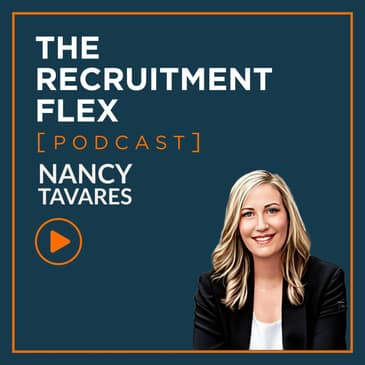
This week we welcome Nancy Tavares Senior Director, P&C at Paladin Security
- With a non-traditional entry into HR, Nancy brings business acumen and operational experience to her decision to pursue a Masters in HR Management.
- A life long learner, she also shares her knowledge as an Instructor at George Brown College in Toronto delivering the Intro to HR course.
- Nancy shares some of the assessment techniques Paladin uses to evaluate a candidate’s skills during the recruitment process and some of the challenges they are facing now.
- The intersection of L&D in HR is her deepest expertise. The role of HR plays in supporting the business by creating front line training with very clear pathways of employee development.
- Understanding your talent pool and creative thinking in how to partner with provincial entities shows innovative thinking.
[00:00:00] Welcome to The Recruitment Flex with Serge and Shelley, I'm Serge.
[00:00:10] And I'm Shelley and we talk all things recruitment starting right now.
[00:00:14] Bonjour and welcome to The Recruitment Flex.
[00:00:21] Shelley, we've got a guest that we just met like last week while I just met face-to-face
[00:00:26] for the first time.
[00:00:27] And I think you've met her a couple of times, but she's a dynamo.
[00:00:30] She's an impressive lady so please introduce her.
[00:00:33] Yes.
[00:00:34] Yes, talk about the luck of meeting incredible people and so yes as part of our practitioner
[00:00:39] series we have joining us Nancy Tavarez who is the senior director, people in culture
[00:00:46] at Paladin Security.
[00:00:47] Welcome to the show Nancy.
[00:00:49] Hi I think for having me.
[00:00:51] Thank you so much for agreeing to come on the podcast.
[00:00:53] I feel very good.
[00:00:54] And talk with us.
[00:00:55] I know we instantly just launched into conversations around skill-based hiring and where does learning
[00:01:03] and development fit into that.
[00:01:04] But before we go there, I would love for you to share with the audience a little bit about
[00:01:11] who you are, where you are in your career and I know you do a ton of other things outside
[00:01:17] of your J.O.B.
[00:01:18] So can you just share with the audience a bit about Nancy?
[00:01:21] Oh yes, sure.
[00:01:22] Thanks so much.
[00:01:23] And thanks for having me one time listener so excited to be joining this time around as
[00:01:28] a speaker.
[00:01:29] So a little bit about myself and I actually attended and graduated from Toronto Dance School.
[00:01:34] I'm a bit of a late-ish boomer into the HR space.
[00:01:38] I eventually got a job working with good life fitness clubs and I did a variety of roles
[00:01:44] from fitness instructor to eventually general manager of a gym and then I moved into learning
[00:01:50] and development where I got to train new general managers on how to do their jobs.
[00:01:55] So everything from budgeting, financial hiring, hiring, performance management.
[00:02:00] And I found I really liked this.
[00:02:02] I really enjoy trying to set people up for success as we like to say and work with people
[00:02:08] who are really keen and just getting started and excited to move into a new position and
[00:02:14] a new opportunity.
[00:02:15] I decided that would be really important for me to go back to school and study so that
[00:02:20] I could continue to advance in the HR space.
[00:02:24] So I went back to school and did a diploma in HR and then went back to school at a psychology
[00:02:29] degree and then went back to school again while working full time and finished a master's
[00:02:35] and human resources management.
[00:02:38] Once I started going back to school, that really helped me to build a foundation to grow
[00:02:43] my career and take on more senior learning and development opportunities eventually getting
[00:02:49] to a director level in that space.
[00:02:51] And then I found that I really wanted to expand the scope of my role after being a specialist
[00:02:56] in an area for about a decade or so really wanting to leverage the other areas of HR and business
[00:03:03] that I found really interesting.
[00:03:05] So that sort of spearheaded me into the master's to help build out that foundation again
[00:03:10] to expand that scope which helped me to land this opportunity with Paladin Security
[00:03:15] where I've got a really broad scope of responsibility for everything from labor relations to talent
[00:03:20] acquisition, a little bit with learning and development, employee engagement and a large
[00:03:26] component on the HR operation.
[00:03:28] You spend my side hustle.
[00:03:30] Felly, as you like to put it is I do teach hard time for George Brown College continuing
[00:03:34] to be a volunteer and I'll keep the introductory to human resources management course.
[00:03:40] That's something that I really enjoy doing and something where I learn a lot as well
[00:03:44] so been doing that over the past five years or two.
[00:03:47] Wow, just out of curiosity.
[00:03:50] Have any of your students gone on to be like HR leaders in the community?
[00:03:54] Yes.
[00:03:55] Because you're seeing them kind of like this is intro.
[00:03:57] Oh really?
[00:03:58] Yeah.
[00:03:59] Strategy.
[00:04:00] Yeah.
[00:04:01] Exactly.
[00:04:02] Yeah, we have started a whole internship program that we've run fairly regularly now from
[00:04:07] a variety of different schools and it's just a great opportunity in a win-win situation.
[00:04:13] Yes, I definitely make a lot of effort to keep in touch with the students if they are
[00:04:17] reaching out and hearing about them receiving that job in its mature students as well.
[00:04:21] There's a lot of people in the class that want to make a career fifth perhaps there's
[00:04:26] a senior leader in one particular area and they found HR and really want to get into that
[00:04:30] space.
[00:04:31] They're taking the course to help them with that or professionals who have a couple of
[00:04:35] years under their belt that are looking to pursue their HR designation, a really great
[00:04:40] mix that we've gotten off.
[00:04:42] Yeah, awesome.
[00:04:44] So speaking of talent attraction strategies, before we go there Nancy can you just share
[00:04:49] with the audience a little bit about Paladin?
[00:04:51] My perception, I know them as a brand but I may have it all wrong.
[00:04:57] So can you just give us an idea of what it is Paladin does and how big is the organization?
[00:05:02] Also if you don't mind sharing because HR operations is under you, what sort of technology
[00:05:08] you've chosen to use.
[00:05:10] Yeah, so telling you a bit about Paladin security, Paladin security were in the business
[00:05:15] of security guards were about 18,000 employees across Canada.
[00:05:20] Wow.
[00:05:21] I'm focused on the Eastern Canada portfolio so that includes Ontario as well as the Atlantic
[00:05:27] province and there's a number of verticals that we offer security services.
[00:05:32] So we're contract services essentially.
[00:05:34] We've got partners in healthcare, deviation as well as campus security, retail security,
[00:05:41] industrial security.
[00:05:42] Those are the few those verticals that we partner with those businesses to offer them
[00:05:46] security services and we're always growing, which is really exciting.
[00:05:50] But there's also other areas of the business as well.
[00:05:53] There's a Paladin American side as well as the Concord parking component.
[00:05:56] So large organization.
[00:05:58] I had no idea.
[00:06:01] 18,000 people.
[00:06:02] Mm-hmm.
[00:06:03] That's huge.
[00:06:04] Let's talk a little bit about how you're structured as a talent attraction talent acquisition
[00:06:10] department.
[00:06:11] How many recruiters where are they?
[00:06:13] What's their focus?
[00:06:15] Yeah, great question.
[00:06:17] And looking at the structure overall is something that I find really interesting and really
[00:06:22] challenging to figure out what is the best mix of structure in order for us to meet
[00:06:26] our goals and objectives.
[00:06:27] So a couple of things that I looked at when I got started is like hands down talent
[00:06:32] acquisition number one focus probably in our region followed by labor relations because
[00:06:36] we operate in a union.
[00:06:37] Yeah.
[00:06:38] So talent acquisition was that number one.
[00:06:42] And one of the observations that I had early on when I joined is that we did have talent
[00:06:47] acquisition specialists, which was amazing.
[00:06:49] But due to the volume, we are in a high volume recruitment environment.
[00:06:54] I really felt that we needed someone to focus in on the talent acquisition component as
[00:07:00] more of a specialist role to help us get it up to where we needed to be.
[00:07:04] One of the things that we talk about is we really wanted to move away from having a bit
[00:07:08] of a post in prey approach and approaching talent acquisition in a more strategic way.
[00:07:14] One of the things that I worked on was to build a business case to bring in a regional
[00:07:20] manager of talent acquisition.
[00:07:22] So what they will do, what outcomes the individual will look at.
[00:07:25] And then I also did some benchmarking compared to other organizations.
[00:07:29] So looking at the number of employees we have, the number of hires we need to make.
[00:07:34] How many on average open positions these recruiter had and all those doctors.
[00:07:40] And to play in terms of what structure we needed set the jobs that with that benchmarking
[00:07:46] as we know every organization, every structure is a little bit different.
[00:07:50] I needed to look at what's the benchmark, what's the margins that we're working with and
[00:07:54] what is that ratio of hires, pivot recruiter look like and built out a case around that.
[00:08:00] Once I got approved went to market to find a lead specialist in talent acquisition
[00:08:06] to really take the reins and run with those things.
[00:08:09] And then once that person joined we really set off and continue to take things to the next
[00:08:14] problem as well as coming up with what are some of the key performance indicators or
[00:08:19] what are some of the metrics that are focused on this department.
[00:08:23] Yes, metrics for us.
[00:08:24] So we introduced weekly reporting early on and then had that evolve and change over time.
[00:08:32] So when it started just really simply trying to compile okay how many open positions do
[00:08:37] you have, how many hires did you make, how many interviews did you do, how many screens
[00:08:41] did you set, that classics fail funnel but flipped over into the recruitment base that
[00:08:46] recruitment funnel and what we found was based off of the applicants we had applying
[00:08:50] in the number qualified applicants for the job that we had the talent shortage so to speak
[00:08:54] right or sourcing talent.
[00:08:56] That's one thing I love about Paladin is you can give things to try, you can pilot things
[00:09:00] by trying having a sourcing recruiter that didn't really work and I'm not just as individual
[00:09:05] but because of what some of the needs were and based on our structure really needing a talent
[00:09:10] acquisition specialist to be able to do that full cycle of recruitment.
[00:09:15] And so we uncovered that I was more up to each individual to do a little bit more sourcing
[00:09:20] on their own versus having that specialized by one person because our region is so big
[00:09:25] and the needs are very different, geographies very different.
[00:09:29] All of those components the requirements were different it was much more effective to
[00:09:33] have the local people that understand their market better lead that full cycle but I do
[00:09:38] think it's really important overall just as you're building out strategies in different departments
[00:09:43] being able to have some freedom to test and play and that's the definition of what we call
[00:09:48] a learning organization right is to try things and then adjust them and make small tweaks
[00:09:54] as you go.
[00:09:55] And once you do identify something's not working, you can be competitive pretty quick.
[00:09:58] Being able to have that sort of autonomy and flexibility I think can be really great.
[00:10:03] In terms of our structure again we operate fairly lean and each recruiter will have their own
[00:10:09] portfolio and they're responsible for that portfolio.
[00:10:12] And then reporting weekly on how many people are hired, how many people make it through
[00:10:18] the power than training component and starting to look at some more retention tricks as well.
[00:10:25] How do you measure if a recruiter is doing well or not?
[00:10:29] Do you stack right them based on the metrics that you put in place or is there KPIs
[00:10:35] that are a point of discussion if they're hitting or not?
[00:10:39] Yeah, that's a great question.
[00:10:41] It is something that we reflect on during performance review time.
[00:10:45] We're not full-fledged doing any stacking or anything like that.
[00:10:49] That might be version 2.0 or 3.0 or check out along those lines but we've definitely
[00:10:54] got some data to start with and want to go from there.
[00:10:58] And we do always try to recognize individuals, especially if they build some particularly
[00:11:03] challenging roles and things like that and sharing best practices.
[00:11:08] So we've got a couple of different rewards and recognition platforms that we use so
[00:11:13] Shelley to touch on our HR technology so utilizing a Goosefield platform which is a safe
[00:11:19] card recognition program and things like that.
[00:11:22] Got a stack of thank you cards here in my office that I want to use them all up as quickly
[00:11:27] as possible.
[00:11:28] I think even if it doesn't have a monetary value, you can go along the way as well.
[00:11:31] So those are some of the tools that we leverage.
[00:11:35] How many requisitions would one recruiter have on average?
[00:11:39] 2830, 40?
[00:11:40] Yeah, it's definitely in the double digits in terms of their recruitment numbers and then
[00:11:45] it does have in flow and we're always not shorted with the good thing we're looking to
[00:11:50] hire more people.
[00:11:51] Right?
[00:11:52] Anybody's open positions will be in the double digits but an entire portfolio is in the
[00:11:57] hundreds that they would be responsible for.
[00:12:00] So I know we touched on it a bit ago.
[00:12:03] Can you just share what sort of technology are you using with 18,000 employees?
[00:12:10] What have you chosen?
[00:12:11] What do you have an HRIS?
[00:12:13] Do you have an applicant tracking system?
[00:12:16] What technologies or tools does your team have?
[00:12:19] Yeah, so we have a, I would say non-traditional HRIS so we piggyback off of a scheduling
[00:12:26] because as you can imagine, security guard scheduling is a component of the operational
[00:12:32] part of the business.
[00:12:33] A lot of our employee information stored in this system which we can gain some access
[00:12:39] to but probably more limited than a traditional HRIS from an HR point of view and standpoint.
[00:12:47] And then we do have an applicant tracking system which is quanta, can I believe they
[00:12:51] rebranded to higher by work wave which is our applicant tracking system and then as
[00:12:56] well with technology, we do leverage our job board partners partnering with organizations
[00:13:02] like in D and career beacon here in Eastern Canada.
[00:13:07] And then we leverage social media as well.
[00:13:10] And again really taking a regional approach to what have we found that works?
[00:13:17] We've even done things like radio ads and some different components to really see what
[00:13:22] kind of reach will get the best results in a given market.
[00:13:26] So one of the things I know there's a conversation that you and I had, I think the very first time
[00:13:32] we met was around skills-based hiring.
[00:13:37] And I was just wondering if you can talk a bit about is Paladin using skill-based hiring?
[00:13:43] Is it something that you're wanting to move towards?
[00:13:47] Have you defined what are the skills, the core skills of the bulk of what you're recruiting
[00:13:52] for be it's security guards?
[00:13:54] How does that factor into skill-based hiring?
[00:13:57] How does that factor into TA for you?
[00:14:01] Skill-based hiring I would say is huge in this treaty industry and I know from that first
[00:14:05] chat that we have, I have to mention skills-based hiring isn't new.
[00:14:09] I know it's all the right skills-based hiring.
[00:14:12] Maybe it's been rebranded or refrainder or whatnot.
[00:14:15] It's been around for decades, right?
[00:14:17] Nonsuitability is chaos sales.
[00:14:19] Again, nothing new but love that is getting a focus today.
[00:14:22] However I think you can break skills-based into two different buckets.
[00:14:26] Right, you can have those hard skills and those soft skills.
[00:14:29] Some of those soft skills being a bit more to move the confidence, these and things like
[00:14:33] that.
[00:14:34] But you would start to look into and then hard skills being some of the bearable requirements
[00:14:38] those must have with those must have like security license.
[00:14:42] Check, definitely have to have one of those right in Ontario if you need to pass a knowledge
[00:14:47] exam in order to get your security license and complete so many hours of training and
[00:14:53] whatnot.
[00:14:54] Whereas in other provinces the organization owns the license, these are all provincially
[00:14:59] regulated licenses and they look different in each of the areas which again that will
[00:15:04] change our recruitment strategy.
[00:15:06] It makes a big difference if they have to come with a security license first, if they
[00:15:11] don't.
[00:15:12] So that will adapt the top of our recruitment funnel accordingly to be able to attract based
[00:15:17] on those requirements as well as other training and skills requirements like first aid, BPR,
[00:15:23] so on and so forth.
[00:15:24] So those are some of those must have that we're looking for.
[00:15:28] And then more on this off the side we're looking at communication skills we're looking
[00:15:32] at customer service skills, those are critical as well as what type of environment will this
[00:15:38] person have the skill set to cope in that environment.
[00:15:41] So that impacts our recruitment strategy from what types of questions are we asking people
[00:15:46] and are we creating as best as we can a realistic job preview for these individuals before sending
[00:15:54] them through training and site training which is a big investment.
[00:15:58] If we don't do a great job upfront, we don't want to send somebody into an environment
[00:16:04] that might not be the best match for their skills, hard and soft skills but what they
[00:16:09] have.
[00:16:10] Those are all the sorts of things that we keep in mind with the skills piece and then
[00:16:14] because we are contractor services wanting to balance that out with our clients as well
[00:16:19] in terms of what they are looking for.
[00:16:21] Are you able to share any technology that you're using to assess those skills be it hard
[00:16:27] skills or soft skills because you're talking a huge volume of candidates and positions
[00:16:34] to fill.
[00:16:35] Great question.
[00:16:36] We use primarily our applicant tracking system to go through and we try to be strategic
[00:16:42] with some of our knockout questions to help us filter it down a little bit and then
[00:16:48] it is a challenge with the high volume recruitment.
[00:16:50] We've got some special projects on the goal at the moment to see how we might be able
[00:16:56] to use our tools more effectively in order to help us get to the most qualified candidates
[00:17:02] more quickly.
[00:17:05] How are you assessing an interview, so skills?
[00:17:07] Do you have a structured interview throughout all your different sectors in a rubric or
[00:17:12] something that you're measuring those skills that you're looking for?
[00:17:15] Yeah, so we've got some interview guides that we use with situational questions that
[00:17:21] we take people through.
[00:17:22] So those will help us to assess communication skills, customer service skills and then depending
[00:17:28] on the site, we may assess report rating as well because that's an important component
[00:17:33] of the security guard role as well.
[00:17:35] So those are some of those components that we go through but I think those interview
[00:17:39] guides are really key.
[00:17:41] And then having our team really skilled at being able to extract and find the skills
[00:17:47] that we're looking for.
[00:17:48] Technology is really important but I think we also can't underestimate the importance
[00:17:53] of this field of our recruiter to be really great at that job.
[00:17:57] We have done activities before where we send our town acquisition team members to the site
[00:18:03] so that they get a good understanding of the environment, they can describe the environment
[00:18:07] themselves and then we utilize those recruiter skills and they can tap into that training
[00:18:12] and the interview to help really create that realistic job preview for our candidate.
[00:18:18] And I just wanted to touch on what we use in technology is doing all math virtual recruitment
[00:18:24] so that's another tool that we use.
[00:18:26] We've got an event coming up, we advertise for this event, people can find up for an interview
[00:18:32] and then we can meet people face-to-face to live real time and go through interviews
[00:18:37] and we can hire a mass number of people that are meeting those requirements within a day
[00:18:43] or two.
[00:18:44] So that can save a lot of time and coordination that we all know goes into the scheduling
[00:18:48] of interviews and coordinating through multiple people and other technology that we do
[00:18:52] use is virtual interviews and we've had quite a bit of success with that where we've had
[00:18:57] 400 people interested in interviewing virtually.
[00:19:00] That's been another tool that's been handy for us in making those tires.
[00:19:07] So Nancy, the world that you're in is extremely hard.
[00:19:11] You're hiring thousands of people a year and you're also in a labor market that is very
[00:19:17] challenge as far as people looking for jobs at certain levels and certain pays.
[00:19:23] And I'm just curious right now, like what is the biggest challenge you're trying to overcome?
[00:19:28] What does your world look like when it comes to recruiting?
[00:19:31] Are you getting a ton of applicants is processing them or you're just challenging getting applicants
[00:19:36] getting them through onboarding and started?
[00:19:39] Yeah, that's a really great question.
[00:19:41] The biggest challenge right now is hiring for healthcare.
[00:19:44] I think we all know healthcare is an industry facing a lot of recruitment challenges.
[00:19:49] It can be a high-stress environment and definitely a tough environment to be in.
[00:19:54] I think finding individuals or working with individuals together with the requirement
[00:19:58] to be physically in that healthcare state has one of our biggest challenges that we've
[00:20:04] got at the moment.
[00:20:05] I know it's probably challenging across all the different roles, but when you're looking
[00:20:09] at how many people that you need to hire in that talent pool is either shrinking or growing.
[00:20:15] I don't know what your thoughts are there because obviously there's a lot of new Canadians
[00:20:18] coming in looking for work and I'm assuming that is a big source of candidates for you.
[00:20:24] Is there any other pools or talent pools that you're looking at trying to extend that has
[00:20:29] not been a natural talent pool for you in the past?
[00:20:32] Yeah, you're absolutely right.
[00:20:34] New Canadians are definitely a pool of talented people working with those candidates and
[00:20:40] also working with partners such as, you know, access Ontario that are in place to help.
[00:20:46] People find jobs.
[00:20:47] Those have been a bit of an ally for us as well working with the schools.
[00:20:51] So related industry would be things like police foundations, criminology, those sorts of
[00:20:58] individuals interested in getting into law enforcement, those individuals to gain some
[00:21:04] experience and security.
[00:21:06] And then another market for us is the second career.
[00:21:10] Individuals who are retired looking for a part-time job or a full time job that they can
[00:21:16] do and finding the best type of positions for them that we can.
[00:21:19] That would be another area or market as well.
[00:21:24] Really good point.
[00:21:25] I didn't think about that one.
[00:21:27] Actually one that they're looking to get back and work very flexible, which you guys can
[00:21:31] offer.
[00:21:32] Overall, I think second career candidates are perhaps not as utilized as they should be in
[00:21:39] other industries as well, especially with people living a lot longer, being a lot more
[00:21:44] healthy and fit wanting to work longer versus retire early just to keep their mind and
[00:21:49] their body keep high.
[00:21:50] I think that there's a lot of individuals looking to continue to stay active and engaged
[00:21:55] in the workplace into some of those more senior years.
[00:21:59] So I think it's certainly a talent pool.
[00:22:02] And I think the other component as well is oftentimes not all times, but those individuals
[00:22:07] are wanting to work.
[00:22:09] And sometimes this has to be about all right, so having that drive and that desire to
[00:22:14] be keeping busy and whatnot so I can be a huge benefit to that group as well.
[00:22:20] But I've learned just from getting to know you and even just through our interview today,
[00:22:25] something that I didn't realize before is the amount of training, the licensing, like
[00:22:30] the learning part of the role.
[00:22:32] What does Paladin do in terms of the learning and development programs?
[00:22:37] Those that you do hire on, is there like an extensive training program even after you
[00:22:42] come with the license?
[00:22:44] How do you handle that?
[00:22:45] Yeah, great question.
[00:22:47] So our training and development department is definitely I think a strength of ours.
[00:22:51] So a big focus is on the frontline training, which makes a lot of sense for our business
[00:22:57] due to all the fact that most of our employees are frontline employees.
[00:23:01] We offer management of aggressive behavior training.
[00:23:04] I use the force training.
[00:23:06] We've got really talented trainers here that are certified to run these courses that are
[00:23:12] mandated for those security components.
[00:23:16] And also we've got certified instructors for first aid and we support people with the
[00:23:20] renewal of those ongoing training.
[00:23:23] We also have a mental health first aid component that we can offer employees and guards as
[00:23:28] well that are dealing with critical situations so that they feel prepared to deal with any
[00:23:34] situation when they're going into the field.
[00:23:37] I'm curious, obviously you're onboarding a lot of employees and you're going to training.
[00:23:43] What's the average?
[00:23:44] Do people stay on a certain amount of time?
[00:23:47] Do you have a pretty big drop off as they start their training?
[00:23:50] I'm just that look for you.
[00:23:52] Yeah, great question.
[00:23:54] By nature, the industry, security industry is a little bit more of a higher turnover by
[00:23:59] nature but we are seeing some stronger retention numbers after that first year.
[00:24:05] That's where we see an increase in that 10 year which is really interesting is something
[00:24:10] that we want to help on to you a little bit further.
[00:24:13] Then by nature, the business, we do have a number of students.
[00:24:17] We prep in terms of our talent acquisition strategy for that back to school season and
[00:24:23] making sure that we're making it clear of the part-time opportunities and full-time opportunities
[00:24:28] that are available so that we're staffing it accordingly.
[00:24:33] Do you talk about skill-based hiring?
[00:24:35] No, I'm curious because re-skilling is big and I'm shorter situations that you're
[00:24:40] moving guards from different locations that need a different skill set.
[00:24:45] How does Paladin approach learning and development within the organization when it comes to re-skilling
[00:24:50] but overall just making sure that their employees are continuous learned?
[00:24:55] We have a wide variety of courses that are available on our learning management system or
[00:25:01] our LMS.
[00:25:02] Those are available.
[00:25:04] People can prove through our learning management system, take things like customer service
[00:25:09] training, interview training so if they want to move from a security guard position to
[00:25:14] a supervisor position they can watch their learning management training on how to interview
[00:25:21] things like that to help them advance their career.
[00:25:24] Then depending on the different verticals people would like to work in if they're doing
[00:25:29] a great job on the job then they may be selected to get sent back to learn more vertical so
[00:25:36] that they can work across more environments and continue to grow their skills in these
[00:25:41] different verticals.
[00:25:42] There's a very clear career path where people can start as a frontline security guard.
[00:25:48] We do have a promote from within policy so they can start as that frontline security guard
[00:25:53] move into a supervisor position, move into something like a portfolio resource coordinator
[00:25:59] move into a client service manager and move into a director of operations.
[00:26:04] From there I can think of a number of people that I work with now that are at the director
[00:26:09] level that started at security guards.
[00:26:11] There is a career path within security.
[00:26:14] Within security are going to a similar related field and some people get started in security
[00:26:20] and then find they really like it and then grow within that organization.
[00:26:24] We've seen that happen as well.
[00:26:27] Love it so much great information Nancy I love what you're doing at Peladin.
[00:26:31] I can only imagine the type of volume that you're dealing with and the challenges that
[00:26:36] you're dealing with long days on.
[00:26:38] 24 a second.
[00:26:39] 24 a second.
[00:26:40] Yeah.
[00:26:41] Yeah.
[00:26:42] That's right.
[00:26:43] That's a very good point.
[00:26:44] Literally.
[00:26:45] Yeah.
[00:26:46] Exactly.
[00:26:47] So if anyone wanted to get a hold of you Nancy, what's the best way to get a hold of you?
[00:26:52] Probably the best way is through LinkedIn.
[00:26:54] You can reach out to me on LinkedIn and I'm always happy to connect or do a virtual coffee
[00:26:59] chat share best practices.
[00:27:02] Always open for that.
[00:27:04] I really appreciate Nancy with such a pleasure meeting you this week and we do have I don't
[00:27:09] know if anyone listening heard our episode where we talk about our different reactions to
[00:27:16] a fire alarm in the middle of night.
[00:27:17] So we talked about shellies which is red for the exit.
[00:27:21] Mine was wait for instruction and what was yours because you were actually in the same hotel
[00:27:27] at the same time as us.
[00:27:29] How did you react Nancy?
[00:27:30] The first reaction was I thought I was dreaming and then I stuck my head out the door
[00:27:36] and I listened to the front and English instructions.
[00:27:39] So it's made for further action.
[00:27:41] So I just tried to go back to bed.
[00:27:45] Shelly was already on like the tent floor by that time so we're very lucky that it wasn't
[00:27:52] an actual fire because we would have been screwed which floor were you on again?
[00:27:56] Eight eight.
[00:27:57] Okay.
[00:27:58] So you had yeah, we were 18 to 19 to think or 18 17.
[00:28:02] Yeah.
[00:28:03] So I'm not going to wait until the stairwells are full.
[00:28:13] Like I'm not worried about that.
[00:28:18] Shelly, I'm pushing the old people and the children out of the way is like I'm coming down.
[00:28:23] So shelly stands up.
[00:28:25] Yes.
[00:28:26] If I'm running down the stairs and I see you shelly I'll say hi then push you out of the
[00:28:30] way and keep running or maybe I'll carry you down the stairs but I doubt that.
[00:28:35] So Nancy, this was the pleasure.
[00:28:37] It was so good to meet you and thank you for coming on such great insights on what it means
[00:28:42] to be in talent acquisition right now.
[00:28:45] Thank you.
[00:28:47] Thank you Nancy.
[00:28:48] We'll talk soon.
[00:28:49] Are fun.
[00:28:50] Shelly, let's face it.
[00:29:00] Taxing candidates is the easiest way to hire quicker today but your cell phone doesn't
[00:29:06] connect to your ATS you're sharing your personal number with strangers is pretty scary right
[00:29:11] Shelly and it's not even legally compliant.
[00:29:14] This is where our friends at RecTex come in.
[00:29:17] They've created simple yet powerful text recruiting software that works with your ATS plus it's designed by recruiters for recruiters so you know it works to learn more and book a demo,
[00:29:30] visit www REC TXT.com mentioned the recruitment flex and get 10% off annual plans.
[00:29:39] Welcome, Change Agents to your go-to place for stories that ignite your spirit, fuel your purpose and connect us all.
[00:29:47] We believe in the incredible power of the human spirit its boundless resilience and the inspiration it brings to our lives.
[00:29:54] On the driving change podcast will journey together through the extraordinary yet very relatable experiences of some of the most amazing people on Earth.
[00:30:03] Our mission, that through these stories we might just spark change within you and awaken a newfound motivation to harness your unique gifts to make a real difference in the world.
[00:30:14] So get ready to be inspired and join us on this incredible adventure.
[00:30:18] You can find the driving change podcast on Apple podcasts, Spotify, iHeartRadio or wherever you love listening to your favorite podcasts.