
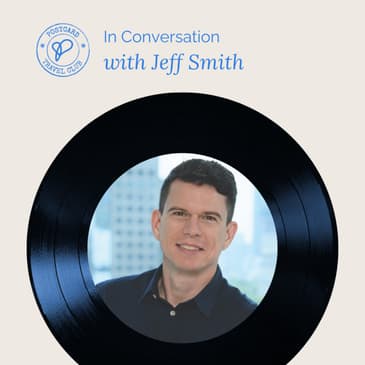

Long before sustainability became a buzzword, the world-renowned Six Senses brand championed sustainability. And not on a surface level. For them, sustainability was factored into every aspect of their brand—from how hotels need to be built in harmony with their environment, to how meals are sourced, and even in the experiences guests partake in. Essentially, the fabric of a culture, of a place is not mutually exclusive from tourism. If anything, they benefit from each other, if we have a sustainable approach. To understand this further, we have with us on this episode, Jeff Smith, the VP of Sustainability and Six Senses.
Hosted on Acast. See acast.com/privacy for more information.
[00:00:06] From the food you eat to how you sleep and the earth beneath your feet, wellness is integrated into your entire experience, according to Six Senses Properties. It is a level of service that doesn't just do the right thing, but does it very, very well. I had the insightful opportunity to talk to Jeff Smith, VP of Sustainability for Six Senses Properties.
[00:00:32] Jeff is Canadian and has a background in environmental engineering. He later found himself in sustainability and community-based tourism, backpacking and living with indigenous communities. Listening to Jeff talk, it is no secret how passionate and devoted he is to what he does. Unfortunately, the word sustainability has become a buzzword and is often misused. It was important to get to the heart of the matter, and Jeff was just the guy to ask.
[00:01:00] He joins us from a Six Senses resort in Cambodia. Welcome to the Postcard Travel Show. We are so excited to talk to you today, Jeff. First of all, where are you joining us today from? Hi, Liz. Thanks. Yeah, it's great to be here on the show, on the podcast show, and great to be here where I am. I'm actually dialing in from Six Senses Krabi Island in Cambodia.
[00:01:26] So you're actually at one of the locations right now. Yes, I'm visiting one of our resorts right now. I'm in the midst of an audit that I'm conducting of the property on its sustainability practices, which is, you know, one of the wonderful aspects of my role is that I get to visit all these amazing resorts and support the teams on the ground and stay connected to the reality of our operations and sustainability in the field.
[00:01:55] But of course, it's not so bad to be hosted at a tropical private island resort either, is it? Not too bad at all. Wow. What a day in the life must be for you. It's just, I can't even fathom. Jeff, let's start with you. What is your cultural background? So I'm from Canada. I'm from a small town north of Toronto. Grew up there. So a lot of outdoors activities, a lot of winters.
[00:02:23] I've always been really into environments and getting outdoors and camping is one of my favorite things when I was a kid. And yeah, that's where I come from. You have a background in environmental engineering. You worked in this industry for a little while as well, but then pivoted to working in sustainability and community-based tourism, backpacking and living with indigenous communities. Can you take us back in time to these experiences? Yeah, for sure.
[00:02:50] So then it's an interesting kind of journey, right? Which I'm sure lots of people take. I think it's how I got through this journey was an intention earlier on to just really be open to experiences. And part of that is from my own travels, like traveling and just trying to create that intention of being open to new experiences through travel.
[00:03:16] And that led me down a path where, yeah, I ended up at one point, a friend was, you know, just approached me and said he was going backpacking in Southeast Asia. Do I want to come? Like, sure, why not? Packed a backpack, jumped on a plane and ended up in Thailand. And I signed up to volunteer at an elephant sanctuary. At that point in my life, I was trying to get more hands-on experience doing conservation work.
[00:03:45] You know, I thought I would do some tree planting or something like that, put it on my resume and go back home. And it was just, you know, one of those moments, right time and right place. And I signed up for two weeks and they said, hey, you're doing a great job. Would you like to stay on for a bit longer? And again, just being open to that opportunity, open to whatever would come. I said, sure, why not? And two weeks turned into two months and that turned into two years.
[00:04:10] And then next thing, you know, it was kind of like, oh, I guess this is a role that I kind of figured out. And that was a role in sustainable tourism, doing community-based tourism and a lot of hanging out with elephants, which was fun as well. So that's kind of a bit of travel that's kind of influenced my career journey in a sense. And being open to opportunity, it sounds like.
[00:04:37] A very close friend of mine always calls it following the breadcrumbs. And I always think that's a great analogy because it's essentially what many times throughout my personal life and career, it's just been following the breadcrumbs of my passion and being amazed where that led. I mean, one of those is sitting here talking to you of just following this and being open, as you're saying, to opportunities along the way.
[00:05:03] You have a very interesting story and kind of a formative experience from your early days of working in elephant conservation. Can you share that with us? Sure. So there was, I mean, a point in, I guess, earlier in my elephant days where we were, the NGO I was working with, we were looking to really understand and document the trade in endangered species around elephants.
[00:05:29] So it's, there are, there are CITES protected species, protected under the CITES convention, which means they're not supposed to cross international borders, elephants, without some really serious paperwork for conservation purposes. Although it does happen. So it's essentially, you know, poaching of wild elephants and then smuggling them over borders is really what happens to a certain degree.
[00:05:55] And there's a lot of elephants working in tourism, especially in Thailand, that unfortunately at some point in their lives were caught from the wild. And where a lot of those elephants come from is Burma or Myanmar on the other side of that border, where there's, there at least, you know, 15 years ago when I was more involved in this, there was a good, healthy, wild population of elephants, which is a wonderful thing.
[00:06:19] But unfortunately that kind of made them a bit of a target for this poaching and then smuggling where they're worth a lot more money on the, on the more economically viable side of that border where there's more tourists. So it's a long lead into this kind of story, but I was, so I ended up in the jungle in Burma and we went in to try to find and document where these elephants were being caught, where they're being captured.
[00:06:43] So at that time we were, and for a long time I had the privilege of working with the Karen people or the Buckingham tribe who live on both sides of the Myanmar and Thailand border. They live up in the mountainous region in Southeast Asia there. So we were with a local guide from that community going, taking us into the jungle to find this elephant trap. We wanted to document it.
[00:07:10] We wanted to photograph it, video it, learn about exactly how does it work. And really to gather this body of evidence about like, yeah, Hey guys, like there are wild captures taking place. That was kind of the, the evidence we were looking to gather. So we've got motorbikes. It's like three of us from the NGO that I was working with in Thailand and our local guide and another local Karen guide from the Karen community, the tribal community.
[00:07:37] So it's like five of us riding dirt bikes into the jungle and we're getting deeper and deeper into the jungle down logging roads, but they're not paved roads. It's just like dirt roads that these logging trucks with huge wheels are driving on. And we've got little dirt bikes and we drive in, we get to a point where, you know, the road ends, the clear cut ends. And then you hit the pristine jungle, right? Which is where that deep thick jungle where the elephants want to live.
[00:08:07] And then we start walking and we walked for maybe an hour into the forest, into the jungle. And of course we did, we found the elephant trap and we got the documentation we needed. And it was great. It was a big success coming back. We're walking back and it starts raining. Okay. Not a big deal. But then it kept raining and then it kept raining. And what happened was by the time we got back to the dirt bikes, which we had left to where the road ended, that road was no longer a road. It was more of a muddy river.
[00:08:37] So we ended up having to, rather than drive the dirt bikes, we couldn't even drive them up and down the hills along this road. We were dragging dirt bikes up muddy slopes to try to get back up this logging road, back to like the last town that we had left. And along the way, there was one of these remote tribal Karen communities in the jungle that our local Karen guide knew of that we'd kind of passed by and didn't even notice it really. And it was getting late. It was getting late.
[00:09:06] It was dark. It's raining still. It's muddy. We're exhausted. Ran out of drinking water hours ago. Just completely exhausted and dehydrated. And we like drag ourselves into this community, this tribal community living at the fringe of the clear cut and the jungle. I mean, I don't even remember. I vaguely remember asking for water and they kept bringing tea. And at the time just thinking like, what? No, not tea. It's going to dehydrate me more. It's got caffeine.
[00:09:34] And I realized later when I learned more later that they would drink tea because they boil it and it's safer to drink. So they were trying to give me safer drinking water. But, you know, I basically just passed out. And then I had one of these just amazing travel moments, which is kind of like the kind of thing you'd see in a movie or you'd read about in a book where I woke up in the morning and barely remembering how I got there and slowly opened my eyes.
[00:10:01] And there was literally a ring of children's faces around me watching me sleep. I was like, oh, God, where am I? What's happening? And I'm wearing one of their tribal shirts. I don't even I don't know who I still today. I don't know who changed me into that shirt. And I was like, wow, where am I? What is happening? And and of course, it's one of my favorite travel moments ever because it was just so far off the normal beaten path. And you've survived. You live to tell the tale. What a cool story.
[00:10:31] Yeah. Yeah. Thanks. I mean, that was that was fun. It sounds like a lot of things, including fun. I think it sounds this has a lot about your personality as well, that you didn't freak out in that moment. Right. Like like that. This is one of your favorite stories. I mean, this could easily be somebody else's worst travel memory. But like I love how like that was that was a pretty good time. Like in Jeff's book. Well, the morning the morning waking up, I was like, wow, this is so cool. Like, where are we?
[00:11:00] And I really found a great affinity with these with especially the Karen people. I just they're they're so warm and inviting. I mean, can you imagine some random foreigners showed up in their village and they gave me a place to sleep and they gave me a shirt on my back and offered me tea that I really refused because I didn't think I should drink it. And, you know, it's I mean, just the warmth and the generosity of those people.
[00:11:29] It was just it was so, you know, the compassion. It was so wonderful to experience that. And that's the vibe that I kind of caught from every one of these those communities that I was able to interact with over the over a few years. But yeah, looking looking back, it's an incredible story. Well, and the level of trust you have to have. And I think that's what's so wonderful about travel is that you are you are faced to just trust. Right. And we get so comfortable in our day to day lives.
[00:11:56] And so we can we can be under this false sense of control. And so putting ourselves in that space of like surrender and trust and like seeing how the need of community. I think you're really capturing the magic of why we all enjoy travel. What prompted you to then work at the intersection of luxury and sustainability? Yeah, that's an interesting question that I know I might struggle to answer in a good, you know, in an articulate kind of way.
[00:12:26] But it was more, again, just openness. And the opportunity came, to be honest. I had some awareness of the brand that I'm with now before from my days of, you know, hiking in the jungle and working with elephants. I lived in Thailand and there is the main brand, like the corporate office or the brand office for Sixth Sense is in Thailand. So there's a general awareness of the brand. And I'd always known that, you know, they're pretty dedicated to sustainability.
[00:12:55] And we are still today. I also have always thought that, you know, for me, I don't see it strange at all, this intersection of luxury and sustainability. So, for me, you know, you'd said earlier, I started off in engineering. That's where I'm from in Canada. I studied engineering. I worked very briefly in engineering consulting. I didn't feel, I felt like I wanted to do more in terms of just being more hands-on and a little more conservation focused, a little less industry focused.
[00:13:26] And that was the space I was in when I had that invitation to go backpacking and then serendipitously ended up with this elephant work. And, you know, and that kind of took its own course.
[00:13:38] And after doing that for nearly a decade, I started a family and suddenly had these new, you know, concerns in life, like education and healthcare, which I really didn't even think about while I was trekking around those villages and, you know, dehydrating myself in the jungle or sleeping in a hammock or, you know, I had other people to worry about, you know, with a small family.
[00:14:01] So, that prompted me to move back to Canada and looking for kind of more, you know, a little more security, I guess, for the family and healthcare education, that sort of thing. And I went back to school and I did a master's in sustainability. So, it was a very open, it was interdisciplinary master's program. It also included work with the business school at that university, which was incredibly interesting for me.
[00:14:29] So, that kind of gave me that foundation and, you know, more corporate sustainability, business sustainability work to complement my hands-on experience doing the ecotourism and conservation-based tourism and community-based tourism. So, with that kind of those combination of skills, at one point, this opportunity came up to join Six Senses.
[00:14:52] They were looking for someone to take over their leadership role on sustainability and I just thought, hey, this leverages my background in tourism. This leverages my degree I've just earned in sustainable business and, wow, what a great fit. So, I kind of just jumped in and learned a lot about luxury hotels through my time here.
[00:15:11] But I also see that there's a lot that can still be applied to the luxury hotel space that I learned from working in the backpacker space because, ultimately, these motivations to travel. What a cool world where, I mean, where those two worlds can collide. You know what I mean? Because it's the idea of luxury has changed so much since the 1900s. Like, when you think about that people used to be dressed up for such occasion, like consistently.
[00:15:39] And then where it is now, where it's like backpacking and more of this adventure travel can be luxurious. It's incredible. Can you talk more about that evolution? Yeah, for sure. I mean, that's something that Six Senses and this way before I joined. So, the origins of Six Senses brand is mid-1990s. And the founders of Six Senses really set about to change that, what you've just described. And we're one of the first luxury brands to not have a dress code.
[00:16:09] And back in those days, yeah, it was like the staff were like wearing white gloves and bow ties, right? And it was kind of like, throw that away. Let's just make it way more casual. No dress code for guests. No shoe shine polish stations because you don't even have to wear shoes. You know, this concept of barefoot luxury. Six Senses was kind of one of the, yeah, barefoot luxury. That speaks to my heart. Barefoot luxury. Okay, go on.
[00:16:38] And that's, you know, and that's what Six Senses is kind of still famous for. I mean, we're one of the pioneers in that space. Now, we've evolved a lot as a brand since then, since the 1990s. You know, that's like almost 30 years ago for us, the origins of the brand. But it's still kind of true to our purpose of being more creative. We speak to one of our core values is being fun and quirky. We want to be fun and quirky. And we're not alone in this anymore.
[00:17:06] I mean, I think any luxury traveler today would say like, are you kidding me? Dress code? What? You know, like that's, it's just not, it's not done anymore. It's way too stuffy. People don't want to flaunt their wealth in that sort of way, right? It's about the, like the new luxury is the value, the authenticity value of the experience. Absolutely. I have definitely noticed that shift and I've been grateful for that as well.
[00:17:36] I can definitely see that because it's becoming more valuable to experience time, energy. I mean, what are we lacking right now, right? And probably global society is time, presence and authentic connection. And so I can see how that's becoming way more valuable as you're describing than a watch or a purse. For sure. Which is great news for the travel industry because that's what, that's what we can provide.
[00:18:05] This is what we've always done. Yes. Giving people these opportunities to experience life in different ways and to live, you know, that openness to, you know, to experience it, to feel it, to participate. And hopefully to, you know, create memories. That's what we do. That's what travel is. So let's go back to your, your specific job as VP of sustainability at Six Senses.
[00:18:34] Talk more about your role and this sustainable management framework that you work from. Sure. So I'm our vice president of sustainability for Six Senses brand. That is today, 24 operating hotels and a pipeline of maybe 30 or 40 new hotels being designed and constructed right now.
[00:18:58] So we're going through an incredible amount of growth and we have been doing so for the last five years or so. So really exponential growth, which has been, you know, incredibly exciting and kind of terrifying all at the same time. And in my role of vice president of sustainability, I'm responsible for the sustainability of, of the brand.
[00:19:19] So that's with a very detailed look at our operating hotels, those 24 operating properties, because we are the, we're a management company. We are the operator. The hotels being designed and built and under construction are being done. So with our development partners, and we have more of an arm's length relationship on that side of things where we're supporting sustainable decisions in the design and construction.
[00:19:50] And of course there's sustainability requirements built into all of our brand standards for both the operations and the design and construction. And we play a supporting role to, to make sure that those brand standards are coming to life in the best possible way they can. So that's kind of a, you know, very broad way of looking at my role.
[00:20:09] And essentially it's, you know, it comes down to reducing all of our energy, water and waste in everything that we do and increasing all of the positive impact we can create for our local communities and ecology where we're operating. This is a large initiative spanning locations across the globe. As you mentioned, how do you make sure that each team at each location is meeting those sustainability driven goals? Yeah, it's, it's broad, right?
[00:20:37] And our operations are fairly decentralized in the sense where we've got two hotels in Thailand, two in Vietnam, one here in Cambodia, where I am today. One in Spain, one in Portugal. I'm not going to list them all, but we tend to have, you know, maximum two in any one country at the moment. So we're spread, we're spread a lot geographically. It's a totally valid point. And sustainability is spread in scope.
[00:21:05] So sustainability is a huge topic, which covers, you know, everything I've tried to very briefly, as briefly as I can describe it, right? So to make sure we're doing what we want to do, we have a fairly detailed framework. We call it our sustainability management framework. It's built on a set of policy documents. So for our operating hotels, that's our sustainable operations guidelines.
[00:21:29] And those cover everything from like the, you know, what you see in most hotels today, hang your towel on the wall, and we don't wash it. Those sorts of policies all the way through to what kind of cleaning chemicals we can use and what kind of vehicles to use in transportation for fuel efficiency. Everything that a guest sees in the front of house, all the way back to what you don't see in the back of house. And they touch on every department within the hotel.
[00:21:58] So those policies exist, and they're there to give us some standardization across all of our locations. And then we also do audits to measure compliance against those policies. So each hotel gets audited once a year, which is actually part of my visit right now to Cambodia, where I am. I'm conducting an audit this week. And we provide feedback to the hotel teams. So there's actually a score each hotel gets through the audit.
[00:22:25] There's a score for each hotel department that results from that. And of course, the goal is for all of our teams to try to set goals to increase those scores over time. And that's our key metric really is that incremental improvement year by year or day by day, however you want to look at it. It sounds very thorough.
[00:22:47] When you're talking about this, it sounds also it's universal, which is so confuses me because each climate and the local ecosystem comes with its own specific challenges. How do you create a framework that fits the specific climate of each location and addresses those specific issues? I'm sure it can't be like one size fits all. Yeah, totally good point. And it can't be. It can't be one size fits all. Every location has its own unique challenges on sustainability.
[00:23:15] And that's kind of the more fun and creative part of it is finding like what is that winning strategy for each location? And it's not just on geography, but it's also across time. Again, things change. Conditions change, right? We might have situations where goods and services are limited in certain communities, but hopefully that would change over time where those goods and services do become available. New economies can evolve. New companies can open.
[00:23:42] And we can then purchase things from our local community, which is, of course, what we want to do. Just as an example. So, yes, our policy framework is guidelines. We set them to have some stability, but also we want to balance that with the ability, enough flexibility where they can be locally adapted. And what I hope is that we're achieving that balance in the way that the system is put together.
[00:24:09] So, for example, within those audits, those compliance audits to the guidelines, no hotel is getting 100% compliance. And we don't really want them to. That's totally fine. And to be honest, part of that is because some of them maybe aren't the best fit or they're not quite hitting that guideline. And maybe it doesn't even make sense in that location.
[00:24:34] But also, more importantly, is because as soon as a hotel does hit 100% of the guidelines, we'll probably want to invent more guidelines. Because of the nature of sustainability, it's not a static. It's not an end result. It's a process of continuous self-improvement.
[00:24:51] Until we have a hotel, until we have a magical hotel that runs on rainbows and unicorns, you know, and has no waste, no energy requirements, no water requirements. It's completely self-sufficient, right? Like the root definition of sustainable. Until we get there, we'll always be trying to improve our sustainability.
[00:25:15] So we really try to look at it with a high stress, a really high value on growth mindset. And having our team set goals to improve, achieve those goals, and then set more goals to improve. And that's how that audit check setting goal system that we run is designed to operate. So we're always looking to improve, which also then means we're always adapting to those local conditions.
[00:25:42] And how are those conditions moving forward today versus looking at how were the hotel conditions maybe five years ago, which might not be relevant anymore. So it sounds like a fair amount of research goes into each location. Is that correct? Yeah, don't overestimate how much we do. Not in that sense. I think the learnings come from the day-to-day. So our teams are always setting goals and adjusting.
[00:26:08] Think of it like we're always fine-tuning, you know, how we do things. We're always honing in on the right frequency of how to really achieve a reduction in energy, water, and waste. And to more support for local community. How do you... Where does your information come from? Because you're coming into a new country every time, right? Who are you asking? Who are the experts? Yeah. So, I mean, so a new hotel opening in a new country, it's a bit different than what I've been describing.
[00:26:39] Once we get open, it's an iterative process of this goal setting and achievement, right? And through those iterations, we adapt, we adapt, we adapt. And we get better at sustainability for that place and that location and those specific requirements. When we move into a new location, that's why it's good that we have these policies as a starting point. So there's some templates that we have. One of the first things we want to look at is what's locally available for waste management services? What trash can they pick up? What recycling can they pick up?
[00:27:09] In some locations, the answer is unfortunately, none. You know? And then we adapt and we try to do what we can to manage our own waste streams and do our own recycling on site, which we do at lots of places. And we actually have a lot of fun with that. We love to do upcycling inside the work. So we'll keep glass and crush the glass and then make things out of the crushed glass, as an example.
[00:27:33] And we'll do that anywhere where we don't feel like the local services for glass recycling are great. Some places we'll do it just a little bit for fun anyways because we like making things. But that's a good example of how we first need to learn about the location where we're going. And that starts really early in the design process.
[00:27:53] It actually starts for our interior design team, for our architects, for the landscape architects, to look at the lay of the land, what's available in the local culture for cultural references for art and design. And we want to bake that into the design of that hotel. One of our goals for every New Six Senses is to have a great reflection on sense of the place.
[00:28:19] So when you're in that hotel, we want you to feel like you're in that part of the world. Yeah. That's always what is so important to me when I travel is that I get to feel the land beneath me. What is your definition of sustainability? Yeah. I mean, so that's Six Senses definition is the balance between people, planet and profit.
[00:28:48] For me, I think it's important to also ask. It depends on who's asking and what industry they're in and what role they play. It means different things to different people and it should. So it's worth pointing out for tourism and an often overlooked aspect of sustainable tourism is also the cultural side and cultural preservation. So, I mean, a lot of people do think of the environmental side of sustainability, which is valid.
[00:29:14] The people side is important and a lot of people might think that that might mean helping communities, helping people, which it should also. But there's also this aspect of cultural heritage that I think it's at our own peril as tourism professionals to overlook.
[00:29:33] Because if you whitewash the whole world into Levi's jeans and Coca-Cola and McDonald's and lose these different aspects of local culture, it really erodes that desire to travel. Like, why bother? Right? Yeah. Why bother flying halfway around the world if it's exactly the same cultural landscape that you have that you've left from home?
[00:29:57] But so to preserve and enhance and protect authentic local culture, I think is something that's an absolute requirement of sustainable tourism. Again, to point that out is because your question is partly, it would be a totally different answer if you're working in like making tennis shoes, right? Like then it wouldn't really matter, right? And then there's other important aspects of sustainability. So sustainability is so broad, it's almost impossible to look at it at that scale.
[00:30:27] It really needs to be focused in on what aspect of sustainability or which industry or what piece of sustainability do you want to kind of explore? I completely agree with everything you're saying. So what does a Sixth Sense do for the cultural aspect, for giving back what you're saying, preserving that cultural heritage and giving back to the local community and making sure that there's a synergy there? Yeah. It's often overlooked in the tourism industry.
[00:30:55] And I think partly because people just tend to focus on environmental or maybe community development. We do, so going back to our policy framework, we've got a guideline for that, right? We do. So it's there. And that's, again, these are, they're there to give guidance, right? That's why we call them guidelines within Sixth Sense. And so we have guidelines that speak to this, that, you know, we want to enhance and really celebrate local culture.
[00:31:23] So every Sixth Sense's location will do that in some way. Again, it starts from the design of the building itself. So we want the, you know, the design, like the way the roof is arched, the way that the interior space is, we want them to reflect the local culture of that community. That's a starting point. But, you know, it's culture isn't only from the built environment. It's also the way people live. It comes in, it comes through food and it comes through art and performance.
[00:31:53] So, you know, to use the example, just because I'm here, Sixth Sense is Krabby Island in Cambodia. We actually, today, part of my day today was meeting with our local NGO partners who work with, through the local school systems to make sure kids are getting great access to education. And they have a cultural dance component in the schools that they operate.
[00:32:18] And we're talking about how they can do some more visits and do some cultural performances for our guests. And that's a traditional cultural dance. Probably one of the highlights of my day today was learning about that dance and how they have. So there's a peacock dance and there's a stag, like a deer, and they have these elaborate costumes that I heard about. I have not been privileged to see this performance yet, but I heard about it today. And I was like, wow, that's so cool. I want to see it.
[00:32:45] And that's the sort of thing that we want to, it's great for guests to experience. And again, because it's part of the motivation to travel, to see the other, to learn about different cultures and experience it. But it's also a great way to support that local culture. Because to these, especially in more remote communities, where they might be rushing on this path towards urbanization and westernization and homogenization of culture, right?
[00:33:15] Where it's not cool to be from the village. You want to be from the big city and wear the Levi's jeans and drink the Coca-Cola, right? Like everyone on television and everyone in all the western movies that you watch when you're in the village in the jungle.
[00:33:29] But by having people come from those big cities in the west or from wherever they are, from the larger culture, to come to these smaller communities and show that we are interested in their culture is a profound message to them. That's so interesting. I also think that it's language, or dancing and performing arts is like a different, is a different language in itself, right?
[00:33:55] And when you go to these countries and you can't speak the native language, and so you're just, you feel so separated because you can't communicate. But then you see the dancing and the art and you are suddenly connected in another language that's universal. And so I think that's really a special aspect as well. You did mention the food, which I also want to highlight because, so you do 60% plant-based menu. First of all, why did you feel like it was so important to do plant-based menu?
[00:34:25] And also this is utilizing the local plants and very much farm-to-table. And then why did you decide not to go 100% vegan? So first off, yeah, we're really big on farm-to-table. Like we try to take that kind of to the extreme, you know, as far as it makes practical sense. Every Sixth Sense has an organic garden. And it might not be like capital O certified organic, but we do gardening without chemicals.
[00:34:54] Let's put it that way. Because we want to ensure that we have some amazing, healthy, clean food for our guests. Also because we use our gardens to cycle nutrients. So, you know, another, I'll give you a different definition of sustainability. It's taking linear systems, which were more, most of the industrialized world is more used to, you know, extraction, manufacturing product, and then disposal. It's a line.
[00:35:24] It's linear, right? It goes from beginning to end, and that end is a landfill or worse. And a great way to think of sustainability is closing the loop on that linear system and making circular systems. So what we're trying to do with our gardens is circular systems inside the resort. So if food comes into the resort, we eat it. There's always some food waste produced, unfortunately. Our top priority is for people to eat the food. If not, we keep animals at lots of our properties. So the animals can eat the food waste.
[00:35:53] So we'll keep chickens or goats, and we feed them our leftover bread or fruit. They then create fertilizer, which can go back in the soil. So we don't want any food to ever leave in that linear system. We don't want the food to leave to go to the landfill. We want it to cycle back into a natural cycle of nutrition. So we put it back into the land. And if animals aren't eating it, then as a last resort, we'll compost the food. And every food or clippings from the gardens, branches, leaves, everything.
[00:36:23] Anything with nutrient value, we're very greedy with it. We don't want it to leave the property. We want to cycle it back into the land. So that's why we have the gardens. Then, of course, they produce food, and it comes back through into the kitchen. And that cycle continues. So it's a continuous, never-ending cycle of sustainability with our food systems. That's what we're trying to practice, and that's why we do gardening. And, of course, it's also fun. So we'll involve guests in that. So we bring the guests into the garden.
[00:36:52] They can collect the food. They learn about how we're making the food. They can learn about gardening. They can participate in that, which is good for people, too. It's good for you to do gardening. It's good for your mental health. And there's lots of studies around that as well. So we love farm-to-table is what I'm trying to say. You have a very interesting initiative called Earth Lab, which includes different curated experiences for guests to help them adopt more sustainable practices. Can you tell us a little bit more about this? Sure.
[00:37:18] So Earth Lab is kind of our answer to the question that I do get asked often is, okay, so it's great you're doing all the sustainability stuff. You've got all those policies. You're making sure that you're hanging your towels on the wall. That's great. But what are you doing to educate your guests? And our answer to that question is the Earth Lab. It's a space that we have at every Six Senses location where it's an inviting space where we'll welcome our guests to come in and sit down and talk about sustainability, where
[00:37:47] we share ideas. So it's not like posters on a wall and we're not bragging about our impacts or anything like that. What we actually want to do is exchange ideas with guests. So we've now gathered ideas from different parts of the world that we share amongst our hotels. And we've got over 60 different workshops that we can run at any given time in any given location. And recipes are ready to do those workshops. We want it. It's hands on. We don't want to just talk.
[00:38:17] We want to be doing things with our hands, sharing ideas, sharing knowledge, sharing some skills around living more sustainably. It's kind of the general theme of these Earth Labs. So I'll give you some examples of the workshops we do. Probably my favorite example is making beeswax wraps because it's pretty easy to explain. So you might have seen these. You can use it in your kitchen at home to replace cling film or saran wrap. It's a piece of fabric with beeswax melted onto it. Beeswax is an amazing material.
[00:38:47] These are just, you know, and these are the kinds of conversations that we'll get into while we're making. We make these with the guests. They can take it home and they can use them in their kitchen at home. And it helps them reduce plastic in their lives, right? It's we're opening that door for people to, if they want to, they can step through and they can live just a little more, just a little, you know, a little nudge towards sustainability in their day to day. And it's great because we can enter these conversations. Like, did you know that beeswax is naturally antimicrobial?
[00:39:17] So bees are amazing little animals just because of the, however they do it, when they make their wax, molds will not grow on beeswax. They're also super important pollinators, which I'm sure you have heard of, right? So if you look at like what's available in the supermarket and without bees and pollinators, like more than half of the fruit and vegetables are gone. So it's super important to save bees. We do beekeeping at lots of our locations.
[00:39:45] So we can get into conversations about beekeeping and we kind of just see where the conversations take us, right? But the point is we're sharing ideas and we're getting into conversations about sustainability in a tactical, specific, kind of relatable sort of way. We also do workshops on how to make your own toothpaste. So you don't have to buy toothpaste in little tubes. Those cannot be recycled. And, you know, that might lead us into conversations about wellness and the ingredients in toothpaste
[00:40:14] or it might lead us into conversations about how we're reducing plastic in our hotels. We also do things like collecting things from the garden and making things from, you know, natural like plant-based items, cleaners. So that's what Earth Lab is. It's a space where we invite people in, we do things with our hands, we get into conversations and share ideas around sustainability. Sounds pretty incredible. You also believe in holistic wellness.
[00:40:42] Can you talk more about the sustainability practices around wellness and your point of view here? Yeah, of course. So, you know, our take on wellness is that it shouldn't just be something that happens in a clinic, but it really should be like this notion of holistic wellness is it's lifestyle. It's the world around you. It's taking into account what you eat, the way you live, your spiritual wellness, your emotional
[00:41:10] wellness, and your physical wellness, your mental wellness. There's so many different aspects to wellness, and it's all important. And different people are at different steps along their journey in wellness, and different people need different things. But for all of us to be well, this notion of holistic wellness also encompasses the self and community around them and nature around all of that. And it's all required for holistic wellness.
[00:41:40] So if you look at it from the opposite point of view, sustainability is almost the same thing, but with a slightly different focus, right? Sustainability is taking care of the planet and community to give us the ability to sustain what we're doing. Whereas wellness is the intention of people being well.
[00:42:06] And for that to work, you require healthy communities and healthy ecosystems to support the individual. I'm loving this balanced approach and this idea of how everything affects everything and into bringing that in because that's how nature is, right? Is that we have this direct effect. This is not just about the environment. It's not just about humanity. It's about these coexisting. And it's not just about the collective.
[00:42:31] It's about also the individual and how there's just all these multifaceted aspects to sustainability and how it's crucial to keep those all in balance and also be aware and bring those to light is what you're doing. And what you're really expanding the conversation about what sustainability is and what it means, which is, I think, so important to our world, especially.
[00:42:54] As you know, there's a current growing global demand for environmentally sound products and sustainability has become somewhat of a buzzword. In addition, in order to capitalize on this growth, companies have actually begun greenwashing. And so for those that are not familiar with the term, it's the process of conveying a false impression or misleading information about how a company's products are environmentally sound or have a greater positive environmental impact than they actually do. What are your thoughts on this?
[00:43:23] And how do you handle this in this space? It's a growing concern, I think, for everyone working in sustainability, this tendency towards greenwashing. And I think it's, to be honest, I think it's maybe just a natural evolution as a result of more people trying to get into sustainability, which isn't a bad thing. It's not necessarily a bad thing that is taking place.
[00:43:48] We all need to be very careful about what's being said and that that aligns to what's being really done on the ground. But I've also seen it happen, I think, not necessarily with mal-implenching. You know, I'm sure there's companies out there who maybe don't fully understand how to speak about what they're doing or what they're trying to do.
[00:44:12] And they accidentally end up going down this path of greenwashing just by, you know, talking about goals that they might not have actually accomplished yet. That's greenwashing, right? If you're not clear about the fact that this is a goal, it's not an accomplishment.
[00:44:32] And sometimes even from, and I've seen it where maybe it's a goal that a bit of naivety, they believe it's easy to accomplish. So it's like, we will do this by whatever year. If you've ever tried to accomplish that goal, you might know that it's like, wow, there's no way you're going to get that target, right? So that's greenwashing in a sense too.
[00:44:57] If it's an unachievable goal that you're telling the world you will achieve, right? Although at the same time, it's kind of nice to aim high, right? So some of it is just aligning expectation with reality. Some of it is aligning communication with ambition and having that ambition tempered in reality. And that comes with experience, right?
[00:45:22] And my approach and what I advocate for our company and when I talk to all of our hotel, all of our communication teams is to just be specific. Rather than talking about aspirations, let's just talk about what exactly has been done. So, you know, and I hope, you know, anyone who goes and visits the Six Senses website will kind of see this coming through.
[00:45:45] So we really try to avoid statements like Six Senses is striving to help the local community. What we prefer to say is we have a partnership. So here in Cambodia, we have a partnership with a great local NGO. They're called All Kids. And we're helping over 100 local students get to school to get improved access to education. That's what we're doing.
[00:46:11] Now, I haven't said that it's great or, you know, it's we're improving education or anything like that. You know, over 100 local students have improved access to education. It's exactly what we're doing. Now, I'll leave it to you to make the value judgment if that's, you know, helping the community or not. But it is what we're doing. Right.
[00:46:33] And I think by communicating in specifics like that, it's a much first off, you're saying something much more. Right. I'm giving you more information about what it is that we're doing rather than being vague. But it also is because it's more specific. It helps me avoid greenwashing. I've just told you specifically what it is. What are your tips for how consumers can avoid being greenwashed? And what should they be looking for when determining credible green initiatives within companies?
[00:47:03] Well, first, look for some impact information. Look for data. Like, again, like, you know, more specific. Any company thing they're striving to help with the aim to do. I mean, I haven't said anything with those words. Right. Everyone's striving. I mean, what does striving mean even? What is that? Right. You know, we have a target for 60% plant-based menus. And we believe that will help us reduce our scope three carbon emissions.
[00:47:31] We're not striving to reduce our scope three carbon emissions by looking for more opportunity for plant. You know, no, we have a target at 60% plant-based menu. So, that kind of language is a good indicator that that organization has set meaningful goals. And if they're, you know, goals that are more measured and specific, you're more likely to achieve.
[00:47:55] So, that's a good indication that there's a little more intention behind these kinds of commitments when they're more specific. It's also, I think, for consumers, especially for travelers, to see locations where it's more tangible because it should be. Right. If you're visiting the place, you should be able to see it and touch it and visit it and learn more about it. And if you can't do that, maybe it's not as real.
[00:48:26] Absolutely. I love that because it brings to, I always think that if you can ask a lot of questions and in your space to ask a lot of questions freely, that is, that's where you find truth. Yeah, absolutely. And to have open conversations around it. I mean, I don't think that on the flip side of the concerns with greenwashing, which I understand and they're real and greenwashing happens. And sometimes it does happen through bad intentions.
[00:48:53] I'm sure there are some companies out there who set out to just, oh, let's just tell the world we're doing this and no one's going to really find out what we're really doing. I'm sure. I mean, there are bad people in the world, right? I think most greenwashing does happen by accident. But I also think that we should all feel confident to ask these questions and have these conversations because nobody's perfect, right? And like travelers aren't perfect.
[00:49:23] Destinations aren't perfect. Hotels aren't perfect. No one's perfect. But as long as we're open to having the conversation and asking the questions and looking for the solutions, that's the most important thing. And that's how we're going to solve these questions because it's a lot of sustainability things are tough. You know, there's some tough questions that we still have to answer. And if we don't have the conversation, we're not going to get there. I agree. You've given me so much food for thought.
[00:49:50] I love how you have made sustainability fun and you've been so candid about it that it is an open conversation. And that is, and like given freedom for things not to be perfect and things and then opened up the door for, well, how would you improve this? Right. And I think that's really how innovation works best when we have a situation where we don't pretend to be the expert, but instead we open the door for a better suggestion.
[00:50:18] And so, and I think that's kind of at the heart of everything that you're doing is opening the conversation, opening the door for improvement and not being in a space of perfection. Because it is, it's a hard topic. Sustainability is a difficult, difficult conversation. Yeah. If I could expand on that, the risk is, you're absolutely right.
[00:50:40] And the risk is, and I think some people get stuck on this and they look at, there's so much to do and then they want to get to perfection and then you end up frozen. You know, you're just, it's like, there's too much and it's overwhelming and there's so much to do because there is, there's so much to do. Yeah. But nobody's perfect and you don't need to get from zero to perfect. But by looking at like, this is the reality. Nobody's perfect. We're not going to be perfect, but we can improve.
[00:51:11] And what can I do today to improve? And what can I do? What goal can I set for this year to improve on sustainability? And by having that approach, we get somewhere and then we do better. And then we keep doing better. That's what it takes. So Jeff, there's a program you have in the Maldives centered around marine biology. Tell us a little bit more about this. Okay. You're probably thinking of our junior marine biologist program, which is tons of fun.
[00:51:40] So it's a great example of what we're trying to achieve in setting out to make our sustainability programming and our projects to help our local community projects to help the ecology and the environment. And we're trying to make that part of our tourism product, essentially. And it's a great example of that taking place at Sixth Sense is Laumu in the Maldives. So at that location, we give a lot of focus to marine conservation work.
[00:52:09] Being the Maldives, it's kind of an obvious strategy for us there. And we have a team of about 10 marine biologists. Those are in partnership with four different NGOs. And they're all collaborating on work to marine conservation work. So what we've done is we've created a program for guests called the Junior Marine Biologist, where they essentially become a scientist for a few days.
[00:52:38] So it's targeting the demographic. It's great for teens or older kids who are open to learning and want to do something different and want to make a difference. And they get a bit of training around the science. And then they join up with these marine biologists. And they participate in some of the science work that we're doing. So we've got them with clipboards, and they're collecting survey data.
[00:53:06] And it's actually contributing back to these larger studies that we're running. So they're running multi-year studies on coral reef restoration work and conservation and fisheries research and dolphin survey and manta surveys and all this sort of stuff. So they're actually participating in the research. What an incredible experience as a child. That's amazing. And what we want to do is connect them with the bigger purpose.
[00:53:32] So they've done a bit of data collection, but this feeds into this long-term study. And this is where it goes. And these are the impacts that we're able to create. I can just imagine that kid that goes back to school and it's like, what did you do during your summer vacation? Well, I had this life-changing experience. What does it mean to truly go plastic-free? Oh, that's a good question.
[00:54:00] It really depends on the definition of people claiming they're plastic-free and you've got to read the fine print. So a lot of hotels have announced that they're plastic-free. For some hotels, that will mean that they've eliminated their plastic water bottles, plastic straws. For some of the hotels, it might mean they've also done the water bottles and straws, maybe toothbrushes, maybe shaving kits.
[00:54:28] For some hotels, it'll mean everything single-use plastic in the guest room might be the fine print. For some hotels, it's single-use plastic-free, fine print. But what they don't mean is packaging. And what we've learned is it's incredibly difficult to truly be plastic-free. And this is something that we really dug into as an issue. And I'll back you up. I'll give you the history and the context and why.
[00:54:57] So Six Senses is a brand we've never had single-use shampoo and conditioner bottles in the rooms. And for a great strategic move that the founders made way back in the 1990s, we've always had refillable ceramic dispensers for those. So we've never had those little bottles. We got rid of any plastic water bottles in 2003. All Six Senses were converted to have refillable glass water bottles that we produce on-site.
[00:55:27] So we sterilize the bottles and we clean them, refill them, and use them again and again and again. Again, circular system, right? So the bottles don't come and then go. The bottles are circulated through the resort again and again. So we got rid of – we never had the plastic shampoo bottles. We got rid of the plastic water bottles. In 2016, we got rid of our last plastic straw. And if you remember, the world kind of woke up the plastic straws around 2017, 2018. I think there were some videos that got circulated.
[00:55:56] They went viral of like a turtle with a straw stuck up his nose. And people were outraged and rightly so because it was horrible to see. And yeah, and people were like, wait a minute. Why do we have all these plastic straws? We don't need them. So a lot of hotel – there's a lot of awareness suddenly of plastic straws as an issue. And a lot of hotel brands made. The goal to remove plastic straws, which is great. And it's an important step forward. And there's many step forwards in these journeys, right? But for us, we had already gotten rid of them.
[00:56:25] So we're like, okay, where do we go next? What's the next plastic thing we eliminate? And we decided after a lot of strategy sessions that involved our CEO and other leaders and talking to the hotel operations, we decided, well, let's just see if we can get rid of all plastic and really be plastic-free. Like, what does plastic-free look like? Like, we actually set about trying to answer the question you've asked me through our operations, through our efforts.
[00:56:55] And we gave that question to all of our hotel teams in the field. And we said, let's try to be completely plastic-free. So we walked around with clipboards and wrote down every single piece of plastic we could find. We tried to do a complete inventory of everything plastic. And not limiting ourselves to only single-use plastic. So I mean, like my laptop got on the list, you know, because it's plastic. And televisions and air conditioners ended up on this list. Anything plastic.
[00:57:25] Let's just walk around the hotels and find anything plastic we can find. And really try to get a grip on how much plastic is happening out there in our operations. And then we systematically tried to reduce, eliminate, avoid every single piece of plastic. If it's plastic, if it looks like plastic, if it's made out of plastic, we want to try something different. Let's try. And we did this for basically five years.
[00:57:50] And we ran a training campaign, like internally, like what is plastic? Where does it come from? Plastic and your health. Plastic and microplastics. And learning about how it breaks down. And we shared that with all of our teams. So we learned a lot. We raised a lot of awareness about plastic. And we really tried to find alternatives to as many pieces of plastic as we could.
[00:58:15] In that inventory, we ended up with like over five and a half million pieces of plastic that we identified through that inventory. And what we've got now are solutions to 83 common hotel plastic items that we've tested at the hotels. And we now have solutions to. And we're putting that together in a little booklet that we need because we're going to use it for internal training purposes also.
[00:58:44] Because, of course, we need to share that and lock down those learnings that we got to as a result of this effort. We're also going to share that with the industry. We're going to open source it. We're going to let any hotel will be able to pick this up. And they'll find solutions that have been tested and worked at one of our Six Senses locations. It doesn't mean that they're going to work everywhere. We know that. You know, it's not like a one size fits all. And we're not saying like everyone must do this. But at least it's a starting point.
[00:59:13] And we know it worked for us, at least in one location. And here's some solutions and we can share them. And we're still not plastic free. How do you keep a healthy mindset through all of this? Because it's so easy when you step into this world to become obsessive, like in its way of like, oh my God, that's plastic. Like, drop it, drop it, get rid of it. You know?
[00:59:39] And so how do you like keep a balanced mindset that like, okay, like, and not, you know, and I see this all the time with people that get into the wellness space. And it just, it is when you start getting, you know, super aware and then they get a little hyper vigilant. And then it becomes even a little more, it has its own toxicity because it's like you're overstressing about things that maybe don't matter that much.
[01:00:03] And so how do you keep a healthy gauge of like, okay, this is, this is important, but maybe not life or death, right? How do you keep the balance that you, you guys value? Well, I think we, we probably are guilty of becoming a little bit obsessive around plastic. We really did. Like we were, we decided this is the issue we want to go. We want to push it as far as we possibly can. Okay. And it was all, it was kind of an experiment to really see like, what are the limits? We wanted to test the limit on this.
[01:00:31] Like how far can we go to be plastic free? Knowing that it's impossible. So our goal is to be a leader on sustainability in our industry. That's always been a goal for six senses. And we thought, well, we, we've got to step up. We got to improve, right? But then improve how far was the question. And rather than taking one more incremental step forward on plastic, we decided, all right, on this one, let's really push it as far as we can.
[01:01:00] Let's test the limits on how far within, you know, practical reality, you know, still delivering top level luxury service to our guests and doing everything we want to do. But how far can we go on removing plastic? And, and it really became a point of innovation for us where we wanted to test that. We wanted to test that theory as far as it could go. And we did learn a lot. And we engaged our supply chains a lot through a result of it.
[01:01:29] We sent out like, like letters to all of our suppliers. Hey, we're going plastic free. Who's with us? You know, and, and what, what alternatives, if you have any alternatives, talk to us. We want to try them out. We'll test them out. We'll be your guinea pig. What are the harder truths surrounding your job? Well, there's lots. I mean, I think it's important.
[01:01:51] And what I, what I value about my role and the way that we do sustainability is that I want to, and I need to stay connected to the operations, right? To the reality of sustainability, like to know the challenges. Because otherwise there is this tendency, and this is, again, this is what I mean by some groups accidentally go down the road of greenwashing.
[01:02:13] Is if I sit in an ivory tower in an office somewhere dictating, okay, we're going to do this, or, you know, this will be our goal or on sustainability without it being rooted in the realities of the operation, then it's no longer relatable or achievable. So there's a lot of harsh realities that I'm aware of, right? I want to be aware of them. You know, like some of our locations, there are not options for recycling plastic.
[01:02:41] Some of our locations, there's no good option at all for waste management in some of our locations. Some of them, there are some tourist destinations where almost everything is being flown in. Jeff, why is this work so important to you? I think it's important to lots of people. I mean, I don't, it's hard for me to really answer that question.
[01:03:04] It's always been something, even when I was younger, I was always drawn to environmental documentaries on TV. And, you know, I mentioned earlier, I grew up with a good connection with nature and I value nature. I value travel. I fell in love with travel at a young age as well. And, you know, this experiencing this openness to the world that you find through travel that we talked about earlier.
[01:03:31] And the idea of that disappearing and just kind of a monotonous merging of cultures where there's no longer any reason to travel or having a damaged environment that nobody wants to experience just is not something that I can live with.
[01:03:50] I really feel passionate about protecting local, authentic culture and protecting wonderful, wild ecological spaces for people to continue to be able to experience them. And I love bringing that experience to people. I love welcoming people to travel and experience these wonderful places that we have to offer. On that note, thank you so much for joining us, Jeff.
[01:04:18] I have learned so much during this interview. And yeah, I think this is going to be a really educational interview for our listeners as well. So I really appreciate your time and passion and energy. Absolutely. Thanks for having me. It's been great.
[01:04:33] If you liked what you heard today and can't get enough of our storytelling, join the Postcard Travel Club for free at postcard.travel and learn more about the incredible hotels, tourism retreats that showcase local stories and advance responsible tourism. Also, don't forget to rate, review and subscribe to the Postcard Travel Show available on all your favorite podcast streaming services.
[01:05:01] I'm your host, Elizabeth Drolet. Remember, we do not travel to escape life, but for life not to escape us. Safe travels, friends.