
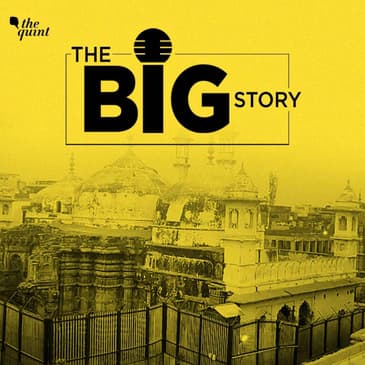

On Monday, 16 May, a Varanasi court directed for a spot within the mosque complex to be sealed after a court-appointed advocate commissioner, Ajay Kumar Mishra, made a sensational claim that a shivlinga was found in a pond during a videography survey.
This video assessment was ordered by the Varanasi civil court after a group of five women petitioners had sought a round-the-year access to pray at “a shrine behind the western wall of the mosque complex”.
But the Committee of Management of Anjuman Intezamia Masjid has been contending this order arguing that the court's directions are contrary to the provisions of the Places of Worship (Special Provisions) Act 1991 which specifically states that except for Ram Janmabhoomi–Babri Masjid in Ayodhya, the nature of all places of worship shall be maintained as it was on August 15, 1947.
As the matter came up before Supreme Court bench headed by Justice DY Chandrachud on 17 May, the apex court order passed an interim order directing the District Magistrate to protect the area where the shivling was allegedly found but to not stop namaz.
But as the Gyanvapi Mosque-Kashi Viswanath issue flares up once again, the crucial legal questions around this dispute now are:
Firstly, can the Varanasi court order sealing of a spot within the mosque before the video assessment report was filed?
Secondly, does such a videography survey go against the Places of Worship Act? The Quint's Legal Editor Vakasha Sachdev will be analysing these questions for us.
And in this episode we'll also look at the timeline of the Gyanvapi Mosque-Kashi Viswanath dispute and where the matter stands so far.
Host and Producer: Shorbori Purkayastha
Guest: Vakasha Sachdev, Legal Editor, The Quint
Editor: Shelly Walia
Music: Big Bang Fuzz
Listen to The Big Story podcast on:
Apple: https://apple.co/2AYdLIl Saavn: http://bit.ly/2oix78C Google Podcasts: http://bit.ly/2ntMV7S Spotify: https://spoti.fi/2IyLAUQ Deezer: http://bit.ly/2Vrf5Ng Castbox: http://bit.ly/2VqZ9ur
Learn more about your ad choices. Visit megaphone.fm/adchoices
[00:00:00] The Decades Old Gyanvapi Mosque-Kashi Vishwanath Dispute has sprung back in the news once again. While there are several chapters to this long drawn dispute that goes back as far as 1991, let's look at the recent developments first. Just a day earlier on 16th May, a Varanasi
[00:00:30] Court directed for a spot within the Mosque complex to be sealed after a court-appointed advocate Commissioner Ajay Kumar Mishra made a sensational claim that a Quintencote shiver ling was found in a pond during a vitography survey.
[00:00:45] Now this video assessment was ordered by the Varanasi Civil Court after a group of five women petitioners had sought a round-the-year access to prey at a Quintencote shrine behind the western wall of the Mosque complex, which is currently open for Hindu press only once
[00:01:01] a year. But the Committee of Management of Anjuman Intizamiya Masjid has been contending this order arguing that the court's directions are contrary to the provisions of the Places of Worship Act of 1991, which specifically states that except for Ram Janmabhoomi Babri
[00:01:19] the nature of all places of worship shall be maintained as it was on August 15th, 1947. As the matter came up before the Supreme Court bench hered by Justice D. V. Chandrachudh on 17th May, the Apex Court passed an interim order directing the district magistrate to
[00:01:37] protect the area where the shiver ling was allegedly found but also to not stop namas. Whereas the Gyanwapi Mosque Kashi Vishwanath issue flares up once again, the crucial legal questions around this dispute now are firstly, can the Varanasi court order sealing
[00:01:52] of his spot within the Mosque before the video assessment report was filed? Secondly, does such a videography survey go against the Places of Worship Act? The Quintencote legal editor, Vakasha Sachdev will be analyzing these questions for us. And in this episode
[00:02:07] we'll also look at the timeline of the Gyanwapi Mosque Kashi Vishwanath dispute and where the matter stands so far. You're tuned in to the big story, the podcast where we dissect the headline making news for you. I'm your host, Shorburi.
[00:02:27] Now before we get down to disentangling the current legal dispute around the Mosque, let's go back to where it all began. The 358-year-old Gyanwapi Mosque of Varanasi stands immediately adjacent to the iconic Kashi Vishwanath temple which is one of
[00:02:41] the most popular Shairvaith shrines. The source of the dispute around the Mosque follows a familiar terrain as the Babri Masjid Ram Janma Bhumi case. In the centre of the plot is an allegation of a historical wrong that the Mosque was built by Mughal
[00:02:57] Emperor Aurangzeb after demolishing the Kashi Vishwanath temple that stood in its place in the 16th century. The allegation first found voice around 1984 when right-wing activists made a nationwide call to reclaim Mosque sites that stood on the ruins of Hindu temples during the Ram Janma Bhumi movement. While there
[00:03:17] were about 3,000 such Mosques that the activists had their eyes on, the Vishwa Hindu Parishadvas especially set on the Shahi Idga Mosque that stood adjacent to Lord Krishna's temple in West UP's Mathura and the Gyanwapi Mosque in Varanasi.
[00:03:30] And just a year before the Babri demolition, a petition was filed in 1991 in the Varanasi court by advocate Vijay Shankar Rastogi on behalf of Shambhu Jyotirlingya Bhagwan Vishweshwar who is the main deity of the Vishweshwar temple. The petition claimed that a temple was constructed by Maharaja Vikramaditya
[00:03:49] about 2050 years ago at the Mosque spot and the petitioners claimed that the Mosque was built on that temple's ruins and that the remains of the old temple were visible. Then about a century later Ahilya Holka the queen of Indore
[00:04:03] built a new Kashi Vishwanath temple next to the mosque in the year 1780. This was the first legal suit in the dispute and the petitioners had sought the removal of the Gyanwapi Mosque from the site, the transfer of possession
[00:04:15] of the entire piece of land to the Hindu community and the right to worship inside the mosque. That hearing was later suspended by the Alhabadhaicot. Around this time the Babri Mosque and Ram Janmabhoomi dispute was at its peak with the demand for a Ram Mandir
[00:04:31] gaining a lot of momentum and it was then that the PV Narasimha Rao led government enacted the Places of Worship Act in September 1991. Essentially this act was enacted to prevent communal disharmony from flaring up and the Queen's legal
[00:04:45] editor Vakasha Sajte explains how. So the place the worship act was passed in 1991 as you've pointed out you know it was at the height of the whole Babri Mosque, Ram Janmabhoomi dispute which was going on in Ayodhya at the time and the idea was that there
[00:04:58] was an intention to prevent this kind of communal flare-up happening anywhere else. Now if we look at the 1991 act under this law there can be no conversion of a place of worship
[00:05:10] of one religion to a place of worship of another that's in section three. The law also prohibits any legal cases from being instituted regarding the ownership or status for place of worship that has been in existence since the 415th August 1947 and any legal case which was
[00:05:25] launched before the law came into force so if it was between 1947 to 1991 it would stand abated and wouldn't stand anymore. And the exception obviously was the Ram Janmabhoomi Babri Mosque dispute in Ayodhya that was identified as an exception and apart from that however the
[00:05:44] law clearly forestalls any attempts to change the status of any pre-independence religious structure in the country so anything which is placed a worship pre-15th August 1947 gets to stay that way. Now that's what the whole idea of this law was there's some you
[00:05:58] know the what was very interesting of course is that the Ayodhya judgment itself actually really reiterated and emphasized the importance of the 1991 act right so what we got in 2019 when the five judge bench did say that it is granting this land to the Hindus and granting the you
[00:06:14] know the building of the Ram temple there's uh so there was some very important observations in that judgment about the place of worship act and they said and I'm going to read out some of that here. The place of worship act is intrinsically related to the obligations for
[00:06:26] secular state. It reflects the commitment of India to the equality of all religions above all the place the worship act is an affirmation of the solemn duty which was cast upon the state to preserve and protect the equality of all faiths as an essential
[00:06:38] constitutional value a norm which is the status of being a basic feature of the constitution. Now one of the big things which you know a lot of Hindu right-wing groups try to argue is over why is there a 15th August cutoff date you know I mean because
[00:06:50] that is what prevents them from going after the Gyan Bapi mosque or going after you know even in Mathura the mosque there right which is supposed to be in the Krishna Janmami and the Supreme
[00:07:01] Court explained that you know look in providing and I'm quoting here again in providing a guarantee for the preservation of the religious character of places of public worship as they existed on 15th August 1947 and against the conversion of places of public worship parliament determined
[00:07:14] that independence from colonial rule furnishes a constitutional basis for healing the injustices of the past by providing the confidence and so it's very important here the conference to every religious community that their place of worship will be preserved and that their character
[00:07:29] will not be altered. So you know this is this this makes one understand just how important this place of worship act is it's supposed to be something which is really supposed to preserve the secular character of India prevent communal flare-ups and you know and and
[00:07:43] as this pointed out it was meant to ensure non-retrogression of you know going back to a time when you're going to have more fighting and arguments over all of this it's meant to provide a
[00:07:52] sort of quietest to all the disputes from history and write those and prevent you know attempts to right these historical wrongs over and over again. But just one month after a constitution bench led by the then CJ Ranjan Gogoi delivered its verdict in the Ram Janmah Gumi Babri
[00:08:07] Masjid title dispute case in the year 2019 the Gyanwapi dispute also got revived once again. A fresh suit was filed in a local Varanasi court advocate Vijay Shankar Rastogi who was also a council in the Ram Janmah Gumi title dispute case sought a survey of the Gyanwapi Moscomplex by
[00:08:27] the Archaeological Survey of India or ASI. In April 2021 the Varanasi court allowed the ASI to carry out a physical survey to establish whether the mosque was a superimposition, alteration or addition and if a Hindu temple existed before the mosque was built or not. Civil Judge Ashutosh
[00:08:45] Tewari ordered a five-member committee comprising two Hindus, two Muslims and an archaeological expert to oversee the survey but the mosque's management committee and the UP Sunni Vakav Board appealed against the lower court's decision in the Alhabadhaikot which placed an
[00:09:00] interim stay on the controversial ASI survey citing the Places of Worship Act. But before I go on I'd just like to take a few seconds and tell our listeners that we are working on something very
[00:09:10] special. It's been four years for the big story and we are close to being a thousand episodes strong so we are the quint thought why not make it better and sharper. We'll tell you more
[00:09:20] about what we are planning so watch out for this space. But now moving on to the newest phase in the legal dispute around this mosque a group of five women affiliated to the right wing
[00:09:30] group Vishwa Vedic Sanatan Sangh filed a petition in April 2022. But where the trajectory of this dispute breaks away from the Babri Masjid title dispute is that the petitioners haven't yet asked
[00:09:42] for a Hindu temple to be made in place of the mosque but they asked us to be allowed to perform daily rituals and prayers at the site of Mastringar Gauri, Lord Ganesh, Lord Hanuman and other quote-unquote visible and invisible deities within the old temple complex.
[00:09:58] Now the survey that is in the center of contention in the Supreme Court was ordered by civil judge Ravi Kumar Devaakar who appointed an Advocate Commissioner for this assessment and asked for the report to be submitted on May 10th. But in the last few days there have been
[00:10:12] a lot of developments around this dispute. First the process was stalled when the Mosque's Management Committee objected to the survey alleging the court appointed Commission of Buyers. Then the court on May 12th ordered the committee to continue the survey anyway
[00:10:25] and submit the report by May 17th. But before the report was submitted, the Varanasi Court ordered for a spot within the mosque to be sealed based on claims of the discovery of a shivelling
[00:10:37] within the complex. And this brings us to the question, was the Varanasi Court's order legal or illegal? Okay so look final legality of the decisions of the court that's something which the Supreme Court is going to be looking at. They're going to look at these Varanasi Court
[00:10:52] orders and take a ruling because all the orders of the Varanasi Court have been challenged by the Mosque's Committee who are arguing that these are, they violate the 1991 Places of Worship Act. They are non-extendation, they shouldn't be allowed to stand. Now if we look at the
[00:11:07] two orders, so there's two basic orders to look at. One is the order which says we're going to allow a video survey and the second is this one about the
[00:11:15] sealing and the shivelling issue. Now we can of course look a bit at the law here. I mean obviously that the finding is going to come from the courts but the law is in front of us and in fact at the
[00:11:24] quaint we spoke to two former judges of the Alabadhaik or including former Chief Justice Govind Mathur and then we also spoke to Justice Amr Saran about their views on what's happened so far
[00:11:35] and both of them were of the opinion that the very order allowing the survey to take place at that order which started all of this which has allowed this to go forward in their opinion
[00:11:44] was incorrect in the law because according to them in fact like the idea was that this case should never have been entertained because the suit itself should have been considered barred because of the Places of Worship Act. So before even getting into the question of a video survey
[00:11:56] it should never have been entertained and allowed to go forward. When it came to this now order about the video survey itself, now you are, I mean you can argue that oh look
[00:12:06] it's not an order which per se changes the status of the mosque right but as we pointed out since the suits are supposed to be barred and by the 1991 Places of Worship Act every aspect
[00:12:19] which allows this thing to go forward technically is a violation because it is potentially affecting status it's getting into those questions and so you know we had these high court judges who explained also that they should never have been allowed. Assuming for a moment that okay fine
[00:12:35] this survey can be allowed to go ahead, the next order or the one about sealing the area where the shivelling was supposedly found now that is a lot more legally dubious and this was
[00:12:46] argued to some extent by the Masjid committee in the Supreme Court on 17th May where they point out that look this order was passed by the Varanasi court based purely on information provided to them
[00:12:59] by a lawyer for one of the Hindu plaintiffs right. This was not on the basis of the report by the commissioners who had been sent to do the survey that's only going to be filed on
[00:13:07] the 19th of May now. This was not filed on the basis of a police report on the basis of any actual evidence it was literally this lawyer for one of these petitioners ran to court while everyone
[00:13:19] else was at the mosque told the court oh look file an application saying oh my god we found a shivelling there's the urgent that things have to be done as we kept safe we have to prevent
[00:13:29] a thing get the CRPF in get the Lucknow police in restrict the ability of Muslims you know up to only 28 or time to go and on this basis the court passed an order without any fact finding
[00:13:39] mission without any clarification that this even is a shivelling anything you know so there was no opportunity given to be heard to the master there was no actual report from the commissioners so this order very much I think is a legally dubious one and it's something which
[00:13:56] we're likely to see the Supreme Court come down I mean I'd expect you see them come down strongly as the ceiling audit created a stir it was reported that advocate commissioner Ajay Kumar Mishra was sacked from the post and that the Varanasi court had given a two-day extension
[00:14:10] to submit the report from the survey simultaneously the petition from the Muslim body reached the gates of the Supreme Court on 17th May and Vakasha gives us a rundown of what happened at the
[00:14:20] hearing so look the key thing which happened at the Supreme Court was that they've not made any final orders or anything at this point right they've agreed to hear the matter they
[00:14:28] issued notice and they're going to take it up on 19th May now what they were looking to do was trying to find a kind of balance on an interim level of what can be done so the way they've tried to
[00:14:37] approach it they said look we're not taking away no we've not yet ruled on the legality of the Varanasi court order right so we're not staying or rejecting things which have been done on this
[00:14:46] issue of a shivelling which is supposedly been found we're not passing again any finding that the shivelling has been found but given there might be a concern over law and order which was again particularly urged also by the solicitor general on behalf of the state of UP
[00:14:58] you know what right now let the district magistrate ensure that it's protected but and this is the key part they made a very very important thing that said look Muslims have to be continued to
[00:15:08] given to be given the right to enter the mosque and pray there because now one of the things which which happened with yesterday's order at the Varanasi court about sealing the area was that it said that the application filed was allowed now that applicate now while the
[00:15:21] rest of the order then didn't say anything about restricting Muslims entry the application had asked it said only 20 Muslims should be allowed usage of the Vazukhana which is where you know
[00:15:29] this sort of fountain where you know you do where you do a sort of ritual washing of hands and you know before you actually go for offering namaz all of that has been is being potentially
[00:15:42] restricted if the application were fully allowed and since it's not clear from the order the Supreme Court made a clarification saying look nothing in this order by the Varanasi court can be used to restrict entry of them even this protection of the shivelling supposed
[00:15:55] shivelling area has to be done while ensuring there's no impediment to the ability to offer namaz but amid this ongoing dispute many politicians and legal experts are saying that the order of the Varanasi court is a blatant violation of the places of worship act of 1991 and a violation
[00:16:14] of the supreme court judgment as well that was given in the Babri Masjid title dispute case as I've said before the places of worship act states that except for Ram Janmabhumi Babri Masjid
[00:16:23] in Ayodhya the nature of all places of worship shall be maintained as it was on 15th august 1947 but exactly how does the provisions of the act apply in this dispute? Vakash explains.
[00:16:37] So again you know I think in terms of understanding this the best way to look at it is again what these judges pointed out right so Justice Amar Saran told us that you know look
[00:16:45] the prayers to recite Hindu rituals at the spot to about to an attempt to utilize the legal and administrative process for converting the mosque into a Hindu place of worship so even though on
[00:16:56] the face of it they're not saying oh we're trying to convert the mosque what you're saying is you're basically just kind you're taking over paths in parts of it saying okay this part
[00:17:05] we need to be allowed to say a prayer this part also you know not just this time throughout the year this not just this god but all these other gods you know you can on paper
[00:17:13] try to hide behind the semantics of it and say it's not trying to change the nature of it but it very much is. What Justice Govind Mathur pointed out is you know look at the intent in the purpose
[00:17:23] also of to place the worship act right like what is it trying to do it's trying to prevent any sort of attempts to create communal disharmony over these things so the moment you have
[00:17:31] something like this which is literally that is the intent of this petition then you're again into trouble so I'm gonna so I think you know for instance he says the case appears to be
[00:17:39] part of an agenda to raise and agitate the issues relating to the place of the worship which was said to be converted centuries ago this in the efforts are like are causing
[00:17:47] serious injuries to communal harmony on the face of it the legal course adopted appears to be in conflict with the provisions of the act of 1991. The court before calling the report should have
[00:17:57] decided the issue pertaining to application of the act of force it so what the you know these judges have pointed out is that you have to look at what this was all what the what the point
[00:18:07] of the 1991 act is and also look at this so even if on the face of it maybe and even then it's not clear at the moment you're saying allow prayers to be conducted you are changing the status of it
[00:18:16] you are changing what is happening at that at that place of worship so you know even on the basis of the words of the thing there is a violation of it but if we have to look a little
[00:18:25] bit further and say that okay look this is not maybe an absolutely direct attempt to change but it's an indirect attempt to change that still goes against you know the spirit and
[00:18:33] the point of what this law was about so it could still be something which is considered a violation now that's something which the Supreme Court is going to have to I think address here at this
[00:18:41] point and it's important perhaps that it does it because there will be attempts elsewhere as well right we've seen a dismissal of a petition to have the Mathura mosque handed over right but
[00:18:50] now this kind of petition succeeds you'll now see another case going saying oh allow us to pray this part of the wall of that mosque you know allow us to access that area within the whole
[00:18:58] thing allow us to do a survey of everything to be able to check is there something there you know these kind of petitions they're very clever perhaps you know they're insidious and they're clever
[00:19:07] but they are still in violation of the act I think if you know underly looks into the spirit and what it's about and this is not just something which we're saying this is something which retired judges
[00:19:17] off the same very court which is having to look at this issue as saying so it'll be something important it's important to now see how the Supreme Court approaches the matter and I think
[00:19:24] it's very important that they are that the he just has governed Mathura's words and and they do look to the intent and purpose because otherwise you're going to see this very very insidious re litigation at these issues and creation of community disharmony while the
[00:19:38] legal matter is yet to be settled in court there are concerns about how this may exacerbate communal tensions on ground if you like listening to this episode please subscribe to the big story playlist for episodic updates will have on apple google podcast spotify geo 7
[00:19:53] and most of the other popular podcast streaming platforms for other podcasts please log on to the Quinn website and check out a podcast section for any feedback shoot an email to
[00:20:03] podcasts at thequinn.com thanks for listening log on to the quince website and check out our other podcasts