
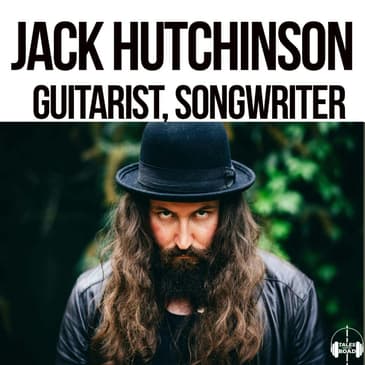
Jack J Hutchinson is a London based blues rock guitarist and songwriter. Described by Classic Rock Magazine as “a real rock contender”, he has toured internationally, sharing stages with acts such as ZZ Top, Bad Company, Kris Barras Band and Blackberry Smoke. His most recent album ‘The Hammer Falls’ was released earlier this year to universal acclaim. I caught up with Jack to talk about his latest album, his songwriting process, playing live and some interesting road stories.
---------------------------------------------------------------------------------------------------------------
For tour dates and merch - https://jackjhutchinsonmusic.com
Instagram: https://www.instagram.com/JackJHutchinson/
Facebook: https://www.facebook.com/JackJHutchinsonBand
---------------------------------------------------------------------------------------------------------------
Follow Tales from the Road
Facebook
https://www.facebook.com/talesfromtheroadofficial
Instagram
https://www.instagram.com/talesfromtheroad/
-----------------------------------------------------------------------------------------------------------------
Subscribe on Spotify | Apple Podcasts | Google | Gaana |Audible
You can also read, watch, listen via our website https://www.tftrmedia.com
Hosted & Produced by Vikram Chandrasekar and Moving Pictures Media
[00:00:00] Jack Hutchinson is a London based blues rock guitarist and songwriter. Described by Classic Rock magazine as a real rock contender, he has toured internationally, sharing stages with acts such as ZZ Top, Bad Company, Chris Barass and Blackberry Smoke. His most recent
[00:00:18] album The Hammer Falls was released earlier this year to Universal Acclaim. I caught up with Jack to talk about his latest album, his songwriting process, playing live and some interesting road stories.
[00:01:02] It's been a long process, it seems to get to this point but I'm very proud of it. I think it's a good collection of tunes. So yeah hopefully other people do as well.
[00:01:16] What has been the... you've gone out on tour with it right? You did a few shows? Yeah we just did an eight day tour to promote it and that was all in the UK so we did an album launch in London which was really cool.
[00:01:31] Yeah it was just good to be back on the road and all of that sort of stuff that comes with it. Traveling around with your mates and playing shows which we've just not really done for quite a while.
[00:01:43] So yeah and I'm glad that it all kind of went off without any glitches or anything which is I think part of the worry prior to the tour so nobody got COVID or anything like that so we were okay.
[00:01:55] Yeah you know one of the things that struck me listening to the album was that I was able to relate to it and it was a very positive sort of album with all this I think negative shit that's been going around it was much needed.
[00:02:10] Was that sort of the idea when you were writing the album? Yeah I think so very early on in the writing process because I wrote a lot of it I guess at the sort of tail end of 2020 when we were still in the midst of the pandemic.
[00:02:25] I made a bit of a conscious decision to not write songs about that. I didn't want to write an album about being in lockdown and not being able to tour and you know all the misery that was happening.
[00:02:39] I've always been drawn to music I guess myself that perhaps deals with quite weighty themes but deals with them in a positive way because you can't just have this sort of repetition of negativity.
[00:02:54] I think you've got to have a bit of a shining light at the end of it so hopefully my music comes across that way to people. Yeah definitely does.
[00:03:04] I wanted to ask you I read an interview where you said the new album was your most personal to date. What does that mean? Can you touch upon that a little bit?
[00:03:14] Yeah I think most artists probably say that don't they when they release records they say oh it's a really personal album but I think this album was a way of trying to deal with a lot of difficulty I had a couple of years ago
[00:03:29] in terms of my dad being diagnosed without Simon's and dementia and although he's still alive sort of feeling like I'd lost him and actually that sort of circular feeling of constantly feeling like I was losing him.
[00:03:43] It was a really strange grieving process and so a lot of what I tried to deal with in the lyrics of this record was that personal element of dealing with loss but then how do you as a human being come to terms with that
[00:03:58] and then try and find a route out of it? So you know there's a lot of upbeat tunes on the record you know it's not a mopey album where I'm sort of writing all this kind of heartfelt acoustic stuff
[00:04:13] it's actually more like well this shit has happened but now we need to kind of like embrace life and embrace everything about life that is positive. Yeah, yeah. Yeah it seemed like that a lot of the songs were sort of based on personal stories
[00:04:31] and maybe your observations of the world and whatever's been going on over the last couple of years but like I said it was positive and it was all good things. Yeah I think there's some stuff on there like there's a track called Angel of Death
[00:04:45] which is probably the most ballady type tune on there which you know has a lot of lyrics which I think quite honest. I mean I write songs that I've always struggled to sort of co-write really with other people
[00:05:02] perhaps because I like to sing lyrics and I like to sing songs that I've written from the heart I guess that's a really cliched way of saying it but that is the truth
[00:05:15] and I think there's some really powerful lyrics on the record that perhaps in my previous albums you know the lyrics were almost an afterthought actually it was all about the kind of riffs
[00:05:27] and the kind of you know having cool guitar solos whereas there's still elements to that on the new record but you know the lyrics actually mean something on this new one.
[00:05:36] Yeah, because I was going to ask being a guitar player primarily how important is sort of songwriting to you because I think you can very easily go down that road of shredding and just have a guitar full of record solos
[00:05:50] I mean guitar solos and you know the lyrics are an afterthought like you said so that was my next question I was going to ask you how important is songwriting to you.
[00:05:59] Do you know what it sort of flipped it on it said a little bit with this new record in that the way I approached the guitar solos was almost like melody lines they were almost like vocal lines and the way that I worked with Josh Norton Cox
[00:06:13] who was the engineer at the Mentum Studios with this album although we tracked a lot of it live with the band and we kind of did that in a week the bassist and drummer for Lea Penlaz they basically left me to it for the next six months
[00:06:29] so I did a lot of overdubs and work with them approaching the guitar in a very different way I'd done it previously which had been very improvisational whereas with this one there was a lot of thought went into it
[00:06:43] and thinking about guitar solos as though they were snippets of lyrics and that they were conversations and so the focus on vocals and the focus on lyrics fed into everything else which I think was quite a cool process. Yeah but you say you write with other people
[00:07:02] how do you sort of from a band perspective does the material sort of need to lead you in a new direction in an exciting direction for you to sort of work with it is that sort of the starting point
[00:07:16] or do you think about how is this going to sound from an audience's perspective what is the starting point? It's interesting because I've written a bunch of songs over the last couple of weeks just coming off tour so we did a big run of shows
[00:07:30] and actually you start writing material then thinking about that live setting and we did think a lot about these new songs for the new album in terms of how they would sound live and we tried to write a collection of songs that would be
[00:07:47] from start to finish how you perform a live set which I've never really done that before either you know the previous records my album Paint No Fiction was a kind of hodgepodge collection of songs that I pulled together
[00:08:01] and to a certain extent Who Feeds the Wolf was a bit like that whereas this for me feels like a complete set of work and yeah and it feels like a live set I mean that's pretty much what we did on the tour
[00:08:13] we played the album from start to finish there's only one track we didn't play the rest of it we played it in order and that was great fun to be able to do that I feel like you know I've worked on albums in the past
[00:08:25] where you have your singles you have your two or three really good songs and then members of the band know that there's elements of filler on there and you don't say that in the interviews but I don't feel like there's any filler on the new record
[00:08:37] ask me again in two years and I might give you a different answer Yeah but you know through the last couple of years you're put out who feeds the lockdown you put out Back to the Blues there's this album that you put out
[00:08:50] what has it been for you to sort of stay productive through all the craziness of the last couple of years your dad's illness and all of that Yeah I mean I've always seen myself really as a songwriter so you know for 20 years I've written material
[00:09:06] and so no matter how I'm living my life the way that I've tried to almost as a mental kind of checkpoint with everything is that I write music about it and so that's what I did over the last two years
[00:09:21] the fact that we weren't touring meant that I had more time to spend recording so that's why I put out quite a few albums in the last couple of years but it just meant that I remember in lockdown I kind of set up a home studio
[00:09:37] I'd never done that previously and I remember about two weeks into the first lockdown buying a load of equipment online and getting it delivered and building this stuff in my spare room so I had the tools there to demo the new record
[00:09:50] but then it was really liberating to then go to a really kick ass studio at momentum and be surrounded by R&J amps, Marshall amps and cool guitars so yeah it was cool to do the lockdown stuff but I much rather be surrounded by really expensive guitar equipment
[00:10:05] Yeah but tell me Jack how do you think you've sort of evolved over your career as a guitar player has collaborating with different people sort of helped you evolve collaborating with different musicians so there was the Jack Hutchinson band
[00:10:20] I think I remember listening to an album a few years ago there was the stuff you did with Troy Redfern there was the acoustic stuff that you did and now this how do you think you've evolved?
[00:10:31] I think I probably don't realise how things have impacted me in the moment it's only in reflection that you kind of look back and think I made certain choices that were correct and others that weren't correct and then how these people have perhaps pushed me in different ways
[00:10:51] and I think going back to my first band the Boom Boom Brotherhood I had a great little band there for about two years and we had a good run where we did a lot of shows and those guys, Rick Batsondale and Jim Brazendale
[00:11:08] they did all the tough gigs with me those were the gigs where I was trying to make a name for myself and we were playing in like the comedy store on Leicester Square at midnight and there's four people there so I owe those guys a lot
[00:11:22] and we wrote a good album actually and then it evolved into perhaps more of a solo project for me and then when I did the stuff with Troy and Mike in RHR that was good, I mean that became something more than it was originally intended to be
[00:11:39] it was supposed to just be a run of five or six shows then we made an album and then we had more gigs after that and I think that record was really great
[00:11:48] I think Troy and Mike as guitar players are two of the best players I've ever been fortunate enough to play with but you know I had my own solo career going on and I was sort of focused on that
[00:12:01] and I guess I'm in some more kind of heavy stuff really than RHR was doing so I just wanted to move in that direction but I think the whole thing, all these experiences they mold you into who you are today
[00:12:17] But Jack, without the pressure of sort of the charts and playlists and things like that Is there something that you're hoping that this album will do for the band or for you personally is there a sort of next step that you're hoping this album will get you to?
[00:12:34] I suppose that the main focus for me has always been to make records that I've been proud of that then allow me to go out and tour and go and play shows
[00:12:46] It's funny because obviously the kind of numbers game that is the focus of the industry for most people I understand why it is for record labels and I've been involved with record labels where that's all you talk about
[00:13:00] You don't talk about how God, the bridge on track six of this record really moves me and it takes me back to my childhood when I first listened to XL on Main Street We do that, it's like well did you get a Spotify playlist
[00:13:13] It's been really good on this album to work with Eareke again I did an album with them a couple of years back and they've been really supportive of what I've done
[00:13:25] So I think that part of the fun really is to kind of work with people who aren't just totally focused on numbers But yeah, after not being able to tour for two years, I think that's really what I want
[00:13:40] We've got some great shows lined up over the next 12 months I'm just still glad that we managed to get an album out and get it made on vinyl because there's a period where the vinyl manufacturing fell through
[00:13:52] and it was like oh my God, I'm not even going to get this made So that is an achievement in itself for me Yeah but for an artist in today's world what is the largest source of revenue? Is it touring? Is it merch? Is it both?
[00:14:07] Because obviously from streaming and stuff you make nothing, right? Well probably the biggest source of revenue is painting and decorating I don't know, it's something else isn't it? That's what pays for your gifts and less polls
[00:14:23] I think that the biggest source of revenue really for the last 10 years whilst I've been doing this has been touring So you plow a lot of money into making records and then you kind of recoup that on physical sales
[00:14:39] So I've always been very fortunate that I guess my fan base is quite interested in that physical object still Which is why I always get things made on, you know, I made a cassette recently for my single The Hammer Falls
[00:14:52] People love that, I get really good feedback from people that they like that physical object And I come from a visual arts background where I made objects, you know, I made drawings, I made sculpture So that is still part of what I do within my music
[00:15:07] But in terms of the streaming revenue, I mean it probably couldn't even pay for this hat I'm wearing It's like so poor and I think something really needs to change with that But people have been saying that for quite a number of years now and nothing's really happened
[00:15:25] You know, I'm a big Neil Young fan and he got kind of criticized for taking his stuff off Spotify We know that he kind of said it was about one thing But actually it could have been really about the streaming revenue, I mean it's pretty shocking
[00:15:40] And it's hilarious because people can be so hypocritical about it because everyone criticizes Spotify But as soon as they get on a Spotify playlist they're all on their socials And I'm on Spotify playlist, it's like last week you were slagging them off for not giving you any money
[00:15:54] So I don't know But does the data you sort of get from these streaming platforms change the way you write songs and stuff like that? Well that's an interesting question
[00:16:06] No I never really think about anything else apart from when, you know, I was writing a song yesterday actually All I'm thinking about is does this song move me? Do I think that I would enjoy playing this in a live setting?
[00:16:20] I don't even really think about my fans as to whether they will like it, I just write what I write I had a guy, I went to see Eric Gales last week in London
[00:16:30] And the guy came up to me and he was talking about my new record and he said He said he's not like your early blues stuff, he said when are you going to get back to writing blues stuff?
[00:16:40] And I said well, I just write what I write, for me there's elements in this new record that still is blues We could get into a really boring conversation about the kind of technical scales that I use on these tracks
[00:16:53] And although they've got heavy drum beats, they're all pentatonic scales, they're all blues scales They're all stuff that I've nicked from Peter Green, it's just plain heavier So I don't consciously think about this stuff, I think if you start doing that
[00:17:07] And I've tried to do that in the past, I just think you start writing crap because it's contrived You need to just write from the heart really Do you sort of see your sound slotting into a certain genre?
[00:17:20] Do you like to define it as blues rock or blues or is there really no, you can't sort of put it in a box Yeah I mean it's probably classed as blues rock isn't it?
[00:17:33] There's loads of taglines, people like taglines and we kind of fell into this whole kind of new wave of classic rock thing a few years ago It's been great to be part of that scene and be embraced by fans of that scene here
[00:17:53] But we went to Brazil just before the pandemic hit, nobody in Brazil has heard of this They don't care about new wave of classic rock, it was hilarious, they just call it rock
[00:18:04] So we're supposed to be going back to Brazil, we're supposed to be going at the end of this year but it's probably going to be next year now But I think labels are quite difficult because you then get pigeonholed
[00:18:18] And when people see that you have moved away from that, they actually feel a little bit betrayed And so I've had that with blues fans where they feel like they knew me as this acoustic blues act
[00:18:32] And because I play Les Pauls and through Marshall Stacks now instead they feel like, I don't know what they feel like actually They probably feel like I've fucked them over or something by changing my style
[00:18:47] It's like no I just wrote some songs that are slightly different that don't sound like BB King They sound more like, I don't know, what do they sound like? They sound like me, hopefully they sound like me So that's it
[00:18:59] Yeah and you think with the advent of streaming and all of that people would be a little more tolerant towards artists experimenting with their sound Or sort of wanting to listen to something else I don't know if that's the case though
[00:19:16] Yeah I mean we've had a lot of chats recently about the album format Like we've been putting albums out over the last five or six years We've actually just been working, this week I've just got the Masters back
[00:19:31] We've done some tracks with Kevin Shirley who you know lots of people know him for working with I Made In Led Zeppelin, The Black Rose, lots of bands that I love
[00:19:41] But you know we're not going to put that out as an album, that's going to be a four track EP at the end of the year And maybe that's the way of moving forwards
[00:19:49] We kind of plow a lot of money into producing albums but maybe one off tracks and EPs are quite interesting Because you can try different things out, there's less pressure on an EP
[00:20:01] You know we could do a psychedelic funk EP and it's not the end of the world An album is almost like a milestone in an artist's career where it identifies a particular time and place where they sound like this Yeah
[00:20:17] You know maybe it's easier to just stick out EPs I don't know we'll see Yeah no I think it's an interesting strategic move as well to constantly sort of stay top of mind
[00:20:27] And maybe put out a single every month and you know put out the odd EP and then sort of use social media and everything else too Stay top of mind with your fan base or with you know sort of trying to get discovered
[00:20:41] Yeah I think it's everything's evolving all the time isn't it and if you look at where we were 20 years ago You know when I was buying music as a teenager and I would go down on a Monday that's when things used to come out
[00:20:54] And buy CD singles and things like that I used to love that side of things but I'm also excited by how it's evolved And that one of the greatest things that I love about all of this is that communication with people Yeah
[00:21:09] And you know whether it be online or physically I love chatting to people after shows and hanging out and having a drink with them And that was one of the greatest things about being back on tour recently was that you got to see these people face to face
[00:21:25] And it's funny because a lot of people that I've you know my fan base has grown over the last two years I think that it's been good to engage your people with the live streams and everything
[00:21:34] But meeting people face to face when all you've seen is like their profile image Fantastic yeah So hey you don't actually look like George Booney in reality But you know from a recording perspective Jack how do you sort of capture the energy of playing live
[00:21:50] How do you capture that in a studio Yeah I think it's quite difficult actually And the modern production techniques are such that actually a lot of it is kind of covered up The actual ability to play as a band is covered up
[00:22:10] That's why you know these tracks that we've done with Kevin Shirley are really great in that he's not one to kind of polish the stuff
[00:22:19] Like you've got to fucking play like that's you know that isn't the way you know that kind of polishing everything within an inch of its life Kevin makes records that sound like real bands you know how bands used to sound Yeah
[00:22:36] And so yeah we did a track just before Christmas that was done in a day Like we recorded the whole thing in a day that was me and Felipe The drummer just bass and track and it all live and then I overdubbed the vocals
[00:22:52] And so done and dusted I mean that captures a moment in time I have a lot of issues with kind of contemporary production that is Given this kind of auto-tuned sheen not particularly into that you know I list my favorite bands are bands like the Black Crows
[00:23:10] And you know you listen to Shate Your Money Maker by the Crows and there's no auto-tune on that album and it sounds pretty damn good to me
[00:23:18] So you've got to have an element of that but there's an expectation actually with contemporary audiences that expect this sort of this kind of sheen on stuff
[00:23:29] I think there's a good you can strike a balance I mean one of my favorite records from last year was the Smith Cotson album
[00:23:36] Which I felt you can hear how they are how good they are as musicians you can hear that they're great singers you hear the great guitarists And it doesn't sound like it was manufactured by a computer Yeah did you see them live?
[00:23:52] Yeah I saw them a couple of weeks back actually my mates and Dust Coda were supporting them on that tour And yeah they played Winter's End we were on the bill at Winter's End as well so that was really cool to see them
[00:24:05] One interesting thing about that obviously we'd been playing shows ourselves but I hadn't been out front and watched a gig And so when I'm playing my shows obviously you have the energy of being on stage but actually the energy of being an audience member
[00:24:18] I was like God I fucking missed this it was great how loud it was as well it was just nice to leave a gig with ringing ears It was amazing
[00:24:26] I can imagine you know you were saying tracking it live in the studio you make it sound very easy
[00:24:33] But I don't think is it easier to sort of you know layer it or is it easier to just go in the studio as a band and play live and sort of record like that
[00:24:44] I don't know whether it's easier what we did with the new album is that we did a lot of pre-production which I'd never done before So we did sort of maybe two weeks of going through the material
[00:24:57] The way I've previously made records is actually bit by bit so grabbing some studio time in between being on tour I remember doing bits of Foo Feeds of Wolf where I had a tour of the Czech Republic flew back to the UK
[00:25:12] I did two days in the studio then I was in Spain it's kind of crazy like a kind of crazy way to do it
[00:25:18] But actually because we did it in blocks for this new one where we actually learnt the songs you know rather than here's a click track Here's a rough acoustic and then you do the drums to the clip and then you just piece it all together
[00:25:31] That's how I'd made records previously but to be in a big lovely studio space and play those songs Knowing that we knew what we were fucking doing because we'd done the pre-production that was a lot of fun really
[00:25:45] And I think the results are better for it because it sounds there's more energy in the tracks Maybe it's something that I hear and nobody else can hear the difference between the sorts of way of recording But for me it's got more vibrancy
[00:26:02] I was listening to the new Slash record a couple of weeks back and he did that very similar thing Trapping live into different vibe isn't it? Yeah absolutely Tell me the role of the sort of the team that goes into making an album like this
[00:26:18] There was Josiah Manning, there was Josh Nottencocks What is the role of the producer specifically? Well the way that we did this record was that we chose to produce it ourselves
[00:26:31] That was the original plan so me, Laz and Felipe were going to hire a studio, get an engineer and then do the production ourselves Didn't quite work out that way because Josh, who is absolutely brilliant, is a great producer in his own right
[00:26:46] So as the record progressed I think Josh became more and more involved in the production side of it Particularly those overdub sessions with me where you know The original plan was like we'd do all the guitar parts in two days and then I'd be like
[00:27:01] We'd spend two days doing guitars on one track and it's like we've actually got ten guitar tracks on there So it did get a little bit out of control which was all my own fault But then Josiah, because it's his studio and he lives at the studio
[00:27:16] He obviously doesn't live in the control room, he lives in a nice flat above it But he would pop in and give us suggestions and so when it came to the mixing stage Josiah said to me, I remember we were having a coffee set outside the studio
[00:27:33] In the glorious summer sunshine and he said, you know, if I want to kind of overdub some stuff or tinker with things Are you happy for me to do that? And I said look, I trust you to make the right decisions on these songs
[00:27:47] So Josiah did some editing on some of this stuff, you know One of the tracks was originally about nine minutes long, that was the Ravens Crow And he's kind of brutal in his assessment and he just said look, I'm not being funny but this song is just boring
[00:28:04] You get about four minutes in and it hasn't even started And I was like no, I've been listening to And Justice For All, this is like a Metallica song And he was just like yeah but you're not Metallica So we just stripped loads of it
[00:28:21] And I remember Laz was really annoyed about that because it was a co-write between me and Laz But I think it was better for it and when people started getting the album through
[00:28:29] A lot of people said that was one of their favourite tracks, so I stand by that decision But yeah, they're great people and they're very very talented Pulling, you know, a lot of my ideas into a kind of concrete reality Which sometimes is tricky for people
[00:28:49] Yeah but that's great There's a joke where Laz always brings this up about when we were trying to record the drums on I think it was the Ravens Crow and I don't have any technical musical training
[00:29:07] So my descriptions are a bit like, I don't know, play the bass like the full of purple And then they're like what does that even mean? So with that song I said I kept on the mic into the room and I was like Felipe
[00:29:25] Imagine you're a frog coming over a hill and you're knackered And Felipe was like, I'm sorry what does that even mean? And so then it took just like Josh and Laz having to explain what I'm actually going on about So I find that stuff quite funny
[00:29:43] Yeah but I think that speaks to a lot, that says a lot about the dynamic I think the three of you share And I think you sort of need that, I think that dynamic to go into a studio and record live and pull off an album
[00:30:00] Everything for me is about emotion and whether things move me And I think having that balance where you've got two guys in my band who have formal musical training And they were a unit playing with other bands before they joined my set up
[00:30:17] Means that we can still have that technical specific, what's the word? That's how you say it But then I come at it more from a, you know, I think back to like the first time I heard I don't know Wild horses or a track like that
[00:30:39] I'm thinking what causes Keith Richards playing, I'm thinking that this song really kicks me in the gut This is an amazing track And I think you can kind of get lost in the technical aspects a lot of the time but I'm not really into that
[00:30:54] I'm into whether this love song emotes how I've been feeling about this woman or something like that Or I'm pissed off about feeling like I've been let down by this person
[00:31:09] And I don't really give it, I couldn't tell you the chords on some of these songs but I know how to play them So there's a difference But Jack talking about playing live, do you think it's sort of, you know, the record and the live show
[00:31:24] You said you played the album live, right? Is it sort of connected in some way or when you play live do you tend to improvise and Does the music translate better when it's being played live than listening to it on a CD, you think?
[00:31:39] Yeah, I think because we, I mean some of this stuff, I guess we completed recording in May of last year So it's been almost a year since we played these songs in the studio
[00:31:51] There's a really exciting element to taking it out on the road and you play, you discover different things in the songs And I always see this with songs, I don't feel like they're finished in a studio that that's kind of the beginning of a journey with it
[00:32:05] And you then go out and play it live and you adapt certain songs and you might actually do, I don't know You might take it on a sort of bit of a space jam in the middle of the track or whatever, I don't know
[00:32:15] But most of the time you're just evolving those little elements One of the fun things is the vocals because you sing it slightly differently live You can kind of let whale a little bit more, there's less of the kind of
[00:32:29] Histrionics when you're in the studio where you've actually got to sing things kind of spot on and in tune You can just rock out live and I really like that release
[00:32:39] When you've worked so hard on an album and you've got that kind of perfect set of ten tracks You can't be able to go out and just kind of, even on guitar solos where you've, like I said
[00:32:49] I spent a lot of time working these solos out for this record so that they told a story And they weren't just mindless noodling You can do a bit more of the mindless noodling live because that's, you're performing for people
[00:33:01] And people don't want to hear it played identically to the record I see bands that do that and I tell you what, it's just so boring The bands that I loved when I was a kid, like the Black Crows
[00:33:15] I remember going to see the Black Crows on three gigs when they played at Shepard's Bush Empire And they played about 80 different songs, I thought it was great It was like well, that for me was what a band was
[00:33:27] It wasn't playing the backing tracks and playing the same thing every night I mean how tedious, you might as well just be in your bedroom playing for yourself You know as a fan and as somebody, as a music photographer for me
[00:33:41] The fascinating thing when I watch an artist or a band live is that Sometimes it sort of tends to bring out different personalities in the artist or the band And it's not something you would have sort of understood by just listening to the record
[00:33:55] But seeing them live is like a whole new side to this artist and the band And that's what I think is fascinating about being a fan and a sort of photographer so Yeah, I think that when I originally started playing music I was quite a shy teenager
[00:34:12] And I found it really difficult chatting to people and opening up to people And I could do that when I was on stage playing guitar And I think for better or worse over the years I've become more open as a person
[00:34:25] And probably people say they'd probably like me to shut up more now But I think when I was a teenager I was, you know, I had long hair
[00:34:33] I used to have it all over my face and you know, I used to mope around in my own little world But then when I got on stage it was like unleashing the beast and I still have that to a certain extent
[00:34:45] I mean if people try and talk to me pre-gig I'm sort of in my own little world Where I'm doing my kind of vocal routines and things And I'm very focused on getting on stage But then when I'm on stage you can let it all out
[00:34:59] I think with my bandmates as well, actually Felipe the drummer is kind of Felipe all the time He doesn't really change but Laz, my bass player, is quite a reserved character And he's quite shy, he would quite happily pre-show sit there reading a book
[00:35:15] Reading Lord of the Rings and then when he gets on stage he looks like He looks like a bad guy from Sons of Anarchy or something I don't know it's quite hilarious watching him transform
[00:35:25] And that's quite amazing really to be able to have that platform to allow those emotions to come out It's quite powerful I think Yeah, I just want to go back a little bit What was it like for you growing up in Leicester in the 80s
[00:35:39] And when did you sort of decide that you wanted to do music full time? Yeah, I mean I was... I wasn't really into the idea of playing music And I went to guitar lessons, I was sort of forced to go to guitar lessons by my dad
[00:35:56] And I hated it, I just wanted to play football really And that was my big thing when I was sort of 10-11, I wanted to be a footballer Which you know unfortunately the natural abilities to be a footballer weren't quite as good as the music
[00:36:12] But I remember going to guitar lessons and dreading it each week I never did my homework, I just... I've always had a bit of an issue with people telling me what to do
[00:36:22] So I think that that was part of the problem was this guy telling me to learn quite classical pieces of music that I found really boring You know my dad used to listen to The Rolling Stones all the time
[00:36:36] I remember we had the Stripped album in the car So a lot of those tracks that I then felt were kind of ingrained in me Were from that kind of essentially best offset from the Stones
[00:36:48] So when I had the courage to say I don't want to go and do these guitar lessons anymore The guy that taught me said you know my mum said is he good enough to go off and learn on his own
[00:37:01] And they remember him saying no I don't think he's good enough And actually as soon as he said that I thought right well I'll prove you wrong then So I've got a guitar book, I remember learning stone stuff and beatle stuff Which is actually relatively easy you know
[00:37:17] And when you kind of look back it's a gateway into stuff Because you try and play satisfaction and it's actually relatively easy And having been taught classical music for two years I was like well I can play this And it sounds really good
[00:37:33] So then it kind of evolved into I mean Led Zeppelin was a big band for me when I was a teenager And when I got into Zepp I was like mine was blown, grew my hair
[00:37:44] You know drew some dragons on my trousers and tried to be Jimmy Page and song remains the same So that whole process of learning guitar was kind of kicked off really through
[00:37:58] A guy being a bit of a dick towards me and I think I've still got that in me really When you know somebody says they don't want me to do something or they don't like something
[00:38:11] I don't sit there and wallow, you know it's up to you to then sort of prove them wrong And use that kind of negativity I suppose as fuel to be a better person Was there a particular guitar player that sort of influenced your sound the most
[00:38:28] Because on the album I could tell there was like Black Sabbath and I could sort of figure out who broadly the influences were And then I heard a cover of Warpigs that you had done
[00:38:40] Yeah, I mean like I say Jimmy Page was the big one when I was a teenager But Jimmy Page offered a gateway into other musicians So Slash was a big player for me, I think you can probably hear a bit of Slash in my riffs and guitar silos
[00:38:56] Zack Wilde became a big thing for me when I was about sort of 18, 19 But then that led into you know listening to bands like Pantera and Dimebag and that kind of technical aspects of playing sort of metal music became a big thing for me
[00:39:12] And I really went down that route for about two years of spending six or seven hours a day doing my alternate picking techniques
[00:39:22] And you know I was in a metal band for a bit and actually I think that was around the time I wrote some of my worst music Because I was so obsessed with the technical aspects of stuff that I lost touch with the emotive element
[00:39:37] So it actually took a little bit of a break away from practicing every day I actually stopped practicing because I thought I'm not writing any songs here So taking a week off the guitar and then picking it up without doing scales and just trying to write some material
[00:39:56] Offered me a route back in But yeah, a lot of those artists were Les Paul users Another musician I really got into as a teenager was John Squire from the Stone Roses And he was influenced heavily by Jimmy Page
[00:40:12] And so I second come in by the Stone Roses, everyone slags that album off but I prefer it to the first song It really got me into kind of a lot of sort of bluesy playing that I probably otherwise wouldn't have done
[00:40:26] And John Squire was a really melodic player So it wasn't all about a million notes There's a track in there called 10 Story Love Song which he's got some beautiful guitar playing on And I still think that has an influence on me today Yeah, yeah
[00:40:41] But tell me Jack for kids of today who are playing guitar or interested in playing guitar Do you think they should be technically trained? Do you think they should learn how to read and write music?
[00:40:52] Or should you just go to sort of YouTube route where there's hacks and shortcuts and tabs for everything? Yeah, I mean part of me regrets when I was a teenager and I had more kind of time to do it
[00:41:07] Not focusing on that kind of music theory and understanding what I'm doing more But then again I don't think I'd be quite as good a songwriter as I am Because whilst I had a lot of friends who were doing that who were still going to guitar lessons
[00:41:25] And you know I remember guitarists at school trying to show off to me on their iBenez All this shit that they'd learned at their lessons and I was like well that's cool But I'm listening to After the Gold Rush by Neil Young
[00:41:37] Like that was what I was into So yeah that's great man, you've got an iBenez guitar And you sound like you've been electrocuted actually, you're playing so fast But whilst I'm trying to learn how to write some good songs you know
[00:41:53] So every band I was in as a teenager I always ended up writing all the songs Because all the guys that were in it were just into showing off And I was like well I'm going to write some stuff that means something to me
[00:42:07] And I think that held me in good stead But I would definitely say to kids you know it is useful knowing that stuff I wish you know there was some hilarious conversations in the studio when we were doing the Hammer Falls
[00:42:18] Where Josh, Laz and Felipe would be talking about this technical aspect about a song I'd written And I'd just be sat there looking at the football results I just said I don't know what I've written here The song What Doesn't Kill You
[00:42:33] That was quite an undertaking to write that song And I've been listening to a lot of Iron Maiden around that period So I was very excited about the new Maiden album coming out as well And I just wrote a Maiden track
[00:42:47] And I knew that we were going to be doing some stuff with Kevin Shirley So I kind of thought maybe I'll write something that's a little bit like this And they're discussing all the key changes, what the guitar solo is doing
[00:43:00] And Josh is asking me these questions and I was like I have no fucking clue It just sounded good when I wrote it So I'll tell you what, this is the advice for teenagers
[00:43:13] If you decide to go down the route of being really into your kind of technical aspects of stuff Make sure you get one guy in your band who drinks loads of booze Try to write like a rock star and write some good songs There you go
[00:43:28] Yeah that's a good one But Jack you were talking earlier about how stressful being on the road can be Do you sort of stay fit being on the road? Do you manage to do that at all? Well yeah I'm quite into fitness anyway
[00:43:46] I've always played football and I've always done running But when you're on the road you can't do that really I mean as much as I have done it in the past where I've taken my running kit with me With the best intentions
[00:43:58] There's no way, like when you're driving around the middle of Spain And you're lost in the mountains or whatever Which has happened You're not thinking right I'm just going to hop out guys and do a 5k
[00:44:08] So one of the problems I've always had is that I come back from tours and I feel like crap I've lost all fitness whatsoever And usually gained about two stones through eating jinsus pasties at 2am But gigging actually does keep you fit
[00:44:26] Because particularly the music we're playing now Where you're jumping around I think that you need to be physically on point Otherwise you can't keep up the consistency across a whole tour So this is probably something that people that would dig in my music five years ago
[00:44:44] When they used to see me sat on a stool playing acoustic blues And getting drunk half way They probably don't like that, that I take it a bit more professionally now But the point is that when I go out and do a 14 day tour
[00:44:55] We don't tend to really have a day off We will do 14 days Because if you have a day off that's money that you're losing really Yeah You know, if you've got 14 days you can't be mucking around with that But then you do come back feeling
[00:45:11] One of my favourite movies is almost famous And they always think about that final scene The very final scene where he gets home and just falls on his bed That is me But there's something lovely about that And then my fiancee Liz she'll come in and be like
[00:45:24] You really need to go and have a shower now Lastly Jack before I let you go You have tour plans with the album You said you were going to go to Spain and then you have a UK tour as well
[00:45:36] Yes, so I'm going to America in late May early June Which will be really cool Not been to America for a while I was supposed to be going to Russia just after that But obviously that isn't happening Then we're potentially going to Switzerland We've got Spain in September
[00:45:56] We've got a UK tour We're trying to work out the stuff with Brazil Trying to get back over there But as I say that will probably be next year now So it's going to be quite busy I've got like a month off now because I'm getting married
[00:46:10] Which is going to be quite nice I don't really have time off But I'm about halfway right in the next record I reckon I'll probably write some more material when I've got my four weeks off now But yeah it's all good man
[00:46:24] It's all good and I'm just looking forward to as I say Being on the road with the guys and having a lot of fun Wonderful Jack Thank you so much for doing this All the best with everything Cheers man it's been really lovely
[00:46:37] That's it for this week's episode of Tales from the Road Tales from the Road is brought to you by the Concert Photographer And Moving Pictures Media Don't forget to join us next week for another episode
[00:46:46] If you like what you heard, subscribe to our podcast on iTunes, Spotify or Google Play Thank you for listening