
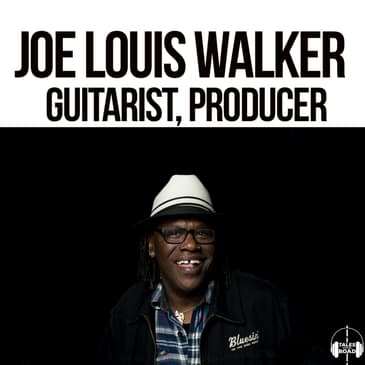

Joe Louis Walker is one of the greatest bluesmen of his generation. He is a four-time Blues Music Award winner and 2013 Blues Hall of Fame inductee who has appeared on multiple Grammy-winning albums. He is known worldwide as one of the genre’s top musical trailblazers—a mesmerizing guitarist and soul-testifying vocalist. I caught with with Joe from his home in NY to talk about his upcoming release ECLECTIC ELECTRIC. A 11 track album ]comprised party of originals but also finds Joe applying his watermark to some classics including The Eagles hotel California, the Rolling Stones Make no mistake and muddy waters two trains running.
--------------------------------------------------------------------------------------------------------
For tour dates, merchandise and info https://joelouiswalker.com
-----------------------------------------------------------------------------------------------------------------
Follow Tales from the Road
Facebook
https://www.facebook.com/talesfromtheroadofficial
Instagram
https://www.instagram.com/talesfromtheroad/
-----------------------------------------------------------------------------------------------------------------
Subscribe on Spotify | Apple Podcasts | Google | Gaana |Audible
You can also read, watch, listen via our website https://www.tftrmedia.com
Hosted & Produced by Vikram Chandrasekar and Moving Pictures Media
00:00:00
Speaker 1: joe louis walker is one of the greatest bluesman of
00:00:03
Speaker 1: his generation. He is a four time blues music award
00:00:06
Speaker 1: winner and a 2013 Blues Hall of Fame inductee who
00:00:10
Speaker 1: has appeared on multiple grammy winning albums. He is known
00:00:13
Speaker 1: worldwide as one of the genre's top musical trailblazers, a
00:00:17
Speaker 1: mesmerizing guitarist and a soul testifying vocalist. I caught up
00:00:21
Speaker 1: with joe from his home in new york to talk
00:00:23
Speaker 1: about his upcoming album, eclectic Electric 11 track album comprised
00:00:29
Speaker 1: partly of originals, but also finds joe applying his watermark
00:00:32
Speaker 1: to some classics, including the Eagles hotel California,
00:00:35
Speaker 1: The Rolling Stones make no mistake and muddy waters. Two
00:00:38
Speaker 1: trains running, you've been back out on the road. You
00:00:41
Speaker 1: have done a few shows. What's it like to play
00:00:44
Speaker 1: live again?
00:00:46
Speaker 2: Well, it's it's
00:00:50
Speaker 2: it's not, it's kind of bittersweet because um
00:00:56
Speaker 2: uh
00:00:57
Speaker 2: because of the,
00:00:59
Speaker 2: the pandemic um everywhere you go, every place has different
00:01:06
Speaker 2: rules and regulations. So some places may, you may need
00:01:10
Speaker 2: to be vaccinated, some places you may not, some places
00:01:13
Speaker 2: you may need to have a proof of, of, of
00:01:16
Speaker 2: being uh,
00:01:18
Speaker 2: of testing 72 hours ahead of time
00:01:21
Speaker 2: and then you get the dynamic where, you know, the
00:01:23
Speaker 2: people get inside and then people are gonna want to
00:01:26
Speaker 2: have a good time. So some people will pull their
00:01:28
Speaker 2: mask off, Some of them have their mask off and
00:01:30
Speaker 2: sometimes people don't understand each other's position and it's it's
00:01:35
Speaker 2: it's it's it's a strange situation to be honest.
00:01:39
Speaker 1: Yeah, but it must have felt good to be back
00:01:42
Speaker 1: on stage at least right
00:01:43
Speaker 2: after two years.
00:01:46
Speaker 2: Yeah. Yes, It felt good to get the energy back
00:01:49
Speaker 2: from the people and back and forth. I've been recording
00:01:52
Speaker 2: a lot of stuff, different projects, but it's nothing like
00:01:55
Speaker 2: playing for people.
00:01:57
Speaker 1: Yeah, I can imagine. Um anyway, joe the new album,
00:02:01
Speaker 1: um eclectic electric great album, I've enjoyed listening to it.
00:02:06
Speaker 1: Um
00:02:07
Speaker 1: can you talk a little bit about how the album
00:02:09
Speaker 1: came together?
00:02:11
Speaker 2: Yes. Um this is my 30th album uh since coming
00:02:16
Speaker 2: back from playing gospel. I played nothing but gospel music
00:02:19
Speaker 2: from 75 to 85. And then I came back to
00:02:22
Speaker 2: blues 85 this is my 30th album under my name.
00:02:26
Speaker 2: And I what I did, I asked friends, I asked
00:02:31
Speaker 2: friends who in the business. I asked a fellow musicians,
00:02:34
Speaker 2: I asked family members, I asked DJs that I like,
00:02:38
Speaker 2: like you, I said, man, what do you know, what
00:02:40
Speaker 2: do you hear me doing? You know what what what
00:02:42
Speaker 2: what do you think? You know, and everybody would send
00:02:45
Speaker 2: me their opinion.
00:02:46
Speaker 2: But one thing that a thread ran through it
00:02:49
Speaker 2: and I would get a thing from my my my
00:02:53
Speaker 2: my my grand niece and he would say, hey, you know,
00:02:55
Speaker 2: uncle joe, I liked your version when you did that,
00:02:58
Speaker 2: that that Beatles song um while my guitar gently weeps
00:03:01
Speaker 2: for a compilation. Another another family member would say, I
00:03:05
Speaker 2: like what you did when you did the
00:03:06
Speaker 2: um I um
00:03:10
Speaker 2: Nicholas a tribute song. What's so funny about peace, love
00:03:13
Speaker 2: and understanding. So what I did, um I just took
00:03:16
Speaker 2: a bunch of requests and I looked and sing. Uh
00:03:21
Speaker 2: and I looked at what I look for in a
00:03:23
Speaker 2: cover song, somebody that I may have a personal catch
00:03:26
Speaker 2: with a personal relation.
00:03:27
Speaker 2: So when they, when they did work, when it shoots
00:03:29
Speaker 2: so many world was in London,
00:03:31
Speaker 2: that was cool because me and waddy Wachtel, it's like
00:03:33
Speaker 2: my brother. Okay. So when I played it for a while,
00:03:36
Speaker 2: maybe I played it for him and he said, oh
00:03:39
Speaker 2: that's great. So then he put his guitar part on it.
00:03:41
Speaker 2: So that sort of solidified. It's the same with the song.
00:03:45
Speaker 2: All she wants to do is dance because Danny Koch
00:03:47
Speaker 2: more is like my buddy too.
00:03:49
Speaker 2: And he's in the same band with watty
00:03:51
Speaker 2: but Danny couldn't play on the record because um because
00:03:55
Speaker 2: of the pandemic things got really strange here in America,
00:03:59
Speaker 2: you couldn't travel, you could. And the the the the
00:04:03
Speaker 2: the other one, the other cover was was done a
00:04:07
Speaker 2: couple of years ago
00:04:08
Speaker 2: for the last record blues coming on,
00:04:12
Speaker 2: but it didn't make the cut. And that cover was
00:04:14
Speaker 2: to make no mistake
00:04:16
Speaker 2: by Yeah, yeah. And and and I asked him, I said,
00:04:21
Speaker 2: well you know, can I do the song? And he said,
00:04:24
Speaker 2: well you know joe just make it your own, just
00:04:28
Speaker 2: make it judge joe and steve steve uh the drummer
00:04:35
Speaker 2: who wrote with him, steve Jordan was very kind
00:04:38
Speaker 2: and so that worked that worked out.
00:04:41
Speaker 2: So,
00:04:42
Speaker 1: you know, when I, when I looked at the names
00:04:45
Speaker 1: of the songs before I listened to the album, I
00:04:47
Speaker 1: looked at the names of the songs and I saw
00:04:49
Speaker 1: hotel California and I saw um you know, I saw
00:04:52
Speaker 1: make no mistake and two trains running and stuff. And
00:04:54
Speaker 1: I thought it would be a radical reinvention of the song. Right?
00:04:59
Speaker 1: I
00:04:59
Speaker 2: was pleasantly
00:05:00
Speaker 1: surprised when I heard that you were very,
00:05:02
Speaker 1: you're very gentle with the song, You know what I mean?
00:05:04
Speaker 1: I mean, obviously it's still recognizable. So there's, you know,
00:05:07
Speaker 1: you're still
00:05:08
Speaker 1: true to the original in a sense. So what was
00:05:11
Speaker 1: the philosophy you kind of adhered to while you were
00:05:13
Speaker 1: doing these covers.
00:05:15
Speaker 2: Well, with, with with
00:05:18
Speaker 2: to funk it up.
00:05:20
Speaker 2: two Blues. If I it up
00:05:22
Speaker 2: and to uh
00:05:25
Speaker 2: with with with, with watching song with, with, with with
00:05:27
Speaker 2: with with with werewolves. We just wanted to make it
00:05:30
Speaker 2: super funky, you know, and then they have the have
00:05:33
Speaker 2: the funky guitar and and and and then they have
00:05:35
Speaker 2: what is rock and slide and have that juxtaposition with, with,
00:05:40
Speaker 2: with what you want to do is dance. I wanted
00:05:42
Speaker 2: to put some horns in there, but I really wanted
00:05:44
Speaker 2: to make it like a horn stand span,
00:05:47
Speaker 2: you know, uh I don't, I didn't, you know, I
00:05:50
Speaker 2: didn't want to put a whole bunch of singing, screaming
00:05:54
Speaker 2: background singers on it now that I didn't need that
00:05:57
Speaker 2: to me and with hotel California, I wanted to, we
00:06:00
Speaker 2: wanted to give it a little bit of a reggae,
00:06:02
Speaker 2: funky um uh, feeling to it
00:06:07
Speaker 2: and um,
00:06:09
Speaker 2: and and
00:06:11
Speaker 2: make it more about the story
00:06:14
Speaker 2: other than the Guitar army thing they do at the
00:06:17
Speaker 2: end of the big guitar thing. You can't, we can
00:06:19
Speaker 2: do that no better. You can't do it, no matter
00:06:22
Speaker 2: joe Washington did it. So what we wanted to do
00:06:24
Speaker 2: was to accentuate the story, because if you're from California
00:06:28
Speaker 2: and you're a musician, you've been to a hotel California, Okay,
00:06:33
Speaker 2: so I've been to a hotel where we, where we
00:06:35
Speaker 2: get at the gigs over at two at night, we
00:06:37
Speaker 2: get in the hotel at three, there's nobody at the desk,
00:06:40
Speaker 2: but there's a wise guy in the corner saying, yeah, dude,
00:06:44
Speaker 2: you can check in, but you can't check out, you know,
00:06:47
Speaker 2: just really then you're looking like that guy is serious. Well,
00:06:51
Speaker 2: and then somebody comes and they show you a room
00:06:54
Speaker 2: and you look around the room and there's no mirrors, none.
00:06:57
Speaker 2: And then your body tap, look up and there's mirrors
00:07:01
Speaker 2: all up there and you say, oh, I don't know
00:07:03
Speaker 2: what this room for. So, you know, it's that, that
00:07:08
Speaker 2: that's what I was trying to bring out.
00:07:10
Speaker 1: Yeah, because that's exactly what I got out of the song,
00:07:13
Speaker 1: that it was subdued to the point where
00:07:16
Speaker 1: you don't really notice what's going on, but you can
00:07:18
Speaker 1: feel what's going on.
00:07:22
Speaker 2: I wanted, I wanted,
00:07:24
Speaker 2: I prefer
00:07:26
Speaker 2: two
00:07:28
Speaker 2: have nuance in what I do. Um
00:07:32
Speaker 2: there's, there's a million and one guitar players that are
00:07:34
Speaker 2: knocking you over the head every minute with a bunch
00:07:36
Speaker 2: of notes and, and boom. And that's why I'm 70
00:07:41
Speaker 2: I'll be 72 years old. And on christmas day, you know,
00:07:45
Speaker 2: and I look at it like it's, it's a marathon.
00:07:48
Speaker 2: It's not a sprint. I don't have to bowl people over,
00:07:51
Speaker 2: although I have more power to anybody that can do
00:07:54
Speaker 2: it and you know, become famous and all that stuff.
00:07:56
Speaker 2: But it's just that I like to have people um,
00:07:59
Speaker 2: you know, say, hey, you know, hey joe did something
00:08:02
Speaker 2: different with that, joe, you know, showed another side of,
00:08:06
Speaker 2: of something.
00:08:06
Speaker 1: Yeah. Because what I found fascinating as a, as a,
00:08:10
Speaker 1: as a layperson,
00:08:12
Speaker 1: what I found fascinating. What I was trying to understand
00:08:15
Speaker 1: was the process
00:08:16
Speaker 1: of um, you know, adding something to these covers. Right?
00:08:19
Speaker 1: How do you strip away stuff keeps something some part
00:08:23
Speaker 1: of it that's true to the original and then add
00:08:26
Speaker 1: more color and rhythm to it. Right? So is that
00:08:29
Speaker 1: the kind of way to approach it that maybe the
00:08:31
Speaker 1: baseline is true to the original and then you leave
00:08:33
Speaker 1: room around it to add stuff to the song.
00:08:36
Speaker 2: Yeah, yeah. And and, and that's what you do when
00:08:39
Speaker 2: you look for an arrangement. You know, you you spend
00:08:42
Speaker 2: a day or two saying, hey, let's try it like
00:08:43
Speaker 2: this with the baseline. Let's try it like this with
00:08:46
Speaker 2: with the drums, let's start with the drums and the bass.
00:08:48
Speaker 2: Let's try it like this. Let's leave the backgrounds out.
00:08:50
Speaker 2: Let's leave all this guitar out. Let's let's put something else,
00:08:53
Speaker 2: you know? So you you try. That's where the arrangement
00:08:56
Speaker 2: comes in. And yeah,
00:08:59
Speaker 1: So is this like, is this album like a part
00:09:01
Speaker 1: two to Blue's coming on? I mean, Blues coming on
00:09:04
Speaker 1: was also a collaborative effort, right? You had um kevin moore,
00:09:07
Speaker 1: you had eric gales, you had all of these guys.
00:09:09
Speaker 1: So is this like a part two to that?
00:09:11
Speaker 2: Well, actually, Blues coming Home was supposed to be a
00:09:14
Speaker 2: double album,
00:09:16
Speaker 2: All these songs that you listen to now, we're supposed
00:09:18
Speaker 2: to be on. Blue's coming on. But we came to
00:09:20
Speaker 2: the conclusion that the president of the record company, my manager, everybody,
00:09:25
Speaker 2: my wife, that people nowadays do not have the attention
00:09:29
Speaker 2: span to listen to a two album record. You know,
00:09:32
Speaker 2: they barely have attention span to listen to a 99
00:09:35
Speaker 2: cent single.
00:09:36
Speaker 2: So, um we said no, let's just cut it in half,
00:09:39
Speaker 2: let's just do it. And and you know,
00:09:42
Speaker 2: uh yeah,
00:09:45
Speaker 1: but that's interesting that you say that, right, because um
00:09:48
Speaker 1: you think that, you know, the attention span in today's
00:09:51
Speaker 1: era of streaming. I mean, people don't listen to stuff
00:09:54
Speaker 1: more than like maybe 2, 2.5, 3 minutes?
00:09:57
Speaker 1: But back in the day in the sixties as well
00:09:59
Speaker 1: for radio, I remember Susie Q, one of the, I
00:10:02
Speaker 1: was speaking to Doug Clifford a few weeks ago and
00:10:05
Speaker 1: I think the original version of Suzy Q was seven
00:10:07
Speaker 1: or nine minutes or something like that. And I can't
00:10:10
Speaker 1: remember if that went on radio like that. Right?
00:10:13
Speaker 2: Yeah, well, you know, it went on radio because it
00:10:16
Speaker 2: went on radio where I lived at in san Francisco.
00:10:19
Speaker 2: If it wasn't wasn't for us in san Francisco, all
00:10:22
Speaker 2: the radio stations will still be playing songs by the
00:10:25
Speaker 2: Monkey for two minutes and 30 seconds. We just made it,
00:10:28
Speaker 2: we just said, forget it. And all the DJs walked
00:10:31
Speaker 2: out
00:10:32
Speaker 2: and and they said, let's we get to play the songs,
00:10:34
Speaker 2: we wanna play, how long we want to play them,
00:10:36
Speaker 2: we're leaving and they left and they went instead of
00:10:39
Speaker 2: the am dial, they went to the FM. And the
00:10:41
Speaker 2: first big hit was Susie Q from uh Please Clear Water.
00:10:47
Speaker 2: But
00:10:48
Speaker 1: tell me joe, what what is it like for you
00:10:50
Speaker 1: to collaborate with all of these people? I asked because
00:10:54
Speaker 1: I remember reading an interview with Howling Wolf, I think
00:10:57
Speaker 1: it was an interview he did in 67 where he
00:11:00
Speaker 1: famously said that, you know, muddy waters never really liked
00:11:04
Speaker 1: playing with anybody because he was just jealous of people
00:11:07
Speaker 1: who played better than him.
00:11:08
Speaker 1: Um,
00:11:09
Speaker 2: you
00:11:10
Speaker 1: know, um, so, so how is it for you to
00:11:13
Speaker 1: collaborate with all of these, these great, great people, what
00:11:17
Speaker 1: is the kind of
00:11:18
Speaker 1: mindset? Is there a sense of competition at all or
00:11:21
Speaker 1: what's that like?
00:11:23
Speaker 2: You know, I gotta say something, you know, I'm new
00:11:27
Speaker 2: muddy waters and I knew howlin wolf and you know,
00:11:31
Speaker 2: number one, I don't believe Wolf ever said that number
00:11:35
Speaker 2: number one, you know, and, and, and number two, if
00:11:39
Speaker 2: he did, he must have been talking about another muddy waters,
00:11:42
Speaker 2: muddy waters.
00:11:43
Speaker 2: Um,
00:11:44
Speaker 2: so many great musicians came out of muddy waters, bands
00:11:47
Speaker 2: that muddy nurtured, including little walter, uh, James, cotton, uh,
00:11:53
Speaker 2: buddy guy, uh, junior Wales muddy would, would nurture everybody,
00:11:58
Speaker 2: including me. He nurtured me. So I don't believe that.
00:12:02
Speaker 2: And I don't believe Hollywood said that. I just believe
00:12:04
Speaker 2: sometimes
00:12:05
Speaker 2: people say things and then they just say them and, and,
00:12:09
Speaker 2: and nobody's here to say to speak up. But to
00:12:12
Speaker 2: get back to your original question,
00:12:15
Speaker 2: um, when I collaborate with these people, what I do
00:12:18
Speaker 2: is I'll go somewhere and write songs
00:12:21
Speaker 2: in in, in
00:12:23
Speaker 2: and with them in mind, I'll pick out material with
00:12:26
Speaker 2: them in mind with them in mind and then I'll
00:12:29
Speaker 2: get together with them and, and I'll send a little demo,
00:12:32
Speaker 2: you know, a little voice memo and we'll go back
00:12:34
Speaker 2: and forth and we'll talk and, or sometimes I might
00:12:37
Speaker 2: have the whole song done and send it to them
00:12:40
Speaker 2: or whatever, but
00:12:42
Speaker 2: I listened to all their input
00:12:44
Speaker 2: and um since I'm a fan of theirs, I tried
00:12:48
Speaker 2: to choose a song that would accentuate the best in
00:12:53
Speaker 2: in what they do, you know, I don't look to
00:12:55
Speaker 2: be the star, I don't have to be the star
00:12:58
Speaker 2: and everything really, I don't know if I I take
00:13:01
Speaker 2: more joy in singing a duet
00:13:03
Speaker 2: with mitch Ryder or singing a duet
00:13:06
Speaker 2: with the honor, singing a duet with Carla Cooks sam
00:13:09
Speaker 2: Cooke starter or singing a duet with with with johnson,
00:13:12
Speaker 2: but I have more fun doing that than I do
00:13:15
Speaker 2: doing my own thing, you
00:13:16
Speaker 1: know,
00:13:18
Speaker 1: and tell me joe when you write what, what comes first,
00:13:21
Speaker 1: is it the music or the lyrics? How do you write,
00:13:23
Speaker 1: what is your process of writing?
00:13:26
Speaker 2: It's it's no it's no real rhyme or reason. Sometimes
00:13:29
Speaker 2: the music will come to you in the middle of
00:13:31
Speaker 2: the night, sometimes someone will say something and and and
00:13:34
Speaker 2: then it'll um pique your interest and you write it down,
00:13:38
Speaker 2: you know, someone will say something catchy and you'll pick
00:13:41
Speaker 2: it down and then, you know, the next thing, you know,
00:13:44
Speaker 2: you've got all these little things written down
00:13:46
Speaker 2: and then you'll have bits and pieces of music and
00:13:50
Speaker 2: sometimes it will get together, sometimes they want and sometimes
00:13:54
Speaker 2: something come to you in your sleep, you know, as
00:13:57
Speaker 2: a whole song, you know, and you say did I
00:13:59
Speaker 2: really dream that, or did it? I don't want to
00:14:02
Speaker 2: take it off somebody else's song? And so and that's
00:14:05
Speaker 2: happened a lot, you know,
00:14:07
Speaker 2: a lot to a lot of people, so there's no
00:14:09
Speaker 2: rhyme or reason to it.
00:14:11
Speaker 2: Mhm.
00:14:12
Speaker 1: How does um you know, you said earlier, you, you know,
00:14:16
Speaker 1: you're 30 albums old, essentially. How does one remain relevant
00:14:20
Speaker 1: through the length of a career? That's as long as yours, Joe.
00:14:25
Speaker 1: I mean, obviously times have changed, fan, your fan base
00:14:27
Speaker 1: has changed um you know, newer interest, younger artists, How
00:14:33
Speaker 1: do you stay relevant and how do you bring in
00:14:35
Speaker 1: a fresh perspective to the music?
00:14:38
Speaker 2: Well, um number one, I listened
00:14:42
Speaker 2: two other bands, I listen to young people, um and
00:14:46
Speaker 2: I'm known for blues, but I play all kinds of music,
00:14:49
Speaker 2: I've played uh
00:14:52
Speaker 2: jazz, I played funk, I played rock and roll, I
00:14:56
Speaker 2: played this that the other, and so I'm not, I'm
00:14:58
Speaker 2: not adverse into getting, getting together with with with someone
00:15:04
Speaker 2: else from another genre and and writing and and and
00:15:07
Speaker 2: taking a little bit out of what he's doing, and
00:15:09
Speaker 2: you can take a little bit about what I'm doing,
00:15:11
Speaker 2: and we come up with a song
00:15:12
Speaker 2: or something. I'm not,
00:15:13
Speaker 2: I'm not adverse to that. So my my ears are
00:15:16
Speaker 2: always open and my heart is always open and my
00:15:19
Speaker 2: mind is always open.
00:15:21
Speaker 1: Yeah, you know, historically, uh joe one of the major
00:15:25
Speaker 1: themes of the blues has been, you know, freedom music
00:15:29
Speaker 1: and it's served as essentially a voice uh of the people.
00:15:33
Speaker 1: Um What do you think the value is in today's scenario,
00:15:37
Speaker 1: when we are experiencing a lot of these same things? Right?
00:15:39
Speaker 1: What is the value of blues music in today's scenario?
00:15:44
Speaker 2: Um The value as as it relates
00:15:50
Speaker 2: to the sign of the times of what's, what's going
00:15:54
Speaker 2: on in the world saying,
00:15:57
Speaker 2: well, uh
00:16:00
Speaker 2: the blues music as you said that, you know, it
00:16:04
Speaker 2: it came out of uh
00:16:07
Speaker 2: um
00:16:09
Speaker 2: hard, harsh circumstances. Um and um
00:16:14
Speaker 2: those circumstances
00:16:17
Speaker 2: have not went away.
00:16:19
Speaker 2: And so when you when when
00:16:21
Speaker 2: any number of things happen that uh the powers that be,
00:16:26
Speaker 2: you know, they
00:16:31
Speaker 2: treat treat people unfairly. Um
00:16:35
Speaker 2: uh
00:16:37
Speaker 2: don't treat people evenly
00:16:39
Speaker 2: uh
00:16:40
Speaker 2: hurt people as we've seen on tv that the blues
00:16:44
Speaker 2: can become a conduit, it can become a voice. Uh
00:16:49
Speaker 2: if you put that in there. Um
00:16:52
Speaker 2: uh
00:16:53
Speaker 2: you know, if if you're talking about America, it gets
00:16:57
Speaker 2: tricky because
00:16:59
Speaker 2: America has
00:17:01
Speaker 2: um blues,
00:17:03
Speaker 2: uh
00:17:05
Speaker 2: a lot of black blues artists, but the but the
00:17:08
Speaker 2: fan base is white.
00:17:10
Speaker 2: Okay, so you have, I think just to be quite honest,
00:17:14
Speaker 2: you have to be honest, not to alienate your fan base.
00:17:17
Speaker 2: I'm just talking, talking Turkey, you're talking real now, you
00:17:21
Speaker 2: got to be, not to alienate your fan base,
00:17:25
Speaker 2: but in same token, you gotta be true to yourself.
00:17:27
Speaker 2: And and um
00:17:30
Speaker 2: sometimes those two are a big clash. Sometimes they're they're
00:17:35
Speaker 2: a big clash.
00:17:36
Speaker 1: Yeah. Because, you know, Kendrick Lamar sometime ago had written
00:17:41
Speaker 1: that song alright. Which kind of became the anthem for,
00:17:45
Speaker 1: you know, Black Lives Matter and stuff like that. Um,
00:17:48
Speaker 1: I was just wondering, you know, does it make, is
00:17:52
Speaker 1: it may be time for?
00:17:54
Speaker 1: Um you know, it's wrong to say blues musicians, but
00:17:57
Speaker 1: musicians in general to incorporate a little more uh political
00:18:01
Speaker 1: awareness and maybe protest in their music.
00:18:05
Speaker 1: Um would it be fair to say that is what
00:18:09
Speaker 1: I was thinking?
00:18:11
Speaker 2: Well, and there is absolutely nothing wrong with thinking that.
00:18:14
Speaker 2: And that's the generation that I came out of. You know.
00:18:17
Speaker 2: Uh so, but as that generation
00:18:22
Speaker 2: got older
00:18:24
Speaker 2: and the next generation came in the 70s, it was
00:18:28
Speaker 2: more about
00:18:29
Speaker 2: in the sixties, it was more about helping each other
00:18:31
Speaker 2: in the seventies. It was more about helping me in the,
00:18:34
Speaker 2: in the eighties. It was about me, me, me me
00:18:37
Speaker 2: in the nineties. It was about learning a computer and
00:18:40
Speaker 2: being sedentary by yourself, by yourself, computers by yourself. And
00:18:45
Speaker 2: so the twenties and and now you have these different
00:18:48
Speaker 2: things going on and,
00:18:49
Speaker 2: and
00:18:50
Speaker 2: um,
00:18:51
Speaker 2: mm hmm.
00:18:52
Speaker 2: I don't have the answer. You know?
00:18:56
Speaker 2: Yeah,
00:18:57
Speaker 1: yeah, I can I can understand but I want to
00:18:59
Speaker 1: touch upon something you, you spoke about briefly um about
00:19:03
Speaker 1: um you know, do you think blues music is becoming
00:19:07
Speaker 1: very guitar centric today,
00:19:11
Speaker 1: Because I've heard people say that the upcoming blues artists
00:19:14
Speaker 1: are aren't paying enough attention to the roots
00:19:17
Speaker 1: of the music, right? And then there is of course
00:19:20
Speaker 1: a school of thought that says blues music has become
00:19:23
Speaker 1: very guitar driven. Where where do you stand on that?
00:19:25
Speaker 1: What do you think?
00:19:28
Speaker 2: Well, I think,
00:19:31
Speaker 2: yeah, it's um,
00:19:34
Speaker 2: that the, if if
00:19:39
Speaker 2: the,
00:19:40
Speaker 2: if you took a picture of blues,
00:19:44
Speaker 2: if you took three pictures, one was a guy with
00:19:46
Speaker 2: a guitar, when was the lady with the microphone
00:19:50
Speaker 2: and one could be someone with a harmonica or a piano.
00:19:53
Speaker 2: The one with the picture with the, with the guitar
00:19:57
Speaker 2: would have, if it wasn't a test, it would have
00:20:00
Speaker 2: 1000 hits. The lady with the, with the, with the
00:20:03
Speaker 2: microphone would maybe have
00:20:05
Speaker 2: 100
00:20:06
Speaker 2: you know, and so
00:20:08
Speaker 2: the guitar is ingrained in blues. But, but what, what
00:20:13
Speaker 2: I think what you're saying is, is,
00:20:16
Speaker 2: yes, it is
00:20:17
Speaker 2: in a way.
00:20:20
Speaker 2: Um,
00:20:22
Speaker 2: taking away
00:20:24
Speaker 2: from
00:20:25
Speaker 2: the essence of the blues, which was a social commentary.
00:20:29
Speaker 2: The blues was a social commentary
00:20:32
Speaker 2: and every, every one of those social commentaries,
00:20:35
Speaker 2: The guitar took a little bit of solo in the
00:20:38
Speaker 2: middle
00:20:39
Speaker 2: and that was it.
00:20:40
Speaker 2: Now you have
00:20:43
Speaker 2: a successful blues song, rock, blues, rock song goes like this,
00:20:47
Speaker 2: I lost my baby 52 guitar solos. I found my
00:20:51
Speaker 2: baby the end of the song.
00:20:53
Speaker 2: Well, obviously it comes to this.
00:20:57
Speaker 2: If you don't have,
00:20:58
Speaker 2: if you haven't experienced the trials and tribulations,
00:21:03
Speaker 2: uh, to, to put into a song
00:21:08
Speaker 2: uh, to express your situation. Then if you don't have
00:21:13
Speaker 2: it in you, you can't take it out you so
00:21:15
Speaker 2: you can pair it, somebody else's music.
00:21:18
Speaker 2: You can sing. I got my mojo working like muddy waters,
00:21:21
Speaker 2: but he's singing it about something else. You can sing
00:21:24
Speaker 2: sweet home Chicago, even though you live in the richest
00:21:29
Speaker 2: part of Montauk new york. You can sing it.
00:21:33
Speaker 2: And now, whether it rings true or not, who knows?
00:21:36
Speaker 2: People don't care nowadays, but but the, the the essence
00:21:40
Speaker 2: of of of the blues now
00:21:43
Speaker 2: is a
00:21:46
Speaker 2: it's party time.
00:21:48
Speaker 2: It's party time where, whereas before it was literally, you know, thinking,
00:21:54
Speaker 2: you know, you you you thought about what was being
00:21:57
Speaker 2: said
00:21:58
Speaker 2: now, it's it's more like, you know, they're playing my
00:22:01
Speaker 2: favorite song, Let's go get a drink.
00:22:02
Speaker 1: Yeah, it's a it's a credibility thing also, Right?
00:22:06
Speaker 2: Yeah.
00:22:09
Speaker 1: It's interesting because I remember reading something that eric Clapton
00:22:13
Speaker 1: had said back in the day when, you know, he's
00:22:16
Speaker 1: obviously very heavily influenced by the blues and when I
00:22:19
Speaker 1: think one of the reasons Cream broke up
00:22:22
Speaker 1: was that he said they were doing all these covers
00:22:25
Speaker 1: of robert, johnson and you know, all these blues greats
00:22:28
Speaker 1: and then doing extended guitar solos and things like that
00:22:31
Speaker 1: and the audience loved it. But somehow he felt very
00:22:34
Speaker 1: guilty about it.
00:22:35
Speaker 1: And I think he attributed one of the reasons that
00:22:38
Speaker 1: Cream broke up was just because he says he couldn't
00:22:40
Speaker 1: deal with that guilt.
00:22:43
Speaker 2: Yeah. Well,
00:22:46
Speaker 2: God bless them. God bless him.
00:22:51
Speaker 1: Yeah. But, but you know what one of the hallmarks
00:22:53
Speaker 1: of your career has been, You know, you've never been
00:22:56
Speaker 1: scared to experiment. There's a lot of diversity.
00:22:59
Speaker 1: Do you feel that, you know, musicians today need to
00:23:02
Speaker 1: be more diverse. Need to experiment a little more with
00:23:06
Speaker 1: the blues itself?
00:23:08
Speaker 2: Well, you know, I,
00:23:11
Speaker 2: I found out a long time ago, no matter what
00:23:13
Speaker 2: I think, um, it's um,
00:23:17
Speaker 2: I don't want to, uh,
00:23:19
Speaker 2: be as facetious as to say someone should do what
00:23:21
Speaker 2: I think. Um, but I do feel that nowadays that
00:23:26
Speaker 2: people are because it's so much blues all over the world,
00:23:30
Speaker 2: that people are doing it differently all over the world,
00:23:34
Speaker 2: you know? Um, and that's, that's a big thing now
00:23:37
Speaker 2: that people are doing it all differently all over the world. Um, Blues,
00:23:42
Speaker 2: blues has become extremely popular,
00:23:44
Speaker 2: you know, especially among young ladies
00:23:47
Speaker 2: with guitars and especially the young among young young people that,
00:23:52
Speaker 2: that don't want to, um,
00:23:55
Speaker 2: you know, they don't,
00:23:57
Speaker 2: yeah,
00:23:58
Speaker 2: I don't know. Um,
00:23:59
Speaker 2: they want, they want to to uh, express themselves with
00:24:04
Speaker 2: the lineage that, you know,
00:24:06
Speaker 2: if you, if you pick up a guitar and,
00:24:09
Speaker 2: and you see chuck berry,
00:24:11
Speaker 2: you pick up a guitar
00:24:13
Speaker 2: and you see uh, pat balloons guitar player who you
00:24:18
Speaker 2: gonna want to be, You know what I mean? You're
00:24:22
Speaker 2: gonna just looking at chuck berry's gonna fascinate you and
00:24:25
Speaker 2: then just to hear what he does? And then when
00:24:27
Speaker 2: you see him, the deal is done, the deal is done.
00:24:32
Speaker 2: I defy anybody to go on
00:24:34
Speaker 2: playing guitar after chuck berry. Did
00:24:38
Speaker 1: you, did you watch chuck Berry growing up?
00:24:40
Speaker 2: Did
00:24:42
Speaker 1: you watch it? Did you watch a play?
00:24:44
Speaker 2: Yeah, yeah, yeah, yeah,
00:24:49
Speaker 1: incredible.
00:24:51
Speaker 1: You know, joe you spoke earlier about, you know, you
00:24:53
Speaker 1: said you gave up the blues in the middle for
00:24:56
Speaker 1: a bit.
00:24:57
Speaker 1: Um, I know you were very close friends with Mike Bloomfield,
00:25:00
Speaker 1: You were roommates as well. Um, was it around the
00:25:05
Speaker 1: time of his passing that you decided to give up
00:25:07
Speaker 1: the blues?
00:25:08
Speaker 2: No, no, I I quit before his passing,
00:25:11
Speaker 2: I quit, I left, I left everything. I left Bloomfield's house.
00:25:15
Speaker 2: I left all my other friends, I left it all.
00:25:18
Speaker 2: I just started playing nothing but gospel in 1975, with my,
00:25:23
Speaker 2: with my friends. And um, I just didn't go back
00:25:27
Speaker 2: to playing secular music.
00:25:29
Speaker 2: Um, it was too, too many things were happening. Everybody
00:25:32
Speaker 2: was getting too indulgent.
00:25:35
Speaker 2: A lot of my friends, I mean, literally my friends
00:25:38
Speaker 2: who had known,
00:25:40
Speaker 2: um,
00:25:41
Speaker 2: for years,
00:25:43
Speaker 2: um,
00:25:44
Speaker 2: they took their bands and all, all of them got
00:25:47
Speaker 2: signed because the psychedelic craze and all of them got
00:25:50
Speaker 2: ripped off. All of them got ripped off.
00:25:53
Speaker 2: And the majority of them, uh,
00:25:57
Speaker 2: not very many of them
00:25:58
Speaker 2: came out with anything to show for it.
00:26:02
Speaker 1: So, so the gospel music, does it, has it been
00:26:06
Speaker 1: like an uh an underlying theme for you all, or
00:26:09
Speaker 1: all your life has has Gospel done that?
00:26:14
Speaker 2: Well, I just listen to all kinds of music, you know,
00:26:16
Speaker 2: I listen to gospel music, gospel music, it's like if
00:26:20
Speaker 2: blues is my mother tongue,
00:26:22
Speaker 2: the gospel is like my my father tongue, because gospel
00:26:26
Speaker 2: is that's right there together,
00:26:29
Speaker 2: you know, So it's and and it's both of them
00:26:32
Speaker 2: are steeped in in the african american history, you know,
00:26:35
Speaker 2: they mean something else to me, and they mean somebody else,
00:26:38
Speaker 2: you know, so, uh they'll always be in my soul
00:26:42
Speaker 2: and in my heart,
00:26:43
Speaker 2: you know, and and uh
00:26:47
Speaker 2: certain things that they can say, and in certain
00:26:50
Speaker 2: passages that they can
00:26:52
Speaker 2: if they can refer to that we all know, we
00:26:55
Speaker 2: all think about we all, you know, we all take
00:26:58
Speaker 2: solace in, and,
00:27:01
Speaker 2: you know, it's it's like a it's like an old friend,
00:27:04
Speaker 2: you know,
00:27:05
Speaker 2: and it could take you back to a place you,
00:27:08
Speaker 2: you remember, like, it was yesterday, it'll take back your
00:27:11
Speaker 2: place where you were a kid, sitting talking, explaining something
00:27:13
Speaker 2: to your grandmother or your great grandmother, you know, because
00:27:16
Speaker 2: you hear a certain song that you like, you know,
00:27:19
Speaker 2: and then, and then it's like, you just stop everything
00:27:22
Speaker 2: and you hear that your grandmother's voice
00:27:24
Speaker 2: and you, you know, you it'll make you emotional or
00:27:27
Speaker 2: something like that, you know? It's it's not, it's not,
00:27:30
Speaker 2: it's got nothing to do with gold records. Yeah.
00:27:34
Speaker 1: But, but is it, is it also a result of
00:27:36
Speaker 1: growing up in a religious family joe?
00:27:40
Speaker 2: Well,
00:27:41
Speaker 2: I grew up in a, in a somewhat religious family,
00:27:44
Speaker 2: but my family wasn't,
00:27:46
Speaker 2: I'll give you an idea.
00:27:48
Speaker 2: My father
00:27:50
Speaker 2: remove him and another reverend reverend reverend Stewart
00:27:54
Speaker 2: moved to an all white district when I was about
00:27:57
Speaker 2: four years old, were the only two black couples there.
00:28:02
Speaker 2: So my father,
00:28:04
Speaker 2: for some stroke of genius, he figured
00:28:07
Speaker 2: that I should go to catholic school.
00:28:09
Speaker 2: Okay. Now my, all my other 45 brothers had all
00:28:13
Speaker 2: the fun in the world going to, going to regular school.
00:28:15
Speaker 2: They had recess, they had dances, You can see all
00:28:18
Speaker 2: the other pretty little girls with me.
00:28:21
Speaker 2: I had to go to catholic school with the, with
00:28:23
Speaker 2: the little catholic pants on and everything. And so my
00:28:27
Speaker 2: first day at school,
00:28:28
Speaker 2: um, needless to say being the only black bird on
00:28:31
Speaker 2: the fence full of canaries. Um, I was, I was
00:28:34
Speaker 2: jumped on the first day of school hitting them out
00:28:36
Speaker 2: for the lunch pail things. Things are pretty well, but
00:28:39
Speaker 2: you fast forward. Um,
00:28:42
Speaker 2: uh,
00:28:44
Speaker 2: I dealt with that tribulation and some of those guys
00:28:46
Speaker 2: ended up being my friends or whatever, but
00:28:50
Speaker 2: um,
00:28:51
Speaker 2: plan plan
00:28:53
Speaker 2: I would leave catholic church, come home with my grandmother's
00:28:58
Speaker 2: and go to baptist church on sunday. So I tell everybody,
00:29:01
Speaker 2: you know, it was a little joe, you're real religious.
00:29:03
Speaker 2: I know just enough religious to know that I'm not
00:29:08
Speaker 2: for organized religion. I've had
00:29:11
Speaker 2: myself up to here
00:29:14
Speaker 2: with organized creatures in religion, I believe,
00:29:19
Speaker 2: until the day I die, there's a higher power. We
00:29:21
Speaker 2: didn't bring ourselves here. We don't know what's going on
00:29:24
Speaker 2: and the earth, the mother earth is our mother. I
00:29:27
Speaker 2: believe that
00:29:28
Speaker 2: a lot of other western hokey pokey, I don't believe,
00:29:32
Speaker 2: I'm sorry, I just don't believe it,
00:29:35
Speaker 2: you know. Um and the same can be said about
00:29:38
Speaker 2: another of it. Uh religions. I, I just, you know,
00:29:43
Speaker 2: anything that gives someone's faith, I'm all for it. And,
00:29:47
Speaker 2: but
00:29:48
Speaker 2: you know, let's just be real, you know, you know,
00:29:53
Speaker 2: they're just men, they're just men.
00:29:55
Speaker 1: Yeah, true. Did you, did you study music? Are you
00:29:59
Speaker 1: formally trained in music? Um joe
00:30:02
Speaker 2: Yeah, yes, I'm trained. I went back to school and
00:30:05
Speaker 2: got a degree in music and a degree in english.
00:30:08
Speaker 2: Mhm.
00:30:09
Speaker 1: So, and then you, you were saying you moved to
00:30:11
Speaker 1: san Francisco when you were a teenager, you said
00:30:14
Speaker 2: no, I moved to san Francisco when I was about
00:30:15
Speaker 2: three years old. What was
00:30:18
Speaker 1: that like growing up in san Francisco in the, in
00:30:21
Speaker 1: those days. Um
00:30:23
Speaker 1: I read somewhere that you, you grew up, you, you
00:30:26
Speaker 1: lived down the road from the dead or you know,
00:30:30
Speaker 1: somewhere of
00:30:30
Speaker 2: hate
00:30:34
Speaker 2: the whole fillmore district.
00:30:36
Speaker 2: The haight district was all african american, it was all
00:30:40
Speaker 2: african american, jewish, jewish, some jewish,
00:30:43
Speaker 2: some japanese
00:30:45
Speaker 2: Mainly, but mostly it was like Harlem in the 30s,
00:30:49
Speaker 2: it was just huge. And so um that's where I
00:30:53
Speaker 2: learned how to play, that's why I was around great
00:30:56
Speaker 2: musicians and we could play five nights a week. And
00:30:59
Speaker 2: then when when the young young kids start moving in
00:31:02
Speaker 2: from from
00:31:03
Speaker 2: Iowa and
00:31:05
Speaker 2: in Chicago and when growing their hair long and wanting
00:31:09
Speaker 2: to be theirselves, they moved into our neighborhood.
00:31:12
Speaker 2: Okay so we had to
00:31:15
Speaker 2: come to grips and we're we're gonna be friends with
00:31:17
Speaker 2: these guys and girls. Uh you know it's gonna be
00:31:21
Speaker 2: some tension. Well it was both, you know uh so
00:31:26
Speaker 2: that's where I grew up and then when I left
00:31:28
Speaker 2: home at 16 I moved to um Waller in Ashbury
00:31:32
Speaker 2: Street
00:31:32
Speaker 2: and if you if you just walk down the corner
00:31:34
Speaker 2: there's an ashtray, you walked up the hill.
00:31:36
Speaker 2: That was the Grateful Dead House and that's where they
00:31:39
Speaker 2: played all the time, you know? Yeah
00:31:42
Speaker 1: and you you you jammed with the Grateful Dead at
00:31:45
Speaker 1: some point.
00:31:49
Speaker 2: Yes, I jammed with bobby. I'm jamming with the musicians. Yeah.
00:31:53
Speaker 1: What what was that like
00:31:55
Speaker 1: I read that you played with Jimi Hendrix as well.
00:31:58
Speaker 2: Well you know when you're just jamming with somebody, you know,
00:32:00
Speaker 2: you're just having fun, nobody's
00:32:03
Speaker 2: you know trying to find a song that everybody can
00:32:05
Speaker 2: play together and you know, usually everybody's feeling pretty good,
00:32:09
Speaker 2: you know, so
00:32:11
Speaker 2: it's it was really
00:32:13
Speaker 2: you know, it's nothing that you think that's going to
00:32:15
Speaker 2: be anything special.
00:32:19
Speaker 1: Yeah, I can imagine it must have been quite a
00:32:21
Speaker 1: time though in san Francisco back in those days.
00:32:24
Speaker 2: Yeah
00:32:25
Speaker 2: it was
00:32:26
Speaker 1: yeah. Anyway joe what do you have coming up? So
00:32:29
Speaker 1: you have, you're going to do a tour now you
00:32:31
Speaker 1: have a bunch of shows lined up?
00:32:35
Speaker 2: Yes. Um and if you'd like to know all of them,
00:32:38
Speaker 2: my heart, you can go on to joe louis walker
00:32:40
Speaker 2: dot com.
00:32:42
Speaker 2: Well you can go on my facebook page, joe louis walker.
00:32:44
Speaker 2: Um Yes, we we started on the 12th of this
00:32:47
Speaker 2: month of november actually uh and and uh near near
00:32:51
Speaker 2: Pittsburgh and then we go to Cleveland and then we
00:32:54
Speaker 2: go to um um des Moines Iowa and then Minneapolis
00:32:58
Speaker 2: Minnesota Prince, his hometown and then we go to Chicago
00:33:01
Speaker 2: and
00:33:02
Speaker 2: then do and then some more dates in michigan and
00:33:04
Speaker 2: then
00:33:05
Speaker 2: we head back home and playing uh you know around
00:33:08
Speaker 2: the Northeast
00:33:10
Speaker 2: and so we will be um promoting this new record,
00:33:13
Speaker 2: electric electric. So
00:33:15
Speaker 1: It's out November 12 right?
00:33:17
Speaker 2: Yeah, but you can get it on different search engines
00:33:20
Speaker 2: now and you can all the singles out now werewolves
00:33:23
Speaker 2: of London with our special guest.
00:33:27
Speaker 1: Anyway joe thank you so much for your time. It's
00:33:29
Speaker 1: been an absolute pleasure and honor to meet you.
00:33:32
Speaker 2: Thank you that's
00:33:33
Speaker 1: it for this week's episode of Tales from the Road,
00:33:36
Speaker 1: Tales from the Road is brought to you by the
00:33:38
Speaker 1: concert photographer and moving pictures. Media. Don't forget to join
00:33:42
Speaker 1: us next week for another episode. If you like what
00:33:44
Speaker 1: you heard, subscribe to our podcast on ITunes, Spotify, google play.
00:33:48
Speaker 1: Thank you for listening.