
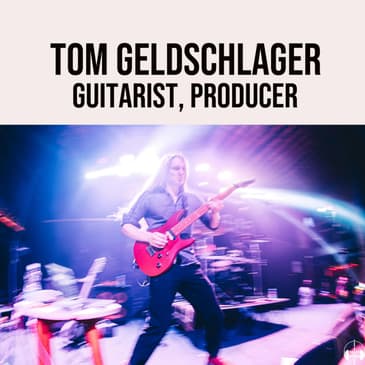

Tom Geldschlager, also known as Fountainhead, is a German guitarist and music producer. He began his musical journey at a young age, learning to play guitar and studying music theory. He developed a unique style influenced by various genres, including metal, fusion, jazz, and classical music. Throughout his career, Geldschlager has collaborated with numerous artists and bands. He has been a member of several notable groups, including the German progressive metal band Obscura, where he made significant contributions as a guitarist and composer. His work with Obscura can be heard on the 2016 album Akroasis. Geldschlager has also established himself as a skilled music producer. He has been involved in producing and engineering various projects, including albums for other artists and bands. This has allowed him to showcase his expertise not only as a performer but also as a studio professional. Tom Geldschlager continues to be an active musician, exploring new musical territories and pushing the boundaries of his craft. His dedication to his instrument, technical prowess, and creative vision have earned him recognition and respect within the metal and progressive music communities.
LISTEN TO THE SHOW
Apple Podcasts: https://apple.co/3xg7v9Z
Spotify: https://spoti.fi/3foYNzm
GET IN TOUCH
🌍 Our website: www.tftrmag.com
🌍 Work with us: vikram@movingpicturesmedia.in
FOLLOW OUR WORK
📸 Instagram: https://instagram.com/vikramchandrase...
🌍 Our website: www.vikramchandrasekar.com
ABOUT US Tales from the Road is a podcast where we talk to people from the world of performing arts, from those on stage and on screen to those behind the scenes, about life on the road and the journey behind taking their incredible art to the people. I'm your host Vikram and I'm a Music Photographer and Videographer.
[00:00:00] The following is a conversation with Tom Geldschlager, also known as FountainHead, a German guitar player, producer and engineer. Tom is widely regarded as a modern-day guitar legend thanks to his inimitable playing style and fearless use of the fretless guitar.
[00:00:16] Starting young, he developed a unique style influenced by various genres including metal, fusion, jazz and classical music. This eclectic blend of influences is evident in his playing which showcases technical proficiency, intricate composition and melodic sensibility. Throughout his career he has collaborated with numerous artists and bands.
[00:00:37] He has been a member of several notable groups where he has made significant contributions as a guitarist and composer. In addition to his work as guitar player, Tom has also established himself as a skilled music producer.
[00:00:50] This has allowed him to showcase his expertise not only as a performer but also as a studio professional. Now embarking on a solo career, Tom has been exploring new musical territories and pushing the boundaries of his craft.
[00:01:02] His dedication to his instrument, technical prowess and creative vision have earned him recognition and respect within the metal and progressive music communities. Tom is also an author having written a couple of books on music, creativity, psychology and is an advocate for mental health for musicians.
[00:01:19] I caught up with Tom at the end of his India tour at the Swar Nibbumi Academy of Music where he was doing a couple of workshops. The conversation was insightful, honest and thought-provoking, challenging my perspectives and offering unique insights into his creative process and the music business.
[00:01:38] It has probably been a different one. But yeah, it is absolutely true and also just for me personally this tour because it's my first solo tour ever.
[00:01:51] As far as numbers go and how many people would show up what the audience reactions would be, I had nothing to go on. I had no metric, no experience and quite frankly I thought going into this tour and this is what I said to my kids.
[00:02:08] It's like hey dad how many people are going to go see you in India? I don't know maybe five.
[00:02:15] And then we had over 230 people in Bangalore and it was mind-blowing really and just very emotional for me to be here and to do this and have people turn out.
[00:02:28] Also post-pandemic, even though that hasn't been on my radar but all of those things are quite amazing to experience.
[00:02:37] Yeah but it must be such a fantastic feeling to sort of go out on stage and to watch them react to the songs that you have written and stuff from the past.
[00:02:47] New stuff you've been experimenting with some new music as well which I think has been very well received also right? I think so yeah.
[00:02:54] So on both of these fronts and I've been saying this during the shows often that I had two purposes for this tour, two goals so to speak.
[00:03:04] One is to bring the music that I had written but have never performed in front of an audience and that I know that now that a lot of people have been waiting for me to play and have never experienced.
[00:03:18] Not with the bands that I was a part of and have written this music or performed this music for but also not with my solo material obviously.
[00:03:27] And then the other goal purpose was to let people know hey I have new music, I want to share this with you, I want to play this for you, I want to get your reactions and talk about it and then kind of hype people up for the new album.
[00:03:45] Yeah but did you get to sort of meet and interact with a lot of the fans and did you, were there people who have been following your career over the years? Oh yeah 100% yeah yeah.
[00:03:55] There were some absolute super chaps who were asking a lot of in depth questions and there was even a moment in Bangalore backstage when we had two fans who had travelled for the gig.
[00:04:08] I mean several people had travelled which is by blowing but those two travelled and they wanted to play one of my songs for me backstage and so we had a little session where they played one of my songs on my guitars backstage
[00:04:24] and then so to witness that level of commitment and just intense, yeah intense I don't want to say love but just intense interest into what I do is one of the many things that I have mixed feelings about because it is a beautiful beautiful thing to see
[00:04:47] and obviously gives me a lot of energy going forward, a lot of security that there is an audience and these reactions have been fantastic and I absolutely can plan to come back and try to do this on a higher level
[00:05:01] But it also is very much at odds with how I experience myself and the objective reality in my world if there is such a thing.
[00:05:10] So that sense of like admiration and importance is difficult. This integral part of my tour experience this time to integrate that admiration and that feeling of people being so interested in what I do and to reconcile that with the way that I feel which is not bad and just to make it work on both of these levels.
[00:05:36] Yeah it must be such a contrast to sort of at least observing as an audience or as a photographer when I'm part of it. It's almost like the whole live music and that particular show is like a bubble everybody's on the same team it's like this giant group hug
[00:05:55] right and then you sort of get off stage and then there's reality and there's real life and sort of the contrast between the two and it's like you know when you're in that bubble it's like everybody loves each other and there's alcohol and there's music and all that
[00:06:11] And then you get off stage and you turn on the news and then your world can be quite a shitty place.
[00:06:16] That is true. Yeah 100%. Yeah but also I think with me in particular like the way that my career has gone and the different stations in my career I think there has been an element of I don't want to say toxic fandom but let's just call it that
[00:06:38] where in that specific scene in the guitar scene with certain people if you do something let's say out of the ordinary and I think I am providing that with the fretless guitar and things that I've done.
[00:06:52] A lot of people won't get it and that's fine and then a lot of people do and that's great but then there will be a percentage and that is the loudest and the hardest working online and at these shows who are extremely obsessive with it
[00:07:10] and it is I've experienced that a lot that people project their experience with your music and maybe your ability on your instrument what you do onto you as a person and what I do is not who I am and what you do is not who you are
[00:07:28] and it becomes very difficult to navigate that because they own if they meet you if they see you if you put out something you that is what they see and you are that person to them and you may be in a shitty place right now you may not be that person
[00:07:42] you may not feel at all like that person and I have not been feeling like that person ever and especially not on this tour but you still have to deliver and you still have to approach them in a way that gives them that experience to a degree
[00:08:01] if you can navigate it I'm just rambling but yeah but that's a fine line right so they come to see Fountainhead and then but there's Tom and there's not Fountainhead so it's a sort of like we were talking yesterday the whole Alice Cooper and Vincent Virgil right
[00:08:22] and Alice is the alter ego exactly and it's interesting so you guys saw two shows and maybe you've seen this as well that I feel like so for the audience just for context until this tour started I had never I've given workshops and talked to people
[00:08:42] I clearly talked to people outside of this but I had never talked to an audience on stage there was never any need and the most I've talked on stage was like check check right so that has been intense to navigate that and I feel like maybe you can guys shed some light on this for me like I feel like over the shows
[00:09:07] that Persona has developed from the first show where I was just terrified and disgusted at hearing my own voice over the speakers and just didn't know what to say to last night where I was dealing with these sound issues and the monitor guy not reacting and then all these things you have to do life in front of people in real time and everybody has their phones out so I feel like there has been a
[00:09:33] Persona developing so maybe that's the fountain had persona and now that takes over and that kind of takes the pressure a little bit when Tom can't
[00:09:42] Yeah but you know sort of just to continue on from that observing observing you over the course of the tour it seems like you know you're a lot more relaxed about you know sort of not there are things that you can't control and you know you sort of laughed it off and made a joke about it and I thought you know sort of handled it brilliantly didn't take away from the live experience itself
[00:10:09] Yeah and that has been the giant learning experience because obviously I've been in this position before where you can't control things and you have a terrible sound and it's just one of those nights man but if the pressure is on you alone on stage you have to develop different tools and just develop a different relationship to it because whatever people experience at these shows by way of you not having a good time it's your responsibility
[00:10:39] and so if your name is up as a headliner on the bill it is your personal responsibility to ensure that people have a good time even though you may not have a good time and that has I think that has been I've gotten better at this during the tour yeah
[00:10:55] So just to sort of you know move on from that you said that this is the first time you're sort of performing alone what's it like sort of writing do you find you write better or work better alone or sort of in a band set up an environment do you work better there
[00:11:15] Or is it easier to sort of put out material as a band than as an independent solo artist
[00:11:22] That's a difficult question because both are very different muscles maybe that you train so what people know me as a solo artist and then obviously I write alone and people also know me from bands and then in these bands I'd be writing with people
[00:11:44] and I've also written ghost written for a lot of bands that people don't know about they don't know about the material that I've been a part of that and all of these things are they have to be navigated so it's like it's not one works better than the other it's more like how well can you navigate your responsibility and your needs and boundaries to make the writing session effective
[00:12:11] I think that's more what it is and that that also includes like writing alone because sometimes you know you only have a certain timeframe to write or you have to have a certain goal and then you don't feel ready for the course very in the psychological
[00:12:27] field of how do you motivate yourself how do you keep yourself on track so you have to have a chat and sit in with yourself saying this is this is how it's going to go this this works now and you have to you have to adhere to these limitations and expectations even though it's just a conversation with myself
[00:12:43] yeah so um yeah that maybe goes a bit off topic but I find these to be very different different things but they have they have to be navigated in the same way like the responsibility I feel is very high in this situation should be very high to have everybody on the same page
[00:13:05] what is my role what is my responsibility and where does it end and every time I had shitty writing experiences um I think it's connected to that that it wasn't really clear what the responsibility was and so if I've yeah I hope that answers your question
[00:13:21] yeah it does it does no I guess that's the freedom that sort of uh that you know being a solo artist is what maybe gives you the creative freedom to embark on a project like your new album
[00:13:33] yeah that's coming out can you talk a little about that because that seems like I've heard you talk about in the past like a fairly ambitious sort of project
[00:13:41] absolutely um what do you want to know just sort of you know what the thought process behind it how you decided who you wanted to bring on board to collaborate
[00:13:51] right um so the story is a bit complicated but I'll try to keep it brief um so I had um I'm a bit of a conceptualist conceptualist concept conceptual conceptual artists sounds so potential
[00:14:07] I like to work with a concept um so I have ideas in the draw for different projects and they are I like to put limitations on things and I had an idea for a solo album that I wanted to pursue for a long time
[00:14:21] um and then something else so that was like pandemic starting in the pandemic is okay well um I really want to get on this solo album but then something else came up and I um we decide me and another
[00:14:37] former band a former affiliate of a certain band that I was in um starts with an O um we were doing an album together a duet album basically writing together playing together and doing um yes like a modern version
[00:14:55] on of like a two guitar band uh in this technical death metal style that I personally hadn't revisited since that band I've played with people and I've played on albums but I hadn't written for that style ever since 2015
[00:15:13] so I thought okay well if you are in and we are doing this together and then we get to play the old stuff together and we get to form a team for this then I'll happily prioritize writing this review um and so we did and um the problem was that it became clear at some point that we were not as equally invested in the project and there was
[00:15:37] a lot more material that I had than he had and we had to navigate that and um then also just am I if I'm editing and tweaking your material and you're tweaking my material so how do we deal with this and it didn't really work out
[00:15:53] and then um he got an apparently we got an offer to come back to that sad band and uh I was like bro what the fuck um so he took the material used it for for that band but I already had eight eight songs in rough demo form um so I had to make the decision what to do with that
[00:16:13] and having gone this far in the project the logical step was to make it my own album um and to not shelf the material um because it was going good like I discovered like new ideas were coming and after such a long time I felt like I had new things to offer to that style
[00:16:31] that maybe I wouldn't have had to offer at that time um which for me is a very important thing if you're working in a certain environment like can you bring something unique or are you just going through the motions um so that's where
[00:16:46] I'm not sure if I'm changing the album started and then from the material I thought okay well if I'm doing this alone I still want to do it as a band and in contrast to my old solar albums which are all over the place I want to have this like a cohesive album statement I want to make it a concept album I want to have a band that plays on all the songs
[00:17:06] and then augment that band with other musicians in different colors as I do so that was then the next step to find people um to for for the band and I have been very fortunate that I got to work with some of some of my favorite musicians
[00:17:24] and some new friends some old friends some long term heroes of mine um so yeah it's a band album there's the same band for all the songs bass drums vocals neon guitars um and then there's in total about 50 musicians on this album playing all the different colors that came up because one of the concepts for this album is that
[00:17:52] yes it is a band album and it has the same coherent band but then every song has a different form of orchestration so one song will be just a straightforward band song then the next song will have um microtonal keyboards maybe then the next song will have a female choir then the next song will have a gospel choir which is also something that happens on the album
[00:18:14] next song will have a string section next song will have this and this and this and then there's the final piece is um a direct follow up to a song that I had written for that Obscura Acrasis album back in the day called Weltshade so now it's part two it's bigger longer and uncut and rated R
[00:18:36] and um so all of these different colors and these different orchestrations then combine and come together in this long almost 20 minute song for the big closing chapter so that was one of the ideas and that's why so many people are on this album
[00:18:52] it sounds fabulous like it's sort of sonically very varied and that it's like you've drawn on sort of all the experiences in the genres that you've worked in over the years and sort of channeled all of that
[00:19:06] true and it's become so on one point to that is that it's become more of a fountain hat album than I had anticipated when we started writing it
[00:19:16] um I thought it was just going to be a genre piece but now it's it's a whole other thing which is cool and also I being a conceptualist I wanted it to grow I wanted to delist in it to have a journey it's also a concept album so there's a lyrical journey
[00:19:36] but musically I wanted it to start in a familiar place and then kind of go on this adventure trip to a place at the end that is unshotted that that was the idea
[00:19:49] yeah so you know I was reading somewhere about how sort of modern day trends cultural trends have influenced songwriting
[00:19:59] is that something you think about at all I was sort of reading the example of you know there was a think a rapper in America who was sort of putting out these 15 second literally just the melody and sort of testing it on tiktok
[00:20:17] yeah just to see if people sort of you know would take to it right so there is sort of you know you know something will be commercially successful if it's written a certain way and then there is wanting to differentiate yourself and being as far out there as possible
[00:20:36] so is that something that ever crosses your mind that it crosses my mind a lot in the way that I have thankfully I have people in my life who hype me up to what's happening while I can just
[00:20:51] I me on my own I can just disappear into my own into my own arse when working on stuff and they're always hyping me up to what's happening and use shit which I really appreciate and they also hold me accountable
[00:21:07] you gotta do better you gotta do this and you gotta try this and you gotta go on tiktok and and I'm like bro I feel so overwhelmed
[00:21:17] and I see all of that happening and I would love to participate I would love to use these trends to my advantage because I am a self employed musician I gotta eat and I know that if I be better with social media with YouTube promotion all of these things
[00:21:36] I'd be in a very different place in my life but there's also and there were times when I tried that and gave it a lot more attention but there comes a time when you're like
[00:21:51] I need also need to stay authentic to what is my skill set and what I am here to do and I accept it quite some time ago that I'm not here for that and I can't if we're talking about things that you can control and that things you can't control
[00:22:08] and every time I've tried to control that try to control being a name on social media trying to try to control how people view me as a player by putting on these YouTube videos every time it backfired for myself
[00:22:23] and it never got the results that I wanted and it always stressed me out to a point where it was clear to me at some point that I'm not doing what I'm here to do
[00:22:38] and so I don't know how to navigate that really on my own but I just have to trust the process like I told you earlier I got off YouTube and haven't produced content which is a word I absolutely fucking loathe
[00:22:54] I want to it makes me want to spit on the floor honestly but I stopped producing content over a year ago and I was anxious to see if that would influence the amount of work that I get and it hasn't
[00:23:12] maybe it will in the future but for some reason it hasn't and it also is another sign for me that I'm like hmm I think people feel that too they do feel the inner fantasy is like people like what I do
[00:23:26] I have something to offer clearly otherwise I wouldn't be here on solo tour but then other people have things to offer as well and if a person like no negativity towards him at all for saying like if a person like Ola England has this massive following on YouTube
[00:23:46] and people see that he's authentic doing it and I'm not I try similar things but people don't have the same reaction. You can talk about production value you can talk about cameras and then like visual things
[00:24:02] but just the fact that I don't care about these things and he does clearly puts him in a different space and he's more authentic doing it now I'm I have to ask myself what am I good at what am I projecting authenticity to the world in and it's clearly not being in front of the camera
[00:24:22] and clearly not producing content because I hate content. Yeah, like people feel that and I just have to accept that they do feel it when I love making music which I do and just have to trust the process that it's going to be enough for them to remember who I am
[00:24:39] and come to see me if it's just music. Yeah, now talking about that I saw that somebody had referred to you as the Steve Vai of our generation. Yes, does that put a lot of pressure on you?
[00:24:50] Well, it does but also it's like it must feel good though. Yeah. I also remember who said it and it was a colleague of mine and then obviously I used the quote like in bias and everything.
[00:25:09] This is the profound strangeness of being a musician that we talked about earlier like your internal reality is not necessarily going to reflect the rock star, exploration reality that sometimes you find yourself and when other people talk about your work
[00:25:29] and that's so fucking hard to navigate like Steve Vai of the new millennium. That's a great slogan. Yeah, thumbs up. Do I feel that way? Do I even feel in the same universe as Steve Vai who I've looked up to for my entire life?
[00:25:46] Not at all. Like not in a million years. I can hardly begin to go walk the path that he's walked and yeah, I feel that about many people not just Steve Vai but I want to...
[00:26:04] So the thing that you have to navigate is I want to create a similar experience for people and I want to put myself in a similar place.
[00:26:14] So I'm a guitar player. I want to create new things on the guitar that nobody has done before which is something that Steve Vai has been doing his career and I want to give people the experience of coming to see me and then maybe being a little bit amazed by some things that I've worked on to do on the fretless guitar
[00:26:35] and they're like, wow you can do that and then hopefully they go home and they're like inspired and they are thinking about what else is possible. What could they do? Which is what Steve's music and his personality has provided for me.
[00:26:50] I heard a Steve Vai album. I was blown away by what he can do that nobody else had thought of before and I went on to try things on my own inspired by that.
[00:27:01] And so I want to continue that lineage very much but at the same time that absolutely doesn't mean that you feel like you've arrived or that you can compare to that person and I guess that's fine.
[00:27:15] That's always going to be there. Call it imposter syndrome, call it humility, call it being extremely weirded out by this strange reality.
[00:27:25] Call it just being aware of all the 100,000 things that you can't do but yeah it is what it is and you just have to navigate this fact that people see you as somebody who does certain things well
[00:27:40] and in that moment doesn't recognize the things that you can't do well while you do. You know how shitty you are. You know how much you suck
[00:27:48] and you still have to put on the brave face and say I guess I'll take it. You want me to be the Steve Vai of the new millennium. I'll try my best to honor that and probably I'll crash and burn but it's fine.
[00:28:03] As long as you go home having an inspiring experience, I think that's what it's about.
[00:28:10] I think the other thing about Steve Vai or Joe Satriani is the willingness to share their knowledge and the number of guitar players they've tutored or mentored and given to the world of music.
[00:28:25] I think that's the other amazing thing but I wanted to ask a little bit about songwriting. So the nature of music in itself is changing with so much technology right. You can layer stuff and layer stuff and you know sort of produce things till it loses its, you know there's a certain feel.
[00:28:45] How do you actually sit and write songs? What is your sort of process? So another good question. Let me just get a water. It's also a well timed question because I'm going to talk about that in the workshop later on that we're going to do.
[00:29:05] So I think my role that has, sorry, I feel like my role as a songwriter has become over the years that the role of the guy who tries to be a composer and hide people up to how they can get different results.
[00:29:31] I have to think as a composer and what that means. So as I become better at what I do, I want to become more of a composer and that's my focus. So songwriting to me is something that's not really my focus. Composition is my focus.
[00:29:53] And yeah, I try to fill the shoes of a composer more and more. And we can talk about what that means specifically but I think that's how I see it. I was just going to ask so sort of going from songwriting you're also a producer.
[00:30:11] And I don't think production, at least sort of from the common man's perspective, I don't think production is really well understood.
[00:30:24] I think a lot of the great songs we've heard in the last 10, 15, 20 years obviously even before that is because of the production and we sort of don't even know it. So what does that sort of mean to you?
[00:30:39] I'm glad you asked because that's also something I'm going to be talking about today. And I feel it's become, maybe it's all always been misunderstood. It's such a mystical profession. It means different things for different people.
[00:30:55] But I feel, so as you guys know I have worked a lot in the metal scene, not just but a lot. And I feel especially in metal the role of the producer has been diminished in the last decade or so.
[00:31:12] And it's something where I would say that a lot of the loss of quality and how a lot of metal today, which sounds like a boomer opinion but fine,
[00:31:28] has become standardised in the way that it sounds. It's produced in the way that people go about recording and presenting music.
[00:31:37] A lot of that sameness that has taken over the scene is because people don't really know what a producer does, don't know what he or she could bring to the table
[00:31:50] and you don't know what you don't know. So if you have no knowledge and no referential experience about what that extra 20, 25% or 50% could be
[00:32:00] that a producer would be able to deliver for you, you're not going to hear it. You're not going to want to have it because you don't know. And so I feel that's a tragedy because having a producer and seeking out a producer doesn't diminish your ideas.
[00:32:18] It gives you, I think that's the first important point. Ideally when you work with a good producer it gives you a team member that has invaluable skills for making your ideas a reality that you yourself don't have.
[00:32:33] It gives you outside perspective. It gives you clarity and a sense of the audience's reality that you may have lost working on these ideas isolated.
[00:32:46] So yeah, I'm a solo artist and I produce solo music but I need a co-producer on my albums 100% and I always have a person with me who keeps me in check and gives me that feedback, gives me that audience perspective.
[00:32:59] And it's on a daily basis like it doesn't matter how often I and how much music I write as a solo artist, I still need that perspective. I get better at it and sometimes I anticipate the feedback now also by being a producer myself.
[00:33:16] But still every time without fail, Matthias who is my co-producer of choice and has been producing my albums since the beginning,
[00:33:25] he will point something out that I don't see, that I don't hear which has been there the entire time but it's his job and his responsibility to point those things out just like it's mine to point those things out for the bands that I work with.
[00:33:38] And that can make or break albums. The quality of your ideas is one thing but then the quality of the execution providing the best surroundings,
[00:33:52] providing those things that you, the contacts, the musical skills, the instruments, the tools, the knowledge that you don't have as a musician because you can't do everything.
[00:34:05] That's what a good producer can do. And like going further we can also speak about personal relationships and how a good producer can make or break an album or save an album when things get tough.
[00:34:18] Like being in the studio, I feel this is also like a thing that has been lost over the past two decades. Like when I came up, I was part of the first generation that had access to home recording and it's done a lot for me.
[00:34:32] But back then the standard was still you are doing demos, you're working up to this so then you eventually go into a big studio which costs thousands of dollars a day
[00:34:44] and then this is where you get it done. And because it's such a high pressure situation and there's so little room for dragging it out, for making mistakes,
[00:34:55] the team that you need in those high pressure situations from the T-boy to the engineer to the producer to the mixing mastering engineer to the staff, you need a team of highly trained and skilled professionals and they all will have beneficial things to bring to the table, hopefully.
[00:35:14] And that's been something that's been lost with the advent of home recording because now you don't need that. You can just do it on a laptop and that's great. I mean, I've benefited greatly from that as well. I think we all do.
[00:35:29] However, that doesn't mean that there's not also something lost and I wish that we could have more awareness of what that is and still retain the ability to provide that.
[00:35:41] And I think that has become more difficult and I feel that in my interactions with bands when we negotiate deals and me being a producer that oftentimes they don't really know until they experience what a producer can do.
[00:35:58] And then they're like, oh, I get it now. So a lot of times I feel now bands expected to be one guy and he's the guy on the laptop who presses record and then maybe mixes and masters the album.
[00:36:14] That's the experience but production is so much more. It's an art form.
[00:36:20] And I think if we can demystify it a little bit and if we can talk about it and maybe make high people up to examples before and after with or without that there can be more awareness, especially in the metal scene because that will lead to better.
[00:36:40] Yeah, that's fascinating that you say that because you spoke about sort of creating the environment and giving them the audience reality and providing context. I was watching Rick Rubin who is absolutely like, you know, at a God level when it comes to production.
[00:37:00] And I think it was on one of the Red Hot Chili Peppers, one of their sessions during the first album. And he's just sitting there with his eyes closed and not saying anything.
[00:37:10] And I think later on somebody asked him what what what was that all about and he said, look, I don't have. I hope I'm not misquoting but he said I don't have much musical knowledge.
[00:37:21] But I just give the band the freedom and the space to be who they are. That's absolutely fascinating to even think about that it's almost like the less you do, the more value you actually add.
[00:37:39] Yes, I kind of have a problem with that statement because the fact that he's not doing anything physical or technical doesn't mean that he's not doing anything or that he's not doing much.
[00:37:53] Because like I said, these are high pressure situations. And also people are playing together, people are writing together. There's a myriad of tension and sometimes lifetimes of conflict and of trauma and of background things in those moments that all come to a head when you're playing music together.
[00:38:20] Sometimes it's more intense, sometimes less. But just like you and I were sitting down to have a conversation and you have a lifetime of experience of being you. I have a lifetime of experience of being me. And now these two things combine.
[00:38:38] If we were to play music together right now, these two different timelines and like amounts of experience would come together and sometimes some of it will maybe clash and some will merge.
[00:38:50] And if that high pressure situation is created in the studio you got to get it done. It costs money.
[00:38:59] You know it's going to be released. You have a big audience like the chili peppers have and all the things that Regrubin has produced either gained a massive following or already had a massive following. So that does something to a person, that does something to a creative.
[00:39:14] Like there's different phases in an artist's career where sometimes you feel like you have everything to prove and you feel like that pressure. Sometimes you feel too much freedom and you don't know what to do.
[00:39:28] And I think that's one of the mystical things about the producer's job is to have empathy for the artist, seeing where the artist at.
[00:39:39] See what can we do to get that out more, to make you feel more like yourself, to make you feel more comfortable, to make you adapt more to the situation that we have.
[00:39:50] And that requires psychological skills, that requires people skills, that requires empathy, that requires listening, that requires much, much more than just technical ability. If you have technical ability on top of that, awesome.
[00:40:07] But I feel like Regrubin is so important because he's the poster boy for the mystical aspect of production and I appreciated so much that he escaped being in the media lately because of his book so much, which is awesome by the way.
[00:40:24] Like his book is really, really good. Because that hopefully hypes people up a lot more to that aspect of production. And I think that's the way of production.
[00:40:35] Reading about this, I get a new sense of appreciation for how that person, the producer, the person, the skill set of a producer can shape a record.
[00:40:51] I'm beginning to maybe hear it in the difference between different albums done by different producers and maybe, if I'm an artist myself, maybe now that's in the back of my mind for next one, maybe I should work with a producer.
[00:41:03] I should seek out that person who can provide that for me. Yeah. You know, looking sort of over the years, looking at albums of the past, there were imperfections in the making of the album that made the album what it was, right?
[00:41:18] It could be errors, it could be all kinds of things that you sort of once you get into an album and when you listen to it with good headphones, you sort of discover parts of it that you might have missed.
[00:41:28] Do you think with sort of use of technology we run the risk of overproducing things? A hundred percent. A thousand percent. Yeah.
[00:41:37] Especially in the metal scene, which a lot of times is focused on precision and technicality, that has become a staple like the sterile over, people call it overproduced. I call it underproduced because people are like, hey, it sounds so mechanic. It's so on the grid. It's so precise.
[00:42:02] That's overproduction. No, it isn't because that means there's a laziness going on because the precision and the mechanical element of it is there because it's a standard. It's something that makes you sound good even though you may not have worked up to that level and it's inauthentic.
[00:42:25] I hear so many bands on record, like the exact same timing, perfect timing. The exact same sounds, the exact same tones, the exact same samples, a lot of samples and then they put like a virtual orchestra on that.
[00:42:42] And all these things are not authentic a lot of times. For some people they are. If we talk Devon Townsend, he's fucking authentic. This is how he hears music.
[00:42:50] But a lot of times, as has been my experience, bands gravitate towards the thing that will make them look good. And being very precise in the product and having all these current tools that will make you seem like a really good musician, that's not necessarily authentic.
[00:43:14] And that actually obscures the fact that, sorry to anybody who I may offend, but that obscures the fact that you don't have an authentic thing to say.
[00:43:24] And where the producer would come in, that's why I call it underproduced because I do believe that everybody has something unique to offer and something unique to say. But it's part of the producer's responsibility to find that thing and bring it out.
[00:43:41] And I think in a lot of cases with bands, the way that they play together, the way that they are imperfect together, they're perfectly imperfect when they play together. So the drummer may just rush a little bit and the bass player may be dragging a little bit.
[00:43:58] None of these things are perfect, the opposite. But they come together to create a sound, to create an authentic experience that you won't get anywhere else. And it's like I've played with this band a while ago called Defeated Sanity.
[00:44:13] I'm also playing one of their songs on this tour and they're extremely technical. The music is unbelievably hard to play and complicated, but it's like their music has been speaking to a lot of people in that scene for good reason,
[00:44:30] not because it's so technical, not because it's so advanced, which it is, but because the timing and how they play together, like Jacob, the bass player, who always push in the timing a little bit.
[00:44:45] Lille, the drummer, always falls back a little bit and then there's the guitar in the middle and it's just a very particular sound that you won't get if you edit that and if you make that perfect. And that's their sound and that's what people hear.
[00:45:03] It makes them feel something, it makes them move and that's beautiful. And I feel like a lot of, well they have the confidence and the just part to just do that and refining that. A lot of people don't.
[00:45:19] And that's also, sorry for the monologue, but I feel that's also a sign of the times of day and age where you feel pressured to deliver.
[00:45:28] Everything has to be now, everything has to be instant and especially in the music industry, if you don't have a following of 500,000 people on Instagram, bands won't sign you. Right.
[00:45:41] And so the time to develop that authenticity and to gain that life experience, to have the confidence to say, that's who I am with my imperfections, take it or leave it.
[00:45:54] I think a lot of people don't get that, get to have that or they are being brought up under the impression that they can't develop that they don't have the time and it needs to happen now.
[00:46:06] So we need to use all those tools that we have for instant results. Yeah, it's interesting because thinking about the whole sort of social media and streaming and all of that, Spotify is quite in a sense liberating for a consumer like me.
[00:46:31] I use it as a tool to discover new music and all of that, but for an artist, there's just so much competition.
[00:46:38] So again what we spoke about earlier, the sort of need to differentiate oneself and walk that line between what is a trend versus being authentic to oneself. I think that's a sort of tough line to walk.
[00:46:53] But sort of going back to, we spoke earlier about innovating and sort of the need to stay ahead of the curve, your sort of journey with fretless guitars.
[00:47:01] How did that come about? Because I remember as far back as I think 1984 or 85, I saw King Crimson's guitar player, I think Andrew Balloo, if I'm not mistaken. Adrian Balloo. Adrian Balloo using a fretless guitar. So it's been around. What were you sort of, who are your…
[00:47:21] Counter question, where exactly have you seen him use a fretless guitar? I think it was a VHS, an old VHS. In one of their concerts I think I could be wrong. But I think it was one of their concerts or maybe I've got the names mixed up.
[00:47:34] Because I don't mean to be a dick but people… Now that fretless guitar has become a thing, I see a lot of people talk about hey yeah this person used it and that and blah blah blah.
[00:47:49] And a lot of times that's not true, that's like an urban myth. So I know that Adrian has experimented with fretless guitars but being a huge King Crimson fan I have never seen a video of him actually playing fretless guitar.
[00:48:04] I know that Steve Vai has experimented with it and there's some little bits and pieces here but you will never find a video of him playing a song on fretless guitars. There are stories about Andy Summers using fretless guitars.
[00:48:20] All these things and hardly any of them are true. I think even as far back as the Beatles somebody did, I think it's like you're saying it's an internet thing.
[00:48:30] And I mean true in a sense that yeah, people have been experimenting with this and you have to remember that string instruments in the guitar family have been fretless for centuries. Like wood. Yeah the violin is fretless.
[00:48:45] Yeah but like also in the guitar family there's the oud which I also play which is a fretless instrument. And here in India there's multiple amazing instruments of that family which are microtonal and fretless.
[00:49:01] So if you're talking guitar and rock guitar it's always just been a thing that people have experimented a little tiny bit and then to find out nah it's not really convenient.
[00:49:12] And I think only in the 1990s that has changed a little bit and that's where I discovered it and where I know Pat Maffini experimented with that.
[00:49:26] And he actually has songs where you really get to hear the power of a fretless nylon string acoustic guitar in that case but also a little bit of electric. And so that was like ah okay I see.
[00:49:39] And for me personally it was a guitar player called Bumblefoot Ron Tarl who remains one of my favorite musicians to this day. He's just amazing.
[00:49:50] And the story with me goes that I was in my very first band and we had a gig and I had this Steve Vai model guitar with a whammy bar. And I was not very nice to that whammy bar.
[00:50:07] There was domestic violence between myself and that whammy bar and it just came off on stage and just exploded into my face. And the gig was done obviously. And I didn't have the money to just get a new one and just like have this one restored.
[00:50:29] So in my little hometown at that time I was, I know there was a guy who could repair guitars and just do it for cheap. So I thought what can I do with this guitar?
[00:50:38] And my first thought was okay let's put in a midi pickup and then play flute solos. But then that ended up being too expensive and I had just discovered Ron's music, Bumblefoot's music.
[00:50:54] And he had just started recording with fretless guitars and so I thought that seems cool and it seems actually to be in my price range. So why don't I ask this person to remove the frets, put some thing on it to make it smooth,
[00:51:12] build in a cheap fixed bridge instead of the whammy bar that I just killed and then just start messing with it. And yeah, that's how the journey started. That's amazing.
[00:51:25] So as a lay person, when you're playing with a band, is it different when you're playing with what we call a regular guitar? Yes. Everything in terms of tuning and things like that. So with the fretless guitar obviously it being a fret less instrument, a microtonal instrument.
[00:51:48] So to a lay person, on a regular guitar if you put your finger on a certain place there will be your note. And if the guitar is tuned correctly then that note will be in tune and then you can go on to another note, another note.
[00:52:05] Now with the fretless guitar even if the guitar is tuned correctly you have to find the exact spot where that note is. If you are working in our regular western tuning system with 12 notes to the octave then you have to be exact.
[00:52:23] And with exact I mean the place where that note is in tune is as small as a fingernail. So we're talking like 0.4 millimeters maybe where that thing is in tune.
[00:52:41] And you have to navigate that. You have to learn how to play that in tune and how to operate this new instrument so that you not the music bends to your fretless will but the other way around.
[00:52:59] And I think that's also the reason why there is a very small fretless guitar scene that has been around for a while and that's the reason why they hate my guts.
[00:53:09] Because I always, so there's a lot of like really free really dissonant microtonal music floating around in that scene. And they're all like freedom, remove the shackles of society, remove the shackles of tonality. We will use fretless instruments and to spite your shitty regular intervals.
[00:53:31] I'm obviously being a little bit playful here but I've gotten that vibe from them. And I always try to find ways to integrate this instrument into existing situations. I want to make it, want to be able to play as much in tune as I can.
[00:53:53] And then when the time comes to go between the notes and to use the microtonal potential I can but it's not a must. And I don't want to give people this impression, oh he's playing this fretless guitar again now here comes the weird sounding goofy part.
[00:54:15] No, no, if I play a power chord I want it to be a power chord. I want it to sound like a power chord. So that's always been my take on it.
[00:54:23] And so in different musical situations then the work is a lot of times to master, like to be able to play this instrument well enough to navigate that and to make it so it can coexist with a regular tune guitar. Yeah. You also Tom, you also teach.
[00:54:52] Did you go to music school? Did you study music? I mostly self-taught with a few exceptions. So I started playing nylon string classical guitar with a teacher learning positions and posture and proper classical technique which has been very, very helpful and influential on the way I play.
[00:55:15] And then on guitar I am mainly self-taught with a few lessons from one or two people here and there picking up things. But I did have piano lessons and theory lessons as I wanted to study music but then never studied music.
[00:55:32] So yeah, it's 90% self-taught but the 10% where not I think they are really influential on my musical ability and persona like extremely influential. Because you know the landscape today there's lots of people on YouTube, there's all kinds of hacks to learn things.
[00:55:55] How important do you think it is to be sort of formally trained in music? That is a great question because we are also here in a music school right now.
[00:56:08] And I've been having a lot of conversations also with the other faculties here about their journey and a lot of them are trained at Berkeley which is one of the most prestigious schools for music in the world.
[00:56:22] And here I am, there's hack, self-taught madman who thinks he can hang with these monster musicians. But I feel like it's not really about the ability. Studying music having a formal education in music can give you a lot of very valuable tools.
[00:56:46] And the great thing about it is that you get to learn from real people who have that experience and who are paid and hired to give it to you straight up and to make sure you get the information. Which is something you don't get on YouTube.
[00:57:02] On YouTube people often forget that it's people often like very non-trained, non-experts. People are not trained to be music professionals a lot of times but they like being on YouTube and sharing knowledge which is great.
[00:57:20] I love the fact that we have all this knowledge at our fingertips now. But you have to filter through it to get a lot, to get the same experience you get with a great teacher.
[00:57:31] And so I feel like an environment like this where people get to sit down with a person and that person gets to react.
[00:57:38] And they get to react to that teacher and it's a conversation that will give you a much deeper understanding of the thing that you're trying to do. So that's the first thing. I'm a fan of that.
[00:57:51] I'm also a fan of the fact that when you go on to have a formal education, you're not the only one. And you have your peers and you will form networks and connections with these peers.
[00:58:05] And my journey has for a long time had been stalled when I became a professional musician by the fact that I didn't have that network. And it took me a long time to build that network myself while if you are in music school, it's freely available.
[00:58:24] And so that is awesome. So those are on the pro side. On the con side, I feel like I'm a huge proponent for naivete.
[00:58:39] I think that we need people and we need musicians to be naive, to not know where the limit is, to not know where the standard is, to not know what the expectation is.
[00:58:52] Because then you get to create things from a mindset where it is really about the creation and about authenticity. And a lot of the greatest musical minds that we all know about have been very naive in that way.
[00:59:12] And their music wouldn't be the same and their emotional impact of the music wouldn't be the same if they had a more formal background. And I think that it's very easy to untrain that awesome naivete, to untrain that playfulness. It's kind of like a child's mentality.
[00:59:35] If you give a child a batch of toys and give it no context, it will create something, it will play with the toys. It will rearrange these parts in an unexpected way and just marvel at the thing that you can do. And that's beautiful.
[00:59:52] And if you know what you can do, if you know what you're expected to do, if you know what everybody else has been doing, that influences your freedom, your ability to freely create and to fully express yourself.
[01:00:04] And the more fully, I personally think, the more fully you get to express yourself, the more emotional resonance your music will have. And so I think that music schools are great but only to the point where they don't put you in that box too early.
[01:00:27] I think there's a case to be made like you're saying, maybe formal education does stifle creativity. It can. I wouldn't say it does because there's also cases where that's not the case.
[01:00:40] But I think that if you think about going on to study music, that should be a conversation to be had. What is it that you want to do? Because I wanted to study jazz initially and I trained for the, how do you call it, the entrance auditions.
[01:01:04] And so there was, I was this long haired kid in a Cannibal Corpse t-shirt wearing a fretless guitar and I remember playing a drum and bass, fretless drum and bass version of Blue Bossa at my auditions.
[01:01:19] And I got fucking annihilated man. There were some people in these auditions that I really looked up to, like serious musicians and teachers. They hated my guts. And the feedback that I got was like, what are you trying to do here?
[01:01:39] What do you want to do? Why are you here? And my answer was, well I want to learn the skills.
[01:01:46] I want to become as good as you are. And their reply was, well, but you are coming here with like fully formed ideas and you want to study jazz but you're not playing jazz. You clearly don't look like you want to study jazz.
[01:02:03] You let everybody know when you're playing in your appearance, like you're here to do your own thing. So why do you think that would be a good combination? You will be giving everybody a hard time, the teachers, yourself, the music.
[01:02:16] And I got very upset and depressed by that feedback for a long time at that point in my life but now I really get it.
[01:02:24] And it's like, yeah you have to be a certain type and you have to have certain expectations that line up with the formal education for that to be a good experience.
[01:02:35] Because if you are going in like I did, I just want to do my own thing. I just want to explore my music and I want to learn the tools.
[01:02:42] Then it may be a better way to learn the tools along the way in your own research instead of adhering to a curriculum that people have designed for a very specific outcome, which is to play a certain style and be able to work in a certain business.
[01:03:01] And you have to know what it is that you want to do. And if you mix those two up, like I almost did. So thanks to the jazz teachers that prevented me with their tough love from then, I would have been so miserable.
[01:03:16] It would have been a disaster because I never wanted to play jazz. Yeah, that's so interesting. The other thing that people know or don't know about you, we spoke earlier about empathy and psychology and things like that. Is that you've also written a couple of books?
[01:03:37] Yes, and I have been working on a book about the psychology of musicians for a long time. And one of my own struggles with that is that I have all these thoughts and this research and these experiences with mental health in the musicians field.
[01:04:01] And I coach people through tough times and struggle with their mental and emotional health. But then I also have my own struggles and one of those struggles is I never feel good enough and I haven't felt good enough to release the book.
[01:04:15] So, yeah, I've done books on creativity and I plan to release more. And I plan to get myself to a state where I feel good about good enough about releasing this material because I feel it's a very potentially impactful topic.
[01:04:42] But there's also responsibility. With great power comes great responsibility. So I'm not saying I have great power, but I have a massed great amount of... You have a platform. You have a platform, man.
[01:04:55] I have a platform and I have a master experience and experiential knowledge about these things over the years over my career. And I feel that this can be very impactful and I have to treat it with the utmost respect.
[01:05:13] And because of that amount of information, if I don't present it the right way, if I don't talk in the correct way, if I don't give the correct conclusions, it could impact people's lives negatively. And I'd rather not put it out until I feel ready about it.
[01:05:34] But if I do feel ready about the way that I present this information, I think that it is something that people can benefit from. Because in music people talk not enough about their emotional and mental health.
[01:05:52] I'll tell you sort of read about, because you spoke earlier about being empathetic. And I think as an audience, I think the audience also needs to learn to be empathetic towards the artist that's on stage.
[01:06:10] And across the board all kinds, whether it's photographers like us being careful about not jumping on stage because the stage is the artist stage or if it's the audience sticking cell phones in people's faces.
[01:06:23] I think sort of empathy, it's both ways. The artist as much as it's the artist and the management's responsibility to be empathetic towards the artist. I think the fans owe that to the artist as well. I feel like, thank you for saying that.
[01:06:42] Because a lot of times I wish there to be more empathy also in this direction from the fans to the artist. Like we've been talking about this last night and on this tour every single show I go on stage for the soundcheck.
[01:07:00] And I start playing and I'm figuring shit out. I don't feel good about anything. I just haven't warmed up. I'm just there in my underpants and we're trying to figure this out so that it can be good later on.
[01:07:15] The second I start playing, some is like holding up the camera. This is so going on YouTube. Man, really, this is terrible. And then when I call people out and they react very defensively.
[01:07:30] Why, like you're here, you're playing. Why would you not feel good about me taking a video of you? And it's very hard to explain to people how that is a two-way street.
[01:07:42] And I feel like we... I'm not trying to make like a super broad philosophical point but I think that as artists we are also ambassadors of consciousness. We sit down and we grapple with our feelings and our intellect and our perception of the world.
[01:08:04] And we deal with those things that we gather from that. We roll them up in a little ball and that little ball is a song. And then people get to experience the song. And through that they also get to experience what we felt, what we have learned, hopefully.
[01:08:21] There's a responsibility for all of us as artists to communicate and to work towards an evolution of consciousness in a way that we all get to be more vulnerable and more authentic and more...
[01:08:40] You know, like, fuck man, this is what it is. Like it's not perfect, it's not glamorous. But it is what it is. And we are... And I have a workshop coming up tomorrow about mental health and emotional health for musicians.
[01:08:54] And one of the things that I stress in this workshop is living in reality. Because I feel like a lot of the struggles and the problems with mental and emotional health take us out of a sort of objective experience of reality.
[01:09:12] It's like depression. If you're depressed, you're not experiencing reality really like it is. You're experiencing a warped form of reality where everything feels hard. You feel unloved. You feel that nothing works.
[01:09:28] I've all been there. Like, I've been there many, many times but I recognize that that's not true. That is at odds with my life. That is at odds with the things that are objectively true. Because I do have people that love me.
[01:09:42] I do have a career. I do have a sense of security to a degree. I do have amazing things to look forward to and all these good things in my life. But when I am in a depressed state, I don't see any of those. They disappear.
[01:09:57] And that's not reality. That's not living in reality. So to conclude the point, I think as artists if we can contribute, it is our duty to contribute to people living more in reality.
[01:10:13] Even if it's just going on a podcast and talking about your own struggles with mental health, that is contributing to people living in reality.
[01:10:22] If a person like Drake would tomorrow go on Joe Rogan's podcast and admit to struggles with depression and whatever it is that he may be struggling with, I hope he's okay. But just saying for a sake of argument,
[01:10:39] if he did that person with that platform, it could potentially change the lives of millions who think that there's a dividing line between him and them.
[01:10:49] That's a person that has no problems. I want to be a person with no problems. How do I become a person with no problems? You don't. You become a person that becomes more and more aware of your struggles, more accepting of your struggles.
[01:11:04] And that's getting better. That's becoming more yourself. And that self-actualization I think is so important. And I think our role as artists is to aid in that and to help that to become a reality.
[01:11:23] And so I don't know where I was going with this, but that's what it is, man. Yeah, I know. I think you should put those books out and that's what we have seen through the course of this tour.
[01:11:34] How you've sort of evolved and adapted and all of that. Last question, Tom, to end on a sort of positive note. What are if you had to pick your top five albums of all time across genres, what would you pick?
[01:11:50] Ooh, that's a tough one. I mean, that would change on a daily basis. So I'm just going to give you the first five that come to my mind. King Crimson Discipline, Mike Oldfield, Omedon, Square Pusher, The Ultra Visitor, Cinec Focus, I said four or five. Four. Four.
[01:12:22] Oh man. No, Iron Maiden. Devon Townsend. Well, Devon's got to be in there. It's so probably Devon Townsend Ocean Machine. Awesome. That's an awesome top five. Anyway, thank you, Tom. Thank you guys. Thank you for doing this. Thank you for taking the time. All right. Such a pleasure.
[01:12:41] It's gone a little longer than we originally planned. I love the longer format because I can't shut the fuck up. So thank you very much. Thank you, Tom. Thank you for traveling out here to meet me today.
[01:13:11] Check out the links from the show in the show notes. See you next time.