

“I personally vouch for it.”
“My friend studied there.”
“I know the owner.”
“My child had a great experience.”
Recommendations can be valuable—but they can also create false confidence.
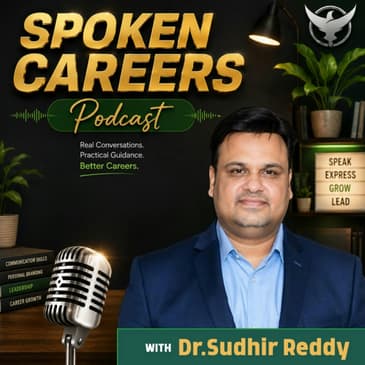
In this episode, Dr. Sudhir Reddy explores why another person's positive experience isn't automatically evidence of your future outcome.
You'll learn a simple evidence ladder that moves from opinion to personal experience, relevant experience and independent verification.
The goal isn't to distrust recommendations.
It's to use them intelligently.
Career Myth: If someone I trust recommends it, it must be right for me.
Career Truth: A recommendation is a starting point for investigation—not the end of it.
[00:00:18] I personally vouch for this institute. I know the founder. My child studied there. My friend had a wonderful experience. It sounds reassuring. And sometimes it is. But here is the question we forget to ask. Is someone else's personal experience reliable evidence for my future?
[00:00:38] Welcome to Spoken Careers, home of Career Decision Intelligence. I am Dr. Sudhir Reddy. Personal recommendations are powerful. We rely on them for doctors, restaurants, schools and career choices. Someone we trust says, go there. And our brain relaxes because the decision feels made. But trust in a person does not automatically equal relevance to your situation. Imagine your friend buys a pair of running shoes and says they are fantastic.
[00:01:08] You trust your friend, so you buy the exact same pair. But there is one problem. Your friend runs 5 km every morning on a track while you play competitive basketball on a court. The shoes are excellent. But the context changed. That is what happens with educational recommendations. When someone says, I studied there and loved it, ask deeper questions. When did they graduate? What was their entry profile? What career goal were they targeting? What has changed in that institution's life?
[00:01:38] Since then? And how closely does your background match theirs? Let us build a four-step evidence ladder. At the bottom is opinion. I heard this course is great. That is weak data. Next is personal experience. I studied there. Useful, but subjective. Next is relevant experience. I had your exact profile, targeted your exact role, and here is how the institution performed. That is significantly stronger.
[00:02:06] At the top is independent verification. You verify current placement records, regulatory approvals, faculty stability, and curriculum yourself. We are not saying you should distrust mentors or family. People are our greatest source of wisdom. We are saying, use a recommendation to open the door of investigation, not to close your critical thinking.
[00:02:29] The next time someone recommends a program, ask two questions. First, what specific outcomes make you recommend this? And second, who would you not recommend this program to? A genuine recommendation always has boundaries. Here is today's golden minute. Do not reject recommendations. Interrogate them. Understand where the advice came from. Check if the context matches your reality and independently verify the facts today.
[00:02:58] Someone else's experience can shorten your search, but it should never switch off your brain. Ask yourself today, whose career advice are you currently following? And how closely does their situation actually match your own? To explore more frameworks, visit www.spokencareers.com. I'm Dr. Sudhir Reddy. This is Spoken Careers, home of career decision intelligence.
[00:03:24] A recommendation points you toward an option. Evidence tells you whether to choose it. Keep learning. Keep growing. Walk your path with courage. Live it with purpose. And always lead with love.