
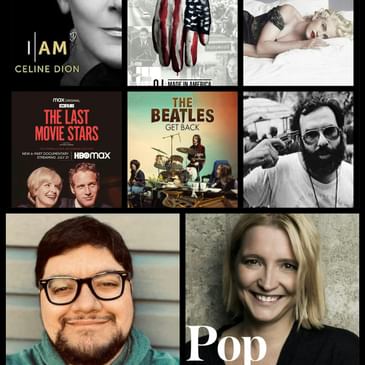

Ryan McQaude joins Christina to discuss the new documentary 'I Am: Celine Dion'. Plus they countdown their 10 favorite celebrity docs, from Hearts of Darkness to Get Back to O.J.: Made in America and many more.
Plus a fantastic announcement! Ryan will be joining us on a more regular basis. Once a month we'll have Fridays with Ryan with more great deep-dives, reviews, rants & raves!
X @ryanmcquade77
Learn more about your ad choices. Visit megaphone.fm/adchoices
[00:00:00] Shopify grows with your business no matter how far or big you grow. From the launch your online shop stage to the first real-life store stage, all the way to the Did We Just Hit a Million Order Stage? Shopify is there to help you grow.
[00:00:19] Whether you're selling your fans next favorite shirt or an exclusive piece of podcast merch, Shopify helps you sell everywhere, from their all-in-one e-commerce platform to their in-person POS system, wherever and whatever you're selling. Shopify's got you covered.
[00:00:39] Sign up for a $1 per month trial period at Shopify.com slash income, all lowercase. Go to Shopify.com slash income to grow your business no matter what stage you're in. This is Pop Culture Confidential and I'm Christina Yerling-Biro. Hey everyone, welcome to Pop Culture Confidential.
[00:01:17] We have a great show but first some news. You all know Ryan McQuade, great friend of the show and executive editor over at AwardsWatch. Well, he is going to be on this show with me on a bit more of a regular basis.
[00:01:34] We're thinking maybe like once a month or so. Now Ryan's film knowledge is immense and his perspective is always so unique and interesting and I just love having him on. We've laughed, we've cried, we've ranted and raved. Ryan, welcome. I'm so looking forward to this. Friday's with Ryan.
[00:01:54] Me too. I'm excited about being here more regularly. I think we're going to do at least one to two a month and we're going to talk about different topics that are relevant but maybe not relevant to movies that are coming out or to, you
[00:02:11] know, whatever the hell we want. We're not going to put a limit on it. But yeah, no, some of it will be really maybe some rants. Some of them will be deep dives. Some will be a little bit more respectable because we're journalists.
[00:02:25] But no, I'm excited to be here and I always love talking with you. And so thank you for allowing me to come on and do this with you. On this occasion, we're going to be talking about the new documentary by Irene Taylor. I am Celine Dion.
[00:02:40] And we're going to pick 10 celebrity documentaries are favorites or that we feel have had a particular impact on film history or popular culture. Be it Coppola slowly going mad in the jungles of the Philippines or the Britney Spears documentary that actually helped her get free from her conservatorship.
[00:02:59] The celebrity documentary can be really hit or miss. Sometimes they are authorized by the celebrity in question and the celebrity or the families and the documentarian are way too close thinking of something like the Beckham's and how they can control the image a bit too much.
[00:03:20] Now, the Celine Dion documentary is authorized by her. She welcomed the cameras 100 percent into doing this and had no restrictions, particularly since this documentary features a lot of very vulnerable segments about her recent illness. In general, Ryan, what did you think of the Dion documentary?
[00:03:45] Well, I thought it was a really interesting documentary. Celebrity documentaries are kind of hidden miss for me because of what you you said, Christina, you know, they were supposed to dive deep into a person. And I think that they can be really great tools to explore fame.
[00:04:10] So the relationships that they make over time, they celebrate their career as well as also if they're controversial figures to deconstruct how that person not only affected their industry, but maybe potentially American culture, world culture, race, politics
[00:04:31] or the case may be and we'll talk about those I think in some of our some of our picks later on. But when it's just these intimate one on one documentaries where the person gives himself over, it's a lot like the biopic, right?
[00:04:49] Where the closer they are to the material, it feels like you're playing it safe as opposed to having real moments of vulnerability. And what I did like about like about Irene Taylor's film is that we do get those moments of vulnerability here from Celine Dion.
[00:05:07] She she is someone that she's a perfectionist. She shows that throughout the entirety of this this film, which I believe was like it was an hour and 40 runtime. And she shows point blank that she doesn't have asked anything because she has her shirt or where she's for sure.
[00:05:29] I mean, everything looks like war droves and everything. And she gives us a deep dive into the legend, the the the singer, the diva that is Celine Dion. And you go behind the scenes of her career and how she came to be
[00:05:45] and her family and the 13 brothers and sisters they were. I had no idea about that. I had no idea about that. I had no idea. But like you get to the sense of going behind the scenes and really diving into this woman's life.
[00:05:59] Not, you know, because the most time when you when we get these looks, it's through the paparazzi and the tablets. So we don't actually get the truth. We get whatever, you know, kind of bleeds that leads, you know, headlines. And this dives kind of deep into her recent
[00:06:20] or said my recent announcement of her having stiff person syndrome and this essentially taking her away from the world and putting her on the side because she's trying to to physically work back to a level where she's comfortable to perform in front of everybody.
[00:06:38] And that may be higher, you know, higher goals than what she can actually achieve. But she's doing her damnedest. So this whole documentary is about that. And I thought it was really good. You know, I do think still a lot of it is the normal
[00:06:56] sort of generic template that falls these, you know, sort of singular artists's career. And I don't think it dives, you know, as in deep as other picks that we're going to talk about later. But for her to be able to sanction and give the OK
[00:07:14] to a documentary like this about herself, which shows her and her fan base an entirely vulnerable human being. I thought that that was pretty special. Yeah, and and I commend her for doing that. This stiff person syndrome that she was diagnosed with in 2022
[00:07:32] is like an autoimmune neurological condition. I understand. And it sort of progress progressively you get stiffer and you have spasm and she is allowed the cameras along segments at the end of this documentary. I mean, we're talking. I mean, it's really like you're peering into something
[00:07:50] that I had never seen a celebrity let us peer into. I mean, she is having spasm. She's basically having a seizure on camera and going through a tremendous medical crisis and she's completely vulnerable. I mean, we're talking for a celebrity, I mean, no makeup,
[00:08:06] no look, everything. I mean, she's and but what I thought was even stronger within that was her absolute sadness over not being able to sing. And you understand that this is yeah, she's a celebrity. She knows how to do that. She's always been extravagant in her clothing
[00:08:25] and she's always been good at being a celebrity. But you really got the the picture of how music is her life and her soul. Because once she gets out of this seizure that we see her come someone puts on a song and she starts singing to this song
[00:08:43] and she's crying and her whole face changes. And I thought that was even more telling than having, for example, two hundred talking heads of different artists, which this documentary has none of saying, oh, she was so important to me and what she did for Titanic.
[00:09:00] And but that little scene when she hears the music and sort of is taken away from what she just was had been through, I thought was really, really strong. And I thought I have to commend her for that. And we've had a few of these documentaries where
[00:09:16] where celebrities have been particularly honestly vulnerable the past few years. I'm thinking of Michael J. Fox still, which also was really Val Kilmer who did this documentary recently, whereas also was. And and I do think I mean, I don't mean the sound corny,
[00:09:35] but I do think it actually really helps people to know what they're going through. And they're not just for her. The big pain for her was that she had to cancel her all her Vegas shows and she's saying things like a family has bought these tickets
[00:09:50] and they're coming to see me and they spent all this money and time and this was a huge deal for them. And she's just crying and crying when she's saying this. And I found that really, really some truth to that.
[00:10:01] Then maybe the rest of the documentary about her career and such was a pretty basic, maybe not Wikipedia, but they went through her career. But those parts I thought were pretty spectacular. And then I have to give credit completely to Celine Dion, because she could have just said,
[00:10:17] I don't want my children seeing this seizure. I don't want this being on there. And now this is, because you know, this is something that people are going to remember her for. And I'm sure people think a lot about their legacy in her position.
[00:10:31] Is that the thing I want people to remember me for? Well, it's OK that they do. No, I mean, I totally agree with you. I mean, you have to also take into consideration what happened to her in 2016, you know, losing her husband, Renee,
[00:10:49] and then losing one of her brothers just two days later. And this woman has been through a lot in the last 10 years. And then you add this illness. And she talks about how. The guilt, right, which I think is the best part
[00:11:10] is sort of in the middle of the film where and you kind of alluded to it where she's like. I knew that I was starting to lose this, this power that she has. And she would cheat. She talked about I would cheat.
[00:11:25] I would put the the mic up into the audience or I would I would say I'm going to do an encore and never go back on stage. And the microphone a bit like there was some sound. Yeah, there's something wrong, you know, I mean, there's yeah.
[00:11:37] And the little tricks that her team would tell her to do, but she felt extremely guilty about. And that that is the kind of stuff in a movie like this, where you're like, oh, this is why it should be made.
[00:11:53] Absolutely. This is why it should be made because there's you're not again pulling any punches, but you're admitting things that we would not normally know and understand, and then we're able to relate to why you're doing that. And even though she could get a pass for all that,
[00:12:13] she's not asking for that. If anything, she's asking for forgiveness. When the audience is watching this movie, she's asking her fan base to forgive her for something that is not something that she needs to be forgiven for. It's a mistake.
[00:12:29] It's also in and it's that is truly remarkable to pull out of a movie like this is and you're not asking her to do that. You're not forcing her to pull, you know, to to say all that. But she like you're saying, Christina,
[00:12:45] I think you use this as a vessel of therapy for an honesty that is kind of rare within a film like this. And those moments carry so much weight that the template, you know, regular rise to the top stuff.
[00:13:02] You kind of just know that that's what it's going to be. And so, you know, I gave this three stars on Letterbox. I probably got to give it a little bit higher if the other stuff was better, you know what I mean? But it's one of the strongest
[00:13:15] threes I've seen in like, you know, on Letterbox in a while, because it's like I'm thinking about more of the emotional implications of a movie like this, then something like the New York Oslanthimos movie, which felt like a completely empty vessel
[00:13:31] that's trying to evoke responses and manipulation of the audience there. This is just I'm going to put a camera here and a person's going to tell stories. And then the the the meat of that comes out of it organically.
[00:13:49] And I thought that was that was what makes this movie special. Right. Again, I mean, we could have had, I don't know, Quincy Jones or any huge producers and movie legends or music legends talking about, you know, how she changed things and why this is my explanation
[00:14:07] to why music is important to Celine Dion, why the singing is her thing. Instead, the illness illustrated how that she is music and she is her voice. And this is what it is. She has been a vessel for that. And when she can't do it, who is she?
[00:14:26] And and I thought that was pretty incredible. So so I agree. I mean, as in terms of a documentary that goes from A to B about her career, that I think they maybe had other ideas before these scenes came up.
[00:14:44] It's really more of a verite style that, you know, they followed what was happening and that and I'm grateful to her. She really didn't have to do this if she didn't want to. Do you want to move on to some other ones? Yeah, yeah.
[00:14:59] Everyone should go and give it a give it a watch. It's on Amazon Prime. It's, you know, she is an artist of her generation. And I think it's really important to. And it ultimately is, I think, a really like good reminder of just how talented she is.
[00:15:22] And she's, yeah, I think it's a I think you're right, Christina. This could be like this could be like a manipulated towards the music studio machine kind of thing. And, you know, kind of documentary and kind of stitched and put together. And she could be very reluctant.
[00:15:38] And, you know, I would wish more artists, not just a virgin generation, but younger would provide that kind of vulnerability. And it doesn't matter how much money you have, how many people you have around you, how many, anything you've built up, bodyguards and doctors and every
[00:15:58] it doesn't matter if she's still a person who's lying there seizing for a few 10 minutes on camera. I mean, that that was also a reminder that we are human. Yes, for sure. I totally agree. I totally agree.
[00:16:14] And if again, not to make it sound like a, you know, sort of hokey, but like if this allows someone who sees themselves through her experience, if they are that other rare condition that, you know, the stiff person syndrome,
[00:16:34] if they have that as well too, or any other condition that causes them to have complete changes within their body and their normal day of life. They can't perform their passion. Yeah. Whatever you're doing. If you need a vessel to plug yourself into, to be able to carry
[00:16:52] yourself for day to day, I think that this is a good, this is a good movie to show the complexities of how hard it is rather than just being like, ah, suck it up. You'll be fine. You know what I mean? Or don't worry, you got this.
[00:17:06] Like no, there's there's genuine doubt on a day to day basis with it. And I did also like the fact that we saw before the announcement and after the announcement, how she was too in this film because it's because then
[00:17:24] again, that guilt of just being like, I got it. I got to tell this. I can't wait for this documentary to come out whenever it's going to do it. I need to tell my fan base now because, because it was eating her inside.
[00:17:34] I felt I felt for her in those moments. I really, truly did. Well, so we agree. Yes. Putting it up a bit from three. Yes. Maybe three and a half. Maybe I'll bump it up and half star. All right. Let's get into these.
[00:17:51] We'll take you through 10 of our documentaries here that are with celebrity documentaries and explain why we have them on our list. I'm sure we'll overlap a bit, but why don't you start? I don't have mine just to say in any particular.
[00:18:07] I'm terrible at ranking, so they're not in like this is my favorite. I just have 10, which I really want to talk about. Yeah, I don't really have. I don't really have a listed out because it would be at that. It's really hard to would be to rank.
[00:18:23] I think these movies. I know we do a lot of rankings overhead at Awards watch, but I think that this one can be a more loose list. And the first one I have is is a is, I think, a pretty big one.
[00:18:41] And it's this maybe would be quote unquote my favorite just because I think it's so complex and and that's Ezra Edelman's OJ Made in America. I have that. And 2016 documentary, five parts, this mini series that was put together by ESPN 30 for 30 series and really the culmination.
[00:19:07] There's a lot of great documentaries in I know that we always talk about entertainment, but sports is an entertainment business and as well as an athletic competition and there is no bigger figure probably in the last
[00:19:21] 30, 40 years covered within the media than OJ Simpson in the trial of the century and of, you know, Ronald Goldman and Nicole Brown Simpson at the time. But the fact that this documentary takes you through
[00:19:40] his life and the figure that was OJ Simpson in America is a fascinating study just in the first hour. You are talking about racism and the call for arms within the black community, especially from celebrities to be able to go ahead and and speak on social
[00:20:02] justice and the changes that need to happen. And the biggest star in the world, the biggest athlete in the world is OJ Simpson, one of the Heisman. You know, he's he's he's a world renowned running back. He's breaking records.
[00:20:17] And what does he decide to do when they ask him about this? Is he going to go and stand with all all these artists and other athletes, you know, cream of the bar, all these great people? He goes, you know, I'm not black. I'm OJ. I'm for everybody.
[00:20:35] And that could be perceived as a non answer. But it also is perceived as he is different than what is going on in the country because he has special treatment. And then it breaks down beautifully the art of how white culture in him sort
[00:20:55] of collide and then thus is why he is given so many special treatments in that trial, why he's able to get away with it. The trial itself is a fascinating one. Obviously it's one of the most fascinating trials in American history.
[00:21:13] But I think that there's no there's there's no way to make, I think any viewer, either pro or anti OJ Simpson. I think the only way to understand how you get to that trial is how you understand how society and racism and how the Rodney King massacres
[00:21:34] and everything that was going on in this country led to that verdict. And under and this was that right around this time in about 2016, where we had the Ryan Murphy show and we had, you know, we had this kind of colliding at the same time.
[00:21:47] This is a much more thorough examination of I think the American celebrity. And I think of what celebrity culture can mean, and especially when you broaden that out to a wider scope and you broaden that out to trying to hit all these markets.
[00:22:02] And then when that is corrupted, how then the system can corrupt itself to make sure it stays safe because there's no reason why OJ Simpson should have got off. But the system allowed him to. And so I think it's a fascinating five part documentary,
[00:22:19] one of the great ones that we've had in the last 20 years. I have this one on my list too. It's it's I'd say that word that M word. It's a masterpiece. It also won the best documentary Oscar, even though it was five parts,
[00:22:30] which I don't think they do anymore. And no, they they stop doing that stuff. Yeah. And I don't have much to add, I had written. I mean, it's what you say. What's so brilliant about it is it's about OJ, but it's in context. It's about America.
[00:22:46] It's about celebrity, race, society, sports and everything included there. So yeah, I completely agree. So then I'll take one here. I want to do the last movie stars with Ethan Hawks. Oh, documentary about Paul Newman and Joanne Woodward, which I actually think was really brilliant.
[00:23:07] He it's based on some transcripts of interviews that Paul Newman did for an abandoned memoir project. And I think it was there, Joanne and Paul's daughter who gave them to Hawks and asked them to assemble them. And this was sort of doing during COVID.
[00:23:26] So there's a lot of. He's done a lot of interviews via Zoom. He has George Clooney and Laura Linney do their voices and read. But what's really incredible about it is that he gives this marriage that's found over 50 years and is is one of the great Hollywood
[00:23:44] marriages and loves to such depth and perspective. And most of all, he gives Joanne Woodward the credit that she's due. She was such a talent, such a radical talent. She's the one that won the first Oscar in their marriage. And then he started growing.
[00:24:01] I mean, he was basically not considered to be much during the beginning of their relationship, sort of a clone of Marlon Brando or something like that. And then his celebrity started to grow and she started to feel resentment over her career. I mean, she was not taking off.
[00:24:17] He became an alcoholic, but still their marriage survived this. And I thought that this documentary was an incredible when you hear there the transcripts of how they describe their marriage, their incredibly passionate sex life, also very, very intimate.
[00:24:34] I thought it was really well done and something I'd never seen before. And in the same way that we were talking about Celine, such a raw and intimate portrait of their of two people who survived a 50 year marriage with even though they went through
[00:24:52] celebrity, alcoholism, everything else under the sun. And I thought Ethan Hawke did a really good job with this. I think that in this one of my picks, so of course, crossover is happening already at the beginning of this.
[00:25:06] I think that it is I didn't know much about it going in. I knew that he but I didn't know about the transcripts so that when I first saw the first episode at the right before stop by Southwest, when I premiered,
[00:25:19] my mouth was on the floor. I was like, what he has, you know, and who he's getting, Laura Lenny and George Clooney to portray, you know, the words of Joanne and Paul. And you're right. I think that there's two calling cards to this
[00:25:35] and then a sneaky third one to why I love this series. One is the history of Joanne Woodward and what she had to sacrifice because she becomes the mother and she falls in love with this man. She's the actress of a generation at this point
[00:25:52] and she's probably got 20, 30, 40 more roles where she could be up for awards and accolades and beyond the Catherine Hepburn, the Meryl Streep, the Jane Fonda level of, you know, excellence. Frances McDormand level of excellence. We're like, wow, they have this many awards
[00:26:09] and one for this film and that and that and she goes and she kind of gives it up because her husband breaks out. And Paul Newman's wife. And she becomes Paul. Yeah, she becomes the but she transitions her career to the stage
[00:26:25] and giving back to so many artists and so many actors of their own in their career and in and later on generations that she she's her legacy is built in the shadow of Paul's gigantic movie star legacy. And he struggles like you mentioned his alcoholism.
[00:26:46] You mentioned the fact that, you know, he he almost gives himself up like he almost he almost gives up on himself. And I think that. We know Paul Newman as the movie star, one of the movie stars
[00:27:01] to see and know in his own words that vulnerability that he had and he's channeling it in his performance. I mean, this documentary makes the verdict even more of a special performance because of his alcoholism, his conversations with Sidney Lament saying this is not how it works.
[00:27:21] This isn't how somebody who's an alcoholic lives because I'm an alcoholic and him having to confront that. But then the sneaky thing about all this is how it relates to Hawke's life, his generation, the future of movie stars.
[00:27:39] You see towards the end of the film, a shot of them at the Kennedy Center Honors and the the camp that they created, the the Newman like the products, the popcorn, the salad dressing, all that stuff is to fund charities. You know what I mean?
[00:27:57] Is to fund things that are bigger and better beyond themselves. All the money went to that. All the money went to that. And that is a truly selfless thing. We don't see that a lot anymore. You know, I was thinking a lot about recently Jane Fonda
[00:28:13] and how how has Jane Fonda never won the humanitarian award? But these two have politically controversial. But they can talk about that later. No, I don't know for sure, for sure. But it was just like those are the type of movie stars.
[00:28:32] And that take their name, their platform and channel it into things that are actually bigger and better than just a movie or a stage play. And I wish that's what makes them so special. And I wish more of this generation would do that
[00:28:50] and not do it for points or anything but or, you know, to make a political statement. But to do it because it's the right thing to do. It's the human thing to do. And that's what they were is that they were good human beings
[00:29:04] that happen to be great actors. So, yeah, it's it's it's marvelous. It's marvelous. Next one. Well, kind of going into kind of like piggybacking off of OJ made in America. There was one that I don't think a lot of people talked about
[00:29:22] a couple of years ago from W. Kamal Bell. And it was we need to talk about Cosby. Oh, so good. Good. And I know that we've talked about we haven't really talked about films. We've been talking about like mini series for a while here.
[00:29:34] But this was a four part mini series that debuted back in twenty twenty two and much like OJ made in America. I think W. Kamal Bell does a fantastic job of really examining how we got here
[00:29:56] in terms of everything that's gone on up at the time with Bill Cosby and the sexual assault cases ever that were that were going on in early part of the decade. And this examination of this important figure in American culture, but specifically to the black culture
[00:30:15] and what and what black people, artists, comedians and the survivors think about his career and sort of how in his comedy, in the television show, in the animated show and everything in his philanthropy, there is a seediness if you want to find it. And it's there.
[00:30:41] And I think the third episode, which focuses specifically on the Cosby show is one of the great hours of television that we had in the last fifteen, twenty years. And the reason why is because that show was such an enormous success for NBC, it basically saved the network
[00:31:02] and it made him a household name. He was on every commercial. That's where the Jello Pudding Pops then come from. That's when then he's with the sponsor for Coke and he becomes America's dad. That's where he becomes the guy that everybody would want to be.
[00:31:20] And he's got this show with the Huxtables, where this is the ideal, not just black family, American family. And meanwhile, on set, he is starting things in his dressing room that was before this show started and after and this continued abuse of power.
[00:31:44] And you literally hear testimony from two people that worked on the show. These women who are so brave to speak about their experiences. And then you also have that with actors and writers who had no idea or if they didn't have any idea,
[00:32:02] they are guilty about it and not telling the camera the truth. So it is an interesting relationship of tackling with also we saw I saw most of the Cosby show when I was a kid and it all of his comedy is portrayed Christina as
[00:32:21] like it's good for everyone. There's no cursing. There's no foul language. There's nothing bad with the comedy of Bill Cosby. And what's what's remarkable about this documentary shows. Oh, there's definitely something wrong when you're that quote unquote wholesome. And and, yeah, I think it's a brilliant documentary.
[00:32:42] It's on Showtime. You should you should give it a check out. Yeah, that's a good pick. And one of the things that he does so well is that he asks the question
[00:32:50] that we often all of us ask when one of our idols is like, no, don't disappoint me. I mean, it's like, how do I go? How do I sort of compare my complete this? This was so important to me. This person's work was so important to me.
[00:33:06] I grew up with this person and how do I make this? Understand my feelings towards this and how do I keep their art with me? What do I do? What do I do with Woody Allen?
[00:33:17] What do I do in his case with this is someone who is so important to him? I think he does that so well in this documentary and ask that particular question. And it becomes very personal in that sense.
[00:33:27] Very much so. Another one during those years that was really good, which I don't have on the list, but I came to think of when you said that that's the surviving R. Kelly doc by as well, which also had some particularly strong
[00:33:42] witness women who came forward and talked and very brave documentary as well. Yes. Yeah. But so then I'll move to one for this one, I'd say maybe as it as a documentary, it's not the strongest, but I think it had such an incredible impact
[00:34:02] on celebrity culture and on the person that it dealt with that I want to talk about it. And that's framing Britney Spears. Yeah. So this documentary could basically help to end the conservatorship that she was under and covered that incredible.
[00:34:19] Another very important, I think it's going to go down in history, the court battle regarding her father and her family and her conservatorship that this documentary, which was produced by New York Times, I believe. And we got to see this. We got to also understand how
[00:34:37] celebrity has absolutely the effects that it had on Britney Spears from a child star to now was really strong and really intimate and really personal. And I felt in the scope of celebrity documentaries that were mentioning, I think this has an important part just because of that.
[00:34:58] Yeah. I mean, it's it's about art piercing through the screen into real life. And you know, regardless of of how Britney Spears got to that point in her life from 2008 on, she didn't have one. She essentially, she was a young girl.
[00:35:22] You know, I think a lot about Britney Spears with what's going on in the life and if you chronicle someone like Miley Cyrus, who is introduced to us at such a young age and has family and outside influences that have different agendas
[00:35:39] than the one that is trying to blossom an interesting career and has bad actors involved. And, you know, when she was with Kevin Federline or when she was with, you know, having different, you know, you know, eras of her own within her music,
[00:35:57] she should have been able to have the freedom to be able to explore that and and not think that she's spiraling out of control. And even if so, it went from controlling the estate to controlling a person, leaving her in a cage.
[00:36:13] And then the snippets we would get of her, it seemed as if, you know, someone had been locked up in their house. You know, it almost reminded me a little bit of when you were we were reading stuff about her of Priscilla Presley.
[00:36:28] And it was reminding me of just like, well, what is if you're cooped up and you can't do anything, you can't speak, can't make art, can't. You can't be anything. How are you going to be then at home?
[00:36:41] And how are you going to be able to control your life? And so, you know, the fact that she's been able to finally, you know, be able to own her life, own, you know, make decisions for herself.
[00:36:58] Being an adult is great because she wasn't able to for such a long time. And I think that that's tragic because then it's honestly like Michael Jackson. You know, Michael, you know, Michael Jackson has a ton of controversies.
[00:37:12] We're not going to talk about, at least I'm not going to talk about that documentary today, but but but I can say this is that. It's a lot like Cosby and it's a lot like OJ and it's a lot like a lot of other
[00:37:26] celebrities. You can see the tragedy coming a mile away. You can see, you know, through the history now when you play a little bit of like, you know, detective, well, this started here and it went down
[00:37:41] a train of just really, really terrible things where they weren't able to grow up normally. They weren't able to engage with culture normally, with the world normally. And through that shelterness, there's a human being still attached to it. And so I think that it's a great.
[00:38:00] I know, you know, they call it framing. It is a good framing device to be able to allow her have a chance in the back half of her life for her child's sake. You know what I mean?
[00:38:13] You know, to be able to then also own a legacy because it's what a lot of artists get to do is they get to control, you know, who uses their music and and use their likeness and image. She wasn't being able to do that.
[00:38:26] So now she has a good chance of that and I'm and I'm happy for her. And also her fan base is they're tough cookies, man. They are there some tough cookies. I'll tell you that they are loyal to the bone. I mean, like there was a whole thing.
[00:38:43] I think it was like a year ago with like the Spurs basketball player and her. And it was just just really weird, kind of complicated situation that happened. And if you didn't say, hey, you said something against Brittany, whoo, man, online, you were going to get torn apart.
[00:39:00] So they're not crying over Timberlake's. No, they are not crying over that, which then as we're talking about that, adding that into it is, is a yeah, it's that age is like a fine one at that point. But. Fatten and is kind of a.
[00:39:39] So anyway, that that documentary did actually I think it opened a lot of people's eyes to what it's like to be a celebrity of that nature, what it was when it's like. Also, if you have certain issues, medical issues or mental issues
[00:39:55] and what that means and how you get controlled and so I thought that was interesting. And if you don't mind, I'll just piggyback on that for a quick segue into another one I have because that's the Shanaid O'Connor. Oh, yeah.
[00:40:08] Nothing compares by Captain Ferguson, which is so such a brilliant depiction of how you tear down a woman, a brilliant artist who was so vulnerable and through all her political thoughts, her and thoughts on women, everything was in her music, everything was in her actions.
[00:40:32] And she was torn down from every corner of the universe. And you see this in the documentary, how people just for shaving her head for expressing her thoughts when she was on SNL and did and spoke about the pope,
[00:40:46] which of course, many years later, everyone was talking about. And that was I think it's a really beautifully well put together documentary, which came out around the same time that Shanaid lost a child. And it was just everything around her. And of course, we've lost Shanaid as well.
[00:41:06] But that I can highly recommend that the documentary, I think it was really, really respectful, but at the same time, very piercing. Yeah, it's it's a it's a great one. And I remember seeing that a couple years ago, I was kind of just blown away by.
[00:41:24] Honestly, how the industry spit her up and chewed her out and, you know, how. And Ireland did it. And the people, the nuns that she grew up with, everyone had spit her out. Her mother, it's really a harsh depiction of how her growing up.
[00:41:42] It felt like Shanaid O'Connor had been spit out every single period of her life from someone who should have really and the fact that she made it as far as she did and the fact that she'd produced such beautiful art that she
[00:41:55] did is pretty incredible considering what she went through. And it's a tragedy to be able to finally appreciate or be able. It felt like she was in the wrong era. And and now we can really appreciate it, but it's the it's the sad thing.
[00:42:14] Right. You finally appreciate something and it's already gone, which is it's an inherently sad. Speaking of people that are probably, you know, gone. Earlier than we wanted to, I wanted to talk about, oh, I guess a very controversial documentary. But I think this real quick is that,
[00:42:36] Christina, when people say that are closely related to the documentary, say disavow it, it's usually probably means that they that they got something right. Right. And I'm talking about Brett Morgan's Kurt Cobain montage of heck,
[00:42:54] which there was another Kurt Cobain documentary that came out around the same time. That was the fluff piece. That was the thing that Courtney Love gave a lot of approval over. This is the Brett Morgan, if many of you out there might know Brett Morgan for
[00:43:12] Jane and Moon Age Daydream, the David Bowie documentary. And I think that those are great. Those are great films. But I think Kurt Cobain montage of heck is actually his best. And the reason why is because it feels
[00:43:28] deconstructed as if it is in the mind of Kurt Cobain at times and especially the mind of someone who has a complete down row spiral and dies way too young at the age of 27 and is seen throughout the documentary is to be this sweet boy from Washington,
[00:43:52] you know, has family sort of, you know, kind of normal life, even though he gets picked on by his parents. Sort of, you know, his parents divorce really shaped him and all this stuff going on. But then he gets into this music scene
[00:44:06] and the movie examines how we lost him and how the people around him allowed a genius to fall victim to bad actors and it doesn't paint really anyone in a good light, especially Courtney Love, who, you know, it is in and everyone went to her defense.
[00:44:36] I'm going to just put it out on the table. I don't think she's defendable because a lot of the downfall of him starts around there and it's been documented and well proven that that's the case. There's a companion piece book with this as well.
[00:44:50] Many people that are around him at the time. Any members of, you know, I know the members of Ravana didn't really want to speak about this, you know, because it's not really their story or life to tell. I mean, they're members of a band with him.
[00:45:05] But, you know, it's kind of like if the Beatles would have said something bad about John after he passed, like, what are you going to say or do even though? It seems like Paul McCartney talks
[00:45:15] about John Lennon really personally a lot nowadays because he just misses his friend. But I think that the the movie is fascinating and there's sections of this where it feels as if you're floating through his mind as he's creating
[00:45:31] these darker and darker pieces of music towards the end of his career. And it's heartbreaking. It's a heartbreaking movie because you it's we're losing a genius and it's so avoidable. And it feels like it's avoidable, but it feels like the scene in the people around him
[00:45:53] caused the emotional and you know, triggers in his head to go off. And I think Morgan is a very inventive visual stylist. And I don't think this is a disrespectful film. I don't think that this is manipulative.
[00:46:12] I think this is trying to be as honest from an outsider's perspective as possible because I think that the people around Kurt Cobain's legacy has tried to sugarcoat the shit out of losing someone like him. And I don't think that that's fair to him.
[00:46:28] And I don't think that that's also fair to anyone struggling with addiction that see a movie like this or see a movie about Kurt Cobain and think, well, it was just a tragedy and it just happens like that. Anyway, you know, here's some here's some cool family shots.
[00:46:45] Like that's just not how reality is, you know? So I think it's a great film. But I agree. I agree. Someone one of my favorite movies, which is also about someone spiraling, but actually picks himself up at least in periods. That's Hearts of Darkness. Yeah.
[00:47:06] Movie that is based on Eleanor Coppola's footage of her husband, Francis Ford Coppola, while he is spiraling in filming Apocalypse Now in the Philippines, the increasing costs that the bad weather, the actors basically having drug adults crises, the delays. What what the coppola is going through?
[00:47:33] I think it's such a magnificent portrait not only of several things, not only of Francis Ford Coppola as a filmmaker and how he puts his entire not only passion but health and wealth and life and everything into his movies, which when you and I discuss Megalopolis later,
[00:47:50] I'm going to convince you why that movie does. I don't think you have to convince me about that. You know what I mean? Like, I understand this man. You understand that that movie through him, it's really moving. Anyway, off topic.
[00:48:05] That's the one thing, but also an incredibly interesting portrait of filmmaking during this time about filmmaking in general, how difficult it is. Especially if you're passionate about it and want to do everything you can and almost destroy yourself in the in while doing it.
[00:48:24] I think it's also a really interesting documentary of a marriage. This is it's there. I think it's a very it sounds like a cliche, but we just talked about it with Paul and Joanne. It is something particularly different to be two creative people
[00:48:39] in a very long term marriage as these two were as well, which I think was even 60 years old before Ellen passed last year. And it's just such an interesting one of the best documentaries about filmmaking, filmmakers and marriage out there.
[00:48:56] Yeah, no, I think it's I think it's great. I mean, it also because his wife just recently passed. It's also really heartbreaking because of that. But yeah, I mean, it is a great introspective look into the last sort of a tour driven
[00:49:16] forgiveness is, I guess, is the best way to say that the studio is allowed because this is a production that shouldn't have continued. And it seemed like it was a mess. And usually though, the best ones make masterpieces out of that.
[00:49:32] Like, I mean, there's the the Kyle Buchanan book, Bloods, Sweat and Chrome that chronicles the the Mad Max, Fury Road, debacle behind the scenes that ended up making one of the greatest films of all time. So I would say the same thing about Apocalypse Now being created here.
[00:49:48] But then, of course, this is I mean, this is going to come on the edge of like Heaven's Gate coming around the corner and Sorcerer and some King of Comedy and some other films that just start
[00:50:00] turning us into the 80s and getting us away from the real all tour driven cinema of the 70s. And so this is a this is an inside look at one of the last,
[00:50:11] you know, great movies to come out of it, but also like one of it's a cautionary tarot, what not to do behind the scenes. If it's getting to this point, the art may not be worth it, even if it is worth it. But I love the film
[00:50:28] and it's a great companion piece, obviously, to Apocalypse Now. I'm actually going to stay in that area of those friendship group because I'm going to talk about maybe one of the greatest concert docks of all time, which is The Last Waltz from Martin Scorsese.
[00:50:48] And I think that people for me, I think you can find a lot in concert docs. And I think the interesting idea about The Last Waltz is that this is showcasing the last performances of the band. And really looking through the lens of
[00:51:10] Robbie Robertson, who just passed away last year. And as the music plays throughout this and there's so many cameos from so many different wonderful artists, you know what I mean? Like, you know, they're just, you know, like muddy waters and, you know,
[00:51:26] Neil Young and Van Morrison and Diamond and Eric Clapton and Tony Mitchell, all these people, you know what I mean? And perform in the movie with them. There are these moments that are cut in
[00:51:40] between that I think actually make the documentary sing for lack of a better word. And those are the conversations between Scorsese and Robertson, who are best friends and it's Robinson going through this limited run that he's had with one of the greatest, most influential bands of all time.
[00:52:00] And talking about the jealousy, talking about the regrets, talking about where their future in this whole thing is going to be, their place in rock and roll, different experiences that they've had as a band and sort of grown and
[00:52:21] and feeling essentially burned out by the process of being on the road. And that vulnerability mixed with Scorsese's, I guess, vulnerability at the time to being an addict, it really like it really fits perfectly for both of them who are struggling emotionally and internally
[00:52:45] with themselves in the late 1970s. And yet they, I mean, Scorsese shoots the hell out of this thing. And yet the sequences on the stage, they feel so grand and behind the scenes, they feel so tight and personal. So yeah, I had to mention The Last Waltz. Perfect.
[00:53:08] I'm talking about this. Then I'll continue on with one since you were talking about great conversations, so I'll jump to this one. And that's a movie called The Center Will Not Hold, which is about whom director Griffin Dunn, he made a documentary about his aunt,
[00:53:26] Joan Didion, her nephew, which is archival footage, but conversations between the two of them and what's so powerful about this one besides Joan Didion being one of the best authors ever. And Griffin Dunn having a real eye as a director and actor himself is their discussions on grief.
[00:53:47] Both of she lost her daughter, Quintana. She lost her husband, of course, and wrote the amazing book The Year of Magical Thinking, where she sort of is talking about being scared of moving on. And he, of course, Griffin Dunn also lost his sister to a terrible murder
[00:54:07] in Hollywood. And there's just these incredible conversations between them that really go personal between two relatives, which you don't often see. So I wanted to mention that one. No, that's a perfect that's a perfect choice. I haven't seen that one. It feels like a while.
[00:54:26] But he just wrote a new book, Griffin Dunn also. Yeah, he did. So it's worth seeing them sort of as a companion to each other. I haven't read the book yet. But no, I haven't read that either. Now I gotta go pick it up. Yeah. Bookstore. Um,
[00:54:42] I mean, I'm going to stick with the triad of our great friends here and there's the documentary Spielberg that was on HBO. And just, I mean, obviously one of the great American filmmakers that we've had. Documentary. How I feel about it.
[00:55:00] I mean, we talked about this a little bit on the on the Fableman's pod from a couple of years ago just about, you know, chronicling his life, his passion for cinema, his complicated relationship with his with his father and mother and coming to terms with that.
[00:55:18] And really honestly, coming to terms with that before, you know, his father passed away just a couple of years ago and and how that relationship changed and evolved. And I think how that also then had a different way in which he saw
[00:55:34] them before he made a movie like the Fableman's, which is so personal to him. So fascinatingly, he had one view of his parents. They're the beginning of his film career and you can see how he portraits
[00:55:48] their divorce in the beginning of his career, teens and how he changes when he gets to know the real story, wants to get to know the real story and how it changes in his own personal filmmaking, which is fascinating.
[00:56:00] And then yeah, how it changes then essentially for one of the great filmographies of all time and how we as an audience have actually seen his life in all these movies. And when we talked about that, I thought, you know, that's such an important
[00:56:16] thing to know because like when we talk, you know, we see the personality in a director's filmography, what is what essentially makes a movie by such and such a such and such film. When you see a Spielberg movie that sentimentality
[00:56:34] and that vulnerability or in that sense of adventure is always there. But now when you realize that it's been there from the beginning and then he's been also kind of as a director, wandering through his filmography, searching for answers about about his childhood. It's it's quite moving.
[00:56:55] And and yeah, so I would highly recommend checking that out. If you're a fan of if you're a fan of Steven Spielberg, I don't know, you might be a fan. You know, so I have to mention, which may be on your list as well,
[00:57:10] probably the ultimate celebrity documentary. And that's Madonna's Truth or Dare. This film that chronicled her 1990s blonde ambition world tour, where the the segments of the concerts beautifully filmed in color and the segments behind the scenes were in black and white.
[00:57:31] And it just was a portrayal of her openness to the world. How much how she was criticized from every corner. She was almost arrested in Toronto for the masturbation scene and how open she was to her dancers and homosexuality.
[00:57:48] There we have a very a person who everyone's talking about today, Kevin Costner, who at one point visits her tour and calls her show meat. So she gags in front of the camera, which seems like very interesting. Such a costner thing to say.
[00:58:07] And also in terms of what we were talking about before with celebrity relationships, here she was actually dating Warren Beatty and who's fed up with all the paparazzi and all the cameras while she's just in charge and
[00:58:20] controlling of this and she knows what she wants and doesn't want to just feel so strong and vulnerable at the same time. I think this is just one of the absolute best portraits of an artist in general,
[00:58:34] but also not to mention a female artist and how she conquers everything that comes in her way. It's just a strong presence, you know, and shout out to Eric Anderson, who's probably like been waiting for us to talk about when it's coming. When is it happening?
[00:58:50] It should have been the only one that you guys talked about today. You can do that. I'm happy to do a show just on that one with you guys if you want. No, very, very good. I mean, obviously, yeah, I mean, it goes it goes back to
[00:59:05] Britney Spears, it goes back to it goes back to the next documentary I'm going to talk about, which is how culture treats women and how they can either be eaten alive or be super strong about it. But there's no winning when it comes to it.
[00:59:26] And she's she's been able to endure for so many years because she's one of the strongest ballsy, no-holds-barred performers that we have ever had. So no, I think it's a great pick. And you know, but there is vulnerability that comes to it. And I think my next pick
[00:59:50] is the ultimate, I think, documentary over the last couple of years. It talks about the damage that can happen to the female pop star, because it seems to be on the rise. Right now, we seem to be having being right in the middle of pop girl summer.
[01:00:07] It seems like and so but there in a lot of them are brand new artists. And I hope that they're going to be OK and that the industry doesn't do and the world doesn't do what happened to Amy Winehouse. And that's in the House of Cappadia's 2015
[01:00:26] excellent film, you know, Amy, which is not Back to Black, which is an abomination of a movie. I know one should see that they should watch this film, which is which is a celebration of her work. But also again, like other films that I've talked about,
[01:00:50] and I sound like I really like I need a sad documentary in my life. But I think that the only way to understand the loss of great talent is to firmly look at all the factors that happened in their life.
[01:01:04] And Cappadia is is one of the best document documentarians we have. Sina, his documentary on Diego Mordona are two of the great sports documentaries and really do tackle the internal struggles of those athletes as well, especially Maradona, who was a symbol for an entire country.
[01:01:24] And and and when he went to the other went to play for somebody else's entire country, turned on him. And I think that, you know, for Amy Winehouse, she had again, a lot of people that in her own family and then the love of her life
[01:01:41] discard her and, you know, it's very it feels very Marilyn Monroe. It feels very much what the pop star system does. It's it's sadly a tale as always time. And yet there's this skyrocket instant fame that she gets and we kind of are think, oh, OK, well,
[01:02:04] maybe she's got like two or three. She has like two albums or an album and a half. And we never got to really get the full potential of who this person was. She was 27 or something. She was she was like 20.
[01:02:19] Yeah, she was 27, the same age as Kurt Cobain. And the same similar things happen. Except every time it was like a tug of war emotionally for her. Every time she'd think it'd be OK, she couldn't help it. It's like the heart knows what it wants.
[01:02:39] And it's history repeating itself. But Cappadia does a great job of just showing what a beautiful soul this girl was from the age of 14. You know what I mean? All the way for, you know, all the way up until her alcohol poisoning
[01:02:58] and her tragic loss at the age of 27 back in 2011. I think it's I think it's a beautiful documentary. Again, it doesn't hold. It doesn't pull any punches. But I don't think it's but it's not trying to be that first. It's trying to
[01:03:16] and it's not trying to even also put her up on this giant stridesphere of everything. It's just I'm going to look at this person. That's why it's Amy. It's not wine houses, Amy. That's the title. I think it's purposeful of saying I am looking at this girl.
[01:03:32] And I'm seeing what the industry and what people around them. It's a cautionary tale. And so I think and I think if it was done by the again, by the producers of her albums and stuff, it would
[01:03:49] it would be it would it would be a little bit more, you know, it wouldn't be as personal. And I mean, that scene when she's trying to do the duet with Tony Bennett is completely heartbreaking, in my opinion. It's it's
[01:04:06] you know that she still had it and yet it's it's it's about to go away. It's beautiful. It's beautiful work. Please choose this documentary over back to Blackward. None of this that Ryan's talking about the the respect for her as herself and her
[01:04:22] own artist is really there where the movie, the biopic, if you can call it that, really has taken some very particular leave with her parents or father in particular who no, please choose the documentary over the picture. The movie. Yeah, that movie is. It's rough. It's rough.
[01:04:45] I'm going to go back to sports. Whoa. You know that's not my biggest area, but I really, really love the documentary, The Last Dance, directed by Jason here, which revolved around Michael Jordan's career and particularly the last the final season with the Chicago Bulls.
[01:05:05] And it gave me such an incredible sort of all access view of what was going on there, these huge personalities, all the teammates and the coach. And I enjoyed every minute of this and actually got to interview interview
[01:05:20] the director because I really was so fascinated by this documentary. Man, I didn't think you would put The Last Dance on here. I mean, how much do we have expectations? How much time do we have to talk about? After all these years, right?
[01:05:37] How much time do we have to talk about this wild? I'll give you a few minutes. I think we're going to share the answer. We can do a whole thing on it if you want. We could honestly sports. I mean, Christina knows this about me.
[01:05:52] I'm a big sports fan. And I think the documentary is a good documentary. I don't think it's great because I think it's still it doesn't ask Michael Jordan tough questions, which Michael Jordan is.
[01:06:10] Maybe one of the top five, not maybe he is one of the top five athletes in my lifetime. He's the greatest basketball player to ever play the game. Sorry, LeBron and all you LeBron lovers out there. He's just not he's there's no one like Mike.
[01:06:26] And I think that. He is a controversial figure and he is a 100 percent. I, you know, I'll go at you right? We see in the documentary like I'm going to go at you.
[01:06:41] I'm going to get in your face, but when you actually have to ask him tough questions, I think it's like he doesn't want to do that because he likes to control the narrative just as much as like. Superstars usually want to do it. Paints him off very well.
[01:06:55] He was also complete asshole. And so and Scottie Pippin has come out and has turned kind of. You do understand that in the day. Oh, I understand it completely. It's the competitive nature in him and everything like that. Like, but
[01:07:11] and it is from ESPN and they're 34 30s as well. And it carried us during the pandemic. It did. I would be fascinated though. I mean, I know that they've already kind of done it with the Patriots. There's other, you know, there's, you know,
[01:07:28] there's documentaries about Magic Johnson and Larry Bird. I would love to see, you know, potentially down the road, I assume they will be doing this with the Kansas City Chiefs. You know, there's other great dynasties that, you know, throughout sports, they'll probably do it with the Warriors.
[01:07:45] But there's just something about the Bulls in Jordan in this era and this crazy final season that ends on one of the great shots of all time. The flu game, obviously, there's just so much lore behind it and it's rich. It's a rich, rich tapestry to plug into.
[01:08:05] So as a sports fan, I love it. I could talk about sports all day long. So that's a dangerous avenue to go on down towards. But I'm not going to do that. I'm not going to do it. Instead, I'm going to I'm going to
[01:08:21] I know we're coming out towards the end, so I got to get a couple more. I have two left. I think you might have three. I'm not sure I've got. I've got a yeah, I've got three left. So I want to talk about. Won't you be my neighbor?
[01:08:37] Which I think is a beautiful film about Mr. Rogers that came out in 2019, I believe. And no, 2018. Sorry, 2018 and talking about how, you know, again, this is about your childhood. This is about like this guy kind of goes back to I think it goes back to a little
[01:09:00] bit about what we talked about with the last movie stars, this civil servant, this person on public access that was doing things on a television show that we kind of just all take for granted and kind of throw away and was so
[01:09:14] instrumental in talking about things to a generation at a time in which things were becoming very scary for a generation and not and not doing it in a cynical way, doing it in a compassionate way. Man was very compassionate.
[01:09:34] It talks about just the sacrifices that he would make for others. The one time where he gets mad or they talk about he got mad and they were all shocked. You know, I mean, he's he was just a very low,
[01:09:47] you know, very reserved man and a gentle soul. And I think that the documentary does a fantastic job of explaining how important an American icon is, important institutions like PBS are to this country. I think education is continuously under attack
[01:10:11] in the United States of America and around the world. And I think people like Fred Rogers are those not looking for thanks kind of individuals, they're not looking for credit. They're looking for the world to change and to be better and do it again within a very
[01:10:33] optimistic point of view. And I think we miss people like that. I cried when I saw the film. I think it's beautiful. I think it's a, you know, a beautiful movie about a very good man. I think then the Mario Heller film
[01:10:50] with Tom Hanks, I think that that was the one that came out in 2019. And I think Hanks is great. I don't think that that movie overall reaches the magnitude of like how important that this man was. It's singleizes it rather than
[01:11:07] widen the scope and I think that that's what the documentary does. So so yeah, I would say that film. Great. And that Ron Howard recently just did a documentary on Jim Henson, which has not quite as good as this one, but it also has some very
[01:11:24] important thoughts on how we should treat children and the school system and what we're actually teaching with media, which I thought was particularly interesting, also very interesting marriage at the center. But what you can take, I think you're one ahead. You can take your second one.
[01:11:44] I want to talk about Homecoming. Oh, so by Beyonce. Yes. You know, I know, right? A Beyonce documentary from Ryan. I think that this is great. And I think that one, it highlights again, like the last like the last Waltz.
[01:12:03] It highlights one of the great concert experiences that's happened in the last 15 years at Beyonce set at Coachella, which from a lot of friends that go to Coachella has broken the system ever since. And no one's been able to get to that level of artistry behind the scenes
[01:12:26] in watching this documentary. You are seeing an artist trying to deliver an impossible task of making it specific about her culture, specific about her career, specific about her marriage and what she's going through at the time, specific about her children and her pregnancy and the scariness of that.
[01:12:46] She never thought that she would be able to perform again after she was pregnant. The realization of how difficult pregnancies are for black women, especially ones that deal within physical activity. I mean, there was the same concerns that were about Serena Williams
[01:13:09] and the sort of different outfits that she had to wear when competing towards the end of her career because of the complications within her child coming into this world. And so I think that
[01:13:25] it is a movie and it's on Netflix right now that does a fantastic job of looking inside the soul of probably one of the biggest artists we have working today. I think that it is the the correct way of looking at the flaws of an idol.
[01:13:46] The they came out, they came out around the same time. So I'm just going to say this and I'm going to start the fans. This is the opposite of Miss Americana. This is what you do when you've actually you're married,
[01:14:00] you're beyond breakup songs, you have children, you've lived a life. And your important figure not just only in America, but to a community of people that still feel marginalized and still feel unspoken for and you have a responsibility that's bigger than selling out a concert.
[01:14:20] You're trying to deliver experiences that feel specific to you. And so she's directing. This entire thing, and I think that it is bold. I think it's it's it shows them in the performance than to because she's delivering at all points in this movie.
[01:14:45] And so, yeah, if artists are going to do concert docs or documentaries, this I think is the standard. I haven't seen the I never got to see the Renaissance one and I've been it wasn't on streaming for a while. I think you can finally find it now.
[01:15:01] But I've been dying to watch that to see how it is a continuation or maybe a follow up to to what she's doing here in this movie. Homecoming is amazing, really highest standard. My last two, but I'll do my first one first are both sort of old Hollywood
[01:15:19] and also another Brett Morgan that you mentioned with your Kurt Cobain. And that's the kid stays in the picture, which is there was the book that production chief of Paramount Pictures. Robert Evans wrote about his marriage to Ali McGraw. I mean, we're talking cocaine, we're talking
[01:15:42] the godfather, Rosemary's baby, love story, everything you want from an old Hollywood movie book is in here and they did a film adaptation. Nanette Burstein and Brett Morgan. Not remember, I think it was 2001 or 2002 where he narrates.
[01:16:00] And it's all a bunch of photos from his life, his early life as well as film footage from that area and if you are from his era, his movies, how he discovered Norma Shearer, for example, and his return to Paramount Pictures. It's just a fascinating, fascinating.
[01:16:17] If you're interested at all in Hollywood lore and Hollywood stories, I think it's really fascinating. It's one that I got to get to. Oh, you have to see it. And the book is amazing too. I'm adding a lot of books to my list. Yes. My last pick.
[01:16:34] It's a pretty chalk pick, but I think it's the right kind of pick. It's Peter Jackson's Get Back. Oh, how could I not have included that? Oh my God, that was like a full weekend. I watched that and I was crying and singing and stopping and.
[01:16:52] As someone that is a massive fan of the Beatles as you are as well. It is a perfect encapsulation of watching geniuses at work. It is I mean, just. You know, I got to say this sitting there tinkering and all of a sudden it's like the finished song.
[01:17:13] Yeah, it's like he's just like tinkering with something and it's get back back. It's like you're like so what just happened in these three ringo. And like, yeah. And then just ring those just like picks up the drums and then like George
[01:17:26] just kind of sitting there like, OK, all right. Well, it goes opening mail in a chair. Oh my God, she's like screaming in the corner and it's fantastic. Well, then you have like Linda there. There's. I think that this documentary does a fantastic job
[01:17:44] of just just debunking the rumors that have been at the forefront of the greatest band of all time of like, well, Yoko Ono broke them all up and it's all her fault. And it's like, no, there was George Harrison didn't want to be a part of this anymore.
[01:18:01] Lennon was out. Yeah, he was out the door. Ringo was Ringo. And Paul was the only one that's like, I just want to keep making music. And you have that scene. I think it's the best scene
[01:18:15] in the in the whole thing outside of the music stuff where they're all sitting there in the morning, Linda's right next to him. And Paul's explaining to the managers, if the man's in love, the man's in love, I can't take that away from him.
[01:18:29] And he looks right at her. He looks right at Linda, who is the love of his life. He's been married a bunch of other times, but we all know who's we all know. We all know that. And it's like, I can't get mad at him for this.
[01:18:43] Like, how can you get mad at him? And it seemed like this footage that had been lost for such a long time. And the thing about the like the original documentary about this time, I forgot the title of it,
[01:19:00] because they had like another cut and then they found all this other footage and all this other and all this other dialogue, you know, sound recordings of different things in that nature and they stitched and then the Jackson spin in a northern
[01:19:14] town stitching this all together is that plays this off. That plays them all off as they hate each other and it's nasty in its, you know, John's a villain and all this stuff. And it's like, no, these are just four guys that are just a natural progression.
[01:19:32] And then the natural. Yeah, I mean, everyone's doing their own thing. They've done absolute art together, best ever in the world. And now it's over. No, I mean, like you have to. I mean, Christina, what people forget about the Beatles is all their music is in eight years.
[01:19:55] All of it is in an eight years time. It's not even a decade's worth of music. And it's all this great music. It's it's hundreds of songs that they've done together. And the girls chasing after them, the constant touring and the constant making music at a certain point,
[01:20:13] you want to just live a life. It's rough to do something. And so the last waltz was kind of just like a great introspective look into like a band crumbling in this is a we're going to go out and we're going to
[01:20:28] do this last thing and it's going to be great and it's going to make us better and it's not trying to point fingers. And yeah, then all the behind the music stuff and then making this album and doing the rooftop stuff and all that.
[01:20:43] You're just like, you're just like, Holy hell, I will watch six weekends full of the stuff, please continue. It was an event. It was an event to be able to be with them one last time. And then, you know, I never asked you,
[01:20:57] what did you think about the the quote unquote new song that came out last year? It didn't it didn't really stick. I mean, it was wonderful to be able to hear it and Andrew, but I can't say that I had it on replay 100 times. Yeah, how about you?
[01:21:14] I felt complicated by it because when I was like the A.I. use was was a little like a hot God. But then I was like, but then I got John back for like one last song. And but they but they didn't like read.
[01:21:32] They just used it to they used A.I. to find his voice in this really small like so I get it, but it's still like it's weird. It's a weird. It's a weird thing to be like we have a beat a Beatles song.
[01:21:44] I would have been fine without it, especially considering things like this movie coming out where you get to revisit them. Oh, God, I felt more for real than no, I don't. I don't want the same end is for movies. Oh, no. Oh my God.
[01:21:57] No, I don't really worries me even though they're like, oh, this cast is amazing in this one. I don't like the fact that it's no, please. I don't like that it's four movies from each of their perspectives
[01:22:10] because then that feeds that feels like it's feeding off of the the negative perceptions and the fake rumors of like, well, John hated this about this person, so we're going to see it through his person. It's like, I don't see four damn movies.
[01:22:26] Like that, like just make one movie. You know what I mean? Or make a mini series, right? Yeah. OK. My last one, I'm not going to talk too much about it because it's an upcoming
[01:22:40] documentary for most people, but I want you to go see it so I don't want to spoil it too much and that's the documentary Faye, which I saw about Faye down the way, which is coming to HBO in July. And it's another fascinating and sad and
[01:23:00] irritating view of how women are treated in Hollywood, were treated and are treated, I would say, and how she got the label of being difficult all the time. But seeing this movie, she opens up and explains certain issues.
[01:23:16] I don't want to say too much, but certain issues that she actually had that no one had any sort of respect for and how difficult it was for her to sort of come back to get in.
[01:23:26] I mean, other people will do something wrong and then they do a new bad boys movie and they're and that's it. They can continue on. But I don't know who you're talking about. You have no idea what I'm talking about.
[01:23:39] But she and also the incredible level of career that she had and someone in the documentary, I don't remember who just says that the thing about Faye down a way that she disappeared into every single role that she did in a way
[01:23:56] that is so unusual and she had good things and she had bad things. And but she was always just one of the incredible stars that Hollywood has had. And there are certain things about the documentary that I find a little bit
[01:24:12] too Wikipedia, but if you don't know about her, this is definitely something that you should dive into. And it's always wonderful to see. And there's all these explanations of that incredible photo, you know, the one she took the morning she won the Oscar by the Beverly Hills
[01:24:29] pool and how that worked out and how they did. It's really fun fact. I can't wait to see it. I know that there were some like mixed reviews that it can. But it's also like the best part of it is that she talks.
[01:24:46] She's yeah, and she's very, very as we were taught. We started the show saying it about Celine and it's the same here. She is so open and raw about her mental issues and what she was going through that that is really incredible.
[01:25:03] And the rest of the documentary around it is a bit, you know, she was born here and this happened. But paint by numbers, but you kind of have to be like that. But it's still absolutely worth watching. Well, I'm I'm excited for it.
[01:25:20] You know, I'm big fade down away fan. And you know, I'm not the biggest fade down away fan of our team over at Awards, that would be Sophia Seminello. But but I love her work and it is one of those cases of I think a lot of
[01:25:34] actresses from the 60s and 70s where you're like, where did they go? And so I'm that's what I'm hoping to figure out. This, you know, obviously, you know, she's known to have a difficult past, but that hasn't stopped others in the past as well, too.
[01:25:47] Especially male counterparts like you, you know, more modern since like you just said. But but no, I know that, you know, the mixed reaction at a can is I sat there and went, well, that doesn't really matter because like most of those people probably over
[01:26:04] there don't have the history or understanding. I think of who she was as an actress. And so when you said that you liked it, that's what I know. It's like, OK, we're going to get the goods here potentially. So I'm very much looking forward to it.
[01:26:18] I know that some people already have screeners and I'm annoyed. I don't have mine, but I'll get one and I'll watch it. Thank you. This was so we could have mentioned so many more. I love my God, Bonda, that was recently and everything like this is not.
[01:26:33] But this was a great. I loved hearing your pics and your pics and I can't wait to have you back. So I can't wait to come back. I'm going to be here way too much. People are going to be like, I'm sick of them.
[01:26:45] Get out of here opposite. They ask for you. You're going to be sick of me. It's like, why did I say no? I will never be sick of you. I love I love talking with you, Christina. I love I mean we're going to be in like two months.
[01:26:58] We're going to be together again in the mountains of Telluride. So and that's when she really has to put up with me, folks, in person, not on a zoom. She could kick me out of the zoom at any time. She should but at the warmer there.
[01:27:10] Nope, she's stuck with me. Thank you. Tell the listeners where they can find you. Well, you can find all my work at awardswatch.com, Twitter, Instagram, Letterbox, at Ryan McQuade 77. If you like podcasts, we do the Awards Watch podcast as well as also director watch
[01:27:27] currently in the back end of our Tony Scott movie series. And that's been a lot of fun. And we've got a couple of great ones coming up later in the rest of the year. So find all that at awardswatch.com. Thank you. Thank you. That was fun.
[01:27:45] Are you tired of seeing your teen or young adult struggle on a path that clearly isn't the right fit? Is your teenager confused about which direction to take after high school? The future of work is changing rapidly.
[01:27:59] And our kids need to know all of the options available after high school so they're empowered to make the choice that is best for them. In each episode, we explore the latest trends that are shaping the opportunities of today and tomorrow.
[01:28:14] I'm your host Betsy Joule, and this is the High School Hamster Wheel podcast.