
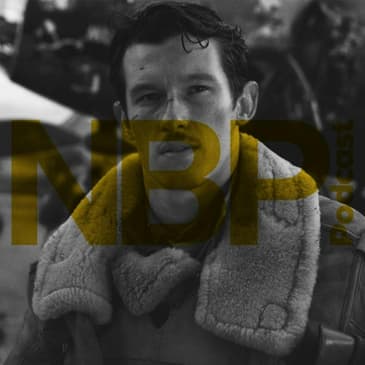
"Masters Of The Air" premiered on Apple TV+ at the beginning of the year, earning strong reviews for its storytelling, performances, and incredible craftsmanship, rightfully earning its place alongside the legendary WWII miniseries "Band of Brothers" (2001) and "The Pacific" (2010). Based on the 2007 book by Donald L. Miller, the show follows the actions of the 100th Bomb Group, a Boeing B-17 Flying Fortress heavy bomber unit in the Eighth Air Force in eastern England during World War II. Actor Callum Turner, who plays Major John "Bucky" Egan, Visual Effects Supervisor Xavier Matia Bernasconi, and Virtual Production Executive Steve Jelly were all kind enough to spend some time talking with us about their work on the show. Please be sure to check out the limited series, which is available to stream in full on Apple TV+ and is up for your consideration in all Emmy categories. Thank you, and enjoy!
Check out more on NextBestPicture.com
Please subscribe on...
SoundCloud - https://soundcloud.com/nextbestpicturepodcast
Apple Podcasts - https://itunes.apple.com/us/podcast/negs-best-film-podcast/id1087678387?mt=2
Spotify - https://open.spotify.com/show/7IMIzpYehTqeUa1d9EC4jT
YouTube - https://www.youtube.com/channel/UCWA7KiotcWmHiYYy6wJqwOw
And be sure to help support us on Patreon for as little as $1 a month at https://www.patreon.com/NextBestPicture
Learn more about your ad choices. Visit megaphone.fm/adchoices
[00:00:00] Shopify grows your business no matter how far or big you grow. Shopify is the global commerce platform that helps you sell at every stage of your business. Whether you're selling your fans next favorite shirt, or an exclusive piece of podcast merch, Shopify helps you sell everywhere.
[00:00:20] Shopify powers 10% of all e-commerce in the US. Allbirds, Rothy's, Brooklinen, and millions of other entrepreneurs of every size across 175 countries. Plus, Shopify's award-winning help is there to support your success every step of the way. Because businesses that grow, grow with Shopify.
[00:00:46] Sign up for a $1 per month trial period at shopify.com slash income, all lowercase. Go to shopify.com slash income now to grow your business no matter what stage you're in. Jeder Removerkoffer ist fachmännisch angefertigt und meisterhaft zusammengestellt für ein Leben voller Reisen. In Deutschland entwickelt.
[00:01:14] Ein lebenslanger Begleiter. Remover. Besuchen Sie remover.com für detaillierte Informationen zur lebenslangen Garantie. You are listening to the Next Best Picture Podcast and these are Giovanni Lagos interviews with Masters of the Air actor Callum Turner, Visual Effects Supervisor Xavier Mattia Bernasconi, and Virtual Production Executive Steve Celli.
[00:02:19] You might be the last pretty face I ever see. Hello everyone, this is the Next Best Series Podcast. I'm Giovanni Lago and I'm joined by one of the stars of Masters of the Air Callum Turner. Thank you so much for joining the show. Thanks for having me Giovanni.
[00:02:48] So, you know, my dad, huge fans of Band of Brothers, the Pacific. I remember getting him the box set like the Blu-ray when I was a kid. He served in the Navy for 25 years. So like whenever anything is military and film, it's his bread and butter.
[00:03:02] So when I told him Masters of the Air was being made, you know, he got very excited. So I was wondering for you, were you familiar with the previous series or the book of Masters of the Air? How did you get familiar with the material?
[00:03:13] Well, with Band of Brothers, Band of Brothers is everyone's dad's favorite TV show. And I'd known about it for a long time because when it came out, I watched it maybe a little bit later, actually, but I was about 15 or something when I watched it because it was
[00:03:27] my best mate's dad's favorite TV show. And we watched it together. And it also had this wealth of English talent and Irish talent, Tom Hardy, Fassbender, etc., etc. So many people that were in this show.
[00:03:44] So when I started off as an actor, my agent said, we need to get you something like Band of Brothers. That was one of the first things he said in our first meeting. And so it was always on my radar. It was always something I enjoyed.
[00:03:57] And then Masters of the Air, I wasn't familiar with the book at all until I got the audition. And then, yeah, I didn't read the book before I auditioned, but I did do a lot of research
[00:04:11] on John Egan because there's so many websites that are dedicated to the hundreds and these guys. And so I just familiarized myself as much as possible before I auditioned. And then once I got the job, obviously the reins were off and I could go with my research.
[00:04:28] But yeah, that's really that's my journey into it. You mentioned your research. I'm actually curious. You know, I think every actor always tackles how they approach their characters so differently. So for you, was it were you able to get in contact with Egan's family in real life, getting
[00:04:44] information? Was it you just taking what you had from the papers and scripts to turn again into live action? Yeah, it was. It was the it was the latter. I didn't. Egan's daughters were very young when he died.
[00:04:58] So I didn't want to have someone else's idea of him put into mine. But there is, like I said, an abundance of information on him. What my task was, was really to understand this man and this human and what he was going
[00:05:12] through, what he thought he was going to be approaching and then what he ended up going to. And what I found was that at the beginning, there was almost a naivety to him. I imagined him standing out looking across Lake Michigan, thinking, what am I going
[00:05:27] to do with my life? And this war happens. And he thinks, maybe I'll do that. So he goes and joins up before Pearl Harbor because he's a good man, you know, he's got a heart and he wants to help people.
[00:05:38] And then Pearl Harbor happens and he ends up going to England. And by the time he's going to England, he's one of the best pilots in the Air Force, in the Air Corps. And he's a leader and he's recognized as a leader.
[00:05:50] And the men love him and the army love him. And he's someone that is respected and he wants to fight the good fight in a way that he knows how. And when I say there's a naivety, I don't think that he expected what was about to happen
[00:06:05] to him over in England and Europe. I love the opening scene where he says, I'm just going to go do some observation missions. And then the next is a hard cut to him free falling and having to save someone's life and blood all over him.
[00:06:19] And he does, he saves someone's life immediately. And that juxtaposition was really the thing that was the beginning of him. And then as the show goes on, it's only there for seven months, eight months in England. But so much happens to him.
[00:06:35] He's witnessing his friends be shot out of the sky, fall to the ground from 25,000 feet with their parachute not opening up or being blown up to smithereens and never seeing them again and going out with 17 planes and coming back with three.
[00:06:48] You know that, what does that do to someone? What does that do to someone's soul? And not only that, but he's also dropping bombs on people. What does that do to someone? That's what I love about this show is that we don't glamorize and we don't glorify.
[00:07:04] We tell it as honestly as possible. And I think what our job was, was to honor these men and to honor this story and to honor this war. And I think the only way to do that was to be as honest as possible.
[00:07:17] And I think we achieved that just by not glamorizing, not glorifying. There's almost Shakespearean with Egan, you know? In Macbeth he looks at his hands and he says, I can see blood on my hands. And then there's no blood. And I think Egan was experiencing the same thing.
[00:07:34] I think that he was having an existential crisis in the middle of war and he didn't know who he was anymore. Didn't recognize himself. He didn't know where he was coming or going. Didn't know how long this thing was going to last.
[00:07:45] And by episode four, when Cleveland says, I think you should take a pass. You should go to London for the weekend. I wanted the audience to go, yeah, you need a pass because you're drinking and you're
[00:07:57] dancing and you're doing all of these things that are really, you're just trying to keep that canoe straight. But it's an impossible task because the next day he knows he's going to have to go up and drop bombs on people.
[00:08:08] He knows he's going to have to go and kill people. And he knows that he's going to come back and he's going to lose friends. And imagine being in that tornado or in that blackness, in that darkness, long days journey
[00:08:19] in tonight and not knowing how you're going to get out and not having anything solid to hold onto. And so that whirlwind that he was experiencing was the thing that really I tried to tap into.
[00:08:30] And there was a picture that I found of this, he's a Russian soldier and it's a before and after of World War I. And before he's- I know exactly what you're talking about. Yeah. Yeah. That soldier, that guy loses his soul in those two photos.
[00:08:46] He has a soul and he doesn't have a soul. And that's what Egan, that's Egan's journey. That's what happens to John Egan. And he's a changed man in a- and they all are, but he's a changed man in an irreversible
[00:09:00] way by the time the show ends and the horrors of war have taken their toll on him. And he's not coming back to the man that he knew he was. And that was really the journey that I had to go on and discover with John Egan.
[00:09:17] Glad you mentioned that photo because that reminds me of stuff either like All Quiet on the Western Front or even Come and See where you see the before and after. Come and See, especially, yeah.
[00:09:26] Come and See was a big reference for John Egan, especially once he got on the ground. You know, that movie's insane. But there's other movies that I watched too like The Ascent and Letters Never Send. These are Russian movies that I was watching in preparation.
[00:09:48] I don't know if you've seen these movies. If you haven't, they're amazing. Yeah, I see. Yeah. And like I said, there was an abundance of stuff for me to draw upon. I love watching movies.
[00:10:01] So movies is really where I visualize, visualize, visualize, but take it all in visually. On the other side, not just the Russian influence, but the American influence. And I'm sure you've seen this, the Five Came Back series on Netflix that has John Houston and Capra and others.
[00:10:22] William Wilder, I think, has a film on there where they go to World War II and they show what happens on B-17s or fighter jets or what happens in a psych ward for soldiers who are coming back with what we would now call PTSD.
[00:10:38] And so there was just all of this information that I could draw upon and just put into Johnny Eakin. You mentioned your love for movies. Now, I'm going to bring up a nitpick here because I watched your Criterion Closet video. OK, OK.
[00:10:54] And you know, a big aspect of the show is you in a stalag camp and you didn't pick up The Great Escape. What was that? I mean, you have your own McQueen moment in the series, you and Austin Butler. And that's a great film right there. I know.
[00:11:10] You know what? I have to be honest. I could have picked pretty much every movie in that closet. That was one of my favorite things to do on the press. So I've always wanted to go in there.
[00:11:21] It's really it's a lot smaller than you imagine, by the way. I bet. I've been to the office before and just going in there, you see all the posters and everything, you know, it's just like being transposed. It's unreal. It's so cool.
[00:11:33] Speaking of like prison camps, you know, the whole back end of your storyline is you and the stalag camp have been moved around and it builds up to episode nine, which is the finale. I was wondering, you know, filming that intense sequence of you escaping from the camp.
[00:11:49] You know, there's so much going on, whether all the soldiers are running around, the riots. I was wondering what it was like for the production of that. Yeah. I mean, this show had the old school and the new school way of doing things.
[00:12:02] And that sequence fell into the old school way of doing things. So beautiful. You know, the sets were vast. The POW camp was really a sight for sore eyes in terms of acting. You know, it's so expansive and so vast and so detailed.
[00:12:20] Once you go into these buildings, they're alive. You know, there's a music room with a vinyl that you can play and there's different vinyls that you can choose. I mean, the level of detail on that is really extraordinary. Makes it tangible, makes it real, makes it all alive.
[00:12:34] And then we had the flip side of that. We had the volume technology, which is the new school way of doing things. And that is, you know, these screens wrapped around you 180 degrees and you're up on a
[00:12:48] gimbal in the plane and the gimbals moving to the things that you're seeing. Really an extraordinary technology and a gift again as an actor. It beats the CGI, the green screen stuff for sure.
[00:13:03] You mentioned that I interviewed some of the VFX team a couple of months ago and they were going into the whole, like you guys had the whole plane and you guys are sitting in there and they're simulating lights and sounds.
[00:13:14] And they were very adamant that they were really working hard to make it the best they could so that way you guys get a list of the best performance. Now that I'm talking to an actor who actually went through that, do you feel that that method
[00:13:25] totally panned out for the show? It worked out perfectly? Yeah, man, those guys did such an extraordinary job. Stephen there really, I think might have been the hardest working person on that show. Just making sure that everything was, I mean, it was also an experiment.
[00:13:41] You know, it's a new technology, which is extraordinary to think that a show that's as big as this allowed that almost experiment to happen. I'm so glad they did because it's alive. It's the same philosophy as the old school, but with new school, you're just getting everything
[00:14:01] for free. If the plane is hit by flak, it shakes you about. You don't have to act anything. All you have to do is hold on. And that's what the character would have done. You know, it's for free and it's really beautiful.
[00:14:13] And this whole show is such an extraordinary team effort. You've spoken to those guys, you'll know that we have Blake Neely on this, you know, doing the score for months and months. So good. Mark editing this and Mike Minkler doing the mix and Colleen Atwood doing the costumes.
[00:14:31] It's like we really, there's an abundance of talent on this. I mean, talent is not even going to do them justice. But there's just so many unbelievable people working on this production. Yeah, everyone, everyone put, left no stone unturned.
[00:14:47] Big stone also that paired with you, you know, Austin Butler and I think a beautiful dynamic in the series was Egan's and Buck's relationship and how that carried them through the entire series and the war in general.
[00:15:01] And, you know, I feel we get these talks about movie stars and actors of our generation who we feel aren't matching up or on par to what we've had back then. I watch you and Austin Butler and I'm like, these are like Newman and McQueen-esque actors
[00:15:16] where you watch them and you're like, yeah, these guys got the juice. You feel this energy every time they come on screen and it's palpable and your guys' chemistry just feels so effortless. So I was wondering what was it like building upon that and exploring those characters' relationships?
[00:15:30] Thank you so much, man. That really means a lot. Well, Austin and I just got together as soon as possible and just went for it, really. Just told each other secrets and stories and really just exposed who we both were to one
[00:15:49] another and created a safe space, you know, and that we respected each other as actors too. And I think that was the thing that was the opener to what you then see on screen. It was a real level of trust for each other.
[00:16:07] And at times, you know, you're working with different directors and you can look across the room with a different director, but I can always look at Austin and he can always look at me and go, you know, and support each other through that.
[00:16:19] But then also the relationship between the two men was so beautiful. These guys are both people that joined up before Pearl Harbor. They both wanted to fight the good fight in the way they knew how.
[00:16:30] And they, by the time Pearl Harbor happened and America wanted to join the war, they decided that the army had realized that these are the two best pilots that they've got, two of the best pilots they've got.
[00:16:42] So there's a respect there and an understanding that they're going to be integral to fighting this war and to winning this war. And that's the thing that bonds them. That's the trunk almost that bonds them. And then on a deeper level, they're rooted together because of that.
[00:17:00] And then the yin and yang side of their personalities, they're completely different human beings. And I love that because they're bonded so deeply that they can be whoever they want to be. They're never not going to be friends, you know?
[00:17:11] And it's back and forth that they have this banter and this affection, this love and this trust that these guys had was just really something that we could then explore as actors and keep playing with them, playing with them, playing with them.
[00:17:24] And there's a lot of takes that didn't work, you know, because we would have done something that was just really outlandish or really silly. But we tried it. And I think what you got to see in the show was just a nice snippet of what we were able
[00:17:36] to do whilst we were filming. Austin wanted to try something, I said, go for it, you know? And if I wanted to try something, which I was trying a lot all the time because of the character, he's outlandish. I'm going to do this.
[00:17:48] He's like, all right, surprise me. So I go off and do something. And then I turn around, he's laughing his head off. So that was part of the cadence of our relationship that we developed. It was a really beautiful experience for both of us.
[00:18:05] I imagine one of those bits had to be involving the bicycle because I also imagine when you guys are doing the race, I'm like, I don't know how many takes this actually took to get this done without them just cutting up on the side.
[00:18:18] The bicycle was actually just as competitive as you can imagine. As competitive as you can imagine. Neither of us wanted to be the one that was behind the other one. Also I'm curious, with television, I think it's so different in the streaming era, especially
[00:18:35] with how a lot of star directors come in and direct a couple episodes and then they often leave and then you have more television geared directors working on the series. I look at some of the filmmakers who work on this show.
[00:18:49] I mean, you got Dee Rees, you have Tim Van Patten, Carrie Joji Fukunaga. What was it like getting to work with them? I know each of them have different styles. How did that interplay into how you brought the character? Was it all similar?
[00:19:03] I know Bo and Ryan Fleck too. Yes. Oh my God. I mean, honestly, I'd say to you that all of those directors are people that as I've been developing myself as an actor and growing and being part of this industry, that I've
[00:19:18] watched their films over the years and I've wanted to work with them. And including Tim, you know, Tim is the VIP, TVP VIP of television. He's unreal. And just getting to work with them and achieve a goal and work with them and learn from them
[00:19:35] and they all brought different qualities to the show. Yeah, it was just wonderful to get to dive in with them and explore different things with them. All of them, they're extraordinary. I mean, we're talking about Oscar nominated directors, you know, it's like they're all amazing, you know?
[00:19:53] So their record already speaks higher than what I could say. I feel like after this series, the world's got to be your oyster. I feel like when you have a platform like this and now you're getting to a point in
[00:20:07] your career where you can start having more leeway with like, I want to go and explore this genre. What are you currently thinking for yourself as you know, you've done war drama, you've done fantasy films and Harry Potter, that universe, like for you, what do you think
[00:20:22] you would benefit from working on? I honestly think that I will benefit working with just good directors. It's all about directors, you know, and like after this, I did a film with George Clooney that happened to be about a rowing thing. Boys in the boat.
[00:20:38] Boys in the boat, yeah. But if George had asked me to be on a film about being in the moon, on the moon even, then I would have done that too. You know, I am director driven and I think that allows me, there's something that I was
[00:20:53] really conscious of as a young man was that I never wanted to be typecast in anything. And I think I've achieved that because I'm so excited by directors and that means that
[00:21:04] a director can have a project that I'm right for and it could be playing this kind of person or it could be playing that kind of person. And that's really the joy for me is exploring characters that are thrown towards me because
[00:21:15] of a director or because of a team. And that's really all I want to keep doing. I just want to keep working with the best directors possible and developing myself as an actor. That's really it.
[00:21:29] I speak for everyone in saying that we are very excited to see you continue developing as an actor. We're excited for what you do. Thank you so much for your time. Thank you. Thank you. I'm sorry about my criterion selects. They were good. They were good.
[00:22:09] As soon as you had Agnes Varda in there, I was like, oh good. I can't wait to go on there and see yours one day. Oh, thank you. And before I leave, I just want to say my friend Red Necromancer, he loved the book.
[00:22:23] So when I told him, yeah, he's very excited. I told him when we saw that you were casting, he was like, okay, that's yeah. Great. That's good casting for Case. That makes me happy. Yeah. And it's funny because my best friend also named Case his birthday today.
[00:22:35] So full circle moment. Happy birthday, Case. Happy birthday, Case. Yeah. Well, thank you so much for your time. Have a great day. Thank you, man. You too. No problem. This is Giovanni. Once we move, we lead our boys through.
[00:22:46] All the things we do, day in, day out, does something to a guy, doesn't it? We're here to fight the monsters. We're here to fight the monsters. We're here to fight the monsters. We're here to fight the monsters. We're here to fight the monsters.
[00:22:59] The things these people are capable of, they got it coming. Trust me. Lord guard and guide the men who fly through the great spaces of the sky. Are we Tuskegee men or what? Sir, yes, sir! Be with them traversing the air in darkening storms or sunshine fair.
[00:23:27] I think we may be done. We are going to sit here and take it. We're going to stick with our mission as long as we can. We won't go without a fight. Hello, everyone. Welcome to the Next Best Picture podcast.
[00:23:39] I am joined by VFX supervisor Xavier Bransconi and the virtual production executive Steve Jelle for Masters of the Air. Thank you so much for joining. Thank you. Thank you for having us. Yeah, thank you. So I'm just curious, you know, I'll start with you, Xavier.
[00:23:55] I mean, this year, you know, Masters of the Air, you worked on Godzilla, Furiosa. I was just wondering, those are just big films. But when it comes to a television project like this that is so inherently reliant on
[00:24:06] VFX, do you find it a bit more difficult, especially instead of like, you know, a two hour duration? This is nine hours of television stretched over long periods of time. Yeah, I mean, it's it's all about finding the right balance, to be honest with you, Giovanni.
[00:24:21] It's kind of like understanding where, you know, like we need to make sure that our resources cover the entire nine episodes and that the quality of the show is the same throughout. Masters of the Air obviously has the challenge of having huge predecessors like Band of Brothers
[00:24:42] and the Pacific that have a cult following, strong historians, fans. So there is an additional level of complexity to the show itself that might be different from more fantasy or, you know, like alternate reality has, for example, Mad Max Furiosa
[00:25:03] or Kong Cross Godzilla or a lot of other projects that have also challenges but slightly different. So yeah, for sure it was it's an interesting show to work on. Steve, you know, I'm very curious, you know, as a virtual production executive, as we were
[00:25:22] mentioning VFX is so inherently crucial to the series and depicting these aerial combat sequences. How is it that you're able to manage to keep a production of this scale just running smoothly throughout this entire time? Well, you have to be there. I think that's probably right.
[00:25:40] So I mean, whilst I'm an executive, I'm also a producer and I spent the year on set with our crew trying to make the film and support the filming that we were doing with virtual production, along with everybody else who works on this, I would add as well.
[00:25:57] So I mean, there was not a single head of department that wasn't there and there wasn't a single person that worked on the show from Lux Machina to all of the other visual effects vendors that wasn't there at one point.
[00:26:10] So the key thing is what we were trying to do is very well considered, I suppose. The challenge that we were facing is how do we tell a story up in the air for these action sequences in huge formations of, you know, up to 250 B-17s?
[00:26:26] And how do we tell that story in as lifelike a fashion as we can? There's only about nine minutes of actual documentary footage of what it was like. It's called the Cold Blue and it was shot by airmen during the war. And we used that as the reference.
[00:26:41] And then we quickly realized that we needed LED screens so that we could simulate the lighting of what it was like up there. We realized that we needed to be able to control, essentially, to use the sky as an environment
[00:26:55] so that the director could trigger flak bursts that would trigger a movement in the motion base that was carrying the B-17 cockpit that would allow our actors to react. So we realized that we would create material that was not the final materials to play on
[00:27:11] these walls so that we could, so the actors could understand sightlines where that plane was coming from. That was the whole real justification for using virtual production because otherwise we would of course had, we would have had 90 minutes of green screen and it would have been very
[00:27:29] difficult to tell the story in such a comprehensive fashion. You touched on like you were said a lot of times. If I read correctly, were you also on set? I mean, people think that like six months I read or something about actual on set production.
[00:27:44] I'm curious and like delving more into that. And also I think it's fascinating because we have television, unless one creative is usually writing or directing every episode, you have multiple directors.
[00:27:54] Did you guys come up with a system of filming everything in the same type of way in terms of the aerial combat sequences? So that way when it came to the virtual effects and everything in the post, it came out smoother for the team?
[00:28:06] Well, it's like, you know, it's almost like we always joked with Steve is like making four movies because we had four groups of directors, you know, Carrie, then Anne and Ryan and the entire rest of the team and four cinematographers, first first AD.
[00:28:25] So every two or three months we will get a new unit, right? Unit one, unit two, unit three, unit four. Of course, you know, Steven Rosenbaum, that is the production supervisor, the effects supervisor for the entire show, was the glue throughout the entire period.
[00:28:43] I was there a lot of the time. Steve was there all the time. I think that it's the beauty and the challenge at the same time of doing episodic. You have this opportunity of having to understand the storytelling process and the storytelling needs of different creatives.
[00:29:05] Right. When you are on a like, for example, Mad Max, Furiosa, I worked with George back in 2004 on Happy Feet One. And then suddenly 20 years later, I'm again with him. And I know what makes him tick.
[00:29:18] And I know what kind of like, you know, what he looks for in terms of like the framing and this kind of stuff. The challenge with Masters was that it was four different sets of directors, right? With four different, very different styles.
[00:29:33] Steven was instrumental in developing together with Gary Gutzman, that is like the considered the showrunner and executive producer of the show, together with Playton, a cohesive visual storytelling using previsualization the third floor actually did. And we went on set with the third floor.
[00:29:57] And on the other side of the office, it was me and Steve and the rest of the team grabbing their previsualizations, creating visually compelling images to have on the LED walls and pushing them using LuxMathKina over a setup onto the LED walls.
[00:30:18] So it was a very on paper complex, but it actually worked very well. And I think everyone was very excited about as well, surrounded by this incredible production value. You know, it's like we had two or three different cockpits for B-17 in real scale.
[00:30:37] We had a full fuselage. We had outside this, it's called a rotisserie rig that is basically a full fuselage that can rotate 360 degrees on his own length and up and down to simulate certain dynamic camera angles. And it was incredible.
[00:30:58] You know, there is an excitement about being part of such a huge show that is great. Right? Well, if you can picture it, I mean, a soundstage is much like an aircraft hangar.
[00:31:10] And then we have offices inside that aircraft hangar and we're surrounded by parts of B-17s with cranes moving around, you know, so that we can choose which one to shoot on, you know, that day. And I mean, it's an incredible feel of logistics.
[00:31:25] But and then, of course, there are actors walking around wearing flight suits. That became that became home for a really long time. And it was kind of like it's not not difficult to unify everybody in what we're trying to
[00:31:38] do. And COVID mask, because, you know, it was a long day as well, because we would wake up at 6.30, get our COVID test at 7, wait for the COVID test to come out negative. We would then be allowed to walk into the stage and then it would start.
[00:31:54] And that was, you know, for months that we had to go through that. So that was that was challenging as well. And what was the production for COVID? If you're going through COVID regulations and everything, was this like prime, like post
[00:32:07] COVID when you guys filmed and you had to like balance as well? You know, wow. I mean, luckily, I remember the vaccine became available as we were shooting. And yeah, that dates it pretty well.
[00:32:19] What was pretty awesome is the COVID supervisors on set, you know, ensured that the crew got vaccinated as soon as that was available, which was which was great. Yeah. But I mean, like everybody shooting during that period, we had moments where we
[00:32:31] had to pause or rotate crew again on an episode like this. You know, it didn't really hold us up. It was a great thing to do. And I was certainly really I think everybody just felt that working on it was a bit of a
[00:32:43] privilege when others were spending their time on Zoom calls. So I'm curious because, you know, you mentioned you're an aircraft hangar is filled with these plane parts of like B53s, all that. You know, there's over from what I read, like what over 1600 VFX shots implemented.
[00:33:00] It's not just the aerial sequences. I assumed there was implemented a locations and some of the practical filmmaking for where characters were like the bases. I mean, as the top count is around, I think, three thousand and two hundred shots. The aerial sequences were around eighteen hundred.
[00:33:18] I think that I touched our team touched around 2000 shots that then we, you know, we deliver seventeen hundred. I think that we were so fortunate that we've done the virtual production because you could really feel the acting being in the moment.
[00:33:39] Right. It's like it's as Steve mentioned, it's like the entire flak system. So when they explodes left and right in mid air, right beside the cockpit or the fuselage, the motion base would shake a lot and we would trigger blacks and explosion
[00:34:00] in the air. You could see Austin and, you know, an entire team just like they would feel that they were there, you know, like planes fighter kind of coming back at four hundred, five hundred miles an hour. It was it was really immersive in that sense.
[00:34:18] I think it helped a lot, especially for the lighting. I think that was that was crucial to get that kind of like blue bounce in the cockpit that otherwise we would have to, you know, key in the spiel, have to do a lot of work
[00:34:34] in compositing to get rid of. And then I mean, the process and then Xavier obviously had to build, you know, entire environments seen from the air, entire battles, you know, with incoming Messerschmitts and things like that, a bewildering amount of them, because that is actually all true in
[00:34:53] terms of what what the audience sees is what really happened. Our Bible for this show were these mission books which were kept, the logbooks, in other words, you know, which have got precise recordings of all of the altitudes of all of
[00:35:05] the planes. So that's what we built up to into 3D. We used it on in virtual production, you know, with a certain amount of creative license. But but really not very much. You know, I mean, these planes were flying at the correct altitude and what you saw from
[00:35:19] the air was true. But then all of that was taken by Xavier and the team into visual effects, you know, to add everything that we couldn't shoot. You know, it's a continuous end to end sort of virtual production into visual effects
[00:35:31] process. And I mean, and each time, you know, with each layer, it just got better. And we had to build entire, you know, I think, Greenland. Yeah, well, it's funny because I'm just doing a list of my contribution for the EMI
[00:35:48] submission. And, you know, like it was it was interesting because like I started to list all the environments that we that we built. And I was like at the end, I was like, holy, we did build half of Europe.
[00:36:00] It's like, you know, the interesting thing is that it's like we can't just use the satellite images because satellite images, of course, have modern structures in it like highways. And we so we took them and then we went and cleaned them up and removed all
[00:36:18] highways, remove all modern structures and replace them with fields with like a gravel roads. It's a lot of it's a lot of work. And one of the interesting thing was that we had to do it for episode eight, Toulon.
[00:36:33] So it's with the Red Tails attacking the Toulon Peninsula. So I was like, oh, guys, let's try to do some photogrammetry. Maybe let's hire a drone company in France. Let's send them to Toulon, do some photogrammetry so we can get some reference.
[00:36:51] We called the company and they come back to us and they're like, that's not going to happen because it's actually the largest Na'vi base in south of Europe. And I don't think that they want us to fly a drone over there, over the Na'vi base.
[00:37:07] I was like, let's not do that, guys. Challenges upon challenges that you cannot you should not do, not expect. With these challenges, but like it sounds like you both were finding innovative ways to
[00:37:20] get this production going or contributing to making the visual effects like the best it can be. When you first signed on to the project, were you just didn't care about how daunting it
[00:37:30] could be? Because I mean, when you're comparing it to Band of Brothers or the Pacific, you know, it's more ground warfare. There's less in terms of the dependency of doing visual effects. It's not like you guys are actually flying this in the air and blowing up planes.
[00:37:42] And feasible thing to do is ridiculous, say, to say, I mean, what you guys do here, you're creating almost everything entirely through the visual effects work you're doing. Like is was those ideas coming off from the beginning?
[00:37:54] As soon as you get like the project offered to you, you're like, OK, this is what we're going to do or it's just figuring your way through it. Problem solving is the whole part of what we do, right? I mean, it's solving creative challenges.
[00:38:05] Otherwise, that's what makes it interesting. The scale of the show, of course, was daunting as the show grew through prep. We realized this wasn't just where we were shooting some of the plane sequences.
[00:38:16] There were two, in fact, World War Two air bases that were also being entirely taken over as locations in Oxfordshire. The scale of the production as it grew and grew, I think as I realized just the size
[00:38:31] of the story, as I started reading all of the scripts, that was amazing. You realize we realized we were in a show that had just one of the largest scopes ever, I think, in terms of what it was trying to do. So, yeah.
[00:38:44] Yeah, I think and I think that to be honest with you, when something like there is a level of bravery in when you get given the opportunity of joining this show like this in terms of like you just join, you just jump and then you work it out.
[00:39:01] You know, I've been doing this job now for 30 years. I think that I can find solution for everything. The scale of it was quite daunting, but like quite challenging. At a certain point, I think we had 800 people on my team at one point.
[00:39:19] It was a very demanding day for me and my producer Abigail. You know, a big shout out to her because we've been working together for a long time now and I wouldn't be able to have done this without her.
[00:39:35] You know, it was a long day because we had basically every team in DNEG across the world working on it. So it was almost like a 20 hour shift. Like it's interesting. I don't want to sound cheesy, but there is a level of responsibility when you work on a
[00:39:55] show that tells real stories. Right. And especially something as important as World War Two with people giving their lives for very important ideals. I always put 120 percent in what I do, but you feel a level of responsibility that is
[00:40:15] additional because you want to be true to what happened and make sure that you pay homage in the proper way. And, you know, and Stephen and Gary always said we need to do the best that we can at all costs. And we all push for that.
[00:40:32] And I think that the results are in front of everyone's eyes. They are pretty incredible. Yeah, the feedback I'd love to have about the show has been basically from all of my parents generation who've all watched this and believe it does a good job because, of
[00:40:52] course, they are of a generation that have memories, if not directly, of people who talked about these experiences. So I think that's one of the things that everyone can be most proud of on this. We didn't take any shortcuts. We didn't make anything up.
[00:41:07] And neither did all the other vendors, you know, Whiskey Tree, Odeo, Weta that contributed to the show. I watched just recently the Emmy showreel and there is some incredible work that the team did on the Stalag camp, Paris, beautiful work.
[00:41:30] You know, there is some incredible, incredible work done that you might not notice it. You know, I thought that like I didn't go to the set of the prison camp and I was like, wow, that's some incredible work that has been done on that.
[00:41:46] So, yeah, overall, I think it's really great to be to have been part of it for sure. I agree with your point, Steve. You know, the work speaks for itself. My dad, who was in the Navy for like 25 years, whenever he watches military things, he's
[00:41:59] always he's like super anal. He's like that uniform isn't correct. That but he had no complaints. So I would say you guys did you guys did your thing. Congratulations on all the hard work. Masters of Air is fantastic. Steve and Xavier, thank you so much for joining.
[00:42:14] This has been a pleasure. Thank you, Joan. Thank you so much. Thank you. Hey, everyone. Thank you so much for listening to Giovanni Lagos interviews with Masters of the Air actor Callum Turner, VFX supervisor Xavier Matia Brunascone and virtual production
[00:42:28] executive Steve Jelly here on the next best picture podcast. Masters of the Air is now available to stream in full on Apple TV plus and is up for your consideration for this year's Emmy Awards in all eligible categories. You have been listening to the next best picture podcast.
[00:42:43] We are proud to be part of the Evergreen Podcast Network and you can subscribe to us anywhere where you subscribe to podcasts. Be sure to leave us a review on Apple podcast and let us know what you think of the show.
[00:42:53] We really appreciate your feedback and your support, which you can also lend on over at Patreon for one dollar minimum a month. You'll get some exclusive podcast content from us. Thank you all so much for listening as always, and we will see you all next time.
[00:43:50] Hey there. I'm Hannah and I'm Audrey. We are a sister filmmaking duo and co-hosts of Sleepover Cinema, our show where we analyze the films that created the collective unconscious of the girls, gays and they's of the late 90s and early 2000s.
[00:44:07] Princess Diaries, The Cheetah Girls, Aquamarine, Cinderella, the one starring Brandy. We haven't stopped thinking about these movies since we first saw them, and we want you to rewatch them and review them with us. Are these movies as bad as critics would have us believe?
[00:44:23] Do we even care if they are? We are always unpacking that very question on Sleepover Cinema. Check out Sleepover Cinema wherever you get your podcasts or at evergreenpodcast.com. See you soon.