
SIGN UP FOR REGAL UNLIMITED W/ PROMO CODE - REGALNBP24 - https://regmovies.onelink.me/4207629222/q4j9urzs
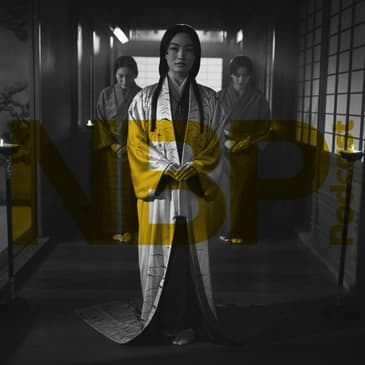
"Shōgun" has been one of the most buzzed-about shows of 2024 since it premiered on FX on February 27th. While the show is still going (the series finale is set to air on April 23rd), the quality of the show has already been solidified, with many calling it the most epic show since "Game Of Thrones." Costume Designer Carlos Rosario, known for working on horror films such as "Don't Breathe" and the upcoming "Alien: Romulus" had quite a challenge before him when taking on this mammoth project, and he was kind enough to spend some time talking with us about his experience working on the show. Please be sure to check out the show, which is now available to stream on Hulu & Disney+ and is up for your consideration in all eligible Emmy categories. Thank you, and enjoy!
Check out more on NextBestPicture.com
Please subscribe on...
SoundCloud - https://soundcloud.com/nextbestpicturepodcast
Apple Podcasts - https://itunes.apple.com/us/podcast/negs-best-film-podcast/id1087678387?mt=2
Spotify - https://open.spotify.com/show/7IMIzpYehTqeUa1d9EC4jT
YouTube - https://www.youtube.com/channel/UCWA7KiotcWmHiYYy6wJqwOw
And be sure to help support us on Patreon for as little as $1 a month at https://www.patreon.com/NextBestPicture
Learn more about your ad choices. Visit megaphone.fm/adchoices
[00:00:00] You are about to participate in the most ambitious culinary experiment ever imagined.
[00:00:08] This competition is going to test everything.
[00:00:12] For depth quickly to anything.
[00:00:16] I mean anything.
[00:00:18] The wildest day of your life starts right now.
[00:00:30] It's my little escape.
[00:00:34] Now Judy's the life of the party.
[00:00:38] Oh baby mama's bringing home the bacon.
[00:00:42] Whoa, take it easy Judy.
[00:00:44] The Chumba life is for everybody.
[00:00:46] So go to chumbacasino.com and play over a hundred casino style games.
[00:00:50] Join today and play for free for your chance to redeem some serious prizes.
[00:00:54] Chumba.
[00:00:56] Chumba Casino.com.
[00:00:58] No purchase necessary. We're prohibited by law.
[00:01:00] 18-floss terms and conditions apply. See website for details.
[00:01:02] You are listening to the Next Best Picture podcast and this is Giovanni Lagos' interview with the costume designer for show gone, Carlos Rosario.
[00:01:12] Do not be fooled by our politeness.
[00:01:14] Our bows are made of rituals.
[00:01:18] Death is in our air.
[00:01:22] And sea and earth.
[00:01:28] Just remember, we live and we die.
[00:01:34] We control nothing beyond that.
[00:01:42] There's a saying out here, every man has three hearts.
[00:01:48] One in his mouth for the world to know.
[00:01:52] Another in his chest just for his friends.
[00:01:58] And a secret heart buried deep.
[00:02:04] For no one can find it.
[00:02:18] I'm glad you're having me, Giovanni. Nice to meet you.
[00:02:22] There's so much to talk about. I think show gone is an exemplary series of just immersing audiences through every level of technical design of the production design, the costuming, every single aspect.
[00:02:34] So I'm very curious how you got into the project because I heard this production of the series has been very interesting.
[00:02:42] Well, I mean, I was contacted by a producer that I've worked with a long time ago when on my first job as an assistant designer on Three Kings.
[00:02:52] And we always stayed in touch where we tried to work together, but it never happened until this one.
[00:03:00] And so I think it was about early 2021 when he sent me an email and asked me if, you know, he told me a little bit about it.
[00:03:06] It was literally two lines. Feudal Japan, 10 episodes.
[00:03:10] It's called show gone. Are you interested in interviewing?
[00:03:14] You know, so I went for it, you know, and I had three interviews with him and just in marks.
[00:03:20] Our show runner, you know, in the beginning when I read the script for the first time, I didn't really connect with, you know, with the characters, but I fell in love with the period.
[00:03:30] And so I did a lot of research about that period before I met with them.
[00:03:34] And so I had about three interviews before they gave me the job.
[00:03:39] And so that was about in February 2021.
[00:03:42] And I started, I think like me, I think about May 1st, 2021 was my first day on show gone in Vancouver.
[00:03:51] I would love to learn more about the research process, you know, specifically like 17th century Japan.
[00:03:58] There's so much in terms of historical like books and history that you can scroll through and navigate and pull from what an inspiring.
[00:04:06] Did you find that incredibly helpful?
[00:04:08] Did you find it a bit daunting to have to lean towards exact detailing to, you know, of course, accuracy or did you feel that it gave you leeway to go and create more of like what you wanted to do?
[00:04:21] No, I think it's very exciting when somebody tells you that actually, you know, you need to be as accurate as possible.
[00:04:27] You need to do your homework, you need to do your research.
[00:04:30] And that's actually really exciting because we live in a world in which it's all about productivity and quantity.
[00:04:38] And, you know, sometimes quality is sacrificed for quantity.
[00:04:43] And so it was really exciting to work with people and with the studio, with show runners and with producers and with a team of people that really were focusing on all the details to make sure that we would get, you know, we would get it right.
[00:04:56] You know, and it was about respecting the Japanese culture, the Japanese aesthetic, our Japanese actors too.
[00:05:02] And, you know, that's really what was really exciting actually as a costume designer to have that possibility to be able to really dive into all the different layers of, you know, the language of the clothing of that period and really do as much research as possible to be able to be as accurate as possible.
[00:05:21] You know, you mentioned quantity.
[00:05:24] Quantity is an understatement for this series with, you know, you're deciding for so many of the lords, their clans, the servants, that doesn't even include, you know, the armor that comes in for this episode.
[00:05:36] In terms of that, what would you say in quantity?
[00:05:39] How did you break this down with your whole costuming team of like how did you tackle what first?
[00:05:44] Well, I think we had to start with the armors first because I had to put them into manufacturing as soon as possible in order to have enough time to have at least the green army ready by the first day of shooting, which was September 22nd in Tofino and of 2021.
[00:06:04] And so the first six weeks pretty much I spent all my time, you know, I had five illustrators and we were doing drawings day and night, seven days a week for like six weeks.
[00:06:15] All the drawings, all the research for the armors, you know, and then once the drawings were sort of finalized and they went through the showrunner and the experts of this period and we got them approved.
[00:06:28] Then after that, we had to take every single armor and do, you know, very specific boards with all the different details that were part of that armor so we could send them to the manufacturing companies so they could have all the information ready to have them to start the manufacturing
[00:06:47] and to have them ready for the first day of shooting. So in six weeks, you know, pretty much we had meetings with the showrunners every week. We did lots of drawings. I met with, you know, the director of that episode many times with the studio with Fredder Quince who was our, you know, main expert in this period.
[00:07:07] And so he's the one that looked at all the armors and gave us the green light. And except for I think the sleeves on the Ashigara's of the Brown Army of Toran Nagas army, there wasn't really much to change.
[00:07:22] And so that was really the most important thing, the armors. Then once we put that in the works, then we focused on all the other, you know, characters. So I think because it's a very big, big show, the way to sort of, you have to be very structured and very specific about the different groups of people that you have to design.
[00:07:42] So it makes it easy for all the people working for me. And so the way I started designing the show was pretty much with creating groups, the people in Azure, the people in Osaka, and then the nobles, right? And within those different categories, then I created different color palettes.
[00:08:00] And then, you know, I started studying, you know, the language of the clothing of that period and understanding that every rank had their own specifics. And, you know, so I got closer and closer to the characters. And, you know, that's when I restarted sort of dissecting who they are and getting into more in depth into the costumes of each one of the main characters, right? But I started from the big picture first.
[00:08:25] That's, it's so fascinating. You know, you're talking about the beginning when you're reading the scripts, you're like, you know, it's good. I'm just but like on a level, you're not connecting it and then through the work itself, you're actually, it's like clicking for you. You're like, wow, okay, like it's, I get it. It makes sense. That's that's fascinating.
[00:08:41] Yeah. And I think the research really helped me fall in love with all these characters because I feel like we, we started first studying all the paintings of that period, because at the end of the day, that really is the source of, you know, what that period was about. And I didn't want to go through, you know, any interpretation of any Japanese movies, you know, I didn't want to see it through the filter of a Japanese director or a Japanese costume designer.
[00:09:07] So we went through directly to the Japanese paintings, and we studied the patterns and the colors and that really helped me to fall in love with with that period. And after that, with the characters themselves.
[00:09:20] So it's because you said you just lean more towards the painting. Sorry, did you not go back and watch or try to find the original 80s mini series?
[00:09:29] You know, I did. I mean, I did watch a couple of clips. Yes. And what we did is that we created boards with all the outfits that every single one of those characters in the 80s mini series was wearing right, but it wasn't really to be guided by the aesthetic of that show.
[00:09:50] It was more about understanding, well, for that location, that character with that rank was wearing a de Foucault or a Sodenashi. It was more about on a technical level, what kind of clothing they were wearing, but not on a creative aesthetic level, you know, 80s.
[00:10:09] It was beautiful for that period. But the age was a very specific, you know, aesthetic. And I honestly didn't really, you know, took that as a reference. I think that this show was very different. And I knew that since the beginning.
[00:10:24] And so I didn't really focus on that. And the same thing for the book. I really wanted to start from a really wide canvas and let this project, you know, have its own spirit, its own voice.
[00:10:37] Totally. You know, much of the 80s show Toshiro Mifune, like one of the greatest screen presence ever in cinema. And he stepped in front of the camera. Now we have the great Hiryu Gi-Sanata, you know, unbelievably underrated actor who I'm so happy has gotten the chance to, you know, front and center in the series.
[00:10:59] And he's been attached to the project so long. And I would love to know, because I want to get into the actors, what was it like working with Hiryu Gi-Sanata, not just as a performer and discussing, you know, what I need from the clothe, but more so as his role as a producer in the series?
[00:11:16] Well, I mean, I think I met with Mr. Sanata before we started shooting obviously via Zoom, right? And so I could see very easily, very fast that actually he it was very important for him as an actor and as a producer to make it look as authentic and as accurate as possible.
[00:11:34] Obviously, he was, you know, the lead character on this big show. It's, you know, all a lot of our actors actually didn't even speak English, so we needed to have translators everywhere. Some of them didn't even work outside Japan. So for him, it was very important that because I am not Japanese and I've never designed any projects that are Japanese that require Japanese clothing.
[00:11:57] You know, it was very important for him to make sure that I would do my research, that I would follow the guidance of all the experts. And then, you know, and that's what we did from the beginning to the end, but that's also part of my job no matter what, you know.
[00:12:12] So we studied, we did research from the beginning to the end and we were really in touch with all the experts and the consultants the entire time. And I have to say that at your U.K., Mr. Sanata was very hands on in everything, you know, during the fittings, just giving some giving me some guidance on, you know, what kind of outfit he would prefer to wear for that specific scene, you know, because he knew that aesthetically creatively,
[00:12:39] creatively, we were in a good place. I think that everybody was very pleased since the beginning of what we were creating. But you know, he's still for specific scenes, he was very clear about what he wanted to wear. And then also the way he would wear the clothes and also the way all the people would be dressed, right?
[00:12:58] So for him, it was very important that not only the creative aspect would be respected, but also the technical aspect would be respected. You know, we honor the Japanese aesthetic as much as possible.
[00:13:28] So what would be the standard 2D movie anytime with no blackout dates or restrictions? When you want to watch a movie in a premium format like 40X, IMAX, RPX or ScreenX, your Regal Unlimited membership gets you into those premium experiences at reduced cost.
[00:13:46] And with Regal Unlimited, you won't just save money on tickets. You'll also save on snacks. Members get 10% off on all non-alcoholic concession items. So if you're planning to see two movies this month, just two, you need to join Regal Unlimited.
[00:14:01] Sign up now in the Regal app or on regmovies.com slash unlimited. That's regmovies.com slash limited. And you can tell them next best picture set you with the promo code slash RegalNBP24. That's slash RegalNBP24.
[00:14:22] I think the work of great costuming, whether in film or television is to be able to convey characters' emotions, feelings through what they are wearing. A big aspect of the story is John Blackthorne, you know, Cosmo Jarvis is great, fish out of water, you know, he's coming into this area, he's an outsider.
[00:14:42] I would love to pick your brain about how his costuming slowly evolves throughout the show. I'm trying to avoid spoilers. We're currently up to episode six at the time of this recording, from being very much in a prisoner to where it starts stepping up and conveying his clothing compared to everyone else's.
[00:15:00] So for him, I think it's interesting because Cosmo Jarvis, Blackthorne, Mariko and Toranaga throughout the 10 episodes, they all have really very clear evolution in their characters. But the evolution is very different for the three of them.
[00:15:16] And for Cosmo, for Blackthorne, it was very clear that once they remove his, you know, sort of English, his britches and his blouses, it was a way to remove his identity, you know, his connection with Europe.
[00:15:31] And so, and then they dress him in a very simple Kosore. The Kosore is the ancestor to the kimono. And it's very basic. And that was really great because it really gave me the opportunity to slowly has his character is emerging to the Japanese culture.
[00:15:48] And he's more and more part of the dynamics between all the different characters, I could add more and more Japanese, you know, clothing pieces, right. And it was really interesting because I could see that, you know, they're obviously very different from britches and
[00:16:05] blouse. And so, you know, you have to tie them in a very specific way. And so I could see that he would then start walking in a different way, speaking in a different way. And I think that really kind of was, and you know, sort of an immersive, immersive experience for the character, right, it
[00:16:22] wasn't just the land, it wasn't just the people around him but also the clothing. And so we started with something very basic and I started adding and adding more Japanese clothing pieces up to the point where we actually even see him with the catagino which is very formal,
[00:16:39] right. And so that's later on in later episodes. And so it was really interesting to just kind of like go through all that evolution in his clothing. And for in terms of the color palette, as you as you can see it's very different from the color palette that you know of the black
[00:16:57] form that Richard Chamberlain portrayed in the mini series. It is, you know, I wanted to make sure that his colors were going to be very muted, very neutral, very masculine in a way. But without patterns, very simple because in a way he's a very powerless
[00:17:12] character, you know within the dynamic of everybody I mean he's the foreigner that just suddenly finds himself in the middle of all this power dynamics between all these lords. And so I didn't want him to, you know, still too much the show, you
[00:17:29] know, I wanted him to be neutral, to make him look powerless. And at the same time, it kind of allowed him to always be in contrast with everybody else is clothing is are so simple that they contrast with the luxurious fabrics of all the other characters around
[00:17:49] him. That's something I just noticed immediately, you know, every one the costuming is so intricate and so beautifully well done. And then you see john Blackthorn and it's the most simple of robes. And I think also through the costuming it helps the intentional comedy that the moments of levity the show tries to do especially you
[00:18:09] through Cosmo Jarrus's character so I think that's just incredibly well done. Another character that's very tied to john Blackthorn is Lady Mariko, played by the great Anna Swai. I would love to learn more about the costume, the choices that went into her costuming.
[00:18:26] I think for Mariko is very different. It's a different evolution. This was more, you know, I tried throughout the entire project to be like we said, as accurate and as authentic as I could but for Mariko it was, she's a little bit the heart of the project in a way.
[00:18:42] And so it was important for me to be authentic and accurate but but at the same time I needed to bring into her costumes, you know, sort of more of an emotional psychological aspect because she goes through such a big emotional arc from the first
[00:18:58] episode to the last one that it was important for me to show it through the costumes. And actually it's interesting because I read on YouTube a few days ago somebody that was sharing her opinion about the costumes and she said something like well we you know we could mute volume and look at
[00:19:18] the characters and look at the costumes and know what they're going through. And that is really the best compliment that you can give a costume designer and that was my intention, intention for Mariko.
[00:19:29] So basically for her, you know, the first time that Buntaro meets her, he describes her as being very icy and very icy because of everything that happened to her previously right and we learn a little bit about it in episode six.
[00:19:44] And so she's been dishonored, her family has been dishonored. She's sort of walking in life, you know, without a spirit, lifeless and I want to portray that in her costumes. So for me was about representing winter through her costumes and that's why it's very monochromatic, you know, the first Uchikake that she wears which is the top layer has a very, you know, specific pattern and that pattern is basically represents snow covering the grass.
[00:20:13] So to me, it really helped me to tell the story of where she starts, but it also was a way to create a white canvas.
[00:20:23] So I could incorporate elements that would describe the new Mariko as the episodes progressed, right. And so slowly what I did is that I incorporated with within those very monochromatic white snowy lifeless sort of costumes, the small camellias, you know, as she finds her voice, as she finds her path, as she finds, you know, her purpose, we could see that life sort of starts to come through in her costumes and
[00:20:53] you know, up to the point where actually there are more patterns and more embroidery and more colors in her costumes later on in the later episodes.
[00:21:03] But also there is one thing that is very interesting about Mariko is that I decided to bring the white outfits back in the later episodes for several reasons.
[00:21:12] One, because white is the color of death in Japanese culture. When they commit seppuku they have to wear sort of like a white, you know, Kosode white Hakama pants whatever.
[00:21:23] And so she knows as the sort of the storyline progresses that death is around the corner. But also there is another reason is that empowerment is not linear.
[00:21:38] And so it comes with doubts. It comes with fears and I thought it was important to bring the white back, which is the Mariko from the beginning.
[00:21:48] So we could see that it's also a struggle for her to go through this evolution. And so it was my way of saying empowerment is not linear.
[00:21:57] It's just not a straight line.
[00:21:59] Wow.
[00:22:00] So many spoilers, but there's plenty of death in the series, you know, and the large scale fighting sequences in terms of the costume.
[00:22:08] You mentioned earlier the difficulty in terms of like breaking down the parts and giving a detailing when it came to the conversations about the stunts and actors performing those fight sequences.
[00:22:20] How did that play into designing the costume? Did that give any difficulties to like, Oh, we had this really good design here.
[00:22:27] And then, you know, while they're testing out, you're like, you have to go back and redo it to any of that ever happened.
[00:22:32] Well, I mean, I think that stunts action always impact the costumes in the sense that you need to create multiples.
[00:22:40] So in that sense, it really I was a little bit restricted for certain costumes in terms of the fabrics, you know, all the fabrics are coming from Japan because I really want to make sure that, you know,
[00:22:55] I mean, those fabrics really capture the essence of the Japanese, you know, culture and aesthetic.
[00:23:00] So pretty much all the fabrics are coming from Japan where they come in bolts of like 1011 meters, and they're one of a kind.
[00:23:06] So when you have multiples that you need to create multiple costumes of the same costume for the action for the stunts and all that, you know, I mean, at the end of the day, the fabric that you're able to find is really what determines how creative you can get with the
[00:23:23] costumes, basically. So that was one aspect that was a bit challenging because of course sometimes you need to play outside the boundaries of the period because you are restricted by the fabric that you find.
[00:23:36] But, you know, if there was one thing that really was very clear to me in terms of how I needed to change the costumes for stunts was in terms of the armors, because I wanted those armors to be as light as possible.
[00:23:52] So in terms of the armors, we're going to be wearing those armors for hours and hours and hours and days. And you know, they can get very heavy, you know, and most of the armors that I've seen were extremely heavy.
[00:24:03] And so I decided not to do them in iron, I decided to do them in leather.
[00:24:09] I made all the armors, of course they have certain pieces that are in rubber because of the action right for safety. But a lot of the pieces the chess plates are in leather, mostly because of the lightness, but also because the leather breaks down really well and I thought it would give a very nice
[00:24:29] amount of weight down to the costume, right. So at the end of the day when I put it, I put the armor on top of on Mr. Sanada. He was very excited and he said to me that that was the lightest armor he has ever worn in his career so that was a really nice compliment.
[00:24:46] Real quick, we're going to have to start wrapping up. Unfortunately I could talk to you about this for hours. You know, we talked about Japan, the importance of it being shown this beautiful manner and accurate portrayal.
[00:24:59] Japan is easily as big as a character in this series and the setting as Tornago or John Blackthorn. The environments that you saw they were shooting at ever play into the colors that you were designing for the costuming that you wanted to play off so like you know when it's captured on camera you're like just perfect.
[00:25:20] Well, I mean I think that yes the color palette in this project was very, very important actually it was when I read the script for the first time. The two words that came to mind right away was colors and textures.
[00:25:34] But I think the colors were mostly guided by the novel in the sense that James Clavel describes the Grey Army. Ishii does army as the Grey Army and Tornaga's army as the Brown Army and in the first script, they kept that so I wanted to honor James Clavel and I wanted to make sure that we would respect his vision by going in that direction so as you can see all the different
[00:26:00] armors army are in very specific colors and so my idea is that well if those armies are in this color then by extension their lords their leaders should follow the same color palette right so that really is pretty much where I started in terms of the colors.
[00:26:17] And so after that every single character every single lord every single army is pretty much a little bit in alignment with natural elements with elements from nature that I got inspired by you know and that really was sort of my my first guidance and that was really great because it really
[00:26:36] really created very strong containers of you know what my possibilities were for every army and every character and every lord right and so that really kind of simplified everything you know it really gave me very clear boundaries after that I mean I knew that the project visually was going to be a little bit dark and greedy so everything has been over died everything has been broken down.
[00:27:02] And so after that what happens with the filters and with the director of photography is and their conversations with the show runners it's up to them to really then change the visuals the way they want, but we did a lot of camera tests in the beginning so I had a good sense of where it was going.
[00:27:19] That's fascinating. I just, I like can listen to this all day I think show gun is one of the best TV shows recently Mary that conveys scale you know this grandeur something like the people have compared it to like game of thrones I think it's apt in terms of what everyone in this series on camera behind the camera is done.
[00:27:39] Thank you so much for being here today. This is amazing at real quickly is there anything else you're working on or coming out soon or.
[00:27:46] Yeah, so I actually have the new alien movie coming out on this.
[00:27:50] Okay, what a contrast yeah you go to the side five Wow.
[00:27:58] Okay, equally as fun very different to design but that's going to be a great project to I think it comes out to meet August.
[00:28:05] Yeah, that trailer that just came out was amazing. Thank you so much. This is amazing.
[00:28:09] Thank you for having me. Of course, thank you. Hey everyone. Thank you so much for listening to Giavon Lagos interview with the costume designer for the FX series show gun Carlos Rosario here on the next best picture podcast show gun is now available to stream on Hulu or Disney Plus and is up for your consideration for this year's Emmy Awards in all eligible categories.
[00:28:31] You have been listening to the next best picture podcast we are proud to be part of the evergreen podcast network and you can subscribe to us anywhere where you subscribe to podcasts.
[00:28:40] Be sure to leave us a review on Apple podcasts and let us know what you think of the show. We really appreciate your feedback and your support which you can also lend on over at Patreon for $1 minimum a month you'll get some exclusive podcast content from us.
[00:28:53] Thank you all so much for listening as always and we will see you all next time.
[00:29:01] Bye.
[00:29:31] Hey guys, it is Ryan. I'm not sure if you know this about me, but I'm a bit of a fun fanatic one. I can I like to work, but I like fun too. It's a thing and now the truth is out there. I can tell you about my favorite place to have fun.
[00:29:51] Chumba Casino. They have hundreds of social casino style games to choose from with new games released each week. You can play for free anytime anywhere and each day brings a new chance to collect daily bonuses. So join me in the fun. Sign up now at chumba casino dot com.