
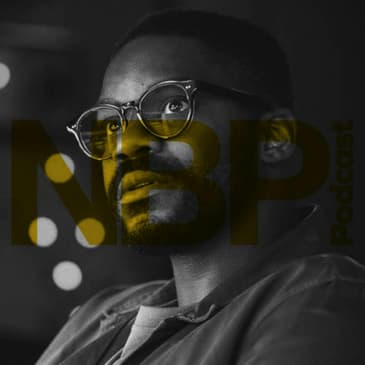

"3 Body Problem" is the new Netflix television series adaptation created by "Game Of Thrones" showrunners David Benioff and D. B. Weiss, along with Alexander Woo. Based on the Hugo Award-winning Chinese novel "The Three-Body Problem" by Liu Cixin, the show is a dense, ambitious, and highly impressive piece of sci-fi. Emmy Award nominee Jovan Adepo ("Watchmen"), who plays Dr. Saul Durand in the show, was kind enough to spend some time talking with us about working on the show, his character, his reaction to the response towards "Babylon," and more. Please be sure to check out the show, which is now available to stream on Netflix and is up for your consideration in all eligible Emmy categories. Thank you, and enjoy!
Check out more on NextBestPicture.com
Please subscribe on...
SoundCloud - https://soundcloud.com/nextbestpicturepodcast
Apple Podcasts - https://itunes.apple.com/us/podcast/negs-best-film-podcast/id1087678387?mt=2
Spotify - https://open.spotify.com/show/7IMIzpYehTqeUa1d9EC4jT
YouTube - https://www.youtube.com/channel/UCWA7KiotcWmHiYYy6wJqwOw
And be sure to help support us on Patreon for as little as $1 a month at https://www.patreon.com/NextBestPicture
Learn more about your ad choices. Visit megaphone.fm/adchoices
[00:00:00] You are listening to the Next Best Picture Podcast, and this is Giovanni Lagod's interview
[00:00:05] with one of the stars from the new Netflix series Three Body Problem, Yovon Adepo.
[00:00:11] I have to tell you something.
[00:00:16] Something insane.
[00:00:20] But true.
[00:00:23] About all of us.
[00:00:26] It started a long time ago.
[00:00:34] Back in 1977, they detected a sequence called the Wow Signal.
[00:00:44] What's it say?
[00:00:46] Hello everyone, I'm Giovanni Lago from the Next Best Series Podcast and I'm joined by
[00:00:50] one of the stars of Netflix's hit show, The Three Body Problem, Yovon Adepo.
[00:00:55] Thank you so much for being here.
[00:00:56] Thank you for having me, man.
[00:00:58] This is a pleasure.
[00:00:59] You know, let's just get right into it.
[00:01:02] Three Body Problem, a very famous Chinese novel by Lu Xishan now being brought to American
[00:01:07] audiences.
[00:01:08] Was it something you were familiar with?
[00:01:10] Was it just, you know, your agent slides your script and it's Benny Hoffman Weiser
[00:01:14] involved and you're like, I'm in.
[00:01:16] I don't care what the project is.
[00:01:17] I'm just going to be a part of it.
[00:01:19] What was the process?
[00:01:20] Yeah, you just said it was the latter.
[00:01:22] I got the email from my agents and I was already filming at the moment.
[00:01:27] I was finishing Babylon and I had gotten the notice and saw what the job was.
[00:01:33] It was untitled at the time, but it said, you know, Benny Hoff, Weiser and Wu.
[00:01:37] And I was like, oh, right away I would love to have an opportunity to have a
[00:01:40] meeting with these guys to talk about the world that they're trying to create
[00:01:44] and see if through the casting process that I'm a right fit for the role.
[00:01:48] So to answer your first question, I was not familiar with the book beforehand, but
[00:01:54] after I met them in L.A. at their offices, I got the book, took a stab at it or took
[00:01:59] a swing at it and missed because it is so dense, such a thick book.
[00:02:02] The material is so dense that it took me two passes to get through it and to
[00:02:06] really try to keep track of what's going on with all of these characters.
[00:02:11] The second time being through audio books.
[00:02:13] So every time I was going on for Babylon, I was able to listen to the story.
[00:02:17] But I was really interested at the prospect of being a part of this just
[00:02:20] because, like you said, I mean, these are heavy hitters in storytelling.
[00:02:25] And so I wanted to do anything I could to be a part of this of this project.
[00:02:30] And it was an exciting prospect.
[00:02:32] And I'm glad that I got a chance to do it.
[00:02:34] One of my dear friends, he's really big reader.
[00:02:38] So when I was watching the series, he's read the book.
[00:02:40] One of the few people I know.
[00:02:41] So like I was asking him questions, I was like, is this matching?
[00:02:44] You know, like you mentioned, it's very dense.
[00:02:47] He described to me the cerebral intelligence to it where, you know,
[00:02:52] not everything is entirely action.
[00:02:53] It's through like intense physics and mathematics and through a scientist's mind.
[00:02:58] So I just I'm curious, you know, compare this to something like Watchmen,
[00:03:02] you know, something that exists as a franchise, but with such a loose adaptation,
[00:03:06] you had more freedom to the performer in interpreting that story for this.
[00:03:10] Did you feel a bit more obligated to stick to the script, to, you know,
[00:03:14] be more dedicated to the material just because you wanted to get it right?
[00:03:18] Well, I think we definitely had a bit of an advantage as actors because
[00:03:24] Benioff or I should say Dad, David, Alex and Dan.
[00:03:28] But we call them dad because it was easier than saying all the names.
[00:03:31] But we refer to them as dead
[00:03:33] because they had done all of the work adapting to characters
[00:03:35] and adapting the story to screen.
[00:03:38] And I think some of the concepts or most of the concepts
[00:03:40] that are shared in the books are so complex that it's tricky.
[00:03:44] To be able to find a way to adapt it to screen and in a way that's
[00:03:48] that the consumer can or mass consumers can can attempt to understand.
[00:03:52] So I think that they did most of the heavy lifting for us.
[00:03:55] We were very fortunate to have that because the conversation then became
[00:03:58] how do we as actors collaborate with you guys to to bring
[00:04:03] the characters that you put on paper so brilliantly.
[00:04:05] But they also allowed us to kind of put our own ideas into it as well
[00:04:09] as where it was where it was fitting as much as I can.
[00:04:13] If it's on the paper, it's on the page.
[00:04:15] I like to kind of stay on board with what the writers put there
[00:04:18] because they put it there for a reason.
[00:04:20] And they've done so much and such great things in storytelling
[00:04:23] that you want to trust what they're creating.
[00:04:25] But it was refreshing that they allowed us to kind of put our own quirks in.
[00:04:29] And when I say us, I mean Oxford Five and all the
[00:04:32] my other brilliant castmates to do things that were fun
[00:04:35] kind of loose wherever they saw fit.
[00:04:37] So it was it was a pretty.
[00:04:39] In my recollection, a pretty seamless
[00:04:43] process as far as conversations with those guys,
[00:04:46] going through the casting process, pre-production and then going in day
[00:04:49] to day on set and doing these scenes.
[00:04:51] Yeah, you mentioned the other cast.
[00:04:53] I want to ask what is it like working with them because, you know,
[00:04:56] Saul or Saul Duran in this English adaptation of it
[00:05:00] from his tiny counterpart, someone who doesn't fully live up
[00:05:05] to his quote unquote potential, he's eluded to a degree
[00:05:09] in the relationships he has.
[00:05:10] How does that play as a performer to developing those dynamics,
[00:05:14] especially with your relationships with Augie?
[00:05:16] You know, Isaac Gonzalez is amazing and the character of Will,
[00:05:19] of course, in that friendship.
[00:05:21] Yeah, yeah, I really I've really come to admire Saul as a person
[00:05:26] in a weird way because playing him was a bit difficult for me initially
[00:05:31] because, like you said, he is so much more
[00:05:34] on the on the standoffish or silent type of individual
[00:05:39] compared to his other brilliant counterparts.
[00:05:41] I think all of these guys have all done great things for the science world
[00:05:46] and he has the capability to do so in a major way,
[00:05:48] but he's just never done that.
[00:05:50] And even in the early episodes, when we first start to establish
[00:05:53] the game and the headset and, you know, the terrors
[00:05:55] that are haunting physicists around the world,
[00:05:57] everybody has such strong opinions about it.
[00:06:00] And they're trying and there's a lot of conflicting ideas
[00:06:02] and and all of the Oxford five, everybody's kind of
[00:06:06] handling different things in different ways.
[00:06:07] And it's kind of a task for Saul to be able to be somebody that just sits back.
[00:06:14] And I always thought that it was like, oh, he's just kind of being boring.
[00:06:17] He's kind of just deciding to ignore everything and kind of not care.
[00:06:21] But I think a lot of the time, people who are quietest
[00:06:24] are the ones that are spending time listening.
[00:06:28] Even more we're thinking about, I don't know if this is spoiler friendly,
[00:06:30] but when they first really as a group
[00:06:32] kind of face the the realities of the VR headset
[00:06:35] and they're all at Jack's house and they're all bickering about
[00:06:39] what they think this means for physicists and why they're as well
[00:06:42] as we would say, topping themselves, killing themselves.
[00:06:45] And they spend five, ten minutes, everybody going back and forth
[00:06:48] about what's the right way to attack this until they're like, OK,
[00:06:51] what is this as a VR headset?
[00:06:53] What does it mean? What is the relevance of it?
[00:06:55] And then they basically are like, OK, boy, genius.
[00:06:58] So give us something that we can use.
[00:07:01] And that's something that's really admirable, I think, because he is
[00:07:04] one of the most brilliant minds in the world, but he's the quietest.
[00:07:08] So it's like, what is it about his brilliance and his talent
[00:07:11] that he's so afraid of that he just actively chooses
[00:07:15] in every day of his life that translates to this entire season?
[00:07:19] He just chooses to sit back and do nothing.
[00:07:22] Is there a fear of failure?
[00:07:23] Is there a trauma of him, you know, never living up
[00:07:27] to expectations from his parents or whatever?
[00:07:29] There's so much about him that I tried to fill
[00:07:32] that we don't get to see on screen, unfortunately.
[00:07:35] And I'm hoping that that's all we'll get to
[00:07:38] express more of that in the event that we get to continue
[00:07:41] to tell his story in future seasons.
[00:07:44] You know, it feels very much into that when people think of really
[00:07:48] intelligent individuals and these theoretical doctors and geniuses
[00:07:51] of like the torture genius and you know what's going on.
[00:07:54] The way they interact with people are so different
[00:07:56] because of what is truly processing.
[00:07:58] It plays so well into Saul's eventual arc,
[00:08:02] you know, him starting to realize he needs to step up more,
[00:08:05] seeing the tolls it's starting to take him becoming a part of the wall
[00:08:09] facer program. What would you like to see that?
[00:08:11] You know, since we touched on spoilers, let's go into it.
[00:08:14] You know, that natural evolution of that and seeing how it tips off
[00:08:18] and sets off what could be happening for the next season.
[00:08:21] I think it's awesome, man, because in the earlier episodes,
[00:08:24] what's really cool is that like he's a physicist.
[00:08:26] It's been established that he's very intelligent.
[00:08:28] You know, they say, oh, you're a various favorite.
[00:08:30] Yeah, but he's such a relatable guy and it's been put on paper.
[00:08:34] And, you know, I think it's really cool that you can have someone
[00:08:37] whose brain is literally like at the top of the most intelligent
[00:08:42] people in the world.
[00:08:43] But you see him at a pub or you see him trying to talk to girls
[00:08:46] at the bar or whatever.
[00:08:48] And he's just a relatable guy.
[00:08:49] Now, he might be familiar and totally understand the most complex
[00:08:53] and diverse concepts that exist in our history of science.
[00:08:57] But at the end of the day, he can talk to you like he's a buddy
[00:09:00] that you that you shot the shit with for years.
[00:09:03] And I think going from that to him being able to really see
[00:09:07] that he's somebody that the world needs to step up and do something.
[00:09:11] I think I would hope that if we continue to tell this story,
[00:09:14] if we're fortunate to do so, people are going to want to see.
[00:09:17] OK, people are talking about how smart he was this whole season.
[00:09:20] He's been put in a place of power.
[00:09:21] What is he going to do with it?
[00:09:23] And I think that there's a few places you can go.
[00:09:26] I think, you know, you could just come up and be the hero right away.
[00:09:28] Or I think, you know, what's interesting
[00:09:31] in drama is a bit of conflict and a bit of obstacle and failures
[00:09:35] that he might not be able to immediately step into that role responsibly.
[00:09:39] So who really knows?
[00:09:40] I think it's it's an exciting prospect, I think, for Saul.
[00:09:44] You know, you mentioned when you first got the role
[00:09:45] and you were taking cracks at it, reading the material
[00:09:48] and you found parts frustrating or a bit difficult to get into
[00:09:51] for the character.
[00:09:52] Is there any like weird comparison to that of, you know,
[00:09:56] I mentioned Watchmen earlier when you're playing Will Reeves
[00:09:58] and sort of that internal
[00:10:01] silence that you mentioned, at least for Will Reeves,
[00:10:04] you know, he took his anger out on like when he's crime fighting,
[00:10:07] he's just beating people to a pulp.
[00:10:09] He's getting his emotions out, his frustrations about his own identity.
[00:10:12] Did you find at least like some weird throw line
[00:10:15] between the two characters that helped you get to that place?
[00:10:18] Somewhat, yeah, I think I spoke about this before.
[00:10:20] I think that. For whatever reason,
[00:10:23] I've gravitated to playing characters who are the underdogs in their story.
[00:10:30] I think people who who are walking down the street,
[00:10:33] the type of guy that you would never think twice about as being spectacular
[00:10:37] or being anything special if you're talking about Watchmen.
[00:10:40] I mean, the name of that episode was this extraordinary being.
[00:10:43] And I think before he became a crime fighter in the superhero sense,
[00:10:48] superhero and him just being a police officer for all, you know, intent,
[00:10:52] he was very ordinary.
[00:10:55] And I think it's the same for Saul, at least when we first meet him.
[00:10:58] I mean, he's of course, he has a stable job at Oxford University.
[00:11:01] You know, he's objectively smart.
[00:11:03] He's intelligent. But I think it has yet.
[00:11:05] I think we have yet to really see his power, his full potential.
[00:11:10] I think that his classmates, his his love, his best friends,
[00:11:13] the Oxford Five know that he has a very, very powerful brain
[00:11:17] and he's able to dissect theories and understand things
[00:11:20] at a very high level and fairly quickly.
[00:11:22] But I just think that that underdog aspect of it,
[00:11:26] I think we're still waiting to see what he can do.
[00:11:29] But it's interesting, you know, coming from, you know, his character
[00:11:31] doesn't come up until the second book anyway.
[00:11:33] So I had a lot of freedom this first or I would say a lot comfort
[00:11:37] in how I was playing him in the first season because
[00:11:40] he didn't need to make any big splash.
[00:11:43] I mean, I was there, I think, in the truest sense,
[00:11:45] he was he was a supporting character and that he like you mentioned
[00:11:49] at the beginning of the interview, he had, you know, a bit of an arc
[00:11:53] with with Augie. He had, you know, his friendship with Will
[00:11:55] that was growing in the middle of the season.
[00:11:57] And then by the time we go to episode eight,
[00:11:59] he's established this bond with with Dasha and Jess or Jim, excuse me.
[00:12:03] So he's just really been that that buddy
[00:12:07] that's been a part of everyone else going through this traumatic experience
[00:12:11] that they've all gone through respectively.
[00:12:13] But he's getting ready to go to it, go through it himself.
[00:12:16] And and I'm excited to see if he's if he's built for it or not.
[00:12:23] I'm a grown up. Me too. Yep, me too.
[00:12:25] But, you know, these days being a grownup can really suck.
[00:12:27] Luckily, we're grownups who grew up in the coolest generation.
[00:12:30] We had video arcade and also some of the best TV and movies ever made.
[00:12:33] We lived the origin of awesome consumer electronics.
[00:12:36] The list goes on and on.
[00:12:38] Yep. Generation X. Exactly.
[00:12:40] And we're Gen X grownup.
[00:12:41] Every week, the Gen X grownup podcast explores media, tech, toys, games
[00:12:46] and more from both yesterday and today through the eyes of generation Xers
[00:12:51] who absolutely love that stuff.
[00:12:52] You can find us on iTunes or wherever you get your podcasts
[00:12:55] or find us on our website. Gen X grownup dot com.
[00:13:01] I think that was good enough.
[00:13:02] I hope so, man. I'm tired.
[00:13:04] Who listens to a promo on a podcast and then goes
[00:13:06] and listen to a different podcast?
[00:13:08] I've never done it.
[00:13:12] Yeah, I mean, it's got to feel somewhat relieving.
[00:13:15] Like you put in the work for this groundwork to stepping stones
[00:13:19] of the character so that way, you know, let's be real,
[00:13:21] the show people who watched season two have been like,
[00:13:25] it's got to be like when the time you come to set season two,
[00:13:28] you know, a weight off your shoulders that you can just go right into it
[00:13:31] and just be like, OK, I know where this is going.
[00:13:33] The switches turn and you can lock it in easily.
[00:13:37] Well, I mean, I've spoken to the showrunners.
[00:13:39] I mean, I bugged them all the time just because I like talking to them.
[00:13:43] I like picking their brains about things.
[00:13:44] And I've heard loosely some ideas of what they want to
[00:13:48] what they want to do with soul.
[00:13:51] And it doesn't make me any less stressed or anxious
[00:13:56] because I just approach the work.
[00:13:58] I take it incredibly seriously in the exact opposite of soul.
[00:14:01] And I know that I've ventured into the second book.
[00:14:04] So I know about the dark or excuse me, dark force theory
[00:14:07] and everything like that.
[00:14:08] That's a very ambitious book as well.
[00:14:09] And so I think that I will be coming into set or pre-production
[00:14:16] if and when I just have to say that it's been when we make happen.
[00:14:20] I plan to come into it with a bit more aggression
[00:14:24] as far as how I'm going to attack the role
[00:14:27] that I didn't need to have this season.
[00:14:30] I just didn't need to.
[00:14:31] I think they kind of pushed me to just play him as honestly
[00:14:35] and sincere as you can.
[00:14:37] I don't need to walk into every scene and be like, I am a scientist.
[00:14:40] I am super smart, you know, pushing on my glasses and everything.
[00:14:43] It's not necessary.
[00:14:44] And I think people will relate to a guy that they that they can identify
[00:14:47] like, oh, that's a buddy that I go party with on the weekends.
[00:14:50] But then when it's time to kind of crank it up
[00:14:52] and show why I've been appointed the wallfacer,
[00:14:56] I think that that'll be the performance that I'm waiting to
[00:15:00] to share with the audience for sure.
[00:15:02] I mean, you've had a great career
[00:15:05] leftovers when they see us watch.
[00:15:07] And I guess got a fan out for a second.
[00:15:10] My favorite film of twenty twenty two is Babylon.
[00:15:14] So I would like regret it.
[00:15:16] I didn't bring it up to some degree.
[00:15:18] I mean, I'm just curious, you know, the film's reaction
[00:15:23] polarizing, you know, people either really love it,
[00:15:26] you know, those calling themselves the Babylon.
[00:15:29] Sure, sure. You've heard that before.
[00:15:31] Yeah. Yeah.
[00:15:31] Are those who had very, you know, opposite reactions to it?
[00:15:35] When you were making it, I know whenever you ask anyone on a film set
[00:15:39] when you're working, you never know how it's going to turn out till it turns out.
[00:15:42] Were you always conscious of like, this is going to be something
[00:15:46] that's divisive and really get like people talking?
[00:15:50] Or did you always expect or were you surprised by like the reactions
[00:15:54] like when it came out?
[00:15:55] I was never cognizant of it being polarizing.
[00:15:58] I don't think anybody who is a part of the principal cast
[00:16:02] or even, you know, the auxiliary cast, I don't believe that anybody cared.
[00:16:07] You know what I mean?
[00:16:07] I think that I mean, I can speak for myself and that's what I'll do.
[00:16:11] I'm a huge fan of Damien Giselle.
[00:16:13] I mean, that's my brother.
[00:16:14] Love to death. He's a brilliant mind.
[00:16:16] He's and he's a filmmaker that's not afraid to push the envelope
[00:16:19] as an artist, as an actor.
[00:16:20] That's what I'd like to say that I do all the time.
[00:16:24] That's definitely how I approach the roles that I want.
[00:16:27] I want to do things that challenge me,
[00:16:29] that push me to be as different from myself as I can.
[00:16:32] I don't know if I will succeed in that, but I try.
[00:16:35] So to come into a project where we're all doing
[00:16:39] the best we can to just tell a really interesting and intense
[00:16:43] and racy and dark and funny and dramatic story.
[00:16:47] I mean, that's why you go to movies, man.
[00:16:49] I think I don't.
[00:16:50] It is weird because I always I'm always a skeptic when it comes to like
[00:16:54] if there's a show or film, whatever.
[00:16:56] And everybody in the world is like.
[00:17:00] And this might be, I don't know, this might be the worst thing to say
[00:17:02] or whatever, but it's just like you got to watch such and such.
[00:17:04] Like I felt like I heard shows during the pandemic.
[00:17:07] You have to watch this.
[00:17:08] It will change your life.
[00:17:10] And that could be true.
[00:17:12] But hearing it, I'm almost like, I'll watch it later
[00:17:16] because I don't know if something the way somebody says it to me, it's like
[00:17:21] something being polarizing.
[00:17:23] That means that there is some really racy or really
[00:17:26] challenging ideas being presented.
[00:17:29] Yeah. And that's the type of filmmaking that pushes the genres forward.
[00:17:32] All of the genres, sci fi, horror, you know,
[00:17:35] romcoms, romance, whatever.
[00:17:36] That's what pushes it forward is if you're telling stories in a different way
[00:17:40] that hasn't been done before.
[00:17:41] You could pay respect to the films of the past.
[00:17:43] But the only way we're going to continue to evolve in filmmaking,
[00:17:46] get people to continue to go to the theater to get new experiences
[00:17:50] is to have some racy shit.
[00:17:52] Excuse my language, but that's what it is.
[00:17:54] It is true.
[00:17:55] I mean, that's I mean, it feels like at the core, that is what Babylon was.
[00:17:58] Like I lived in Florida when it came out.
[00:18:00] I forced 10 people to go opening night.
[00:18:02] I did not tell them what the movie was about.
[00:18:04] I was just like, we have to go see this because I was excited.
[00:18:07] Like Damien Chazelle, like Brad Pitt, Marco Ravi, Diego Calvo,
[00:18:10] who's amazing, you or everyone in that film.
[00:18:12] Just like the production line is saying is just fantastic.
[00:18:16] And, you know, watching it,
[00:18:18] because I think we now live in an industry that's focused so much
[00:18:21] feels in recent years more so towards the business sides and taking risks.
[00:18:25] The artistry of film.
[00:18:27] The film only came out two years ago, you know, COVID, the strikes.
[00:18:32] It feels like we're not having industry people who want to go
[00:18:36] and jump to make films like this.
[00:18:39] And I mean, the film had like close to like 80 million budget
[00:18:42] didn't perform as well as one would hope.
[00:18:44] Sadly.
[00:18:45] Do you think we'll get to a point again where studios
[00:18:49] want to go out and like back these on tour filmmakers like Chazelle?
[00:18:53] And I mean, I know Damien's got another film coming out next year.
[00:18:56] Like, I'm excited. I'm happy.
[00:18:58] You know, this people constantly were like, is he in director's jail?
[00:19:01] But, you know, are you concerned as a performer that seeing filmmakers
[00:19:05] you either want to work with or respect or struggling to get projects
[00:19:08] that aren't, you know, being given budgets that deserve?
[00:19:11] Well, as far as Damien goes, I'll break it up in pieces.
[00:19:14] I think his his high skill level is undeniable subjective.
[00:19:18] It's objective.
[00:19:19] So there's no surprise that he's going to continue to work.
[00:19:21] I mean, you objectively prove your, you know, your your talent
[00:19:27] once or twice, like it doesn't go away, you know, and the only thing
[00:19:31] that you can do, the biggest thing that you should respect about him
[00:19:34] is that he's willing to take risks and do things he hasn't done before,
[00:19:36] which he's done and I'm sure he's going to continue to do.
[00:19:38] So he's going to be fine.
[00:19:39] I don't believe in that jail.
[00:19:41] It could exist. I don't know. He's still working.
[00:19:43] He's got a movie come out next year in the prison.
[00:19:45] I'm excited. You know what I mean?
[00:19:47] But you're right. People do come up with those type of that's just good
[00:19:50] headline for the magazines and stuff like that.
[00:19:54] Hollywood doesn't whatever.
[00:19:56] But as far as what you're saying about, you know, that type of filmmaking,
[00:19:59] I think the pandemic and the strike and everything that you mentioned
[00:20:02] did play a part in how movies get made.
[00:20:05] I think it's easier to to adapt and bring known IP to the screen.
[00:20:11] But the same way that a new challenging type of film
[00:20:14] can fail at the box office, some of the popular IPs have failed as well.
[00:20:19] They burned a shit ton of money as well.
[00:20:21] So it can't for me.
[00:20:23] That's not my side of the of the industry.
[00:20:25] You know, the executive studio.
[00:20:26] I can't. Yeah, I'm not in those rooms, you know?
[00:20:29] So I don't know what the algorithm algorithm is,
[00:20:31] what they do to make things happen.
[00:20:33] I can't really speak on it in that way.
[00:20:35] But as an as a as a avid moviegoer
[00:20:38] and a lover of film and television and just good storytelling,
[00:20:42] I think we have to continue to take risks.
[00:20:45] Talking to some buddies who are writers and directors, they feel
[00:20:49] I don't know how I feel about it, but just listening to it.
[00:20:51] I'm wondering how valid it is.
[00:20:52] They feel like Hollywood is going to have to have like a mastery set
[00:20:55] at some point to really get into like I miss those days,
[00:20:59] like the golden era of filmmaking, you know, like the years of Godfather
[00:21:02] and on the waterfront, those type of films where there were all kinds
[00:21:05] of stories, this was like a story, you know, on the waterfront
[00:21:07] about a boxer who worked on the docks like I have.
[00:21:11] Like I used to be a contender.
[00:21:13] I used to be somebody, you know, like it's just like those movies
[00:21:17] were getting made all the time, but it's refreshing that we have movies
[00:21:20] like American fiction and, you know, all these different
[00:21:23] all these type of different new stories that are past lives,
[00:21:26] all these new films that are coming out there telling every story
[00:21:29] doesn't have to have a billion things going on.
[00:21:32] Sometimes the simplest idea
[00:21:35] and if it's executed well and the characters are interesting
[00:21:38] and the pacing is great, like that's all we can ask for for new things.
[00:21:42] And so I just think, I don't know, I would love for them to take more risks.
[00:21:46] I think that people are starting to, but it's only like a movie or two a year.
[00:21:51] And I think to really get people going to the movies again,
[00:21:53] we got to take a little bit more swings at bat.
[00:21:56] I mean, but that's the thing.
[00:21:57] I'm not the one that's. Yeah.
[00:21:59] Buddy, you know, yeah, no, I think in let everybody know
[00:22:04] on the record is my opinion.
[00:22:05] I don't know the right way to go.
[00:22:08] I just act. Yes.
[00:22:09] Yeah, no, I totally agree.
[00:22:11] I mean, Kord Jefferson, American fiction, we mentioned Watchmen alum.
[00:22:15] Hey, his speech was right.
[00:22:16] Let's fund these smaller films, get most of them out
[00:22:18] and let's take risks people.
[00:22:21] Giovanni, thank you so much.
[00:22:23] This was a delightful conversation.
[00:22:24] Everyone check out three body problem.
[00:22:27] If you have anything else that you want to promote or work it up next.
[00:22:30] Go nuts. Oh, man, I got it.
[00:22:32] It's all I got to bring.
[00:22:33] I got to let three body, you know, live in this live in this.
[00:22:36] Let's let it take up. Yeah, let it take up the headlines.
[00:22:38] Yeah, man, I'm really proud of that.
[00:22:40] Really proud of all of my caps.
[00:22:41] They saw my dogs barking in the back.
[00:22:43] All my castmates, everybody worked really hard.
[00:22:45] Dad, you know, Dan, Alex and David really, really appreciate
[00:22:49] being a part of the project with these guys.
[00:22:50] And hopefully we get to give you guys more.
[00:22:53] And Gio, it's been a pleasure.
[00:22:55] Well, thank you. Thank you.
[00:22:56] Hey, everyone.
[00:22:57] Thank you so much for listening to Giovanni Lago's interview
[00:23:00] with one of the stars from the new Netflix series Three Body Problem
[00:23:03] here on the Next Best Picture podcast.
[00:23:06] Three Body Problem is now available to stream on Netflix
[00:23:09] and is up for your consideration in all eligible categories
[00:23:12] at this year's Emmy Awards.
[00:23:14] You have been listening to the Next Best Picture podcast.
[00:23:16] We are proud to be part of the Evergreen Podcast Network,
[00:23:18] and you can subscribe to us anywhere where you subscribe to podcasts.
[00:23:22] Be sure to leave us a review on Apple Podcasts
[00:23:24] and let us know what you think of the show.
[00:23:25] We really appreciate your feedback and your support,
[00:23:29] which you can also lend on over at Patreon for one dollar minimum a month.
[00:23:32] You'll get some exclusive podcast content from us.
[00:23:35] Thank you all so much for listening, as always,
[00:23:37] and we will see you all next time.
[00:24:23] This is Krista Makes, guitarist and vocalist for Less Than Jake
[00:24:26] and host of Krista Makes a podcast, a songwriting podcast where every week
[00:24:31] I'm joined by an amazing guest to break down the writing,
[00:24:34] recording and release of one iconic song from their career.
[00:24:39] And our giant Evergreen back catalog of episodes.
[00:24:42] We've had rock legends such as Dee Snider and Huey Lewis,
[00:24:45] punk rock favorites like Mark Hoppus, Fat Mike and Brett Gurowitz
[00:24:49] and up and coming artists of today, such as Liz Stokes of the Beths
[00:24:53] and Genesis Owusu.
[00:24:55] We've had guests from all genres and styles of music.
[00:24:57] And I guarantee that if you peruse our back catalog,
[00:25:01] you'll see several episodes that will make you say, man, I got to hear that.
[00:25:06] Whether you're a fan of music or a creator of music yourself,
[00:25:09] you'll take away a whole new appreciation for the songs you know and love.
[00:25:14] Krista Makes a podcast is available for free on all the places
[00:25:17] you could possibly listen to podcasts and new episodes come out every Monday.