
Kelly Cherwin is the Director of Editorial Strategy at HigherEdJobs, the leading job board and resource site in academia. She also teaches project management and strategic management courses at two universities in the Chicago area. She’s also the co-host of the HigherEdJobs Podcast, which offers great career advice to staff and faculty of colleges and universities.
One of the key differentiators between HigherEdJobs and other niche and general job board and recruitment marketplaces is their non-job content including blogs, webcasts, and the relatively new podcast. Another key differentiator is that HigherEdJobs has figured out how to look at that content as more of a profit center than an overhead item as it measures and therefore is able to manage the return on investment that it generates by adding new content.
Learn more about your ad choices. Visit megaphone.fm/adchoices
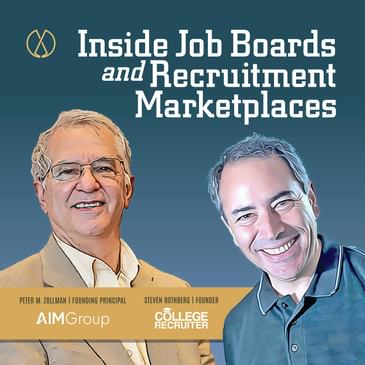
[00:00:09] Welcome to the Inside Job Boards and Recruitment Marketplaces podcast. I'm Stephen Rothberg, the founder of College of Cruder Job Search Site. At College of Cruder we believe that every student and recent grad deserves a great career. And I'm Peter Zolman, founding principal of the Amgrew,
[00:00:26] the leading global business intelligence service for marketplaces and classified advertising companies. We consult with recruitment marketplaces companies and publish Amgrew recruitment intelligence and a free weekly digest. We also host the annual global recbos conference.
[00:00:44] This is the podcast for you to learn more about how to create, manage and work with general, niche and aggregator job boards and recruitment marketplaces. Well, hello Mr Zolman, it is a pleasure being back with you. It is good to be here. It's another Thursday.
[00:01:03] And that means we're podcasting again. Yeah, Thursday also means if you're in college that's the night that you go up for beers because you only have one more day to get through through the weekend. And and you can just tough it out for that day.
[00:01:18] Oh, I know I knew so many people in college who made sure they never took a class on Friday. And then they never took a class on Monday and you know, but if you can work it out and somebody, some people took just Tuesday Thursday classes.
[00:01:37] Hey, whatever it takes right. Absolutely. And we're going to talk about college. Here's the transition. Here's the awkward transition. I did that right. I did that. So we're going to talk about the whole college life at least from the employment status side with today's guest.
[00:01:54] She is a kelly chair when the director of editorial strategy at higher ed jobs and higher ed jobs is the leading job board and resource site in academia.
[00:02:05] Every time I read that word by the way, I just sort of feel like it's Greek, but whatever. I think it's the weird I a at the end. Kelly teaches project management and strategic management courses at two different universities in Chicago area.
[00:02:20] Apparently she's so good. She gets to instead of just one. And she's also the co-host of the higher ed jobs podcast and they offer great career advice to staff and faculty of colleges and universities.
[00:02:34] So Kelly before I just completely go off the rails. I want to welcome you to the inside job boards and recruitment marketplaces podcast. Well, thank you to you both. It was very there's a very nice introduction. I'm so happy to be here today.
[00:02:48] Well, we are glad to have you. It is nice to talk to people in Chicago, especially people in Chicago who had the brains to get out of minis soda. Unlike some people who stayed in Minnesota guilty.
[00:03:05] Yep, guilty is charged. I lived in Buffalo for seven and a half years five and a half years rather and that's why I now live in Florida.
[00:03:13] It's a good reason. Well, I must say part of my heart still isn't in Minnesota, but I do love the Chicago area.
[00:03:19] And I will also say that I grew up from in Wisconsin. So if you hear the the about in some of the words that's that's where it's coming from. Well, you'll hear a lot from Stephen because he's a Winnipegger. Originally, but linguistic differences.
[00:03:38] I was kicked out of Canada because I didn't say a at the end of my sentences. So I wasn't allowed to stay. I lived in Buffalo, which is honorary Canada, although they didn't want it either.
[00:03:51] And I often said a and people would look at me and go, are you from Canada? Anyway, let's talk about job and job boards and recruitment marketplaces and things like that.
[00:04:03] What on earth is the difference from a job seeker and an employer perspective between a job at a corporation and a job at a college or university on the staff or faculty. So I think I'll start with the I've been in the higher ed space for over 20 years.
[00:04:24] So I think I can speak a little bit more to that side, but in terms of the actual process of looking for a job, I'm going to say there's probably similar in how people are looking for in terms of what the resources they're using.
[00:04:38] They're using LinkedIn, they're using personal referrals. Maybe they're connecting to the, looking at the company's website and things like that.
[00:04:48] But with the higher education space using a specific site like higher jobs is nice because it allows you kind of to drill down to specific areas in terms of the higher education space.
[00:05:04] And does that have to do with, you know, terminal degrees degrees types of job tenure track non tenure track or what's what are those differences that matter on higher ed jobs.
[00:05:20] Yeah, that's a great question. We, we don't want this to be a sales pitch for higher ed jobs that we're really proud of all the work that we've done over the years to make the the site and the process a little bit easier.
[00:05:33] We completely understand that a job search, it, it, it no matter if it's in higher ed or outside higher ed is is difficult. It can be emotional. It can be, you know, draining it's it's a lot of work. I mean, there's sometimes that, you know, you might not even want to check your email the thought of sending out another application is tough. So for higher jobs we allow our job seekers to go in and search for, you know, maybe they want to full time if they want to part time if they want.
[00:06:02] If they want to maybe teach online if they want to work as a staff member on on campus, if you know whatever type of destination maybe they have a partner or spouse of a dual career. So we allow people to really kind of drill down it and seek that hopefully that that ideal position. So I don't know if, if you know, if private sector has that type of ability to kind of, you know, drill down as far as, you know, looking at thousands of
[00:06:32] of college universities. But yeah, that's, that's how we do it and we're pretty pretty, you know, happy with the way that we can, the services in the support we can provide to our job seekers.
[00:06:43] Yeah, you know, part of the support that higher ed jobs offers that I think is is it's not unique but it's really unusual in the job board and recruitment marketplace space is is the content that you generate.
[00:06:55] And when at college or career, we refer to content as job content, you know, job posting ads and non job content. So I'm talking specifically about the non articles, blogs, videos, webcasts podcasts.
[00:07:10] And one of the things that I recently learned about higher ed jobs is that you're able to measure the ROI on that content. You know, when you publish an article, you've got an idea of like not only what the cost of doing that is but what the return on that the revenue generated should be.
[00:07:31] Walk us through how you guys do that and then also that the benefit of being able to do that.
[00:07:39] Well, we actually don't put a huge amount on the actual money side, the profit side. Obviously, we have a stable of, you know, paid regular contributors but we are really, really fortunate that we have a huge amount of volunteer writers that contribute to our site. I often joke that I have.
[00:08:02] The best job at higher jobs because I get to speak to so many different experts across, you know, the college campuses who volunteer their time to write, you know, maybe they they wrote a book about higher ed or maybe they wrote.
[00:08:15] Or, you know, their experts in whatever area it is so we have them. You know, contribute to our site. So in terms of yes, you're right, we do measure how many views we have. We we love to see engagement. We like to we like to see.
[00:08:34] You know, people forging like the the articles, you know, responding on social media. It it it feels good. But the reason I say we don't specifically measure in terms of, you know, profit and money and ROI in terms of financial is because we don't think that an article topic that gets say 1500 views or 2000 views is any less important more important than than an article that might get 12,000 views.
[00:09:04] So it really depends on what that job seeker is looking for or you know, I should back up a little bit and say not not everyone that comes to our site is actual job active job seekers. We have a large population of passive job seekers as well. So, you know, maybe you're working on on campus and you're just interested to see what's happening in higher ed. Maybe there is a book review something like that. So that's kind of how we measure.
[00:09:32] Success if you want to say if if people are if it's resonating with people and it's helping them connect in their their career and potentially help them get that job. So hopefully that that answers your question there are most of the articles.
[00:09:50] Evergreen the day to last forever not not all of them, but we do definitely have a large amount of evergreen articles. It's funny you mentioned that some might my team and I were just looking through our job search articles the other day.
[00:10:04] And we saw some great pieces that were yeah from 2014, 15, 16, 17 and we're looking at them saying, should we are these out of date should refresh them? I mean, I've seen some are, you know,
[00:10:16] might have some type of political connection or things like that that, you know, obviously, you know, time is passed. But a lot of the the tools that we try to equip our our readers with have stayed the same but we definitely want to refresh content. So we look at that.
[00:10:33] But yeah, we have a good balance of evergreen and kind of you know, breaking up to date type of content as well. I mean, obviously with the pandemic things have our content has changed a little bit in terms of, you know, people interviewing hybrid and things like that. So we try to evolve.
[00:10:49] Really back right after this break. Do you love news about LinkedIn indeed Google and just about every other recruitment tech company out there? Hell yeah, I'm Chad. I'm cheese.
[00:11:05] Where the Chad and G's podcast all the latest recruiting news and insights are on our show dripping in snark and attitude subscribe today wherever you listen to your podcasts. We out. Welcome back to the inside job boards and recruitment market places podcast.
[00:11:30] You host a podcast Steven mentioned it and it's now in its second season. What have you learned about doing a podcast that applies to other job boards recruitment,
[00:11:45] and other opportunities to do a podcast. What should they know? And what did you screw up that you would tell them don't do this? Yeah, I could probably talk the next 20 minutes on some things that we we would.
[00:12:02] Yeah, made mistakes or like I said earlier, just kind of evolved but I guess my biggest piece of advice would be, you know, for those people who are maybe contemplating doing it.
[00:12:13] I know this is some simple but just do it. I will admit that I never had this burning desire to be a co-host of a podcast, I really did, but my my friend Andy Hivil who kind of pushed me into doing it pushed both of us actually he pushed me in a good way he pushed both of us out of our comfort zone and you know we realize that we have some you know experience and in higher ed and some some expertise to share.
[00:12:42] And we both kind of had to get out of my can't speak for Andy but get out of our heads so that's kind of what I would say is like just do it, stop overthinking it.
[00:12:52] You know just you know maybe I had a little bit of that in Poster syndrome and just like let it go and just do it so that's kind of the first hurdle that we had to overcome.
[00:13:03] But in terms of other kind of the good and bad things we we first started out I know we were I'm not sure if anyone listened kind of the first Mike smiling the first couple episodes we were very very like scripted and and serious and we were like reading and things like that so kind of like I love what you guys did you know at the beginning there were just kind of having some conversation and you know getting going with that but so that's kind of the actual like the record.
[00:13:32] Like the recording side and getting better but in terms of content and and my advice to people in terms of you know getting guests and you know coming up with topics is really.
[00:13:44] You use your network we you know I've talked a lot about the people that we've worked with over the years in terms of experts and writers and you know freelancers.
[00:13:54] If you can tap into to their knowledge and since you have a relationship already with them it's it's a great conversation and it's that's what's key the word conversation so if we when we kind of developed our podcast we had this idea of.
[00:14:09] You know we're walking across campus we might see a colleague on the quad and sit down have a you know brief conversation and you know it's it's not often that you're walking around campus and have a list of questions that you sit down and and you know drill a colleague so.
[00:14:24] Andy and I go back and forth a lot we we we laugh we yeah we we definitely make mistakes I mean I come in a running.
[00:14:33] I think that's a joke is I and actually might can probably say this to be Andy will kind of club our own names or our titles like we make mistakes but you know what you just you move on we're we're humans we you know we have fun so.
[00:14:50] I think that's the thing we've learned to but then the other thing and I'm sorry keep talking here but it's exciting because we have learned a lot.
[00:14:58] Is to watch the the amount the content in one episode when we originally started we thought we kind of coined it like we're going to pair some some episodes and we recorded.
[00:15:17] 15 20 minute conversation and then our producer Mike would would edit it and put it together and it turned into too much it was too much content it was too long.
[00:15:27] And as we all know in today's society we don't have a lot of time to digest there a lot of patience I guess to digest a really long even though Andy and our soul so just exciting and interesting to listen people don't want to listen to us for 45 minutes so.
[00:15:46] As I keep going on and I will stop there so people don't have to listen to me and you guys can ask me anything else.
[00:15:54] Well that's that's great I mean one thing is as you know Kelly you know one of my best friends is Andy and so I'm just going to say this in just but you did reference that he's uncomfortable I think he makes all of us uncomfortable I'm just kidding.
[00:16:11] So one of the one of the the one of the reasons that I listened to to the higher ed jobs podcast is to hear him and you and you're right it is it's interesting I'm sitting here going like yeah you know as I listened to season one it did evolve over time you do.
[00:16:29] The two of you became more natural it was more conversational certainly the same as happened with Peter and me and I think your advice to other podcasts is spot on you have to know what you're talking about you can't just hit record and wing it.
[00:16:44] But you have to have some you know I we we want to talk about a b and c but the words the conversations whatever it needs to be really natural.
[00:16:56] The you know in terms of the the podcasting that higher ed jobs does for those who haven't listened to your podcast.
[00:17:09] Do you tell people tell tell the listeners are are you targeting that to the employers are you targeting that to the job seekers is there are different audience. Yeah, that's a good question as we've you know I guess and we've tapped into our our network.
[00:17:28] Every topic is a little bit different and one topic might be a little bit more geared towards the employer perspective another topic might be really job seeker focused.
[00:17:38] Another topic could be just a thought piece you know so it really we haven't just said this is just for for job seekers so we speaking of you know we talked about evolving another thing that we learned is to kind of be flexible in the type of content that we've created and you probably listen to Andy's.
[00:18:00] I think that's the idea of the the playlist so we kind of have a little bit of fun and we asked for engagement from our audience so that's I guess another piece of advice actually what offer is for those people who are doing podcast.
[00:18:15] I think that's the idea of the feedback from your listeners you know we allow people to. You know reach us through email or through Twitter and another awesome kind of.
[00:18:25] Side episode that have has kind of developed this call our our mail big which where listeners will will email or you know contact us with with actual you know questions that they have regarding a job search or an issue on campus so.
[00:18:42] It really you know back to your question it can be from a job seeker it can be someone who is is you know having a and and issue on on campus was something.
[00:18:52] You know they're dealing with so we've had another friend come in at training who will interview some leaders across campuses and then he talks to to Andy and.
[00:19:06] You know we we just have a great conversation with that so we're kind of lucky that we get to talk to so many different audiences in terms of job seekers and employers and. Faculty and leadership and entry level and things like that that's what's so.
[00:19:21] So cool about higher ed so. I didn't originally say that back in my might when the first question of a kind of the difference between higher ed and kind of the private sector but. It's kind of the the why.
[00:19:35] Why people want to go that route why higher ed and it's to be kind of a.
[00:19:40] A bigger part of society you have that I know the sounds corny but as as a faculty member I can say that I do love the fact that I can make you know a difference to to people on to students on campus and I think that's what.
[00:19:56] I think that's what the higher ed is all about you know staff and faculty no matter if if you're a groundskeeper or president you are.
[00:20:03] Touching people's lives so if your personal mission connects with with the higher ed mission that's that's pretty pretty cool and I didn't quite feel that when I was in the private sector so sorry that kind of. Well back to the original first question but.
[00:20:19] Love the energy and love the answer that's that's a perfect circle and that brings us to. 19 minutes and 15 seconds so if we're targeting 20 minutes we should probably wrap up about now.
[00:20:34] The obvious question that we always ask at the end of the podcast is for somebody who wants to get in touch with you what is the best way for them to find you.
[00:20:44] And do you give out your email address or should they find you through higher ed jobs or what's the best way from there.
[00:20:51] Yeah, there's there's multiple ways people are on they can connect with me on LinkedIn Kelly Sherwin or yeah you can always read just through higher ed jobs podcast at higher ed jobs or yeah our Twitter account so if people are interested in that you know they can connect through the podcast email so.
[00:21:13] Sounds perfect well we appreciate you taking the time and we've had a good time which is even better it was very natural. And we didn't have a script and by Golly it's still worth so thank you very much for doing this.
[00:21:29] Thank you Stephen and we will catch you at the next conference somewhere or when we're in Chicago or who knows yeah sounds good definitely not in Wisconsin definitely not in Wisconsin. Thanks so much Kelly. Thank you guys it was fun.
[00:21:49] Inside job boards and recruitment marketplaces is a co-production of Evergreen podcast college recruiter and the aim group.
[00:21:58] Please subscribe for free on your favorite app review it five stars are always nice and recommended to a couple of people you know who want to learn more about job boards and recruitment marketplaces. Special thanks to our producer and engineer Ian Douglas.
[00:22:13] I'm your host Peter's Olman of the aim group the leading global consultancy in the field of marketplaces and classified advertising. Find out more about our reports on recruitment marketplaces job boards and class divides including our new recruitment marketplaces annual at aimgroup.com slash reports.
[00:22:35] I'm your host Stephen Rothberg of job search site college recruiter each year. We help more than 12 million candidates find great new jobs. Our customers are primarily fortune 1000 companies government agencies and other employers who hire at scale and advertise their jobs with us.
[00:22:53] You can reach me at Steven at college recruiter dot com. How much do you understand the future of finance? I'm Jim Russo top 10 banking influencer and host of the podcast banking transform where we dive deeply into the rapidly evolving world of banking and financial technology.
[00:23:25] Join me as I interview industry experts, thought leaders and innovators as they unravel the latest banking trends, disruptions and game changing technologies reshaping the world of finance. I'm going to find your understanding the banking ecosystem.
[00:23:41] Subscribe now the banking transform available wherever you get your podcast and now available on YouTube.