
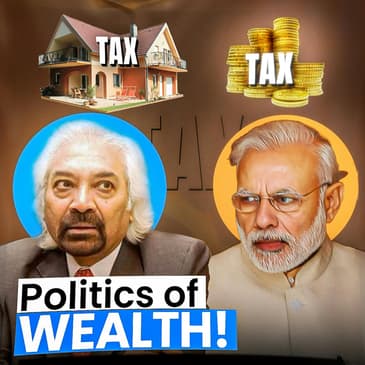
In this episode of the Bharatvaarta weekly, Roshan and Abhishek discuss the fight between BJP and the opposition parties and how India's politics of wealth affects the country, they also talk about the suppression of free speech in US Universities and India's reaction to it and more!
[00:00:00] It's election season now and things are certainly getting heated.
[00:00:04] Namaste and welcome to another edition of the Bharatvaarta weekly.
[00:00:08] I am Roshan Karyapa, I have with me Abhishek Paul to discuss the news and events of the week that was.
[00:00:14] And well as I said it's the Indian general elections, the second phase of voting is on
[00:00:20] and there have been a lot of comments on this whole redistribution of wealth,
[00:00:25] inedit and stacks and so on and so forth. Comments flying back and forth between the BJP and the principal opposition.
[00:00:33] We'll discuss that. We'll also bring you the ongoing protests in the Columbia University campus
[00:00:40] and a few comments on freedom of expression and democracy, again this time from the Indian section about the Americans.
[00:00:50] And to round things off, we will bring you updates from the IPL.
[00:00:55] Of course I'm a little more cheerful today. I mean RCB has won its match last week.
[00:01:01] That's a rarity of sorts. All right all this and more on this weekly.
[00:01:05] If this is your first time joining us, don't forget to follow and subscribe to us.
[00:01:09] We produce content on politics, policy and culture.
[00:01:12] If that's your thing then do stay updated with this channel.
[00:01:16] All right Abhishek, there's plenty of action ongoing. Let's get started with the elections.
[00:01:23] On Friday 26th April India held the second phase of voting for the Lok Sabha elections.
[00:01:28] The second phase involved voting in 88 constituencies across 13 states including
[00:01:32] all of Kerala, half of Karnataka, some seats in Rajasthan, Uttar Pradesh and Maharashtra among others.
[00:01:38] The voter turnout in the second phase was reported to be just over 61%.
[00:01:44] The first seat of the general elections was also confirmed in Surat with BJP emerging as the winner.
[00:01:51] This was a result of the rejection of two candidate nominations and the withdrawal of the rest of the candidates
[00:01:57] making BJP the default winner.
[00:01:59] Well Abhishek, did you vote?
[00:02:02] Yeah I mean I can of course show my...
[00:02:07] Yeah it's kind of a point right. I mean we discussed politics on a weekly basis.
[00:02:11] I mean it would be sacrilege for us to not exercise our franchise.
[00:02:16] But yeah I mean I don't know about you but when I went the booths were a little deserted.
[00:02:23] Right I mean did you have better luck?
[00:02:26] Yeah I mean I would say I was unlucky because I waited for about two and half hours in the queue.
[00:02:33] So it was... it is one of those statistical or quarks or the way what is panned out is like
[00:02:43] for example the polling station had four different booths right, four different serial numbers
[00:02:50] and only two of them had crowds and other two were relatively empty.
[00:02:55] That's how the voters had got allocated in the constituency.
[00:03:01] So one couple of queues had like really long lines while the others people were just walking in and out.
[00:03:09] So I was in the unlucky one so...
[00:03:12] But yeah I think at least I think what happened with Bangalore is pretty much what I had expected
[00:03:20] it would be in the low 50% you know the voting percentage would hover around the 50% plus mark
[00:03:31] and that's what it seems to have proved to be overall Karnataka had about 68% in all the seats
[00:03:40] but the Bangalore seats were around 50 to 55%.
[00:03:44] And I think pretty much if you go across each of the places the turnout remains fairly consistent if you compare it with the last time.
[00:03:58] Yeah I mean Bangalore South was particularly bad this time I suppose right, I mean we perhaps crossed just the 50% mark.
[00:04:07] It is pretty sad I mean I understand that there's a huge migrant population here but you know I mean there is simply no excuse
[00:04:17] and especially after the election commission has made it so easy to get voter ID cards right.
[00:04:22] I mean there's literally an app where you can apply and it just shows up in two weeks.
[00:04:29] But that aside I did see a lot of enthusiasm from the people who were at the booths right despite the heat you know plenty of local Darshanis and Thindi shops
[00:04:41] here offering free dosas, coffees and what not free Ruhafsas as well apparently.
[00:04:48] But yeah let's wait and watch I think phase 3 and phase 4 and further is left so we'll have to wait and watch how the turnout sort of you know comes through.
[00:05:02] But any news about who's doing well at this point or you know is that too premature to talk about Abhishek?
[00:05:11] Yeah I mean we only have people sharing their theories and anecdotes on social media right there is no official exit poll that will be published till all the phases are over.
[00:05:24] Yeah I mean we did see some of these Sattha market numbers and what not so I don't know how reliable those are so.
[00:05:33] Yeah so I mean one theory I have seen bandit about is that whatever result comes the stock market will be slightly disappointed right because there is this huge expectation of 350 400 kind of a range.
[00:05:52] Correct.
[00:05:54] If they are all short of that they will just so it's like people want a reason sometimes to sell off from their positions.
[00:06:02] Yeah and the markets have been factoring BJP win for a while now right I mean ever since November December you know there was some predictions and what not you know there's been a consistent rally you know the sensex is at somewhat of an all time high.
[00:06:19] So yeah I agree with you I think the respect to the markets are going to look at this slightly disappointingly unless I mean it's a slam dunk and you know it is an upkeep our 400 par kind of situation right.
[00:06:32] Well speaking of elections and the on goings last week the president of the Indian OEC Congress the international arm of the Congress party Mr. Sam Pitroda said in an interview that India should have an inheritance tax.
[00:06:48] He further made somewhat false claims that the US also had a federal inheritance law that taxes nearly 55% of the wealth passed on from a parent or guardian to support his arguments.
[00:07:00] This caused an uproar on Indian social media as people started speculating the introduction of an unfair inheritance tax and wealth distribution system.
[00:07:10] The BJP and Prime Minister Narendra Modi in particular used this to hammer the INC in their rallies with Prime Minister Modi slightly altering LIC tagline saying INC's loot, Zindagi ke sath b, Zindagi ke baad b.
[00:07:24] Wow I mean this was kind of a full toss or full toss right I mean such a dolly really and it seems like you know Mr. Sam Pitroda has taken Mr. Manishankar Rayar's place in these elections.
[00:07:39] Yeah what do you make of this Abhishek?
[00:07:42] Yeah I mean I think worldwide there is a big push from the left side of the spectrum of politics to introduce or and or reintroduce things like wealth tax, inheritance tax, estate tax and so on.
[00:08:03] A month or so back I was randomly listening to a podcast where one economist said that or her theory is that people should have a wealth cap like let's say why do you need more than 1 million dollars let's say I mean in the American context.
[00:08:24] So everything over that should go away straight away right.
[00:08:28] So these kinds of theories are very much in vogue from the left side of the spectrum.
[00:08:36] I have always wondered if there will ever be a political party which will openly say that they will raise taxes and come to power right.
[00:08:47] But probably the Congress party is trying some version of that.
[00:08:52] The thing is that they have made lot of sort of large claims of expenditures right of welfare or whatever freebies whatever way you call it.
[00:09:06] And so they will need to fund those hopefully right because otherwise we will only keep getting into more and more deficits.
[00:09:14] So one of the talking points is also these days of very high inequality in societies across the world.
[00:09:25] India has also one of those that is pointed out you had books like The Billionaire Raj etc. coming out in the press.
[00:09:35] So it's all sort of coming together thematically that you know to paint the picture that India is a very unequal society and something needs to be done about it.
[00:09:48] And wealth tax etc whatever Sam Pitroda was talking about those are all ideas to sort of try to remedy that.
[00:09:59] We all obviously had versions of wealth tax, inheritance tax etc. in the past famously taken out by the Congress party just before or when Rajiv Gandhi was supposed to inherit his mother's whatever estate or property.
[00:10:23] So and of course wealth tax was there till let's say maybe 15-20 years back right.
[00:10:32] So yeah it's interesting I think obviously the BJP and the Prime Minister have attacked it effectively.
[00:10:42] I have heard people on the opposite side or the board of Congress saying that why are you poor people, middle class people worrying about it.
[00:10:53] It is clearly going to target only the ultra-rich or the very rich right.
[00:10:58] But of course there are arguments against it many young Indians who may not be rich today are ambitious want to be rich in the future.
[00:11:09] Then there is also the question of what is important for India right now.
[00:11:14] How important is capital and capitalists?
[00:11:17] We are in the phase where you know we have to build a lot more, we have to manufacture a lot more, we need more industries and capitalists will play a big part of it right.
[00:11:31] So things like wealth tax or inheritance tax which could let's say discourage people from bringing and or keeping their capital in India is probably a bad idea in that context.
[00:11:47] So yeah there is also the you know point where it's a question of whether as a society or as a people how envious you are right.
[00:12:00] Because there is also the politics of envy that is coming in or we could say class struggle many Indians don't like that I think but we shall see like how the voters react to this message.
[00:12:15] So I have a slightly different perspective on this right.
[00:12:18] So one is that you know this line of messaging is evergreen right the fact that you know there are inequalities and agitating these two sides against each other.
[00:12:28] I think this idea is going to have purchase forever and forever it's always been the case earlier I mean it will be the case going forward as well.
[00:12:38] And you know it's a matter of some political party sort of taking charge of this and fronting this right.
[00:12:46] I mean that's it was the up earlier and now I think Congress is completely like taken ownership of this right.
[00:12:54] Congress I mean of course over the last 15-20 years has moved like far left right which is why a lot of the communists have no problems aligning with the with the Congress at all right.
[00:13:04] So that be the case. I think it is a bit of a misunderstanding of how Indian society works itself right where family wealth I think is placed at a premium right irrespective of like social class you know I mean it's not the rich alone for whom this matters.
[00:13:25] I mean even for the middle class for the aspirational it's a matter of concern right. I mean I've had very apolitical folks reach out to me and you know kind of freaked out about you know what's going to happen if this was a case right.
[00:13:41] My thoughts are that look I don't know mean if it's already apparent enough but you know you have one side of the political spectrum you know talking about a vixit Bharat and about how you know India is going to become the premier economy of the world.
[00:13:58] And you have another side of the political spectrum talking about divvying up whatever is whatever is there at this point of time right. That divergence to me is so apparent I mean I think it's hopefully visible for all to see right.
[00:14:16] And hopefully again voters will express you know their displeasure over such things at the ballots right. But yeah one only has to go back to maybe the 80s and the 90s to see the kind of arguments that Milton Friedman made famously about all of this stuff right about how the rich don't just buy buildings
[00:14:41] and buy the arts and so on and so forth but actually put that capital to work in a productive way right. And how if you were to charge an inheritance tax or something of this sort the really wealthy folks will get around this through you know either trust funds
[00:14:58] you know philanthropic efforts or charities and whatnot right. They will obviously find a loophole for that. So really I think you know it requires a lot of thought and introspection from the political class well while I certainly don't expect some sections of the
[00:15:16] political class to think in that manner I mean I think the average Indian should really introspect and you know and actively exercise their franchise right not just at the ballots I mean be involved politically because this is stuff that is actively going to impact your life
[00:15:36] and worse I mean it's going to impact your children's life right. I mean so one of the points that Milton Friedman also makes is you know that saving up for your kids right or earning and building wealth for your kids is one of those unreasonable human
[00:15:53] endeavors right I mean a lot of the times that children are going to be in better off circumstances more well off than you right. So but still it is part of the human nature that you know you skimp and save for a better life for your kids right
[00:16:09] and especially that's true for India I mean if you look at the last two or three generations the kind of hardships they faced for us to like live a better life right. So I think it hits at the fundamental nature of human beings and society itself
[00:16:24] yeah I hope better sense prevails in that sense. Well the prime minister didn't just stop at this he did reference some of the remarks of the former prime minister Manmohan Singh on you know who has first right to resources and so on and so forth. Now some of that is being contested by the election commission
[00:16:44] and varying other sections so we won't even go too much into that but yeah history shows very clearly who said what right and like Abhishek mentioned how the Rajiv Gandhi government abolished inheritance taxes you know just months before his prime
[00:17:04] minister's I mean his mother and the former prime minister Miss Indra Gandhi's will was executed right so all of that is there for folks to see. We'll move on to some international news over the past week visuals of the American state
[00:17:22] suppressing free speech and democratic rights of students studying in Columbia University emerged the visuals showed heavily armed police personnel beating and arresting students and some teachers that were merely protesting on college grounds. The ministry of external
[00:17:38] affairs in India stated that they've been monitoring the situation closely and express concern for suppression of free speech. The M.E.S. spokesperson Mr. Randhir Jaiswal said to quote in every democracy there has to be the right balance between freedom of expression sense of responsibility
[00:17:56] and public safety and order. After all we are judged by what we do at home not what we say abroad. Wow that's a banger of a statement if there ever was one Abhishek but this is fascinating right I mean how we are kind of reversing the gaze and looking at the U.S.
[00:18:15] and seeing you know what flaws their democracy and their state has. Yeah I mean it's one of those cases where Indian campuses are certain let's say select Indian campuses have always had this case of students very vehemently protesting
[00:18:39] student politics is like a big deal in you know certain Indian campuses right typically the elite government colleges I think that's where you see most of Indian student politics and so I think what is happening in the U.S.
[00:18:58] is sort of very similar to what you see in let's say the JNU Delhi right I mean I think the student community in most of the elite U.S. colleges right now is or has been protesting very vehemently against Israel and in favor of the Palestine side
[00:19:29] sometimes in favor of Hamas as well over the last few months right and it has got escalated pretty significantly with people now just camping in the campus right intense etc.
[00:19:47] kind of completely stopping campus life for let's say non protesting students and all that so yeah I think the situation has got kind of escalated certain Jewish students have complained that you know they are not being protected
[00:20:07] and yeah I mean in general the university administrators I would say are very sympathetic towards the protesting students but politicians especially from but not necessarily in fact politicians from both sides
[00:20:30] have kind of also looked at it and you know they have decided to send in the police or armed guards and all that to try to break up these protests and so it's become a very sort of charged political situation
[00:20:45] and what is playing out I think is kind of very natural what you will see in student protests right where the general public is often not as sympathetic towards these causes as students are right so same thing that you see in JNU right
[00:21:06] you would hear normal deliites being happy right if JNU protests are broken up or there is a crackdown on those campuses and the same thing that is what you will see in the US so yeah I think it's very easy as our spokesperson said or imply it's pretty easy for other countries to comment on when it's happening in another country right
[00:21:33] so I guess the point is that the US should also understand in case India does you know take some sense you know take similar steps right to stop protests which are going out of hand right but you know US being US it doesn't really care about anything else so you know it's
[00:21:58] pretty much I mean it's good that we can laugh about it or you know we can say that you know we made a statement but ultimately it is kind of pointless they are the superpower as of now they will do they will let's say say whatever they want to say and they will act differently at home
[00:22:20] yeah but it will hurt the narrative for sure right I mean because I mean this kind of thing it just implies you know democracy in the streets and strong arms sovereignty in the sheets kind of thing right I mean it said hypocrisy is so plain for everyone to see
[00:22:39] it's and in some ways the chickens have come home to roost right I mean there was an article I'm not sure if it was the NYT or some other media outlet that showed that this is so so ros and apparently Omedia funding right some of the Israeli protests and what not
[00:22:59] right I mean and we've God knows we've had you know a ton of grief from these folks right I mean the Soros funded Omedia funded or Forbes Foundation funded Ford Foundation funded you know organizations and so on and so forth yeah some of the visuals that I saw on Twitter of police folks you know manhandling some of these protesters was kind of gruesome actually you know the profits
[00:23:29] of the professor for instance I mean her head was slammed on the concrete right and all of that while she was well generally kind of harmless right I mean wasn't trying to attack or anything of that sort yeah I mean it's a it's good to reverse the
[00:23:47] case I feel and show them you know what what the reality is one also found interesting is how many Indian origin students are so passionately pro Palestine right it is quite interesting to think about I mean it's not surprising let's say I'm sure the Indian campuses are also pro Palestine to be honest
[00:24:14] right like Jane you know yeah these are people who probably graduated from similar universities and are doing masters or PhD but it's interesting that you know they are willing to take such risks right because ultimately the protections they have are not the same as what you
[00:24:38] think they have yeah it's absolutely stupid right I mean you're on a visa there for God's sake right I mean you're not a you know not a legit citizen of the place right I mean you're just hurting your future basically right and somehow I mean this delusion that you know once you leave India
[00:24:55] you become South Asian all of a sudden right and your identity is kind of subsumed by every kind of Asian here and your heart has to bleed for someone like you know some thousands of miles or kilometers away it's just an absurd concept right I mean obviously everyone hates war everyone hates violence
[00:25:17] and there is injustice in the world but you know this is just you know very costly virtue signaling in some sense right so alright let's move on to some pleasant news and when I say pleasant I'm talking about RCB winning against the Sunrises Hyderabad it is the first RCB win in ages right
[00:25:42] and it's also in it's also a match that I skipped watching because obviously there's only so much the heart can take but I did follow some scores and not even that actually for this match I mean so I was informed later that RCB won and I'm due to catch the highlights
[00:25:59] but man yesterday or day before the match against KKR was a phenomenal right I mean KKR put up something like 268 or whatever which was a record score and Punjab got that with an over and a half to spare I suppose right I mean it's crazy so Abhishek when are we going to replace the bowlers with bowling machines
[00:26:25] yeah I mean in baseball there and there is a so when they have these all-star days they have a contest where it's just the batters who go and try and hit home runs like it's a bowling or a pitching machine which you know puts out the pitches so we could probably just have you know
[00:26:44] you could have smart techies you know devising the exact quantity of seam and swing that they want to put as well right in these AI enabled machines maybe that's what will probably come up
[00:26:58] programmers will become the new bowlers I think right and there's this fascinating video of Akshay Kumar doing the rounds where he's asked you know who do you think will win the IPL and he names four teams and all those four guys are like at the bottom of the table you know when he talks about
[00:27:14] Delhi, MI, RCB and one other team I'm not sure what
[00:27:19] No no Punjab or something and they just show they invert the table and show and those are the exact four teams at the bottom right
[00:27:29] all right with that we come to the end of the Bharatwarta weekly if you did stay as long and you enjoy the content don't forget to like share and subscribe do all of the good stuff so the algorithms smile upon us look upon us more kindly otherwise please go out and vote
[00:27:49] and yeah from Abhishek and myself thank you so much for joining us do stay safe take care and see you next week Jai Hind