
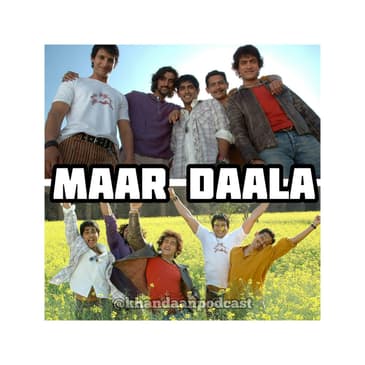

Welcome to Khandaan: A Bollywood Podcast where we’re discussing one of the greats — RANG DE BASANTI (2006).
Directed by Rakeysh Omprakash Mehra, this movie stars Aamir Khan, Siddharth, Atul Kulkarni, Sharman Joshi, Kunal Kapoor, Alice Patten, Soha Ali Khan, Waheeda Rehman, and Madhavan among others. With music by AR Rahman and lyrics by Prasoon Joshi, this is also one of the great albums of the past 20 years.
In this episode we discuss the impact of this movie and what has changed in the time since it released. We examine how we feel about this movie as a piece of cinema as well as a piece of politics after these many years.
Chapters
00:00- Introduction and Twitter Discussions
08:04- The Role of Rang De Basanti in Indian Cinema
13:51- The Changing Political Landscape and Social Media
30:22- Transitional Politics and Co-opting of History
49:51- Cinematography and Visual Aesthetics
56:31- Cost-Cutting and Filmmaking Choices
01:07:52- Queer Coding and LGBTQ+ Representation
01:09:15- The Impact of the Music
01:22:20- Political Commentary and Contemporary Relevance
Shownotes:
Here are some of the other podcast we have been on recently:
Hanisha's Making Things Happen Podcast
Asian Network Bollywood Ultimate 90s Bollywood
Asian Network News Presents: 90s Bollywood
Follow us on Socials:
- Amrita, Sujoy, Asim
- YouTube, Facebook, Instagram, Tik Tok
- Sujoy's Instagram
- Amrita's YouTube Book Channel- Amrita By The Book
You can listen to Khandaan- A Bollywood Podcast episodes on the following apps:
[00:00:00] Hi, this is Asim. This is Sujoy. This is Amrita. And you're listening to Khandaan- A Bollywood Podcast about the three main Khans of the Hindi film industry. Amir, Salman and Shahrukh. Hi, you're listening to Khandaan- A Bollywood Podcast regular feed. Thank you so much for
[00:00:31] your support over the years. We now have a Patreon channel with bonus content and exclusive merch for those of you who would like to support us. Every dollar goes towards creating more and better content. Visit us at patreon.com slash khandaan podcast. Hi and welcome to a new
[00:00:50] episode of Khandaan Podcast. My name is Asim Birney and I'm joined with my lovely host Amrita and Sujoy. Hey, Amrita. Hey, Sujoy. Hey, everybody. Hello. This week we are talking about ringa ringa ringa ringa ringa ringa rangdi basanti. I cannot believe that people on
[00:01:09] Twitter were pointing me out to be the biggest hater when Asim Birney exists. Why am I a hater? I was just saying this is Khandaan's continuous election coverage that's going on in India. This is a two week event. We started with Raman Akbar Anthony. We're ending with rangdi
[00:01:31] basanti and Amrita and Sujoy. Let's talk about it now. We want to get into it a little bit. How are your feelings after a week of- Take a step back. Hater of what? Hater of what?
[00:01:46] Yes. Amrita just has her guns ready like he kuchh amir pe kuchh kahega kuchh karega. He was actually Shah on Twitter and he was like, this is my favorite movie and I've been living
[00:02:01] in dread for years that Amrita is going to make me hate it. Oh, I'm going to make you hate it. Like I have questions that I have for Amrita later on. Very funny.
[00:02:16] And I got to say, I was thinking of getting Shah on the show, but the time zones were just not working out. I'm just apologies Shah. I was really considering and I also realized for being
[00:02:27] such long friends with Shah, we haven't had him on the show for a while. So we need to change that a little bit too. By the way, Shah is doing some great work. Check out his
[00:02:36] stuff. Like he's like really fully like covering like nerdy, you know, sci-fi, superhero stuff and all the love to Shah. He does some great work and great writing. And he's also doing the Bollywood drafts thing with Manish and it's going to be like Nim and Shah
[00:02:57] and like a couple of, I think Kathy Gibson. Yeah. I'm not mistaken. And Yamini is also going to be there for another episode I think. And I just love it because they're just taking
[00:03:07] over their lives. And remember Amrita, you and Nim, we went on it and we're going to go again soon. We just kind of like walked through it. We kind of like podcasted it. Like we just like
[00:03:22] go down and we're like. You don't know how stressed Yamini has been for weeks. She's been talking to me about it. We were like, we were yesterday at the march for Palestine
[00:03:41] and it was like, you know, free free and Yamini was like, yeah, we love her. We love our Yamini. Yes. So you were taking a step back. You want to talk about something. What
[00:03:57] were you talking about? No, I didn't know what the hate was. Why are we calling Asim the biggest hater of what? So let's get into like the elections. We were talking and you guys have feelings. How do you feel? How do you feeling now? Like without getting,
[00:04:14] I don't want to get political except the things that I care about, like politics. Like those are the things I care about. I can get into it, but the things you care about,
[00:04:21] I care less about. No, I just want to say, you know, I am not involved in it. It's not my country. I sometimes people might forget that I'm not Indian or Pakistani.
[00:04:31] So I also feel that it's like a little bit, you know, I don't need to meddle in your stuff. And also I just don't know. Like I think a lot of people were sharing
[00:04:40] a lot of people with sad and they're like this region was lost and that region was lost and my geography is not that strong about India. And I think we will actually get into it when we talk about Rang Debasanthi. But yeah, like how are you guys feeling?
[00:04:55] Feeling good? Good is an overstatement, I guess, because of how the state of things are. But oddly optimistic after the results. Like I would be very expect, at least I was expecting on my end for things to continue for the worse or, you know, compound in a way
[00:05:18] that the overarching majority of the BJP as a single ruling party would expand even more, is what I thought. But as everybody more articulate and more knowledgeable on Twitter has already said about what these election results actually mean and what they say
[00:05:40] about the Indian democracy that it is still living, that the people have answered in some way. And even after the stronghold over the mainstream media and how they peddled that particular message that upkeep our charsal power for BJP and they will even, you know,
[00:05:58] the opposition is going to be turned into just a second fiddle, not even a second fiddle, but much worse. But that has completely backfired and the BJP by themselves could not form a single majority and they have to enter into a coalition. So that whole outcry
[00:06:17] of the Modi's sarkar and Modi ki guarantee, all of that has been reduced into Narendra Modi being the front face of still the BJP sarkar. It's not a BJP sarkar even. He's had to say NDA
[00:06:31] sarkar repeatedly from day one since the results. So that's the big change that has come through. And for children who have sort of awakened to the world of Indian politics over
[00:06:45] the last decade or so, they will now get to see what chaos of coalition plays into our daily lives and how that changes the narrative. Like the big swings that the BJP sarkar or Modi sarkar took without consulting any of coalition governments because they could
[00:07:05] like demonetization and the big revolutionary, very, very controversial and life-threatening changes over the COVID lockdown period. They cannot do that anymore because there's coalition parties that they have to take care of and consult and appease to and although their
[00:07:26] demands they have to take care as well. And I have not seen what sort of ministries each of the coalition parties have been given, but that'd be interesting to see. So we have lived
[00:07:37] through a lot of the coalition governments before the BJP came into power with Narendra Modi. So that'd be interesting to see what that means and yeah, that's what it is. I think it's
[00:07:54] going to take a long time for me to feel happy about this country again. Like that has pretty much gone away over the last 10 years and it's going to take me a while to get back to that
[00:08:05] place. But at least now I feel like I can get to that place because up until like in leading up to the elections, same as Joy, everyone had this sort of dread going in that
[00:08:21] that's how it's going to be now and forever. Modi was literally talking about a thousand-year strategy. Like I have plans for 2029. He was like, what the next thousand years we are going to be like this and that was awful. And it's nice to know that
[00:08:41] this country is still one that I recognize because for a while there I was like, I don't know who these people are and I don't know what this country is. And I also had this thought and I had this after I was watching Rangde Basanti because
[00:08:58] I think Rangde Basanti was the last great anti-establishment mainstream movie that came out of Bollywood. Like I honestly, like correct me if I'm wrong because I honestly couldn't think of anything that was like this, like an event movie that invited people to activism
[00:09:19] against the establishment. Jawan technically, right? I mean, yeah, yeah, yeah. But like after Rangde Basanti, like you know, like after that, like Rangde Basanti really synced in with all that anti-corruption, like, you know, like why isn't the government doing better?
[00:09:42] The politician business nexus, like all that kind of stuff, you know, that sort of led into the second UPA government and then, you know, like everyone sort of coming together, Ana Hazare doing his, you know, his Andolan, like all that stuff, the rise of up,
[00:10:03] all of that stuff that happened. I couldn't really think of anything else that came out of it. And that made me think movies like Rangde Basanti or the Angry Young Man or movies of Amitabh Bachchan in the 70s, they sort of function as a release valve for people
[00:10:27] who are frustrated and can see that things are not working well. But the BJP, in their quest to sort of lock down the arts and culture movement for something that was more aligned to themselves, they went the other direction and like really made everything
[00:10:55] propaganda and therefore it was no longer possible for the common man to see their frustrations portrayed on screen and therefore blow off that steam in cinema. And therefore, they took all that tension and they basically took it to the vote. And they were just like,
[00:11:16] well, you know, like I, like they literally had nobody representing their voice for 10 long years, no matter what went wrong. People were getting lynched, people are unemployed, inflation is through the roof. Like so many things are happening, like people are starving
[00:11:35] to death and they're just like everything's great. Like, you know, like yay, we built a temple. That's great. And like they literally had nothing going on for them, you know, not
[00:11:46] even a man on screen saying that this sucks. And to a lot of people, that's all they wanted like throughout the 70s. That's all Amitabh Bachchan did, like his entire career was built
[00:11:58] on him basically standing up there and saying this sucks and I'm gonna like, I'm gonna screw some shit up so that like, you know, I feel better about it. Like that was it. And the
[00:12:10] BJP wouldn't even give the people that much. And I think that really backfired to them or at least that's what I'm like, I literally had this thought this morning, so I don't really,
[00:12:20] I haven't really thought it through. I don't have like a recent argument to present for this, but- This is why we're podcasters. We don't need research. We just work on vibes and guts, you
[00:12:32] know? Like, I mean, just my point of view, I think it's, I mean, I was raised in Belgium. Like I live in the UK now and Belgium pretty much always works with coalition governments.
[00:12:45] They've never been able to have like a one party majority rule. And I just don't think one person being like a king is ever good for any country. I live here in the UK and I see it
[00:12:58] with kind of a two-party oppositional parliament set up, and I don't think it's conducive to this country at all. And I think they should also get rid of it. And on the other hand,
[00:13:10] Belgium has the record of a country that had no government for 541 days. And you know what happened? Nothing. Everything went really well. So in a way, it does not matter. And what I care about is that what Amrita, you were mentioning this political stronghold on
[00:13:28] the culture it had, right? And the only thing I happen with the coalition is I hope Taht gets made now. That's what I care about. Things I care about. That was like the number one thing that I think all of us on Bollywood Twitter
[00:13:42] were thinking about because the moment it came out and everybody was just like, does this mean that we get to see Taht? Not just Taht, but like critical movies, more freedom of expression in movies
[00:13:56] rather than more Kashmir files, you know, in a way. And also one happy thing that I immediately saw is that election results day, everybody was on Twitter. The memes were firing on all guns. And what we usually see is the reply from the IT cell,
[00:14:18] the bots come blazing. But this time around it has been quite tepid. And that's a very big change because all their attention, all their resources are now being spent on something else rather than fueling the hate machine on Twitter. So that's great.
[00:14:37] And there haven't been any of the usual congratulations and like, you know, the tweets and the Instagram stories that are like sort of copy paste and sent to all the celebrity PRs. That didn't happen this time.
[00:14:52] Yeah, because I don't see necessarily like a happy face in the Indy government, even when they have been selected as the party that will be ruling. I don't see a single happy face in there. Like all those, their faces are just down and low, which is great.
[00:15:14] So let's take it back to 2006, right? Let's take it back to when Rangde Basanti came out. You know, it's the era of low rise jeans, big belts, haircuts like Avril Lavigne, you know, that kind of era.
[00:15:32] And it's also kind of like, you know, the start of the decline of journalism. You can literally see it in the movie like we don't have money left, you know. I think Rangde Basanti is a weird one for me because I was pretty much moving
[00:15:47] countries at that time. And it also just like kind of brought me back to where I was where I was in 2006 when I was rewatching this movie is like I was living in Amsterdam and
[00:16:00] I was going to move to London. We didn't have internet the way we do now. And I think that's something that is very illustrative in Rangde Basanti. Actually, in 2006, and I went to check this, Twitter launched in 2006
[00:16:18] Google bought YouTube in 2006. And I think those are just pivotal moments of how we engage with content, how we engage with politics, how we kind of make shows and stories, how we tell our stories, right? Like khandaan wouldn't exist.
[00:16:36] And the weirdest part for me was the realization in 2006, I had no Indian friends. I had zero Indian friends. And now 90% of my friends are Indian friends. You guys just spread like wildfire, like, you know, like,
[00:16:51] let one come in, you just like go over the whole country, right? Once Jio internet came through, just we are in everybody's households. Yeah, yeah. The real Aakhand Maharaj, the casseps contact is. Exactly. Yeah, yeah, exactly. It's interesting to say about the rise of internet and internet applications.
[00:17:13] Like we did have internet, we had Yahoo mail and all that. But it's interesting to see that how in Rangde Basanti, there is not a single internet operated device. Nobody does a Google search in this movie. Nobody has any sort of, they are all reading like printed scripts.
[00:17:31] There is not even a laptop in a scene. Everybody's operating on a dumb phone over Nokia and Anupam Kher calls his son the SMS generation. So yeah, it's very, very interesting to see that, you know, a throwback to that part of
[00:17:48] the 2000s where we were just on the verge of exploring YouTube and internet bandwidth hadn't caught up yet in India. So if I'm not mistaken, this is the movie also that during the promotions,
[00:18:04] there was this whole PR cycle about Aamir owning a laptop and the laptop being like very amazing, blah, blah. And it was like a Dell or something. I don't like, I can't remember, but like, I think like this was a movie. Anyway, I'm sorry.
[00:18:25] That's what I wanted to get into actually, because because I was moving, I was in that transition. Literally the only way I was reading about it in Desi Bollywood content was Beth's blog, which probably Amrit and me cross paths without
[00:18:39] even knowing each other, which is really weird when you think about it, because she was already writing because back in Paris, I was already commenting on her blogs. So that's how long this has been going on. Top friend Beth. Yeah. Top friend Beth. And I had no idea
[00:18:54] how the cultural impact of this movie was. I got to know this much, much later on. And I think, Sujai, you and me were discussing this yesterday. What was it like in India when this movie came out?
[00:19:08] For me, like I was in my early 20s when this movie came out, right? I had just left a university undergrad. I started working. I was in Pune. I remember this, but still in that college zone of hanging out with the bros and we went to watch it.
[00:19:24] And the vibe, the promotion of this movie was like a bro movie, right? All the guys, that whole shot of them jumping in the cave with the shirts off and the fighter jet flying. That's a very bro poster, right?
[00:19:41] And that was the vibe, the musty keep art shala and all of that. That was the promotional message. And we went expecting that sort of a movie. And I remember even my managers
[00:19:55] the next day after this, like the weekend after this movie release, I think it was the Republic Day weekend. And then when we rejoined work and my manager sat down and I saw it three times. Everybody was talking about this movie of how much it affected them
[00:20:12] and how much they were blown away by this movie. They did not expect that change, that journey that this movie takes you on. Because the cinema landscape when this movie came out was the dhooms and the creation, all of that, hum tumare hai sanam, very, very Bollywood.
[00:20:32] Right? And this movie begins like any other typical bros hanging out and then takes you on this journey of how they sort of take a life of their own and the sort of existential
[00:20:49] and how they find themselves in a way, the purpose of youth and all of that. And then obviously addressing the reality of the country at that point in time. All of that really resonated to a 20 year old me then.
[00:21:07] Whatever you, Amrita. I actually saw this movie in New York. I had just graduated as well and I was a young person finding my way in the world. I remember taking my American friend to watch this with me. And both of us had so much to
[00:21:26] discuss after the end of it. She had no context for any of this, any of the history or what was happening. But it was just a really, really interesting period because I would talk
[00:21:43] to my friends back in India and like you said, there was no social media back then. So it was literally blogs and forums. I don't know if you guys remember the Bollywood forum? Planet Bollywood. That was my go-to place to read reviews, a proper review.
[00:22:01] And Passion for Cinema. Do you remember that? That was where all the film heroes who were the worst used to hang out. I read Passion for Cinema and very quickly I was like, no, I don't vibe with these people. They were just the worst people. But
[00:22:20] Ramgopal Verma and Anurag Kashyap and all of them would write on that website. It was a really cool resource to just understand what was happening. And I just remember even people who were otherwise not interested in Hindi cinema, and this includes my friends back in India,
[00:22:42] would write to me and be like, hey, have you watched this movie? Because it's great. My parents wanted to go watch this movie. They'd heard so much about it. This movie was a sensation. And it's squarely in the middle of that period of time when Amir wasn't
[00:23:01] just making, like we talk about how Amir was so successful and he was making these blockbusters. But Amir was also setting the conversation at that point. Whatever he was doing, whether it's this movie or whether it was Three Idiots, he was setting the national
[00:23:20] conversation at that time. He was changing cinema. Not just cinema, but he was trying to use cinema to change the culture or affect it. With Three Idiots, he was talking about the
[00:23:35] kind of pressures we put upon our children and how it's important for kids to have their own path in life. With Rangde Basanti, again, he was talking about bigger things than just the movie. And this was really the era that cemented Amir's reputation as, you know,
[00:23:54] I make fun of him all the time for this, but like Bollywood Jesus, where he'd just sort of come and he'd be like, listen to me, children. I have wisdom. And as annoying and
[00:24:09] irritating as I find it when he is talking in real life like that, I also think that he did a really great job when it comes to making cinema that followed his philosophy. And it was a
[00:24:25] very like secular liberal, you know, ideology that you can see in these movies, you know? And they just don't make movies like that anymore. It was also like Amir's I'm a Hot Bitch era
[00:24:40] because pretty much all his movies, all the bitches are into me. Everybody is really into me. Because he had Fana that dropped exactly the same year. Actually Fana made more money
[00:24:52] than Rangde Basanti. So this year we had Dhoom 2, Krish, Lage Rao Manna Bhai, Kabhi Alveda Na Kena, Dawn, Fana, Phir Bhi, Phir Hera Pheri, Bahamba, Viva. This is the top 10 of, you know- That was a good year. That was a good year.
[00:25:09] Like for a year now, 2024, where we have nothing to talk about. Munjia is the biggest hit, right? Like this is like, you know, compare with 2006, like not only in terms of like good movies, big budget movies, like mounted movies with stars that have things to say,
[00:25:25] like even Dhoom 2, you know, it's a nothing burger chase cop movie, but it's still meme to this day. Every day you'll see Hrithik taking off the Queen Elizabeth costume, right? Like being a statue every other day. You know, 70% are, you know,
[00:25:41] Sujoy reposting the same memes, but it is still very, very relevant, you know. I keep the relevance. But I also like, this is kind of the one question I was watching it and I was wondering
[00:25:58] how much do you feel the politics has been outdated? How much has it changed? Because I feel the conversations about politics now are much more complex and nuanced than they used to be. When I was watching Rangde Basanti, it almost feels very like centrist dad kind of
[00:26:21] politics, you know, like very like center left, right? You know, make the country better, join the police, join the army. And I'm like, yeah, both of those institutions are corrupt and
[00:26:32] are harmful, you know, like so many years later. And I am literally, I should be a centrist dad. I am a dad, but I cannot be a centrist. This is just like, like there's something that shifted
[00:26:47] in that generation of Rakesh Om Prakash when he made this movie and where he stood about nationalism and what matters to where I am as a dad so many years later. And there's so many elements just feel, you know, this wouldn't work. What the movie is professing you
[00:27:07] to do. I do not believe in it. I don't know. Do you, what do you think about that? It's difficult to say how that politics has changed or not, but obviously I think rather than the message being, oh, we will join the IAS, the civil services,
[00:27:28] we will build the country from ground up because the country is already in tatters, since the independence, nobody's taken care of the system is rotten basically. Right. But the extreme solution to that they take is shoot the bad apples in a way
[00:27:48] that has definitely not struck a chord with me. But also I think the message that I get from this movie is that as you like, as my 20 year old self and me watching it now, yesterday,
[00:28:05] what I get is more and more people need to be involved in politics. Like that's not a luxury that we can afford anymore. Like if you're being apolitical at this day and age, then
[00:28:18] that is like extreme privilege that I don't know who can afford that at this day and age. Right. Everything is political, Veronica. Yeah, that's what that whole I think what I take from this movie is the life that this
[00:28:45] movie takes after the movie has ended. Right. And the way that India in 2006 evolved from then after Rangde Basanti in the Anahe Zare movement in the whole the Jessica Lal murder case, specifically like how that sort of movement completely got propagated because of the events
[00:29:11] that were depicted in this movie. And also what India went through after that, the NDA government and all of that and the whole indeed, you know, the whole Krantikari movement, how what Krantikari the difference between Krantikari and terrorism is and all of that
[00:29:31] is what I take from this movie. So there is sort of a muddy politics that this movie conveys that I pick and choose what to necessarily learn from this movie in a way. It's also funny that
[00:29:47] all of the characters that they portray are now being remade into movies or characters and they're getting co-opted now by the right wing as their figures. Right. Where in this movie, that's not the case. They were just like Indian freedom fighters. But now they're like
[00:30:04] right wing nationalistic kind of things. So Amrita, what do you think about the kind of outdated politics? Or maybe you don't feel it's the case. I always think of I've always had this opinion that the politics of Rangde Basanti, it's very carefully constructed to
[00:30:27] appeal to as wide an audience as possible because Amir Khan is not an idiot. And he knows exactly what he's doing. That man really understands the value of a script. And therefore I always think of the politics of this film in the history of India. Like,
[00:30:44] and I don't think this is what Amir intended. But in the history of India, I think of the politics of this movie as transitional. It sort of bridges what India used to be and what India is today. And it's sort of like allowed a way for
[00:31:04] the right wing to co-opt these figures. Yeah. You know, like it opened that door. And it does it in very subtle ways that I don't even know if they meant to do it consciously.
[00:31:21] You know, because when you look at because what they do is like they sanitize these figures, right? Like for example, Bhagat Singh, Bhagat Singh was an atheist. He was a member of the Communist Party, if I'm not mistaken. He literally wrote a book that said, you know,
[00:31:35] this is why I'm an atheist. You see him reading Lenin though. Yeah, yeah. He was like a lot more like the reason why these people were violent freedom fighters rather than your nonviolent Gandhian, you know, freedom fighters is because they were leftists.
[00:32:00] And leftist ideology said, f*** it up. Get out there and throw that Molotov cocktail. Like shoot somebody if like, you know, that's the only way that you can get your point across. You cannot divorce them from their politics or sanitize their politics to make them more palatable and
[00:32:22] then be like, oh, like how are they getting co-opted? They're getting co-opted because you divorced them from their politics and you made people believe. And like to a lot of people in India, this truly was their introduction to what these people were like politically.
[00:32:39] That sounds dumb to like people who are interested in politics, but there truly are so many people who genuinely do not understand anything about politics and have no real understanding of history. That's also just the power of cinema in a way, right? I always kind
[00:33:00] of think of the social network. How many people watch that movie and think this is who Mark Zuckerberg was or this is how Facebook was invented, right? And I think it's the same problem with Rangde Basanti to a certain degree. People watch it and this is how they,
[00:33:14] it's kind of like burnt into their brains now. And at that time especially, we didn't even have access to all of the different voices that we have access to now. And I think that's such a
[00:33:27] big thing where people is like, yeah, everybody is woke and everybody has a voice, but yeah, that's the thing. Everybody now has a void instead of the few filmmakers and the few narratives and the few things that you could listen to. And I think that's kind of the
[00:33:40] biggest shift that's happened in these last 20, 30 years. And I think, yeah, I think this sort of led to this creeping recasting of Indian history as Hindu history, you know? And it's weird too because I see this on like Pakistani Twitter as well, where
[00:34:11] you're talking about things like before 1947, right? And then Pakistanis are like, oh, but that's like an Indian thing. And I'm like, no, that was your thing as well as our thing. You have equal right to that kind of history. It's not just us. But the thing is,
[00:34:35] again, when you are born on that side of the border and you are dependent upon cinema in the absence of like literature, because now we don't really do literature. So it is cinema that is sort of reinforcing your identities, that is informing you of your
[00:34:53] history, that is making you feel some type of way about who you are and how you locate yourself. It becomes like, you know, like this is what I mean, like it just sort of like recast
[00:35:07] history as like, this is like our history. It's not like, you know, like your history, like you do your thing. But I think that's a strong point because I think there is also erasure because it's an Indian narrative, be it Hiramandi or be it Rangdevasanthi. There
[00:35:25] is no space for Pakistan or Bangladesh within that context, right? There's a bit of Muslims in there, which I just thought was very fascinating where Om Puri says to the kids when they barge in,
[00:35:38] it's like, our time is going to be very bad. And I was like, bloody hell, that was 2006. When did a good time come for Muslims in India? Things only got progressively worse. And that was
[00:35:51] just kind of a sad thing. But I think it's similar to what's kind of, you're right, Pakistan cannot, doesn't feel it's even allowed to be part of that conversation to a certain degree. In a way, it's the same thing with Arabia and pre-Islamic civilizations. You know,
[00:36:09] when Islam kind of came in, Arabia is almost not even able to talk about what was before that. And I think sometimes a lot of that is Pakistan is the same thing. We don't have any content,
[00:36:21] but obviously the cinema landscape or the kind of the cultural landscape is not there to be able to make these kind of movies or have this kind of conversation, at least in cinema.
[00:36:34] And if it's on drama, then you only just go into the villages in a very small scale of what is going on, be it how women are treated or how the feudal system was pushing on people.
[00:36:46] But it's never a larger thing. And the stories that can be told, can be told in India, but then Pakistan or any of that struggle or the Bengali struggle is just not part of it.
[00:36:57] And that's really weird to me because like Bhagat Singh, you know, like he was a Punjabi. Like that was his identity. Like it wasn't like, you know, like I'm an Indian or like,
[00:37:08] you know, like that is completely foreign to him. And like this movie does a really great job of sort of saying that, oh, like secularism is good. Like we are all like together.
[00:37:20] That right wing person also like by the end of the movie, like, you know, the scales fall from his eyes and he's like, oh, I see like the Muslims are in the problem. You know,
[00:37:30] it is corruption that is the problem. We are all part of like one country, Kumbaya, blah, blah, blah. But in all of that, again, you know, like the sanitization of that message to make it more palatable to a wider audience means that we don't spend any time
[00:37:53] really critically thinking about like what is it and what went wrong really on a cultural level, on an interpersonal level. Why, you know, why was it so easy for us to descend into riots
[00:38:08] and violence against each other rather than like, we killed more of each other than we killed the British, you know, and the British were the ones who were like colonizing us. And we like wave them out with like a nice little band parade from Gateway of India.
[00:38:24] There's literally no mention. They get the red carpet rolled out for them every time they come back still now, like they didn't like, you know, like colonize us for 300, 200 years. Like it's insane to me. I go crazy about these things. Like, and meanwhile, like,
[00:38:39] you know, like Pakistan, you can't come to India and then India can't go to Pakistan. It's just like everybody is just like waiting there to like kill each other. We cannot have a khandaar meetup. No khandaar meetup in Bombay because of this.
[00:38:58] That's true of this movie as well. When Sue McKinley arrives in Delhi, everybody's just flocking to her and she's the pretty princess invite, you know. Her grandfather was literally the guy that was like pulling the lever.
[00:39:10] I felt so sad when I tortured him to death, you know, and all of that shit. And then Sue has that scene where Amir and Atul Kulkarni's character, they are fighting, Lakshman and DJ, they're fighting. And she was like, I have been so stupid to
[00:39:31] have come here. You guys just want to kill yourselves. See, this is like the classic Indian liberal, right? Like that is like everything that like that this entire like line of thought. Like you can just see both like Rakesh Om Prakash Mehera
[00:39:49] and Amir Khan going like, haan, like yeh kya hai, hum aisey kyun hai. Like I'm just like, there is a reason, there is a reason that you're too cowardly to like examine. There was a specific point where that stood out for me is when Sue cannot find her
[00:40:08] Bismil, right? Her, is it Ramprasad? Yeah. And she cannot find him and then Atul Agniyotri comes in and he knows the poem by heart and he's like crying and emotional and she's like, he's the one. And they get into a fight because Aslam doesn't want him there.
[00:40:25] Like Aslam doesn't fight, Amir comes in to kind of like protect him. And he calls him a Pakistani and all that kind of stuff. Aslam doesn't do anything, doesn't lift. Even when he's getting beat up by all of the cops, Aslam is the only one that's not fighting
[00:40:41] back. He's just lying like dead weight on the thing because he cannot fight back. Like there's no way where you can say something back or anything because that's the politics of the movie. But immediately after they get together and agree to make the movie. And I was like,
[00:40:56] this is where I wanted to hear what is the convincing argument for these two people to come together and make this movie. And that's just glanced over, you know? Like it's not because the white lady got Ruto, you know, so DJ comes to manoeuver
[00:41:13] and everything is Kumbaya then after that. Yeah. But why do Aslam and, you know, what's Atul Agniyotri's name? I don't even know. Lakshman. Like why do they get along suddenly? You know, why do they? They don't. Throughout the making of the movie, you see that
[00:41:29] even Lakshman is very hesitant to eat beside him. There's still like tension between them. They are along on this project to make this movie just because they want to please this white lady. But then that eventual character buildup for Lakshman and Aslam to, you know,
[00:41:48] bond is because of the protest when Aslam gets beat up and Lakshman sees that his own party leader is behind this whole thing. And his belief system entirely crashes down. And then he opposes the party leader and he beats him up. That's when his realization happens.
[00:42:09] And then when he visits Aslam's house, he has a, you know, so much shame hanging on his shoulders and he has a moment. He waits for everybody to leave because he's that embarrassed. And he personally, you know, sorry, tells sorry to Aslam. That's the moment when that shift
[00:42:27] happens. I think it doesn't happen instantaneously. And what's interesting about that entire thing is that animosity of that kind or like communalism or whatever you want to call it. It's shown in this movie to be a personal feeling or an individual feeling rather
[00:42:46] than a structural issue. And therefore the, and this is my problem again with the ending of this movie. Like I was one of the people that had a problem with the ending or the solution
[00:43:00] of this movie because it sees the fundamental issues of this film. And I'm not talking about the corruption issue, but I'm talking about like, you know, the larger issues that you can see the societal issues. It sees those as like personal quirks or like individual issues.
[00:43:21] The resolution is also individualistic and it is not struck. Like these people all die at the end. I'm spoilers for people who haven't seen it. It's been 18 years, get a clue. But like everyone dies at the end and like what changes, you know, like everyone learns to go,
[00:43:40] do a candlelight vigil. That's basically what this movie, you know, like when you really boil it down, like that was the impact of this movie. Like it taught people how to go on a candlelight vigil. It's also interesting watching it because obviously the Atul Agnurthi
[00:43:58] character, it's really showing the rise of the saffron brigade, right? Like I mean, in cinema, like I can remember, like there was Bombay and there were all of these other movies that did it, but visually you can see the rise of, you know, the orange color that,
[00:44:13] you know, Sujai is wearing at this moment. I've got Jatame's text on it though. But also it's always interesting with this kind of like liberal centrist point of view is that they want to equate things as equals, right? Like when you go to Aslam's house,
[00:44:36] you see his brother who is like a very kind of like hateful Muslim, right? As an opposition to Atul Agnurthi Lakshman's kind of hateful Hindu, right? But one is hiding in a house
[00:44:54] and doesn't come out. And the other is just beating up students left and right. So the equality message doesn't necessarily gel for me in that sense, right? Because obviously one is an oppressed minority. So it's not about then equals, right? It's not like, oh, both sides,
[00:45:13] both sides, you know, I don't necessarily agree with that because I see the brother and the like his sort of outlook is that we have always been oppressed. This is the culture.
[00:45:26] We live through it. I don't know why you make friends with other people. So I see always him as being a victim of being oppressed for many, many years. I don't know the backstory of why
[00:45:38] he is the way he is or the life that he's led for him to lead the movie with that dialogue, right? And we don't get to see much of Lakshman's story either, but he believes in
[00:45:55] the things that he believes because he's empowered by the shaka or the party that he's done. But he also believes in some sort of a idealistic, you know, India that he has in his mind. So he
[00:46:07] has the upper hand, I think, cinematically that's been shown. I don't think they're in a way equal as you said. Yeah, I feel it's like, no, both sides hate each other kind of thing. Like, you know that, that like, oh, we're wrong people there and wrong people here.
[00:46:24] Right? And we all, if we all just get together on a project, things will work out well. But I think what Amit is saying is that no, there's more to it than that. It's not just
[00:46:34] like these individuals. And I think Om Puri's character is speaking much more from a fear based position. Like, you know, he's worried about his kid, worried what will happen if he, you know, goes with these other kids and gets drunk and stuff like that. Whereas his brother
[00:46:48] has a more kind of like, you know, like, oh, we won't, we don't, we want our own thing, you know, create your own world. So I think that's where I think the movie wants to make,
[00:46:58] you know, equal both of these point of views. But yeah, I don't, I think it is, it is kind of an individual thing, but maybe they are trying to make a larger point by, you know, zooming into these individuals. Yeah. But let's, let's get into the kind of
[00:47:15] the Sue coming is Sue, right? Yeah. Yeah. Sue McKinley. Coming to India and making this project about freedom fighters based on the diary of her. Yeah. And that you have heard that grandfather who was really apologetic about the fact that he
[00:47:32] was an executioner or something. Yeah. It's, it's, it's that, it's that meme of, you know, American soldiers will come back to America and then make a movie, how sad killing Iraqis made them, you know, like,
[00:47:46] the first time I watched this, it didn't really know it did actually. Like I did be like, wait, her grandfather is who like that did register. But now like 18 years later, I'm just like the audacity of this woman to come to the country that her grandfather
[00:48:07] and her country colonized. And then be like, Indian log, like, you know, like you lady. Like I have nothing to do with this. You just like, like fighting each other. We gave you railways now, like, aren't you like going on the train journeys together?
[00:48:25] Yeah. But then it's sort of, I saw, I think long time ago when I used to have a DVD of this movie, the DVD extras where, where there is a director's commentary of Rakesh
[00:48:41] and Prakash Mehra when he narrates over the movie. Right? I saw a bit where he says why he included that Maqi Akhline, right? Because this movie is structured in a way to warm the
[00:48:52] young audience. And it's a movie for the youth basically to, you know, into that heaven of freedom. My father let my country awake sort of a message for the youth of this country.
[00:49:03] So it sort of welcomes you with the funny first, right? The Maqi Akh happens instantaneously in the introduction. You don't expect this white lady to say, Oh, I've been taking bloody Hindi
[00:49:14] lessons. And then the next thing she says is Maqi Akh. Yeah. And it's such a PG rated gully, but also has the Maqi associated with it. But I think Sue's casting is very, they wanted to play against the stereotype of the Lagaan white lady. I think this is,
[00:49:30] this one speaks Hindi. This one knows the culture. This one knows this is going to get embedded with the youth and be accepted the way Elizabeth never was. Right? So I think that's
[00:49:41] kind of the problem, probably the juxtaposition that they want to take of, you know, a foreign lady coming in and then being part of the culture. And then we took it obviously a step further when, you know, Nargis Fakri came and Nora Fateh came, which is aapni hai.
[00:49:54] You know, that kind of thing. Katrina Apni hai. But she's working for a company called World Vision. And this is the one thing that I didn't note. And then it does, and I wrote this down when I
[00:50:08] was watching this movie and then a question, and then they actually answer it because we are, when we watch the flashbacks, we're actually watching Sue's movie. Yeah. Yeah. And that's why World Vision was not up to producing this movie because ye company leke dubegi, Sue. Like
[00:50:27] the budget this movie has, she's got like train heists and explosions, like all of these white people and brown people together. Like this was going to be a very expensive endeavor for,
[00:50:37] you know, getting over a familial trauma and her guilt of her dad, of her granddad, you know. By the way, there actually is an organization called World Vision. They're international charity. One of my friends is like the Palestine country manager for them.
[00:51:02] And I don't think they're in the film production business. After this movie, who could be, how could you be? So that I did. And this is the thing that I feel
[00:51:17] like Rakesh Upakash Mehra does a lot in his movies, like this duality that he always had. He had it very clearly in Aksh, right? Where you have two characters kind of coming together. I love Aksh.
[00:51:27] I don't know why that movie flopped. I really like it. Although there's some really creepy elements to it. I hope one day we can revisit it, but I really liked Aksh and he does the
[00:51:36] same one with the, with the last, the love story he made. Well, there's Marzia also like flashback, flash forward kind of thing together. And I just, I think we kind of lost him now.
[00:51:50] Like he's just making like, you know, biopics and I think Bhagmilka Bhag was maybe the last one he made. I have no idea. Maybe Marzia came after Bhagmilkhan. Oh, right. Right. Right. Yeah. He was, Delhi Sikhs also had those elements, right? Of duality in it. Yeah. So
[00:52:07] he, he really was kind of a thing that he really connected with. But it's also just interesting to see how many of those filmmaking styles are so outdated now. Like the special
[00:52:18] effects are really outdated. Like the CGI really is jarringly bad. Also a lot of times I don't know what it's called, Sujoy, maybe you know the term for it, but it's like the, the, the, it's a very choppy kind of background. Like they're moving the camera and there's
[00:52:34] like everything is happening very choppily in the background. Oh, it's a lower shutter speed. Shutter speed. Yeah. That's what I thought it was. So, so, you know, you have 24 frames to usually 24 frames per second, but if you put it like a 15 frames or 13 frames, then
[00:52:50] it looks like a choppy movement. So that usually happens in like Tom and Jerry cartoon and stuff like that. So that's what you see. But also like if it is a fast scene,
[00:53:00] like in the protest or when they're brutally being beaten, if you shoot it on a lower shutter speed, it looks like, like an impressionist painting or something like that. Yeah. It's just at that time it felt, oh, this is very young filmmaking. And now it
[00:53:16] feels like very old dated filmmaking when you look at it now. Right. But also from a Su's perspective, she's just cutting costs by making it like that. Yeah. And also just the fashion and the looks are so like of that era, because Saif
[00:53:36] has that mission. Sorry. Aamir has that Saif Ali Khan, Hum Tum, Tom Cruise mission impossible haircut that he's got going on. But I have to say, and I think we again, number one Aamir fan,
[00:53:51] I think he does the best physical transformation between young Aamir and older age Aamir. Like they look completely like different people to me, more than anybody else. Also there's more focus on him, but like the way his eyebrows are arched, the way his physicality
[00:54:09] changes, I think he does an amazing job in almost portraying these are completely different people. And it's just funny because like, you know, when you look at the way the movie is supposed to be is that DJ is supposed to be the most lighthearted character,
[00:54:25] you know, like he's not taking anything. So his evolution to becoming this person I think is very, very impressive. And I think it's also very well portrayed in Su's movie then where I was like, wait, are we actually olden times or is she actually shooting it?
[00:54:41] And I thought that scene was really good when Bhagat Singh is kind of leaving his out and he leaves the letter for his parents. And then the camera pans to the other side.
[00:54:51] And then you see, oh, we are actually seeing Su's movie and not like, and I think that's a really, really amazing shot. Cause when I started watching this movie, honestly, I was like, this is one of those old three hour movies. I'm going to watch half now.
[00:55:06] I'm going to watch the half later, but the second half is so good. It's so good that I just watched the whole thing. And I think, so you happen like, so you're texting me at 10 30,
[00:55:17] like ask him, where can I watch this movie? And then, you know, like you watch the whole thing too, right? Not because you're at a church, but it's so engrossing, right? Yeah, absolutely. There are some amazing camera flourishes as you call it. Like, you know,
[00:55:33] the cinematographer of this movie, Binod Pradhan is my personal God to me. He's done a lot of work with Bidul Dunod Chopra and, you know, Sanjali Labansali on Devdas and such. But like Rangde Basanti, there are amazing, amazing establishing shots. The whole Patshala and
[00:55:52] Kalbali scene where they are shot in the Nager Fort. There's this scene where the cop beats them and the Haryanvi Jat says, Yeah, it's amazing. The dialogues of this movie are so quotable. But coming back to the visual
[00:56:16] flourishes, like the whole back-end switch of the bit where, you know, their characters sort of merge in a way when they are having that conflict to decide if they want to kill the minister or not, right? And it connects and edits between, it switches between the two,
[00:56:38] the Su's movie and their real-life counterpart where, what's his face, Rajguru, which is played by Sukhi in Sharman Joshi's character. He is the one that raises the question, and then it switches back to Aamir as DJ and then switching. Yeah, that particular scene was
[00:57:06] fire. And also like in the end when Aamir just like, you know, surrenders himself and he's looking to his left and Azad is on the right, right? That particular scene. I love that shot. I love that shot. Yeah, that was really cool. How they connect through the past.
[00:57:27] It's funny because it's the past but it's also just himself having played that role, right? So it's also with himself. So I just kind of love that. And also like the whole, the character evolution, because we start with Sid's character Karan, who is the first one to
[00:57:45] join the production, right? And he's the one who convinces the boys to join. He's the one who starts reading Bhagat Singh and he says like, he has the least interest in this story and then to see him change and actually believe in the word of Bhagat Singh is,
[00:58:09] and to act upon it. To the point that he kills his own dad, like that's how much he believes in it, right? So yeah, I just love that evolution. Amrita, any standout scenes that really worked
[00:58:22] for you watching at this time? That one again, like that was the scene that I remembered, you know, where Aamir is looking back in true time to like his other self. And they both,
[00:58:33] that's the point where I start crying, like every single time, like, you know, like even when I just sort of like, if I randomly come across that scene, I'll just start crying because it is just
[00:58:44] so emotional. Like this is, you know, like, and maybe it's because we just keep watching so many terribly made movies. But this is such a testament to the competencies of a good Bollywood director, whether it's somebody like Karan Johar or whether somebody like Rakesh
[00:59:09] or Prakash Mehra because what makes a Bollywood director a Bollywood director is that they will always build their cinema to the emotional highs and they're never afraid to get you to that point. Like, it's never like, oh no, like this is too emotional.
[00:59:32] Like, you know, like what Sujoy was just saying, like, that very internet specific, too cool for school, like, you know, like we can't be this emotional. Like, you know, we need to be a little bit realistic, quote unquote. That doesn't exist in like a real
[00:59:55] like Bollywood movie. That's why like Aman Akbar Anthony works and that's why this movie works because it's willing to go to that place, however cringe you might find it as
[01:00:09] a cool kid. It's willing to take you to that point and then let you stand there for a minute and like feel those emotions. And we just don't seem to be able to make those kinds of movies
[01:00:24] anymore. And it's just like, it's just so, yeah, it's just a very sad thing. Yeah, I have to point out something here back in 2006, right? This was the period of Indian
[01:00:36] Idol. We had just, because we have seen reality TV shows since the rise of the 90s when cable TV came with Boogie Woogie, Sare Gama, Antakshari and all of that. But Indian Idol was the one where we started enjoying humiliation, embarrassing auditions, right? And the story
[01:00:57] of, oh, he doesn't know, you know, and that sort of also informed cinema in that era where we have the whole university audition piece. That was comedy high for me in my 20s, by the way,
[01:01:12] when that scene like the first, you know, sort of big scene with Sue auditioning for her movie and she has all these failed auditions. I freaking laugh my head off. Yesterday,
[01:01:29] it was more like, ah, I used to laugh at this, you know, because it's been done to death now with like Happy New Year and whatever. And who else did it? There was one in Aajanachale
[01:01:41] as well. It felt very Farah Khan to me almost like that kind of setup, you know, like, but I personally never liked that. Like I literally the reason why I never watched any of it because I cannot stand watching people get humiliated that way. And you know, judges,
[01:01:55] it was not something that appealed to me at all. And it felt very dated to me in terms of set up, like why are these auditions even happening with everybody? You know, like cheering each
[01:02:04] other on and like making fun of each other. So that was quite, that was quite funny. Yeah, it's, Abhritha, you want to talk about the other actors we haven't talked about, like we haven't really talked about, you know, Madhavan, we haven't talked about.
[01:02:18] Is he wearing a wig by the way, in this movie? Like I was like, yeah. I think that's just like Madhavan growing things out. Yeah, it has like that floppy thing in the back. Like, there's a line in Tanuved's Manu 2,
[01:02:34] yeh aadmi hai yeh aadrak kahi se bhi bad rahe hain. That's a Kangana Rana outline by the way. She's had an eventful week. Yeah, do we want to talk about Soha Ali Khan? Yes. I want you to talk about Soha Ali Khan.
[01:03:03] Or as Sue calls it Durka Bhabhi. She's okay. I mean like she, like this is the least annoying that I found Soha Ali Khan on screen, I think. Which, like I don't know anything about Soha Ali Khan as an actress, to be honest. Like
[01:03:20] this is probably the only one that I even, I didn't even remember she was in this first of all. And feels like, yeah, I don't, I didn't remember it necessarily. But I was thinking what other movies of her have I watched? I don't think I've
[01:03:34] actually watched any maybe from her. I have watched Khoya Khoya Chand where she plays a yesteryear's actress called Nikhat. It's a Sudhir Mishra movie. I have seen that. I have seen that. And it was terrible, by the way. 99 by the Raj and DK movie.
[01:03:55] Yeah, and there's what do you call Mumbai Cutting. No, I haven't seen that. Sahi Bibi or Gangster Returns. Oh, she was in the first one, right? Yeah. No, Returns is the second one. Oh, is it? She was in the second and third one. She was in Dil Kabaddi.
[01:04:15] She was in Ahista. None of these things I've really, really watched or yeah. Yeah. Yeah. She was in Antarmahal. Yeah, she was in Antarmahal as well. Yeah. Um, yeah, if she just- So you found it least annoying here?
[01:04:37] Yeah, because like most of her, she has a very particular personality. It's like very type A. And in most of the movies where she's just like playing shades of herself, she's just playing like a version of that character.
[01:04:54] And she's sort of playing a shade of that character here as well. It's just that her character here is meant to be that way. And therefore, you know, like she's not, she's not annoying. You're just like, okay, like she sort of like fits into her surroundings.
[01:05:11] So you're just like, okay, fine. That's all right. Otherwise, she sort of just comes across like Karen in like most of her movies. And I can't stand it. I have the biggest crush on Atul Kulkarni after this movie. Like- Really? Yeah. It's like a racist movie. I know.
[01:05:30] I was just like, what is happening? But like, I was just like, it just came out of nowhere. Amrita? Yeah. Amrita? Yes. Can you rehabilitate a sanghi? Well, if he's willing to like beat up his other sanghis. I can change him. I can change him.
[01:05:54] And then yeah, like, you know, like, and then Shaman Joshi was supposed to be like the next big thing, right? Like he was supposed to have like a huge career after this.
[01:06:04] And then he just went off and made like Rohit Shetty movies or whatever it is that he's doing. He also like every time he's shooting a movie with Amr, he falls from a tall building. It seems like both of these things.
[01:06:19] Also speaking of Atul Kulkarni, this was probably why they talked about Lal Singh Chanda for the first time, right? Like that's where the idea germinated. Like that's what he did. Like Amr was saying that when they were shooting it, that's when the idea came out.
[01:06:37] It's unfortunate that Atul Kulkarni didn't get the career that, you know, Amr Udhvars Bhai did. Yeah. Yeah. Because like I was going through his filmography and I was like last he was in was Khufia and all the rest I don't even, you know, and he's such a powerful
[01:06:59] performer every time. It's a nothing movie, but I remember him from Dumb. He was playing this corrupt, lecherous cop and he was so good at it. And like, I really liked that movie. It was like a nothing burger movie, but I really liked it.
[01:07:18] And yeah, he just always has this like really powerful, like he's playing with such conviction when you know he's not that person, right? He's probably like, you know, but yeah, he was like super, super powerful. What did you think of Kunal Kapoor? Sorry, go ahead.
[01:07:37] I need to bring back the conversation to something that we talked about yesterday when we were on the march. How gay is this movie? How queer coded is it? That Aslam and Laxman hold hands when they die. That Ujjay and Sukhi shake hands after being and yeah.
[01:08:06] That was off camera. We were kind of joking about it, but I was like, wouldn't it be really cool if they ended up just in a relationship at the end of it? All of this animosity is basically just, you know,
[01:08:21] romantic tension and you know, Aslam and Laxman just need to bang it out, you know, and then that would also solve out the problem of Sharman Joshi's line as my kuwara mar gaya. You give it to one of these two and that also solves that issue that,
[01:08:35] you know, no, we kuwara mar gaya. Also there is a subtle reading of Sid's character Karan being secretly in love with Soha in this movie. Yeah. If we are keeping the queer code alive then because it's pride month and all,
[01:08:54] what if the read is that Karan is secretly in love with Maddy's character, the Rathore because he says, oh, sexy jacket and everything. And in his dream, he always thinks of the sexy jacket. It's not that sexy of a jacket. It's fine. The jacket is fine.
[01:09:12] It's not like something that needs to be pointed out seven times. Aslam is disappointed because it's not a sleeveless leather vest. Tune into our ek ladka ek ladki episode for that one. But it is cool that he actually inherits the leather vest later on, right? Yeah.
[01:09:32] In the radio station. Yeah. Without making a big thing about it. You're just wearing it and I thought that was really kind of cool. Yeah. Apart from the boys, obviously there's Waheeda Rehman, there's Kiran Kher as those two mothers of that movie and both of them are amazing.
[01:09:51] Waheeda Rehman does not get much to do in this movie, but apart from the Lukachupi song and that song always destroys the hell out of me. It just breaks me. We gotta talk about the music. The music. I was gonna get it.
[01:10:04] I just wanted to say about Kiran Kher. Isn't she just doing the same thing she always does to be honest? I know things have shifted and we're not into the Maada Ladla era anymore
[01:10:17] where we all loved it, but both of the cares in one movie, it was a lot for me. I did like about Waheeda Rehman that she then also stars in Delhi 6 later on. So Raghish Raghuramkar had already connected with her and I thought that was kind of
[01:10:33] cool because she hasn't been able to be in that many movies. She doesn't care, I'm sure. She's an age-old wildlife photographer. You guys have to check her photography work. It's amazing. But it was just cool too. She brings grace and elegance to such a small role.
[01:10:51] It could be a screechy kind of like Mera Maa Mera Beta Margiya kind of thing, but she does it with so much grace and elegance even when she's getting beaten up by these cops and stuff like that.
[01:11:01] I think this is where the persona of somebody kind of elevates a small cameo role. Let's talk about the music a little bit because we've had on the BBC, we had this whole 90s draft and talking about A R Rehman and stuff like that.
[01:11:19] Haroon on the show was asking me, what do you feel about Rehman in the 90s? And my answer to Haroon was that I think the 90s weren't ready for A R Rehman yet.
[01:11:32] He just changed the game that much, but in 2000, this is where we really started to see Rehman come into his own. And I think this is a really good soundtrack because I don't think... I mean, this is my opinion. For me, I'm a huge A R Rehman fan.
[01:11:51] This is not my top soundtrack of A R Rehman because maybe when I watched the movie was just a DVD movie and I was moving. So it never had that impact to me. I never listened to the songs, but listening to them now,
[01:12:06] for me, this is a mid soundtrack for Rehman. I'm sorry if people feel offended by that. Yeah, you're awesome. But his mid is still so far beyond anybody else's good work. And I was just listening to the song and I was like, I miss Rehman so much.
[01:12:28] The only thing we had is Chamkeela and that's it. But he would make this and... All of these other soundtracks, he used to just like churn them out one after the other. Taal, you know? And it was such a good time and I miss it so much.
[01:12:45] I mean, he went ahead and made Delhi 6 as well with Rakesh Mehra after this, which is in my opinion, a superior soundtrack to Rang Devasanthi. But I cannot state enough that how big of a song Rang Devasanthi itself was.
[01:13:03] The title track with Dallaire Mehendi, the tinger tinger tinger tinger tinger... Best song Dallaire Mehendi will ever make, right? I could not believe my ears that Dallaire Mehendi would sing for A.R. Rehman, even though he's singing like Nachle or before this in...
[01:13:20] I can't remember that Sunny Deol movie, Lakhir. But anyway, this movie has Eekonkar with a shot of the Golden Temple. Rang Devasanthi which shows the whole Punjab landscape, right? With the Mela and the Akhara and all of that.
[01:13:39] It's got Masti Ki Paatshala which is a yappy song I guess. But my personal favorite is Khalbali and obviously Lukachapi. But everybody loves Lukachapi. Khalbali is like if you hear it in a... It's one of those like... It's like a Gupt soundtrack song.
[01:13:58] When you test a sound system, if you play Khalbali and it sounds good, that's how you know that it's worth buying that sound system. Khalbali is that track for me. It's amazing, amazing. I love it. Amita? My favorites are actually the slower songs.
[01:14:16] So Tu Bin Batai is just... I can't explain just how beautiful I find that song. It blew me away yesterday when I was watching it. I was like, man, I haven't listened to this song because it's part of that soundtrack that I don't really listen to.
[01:14:35] But I was like... It's almost rediscovering a track by Rahman for me that I was like, oh my God, this is beautiful. Like yeah. But also in Roo Ba Rooh, there is this... There's this Anthra where... Dua Ghatah... You know like... Chhata Gagan Vera. Yeah.
[01:14:56] That part, like if you're ever driving and you're on a really great stretch of the highway, blast that song and just put it on repeat because it genuinely feels like you're flying. Like it is just the most gorgeous, gorgeous piece of music.
[01:15:17] And also the lyrics, everything is just perfect. Like perfect when you listen to that song. I would like to mention that since we mentioned reality TV shows before, Naresh Iyer who sang Tu Bin Batai as well as Roo Ba Rooh
[01:15:33] came from a reality TV show which he did not win on Channel G called Super Singer and A R Rahman was the judge and he picked Naresh Iyer and he sang a few scratches and then he sang for Rangde Basanti after that. Wow.
[01:15:46] And the other song that I really love is Khun Chala which you know like it's just this slow build up, you know. Like and like it's sort of like an awakening of somebody's soul, you know like you... It's like you know like slowly, slowly as the music builds
[01:16:04] you can feel the emotion build and that's sort of like the reason why I feel like Rahman is such a king at what he does, you know. Like he is not just the musicality, it's not just like the arrangements,
[01:16:18] it's also the emotions of like what he's able to make you feel by listening to that music. And it is just gorgeous. I love this album. This album is like one of my favorites. I also loved like I'd forgotten again like I've said it many times
[01:16:35] but I had forgotten that Lata was on the soundtrack when Lokha Chuppi starts and it almost like jarred me up like oh my god Lata is singing and then it's like I don't know how many songs A R Rahman has done with Lata.
[01:16:47] I don't think there's a many, right? If I'm not mistaken. There's the one in Pukar, there's one in Lagaan and there's this I think. Yeah and I just loved that you know A R Rahman is producing so he's like I'm gonna sing with her.
[01:17:00] At that time Rahman is not the greatest of singers. He's like a specific... He has a very specific sound and I think in this era his Hindi wasn't even that good. It's vastly improved but it's just beautiful. He was like almost Kanye West-ish in that way where
[01:17:16] I'm gonna keep the best track for myself with the most legendary singer and I'm gonna sing with her. You know like I just thought that was like... It feels like you know he really takes ownership of the movie he's making, the music he's making.
[01:17:30] And there's something beautiful about an artist doing that. You know and yeah. I also appreciate the fact that you know in Lokha Chuppi when you have Lata Mangeshwari coming in she's not singing lead for like an 18 year old. You know like she's just saying the song
[01:17:47] that is like clearly like being picturized on Vaghi Da Rahman and that is like another connection that goes back like decades. You know like Lata Mangeshwari was the voice for Vaghi Da Rahman for you know all through the 50s, the 60s, the 70s
[01:18:07] and then like all of a sudden you have Lata Mangeshwari is older Vaghi Da Rahman is older and this song coming out is just gorgeous. I love it, I love it. I'm going on Wikipedia just to while we were talking because I was looking at the credits.
[01:18:23] In... This is crazy man like it's that era but like in a press conference with pop singer Nelly Furtado he said that she was to originally have featured on the soundtrack although this was ultimately prevented from happening due to a change in producers and other factors.
[01:18:39] How crazy is that? And I could totally see that happening. By the way, I love Nelly Furtado like she's back and she's amazing, she looks amazing. She has a tiny desk concert which I really check. You know you should check it out. It's so much fun.
[01:18:57] Yeah because it brings us back to when we were younger right? Nelly Furtado is kind of our age and she was popping up when we were like at that age so I think there's a connection there but imagine like she was probably like you know the faster
[01:19:09] either in Kalbali or in Pachala she would have probably featured right? Maybe the rap was supposed to be her. Let's talk about the rap. Do we have to like all these positive thoughts that we are having? We are having Pakistan, Bangladesh. ARR1 has some bad habits you know.
[01:19:30] He loves rap and he doesn't get it. He loves blaze or whatever like he loves blaze. He loves blaze, that's the thing and blaze is terrible. Let me just tell you that. From the Minar of Qutub, from the Mahal of the Taj,
[01:19:47] from the Kumari of Kanya, I'm like just stop this is so cringe. Rahman has his things right? Like adding a bit of rap in there which is usually terrible like you know only good rap was patti rap that's the only good rap he's ever done.
[01:20:04] But he's been including it all the time and also just the different choruses and the different voices that he's always been like. He just has things that he always comes back to but yeah the rap is pretty bad and maybe Nelly should have done it
[01:20:17] would have been really really cool if she could have. Any final thoughts, Joy about rewatching Rangde? Anything we forgot to discuss? We went long. I think this is a deserved long laughs maybe this episode but I think yeah we went deep
[01:20:34] but I think it was deserved for this one. For me like obviously, can you guys hear me? Yeah. For me obviously the second half is much better because it just takes a different turn we did not expect coming. This is a 3-hour movie and by the 90 minute mark
[01:20:56] we still don't know what's gonna happen right and that's a good sign but the first 90 minutes that leads to there is exceptionally well written I believe like the dialogues fly out like you know. When everyone sleeps at night, Rahul is on the radio and then Aslam says
[01:21:20] yes but everyone listens to it sick, watchman and fool. That's such a line or what else like there are some really crazy really good lines there that especially the one scene where Aamir realizes that Sue can speak Hindi. And he just can't get over it you know
[01:21:45] he's just like looking at her and like yeah. But it's just that I think that's the kind of thing where I don't think we are supposed to like these characters at the start who they are necessarily right especially I think most of all in Aamir's character
[01:22:01] you know like Amrita would those seduction techniques ever work on you for example if Aamir pulled those out on you? Can you change him Amrita? No. I'm getting the stare of death here people we're just even suggesting it yeah she was like the Bajrang Dal guy fine
[01:22:28] that's yeah that tells you like a lot about how I rank these things Any final thoughts Amrita except In my Netflix trip the subtitles were on and every time Aamir says bend their tache the subtitle read grandpa's testicles for some reason okay yeah I didn't notice yeah okay
[01:22:55] glad you included that thought I'm signing off with that with my grandpa's testicles which is a perfectly good insult to use too in Hindi and Urdu right Punjabi meme but Amrita yeah go ahead
[01:23:11] I think I know that we sort of like ripped on the politics of this movie a little bit which we had to but I think I do think it is worth watching again and it's worth watching in 2024 because we've all become
[01:23:28] well those of us who watched it the first time around like we've had like a few like almost two decades to sort of understand where we stand with regards to its politics and I think people who've never watched this film you'll find an introduction to an India
[01:23:50] that sort of existed very briefly for a time in the early 2000s and also a I think like a good understanding of what the centrist liberal stand was at the time you know and I think like that is this is also the politics
[01:24:08] that a lot of people who identify as you know like liberal on or like classical liberals on Indian Twitter like this is the exact kind of politics that they wish the majority would return to or would adopt and I think the futility
[01:24:34] of the actions of the characters you know eventually I think that also tells you why it's a wasted effort for us to kind of try and adopt those politics again like it's just
[01:24:52] it's not I don't know I think it's it's interesting because it's the I mean it's the politics of Obama it's the politics of Biden it's the politics of Macron it's the politics of
[01:25:05] you know Trudeau you know all of these people this is that kind of politics but I think you can debate that politics you know like I can be more towards this side or that side
[01:25:16] it can be debated right but it does not necessarily come from an evil space I'm not talking I'm talking about the movie we're talking about Biden I'm just coming and bringing
[01:25:24] back to the I'm just you know I was using as an example but I think this can be debated right this is not hateful it is hopeful and I think that is something that has been missing
[01:25:35] to just see cinema be hopeful again and I agree with you I think it's it's still a movie that works as a movie even if you detach it from the political messages and I also think it's an important movie to still watch and I think it's a movie
[01:25:49] that holds up and and it questions the government and in a space like how India exists right now I don't think that the bold statements that this movie makes is possible in today's landscape
[01:26:02] even when we have a coalition government in India I don't know if movies have that have the balls to say the things that this movie says like when this movie is blatantly saying that the defense minister is corrupt yeah the then defense minister Pranam Mukherjee
[01:26:18] was made to watch this movie and he said yeah that's fine that defense minister is corrupt it's not my job to censor movies you know it's so crazy right when you think about it like
[01:26:28] like it's so far beyond of where we are now and I think we focus because the movie is India and we focus on it India but I think the problems that happened here happen globally
[01:26:38] you know like it it happened everywhere where this was a turning point in time and where we hoping and working for things to become better they actually went worse globally and yeah I think
[01:26:53] yeah I think it's still a really powerful movie and a really important one and I just gotta say amazing of Amir to have made this you know I don't think anybody else could have done it
[01:27:03] nobody would have understood it understood the meaning of it and championed it promoted the way he did and you know it's one of his best because it is an ensemble for sure and I
[01:27:15] think that's another thing we a lot of times will tell us say about Amir that he dominates a movie and here he doesn't right although he is kind of the pivotal central character but he doesn't dominate over everybody else anything the scenes that work really work for
[01:27:30] him like even his breakdown with Sue when he's really crying and he can't like you know take it anymore it's a super powerful scene it's really really good so I just want to you know
[01:27:41] like kudos to Amir like we make fun of him but this is exactly the kind of movies that you know he was so good at and you know hopefully he can return to making you know yeah that's it
[01:27:55] Sujoy where can people find you online? You can find me on TikTok Instagram and Twitter at 93k and you can follow khandaan podcast on all our socials at khandaan podcast. Amrita?
[01:28:07] You can find me on Twitter at Amrita IQ. I'm Eras and Bernie join our patreon from one dollar because now we will also be talking about a few other movies we'll be talking about Furiosa
[01:28:18] and a few other thoughts and like just hang around and if you want to hear that hang around episode a bit more free-flowing a bit more uncensored imagine this was censored what's
[01:28:30] coming is uncensored join us for a dollar and then you kind of kind of you don't get those episodes too thank you for listening drop us an email at upodcasting.gmail.com that's it you