
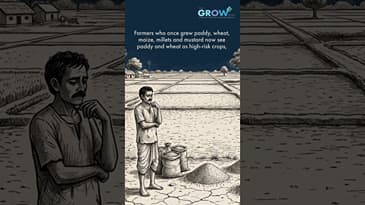
Till late June 2026, Jharkhand had received nearly 60% less rainfall than normal - making this year one of the weakest starts to the monsoon in decades.
Our first story in the #WhenTheRainsChanged series takes us to Manatu, a block in Palamu district in the state where the rains have become almost impossible to depend on.
Historically drought prone, the district has witnessed massive fluctuations in rainfall in the past decade - in 2016 – it received 1,206 mm, in 2017, 716 mm, in 2018, 664 mm and then again in 2025, 1,024 mm. The block has witnessed intense droughts over the years.
In 1990, Kalawati Devi, a 34-year-old homemaker with great tailoring and cooking skills, started a sewing and cutting centre to equip adolescent girls, a majority of them from tribal communities and Particularly Vulnerable Tribal Groups (PVTG), with livelihood skills. She worked with communities grappling with limited resources and torn apart by violence for years before establishing Mahila Samagra Utthan Samiti Daltonganj (MSUS) in 1997. In a landscape fraught with environmental and socio-political challenges, MSUS built its network of trust by strengthening Gram Sabhas, reviving watershed areas, and helping communities stake claim to over 10,000 acres of forest land. Women have been at the heart of this work, holding 40% of leadership roles and steering planning and climate initiatives.
This is what GROW+ stands for — resilience, built from within.
Watch MSUS's story from Palamu.
#WhenTheRainsChanged #GROWPlus #GROWForward #TheGROWFund