
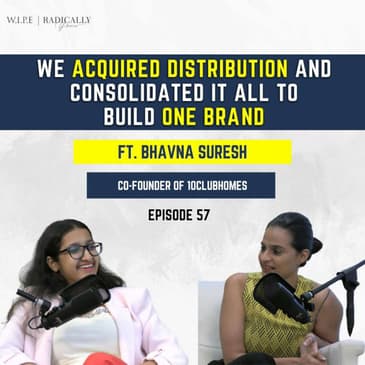
"𝑰 𝒘𝒂𝒔 𝒗𝒆𝒓𝒚 𝒇𝒂𝒔𝒄𝒊𝒏𝒂𝒕𝒆𝒅 𝒘𝒊𝒕𝒉 𝒘𝒉𝒚 𝒕𝒉𝒆𝒓𝒆 𝒘𝒆𝒓𝒆 𝒏𝒐 𝒘𝒐𝒎𝒆𝒏 𝒇𝒊𝒆𝒍𝒅 𝒆𝒏𝒈𝒊𝒏𝒆𝒆𝒓𝒔, 𝒔𝒐 𝑰 𝒘𝒂𝒏𝒕𝒆𝒅 𝒕𝒐 𝒃𝒆𝒄𝒐𝒎𝒆 𝒐𝒏𝒆. 𝑰 𝒇𝒐𝒖𝒈𝒉𝒕 𝒇𝒐𝒓 𝒊𝒕 𝒂𝒏𝒅 𝑰 𝒃𝒆𝒄𝒂𝒎𝒆 𝑴𝒂𝒉𝒊𝒏𝒅𝒓𝒂 𝒂𝒏𝒅 𝑴𝒂𝒉𝒊𝒏𝒅𝒓𝒂’𝒔 𝒇𝒊𝒓𝒔𝒕 𝑨𝒇𝒕𝒆𝒓 𝑺𝒂𝒍𝒆𝒔 𝑬𝒏𝒈𝒊𝒏𝒆𝒆𝒓."
In the latest episode of "Wiping out the Norm," Radhika Bajoria explores the extraordinary journey of Bhavna Suresh, co-founder of 10Club, a brand reshaping homes with its India-centric approach and innovative products.
From her early curiosity about the scarcity of women in engineering to becoming Mahindra & Mahindra's first female After Sales Engineer, Bhavna has consistently challenged conventions and forged her unique path.
Beginning her academic voyage with a degree in Mechanical Engineering, Bhavna swiftly distinguished herself as a trailblazer at Mahindra & Mahindra. However, this achievement wasn't without its hurdles.
A significant challenge arose when Bhavna was diagnosed with a rare form of neurofibroma, a tumour near her neck that temporarily paralyzed her face. Despite this formidable setback, Bhavna exhibited unwavering courage, seeking treatment and emerging even stronger with time and resilience.
Her pursuit of growth knew no bounds. Pursuing an MBA with a focus on management strategies at HEC Paris, Bhavna was driven by a passion for fashion and style, leading her to establish StyleBank. This fashion rental service allowed young women to rent dresses from a range of high-street labels and boutique designer brands. Yet, despite her dedication, StyleBank faced challenges in gaining traction. Undeterred, Bhavna made the tough but crucial decision to pivot, drawing on investor feedback to explore new opportunities
Enter Lamudi Philippines, where Bhavna left an indelible mark on the real estate sector, revolutionizing property search and acquisition. Excelling in this domain, she continued to seek fresh challenges and avenues for growth.
The entrepreneurial spark within Bhavna led to the birth of 10Club in 2021, alongside Joel Ayala and Deepak Nair. Under her guidance, 10Club has reached new heights, securing a substantial $40 million seed funding round in 2023.
Centered on collaboration and growth, 10Club offers actionable insights and expertise to startup ventures, guiding them through the competitive market and towards sustainable growth.
Tune in to the full episode to delve deeper into Bhavna's remarkable journey:
[00:00:00] Thank you, Bavna for joining us today. I know that we have been in touch for a very long
[00:00:10] time but finally good to have you in-house and our series is all about women who have
[00:00:15] wiped out the norm clearly. Your story is one such where you have taken many unconventional
[00:00:20] twists and turns in your life and now you are building a 10 club representing a brand
[00:00:26] color also today. So, I am very glad to have you and I would like to start by asking
[00:00:33] you about your childhood journey because more than the technicals, I really want to know
[00:00:38] the person behind you what values did you learn in your childhood that is still happening
[00:00:43] and how did people in your life influence you from childhood till now?
[00:00:48] First, thanks for having me. Second, thanks for like chasing me for like a really long time.
[00:00:55] It's very busy building here and I'm not ready to talk here but now I am. So thanks
[00:01:00] thanks for having me. The question is about my childhood. Man there's so much about my childhood
[00:01:06] who do I say? I think it was I grew up in the Middle East. Okay your parents were working there?
[00:01:13] Yeah, they were both working there and my dad was actually about three years ago. So you know he's
[00:01:20] spent most of his life there but I spent a large part of my childhood there from the time I can
[00:01:26] remember so it was it's like India but extremely protected. So I think I want to say I grew up in
[00:01:35] an extremely protected environment by protected I mean everything right? You're in an AC car
[00:01:42] going somewhere getting out in a protected environment it's too hot to do anything else but I went
[00:01:47] to an Indian school so it was as good as growing up and very protected India. But yeah, it was a
[00:01:54] simple childhood you know I'm an only child so it's not that I have siblings or anything
[00:02:02] but I've said this many many times and I think I was a single child to very young parents
[00:02:09] and I think that was where life became very interesting because most young parents when you have
[00:02:17] single children you get very protective but mine were just I don't know they treated me like an
[00:02:23] adult since I was very young so you know I thought that's how the world worked. I think from a
[00:02:29] really young age I found it really important towards my opinions yeah and yeah that's how I grew up
[00:02:35] so I think the fight kind of summarized my childhood and my learning from my childhood is
[00:02:42] from a really young age I was asked what I wanted and became very clear to me what I wanted
[00:02:47] and when I don't know what I want I get a little confused and I get a little worried but when I
[00:02:52] know what I want I make it very clear everybody in the room knows what I want traveling the world
[00:02:56] obviously became the most exciting thing and rather than saying hey I will own well enough to travel
[00:03:02] and on my own terms I wanted to get under the merchant navy that's how I kind of ended up doing my
[00:03:08] mechanical engineering because my sound father rather than saying no you cannot you're being
[00:03:13] ridiculous he was like why don't you go do your engineering at the end of it if you want to for sure
[00:03:19] so at the end of engineering obviously I was like no chance in hell there is no way I'm getting
[00:03:25] on a boat and getting stuck so how did you have the realization after spending four years with 300
[00:03:32] boys I think I was like I'm done how many girls were you in your batch three out of 300 yeah
[00:03:38] which institute was this I was in it was in Krunataka in Bangalore just think this college called MSRIT
[00:03:46] Ramaya it's a very boisterous mechanical engineering school and I think four years of engineering
[00:03:54] cemented life from you know where I think after that experience nothing can make me more uncomfortable
[00:04:01] and I had so much fun by the end with it that yeah I think when something's uncomfortable I have a
[00:04:06] lot of joy saying okay I'm going to figure this out and make it fun after that I got recruited I
[00:04:12] didn't know where I want I didn't know what I wanted to do the usual suspects came to college all
[00:04:18] of the recruitment I went and sat in a recruitment firm because they were making you play football
[00:04:24] as part of the recruitment process and I just thought it was fun so I played football and it ended up
[00:04:29] being Mahindra and Mahindra that was recruiting yeah so my first job was at like the most male
[00:04:37] company that could come to college there also you were like one of the few women only
[00:04:42] so I think the way Mahindra and any of these corporates higher is they usually hire in truck loads
[00:04:48] like not from our college but in general every year they hire 200 300 young graduates from around
[00:04:54] the country you get put into one like training institute together so it's almost like
[00:04:59] easing you out of college so there were two three months where all of us from around the country
[00:05:04] kind of came and trained together as trainees and then after that they kind of split you
[00:05:09] and put you in different spaces obviously I didn't make it to R&D and not did I make it to design
[00:05:15] I made it to production I made it to sales and marketing of course but remember one of the most
[00:05:24] interesting questions that you were asked in the interview process I was made to play football
[00:05:32] I thought that was the most I mean I think I still till today think it was one of the most interesting
[00:05:37] interviews because it was so cool it was a room and everybody were like everyone was writing
[00:05:43] papers and people were in form was answering questions and I remember the recruiter too he's a friend
[00:05:49] now he came and he was a young guy he said this is so boring shall we go outside all of us
[00:05:56] and it was a bunch of boys and me and yeah he was like how I want to see how you all play
[00:06:02] and what your dynamics are so can we play around the football and I started raining and all
[00:06:06] of us were playing football in the rain it was really cool I thought it was a very interesting process
[00:06:11] of course we had a written interview and we had all of the questions but I think that set such an
[00:06:17] interesting ground work did not turn out to be anything like that so I was in my head I was like
[00:06:24] wow the recruitment process is so fun how fun is work going to be and I think on day one I was in shock
[00:06:33] what we lost to do on day one no I mean the first 45 days is always training right so
[00:06:40] it's exactly like you trained for in your school with different subjects and different programs
[00:06:44] they kind of put you in here and they teach you a little bit of everything that the company does
[00:06:49] and depending on what you're good at and what you get allocated right so that's how you get the
[00:06:54] engineers and the R&D people go into R&D and the design people go down and the production people
[00:06:58] go down day one I got slaughtered into sales and marketing they're like this one can talk just
[00:07:05] please send her there yeah but I think the answer for me there was at the end of 45 days and you
[00:07:11] get trained on the factory on the ground you get to test you get to drive you get to do everything
[00:07:16] right for me I think I thought and I was very fascinated with why there were no women
[00:07:24] field engineers I also one of my friends just became one and I was like I want to go too
[00:07:29] and they were like no women don't go and I think something in my head turned and I was like why
[00:07:36] yeah and I think as whatever a young 20 year old I was like no I want to do it
[00:07:39] right and yeah I think I fought and I became Mahindra Mahindra's first woman after sales engineer
[00:07:46] which is basically my job was to go into new areas and run service stations so not sales in
[00:07:53] the showroom but service station so I was behind with the mechanics okay so where your car comes
[00:07:58] to get serviced I used to run those for Mahindra in some regions right okay and obviously women
[00:08:05] were not allowed for not allowed but usually never opted to do something like that because it's
[00:08:10] generally the dirty job and it's usually customers not coming happy to buy what customers coming
[00:08:17] complaining about something broken so it was not the fun part of the job it was complaining customers
[00:08:22] angry customers all of that so I think was an incredible I so I chose Goa I lived in Goa
[00:08:29] and I set up service stations in Goa and it's Mahindra and Mahindra so these are not even
[00:08:35] passenger car these are like heavy SUVs and commercial vehicles so it was very it was very
[00:08:42] uncomfortable but I had so much fun by the end of it and then when did you decide to leave
[00:08:49] Mahindra and then pursue your MBA oh no Mahindra one and a half years two years somewhere between that
[00:08:56] one and a half and two years it's a little rig because I don't fully know when I actually left okay
[00:09:02] there was a handover period there was all of that but why did I leave arms I done it I done it for
[00:09:10] one and a half years it was fun it was all of that and then I think I came to Bangalore for the
[00:09:17] summer and I ended up meeting a very young cool founder a friend of mine was working with them
[00:09:25] and he kind of introduced me and he said I think you should just have a chat you will I feel like
[00:09:30] you'll have a great time and yeah I met Vinit Vinit and Deepak yeah they were they were starting
[00:09:39] 2009 2010 they had just set out to kind of work with digital they were the digital agency one of
[00:09:46] the first few digital agencies in India and they were working with some of the coolest brands I'd
[00:09:50] heard often digital was just starting so I think I walked into that office I saw the team there
[00:09:57] were 10 12 people very few all young it was such exciting work that yeah my brain was just like this
[00:10:05] is more fun and gonna come here okay so I think it was a very quick decision in my head saying I
[00:10:11] did that I was great but this seems cooler and it seems so new yeah so yeah it was just a very
[00:10:18] quick decision of try and it was like tasting blood right like it was our version of stuff I mean
[00:10:26] it was a startup you know it was the same energy the same confusion the same breakage the same stress
[00:10:33] but very good friends and everybody at the same wavelength and working with doing some really
[00:10:39] cool work with agencies and brands so I had a great time like one and a half years two years there
[00:10:45] and in that journey I saw they got acquired we got acquired and yeah it was it was so it was so
[00:10:55] interesting for me to watch out for those because I've never seen anything like it
[00:11:00] and I saw the high of like building something building it from zero
[00:11:05] um getting acquired by ddb group which was one of the biggest media firms in the world
[00:11:11] and you know I think it was just how is that agency doing different work how we all like
[00:11:17] different from the other well-known established agency because I think 22 feet was uh
[00:11:23] it was a pure digital agency it was not an advertising firm with creative but it was pure
[00:11:29] digital so okay back in the day you're talking about websites and microsites and campaigns and
[00:11:34] content strategy and stuff which wasn't nobody was doing it okay so you know it was yeah
[00:11:40] which was this 2012 okay yeah very nice interview yeah my hands are was in 2010 and this was 2012
[00:11:49] okay long time uh yeah bold yeah yeah what do you mean that's my life how do you know what I remember
[00:11:58] your life some people forget instances I'm not that old you exactly remember so many details of it yeah
[00:12:08] so yeah it was great I did that and then made some money in the process um oh you had stock options
[00:12:15] of the company well very young yeah that's why I said it was proper like startup right so like
[00:12:20] you know just solve it watch it happen and then I think it was just one of those periods like
[00:12:27] something happened I mean I fell medically ill like I was really uh unwell and this was when I was
[00:12:33] 24 25 okay uh I had a tumor what kind of tumor it's on my face it's my facial so I just had
[00:12:43] I've had it I had a tumor that kind of grew and became quite serious how did you know about it
[00:12:50] it was a very painful large tumor that was interfering with my full life so everybody in my life
[00:12:57] knew it was there um and yeah I mean it was it was it was a tumor uh and something needed to be done
[00:13:04] so life stopped like Jan 2013 life stopped um yeah I got it operated uh I think it was one of
[00:13:13] the stunning points in my life where I watched everybody in my life just melt and crack and break down
[00:13:20] and I think everybody was like oh my god are 25 year old young girl like obviously right who will
[00:13:26] get married to her what will happen to her life everything and it was on my face so um yeah but
[00:13:34] yeah Jan 3rd 2013 I'll never forget uh I don't know I think it was just one of those very again
[00:13:42] I remember in December just before the thing my mom and dad were traveling because I'm I don't
[00:13:48] remember where but I was feeling it was a temple it had to be they were praying I'm sure
[00:13:53] I remember I walked to the I went and met a doctor on my own I went and kind of scheduled my date
[00:13:59] on my own and I said no one's gonna sign this off I'm now 18 and above I can sign yeah uh get it out
[00:14:06] of me and yeah block the date for 3rd of Jan everybody came I think my parents were terrified I've
[00:14:14] never seen them were terrified yeah it got removed um I still live with facial paralysis it's 10 years
[00:14:23] later so it's much better but half my face was paralyzed for really I mean it continues to be but
[00:14:30] it was much worse than but yeah I think something in my head torn that day I was just like man I survived
[00:14:36] this I'm alive and you know like there was so much drama and crying and freaking out and yeah
[00:14:42] something changed but there's now life ahead what stage did you figure it out at so I always had
[00:14:51] it but it was in me for like two and a half three years and it had started to get very serious
[00:14:57] oh my god because it was my facial nerve nobody could do anything it was it grew on my facial
[00:15:02] nerves but you always had it feelings no no I got it when I was I think it was detected when I was
[00:15:07] 21 22 okay very very small and it was not um it was not dangerous uh it was something that people
[00:15:16] brushed away right it was oh uh I didn't show it to the doctor as I did I think I think there was one
[00:15:24] year of active like doctors in my life um and that's why I think something in my head just torn but then
[00:15:31] it started getting cancerous right like it started getting it started getting serious yeah um so yeah
[00:15:39] I think it was just one of those things where you just have to stand and say whatever has to happen
[00:15:42] will happen uh just do it uh so yeah I see the nice story to tell right now but it's such a
[00:15:50] painful process to go through and it requires so much of resilience strength to overcome those days
[00:15:57] I was too young nothing was being processed I don't think I was seriously contemplating the
[00:16:02] consequences or anything and I think it's an interesting place to be in life where
[00:16:07] some things you don't have a choice you have to do it what is the point of overthinking it
[00:16:12] like you will just freak yourself out yeah so that's what I'm saying I met this doctor he was fantastic
[00:16:19] he was very very senior and very old and I remember it was a very long surgery um how long did you
[00:16:27] I think it was like 11 or 12 hours surgery I don't remember I mean it was my face to know it was big
[00:16:32] gone uh I was in the hospital for weeks together therapy was six months um but you know it's all a
[00:16:39] process but I think when life kind of goes on you remember the funny things like um I will never
[00:16:45] forget and my dad and I laugh about it even now is the surgery got over and I think a few hours
[00:16:52] when I could wake up of course everybody came you know it's and it's kind of sweet right in
[00:16:58] your hospital inside everybody's fussing over you and everybody from everywhere is coming to me too
[00:17:03] and I remember my voice from engineering came and they were the idiots like I had tubes all over me
[00:17:10] and they've come into the room and they were making fun of my face they were like they were like
[00:17:13] your face and that's what friends are for it like nobody came and cried and was sad but they ended
[00:17:19] up coming and they were just making fun of me like everything was normal and I think those are the
[00:17:24] memories I have which is day two I could not eat the hospital food anymore I was losing it
[00:17:31] where my dad actually sneaked me out of the room and we went to the canteen and we ate chicken
[00:17:37] so you know those are the memories I have yeah so for me it's yeah coming back to your like story
[00:17:43] at HEC tell me how your experience there was what was some of the memorable most memorable experiences that you had
[00:17:53] I mean HEC was a blast um I think the average age of school was about 32-33 is it yeah it's not
[00:18:02] European schools are not young okay you know I mean I think and I don't I actually
[00:18:08] in hindsight I think it's extremely important to go to business school when you're a little older
[00:18:14] because when you're younger there's nothing what experience do you have what are you going to talk about
[00:18:19] like I was completely useless in my class like a lot of times like I partied like
[00:18:24] my whole business school of course I started my first business a month into school
[00:18:29] because I was bored like you know I had so much time yeah and people don't say that about
[00:18:35] business schools but I think I went to Europe and it's not as fast-paced as the rest of the world
[00:18:42] so I had I had paid internships because I wanted to make money um yeah so I think school was
[00:18:50] I was in school it was not really about the classes which I regret and I think anybody I need today
[00:18:56] I say please go to school like when you're a little older because I would die to be back in those
[00:19:03] classes right now because those case studies would make sense to me today they really did not make
[00:19:08] sense to me when I was 25 like it really did not make sense to me but I really truly appreciate it
[00:19:14] today so if I could turn back in time I would go back and sit in more classes business school was
[00:19:19] just like a big party um and there was so much travel and so it was really exciting it was a really
[00:19:25] exciting 18 20 months in my life and I had started my first company in school one studying one
[00:19:33] month into school yeah so my entire business school I was also running my first company um value
[00:19:40] were also parties I was doing everything I don't know where time came from like that's what
[00:19:44] saying that I don't know where I produced hours from I wish I could now uh yeah so it was internships
[00:19:53] uh business class party travel I don't know how 24 hours uh there was so much fun what business were
[00:20:00] you running uh so I think I went to Paris um a month into class like everyone was because there
[00:20:10] was we I was definitely one of the younger people in class and I think some of the older ones
[00:20:16] they were so clear right they were on a career path so they knew exactly what they wanted to do
[00:20:22] which is they were very clear whether they wanted to get into impact or the great thing about
[00:20:27] HEC was it's a very small class it's only 120 people and from everywhere around the world yeah
[00:20:33] so and a little older yeah so it was really diverse it was really interesting and all of us
[00:20:39] lived together in the same building for a really long time so everybody got very close um so for me
[00:20:45] was just exposure at a very different level right because the way people think the way people
[00:20:49] behave and because it's your it's a little bit more you know inclusives and it was it was really nice um
[00:20:58] but I think in the middle of all of this I was very clear I'm not a consultant I'm not a banker
[00:21:04] and I for the first time had no idea like I was just like what what do I do
[00:21:09] and I think in one of those classes maybe because Varun was with Uber and the shared economy was kind
[00:21:14] of playing in really big and I was very fascinated watching his journey with Uber he was
[00:21:21] he was one of first employees in Asia so he was in the launch phase where he was having so much fun
[00:21:27] so I think part of that was in my brain yeah um I was in Paris where fashion was everywhere it was
[00:21:33] two expensive rent the run we was blowing up in the US at that point so I just kind of put it all
[00:21:39] together and I said listen can I buy stuff in Europe and get it to India and can I kind of create
[00:21:44] a rental service for India I mean I was I was obsessed with the idea I was obsessed with
[00:21:51] it's like drop shipping types it was proper buy in when she set up shop rented to like young girls
[00:21:59] in India it was rent the runway for India it was called style back yeah I just got one one thing
[00:22:06] I was obsessed with the idea like every class that's all I spoke about I was building business models
[00:22:11] only for it I only kept talking about it till my professor sat me down and he was like you know
[00:22:17] you have to do this right because you're obsessed with it so HEC kind of that's that's a great
[00:22:23] thing about doing something like this in business school right like the incubation team kind of
[00:22:27] found me made me build it out I found investors uh very early investors um yeah I found a business
[00:22:37] partner back home she was my colleague from 22 feet yeah so it was really exciting did all of that
[00:22:45] and it was such a high and finished school and came back immediately to run it in India and it
[00:22:51] scaled a little bit bomb really badly uh India was not ready to rent western clothing at all they
[00:22:58] wanted Indian clothing okay and I don't think I was excited about building Indian clothing and
[00:23:05] I don't think anyone's been able to do it it's very difficult okay it's not easy uh you need to take
[00:23:12] an Indian Indian garment and rent it out 20 times to break even and if somebody wore an Indian
[00:23:18] garment with heavy emerald already 20 times you're ruining the garment yeah it's not possible
[00:23:23] you can do it with western clothing you can't do it with Indian clothing and that was my first
[00:23:27] lesson in unit economics what's the business partner on this how you have a bank of clothing
[00:23:34] right like you have clothing accessory shoes bags yeah and women don't need to buy right like fast
[00:23:41] fashion is extremely unsustainable to buy yeah and everybody wants different clothing correct and
[00:23:46] especially in today's day and age nobody wants to repeat clothes so it was almost like a bank where
[00:23:53] it's usually a subscription service yeah like a one-time where if you rent a piece of garment you pay
[00:23:58] one tenths the cost so if you buy for a thousand rupees you can rent it for a hundred rupees okay
[00:24:03] you use it 48 hours later you have to return it yeah so that garment has to be rotated
[00:24:08] 10 times for you to break even at the cost of the garment okay but this is so that's from
[00:24:14] our side but from a user point of view it's still a very interesting concept you know very hard to
[00:24:20] execute which is like what were the pain points apart from the ones you mentioned I think it's a
[00:24:27] the back end of this is logistics to you're expecting the user to handle the garment with cash
[00:24:36] three sizing is always going to be a problem yeah four it's almost like running the largest laundry
[00:24:42] it is laundry at the end of the day it is about can you dry clean and do laundry at scale and do it well
[00:24:48] the cost for India was not adding up at all like yeah I mean the laundry cost is to the company I mean nobody
[00:24:54] spaying for it so we built it all in but I think that's the idea right like it was just we got
[00:25:00] tired of she got partnerships yeah we were doing it at a really cheap cost but it was still not working out
[00:25:07] like how many customers did he still have in India I we only did banglo so we did outside we started
[00:25:16] we started with all cities yeah we started with 10 cities we realized it was extremely
[00:25:21] unsustainable yeah across cities then we did banglo I think there was a point where we scaled to
[00:25:26] about five thousand customers in banglo that actually would use regularly and kind of but
[00:25:32] we're just not adding up like at that point I had to raise like a few million and it was ridiculous
[00:25:37] like when I think about it now yeah the VCs that I went in sat too and some of them know me today
[00:25:43] right they remember me from 20 whatever 14 yeah and like I think cover from fire said I actually very
[00:25:51] recently had lunch with him and I showed him one very very cute image or message I had sent him on
[00:25:57] LinkedIn back in 2014 saying this is what I'm going to build and you know you should bank me and
[00:26:02] he was very nice even back then said shock kind of talk to me and here's my team but I was like who
[00:26:07] would have thought like a decade later you would be on my cap table the way you are yeah but yeah
[00:26:13] you know or did you actually speak to him back then I spoke to a bunch of people oh yeah so I did
[00:26:20] I did my early rounds and you know to the same folks that I saw see now then I'm just like okay
[00:26:26] you know that's so interesting yeah and then how did you when you shut down your business how did
[00:26:31] you return the capital back we were taking we so we are only two angels like two serious angels
[00:26:38] we gave back money right we had very little like less than a crore or something in the bank
[00:26:43] less than a crore or something in the bank which was still a lot of money back then yeah we gave it back
[00:26:49] we I think you know it was all shattering right like suddenly for me I mean suddenly a gong I've done
[00:26:59] all of this I said I'm gonna change the world and I've come back and it's ground zero you're like oh my
[00:27:04] god I have failed yeah how did you decide that it's time to now roll it up it was just not working
[00:27:11] you know you could we could not see traction it's going to cost money I think I was sitting in
[00:27:16] these rooms with all of the VCs and I was hearing the feedback and I think it's very important to
[00:27:23] hear feedback right yeah there were enough people saying that this is not gonna work how's this
[00:27:28] going to work and I think Sequoia had back one of the players with two or three million dollars
[00:27:34] and they had scaled at that point and I think all these signs of them not doing well also had started
[00:27:39] to come so in general after a year of running it all of us were like this is not working it's
[00:27:45] very difficult and I think it became that point where the pivot was to move from west on to
[00:27:51] Indian and I think both of us were very clear we didn't I just my heart was just not in it I could
[00:27:57] not pivot or I didn't want to do Indian floating and I was I didn't believe it was possible so I
[00:28:03] think that was that was the time to call it so we called it and yeah I told myself never again
[00:28:10] that I this entrepreneurship is too difficult I can't do it so you never want to become an entrepreneur
[00:28:17] again of course I think everyone who fails the first time will say I would never again I don't know
[00:28:22] anybody who will see I will do it again I think your heart is broken into a million pieces
[00:28:27] confidence is gone you're like it's very hard to give up something the first time yeah right and
[00:28:33] then you grow up a little bit and you're like you need to let go to be able to move on I think
[00:28:38] that takes time to realize but yeah I think then I was like never again and I got this
[00:28:45] random again really like universal random email in my inbox from a private equity firm that said
[00:28:54] listen that I mean I've said the story a few times which is when you go to business school in
[00:29:00] Europe and I was kind of plugged into the startup ecosystem because I was working with a venture
[00:29:06] plus I was trying to build my own thing so I was meeting a bunch of people in the ecosystem so they
[00:29:11] kind of knew who I was somebody had my CV somewhere so they would kind of message me often enough
[00:29:16] to say hey are you still building are you free are you available because I think everybody was not
[00:29:21] going to work okay so one of those days I got an email saying listen a private equity firm bought
[00:29:29] a venture a distressed venture and they're looking for somebody to come take over and change
[00:29:35] like run it yeah it's in the Philippines what industry was it real estate how didn't no logic yeah there's
[00:29:46] no logic there's no logic and I think that's the thing about entrepreneurs right like I was so young
[00:29:51] like I was I was young where you bet I think 27 you you got this opportunity of a CEO 27 yeah
[00:30:00] I mean it was not like he was not a CEO of like a big company right it was a distressed form like
[00:30:05] yeah nobody in there right mind would have taken that job right it's already distressed giving you so
[00:30:11] much stress that how yeah and there was like you you can't it's a it's a distressed buyout which basically
[00:30:17] means a majority of that company is owned by a private equity firm and they just need somebody to come
[00:30:22] run it and it's not in a major like developed country it isn't the Philippines Philippines and
[00:30:28] Indonesia and they basically said listen we have a couple of million dollars that we're going to put
[00:30:33] in would you want to come try giving this a shot yeah and I had that as an option and the alternate
[00:30:42] option in my inbox that I will never forget this because I took off holiday to decide what I want
[00:30:47] you to do okay actually my interview for this was in Indonesia so I went and I got this job
[00:30:55] and I and they kind of said can you start next week which was the other option you might say
[00:31:00] and in parallel I had spent some time interviewing for a VC in Bangalore yeah
[00:31:06] okay and I got an offer to become an associate with them and associate and a CEO these were the two
[00:31:13] but associated at a very reputed VC firm you can't take the name I won't okay I'm trying to be
[00:31:21] diplomatic here that I won't take it so really reputed VC firm a partner that I really looked up
[00:31:28] to I think I pitched to them a few times and I'm not going to fund your company but why don't
[00:31:32] you come join and you know you can so I think my path was very clear I was like oh this is exciting
[00:31:38] I can do this but then obviously I ended up picking the stupid like why how did you choose that on
[00:31:44] your holiday say I remember we're getting both jobs and I remember I took a holiday alone because
[00:31:49] I was in Indonesia after the job interview and I had both the offers and I was like this makes sense
[00:31:55] I can be in the same country as Varun I can work for a reputed VC firm I can live a normal life
[00:32:01] and I can do it or there's an option to kind of take a flag move to Philippines never lived in
[00:32:07] that country before it's in real estate it's a distressed form everybody is in confused like in
[00:32:13] a confused state what would I do and yeah I remember picking up the phone and telling Varun that
[00:32:19] I'm gonna take a few days and I went to gilly in because I was in Jakarta I took a flight to gilly
[00:32:24] and I spent a few days alone and I remember calling Varun and I was like I really feel like I
[00:32:30] want to do the other thing and not this and I will never forget the silence in his voice he was
[00:32:37] are you serious I was expecting you to come to Bangalore no I think everybody in that right mind was
[00:32:43] like this world it's like this makes sense but I think everyone was amazing they were like okay go do
[00:32:50] it we know you if you don't do this you will so yeah in a week or something I was in Manila and
[00:32:59] you've been like this no that you'll always do something which is a little difficult and want
[00:33:03] to figure it out and how can you yeah so I think but that's the answer right every breath in my life
[00:33:09] also being supportive of it like I don't know another person in Varun's position did not lose his mind
[00:33:15] after hearing your option I think that's what I said there was silence yeah but I think
[00:33:21] those acceptance very quickly right like I think I remember my mom and dad and like my larger
[00:33:27] family telling my mom and dad what is wrong with you like can you just control your daughter a
[00:33:32] bit she's going to some part of land she has no idea what's happening this this sounds completely
[00:33:37] nonsensical but I think everybody who knew me kind of they were like dude she has to do it if she
[00:33:44] hates it she'll come back but yeah I'll change my life too so how long did you spend in Philippines
[00:33:50] for a half years four years four and a half years we we turned the business around we became the biggest
[00:33:56] we are the biggest player in the Philippines and Indonesia today we but for me things changed right it was
[00:34:05] I had limited money so and the good thing there was I knew nothing so I had to only ask questions
[00:34:10] correct and I was so careful because culturally they're so different
[00:34:15] ah it was nice you know I had a different idea from India everything about them is different
[00:34:21] everything like I I'm fascinated I'm fascinated because I feel if I had a stereotype
[00:34:30] the country I think they've cracked the code to happiness which I think India is not
[00:34:36] I think there's there GDP is just as much as us of course population isn't
[00:34:41] they have the same problems as us maybe there are a little bit more homogeneous as a country
[00:34:46] because of religion and language and India's very heterogeneous because of religion and language
[00:34:53] but in general like I can give you a simple example the first thing I learned is when you hire somebody
[00:34:58] they care about work life balance like really you cannot you cannot entice them with 15% more salary
[00:35:05] correct they will take 15% lesser salary and say I will work two hours lesser
[00:35:10] and this is across the board and that's not so these are the things you know like how do you
[00:35:16] how do you hire a team how do you motivate a team how do you run a venture that is distressed
[00:35:21] and turn them around so it's a very people give yeah 2019 three months before end of 2019
[00:35:28] we actually signed we got acquired end of 2019
[00:35:32] the investors only found the acquired so the role was very clear in my head it's a distressed asset
[00:35:39] we needed to sell it there was no growing this for eternity it was we need to sell this asset
[00:35:45] to recover our money yeah it was a very clear turnaround story build to sell yeah and the timeline
[00:35:53] was we had only this X amount of money which basically meant anywhere between two to four years
[00:36:00] and those were the time guys we were profitable we were okay you know so we
[00:36:05] went along so I think it was very clear that my job was to build their job was to sell did you ever feel
[00:36:11] lonely in your time at Philippines I mean I'm sure I don't know no I
[00:36:21] so why don't I travel a lot you know and that was the interesting thing at that time
[00:36:27] yeah because we were living in different countries on the way we made peace with each other was
[00:36:31] we would meet every month in some other country yeah so we were moved midway okay but that's what I'm
[00:36:37] trying to say right it was we said we will do it but we will make life interesting okay so we met
[00:36:43] every month so yeah you know I was in a new city I was trying to figure out work I was meeting
[00:36:50] my boyfriend and husband every month in a new country so life was very exciting oh
[00:36:56] and I like being alone I have no problem being alone so and I'm pretty okay at making
[00:37:01] new friends so yeah it was all very exciting for me yeah and that at that young age when you're
[00:37:08] working making that money and traveling the world yeah what else do you want yeah it was a really
[00:37:13] it was a very interesting high like I don't regret it at all yeah and then after that your role
[00:37:19] was assumed to be over there and then no actually 2019 we sold and see by then the baby was mine
[00:37:27] right it was it was fully mine like I it was mine and I'm not saying I wanted to live in the Philippines
[00:37:34] forever or anything but it's a nice little cozy like country you know in a way where I had become
[00:37:41] very integrated with the real estate whether it's government whether it's the real estate
[00:37:46] I knew everybody and it would come really comfortable and nice we sold I think with acquisition
[00:37:51] surveyed poses they always need the management to stay and build right so but as soon as we sold
[00:37:59] Varun and I went we traveled to South America to celebrate okay and the pandemic hit and we got stuck
[00:38:07] in America South America yeah okay we were in Argentina we were in Peru and it got
[00:38:12] the pandemic officially hit yeah so we could not come back like the Philippines had locked down
[00:38:20] Philippines was one of the first few countries to shut down so we were stuck Varun and I ended up
[00:38:25] spending 18 months homeless on the road through the pandemic we didn't have home to go back to
[00:38:33] we came to India for a bit but here to go back again yeah I mean you know we sold
[00:38:37] but I spent six months after that on the road trying to manage a merger through a pandemic where
[00:38:47] Philippines was one of the first I remember then I will never forget this Philippines shut
[00:38:52] end of February 2021 I think okay 2020 yeah 2020 I remember India shut in March
[00:39:01] correct Philippines shut in February okay so it was one of the first few countries and all of
[00:39:06] us were like oh the government is panicking more than it should you know so it was one of those
[00:39:12] situations yeah so in my head I had a house I had to go back I had a team I had a company we were
[00:39:20] we still had a complete merger and I think there was just insane panic because we had done so much
[00:39:25] to sell yeah I get acquired and suddenly it looked like we were all confident it would happen
[00:39:31] because I spent to paper and the back on so good like there could be no company left everything was
[00:39:37] shut right so I think for us I remember being on calls in South America trying to manage time
[00:39:45] with the Philippines and it's like 14 hours I don't even know how many hours we had
[00:39:51] anyway it was a lot of that ended up finding ourselves in Dubai because it was the only place
[00:39:56] that was open and we were popping around everywhere we were and I spent time in like Maritime Italy
[00:40:03] whichever country was allowing us inside we were going okay it was fun again but by the end I was
[00:40:09] done I was a sec I just need to be at home I just stayed so again a really good story to tell
[00:40:14] in hindsight when we were living it it was not that much fun but yeah I found myself in Dubai and
[00:40:22] that's where I'm at Joel my co-founder of a 10 club and my thesis with India was very simple I think
[00:40:28] maybe because of style bank I was very clear I will not do fashion again I was very clear I will
[00:40:34] not do fashion I was like it's a great industry I can't do it again there's too much baggage
[00:40:41] I think beauty for me I just was it was not making sense to me plus I think it was there were too many
[00:40:47] players and I was just like I don't know if I want to but because of real estate because if
[00:40:53] just personal like always being very attracted to spaces and home and like I said I'm a very visual
[00:40:59] person so I think my brain just kept going into this category and it kind of kept nagging me why no one
[00:41:08] was able to crack it like no one's been able to like there are many people who've tried and many
[00:41:14] people who failed like extremely badly right it's a very difficult business to build what is the
[00:41:22] foundation of for roll up e-commerce business so not see that's the thing I didn't say even for us
[00:41:28] said I'm trying I'm trying to explain the category I think for me it was not as much about roll up
[00:41:34] or not roll up right for me it was about which category you wanted to build in see roll up was
[00:41:41] a very loosely used term where everybody was buying everything we have the fashion and beauty
[00:41:46] and the home and everything right but I think for us like I said we picked a niche and we said there is
[00:41:53] home and it's fully broken and everyone that's trying to build something is trying to build something
[00:41:58] in the furniture sector which personally for me I think is super exciting but there's more to a
[00:42:04] house than furniture there's so much more that goes into your house and no one was really cracking
[00:42:09] that so for me that is what part my interest and I said why is no one cracking this because it's
[00:42:16] just so big and it's so unorganized and there is no brand here and it's such a huge opportunity
[00:42:22] it's like thirty billion dollars today right so I think that's what got stuck in my head
[00:42:28] and as we spoke to people we realized that this category is not a branded category it's a distribution
[00:42:35] okay you need to be where the customer is the customers are going to remember which brand but yeah
[00:42:40] if it's there and you're a good quality piece they will start buying you and over time maybe
[00:42:44] they will remember you but you can't play the regular fashion this is my style this is my product come
[00:42:50] to me game right it is not as simple as that so I think it's a little bit more complex as a
[00:42:56] category and everyone who's tried building it over the last decade and I'm very clear that I say
[00:43:03] this again and again right that India's like every other consumer market that has stages
[00:43:10] as spending power increases you first spend on yourself yeah you then like first clothing then
[00:43:15] beauty electronics travel all of that and then comes your home right homes are second day
[00:43:23] of spending piece right like you'll see a lot of people spending serious amount of money on
[00:43:28] clothing and beauty but their spaces will still look like crap yeah so it's a journey right
[00:43:34] and post-COVID I think suddenly the interest in spaces has become correct a little bit more
[00:43:39] and as our spending power increases it is going to start getting better and better and I think
[00:43:44] that's the opportunity I bet on saying this is what we want to build now how do we build it
[00:43:50] everybody out there who tried building zero to one failed because it's a working capital game
[00:43:57] huge right it's not it's not like you can have four pieces or 20 products you need to have hundreds
[00:44:02] of products you can't have 20 products in this category you have to have hundreds so it's a little
[00:44:07] like fashion where you need to have choice but unlike fashion it's also very difficult with logistics
[00:44:13] because it's heavy and bulky yeah like clothes can get folded and said correct correct and they will
[00:44:18] not get damaged on the way but this is as a category sending it and coming back will damage the
[00:44:24] product yeah so it's a lot more complex as a category and by now if you've not seen the pattern
[00:44:31] I will not be easy I was like ooh why has everybody died in this category can I figure this out so
[00:44:37] I think that was the thesis and that is what I had told Joel I'd said listen this is exciting
[00:44:42] something here is exciting to build so rather than going and buying brands that everybody was
[00:44:49] yeah can we go buy distribution okay and buy distribution in this category and that's what we did
[00:44:55] and I think that was my wide idea even back in 2021 if you ever heard anything I said
[00:45:03] you know when everybody used to call us house of brands I used to keep going back and saying
[00:45:07] guys we didn't buy brands we bought these businesses out a hundred percent they were businesses
[00:45:13] and that is why we paid only one x multiple for them we never paid brand multiples for it because
[00:45:19] these are not brands these are labels we only bought them for their distribution okay right so we
[00:45:26] bought all of it on day one we had eight thousand skews and the answer I will not complicate it but
[00:45:34] there was a lot of noise right what I did not know is whether we will buy four businesses eight
[00:45:39] businesses twenty businesses a hundred businesses we didn't know I think as soon as we got into
[00:45:44] market it may start it building it we were very clear we would buy these businesses out a hundred
[00:45:48] percent and which we did and the reason for that was very simple I had just walked out of a company
[00:45:55] that I had sold because I was like I can't do it and I was like listen if you're going to pay money
[00:45:59] to an entrepreneur and say stay and build I can't take the risk of that person walking out so I was
[00:46:05] like I will pay this by the whole thing and we knew we had to break it and you can't ever break a
[00:46:11] founders company in front of their eyes like they will not let you do it that's for us the answer
[00:46:16] was very simple we needed to buy it a hundred percent because we knew we needed to break it keep
[00:46:21] what's good let go of what's bad I think what I did not know back then was whether we would build one
[00:46:27] brand or multiple brands okay which is we didn't know whether so we were building an operating system
[00:46:34] where we said it's almost like a conveyor belt where you put everything on one you have to make
[00:46:38] central operations or where everything you need to learn for scale you need to
[00:46:42] make systems processes do all the boring boring work and the boring work was very important because
[00:46:48] that is what killed this category always it was not brand correct right and I still believe
[00:46:54] our customers don't deeply care about the brand yet it's too newer category but it's distribution
[00:47:00] which is if you're a brand and you can give them the rice fries and they bought from you once they'll buy
[00:47:04] again but at this stage that we are they may not still go looking for you if you happen to be where
[00:47:10] they are they will buy you yeah and that's the difference about this category I think as we did
[00:47:16] this and I say I don't know whether I wanted we were going to build one brand or multiple brand
[00:47:21] is the question we had is does one brand need to be made for kitchen one brand needed to be
[00:47:26] made for decor one brand for gardening we were thinking that way we thought we needed to make
[00:47:32] different brands out of this but I think as we kind of built it out and as we learned
[00:47:39] we realized the power of one brand is much much stronger and that's why this year we kind of
[00:47:45] took everything that we liked 8000 skews went down to 200 we kind of reduced it yeah
[00:47:53] oh we kept kept revenue and we kept the goal was to make whatever was winning deeper
[00:47:59] and whatever was just noise cut it so that was the hardest thing for us to learn to do but that is
[00:48:05] what we had to do it simplified operations it simplified everything yeah and everything that was winning
[00:48:13] we kind of bet on it and we let it grow and we learned how to introduce new products so we built
[00:48:18] that engine now the last question for us was brand whether one brand or multiple brands and I
[00:48:25] think it became very clear for us that building one brand in India is very difficult and it's like a
[00:48:31] long-long journey and it's going to take a lot of money so we just decided to put everything under
[00:48:35] 10th love homes okay and yeah we're now one single brand 10th love homes calm and yeah
[00:48:43] that's where we are what like India's first and largest seed out funding right in back in 2021
[00:48:50] series answer is I think we announced funding one month later three people came at five times
[00:48:56] the size of it they were just not series seed or something they were series A already okay so I
[00:49:01] think it was just a crazy year where there was just so much funding noise but yeah we were a blend
[00:49:07] I think the part again I said this in 2021 also we were the largest but we had a lot of debt
[00:49:15] we were not equity like I think you know it was written there in the press release that
[00:49:21] it was a blend of debt and equity and serious debt not you know we had international debt okay
[00:49:29] so our structure was a little different it was I think a lot of people who joined us also they
[00:49:34] were like 40 million dollars and I'm like wait guys it's not 40 million in equity there's a lot
[00:49:39] of debt here you cannot waste this money yeah yeah yeah and how it's it's a long term loan right yeah
[00:49:48] it's like venture debt it's long yeah and it's it's when you type that came in even before the company
[00:49:54] was formed right so it's not linked to anything it's as good as equity but it's dead okay
[00:50:00] that's interesting but how did you have like did you always have investor support through
[00:50:06] these pivotal times and I mean see I don't think I could have done this alone right there's a reason
[00:50:11] why I convinced you will to be my co-founder yeah like I mean I had to do the pitching because
[00:50:17] you already not no India but there was no way we could have I could have put this to somebody else
[00:50:23] could have but I could not because this is not what I knew but I think him and I working together
[00:50:30] could put this together did you tell me about one of your most interesting pitching sessions that
[00:50:35] you had I mean I say this very openly I think people think that I whipped out 40 million from nowhere
[00:50:41] we did 260 pitches really yeah it's a long time tradition one year oh one year I did 260 pitches and
[00:50:53] fireside was one of my last Indian investors where I had almost given up hope because
[00:50:58] but they got it they were consumer business investors and they were just like okay she's
[00:51:02] they like forget all this roll-up and all they didn't care I we cared about the home
[00:51:06] category they cared about what I was saying about distribution and they just got it and for me
[00:51:10] I didn't go to them because I was like man I'm not buying brands and they are never going to believe
[00:51:15] what I'm trying to do but my mistake and my learning there was they got it like instantly
[00:51:21] and I don't think I could have done any of this without them because I was running blind
[00:51:26] a fair amount but I think because they know so much about the market we cannot work together right
[00:51:32] yeah but yeah 260 pitches so and then tell me when someday is when the
[00:51:39] business is not doing that well as you aspire it to be how do you navigate those conversations
[00:51:46] and take it on a path where you see some good light ahead with who there is the team
[00:51:54] there is yourself there is the board
[00:51:56] everything well actually well I think honest the on this what I mean by
[00:52:02] most of the time what I tell my board my team knows my management knows and I know it's the same story
[00:52:06] across the board right which is nobody I don't think boats freak out when they like they've done
[00:52:15] this more than you they're seeing 20 come 100 companies at one time yeah like nobody's an idiot nobody
[00:52:20] thinks everything is always rosy right so I think that's the answer like maybe the first time
[00:52:26] they'll seek out but if they know that you're a founder who can say okay I'll figure it out once
[00:52:31] I know what to do I'll figure it out and I will execute I think it's that right I think even with
[00:52:37] teams like we've not had a rosy like journey right it's been hard because the ecosystems
[00:52:45] broke in the you know the market's changed there's online sales fell after COVID there were so many
[00:52:52] things that happened but I think the rule with our team is mostly everybody knows most things
[00:52:59] everybody has access to most information because we're like man if you're going to freak out
[00:53:04] about this then you please leave yeah don't be here and freak out you stay so I think that's
[00:53:12] the thing the investors who backed you they backed you basis the category that you were in where
[00:53:17] they saw the potential or what was it that yeah so I think see I think the answer was a couple
[00:53:25] of things that I said made sense right and it's playing out now it was not playing out in 2021
[00:53:30] which was home this is what's broken you cannot build it yeah ground up you need to kind of put
[00:53:35] it together you need to fix distribution and operation you don't fix brand first no one's
[00:53:40] paying extra for brand right now you don't face money on cack because no one like you're not going
[00:53:46] so I think some of these fundamentals that it's not something I said it's what I learned after
[00:53:51] talking to so many people that it sounded like that is what killed everybody yeah I think the ground
[00:53:56] fundamentals were there I think that was and I think they've I mean yes there's a little bit of
[00:54:03] history of if you've run a distressed company have taken it out chances are you have some kind
[00:54:08] of all kind of leverage and I think slowly with that I mean this I still do long term
[00:54:15] pictures and like I still do all of that but yeah I think I think everybody's accepted that I
[00:54:22] can't do the like I can't out of come a consultant I can't do that but we'll get it done
[00:54:28] it's the answers I'm not a bad story I can tell a story yeah so you know I think there are
[00:54:33] a couple of things that so I think it became very clear that I can build a team like I do a
[00:54:40] track decent team members I have always been able to hire above power people have stayed through
[00:54:47] like really distressed times so I think these are all the things that investors look at right they
[00:54:52] just don't look at a pitch deck that is fun yeah yeah yeah that's true I know there is no
[00:54:57] departments as such in startups but what kind of teams do you have operationally no no we have very
[00:55:05] no no we so however unstructured I see
[00:55:11] because I am so unstructured in my thoughts systems and processes are very clean yeah it's we have
[00:55:20] proper project management tools that run across the company
[00:55:23] so we have functions we have of course now it's completely an operating company right so there are
[00:55:28] revenue teams whether a market place team is there are directly consumer teams now and now
[00:55:33] there is a retail team so there are three lines of revenue okay there are revenue teams
[00:55:37] there is one central operating team which is the supply chain team so from procurement to
[00:55:41] warehousing to vendor relationships all of them that's the central team then there is the entire
[00:55:47] planning team which is the bridge between the operations team and the PNL team which is
[00:55:54] pricing planning all of that then there's of course a supply team and then there's a brand team
[00:55:59] those are the broad buckets and of course there is the data and strategy team that works and
[00:56:04] everything else okay that's very interesting got it because our show is titled is wiping out
[00:56:10] the norm one instance where you think you wiped out the norm my favorite word and I think I coined
[00:56:17] I want to say I coined it I don't know somebody has coined it is the guilt monster I think women have
[00:56:24] I think women have this inbuilt guilt monster all of us have it like we so easily feel guilty about
[00:56:31] things and I don't know it's so easy for the world to like make you feel guilty or you for yourself
[00:56:36] to feel guilty I think I've broken it I still feel it but I feel it when I feel it arise I very quickly
[00:56:45] recognize it and I'm like I will refuse I refuse to feel guilty about this how did you build that I
[00:56:51] think just acknowledging it so I that's what I'm saying I don't know it's something that's happened
[00:56:56] and for me if I have to say about wiping out norms and I've started noticing this a little bit more
[00:57:03] every time I meet women older younger my age I think the minute I speak about this openly I think
[00:57:10] they realize and they resonate because for some reason women are can always feeling guilty they're
[00:57:16] feeling guilty about being ambitious they're feeling guilty about not being at home they're feeling guilty
[00:57:20] about something else they're constantly guilty yeah right so yeah I think it's that I think it's this
[00:57:28] I'm on this journey of controlling my guilt monster and I'm like it's my life I cannot feel guilty
[00:57:34] about yeah anything unless I need to feel guilty about it and I think the second one is it's new
[00:57:42] and I don't think I've broken the norm yet but it's a new one for me which is a kind of offshoot
[00:57:47] of the guilt monster is I think I posted about this recently because I'm so fascinated by it is
[00:57:54] I've not seen women chill like women just can't chill right where like I'm not on my work but in
[00:58:02] general we're always freaking on you know and we just can't give ourselves a break so I think
[00:58:08] I just put this out and I'm just like on this thing saying I'm gonna control my guilt monster
[00:58:12] and I'm gonna chill yeah if I want to chill I will be 100% okay with chilling correct correct
[00:58:19] so yeah I want to see more chilled women and yeah just be okay with doing nothing if that's
[00:58:26] that's what you want to do yeah that's a very interesting answer actually yeah a lot of people
[00:58:32] have answered this in a professional context but I'm very glad to know this from a personal
[00:58:37] context you know whatever I answered in a professional context in the last two hours that I'm
[00:58:43] talking to you yeah I think it was already answered before like my full life is intertwined in everything
[00:58:48] like I was like this is all there is personal professional everything is come yeah everything's come
[00:58:54] you know but thanks a lot Bob now for speaking so openly honestly and transferently with me I really
[00:59:00] love speaking to you and I'm sure when our people watch the show they're gonna love the way
[00:59:04] you have answered all our questions today so thank you
[00:59:13] thank you for listening to this conversation I hope it allowed you to dive deep in
[00:59:18] in the mind of a senior woman leader we are hopeful to see more such women leaders in the future
[00:59:23] who have piped out the norm if you love this episode please share it with your friends who might
[00:59:27] be fundraising or building a business also tell us if you have any questions that you would like us
[00:59:32] to ask our women leaders till then stay tuned for our episodes where we speak with global women
[00:59:37] leaders from countries like Palestine or Jettina Mexico America India and others
[00:59:48] thank you for listening why we hope this conversation was helpful and allowed you to deep dive into
[00:59:58] the mind of a senior woman investor we're certain that we will soon see more women wiping out the
[01:00:03] norm I'm becoming senior leaders in investing if you think you did I great learnings from us in
[01:00:09] this podcast please share it with your friends who might be fundraising or I just want it to get
[01:00:13] that push to get started also tell us if there's any questions you would want us to ask our
[01:00:19] transnational women leaders in our next interviews till then stay tuned for our other episodes where we
[01:00:25] speak with women investors from places like Palestine Brazil or Jettina Mexico and others