
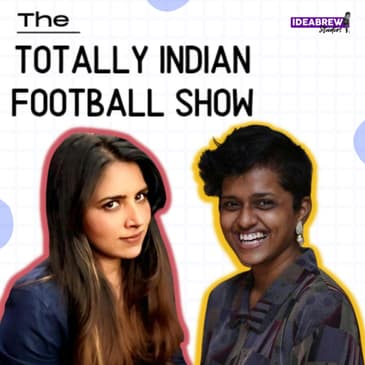
Continuing with our storytelling into the 99th episode, host Siju is joined by Amrita Sampathkumar. She works as producer / broadcaster currently on ISL and has worked on tournaments like FIFA World Cup, hockey World Cup, PKL among others. She’s currently the only female content producer in the league. A fascinating journey from working alongside Arnab Goswami to the world of sports. Tune in and enjoy the various anecdotes.
We appreciate your support!💙
Check out and follow us on our social media handles below:
Instagram: https://www.instagram.com/humansofindianfootball/
Twitter: https://twitter.com/OfficialHoIF/
[00:00:00] Episode number 99 had to be special. I think yes, 100th episode is always a special one
[00:00:13] because it's that big number but I feel 99 has to be a bit more special so you know what it's leading
[00:00:17] up to. Now I have with me a lovely guest as always Amrita Sampakumar. She's joining me
[00:00:24] from all the way from Bangalore. I missed all her travel and journeys and work. She's made time for
[00:00:31] this show and I'm grateful for that so Amrita welcome to The Totally Indian Football Show. Lovely to
[00:00:37] have you. Thank you Siju likewise. I mean before we get into the thicker things I think I take
[00:00:44] a moment to appreciate what you've been doing through your podcast and you know,
[00:00:48] to Humans of Indian Football. I think it's a fantastic endeavor on your part to
[00:00:55] contribute to Indian Football and as a fellow woman, I think that's all for you.
[00:01:00] Yeah thank you so much for all those who listening. I did not pay her or it's not scripted. It's
[00:01:05] coming straight from her heart. So it's not paid. So now let's get straight into it Amrita.
[00:01:13] You are a person who's been behind the scenes so I think our job even when we started Humans of
[00:01:19] Indian Football our idea was yes, we often see the coaches, we see the players, we see everyone out
[00:01:23] there perform and you know we have a lot of stories about them but what about the people
[00:01:28] who work in the ecosystem behind the scene and that's exactly our intention was to
[00:01:32] with this project to kind of also emphasize and put the light and the people who work
[00:01:37] behind the scenes. I know it's awkward to talk about oneself especially the ones who work behind
[00:01:44] the scenes but I think we'll have a great conversation and for those listening that
[00:01:48] probably should know what you've been doing or what you are doing. So let's start from the top.
[00:01:53] I mean, I did a bit of digging on your LinkedIn profile and said you are a nation college graduate
[00:01:59] or Asian College of Journalism that's where you graduated from. I mean before that,
[00:02:03] yes Christ College and stuff. Then you worked with Times of India, you worked with Times Now
[00:02:08] but both of these places that you worked there was dough collection for sport. I mean you were
[00:02:12] properly heavily working on shows as a producer and you know working on different kinds of shows.
[00:02:16] You also worked with Arunabh Goswami. I'll come to that also but how did the journey
[00:02:21] to sports begin? That shift came in, I mean you loved sport and how did that begin?
[00:02:28] Well, yeah we should talk about the Arunabh Goswami bit but before that I think I always knew that
[00:02:35] I wanted to do something in sports all my life. Journalism was also there at the back of my mind
[00:02:40] when I was really young I think. I had like this little activist inside me as a kid and I was
[00:02:47] always a bratty kid who is the power of pretty much every sporting team in school from like
[00:02:53] Sakkari's, Potato Re's, Subhash's ball and short part in Relay and stuff.
[00:03:02] But as I go over I think I would have known as actually the badminton at a semi-professional level
[00:03:10] represented good nautica but you know how it was back then right? Like there wasn't enough
[00:03:16] encouragement especially you know as a female athlete. I don't know where to go and
[00:03:23] coming from a pretty conservative family. I think academics was way more important
[00:03:28] as than badminton sports. Sports was just seen as a hobby. So I didn't have the right kind of
[00:03:33] guidance if I could say that because you were sport and professional level but I always knew
[00:03:39] that you know eventually I'm going to end up doing something with sport. As for football
[00:03:46] I was a fan first then I started playing. I didn't play any professional level
[00:03:51] anything which is like 10-week college level football and for people who are from Bangalore
[00:03:58] it was just three teams that used to compete with each other which was Christ College,
[00:04:03] Maun Khamil and Jyoti Nevas. So we just played pretty much playing against the other two
[00:04:09] opposition. So that was my first twist with ball and then life got serious, life took over and
[00:04:18] I did my post graduation from Asian College of Journalism like you said from in broadcast
[00:04:24] journalism. Went on to work with the loudest voice in the nation and I think that was it for me.
[00:04:31] I think I've not somewhere helped me decide that I don't want to get into news journalism.
[00:04:37] I mean I was done with news journalism and that's how sports happened. I started my journey
[00:04:43] with star sports and currently I'm freelancing and you know doing what I love the most being
[00:04:53] sports broadcast profession. Sweet, I think I didn't do justice while introducing you
[00:04:58] in the start so you know you've done for all the listeners you've done you've worked on
[00:05:02] multiple projects that includes the FIFA World Cup, the Olympics, IPL, ISL of course, PKL
[00:05:07] Batminton League, Hockey World Cup and the Hockey Indian League. So when you dabble across all of
[00:05:13] these systems and it's a live production so when I was part of the PCR and ISL when I did the gig
[00:05:20] I was blown away just to see how it's a different ballgame to produce a live event
[00:05:26] and when you juggle between these different sports how do you kind of adjust yourself to
[00:05:33] the atmosphere would be different right? Yes it's sports but they're different sport and it's a
[00:05:39] different ballgame each time you do that. So when you juggle from different projects how do you
[00:05:44] kind of handle that?
[00:05:47] This is Jack Paul, I think it's more about like the main skeleton of broadcast pretty much
[00:05:58] remains the same with respect to what sport you're working with. The way of functioning remains the
[00:06:05] same but I think the challenge is to be familiar with a lot of sports at an in-depth level I think
[00:06:14] that's where the challenge comes from but otherwise in terms of what you're working on
[00:06:20] as a broadcaster remains the same in terms of the technicalities and what your D2D functions
[00:06:27] are like for example if I'm working on a hobby league and if I'm working on the ISL
[00:06:36] I could have a role as an interviewer where I ask the questions I mean that remains the same the
[00:06:40] role of an interviewer it's just that my knowledge has to be a little more broad ranged and you
[00:06:46] know I have to know both the sports and at an in-depth level for me to be able to excel
[00:06:53] in this field. I think it is that it's just like in a corporate job where you're working across
[00:06:58] different projects. Third what do you do is ISL right now is like you take up about five six months
[00:07:05] of the year and this year has been different because we've had those international breaks
[00:07:11] in between so where people don't get an opportunity to work on others for there have
[00:07:15] been other sporting leagues that have been happening in family TV so here was Coco and
[00:07:20] there were a couple of tennis leagues and all that but yeah I think it is that adaptability
[00:07:25] to suddenly shift from one sport to another but I think that's part of the job and I think
[00:07:31] that's one thing that drives all of us because it breaks the monotony at the end of the day and
[00:07:36] keeps us interested in what we're doing for a long time because what I've seen the attrition
[00:07:43] rate in sports broadcast is very very less so I think once you go to sports live sports broadcast
[00:07:52] way I think there's no you don't want to get out of it just purely because we are genuine and
[00:07:57] you know the variety of sports that you get to work on. Yeah I think what you mentioned the
[00:08:02] Adrenaline I think it gets to you when you see those players and the coaches or what they
[00:08:06] are going through right because that live moment now I'm going to take you back a little
[00:08:10] because Asian culture journalism you mentioned you did your broadcast journalism and that's something
[00:08:15] I'm sure when you were growing up probably that's not something that you thought of right
[00:08:19] as a field that way and journalism now I mean when we all started it was just still growing
[00:08:24] with different aspects and otherwise it was just doing you know probably when in those days
[00:08:29] when media wasn't like broken down the way it is now which is just like literature students
[00:08:34] just going and pursuing journalism right but when you did specific scores in that
[00:08:39] dot-caste journalism how helpful was that and how was the course like?
[00:08:47] Obviously again I graduated from BCJ this was like 13 14 years ago it was at a very
[00:08:56] nascent stage and even the political climate and because of which media was very different
[00:09:04] back in the day so we used to I mean anything like so much has changed over the last decade
[00:09:10] that a lot what we did back in college has become obsolete. We used to run for you know
[00:09:19] getting archive footage from the ingest room where the tapes were kept then you go put it into a
[00:09:26] cassette player, VCR player then recorded all of that and now that thing is different anymore so
[00:09:35] it was relevant in terms of networking and because it was a lot of friends but apart from that
[00:09:43] the technical aspect of you know graduating from a journalism school I wouldn't say you know there
[00:09:51] was much to take away from compared to what it is today of course the law has changed now in
[00:09:55] ECJ itself that become more relevant with today's times and what's needed but I think for the
[00:10:04] broadcast students especially which specialised in television we didn't have I mean there's been
[00:10:11] a big difference in what we studied in college as compared to what is required today.
[00:10:16] Right and I think when I was also like looking at the stuff that you've done when you were in college
[00:10:22] and as you mentioned you also mentioned you had an activist blood in you so
[00:10:26] does that drive you to do those projects that you work like you did an investigative
[00:10:30] documentary on the auto driver police politician Nexus in Chennai and how was that like and
[00:10:38] you did also a short film and what was your thought process back then and how did that go about
[00:10:45] and has that helped you shape and where you are right now.
[00:10:51] He shaped me as a person near to a certain extent especially living in Bangalore and dealing
[00:10:56] with the auto driver's year in today's times has I mean that is definitely happy but
[00:11:03] that investigative piece I think of yeah it's just young blood so friend mine and I we were
[00:11:11] we were the team at the shooting that back so we had those thigh cams button cams in us
[00:11:17] then we had our phones with terrible cameras back then couldn't you know quietly
[00:11:24] tucked into our pockets trying to shoot at one of the RTOs in Chennai
[00:11:29] I think it was the Ravang something I don't remember to a point where the guy realized the RTO officer
[00:11:35] realized that we were with you keeping him and he you know we got a good glow we come to a physical
[00:11:43] fight the two girls the two young blood it hot blood in girls versus like this middle-aged RTO
[00:11:50] and so we had to like run out of the RTO office getting to an auto and yeah I think
[00:11:56] the intention was there and like you know try to expose the whole nexus between the politicians
[00:12:04] and auto drivers and all of that but then execution by the rink we were like too excited about it and
[00:12:12] honestly at the ages probably lying somewhere in the archives with ACJ as like a small little
[00:12:18] story which didn't really seem to light up the day. Interesting and now let's let's look at
[00:12:25] the part where I don't know if the nation wants to know but I would like to know and I'm sure the
[00:12:29] listeners also would be interested to know that how is it working alongside like you mentioned the
[00:12:35] loudest voice on television news these days. Okay, that's where I start from I think there's been
[00:12:45] a massive change in his personality I'm not in that with him anymore I've not had any
[00:12:50] but back in the day when I worked with him it was fun I think it was like a boot camp
[00:12:58] experience because he really trains you I mean give whatever his idiosyncrasies and all of that I
[00:13:05] think I did learn a lot about professionalism for him and dedication and hard work that's
[00:13:12] something I gotta give it a give to Arunabhur Swami for instilling in me because I used
[00:13:17] to work directly with him but that said I mean those are the only nice things apart from that yeah
[00:13:22] it was it was quite entertaining I think I've seen so many uh I've been part of situations where he's
[00:13:30] taken a chair and thrown it uh someone that I know I've seen people passing out because they've
[00:13:36] been yelled at and they haven't been home like a couple of days and you know started weakness
[00:13:43] the day at work and then Arunabh goes all crazy bonkers and then we pass out
[00:13:50] then I've got yelled at but I think for me I didn't really take anything personally so I had like a
[00:13:58] board that I knew which which was I think it was quite entertaining for me but I know a lot of
[00:14:03] people who have been PTSD from working under him it was short and sweet then it was just
[00:14:09] for a year and I worked as part of the news hour so I think I matched that one year purely again
[00:14:17] because of the urgent I think that's something that's been forming throughout all the career decisions
[00:14:23] I've made where it's that rush and the urgent in that I get from working whatever job that I'm
[00:14:32] and about him personally
[00:14:40] interesting now coming let's come back to sports before people switch off my episode with you
[00:14:46] you're now a very hard boring season no no no I mentioned like you what I meant was to come
[00:14:54] back to sports right I talk about football uh I don't think you're boring at all so
[00:15:01] being from Bangalore you are a big BFC fan and I think if I'm not wrong according to the sources
[00:15:06] that are familiar with both of us so he says that you I think you first produced your game in
[00:15:12] Kanteerava was that right?
[00:15:27] yeah and you mentioned about the adrenaline rush what was that like like say for example someone
[00:15:32] as you said you've always been a fan of the sport and growing up and then now you finally get to do
[00:15:37] the live event of a team that you are a fan of right how can you break that down like how does that
[00:15:44] feel and what was that day like? I was a bad nerves honestly because I don't know what to expect I had
[00:15:51] nice sport and it's so cool it needs to win but uh you know just being put in the middle of like
[00:15:58] you know 90 minutes of like action and not going water over that point of time was a little unnerving
[00:16:04] uh which is why probably you don't remember like the details I just remember I was in Kanteerava
[00:16:09] I had a lot of people that you know right now I remember I think Prad was there from Zubu Red
[00:16:18] meaning one of the first people I worked with at Kanteerava so yeah I think I was just a bag of nerves
[00:16:28] and I didn't know what to do I was just always there and this is what you're gonna do
[00:16:34] because I hadn't really shadowed anyone and it was my first gig with ISN and I quit my corporate job
[00:16:42] with StarSport and this is like a do-it-all I think because there are no same chances especially
[00:16:48] in the freelancing world in sports broadcast you mess up one I think that's the end of the road so
[00:16:55] all that I was thinking was okay let's just get it clean let's not make mistakes and it will be
[00:17:03] even if I do make a mistake let's make sure no one sees it I think that's what got me through the first
[00:17:09] this thing but of course because it was a BFC game I think it was uh
[00:17:15] I mean it was a little bit of like passion also involved and from there I think it just got
[00:17:20] easier for which I think it's I need to give a shout out to all my colleagues who were part of
[00:17:26] that this the first time I ever produced an ISN game or a football game I had done a football
[00:17:33] game before that which I'm not familiar with it was called Bangla footballing which happened just
[00:17:39] through one season this was in 2018 again for 2019 2018 I think this is an under 19
[00:17:51] uh uh for the ball league that happened in Calcutta where which is another experience in itself because
[00:17:59] uh the final was uh between uh mormon and east bengal and the match had to be abandoned because
[00:18:10] it became violent match and that was also a tournament where I got death threats by east
[00:18:17] bengal fans because cards were given a long people were carded and were not really the fan
[00:18:24] were not really happy with the referee's decision so I walked out of the east bengal ground and I
[00:18:30] have like a group of these gundas standing outside saying uh giving death threats so I think even
[00:18:37] there I'd had this experience and then doing like a very uh sanitized uh league like the ISL I think was
[00:18:47] kind of comforting I like how you put that out with a say sanitized way
[00:18:54] I mean I'm sure all the listeners must have just broken to laughter there
[00:18:59] now you've done so many of the projects right I mean I think the vast experience that you have
[00:19:03] with different sports uh what's your is that a pick of you know a pick that you really cherish
[00:19:09] the moments from different sporting experiences that you've had I'm sure you'll have many
[00:19:13] but if right now if I had to ask you think top of the mind what would that be
[00:19:18] I think uh just do the first thing I think of the ISL
[00:19:25] pretty much in doing only ISL over the last few years I think uh
[00:19:31] no bubbles in the ISL were like crazy but I have to pick one moment
[00:19:38] for like me and it can I get back you on that yeah yeah why and why do you think about it
[00:19:45] since you mentioned the bubble I had this down as well I mean you literally did everything
[00:19:49] during the whole bubble period is what I was told and uh from stories to interviews to getting
[00:19:55] the production done and you know managing the floor and stuff how now that you can take
[00:20:00] time to think about your moments but take us through that period because everybody who
[00:20:04] I spoke to or have spoken to uh even otherwise they've said on social media but how difficult
[00:20:09] it was in that bubble I mean yes we talk about the players and coaches going through uh you know
[00:20:14] mental health issues and stuff but for you guys to actually bring something out you're
[00:20:18] literally still broadcasting right I mean there are no fans but you still have to work
[00:20:22] thrice or four times or ten times more uh to actually produce those shows while you're sitting
[00:20:27] in one place you know with whole COVID the testing that you had to go through in a day
[00:20:31] or in a week span how did that all play out and then you had so many other different roles to play
[00:20:37] take us through that well I think honestly uh there was this kind of gratitude but the rest of
[00:20:43] the world was you know sitting at home working at home the laptop's me I think whoever worked
[00:20:50] or on the eyes during those two times at the privilege of watching these matches live and doing
[00:20:57] you know that that can work so there's always a sense of gratitude that you know
[00:21:02] you know we're able to pull this off and I think if I'm right I said was the only league at that
[00:21:09] point in time across around the world that successfully completed a scene in the first
[00:21:14] bubble without any uh outbreaks putting the bubble yeah there's a small stack like that so I think
[00:21:21] it was a moment of uh pride also for all of us right me I think
[00:21:27] like you said all of us had to do a lot of different roles because we will be all
[00:21:32] we have to do about 14 days of quarantine um and go up before we could interact with each other
[00:21:39] so that was the difficult thing where we couldn't talk to each other for 14 days
[00:21:45] the first 14 days after we went into the bubble that was difficult but once we started working
[00:21:51] yeah it was very uh distoping and I look back at it you know we were like those little machines
[00:21:59] walking around and I've shown a lot of people even otherwise uh can relate to how distraught
[00:22:06] like the time and that moment scene um yeah so we I think it was all hands and decked at
[00:22:13] that point in time so all of us had to do whatever we could in our cable video ensure that the league
[00:22:21] completed successfully that's even right from you know like the smallest like runners who used
[00:22:28] to bring us coffee even teas to the directors I think it brought us all together as a broadcasting
[00:22:37] uh food broadcasting fraternity and it was the funny part of it was we had to wear those
[00:22:46] N95 masks and I had to ask questions I had to interview the players and the coaches with the mask
[00:22:52] and half the time we would like to be like I can't hear you you remove mask in the
[00:22:59] and you're like no I can't be removing my mask in the talk because we also have these the
[00:23:05] these the compliance officer that's what they were called we're looking at us from you know
[00:23:11] you don't know whether like those Indian police or the traffic police guys they're hiding somewhere
[00:23:17] and making sure that you're wearing your mask so I used to be scared out like what if I
[00:23:22] for instance where someone's been caught without a mask and a photo of that person has been sent
[00:23:30] and shared and that was his shame not shame I think we were also like even a warning that he might be
[00:23:36] taking off ice and we didn't compare that so yeah it was difficult managing especially the managers
[00:23:44] because we had to maintain a six-speed distance while interviewing them and wear a mask
[00:23:51] and ask them questions and this will be the middle of the afternoon in Gowar
[00:23:55] great I mean that's like saying when when I was given a feedback saying throw your voice
[00:24:02] I'm sure you literally had to throw your voice at six feet of a distance with a mask
[00:24:07] I'm sure that statement there must have been like throw everything at it so that
[00:24:11] the question can be asked and heard but yeah absolutely very much
[00:24:17] all was worth I think those kind of experiences don't have in modern times like
[00:24:24] I don't understand no complaints about any of that so right now can you tell me probably if you
[00:24:30] can break down a day like what it looks like for a broadcaster you know producer of a live event
[00:24:35] of a live sport and we often look at t-minus one as you know match day operations I've worked
[00:24:41] on ground for a tournament and I know how crazy that is like but how does t-minus one or say the
[00:24:48] day of the match how does it look like an effect to ask you to break it down for a you know audience
[00:24:55] if you can just take us through that experience well so what we do is we shall usually
[00:25:02] match day minus two is I believe when we go to the venue and should I take I sell as an example
[00:25:10] if I take I send it as an example there like it's divided into three crews every crew has a producer
[00:25:18] difference that the cameraman for each crew and you travel in my three minus two or
[00:25:23] mastery minus three away you go there's something called the rigging way you
[00:25:29] all the equipment will be given which is like an extensive extensive job which
[00:25:35] usually it's the cameraman who do all of that then you also have the ebs machines which take care
[00:25:41] of the EBS operators mash day minus two we go we drink which means putting all the equipment
[00:25:53] in place and everything is run by satellite of fiber so which means your communication to say if
[00:26:02] the main broadcast is happening through a hub which is Mumbai all the venues need to communicate with
[00:26:09] that city which is Mumbai so for which it's either done through fiber or through satellite
[00:26:15] so you do all these checks mash day minus two make sure everything is in place sort of there's an
[00:26:21] issue with the camera there's any kind of equipment to show you make sure that you have enough
[00:26:28] buffer time to fix those issues and much the minus one you do a it's called a fax check
[00:26:34] which where you do all the communication check and the technical check and just make sure
[00:26:40] everything is in place and you don't need anything on match day match day is when
[00:26:46] you go and you produce the match but apart from that behind the scenes we also do all
[00:26:52] the interviews with managers with the players which you see in your pre shows and med shows
[00:27:00] where the producer goes and talks to these players and interviews them and that also
[00:27:07] gives us enough time for it to be edited and to be played out on match day
[00:27:13] and while you're doing this you're constantly preparing for the next venue
[00:27:20] which could be you know you're probably in gohati right now and your next venue is kochi
[00:27:26] so you're constantly preparing like that for like a period of five six months great doesn't
[00:27:32] I mean when you speak there I don't think people actually can fathom how the wall you
[00:27:36] morph it but I'm sure I think everyone needs to probably get one day experience or for it goes
[00:27:42] behind the scenes to actually bring a live match or a live event now you've worked with so
[00:27:49] many different kinds of people like whether it's in the PCR or even with the comms teams right
[00:27:55] and there has been so many different kinds of people that you I'm sure you have stories with
[00:27:59] everyone but if now I had to ask you with different kinds of people that you work with
[00:28:04] especially in the comms team and I think that's what would interest most of our listeners
[00:28:08] because you had worked with Pradyum you've worked with right now with Eric and Pula and
[00:28:13] Mace always just being there and even different languages and stuff but many looking at the
[00:28:19] English speaking ones how has that journey been like and what's the relationship that
[00:28:24] you share with these guys and any funny anecdote stories that you have please bring it on
[00:28:29] Oh yeah it's absolutely fun to like work with all these guys each one is a character
[00:28:37] by themselves you know how Mace is always like this funny man you know this guy who said
[00:28:45] with Mace I remember it was the first bubble and he was part of the bubble and you know how it gets
[00:28:53] for you know especially these the foreign computers around Christmas time they have a lot of
[00:29:00] they become homesick so this that bubble the first bubble where Mace was really homesick
[00:29:09] so he thought he'll you know let himself up and he decided to order a Christmas tree on Amazon
[00:29:17] so even we had certain protocols in place even if you had to order something
[00:29:21] and get it delivered at the hotel the package had to go through a whole sanitation process so you
[00:29:28] wouldn't get it immediately you know and I think Mace got this Christmas tree that he had ordered
[00:29:34] he was able to see it only on the 20th or something and then he'd ordered it a
[00:29:40] month ahead and it got delivered me like a couple of days before Christmas Eve
[00:29:45] and he had pretty much told the whole world about it then because he was really excited about it and
[00:29:51] so yeah so as usually in my soul of us for a little Christmas party and we go and I'm really
[00:29:58] looking forward to it because Mace had given this whole build up about that Christmas tree and how
[00:30:02] he'd got like we go there and there's like this tiny one foot Christmas tree in the corner
[00:30:09] of his room and he didn't know he'd get the size wrong Mace I'm calling you a boomer
[00:30:17] if you're listening to this so he didn't realize that the size is going to be different size so
[00:30:22] he just went by the pictures and he thought it's going to be like a big Christmas tree I think
[00:30:26] like a six foot Christmas tree and he got lights accordingly for a six foot Christmas tree
[00:30:30] wow and like just before Christmas tree was hidden somewhere in the corner so that's
[00:30:36] one thing that I remember with Mace and with Eric the first time I worked with Eric again was during
[00:30:46] the bubble I think that was the second bubble before that you know being a BFC fan you know I
[00:30:52] had this huge span girl moment when I first interviewed Eric so you know then eventually
[00:31:00] like work with him and work with him as a producer and him as a con-dealer I think it was like a full
[00:31:06] circle uh Prad has his own idiosyncrasy of course that being Prad yeah it's a lot of fun so I mean
[00:31:15] it's it's like a little family like an ISL family that we all have with the con-dealer and
[00:31:23] I think it's so important to have that kind of rapport with these guys because you're working day
[00:31:30] in day out for like five months yeah you have to keep the mood line otherwise it really gets to you
[00:31:36] yeah true and now that you spoke about the guys on the calms team right uh how crucial is
[00:31:42] a relationship between a director and a producer because you're actually sitting together
[00:31:47] I've seen it so you sit together while the game is on or it's a pre-match show the post-match show
[00:31:52] or the halftime um and there's a lot that goes before also I'm sure in the as you mentioned
[00:31:57] in t-minus two and all of those things uh but throughout the season how does a relationship
[00:32:04] between the producer and director develop and how crucial is that for you know for a live
[00:32:08] event for success of a live event I think uh football or any sport
[00:32:16] especially football is a lot to with uh subjective your your own opinions also uh for example
[00:32:27] say it was a goal that was conceded and it wasn't like an obvious mistake so you the director
[00:32:32] could have a different perspective the producer could have a different perspective uh and if
[00:32:37] you're not on the same wavelength you're not on the same page it could lead to it could lead
[00:32:42] to a lot of uh you know uh problems while working because you remember that you're in a live moment
[00:32:50] you can't actually go there and be at that moment and have a have an argument or have a fight about
[00:32:57] it so I think it's like it's like this it works it has to be like a well oiled machine but this
[00:33:03] oiling has to happen before the broadcast starts because there's absolutely no scope to
[00:33:08] get into discussions once the kickoff happens because that's that's the the day in a live
[00:33:15] sports broadcast so absolutely important that there's a good rapport between the producer
[00:33:23] and the director and I've been fortunate enough to like work with directors of very experienced
[00:33:31] in their fields and in that particular sport especially football where
[00:33:36] I like initially when I joined I needed that kind of guidance you know uh I needed some
[00:33:41] hand holding because I was very new to the sport and broadcasting aspect of the sport especially
[00:33:48] so which is where having a director who can help me in the initial days was I've been fortunate
[00:33:56] and fortunate enough to have that so I think equally there will be a time where you're working
[00:34:02] with a director who's not worked on the sport before and that's where you pay back
[00:34:08] to broadcast in the sport by helping the director maneuver the challenges like for example we have
[00:34:14] a lot of directors from other countries who come and work for the first time in the ISF
[00:34:22] so they're not familiar with a lot of Indian players they're not familiar with they're
[00:34:26] expecting a different standard say a family but Indian football has its own challenges has its
[00:34:33] own pace if I may say so and sometimes it becomes difficult for them to identify certain players
[00:34:41] even the famous ones so that's why the producer comes into the picture and you know stirs the ship
[00:34:48] the broadcast ship sweet I think great and I hope you're still thinking about
[00:34:54] the moments I asked you you know I hope you're still thinking ahead and you're ready with the answer
[00:34:58] but before you answer that I think we'll keep that to the last one small bit I have is I'm also told
[00:35:03] that you worked not to do with football but really caught my eye is that you've done a boat race
[00:35:08] league in Kerala you worked on that tell me about that I know why it didn't happen again
[00:35:16] like it was so different it was so lovely to work in that this you know about it so you obviously
[00:35:26] do the freak board race it is called the champions board race
[00:35:32] the talent yeah it's champions board race and every week we had to go to one backwater in Kerala
[00:35:40] and this race would happen so I would ideally travel on a Thursday and the race would be on a Sunday
[00:35:46] and it was very new for everyone and there was this massive language gap also because most of my
[00:35:56] colleagues were from the northern part of the country so they had no clue like the cameraman
[00:36:01] and all of that and there was like a lot of communication issues but when you look back
[00:36:06] at it it was like a comedy of errors but I think to pull off something that massive
[00:36:12] when making it entertaining was you have to give credit to all the people that worked in it
[00:36:19] initially when we started Nanofas knew what the rules were so there were certain rules that
[00:36:24] we made up as we progressed in the tournament but I think visually it was the breathtaking sport
[00:36:34] which actually received quite a lot of positive feedback but for whatever reason
[00:36:41] didn't really take off the second season so hopefully somewhere in the future we get to see
[00:36:46] a better and a bigger version of it because I think that's something that's so exclusive
[00:36:53] to Kerala it can't be replicated in any other part of the country and it has so much culture
[00:37:00] so much history to it so I think it was a fascinating sport to work on and to call it
[00:37:08] a sport now but the league itself I think I would do anything to like work on a league like that again
[00:37:16] Great and I think you know if you had to count somebody I mean you want somebody in your team
[00:37:20] I'm always ready that'd be like that's crazy one like I've never seen one witnessed one life I
[00:37:27] always wanted to because always it falls between of the autumn falls period of August
[00:37:32] September and it's like a very in-between year to take a leave and go and you know catch that
[00:37:37] and come back but yeah definitely I'm sure it was a well I think it happens over a few weeks I mean
[00:37:43] you see months actually you go for like four or five months yeah yeah you know I'm saying the league yes
[00:37:48] but I was talking about that actual event where the Nehru trophy race which is the biggest one
[00:37:52] that you look forward to during I think couple of days in that week of Onam leading up with
[00:37:57] that fest so that's something always falls between August and September for you to actually
[00:38:02] take but yeah definitely I like you like you're hoping I'm also hoping for the second season of
[00:38:07] this league because it was widely spoken of like you mentioned and there are even people looking at
[00:38:13] it as a case study to do so I think definitely everyone can look forward to a season two now
[00:38:19] I hope you have your answer ready. Just a quick one I remember I think it was also fun working
[00:38:26] on that league because you know in a place like Kochi and it was fine Kochi was fine
[00:38:34] Kumara Kumbh was fine but there were certain backwaters that was so inaccessible we actually had to
[00:38:41] have like those of Chai Kada or something that we took over and made into a broadcast control room
[00:38:48] and he was sitting on these tin boxes because the room was so small where we had to fit
[00:38:54] those EVS machine we had to fit in the producer's pan and the director's wall all the camera monitors
[00:39:02] all of that so we were actually sitting on these tin boxes when producing the league so I think
[00:39:08] that that's an unforgettable league that I worked on. Amshad do you have photos of that
[00:39:15] have you shared them? Let me let me check. Yeah yeah that'd be a crazy site of actually
[00:39:22] I mean you actually use the right term of Chai Kada for those who don't know it's called T-Stall but
[00:39:26] it's like those roadside T-Stalls where you've put up on you know maybe on wheels that are
[00:39:31] roaming around but I think to turn that into a PCR crazy I mean kudos to everyone who is part of
[00:39:38] that. Finally coming to the concluding bit of I hope you now know your answers or what you
[00:39:44] want to share your favorite moments from across sports if you want to pick any one go for it
[00:39:49] if you want to pick one from each of the sport that you've done you can do that as well.
[00:39:53] Favorite moment I think was when I go to commentate on the Kabaddi World Cup which was
[00:40:06] like a very last minute thing I was just thrown into the middle with and said you will commentate
[00:40:12] on this match I had to go commentate on the Kabaddi match for the World Cup that happened
[00:40:17] in 2016 I think that's something I will never forget but that's Kabaddi in football I think
[00:40:28] so many is difficult. I remember again the bubble times were very memorable because
[00:40:32] you pretty much had nothing else to do so a lot of it would register in your mind otherwise
[00:40:38] the rest of the seasons you're traveling so much like every second day you're traveling from
[00:40:43] like one part of the country to the other so it's you're kind of in a day so difficult to like
[00:40:50] remember everything but I remember the bubble period though one before that where every time
[00:40:56] this was when Khalid was part of was manager for northeast every time we'd go for an interview
[00:41:04] Khalid would be like this Khalid that would be the sweet person who would always offer us lunch
[00:41:10] or something to eat and we had to deny after point of time it got to a point where I had to start
[00:41:16] making up reasons in my head before I went for the interviews to say no I can't have the food you know
[00:41:23] I had to come up like no I have a stomach ache today no I just had lunch to it got to a point
[00:41:28] where I did it for preparing for the interview I had to prepare an answer for to say how to
[00:41:34] say no to Khalid by politely for lunch or snacks or whatever he'd offer us while during the interview
[00:41:43] then I mean I can't think of anything specific but I with Kabaddi I remember one of my first
[00:41:50] ever interviews I was a rookie and it was a two-camera setup so it was a pretty complicated
[00:41:57] interview and need to do it late at night and this was a very famous Kabaddi player who
[00:42:03] was like poster boy of Kabaddi back in the day so we set up the interview all of that is done
[00:42:10] and this is pretty late in the night and because it was a two-camera setup I didn't
[00:42:15] I mean I was not supposed to come in the frame but it was awkwardly placed where I had to like
[00:42:23] you know crouch a little and put place my hand on the desk for support and this was in one of
[00:42:30] the players apartments other than the flatlets that they used to stay in so I'd be ready and all
[00:42:38] of that and I'm leaning in an awkward position where my hand is rested on a study desk to my side
[00:42:46] and the player enters and we start rolling and throughout the interview he just has like
[00:42:52] this very uncomfortable expression on his face and I'm wondering what is it because
[00:42:58] questions that I'm asking is making him uncomfortable or what it is I just couldn't really figure out
[00:43:04] and then he was sharing the flatlet with another player who would just in between come in the
[00:43:11] short and start giggling and then walk away and very puzzling all of us are wondering what's
[00:43:16] happening me and the cameraman later after everything wraps up and we're about to leave
[00:43:22] the player comes in hardly you know come where I'm standing and he put something into his pocket
[00:43:28] and then I realized I got up the lights got switched on after the shoot
[00:43:34] so they put all these lungoats to dry on that study table so after like an hour I've actually
[00:43:42] been leaning on those lungoats and asking him questions so I think that was like the last
[00:43:47] interview of that player I ever did and never seen his face or like he's bothered you know
[00:43:55] talking to me after that oh that was one of the funniest I did that remember
[00:44:00] Oh that's like I know I mean the fact that you've worked for so many years and on different
[00:44:05] this thing I think we can do another episode just talking about moments
[00:44:09] and anecdotes from each of the sporting event that you've done
[00:44:13] but I think this is a crazy it was a crazy lot of fun I had I enjoyed it I'm sure our listeners
[00:44:18] also enjoyed this I hope you did and I hope yeah when you started you mentioned that
[00:44:23] you don't like talking about yourself but I man I hope I can I managed it well so it was fun
[00:44:29] for you as well absolutely update Seju thank you for this opportunity yeah I think
[00:44:35] this is like my first podcast on this next time I'll be better prepared just warming up to this
[00:44:41] would love to share more such anecdotes are always interesting to know what the other person does
[00:44:47] right like I've always been curious as to what a podcast how podcast does it then yeah good
[00:44:53] like thank you for having me no thank you I think the pleasure is mine because
[00:44:59] yeah like I mentioned the start stories behind stories and especially people behind working
[00:45:04] in the scenes if you can even do one percent of telling people and that's why people come to us
[00:45:10] or watch our shows or whatever listen to our show then follow us I think so this will definitely
[00:45:15] enlighten everyone and hopefully we meet you're in Bangalore is a city that I keep coming to
[00:45:22] and yeah whenever we are there next we'll definitely meet up thank you so much Amrita it
[00:45:27] means a lot I may not be able to express it on my face right now but it does mean a lot
[00:45:32] for you taking time off and doing this so thank you very much thank you and good luck for all you
[00:45:38] do the episodes well thank you so much so yes absolutely to all the lovely listeners I hope
[00:45:45] you enjoyed this episode if you didn't I don't know what you were listening to that this is a
[00:45:48] totally in football show episode number 99 with Amrita so follow us and subscribe to our show
[00:45:53] we're available on all the leading audio platforms and this could be the first episode
[00:45:57] that you may probably also get to watch on our YouTube channel I know I've said this promise
[00:46:02] many times before but hopefully this will go out on YouTube and you get to see the guest as well
[00:46:09] as our court is at voice for Amrita to hear that but yes that's a surprise
[00:46:14] but thank you once again to everyone this is me signing off
[00:46:27] you