
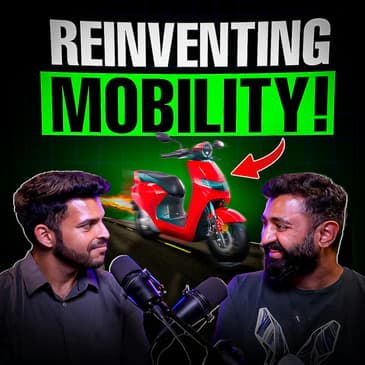
In this episode of the Startup Operator Podcast, host Roshan welcomes Varun from Bounce. Varun shares insights into Bounce’s progression from its origins as Wicked Rides, a bike rental company, to becoming a prominent player in the electric mobility market. He discusses the significant milestones such as the launch of Bounce Infinity, the introduction of the E1 and E1 Plus models, and their burgeoning B2B operations, including a collaboration with Sun Mobility to supply 30,000 bikes. Varun delves into the innovative pivots that guided Bounce’s journey, highlighting the company's transitions driven by customer needs and market gaps. Additionally, he outlines the current state and future of the EV market in India, detailing the challenges and opportunities within the sector, including range anxiety, service concerns, and financing hurdles. Varun also speaks on the technological advancements and the strategic partnerships that are propelling Bounce forward. For aspiring EV entrepreneurs, he offers advice on navigating the complexities of building and scaling an EV product.
00:00 Introduction and Welcome
00:26 Bounce's Recent Developments
02:46 Innovative Pivots and Evolution
04:13 Challenges and Solutions in Fleet Management
07:55 Transition to Electric Vehicles
10:34 Impact of COVID-19 and Manufacturing Partnership
16:43 Current EV Market Landscape
26:50 The Impact of Mobility on Economic Growth
27:20 Public Transport vs. Personal Mobility
27:58 The Rise of Electric Vehicles
28:36 Battery Swapping and Charging Infrastructure
33:31 Government Initiatives and Challenges
35:10 Innovations in Battery Technology
40:59 Building and Manufacturing EV Bikes
46:19 Customer-Centric Product Development
48:49 Future of EV Technology
50:03 Conclusion and Farewell
-------------------------------------
Click here to get regular WhatsApp updates:
https://wa.me/message/ZUZQQGKCZTADL1
-------------------------------------
Connect with Us:
Linkedin: https://www.linkedin.com/company/startup-operator
Twitter: https://twitter.com/OperatorStartup
-------------------------------------
If you liked this episode, let us know by hitting the like button and share with your friends and family. Please also remember to subscribe to our channel and switch on the notifications to never miss an episode!
[00:00:00] So we knew that we had to move to electric, just to conserve fuel but also it made economical sense for us to go to electric because total cost of ownership on an electric vehicle would be much much lower than a petrol scooter
[00:00:12] You mentioned its a natural evolution, I kind of think of it as sort of a backward integration right? You started with rentals and sharing and then manufacturing your own bikes
[00:00:21] I mean there is so much of optimism and there is so much of potential that is actually taking shape right now Its not out of the ordinary to see EV bikes on the road, right? They are gaining ground very quickly and so on
[00:00:33] Right now we are approaching 5-6% of the fuel that is being sold But its still scratching the surface There are three factors that are still holding back a little One is the range, range anxiety is a massive thing Second one is service, the last thing is ****
[00:00:48] Hello and welcome to the Startup Operator podcast, I am Roshan Karyapa Our guest today is Varun Agni who is the CTO and co-founder of Bounce A few of you may recall, we have had Vivekanand the CEO on the podcast a couple of years back
[00:01:01] So I discussed what has happened in that time with Varun We discussed the EV industry, the challenges and opportunities at this point And some of you may know as well that Bounce has pivoted more than a couple of times
[00:01:14] They were called Wicked Rides earlier, a bike rental service Then Bounce which was a last mile mobility solution And now Bounce Infinity which is an EV brand This was a fascinating conversation, we spoke about a lot of the technology, manufacturing, science and development aspects of things
[00:01:32] While also covering distribution, infrastructure, adoption, government policy and so on Very wide ranging conversation And if you are mildly interested in any of these things This could be a nice deep dive and could set you off on a rabbit hole of sorts
[00:01:48] So with that said, let's get started on this episode Hey Varun, welcome to the Startup Operator Podcast Thank you so much for making the time Thanks for having me Roshan Awesome So we had Vivekanand who is your co-founder a couple of years ago
[00:02:10] Of course not in the studio And we discussed Bounce's journey up until then I am curious what has happened in the last couple of years If you could just give us a snapshot on what you guys have been up to The update on it
[00:02:26] So I think when you met Vivek, we were just in the verge of launching our EV So we were working on getting the new acquisition that we had made 22 motors into the Ford and learning about getting the manufacturing part of it
[00:02:43] And setting up our factory and getting the pre-production samples out And I think we were just planning on the launch of Bounce And since then, since 2022 we have launched the Bounce Infinity brand We came up with E1, that was the first model
[00:03:03] And we started delivering around mid of 2022 And the journey has been really awesome since then We've sold about 10,000 scooters And we've added one more model, E1 Plus to the Ford And we also have three options for batteries Ranging from 1.9 kWh to 2.5 kWh
[00:03:28] Which would be, if you were to say in terms of range It would be from 85 km IDC to 100 plus km IDC So that has happened and then we've also started making B2B progress Where we have signed up an MOU with Sun Mobility
[00:03:48] Where we are going to be supplying them with 30,000 bikes over the next 18 months We've already cleared the regulatory requirements for it And we will start supplying to them starting next month So that has been the progress And again, we've been working on newer models
[00:04:07] Which will be coming up in the next few months Which will be more catered to a rugged B2B use case And also we have started tying up with battery swapping providers Where you can just buy the bike and use battery swapping as an ownership model
[00:04:31] So yeah, we've started not only just making the bikes But also exploring the modes of ownership with a lot of these types Awesome, awesome That's a lot of things that you guys have done over the last couple of years
[00:04:47] I think core to Bounce is this quality of innovation You guys started out as Wicked Rides which was bike rentals Then you pivoted to bike sharing And then you became an electric mobility company These are like three different businesses in that sense
[00:05:06] So I want you to talk us through these pivots How do you manage these pivots? At least on the outside it looks effortless and seamless But what goes into managing these pivots? See again, from an outside perspective it looks like a pivot
[00:05:22] But to us it was evolution of our business And it didn't happen overnight And it didn't happen without context So again coming back to the Wicked Ride When we started Wicked Ride, the idea was to bridge the gap between aspiration and affordability
[00:05:41] Where we wanted superbikes and we wanted experience I remember you guys had this place in Indiranagar And I would always slow down and check out all the cool bikes Right, right, right So we all loved the big bikes and we couldn't afford it of course
[00:05:58] And we felt that there is a clear gap in aspiration and affordability here in India And then we thought it would be a great idea to have that accessibility to something aspirational And that's how Wicked Ride was born And when we were running Wicked Ride business
[00:06:16] We realized that running a fleet takes a lot of effort It takes a lot of manpower We were really struggling with even just key maintenance We were scanning over the keys to the customers, getting it back And when we were looking at Wicked Ride
[00:06:32] We also knew that this business was something that wouldn't scale much But renting out scooters is something that we could definitely scale out much more The smaller commute kind of vehicles That was a much more scalable model And we knew that we would get into that
[00:06:51] We knew that the kind of manual work that is needed The operations that are needed was massive And we always knew that the only way to do that is by bringing technology in So when we were running Wicked Ride We were already experimenting with IoT
[00:07:08] Where we could track our vehicles We could immobilize them We could pretty much know where they are We had started building systems to automate operations Or have a lot of track of when the vehicles are due for service How do we maintain them?
[00:07:26] How do we give it to the users? How do we get it back? And then manage bookings and all those things And we knew that the technology is what would enable us to scale further than just the luxury bikes So when we were renting out large bikes
[00:07:42] We were also working on technology stack that would make it possible for us to rent smaller bikes And we always knew that would be the business model going forward And when the opportunity came around for us to start putting the bike rentals out for the scooters
[00:07:58] Which is primarily based on metros, the metro stations So BMR CL floated a tender where we could just operate out of their metro stations for a small rent, monthly rent
[00:08:10] And that felt like a right thing, right timing for us to explore the last mile and first mile connectivity Because Bangalore is a large city And when metro came around, one of the biggest problem was that metro couldn't reach everywhere
[00:08:25] The first mile and last mile was actually not even a mile It was 6 kilometers I mean an average commuter would take 6 kilometers to get to a metro station And then 6 kilometers from a metro station to their destination
[00:08:36] So we knew that there was a massive gap in transportation that needed to be filled And because the last mile and first mile are very personal It was very evident that it could be done in a very small form factor
[00:08:52] You know, a car or a bus, fine it could take you there But something personal mobility like a scooter would be a more effective and more efficient solution to it And when we were developing the technology around renting it out
[00:09:05] We were also working on IoT to make those scooters keyless And that was actually the stepping stone for scaling We could potentially not scale at all if we had to still hand over keys manually Which we did for a long time
[00:09:19] And with keyless technology coming in, we really could start scaling up And we went from about 300 scooters in Bangalore to around 30,000 scooters with mobility bike sharing And it was all because of the work that we put in on the Wicked Ride part of it
[00:09:38] The IoT part of it Which translated to technology that could run a fleet of 30,000 in the Bound Share The mobility part of it Again as I was saying this is tie up that these are not pivots But these are evolutions of business Natural evolution of business
[00:09:55] So this IoT made it possible for us to have 30,000 fleet And have a fair amount of control over that And one more thing that we realized So all these 30,000 scooters were just petrol scooters And we were having problems with it So one was clearly the theft of fuel
[00:10:12] That was really bothering us We tried a lot of solutions to safeguard the petrol What ended up happening was that the damage that was being done to the scooters to steal petrol Was worth a lot more than the petrol itself
[00:10:26] So the fuel we would lose about 100 rupees worth The damage was around 3000 to 4000 rupees worth So we knew that we had to move to electric Not just to conserve fuel or get away from the pill fridge of that
[00:10:40] But also it made economical sense for us to go to electric Because the total cost of ownership on an electric vehicle would be much much lower than a petrol scooter But when we were looking for electric vehicles back then In the 2019-18 time frame
[00:10:56] We were not happy with the choices that we had Most of them were just Chinese imports That didn't really have a good shelf life The asset value We couldn't recover the asset value Before it just pretty much broke apart on the roads
[00:11:18] That was one of those things that drove us to start working on our own scooter We had the learnings of 30,000 scooters being on the road We knew what Indian roads were like We knew what kind of abuses these scooters go through
[00:11:33] What kind of body or chassis is required to withstand those abuses and those road conditions We started designing our own electric scooter to really give us that edge on the form factor Again when we were running the mobility business
[00:11:54] It all boiled down to how long your asset lasted For us to recover the cost of the asset It was necessary for the asset to run the entire course of the payback period When we designed the electric vehicle, that was the forefront of it
[00:12:10] The reliability of this asset Over the course of its usage To last beyond a 100,000 km timeline For mobility, that 100,000 km would be done like this Our utilization was not small We were doing about 200 km a day We would go through that very fast
[00:12:35] We needed to do that to sweat the asset and get the payback period The payback on that asset investment When we were designing the electric vehicle, that was one of the forefront of our requirement Where the reliability, the sturdiness and longevity was baked into the design
[00:12:54] And when COVID hit, we pretty much stopped our mobility operations Nobody was going anywhere Clearly the requirement for a mobility company was becoming lower in mood When we had that break in the business We were introspecting on what can we do with this
[00:13:16] We have all this technology built We have all these assets that we have built across over time What do we do with this? That's how the idea of manufacturing came in We could capitalize on the design and the work that has gone into building our own electric scooter
[00:13:32] And actually open it up to consumers We had the design, but we lacked the manufacturing muscle That's when we started having conversations with multiple manufacturing companies We found an amazing fit with 22 Motors Who had already designed an electric scooter
[00:13:51] They had set up a manufacturing facility in Bivari near Manasat And they had a good supply chain figured out And we felt that it would be a great marriage for us to come together on the mobility company
[00:14:06] Which had its requirements and understanding of the Indian roads and Indian ecosystem And manufacturing muscle that 22 Motors brought in Around 2021, when COVID started and India started opening up We started putting together the team to start manufacturing these scooters
[00:14:29] We ran a lot of tests before we started opening up and taking bookings The factory is very well set up The QA is paramount We tested the scooter for 100,000 kilometers We put it through a very stringent testing called PAVE
[00:14:51] Which just pretty much pushes the vehicle to the limits It pretty much is a very bad patch of track Where you can pretty much accelerate your scooter's usage in very few kilometers Like 1000 kilometers there is equivalent to around 30,000 kilometers on the road
[00:15:10] So we put the scooters to the test We made pre-production lots We put them through tests And when we were finally ready, we started launching this scooter And that's been the journey at least till the last time you met Vivek It's amazing You mentioned it's a natural evolution
[00:15:34] I kind of think of it as sort of a backward integration You started with rentals and sharing and then manufacturing your own bikes I want you to take a step back and perhaps address this You've used every roadblock as an opportunity to reinvent yourselves
[00:15:52] The whole business as such There could be entrepreneurs who are listening to this Who are perhaps facing a similar challenge right now Their core business doesn't seem to be showing that kind of pull Or perhaps there's some kind of disruption and they're thinking about what next
[00:16:08] What are some two or three things that they can use to get to that next level? What did you and Vivek discuss? I think what we did well is We thought about things in advance While a lot of people, when Covid especially hit
[00:16:32] A lot of people thought it was going to be like a 2 month or 3 month kind of thing And then we'll be right back to normal life as usual But when we saw this coming, we actually kind of realized the intensity of it
[00:16:46] We thought this is going to be life changing for a lot of people So you guys were paranoid? Yeah, I think that's true The paranoids do survive Sometimes you need to put that hat on Of course it's not something that you always put on
[00:17:04] Because without optimism you really don't see growth But without paranoia, you miss challenges from a mile away So you need both hats at the same time I don't know how you would do that But it's essential that you see opportunities but also you see threats
[00:17:23] Because if you miss one or the other, you really don't grow well So I think the advice is that While you're looking at just the opportunities, you also just have to keep an eye out for threats Especially from a mile away Because sometimes it's very evident
[00:17:40] And as founders we sometimes are blind to it It's not that we don't see it or not that we don't think about it But we hope for the best It's in our nature We are risk takers
[00:17:57] We didn't get here by being a person who would retire with a gold watch But it does help once you are at the stage where you are making decisions Gold watch and a plant actually This guy, it's very sad to talk about it
[00:18:22] 20 years in a company and they gifted him a plant Wow Think about it 20 years in this company and I got a plant for you At least an apple watch You got a gold watch Crazy But EVs, they've changed quite a bit
[00:18:45] The market itself has changed from 5 years to even 2 years When you guys really started shipping and so on There's so much of optimism and potential that's taking shape right now It's not out of the ordinary to see EV bikes on the road They're gaining ground very quickly
[00:19:05] If you look at the market today Where is the EV market at right now? What are the opportunities and challenges that you see? Again I'll start with the past This is gen 3 of EVs in India The gen 1 was the lead acid EVs
[00:19:23] I don't know if you remember them They were lead acid batteries The one that would go into inverters They were two wheelers that you would put the lead acid batteries in They were slow, they were unreliable Lead acid gives me this picture of that Amaron battery
[00:19:39] It is exactly that That huge thing That is exactly what went inside a scooter Oh wow That was a gen 1 where it was completely unreliable It would just fall apart in months And a lot of people, early adopters Burned their hands on it
[00:20:00] It was fairly expensive too, it wasn't cheap And that was a gen 1 And that kind of left a bad taste in people's mouth on EV The gen 2 is direct Chinese imports The ones that would come in containers You would see various brands looking exactly the same
[00:20:18] That's because it came from the same company And they were just put together here Branded basically Branded yeah Again that also left a bad taste in the mouth of people The reliability was low It was not meant for Indian roads
[00:20:34] And it was very visible if you were to own one The gen 3 is what we are experiencing now Where a lot of the lithium ions batteries And more importantly scooters being made for India, made in India This is what has took off now
[00:20:57] The last two ones were very small numbers They didn't have really good growth in sales Or they were neither long lasting But this gen 3 where we are seeing scooters being made in India Made for India This is something that is going to last longer It will evolve
[00:21:17] Where we will improve on the designs that we already have Improve on the reliability of the scooters And they will be here to stay for a long, long time These are the companies that have made big splashes Have put out great products on the road
[00:21:34] And we will start seeing more and more of the adoption here Primarily even though we are seeing good growth It is still a tiny percentage of the consumption of two wheelers in India It is 5% which is not nothing I mean India has the largest two wheeler market
[00:21:54] Right now we are approaching about 5-6% of the two wheelers being sold Being electric But it's still scratching the surface There are three factors that are still holding back a little One is the range Range anxiety is a massive thing People are still worried about petrol scooters
[00:22:17] I know what I can do if I run out of petrol I know where the nearest petrol bunk is If I don't know someone will show it to me And I can just fill it up and go right back on my way
[00:22:28] That is one major factor that is still holding people back from adopting EV The second one is service People are still not entirely certain as to how EV companies service their scooters And how many people would stand behind the warranties How will the batteries perform
[00:22:50] What happens when the battery runs out What am I looking at as an owner Maybe 3-4 years around the lane That is something that is still holding a good amount of people back And the last thing is financing This is, again we have come a long way
[00:23:11] But banks are still apprehensive about what happens to EV Let's say if you were to repossess What is the resale value of an EV Financing and resale value ties up together This is another apprehension where people are wholeheartedly adopting EVs
[00:23:29] Where people are going, fine if I buy an EV And if I wanted to sell it 3-4 years around the lane Will it have the same resale value that I would expect from a petrol vehicle People who have active work today
[00:23:42] They kind of have a very good understanding of what they can sell it for Or maybe Splendor But EVs are still apprehensive The adopted market is tiny And the used EV market is even tinier So people are not entirely certain as to how this would play out
[00:24:04] I think these three things are still plaguing people's minds And if addressed, the J-curve of adoption would manifest itself What we are looking at 5% It could become 50%, 70% very soon We are doing something on the range and all three of these things
[00:24:30] Swappable batteries is something that will really put people's minds at ease We have been designing our scooters with Swappability in mind from day one For our Boundshare operations it was impractical for us to charge these vehicles So we had like 30,000 scooters spread across the city
[00:24:51] It would have been impractical for us to bring them to one place and charge and put them back on the road So Swappability was designed from day zero We pretty much every EV manufacturer that we worked with
[00:25:05] We insisted on adopting the battery standards that we had set for swapping And we have done about 100 million kilometers on the battery that we have on our scooters now And I believe that with battery swapping a lot of that range anxiety goes away
[00:25:25] Where you don't have to worry about how far you can get with your EV It would work very similar to petrol where you just go swap out the battery And then you get full battery in place of your empty battery
[00:25:39] That also solves for your second problem where the uncertainty about the battery life You don't have to worry about it because you always get a new battery when you are out of juice And also the cost of ownership drops dramatically
[00:25:59] At least the upfront cost where if you buy the battery and the bike today Half the cost of the bike is battery So we could potentially reduce the cost of the bike, the scooter by half
[00:26:12] If you were to do the battery as a service where you operationalize your expense You pay by the kilometer or usage that you do and then the bike comes to you at half the cost That is something we are working on releasing
[00:26:27] So we have tied up with a lot of the battery swapping players And then we will be releasing a scooter where you can just buy the scooter and battery as a service for the rest of the scooter's life
[00:26:38] That really opens up the door for a lot of people where affordability is a real problem In India, the statistic is that only 18% of people have access to private mobility Private transportation Really? Yeah, 1.4 billion people Is that households or individuals you are talking about?
[00:27:01] Individuals, so if there is a scooter in their household The entire housing counts as people with access to mobility So what we are looking at is 1.4 billion people Almost 1 billion people without access to personal mobility And a very big factor In India, we sell a lot of scooters
[00:27:22] But we still are at that tiny percentage in ownership In places like Southeast Asia, Vietnam, Thailand That percentage is around 60-70% Where those many households have at least one scooter in their house And those people with access to personal mobility We are yet to grow
[00:27:42] And one of the biggest challenges is the affordability of it Petrol scooters will never come down to that price point Because it is expensive to build them And petrol itself is expensive So it's just not about buying a petrol scooter at an affordable price
[00:28:01] But also being able to afford running it at the cost of fuel But electric vehicles today With the advancement in battery technology And the ecosystem that we are using from the two wheeler manufacturing already Electric scooters today are already more affordable than petrol scooters up front, right away
[00:28:26] And with the battery as a... Removing battery from the equation Making it a battery as a service We cut the price down to half So what we do is not just make it affordable to people who are already buying scooters
[00:28:40] But also open the door for people who were not able to afford scooters before And when you have mobility, you also open up job opportunities When people move, when they have access to mobility, you actually open up opportunities
[00:28:56] So someone who has been offered a job in a factory who doesn't have an ability to go there Now you open up that You open up opportunities and ways to make livelihood You can actually pretty much see a lot of economic growth with access to mobility
[00:29:16] Mobility is also freedom, right? Oh yeah, mobility is freedom I often have this debate with another friend of mine who keeps like You know, touting public transport, right? Which is good I mean, I think it's fine But then if you look at an aspirational nation, right?
[00:29:33] I mean like ours Everyone is trying to get to that next level and so on You can't pitch public transport to these folks I feel like you can't compare apples to apples like Singapore and New York And like some place, even Bangalore
[00:29:46] Because I mean all of us have experienced that When we first got our bike And theoretically we felt like we could go anywhere Do anything, sort of I mean people aren't going to skip that for sure And yeah, I think
[00:29:58] So I bought an Activa maybe like four or five years back, I think And that time I paid about 85-86 And EV scooters at that time was 1.3-1.4 I think that gap is bridged, right? Because we are active ourselves for a lot more now
[00:30:14] Yeah, yeah, it's 1.05 on board right now And I mean if it is Wow, you know the numbers And if it's swappable batteries EVs are going to be actually cheaper than Yeah, than your petrol variants for sure We could look at EV as low as 60-65 thousand rupees Wow!
[00:30:35] Yeah, upfront So how are you going to set up this whole battery network? I kind of imagine I mean you could perhaps use Kiranas and so on and so forth, right? I mean like give them a battery to You know sort of retail or swap basically Yeah, yeah
[00:30:52] So we are now tying up with partners So we already have established players like Sun Mobility Battery Smart, World Hub Already who have started working on the network So we make our scooters compatible with these people Especially Sun Mobility We already have that work done
[00:31:10] It's already certified by AI And we all, ICAT and then we can always We will start selling the scooters by themselves In next few months So it's already there And why reinvent when the network is already there We will become partners with these companies
[00:31:31] Which have set up fantastic networks And enable people to have choices between these networks Depending on the city that they are in Or the region that they are in One network could be more comfortable than the other So we will enable, we will work with these people
[00:31:47] And enable mobility through that Right, long term if you think about charging infrastructure I think which is something we can't escape Because whether it's charging, servicing It will require some kind of infrastructure development as such How do you see this coming together?
[00:32:05] Because the government can do only so much Do you think that private players will get together You know evolve common standards that you guys can All collectively utilize and sort of do something about it? There is something called UEI or something that's coming up United, what is that?
[00:32:28] It's the UPI equivalent for EVs basically We covered that in one of the round ups I mean perhaps early early discussions on that So it's like a common standard for all EVs In terms of just having this network and infrastructure and what not
[00:32:45] I'm in the swappable and portable side of things So I'm not going to start making arguments for you for charging I'll always be on the other side of the debate table So one more thing is In India, the people who would benefit the most
[00:33:02] By moving to electric are the new to work or students Because upfront cost is lower The cost of running is lower But the problem is they stay in places where they don't even have a place to park Let alone charge
[00:33:20] In EV, one of the biggest problems is that You have to plug it in and you need to have a charger You need to have access to electricity wherever you park And that is a challenge that a lot of people cannot overcome
[00:33:36] Because if you're staying in a hostel or a PG They hardly let you park the scooter in their PG Let alone give you access to electricity to charge it So that's where portable batteries What if you come back really really late in the night?
[00:33:50] So that's where portability plays a large role Where you can pick up the battery, charge it in your room And then come back and put it in your scooter and just go on your way And again, swap ability also plays a huge role
[00:34:04] Where we can enable people who don't have access to charging To still be part of the EV system by swapping the battery out Or having portable chargers where you can charge it in your house, office, cafe, anywhere So our chargers are very tiny, it's compact
[00:34:21] You can put it in the trunk along with the battery And then pretty much charge it wherever you want, like a cell phone So that's going to play a massive role The fast charger, if that was your question It has its challenges as well
[00:34:37] The infrastructure that is needed for let's say Charging large numbers of scooters or even cars Is very taxing on the grid The kind of power needed for a fast charge If you're charging your scooter in let's say 15 minutes or 5 minutes The kind of power needed is fairly massive
[00:34:57] You need your own transformer to actually power that fast charger If you have a bank of around 5 chargers You are actually looking at somewhere near 50-60 kilowatt power That is not something that normal electric meters would be able to supply
[00:35:15] So the kind of infrastructure and investment that is required for these fast charging networks is fairly large I'm sure there are companies which are willing to make it But there are challenges to it So swappable all the way I would stand in that corner
[00:35:31] So the government has been pushing for EVs Obviously we had the fame subsidies, fame 2 subsidies, so on and so forth What else has the government been doing to encourage EV in India? Where do you see a gap? What else could they be doing?
[00:35:47] I think government is doing a lot So fame is the only thing that is visible and gets talked about But government also does a lot around taxes So the GST on EV is 5% It is 28% for petrol vehicles A lot of states let go of road tax for EV
[00:36:07] It is zero It is almost around 13% for petrol vehicles These start adding up Today if you were to take away all those subsidies The upfront cost of EV could be prohibitive But government is still making those investments To move us towards a greener future
[00:36:26] Where adoption becomes really fast and quite sustainable So one of the things that will make it more sustainable is larger volumes Where companies in India start making investments in EV components So we are starting to see companies make investments in cell manufacturing in India
[00:36:52] Which hasn't happened over a long time So today China still leads in manufacturing of lithium ion cells If that is done here in India It could start making it more sustainable We found these lithium reserves in Jammu or something So that might take some time
[00:37:18] Yes, for it to be commercialized and become part of the supply chain It will take a lot longer But we are also looking at technologies being developed at breakneck speed Just recently there was a development on sodium ion cells Where the ability to charge is immense
[00:37:43] Again, whether it is needed or not, it could be charged in seconds Usually the problem with sodium ion cells is that it is fairly heavy The energy density is fairly low But the recent one clocks in at around 285 watt hour per kg Which is a fairly good number
[00:38:04] It is almost comparable to lithium ion So we could be looking at a complete shift from the lithium ion based technology to something different Which would free up a lot of the dependency that we have on China China today still controls significant reserves on lithium and cobalt
[00:38:26] Cobalt pretty much has dominance Cobalt from Congo and elsewhere China has absolute dominance on that supply chain Newer technologies could make it moot We are moving away from cobalt, the NMC chemistry To LFP which is already happening The transition has started already
[00:38:49] We are now in a time where LFP batteries are cheaper and more reliable than NMC batteries One, the cost is lower Two, the number of cycles that you get from LFP batteries is much higher It is around 700 to 800 cycles in NMC chemistry It is almost 2000 in LFP chemistry
[00:39:16] The charging and discharge rates are much higher in LFP as well So you could potentially push about 2C or even 4C energy for charging And then discharge could be as high as 8C What you are looking at is a cheaper battery that could be smaller
[00:39:37] Because now you could swap out and then drive the... With lower investment And also since it has the capability of discharging faster You could have a smaller battery powering a much larger motor So today we don't push beyond 0.5C So let's say if the battery is about 2kWh
[00:40:05] We don't put a 3kW or 4kW motor We put something less than 2kW motor You will have to explain this to the audience They like me have no background in any of this EV stuff And for sure I have forgotten all the chemistry from high school
[00:40:28] So Cs and kWh and whatever So the fundamental thing is that you shouldn't push beyond a certain rate of discharge And the right combination of battery and motor is about that The 1 is to 1, at least less than 1 Where if it is a 2kWh battery
[00:40:55] The best motor would be in the vicinity of around 1.5-1.6kW But then 2kWh is a fairly large battery And if you were to put a 1kWh battery You need to have that higher discharge rate to drive the motor So that's where LFP comes into play
[00:41:17] Where you can have a small battery driving a fairly larger motor And then the cost of the battery is lower And you still get the performance of a fairly good electric vehicle How do you think about competition? You have the petrol incumbents
[00:41:34] And then you also have other companies executing EVs Ola, Ather, Altravellet etc I think each of those have different segments that they operate in Obviously Altravellet is building super bikes So it's a whole other category by itself But obviously there are more entrants in this space
[00:41:54] It's going to get crowded and so on So how do you think about competition as such and staying ahead? So as I said, EV vs petrol is a bigger competition than within EV So we still are at 5% So you still have like 95%
[00:42:12] And even in the EV, something that we have carved for ourselves is the swapability and the portability It is very important for people So Ola, Ather, TBS have fixed batteries It is not accessible for someone who doesn't have a parking space
[00:42:32] Who doesn't have electricity coming to their parking space So portability and swapability is still something that is very critical for people to adopt it And we are one of the only ones there who offer swapable and portable batteries
[00:42:45] So we have that entire thing where we can definitely make a mark So let's talk about this new entrant in the space So imagine that he or she is listening to this podcast They want to build an EV bike What does it take to build an EV bike?
[00:43:02] I mean short of joining Bounce and working with you But if they want to build this, what is the 101 of building a bike? It helps to have... So the thing is, it's not even just about the building of the bike I mean building a prototype is fairly easy
[00:43:19] And it's actually a dime a dozen You can get the prototype done, work put in and get the prototype done in a fairly short amount of time The challenging part is actually transitioning the mindset to manufacturing Elon spoke about this recently
[00:43:37] He says that manufacturing doesn't nearly get the amount of credit that let's say designing and prototyping, inventing stuff gets Because that's a remarkable feat to make this repeatable at a certain cost and under all those constraints
[00:43:56] So when you put on the manufacturing hat, it's a lot of things You need to have a fairly established supply chain So when you put together a prototype, it's just one component It could cost you 10 times or 20 times that is feasible to charge for an electric vehicle
[00:44:19] And you don't mind because it's a prototype But when you start manufacturing, you need to have a very solid supply chain You need to have forecasting for it You need to figure out your working capital for it So the manufacturing aspect is the hard part
[00:44:35] The designing is, of course the designing is hard But translating the design to manufacturing, that's a skill that I think a new entrant should really focus on And even start thinking about before putting the first rough sketch of a scooter How do you learn up all this stuff?
[00:44:56] I understand Vivek is more from a charter accountancy background You are a tech guy right? How do you learn up these manufacturing nuances and so on? We got lucky with 22 motors
[00:45:12] People who we have helping us out in the manufacturing side, they were pretty much born and brought up in there X Honda, X Yamaha, ICE vehicles and who have been working in the Japanese mode of manufacturing
[00:45:30] We would definitely not be here without their guidance and help coming in It is again a very hard skill And I think that's the biggest challenge for us You can't first principles your way around it in some sense You could But it's going to take time and money
[00:45:51] And a lot of money and a lot of work And I think that's the biggest challenge for us And we have to do it in a very good way And I think that's the biggest challenge for us And we have to do it in a very good way
[00:46:05] And I think that's the biggest challenge for us You could But it's going to take time and money And a lot of money and a lot of dead end efforts But this is something that you don't need to learn Because it has been established from Henry Ford's days
[00:46:22] And then it's been working very well The right thing to do is to adopt it and really make it our own And the discipline for manufacturing is key for quality as well
[00:46:34] Every single scooter that comes out needs to pass the high bar that we set for our scooters And the only way you can do that is to make sure that we set that high bar for every component that comes to go into that scooter
[00:46:50] So we go all the way up and make sure that the quality is paramount for every single supplier up the chain And that's how you ensure good quality scooter comes out Especially because you are creating a space for yourself Creating a market
[00:47:10] And so you assume some responsibility of the whole category itself in some sense Even though you are a single player We've had instances in the past of things going south We've had a bunch of deep tech manufacturing hardware startups on the podcast lately
[00:47:27] And we tend to focus on them off-late And I just realized it's so much harder to iterate in your domain Compared to let's say software basically Software, shitty code, the application will crash and four people will cry about it And maybe you'll lose some money
[00:47:47] But then you can make another version And patch things up or whatever That was my world in Boundshare It's an interesting transition for sure Kudos for making the shift in that sense Not without help What are some high level challenges you're dealing as a founder today?
[00:48:08] Because I feel like at every leg of the journey you have to transition, you have to reinvent yourself, add things to the arsenal Give up some of those redundant ways of thinking and so on So what is next in that journey for you?
[00:48:20] Again, it's a constant development process where we listen to the customers And so that definitely has been a constant for us since Wicked Ride days Where customer tells us what we should be working on And that's the right way of doing things as well
[00:48:41] Where we don't develop in isolation We solve a problem that comes up from the ground And that's what we've been doing We listen to our customers, we know that the product is not, you're never perfect
[00:48:58] And we continue to work on things that are really critical to our customers And we listen to a lot of the people who are operating large fleets We know, one good thing is that we have operated large fleets And that's a learning that we already have
[00:49:19] And that's again something that is going into the design You've been a user of your product So when we talk to someone who is looking at adding bounce to their fleet We know their perspective because we've been on the other side of the table
[00:49:33] And it's easier for us to understand their needs and communicate the value that bounce brings in To solve their problems And that's been the guiding principle as well Where we listen to the customers and work on solving problems that matter
[00:49:53] We don't go around saying, hey I want to build the fastest electric vehicle Which will potentially be competing against the best of the best super bikes Of course there is a market for that, but our customers are not asking for that
[00:50:09] What they're asking for is a reliable scooter that lasts for as long as they would expect a petrol scooter to last And that solves their day-to-day commute problems At the core of it, it's what Jeff Bezos calls those things that are unchanging
[00:50:31] Nobody will say, hey give me a little less range or make it a little more expensive or something like that People will always want cheaper, faster, better Before we let you go, what are you most excited for that's coming up in the next year to 18 months?
[00:50:47] What should people look out for? We're very excited about new technologies coming in and transforming how EVs are built So we're working on a new battery which is based on LMFP, lithium manganese ferro phosphate Which brings in the benefit
[00:51:12] Did you have to re-read all of your chemistry textbooks and everything? Oh yeah, absolutely Spent a lot of time with people who are designing this to understand the challenges of a battery To understand the challenges of a motor
[00:51:28] And identify opportunities where we can better ourselves or maybe give a better performance Or achieve cost effectiveness So this new battery, it's still not on the road yet But we're experimenting with it and we feel that it will bring in the cost effectiveness
[00:51:48] And the performance to the electric vehicle where we can make it cheaper and make it last longer All the best for everything that you have coming up and thank you again for making time with us Thanks Roshan, thanks for having me over here
[00:52:03] Thank you so much for joining us on another episode of the Startup Operator Podcast If you like the content don't forget to share and subscribe We'll be back soon with another episode and another fantastic content