
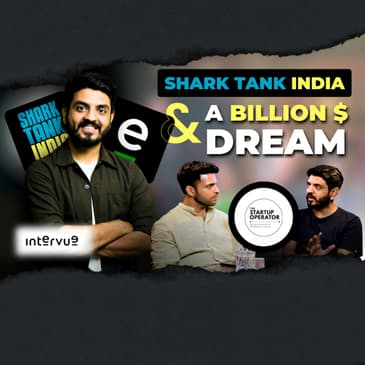

Rahul is the founder & CEO of Intervue - a hiring tech startup. He was also featured on Shark Tank India Season 3. In this episode he spoke about exploring his entrepreneurial journey, the development of his business 'Intervue', and the pivotal moments and insights gained from his experience on Shark Tank. Rahul discusses the importance of understanding customer needs, staying agile, and the intricacies of scaling in the SaaS industry. The talk also covers the cyclical nature of the recruitment industry, strategies for survival and growth in a changing market, and the impact of effective hiring. Additionally, Rahul shares personal growth strategies, book recommendations for entrepreneurs, and his vision for expanding 'Interview's services.
Topics:
00:00 Sneak peak
00:25 Introduction
01:55 Rahul's Shark Tank Experience
04:31 Behind the Scenes of Shark Tank
05:53 Family Reactions and the Pitch Process
08:36 Solving the Hiring Puzzle with Intervue
12:28 From Software to Marketplace: The Evolution of Intervue
21:39 Challenges and Strategies in the Zero to One Journey
24:41 Navigating the One to Ten Growth Phase
29:59 The Power of High-Performing Functions in Startups
30:36 The Ripple Effect of Sales Success on Engineering Teams
32:08 Global Expansion and Hiring Strategies
35:00 Navigating the Challenges of Employer Branding
37:19 Adapting to a New Era of SaaS and Profitability
44:12 The Founder's Journey: Pivots, Challenges, and Growth
46:10 Strategic Approaches to Recruitment and Expansion
49:31 Book Recommendations and Personal Growth as a Founder
52:41 Closing Thoughts and Future Plans
55:06 Reflecting on the Role of HR in Hiring
58:02 Wrapping Up: Insights and Gratitude
-------------------------------------
Click here to get regular WhatsApp updates:
https://wa.me/message/ZUZQQGKCZTADL1
-------------------------------------
Connect with Us:
Linkedin: https://www.linkedin.com/company/startup-operator
Twitter: https://twitter.com/OperatorStartup
-------------------------------------
If you liked this episode, let us know by hitting the like button and share with your friends and family. Please also remember to subscribe to our channel and switch on the notifications to never miss an episode!
[00:00:00] I was watching a picture on Shark Tank and a screaming at the screen, so that I started my life. Something like Entrepreneur Shim can be made mainstream. It's very good for development of the country itself. You have to be eyes and ears open close to the customer and hear them out reading between lines. That's how it will actually happen. Here is a founder you have to make sure that how agile can you make your team so that they keep rolling all the features for you as fast as possible now is the time for the Indian entrepreneurs to start off take the world stage. Hello and welcome to another episode of The Startup Operator podcast. We're back with another shoutout.
[00:00:30] This time it's Rahul of interview. Some of you may have seen a speech on Shark Tank, certainly one of the more interesting ones I should say and I talked to him about that experience. What are the sharks like in person? His interaction with the Aman, Deepinder and so on. And also about how he's building his business. Some of the challenges in the zero to 1 to 10 journey. How he's thinking about expanding globally.
[00:01:00] What he's doing to sort of hedge against this whole cyclical nature of the recruitment business, so on and so forth. This was a fascinating conversation. A lot of wonderful insights in here for folks who are interested in building and scaling. So I hope you like it.
[00:01:30] I hope that your idea was one of those ideas it's like hiding in plain sight because I was watching a picture on Shark Tank and I just was kind of screaming at the screen so much so that I started my wife.
[00:01:44] That this is exactly the problem that I see all around that nobody is kind of solving but we'll get to the nuances of your business, the product and so on and so forth.
[00:01:56] Before that, what was your Shark Tank experience like? I think it was pretty good. During the last three years of being a founder, I have pitched interview in front of everybody, be it customers, investors and when it comes to investors, multiple investors as well.
[00:02:13] But this was different because it was in front of the cameras and the entire country would see it. So you just have that one chance to put interview, make sure you article it interview in the right way.
[00:02:26] So it was good. It was very, very different. It was a lot of pressure as well, I would say and I would say something that was taking casually initially but when I entered the tank and how it was, it was pretty real and you know, go on into that pitch mode and there was so many camera shooting.
[00:02:47] So I would say awesome. We've had Shark Tank founders on the podcast earlier, we've had GD of VS money. Okay. Of course, I spoke to Vinay of stage before Shark Tank but he went on Shark Tank as well. Then we had Ravi of five months as well.
[00:03:06] It's quite an experience for sure. There's nothing quite like it and you know, I've been with startups for almost 15, 16 years now and I think I should credit like Shark Tank for making startups mainstream.
[00:03:18] Yeah. I mean, it's living room conversation today. One hundred percent. I totally agree. I think India is a Bollywood loving nation has been a Bollywood loving nation and I really think that if something like entrepreneurship can be made mainstream, it's very good for development of the country.
[00:03:35] It's the country itself. Right? And more and more people would want to become entrepreneurs early in their age itself, want to learn more about entrepreneurship. Yeah.
[00:03:43] And I think they're doing a great job as a show. Yeah. Yeah. I think in this, I kind of echo what Anupam of Shark Tank says that Indian engineers have shown the world that they can build and sell high class products. Right?
[00:03:57] I mean, I think now is the time for the Indian entrepreneurs to sort of take the world stage. One hundred percent. Yeah.
[00:04:03] I mean, not just from main metro cities, I've seen startups coming from very small cities as well. I personally, you know, I belong from Luthyana which is a tier two or three cities city.
[00:04:16] I've seen startups coming out from Karnal, startups coming out from very small cities as well and making it big. Yeah.
[00:04:22] So I think Shark Tank is changing the way Indian youth is thinking. So I think a pretty good show.
[00:04:28] Good show, good format from that perspective for sure. Can you give us a glimpse of what goes on behind the scenes?
[00:04:34] Like how are the sharks like in person? Right? Do you get to chat with them before your pitch or what happens after that if you can just take us through pre-event and then add the shoot and then post that. What happens?
[00:04:48] So there's no shark interactions with the shark before the pitch or even post post post. So all of the surprise that we see and all of that stuff is genuine.
[00:04:56] It's all real. You see the sharks for the first time they see you for the first time. They don't know anything before and so that's there behind the scenes.
[00:05:03] The only one minute forty five seconds or two minutes of the pitch that every product founder does.
[00:05:09] I think that's the only part that they go prepared with everything else is a natural exchange of information. It's a discussion.
[00:05:16] So that's that's how it is and sure I mean if you are selected for shark tank they call you to Mumbai in film city.
[00:05:24] The shooting happens and everything but the first couple of days is to you know just to make you accustomed attuned to how it is going to be.
[00:05:32] They don't take you inside the tank. They'll just give you a give you an overview that you will go inside the tank stand there and give your whatever pitch and discussion.
[00:05:41] But you just prepare that two minutes. That's about it and everything else is your preparedness that you've done before shark tank itself right as a founder so that some sharp thing is as real as it can get so awesome awesome.
[00:05:53] So what were the what was the reaction of your family and you know friends and so on once the episode aired because you seemed like really confident right and I mean my favorite section is where you know Vinita is asking a question and then Amman is kind of looking at her smiling that yeah this guy knows the answer to the question.
[00:06:10] Yeah, I mean first of all my family reaction my family doesn't did not know what shark tank is so right yeah my parents.
[00:06:20] I told them that I'm going to be on the show called shark tank. Most likely going to be aired so they said what a shark tank.
[00:06:27] They don't watch that and then I told them it's going to be a TV show so they were very happy that I'm going to come on TV.
[00:06:34] So my mother watched that clip I don't know maybe a hundred times so you was pretty emotional my dad was proud.
[00:06:40] It's you know beat parents so that's how it was but I think how the whole pitch went so my pitch was one and a half hours the whole discussion.
[00:06:52] So they edited down to about 15 minutes or whatever yeah 18 minutes.
[00:06:57] But in those one and a half hours I remember you know raising my hands multiple times like this hey I knew the answer let me answer and they were discussing amongst themselves that this kind of an idea where someone else is coming from an industry and taking the interview etc.
[00:07:10] And I was my hand was like this all the time so during the course of it I was like.
[00:07:17] That's why they did that portion and it came out like that so right awesome.
[00:07:22] So finally decided to take Amman's offer yeah so have you been chatting with him after that and did you go in with the sort of a mindset as to which shark would be the perfect person for you and then you know how do you see that relationship kind of growing.
[00:07:38] So yeah I mean there are asynchronous communication communications now started with Amanen team but I did not go with that mindset honestly which shark to get it that was not the intent at the first place.
[00:07:52] The idea was ultimately my idea was that can I get all of them or the idea was just to articulate into it the first way I was not thinking about funding itself per se so I think from from that perspective.
[00:08:06] I think it was it played to a favor only yeah so folks if you are watching or listening to this podcast you should definitely check out the interview episode on on Shark Tank it's fabulous.
[00:08:19] I mean truly like one of the more interesting ones that I watch for sure and I've binge watched pretty much all of the episodes at this point right.
[00:08:26] Thank you I think you're too kind no it's my it's my favorite I will say right so top three along with the Jogadu Kamlesh one for sure right so okay.
[00:08:35] Yeah yeah so let's get out of the problem that you're solving with interview right and like I said I mean I think it's one of those problems that's so obvious that's hiding in plain sight that you wonder why there aren't like four or five other solutions for this right.
[00:08:49] Talk about you know you being an engineering manager seeing this problem first hand and then decided to build something like this right so how do you go from idea to product to company.
[00:08:59] God so when I was an engineering manager we were taking a lot of interviews hiring for more than 200 plus folks and my weekends would go into interviewing into interviewing weekdays would go into building the product because it was a need of the hour.
[00:09:12] And it was my team itself that I was building so you know I had to show up with on the weekend to take weekend drives but you know when after a month when we were gauging how many candidates actually made made it to my rounds and how many got selected.
[00:09:26] There was an escalation that happened in my company and they said Rahul maybe you're rejecting Andrew's left right and center because my selection ratio was one in 30 and 30 candidates who would come to my round and I would take the final rounds almost.
[00:09:39] I would only send one ahead and they were like what's going what's going on maybe you're select just rejecting people and it was like the sourcing sourcing quality means candidates were actually coming to my round they're not up to the mark
[00:09:53] and maybe that needs to be improved and you know the HR team had no clue they said we never got this as a feedback in the problem actually now that we were able to narrow down to was engineering team after taking interviews they don't submit a detailed parameterized feedback which cannot be done also because they don't have time they'll hop onto another call after taking the interview round right.
[00:10:13] So it became a big problem and I was like oh my god HR team does not even have a feedback loop and my engineers are spending maybe an hour on and a half interviewing a candidate and ultimately rejecting them so and there are so many hours that are going into it so that was the first you know big thing where we thought maybe you know product is needed.
[00:10:35] You know before that we would send assessments to a candidate which offline tests that they would do and we would get lot of applicants online and a lot of you know companies that would support us in getting applicants as well we call we call them third party vendors right we used to go get a lot of applicants from them we used to think that if they have you know crossed a test a written test on an online test.
[00:10:55] They might be able to crack the interview round but surprisingly if ten candidates would cross an assessment stage nine out of them would get rejected in the interview stage so they both kind of did not complimented each other and we thought what's even happening now by the nature of the product itself the nature of how assessment as a product is it allows you to have an environment where you can fool around the system you can cheat the system there are ten different ways to cheat right and I when I can go to charge you day and ask you to be simple question will give me the answer and I can pass that return.
[00:11:25] It's only going to get easier and easier. Yeah exactly and then you know interviews the real test where whether can you clear the interview round or not and I was like this problem is anyway going to increase even with air tools in place right and we thought the first year was we never thought that we'll get interviewers on board to take interviews we thought let's build a software to take interviews this software what it will do is normally if on a zoom or a meal call I am taking an interview round in one month and a half hour can this software bring it down by 30%
[00:11:54] and how we would do that is by bringing all the tools to take an interview in a single roof and it would have a code editor compiler way to run you know run the code see the output way to see if the candidate is trying to cheat the system as well everything it baked in right we launched that software we had about first year 30 to 40 customers all of them said how we don't have bandwidth to interview
[00:12:13] and this is where I tell everybody that you have to be eyes and ears open close to the customer and hear them out read them between lines and that's how interview actually happened and we built a marketplace of interviews around our code product to take the interviews yeah so that was the whole thing.
[00:12:28] Oh, so you start with the software first right and then added the whole marketplace element afterwards.
[00:12:34] I mean, I think recruit recruiting in general right I think it's one of those easily defined problems but so hard to solve because I see that function of you know primarily sourcing an assessment yeah sourcing I don't think you can do much right and the supplies what it is yeah really so the assessment part where you identify someone who relevant to you and particularly you know maybe someone who is overlooked by your typical parameters that is where the biggest alpha is yeah right yeah exactly I mean I really think
[00:13:03] sourcing today is done by a lot of platforms I would if I were to name some of them maybe LinkedIn indeed no create any any other job board for that matter LinkedIn being a social media platform you can source from there as well but I really think if you are sourcing you don't have a way to tell if the candidate is actually good or not because today most of the sourcing is you typing in skills key doing a keyword search and short listing a bunch of candidates so they look pretty much similar to the other right correct exactly so if
[00:13:31] if and today you know I can literally on on this podcast as well create a prompt go to charge the BD and I can ask charge you to create a perfect online profile and do that recruiters sitting in any company for short list that profile and say oh look I found a perfect candidate candidate might totally have a fake profile at the end of the day so the problem is ever increasing so the real alpha is that can you accurately test a candidate and tell whether they are good or not and nothing nothing becomes you know closer or more accurate
[00:14:01] to testing ended in an interview round a real interview round in a real environment so that was the objective right so this whole building that marketplace element as such right how did come together you know I mean I'm sure that you know when you kind of suggested this to the team even though it was like let's say an organic thing right that people were actually saying that you know this was a problem
[00:14:21] it might have been you know deviation from what you originally conceptualize this as right which is a software company in bits and bytes of business right we're going to sell product not necessarily you know have that whole people element yeah so I tell you how it so when a lot of companies started to come and say Rahul can you give us interviews who can come and take the interview round on the on behalf of us we don't have time to interview because there are so many others that we are rejecting and we would rather want our team to focus on the code.
[00:14:50] The idea was if I start giving them interviews this will become an operationally heavy company and I don't want to build one this is how I thought about it yeah and I had this fear that there are so many moving pieces when you build an operationally heavy company that if you don't get the right your entire company you know you'll be doing my your own grip right so that was a whole thing but I that thought did not leave my head I kept whiteboarding kept scribbling
[00:15:20] around two to three months subconscious thinking about the whole idea and to a point where I had whiteboarded the whole journey of the idea if I were to ever ever implemented before I actually went to the team with the idea.
[00:15:31] Now the idea that was not ready to leave my head was can this be a paradigm shift like can I make interviewers who are taking interviews for free get used to the fact that now they will be paid for every interview and because build an incentive and that basically yeah I mean if an interviewer can make
[00:15:50] money out of interviewing itself it will be a huge category generating product not only that it'll bring about a behavior which you know can't be reversed because now suddenly they've suddenly if you're taking like 100 or interviews and you have paid for you made less or two out legs if somebody asked you to take an interview for free you won't do it and that is what did not leave my head and I was like if this can become a paradigm shift in the world a company can become so credible which is sitting on data of millions of candidates that they have interviewed.
[00:16:20] And they can change hiring forever and that did not leave my head and that is what forced me to execute the whole thing.
[00:16:27] So I'm sure that you know you would have pushed it to the first person that you thought would be most likely to sort of bite into this right what was that reaction like right how do you process it and how do you actually convince people or did it take a lot of convincing actually right.
[00:16:41] I think the first customer was very easy to get but when we started building up GTM itself around it that was very hard yeah so the first customer was up stocks they came in the game on board very early they said we have a week and try to take can you take like 180 or 80 to 100 interviews over a Saturday for us it was pretty easy to do I got like 20 30 interviews to take interviews for up stocks they were pretty good they are all my friends you know this is how it all started
[00:17:10] they are all working with top notch companies and the drive was I would say the success rate of the driver's 90% and we were like oh this is that moment and we're a success rate I mean you may this is where we interviewed about 80 candidates from up stocks gave 80 eight yeses out of the 80 that we interviewed seven were offered.
[00:17:26] Oh wow yeah and then imagine up stocks now only had to interview eight candidates as opposed to as opposed to 80 right so interviewing eight candidates happened over the period of you know next couple of days when we gave the short listing and up stocks rolled out of seven offers right and we were like okay maybe this is cracking the market and up stocks paid paid us good amount of money for that and then we started replicating the whole model but when we started replicating it a lot of problems came in I remember down to a lot of engineering folks from the country which said oh you know what my name is
[00:17:56] my interview processes my baby why should I give it to you you are telling me that you will do a better job at interviewing than my own engineers and I mean lots of you know I would say reputels were there a lot of a lot of we had to convince a lot of people even educate them on the overall idea
[00:18:15] that you're candidate itself who's getting interviewed by a third party engineer might not the third party engineer will not approach your candidate if you like your candidate so the whole thing and we have to build a lot of guardrails around it and educate through content etc so the first year I would say as easy as it was to reach a million it was very very hard to educate the customer itself yeah so I mean I would I wanted to zoom out a little bit on this context and just
[00:18:43] what are the things that you do did to sort of you know standardize a GTM around it right because again this is a solution that doesn't have a comparable like no one's really searching for it out there yeah I'm going to interview your shy yes right how do you build a GTM around this I mean I'm not sure if I can tell everything but there was certain you know you can still drop others with people who were looking out for assessment solutions
[00:19:12] and can we now go to them and tell them that we are here to bring you more accurate assessments which are exponentially better and how we do that is I would simply ask them what is your hit ratio with the assessment they would say one in 10 I would say what if I give you a product which has seven in 10 hit ratio one of the things right that's how we started educating them second way was you know literally going outbound
[00:19:33] and telling them the idea that and the core value of itself that I can accelerate your hiring you don't have so much panelists I'll get you panelists who are equally trained but you know when you're talking to engineering managers they want to see substance more than just talking right so one thing that was baked into our product itself was our product that we had made but the data that's around in the product data around recruitment for example today if you have to have an Android engineer I can show an Android engineering manager 20 different parameters on which is the same as the other one
[00:20:03] is that Android engineers should be assessed and those parameters do not exist in their own organization and that is where the win is that is where the motifs so it took us some while to build those but that is how it was so initial GTM strategies were all around you know going to players where they were using assessment products but might not be working around working for them.
[00:20:23] They were using they want to hire faster but they had the initial team that they had they want to make sure the team was focusing on product and you know they bought the assessment products for that only so that their team do not have to screen so many candidates but it was not working out for them.
[00:20:37] So this is such a important lesson in the right I mean because often people get hung up about the differentiation because they think that that as a secret sauce right and they you know go on about it and then wonder why people are not really catching that right but rather what I feel is like
[00:20:52] you know find the closest proxy to that right which could be in your case like you know improving assessment and so on right and treat the secrets as sauce as what it is.
[00:21:03] I know what you said actually you know as a mental model can you can you find something in proximity and we follow this rule everywhere if I have to hire the next person in my team I would see what is the closest in proximity if I have to launch the next product feature I would say what is the closest in proximity rather than completely.
[00:21:21] You know going 90 degrees tangent tangent I won't draw that I would say close I would rather follow a graph way to look at it go closer to the proximity and crack the problem I think that's the right way whenever you are.
[00:21:35] Clueless about it proximity it will works really well absolutely absolutely let's talk about a few more of your of the challenges you kind of encountered in the zero to one right.
[00:21:45] Yeah you know obviously executing on a in a space where there were no similar comparables maybe one right anything else that you could think of in the zero to one and how you kind of overcame it well it was pretty hard when we launched the software itself people did not lot of people did not want to on board the software because they were like okay short the value
[00:22:06] of the air but you know we have Google means and we will be a bit of a we have teams like fatigue right I mean again like this is a bit of us one more tool one more
[00:22:15] to do interviews or we have office we'll suit we have you know Google suit yeah why would we on board your tool so we have to build a lot of things around it just to make sure
[00:22:25] product is better but you know to make an exponentially better product it has to add exponentially better value as well so you know one of the things that we learnt in the very first year was just
[00:22:36] take closer to the customer develop with them because that is what is going to be zero once journey had more tech more challenges especially the first year team building was a big challenge we were you know only a team of two me and my co founder and we were
[00:22:47] holding the whole product so it was very hard to convince somebody to join a two-wheel company and you know my style of hiring is I would never tell them that we are we raised a seed fund etc etc
[00:22:56] my style of hiring rather is that can the person come for us are you excited by the problem and the people are you excited by the product that we're building the vision
[00:23:03] because if they're coming for the funding etc you know that's the mind not stay for that long the wrong motivation yeah correct so it took us some time to do that
[00:23:12] and I also found out that early stage start up hiring is nothing but selling so yeah I mean you sell a product that does not exist you sell a team that does not exist that you will build you sell a culture that they will come and build right so
[00:23:28] you have to articulate it right so that first year was all about that first year was also a lot around making sure that can we can we iterate fast I think that was very important lot of people and I've met a lot of people from very strong backgrounds but they are not able to launch their product on time
[00:23:49] and when I say it rating fast it's not just launching the product it's about getting that feedback loop from the customer ready implementing that feedback and you know making sure feedback is launched the the feature is launched that was needed
[00:24:01] and then measuring and then continue to repeat the cycle how now here is a founder you have to make sure that how agile can you make your team so that they keep rolling out features for you as fast as possible
[00:24:14] and that is when you know with every new feature you know customers will give you more insights more insights and you will eventually you know increase your chances of going to a PMF so I think you know first year was all about that it was it was it was a pretty hard pretty hard year but
[00:24:30] and we worked more than you know 17 18 hours everyday as well but very very crucial here for our foundation yeah yeah
[00:24:41] in this one to 10 sort of a journey that you're in right I mean they typically call it like the value of death yeah in sas terms right I mean a lot of folks kind of stagnate for variety of reasons right maybe they don't have PMF and you know PMF again as we mentioned right I mean
[00:24:56] you know last maybe maybe last you may not be the right comparison but otherwise I mean there was there was a point where you know funding kind of made it look like someone had PMF but it wasn't the case right and you know today we are kind of seeing whether
[00:25:12] you know there is there is a reality on that front or not yeah again yeah actually on on that specific point on PMF right how do you kind of look at it because I'm sure that you're adding layers to your product and so on and so forth
[00:25:24] yeah right you start off with one thing then you added the whole marketplace thing yeah then I'm sure that you know you're standardizing a bunch of things and let's say interview parameters yeah so on and so forth maybe you know the next 18 months
[00:25:35] you'll add something else and so on yeah so how are you measuring PMF relatively so I think it's an ever evolving definition yeah honestly depending on the stage you are in but at the initial stage itself I would say
[00:25:48] do you do you sort of have a have a crazy pool where customers are asking for more now how much of your product roadmap is being defined by your customer in some sense yeah I mean yeah maybe you can define it like that but his his what I told one of my teammates
[00:26:06] like if your customer is using a product and they're cribbing about it that does not mean they don't like the product or your product does not have PMF you have to read between lines they're
[00:26:17] cribbing because they want more yeah that means your product has hit something well and you need to understand that so if and if that you can replicate that across multiple customers and you start to get a pool
[00:26:27] can you now replicate that pool in terms of revenue and that's when I think and it's a crazy pool it's not like one or two customers have said it and you would call it a PMF no it's not
[00:26:37] it's like a crazy pool where you are continuously you know you made a made one phone call your first sale happened now you're able to replicate the same thing let's say across the next 50
[00:26:46] and you're able to and again this 50 is not a magic number it depends on what tickets as you're selling what sort of revenue you are doing what sort of model you're in so many so many things factors are there one
[00:26:56] thing that is going to be common is do you have that pool from the customer that's that's what I would define as a PMF right yeah and you know you achieve PMF
[00:27:05] in stages right I mean as you mentioned it's kind of a continuous journey and this is kind of it you know affected by the externalities also right
[00:27:12] and the industry the market in which you operate and how that context changes as well so in this one to ten journey I think the other thing that becomes important also is that you know these different functions kind of developed by themselves right maybe
[00:27:26] speaking about like setting up a marketing function for instance or setting up your own HR and TA sort of a function and so on when you go from okay you know what let's just hire this one person to solve that
[00:27:37] yeah to actually thinking that hey I mean you need you need a function yeah not just a person yeah how are you thinking about that I think it's very important I think it depends
[00:27:47] from company to company for for our case I think when as a founder you can't do everything I tell everybody that you are as good as your team even if you're a great founder
[00:27:58] you have an average looking team will be an average will have an average outcome so in that particular case I think it's very important to to sure have a function replace you do a better job than you and you know you can further power it with
[00:28:13] O.K.Rs and KPIs right with which you can track their performance and I would say you know you rightly said that 1% versus a complete function where can you build a flywheel around the things that you were doing alone or maybe
[00:28:26] 1% yesterday can you build a flywheel around it tomorrow and what kind of team members do you need and that is where I really think early stage startup hiring is very very crucial because depending on who you bring on board not only impacts your
[00:28:39] unway they the impact of growth as well and I I tell everybody that you should bring bring in high agency people who high and high agency has a very fixed definition that people who can take charge without being told to take charge
[00:28:54] in a start-up that matters a lot and the way I look at the framework is if you bring in that one high agency people who can come and lead that function that high agency person will bring in more high agency people that's one but if you have enough in
[00:29:09] one function depending on the team size especially let's say you are in your one to 10 journey itself early and you're just starting from that one initially if you have within one functional role if you have two or more
[00:29:21] agency people I think that team is going to kill it. So yeah so that's how I look at it. So I have a sort of a simple razor that I I measure this whole scaling journey as well right I personally feel if you have two
[00:29:34] functions right that are phenomenal right the rest of them just catch up yeah rest of them catch up to that level right benchmark is made
[00:29:42] benchmark is made because oftentimes what happens in most platforms that you see especially in this one to 10 is there's one function that's kind of taking the load for
[00:29:51] everyone else right whether it is products saying boss I mean I've shipped so much and go and sell right or sales saying hey we have committed so much and where
[00:29:59] the hell is a product yeah so in those situations I mean it becomes like as you know all the great work is getting cancelled out yeah
[00:30:07] but if you just have two functions right that are like kicking ass yeah I mean the rest of them just like kind of catch up very rarely I've seen like you know some other
[00:30:17] functional scrub to that extent key like you know this will go berserk but even when that happens right you as a founder have an
[00:30:24] objective reality that you know hey these guys are here yeah why is let's say HR or TA or somewhere yeah you know where it is your
[00:30:32] view point and your comparison point changes right and I think you mentioned it right I remember the second year of interview and we almost were about to hit a
[00:30:40] million and it was going so fast that we were closing these left right and center and that's what actually PMF looked like for us but when we
[00:30:47] were closing those deals I remember our engine team was so pumped up because the sales team was just killing it right and very
[00:30:53] lean team I wasn't the sales team there were couple of more folks and they were just killing it and remember you know engineering team won't go
[00:30:59] home they would just sit there release features because they were like okay we are going to go into bring build something that you know because it
[00:31:06] is happening so fast that you know they won't go home they would just continue to iterate on features make it better they would come in
[00:31:12] coming with more recommendations and you rightly pointed out that if you know you have one or two functional rules performing at that level
[00:31:18] that benchmark is already said and for early say startups because the visibility is only across so many people you know people
[00:31:25] have a reference point and they they start up leading themselves because then it's about pride right then it's about like hey what is the
[00:31:32] kind of impact I'm having yeah and that's just a different trip by itself you know it's not people who are just clocking the hours to do some
[00:31:40] work and then get a paycheck at the end of the month yeah those are like I mean at that at that time I mean that the
[00:31:46] high is pretty amazing yeah you know interview obviously is going to be global or I'm sure that you know you might have
[00:31:54] had interest globally as well right and I think I don't know deep in there or someone mentioned this on Shark Tank also I
[00:32:00] think even P.U.s also kind of agreed that obviously you know I mean if it can work here I mean technical is such a thing
[00:32:06] that it can work globally as well right yeah what are you doing to kind of scale globally so I think hiring parameters
[00:32:13] do not change that's the best part about it even if I'm going to Australia today or New Zealand tomorrow or you know U.S.
[00:32:19] Hiring parameters to interview a front end person or an Android engineer or an iOS developer would stay the same and because
[00:32:27] if you see why it is so if you see it principally most of these frameworks these new languages are developed by
[00:32:34] you know the top tech companies the big tech companies right and then remaining people companies just adopt use it and they
[00:32:42] higher talent correspond to that that is why you know the parameters don't change that is why if your product basics around
[00:32:48] that those parameters are the same you can easily scale there are different challenges to it I think scaling
[00:32:54] into the globally as other set of challenges I think the kind of problems India has U.S.
[00:32:57] is a geography does not have that those sort of problems maybe Australia is a geography and Europe is a little bit more I mean
[00:33:04] I want to double click on that specifically because the way I would look at it is that if interview time here is
[00:33:09] scarce it must be like a lot more scarce with a country that is one fourth our size correct yeah I mean that's
[00:33:15] this this one we do look at it but the other way to look at it is also that U.S.
[00:33:21] is pro productivity and if you see the kind number of productivity tools that are actually that
[00:33:26] actually have a good product adoption in U.S. versus India you will see an exponential difference U.S.
[00:33:31] is you know way ahead right now even in adopting productivity tools today so they are pro productivity as a
[00:33:37] as a workforce right so that is where I think interview does have a strong mode but if I
[00:33:42] if I if I tell you more about why U.S. is very different problems is competitive India India has this offer to join
[00:33:48] ratio which is like horrible right I mean we should talk to bigger companies they would also they
[00:33:52] you know what study person like Anderson declining if I go to companies brand new brand names are not very well known
[00:33:57] in the market I mean they are sitting at if they would offer 10 people only three four would join
[00:34:02] yeah it is that bad U.S. does not have this problem I think second only to maybe like a customer
[00:34:08] turning I think would be like a great candidate you know ghosting you correct that happens
[00:34:14] it's just reality yeah one of the customers coming up to me and saying can we how can you improve
[00:34:20] improve our brand visibility I was like maybe I can you know put you forward in front of the
[00:34:25] candidate well etc etc but your brand visibility is actually you and what you do to do
[00:34:29] that is what will improve it it might be your overall engine team now you know are they
[00:34:35] are they are they tech savvy enough are they writing about your engineering practices outside on the internet
[00:34:40] I think that's very important that that is what will help you attract the right talent it's nothing like
[00:34:45] it's nothing like a platform like us can improve your brand visibility and I don't think any platform can do it
[00:34:50] even if you know LinkedIn you can go go go ahead create a company page
[00:34:54] but if you don't utilize that functionality itself well as a brand you don't have that visibility as a brand
[00:35:00] so yeah no so this is you know this is a problem that I've been working on I've been like reflecting
[00:35:05] upon for the last couple of months right which is employ a branding specifically and here
[00:35:09] I mean if you look up all of the available content on this right it's all tactical right
[00:35:14] I mean LinkedIn page and then okay you know what you know organize some mixers and get people to write
[00:35:19] and so on and so forth I feel like you need to find your authentic story right because
[00:35:24] the problem is that everyone who's doing all of those things the LinkedIn page the social media the mixers
[00:35:31] and so on and so forth it's a dog fight out there right I don't believe that I can do it better than
[00:35:37] razor pay for example right I don't believe I can do it better than Microsoft even right so how am I going to
[00:35:42] differentiate with them right I mean the only the only way I am going to stand out from this is by having an
[00:35:47] authentic story yeah and I believe that every startup has an authentic story 100% right on the
[00:35:54] engineering front right it's something you you could have solved right I mean in you don't
[00:35:58] have to be like cutting edge AIR and like blockchain and you know whatever the hell on top of that
[00:36:05] right I mean you have an engineering story right and you have to identify a kernel of that
[00:36:10] story and then amplify that through all of these different means and so on yeah and believe me no
[00:36:15] matter how unique that story is right there are people who will be excited by that yeah if
[00:36:22] anything I mean they will be excited about the fact that hey I mean they're being authentic about it
[00:36:26] yeah right so I mean two things to that right I think LinkedIn pages interview how
[00:36:32] interview would make your brand look like in front of a candidate or how an
[00:36:36] ocrypage would look like for you these are all mediums to express your thoughts right and you
[00:36:40] rightly said that you need to have your own unique story or you know I'd like to call it
[00:36:45] that do you know your vision mission and your tagline today man can you build a
[00:36:51] storyline around it or do you have an authentic story where you know you can then carve out a
[00:36:56] vision or a mission statement yeah anyway I mean I think it's all about making sure
[00:37:03] that you don't use AI ML and a lot of those jargons because your audience is not going to understand
[00:37:08] it a lot they're going to connect to a story connect to a problem statement that you might be
[00:37:12] solving and how you're positioning yourself Matt Matt does a lot and everything else is just
[00:37:15] mediums to express that yeah yeah so let's talk about you as a founder right I mean
[00:37:20] uh you're building at a time when there's been a bit of a reset inside right
[00:37:25] um we're having to get used to things like profitability yeah right I mean I'm sure some
[00:37:31] old school folks are looking at us and laughing at this point right what are these guys
[00:37:34] even talking about right but yeah it's not uh you know go for a broke growth at all costs
[00:37:40] kind of an environment right now right I mean we're looking at sustainable growth
[00:37:44] um profitability and so on and so forth how does that weigh on your mind when you're
[00:37:49] going out there and building your stuff I think it's a great mental model to have
[00:37:53] honestly I think startups success sure you have to do a lot of things to get it right
[00:38:00] there's a huge equation but timing plays a huge role and I think we are sitting in an
[00:38:04] industry where timings I would I would say slightly off because of the kind of market
[00:38:08] it is it's not really booming especially hiring market right you see a lot of media
[00:38:13] read a lot of media articles you would see your big tagly big tag is laying off so many
[00:38:16] layoffs happened and they'll be analytics around it and what so on and so forth.
[00:38:19] So in investor sentiment not only that a lot of companies would it goes for a toss
[00:38:24] but a lot of companies would you know freeze their hiring budgets so you know
[00:38:29] I told everybody in our organization had the market not been this way we would
[00:38:34] easily be you know sitting north of we would already have done R5 to 1 to 5
[00:38:40] already and that would have happened pretty fast for us had the market been as good
[00:38:45] as it was in 2022 I'm not even talking about 2021 which was completely an
[00:38:48] outlier here right but I really think as a as a mental model I think it's very
[00:38:52] important to think profitability from day zero and when I say profitability is
[00:38:56] not like your profitability will every month I don't know totally depends on your
[00:39:02] startup or other kind of business idea you have but can you be can you just
[00:39:06] make sure that you're thinking on those lines all the time and you are optimizing
[00:39:10] optimizing your company around it optimizing your OKRs around it depending on the
[00:39:15] stage you are in and making sure you always have a lead team you don't spend on
[00:39:19] spend on OKRs that are not needed you don't spend on KPAs that are not needed
[00:39:23] and they are on top top two or three problems only that you have to go after
[00:39:27] and I think there's an interesting mental model definitely I also think if the
[00:39:32] market is a certain way and you are still in a mindset where you are growth
[00:39:36] at all costs it won't is not going to get you anything because you lend a
[00:39:40] burning more money and the outcome is going to be as as small as it was
[00:39:44] going to be had you thought about profitability first so I think I think
[00:39:48] definitely a very from a foundational level very good model to look at when
[00:39:53] you're building something yeah just a small tangent to kind of address this
[00:39:57] whole growth at all costs thing right I mean I think post 10 2010 right you
[00:40:03] know I think everything was modeled around this Uber slash whatever you know
[00:40:09] through money through money grow yeah basically winner takes all kind of work
[00:40:13] and what we've realized and perhaps 2021 was a peak of that what we've
[00:40:17] realized is there aren't any winner takes all markets right where you just go
[00:40:20] and get market share of like 60% or whatever and then sit on it and then
[00:40:24] the squeeze your customers to improve your margins and what that doesn't
[00:40:29] happen especially in SaaS right so it's like so quickly commoditized yeah there are
[00:40:34] 50 tools for everything you can think of yes right so building a sustainable
[00:40:38] business is the only way out right innovating on product and obviously like
[00:40:42] great customer delight I would say not even service right but you as a founder
[00:40:48] right I mean like at every leg of the journey you'll have to sort of reinvent
[00:40:53] yourself yeah you don't have to just reinvent yourself you reinvent the whole
[00:40:56] company yeah and you were talking about Uber and all these companies I really
[00:40:59] think companies are a big today they've gone through this cycle before
[00:41:02] this is it's not like 2023 2024 has not happened before yeah yeah
[00:41:06] yeah 20 2000 if you remember 2016 in India was a certain way where a lot of
[00:41:11] hyper local startups all of them and bus they yeah they were all you
[00:41:15] know they went under yeah and then 2009 was a certain way and before
[00:41:19] that you know dot com and everything so the cycles repeat yeah maybe you
[00:41:23] know twice in a decade it will come yeah and every company who has made it
[00:41:27] big has gone through this cycle most of the companies I wouldn't say every
[00:41:30] company it'll be a wrong statement to make but most of the companies that are
[00:41:32] made to be have has gone through this cycle and it's a two you know test of
[00:41:36] you being a founder I think you as a founder you really go into a cockroach
[00:41:40] mode where it's all about survival etc and sure while you are surviving
[00:41:45] I think you saw those seeds of success as well because now you're thinking
[00:41:49] about your survival instinct increases and you're thinking about more ways
[00:41:53] to you know make sure your product is relevant to the market still yeah
[00:41:57] and ultimately when the market comes back when it revives you have more ways
[00:42:02] your customer has more reasons to buy your product so I think that's very
[00:42:06] important and your second question was how do you kind of reinvent yourself at
[00:42:10] every leg of the journey because I'm sure that you know you were a certain
[00:42:14] type when you started out yeah right and in this one to five or one to ten
[00:42:17] journey you will have to be a different person right what are those things
[00:42:20] that you're like organically or in a noganically trying to acquire and be
[00:42:24] different I was very different when I was not a founder like I was an
[00:42:28] engineering manager and my first year as a founder would be taught me so much
[00:42:31] that I could not gather in the last I would say 80 years 90 years as an
[00:42:35] engineer it was very different and different set of challenges so my whole
[00:42:39] idea was how can I stay at the top of my game there were two rules that I followed
[00:42:43] religiously one was I have to live and breathe my numbers and stay closer
[00:42:47] to the customer right so that's my first rule stay closer to the customer
[00:42:50] and see if it is translating to numbers I have to live and breathe my numbers
[00:42:54] if I'm flying I mean a plane I'm in an airplane mode I would open my MIS
[00:42:57] and just go through it and see what are the things that I might have missed
[00:43:00] so that's my first rule second rule is because of limited time and
[00:43:04] limited resources there's only so much I can do so where can I go and acquire
[00:43:08] more knowledge so I started reading books and books are all around
[00:43:12] business I might have in the first year read about more than 50 books
[00:43:17] all around business and started to apply them because in 0 to 1 you are
[00:43:22] doing everything to get to that one right so I would read a book and next
[00:43:26] day I would change my gdm strategy or look at my MIS and maybe I'm doing this
[00:43:30] wrong so I would just question and I think it's very important mental model
[00:43:34] that I have for this to reinvent is I am very optimistic but at the same
[00:43:39] time I am also uncertain that what will happen tomorrow who what is the
[00:43:43] next thing that will stop interview from growing and that is what you
[00:43:48] know make sure that I'm doing repeating these two steps over and over again so
[00:43:52] it helps me reinvent myself and if I am reinventing myself it helps me
[00:43:56] look at interviews and org very differently all the time and I would say
[00:44:00] in the last three years although we are still early stage interview as an
[00:44:03] org and how it operates has changed I would say there's a drastic difference
[00:44:08] from first year to the second year and has changed by 4 or 5 times easily
[00:44:12] what was the most difficult challenge for you I think doing doing a pivot
[00:44:17] was very very hard finding those first set of interviews and getting the team
[00:44:22] to hit this we were building a software now we're certainly on demand interview
[00:44:27] platform so doing that pivot was pretty hard there was lot of my team came back
[00:44:30] lot of my sales folks my engineering folks came back and said he wrote why are
[00:44:34] we not doing that that's more scalable lot of there was person my team would
[00:44:37] literally came to me with a time analysis and said that it's as big an
[00:44:42] opportunity as you know your software was so why are we doing this and all of
[00:44:47] that so my homework was done pretty well so I could answer all of those
[00:44:50] questions but it was a pretty hard hard challenge not just from a you know
[00:44:54] structural standpoint it was more psychological than then structural
[00:44:58] because first of all is a founder you have a higher team who came in for
[00:45:03] a certain vision now you're pivoting and changing the middle vision midway
[00:45:08] when they're all you know hustling grinding for 12.5 hours every day
[00:45:12] and you you just change them vision so you have to make sure that you
[00:45:15] articulated right you articulate it to the dot and you're fully transparent
[00:45:20] with it I think that's very important you're laying down that foundation I
[00:45:23] think that was pretty hard to do a second thing that was hard to do was
[00:45:27] you know we went from a phase where we test almost 2 million in revenue
[00:45:31] but then it dropped because of the way market was and then it started
[00:45:35] rising again but that from the drop to that rise there was a dip and
[00:45:39] that dip was not like for 2 or 3 days it was for good 8 9 months and
[00:45:44] in those 8 9 months we had so much to figure out we were like okay it's going
[00:45:47] down down how much down will it go and we were acquiring customers but
[00:45:51] suddenly ticket sized sizes shrink and a lot of things happened in that
[00:45:56] and you know in the dip itself overcoming the dip and running fast
[00:46:00] to the dip so that we go to the next next stage was pretty hard so
[00:46:04] that mindset strong mindset was pretty important there.
[00:46:07] Right actually let's let's talk about that right I mean I mean
[00:46:11] recruitment is cyclical yeah I mean it is everyone hires in great
[00:46:16] numbers and then of course I mean you know any time the market turns
[00:46:19] and the first thing people look to optimizes on the people costs right
[00:46:23] yeah and you know every year or so I mean the you know the pink
[00:46:28] papers kind of published you know how many people TCS is hiring or not
[00:46:31] hiring and so on and so forth as you know everything is downstream
[00:46:34] from that right basically in terms of demand yeah how are you
[00:46:38] looking to hedge on that. So first of all there are 2 mental models
[00:46:42] that I have and which are also true back by data one is sure
[00:46:46] first mental model is recruitment is cyclical for sure but can I make sure
[00:46:51] that in the nitty gritty scan I carve out a gtm strategy where it is not
[00:46:55] cyclical because not cyclical everywhere. It's like it's like saying
[00:47:00] that maybe if I just compare Uber right for a second with this sort of
[00:47:05] analogy I would say people at a real decision or bus stands would
[00:47:10] or airports would would request more Uber as opposed to or maybe
[00:47:14] certain hours would have more Uber requests etc as opposed to maybe
[00:47:19] 3 city for that matter so Uber also has their concentration where
[00:47:23] you know maybe 80 or 90% of their revenues would be coming from.
[00:47:26] So it's more it has more depth to it than just a statement where we say
[00:47:30] recruitment is cyclical I think it is cyclical in some companies
[00:47:33] but in some companies if you go you know higher up in the hierarchy
[00:47:37] companies like Accenture where you know the iteration itself is 10%
[00:47:40] and if you stick 10% of Accenture it's enough hiring that they're doing
[00:47:43] right so you have to just identify from a gtm perspective that's one
[00:47:46] right the second take is a founder that I have of this is I really
[00:47:51] think that in any market you have to identify certain parameters
[00:48:01] basis which and we can go all technical about it basis which you define
[00:48:05] your right customer right and you have to identify that by staying closer
[00:48:09] to the customer itself. Now if if you think your product or your
[00:48:13] product or your product or if you do not have an offering is maybe
[00:48:17] time bound or you know kind of need based etc etc and you might not
[00:48:22] be able to get perennial revenue out of it I think you need to be closer
[00:48:25] to the customer and develop those features for them which can make it
[00:48:28] perennial ultimately because maybe your your form of feature can be a
[00:48:32] great acquisition bit and your customer might stay for something else
[00:48:35] but you have to identify by staying close to the customer.
[00:48:37] So yeah I mean I mean that's my take on it.
[00:48:40] And that happens, I think, sort of organically as well.
[00:48:44] I mean, if I look back at our own journey
[00:48:47] over the last six, seven years,
[00:48:48] I mean, it's been pretty much like that, right?
[00:48:51] You carve out a little piece of the market
[00:48:53] that is underserved and then expand from there
[00:48:56] and that argument you can make for pretty much any successful
[00:48:59] or scaled company for sure.
[00:49:02] Yeah, I mean, there was a code that I read somewhere
[00:49:04] that said, if you're building everything for everyone
[00:49:06] before building something for someone,
[00:49:08] you'll end up becoming nothing for no one.
[00:49:10] Yeah, so you have to build.
[00:49:11] It's pretty apt.
[00:49:12] Yeah, so you have to start for a very specific use case
[00:49:16] and then slowly and steadily expand
[00:49:18] when your resource bandwidth
[00:49:19] and so many other factors allow.
[00:49:21] If you're doing it all,
[00:49:22] you will not end up becoming a product itself.
[00:49:25] You'll just end up becoming maybe a shop
[00:49:27] which is selling all the things
[00:49:29] and not doing anything well.
[00:49:30] Right?
[00:49:31] So yeah, you mentioned 50 plus books and whatnot.
[00:49:34] So we ask all the founders who appear on the podcast
[00:49:38] to give their recommendations.
[00:49:40] What would your top three or top four books be?
[00:49:42] I think the mom test is a great book
[00:49:44] because very first book that I read,
[00:49:48] I would never forget it
[00:49:48] because that is how I landed my funding as well.
[00:49:51] It taught me how powerful cold emails can actually get.
[00:49:55] So mom test is a great book.
[00:49:56] It teaches you how to talk to a customer properly
[00:49:59] and how to read between lines.
[00:50:01] The sense of the book is that if you go and ask your mom
[00:50:04] that are you doing good in your life
[00:50:06] or are you good looking, et cetera,
[00:50:07] she'll always say yes.
[00:50:08] And that's not how you talk to your customers.
[00:50:10] So that's the sense of the book.
[00:50:11] It's a pretty good book.
[00:50:13] Pretty, very few pages.
[00:50:15] Because someone who's an everyday leader
[00:50:16] would finish it in two to three hours only.
[00:50:20] This is a good book.
[00:50:21] Second book that I would recommend
[00:50:22] is psychology of money, pretty good book.
[00:50:24] And that is what helps you understand
[00:50:26] the mindset behind money.
[00:50:29] I think it's also at first start of founders
[00:50:31] because ultimately we all run behind value generation.
[00:50:36] And if we are all running behind value generation
[00:50:39] that book has very important takeaway
[00:50:42] where they've analyzed generations over generation
[00:50:46] and how they look at money.
[00:50:47] And how this current generation is going to kill it
[00:50:52] because they don't have prior baggages.
[00:50:54] And the changes are the way you look at certain things,
[00:50:58] because as founders we are not able to take certain calls
[00:51:00] because we are bound by a certain thing
[00:51:03] or we have a baggage et cetera, et cetera.
[00:51:05] I think that can all the book changes your perspective
[00:51:07] and I give to that book just last week to someone.
[00:51:10] Oh, you read that book.
[00:51:11] Yeah.
[00:51:12] I mean, I've gifted it quite a few times
[00:51:14] but yeah, just last week I mean I gave it a one person.
[00:51:17] Yeah.
[00:51:18] So that's one.
[00:51:19] Then there's another book.
[00:51:21] I don't exactly remember the name of the book.
[00:51:23] Maybe it's Don't Shoot the Dog or something.
[00:51:24] I don't know.
[00:51:25] Don't split the difference.
[00:51:27] Don't never split the difference.
[00:51:27] Amazing book.
[00:51:29] I think when I started doing sales from
[00:51:32] and literally it was for me, it was a huge shift
[00:51:36] from being an engineer to becoming a founder
[00:51:37] and I have to do sales.
[00:51:40] I think negotiation was an important part
[00:51:41] and it not only just teaches you negotiation
[00:51:44] it teaches you how to make sure that
[00:51:46] you're building that credibility
[00:51:48] and trust in front of the other person.
[00:51:50] In the whole sense of the book is would you
[00:51:53] if you are in a negotiation, would you be a 50-50
[00:51:56] or can you literally win the deal?
[00:51:58] And how to do that?
[00:51:59] It underlines very important principles.
[00:52:01] It has been written by a former FBI negotiator.
[00:52:04] I have a pretty insane book, right?
[00:52:06] And then there's a book called Addiction by Design.
[00:52:09] I think must read for product managers.
[00:52:11] Crazy book.
[00:52:12] I would say it's quite lengthy.
[00:52:14] But great book, great insights, very analytical.
[00:52:17] Yeah, so some of the books.
[00:52:19] Talks about my mind.
[00:52:20] When do you find time to read?
[00:52:22] Or it's funny but I read when I have to go to sleep
[00:52:25] or in the bathroom now, in my bathroom
[00:52:28] I have actually made a book.
[00:52:30] Yeah, I have.
[00:52:32] There's no other time.
[00:52:33] And that is where I would just read
[00:52:35] and I wouldn't take my devices inside.
[00:52:38] So that's how it is.
[00:52:39] That's a pretty awesome tip.
[00:52:41] Yeah.
[00:52:42] So what do you have coming up in the next year to 18 months
[00:52:46] that you're really excited about?
[00:52:47] I think I'm really excited about expanding
[00:52:50] the horizon of interview to serve more profiles.
[00:52:53] I think that's pretty important.
[00:52:54] We launched as a long-tailed model
[00:52:56] where we thought can we launch with 10 profiles
[00:52:58] that we can do well?
[00:52:59] And when I say profiles and profiles that we can do well,
[00:53:01] there are people coming in asking us
[00:53:03] can you take marketing interviews?
[00:53:04] And then people coming in and asking us
[00:53:06] can you take HR interviews?
[00:53:07] And I'm like, I'm like sure we can start it tomorrow
[00:53:10] but if we are not able to do justice today to wait.
[00:53:13] What is the value at this?
[00:53:14] There's no value at because I'll be as good
[00:53:16] as what you're doing today
[00:53:17] and I don't want to do that.
[00:53:18] So for us launching a profile is a pretty big process.
[00:53:23] We have to get to where it interviewers.
[00:53:25] Not only that, the first part is a lot of data
[00:53:27] that goes into making a profile.
[00:53:29] And can we do it better than let's say
[00:53:31] you are today hiring a marketer?
[00:53:32] Can I make better data points to assess a marketer
[00:53:36] than your own company which might have spent
[00:53:38] not as much time as me,
[00:53:39] but then can I use the data to tell you
[00:53:42] that I will be able to assess a marketer
[00:53:44] better than your own team?
[00:53:46] So that's our first thing that we do.
[00:53:47] So I'm very excited about launching more profiles.
[00:53:50] It'll expand on interviews horizon.
[00:53:52] Very excited about there are a couple of features
[00:53:55] that we are bringing in for college folks
[00:53:58] where they can come and talk to an industry expert,
[00:54:00] take a more interview.
[00:54:02] It's already live but we are building more
[00:54:04] integrities to it.
[00:54:05] So that's what I'm excited about.
[00:54:06] Third is very excited about improving our quality parameters
[00:54:12] to a point where I continue to tell in every
[00:54:17] call with a customer, I tell them that the average ratio
[00:54:21] that you will get after our less if we recommend 10 candidates
[00:54:24] after interviewing them,
[00:54:25] we'll end up maybe selecting five to six out of them.
[00:54:28] We are continually tweaking our internal product itself
[00:54:32] to make sure can be taken to a seven or eight.
[00:54:34] That'll be killer.
[00:54:35] So yeah, some of the things that we have been doing.
[00:54:38] Pretty interesting man.
[00:54:40] I feel like in the recruitment business
[00:54:43] and this is something that I told you
[00:54:45] that I've operated in recruitment for four years before as well.
[00:54:48] It's just very important to get beyond HR
[00:54:50] to engineering in business.
[00:54:52] HR is great at what HR does.
[00:54:54] But I do feel like if you have an impact on engineering
[00:54:58] and business, it's a lot more sustainable.
[00:55:01] Right?
[00:55:02] Ultimately everything adds up to that.
[00:55:03] And yeah, so pretty awesome.
[00:55:06] Tell me the last time that you went to an HR
[00:55:08] and the HR said what should be the JD for this
[00:55:12] and then you would speak out some jargons
[00:55:15] that this is the kind of person I need
[00:55:17] and then HR would note it down
[00:55:18] and pick up a template, collate that
[00:55:20] when put a job post online.
[00:55:21] That's how much of the hiring is.
[00:55:22] Most of the phone screen that the HR person would do
[00:55:25] would be around that template
[00:55:26] that they would have created.
[00:55:28] That is where it completely loses the plot.
[00:55:31] So believe me, I have a lot of thoughts on HR specifically
[00:55:34] because I spent four years of my life selling to HRs,
[00:55:37] probably had thousands of conversations and so on
[00:55:40] and so forth.
[00:55:41] I think some of the problems are beyond people
[00:55:44] and personal, it's a systemic issue.
[00:55:46] Yeah.
[00:55:47] I think at some level HR is so disconnected
[00:55:50] from business.
[00:55:53] And you know, I mean how it is.
[00:55:54] I mean, feedback with reality is the biggest determinant
[00:55:58] of how evolved you will be.
[00:56:00] I mean, how effective you will be, how smart you will be,
[00:56:03] whatever else you will be.
[00:56:04] So it's a larger systemic issue, I feel.
[00:56:08] But if you are able to impact engineering and product
[00:56:11] and business, I mean nothing like it.
[00:56:13] We will question your place in the entire scheme of things.
[00:56:20] Correct.
[00:56:20] No, I totally agree.
[00:56:21] I remember a lot of hiring that we have done in the past
[00:56:25] and you know, JD's that have been made.
[00:56:28] And if you ever are hiring for less marketing, right?
[00:56:33] And maybe Google Analytics is one of the tools that you use.
[00:56:36] Would you ever go in and interview
[00:56:37] and assess somebody on Google Analytics?
[00:56:38] Yeah.
[00:56:39] I mean, you know what I mean, right?
[00:56:40] Correct.
[00:56:41] And most of the JD's would say, Google Analytics,
[00:56:43] tools like Google Analytics.
[00:56:44] And I remember talking to some of the customers
[00:56:46] where HR would come and say that
[00:56:48] he can't, that candidate will be tested on this particular tool.
[00:56:51] And I would go and tell them that this is not what your hiring manager needs.
[00:56:54] Your hiring manager needs something else
[00:56:56] because and your interview process itself
[00:56:58] is structured a certain way because they don't need this.
[00:57:01] Yeah.
[00:57:02] And now, you know, building for that sort of market
[00:57:04] is pretty hard because you have not only
[00:57:05] have to read the customer between lines
[00:57:07] but you need to have a lot of knowledge
[00:57:09] of the details, finer details.
[00:57:11] Yeah.
[00:57:12] And small consolation, right?
[00:57:13] I mean, I just like a white flag.
[00:57:16] I think the best HRs, the most successful ones are able to do that.
[00:57:19] Yeah.
[00:57:20] I have seen those HRs.
[00:57:20] They're pretty smart.
[00:57:22] Band one.
[00:57:23] I've done actually a lot of calls with those HRs as well
[00:57:25] where they would be rocks all it.
[00:57:28] No, see if you look at startup building, right?
[00:57:32] What are you doing?
[00:57:33] You're just putting a bunch of people together towards a mission.
[00:57:35] Yeah.
[00:57:36] So people is like pretty much everything in that.
[00:57:39] Yeah.
[00:57:39] So yeah, it can be like a huge lever if you get that right.
[00:57:43] Yeah.
[00:57:44] This is a fascinating conversation.
[00:57:46] I mean, I share the same passion as you about maybe not to that extent, right?
[00:57:50] That I'll start a company or whatever.
[00:57:52] But yeah, a lot of mutual interests and passions
[00:57:57] we can talk about this until the cows come home.
[00:58:00] But I understand you're on schedule.
[00:58:02] So thanks so much for making the time.
[00:58:04] I really appreciate it.
[00:58:05] And I think there's a lot that people can learn from your experience
[00:58:08] and wish you all the very best for everything that you have coming up.
[00:58:11] Thanks a lot.
[00:58:12] Thank you for having me.
[00:58:13] Awesome.
[00:58:14] I was able to pass on any value to your audience.
[00:58:17] No, whatever my journey has been.
[00:58:19] I'm sure.
[00:58:19] I'm sure.
[00:58:20] I mean, there's a lot that people can reflect on for sure.
[00:58:23] Yeah.
[00:58:23] Thank you.
[00:58:24] Thank you so much.
[00:58:25] All right, folks.
[00:58:26] Thank you so much for joining us on this episode of the startup operator podcast.
[00:58:29] If you like this content, don't forget to share, subscribe, tell your friends, family,
[00:58:34] maybe, right?
[00:58:35] I'll see you on another episode with another interesting founder.
[00:58:39] Thank you.