

Learn more about your ad choices. Visit megaphone.fm/adchoices
[00:00:00] You're listening to the Quint's podcast. Khalid. Who is the team leader? What do you think? Then remember what I taught you, Khalid. Don't think about me if you get a chance. I won't think. You reach someone else. Before that, I will reach you. Hello everyone.
[00:00:28] I am the director of the film. Hello everyone. I am Superna Tombre and you're listening to the Reel Deal, where we discuss all things cinema and matters of the entertainment industry that really need to be talked about. The clip you just heard is from the trailer
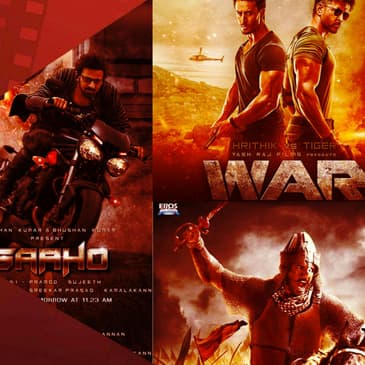
[00:00:59] of Ritik Roshan and Tiger Shroff's Star Wars. Which just came out. And the action sequences are pretty kick-ass. I must say, Ritik and Tiger both know how to ace action sequences and it should be a great match up.
[00:01:11] Ritik of course is great at the larger than life action sequences and bike and car based sequences and Tiger knows how to ace martial arts and hand-to-hand combat. And I mean, there were many breathtaking stunts and Yashrash films has for sure gone all out with it.
[00:01:27] There's every kind of action, everything you can expect from an airplane stunt to tanks, bullets, hand-to-hand combat, blasts, bike chase. You name it and war has got it. Even the action sequences from Saho which releases today have impressed many.
[00:01:44] Audience expects nothing but top quality by international standards now because today we are exposed to content from all around the world, right? Like Mission Impossible, X-Men, Fast and Furious, many. And audiences have very high expectations now from Bollywood films as well.
[00:02:00] Very often though, sloppy VFX or unconvincingly done OTT action or just plain lazy storytelling spoil the party. But most importantly I think it's the vision of the director that is unable to translate effectively on screen that works against many of the Bollywood films.
[00:02:18] But one cannot deny that the quality and the execution of action films in Bollywood has grown by leaps and bounds in the last 5-6 years. From action in period films like Bahubali, Padmaavat, Manikarnika, Kesuri, Bajira Mastani and war films like Uri, The Surgical Strike.
[00:02:37] You know to stylized action in films like Dawn, Doom 3, Robot, The Krish series or Shivay or there's the raw action in Rohit Shakti films like Singham and Simba, Pike and Castans like in the Doom and the Race series and there's hand-to-hand combat and martial arts
[00:02:54] in films like Mard ko Dard nahi hota, Kamando, Bagi, Kabir Khan's Ektha Tiger, Tiger Zinda hai or Siddharth Anand's Bang Bang. So obviously we are making a lot more action films. So today we will discuss the major changes that have come
[00:03:09] into Bollywood that have really raised the bar for action sequences in our films. And Hame has discussion mein join karengge veteran action director Shyam Kaushe who has worked as stunt coordinator since the 90s and later as action director in films like
[00:03:23] Dawn, Kamine, Krish 3, Golon ki Ras Leela, Ram Leela, Bajira Mastani, Padmaavat, Bajrangi Bhai Jaan, Gangs of Asapur and many more. With over 30 years of experience, Shyam Kaushe has seen it all. The complete shift in mainstream storytelling, the style of action and the modern technology
[00:03:41] in VFX coming in which has completely changed how action sequences are conceived and executed. But before we begin the discussion, I want to tell you that you can tune in to listen to me every Friday on the Quince channel.
[00:03:53] So watch out for this space and if you like this podcast and want to hear more like it, you can head over to Quince podcast section or subscribe to the Quince channel on Apple, Google Podcasts and Spotify. Action ki kaafi categories hote hi hai
[00:04:07] and today Bollywood is making all kinds of action films and experimenting a lot more than we did before. So let's begin with one major change, the use of Hollywood specialists. Promotion ke time pe we often hear stars and makers highlight the fact that Hollywood
[00:04:21] technicians and experts have worked on a particular action sequence in the film. Just couple of days back, we spoke about how Hollywood stunt coordinator Kenny Bates who has worked on films like Transformers series and Russia 3 was hired to do a certain sequence in Saho
[00:04:36] and also some experts who had worked on Game of Thrones were hired for this. Now hiring foreign talent has become commonplace in Bollywood, especially for action. There are two primary reasons for that. One, they specialize in specific action skills
[00:04:50] and take extensive training in those certain areas of action like say martial arts export or action choreography. A Hollywood film would generally have various specialists in the crew like action designers, stunt coordinators, fight choreographers, stunt performers and many others
[00:05:07] and the system has made its way into Bollywood films as well. Secondly, Hollywood produces a large number of action flicks and these action experts have a good amount of experience in certain areas. Hollywood makes tons of out and out action flicks every year especially compared to Bollywood.
[00:05:22] Indian directors feel that they can bring that experience to the table and execute their scenes better. Not all filmmakers don't turn to the West for this. The action of a film like Bajira Masthani was almost completely done by local talent
[00:05:34] and in the coming years I won't be surprised if our very own local talent catches on to the global trends and action and we get our very own local experts to work on Bollywood projects but there's still some time for that.
[00:05:46] This is what Shyam Koshil has to say about more and more Hollywood experts being hired for action sequences in India. For the film of Bajira Masthani whenever we want to tell a story we feel that this is the story of the force
[00:06:26] and it's a story of our space. But these action sequences are such action sequences but there's someone who is somewhere near closer to the action sequence because in any action VFX has increased a lot so they know what VFX is and what is real.
[00:06:46] So definitely the budget has increased a bit but the budget has increased a lot because the world is small and you can reach anywhere in the world in 15 hours and you can communicate with anyone on the internet you can talk to anyone So in this sector
[00:07:05] there are many DOPs DOPs are coming and I was shooting that film and we also have something if it's free then we hire them. So just like I said I mean, I said this like I said in slumdog millionaire movie but they didn't want Indians
[00:07:23] to come out of the Indian field so they didn't bring them That is just being honest to the project there's another limitation whenever we shoot in India so we can't take everything from there there are many equipment so they have to hire local team local action director
[00:07:45] and then the stunt driver the equipment for blasting the guns all those things have to be hired so there are many logistics on the basis of which the decision is taken to hire the plan so it is always part of the film not that not that
[00:08:07] even if you come and see how big the film is it is nothing honest to the film The second thing I would want to talk about is the budget of the film as per trade reports Saho has been made at around 200 crore
[00:08:26] and obviously with that kind of budget it is easier to marry action and VFX or visual effects the budget for the first Bahubali was also around the same mark Prava said in an interview that around 75 crore was spent just on one sequence in Saho
[00:08:43] like any other film that comes before it is like a smoking ad the content is good but the visuals are very disturbing and today action is not in isolation in most cases it is action and effects put together that make a scene effective when VFX suffers
[00:09:25] the quality of the action also suffers Hindi film audiences of course expect international quality work nowadays they watch Hollywood superhero flicks like Avengers and action flicks like Fast and the Furious and others and they expect Bollywood to compete with them I mean if not match them
[00:09:43] and VFX plays a huge part in how these action sequences are designed and executed on the ground during the shoot but unfortunately there is no comparison between our budgets and that of Hollywood now Avengers Endgame for example was made at a cost of 350 million dollars and 150 million dollars
[00:10:01] was spent only on the advertising of the film around the world Bollywood budgets of course are nowhere close to that and so we have to do a lot of work and filmmakers here have now realized it's all or nothing audiences will not lap up shoddy work
[00:10:15] and therefore producers in most cases I think get into a large scale action film only if they can handle the vision of the director and shell out the money that it demands and also in most cases have big stars to sell the film
[00:10:27] here is what Shyam Koshal told me about this when I had a chat with him I am talking about Padma Mavath where we talk about Bajirao Masani so many things are happening in the film so many things means we have shot the shots of horses
[00:10:45] you feel that there are 2000 horses running but Padma Mavath we have shot with maximum 50 horses and we had a big ground near Kulapur we had a big ground but you feel that there is a mountain behind where it will be located so all things
[00:11:07] you can create in the background as you have done it helps to if the story of the Avengers is like that then they are true to the story like the story of the Bahu Bali so being true to the story where we are if I see the highest
[00:11:27] crosser in India then it is Dengal Dengal has nothing to do with it but being honest to the story I think people if they catch the story of Hollywood they are honest to those stories if we know that there are some limitations
[00:11:45] because definitely the budget is the fifth thing comes between them then our there is a big difference so if we can't achieve that thing then we don't even put our hands in between we are not trying to produce Avengers for such a big effect
[00:12:05] our budget is not that much we can create it so we don't even put our hands in between the other very important reason behind the improvement we have seen in action has a lot to do with the actors there is a major change
[00:12:19] when it comes to the commitment of the stars who work on action films the audience is so smart that they can smell cheating in a scene very easily do you remember that in one of the Tiger in many scenes you could recognize
[00:12:31] Salman Khan because he was recovering from a major injury but mostly stars give a lot of time to the directors today putting in months of efforts and training getting into shape and rehearsing with experts to bring out the best on screen during the final shot
[00:12:43] and even for like maybe a 2 minute or 3 minute action sequence they go all out and apart from stars like Tiger Shroff, Ajay Devgan or Rithik Raushan who are experts in action skills other actors too train extensively when they do action sequences
[00:12:57] like Ranbir Kapoor will next be seen in Brahmastra which is a fantasy drama superhero kind of a film he is said to have gone through some specialized training for certain sequences in Germany and also today the use of body doubles it's much less than before
[00:13:11] and they are generally used whenever absolutely required to shoot just the scene where he jumps from the cliff into the waterfall and trained in rock climbing just for that one scene if we talk about HDs that time a hero comes and the time of 2-3 days
[00:13:29] but nobody has time to do this when you do nothing how you do action with duplicates what happened today the stakes are high no hero at any given time works more than a film they are ready to do their serves they are willing to give them time
[00:13:49] then the budgets are increased the producers are also putting in their own effort to make the film more successful and now everyone and everyone knows that you can't cheat people they know about filmmaking that the duplicates have shot the hero has shot you want the amount of honesty
[00:14:11] the hero himself does all these positive intentions the story telling all these changes and of course one of the most important reasons is also storytelling at the end of the day it is the script and the storytelling that can make a film compelling
[00:14:31] if the story is just not there no amount of action work and effects can help like Thugs of Hindustan is a prime example of that audiences just didn't connect with the story and therefore the well shot action sequences weren't effective either
[00:14:47] so if a filmmaker doesn't really have a clear creative vision on paper it is difficult to make up for it with the action and that's probably where we go wrong most of the times and that's one area that as an industry we really need to work on
[00:15:01] so if a filmmaker doesn't really have a clear creative vision on paper it is difficult to make up for it with the action and that's probably where we go wrong most of the times and that's one area that as an industry we really need to work on
[00:15:15] but the number of directors with a large scale vision and understanding of handling of action in war and period films or superhero and sci-fi films and martial art films is definitely growing. It was SS Rajamali's vision that took Bahubali to those huge heights and Sanjali
[00:15:30] Labhansali also, you know, he handled the war sequences in Bajira Masthani so beautifully. I mean, he's known for his vision detailed artistic planning with all the departments. Shankar with Robot and 2.0 took imagination to another level. There's also filmmakers
[00:15:45] like Anurag Kashyap who made Gangs of Vasepur which has a lot more gritty and hardcore, you know, action. All action scenes and films of directors like Vishal Bharadwaj or Abhishek Chaubey which may not involve big-budget set action pieces but even like a raid by a team
[00:16:00] of decoits on a village or just a daylight stabbing. A lot of thought and choreography now goes into filming even those ordinary Desi action sequences. Incidentally, Shyam Kaushal was the action director on Gangs of Vasepur and here's what he had to say about
[00:16:16] the importance of storytelling and the director's vision when it comes to executing action effectively on screen.
[00:18:40] I'm blessed. I feel lucky and blessed that I get to work with them. And the added value in every short make, I hold them because the minor details added in every short make
[00:18:53] in the background as well as in the future because it's a vision to see our own thing and every time we have a team spirit, the added value added in everything that is amazing. And last but not the least, the entire process of filming an action sequence
[00:19:22] has gone through a sea change in the last few years. Unlike the 90s and even the early 2000s, actors now work on one film at a time and so do the crew and technicians. So
[00:19:33] everyone in the team is focused on just one thing at one time. Owing to that, the action director's entire process has gone through a major change in the last decade. I mean, I think we are still learning and obviously every industry develops its own ways and methods
[00:19:48] like the Chinese film industry just like India. The Chinese film industry just like India is known to execute action sequences in a fast and a very cost effective way. Shyam Koshal who has been working since the 90s spoke to me about the entire change of
[00:20:03] process that has happened from the script to storyboarding to working with the logistics, art directors and everything into execute that action sequence. Here's what he said. You have to stand up with the director and work together to make sure that your action
[00:20:33] story involves a lot of involvement. The period films are especially action, they are big action. So the first clarity is to make the departments do the whole storyboarding, all the pre-visualization sequence. We call it storyboarding and then in the animated version, we call it pre-visualization.
[00:20:53] So we can see that this is going to work. Because the stakes are quite high. If you talk about period films, you will have 4-5 people, 100 horses, 100 geysers, 100 people. So you are not clear on how to shoot them.
[00:21:08] It's difficult. It's a lot of work and it's not possible. Like the money shark film shooting is starting in November. But from the beginning of this year, I think it's practically different from every month. You have to do storyboarding, storyboarding, share it. So everything is clear before shooting.
[00:21:33] In everyone's mind, all the departments, we go to see locations before we see how many times they are available and where they can do it. They go to see how they are in the mind and then design a sequence according to that.
[00:21:54] First of all, as an action director, you are hired by me. So, director, first of all, we need a narration story. Is this a period or is it a story? Then I write a script, then I read a script. Then after reading a script,
[00:22:11] I have a story in my mind. After that, there is another meeting. It's important for me how the director is seeing the actions. I want to know from him that he is not professional in action. But he visualized something according to the story.
[00:22:28] I am visualizing his. Then I come and as a professional, as a part of it, I design them so that the things that are in it, the things that are in it, they are sitting like this. I am sitting as a director after making the script.
[00:22:45] Then I can achieve this, I can change the ingredients in it. Then he listens to it and then he becomes an action director. Action becomes a complete draft. The action that came in it, the trailer that came in it,
[00:23:01] then when it is finalized, then I make his story short vision on paper. Then it will look like this. After making the short vision, then it is done story boarding. Story boarding means that you make an image, they are specially short visioned.
[00:23:21] How to learn SSJC, how to do SSJC, our background is like this. So, after making that sketch, it is story boarding. Then we sit together with the director, then we share the camera department, the art department, then the costume department. Then we learn all departments have requirements.
[00:23:45] SSJC will go like this. Then there are periods in the film. So, first of all, all departments are connected. But the costumes, they do their research. They research a lot of weapons, what they used at that time. What was in their hands?
[00:24:09] If there are any props, then what kind of props? Because a lot of departments have their own responsibilities, then it is all done by heart. At that time, they used that weapon, which was the weapon to fight. They used that weapon in war.
[00:24:33] So, all those things, I had the chance to research that. So, one thing is done on the basis of the weapon. It is not a one man job. All departments have different roles for each work. Locations are there, locations are there. All those things are done together.
[00:24:57] And we definitely have high hopes from these films. There is Bramhasta starring Alia Bhatt and Ranbir Kapoor, which releases in summer 2020. There is Samosheira with Sanjay Dutt and Ranbir Kapoor. We do not know the release date on that yet. There is Ruhi Chetty, Surya Vanshi with Akshay Kumar.
[00:25:17] They bring Akshay Kumar back into Raw Action Zone after a long time. There is Dabang 3 coming out in Christmas this year. We will be seeing a lot of punches and kicks. So, we have a long list and high expectations.
[00:25:33] On that note, I am going to sign off now. But before I go, don't forget to subscribe to the Qwins channel on Apple, Google Podcasts and Spotify. And you can get in touch with me on superna.tomre at thequin.com or on Twitter at superna.t
[00:25:49] Until next time, which is next Friday, have a great time at the movie.