
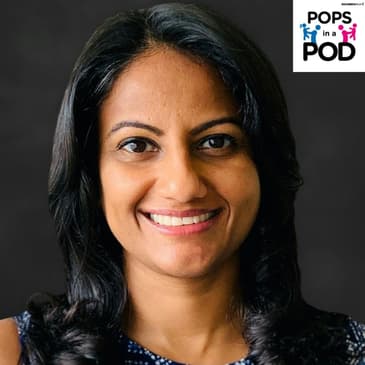

Nadir Pop and Peter Pop are joined by author Divya Thomas to discuss the all-pervasive topic of skin colour in India.
Divya Thomas shares the experiences that shaped her book, I am so much more, the response from children and parents and even her journey as an author.
I am so much more won the FICCI award for Children’s book of the year in English for under 10 years!
Buy I am so much more - https://www.amazon.in/Much-More-Than-Colour-Skin/dp/935489481X
Divya Thomas is a storyteller and campaigner for gender equality and the environment. She is an alumnus of Cornell University and Northwestern University where she studied communications and data driven marketing. She is passionate about changing the narrative to empower both young children and grown-up children (adults) to redefine our world. Having lived in the U.S., U.K. and India, Divya draws on common themes across cultures to reflect her belief that while we are all different, we are all the same. Find more of her thoughts at www.anillustratedworld.com.
Get in touch with the Pop duo on popsinapod@gmail.com
Follow Pops In A Pod Instagram - https://www.instagram.com/popsinapod/
Facebook - https://www.facebook.com/popsinapod
Youtube - https://www.youtube.com/c/PopsinaPod
Nadir is a media and advertising professional with 17 years of experience, out of this Nadir spent a decade in TV and digital video production – producing, directing, developing content, and writing. www.linkedin.com/in/nadir-kanthawala-47249814/
Peter is a marketing guy. He has a decade of experience working with companies ranging from startups to public listed companies. https://www.linkedin.com/in/peterkotikalapudi/
[00:00:00] Pops in a Pod, Pops in a Pod Welcome to Pops in a Pod, I am Peter Pop. And I am Nadir Pop. Nadir, couple of months we spoke to Shals Mahajan and we spoke to them about the book Riva and
[00:00:30] Prisha which was part of the Parag Reads initiative which is the Parag Honours List and that turned out to be a great episode, right? It was so imaginative the book and you know honestly one of the reasons why I love doing
[00:00:43] Parag episodes is simply the wealth of these children's books that we're exposed to, right? And it's very unfortunate that we don't come to know about it or you know other parents at large and we are just doing our best to ensure that these books do reach out
[00:00:59] to parents and kids and probably actually a lot of adults these books even though they are targeted towards kids, adults need to be reading these books. So true, so true. But more on that a little later right now we'd love to introduce our next Parag author
[00:01:16] and her name is Divya Thomas. Divya, welcome to Pops in a Pod. Thank you I'm excited to be here. Yeah I mean you know first of all thanks so much for taking time out and speaking
[00:01:26] to us and you know when the Parag team kind of reached out to us one of the things that since we're doing this on video I'm going to show it but this is such a cool looking book right?
[00:01:37] I mean Nathar and I keep talking about you know just the fact that there aren't that many Indian authors especially children's authors that we kind of came across from our childhood.
[00:01:49] So the fact that you know we get to introduce such books to our kids is a great thing but before we get into the book, before we get into all of that I have a very basic and
[00:02:00] fundamental question and apologies for its cliche you've answered it too many times but when I was reading up on you you've actually studied you know communications and data driven marketing and have been a campaigner for gender equality and the environment.
[00:02:20] So why suddenly why suddenly write a children's book? I'm very curious. So I think that's a really good question and actually I actually see it as an offshoot of the work that I've done. I spent about 10 years working in advertising both from the messaging and from the data
[00:02:43] point of view which really taught me how to take big ideas and distill them into pithy you know phrases or communications that people would latch on to and then I moved
[00:02:55] into the impact space where I worked for a long time as you see on gender and the environment and campaigns again that really tried to change the narrative and get people to raise their voices and create change around us.
[00:03:09] And one of the things I actually noticed while I was doing that is that I came into contact with a lot of young girls and young children in general and now we're talking about like Bihar Rajasthan Jharkhand you know that kind of really marginalized belt where you
[00:03:27] see a lot of people really struggling with a lot of things but one of the things that really came up was identity you know and skin color and how that played into it and it was something that I saw reflected even in the big cities right whether it
[00:03:42] was Bombay, Delhi, Chennai, Bangalore and I really started to think wow I thought this narrative ended in our childhood in our generation but it doesn't seem to have so I think it was really like marrying my advertising hey let's get some messaging out there
[00:04:00] with my impact let's try and make some change and you know creating something I'd always been interested in which was writing a children's book. Since you brought up advertising and both Pita and I are media professions we've had
[00:04:17] half our fair share of working with advertising agencies and marketing and PR and we sort of continue to do so in our day jobs as well. There's one thing that I actually wanted to highlight especially when you are
[00:04:36] marketing products in this case products because book to children you don't directly market it to children right you're always going through the parents and that's where it sort of struck me that your book I'm so much more than the color of my skin
[00:04:54] when I started reading and because it's a kids book so you know you go fast and then then you spend some time on the illustrations and everything. The first thought that came to my mind is you know what adults should be dating this book
[00:05:06] because kids know kids are smart kids know exactly that you don't need to see the color of your anyone's skin for that matter right did that thought that you know crop in your mind that you know I know I'm writing it for kids but it's
[00:05:22] the parents who actually need to be really reading it and imbibing and sort of absorbing all this content. Yeah definitely I think that's another really great point I actually think I say it somewhere in the back cover of the book if I'm not wrong that it's written for
[00:05:38] kids little kids as well as big kids and in brackets adults because I think it's really important as you said for adults to imbibe this message as well because like you said kids usually you know don't see something unless they're
[00:05:56] programmed or you know systemically sort of imbibe that message from other people usually adults so my hope is children who actually come up against this narrative are able to learn the
[00:06:09] language and say I am so much more than this at a young age but also to your point that the caregivers reading it to them are kind of you know that messages percolating down to them as well that I'm reading this to my child and maybe I'm getting
[00:06:25] something out of it as well that I am so much more than the color of my skin or I shouldn't be judging other people by the color of their skin so yes it's for everyone it's not there's it says four to seven but it's really aged over.
[00:06:39] And that's such a great point that you made right because I'm actually going back through my childhood when I was reading the book and thinking of like various different instances right and that's one of the things unfortunately I can admit
[00:06:54] now is that you were actually told that X is fairer than Y or like even pointed out that hey you there's certain colors of clothes you should not be wearing right like for the longest time as a kid
[00:07:09] I can't believe this has just come up out of the recesses of my brain but I was told not to wear black like and I was like okay but it was just one of those things I was told I never
[00:07:19] questioned it but there was obviously like you know a bit behind it and stuff like that but tell me about like your experiences that kind of inspired or kind of was it like
[00:07:33] one moment or a series of moments where you thought that you know this is really relevant because I think you touched upon a very important point I'm going to repeat it again right is that
[00:07:44] for parents you think that hey it's only our generation that had to deal with this or like instances like I just shared but then I'm a dad to a six-year-old right I'm really afraid of how
[00:07:58] I'm going to tackle that question if the topic like this comes up I'm gonna kind of even manage it right so what was that for you? So there were multiple incidents and instances to your point
[00:08:13] and I love how you just pulled something out from the recess of your brain about what color short you were told to wear because I think you know what we're programmed as we grow up to really
[00:08:24] hear a lot of this and we kind of put it away and we're like okay you know that's just part of it that's part of how people think and I think it's only when you start to really reflect on
[00:08:33] it as you get older as you step out of the boxes that you grow up in that you're like this isn't quite right you know why would I believe this right and I think that happened
[00:08:45] I mean I'm a South Indian woman I grew up as a little girl in Chennai right Madras at the time but Madras then Chennai now but still the same narrative right don't go in the sun you know
[00:09:00] you're gonna get too dark and then I went to study in the States and that was oh you're pretty for a brown girl you know and then you walk into a beauty salon when you come back
[00:09:12] after you've been on the beach in in India and the first thing everyone wanted to do was bleach you right and it was just this really intense sort of pushback and I think it was only like
[00:09:23] much later in life that I started to celebrate what I looked like and embrace it and at that age I think I was also then exposed to a lot of my friends who were starting to have children
[00:09:36] their children right and the conversation with a couple of their children who are maybe darker skin tone than the parents were hey Divya can you speak to my kids and show them that you can be
[00:09:51] dark confident accomplished you know like your skin color has nothing to do with you because a lot of their kids were going to school or in public situations where their skin color was being
[00:10:01] pointed out to them as not good because it was darker and it would happen both within the Indian context and within the expat Indian context as well right so multiple layers of being dark and
[00:10:15] all of that kind of added up to I think quite frankly a little bit of anger and I think if anger is harnessed properly and something can be created out of it to try and change the narrative
[00:10:32] that's the birth of this book I think that's what came out of it how was I mean one I think raging emotion that you went through as you mentioned was anger but different people in your lives
[00:10:45] pointed at the color of your skin right family friends I'm sure absolute strangers as well considering you were in the States some form of casual racism here and there like you just mentioned
[00:10:56] you know you're pretty for a brown girl which we hear in mainstream media as well over the years I'm sure it started when you were very young but over the years what was what was the spectrum
[00:11:06] like what was your first feeling if you can remember as far as far back you can go to re to the the latest point where you said okay I need to write a book about this two words
[00:11:16] kids what was that that that emotional spectrum like and how did you mature and say that here there's nothing you know this is just who I am and I'm proud to be who I am I'm a really good question
[00:11:28] because I don't think that happened too much later I think I just bought the narrative for the longest time like you said casual racism and lived with it I was like yeah this is this is
[00:11:38] just how it is right and part of the inspiration was I think starting to see movements like BLM Black Lives Matter right and seeing content coming around topics like black hair and black skin and
[00:11:56] things like that in the States right but India not really having that content and meanwhile you know you would see a lot of Indians we know posting on social media Black Lives Matters but
[00:12:09] then they would say something so casually racist within the Indian context and I would just think are you serious I keep bringing up in class I'm not going to like get our podcast banned or shadow banned whatever by naming names but there's a certain public figure Indian actress
[00:12:29] well known in the States also did post about Black Lives Matters but at one point was also endorsing fairness creams and the irony of that was just not lost to me I was like really like
[00:12:43] you know we live in 2023 I think this was about 2020-2021 like you can just instantly pick up tweets or stuff like that of people right so there's so much so yeah I completely understand
[00:12:58] because like that's one of the things and one of the topics Nathar and I kind of have skirted around is tokenism right a lot of times what we do and I mean let's be honest still a couple of years
[00:13:10] ago there was a product called fair and lovely that was actively marketed when we're talking about advertising a bit in the start right there was an actual product there and lovely that was
[00:13:20] marketed and it wasn't just towards women it even was men and I was like how can you kind of I mean do you remember those advertisements at all in retrospect they were really traumatic
[00:13:35] yeah of course and then a shade card right there is shade card that you would bleach your skin with and see how your skin got lighter and if I'm not wrong I think it was one of India's best
[00:13:45] selling products it's one the highest selling products in our market and I think you bring up another really interesting point about gender right it's not just women it's also men but I think there
[00:13:58] is a gender lens where women have a tougher time with it right whether it's the ads in the back of newspapers where people are looking for fair or wheatish you know complexions and then there's
[00:14:09] fair and lovely and there was a whole lot of backlash against fair and lovely actually to which they changed I believe the name but I think the product still exists speaking of
[00:14:19] advertising in some in some form but I think all of that is exactly you know what led me to talk about I'm so much more than the color of my skin and I think the reason the book if I may say is not called
[00:14:34] you know dark is beautiful and it's called I'm so much more than the color of my skin is because I think it's important to define ourselves whether it's kids or adults
[00:14:45] it's a skin being one of the layers right because I really wanted the book to go beyond that so I'm so much more in terms of who I am what I want to do right my dreams my ambitions how I behave how I approach life right
[00:15:01] so it's not just that your skin color is right the way you are because of course that's true but also now who are you beyond that right and having a darker skin color or a lighter skin color
[00:15:17] doesn't make you more or less viable or give you more access to opportunity because that does happen right in fact one of the things that has happened as an instance that triggered this book
[00:15:33] also was hearing from a teacher when I was thinking about writing this book I spoke to a teacher and I said can you speak to your students and just ask them you know one question what's the color of
[00:15:46] your skin and have them equated to something around them right and some kids came back and said I'm the color of tree bark and some kids said peach and some kids said you know biscuit and some
[00:15:57] of those things are actually in the book right it's come from kids and one girl wrote an essay and said my skin is the color of bad and when you read into the essay it basically said my skin is really
[00:16:11] dark it's the color of bad I'm afraid that I won't be able to grow up and have a good job and people won't view me with respect and she was all of I think 12 you know and
[00:16:25] that really really sapped with me and I thought my goodness this is this is jarring right and how do we change that narrative that we tell ourselves or we start to believe when you're four when you're
[00:16:37] five when you're six the age of your daughter you know or son sorry your child you said but so they're not really grappling with it at 12 because you already have the ammunition you know it's like almost like early intervention
[00:16:51] but you know your book and now that you've brought up these so many aspects even though it's such a short book it backs in so much information because it's not just about
[00:17:02] the skin there are so many interesting layers that are just out there for you to check right you have a girl character in a hijab you have a specially able child you have a little boy
[00:17:16] with tilly go and you've brought that up and to test this out right because I have a six year almost seven year old girl and I said hey you know what I have an interesting book when you read it
[00:17:29] so I did not you know use colorful words at all I just said there's a book read it and she read it like an idiot father I would expect that she would go oh my god really wow is that
[00:17:40] you know I expected her to react she's like okay nice but why is the line I'm so much more than the color facing repeating again and again I get it I get it I know I know
[00:17:50] and it's amazing right today's kids just know it they're so smart and they're so sharp and that's where the thought came man this books is not for kids it's for adults adults to be reading this
[00:18:01] book because kids are so they're so clear they're so sharp right and the fact that you've integrated professions right there's mountaineering there's the violinist and she picked up on those things like oh papa you know what I love mountain climbing can I be a mountain climber
[00:18:17] yeah I'm sure you can be whatever you want so it's good to have that dialogue and this is what I think the the books are of that so was it a very conscious decision for you to first have a surface
[00:18:29] aspect of the conversation on skin then go deeper into these other very subtle visual motifs that you've thrown in which is you know the physical ability aspect the hijabi girl and the professions yeah it was super conscious so I just really love what you said just now
[00:18:50] I think most of the work actually went into that it was easy to distill the topic of skin color into a quick rhyming narrative but then to find the right words to make it inclusive
[00:19:05] and to find the right illustrations to make it inclusive really actually was the focus of the work I worked with Ruchi Shah who is a fantastic illustrator Harper Collins put us in touch and that collaboration was really fantastic because she immediately got what I was trying
[00:19:23] to do through the illustrations and the words because of course a book communicates especially a children's book right communicates not only with the words but a lot to the illustrations and it was very very conscious that we had multiple layers of inclusivity so whether it was boys and
[00:19:45] girls doing things that typically you wouldn't see boys and girls doing in the gender roles that are now shifting right whether the boy is a chef and the girl is climbing a mountain or
[00:19:58] you know whatever you have a pink football you know it's changing right I think it's changing in our times you're seeing that happen but I think it's really important to reinforce that change and
[00:20:08] support it so I'm hoping the visuals have done that it was also really important for me not to have the professions and the dreams rather in fact I'd rather look at them as dreams and ambitions
[00:20:19] and jobs because you know you kids dream of doing something and and it was important for me not for every child to want to be doctor lawyer engineer right and to have illustrator and you know protector of nature and things like that which are just a little bit
[00:20:40] non-traditional and stereotypical I also did work with Ruchi to touch on things like you said like you know religion and ability and things like that with the child in the wheelchair that
[00:20:51] child in a job but we didn't want to be preachy about how we did things you know and I think that's why the book has resonated is because it's done I hope in a very light
[00:21:05] celebratory sort of tone rather than teaching you something you know so I think that's been you know I think the greatest joy for me under that book is that so much is packed in
[00:21:17] to a really simple 32 page book you know it's interesting also that you brought up the different professions and the gender stereotypes right yesterday I was talking to my son and what they did in school and I had seen on the school whatsapp group that they
[00:21:34] drew what they like to eat so I was very curious and I'm one of those parents who won't directly ask them so like what do you did in school today and you look nothing then
[00:21:43] it's any be like oh yeah we did drawing so I'm like oh what did you draw to eat because I'm like okay if he draws it and he talks about it in public at least it's something I can like give
[00:21:53] him to eat right and I was reminded of what you said I mean I was reminded of the incident when you said this is because he said something which struck me and I was telling my wife
[00:22:05] he said to me I love cooking with my mom and I was like that's not something like you know you've we've taught him or we've told him which is such a contrast to my childhood
[00:22:18] because I grew up with my grandmother I was literally told kitchen are not for boys and I was like wow it's only when I grew older and my grandma needed help and I've talked about this earlier where she needed help specifically cutting onions I didn't
[00:22:36] realize why she was making me cut onions but I was like hey at least I get to help in the kitchen but it's such a contrast and I think that's the shift in generations which also links back to
[00:22:49] why I stopped you is what are you noticing in the book readings that you've done because sometimes you can kind of say that okay this is the average or this is the spectrum of answers
[00:23:02] that I'm going to get but has there been any kind of response that's completely taken you back or surprised you yeah so the book readings have been across different spectrums of I would say
[00:23:18] socio-economics as well as pockets of culture and they are very specifically sought out to do that and I think the responses kind of correlate with that a little bit right because I think you will find that in more cosmopolitan cities generally you'll get an answer where kids say
[00:23:43] yeah I don't you know I don't really think anybody with a different skin color is different right but then if you say have you actually heard anybody say otherwise 90% of the time
[00:23:58] you'll have a whole bunch of hands thrown up and kids saying yes I've heard people say this you know I don't believe it but I've heard people say this right and then if you start asking them what they've heard you get really interesting interesting anecdotal stories about
[00:24:15] how they're told right like that person is dark and that person is light and the light person is better but it's really interesting to see also how they don't necessarily seem to intuitively know that that's not correct right so they don't necessarily the kids don't necessarily think that
[00:24:33] way but for them to be able to point out yeah people do say that and now that I think about it that's not quite right and okay here's a language about how we speak about it in response
[00:24:44] right and I think that's really what I'm trying to do with the book is to put in front of kids how do you respond to this narrative right and then if you go unfortunately to more rural areas
[00:25:00] right or if you go to socioeconomic pockets that are just more traditional I would say right you're going to hear responses that are cliché or old-fashioned or not progressive right because it's still there's still a lot of India that doesn't really want to have a girl child there's
[00:25:23] still a lot of India that doesn't want to have a dark child there's still a lot of India that thinks a certain way and the kids that are raised in those pockets obviously see the world
[00:25:33] in that way right so when you have those conversations and those circumstances I think those for me have been some of the most powerful because you know for example I did one at a public library
[00:25:46] and anecdotally I was pulling up my car and parking it next to a house because I couldn't find parking and I saw this little girl peeping out at me so I put my head around back and I
[00:25:58] said can I park my car here to the woman who owned the house she said sure and I said how old is your daughter and she said six and I said I'm going across the road for a reading can I take her with me
[00:26:10] and I held up a copy of the book and said this is me it's legitimate I'm not you know trying to kidnap your child and send her with me and the little girl came with me and you know it wasn't
[00:26:22] that she came from a very exposed affluent background or anything so when she was sitting with this group of children she really resonated with this conversation that her skin color was not
[00:26:36] good because it was dark and what she wanted to open was a beauty parlor her dream was to open a beauty parlor so she could make people including her light and beautiful right so we spent quite
[00:26:48] a bit of time in beautiful in many ways including light and we spent quite a bit of time talking about it and at the end of the reading I hand out a sheet of paper usually that has a drawing
[00:27:00] of a child on it and children encouraged to color in the color that they would like to be or they see themselves as and I'm like you know it doesn't matter if you're purple it doesn't matter if
[00:27:10] you're brown it doesn't matter whatever it is color in yourself the way you see yourself and then draw your dreams right and it was really interesting because she kept coloring herself in
[00:27:21] in this very sort of light yellow and it was a really good moment to sit down and talk with her and say you know that's a nice color but what about this shade of brown which actually kind of
[00:27:33] looks like your skin how about this one and she was very hesitant to actually use it and she said no it's too dark I don't like it and then we color it a little bit together and by the end
[00:27:42] of it she had a piece of paper with a dark skin girl with dreams of opening a beauty palo on it and I hope she's got it stuck up somewhere in her room you know so I think those are the
[00:27:54] moments that you think okay if I can change one child's mind maybe it's worth it no and that's the point with because you brought up colors it immediately took me back to an incident that
[00:28:06] happened a couple of months ago my my daughter really likes to scribble and you know she really likes color then she keeps making these things either you know on the screen or on paper and unfortunately it so happened right that in our when we were kids
[00:28:27] in a box of crayons there's always that one color which was described as skin color right which was which was sort of beige moving towards peach almost pinkish right with a skin color and nobody questioned it back then like oh yeah skin color in fact I remember
[00:28:44] crayon boxes with the crayon where they write colors right and it was written skin color right so it was that deeply entrenched now unfortunately um what happened was that all these years again she's not that old she'll be turning seven nowhere did this conversation
[00:29:03] about skin color ever come up right either in the family or in school or whatever it is and as they say it takes one molecule of virus to infect the entire world we've seen that a couple
[00:29:16] of years ago um and it must have happened because one day she you know she's sitting at home and she's drawing and you know she's talking to herself that's what usually kids do when they're drawing they're doing something by themselves they're just talking to themselves and then suddenly
[00:29:28] she's like hmm now I'm going to take that skin color and then I'm like hang on what did you just say uh and these things just pop right and it's like skin color I said who told you that
[00:29:38] like no if you're in school is saying I said when school is saying that like the teacher said did the teacher say it's like no some kid and I was like oh man that's exactly what must have happened
[00:29:48] because in his house must be from a traditional house somebody must have just said yeah skin color go ahead and use it and and that and when it when that thought propagates right it's so tough to
[00:30:01] unlearn and I think we need more books just like the one that you've authored to sort of go into the deep process of unlearning and I don't know hopefully one day we'll get rid of this this
[00:30:14] weird thing that we are considering with our kids I think that's a really good term that you just used as well unlearning um I think there's so much of that to be done and I think the reason
[00:30:26] I'm really grateful that this book has been on the Parag Honours List as well is because you know to have an entity that's picking out quality books for kids and really giving it voice
[00:30:40] and a platform and and giving access to more kids to this kind of literature I think is huge because I'm hoping not only does this you know the you've talked about the book you did earlier as well
[00:30:54] um you know that's also a non-traditional story right um the podcast that you did and I think the more non-traditional stories we tell the more children hear them and big children hear them
[00:31:09] who are adults and change their minds but also I think hopefully the more we inspire people to write stories like this right other authors to pick up topics and and really make sure that
[00:31:22] they're putting a new lens on some of the traditional things that we have that need changing um and you know like I said earlier and I think I just want to clarify something I was saying
[00:31:33] I don't actually think that it's purely social economics right that drives this thinking you can have the most affluent person with the most narrow mind you can have the most rural person
[00:31:51] who's living paycheck to paycheck who actually is more open to change right but I do think you generally see that people in cities right are living in a bit more of a mix of different kinds
[00:32:09] of people so there's a little bit more of an acceptance right and I think when you go into a little bit more of a non-city rural India there's less so of that and there's more of these
[00:32:20] boxes and I think we tend to forget sometimes living in the big cities that we live in that most of India is actually rural most of India is actually you know not English speaking and
[00:32:34] expose the way that a small percentage of us are so my hope is while I've been able to write this book for a specific audience um that there are more books like this that crop up that really
[00:32:47] get deeper in different languages more into the grassroots you know really start to change hearts and minds and the narrative of people who don't have this kind of access you know just to draw from what you're saying right because like we keep talking about it being
[00:33:04] an Indian thing about a decade ago I used to work in Poland and I was doing an internship there and one of the internships I did was actually go to cities where there are barely 10,000 people
[00:33:21] living and for me it was interesting to observe that when I would be walking down the street and part of it was basically it was a cultural integration program so you'd I'd talk about
[00:33:33] coming from a different country and stuff to high school students and sometimes when I'd be walking to these schools that be really young kids who just have them jaws open like literally their mouth's open going who's that and I remember talking to one of the students saying
[00:33:50] but why are they looking at me like that and they said they probably are seeing you as the first person who's not light-skinned ever in their life so for them you're just like someone
[00:34:01] very different and then I said okay but what about the older kids and they said just look around we all are exactly looking the same so you're the only one so literally you stand out right and
[00:34:14] I'm glad for at least programs like that where they encouraged and they try to get students before they got much older right because I think while we are harping on the fact that it's about
[00:34:25] adults what we aren't realizing that who's influencing these kids right it is the adults so it both a two-way street and the fact that you had you know like 16 18 year olds for the first
[00:34:38] time meeting someone from another country it just changes your mind and it's to me it was the reverse of what happens to a lot of you know expat I mean tourists coming in from the UK or US
[00:34:50] to India right I knew what they felt like in there but I have to talk about at least the the Parag initiative and the impact that that's had been I mean let's be honest your first book
[00:35:04] and you get become part of the Paragoners list take us back to that moment what is it like to find out what's it like been since then being part of the list uh yeah so you wrote up
[00:35:18] something earlier you said how did this happen you know you have a degree in data-driven marketing so I think I've had a lot of imposter syndrome you know people will introduce me now as
[00:35:31] this is the dish is a children's book author and I said well I mean I've written one children's book but really you know my whole career has been an advertising marketing and campaigns
[00:35:39] and I start to quickly discount the children's book part so I think what Parag did was it validated that maybe I am an author after all which was really exciting to get on the
[00:35:52] Parag list and be considered you know some of the quality work that's coming out this year so it was really really exciting and it was it was really validating right it was it was
[00:36:05] really one of those moments where I thought great so maybe I should do another book and maybe I am a writer and maybe there is more that can be done around content like this and most importantly
[00:36:18] I think it really makes you think oh there's a want for this there's a need for this right kids and their parents are interested in content that is changing the narrative and not just princesses
[00:36:29] and princess and fairy tales right like children and their parents are interested in reading this there are entities like Parag and their honors list looking at it and saying okay this is a real
[00:36:41] book and a real piece of work that needs to be promoted so yeah it's been amazing I couldn't be more thankful to the Parag team for picking the book up and Harper Collins actually for putting it
[00:36:52] forward right I think it's just been really lovely to see how something I wrote kind of sitting on my couch in a fit of like I said earlier like oh my god how does this still exist you know
[00:37:06] and taking that anger and channeling it into into writing has become something that lives and is being acknowledged that's been really wonderful and what what else can we expect from you in in the coming weeks months years so I really love to write a series around this
[00:37:30] the reason it's called I am so much more and then in the bottom it says the color of my skin is because I envision I'm so much more than the shape of my body I am so much more that you
[00:37:40] know all of the things that we grapple with and and you can see that the issues that I think that are coming up with young children you know when I say young children I think like 10 11 what are they
[00:37:51] dealing with and then like I said earlier early intervention right how can we start talking about it at five six with them gender is one that I would really like to pick up on gender
[00:38:02] identity but that's really tricky as I'm sure you know so you know there's a few of them a few topics that I think I'd really like to delve deeper into I've also written a draft of a mental
[00:38:14] health book for kids really giving them tools on how to sort of emotionally regulate how to sit still how to you know get their brain to quiet and down if they're in distress all things that
[00:38:30] are very you know personal to me either through my own life or the children around me the adults around me things I wish we had been taught and we weren't you know I always say a lot of what I
[00:38:42] write is to heal the 80 year old in me and yes there's stuff around that that I'd really like to see coming out and I'm also interested in looking at television content and seeing you know how we can expand some of this narrative into characters and television and
[00:38:58] really get a broader audience wow so you shared a lot and I think that's definitely something that both Nadir and I and all our listeners will keep an eye out for but before we let you go
[00:39:12] for all those who are still listening to this and are curious to know how do they can get a copy of I'm so much more than the color of my skin how do they get a copy of it go ahead
[00:39:23] so I would encourage everyone to check their local bookstore first I'm a very big advocate of your local bookstore so I think the book is available in most big bookstores around India if not there's always Amazon Flipkart online millions of online
[00:39:44] millions but like a couple of hundred online resources that you can buy it from but I would definitely check out Amazon Flipkart and if you just googled I'm so much more than the
[00:39:54] color of my skin you'll find different websites that you can buy it at as well but check your local bookstore first awesome thanks so much Divya for sharing with us and for all of those
[00:40:06] still tuned in and listening to us you know how to reach Nadir and me just search pops in a pod Instagram Facebook you name it we're on it and you can also reach us through email
[00:40:20] thank you everyone and Divya once again absolute pleasure speaking to you you really did tell us a lot about the book and your personal life so very very thankful for that we really appreciate
[00:40:31] that and we sincerely hope that this book travels and reaches as many people around the world in as many languages and people get the message because it's that simple kids get it these days it's the
[00:40:44] parents and the adults really need to get the message so thank you for speaking with us thank you so much for having me this was great thank you