
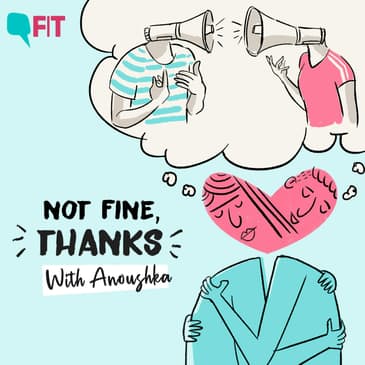
How do you navigate the emotional strain of conflicts with family and friends over politics? How much does ideology matter in relationships? Three young Indians discuss on this week's episode of Not Fine, Thanks. Ft. writer, filmmaker, Natasha Badhwar.
Tune in!
Learn more about your ad choices. Visit megaphone.fm/adchoices
[00:00:00] You're listening to the Quint's Podcast.
[00:00:10] Hello everyone, this is Not Fine Thanks, Quint fits podcast on everyday mental health
[00:00:15] and I'm your host Anushka.
[00:00:17] Hey what's up?
[00:00:18] How are you?
[00:00:19] Work is so stressful ya.
[00:00:20] Man, I feel like I'm wasting my youth.
[00:00:22] She like a just can't sustain relationships.
[00:00:27] Not Fine.
[00:00:28] Thanks.
[00:00:29] Today's topic is something that I wanted to talk about for a while now.
[00:00:35] We are talking about how to deal with politics and ideologies, putting a strain on your friendships
[00:00:40] and family relations.
[00:00:42] It's not a new issue per se.
[00:00:44] People have had disagreements over ideologies for ages now but I feel like this is something
[00:00:50] that I've heard people around me complain about, lament about increasingly now and maybe
[00:00:56] it's because they didn't consider how emotionally draining something like this could be and
[00:01:00] also they just don't know how to deal with it.
[00:01:03] So I'm here with friends and colleagues Zija, Satya, Shri and Summer.
[00:01:07] They work here at the Quint and they have strong opinions and today they're here to talk
[00:01:12] about their own stories of navigating the tricky space.
[00:01:17] And also in the second part of the podcast I will be speaking to writer and filmmaker
[00:01:20] Natasha Bhadwar.
[00:01:21] So do stick around for that as well.
[00:01:27] Right, so welcome guys, welcome to the podcast.
[00:01:30] Nice to be here.
[00:01:31] You guys want to begin by just kind of setting the context and talking about your situations.
[00:01:38] Do you experience this in your dining rooms, in your homes with your family chat groups
[00:01:44] with friends?
[00:01:45] And to what degree?
[00:01:47] I think the difference in ideologies exists like even if it's not always political or anything
[00:01:53] there's always going to be your elders thinking something else and you have a different opinion
[00:01:57] on it.
[00:01:58] Now the thing is that before you make friends and when you date someone and all of that
[00:02:02] you consider, I mean if the ideology matches or not and now the line is there's no gray
[00:02:09] area anymore like everybody's like very black and white about it.
[00:02:12] So one of my cousins we were chatting about the political scenarios and everything and
[00:02:18] he went to really praise this one leader, political leader.
[00:02:23] And I, we had like a very, I mean we had a lot of argument about it and now there's
[00:02:30] a point that whenever we are in a dining room together or anything of that sort we don't
[00:02:36] look like we don't look at each other.
[00:02:38] I mean we're like kind of maintaining the distance now and I didn't expect that to happen.
[00:02:43] I mean he's very elder to me and I would want to go to him and say hello and all of
[00:02:47] that but now it's like there's a lot of distance.
[00:02:50] Of course this also a very big issue because he's an elder person and all of that so he didn't
[00:02:56] expect me to be so opinionated and you know to tell him that no this is wrong this is not
[00:03:01] actually correct okay and call him out basically.
[00:03:04] What about you guys?
[00:03:06] Okay so I would just like to clarify in the beginning key like since we are talking about
[00:03:10] difference in ideologies I'm actually quite accepting of a difference in ideologies but
[00:03:16] in my opinion anybody who treats anybody else in a discriminatory manner that is where
[00:03:22] I draw the line and it is and it is and the reason why I connect this to politics so much
[00:03:27] because these days I don't think we should just judge people based on what they do because
[00:03:31] not everybody acts as they think you know are a lot of our family members we've seen how
[00:03:36] they talk about other communities but they won't really behave like that around them
[00:03:39] but if I won't really forgive them just for even thinking like that so that is where
[00:03:45] I belong at the moment.
[00:03:47] So what you're saying is like it does it's not just about which political party you support
[00:03:52] like how you support us for its differences it becomes a matter of your core morality
[00:03:56] that exactly have you guys ever like had fights to the point where you said that I cannot
[00:04:02] have this friendship anymore and had to like cut ties all the time and it's not just in
[00:04:07] opinion I have like practiced it like I used to have a friend who went to the US to study
[00:04:13] and he was fine when I said bye to him like we had a great family party he was okay like
[00:04:19] six months in he's like full on a Donald Trump supporter and I knew what that company is
[00:04:26] right like you can't just be a Trump supporter and not think in certain ways and I'm reading
[00:04:30] his post and the things he's saying and the things he's commenting on about what's happening
[00:04:34] in India and gradually I don't think he even realized it I just stopped calling him I stopped
[00:04:39] commenting on his photos etc and I think to an extent he was doing the same to me I don't
[00:04:44] know yeah initially I felt a little bad I was like oh do I really want to go down this
[00:04:50] path where I can't have an opinion and also a friend but later on I started feeling good
[00:04:54] about myself I started feeling a little proud key I'm putting my principles over my social
[00:05:00] needs which is my friends there's a colleague that you have to actually work with what will
[00:05:03] you do what will you do in sailing it I'll do whatever I'll do what I have to do like I still
[00:05:09] that also applies to family for a lot of people because they can't cut it out yeah you I okay
[00:05:15] huh I have plenty of people I disagree with in my family I just sit quietly I fake smile my way
[00:05:20] like though my difference and attitude towards them and towards others who I believe are much
[00:05:26] nicer people the difference is very obvious and I don't regret it I have a lot of people go like
[00:05:31] a lot of parents of my friends and everything we have address me like you people can come here
[00:05:37] so imagine that so I have been that to me and so during C.A. I think that was the worst thing that my
[00:05:47] identity was reduced to Biryani and that was the only somebody told me that you going to stay
[00:05:53] in this country because the Jage Ghar Sachi go Biryani Bhanna needs a question imagine hearing
[00:05:56] that and choosing to remain friends with such a person I try to have a conversation with that
[00:06:00] person try to understand he that person still on my social media but we don't talk anymore because
[00:06:05] like it was pretty clear where I stood and where he was standing and he he was really trying to
[00:06:11] calm me down by saying don't worry nothing will happen but the thing that happens is like you find
[00:06:17] about this particular thing after a really long time like you after when you meet someone for
[00:06:23] the first time they're always nice and everything but then when you talk to them at length and these
[00:06:28] issues these things don't come up in the first conversation right so after a while you just feel
[00:06:33] betrayed you're like oh my god yeah what is this and that's when you that's when you decide
[00:06:37] when you meet so when you have these conflicts say with especially people who are who you're close to
[00:06:43] people you've grown up with people who have an important place in your life otherwise but there's
[00:06:47] something that you don't agree with ideology wise or you know something like you said your
[00:06:52] morality don't add something that doesn't go with your core morality how does that kind of impact
[00:06:59] your mental health you did mention how you feel betrayed so if you want to elaborate on that or
[00:07:03] betrayal is one because you don't know that this person is going to be like that second is I am
[00:07:08] somebody who would really try to make the other person understand because if I love them
[00:07:13] the early and even if it's just a guy or anything of that sort so I would try to turn it around and
[00:07:19] try actually make efforts to either I cannot be okay with it but then try to find a midway
[00:07:26] but in most cases that does not happen and that leaves you in a very bitter state because you really
[00:07:32] want this person in your life you really want to talk to them you really like them otherwise
[00:07:36] but then you know these are the there are some things that you're not okay with I mean
[00:07:41] I try to actually date this guy who was able to go and okay so he's like he's like he
[00:07:48] never says whatever the government is doing xyz I'm on the ground and I meet people and I do this
[00:07:54] that I do that and I don't look at somebody and ask their religion and that's how we get work
[00:07:59] done and on the ground nobody really ask and look for everybody's religion but actually on the
[00:08:04] ground people are getting killed for the religion so how can you not really care or you know
[00:08:09] everything of that sort but then I try to do it but it just kind of you just want that person
[00:08:16] to be sensitive to these things when you're hanging out with say people who don't care or are
[00:08:21] apolitical yeah do you ever feel like maybe you are overreacted they kind of make you feel like
[00:08:27] why I try that is the reason I tried I tried I tried hang out with this guy for two months okay two
[00:08:33] months is a long time yeah and I try to understand through his lens also the other thing about
[00:08:39] him apart from being apolitical was that he was not woke at all and I thought initially I thought
[00:08:45] I found that in the earing that you know now that nowadays you find people who are very
[00:08:50] they know about everything they know the right words and this and that this person did not know a lot
[00:08:55] of things he did not know what queer is he's a 27 year old boy she should know but the fact that
[00:09:00] he didn't be still different yeah yeah but then the but then later when he asked me okay what is
[00:09:05] this and everything but then when he told me that he was making fun of the term he was making fun of
[00:09:10] LGBTQ people on his grow and he was the fact that he was telling me all of this is where I drew
[00:09:15] the line I was like okay I can't do it but then it did impact me I was like okay this is a really
[00:09:19] nice guy they have a really nice time with him and but I cannot have a conversation with this person
[00:09:25] so it does something you mentioned you have cut off a lot of people over this so how how has that
[00:09:30] kind of I'm sure it is it used to affect me a lot okay I'll tell you see the to me not being friends
[00:09:37] with somebody who treats people discriminatively is more acceptable than me not being friends with them
[00:09:47] and my mental health like taking a toll on it and to be honest I think at the stage where I am
[00:09:53] right now my mental health will take more of a toll if I continue to remain friends with somebody
[00:09:57] who thinks like that that is where I am so you're able to rationalize and make that happen because
[00:10:01] I just have a super strong like everything else I just have a super strong opinion on this
[00:10:06] a relative who so this was when I was studying abroad but this was the time when CA and RC had
[00:10:14] just been introduced and one relative had sent like I don't know was half a joke half a meme what
[00:10:22] it was nobody knows but the message was Kio this is how you sort of discipline the the
[00:10:29] terrible remains in this country so of course as you are the memes we're gonna talk about a
[00:10:33] bunch of things but for my own family member to share it on a WhatsApp group which has like 22
[00:10:37] people I exploded and I drive took out my laptop I drafted it on Google Docs it was like a 250
[00:10:44] word message which concluded with key if this is your if this is what your attitude is going to be
[00:10:48] then count me out and I sent that whole message immediately my mom texted me on the side saying
[00:10:54] calm down please don't do this my mommy texted me on the sides you look I am on your side I
[00:10:59] understand you just ignored if you're not gonna say who's gonna say no somebody had turned out this is
[00:11:05] why if I am the one I have to be that villain in the family who sort of compromises on the larger good
[00:11:12] unlike the intra family peace with my political imposition so be it I can be the villain but
[00:11:18] you know honestly I but not everybody can afford to do that I have been you okay I've been
[00:11:23] this person and I just realized that it's just where people just start to view you in that frame
[00:11:30] in that bracket okay this person is very political or this person is very hardcore this and
[00:11:35] ex-faisy so you become a stereotype you know people don't want to have that have any conversation
[00:11:41] with you at all so I have been that person and I have gone through that whole thing that you know
[00:11:46] people don't they they're scared of engaging with the me anymore and they're not saying anything to
[00:11:51] me now speaking of what's up I just want to talk also about social media because we're all media
[00:11:56] people here we kind of feel it first hand also so when you see like so earlier we didn't know
[00:12:03] what people's political leanings were what their standings were unless you had a deep conversation
[00:12:08] about politics with them and you could have a surface level friendship or like a good pleasant
[00:12:14] you know relation with people but now because of social media and everything is everybody's constantly
[00:12:20] you know putting out their opinions you know where everyone's like they carry their labels with
[00:12:24] them right yeah so I see social media like it's it's a great way of actually finding what the other
[00:12:33] person thinks because I mean I like to share this example that one of my cousin relative ex-faisy
[00:12:41] so whenever we meet him he's all like oh my sister this and that and he's like very sweet very
[00:12:46] welcoming and you know harmless in person and I mean it's not just about politics but then I mean
[00:12:53] I don't care about his political leaning but he's misogynist AF yeah and he would post about
[00:12:58] such thing he's homophobic and I see that on social media he would be sharing all those reuse
[00:13:03] he'd be sharing and he'd be writing his opinion about a lot of things and I'm like this is a different
[00:13:08] person this is not this person that I know and now I know I have to distance myself with him I mean
[00:13:14] if he comes to hug me or kiss me on the cheek I'm like no that is not happening that is wrong
[00:13:18] I mean I want to try to change his mind huh what do you try to change his mind I would want to have
[00:13:23] a conversation and I have had certain conversations with him like when you are when I did not know
[00:13:28] of his what like how to the to which extent he's homophobic or misogynist and I've had those kind
[00:13:35] of conversations but then I'm telling you in person if you are talking to him he will agree with you
[00:13:40] right he's that kind of a person he'd be like yeah you're right I've had a different like when
[00:13:45] we sit together we have all those kind of conversations and he always agrees so when I see this
[00:13:50] on social media I'm like who is this person one example is dating sites also you have that filter
[00:13:59] on dating apps also where people want to know what your political in is as well yeah I've been
[00:14:05] on dating apps for long enough to remember there was a time when Tinder did not ask for political
[00:14:09] affiliations and to think that now Tinder bumble hinge all these apps sort of the fact that now they do
[00:14:17] or at least they give us that option and at least a lot of people who I go through they have
[00:14:23] clicked on one of those options they haven't skipped it of course dating apps is just a
[00:14:28] mini-skool part of social media but it goes on to show that people's expectations have changed
[00:14:33] I have like a question to us so for example if you're sitting with three of your very close friends
[00:14:38] or two of your very close friends and you say something or maybe use a word which is
[00:14:44] politically incorrect or which is a slur but you're not using as a slur but you just saying it so
[00:14:49] if a friend says that to you will you call them out or will you say don't use it in front of me or
[00:14:54] you just let it go because it's between 100% I'll call them out 100% because these slurs at least the
[00:15:01] ones I can think of that are flying through my head right now these slurs are always directed at
[00:15:05] a particular community yeah yeah yeah yeah yeah yeah yeah yeah yeah yeah yeah yeah yeah yeah yeah yeah yeah
[00:15:08] or a sub cast or things like that what if the intent is not there and it can never not be dead no so
[00:15:14] this happens a lot right like among friends we have to have we can't be completely intolerant like
[00:15:21] I mean how yeah you say six out of me if we are there and we abuse we tolerate that for the
[00:15:26] yeah so because when you're with friends sitting you know what the dynamic is with that friend you
[00:15:34] know what they're and you know that I have to be lying basically right right but believing in
[00:15:40] that is something worse right like that's where we draw the line yeah yeah but in this case like
[00:15:44] if you're with friends and you know that your friend doesn't believe in it like it's they're just
[00:15:48] using it but can't we kind of lie the same to head speech then people let us give head speech
[00:15:52] side may I get they can say I don't believe in it I was no what a head speech that's why I said
[00:15:56] sitting with a friend in a room and all that I'm not saying you're not provoking anyone into action
[00:16:01] so there is a threshold of offense I'm just saying that with friends there needs to be
[00:16:07] I just meant that the level of intolerance should be certain I mean you need to understand if
[00:16:12] you know the other person like I'm talking about this best friend that you're sitting with right you
[00:16:16] know the other person you know the intent so you would let go I mean you will call out but then you
[00:16:21] will not hold it again you will not say bye and I think that matters again about uh core morality more
[00:16:26] than one word that they've said yeah you can call them out in that but core morality matters a lot
[00:16:31] more at the end of the day that's from saying like it's okay for you to think that a free market is
[00:16:35] better than state intervention all of them fine okay your economics might be better than mine
[00:16:39] but how can you say that falling in love with the same gender super it's not always that direct
[00:16:47] so this person would somebody's effeminate this person would call him a girl it's not so out
[00:16:51] and let's also say you you grow up so like are you ask me uh you know do I cut off people who I
[00:16:56] group I've got of a lot of people I've grown up with and especially because a couple of
[00:17:00] them are still and I okay I don't know who to blame maybe I blame their household or maybe I just
[00:17:04] blame their brains but they are still quite homophobic they you they use the words
[00:17:10] very like offensively me and I have not like I've frowned and I said can you not do that again
[00:17:16] and they're like no no need to be so touchy so so people like that I will cut off because like I said keep
[00:17:22] I not only do I have a problem with discriminatory behavior I have a problem with discriminatory thinking
[00:17:27] like if you think like that I'm not gonna accept you because you don't always act as you think
[00:17:32] right but even if you think in a way that puts other people down sorry okay just to like uh play
[00:17:38] the devil's advocate here like a lot of people especially let's just say people of like an older
[00:17:43] generation who have kind of grown up with certain language saying words that are no longer acceptable
[00:17:49] which were very acceptable during that time and they've not done that unlearning of you know
[00:17:54] going through that process of okay what is it I know a lot of people are ma'am.
[00:17:58] Yeah and and when you as a younger person especially in a family where you are like the younger
[00:18:02] person and it's like a mama cha cha or like a parent and you kind of tell them no this is wrong
[00:18:06] don't say this they take it as um like you're challenging there yeah yeah this is
[00:18:12] it's okay. So kind of how do you deal with that and also do you give them the benefit of
[00:18:20] um tk you don't know better or it's okay that you definitely give them benefit of doubt I try to
[00:18:25] make them understand I think I've come really far away with my mom with it because now if somebody
[00:18:30] says something you know uh use any any of those terms she would call them out and yeah and she
[00:18:36] would just say you know I think you should stop using this term because it's their getty so I
[00:18:41] think I've come with my mom it's okay but then I've tried to have this conversation and I'll just
[00:18:45] tell people you know don't say this it's a wrong term it's a slur or whatever xyz and if they don't
[00:18:51] agree with it and most of the times they don't agree they don't listen they're like barmaja
[00:18:55] so it's fine I think you can't really change that. I think that's very important like giving them
[00:18:59] the benefit of the doubt and um so that which is why we're able to make these really small small
[00:19:05] changes right I mean of course friends people we can ditch right parents family we cannot
[00:19:11] so I think of course like I'm proud of my parents because of this that they're open to listening
[00:19:17] and on the other hand you also have to not be condescending when you're either not just telling
[00:19:22] a colleague or friend or especially an elder person you can't be condescending you have to sort
[00:19:28] of explain it to them subtly and I don't know like my father is follows current affairs follows
[00:19:36] politics my mother is more of a religious person does not care as much what's going on like
[00:19:40] my father used to support a political party that I don't support at all and he was on our different
[00:19:48] side of the spectrum and what time I used to basically earlier tell him that you know this has
[00:19:53] happened this has happened and he will tell me that religion being used to spread hatred is not
[00:19:57] something new and this all of these things that are happening student movements being crushed down
[00:20:04] is not something new um and it has happened before and you shouldn't call out the leader for
[00:20:12] all of this but I think over time because I kept saying this kept saying this he also started seeing
[00:20:18] the pattern and so much so that he's now like for the past few years like we are on the same page
[00:20:24] and a couple weeks ago on a family what not a family whats up the society whats up group
[00:20:30] this old name group of mine shared a very propaganda communal message and my father got really
[00:20:37] triggered by that in so much so that he called him out on the society whats up group
[00:20:42] wow key it's this is this is commonly propaganda whatever whatever and those who don't like
[00:20:50] I delete this message in one hour or I will leave this group so I don't think like threatening
[00:20:55] is the best way to go about it but like I was still proud of him that he at least called him out
[00:21:00] and others started calling him out after that and then propaganda messages like this have not come
[00:21:05] on that group so you were able to get through to him over a period of time like talk to him
[00:21:10] yeah but at the same time like I agree with Saptav for example that like I'm we all know it's really
[00:21:16] exhausting to try to engage with people and like change their mindset because some people are really
[00:21:23] I mean they're not going to listen to logic or reason a great example like when we're saying not
[00:21:28] engaging with people but your father did in a correct way and it stopped right so I mean somewhere
[00:21:35] you will have to engage I mean if we all will feel that way exhausted because I just want to give
[00:21:41] example of this one person he is basically a protest artist so he always tells me about how he's
[00:21:46] friends with people what totally against his ideology because he believes in coming out of that
[00:21:52] eco-chember and having that conversation and reaching out to people who don't agree and really
[00:21:57] converting them so I'm sure I mean I don't think it's easy for him as well like have this person come
[00:22:02] to his house and you know have these long discussions where you agree to disagree and still be friends
[00:22:10] with them because homily otherwise it's very easy you know yeah to be friends with and not really try
[00:22:16] like that but then this person I know who's trying and he has a lot of people like that so I know
[00:22:22] why we get exhausted but then this is a great example that you know yeah so change so friends I can
[00:22:27] teach a little side and on I'm here with Natasha Ghatvah she is a writer a journalist a film maker
[00:22:46] and she often writes very honest pieces about life in general but also politics her family
[00:22:53] life friendships and so forth so I thought it would be really interesting to get her inputs on the
[00:22:58] subject that we're talking about today thank you so much for being here Natasha it's such a pleasure
[00:23:03] to have you here thank you Anushka it's lovely to be with you today so I was having a conversation
[00:23:09] with a couple of my friends about how politics and ideologies impact your relationship with your
[00:23:16] friends and your families and how it can cause rifts with people that you love and this issue
[00:23:22] has really come to the surface in the last few years not just in India but the world over and
[00:23:27] people have talked about how they've struggled with navigating the situation and also dealing
[00:23:33] with the mental and emotional drainage that they feel because of this to begin with can you tell
[00:23:39] me a little bit about if you see this happening around you as well yeah it's it's really quite shocking
[00:23:46] what a polarized world we live in and how it's just seems to be slipping you know away from our hands
[00:23:56] I mean it's 2022 now and at least for the last say maybe eight years or 10 years we've been
[00:24:05] experiencing this electrically not only in our relationships but in our with our own extended
[00:24:13] social group each one of you knows what is alive what is the truth but we're just living in a time
[00:24:20] where it's absolutely okay to to just shoot off this information to say to say pigitated things
[00:24:29] and and nobody will call you out for that and it's absolutely crazy trying to maintain
[00:24:37] relationships in this time in trying to raise children and so when you have this kind of a
[00:24:44] disagreement or how do you deal with say somebody that's very close to you that you've known for
[00:24:50] a very long time who's important to you in your life and they say something say a really misogynist
[00:24:55] take or anything that doesn't kind of match with your core morality I've heard people say I feel
[00:25:01] betrayed because I feel a sense of disappointment because I've known this person and loved this person
[00:25:06] for so long but then they come out and say something like this so how do you navigate or deal with
[00:25:11] the situation like that within your families and you know it's friends if we know how social
[00:25:18] hierarchies are I mean you can be you can you can be a grown up professional but if you're you know
[00:25:24] within uncle or an aunt in the family you still have to kind of nod your head and agree with things
[00:25:30] that they're saying but but I refused to allow that to become bigger than it had to be and
[00:25:37] literally I would just leave I leave WhatsApp groups I am not in my school WhatsApp group I'm
[00:25:44] not in my family WhatsApp group we constantly know everybody's political standings on anything
[00:25:50] that happens in the world through status updates or stories I just want to get your thoughts on how
[00:25:56] much do you think social media really plays a role and also deepening these it has it has
[00:26:02] actually increased the rift to a large extent it is true that you know people's presence on social
[00:26:11] media particularly WhatsApp and this kind of blind forwarding of things this seems to be the
[00:26:20] blind spot of so many people it's heartbreaking you know I won't deny that it's it's it's
[00:26:26] saps your energy it breaks your heart and and then you think to yourself what am I going to do
[00:26:34] am I going to move about it or am I going to see where am I placed in my life what are the privileges
[00:26:42] I have what is the way in which I can counter this in some way and and I see there are a lot of people
[00:26:51] are trying to do that I may just the fact that you're recording a podcast
[00:26:56] there are different generations but we are having a conversation about this because we
[00:27:01] feel the hurt collectively so you know one of the things I pretty consciously tried to do was to
[00:27:10] not allow a bigotry from the real world to necessarily infiltrate my online spaces
[00:27:23] and I can't say that I've been successful at it but I can't say that it's something that I almost
[00:27:29] kind of forced thoughts so on my Facebook I blocked the kind of people within my family
[00:27:37] and from my school group or muted them if they were you know just going to be blatantly anti-minority
[00:27:45] anti-women and and anti-pour and you know just very authoritarian in the kind of views expressed
[00:27:54] because these are people I've known in real life they don't talk like that they didn't grow up
[00:27:59] speaking like this and certainly they on the online space the anonymity of it or the
[00:28:06] groupism of it seem to be giving them some kind of confidence and I said to myself I'm just going
[00:28:12] to keep it separate I may be forced to be polite to this person in a social situation but I don't
[00:28:19] have to allow this to come into my Instagram my Twitter my Facebook or even my WhatsApp I am not
[00:28:26] obliged in an absolutely new place to follow the rules of social obligations and and
[00:28:35] to a certain extent it helped me keep my own headspace clean it helped me to have a space in my life
[00:28:45] where I could fearlessly express my own self as an adult you know and and and I found that it didn't
[00:28:56] necessarily isolate me I found that it helped in many ways to separate the grain from the shaft in a
[00:29:04] way you know people who want to stay in touch with you or who want you to know that they're not
[00:29:11] actually agreeing with those they don't speak up against they find other ways of getting in touch
[00:29:17] with you and it may seem like your world's becoming smaller but in many ways your connections become
[00:29:24] much more authentic and also if you don't mind getting a little personal I mean you have an
[00:29:31] interface marriage so I wanted to ask you was that ever a matter of contention with your family
[00:29:36] extended family were there people you had to convince reason with yeah I do have an
[00:29:42] interface marriage my husband's a Muslim I am from a Hindu family and we have three children
[00:29:47] and we got married in 2002 it was the year of the violence in Gujarat the pogrom in Gujarat
[00:29:56] we are still seeing the repercussions of that violence but to be honest you know India is a
[00:30:01] country of arranged marriages right so you don't necessarily have to choose somebody
[00:30:06] beyond your faith you're just the actor falling in love of making your own choice of even going
[00:30:12] a slightly outside of your cast or your economic class or just expressing agency to choose your own
[00:30:22] partner can set off a series of reactions in the extended family so sure there was there was
[00:30:28] opposition there was a sense that we ourselves had about whether you know people who we love and
[00:30:36] respect would be able to deal with this we didn't want to hurt anyone but it was not a difficult
[00:30:42] decision at all and either for us not for our immediate family not you know not for our parents I do
[00:30:47] remember that there's a particular aunt who lives abroad who would be seeing the news coming out
[00:30:54] from India and at that time and she said what are you doing there will be riots you will be the
[00:31:00] target of violence and this is 2002 and we thought you know she's just being little neurotic but
[00:31:06] I do remember that moment I remember that with with so much agony and remorse that we have actually
[00:31:14] come to a point 20 years down the line where young people marrying or falling in love across
[00:31:21] faiths are being targeted if we can't anymore deny that it is actually a very dangerous
[00:31:27] thing for a Hindu to fall in love with the Muslim for a Hindu to befriend a Muslim.
[00:31:32] Also when you talked about friendships I mean this is something that just happens in such a
[00:31:38] passing way in families like if you have say a friend from a community that your family doesn't
[00:31:43] really agree with and they will pass comments about your friend based on stereotypes based on
[00:31:48] their preconceived notion and it can be really hurtful for a child or a person to hear about their
[00:31:55] friend we talk like that from parents people who they hold in high regard you know the mental health
[00:32:01] aspect also comes into it where it can be quite distressing emotionally right when you've
[00:32:05] kind of balance between the two absolutely Anushka you know I have no doubt that our young people today
[00:32:12] you know they have internalized conflict and they are living with a with an dissonance that is way
[00:32:20] beyond something that I grew up with. You talked about how you didn't want to hurt people in
[00:32:25] your family so you were also trying to kind of find that balance so a lot of people I spoke to
[00:32:31] also talked about the way they approach it as either they don't talk about it at all like which
[00:32:35] family members especially the close family of close friends who are very important to them they
[00:32:40] won't talk about this one thing because they don't agree upon it and they don't want to address
[00:32:44] it or they will debate them they will you know try to have a discussion with them which can lead
[00:32:50] to a lot of conflict and bitterness or they choose to cut people off like I mentioned cut people
[00:32:56] off on social media leave family groups or stop talking to people because they just can't reconcile
[00:33:01] where their way of thinking you know we kind of tend to have this position of I am right and the
[00:33:06] other side cannot be reasoned with and I don't want to put in the effort because I know they can't
[00:33:10] you know you can't get through to them but I'm also wondering is not engaging really the right way
[00:33:15] to go about it is that really helpful when it comes to especially family and friends yeah no um
[00:33:22] you I mean I think you're asking a really really important question and you're in a way you're
[00:33:26] making a very important point not engaging is not going to get us anywhere you know cutting people off
[00:33:32] just isolating ourselves in like among like-minded people is not going to solve any problem protecting my
[00:33:40] online spaces particularly my WhatsApp what it helps me to do is conserve my energy
[00:33:47] what it helps me to do is not have to deal with the micro aggression of everyday forward so that
[00:33:54] when I meet the same people socially they know what what I what my political ideology is I know
[00:34:01] what there is but I'm not bogged down I'm not overwhelmed by by the nonsense that if being spewed on
[00:34:08] an everyday basis and I find that I have the energy to look them in the eye to be able to connect with
[00:34:13] them to to stay to stay together and um I do have cousins who you know who have been uh very
[00:34:22] bigoted in their online expression and by not engaging with them in the online space I find
[00:34:27] that I'm able to engage with them in the offline space I find that people know they come and engage
[00:34:32] with me when they need me by not engaging on a day-to-day basis with each other's polarized opinions
[00:34:39] I think we've saved that space somehow I don't want to lose my friendships and my relationships
[00:34:46] I want uh that space to exist where uh where we can go beyond this all and and still find things
[00:34:54] that uh we hold in common
[00:35:05] thank you so much for joining me on this podcast today this is the last episode of the series
[00:35:11] so I want to give a hearty thank you to everybody who's been on the podcast as well as everyone
[00:35:16] who has been tuning in to listen to all the other wonderful podcasts that we have in store for you
[00:35:21] do follow us on Spotify and other podcast platforms and do follow Quinn fit for more health
[00:35:27] and mental health related stories