
This week's Patreon Bonus is the Video of our Hangout over the weekend where we discuss the 80's Dhamaka Series launching in January. Available here
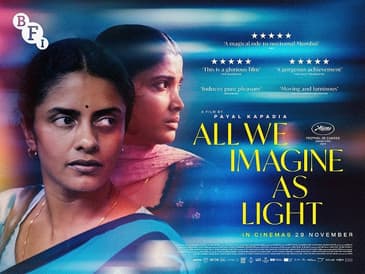
On this week's Khandaan: A Bollywood Podcast we have a mini review by Amrita of Payal Kapadia's - Cannes Grand Prix winner- "All We Imagine As Light" as well as interviews by Payal Kapadia herself and lead actress Kani Kusruti conducted by our very own Yamini AKA Pappuchaaru.
All We Imagine As Light is now playing in UK theatres.
In Mumbai, thoughtful Nurse Prabha’s routine is upset when she receives an unexpected gift from her estranged husband. Her younger, flightier and rebellious roommate, Anu, tries in vain to find a spot in the city to be intimate with her secret boyfriend. Their colleague Parvaty fights to stay in her home without any requisite paperwork left by her late husband. A trip to a beach town allows them each to find a space for their desires to manifest.
We are now on Blue Sky!
Follow us on Socials:
- Amrita, Sujoy, Asim
- YouTube, Facebook, Instagram, Tik Tok
- Sujoy's Instagram
- Amrita's YouTube Book Channel- Amrita By The Book
You can listen to Khandaan- A Bollywood Podcast episodes on the following apps:
[00:00:15] Hi, this is Asim. This is Sujoy. This is Amritha. And you're listening to Khandaan, a Bollywood
[00:00:20] Podcast about the three main Khans of the Hindi film industry. Aamir, Salman, and Shahrukh.
[00:00:26] Hi, you're listening to Khandaan, a Bollywood Podcast regular feed. Thank you so much for
[00:00:31] your support over the years. We now have a Patreon channel with bonus content and exclusive
[00:00:36] merch for those of you who would like to support us. Every dollar goes towards creating more
[00:00:41] and better content. Visit us at patreon.com slash Khandaan Podcast. Hi, and welcome to a new
[00:00:49] episode of Khandaan Podcast. My name is Asim Burney. And this week, we don't have an episode. You might
[00:00:55] know that we're preparing an 80s Dharmaka series, which is going to be launching in January. And we
[00:01:01] had a huge hangout on Sunday with me and Amritha going over the lists, the shortlist, which movies
[00:01:07] we're picking, which might we be picking. And that list is almost finalized. And we will be posting
[00:01:13] it on social. So if you want to see which movies we'll be covering, you know, follow us on Twitter
[00:01:19] or on TikTok. And there's going to be five movies that our Patreons can choose to be included in
[00:01:25] the series. So if you're not a Patreon and you want to add your vote, join Patreon from $1. The link is
[00:01:32] in the show notes. So this episode is our All We Imagine Is Light episode. Amritha got a chance to
[00:01:38] watch the movie and she has a little mini review for you guys. And then Yamini, Papu Charu on Twitter
[00:01:45] and Yaminit on Instagram went over and had a press screening and got a chance to speak with the
[00:01:53] director Payal Kapadia and with actress Kani Kasruti. So both of those interviews are in here. So you do get
[00:02:00] a little bit of an episode from us, although we're not all of us together. Check this out. Let us know
[00:02:05] what you think of the conversation. And I hope you guys enjoy it. And we'll be back with a new episode
[00:02:09] very soon.
[00:02:36] Hello, everybody. This is Amritha.
[00:02:38] So All We Imagine Is Light is now out in limited, very limited release and the boys haven't had a
[00:02:47] chance to watch it. But there's been such a lot of chatter around this project even before it got a
[00:02:53] mainstream release that I thought maybe I could share my thoughts about it. Please do stick around at the
[00:02:59] end to listen to an interview with the director Payal Kapadia conducted by friend of the pod,
[00:03:04] Papu Charu.
[00:03:06] Okay, so the very first thing you should know is that this is not a mainstream movie.
[00:03:12] This is very much a film festival movie. And I feel a lot of people got their wires crossed.
[00:03:19] Because when we were discussing the Oscar norms, this movie was pitted against Lapata Ladies,
[00:03:26] which is what passes for an art movie in India these days, which is to say it doesn't have big
[00:03:33] stars and is set in a village about 20 years ago, you know, a period piece. Oh my God.
[00:03:41] But Lapata Ladies is very much a linear piece of storytelling.
[00:03:47] And all we imagine as light is very much not that. There are three main characters in this film,
[00:03:58] all of them women. And there are a few men who weave in and out of the storyline. But it's very much an
[00:04:06] exploration of what it means to be a quote unquote, ordinary working woman in a city like Bombay.
[00:04:15] It has this unhurried gaze that likes to linger on frames in a way that is, frankly, it's disorienting
[00:04:25] in 2024 for an audience that is perhaps trained within an inch of its life on YouTube and Instagram.
[00:04:34] It demands your attention and your critical thinking in a way that can be uncomfortable.
[00:04:43] I wouldn't say that this is my cup of tea cinematically for various reasons that have nothing to do with the film
[00:04:51] and more to do with me and my relationship with cinema. But I love that I kept thinking of scenes
[00:04:57] and characters for days afterward in a very soft, gentle flashback kind of way.
[00:05:05] There is a scene, for instance, where Divya Prabha's character undresses in front of a mirror and Kani Kusruti's
[00:05:14] character averts her eyes. And in the moment at the theater, I rolled my eyes a little because it was
[00:05:21] such a classic film festival movie scene. But later I was thinking about what that scene told the viewer
[00:05:28] about the two characters and who they were and how they express themselves, not just to each other,
[00:05:35] but also to the world. I always complain that modern day Bollywood movies spoon feed their audiences
[00:05:43] nearly everything. In fact, it's gotten to a point where it's not even spoon feeding, it's straight up
[00:05:49] regurgitation. And all we imagine as light is the exact opposite of that. It tells you almost nothing
[00:05:58] and everything that it does tell you is oblique and clouded. So you're forced to search for meaning.
[00:06:07] This is almost interactive storytelling. I've also seen some criticism sent its way about poverty porn
[00:06:16] and so on. And I don't think that's valid. This is perhaps the kindest take I've seen in a long time
[00:06:22] about the lower middle class migrant population in Bombay and how they survive and the communities
[00:06:29] they forge with each other. Like any large migrant city, Bombay is ugly a lot of the time. And in that
[00:06:37] frenetic ugliness, there is a beauty that perhaps only appeals to the true blue urbanites such as myself.
[00:06:44] I mean, I love nature and everything, but give me a grimy subway because that's what I need to thrive
[00:06:50] more than some cow doing a poo in a field. I don't think this was a perfect film by any means, but
[00:06:58] I do think it's astonishing that something like this could come out of India in 2024.
[00:07:03] And it's such a throwback to the kind of art cinema I grew up on. Like this is a movie that could
[00:07:09] only have been made by someone who went to film school, you know, so should you watch this?
[00:07:16] I think you should. You might not like it or you might, you may love it, but in either case, you will
[00:07:23] walk out of the cinema having experienced something unique. And I think that is worth something.
[00:07:36] So hi, Kanye. I'm Yamini. I'm from the You Podcasting team. And one, like congratulations
[00:07:43] on the film. Like, I mean, and also there's two films of yours this year that are doing
[00:07:47] kind of the festin circuit, like all the way much aside and girls will be girls. So I just
[00:07:52] wanted to ask, like, how do you like, you know, when these roles come to you, like, how
[00:07:56] do you choose them? And how do you like approach each one of them? Like in general?
[00:08:01] Um, I mean, I mostly do auditions. That's how I get my part. Um, I generally go with a
[00:08:10] little neutral open mind because sometimes I need to talk to the director a couple of
[00:08:15] times to see how are they seeing this whole film and the character and everything to be
[00:08:21] able to know. Um, you know, like if I already go with some kind of my way of understanding
[00:08:26] of the character and everything, it can make me a little rigid about my preparation. And
[00:08:32] once I meet the director, then I'll have to unlearn a lot of things that I've prepared
[00:08:35] and then them again start. So I generally go with a little open and neutral, like, like
[00:08:39] I know nothing kind of attitude. And then I discuss with them and then I try to show a
[00:08:44] little bit how I think it is. But this is all, this is all, this luxury happens only if
[00:08:49] there is time for rehearsals. And both these directors, thankfully, were open to rehearsals
[00:08:54] all open to discussions and everything. And Pyle particularly rehearsed a lot. Shuchi didn't
[00:08:58] rehearse as much, but her power process was different. Like we have rehearsed some bit
[00:09:02] and some idea and prepared for the physicality and the internalization of the character a little
[00:09:08] bit, a day or two. And then once you go to the shoot, what Shuchi used to do is like,
[00:09:13] she would, um, rehearse the scene and then we kind of prepare the scene and choreograph it.
[00:09:18] Then we go get ready and come back. So she had a different way of shooting. So both Pyle and Shuchi
[00:09:25] had, um, ample of, you know, like, or like enormous amount of space and time for us to prepare.
[00:09:32] And they gave it differently those things. Hence, it was really helpful for me to prepare for it. But
[00:09:38] I don't have like a one way of looking at, okay, this is how I do and I will go. Uh, I mostly work
[00:09:43] whenever any director comes, I, I, I need a little time with them to understand all, but sometimes
[00:09:48] you're not that lucky. You're, you go to the set directly. So if I know that's the situation,
[00:09:53] I prepare something and go and sometimes in after two days, you know, this is not how he,
[00:09:57] they want it probably. So then, you know, then you have to unlearn it and do it differently. And
[00:10:03] that can cause some inconsistency in you, how you play. But yeah.
[00:10:06] Okay. Yeah. So I had the pleasure talking to Pyle Kapadia about this and also like, um,
[00:10:13] cause she was shooting in Malayalam, which is not like her language at all. So what, how was it like,
[00:10:19] first of all, like working with a director who's not fluent in Malayalam, how much of like your own
[00:10:24] inflections and sensibilities kind of came into the, like, how did that work?
[00:10:29] So I have worked with other directors also who made content in there, not their mother tongue,
[00:10:34] what they didn't speak. And, uh, but what was special about Pyle is by the time we reached, uh,
[00:10:42] for the pre-production of the film, she has thoroughly worked on the script with her assistant
[00:10:47] director, Robin. He has translated the film, but it was not just like he took, got the script and
[00:10:51] he just translated and gave it back to her. No. He and, uh, she would sit together and then he,
[00:10:57] she will ask for all the probability of words that's possible for one meaning. Like if,
[00:11:02] if you want to say what other is well, um, and like if something, some other words are there,
[00:11:06] like all kinds of words, um, like in, in, in, in south of Kerala, there are different words,
[00:11:13] so north of Kerala, like, as you know, like so many different words for the same meaning.
[00:11:16] So she will ask for all kinds of words and all kinds of phrases.
[00:11:19] And Robin will kind of tell her all the different words with different permutations and combinations,
[00:11:25] and she will listen to each. And then what sounded right for the tonality of the film,
[00:11:30] she would choose that. And that's how they wrote the whole Malayalam script. Like,
[00:11:34] it's an incredible job that they've already done for a year. They, she worked on the script,
[00:11:39] sitting with him on a day-to-day basis. And, um, she really knew what, what was it sounding in
[00:11:45] that one. And she'll be like, oh, this word we chose because that was, huh? Okay. Like,
[00:11:49] so this is already there, which is already incredible. So when we came, all the actors came,
[00:11:55] we were like, wow, it's so beautifully written. Even then you don't see, how was,
[00:11:58] how did that happen? And then, then once we, the actor characters were like actors were fixed for
[00:12:04] the characters, we were like, okay, maybe these characters, this one is formerly from this part of
[00:12:07] Kerala, this part of Kerala. And then, when we'd finalize that, um, Prabha, we, we'd set out
[00:12:13] probably from Colum or something. And then I had this friend from Colum, she helped me to rearrange
[00:12:19] the lines slightly. And I will tell Payal and Robin the new tiny differences in lines. And
[00:12:24] Robin will be like, I think, Kani, maybe you ought to go with this and that. And then I'll ask my
[00:12:27] friend and then, then he, she will, he will approve first. And then we will make listen,
[00:12:32] pile the differences and then she will approve. So that was a long process. Like, but she's really
[00:12:37] worked like a lot to achieve what it is now. And I, I think, I don't think even my alum director has
[00:12:43] worked so much like that. So, um, I won't say my, our actors contribution is a lot in terms of the
[00:12:51] dialogues, but we have been, the moment we fixed the background of the characters and where they are
[00:12:56] coming from, the dialect and everything, we changed a bit with the approval of file where we have given
[00:13:01] all the combinations and what's the difference. And sometimes if it didn't match with the tonality,
[00:13:05] we took the freedom to go back to what finally, ultimately she wrote originally. So that because
[00:13:11] at the end of the day, she really wanted to keep that consistency of tonality and that negotiation
[00:13:16] was happening through Robin and Pyle like that. So that's what happened. Yeah. So, uh, Prabha's character,
[00:13:21] I think that was the one that kind of, because the thing about this film is also like, every time
[00:13:26] I think it's going to like, is it going to get like a bit more intense? I'm going to be more worried. But then
[00:13:31] like, I think the way that she dealt with it, I was like, oh, it's just, it's just, it's just a part of like
[00:13:36] people's slides. But Prabha's character is definitely the one I think I felt a little bit more pained by
[00:13:41] because I'm like, I get that, uh, no, that is a thing, right? We're all like hungry for love and
[00:13:45] we want to be able to, uh, have that constantly. And, uh, when you get to the ending, when you get
[00:13:53] to the reconciliation, like, I feel like the ending just had this, this magical quality that kind of
[00:13:58] leaves us as, as a viewer, it's like, you're really not sure between like the lines between like
[00:14:04] reality and imagination, where really blurred. And you know, how did, how do you, how did you
[00:14:10] interpret it as like the relation to the themes of like, you know, life, loss and acceptance?
[00:14:16] Yeah. Uh, yeah. Yeah. For me, like the very end of the scene, it, it, it was not like dreamlike for
[00:14:25] me, but that between where, where kind of Prabha transit through that or move forward. And that scene was,
[00:14:33] we don't know whether it happened or not, or it's just a conversation she had in her mind,
[00:14:37] or was it a dream or like, or did she have a conversation with someone or she, did she write
[00:14:41] this in the diary or did she actually this happen and she had a closure? Was that just a strange
[00:14:45] land where she thought it's her husband? Like, or was it actually, actually her husband she envisioned
[00:14:49] and then had a conversation on her and then she moved on, like whatever. But after that,
[00:14:54] the very end of the scene where Anu and Prabha talks and then they come and sit and then
[00:14:57] where Anu brings her boyfriend and they'll sit. For me, that's the most rooted scene of the film,
[00:15:02] where that inclusivity and that acceptance of each other. And you know, it's a, it's a starting
[00:15:08] point of, uh, or one turning point of life where they are all are like going to open up and you know,
[00:15:16] like, uh, changes are going to happen in a better way just because they're accepting of what the
[00:15:22] situation is and, uh, um, uh, and ready for listening to the other and, you know, also accepting them,
[00:15:29] something like that. For me, that's how that scene was. But previous scene, like you said,
[00:15:33] was dreamlike and with, did it happen or not? And the thing is the pun that she did in, I don't know
[00:15:37] if you speak Malayalam, or the, the, the Malayalam title is, I don't know if you read, it's called
[00:15:42] Praphaya Nirachadalla means, um, it's not exactly all we imagine is like, it means whatever
[00:15:49] Prabha has made up in her mind, whatever Prabha has imagined, whether all this happened or not,
[00:15:55] we don't know. Yeah. Something like that. And which is a pun because in, in Malayalam title,
[00:16:00] it can also mean all the images in a slide. Prabha Nirachadalla. It also means because my
[00:16:04] character's name is Prabha, it's all what she thought. Uh, so that's kind of the film is like
[00:16:10] coming back to your perspective. Yeah. Uh, also like a part of it that, um, because this film has been
[00:16:15] like, you know, uh, like doing incredibly well and like, you know, everyone around the world,
[00:16:21] like, and especially because you're bringing up like with Malayalam, like all these nuances and all
[00:16:26] of that. So, uh, I just want to ask, even as an actor, like how, sorry, how has it been just kind
[00:16:34] of seeing how people interpret this film? Like, because, um, it's so universal, right? Like to in the,
[00:16:41] it's a migrant story, something that a lot of people can really do, but at the same time, like with the
[00:16:46] language, there's so many nuances, a lot of people probably missing out. Probably missing out. I mean,
[00:16:50] that can't really help. I mean, even when we watch films from other parts of the world,
[00:16:54] we might be missing a lot of nuances. Um, no, so far, I've been for a, wherever I've
[00:16:59] went and people's feedback that I would receive directly or messages, everything,
[00:17:04] people are really getting the film. I've never, I hardly seen someone not getting what it is.
[00:17:09] Yeah. So I think it's translating quite well in that way. Of course the nuances,
[00:17:13] I mean, I'm sure I have with some probably what Bile meant. That can always happen, right?
[00:17:19] Yeah. Yeah. Yeah.
[00:17:21] Yeah. Of course. And, um, yeah, again, like bringing up, uh, not just Paya and Kapadi,
[00:17:26] but also like with Chaya Kadam and, uh, the way well, but like, how was, how, how was the process
[00:17:32] like with collaborating with these women, especially like cause Chaya Kadam like one, I mean, all of her,
[00:17:36] like, yeah, cause I spent so many years of my life in Maharashtra. Oh my God.
[00:17:40] Yeah. I've seen so much of her film before and this year, especially like,
[00:17:43] yeah, she's doing it. Like Hindi cinema. Yeah.
[00:17:46] This and it has been her year. Like, yes, surely. Like she was in, she's in La Patalee.
[00:17:51] La Patalee. She's in Sister Midnight as well.
[00:17:53] Yeah. She's in that. She was in even like, like, no, I wouldn't say mass, but more mainstream.
[00:17:58] She's in Madgao Express and her character is like the one I came out like, what a brilliant
[00:18:03] character. And what a brilliant. And Chaya Jay is like really, like,
[00:18:06] I also been, I haven't watched all of her work, but whatever work I have seen, I've been always
[00:18:10] looking up to. So when I, when I got casted in this film, I asked Pail who's playing Parvadoo.
[00:18:15] It's one of my favorite character. It's something that I don't, I don't think I can pull off also.
[00:18:19] Some characters you know, it's going to be the most difficult. It shouldn't fall into the stereotypical
[00:18:23] way of interpreting that character, but it should also be fun and, and same being very true and rooted.
[00:18:29] And I was like, I may interpret it so fakely. I wouldn't be able to pull this off. And then she said,
[00:18:34] I was like, wow, I love this actress. I was so much looking forward to rehearse with her. And
[00:18:40] from day one, I mean, I did not know her before personally, but from day one, she's like, she
[00:18:45] gelled with all of us so fastly and she's such a sport, uh, like ready for anything, anytime. And,
[00:18:53] like a really mazak kind of person and an amazing person, amazing person. Like I really,
[00:18:58] truly enjoy, I mean, we all enjoy it. Like even Nibia also enjoys her company so much. And
[00:19:03] uh, to learn from her for my main thing, like as an actor, I am always amazed by how she like,
[00:19:08] there are some lines sometimes file and I'm like, but this kind of, this sounds so dramatic. I don't
[00:19:13] know if it's right. I mean, uh, dramatic is not the right way, but like, maybe it doesn't,
[00:19:16] it won't fold up nicely. And then Chaiji Larai, it's her line. Okay. She just, she just says,
[00:19:21] and I'm like, wow, it sounds so right. Like any line that you give it to her, she'll just make it like,
[00:19:26] that's like a easy cakewalk. Like, like she's really good at that. Like for me, I have to work
[00:19:31] a lot of my lines for it to fall at least rightly. Because some lines, if I don't say those words in
[00:19:37] my life personally, it takes some time for me to make it my own. And Chaiji is such an, like, you know,
[00:19:42] like anything that you give it to her instantly, she will make it on her own. That's one really plus
[00:19:48] point that she has, I believe. And she's contributed really amazing lines to this film.
[00:19:53] The Marathi lines that, um, some of the, it's not Marathi's in Oregon, Payal's language, but
[00:20:01] the Ekda Shiv, Sadashiv and all this Chaiji's contribution, like Payal had idea, but exactly
[00:20:06] what to say was, Chaiji brought all that. So that's how I really looked up to her. For me,
[00:20:11] Divya was someone who was a friend of mine from some time. We have worked in a soap opera together.
[00:20:16] We have done a play together. So I've been seeing her, uh, craft of acting for some time. And then for me,
[00:20:23] when I went to watch, not while we worked, because we knew each other. So I knew her.
[00:20:28] Then when I watched the film premiere at Cannes, I thought, oh my God, she was my most favorite actor.
[00:20:36] She has risen above, like she has outdone herself. Like I was like, Divya, I can't believe I could not
[00:20:42] see you. And I know you so well. And I didn't realize that you are doing it. Now when I watch the film,
[00:20:47] you've pulled off something that I'm so proud of. And I can see the, the long way that she's came from,
[00:20:54] where, from where she is to now and how much she's improved in her craft. And it's incredible what
[00:20:59] she's done in the film. So for me, that was my experience for Divya. I was like, oh, I was blown away
[00:21:04] by her performance, really. Yeah. Maybe that is, uh, yeah, that, because she, like, I think,
[00:21:10] one, everyone was so brilliant. Yeah. I was just, I was just spellbound by the way. Yeah. But for me
[00:21:14] to also see the, you know, the journey, like when you know you're the co-actors and we see the
[00:21:20] journey, that's something else. So like, you really feel proud of it. Like, wow, like this person was
[00:21:24] this and then now they're here. Like, and you see all the steps and how much she's come. That's really
[00:21:29] amazing. Yeah. So, of course. And, uh, so I just want to ask, like, for me,
[00:21:33] I think a big part of this film, like what kind of felt very personal to me is just like the theme
[00:21:38] of like found family, because again, that is such an, that's such a migrant scene. That's such a
[00:21:43] thing. Like, especially if you're someone who's around us at a place, it's not your, yeah. Um,
[00:21:48] so what was like your, I feel like your major personal connection to the film? Because for me,
[00:21:53] this is one thing that I came out like, not just found family, but how beautiful it's like shown
[00:21:59] with the way. And I feel like, uh, Prabha's characters is really kind of the thread between like
[00:22:03] with Babadi and uh, yeah, Anu. So yeah. Yeah. For me personally, I have, I have also been in cities
[00:22:10] in places where I don't speak the language and I don't know how to communicate. I don't have friends.
[00:22:15] I don't have family. I don't have the money and I don't know how I'll survive. And such
[00:22:19] female friendships or friendships have emerged of such places where none was there, nothing was there to
[00:22:25] help. So in that aspect, I personally relate with the story a lot, but of course, I'm still so
[00:22:31] privileged. I haven't been in the shoes of any of these characters. So I can't really say it in that
[00:22:36] aspect, but I have been at the same time in a city where I was a student and I had no money and no
[00:22:42] friend and no language. I spoke not even a word. And I am probably identified with Dr. Manoj Mast.
[00:22:47] Let's feel like, I don't know how to survive and it probably will go back, you know? So, uh, that is
[00:22:53] my personal connection, probably. But, um, I think, yeah, like the one thing that probably can
[00:22:58] really make us resilient and come out of it is like these people surrounded by you and
[00:23:03] you somehow discover them. And then you make that new family or the kinship that meant to be yours
[00:23:09] and to discover yourself in a true spirit and then allow yourself to be yourself, you know?
[00:23:16] Yeah. Yeah. Yeah. Yeah. It's that's how I see it. Yeah. So, of course. Um, and also like, uh,
[00:23:23] like, I mean, again, like with the cultural context or whatever, and we look at like,
[00:23:26] uh, there is this undertone of like systemic oppression that you do see very much. And, uh,
[00:23:32] like you had said, like with privilege and everything, these are not, these are things that we know so
[00:23:36] much more in theory than in practice. But, uh, I feel like, how do you think this film reflects,
[00:23:42] like these kind of contemporary issues in society and, and probably why it's one of the reasons why
[00:23:49] so many people can relate to it. Yeah. I mean, I do think, I mean, she,
[00:23:53] Pile is very subtle in that way, like, which I like, I mean, in everything, uh, like in her,
[00:23:58] some of her lines or in the background and you see the reflections of some, sometimes in some shots,
[00:24:04] um, it's designed in a way that this whole gigantic system is kind of, uh, very easily,
[00:24:11] you know, closing their eyes to the problems that they can avoid, but then not like, like the
[00:24:17] particularly power worthy story. Um, Pile was saying that this, a lot of people in Bombay,
[00:24:23] that actual factor when it was shut, people were just sent, they were never met with what they would,
[00:24:27] they have demanded. And, you know, of course, change is inevitable to, to have certain kind
[00:24:33] of development, you need to kind of abandon things, but then you need to also provide for people
[00:24:37] who's life has been suddenly, you know, stopped because of that and they don't know how to live. So,
[00:24:42] uh, I mean, the film is resonating of all that, but in, in Pile's language, which is even the
[00:24:47] characters and everything, I think it's also very subtle and poetic. It's not, it's not, um, like, um,
[00:24:54] political pamphlet that's out there in the film. It's more of a subtle way where you see it,
[00:25:00] you know, like, it's like she's just gently turning her head into that direction kind of thing.
[00:25:04] But yeah, it's very much there. I mean, it's a political film as well for me.
[00:25:08] Anyway, I think this is her, yeah, time, my time is up, but thank you. Thank you so much for like,
[00:25:14] this, um, and yeah, it was just wonderful to meet you and I'm so glad that I got to see the film.
[00:25:19] Yeah, I'm happy. Yeah. Thank you. So hi, Pile. I'm Yamini from the podcasting team. Um, yeah,
[00:25:30] so right. Uh, also like congratulations on the, uh, Grand Prix. Like how has it been like taking your
[00:25:38] film, you know, to all these festivals right now and now you're in London, like how has the experience
[00:25:42] been? Yeah, firstly, thank you for having me. And, uh, it's really nice to be here and to talk about
[00:25:48] the film and I'm excited about the release here as well, uh, in the UK. Um, and it's been, um,
[00:25:56] really fulfilling experience because I think as independent filmmakers, one of the things that
[00:26:01] you really want is that your film gets shown and to get shown in a cinema, which is, uh, really nice.
[00:26:08] And so I think I'm being just so, so it's been such a great privilege.
[00:26:13] And, and how has it been like just taking the film to all of these like different countries and places
[00:26:19] and all of that? And it's, it's interesting for me to see how other people respond to the film who,
[00:26:26] um, don't understand entirely our cultural context. And it's just interesting to see what they find,
[00:26:32] um, uh, in it for themselves. And that's always something I'm curious to know and, um, understand also.
[00:26:41] So, so one, like, cause I, I'd gotten a screening of the film yesterday and there are just like,
[00:26:46] there's so many layers to this. I mean, and it's hard. It's very much like a migrant story. And
[00:26:50] one thread that particularly like released throughout to me again, as someone who's moved around so much
[00:26:55] is the idea of the chosen family, especially with all, um, all of these women and especially in a
[00:27:01] place like Bombay, like, you know, having lived in Bombay, you see the hustle and bustle of that city.
[00:27:06] Yeah. And it's just so intense and, and there's so much trappings to like Bombay as well.
[00:27:12] And like, there is also this political tone of like systemic oppression. So I just want to ask,
[00:27:19] like, where did this story Germany from, you know, where did you get this idea? Like, what was
[00:27:23] the main narrative? And then all these other like narratives, where did they come out of?
[00:27:28] I was, uh, I'm from Mumbai, but it's not a city. I always, um, like I lived outside a lot. And I
[00:27:36] think when you leave a place and come back, you see it's changed, uh, very, uh, obviously. And for me,
[00:27:43] it's a city that's always in a state of change. It's one of the biggest characteristics of the city,
[00:27:49] but it's also that change can be both good, but also quite often quite brutal to, uh, a lot of people
[00:27:56] who live there. And very easily, um, there is a kind of violent gentrification that happens in Mumbai
[00:28:05] of people and displacement within the city, which is unfortunately become like the norm.
[00:28:12] And we accept that this is the way it is. And this is something that I don't think was the
[00:28:17] kind of ethos of the city, maybe 20 years ago. And I feel more and more that our attitudes have become
[00:28:23] that, oh, this is how it is, but why should it be like this? And this is something that I was very
[00:28:28] concerned and bothered by. Um, because it's a city that I think has been made by people who've come from
[00:28:37] everywhere. And it's important that there is a more inclusive attitude that we have. And I think that
[00:28:45] was kind of the starting point of the film, but also about women who come to work in Mumbai,
[00:28:51] because like I said, even though I lived, I'm from there, I lived outside a lot. And when I'm,
[00:28:57] I didn't have any friends from Mumbai, uh, from like say my childhood or anything, because I didn't
[00:29:02] have any school friends like that. So most of my friends are the ones who were from FTI at the school,
[00:29:09] the film school I studied in, and they moved to Mumbai and they have a totally different view of the city.
[00:29:14] So I started seeing it through their eyes and, um, you know, through the experience of coming and
[00:29:19] living there and settling there. And what does it feel like? And what does it mean? So all these
[00:29:23] things kind of, um, were all the masala to make this film. No, honestly, I did, I did feel that
[00:29:31] because I also did feel like this was an ode to Mumbai. Like, you know, I feel like you capture
[00:29:35] the harsh realities, which I feel like are often romanticized in a lot of other films, because
[00:29:41] you can romanticize. But I see, I see, can you look at Mumbai from both sides, you can see it as a very
[00:29:45] romantic city. There's so much, there's so much heart in the city, but at the same time, like, as you
[00:29:50] said, like London is as well. It's a city that is built of migrants. It's not a city that would thrive
[00:29:55] if it weren't for the migrants. And moreover, like the struggle to survive and the loneliness that we
[00:30:01] feel as migrants in the city, and which I really loved specifically through the doctors can have feel
[00:30:07] I felt like, because the women, I feel like ended up somehow at least like integrating with the city much
[00:30:12] better with him. It was so difficult. And you see the pain when he talks about it. So did you think
[00:30:19] of this as like a Mumbai story more or like a story of migrants in a big city?
[00:30:24] I feel that both are connected, because you can't talk, I feel you can't talk about Mumbai without the
[00:30:30] people who come to live there and make it home. And so it was, it was linked.
[00:30:38] But the element of the flux was important to me, because I feel that it is really a city that is
[00:30:47] in constant change and constant flux. And even the shape on the map of the city is changing at the
[00:30:53] moment, because, you know, land is being reclaimed. And the very origin of Mumbai was from seven islands
[00:30:59] that were reclaimed from the sea by the British East India Company. So the entire, like the geography of
[00:31:07] the city has been in constant change. So that's how I see the city as something that is in a state of flux.
[00:31:15] So, I mean, because I had talked about like how your journey has been with the film so far, but then
[00:31:20] like, you know, from like the conception to the writing, to now seeing it like being locally distributed,
[00:31:25] like, is there any like specific goal or milestone that you'd really like the film to reach?
[00:31:32] Oh, I'm already very happy with how the film is done. And it was a film that I worked on for many years.
[00:31:39] It took, it was five years that I worked on this film. So, you know, when you're working on something,
[00:31:46] you don't think that I wanted to go for this festival or I wanted to go for that.
[00:31:49] We just hope that people will watch it. And whatever way you can to make people watch it,
[00:31:55] whether it's winning at a festival or being selected at a festival, it's all like adding to that gold.
[00:32:01] And I think as filmmakers, that's all we can hope for.
[00:32:04] Yeah. And that's wonderful. Yeah. So one thing that I really like, that I constantly kept noticing,
[00:32:11] especially in the film, because even when the introduction happens, right, you have like people
[00:32:13] speaking in different languages. I just want to ask why Malayalam? Like I know, I know it's a story
[00:32:20] of nurses and I don't, is Malayalam like your first language or whatever. So I just want to ask why
[00:32:26] in Malayalam like specifically? I don't know. It was a crazy idea that I got five years ago.
[00:32:31] But I was like, when I started writing the script, I was spending a lot of time in hospitals due to
[00:32:37] personal reasons. And I made friends with some nurses who were there. And a lot of the stories
[00:32:45] I got from them, and they happened to be Malayali. So I felt that it would make sense to
[00:32:49] meet the film in Malayalam also and see how it goes. Because I think some of the questions and
[00:32:56] things I wanted to deal with in the film, whether it comes to language as a form of alienation,
[00:33:01] but also a form of privacy, and all these other questions worked well with the characters.
[00:33:07] And there is a kind of independence to Malayali women. And there is a kind of moving to other
[00:33:12] places attitude that is there very much part of the culture. So I was so then and also after I
[00:33:19] started writing the script, I was I met a lot of people from the Malayali film industry who were
[00:33:25] really supportive of, you know, this random person coming there to make a film and because I had to
[00:33:32] meet a lot of actors and there was a kind of generosity of spirit. And I've always been inspired by
[00:33:37] the work happening in the Kerala film industry. So they are great actors also. So I was I
[00:33:44] all kind of made sense suddenly.
[00:33:47] No, but now that you you bring up actors like casting, like, for one, the casting of this film
[00:33:53] incredible. And I would be remiss if I didn't bring up like Chaya Kadam, who's been having a
[00:33:58] fantastic year. I personally think this is 2024 is her year.
[00:34:02] They completely agree.
[00:34:03] Like literally with like, with Lapata ladies with with all you much as light and even in like
[00:34:08] Madgaon expresses like Kanchan Komri like, like, she's just had an amazing year. So how is the
[00:34:15] how's the casting process of like just getting these women?
[00:34:20] With when I started casting, I had this completely ridiculous idea that I'm going to be able to to cast
[00:34:28] a woman like Parvati from Mumbai, who was actually, you know, living and working there, which just
[00:34:34] reflects on my complete ignorance and privilege, because they were like, sorry, we are not going to
[00:34:40] stop our job and do your movie because are you going to think about employment afterwards? And I was like,
[00:34:46] oh, shit. Yes, this is. Oh, no, this is ridiculous for me to think this. And then I had actually I was
[00:34:55] big admirer of Chaya. I had seen her in Fandry like 10 years ago when I was a student at FDI. And I was
[00:35:04] completely taken by her performance because it was so powerful in that movie. But I didn't think that
[00:35:10] she would like she's such a veteran actress and me, my first film, and I narrated the story to her. And I think
[00:35:17] she connected to the character of Parvati because even Chaya and Parvati are both from the same region in the
[00:35:24] Kunkan. And like, her village is not very far from very short Parvati's house. So I think she connected a lot to
[00:35:31] the story and to the dialect and language and the kind of woman Parvati is who's super strong on her own. So all those things,
[00:35:39] I think she connected to and I felt were really right to cast her as this character because of all the same
[00:35:48] reasons. So that's how we started working together on this film. And with Anu and Prabha, who are played
[00:35:57] by Divya Prabha and Kani Kusruti. They're just really great actors. I think because I think in the
[00:36:07] Malayalam film industry, they do a range of work also like Divya does mainstream films, but she also
[00:36:13] does a film like Aripu, The Declaration, which was in Lokarno two years ago. And in that she's like a very
[00:36:20] serious and severe character. And in this she's like this very playful person as Anu. So I was always
[00:36:28] interested in the kind of work they were doing and I always found them to be versatile actors.
[00:36:34] And then I approached them. And for me, one thing that was important was people who are willing to
[00:36:40] give time to the film and also agree with some of the themes in the film. And fortunately, I found
[00:36:47] people like this and we formed a really nice friendship, all of us. So for a director, I think
[00:36:53] that's the greatest privilege.
[00:36:54] Oh, that's, that's so wonderful. Like, and you had brought up the location. That was one thing I
[00:36:59] wanted to ask, like, where was the entire, the location where like when we go to Parathis,
[00:37:06] the village, like the, the caves, the area, like, I mean, I figured it was probably like
[00:37:11] Konkang, but where, how did you do the location scouting for that?
[00:37:15] I, it was in the Konkang, it's in the Ratnagiri district. It's a town called Ganesh Gule. It's close
[00:37:22] to Ganpati Phule. So there is a strong connection between this region and Mumbai because all through
[00:37:30] the 20th century, a lot of people moved to work in Mumbai from this region, especially in the cotton
[00:37:36] mills. So there is a long history of this movement between the two spaces. And I wanted to acknowledge
[00:37:43] that connection between Ratnagiri and Mumbai. So it was important for me that Parvati, whose husband
[00:37:49] worked in the mills, was originally from Ratnagiri, which is why I chose this region. And thankfully,
[00:37:55] I had a location scout, great man called Kishore Sawant, who's both from Mumbai and Ratnagiri.
[00:38:03] So he was instrumental in like exploring the entire region and really kind of specifically finding this
[00:38:11] location and the cave and, you know, really, he's like an artist. And it's rare to find somebody like
[00:38:20] that.
[00:38:21] No, but I also like to tell you a little bit more on locations because like a lot of, especially the
[00:38:28] first couple of bits of like, when you see like Mumbai, it kind of feels a little bit like a
[00:38:35] documentary and the way it's shot, because I feel like, you know, the scenes with like
[00:38:40] Anu and Shiaz when they're walking through like Khaogali and even when they're just like, you know,
[00:38:44] walking and the trains and in the rain with the Ganpati and everything like, like how did you manage
[00:38:50] to do that of the Mumbai chaos and the monsoon like on top of that like HG4?
[00:38:57] I like to shoot a lot like nonfiction. So a lot of those scenes, we just shot them with
[00:39:04] a small DSLR camera like we were making a documentary film. Because I feel there's no other way really
[00:39:10] to shoot Mumbai authentically, unless you have like a huge budget and you can get a lot of
[00:39:15] people and great, you know, to recreate it. But it's such an interesting city to shoot. And
[00:39:22] it's also what I like to do. So fortunately, the actors also like when they were walking around
[00:39:28] Muhammad Ali Road, they were quite open to just being the characters without having, you know,
[00:39:35] too much direction, because they really internalize the characters well. So we could just,
[00:39:41] they were just walking around as Anu and Shiaz. And we were shooting as if we were making like some
[00:39:46] tourist videos. Yeah, those bits just because of the memory like when I was in Mumbai and like,
[00:39:53] um, and also I just wanted to ask like, because, because it's such a like women, like it is such
[00:39:59] a women's story, like, and as migrant women, especially like, did you like, you know, delve
[00:40:06] into any like specific filmmakers or any like influences? Like were there any women who sort of like,
[00:40:11] um, served as inspirations who make these kinds of films for you?
[00:40:17] Ah, who make these kind of films? Yeah. Um, I'm inspired by a lot of filmmakers from around the world.
[00:40:25] Um, and like Agnes Vardav and Ali Cherovaka, Claire Denny and Naomi Kawaze are just a few from
[00:40:38] who come on top of my head. Um, Chantal Akravine, because I know they're going to have a retrospective
[00:40:47] and I'll be in my. Um, yeah, also finally, like with the momentum now that like,
[00:40:55] only imagine a side has been having, um, what changes do you, but hope it would bring to
[00:41:01] how we see independent film in India, just how it works in India? Like, because I, I mean,
[00:41:09] obviously I have known about you having studied film in India and, um, it's been a long road
[00:41:14] to where you are now. And I, as like, what are your hopes of what like your film will do for,
[00:41:20] you know, a newer generational group of women who are trying to make independent cinema?
[00:41:25] I think that I am actually a product of change that is already happening. And I'm one of those
[00:41:31] many filmmakers because this year we had so many filmmakers from India in Cannes, which
[00:41:36] is a rare moment for us. And there were filmmakers who were women also, or at least themes that
[00:41:42] were to do with women. So I think that there is a change that's happening and I, I have benefited
[00:41:47] from this change. So I think, I hope that it goes, um, longer and wider and it's, uh, uh,
[00:41:55] different directors from different, um, backgrounds get the opportunity to make films. Um,
[00:42:01] um, and if that, um, they also get shown around. That's for me, one of the most important things.
[00:42:08] Thank you. Thank you so much.
[00:42:10] Thank you very much.
[00:42:16] Thank you.
[00:42:17] Thank you.
[00:42:17] Thank you.
[00:42:19] Thank you.
[00:42:20] Thank you.