
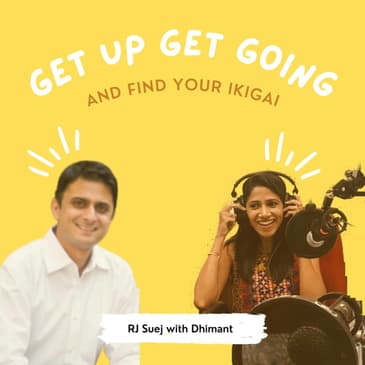

From building a weekend project into one of the largest positive content platforms in Asia (200 M subscribers), to creating sustainable solutions for living a better life, ‘better’ is the keyword for Dhimant Parekh - cofounder of The Better India (https://www.thebetterindia.com). If your soul simply craves for good news to start your day, Dhimant & The Better India team are constantly striving to bring you stories about all that’s working around our wonderful country. Learn more about what keeps this impact entrepreneur motivated, his Ikigai and more in this absolutely unmissable episode.
[00:00:00] Hello there and a very warm welcome to episode 14 of the RJ SueJ Ikigai podcast.
[00:00:07] Our special guest today is definitely no stranger to podcasts, interviews or awards.
[00:00:13] Yet my belief is that the impact created by him so powerful that I want each of you in
[00:00:18] our podcast community to know more about what keeps someone like him going.
[00:00:24] Introducing Dheeman Parekh, a Bangalore based impact entrepreneur who's the co-founder
[00:00:29] of the positive news platform, The Better India.
[00:00:32] Dheeman believes in using storytelling to drive impact and has received several accolades
[00:00:37] for his work through the years including a mention by our Prime Minister on a nationally
[00:00:42] aired radio show amongst other things right?
[00:00:45] Over the years, The Better India has grown to become Asia's largest impact driven
[00:00:49] positive content platform and it gives me great pleasure to have the man Dheeman Parekh
[00:00:55] here himself.
[00:00:56] Welcome Dheeman, how are you doing today?
[00:00:59] Thanks Sujatha, thanks for having me over, really glad to be here.
[00:01:02] Yeah, I'm really glad because I know that you've been on other podcasts as I have already
[00:01:07] told our listeners and we do hope to see a very different side of you today and to
[00:01:11] introduce a purpose also besides the great subscribership that you have, the great
[00:01:19] things that you've done with The Better India etc.
[00:01:22] So let's jump right into it.
[00:01:24] Yes, let us.
[00:01:25] Okay, so first things first, what's The Better India because not everyone might know about
[00:01:31] The Better India?
[00:01:33] Absolutely, and to be honest I think the idea of The Better India has been evolving
[00:01:38] and shaping up over the many years.
[00:01:40] The genesis of this idea was that how could you leverage the internet to drive large
[00:01:45] scale impact?
[00:01:47] And our vision was that if you want to drive large scale impact you need to
[00:01:53] actually have a large scale community of people come together for a certain cause
[00:01:58] and so on.
[00:01:59] Then the question became how do you bring a community together?
[00:02:04] How do you build a community?
[00:02:05] And for that I think we just ought to say that in stories that bring people
[00:02:12] together.
[00:02:13] So how could we surface and showcase stories which would appeal to people, which
[00:02:21] would inspire people and bring them together.
[00:02:24] And then we could basically hope that people who come together reading these
[00:02:29] stories would then be able to collaborate and drive change.
[00:02:34] And that's the hypothesis with which we started.
[00:02:39] And started as a side project of course way back in 2008 when I remember
[00:02:46] currently it was more a weekend project of I'd rather was my co-founder and
[00:02:54] mine.
[00:02:57] But then we really started as a full time entity in 2015.
[00:03:03] Okay.
[00:03:05] And you know since then we've come a long way, we've of course kind of built
[00:03:11] the community that we wanted.
[00:03:13] And that community, I mean we didn't immensely gratify for us to see that
[00:03:19] that community has led to massive social and economic change across the
[00:03:24] country.
[00:03:25] You know things spanning from helping urban slum schools get funded,
[00:03:30] helping farmers come out of poverty, influencing government policies,
[00:03:36] bringing water and sanitation to villages, electrification in certain
[00:03:40] villages.
[00:03:41] I think a lot of, we had thousands and thousands of case studies have
[00:03:45] impacted.
[00:03:47] If you're listening, you could actually go to the betterindia.com
[00:03:51] and there's a section called Impact which will give you a flavor of
[00:03:54] the kind of change you know we've brought about.
[00:03:57] But having kind of you know started along that I think, and this is
[00:04:02] where I was talking about how the idea of the Mediterranean has kind
[00:04:05] of evolved over the many years.
[00:04:08] So when we started as saying that it would be a content driven
[00:04:12] community led impact initiative has now kind of evolved to a point where
[00:04:19] we are able, we have actually started to build different business
[00:04:25] verticals on top of this community.
[00:04:26] So the better it is now kind of evolving into becoming an ecosystem
[00:04:31] of everything good.
[00:04:34] And one of the pillars of that, the new pillars of that is
[00:04:38] you know we launched our own range of home products.
[00:04:42] Again, the good aspect here is that these are 100% sustainable
[00:04:47] sustainability focused product range.
[00:04:50] So they are 100% biodegradable, non-toxic and we have our own
[00:04:55] sort of programs where we use plastic waste and all of that.
[00:04:58] So the better home is now kind of a vertical that has been built
[00:05:01] on top of the community that the better India had.
[00:05:04] I think we are also going to be looking at many more such verticals
[00:05:08] coming up, but yeah that's the longest short of it.
[00:05:11] Wow and there's so much more that we still have to get into
[00:05:16] and this is a great beginning and even for the benefit of our
[00:05:20] listeners, please tell us about your subscribership and you
[00:05:23] know you would be also hearing from them right?
[00:05:27] So what do you hear in terms of what are people feeling?
[00:05:31] You know what's the impact on them?
[00:05:32] Apart from you know the financial impact or the other impact
[00:05:36] that you talked about where you've pulled farmers out of poverty
[00:05:39] or you influence government policies, you know what is the
[00:05:43] subscribership doing?
[00:05:46] Yeah so in terms of actual numbers we have a little over 200
[00:05:53] million people every month.
[00:05:56] Wow.
[00:05:57] Because you mark content across you know English and our
[00:06:01] other regional languages and all of of course all the channels
[00:06:04] that we have on.
[00:06:05] In fact just pick any social media channel and you'll find us
[00:06:09] having a significant following there.
[00:06:12] What does it make people feel?
[00:06:15] Well of course there's a lot of anecdotal sort of stories
[00:06:19] that we come across in terms of what it makes people feel
[00:06:23] but there's an interesting one that really stood out for me
[00:06:26] where someone who was in a conversation with
[00:06:29] would be following the Bahrainian for a while
[00:06:32] and she actually said that she views the Bahrainian as the nation's largest archive
[00:06:42] of you know the collective good of a nation right?
[00:06:45] She views this as an archive of the entire range of goodness
[00:06:49] that a nation is capable of and to me that was
[00:06:53] that was quite overwhelming to hear it that way.
[00:06:57] Amazing, amazing and to think that it started as a weekend project where
[00:07:04] you know and why do you think you actually started this project?
[00:07:07] I mean did you want to feel good?
[00:07:10] Did you want to make others feel good by the good things that you knew?
[00:07:14] What was it all about?
[00:07:17] That's a good question and we get asked this a lot
[00:07:20] as to why did this start.
[00:07:22] Way back you know both Adrada and I do consume a lot of content
[00:07:27] both online or offline and I think in 2008-09
[00:07:34] we would start our day with you know reading the newspaper over a cup of tea.
[00:07:39] The difference is that now we don't have a newspaper,
[00:07:41] we no longer subscribe to anything but then we used to start our day with the newspaper
[00:07:45] and it was just sort of jarring to notice that you're starting your day with
[00:07:53] an overdose of crime and overdose of everything that's going wrong
[00:07:57] and overdose of celebrity gossip.
[00:08:00] Pretty much nothing that helps set you up for the day or for the you know
[00:08:06] for the remaining part of your life and then we were like hey you know
[00:08:09] you know isn't there anything that could actually not only kind of inform you
[00:08:16] but also enable you to be a better person, to be a better version of yourself
[00:08:24] and our idea wasn't that hey you know none of this stuff that has been carried out in newspapers
[00:08:30] and all that the idea was that none of this stuff should be talked about.
[00:08:33] It should be talked about but we just felt that there was an over representation
[00:08:38] of the bad stuff as you know quote unquote bad stuff right.
[00:08:44] And we believe that that's of course a very crucial part in a democracy because you need to
[00:08:51] know what is broken in order to go fix it. However, however you also need to know what's
[00:08:59] working in the country because that is also equally essential so that it gets you thinking
[00:09:05] from a solution sort of a mindset and that's when the whole idea of you know what is now called
[00:09:12] solution journalism right it's more like you're leading a conversation with not just the problem
[00:09:18] and leaving but you're leading the conversation with a problem and the solution and the impact.
[00:09:25] So now people are not only just saying that oh yeah sure there's a garbage problem but hey
[00:09:32] here's how this man did it for his neighborhood and here's the impact.
[00:09:35] So you're trying to close the loop from a problem to a solution to an impact
[00:09:40] and that was the whole idea that came up and we searched online so we should read more stuff
[00:09:44] like this and we did not find anything at all. So we said hey why don't we start and you know
[00:09:49] those were the blogging days like you know blogs were like a big thing back then.
[00:09:53] So we started a blog in the better India the better Indian blog sport.com I think it was
[00:10:00] and we just go around weekends documenting people who are making a difference
[00:10:06] and yeah from that that whole journey started. Yeah and just to say Karwa banta so I'm sure
[00:10:15] that you know so many people would have joined this beautiful community of contributors as well
[00:10:20] you know I've read I've heard what you've spoken in the past now let's take you a bit more
[00:10:27] into the past in terms of your early years and your growing up years you know I'd like you to talk
[00:10:34] about some influence or you know some significant influence on you that led you to this work in
[00:10:42] impact entrepreneurship. Yeah so I grew up in Bangalore I was born in Bangalore grew up there
[00:10:49] and you know I think back then if you were in Bangalore very high probability that you would
[00:10:57] turn out to win engineer and I also you know took to the sciences I took to maths I was
[00:11:06] I was really good at it I loved it and so by nature of where I was and my interest in these
[00:11:14] subjects I of course evolved into becoming a computer science engineer and then I worked in
[00:11:19] large tech companies and so on but I distinctly remember some of the things that influenced me
[00:11:26] while growing up and a very very sort of a lasting influence was that of my father
[00:11:33] who was who was very philanthropic in nature who was very giving who was very open
[00:11:42] and who would always kind of look out for the not so privileged you know and this was largely
[00:11:50] because he came from a sort of a background which was not so privileged at all and you know
[00:11:57] with a with a large family to kind of take care of with I think of seven siblings so it was it
[00:12:02] was really tough times that he grew up in and as he kind of you know rose up the
[00:12:10] the corporate ladder and you know started getting a little more financially stable
[00:12:15] he always made it a point to help out people we had you know any anybody coming to our house
[00:12:21] to sell something and that would that would be keen to know his backstory that would be keen
[00:12:26] to know you know why is he doing what he's doing why is he not in school or college
[00:12:31] and there were enough instances where you know that would have asked him or her to not sell
[00:12:37] this anymore just go back we'll take care of your college fees or still you know your school fees and
[00:12:43] so on starting from that you know even the smallest of things I still remember me is to hear when my
[00:12:50] father used to drop me to school and this would be on a scooter and I would be standing in the
[00:12:56] front you know I was like my fourth standard third standard and and and you know dad would
[00:13:01] help out people who are stranded at let's say a bus stop because back then in manual you know
[00:13:06] I think the bus frequencies were crazy like you would get a bus in 45 minutes or something
[00:13:11] especially in the areas that we lived in on the outside and then when we graduated to a car
[00:13:17] we would actually start helping out two three more people you know going in that same direction
[00:13:21] which in today's world would kind of be very you know I think it would be looked at in a very
[00:13:27] shocking manner but back then it was just a matter of fact that you have to help out you
[00:13:31] have the means then why wouldn't you help out someone right and I think noticing that
[00:13:38] in fact a series of things that he did really had a tremendous impact on me and it made me
[00:13:45] starting I mean I would say it really made me to start looking at people who are at the fringes
[00:13:53] and how to kind of you know how can one start thinking about them and how can one
[00:13:58] start helping out too I think definitely there's this whole streak of empathy which sort of came in
[00:14:04] there right right and you you carried it through you know first via you know the blog and then you
[00:14:12] know into this great organization that you've created the month I think that's so inspiring
[00:14:18] and you know I was reading you know in one of the you know things about you where you had
[00:14:23] mentioned that your dad would always say look at the extras you know in a Bollywood movie and you
[00:14:30] know what is their life like and and that really resonated with me because it really touched me
[00:14:36] because that's something that stands out for me as well and it's always stood out for me since I
[00:14:40] was a child so I'm sure that you know your dad made such a huge impact on people's lives just
[00:14:45] because as you said you know he noticed the extras or the people at the fringes right
[00:14:50] and for you as a child the fact that someone was noticing it and actually creating a solution
[00:14:58] for that problem you know maybe left such a deep impact that today that that's what you're doing right
[00:15:04] yeah absolutely I think I think I think what I ended up having was my father had this effect on me
[00:15:09] on the whole philanthropy sort of having an empathy for the people who are at the other end
[00:15:17] of the spectrum and then I had my grandfather who was also back in those days an extremely learned man
[00:15:23] he had done his post graduation back then so he was definitely an outlier and he was one of the most
[00:15:31] well-read people I have ever met even till date you know and yeah his his English was impeccable
[00:15:39] his economics was impeccable and he and I actually got to study maths and stuff under his guidance
[00:15:48] so I think I think I had this whole academic sort of influence from him that's my grandad and then
[00:15:54] I had this other sort of you know sort of more of a social outlook from my father I think
[00:16:00] I think those at some point started just adding up I think amazing that's really really nice to
[00:16:06] know and the month I mean it's obviously fun to you being an impact entrepreneur but tell us about
[00:16:13] the other side you know how tough it is actually taking this and going on every day because as
[00:16:20] you mentioned and as we all know there's so much worse happening around and how do you really
[00:16:26] focus on the good so what are your sources and how do you keep this going yeah you
[00:16:34] surprisingly I think this is not the first time we've been asked this right that and people express
[00:16:38] sort of a surprise in terms of how do you how do you kind of keep this going how do you get good
[00:16:43] stories all the time and my simple sort of question to that usually is just just look around
[00:16:50] you right the circles you move and the people you talk meet 99% of the people are good people
[00:16:56] they're not you know they're not out there committing crimes in the real world right and
[00:17:01] the fact is that it's it's such a small percentage of people who are actually doing the bad stuff
[00:17:08] but because we've been conditioned to consume information only about them it's actually a
[00:17:17] blown up thing in our heads that the world is a terrible place and how can you even find
[00:17:22] good stories but but when you just go all the way deep down into your communities your
[00:17:28] neighborhoods you realize that there are great people all around that they're doing great stuff so
[00:17:33] you know that itself is telling in terms of how we've been conditioned to look at the world and I
[00:17:38] think that's a terrible thing it's really sad but I'm so happy too and glad to hear that there
[00:17:44] are more people like you right you know trying to make sure that we know about all the good
[00:17:49] that's happening yeah and I think so it's not hard so my point was that it's not hard to find
[00:17:57] stories of people doing great work it's all around it's just that nobody has been looking
[00:18:01] so the job is actually a lot easier than people think from the outside there's of course the usual
[00:18:07] challenges of building something right when you build something to scratch and you build something
[00:18:12] which is so contrarian to what society has been used to so it makes it doubly hard
[00:18:20] but I think I think the challenges for us have been totally worth it when every single day
[00:18:26] we get to see the kind of impact our work is happening you know our work is creating right so
[00:18:33] to me I think that's really the fuel that keeps us going yeah I completely agree and I can
[00:18:39] I can hear the passion in your voice the month so yeah great going on that now also tell me about
[00:18:47] I'm sure there are tons and tons of articles or tons and tons of projects that have made impact
[00:18:53] but a couple of them that really stood out for you and you know made you feel fulfilled
[00:18:58] that you know you're part of Better India um yeah so there are like I mean I think at last count
[00:19:07] we've published 20 000 plus stories um yeah so I mean it's just very hard to pick one but
[00:19:17] but you know the ones which always stand out are the ones which happened right at the beginning
[00:19:21] because those were instrumental in in certain decisions that we took and I mean I've quoted
[00:19:30] the story quite a few times and I still find it so awe-inspiring when I think this was about
[00:19:38] a year or two of having started the Better India as a site project
[00:19:42] and we had featured a story about a photography club run by visually impaired people
[00:19:51] which I thought was fascinating that it's a group of visually impaired people who are pursuing
[00:19:56] photography which you otherwise associated with you know vision and we wrote the story and
[00:20:04] a couple of weeks later we actually had a visually impaired girl who reached out to us
[00:20:11] via her friend and she shared with us that all her life she wanted to pursue
[00:20:17] photography and whenever she brought that up as a wish as a desire everyone around her you know
[00:20:25] would kind of rubbish it saying how is that even possible and apparently our article completely
[00:20:32] changed our life she went and joined that club and she was so grateful that we gave
[00:20:38] her a purpose in life um that she just couldn't stop thanking us and and this
[00:20:44] was when we were read by like a few hundred people a month I guess so to me this story stands out
[00:20:52] because A there was a first time I personally felt how some work of mine had led to um you know
[00:21:02] a massive change in someone's life but also because that this was the point when you know
[00:21:08] both are rather than I decided that this needs to grow we need to kind of scale this up
[00:21:12] if this is the kind of impact we can have with a few hundred people imagine the kind of impact
[00:21:17] we can have if we can get this to hundreds of millions of people right and I think that was one
[00:21:23] decisive sort of point and hence that story is is quite dear to me yeah I can completely imagine
[00:21:30] and 200 million subscribers over all the platforms and and one step one heart at a time right is
[00:21:39] I think what you are trying to reach and you know more power to you the month and the better India
[00:21:44] so demon now let's move on to the other side you were talking about other verticals and
[00:21:51] you specifically mentioned the better home so let's talk a bit more about that because people
[00:21:56] I think across are looking for more sustainable products and a lot more people have started
[00:22:01] caring about the environment and also the damage that the other products could do to our own
[00:22:07] health right so let's talk a bit about the better home and what's the idea behind it
[00:22:15] why you started it etc. Yes so you know like I said right our vision always was how do you
[00:22:22] leverage the internet to drive large scale change and the better India will manage to kind of
[00:22:30] build a community which was then coming together and you know all the kind of impact
[00:22:34] that we were starting to see now one of the things that really started standing out and it's it's also
[00:22:41] a personal sort of a cause is that of sustainability so the way with Agnada and I kind of try and
[00:22:49] need our lives is to look at how can we minimize the damage that we do on the environment or
[00:22:55] planet and how do we in general minimize you know or minimize consumption to a way that our lifestyles
[00:23:04] are as less damaging as possible to the environment so we began doing that and you know
[00:23:11] so we also started writing a lot of content around it featuring people who were doing some
[00:23:15] great stuff around sustainability and we noticed an interesting thing we noticed that
[00:23:20] our content around sustainable products are content around natural products are content around
[00:23:27] health and wellness started getting significantly more traction at one point I think this was in
[00:23:35] 2018 or so we started seeing a sudden surge in people's interest in these things so we actually
[00:23:41] reached out to our audience I wanted to really know more what is it that you know what is
[00:23:46] that sustainability means to you what is it that prevents you from going down that lifestyle and
[00:23:53] all whole bunch of those questions and what really emerged which was that people basically said that
[00:24:03] if there was a choice we would actually opt for sustainable products but it's just that we don't
[00:24:09] know what brands to trust because there's so many things out in the market and so on so then of
[00:24:14] course we asked them hey you know what if we guys decide to do something would you guys trust it and
[00:24:18] you know we had five six years of constant content that we've been putting out and there was that whole
[00:24:23] trust factor with the better India so people were like yeah sure if you try but obviously you
[00:24:28] can't just leave it at that so we decided that okay let us actually try and launch our own
[00:24:35] you know some of FMCG kind of products and it seemed very radical back then saying
[00:24:41] a content platform trying to get into products and it wasn't so daunting for us so I have worked in
[00:24:51] the in my pre-distance I've worked in e-commerce I've worked in you know so I've helped set up
[00:24:57] systems and processes in e-commerce so it wasn't like a complete black box for me but of course
[00:25:03] it was a marked shift from what we were doing on a daily basis but we were at the same time
[00:25:09] also clear that this aligns with our vision of how do you leverage this community to build bigger and
[00:25:14] bigger for impact kind of models so long story short really we we launched the better home
[00:25:22] we decided to interest the whole you know domestic consumption right so when you wash your clothes
[00:25:28] when you wash your dishes when you wash your house you're basically releasing contaminated water
[00:25:34] back into our sewage systems which eventually lead into our water bodies and we started thinking
[00:25:40] about this and said okay this is where it really needs to step at a very large scheme of course
[00:25:45] baby steps we needed to get launched and start with something small so we started with some
[00:25:50] four products largely focusing on laundry and dish washing and and floor cleaners and toilet
[00:25:59] so but the promise was very clear that these are 100%
[00:26:04] non-toxic and 100% bio degradable which means that when they actually get into our water bodies
[00:26:11] they do know how and that's how we started it it's been a little over a year I'd say
[00:26:18] and it's been phenomenal that we've actually shipped to more than 60,000 households in a year
[00:26:26] fantastic yeah yeah and it's been it's been it's been amazing to see the kind of reception
[00:26:33] these products that we don't even sell offline right so we have a largely on our own platform
[00:26:38] sell it on Amazon but in spite of that to have you know 60,000 households on a monthly basis
[00:26:44] are using our products and this is just year one so we're really excited about that wow
[00:26:51] and you know do you have other verticals in mind as you were saying anything that you might want to
[00:26:58] share at this point in time or any thoughts actually yeah you know one of the things we're
[00:27:04] launching very soon is called the better India Academy where the idea is that we've been featuring
[00:27:11] stories of people doing phenomenal stuff over so many so many years and the question then arose
[00:27:18] that how would we distill those learnings into courses that people could take and you know start
[00:27:27] sort of cross-pollination of ideas start kind of replicating things that have worked for someone
[00:27:34] in some neighborhoods and take it to other areas and neighborhoods and so on so
[00:27:38] so really we started thinking about how do you do this and then this whole idea of an academy
[00:27:43] was born where people could come in and learn life skills from the people who we featured
[00:27:49] and who've done tremendous stuff right and so the better the academy something we are working on
[00:27:55] right now and I think maybe in a few weeks from now we should be live just for record we're
[00:28:01] speaking in the end of July so I'm hoping that by mid-August or 10th of August we
[00:28:06] should be live at our academy oh wow wow and thank you so much for sharing this and it's
[00:28:12] very inspiring and you know who are the sort of people that you're looking as a target audience to
[00:28:18] say sign up with the better academy is it anyone and everyone any age groups anything in mind
[00:28:24] I think I think it's anyone and everyone who is looking to get life skills which can help
[00:28:32] them lead better lives right we're also looking for people who want to learn skills that can
[00:28:38] help them get more livelihood you know can you learn something here which helps you generate
[00:28:47] revenues for something and helps you sort of improve your life financially can we help you
[00:28:53] learn skills that you never there are never taught in school and you know help you lead a
[00:28:58] better life maybe socially economically and so on so it's really very wide right now but
[00:29:04] I think the onus is very clear that we're going to be focusing on life skills that help you
[00:29:10] help you lead better lives yeah the better I think the better is the key there you know
[00:29:15] tying in with the better India the better home and the better academy amazing amazing simply
[00:29:20] amazing and you know why I asked you that question right you know the age and you know
[00:29:25] anyone can join because you know I'm so excited you know I might be one of the first ones
[00:29:29] to sign up as well you know the slots are open so amazing so now let's talk about another
[00:29:35] facet of life Dheemant because we're talking about Dheemant Parekh I mean of course he's
[00:29:40] the founder of the better India but he's also a co-founder and you know he has a spouse working
[00:29:46] as the co-founder so tell us tell us a bit more about that how does that play out you know
[00:29:52] what are the good things and you know when do you have the bad days what do you do
[00:29:57] because there are a lot of people I know you know where the spouses are co-founders so how do you
[00:30:02] get over those challenges as well yeah I think more you know the way it's panned out for us I think
[00:30:11] we've seen it as a massive advantage that we have as a team going forward because I think
[00:30:20] what what ended up happening is that by the some background right so Anuradha and I both come from
[00:30:25] Bangalore we've had similar sort of school experiences and then we went to the same B school
[00:30:33] and that's where we met at that B school and you know post that when we spent some time together
[00:30:39] we realized that largely we had very similar things that we seemed to want out of life
[00:30:47] and the thing that really got this thing going is that as soon as we started this weekend project
[00:30:54] we realized we both were extremely kicked about it we both were extremely interested in doing it and so
[00:31:02] it was clear from day zero that this was something that got us both equally excited and
[00:31:10] as we started working together I think what really worked out for us is that
[00:31:15] turns out that the two of us have extremely complementary skills while Anuradha is
[00:31:23] excellent in you know operational detail very very process-oriented can set up things and
[00:31:33] her attention to detail is incredible. I have this I would say scale but I think my focus ends up
[00:31:42] being more in terms of steering the larger sort of picture in terms of where do we head what are
[00:31:48] areas that's coming up next what should we look out for and being able to you know bring in the whole
[00:31:55] technology aspect to it and I think just that dynamic helped both of us a lot because if you
[00:32:05] both have similar skills then it's really not much of value to the company or the organization
[00:32:10] as such but because we've been able to kind of you know divide and conquer so to speak right
[00:32:16] in terms of skills I think it really accelerated out here. Yeah I think that's largely the I think
[00:32:26] the disadvantage of course is obvious you end up talking work all the time even if you're on a vacation
[00:32:32] even if you're with family I think work does occupy a significant proportion of your conversations.
[00:32:42] No no I can really understand and I know where you're coming from
[00:32:45] now Dheeman tell us about Dheeman the person what does he like to do apart from running the
[00:32:51] better India and trying to make an impact how does you know how does he work on impact his own life
[00:32:57] like I know you're a long-distance runner so what would you say is the role of you know this
[00:33:03] sort of physical activity in keeping sane because I'm sure every day is a challenge right.
[00:33:09] Yeah so a couple of things I think I love running I've been running for seven eight years now
[00:33:18] run some really good marathons I've really enjoyed across the country and this is something I do
[00:33:25] almost every single day I run almost eight to ten kilometers a day wow and that's really my sort
[00:33:33] of meditation I would say it's yeah it's it's become more it's become more therapeutic for me
[00:33:39] than anything else so I think I start I don't think I ever looked at it as a physical activity that I
[00:33:45] need to do for my body but it has become more of an activity that helps my mental well being
[00:33:55] so that's one thing I diligently do and in other things I love reading I think I'll
[00:34:01] I'm a big follower of physics I read a lot of books in physics I also read a lot of fiction
[00:34:12] in general yeah love reading and off late it's been quantum mechanics and quantum physics that
[00:34:18] have been piling up on the terms of the books that I'm buying interesting there's a bunch of
[00:34:23] other things and of course spending time with you know family okay so yeah thank you for sharing
[00:34:29] that part of you the last question before we end is you know your message to others who want to
[00:34:40] follow their ikigai I mean I'm sure that people are going to be super inspired and I hope that you
[00:34:46] leave you know your Instagram handle or you know your Twitter handle so that people can reach you
[00:34:51] post listening to this show but what's your message I think just that whatever you believe in
[00:34:58] right just stay true to that and never give up I think half the battle is won if you just show up
[00:35:04] every single day and that's a very important thing and not a lot of people realize the value of
[00:35:11] persistence more than anything else more than strategy more than talent more than luck
[00:35:17] I think it's just persistence and just the act of showing up every single day
[00:35:21] and you will see wonders in terms of what you can achieve absolutely and you know as
[00:35:26] as far as I've heard you even show up for a run every single day so I think the persistence kind of
[00:35:32] came through pretty clearly I'm sure to all our listeners as well and Dheemant you are on Twitter
[00:35:39] or Instagram and also give out the Instagram handle of the it's simply the Better India
[00:35:45] it's it's the Better India yes it's the Better India on Twitter on Instagram okay so I'm sure
[00:35:51] that people will reach out and read and use your products and of course sign up for the academy
[00:35:58] we are excitedly waiting for the launch of the Better India Academy wishing you great luck and
[00:36:05] success you know in building your dreams and building the dreams of thousands and millions
[00:36:10] of people around thank you so much Dheemant thank you so much Surya Thaib it's a pleasure having
[00:36:16] absolutely I loved having this conversation take care bye bye thank you take care wow wow and wow
[00:36:25] well that was one super powerful and super inspiring conversation for sure right now what I'm
[00:36:31] gonna do is go take some really deep breaths and express my gratitude to the universe for actually
[00:36:38] making this episode possible I can't tell you how good I'm feeling right now and you
[00:36:43] can surely make me feel better by sharing this episode forward with as many people as possible
[00:36:49] and also sending your feedback to me on rjsuji at gmail.com so here's me saying take care stay safe
[00:36:57] and keep the love flowing folks ciao till we meet again