
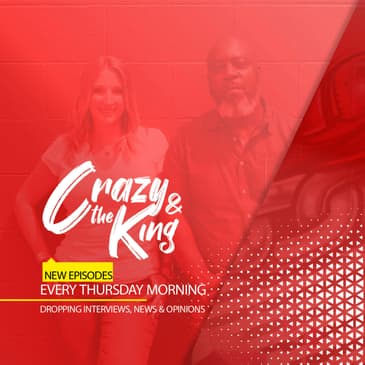

Join Torin and Julie in welcoming powerhouse Nikki Lanier to CATK
Nikki’s experience includes serving as senior vice president –Federal Reserve Bank of St. Louis, Personnel Cabinet Secretary for the Commonwealth of Kentucky (youngest and first black female gubernatorial appointee to this post), Chief Human Resources Officer for Charter Schools USA (FL), Vice Chancellor of Human Resources for Maricopa Community Colleges (AZ), Senior HR Executive, Philip Morris USA (VA) and Georgia-Pacific Corp. (GA) and other positions in both the health care and legal fields.
Having eighteen years as an HR executive and employment attorney, Nikki is experienced in driving accelerated cultural change in public and private sectors, creating and implementing innovative organizational development, inspiring commitment to vision, experience in OD, Leadership Design and Delivery, EEO/AA, Labor Relations, Employment Law, Employee Relations, Training and Development, strategic planning, recruitment and retention, and labor negotiations.
She has worked in more than ten (10) sectors including manufacturing, consulting, consumer goods, health care, media, law, government, higher education, and banking, and has led organizations in both the public and private sector. Through her work and strong local and national board memberships, Nikki is recognized as an accomplished thought leader in progressive HR strategies and in advancing diversity, equity, inclusion and anti-racism, corporately and civically.
[00:00:00] We've been about this work, diversity, equity, inclusion, belonging, shared through the voices of a white woman and a black man. We bring lived experiences. We have pursued D&I progress for most of our professional lives.
[00:00:16] We use Crazy and The King to cover news, tips from colleagues and hosts, incredible guests, listeners, count on Julie and I to transparently drive the conversation. We thank you for rocking with us. Check it, Julie kick off the show. Welcome to Crazy and The King.
[00:00:41] So let me just say we are almost at the end of 2022 yet again another year flying by and sometimes it's often hard to remember where we started. I tend to think about we get to the end of a year, end of December,
[00:01:02] which happens to be my favorite month of the year. We set these manifestos, manifest what do you call it? Resolutions, manifestos, resolutions, all of these things that we want to do and then you look up blink twice and you're back at the same point.
[00:01:21] So my question is, do you feel like you achieved much of what you wanted to achieve in January of 2022? So personally, I feel like I achieved a lot of what I wanted to achieve in 2022. I wanted to have a house here in Portugal by the midterms.
[00:01:43] I wanted to find a better work-life balance. I wanted to just sort of level out a little bit on some of my intensities. From the business perspective, Crazy and The King has had its best year yet. Disability Solutions has had its best year yet.
[00:02:05] But the one thing I will say I did not do that I promised myself and now I'm making this promise again publicly for 2023 is I did a very poor job of getting back on stage now that we're back in conference seasons.
[00:02:18] That's what I've got to do well in 2023. That's interesting because one of the things that I wanted to ask you is like who is a favorite speaker? And by the way, before you answer that, think about that.
[00:02:32] What I will say, I want to be fair and answer, I didn't achieve the things that I wanted to achieve. I'll put them out there too. Number one, creative. I have long wanted to attack the DNI space from a more creative standpoint.
[00:02:50] Not a practical standpoint of consulting, not a practical standpoint of speaking or coaching, all three in which I do. But I've wanted to create content. I wanted to be more creative. So that is still elusive to me.
[00:03:07] The second thing that I've still yet to achieve is dropping a piece of technology in the DNI space. Let me tell you, I'm 54. That's just the truth of the matter. And while I feel like I have the energy, I have the presence, the charisma,
[00:03:26] I still believe there needs to be an act two of torn in this DNI space. And I want my act two to be a piece of technology. So one more year, I've still not achieved what I've wanted to achieve in the DNI space.
[00:03:44] A favorite speaker. Do you have one? Oh yes. Right now I would say my favorite is Eddie Glaude Jr. Do you know him? Do I? Okay, I was going to say. I'm going to school you if you don't. But do school me though. Do school me.
[00:04:01] Because it's not for me. It's for the listeners. So tell me your schooling of Eddie Glaude. Why do you like him?
[00:04:07] Yeah. So he is a, he's the chair of the African American Studies department at Princeton has written dozens and dozens of articles, several books, including democracy in black, and he's still in slaves America, enslave the American soul. Perfect conversation for our guests today.
[00:04:28] And he just, he says things in such a plain way, and such a like no fucking around. It is black and white with Eddie and he doesn't allow people to sort of skirt and play these little political, you know, responses and games.
[00:04:46] And he just takes it how it is. And he just takes you to church in a way that is so intense, because he's so smart.
[00:04:55] He just knows the history that, you know, impacts black and brown people in this country today and has for, you know, hundreds of years and then he can tie it to the economics and the politics of it. It's beautiful.
[00:05:09] I absolutely agree with you. He is extremely smart. And one of the things that you said is straight talk, one of my favorite speakers happens to be Cornell West, who is also extremely smart.
[00:05:20] And Cornell West has a phrase parheisa that making things extremely plain so that you can understand them. And part of the reason why I enjoy listening to Cornell West prior to giving presentations, I like his cadence. I like his ability to captivate an audience for 60 90 minutes. No slides.
[00:05:43] But what I learned in watching him over the years Jay is he didn't feel obligated to recreate new speeches every single time he stood in front of an audience that repetition
[00:05:57] is necessary for people to receive and to really digest and take in the information we are in a place in an end of time where there is so much information around us that you do have to repeat things quite a few times for it to really set in with individuals.
[00:06:16] And when we think about the conversation that we're going to have this afternoon, I'm sorry later in the show with our guest, Nikki, it bears repeating.
[00:06:26] So this is one of the episodes where I hope our listeners not only share it with their social tribes, but that you listen to it over and over and over again.
[00:06:38] So without any additional delay, why don't we why don't we take a quick break and then let's get to our guest, Nikki Lanier. Do you love news about LinkedIn indeed Google and just about every other recruitment tech company out there? Hell yeah. I'm Chad.
[00:06:55] We're the Chad and cheese podcast. All the latest recruiting news and insights are on our show dripping in snark and attitude. Subscribe today wherever you listen to your podcasts. We out.
[00:07:13] To meet our guest this week in Nashville in September earlier this year and we had actually already scheduled Nikki to be on the show. And I was walking around at inspire HR dot com where we were exhibiting and I'm like, oh wait, I recognize that name Harper Slade.
[00:07:32] And I waited and kind of semi-stocked. You don't know that but our guest until I got to sit down and have a fantastic conversation with her, Nikki Lanier, founder and CEO of Harper Slade.
[00:07:47] She is unyielding in her commitment to advance racial equity for some and equality for all. Nikki has 20 plus years experience in HR employment law and time served as a C-suite executive with arguably the world's most formidable central bank. Welcome to the show, Nikki.
[00:08:08] Thank you so much. I'm so excited to be a part of this auspicious body. This is fantastic. I can't wait to dive into this conversation. Oh, and we're going to do just that. You know, when we talk about diving in and we talk about being auspicious.
[00:08:22] I want to go back to something that Jay said in the introduction and I put it there purposefully because I don't know if people heard it. So I'm going to repeat it. Advanced racial racial equity for some and equality for all equity for some equality for all.
[00:08:46] Talk about that distinction because the four some piece definitely leaves some people out. And so I want that learning and that discerning mind to kind of hear you explain why you frame it, why you position it in that way.
[00:09:04] Well, it's an important positioning and I thank you for asking me that question right at the outset. So let me let me answer it this way. This is how I define racial equity.
[00:09:15] It is proportional fairness that takes into consideration the cultural and historic realities that have beset people of color as distinct from all other people and works to remedy the same.
[00:09:28] So when I think about the urgency around amplifying equity, it is for the population of folks that have experienced the most inequity in this country. And the same population of folks for whom the consequences of continued inequity are most dire black and brown folks.
[00:09:50] So when I talk about equity for some, I'm specifically talking about black people and Hispanic people, thereby helping to pave the way for equality for all, meaning all marginalized people, all people who are navigating the life of other or different whatever that is.
[00:10:07] And then ultimately all mankind as you know, Pollyanna is at my sound. So that's what that's how I narrow my niche. And that's how I focus my work. So I love Pollyanna. We need to keep Pollyanna in our work because if not, we sort of drown sometimes.
[00:10:26] We'll be stir crazy. Yep. Yep, exactly. So I want to go back to something you said, but I first want to start with your background when you told me about your career trajectory.
[00:10:38] I thought I can sit and geek out with this amazing woman all day. So tell us who Nikki is and your kind of journey on your roadmap to now Harper Slade.
[00:10:50] Yeah, so I started out my career practicing labor and employment law in South Florida. I went to law school at the University of Miami after having finished at Hampton University with a degree in journalism.
[00:11:01] So I spent so much time practicing law and really understanding how employers try to find their way toward just complying with the behaviors that the law says you have to subscribe to in the workplace. And even that, for many was a difficult undertaking.
[00:11:17] And then moving into HR, where I spent probably 18 years, I guess. And I've worked for a public sector and private large companies in small East Coast, West Coast. I've been the chief HR officer three different times.
[00:11:29] And oh my gosh, I just really began to understand and pay attention to how work works, when and where it restores, when and where it depletes.
[00:11:37] When there are continued breaches between what we expect from work and need from work to deposit into us and what in fact we receive when that breach continues and a continual and a continual way. What does that mean for the way that we can find ourselves toward engagement?
[00:11:54] And this is not about race, gender, any and all stuff. It's just in general as human beings become to work needing to be fed. I mean, that's just a part of it in addition to the widget making.
[00:12:02] And so that feeding, if you will, kind of manifests very differently depending on the narrative that you come into the workplace with the narrative that we're all assigned when we come into work.
[00:12:13] And so I started really studying that and becoming a student of that in my own experiences as a black woman navigating incredibly hostile, inhospitable environments that didn't know what to do with my the way my potency showed up in my black skin.
[00:12:28] Just navigating that just became its own burden. And so I was just paying attention to that. And in the last seven years I spent working for the Fed, not in a late legal or HR capacity. I was doing macroeconomic policy monetary theory go figure. I don't know.
[00:12:44] People ask me how I don't know.
[00:12:46] So anyway, it happened into that great role seven years I spent in that and really started to understand from a community and employment perspective, the cost of inequity like how much is it costs for our country to be both racist and sexist.
[00:12:59] And there's a dollar figure attached to that trillions and trillions of dollars. So then that you know that's really kind of what informs my work that that body of kind of academic and professional experiences but what motivates me.
[00:13:12] What motivates me is the, you know, as Dr King would say is a fierce urgency of now. There there's a there's a reality around the 2045 browning of the country that we've got to reconcile.
[00:13:25] We have to reconcile here right now because America's getting black or browners not getting any wider. And you can't sustain an economy with the majority of your population having had no real meaningful experience with how the economy works because they've been excluded from it.
[00:13:42] So that's kind of how I think about this work. That's what informs the work. That's what motivates my work. And that's like the tapestry that I bring to the lens with which our practitioners. You've used words like proportional and fairness and be set and navigating inhospitable environments.
[00:14:00] You also use words beautiful words like restores or restoration replete which is taken away. And so the last one that I want to latch on and stay with is the reconcile the reconciliation.
[00:14:16] And so how Nikki do we do a better job or let's not go with the solution yet or proposed solution. Let's go with how have we failed to reconcile.
[00:14:29] Give us a couple of examples of how perhaps corporate America public policy, how have we failed to do some of that restoration and that reconciliation that's required. So America has always since its inception been a country that leans toward marginalization muting and stunting of its broader citizen.
[00:14:53] It has never known what to do with black and brown people other than punish black and brown for being black and brown. Now, what we have what we've tried to do our attempts at remediating that has manifested in the form of policy and law.
[00:15:15] Right. So we promulgated things like title seven and you know voters voter rights act and equal opportunity laws we've promulgated these laws really what they do is kind of beat back the manifestations of what's in your heart.
[00:15:32] So said differently, if you truly believe that black and brown people are marginal that they are subhuman and not endowed with the enable rights that many believe were given to all humans at least via the Declaration of Independence.
[00:15:47] If you believe that somewhere in your psyche either overtly or covertly laws will tell you what you can and cannot do to manifest that belief.
[00:15:56] But we've never dealt with a belief. We've never asked people to unpack what you truly believe to be true about the value of black and brown people.
[00:16:05] We don't ask that in work, we don't ask that at home, we don't ask that any kind of sustained like consistent way. And because of that we've never had to unearth it.
[00:16:15] We've never had to put it on the table and call it out and reckon with ourselves and with our psyche around that belief system.
[00:16:23] Our work at Harper Slade starts there. It is the harder work, the more daunting work some might say you know the work that will yield little benefit. But I don't buy into any of that. I believe that work, this kind of work has to start with belief systems.
[00:16:40] So where we have failed, Torrin is believing that if we erect enough laws and policies and statements and banners and monocles and statements and slogans that somehow that will neutralize what beats in the heart of most human beings.
[00:16:56] And that is the inherited understanding that black and brown are not equal to white. And that's what we have to deal with I think in work and in every other aspect of our lives. That is not a milk toast approach. You are, I mean very, very direct.
[00:17:16] You are clear as you know one of my favorite speakers, Cornel West says that is parheas. You know that is straight talk parheas and that is straight talk right there. How do clients receive that you know if that is where you are starting.
[00:17:35] You're starting with that mindset shift and that behavior modification system and you were going right at it. How does that sit? I mean, I know it sits well because you're in business. You continue to be in business.
[00:17:48] But do you feel like the seats ruffle a little bit? Do you see some folks trying to get to the exit doors when you were speaking?
[00:17:54] You know, I know that feeling. I've stood on stage and watched people run for the exit doors when they know Torrin is about to go. That's right. That's right. How does this sit?
[00:18:06] So I'll say two things. Here's my caveat. I, unlike both of you, I'm fairly new to my entrepreneurial journey. So I'm 10 months in. I'm not even a year old yet. All right. So thus far, thank you. Thank you. Thank you. Thank you. Yes, indeed.
[00:18:21] Thus far the kind of clients that we've cultivated, that we've courted have some leaning into this work at fairly senior levels already. And they're pained by black and brown turnover. Right?
[00:18:36] So, you know, usually what happens is in you have these organizations, largely white leadership who are just like, we just can't hold on to black talent.
[00:18:43] We can't hold on to brown talent. We don't know what's going on. We give them mentors like we, you know, IE we try to fix them.
[00:18:50] So what I, what I try to help folks do is understand that the, the our niche is helping you cultivate environments where black and brown talent can thrive.
[00:19:01] That first requires that our clients recognize that no matter what attempts you have even earnestly tried to this point, unless you have done the belief system unpacking,
[00:19:15] unless you've asked questions of your leaders and your managers and your supervisors about what they believe around black and brown people, how they grew up with they read growing up how well traveled are they have they ever had anything other than episodic
[00:19:28] engagement with black and brown people prior to coming to work. Unless you were like diving into those kinds of questions, your environment is just not going to work for black and brown folk.
[00:19:37] It can't be the first time that you engage with me, Nikki, the first time you ever engaged with a black person is in the workplace.
[00:19:43] And now you're managing me and all you can bring to that is stereotype because that's all you got. You don't have any lived experience really with regular cadence with somebody like me.
[00:19:51] So our clients tend to kind of already know that that's, that's one thing. So we try to be very judicious and how we're like vetting who's coming into the Harper's slave fold.
[00:20:01] But then the second thing is, and I'll be blunt about this one of my one of my biggest marketing strategies strategies is my public speaking I do a lot of talks, a lot of conferences and keynotes and stuff on this.
[00:20:12] And so when people hear me talk about this and then come up after and say we'd like to work with you, they kind of know how I get down. They kind of know what to, you know, what to expect and what they kind of need to ready themselves for.
[00:20:24] And I don't, you know, I don't browbeat because I mean, I get where we are. I understand on some level how it could happen that you could be in this place in life and be, you know, white male heterosexual able body and really have no other lens assigned right to no other lens than yours.
[00:20:43] I understand that. But I also understand the consequences of that so we try to help them through that. Julie you now now. I mean, you got to see personally in real life. Why I ran to my table.
[00:20:59] No exaggeration like you had a chance to talk to Nikki for what sounds like a semi extended period of time.
[00:21:08] I talked to Nikki for five, maybe 10 minutes, more like five and literally ran to my table and shot you a text message and was like, we getting Nikki on this podcast because I know that she is going to jewel drop in a way that I can't do it.
[00:21:27] It's just not my space. It's not my sandbox. What a, I just so appreciate that straight talk straight to it, but the level of love that is wrapped in and how you approach and do the work. Thank you. Thank you.
[00:21:45] And as soon as she mentioned both employment law and economics I was I was hooked. And I kind of want to go back to that vein so you talked to reset on Instagram, relatively recently. Everything about racial equity is counterintuitive counter cultural, foreign and uncomfortable.
[00:22:04] However, the advancement of black and brown people especially economically is fundamental to our collective survival. At some point the cost of racism drowns the entirety of the country.
[00:22:17] And from a, I want to talk about that from an economic perspective in a minute but when you're talking to your clients.
[00:22:25] And so you're having sort of this, I'll call it come to Jesus sort of unpacking of beliefs and starting what I assume is a fairly long journey to unprogram the way that white people have been programmed our entire existences.
[00:22:43] How do you also lay out for them the real financial implications of the journey that they're starting for their company. Yeah, well many of the leaders because we've been blessed so far to really engage with fairly senior leaders inside of organization they they're friends of the Fed.
[00:23:05] I have very fed followers or have some orientation with the work of the Federal Reserve and so I unapologetically rely very heavily on the studies, having been promulgated by the Fed, because I'm familiar with most of them.
[00:23:18] And it is, it is usually captivating to to most of the folks that I speak to, when they understand that racism over the last 20 years as cost this country $16 trillion and lost GDP said in a different kind of spin. We spend $16 trillion every 20 years to be racist.
[00:23:39] And then every five years we spend $5 trillion so it's a trillion dollars a year at this point moving moving forward and that's when black and brown are not the majority in the available workforce.
[00:23:56] So that tends to be a captivating number and it's arresting so I get attention right when I when I talk about that staggering of a dollar figure.
[00:24:04] But then I move into why our work focuses on the workplace as the incubator for resetting beliefs with the hope that what you're incubating and work will translate to the way that you like parents and the way that you show up in your community who you are engaging
[00:24:20] in your dinner conversations that the way that you reset your understanding of black and brown people like forever.
[00:24:28] And here's here's the argument Julie the sense since the Federal Reserve and quite frankly, even fiscal policy so fiscal policy leaders, IE Congress monetary policy leaders, ie Federal Reserve since we've been studying the health of the economy.
[00:24:44] The first place we look is the middle class to determine how well the middle class is doing what a consumption rate consumption rates look like their home ownership higher education attainment wage pressures, spending and saving on what what does that look like that helps us
[00:24:59] really understand kind of the behaviors that needs the trajectory for the entire economy, really based on that middle class glance.
[00:25:08] And since we've been studying this since the Fed and Congress have been looking at this, we've always relied on white people to sustain to really buoy that middle class, which is kind of fine in because in that what I mean by that is it.
[00:25:25] It's a population that that's a population of folks for whom artificial can encumbrances into getting in middle class and moving up middle class are just not a reality they're not as acute.
[00:25:37] So for the first time ever in just 23 years by 2045 we will be relying on black and brown people to move swiftly into the middle class, and to be saturated inside middle class because black and brown will also be the majority in the
[00:25:55] available workforce, whoever is the majority and they available workforce. Historically must also be the majority in middle class. In this inflationary period middle class is between like 60 to $120,000. And with that, with that range black people and brown people have never ever, ever been meaningfully represented in middle class.
[00:26:19] And this is an unsustainable model for the American economy. Right, we can't sustain the middle class if we don't move black and brown folks into it with more swift focused.
[00:26:34] And this is a this is I'm sorry one less one less point. So this is the reason why this is so important is because what studies have also shown and this is both promulgated from the Fed and from major HR consulting firms, is that one of the bigger
[00:26:48] impediments into black and brown economic mobility up and through workplaces is racism.
[00:26:55] Not, not, not being prepared is not about not being prepared is not being not well trained it's not being a good fit. It's just the way that racism shows up and manifest as a inhibitor to promotional opportunities to know the performance
[00:27:10] evaluation process gosh I couldn't get that out. And, you know, the assignments for exposure to senior leaders all of which kind of lead to promotional opportunities, even the entry level salary so we know that there's always in equity.
[00:27:25] There has always been an equity never have we had a time where there's not been an equity for black people in workplaces around wages. But certainly the conditions of employment and the experiences of employment further exacerbate issues around black economic bracket brown economic mobility and work.
[00:27:41] So we got to fix it, or the economy is going to be unstable so that's kind of like you know three hours later that's what I'm trying to say.
[00:27:48] No, I'm like trying to get in a question before torn jumps in with the questions I'm waiting for the pause.
[00:27:54] Okay, so you take that right which is something I did not know before right this minute when when you taught me about the 2045 number and thinking about GDP and middle class.
[00:28:08] We also have this other economic policy in this, in this country and I will not explain it as well as you are but we also really work by by the laws and policies that we have in place to make sure that it is much more difficult for young people to create wealth in this in this country.
[00:28:32] So, in terms of like, as an example the pandemic with all of the bailouts in terms of big companies. What would have happened is older businesses would have gone out young entrepreneurs would have started new businesses and that opportunity to generate wealth would have started there.
[00:28:48] And then you have the other biggest piece of creating wealth within this country for the middle class is home ownership which is now also out of reach for many younger people.
[00:29:01] So, I think that's that multiply our need to take action for for this group of people right young black and brown people to also be able to overcome additional barriers that sometimes may not exist in the same way for older black and brown people, or I could just be completely
[00:29:22] Yeah, I don't see much by way of a generational urgency as I as much as I do I mean I'm not suggesting your argument is flawed in any way but I from my perspective and my vantage point I see.
[00:29:34] I see the issue more rooted in how we see the value of black and brown humanity, the presumption of assigned value to black and brown bodies irrespective of age and gender is just far too elusive and too conditional like black people, especially tend to matter only in context with like a footnote or
[00:29:55] more asterisk. And even then for like a finite period of time it's very conditional, and that has it has a cost irrespective of age. And so it plays out more acutely, sometimes depending on like generational nuances and like some of the generational
[00:30:11] consider considerations, but the fundamental premise under which all of this rest is this understanding this kind of presumption of black and brown diminishment. I wish like I swear I wish I knew you about 1214 months ago when I curated a speaker series for one of my clients.
[00:30:34] And the client was ice mortgage and I would have absolutely had you in the lineup, I actually would have taken myself out of the lineup and left in the other two women and I would have added you because the richness is
[00:30:52] something that should not be ignored and so I just want you to know, Nikki, I absolutely appreciate how you have framed this work. You mentioned on your website people will be able to see it.
[00:31:03] That workplace turnover due to racial inequity has cost 172 billion dollars over the past five years.
[00:31:12] You speak specifically about the required collaboration across the entire franchise to include a ribbon of public policy, where I think we are missing. And this is just a statement and that I want, I want to close on Nikki. I'm sorry Slade Harper.
[00:31:31] I just have to mention, I would love to see our politicians as bold as this right here.
[00:31:37] I don't need them to stand, you know, I don't need them to stand and curse people out or any of those things. But I do need them to be unafraid to say black and brown people or black people or brown people, or those that are older.
[00:31:52] I need them to call a thing a thing and not be afraid to create policy legislation that speaks directly to that audience, that group. I appreciate what you've done.
[00:32:05] Tell us about Slade Harper. Love the name. I know the history. Those that are listening can go out to sladeharper.com. I'm sorry harperslade.com. Harperslade.
[00:32:14] I got it twisted around. They can go to harperslade.com harperslade.com, but tell us about the beautiful work that is being done by you and your team.
[00:32:23] Yeah, so thank you for the opportunity. Harper Slade is named in honor of my grandmothers that is there my paternal and maternal grandmother's last names, respectively, and they gave birth to two amazing souls who were very steeped in the Civil Rights Movement and my parents are the inspiration as well as my grandmothers for my work every single day.
[00:32:42] I see this as almost an assignment past in utero for me to be meaningful and using my blackness for blackness, as my grandmother used to say.
[00:32:53] So what's next for us? We, you know, since we've been at this for a couple of months now, one of the things that we're noticing torn with our clients is that, you know, even with the most, the best of intentions, our clients still struggle with how to practice these new skills
[00:33:07] and reset belief systems in the workplace because they got to go home. Most of them back to segregation. Most of us still live in very homogeneous environments. And so we go back to trusted circles where everybody, our friends, our families, our loved ones, the people that we go out to dinner with
[00:33:23] and have gone vacation with. They're usually the same political affiliation, same socioeconomic class, same race, same kind of thought patterns. And it's hard to disrupt those circles.
[00:33:34] That's where we are nested. That's where we feel our greatest sense of comfort. So what we're looking at next year is moving to more of a focus where we're going to focus on retreats to help empower those that have influence in homes, in their homes and in their
[00:33:49] workplaces to become ambassadors for this work, to really kind of stand flat footed. I love that you talk about that with their backbones absolutely straight and understand from a very personal standpoint why we must be the generation. It is this dispensation and time, us drawing breath together on the planet right now who have to do in 23 years what we've not been able to do in 400. And that is assure that racism can no longer live here.
[00:34:18] So that's what we're looking to do next year in addition to all the other great work we're doing. Yeah, when are you doing the first retreat?
[00:34:25] Oh good Lord. I don't know. We just kind of came up with this concept. It probably won't be any time earlier than fourth quarter last next year. Fourth quarter next year. Okay, got it.
[00:34:33] Well, I'm sure we'll talk a number of times before then. But I want to see if I can participate and not present be present but I want to see if I can participate in a way that gifts and or allows an individual to be there who otherwise may not be able to afford to be there.
[00:34:54] Alright, because I absolutely believe in your work. Thank you. Oh, Tawain. Thank you so much. That's wonderful. And absolutely market it out to all of our crazy King listeners and all that stuff. However we can support you is excellent. So Harper Slade.com on Instagram Harper Slade LLC.
[00:35:13] Where else should our listeners find and connect with you, Nikki? Yeah, so we have on Facebook, LinkedIn, YouTube. If anyone wants to reach out by email, we're at admin at Harper Slade.com and of course our website www.harperslade.com.
[00:35:30] Wonderful. Thank you, Nikki Lanier for joining us this year on Crazy in the King. To learn from the world's experts, join me, your host, Diane Helbig as I chat with people who have expertise in various areas of business.
[00:35:56] You'll enjoy the lively conversations that are focused on providing you with the ideas, tips and suggestions you need to realize greater success. Get what you need for your business when you need it from the people who have the answers.
[00:36:11] Accelerate Your Business Growth is part of the Evergreen Podcast Network and is available on Apple, Spotify or wherever you listen to your favorite podcasts. Awesome. Like did she do some jewel dropping? Oh yeah. Oh yeah. Did she drop the receipt says the young folk?
[00:36:29] Yeah. Yeah. She put it out there. And you know, in the spirit of Nikki and the work that she is doing, we are absolutely going to amplify women in our her voice segment that are focused on financial inequity and social impact and social justice.
[00:36:48] And our first individual in her voice this week is Geeta. I believe it's Geeta. It could be Jita Gobanath. She is an Indian American economist serving as the first deputy managing director of the International Monetary Fund or the IMF.
[00:37:07] It's the number two leadership position and she has been in such since January 21st of this year. That's all through Jita. And Tolu Lawrence, who is the managing director of programs and partnerships at Just Capital.
[00:37:22] She leads the program team in developing cross sector partnerships and engaging America's largest companies to advance job quality and equity in the workplace. And then last but not least, Jenisette Gutierrez. She is a community organizer for Familia.
[00:37:39] It's a trans queer liberation movement and they go by the acronym TQLM. Gutierrez is a transgender rights activist, an undocumented community organizer and you might remember her from her national of attention that she received in 2015 when she interrupted America's favorite president Barack Obama during Pride Month.
[00:38:03] And she made that interruption because she said, look, I need to make sure that we get a release of LGBTQ immigrants in detention centers and we need to put it into deportations. So she's not afraid of some of the biggest stages.
[00:38:20] Really what we wanted is to drive home the point that we must all find a fight and do something amazing, amazing. About to close out 2022. Thank you again to our guest, Nikki Linier, who was just incredible. Go find some Eddie Glau Junior. Go find some Cornell West.
[00:38:38] Take us home, Tor. I close your mind and each and every one of you to find your voice to share the pod with your digital tribe to build better teams, be a better human, build better workplaces, better culture.
[00:38:50] Do what Judith Glasner says in conversational intelligence. Everything happens through conversation. For now, Jay and I are ghosts. See ya.
[00:39:57] This week we'll journey together through the extraordinary yet very relatable experiences of some of the most amazing people on Earth.
[00:40:05] Our mission? That through these stories we might just spark change within you and awaken a newfound motivation to harness your unique gifts to make a real difference in the world. So get ready to be inspired and join us on this incredible adventure.
[00:40:19] You can find the Driving Change podcast on Apple Podcasts, Spotify, iHeart Radio or wherever you love listening to your favorite podcasts.