
Childhood stories with life lessons have become a beer movement, empowering the youth of South Africa.
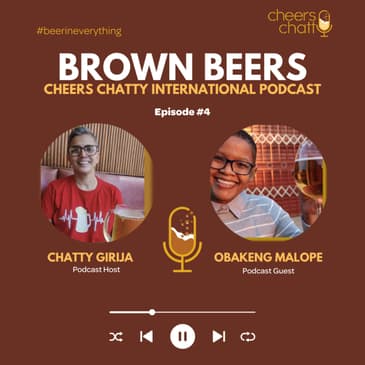
Brown Beers International Podcast Series- #Episode 4
Podcast Guest: Obakeng Malope, Beer is Art Movement
Podcast Host: Chatty Girija
#beerineverything
Tune into India’s first and only beer podcast.
Follow us on Instagram, Facebook, YouTube, and Linkedin for regular insights and updates. And if you ever have a beer-related question, don't be afraid to DM us on our Cheers Chatty Instagram handle.
Cheers!"
[00:00:00] Hey Babu's, welcome to the fourth episode of Brown Bears International Podcast Series.
[00:00:15] My today's guest is someone who has just flowing into my life as freely and as smoothly
[00:00:20] like we are.
[00:00:23] She has a very strong head, very flavorful and very cheerful just like a beer head.
[00:00:29] Babu's please welcome O Bucking Malope, she is from South Africa and she came into my
[00:00:36] life through an Instagram message.
[00:00:39] She had just one request.
[00:00:43] Please support me for beer education with the unemployed youth of South Africa.
[00:00:48] I didn't need to think twice.
[00:00:50] I just said yes.
[00:00:52] Hi O Bucking, Chatty how are you?
[00:00:57] I'm very well.
[00:00:58] How have you been?
[00:01:00] I'm feeling great.
[00:01:02] I'm feeling excited about this.
[00:01:04] I can't wait to talk to you.
[00:01:07] Most importantly, how is a woman who's been beating the drums in the background?
[00:01:13] She can't stop according to her 3 a.m. in the morning and 5 right now from 4 to 6 is
[00:01:23] the time for speaking to her spirit so she's probably speaking to the spirit right now.
[00:01:31] God bless her.
[00:01:32] Since we talk about God and blessings I would like to ask you about your grandparents' blessings
[00:01:40] and the beer that they've brewed.
[00:01:42] I believe that's what influenced you in the beer career too.
[00:01:47] Yes, so here in South Africa we have something called traditional beer.
[00:01:53] Traditional beer has been brewed by our grandparents and their women in our families who
[00:01:58] have a structure like your aunt, they don't choose any woman in the family.
[00:02:04] So that beer is not used for your recess and all these fun stuff.
[00:02:08] It's an important family issue.
[00:02:11] So like if you're celebrating the birth of the baby, marriage or funeral or the boys coming
[00:02:18] from initiation so that beer is made from a sorghum.
[00:02:23] So sorghum and maize is made from sorghum and maize.
[00:02:27] So me seeing my grandmother making that beer, you know mixing the ingredients together,
[00:02:34] the milling meal and the sorghum and adding warm water, leaving it there to ferment.
[00:02:41] And the next day she would be cooking it in the pot, living there, it there to cool and
[00:02:47] add a little bit of water.
[00:02:50] Leave it to ferment again and after ferment just searing out the liquid air, you know separating
[00:02:57] the left over sorghum and the liquid.
[00:03:00] You know if it made me have interest in beer so I was like you know what I want to do something
[00:03:05] like this.
[00:03:06] And it's stood in my heart and also again our grandparents are not only beer brewers,
[00:03:13] a storyteller as well.
[00:03:15] We used to say by the fire, listen to stories about animals that animals used to talk and
[00:03:21] animals did this and that.
[00:03:23] So those two things, storytelling and filmmaking they met together because beer brewing is storytelling.
[00:03:34] That's how you became a filmmaker and then got interested in beer as well.
[00:03:40] I became a filmmaker first and studied filmmaking and I'm a qualified filmmaker.
[00:03:45] Been making films of one award.
[00:03:48] So as time went by in life, I started being interested in beer because for me I didn't think
[00:03:55] beer is a woman thing.
[00:03:57] So after seeing an advert on Facebook about the social road certification program, this
[00:04:03] one was like okay they're looking for 100 women who are black and to teach they want
[00:04:08] to teach them beer brewing.
[00:04:10] I better you know register and apply for it.
[00:04:13] I applied, I got accepted and after learning sister one.
[00:04:17] I expanded my horizon and I became a biabhua and met those two skills together.
[00:04:24] Of fabulous, that's amazing.
[00:04:27] So you're a filmmaker, you're a certified sister one.
[00:04:31] You got the certification as well.
[00:04:33] You're one of the 100 black women on that list and then you got into empowering the youth
[00:04:40] of South Africa.
[00:04:42] How did you conceptualize beer result?
[00:04:44] So for me after finishing the education program, I was visiting family members.
[00:04:52] They live in the ghetto area, the township areas.
[00:04:56] So I saw the youth standing by over the age of 21.
[00:04:59] Those people who have learned these people have education they are able to work.
[00:05:05] So I saw them sitting by the street, you know, not working.
[00:05:09] So for me, I was like okay this is not right.
[00:05:12] I was afforded an opportunity to study beer brewing.
[00:05:16] How about I pass on what I've learned?
[00:05:20] So I want the youth to learn how to make beer and empower themselves and get to make
[00:05:29] an employment for themselves.
[00:05:31] So beer if I teach you they use over the age of 21 who are unemployed.
[00:05:35] They still serve beer podcasts, beer brewing, licensing, I think they are all beer and also
[00:05:41] beer and food.
[00:05:42] Terri, in communities whereby people are poor we want a beer to go to those communities.
[00:05:48] The communities that I saw, I want beer to go to those communities empower them through
[00:05:54] entrepreneurship.
[00:05:55] They must stop abusing beer.
[00:05:58] They must tend this thing into a career.
[00:06:02] So when you started the entire beer is art moment.
[00:06:06] From the time you started to now, how has beer changed your perspective about life?
[00:06:12] I didn't know a lot of things about beer.
[00:06:14] I didn't know that you can do beer and food pairing.
[00:06:17] I always knew about the wine and food pairing.
[00:06:20] So beer and food pairing, okay chocolate trifles they go with the stout, you know you can
[00:06:25] pair and lager or a blonde with like life food, like your fish.
[00:06:32] Sometimes you have a blonde goes with a green salad, your starter.
[00:06:37] So those things I didn't know about them.
[00:06:39] And for me beer was something that like you know 30 people, party people are having
[00:06:45] each other with bottles.
[00:06:47] And I saw something that's very sophisticated.
[00:06:50] Like people going to like art galleries, artists, people who have many people who dress well
[00:06:57] people who are well-lennard.
[00:06:59] People who you know if a beer beer gives you the taste of the ingredients they can tell
[00:07:07] you what food goes with this, what you put in this your method and the hopes that goes
[00:07:12] through it.
[00:07:13] I saw a community of people who are well-lennard, who are eager to teach other people who want
[00:07:20] to come in the community as well.
[00:07:22] So that's how it changed my life.
[00:07:24] That's how you know it made me you know want to share my knowledge as well and be on this
[00:07:29] like you know what I have to do what they're doing and teach.
[00:07:35] But can you been talking to many many countries of you know publications, doers, beer companies
[00:07:43] and from what I see everyone has received the 20, but you've been getting a lot of support.
[00:07:50] What have been the reactions from all these people?
[00:07:53] A bunch of countries have been to Switzerland, have been to Namibia, the UK and France and so
[00:08:03] forth and so forth.
[00:08:04] But what I'm telling you is that I've learned that the best aspect happening in the beer
[00:08:10] culture in those countries.
[00:08:12] Like example in the UK, the woman drinks beer and for me it was like a taboo.
[00:08:18] It was my first time going to the UK.
[00:08:21] It was in 2015 so it opened up my mind that new women can do this as well.
[00:08:26] And I've learned about their food and their culture as well in terms of beer.
[00:08:31] The way they pay their food and their beer.
[00:08:33] As like you know what I'm taking this back at home.
[00:08:36] So from my travels I get to learn the kind of beer they prefer.
[00:08:43] How their beer culture is, the you know they be chilling in the past and you know enjoy
[00:08:49] beer and watching a big screen or a movie playing.
[00:08:52] So those are the kind of things that I took back home as like you know what we need this
[00:08:57] kind of environment in our country.
[00:08:59] The chilled vibe whereby people are having intellect, conversation, drinking for learning,
[00:09:07] drinking for you know education process and enjoying themselves not doing mischief things.
[00:09:15] So that's what I've learned.
[00:09:16] I've taken from those countries.
[00:09:20] And have they learned a lot about the South African beers and how it is proved their history
[00:09:26] and culture.
[00:09:27] I'm sure there's a lot of cross pollination that happens all day.
[00:09:31] You know people ask me especially when I'm having Zoom meetings with people from the
[00:09:36] US and I have Zoom meetings with people from Japan and a journalist from India they are
[00:09:42] asking the same questions they tell us about Gomboti, tell us about a traditional beer.
[00:09:49] People are interested in their traditional beer that I've just explained.
[00:09:53] And also they want to know the beer culture.
[00:09:56] So there's a narrative that's been passed on TV you know, as in Africa we are broke,
[00:10:01] we are poor, you know we're living the jungle.
[00:10:03] So people want to know if we're living like them and I always tell them we live like
[00:10:08] you go to restaurants, I get a beer paid meal, I get chocolate, trifles, I get an
[00:10:15] a stout and I enjoy my meal or an ice cream with beer that's paired with an ice cream.
[00:10:22] So that's what they want to learn.
[00:10:25] We are each other's information.
[00:10:27] The media is not telling the right information about India so you know finding out that all
[00:10:35] you use Coke, use all these cool ingredients you know, you know all those kind of things.
[00:10:44] So it's like that we share knowledge people want to know how we live because of what
[00:10:51] they know it's sort of like distorted.
[00:10:55] I totally identify with that you know this is a third world problem the way we look at
[00:11:01] it.
[00:11:02] The best or you know the Europeans think that we, like India is still a land of snake
[00:11:08] chargers and elephants and they can't imagine oh we have more to us than just that.
[00:11:16] In fact the technology that comes is largely in this contributed big time to the world.
[00:11:22] And so you know when I do these for Kasi also ask me oh isn't beer illegal, isn't drinking
[00:11:27] illegal do you guys get hanged out here?
[00:11:30] You know it's quite surprising that they are so obtuse and just not you know up to
[00:11:37] day what's happening in the third world too.
[00:11:40] That's very true but you know what one thing about beer, beer
[00:11:46] you know cut all those butter.
[00:11:49] You know we both follow each other on Instagram and all these social media.
[00:11:55] If you've seen right now we have a collaboration group that came up called
[00:12:00] Mkega that celebrates Kwanza in America so Mkega says you as African Americans
[00:12:10] you are part of us as Africans as we are part of you.
[00:12:13] When you celebrate Kwanza we celebrate with you.
[00:12:16] You celebrate your black heritage which is our heritage as well.
[00:12:21] So now we are starting to open conversations.
[00:12:24] We are not two people, we are one.
[00:12:26] You guys came from all come from the same soil.
[00:12:32] So now it's no longer about okay they form Africa,
[00:12:36] people, country, schools, income whatever we the same.
[00:12:41] So beer has meant those bridges and beer has shown that you know what what we say is
[00:12:49] the same thing.
[00:12:50] We are together we will use this medium as a way to tell our stories, our black stories
[00:12:57] our African stories to celebrate our heritage and speak about issues that we don't get an
[00:13:04] opportunity to speak about.
[00:13:06] You know I always believe and I keep saying this even as my sign of that beer makes the
[00:13:10] world a cheerful place to live in.
[00:13:13] And when I say word it is all of us are a little words and we all come together and
[00:13:18] we all flow together.
[00:13:20] So and nothing unifies us at least in our word like the way beer does.
[00:13:25] You were just speaking about these brews that being made for beer is our moment.
[00:13:31] Tell us something about it.
[00:13:34] Yes.
[00:13:35] So we had a collaboration brew from a brewery called Gentile Brewery from Massachusetts in
[00:13:42] America.
[00:13:43] So we brewed a South African pildna my dear friend Paul who's the owner of the brewery
[00:13:52] said you know what let's make an Italian prisoner and I was like okay you know what will
[00:13:58] have you will make your beer have a South African footprint.
[00:14:02] It's so gum as a result we use so gum for food we have porridge in the morning that soft
[00:14:09] that's made from so gum later in the afternoon and at night it's a bigger version of that
[00:14:15] which is also made from so gum we enjoy those two things but with vegetables meat or fish.
[00:14:23] So and also we have so gum for beer so gum for your bread and all these kind of things.
[00:14:30] So let's infuse that beer with so gum.
[00:14:33] So that beer is a beer is a so gum pildna and it's a we call it a South African pildna.
[00:14:42] Also we also we had a collaboration brew in postdoc brewery and Redmond Washington in
[00:14:49] USA and it's a IPA infused with so gum as well you know we started to have a footprint
[00:14:57] as well just like you are Indians who have a footprint in your beer then this fantastic
[00:15:03] beer from Canada it was also very beautiful beer and if you can look at the outside the
[00:15:11] label of the can we are celebrating the hour tribe the coast quays and tribes you know
[00:15:18] the drawings that they left on the walls and the caves it was so interesting people
[00:15:22] interested about that as well and also there we have another beer it's called it's under
[00:15:29] the goddess series so it's a third aid that it has so gum as well.
[00:15:35] So when we get deeper in this conversation talk about beer being storytelling then I will
[00:15:41] tell you more about the goddess series beer using beer to tell stories about our past and
[00:15:48] our goddesses that existed here in Africa.
[00:15:52] I'm a very like man I want to ask you have you ever brewed the so gum beer it sounds
[00:15:58] so young the so as a grandmother ever taught you yes yes they do teach us but for now there
[00:16:06] is a specific woman in the family who grew so when they they know that when they pass us
[00:16:15] on then we'll take over because we know but now they know that once we they know and
[00:16:23] trust that this one she's the one who does this she's going to be doing this all the time
[00:16:29] they don't want somebody new they don't want you to your try and test and you know take
[00:16:34] chances with this important stuff but everybody has a chance here you grow up you become you
[00:16:40] know you've come a child you have your moment to be a child and young adult so when the time
[00:16:45] will come that I take over I will take over but I am taught I'm taught beer moving I'm taught
[00:16:55] storytelling and I'm taught poetry poetry so like in poetry you know they kind of poetry
[00:17:03] that our tries to do like in if there's like funeral there's like weddings you have to you know say
[00:17:10] your your plan your try a poet poems how we as a tribe you are so proud of each ourselves and
[00:17:18] how we introduce ourselves to the other time so that's the kind of indigenous knowledge that I've
[00:17:26] learned so why don't you say a poetry you have a poetry and beer you just have any poetry
[00:17:31] just recite one is in my language okay that's why I'm so I would love to hear it I'm so
[00:17:41] relaxed this is something all right to explain before I say the we are from the elephant clan okay
[00:17:51] so we we cut our chorus ourselves with animals so the elephant it's like
[00:17:59] it's gentle it's kind but don't mess with it right and it will get angry and also for my father's
[00:18:07] side we are from the hyena clan very cheerful very naughty uh there you know poking people
[00:18:18] but when it's time to fight the grand and so some of them how there are those people they become
[00:18:24] those characters so this is the elephant uh a kind of sort of like clan so we say uh
[00:18:40] so it's like when we go there we just introduce ourselves that we are the elephant tribe
[00:18:45] we are like this we are like that you know don't we we are very gentle we are very friendly but don't
[00:18:51] mess with us we speak together and all those countries so we say we say this
[00:18:56] we by dialogue when I say this in my funeral very ancient all of a sudden this how they say this is
[00:19:02] oh how beautiful is that speaking of the elephant do you know we have an elephant god
[00:19:06] it's called Lord Ganesh yeah and I'm a very strong believer of him so when you were saying this
[00:19:12] about you were describing the elephant I was I was thinking of going but on that note of
[00:19:18] bucking we are going to go to the next section of our forecast it's called Shia's Chadi Chugging Ground
[00:19:25] I'm gonna ask you some questions and you have to give me really rapid answers to it
[00:19:30] of my first one how old were you when you had your first bill? 21 is that the legal age?
[00:19:39] no the illegal age is 18 how did you like the case or didn't like the case?
[00:19:46] back then you know I was young and then I went to a different stage of my life so as a person
[00:19:54] and I saw this on on a documentary you know the person the guy was like you know the first time
[00:20:01] I take that crab yeah it took me out of this world I was like wow why have you been in my life
[00:20:08] and then that happens a lot of people because of mainstream beer it's just mainstream beer but when
[00:20:14] it takes crab beer you know the beer made from corn made from cherry fresh ingredients
[00:20:25] master chef yes like master chef they really really show you know we all see a person
[00:20:32] making Martin's making it and it's normal but for them you know the technique that goes there
[00:20:39] is you know how they flatten the eggs must be so the technique you know the tasting crab
[00:20:46] beer is like something that you've never had before I have to ask you to describe beer as a person
[00:20:52] how would you do that very sophisticated a very tasty very smooth very I can say sweet
[00:21:02] and also again you know very dangerous if you misuse or abuse like like the elephant
[00:21:10] yes yes so with that say I'll say don't drink and drive don't drink while you create an
[00:21:16] beer it's for you what are your top three favorite beer brands or any beers it's all styles
[00:21:24] start with Genesis and Irish style okay why because of you it's a style you can pair it with
[00:21:34] chocolate you know these desserts I love chocolate of all we mentioning it and those
[00:21:41] ice creams and I love it because of it has a widget inside whereby the little balls like a ball
[00:21:47] balls has like two holes you open it it spins sends their beer spinny so when you pour it it's
[00:21:54] like it's like it's like it comes from a table and the dirt form you have to wait for that form
[00:22:00] to become there it's like yeah creamy it's sort of like screaming light yeah and also love
[00:22:09] corona corona is very light you can pair it with your salad and while I'm saying salad
[00:22:17] and I'm mentioning that again when you taste beer let's say if I have a style with the green
[00:22:22] salad it will overpower the taste of the salad so when you pair it well with the blonde
[00:22:30] each you can taste the salad and it can taste the beer so flavors are like they can also kind
[00:22:36] they can cancel each other they can complement each other they can merge each other or they can
[00:22:41] enhance each other you can get something very spicy and add maybe something spice for a
[00:22:49] on a beer or something mellow you know those kind of flavors that's why I like a blonde for
[00:22:55] that kind of toast and also but why is it you can pair it you know we'll fish chicken you know
[00:23:03] those kinds of not intense flavor kind of food so that's why I can say you know that's what I
[00:23:11] stand and also not because I'm complimenting the Americans but you know we gotta give it to them
[00:23:17] you know 10,000 breweries they've done their part yeah they they've been and we will get that too
[00:23:26] of course very soon but now I would ask you to sing a song and dedicate it to beer so you came in
[00:23:33] at the right time I just edited sort of like a promo for the guys that we are doing
[00:23:41] it's not for distribution it's just for promo and I use the jazz song so this song
[00:23:47] it was during the apartheid in a way by it's called stevella so it says the man used to leave
[00:23:54] the villages to go to Johannesburg the city of gold to work in mines hard work searching for gold
[00:24:02] and the gold didn't come to us it went to he went to the people who are rich and those people
[00:24:09] they never shared even three percent of it they enriched ourselves while we sit there and stop and
[00:24:15] and suffer so there's a beer that they advertise on TV and it's called black label the only show
[00:24:22] men, money, men pulling heavy duty stuff so I combined that beer with that thing that you know what
[00:24:30] with that song they say the song says that it's not a singing song the peasant talks while
[00:24:35] jazz is playing you say the one that I was that I've just said right now by the late humanec again so
[00:24:42] this the kind of beer the black label the one that says you know you beg you strong you're the one
[00:24:51] who mines you the one who who do the hard work as a guy and you know the guy's beer the last segment
[00:24:58] of a podcast and I want to ask you one question where does beer result go from here what are future
[00:25:07] plans? The future plan is we launching we want to launch other initiatives other beers are
[00:25:17] let's storytelling film making you know we can do this about our own world we teaching the
[00:25:25] the youth beer brewing you know we want to get my friends from the film industry on board you know
[00:25:31] she should fill in the body the brewers and you profile them promote them you know so you know
[00:25:38] we can't do it without them you know they need to go to them and learn or work after BIS are
[00:25:44] if they want to work at the brewery so they must be listed as well as we are getting lifted
[00:25:51] so when they the promotional material fill in there are sympathetic to them they are
[00:25:58] poor people you know get to you know buy them business and they get to grow so if you know
[00:26:05] taking everybody you say filmmakers coming together it doesn't need to be very technical and
[00:26:13] subject oriented towards beer beer can be a central piece a central character in the entire story
[00:26:20] but BIS story is human stories you know stories of goodness goodness stories of cheer and then see
[00:26:27] that how you can integrate beer into the entire thing and that's how I would say there's
[00:26:33] beer in everything in life therefore the moment you just restrict it only to beer beer beer
[00:26:39] it will come across sometimes as only if I'm a love beer or a beer drinker then I would be
[00:26:45] interested in this film but if you use beer as a maker as a medium to project the goodness of
[00:26:52] life to bring out change in society I think it has a lot more acceptability and it's more
[00:27:01] relatable to a wider audience that's very true even if you don't drink you can't
[00:27:06] in yeah you should be able to relate to it and say yes I support beer is that because it's telling
[00:27:12] me such a beautiful story about life about nature about social activism or even if it is something
[00:27:20] very light and funny everything the beer is you bring the same crates into your story
[00:27:27] through our green and on that note you always have a support we're always there for you
[00:27:33] anything about beer we are here thank you so much thank you very much so thank you so much
[00:27:38] for being on the Cheers Shari podcast I know we've been planning this since a very long time
[00:27:45] and I also know you've been sweating a lot so I'm never going to take too much of your time
[00:27:51] but finally cheers we did it today so that's it baboos this is Shari from Cheers Shari signing off
[00:28:01] please do follow us for can learn about the podcast channels which and of course social media right
[00:28:06] dropping a few good words about us share good words about us and take care be good to beer like
[00:28:12] the way we always we've been saying it on this to the center of partners and the previous one
[00:28:17] cheers baboos take care good night