
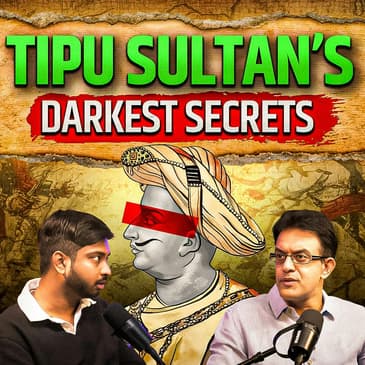

In this engaging episode of the Bharatvaarta Podcast, host Sharan is joined by Dr. Vikram Sampath to discuss his latest book on the controversial history of Haider Ali and Tipu Sultan's contrasting reigns. The conversation covers various aspects including Tipu Sultan's controversial policies, the methodological challenges of historical writing, and the nuances of presenting an impartial account in a polarized field. Dr. Sampath also shares insights into the importance of documenting contemporary lives for future historians and discusses his initiatives to support upcoming historians through the FIHCR (Foundation for Indian Historical and Cultural Research).
Topics:
00:00 Introduction
01:06 Meet Dr. Vikram Sampath
01:36 The Haider and Tipu Saga
03:47 Balancing Historical Perspectives
05:23 The Craft of a Historian
05:34 Tipu Sultan's Documentation
07:21 Contemporary and Oral Sources
18:05 Comparing Haider and Tipu
26:49 Tipu's Language Policies
30:55 Tipu's Dreams and Interpretations
34:34 Toxic Masculinity and Treatment of Women
37:24 Historical Movies and Controversies
39:29 Challenges in Indian Historical Cinema
42:21 Religious Policies and Temple Grants
51:07 Role of Brahmins and Administrators
55:21 Controversial Historical Figures
57:52 Future of Historical Research
01:04:51 Conclusion and Final Thoughts
[00:00:00] An 18th century India was a tumultuous era of utter chaos everywhere. He sits ghoulishly counting heads and distributing money as rewards for people who are bringing blood-soaked heads. And when somebody says there is a thing called neutrality, I laugh on their face. Even the other male courtiers are not supposed to look at the lady. They all have to see him and appreciate his handsomeness.
[00:00:27] One of the courtiers makes eye contact with the poor dancer and she also just looks at him. For which I think she is strangled to death. And this courtier or whoever, he's skinned alive. This was a man who was probably not pro Kannada at all. Everything about history is dividing, divisive, polarizing.
[00:01:03] Very good day everyone. Welcome back to Bharatvarta. I'm your host, Sharan. We are joined by a very special guest and we've been waiting for this podcast for so, so long. Dr. Vikram Sampath. Vikram, thank you so much for joining us here today. Thank you, Sharan. And it's good to see you in person. Last time we did was in a Zoom window, I think during COVID. Yes, no, we met briefly in Pondicherry. That's right. But I've been looking forward to this for so long. And because you've done other podcasts on this, now I know where to actually hold you. What not to ask.
[00:01:33] What not to ask. No, what I need to ask. So, in fact, let me begin by asking why this could have been two books easily. One on Haider and one on Tipu. And when I read it, I believe that, you know, one can be easily 500 pages long. So was there a particular conscious decision that you took just to focus on Tipu? So, totally, you know, out of the three lakh words plus that the book has about one lakh, one third of the book is dedicated to Haider.
[00:02:03] And I didn't think it will spread so much. But as we were also discussing, I think he's quite a fascinating character. Fascinating doesn't mean he's good before in comments, people start trolling saying I'm pro Haider and all that, which I keep seeing on social media. They call you pro Haider? Well, people, outraging is a national pastime. So, on everything you have to outrage. Might as well give them fodder. Yeah. So, trying to balance it out, all these things I keep hearing.
[00:02:31] But for those who've read the book, the brutality of the man, the kind of cunningness that he brought to the table, ruthless politician that he was. I think those just spilt out over the pages. And I didn't think it will go to so much. But I really wanted, you can't understand Tipu otherwise. I think the context also, you know, how he was different from his father and the two being
[00:02:56] absolute contrast to each other, you wouldn't have had unless you expound on Haider, his life, his struggles, how from rags to riches kind of a story. And then how this man who got it all on a platter squandered it away. So, yeah. So, I wanted it as two books, but I think the publisher said to whip up maybe Savarkar two volumes was still okay. But to whip up that same kind of interest. And I don't know nationally, would people really want to buy a book on Haider Ali? I'm not sure.
[00:03:25] He's not been marketed well. Yeah. Tipu is more popular that way. Which is quite a colondrum. I mean, ideally speaking, he should have been much more popularized considering, you know, the victories he charted or the just the brutal statecraft that he displayed in his life. But yeah, so it is. So, let me before coming to Tipu, I want to discuss a little bit of methodology, right?
[00:03:51] I mean, these may seem like very basic questions, but let me put two questions in front of you. You're talking about academics and I'm talking about journalism, but I believe that both are intertwined. And when somebody says there is a thing called neutrality, I laugh on their face because cognitively, it's impossible for you to be neutral. You can be impartial, but it's okay for you to be a little biased because that comes from your experience, your understanding of things and a lot more different things, right? So,
[00:04:22] there are two things. One is you do have maybe your own worldviews and values and everything. So, how do you actually hyphenate and make sure that, you know, everything is justified and properly presented in the book? I should ask you that counter question. So, as a reader and knowing my worldviews, did you see that being reflected in the way? No, I wanted you to tell that. No, as a reader, your perspective will be... You're offering me everything, actually. You're offering me both the accounts, accounts that
[00:04:50] glorify him, accounts that deify him and mostly historical accounts. And even that's written with a certain lens. Like if you look at colonial records, that is almost written with a sense of, you know, hostility against Tipu in some cases and everything. I think you can tell that better. So, in order to be able to sift through all of that, how do you still try to present a quote-unquote
[00:05:16] impartial book when the personality himself is so partial towards history? Very good question. I think that's the craft of a historian, finally. I mean, all the time we are taught to triangulate facts. So, the best part here is at least not so much of Haidar, but Tipu wrote so much. He was such a... He was a well-educated man. And prolifically, he wrote whether it was his letters. I mean, you see the control freak that he was,
[00:05:43] even when he sends these embassies abroad. Every day, what they need to do, whom they need to meet, when they need to open a box, when they need to give goods for the market in Muscat or anywhere. He was remote controlling sitting in Srirang Patna. And, you know, his dreams every night, he was, you know, documenting that. Quite unlike Indian rulers or Indians as such. Today, even we don't document our lives. I think, dear diary that we used to have long back,
[00:06:10] we don't... We feel our lives are not important. We're all history in the making. We're seeing, you know, 50 years later, whatever worldviews and experiences we have, will be archival material for a historian in 2050 or 2060. But we don't think of it that way. But he seems to have had that foresight or thought. And so, straight from the horse's mouth, there is so much. You can't say even he was exaggerating. Maybe he was, but by and large,
[00:06:39] there would be some element of truth. So, you have that as a central piece where your protagonist, your subject is himself cooperating with you as a biographer to share details on a daily basis. And some are very intimate details of his day-to-day life. So, that became my main focus to access. Some were in Persian, which, you know, I tried to learn Persian for a couple of months. It's a little bit rudimentary knowledge, but it's obviously you can't read a freehand thing,
[00:07:09] a printed thing I can still manage. So, I had a Persian translator who helped me with those, including the original registers of his dreams, which were there in the India Office Library in London. Now, along with that, in the periphery, as you said, there are a nucleus of other sources. One is, of course, you know, British and French records, which would probably counter. So, about a particular war, maybe Tipu is talking something himself. Then his contemporary, what are primary sources?
[00:07:38] Primary sources are those which are around the same time, at the same time or around that, maybe 10-20 years here and there, where still people who were part of that episode were alive. So, as a good journalist, someone would have gone and interviewed them, which is what Mark Wilkes did. So, other contemporary sources, like his own court chronicler, Meir Hussain Ali Kirmani, who wrote Nishane Haidri and also Tipu's life. So, those were other sources which are contemporary, colonial also.
[00:08:08] The French wrote so much. All his negotiations and letters to Mauritius, to Louis XVI's court in France, all the embassies abroad. So, those are also contemporary accounts. The ambassadors who went to particularly the Middle East and so on, they maintained their own registers and diaries. I can't remember how to pronounce that long Persian name, but that is one account where they are also talking how they saw,
[00:08:37] what they saw through their eyes, what were people's reactions to Tipu Sultan and to India, to Mysore and Mysorean products, were they valued good enough? Then contemporary art of that time, a substantial part, particularly in London, after his death, I think he was memorialized that way. Rightfully so, they had taken four decades to subjugate a kingdom in India. Does that mean that Tipu was conscious of how he was perceived abroad?
[00:09:06] I think so. Somewhere he does, not only abroad, I think everywhere he wanted to, even at home and abroad. But after his death, he got more immortality outside India than here, because people were making those paintings. Porter and so many others who were making those paintings of the, which we normally see today, the storming of the Srirang Patna fort, or his body being discovered, or when he was alive, him giving away his children as hostages. Now, none of those painters ever came to India.
[00:09:36] They did not even know what Srirang Patna looked like. But it's quite a, if you see, I mean, you have that Gopuram of Ranganath Swami showing in the sillet of it, in the background. So, they were interviewing East India Company officers who had come back after the war. there were prompts, essentially. Yeah. So, how did Srirang Patna look? Can you make a rough sketch? And then they would improvise on it. So, those also become an important contemporary source, and French accounts and all of that. Then the one account,
[00:10:06] one set of sources, which people don't normally use, unfortunately in India, are the Peshwa Daftar, you know, in Pune, which have been chronicled, again, every letter that went in and out of the Peshwa's court. And the 18th century India is a Maratha century. It was the Peshwas who dominated Indian politics at that time. So, in Marathi, and in that old Marathi, and all the larger Maratha confidresses, whether it was the, you know, Holkar,
[00:10:35] or the Patvardhans in Miraj, their records also become very important, because they were constantly interacting with, Tipu, and Haider in wars and so on. So, those things, in Kannada accounts, Kannada accounts, of the time, there are books like Haider Nama, which is in Kannada, but actually written by the Brahmin priests in this, CB Tunkur, you know, the, the temple. temple. And people claim that is one great, you know,
[00:11:05] on the mural walls of the temple, you have Tipu's painting of him killing that tiger, and actually subduing one, in one hand, the tiger, and one leg, the snake or something. Shown as if that is a symbol of his munificence, and his secular spirit, whereas actually, they were protected by the king. So, it could be, sick of fancy also, and trying to, you know, and Haider Nama says, so many, it almost calls him as an incarnation, of God, and so on.
[00:11:35] He would almost be an incarnation, if not for some vices that he had. Aren't we all that? We all would be great, if not for some vices we all had. So, these also are there, and then some are much later. I mean, the secondary sources, maybe a hundred years later, or two, 150 years later, you had Bawring, Louis Rice, with the gazetteers that he came out, and Mysore historians, whether it was Shama Rao, or Haivadan Rao. So, they were looking maybe, 100,
[00:12:03] 150 years later. So, it's a conglomerate of all these different sources, that one, I tried to put together for this, to build a picture of the times. And, if you have read the book, you will also know that, it is not just the lives of these two people, it's also placing them in the context of the times. And 18th century India was a tumultuous era, of utter chaos everywhere, right from the Carnatic wars, to, you know,
[00:12:33] all the succession wars. I mean, honestly, if one sees, not one player comes out smelling of roses here. And dare I say, even the Marathas, you know, so all the different players, there is no, nothing called scruples, there's no larger ideology, or cause, it's just that, everyone can ally with, or against anybody, depending on your political expediency, which is perhaps how politics, always has been, and is now too.
[00:13:03] So, so these have been, and maybe, you know, it took me so long to tell you about the sources, and maybe that's why it took, so many pages to fill, those as well. So, you're effectively conveying different perspectives also, right? It could be that of the Vadiyars, or the, or the French, or the British, for that matter. Oh yeah, and also forgot the oral sources, because, these are all written sources, but oral history, whether it is, the plight of the Mandiamayangars, that's from their family,
[00:13:33] the family has letters, and what is very, very curious, Sharon, is, because I mentioned that with a disclaimer, we talk about the 700 men, women, and children, who were killed, by Tipu, of the Mandiamayangar community, who belong to the Bharadwaj, Gotra, and so on. Initially, people associated with male kote, actually, it had nothing to do with male kote. They were killed in, Sri Rang Patna, then Lakshmi Narasimha, temple, I'm told. And this was told to me, by someone of the, descendant of that family. They said,
[00:14:03] another very senior scholar, almost 85 plus, in male kote, who did not want to be named, said, you should clarify this everywhere, that male kote has nothing to do, with the massacre, or whatever. And he also was a Aengar, but not of the Mandiam, Bharadwaj Gotra. So he said, we celebrate Diwali. So this is a misnomer, that male kote is plunged in darkness, and all that. So this is one group of people, people.
[00:14:29] But in the capital city of Tipu, if 700 people had to be killed in that manner, maybe, you know, Wilkes, or Haivadan Rao, someone would have made a mention of that. It is not mentioned, in any of their accounts. The mentions of that, are got from, the letters of, Maharani Lakshmi Ammanni, which the family has, which she writes to the British, to, to McCartney, and, Convales, and Velisle, and others,
[00:14:59] in everything, because the Mysore Pradhan's, who belong to the Mandiam, Aengar community, they were her emissaries. So, the letters, to them, she's talking about, you know, the letter is being carried, by these people, who have, you know, faced so much struggle, and sacrificed, 700 people of their family, have, you know, given up their life, for our cause, and all that. So, that becomes a deductive, kind of a thing, but, that's always, intrigued me, that, how come,
[00:15:28] that episode was not, chronicled by, any contemporary, including Kirmani, he would have actually gloated, that 700 kafirs, have been killed. So, there are oral accounts, which also, I mean, I stated it, because it's also part of, larger folklore, and, and it's a living memory, these people, still don't celebrate Diwali, and all that, as we know. So, that, that needs to be also, with a, you know, disclaimer saying, this is what it is, which I have done, with all honesty, and sincerity, as a historian. Then you have the,
[00:15:58] accounts of the Nair's, and so on, and the Mangalore Christians, you know, what they faced. So, they are also, contemporary accounts, of the archdioces, and, there's a Kannada manuscript, also called the Barkur manuscript, which talks about, the destructions, and what the various temples, in Korg, Kodugu, you have this, Pattole Padame, which is again, an oral history account, of what happened in Kodugu, and, interviews with the people, you can even go and see, some of the, temples there,
[00:16:27] which have, you know, still, effects of the, attack. So, those kind of things, which are oral history, we need to see it through, to see how much, and there's this whole, case of Lavani's, which I think, Dr. Bhairappa, in his foreword also, in fact, there's a, in, I think, Aveni Road in Bangalore, there's a Sita phone company, or something, which, in the 1930s, they brought out a gramophone disc, in fact, I have the recording too, of that, which is very interesting,
[00:16:56] it's a Lavani of the 1920s, 30s, what does it call, Beshak Nishana, Beshak Tamasha Tiger Nishana, Tipu Sultan Nanta Hesaraitu, Masalat Maadida Meersadaknige, Deshadrohi Em Hesaraitu. So, the refrain, constantly is, Masalat Maadida Meersadaknige, Deshadrohi Em Hesaraitu, the one who, conspired against him, Meersadik,
[00:17:26] became known all over the world, as a traitor. So, Dr. Bhairappa says, those days, these uneducated Lavani singers, were going everywhere, and some, they had Muslim benefactors, who would give them some Bakshish, and so for that, they would make these, eulogizing, Lavani's. So, lot of people bring up, these Lavani's also, as, proof of the fact, that Tipu is still so revered, in the, country populace, including someone like Girish Karnad, I think talks very often about,
[00:17:55] the Lavani's, in praise of Tipu. But, there is a, there is a context to that also, which one needs to, put through. Right, now that we have said the context, the comparison between, you have spoken about this, the paradox, that's Haider, and, how both the personalities, are so different from each other, that, there is almost no inspiration, that they draw from each other,
[00:18:25] because I think there was, so much begrudging, relationship, that they did have, was that, Daddy issues. Yeah, that's, yeah, that's daddy issues, to summarize as such, but what's interesting is, how Haider, himself had some, sense of, consciousness, that he was not as educated, he was not as polished, so, he would have to perhaps, hold himself back, even if he had some wild,
[00:18:55] ideas of him, so, which is why he probably never, disallowed, the Sera from, being taken place, or something, and he was not as vengeful, perhaps, you could argue towards, the Hindus, although he was, but in comparison to Tipu, yeah, so, how do you draw comparison, between these two personalities? No, I think Haider understood, very clearly, it seems, that, you know, considering the, the arch of his life, where, he was literally,
[00:19:24] bought off, by the Maharaja, of Mysore, the debtors, who, his father owed money to, had caught him, and his brother, and put him in a, kettle drum, and started beating it, and that's when his mother, goes to the Maharaja of Mysore, and pleads for mercy, and that's how, he, the Maharaja, not knowing what he was getting, into poor man, actually, showed mercy, offered money, to release the boys, and also, promised that, when they come of age, they will be taken, into the Mysorean army, which he did,
[00:19:54] so, I think everybody was conscious, or knew this fact, and, there are so many instances, you know, where, he's also, he knows very, surely, both, I think father and son, knew, that, they did not belong, to the class, and so, that whole episode, where he gets a farman, from the Maharaja, that anyone who calls me, Nayak, their tongue should be cut off, and so on, so, you know, you should, and he wanted all these, grand titles, Bahadur, and Nawab, and Tipu, of course, Sultan, and the whole,
[00:20:24] even I think, the Nizam gives him, gives Tipu some, this thing of, Nasibud Daula, also, before the, first Mysore war, now, and, getting into matrimonial alliances, with the Nizam, or the Arcot, this thing, so that they, they come up, there was a sense of inferiority, yeah, so they knew, that they did not belong, to royal, you know, pedigree, so, though of course, I mean, even Kirmani, and talks about, they coming from some, Kureish, tribe, even, a sympathetic,
[00:20:53] pro-Tipu biographer, or historian, like Mohibul Hassan, also says, those days, everyone was exaggerating, their lineage, to show that they had, you know, Hindus also, we have Chandravamsha, everyone is Chandravamsha, and Suryavamsha, coming straight from Rama, or Krishna, so you need to show, your high status, so these people, were also doing the same, so, but, he understood, that to completely, overthrow, the Hindu king, who was his benefactor, who had stood by him, in his troubled childhood, and in a Hindu kingdom,
[00:21:23] majority kingdom, would not go down well, there would be uprisings, and all of that, and he was at that time, expanding the kingdom, just after usurping it, Mysore, under the Vodiyas, had shrunk, by the time, Imadi Krishnaj Vodiyar, was in power, and they were, impoverished treasury, anybody who came, you know, they would be paid away, large sums of money, to, to drive them back, from the invasion, and you had the corruption, I think, Karnataka, corruption, also has a long history, yeah, so they,
[00:21:52] I think they, would make our politicians, look very small, because, all these, the Devrajaya, and Nanjarajaya, they were looting, the treasury, like anything, and so, a couple of times, I think, when the Peshwa invades, or the Nizam, literally, the members of the royal family, have to pawn, all the jewels, their own personal belongings, even the silver vessels, and so on, in the Ranganath Swami temple, so that kind of, pitiable condition, that Mysore, had been reduced to, and Haider, first thing he does, is expand his kingdom,
[00:22:22] that Bidunur conquest, Bidunur becomes, his main base, and that, he always calls, that his Swarajja, because that is where, he, you know, conquered it, with his might, whereas this, he has usurped, so even him, you know, minting his own coins, the Haideri pagodas, he does it there, but in Mysore, he does not do, because there, he is only officiating, as a, as a, subservient to the Maharaja, who is called the Kartar, the Kartar, of the whole kingdom,
[00:22:52] so he was conscious, of that, and, but not that he was, any less brutal, or anything, like there are instances, when he goes to Kodagu, or when he goes to Malabar, in Kodagu, he has like, five rupees, for every head, that is brought, and 700 heads, and Wilts also mentions, that he sits, ghaulishly, counting heads, and distributing, money as rewards, for people who are bringing, you know, blood soaked heads, and after 700 heads, have come, then two heads, come of two young boys,
[00:23:22] or something, who are very good looking, and then he says, oh, these people are so good looking, so let's stop the, attack, and, if they were not, you know, they would have been, God forbid, some thousands, or more heads coming, rolling, so he had all those, barbarous, things too, but within the kingdom, that's what people do, what they want, you worship anything, as long as I have power, that's all matters, outside, I will show my brutality, but even in his, you know, contemporary accounts, or something,
[00:23:51] this over emphasis, on religion, is not there, in Haider's, this thing, you know, I mean, this, killing the Nayars, or killing the Kodawas, you can still argue, that that was part of the, you know, political conquest, they were opponents, they were traitors, to what he considered, traitors, and so, rebels have to be treated, that way, Naxals of today, so you go and ambush them, rural Naxals, yeah, yeah, so that's, that's still, understandable, but, and there's no mention, of establishing,
[00:24:21] wanting to establish, the true faith, or calling them, kafes, or infidels, there's no mention anywhere, and this, but in Tipus, you have that all through, so that difference, becomes very clear, that right from childhood, that consciousness, that I am different, from the others, and the other, has to be subdued, seems to have been, very prominently there, you know, in his mind, and unlike, so Haider, that way, jolly go lucky man, he comes across, you know, always given to,
[00:24:51] a lot of un-Islamic acts, including, being addicted to, drinking, he was drinking all night, womanizing, and coarse language, there's so many, he is, yeah, the cuss words, that he, liberally used, against anybody, and everybody, I fell out laughing, I have this right here, you can, take the name, it's quite, he's quite a character, you know, like, you can make, an amazing movie, movie on him, yeah, he's quite,
[00:25:20] in comparison, this guy, if you see, he was so austere, so Tipu, some of the accounts, I believe, he used to cover his, almost Victorian, other than his hands, like, no part of his body, would be visible, so, that very, purist, Islamic, this thing, probably one, other example, that education, does not necessarily, mean, you become wise, so, you know, an uneducated, Haider, was perhaps wiser, and more,
[00:25:51] diplomatic, and strategic, than, so, Haider just, sought good education, for his, son, son, yeah, but never predicted that, you know, they would turn out that way, perhaps, yeah, yeah, no, he predicted all the time, I think that, this guy, will squander it all for me, and he is no good, and, all that I have built, with the, but that's most fathers, complaining, but I am sure, if he was a little more serious, I should ask my father, whether he still holds, the same views, he might, you are getting your,
[00:26:20] refugees burned, what are you doing, Vikram, love for languages, I want to, get a controversy, out of you on this, because, Haider, spoke multiple languages, like the average, Indian from the south, he spoke, Karana, Amarati, Talgo, Tamil, etc., I think he knew French, also a bit, because of the French, because of the conversations, with them and everything, so why didn't that, get passed on to Tipu, or something, I don't know, Tipu was quite particular, about I think, certain languages, yeah, I mean,
[00:26:50] it's quite a travesty, that the Kannada, and culture department, of Karnataka, then you know, is part of the Tipu, Jayanti, and other celebrations, whereas this was a man, who was probably, not pro Kannada, at all, I mean replacing, Kannada and Marathi, which were in the court, there used to be, because a lot of, Maharashtian Brahmins, were there as accountants, so court accounts, would be had in both languages, that was replaced, with Persian, and even after his death, when the British, see the library,
[00:27:21] majority of the books, or almost all, there's no mention, of any book in Kannada, there, in his personal connection, everything is Persian, and Arabic, including accounts, of physics, and geography, and poetry, and tons, and loads of books, on jihad, and what it means, to be a mujahideen, and ghazi, holy warrior, so all that was in Persian, he wrote, his dreams in Persian, the only time, he writes, Kannada letters, are to the Shankaracharya, which both he, and his father, you know, kept writing,
[00:27:50] to Sringeri Shankaracharya, but other things, including to his, to his emissaries, the ambassadors, those are also in Persian, and Mir, Kirmani, Hussein Ali, Kirmani was writing in Persian, so where was the Kannada, ness to his kingdom, there was, other than Haidarnama, in Kannada, which was written then, his contemporary time, there's no, if a king, was actually popularizing, a language, he would want to do it, in the local language, he would inspire, his courtiers, to write,
[00:28:20] in the language, he wants to, popularize, right, I mean that's natural, I mean, Nalwadi Krishnajavadir, used to, much later, in the 1920s and 30s, even, Krittis, because in Karnatic music, all the Krittis, are in Telugu, and so on, so on Sanskrit, so he would, force his court musicians, to compose in Kannada, because he wanted to, popularize the language, but people like, Mysore Vasudevacharya, and others, I believe they said, it is very difficult, it doesn't, it's not amenable, to the kind of, Sancharas, and Nervals, and all that, so I think,
[00:28:51] Mutaya Bhagavatar, actually has a few, Kannada, this one's, but, so that shows that, there was that, Kannada consciousness in him, and he wanted to, fill the lacunae, in the literature, in that language, but here, for those who say, you know, that he popular, he was pro Kannada, the proof of the pudding, is to see how many works, in Kannada, were commissioned, or written during his time, and I think in the, forward, I think, even,
[00:29:21] Vairapaji mentions, that so many, words in the, revenue departments, right, in, they were all personalized, no, in Karnataka today, in independent Karnataka, so many, luminologies, these, khata, then, khardi, pahani, khani, sumari, gudasta, takte, thari, khushki, bagaytu, banjaru, jamaabandi, ahawalu, khavandu, amaldar, shirastedar, these are used now,
[00:29:50] in revenue records, those are all, Persian names, which have come, from, Tipu's time, and if you see also, the Muslims in South India, whether it is in, Kerala, or Tamil Nadu, they speak the local language, but, largely in Karnataka, Muslims, they don't, I mean, they still, bad Hindi or Urdu, but, Kannada, nam duke barate, I mean, it is that sort of, very bad, in Hyderabad, the Muslims, speak Telugu, quite fluently, with their Hyderabadi,
[00:30:20] accent, but, yeah, so, that showed, what, his policy towards the language was, so, I hope you got your controversy, TRP there, yes, we'll cut bits of it, and make sure it's actually amplified, Tipu and the anti-colonial resistance, that's the whole, bigger narrative, that was there, right, so, one is, how was he, with his treatment of the Vadiyars, and,
[00:30:50] what did he perceive of them, how did he think of them, has he written of them, secondly, I'm also, I want to discuss those dreams, because those dreams are fascinating, the ones that he had, I mean, in general context, in a more saner context, you see that many famous personalities, have these premonitions, and I, I do believe in them, very strongly, because I, I think, you know, somehow, if you tend to overthink, you know, there tends to be that, psychological effect on you,
[00:31:20] but here, we see a very, very weird, pattern, you know, so, and you've been studying historic, personalities, across the spectrum, in India's history, so, do you see such examples, not to say, whether it's good or bad, or any of that, but beyond that? No, I don't, I don't remember having, Tipu is a special case, someone who noted their dreams, maybe they wrote some memoirs, it's called lucid dreaming, I think, very, very, and, and most often, the dream would give a meaning itself, most, sometimes,
[00:31:50] it had no meaning, but, immediately after waking up, so, some of the dreams end, at this point, I woke up, you know, which means, immediately after he woke up, he wrote it, so that it still remains, after two, three days, obviously, you'll forget what you saw, in a dream, so, those became his interpretation, you know, as to what, that instance that I quote often is, there's a big, katora, in which, there are saligramas, the, the holy stone, which, Vaishnavas worship,
[00:32:19] as a embodiment of Vishnu, and then, there are saligramas, and also, badami, that is there, and he is sitting, in his dream, he is seeing himself, sitting and rolling that pot, and then all the saligramas, are turning into badami, and at this point, I woke up, then he wakes up, and then, interprets it himself, just as the saligramas, has converted to badami, so all the Hindus, need to be converted to, Islam, as ordained by the, higher power, so,
[00:32:49] there is no logic to that, I mean, I could just say, that they were, may, some fruits, yeah, exactly, so, from that, how do you, bring, so, almost justifying, all the time, that I am doing, this conversion, not out of my own volition, but it's a higher cause, his will, some higher, supreme power, is guiding me to that, so, similarly, you have so many, where prophet Muhammad, or some angel, and all that appears, suddenly, and they go so far,
[00:33:18] break that, temple, break that, and there is one more, where he goes into a temple, and there are lots of female deities, and then behind one deity, he sees one, deity's eyes start, rolling all over, rotating all over, and all that, so, those kind of, I don't know, then there is a, a cow that comes, with its calf, whom he makes an allegory to, the Travancore ruler, and so he kills the calf, and cuts off the cow's legs,
[00:33:48] and then there is one more, where, there is a beautiful, a young man, who is very good looking, who is talking to him, and then he tries to, catch his hand, and that fellow turns, and when he turns, his, the bun of hair, that he has hidden, it falls, and becomes a long plate, so it's a woman actually, androgynous kind of thing, and he wakes up, and interprets that, as the Marathas, that they are so effeminate, you know, just as this, whom I think is a man,
[00:34:17] was actually a woman, so also the Marathas are, pansies, and sissies, and whatever, so I think these were, giving him some solace, when he was, actually he was getting, defeated by them, or whatever, maybe these dreams, were his wish, that I wish this could, have come true, wanted to be toxic masculinity, quite interesting, another thing is, the treatment of women, having concubines, having escorts, call it what you may, both,
[00:34:47] I mean, Haider also has some, I think he was very close, he was quite affectionate, about some of them, in the sense that, he never wanted them, to go out, or anything, and many of them, he never even interacted with, I think, he had some 4000, 4000, concubines, spread across, the kingdom, but I don't think, he was affectionate at all, because he was so jealous, and possessive, there's some one episode, where, Pixoto, he kills someone, yeah, he talks about that, that even in the mujra, the dance and all,
[00:35:17] even the other male courtiers, are not supposed to, look at the lady, they all have to see him, and appreciate, his handsomeness, and so, one of the courtiers, makes eye contact, with the poor dancer, and she also looks, just looks at him, for which I think, she is strangled to death, and this courtier, or whoever, he is skinned alive, so, I mean, so no affection, coming there at all, and all kinds of weird, you know, protocols,
[00:35:47] he would visit them, and apparently, if he wanted to, if he was in the mood, for, sexual intercourse, someday, then, all of them, had to stand in a row, with a nose ring, in their hand, and he would look at, go past them, and whosoever nose ring, he takes, she had to go to his bedroom, so, these type of things are there, but I wouldn't hold, these against kings, of those times, I think it was common, people having multiple, you know, mistresses, and concubines, even now people have,
[00:36:17] so that time, it is, a symbol of its times, but tipus, I don't think, such a womanizer, at all, so there also, he was quite purist, but, in terms of, sexual violence, in terms of, you know, taking away people, to the Zanana, and harem, that, he did, but Haider, was a different thing, I mean, he was also drawing, a lot of, sexual pleasure, by, with these people, whom he captured, then these, the Dolu, lady, you know,
[00:36:47] used to go, as Koravanji's, yeah, access to people's, homes, in towns, and hamlets, and villages, so they would see, if there is a pretty girl, in that family, that news would go to Haider, and he would send, next day, you know, the army has come, and taken away the girl, to the harem, so those type of things, that violence against women, has been a template, even till date, so that's not, as I said, I wouldn't hold that, as something very,
[00:37:17] it was quite a common practice, back then, I, let me draw you to, something recent, and, then we'll go back, to the discussion again, movies on history, lot of them are being made, and obviously, each one of them, is controversial, for its own reason, sentiments are heard, and what you may, the recent one, starring Vicky Kaushal, I think on Chhatrupathi, Sambhaji Maharaj, that's become a controversy,
[00:37:47] and Twitter is basically, discussing because, I mean, the reason of death, I mean, if you look at the Islamic sources, or I mean, both sides of the story, there is some, angle or element, of religion, to it, that, either conversion was, I mean, either he was asked, to convert, which is why he refused, or he was killed, because, you know, it was ordained, or something of that sort, so, in that sense, what's,
[00:38:17] what's, what's your take, on the history movies, that are made, is it, because truly, as an artist, you would want to defend, some creative liberty, but, look at Kashmir coverage itself, right, like, Haider, by Vishal Bharatwaj, is a fantastic movie, from, purely, artist perspective, and how it's made, cinematography, music, and all of that, it's quite a powerful movie, and then, Kashmir files, came around, and then you see that, mentality shift,
[00:38:47] in 10 years, so Vikram, what you're doing, will have a massive impact, you know, maybe not now, 10 years, 20 years, down the line, yeah, no, that's why, I mean, in Haider, the same movie, calling Maratan Temple, Shaitan Ki Gufa, and having people dance, in the ruins, of what was the, biggest, and greatest, you know, sun temples, built by Lalita Ditya, in Kashmir, and so, locals there, even now, call it Shaitan Ki Gufa, so I don't know, whether it was before the movie, always,
[00:39:16] or whether it is now, after that, so obviously, I mean, more than books, you know, popular, that's why it's called, popular media, where cinema, reaches out to everybody, the educated, and not so educated, and so on, but I feel in India, historical, period drama, is so much of trash, they're all red, reduced to caricatures, that is mainly, in my opinion, filmmakers don't invest much, in research, which is, which should be the mainstay, I mean,
[00:39:46] a historian is an, should be an integral part, of the filmmaking process, and that's not just the story, you know, we know the story, Wikipedia will give you stories, of everything, but, a historian, like I mentioned, the sources of the time, right, I have immersed myself, in the times, in which these people lived, so, everything, right, from, maybe what they ate, what they wore, how were, how was the, you know, scenery of that time, the geography,
[00:40:15] the buildings, a historian will have, a ringside view, of all of that, so, I think, engaging him or her, in the whole process, in the, in the, you know, with the intent, of saving some budgets, you can pay crores, and crores to an actor, you know, but the same thing, for a thinking, person, who will make your research, foolproof, you know, don't, and this, unnecessary romanticization, all kinds of, I mean,
[00:40:45] people may remember, Bajirao, the first, not for his, bravery, but, you know, almost like a, road Romeo type of thing, who, only thing in his life, was Mustani, so, that's not, that's almost reducing him, to a caricature, still has captured the imagination, for three and a half, four hours, I mean, Gowarikar movies are, yeah, yeah, so that, so these are, troublesome, I mean, even on cultural history, you know, because I, also, have been writing on cultural history, when you see things like, Hiramandi,
[00:41:15] which, you know, I've, researched in, extensively on the, Tawaif culture, and the Devdasi traditions, they came across, as, you know, monochromatic, characters, right, all those, Tawaifs of Hiramandi, you never saw them, discussing art, when, in the entire, seven or eight episodes, I, tolerated and saw that, but, they're not talking about, Atumri, what some guru is coming, and teaching you, a Kathak,
[00:41:45] that was their, passion, instead, all they're doing, is sitting and conniving, conspiring, how to snatch your man, how do I take away, your property, maybe that was also there, but, if it has to be realistic, they're not like, vamps, sitting there, you know, conspiring, they were also, keepers of the art, so, when were they shown, learning, music, or, discussing a nuance, of some poetry, or, you know, writing poetry, themselves, which they were all,
[00:42:14] that won't attract eyeballs, yeah, so, that bastardization, happens unfortunately, in Indian cinema, as far as, say, industry, statecraft policies, and land grants, conversions, and all of that, the practices, that were, pre-existing, before Haider and Tipu, how much of that, were continued, and for what reason, was it because of, mere lethargy, or was it, like there was too much, things to be done, in the process, that it took a while,
[00:42:44] and what kind of an influence, has it had later on, and you were also mentioning, some of the terms, that we use today, so, in that sense, how much of it was diplomacy, like, even the grants to temples, and all of that, how much of it, was, carefully crafted, say, by both rulers, and how much of it, was, you know, as a mere consequence, of their, duration of rule. Yeah, so, one is, this Sringeri, Shankaracharya episode, people talk about, and,
[00:43:14] no two words, you know, doubts on that, because I've, extracted letters, from the Sringeri archives, where both Haider also, you know, and Tipu too earlier, always wrote very, you know, eulogizing letters, to the Shankaracharya, and, maybe they realized, that he is one of, important pontiff, of a mutt, and they wrote that, but the grants, that they gave, to so many temples, and so on, that in one chapter, I've actually listed, there's one paper, in, I think the, Mysore Archaeological Report,
[00:43:44] or something, in the 1915, or 20, which talks about, a list of some, year by year, you know, the number of grants, that were given, that, if one clinically, looks at it, as Tipu's reign progresses, the grants, actually come down, the bulk of them, seem to have been, during Haider's time, he probably, let these grants, which came from, the Wadiar times, to continue, so, those, and some were, probably just, these Pariharas, and Pujas, and all that, that, you know,
[00:44:14] he was given to, so much of, superstition, and beliefs, and that's a paradox, in fact, even Wilkes calls it that, that look at the, paradox, that the same man, who, stopped grants, to temples, especially after, the third Mysore war, when he had to, cough up a huge amount, of three and a half crores, as war indemnity, for which, even his sons, he had to give as hostages, you stop the grants, to the temples, you persecute the Brahmin, but you, you choose the same Brahmin, to do some Parihara, and Puja, and all that for you,
[00:44:44] which is quite, paradox, and even the Shankaracharya, is doing all this, Shatachandi, Havan, and Puja, Japa, and all that, for his longevity, and his victory, against who? Against the Marathas, so, these grants, including in that paper, I think they are given, in that sense, to some temples, and so on, to do something for him, because even to the, Sringeri Acharya, when the Marathas invade, that is brought up, as a big symbol, of his,
[00:45:15] you know, secular spirit, the, the Pindaris, who are the irregulars, in the Marathami, they come and destroy, the mutt, they vandalize, even the murti, of Sharda Devi, and that causes, so much angst, that the Shankaracharya, sits on a fast, and to death, and this whole thing, you know, sends tremors to Pune, and there are letters, from the Peshwa Daftar, which I have quoted, where, the Peshwa writes, apologies, saying, you know, this is not, part of our state policy,
[00:45:44] this happened inadvertently, and whatever money, has been, you know, vandalized, we will give you, double the thing, he even shides, the, the Miraj, Patvardhan, saying, this is what, it was under their watch, that this happened, Parshram Bhao, so, you ensure that, this is, reimbursed to the Shankaracharya, at that time, this guy says, comes in and writes, Tipu writes to the Shankaracharya, don't take money from them, and he shides them, that, a minute's, you know, bad decision, can lead to generations of,
[00:46:15] you know, misery, and ill will, and all of that, ill luck, and says, you don't take money from them, I'll give you, so that could also be, real politic, and statecraft, stealing a march over your opponent, and trying to, you know, capture that, but, almost one year after, that episode in Sringeri, the Shankaracharya actually makes a visit to, Pune, as a state guest, he is taken in a palanquin, and Pada Puja, and all that, so, if there was angst, and rancor against the Peshwa, in his heart, he would not have gone,
[00:46:44] after one long year, so I think these things, we need to see, there's also, you know, Guru Vayur, Guru Vayur, that he came to, break the deity, Guru Vayur Rappan, is known, because, the priests get to know, and they remove the, idol, and take it away, to this place, called Ambalapula, and, even now, apparently, the place, where the god, got a temporary shelter, that is worshipped, so,
[00:47:14] but then, you find in the registers, his grant to Guru Vayur temple, so, it's a, very strange thing, are you giving a grant, and then, breaking the deity, then what is the grant for, so, there also, there is nuance there, where, apparently, there was some, this chela brigade, that Haider used to have, all the nair's, and others, whom he would convert, they would be called chelas, and they would have one ring, or something on their ear, as a, symbol of their slavery, some guy called, Haideros Kutti, who was there, in Guru Vayur, he shielded the temple,
[00:47:44] or probably he, brought in the news, that, to break the idol, and gave the priest, enough time to, take it away, to some other place, so, there could be, so many such things, you know, where, these were neo converts, so, they still, maybe had some affinity, to their parent religion, and so, they probably tried, to protect, and some of the grants, were probably kept hidden, from the Sultan's knowledge, it came, legacy, legacy grants, so, some continued, but other than,
[00:48:13] this main thing, you know, where, to Shingeri, that, that is there, even this, Nanjangod, that is also, passed off, as actually, Tipu's gift, which was actually, Haidars, the Hakim Nanjunda, so, when one of his, So, nothing was initiated, it was already there, yeah, it was there, part of the system, so, the particular inga, that he gives, one of his elephants, falls sick, and then, he, someone tells you, go to Nanjangod, and the god there, is very, you know, marvelous, and so on, and they put some tirtha,
[00:48:42] on the elephant, and that elephant, becomes okay, and so that, he says, you're a Hakim, you're a doctor, so, I'll donate a linga, called Hakim Nanjunda, which is given there, this Divitigay Salaam, which is made, you know, the Salaam Arati, that is done, which causes so much of, so, even that in Melkote, they told me that, you know, right from Chikkadevaraja, Wadiar's time, he was the one, who patronized Melkote, you know, and Chikkadevaraja, Binnapam, and so on, that was written, was an ode to, Chalunar and Swami, in Melkote,
[00:49:12] so he had some Navaratna, so many, you know, jewels, and ornaments, a lot of them, almost all of them, except one, which actually, one of the priests, hid it in some kere, or something, a tank there, all of these were taken away by, confiscated by Tipu's armies, and so, and then in return, he gives two big nagadas, which is there, but that also, it is said, Tipu gave these nagadas, there is a Persian inscription on it, which I got decoded,
[00:49:40] it was actually given during the time of Haider, so, there is, there is just so many, 1780, or something, is the year, when Tipu was not the king, so why would he give the, why would a grant carry his name, but if you are taking away so much money, the upkeep of the temple, Louis Rice says, by the time of Tipu's death, barring three temples, there was no daily pujas, also being conducted, all over Mysore kingdom,
[00:50:09] because there was no money, all the, how would the temple survive, on royal patronage, so, the grants taken away, then there is no, this thing, so, so this religious policy, I think it is such a, peeled onion, which one needs to see, if you just say, oh Marathas also attacked Shringeri, no they were not the Marathas, they were the Pindaris, and the Pindaris, were largely Muslim, the same patterns, emerged in Goa also, if you look at it, like after Chhattrapati Shivaji, came there, he restored a lot of the temples, and idols were moved away,
[00:50:39] from one place to the other, when the Portuguese actually came in, and you see similar traces, we see that everywhere, I mean even Nathadwara, Sri Nathji, going all the way, from Mawad, to Rajputana, so our deities, have been moving, crisscross across, and now, so many underground, suddenly, you know deities are coming up, Tamil Nadu, everywhere, so you know, Chola, so yeah, we've been the, artful badger, who's been surviving, you know, through centuries. So I was reading this,
[00:51:09] really good, interesting book, by Sanjaya Baru, on India's power elite, and then there's a chapter, where he mentions about, say the role of, the upper classes, in the administration, in the, say during colonial times, and during the Mughals, and all of that, and he mentions how, you know of course, Brahmins were involved, as administrators, and there were, Vaishas were involved, as accountants, and things like that. So here also like, there's a mention of, Purnaya,
[00:51:39] and he's such a complex character, in this whole story as well. So in that sense, tell me something interesting, of how they would be, entrenched within the system, whether, they would, have a conscious choice, of trying to do something, say a conscious choice, of trying to liberate, or doing something, good for the locals, or were they helpless, and in that sense, they were just trying to do, what they could, for themselves. Very varied, because, I mean in Haidar's time, lot of the people, in the firmament, were,
[00:52:08] there were a lot of Brahmins. In fact, one of the most powerful, courtiers of his time, was this man called, Anche Shamaya. And he was a, he was also actually, a Mandya Mahengar. He was I think, the maternal uncle, or something of, this Pradhan's. But he was a, very vicious character, who gave, you know, barbaric tortures, and punishments to people. And he would be, he would make these, what were those days,
[00:52:38] known as Sullu Pattis. False allegations, against one another, against his opponents. And then they would be flogged. But in fact, yeah, fake news. So in fact, Purnaya himself, came under the ire of, Anche Shamaya. I think he was, he didn't like him too much. So Purnaya came one inch, to losing his life, because of this man. And later, there were Krishna Rao, there were so many others, who, they all turn, treacherous, under Tipu. And so he eliminates, most of them.
[00:53:08] And, other than Purnaya, and one or two others, if you see, especially after the third, Anglo-Mysore war, when he lost. I think his, whatever little confidence he had, about the Hindus, and particularly the Brahmins, even that goes away. And so, you see him, putting in the administration, and in the army, Muslims, only by virtue of them being Muslims, not whether they had the merit, they were even educated, or qualified.
[00:53:38] Even the selection process, I owe that man, who has a long beard, will take that fellow. Whether he's really, you know, capable of doing that, or not. And even, someone like, historian like, Mr. Gopal, he also talks about, how, the, administration, was completely, dominated by Muslims, right, in the last decade, of Tipu's rule, the first seven years. There also, I think, because these people, were turning against him, possibly because,
[00:54:07] of his religious policy, which Haider did not, and so they continued, to milk the system, as long as it worked for them. Within Mysore, there was no barbarity, against Hindus, so let's be a part, of the system. But maybe this man's, you know, over, because even Purnaya's own niece, was found in the harem. And in an open court, he tells, Purnaya, very casual, matter of fact, that, you know, you're so, intelligent, why don't you convert, and follow,
[00:54:37] become one of us. And he's a very, you know, diplomatic guy, he says, yeah, I'll consider it, and then runs away, from the court. But his mother, Tipu's mother, who's sitting in the parda, she comes out, and admonishes him, saying your father, never did such things, and that is why, he was able to maintain, his rule. If you do such, foolhardy stuff, your end is near. She's also quite the character. She's quite the. The way she used to, talk to Haider Ali, and all of that. Yeah, and say to his, friends among rings, that it's easier to face,
[00:55:06] the British sword, than my wife's tongue. So, and she also prevails, who her son marries. She, she had a big influence on Tipu. Yeah. Fakrun Nisa. So, yeah. Right. I'll, I'll, one more controversy. Because you choose, these topics, Vikram, and it's incredibly brave, of you to actually, explore these personalities, right? Veer Savarkar, and now Tipu Sultan. One is obviously, it's relevant to the times, because it's a part of the discourse,
[00:55:36] that already exists. So, there's a genuine need, for good research, say on these personalities, to throw more light. But, is it also, conscious choice of yours? So, how, how do you decide, on what to write on? My topics decide me. So, okay, now I'll put you in a spot. Suppose there is a, there's a movie on Godse coming, and Godse is going to come back into news. Would you genuinely, as a historian, want to consider writing, something on,
[00:56:06] I mean, not Godse, but personalities like that, even if it means that, it's so dividing, perhaps. See, today, Sharan, I mean, everything about history, is dividing, divisive, polarizing. Maybe when I wrote, Gauhar Jaan, that is safe, because I hope, there is no, even that had created, some trouble, because I remember, mentioning in that, that, Badi Malka Jaan, Gauhar's mother, and she, used to give, grants to a particular masjid, I won't name the masjid,
[00:56:36] in Calcutta. Now for that, some fellow, from Calcutta, had written to me, I think the, head of that mosque, saying do you have the, actual this record, because if this mosque, has taken, grant from a Tawai, then it is haram, and the, prayer we offer here, is haram. So I said, I don't want to be the cause, for some mosque, getting demolished. Getting demolished. So, so, I mean, controversies, and polarizing, and all that, these figures are not polarizing, we make them polarizing, otherwise,
[00:57:06] you know, we take for and against sides, so then a historian, cannot even, I lose my job, I mean, I'll just be sitting, and writing chiclet, and fiction, but, so it doesn't matter. But you do believe, that we shouldn't shy away, from writing about that. No, not at all, I mean, everything needs to be known, even why Godse picked up the gun, and what he did, I mean, in my second volume, on Savarkar, I have devoted, a substantial part of that, to Godse, and his testimony, which was banned, under the congress, for so long. So yeah, there's no,
[00:57:36] nothing is a no go zone, I think people should, explore everything, and the people of India, and outside, have a right, to know, and if, historians work, is just to, make that connection, with the past, and illuminate the archive, for them. What's next, and, I think you've, you've done a great job, at institutionalizing, a lot of support, for young historians, young and upcoming, and even people, generally, who don't have that bandwidth, because,
[00:58:05] you need support, you need more people, you need people, who can assist you, with research, you need time, you need monetary support also, and you've been doing that, and it's been of great help, you know, so in that sense, what is it that you, envision, perhaps a few years, down the line, what's your, what's your plan, if you have, I thought historians, should look back, astrologers look forward, actually, look forward, no, I, I, I see, for sure,
[00:58:34] that, there is a, there is a lot of interest, I am optimistic always, despite the gloom, that, you know, the young people in India, and I, talk, and give lectures, at so many places, interact with so many youngsters, from, even in an airport, to whatever, so a lot of them may not read, but these podcasts, that's why I, I engage and indulge in so many of them, because, most often, you know, even in airports, they'll come for a selfie, and we have heard you, I said, I'm a writer, you should have read me, somewhere on the reel, you're there, yeah,
[00:59:04] you should have read me, I have not yet read your book, but I have heard you, so okay, if it's at least, some, this podcast, will probably capture 5% or 1% of this book, but even that much is enough, if, rather than not knowing anything at all, so to that extent, it's fine, but, so I see a lot of, I've got a good shoulder and back exercise, because I'm carrying this everywhere I go, and I open this in the, I usually take the metro, because it gives me a good two hours to read, I want to just, and I, it's a weird thing,
[00:59:33] I don't know why I'm saying this, but, I find it very boring to sit in one place and read, so when I'm in motion, right, I find it a lot more easier to read, in a car, somewhere in the metro, while flying, you still have good eyes, unlike mine, so it's important, I see youngsters are, showing interest, and that, there's this new, hunger, that let us know about our past, and especially, with this whole narrative, you know, that things have been hidden, things have been told, wrongly to you, so there's a quest,
[01:00:03] obviously, that what is the truth, let us know, it's a normal, young, rebellious mind, which works there, but, you know, generally, as we were talking earlier, I think there was, there is a dire need, for institutionalizing this, and, those on the non-left, are very good, at complaining, all the time, you know, you have, you will not take responsibility, by and large, I don't want to generalize, and offend everyone, but, by and large, you know, you,
[01:00:32] solutions are very less, it's only complaints, faults, you're a good doctor, to diagnose the problem, but the doctor should also give, administer some medicine, you know, you keep saying, I think you have cancer, I think you have cancer, we will do something, and at least take some, ayurvedic pill or something, if not a chemotherapy, and surgery, so, to do that, so, that is why, I mean, talking ad in Finnish, about this Marxist distortion, of Indian history, I'm just bored of that topic, because it's, I think 25 years back,
[01:01:01] Mr. Arun Shauri, had come out with an excellent, expose of all these, shenanigans, he himself, is in trouble now, well, well, well, yes, so, no comments on that, because I, at some point, yeah, I always respected him, as a scholar, so, so, what do you do, so, either you blame, the Thapar, Habib, Jha school, or, you blame, the Modi government, saying, they've not done anything, which is true also, they've done precious nothing,
[01:01:31] but, at the same time, what are you doing? there's so much, only the governments can do, you know, it has to be an initiative, don't give them the cover, fire for this, governments can do a lot, just to scale up, and to go, and particularly, across schools, across schools, I mean, in 10 years, if nothing was changed, you know, you three, four generations, have come and gone in that, and, you know, young child in India, his or her brush with history, is only up to class 10, I mean, unless you're, you're bad at every other subject, it's actually been 11 years,
[01:02:01] which means that, a 9 or a 10 year old child, would be a full grown adult now, and given up history, after maybe age of 15, 15, 16, where if you probably pursue it, beyond class 10 or 12, unless, you know, they take up arts, every minute actually matters, yeah, so many have gone away, and they've been indoctrinated, in that, and once you come to the university setup, you already, have these kind of, the same books, of the people, you love to, you know, pin, voodoo doll pins on, Jha,
[01:02:31] and Thapar, they are the books, which are being studied, for UPSC exams, that is the book, being referred to, so what are we talking about, sitting and cribbing, so, so that's how this foundation, for Indian historical, and cultural research, FIHCR, that I started last year, largely, it's with the help of, Bhavesh Agarwal, and the Ola Foundation, which really, you know, are very passionate about it, and we want to do something, and as a young man himself, who's, I mean, I went to his, factory recently, of EV revolution,
[01:03:01] and saw, first hand, the kind of technology, and R&D, that, that is being developed there, you have to do something, rather than keep, talking, or complaining, so this is how, this, FIHCR, we're giving fellowships, in the name of, Sir Jadunath Sarkar, to write books, more books, we have, a projects team, where we take up, a research project, which is incubated, in an educational institution, a university, our first project, is with Nalanda, on the rise and fall, of Buddhism,
[01:03:31] in India, then we have a vertical, on called YUVA, which actually reaches out, to children, and young adults, to make Indian history, you know, interesting, inspiring, and exciting for them, not WhatsApp history, not necessarily, it needs to be, bad history, but, it can be meticulously researched, but you talk to them, in the language, they understand, or the format, the length, the attention span, that they can grasp, so what, if that is, what is the need of the hour, so you're more,
[01:04:01] I don't know how many, will see the podcast of ours, but, if you make it into a reel, and then entice them, with all those graphics, more people will see that, and that can go viral, so, if this is how, people today, youngsters today, are consuming info, then we need to produce, in such formats, and not be preachy, so these are some things, and we're also trying to see, how modern technology, and AI, etc, can be used to digitize, manuscripts, translate them, and all of that, so we have a vast,
[01:04:30] canvas of work, so there's just, so much work, left to do, and I find, my life slipping out of my hands, so, so in that, there's really, really no time to complain, and I think we can all, do something, more substantial, than have just, conclaves, and podcasts, baby, crib, and wine, so, thank you so much, it's heartfelt, for all of us, what you've said, towards the end, and I hope there is, more initiative, youngsters need to take this,
[01:05:01] find support, also do things on your own, get noticed, and sort of, build that for yourself, because we are in, we are at the crossroads, of history right, it's one of the most, important phases, of 2000 years, of Indian history, and we should, at least try, getting somewhere, in the footnotes, and I think that will, make sense for us, to contribute something, to nation building, sure, thank you so much, Vikram, all the very best, with whatever you've, you have, in the pipeline,
[01:05:32] I hope to have a conversation, around your next book, whenever that's going to come out, whenever it does, thank you Sharan, always a pleasure, and good luck to you too, so you can find Vikram's book, obviously just google it, and you'll find different links, on Amazon, where you can purchase it, you can, it's available, over all the bookstores, it's yeah, it's in the description, below as well, so we'll put the link, we'll then please, read the whole book, it's a very very fascinating book, and every page,
[01:06:01] has so much, in depth, characterization of, you know, Tipu, Haider, and every other aspect of, history around that time, and do let us know, what you think, in the comment section below, this is Sharan, signing off, thank you. and we'll see you next time, and we'll see you next time,