
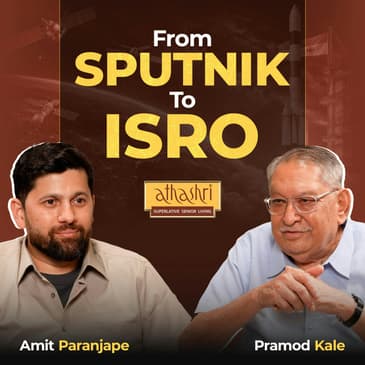
From Sputnik to ISRO: Dr. Kale on Rockets, Satellites, Education TV, and the Future of Space & Senior Living
Athashri Wisdom TalesApril 22, 202600:58:42

From Sputnik to ISRO: Dr. Kale on Rockets, Satellites, Education TV, and the Future of Space & Senior Living

On the Athashri podcast, Dr. Kale recounts his journey from early schooling in Pune and college at Ferguson to pursuing physics and space communications after Sputnik-1, joining PRL in 1960, tracking satellites, and working under Dr. Vikram Sarabhai’s guidance. He describes the formation of ISRO, training in the USA in 1963, and the establishment of Equatorial Rocket Launching Station to study upper-atmosphere currents and links to monsoon, while maintaining a focus on communication satellites and geostationary orbit. He explains India’s launch-vehicle evolution from sounding rockets to SLV-3 (successful in 1980 after earlier failures), the safety- and coordination-heavy launch process, propellant development challenges and extensive static testing, and later progress toward human spaceflight (Gaganyaan) and a planned Indian space station around 2036–37. He also details the NASA ATS-based SITE experiment bringing educational TV to 2,400 villages in 1975–76, his retirement into science-education initiatives, concerns about scientific temper and lab access, discussion of asteroid/meteor monitoring, and technology needs in senior living such as fall detection and better communication devices. Chapters 00:00 Origins in Pune 00:55 Sputnik Sparks a Path 01:54 Mentorship at PRL 03:26 Launch Station 05:53 Geomagnetic Equator Explained 08:08 Dream of Satellite TV 09:01 Rockets vs Missiles 10:11 SLV-3 Breakthrough 12:38 Safety and Launch Sites 13:15 Choosing Sriharikota 14:04 Propellant Challenges 16:22 Launch Day Countdown 20:51 Secrecy and Openness 21:26 Human Spaceflight Plans 24:32 Astronaut Selection Training 28:05 Space Dominance Economics 30:33 Weather Satellites Sharing Data 30:51 Why No Access? 31:17 India Space Station Roadmap 31:56 TV For Education Vision 32:30 NASA ATS-6 Breakthrough 34:25 SITE Village Rollout 35:49 Live Broadcast Milestones 36:39 Teacher Training At Scale 37:21 Padma Shri Surprise 38:42 Early Retirement Pivot 39:52 Scientific Temper In Schools 43:02 Access And Safety Barriers 45:40 Space Disasters Reality Check 47:41 Predicting Impacts Together 48:40 Choosing Senior Living 51:04 Tech For Elder Communication 53:23 Wearables And Fall Detection 55:40 Smart Homes And Safer Floors 57:18 AI Companions Ethics 59:04 Closing Thanks

On the Athashri podcast, Dr. Kale recounts his journey from early schooling in Pune and college at Ferguson to pursuing physics and space communications after Sputnik-1, joining PRL in 1960, tracking satellites, and working under Dr. Vikram Sarabhai’s guidance.

He describes the formation of ISRO, training in the USA in 1963, and the establishment of Equatorial Rocket Launching Station to study upper-atmosphere currents and links to monsoon, while maintaining a focus on communication satellites and geostationary orbit.

He explains India’s launch-vehicle evolution from sounding rockets to SLV-3 (successful in 1980 after earlier failures), the safety- and coordination-heavy launch process, propellant development challenges and extensive static testing, and later progress toward human spaceflight (Gaganyaan) and a planned Indian space station around 2036–37. He also details the NASA ATS-based SITE experiment bringing educational TV to 2,400 villages in 1975–76, his retirement into science-education initiatives, concerns about scientific temper and lab access, discussion of asteroid/meteor monitoring, and technology needs in senior living such as fall detection and better communication devices. 

Chapters

00:00 Origins in Pune 

00:55 Sputnik Sparks a Path 

01:54 Mentorship at PRL 

03:26 Launch Station 

05:53 Geomagnetic Equator Explained 

08:08 Dream of Satellite TV 

09:01 Rockets vs Missiles 

10:11 SLV-3 Breakthrough 

12:38 Safety and Launch Sites 

13:15 Choosing Sriharikota 

14:04 Propellant Challenges 

16:22 Launch Day Countdown 

20:51 Secrecy and Openness 

21:26 Human Spaceflight Plans 

24:32 Astronaut Selection Training 

28:05 Space Dominance Economics 

30:33 Weather Satellites Sharing Data 

30:51 Why No Access? 

31:17 India Space Station Roadmap 

31:56 TV For Education Vision 

32:30 NASA ATS-6 Breakthrough 

34:25 SITE Village Rollout 

35:49 Live Broadcast Milestones 

36:39 Teacher Training At Scale 

37:21 Padma Shri Surprise 

38:42 Early Retirement Pivot 

39:52 Scientific Temper In Schools 

43:02 Access And Safety Barriers 

45:40 Space Disasters Reality Check 

47:41 Predicting Impacts Together 

48:40 Choosing Senior Living 

51:04 Tech For Elder Communication 

53:23 Wearables And Fall Detection 

55:40 Smart Homes And Safer Floors 

57:18 AI Companions Ethics 

59:04 Closing Thanks